Monday, 9 January 2012

Delius Complete Songbook 2 Mark Stone

"English music? I don't know what that is", Delius said to Eric Fenby, who very nearly aborted his self-appointed mission to help the composer. But Delius was right. Music is rarely "nationalist"and Delius himself was international.  Mark Stone's recording of the Complete Delius Songbook series is a valuable contribution to Delius studies as it includes perfomances of lesser known works and new translations, many by Stone himself.

Listen to the first volume in this series, which I reviewed HERE, where Stone and pianist Stephen Barlow perform Delius's earliest songs. Grieg's music expressed an aesthetic significantly outside the European mainstream.  The purity of Norwegian landscape was a metaphor for independence and creative renewal. Delius learned from Grieg not merely the trappings of "Scandinavian" culture, but the concept of individuality.  In this second volume in the series, Delius sets Danish, French and German poets, but the style is his own.

Included in this new disc is a piano song version of the Nietzsche setting, Noch ein mal, O Mensch, Gib acht!, which in 1904/5 became part of Delius's A Mass for Life.  A version for solo voice, chorus and orchestra was written six years before the song but the version here was found among the composr's papers after his death. It's undated, but possibly predates both other forms. Jelka Delius said it was the earliest version of all. The melodic line is already clear, surprising calm, unlike Mahler's more intense setting in his Symphony no 3. Mark Stone's deep baritone gives gravity.

Delius wrote four more Nietzsche songs around 1898, possibly sketches for large scale works, though they were published decades later as independent songs.  Stylistically they connect to A Mass for Life, but they're much stronger musically. Each is a miniature, yet powerfully felt. Although the subject matter is completely different to A Village Romeo and Juliet, completed in 1899, perhaps Delius is thinking in terms of dramatic, declamatory song? Certainly Stone's delivery suggests this. He's an opera singer and brings to these songs much more colour than some of the other songs on this disc can support. The five settings of poems by Verlaine depend more on heavy pedal rather than elegance.

Delius is more in his own element, if that's defined by watercolour lightness of touch in the paler tones of the other songs in this collection.  Two groups of songs from the Danish, eleven early songs and other individual pieces. With Autumn, Dreamy Nights, Summer Nights on the sea shore and Summer Landscape we're in that quiet, watchful mood that Delius so often evokes. It's as if time is standing still as the composer meditates on the moment. Below is Silken Shoes, an "expression" as Mark Stone says in his erudite programme notes "of the exquisite...nature of the beloved. Delius uses rising triplets throughout to underline the triumphant nature of this song...and comes to a warm, satisfied ending". Buy the recording DIRECT from Stone Records, or thru the usual sources.

Sunday, 8 January 2012

Friedrich ein deutscher König

Friedrich ein deutscher König, a new film about Frederick the Great, King of Prussia. Now available on arte.tv "In einem von Militarismus, Tugend und Disziplin beherrschten Mikrokosmos wächst der junge Friedrich auf. Bestrebt aus dem Sohn einen gehorsamen Blaurock zu formen, unterlässt Friedrich Wilhelm I. keinen Versuch, den Willen des Kronprinzen zu brechen. Friedrich sucht sich Weltfluchten in Musik und Literatur, um dem Drill zu entgehen. Die fortwährenden Demütigungen, die auch Königin Sophie Dorothea und Friedrichs Schwester Wilhelmine nicht mildern können, kulminieren in einem missglückten Fluchtversuch Friedrichs - seinerzeit Hochverrat und nach dem ursprünglichen Verdikt des Vaters mit der Todesstrafe zu ahnden."

Saturday, 7 January 2012

Drei Könige wandern aus Morgenland


Peter Schreier aged 13 when he was an alto in the Dresdner Kreuzchor. It's the hymn by Peter Cornelius (1824-74) For the Heinrich Heine version, please see HERE


Drei Könige wandern aus Morgenland;
Ein Sternlein führt sie zum Jordanstrand.
In Juda fragen und forschen die drei,
Wo der neugeborene König sei?
Sie wollen Weihrauch, Myrrhen und Gold
Dem Kinde spenden zum Opfersold.

Und hell erglänzet des Sternes Schein:
Zum Stalle gehen die Kön’ge ein;
Das Knäblein schaun sie wonniglich,
Anbetend neigen die Könige sich;
Sie bringen Weihrauch, Myrrhen und Gold
Zum Opfer dar dem Knäblein hold.

O Menschenkind! halte treulich Schritt!
Die Kön’ge wandern, o wandre mit!
Der Stern der Liebe, der Gnade Stern
Erhelle dein Ziel, so du suchst den Herrn,
Und fehlen Weihrauch, Myrrhen und Gold,
Schenke dein Herz dem Knäblein hold!

Friday, 6 January 2012

Luca Pisaroni - the other man from Busseto

Luca Pisaroni has arrived. Eighteern months ago he sang Leporello at Glyndebourne, so impressive that I snapped up a chance to hear his Wigmore Hall debut last March.  (Read what I wrote here and what Mark Berry wrote here) Guess who was sitting behind us, trying to be incognito and out of Pisaroni's sightlines? At that time I didn't know the connection, so my praise fell on ears that appreciated it greatly. Pisaroni is very good, and he's young enough that there's lots ahead for him. One day, a supreme Don Giovanni?

HERE is a link to a new interview by Olivia Giovetti in Classical Singer. Enjoy! Please also read one of the earliest interviews with Pisaroni in Opera Today.

Thursday, 5 January 2012

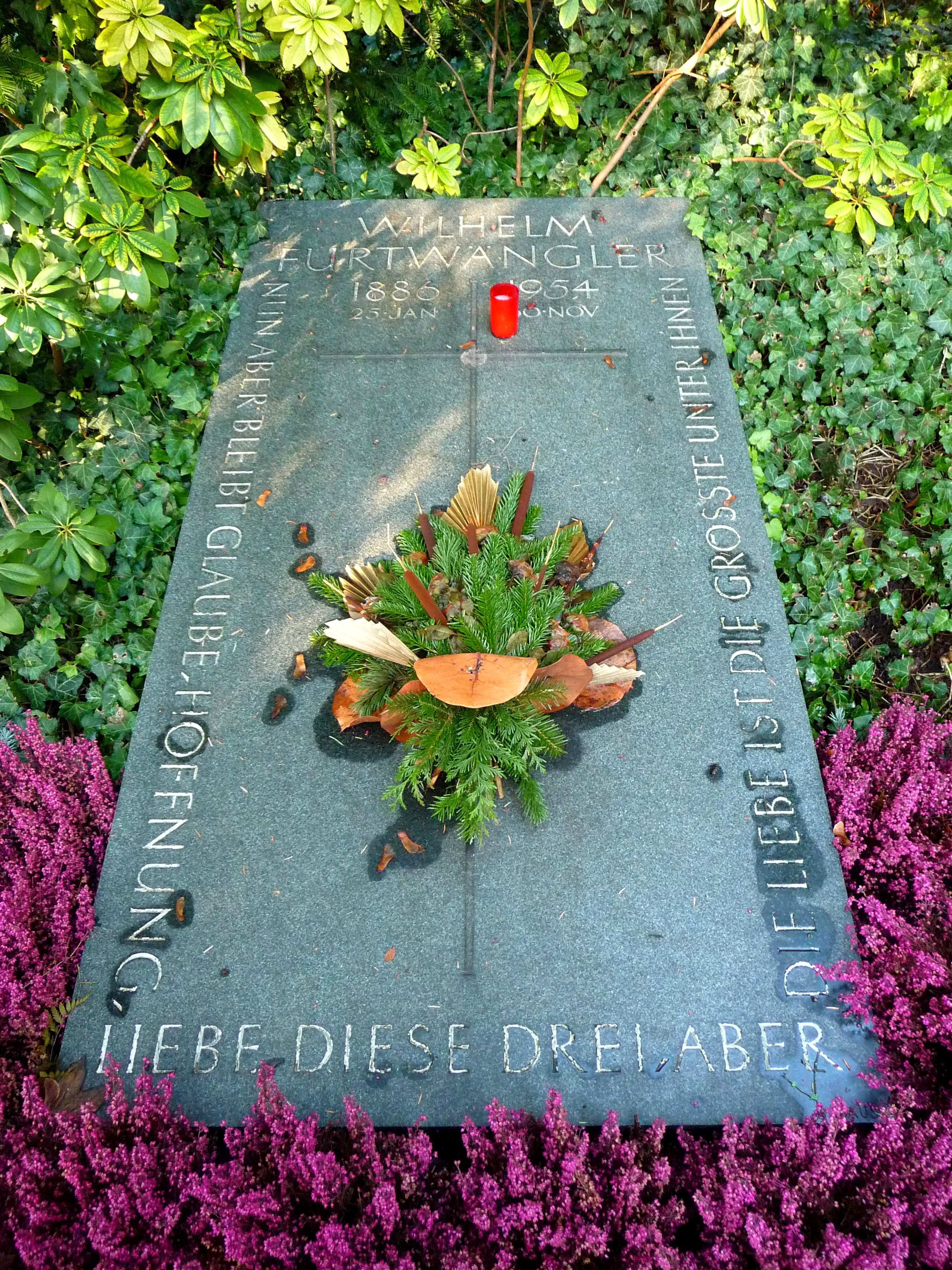
Furtwängler - the "lost" documentary

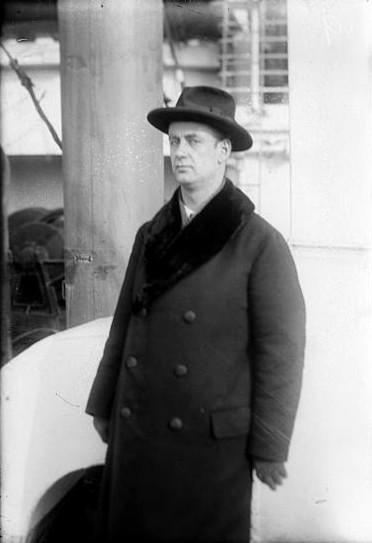
Might the fabled "lost" documentary about Wilhelm Furtwängler made by his son Florian be about to surface again? Jointly commissioned by Bayerischen Rundfunk and the BBC in 1970, it has circulated in an inferior copy, now withdrawn. Florian (d 1992) was a professional film maker so the film is very well made. In full, in German, it runs over 100 minutes. Although it was made over 40 years ago, it includes unique testimonies from musicians who knew Furtwängler well. Jascha Horenstein, Hans Keller, and Szymon Goldberg, leader of the Berliner Philharmoniker until 1933.

The film firmly places Furtwängler in the context of artistic circles in late 19th century Munich. Furtwängler's father was an eminent archaelogist, his mother a painter. He was home schooled, but absorbed cultural experiences closed to most boys. On a trip to an Italian chapel, in 1902, Furtwängler disaappeared, to be found inside a Michelangelo crypt, inspired to write music that was to become his Te Deum. It's hugely ambitious, with massed choirs : the film shows its first performance, in 1967. (drawing above is by Emil Orlik, 1927)

Furtwängler's first love was composition but his career progressed so rapidly that he became a conductor almost by default.  His style was idiosyncrasic. Theres a description of him, complete with action sketches, flailing his arms and legs, expressing the music with his whole being. Fundamental to his style, however, was his conception of what interpretation involved. "The stronger the structure of a piece, and the greater the comnposer's mastery of form", he said "the more clearly defined is the interpreter's task. It is only when he has studied and mastered all the details  that his real task begins, which is the weaving of all the particular parts into an organic whole."

Furtwängler's style was controversial. Hans Keller describes Furtwängler at a Toscanini Beethoven 9. After a few bars, Furtwängler stood up, shouting "Bloody time keeper!" and stormed out. Definitely not a troll, but a man who knew his music so well that it hurt him to hear it mangled. Keller then describes the passages from recordings. Toscanini takes the opening sextuplets so carefully that you can hear each note unfold.  But Furtwängler smudges the beat so you don't hear the component notes but the "tense, vague beginning before the beginning", as Keller says, expressing their meaning within the context of the passage. There's an ominous rumble, yet nimble and alert, intensifying the outburst when it comes.

Nowadays it's fashionable to judge a performance by tempi alone, but as Keller says, "Tempo in itself is nothing. It is a function of structure", He listens to a recording of Furtwängler conducting Mozart Symphony no 40. In theory, it's so fast that it seems almost impossible to maintain. "I did not believe it possible until I heard it" adds Keller. "You cannot decide tempi unless you experience the structure and understand the phrasing of the interpreter".  As for  formulaic tempi, Furtwängler himself said simply, "there is no such thing".

In the Berliner Philharmoniker archive, there's a good documentary about what happened to orchestra members when the Nazis came to power. Szymon Goldberg figures in it, though he was forced to emigrate almost immediately. Furtwängler protected those he could, though of course he couldn't protect everyone. He played Mendelssohn in public as late as 1935, and refused to accept pensions and estates from the regime.  His high profile defence of Paul Hindemith took courage. Jascha Horenstein says, stiffening up to stress his words, "I would like to say emphatically that Furtwängler was not a Nazi". Furtwängler was on an inevitable collision course with Goebbels so he withdrew from public life, only to return to the podium because he realized that music was a means of standing up to tyranny. The photo above, from the Bundesarkiv shows Furtwängler conducting for factory workers in 1942. Some of them may have been Nazis, but not all and in any case, all were human. The film includes the famous clip of Furtwängler playing Beethoven 9 to the Nazi bigwigs. They're too stupid to know what Beethoven was getting at. Goebbels, who knew his Schiller, must have squirmed in suppressed rage.

By February 1945, Furtwängler heard that he was about to be arrested. He fled to Switzerland and turned again to composition, supported financially by Swiss music lovers. The film emphasizes how much Furtwängler's own music meant to him. A few years ago there were a number of recordings, which I wrote about at the time. The juveniila was surprisingly interesting and the incomplete Symphony no 3 (1954), heard here, is impressive. One day, perhaps, Furtwängler's music will be heard more often.

Aged 12, Daniel Barenboim worked with Furtwängler. It was mutual admiration. "There was always an element of improvisation and surprise in his work", says Barenboim. A member of the Philharmonia who worked with Furtwängler tells how he communicated with the players.  He didn't tell them what to do. If he didn't like something, he'd be thinking why, and the orchestra would do so too. "I don't like the word working "under" a conductor. It wasn't like that with Furtwängler". Not mentioned in this film is the anecdote of how Furtwängler walked into a rehearsal and the orchestra lifted their game even though he wasn't conducting.

What made Furtwängler so good? "He risked a lot, as every great artist must", Keller sums up. "It is the easiest thing in the world to always play well. Composers, too. Mozart excepting, their greatness is in direct proportion to their ability to take risks". Furtwängler admired Arnold Schoenberg and sensed in him something exceptional, though he didn't relate to 12 tone theory. But he played Schoenberg, who admired him in return. "Better than all those Toscaninis". One of my conductor friends was given one of Furtwängler's batons as a gesture of respect. Furtwängler had given it to someone he admired, who then passed it on. 

Wednesday, 4 January 2012

Szymanowski broadcast - Antoni Wit

"Superbly filmed for Polish Television, Antoni Wit's performances of Karol Szymanowski's third and fourth symphonies embody the distinguished and idiomatic conducting style for which he is widely recognised....An outstanding communicator, Wit exhibits exceptional attention to detail in his rendition of these two great works, recorded while Wit was principal conductor or the Warsaw Philharmonic Orchestra and Choir."

Soloist in the Third Symphony is Rafał Bartmiński, He's very good indeed. HERE is the link on medici.tv

Tuesday, 3 January 2012

The English Oratorio : a Celebration, Barbican

The Barbican celebrates the Englsih oratorio tradition, but in a bold new way. Handel of course is at the heart of the tradition, so the series started with Handel's Saul (read more here) and Walton's Belshazzar's Feast (read here). On 14th January, it includes Haydn's Seasons and continues with Elgar, Mendelssohn and Sir Michael Tippett. So the tradition hasn't stood still. Baroque aesthetics gave way to Victorian gigantism, as seen in this 1857 etching of a Handel experience at the Crystal Palace, London. "Concert" is hardly the right word.  At the Barbican, we'll be able to hear English oratorio in a setting that might favour the music rather than scale for its own sake, and perhaps gain new perspectives. Please read Claire Seymour's article on English Oratorio and the Barbican season.

Monday, 2 January 2012

Coming up, busy January

Lots to look forward to in January in London! The new season starts today (2/1) with another cast of La Traviata at the Royal Opera House. This time, Ermonela Jaho sings Violetta. Jaho stole the show last time she sang the part in this production, and has continued to impress - remember her Suor Angelica?  Violetta is a courtesan and hasn't reached the top of her profession by being a moribund victim.  In any case, could someone dying of TB sing like that? Paolo Cavanelli's dark Germont will be a good foil to Jaho's passion. Alfredos are Stephen Costello and Vittorio Grigolo.

The Royal Opera House also offers a mini-Mozart festival : Don Giovanni, Le nozze de Figaro and Così fan tutte, all revivals but worth catching for the casts (best prob. Le nozze). See Gerald Finley naked, or hear Erwin Schrott.  In February, a controversial new Rusalka!

At the ENO, Der Rosenkavalier revived with big English stars. Or should one say "The Rose Knight"? Strictly Gershwin, an interesting Gershwin themed ballet from English National Ballet starts 4th Jan to extend the party season. Gershwin's a good composer, who should be taken more seriously.

At the South Bank, an important series curated by Vladimir Jurowski, Sergei Prokofiev : a man of the people? Notice the question mark. Why did Prokofiev turn his back on the west and success to return to the Soviet Union? What were his artistic, as well as personal motivations?  Hopefully this won't be yet another bland retrospecrive of greatest hits but more stimulating. Jurowski's choice of repertoire is intriguing and indicates a strong line of thought. I've spent time watching Eisenstein's saga of Ivan the Terrible, for which Prokofiev wrote the score, and will be writing about that here soon.  Simon Callow is doing readings from Prokofiev's diaries. Yannick Nézet-Séguin conducts the final night on 1st Feb

Extremely important London Sinfonietta gig Wolfgang Rihm at 60, QEH 24/1. Rihm is one of the seminal modern German composers, though sadlu underrated in Britain. Four UK premieres, no less. It will be a great chance to hear the London Sinfonietta in meaty repertoire again, and to prepare for the ENO production of Rihm's very early opera Jakob Lenz in the summer. Indeed, the opera may seem pale compared with what Rihm is doing now, 35 years later.

Much stronger opera-wise will be Luigi Dallapiccola's Il prigioniero at RFH on 26th January. Dallapiccola was writing when Mussolini's alliance with Hitler reached its peak in the last years of the war. Il prigioniero is  Fidelio without false optimism and contrived happy end. Perhaps that's why Esa Pekka Salonen is conducting Beethoven's Fifth as a kind of extended overture.  

Lots on at the Wigmore Hall, too, leading up to Schubert's Birthday on 31/1 which is always a highlight of the WH year. This year, Werner Güra does the honours. William Lyne discovered him 15 years ago, on the recommedation of Peter Schreier. Some pedigree! Güra was so young then that he froze, but since then he's blossomed. Güra shows what Lieder singing is really about. Starting on 10th January is another Wigmore Hall speciality, a three day intensive workshop which really gets to grip with a subject. Focus this time is on is Stravinsky's A Soldier's Tale.  Nine hours study, one hour concert (2/2) But if something's worth doing, do it well. Also highly recommended: Christoph Prégardien singing Hugo Wolf on 10/1 and a concert with, among others, Stuart Jackson, a very original and distinctive young singer who won 2nd prize at the Wigmore Hall Song Competition. (read more HERE) 

The English Oratorio Celebration continues at the Barbican (read more HERE) with Haydn The Seasons with Paul McCreesh. There's a big Total Immersion on Jonathan Harvey, culminating in his Wagner Dream which had extreme notices when it premiered in Amsterdam two years ago. It's not Wagner per se but Harvey, re-examining Wagner through Harvey's Buddhist beliefs. Oliver Knussen doesn't conduct as often as he used to or should, so make a point of going to his Barbican date on 13/1. Excellent programme - Castiglioni, Schoenberg Kammersymphonie, Sandy Goehr premiere and  Miakovsky's Symphony no 10. Typical Knussen passions, should be fun.

And if that's not enough, Pau Badura-Skoda makes a rare appearance at Kings Place on 18/1!

Sunday, 1 January 2012

Zum neuen Jahr new translation

Wie heimlicher Weise
Ein Engelein leise
Mit rosigen Füßen
Die Erde betritt,
So nahte der Morgen.
Jauchzt ihm, ihr Frommen,
Ein heilig Willkommen,
Ein heilig Willkommen!
Herz, jauchze du mit!
In Ihm sei's begonnen,
Der Monde und Sonnen
An blauen Gezelten
Des Himmels bewegt.
Du, Vater, du rate!
Lenke du und wende!
Herr, dir in die Hände
Sei Anfang und Ende,
Sei alles gelegt!
 
From Heaven's meadows, a gentle angel, with rosy pink feet, descends to earth. Thus came the Morning. Praise him, godly people, a holy welcome ! Hearts, praise Him together.
In Him are all beginnings, the earth and the planets, the blue Universe where Heaven moves. You, Father, you source of wisdom. Guide us, protect us. Lord, in your hands are Beginning and End, and everything between.

Happy New Year from China


New Year's Eve in Hong Kong just a few hours ago. This clip is specially atmospheric as it's taken by a local person in the midst of the crowd that throngs the streets. Yet the quality is better than many professionals. Learn to count in Cantonese ! 5 is tricky as it's "Nggg".  Hong Kong fireworks are famous, but Beijing might yet top HK. Everyone in Asia envies the HK display but Beijing decided to go anotherr route. This year saw Beijing's first "countdown" with laser and 3D projections on The Temple of Heaven, where the Emperors used to go and give thanks. What is even more significant though, is the rationale behind the Beijing celebrations. Relatively few fireworks, because they're not "green". Instead, light shows, electricty supplied by thousands of students on bicycles. China's environmental record is pretty bad since it's such a vast country and hard to govern.  Fireworks have always been part of Chinese culture, so it's an amazing, high profile statement of intent. 

Friday, 30 December 2011

Ne me quitte pas


What a beautiful song ! As so often, the most famous English version doesn't convey the power of the song. Jacques Brel's phrasing is unconventional, so the lines compress and run over, and the tempo hesitates and speeds up. It feels like conversation, more human and sincere. Sing this in a more formal or "English" way and much of the inner poetry is lost. The inner pulse is 5 syllables around which the words wrap. (Please also see my post on Gloomy Sunday, Song with  a Curse)

Here's my attempt at translation, which is tricky as so much of the original depends on allitration and word play. "Don't leave me. It would mean forgetting everything, everything that can be forgotten, which has already flown away. Forget the times of misunderstanding, and le temps.... perdu.  How? to forget hours the hours whose memory can kill, sometimes, with the blow of why? The heart of happiness."

"Me ! I could offer you pearls of raindrops from distant lands where it never rains. I'd dig the earth, even after I die, to cover your body with gold and light. I'd create a realm where love would be king, and love would be  law and you would be queen."

"I'd invent for you crazy words that you would understand. I'd speak to you then of lovers who've twice seen their hearts embrace. I'd tell you the story of this dead king who was not able to meet you again. Don't leave me."

"One has often seen  regenerated,  flames of ancient volcanos which seemed too old.  It could be that scorched earth gives more wheat than a good April.  And when evening comes, in a blazing sunset, don't  red and black combine?"

"Don't leave me. I can no longer cry. I can no longer speak. I'll hide myself away where I can watch you dancing and smiling. I'll listen to you sing and laugh Let me become the shadow of your shadow, the shadow of your hand, the shadow of your dog"

The girlfriend, like millions of women before and since, will recognize this type of man. "It's all about you, you, you", Who gives a stuff about promises when the guy doesn't deliver ? But it's still such a moving song, especially the way Brel sings it.

Thursday, 29 December 2011

New Year Free opera and more

TV and Radio treats, most on-demand so they won't hold up your social plans. You could see the New Year in with Lang Lang and Howard Skempton on BBC Radio 3 but for me, from 1800hr, it's La Traviata from The Royal Opera House with  Beczala, Perez and Keenlyside. This production has been done so many times that it's become pretty tired, but this second of the four casts was a surprise hit.

The opera is a vehicle for sopranos who always sound amazing, since Violetta is written wonderfully for voice, flatteriung every woman who sings it. Papa Germont is a vehicle for big name baritones because they don't have to sing all that much for their fee and star billing. And Alfredo's are often cast with up and coming media darlings. So along comes Piotr Beczala, and suddenly the perspective switches. It's like hearing the opera with fresh ears, from Alfredo's point of view. Beczala is extremely experienced and has one of the most beautiful lyric voices in the business. When I hear him, I think what Fritz Wunderlich might have been had he lived. Beczala has another advantage in that he understands his roles from within, so the singing flows from deep sources. So La Traviata takes on new life. "It's like falling in love all over again," said a friend. A good experience ! (review here)

On New Year's Day you can catch Maris Janssons live from the Musikverein, Vienna on TV and on Radio from 10.15.  The current production of Wagner Die Meistersinger von Nürnberg at the Royal Opera House is worth catching at 1445 on January 1st It's enjoyable on its own terms, once you get your head around the fact that it's more good natured Donizetti than Wagner. (review here) It's unidiomatic but but at least genial, and not as bland as Walt Disney Wagner at the Met.

Mozart The Magic Flute from the Lucerne Festival should be worth hearing too. Daniel Harding conducts the Mahler Chamber Orchestra, whose personnel he has been connected with for years. The cast is mostly English or resident in England, which might be interesting. 

Wild cards : Kurt Weill's Street Scene, one of his better "American" works, not that that's saying much. Much more unusual is the programme that places Beethoven's Egmont Overture in context, with readings from the original source. It also includes Sibelius's Kung Christian II. The performance isn't particularly rivetting, but the piece is worth hearing, even if it's very early work. It precedes the symphonies and more ambitious works like The Tempest but has affinities with his Kalevala pieces.

(Photo © 2005, 2006, 2007 by Bjørn Erik Pedersen)

Cortot Casals Beethoven Sonata - FULL


Pablo Casals and Alfred Cortot play Beethoven, Sonata op 69, It's 1958, one of Cortot's last recitals. What vigour and individuality!

Wednesday, 28 December 2011

Magical acrobats!


Les Kiriki, a 1907 short by Segundo de Chomón (1871-1929) pioneering film maker who worked for Pathé and with other pioneering directors like Abel Gance

Tuesday, 27 December 2011

Welcome, Massenet Werther!

Noël, Noël, Noël sing the children, even tho' it's July. Welcome return for Massenet Werther from ONP Bastille Paris streaming again on medici.tv HERE. This is the fabled performance from early 2010 which won a Diapason d'or when it went onto DVD. Jonas Kaufmann, Sophie Koch, Ludovic Tézier and Anne Catherine Gillet! Just look a that cast and listen to that divine singing! Kaufmann fans will get lots more of their man as Werther than as Cavaradossi. He's ideally suited to the troubled romantic Werther, and there's plenty of room for him to develop the role in all its nuances.  What's more, Sophie Koch sings Charlotte with such depth that she's emotionally real. And what perfect, sensitive timbre in all the parts. It's so beautiful, I've been listening again and again, just to soak up this singing and playing (Michel Plasson).

The production and the film are by Benoît Jacquot, which is significant as he's primarily a film director.  Don't let that panic you. Unlike most theatre people he's musically literate and sensitive to the inner drama of this almost action-free opera, where most things take place in the protagonists' heads. That's the beauty of this production, which minimizes props to the max so everything's concentrated on the singers. Psychologically true, too, for Werther lives in a world of his own where reality doesn't much intrude. Wide, open vistas on stage, bare but for rustling leaves, or oppressively huge windows that dwarf the singers. Jacquot also directed the film, so he develops the basic concept even further. Often the singers are shown, alone, on the platform with orchestra in view, as if they were in recital. Sometimes we see the back of the props! This Werther is about the singing, and because it concentrates on performance, not trappings, the music speaks all the more deeply. Fundamentalists will moan that it's not "decorative" as they imagine Werther should be (see the original poster here, Eugene Grasset 1893). But think about the plot, and listen to the music. It's not about chintz !
LOTS more on Massenet on this site, like Le jongleur de Notre Dame, Massenet mélodies with Véronique Gens, Cendrillon, Manon and Le portrait de Manon.