Showing posts with label Arts policy. Show all posts

Tuesday, 17 April 2018

Why we ALL need to save St John's Smith Square

Please help save St John's Smith Square ! Follow THIS LINK to see what's happening and why we need to do something.  I've made a donation already andf intend to do more.  Donations alone aren't going to fill the shortfall but they do matter because they are a statement of support.  We must give, in order to send a message to the powers that be.
Though there are several small to medium sized venues all round London, St John's is unique in that it already has a track record for enterprise and excellence.  St John's is unrivalled for baroque and early music, and has been a significant force, over the last 50 years, in the revival of well-informed interest in these genres. This isn't some obscure specialism.  British music and culture in general derive from the glories of the 16th, 17th and 18th centuries. Where would this country be without Handel, Purcell, Blow, Arne and a host of others ? Denigrate the baroque and denigrate the finest flowerings of British culture, since modern British music derives so much from an appreciation of our baroque past. Where would Vaughan Williams, Britten and even Harrison Birtwistle and many others  be without their love of ancient music ?  And with music, much of the wider culture, such as poetry, literature and gistory that once made  Britain great.   SJSS isn't just for those who use it : if benefits the nation.   It's a heritage project in the widest sense.

St John's Smith Square proved its value while the Queen Elizabeth Hall was being renovated, offering a home for the Orchestra of the Age of Enlightenment and the London Sinfonietta.   The place is flexible enough that it can support diffrent types of music and performance.  If the South Bank continues its policies of everything "but" serious music, we may yet need SJSS as a refuge.  Being small and flexible, it's a relatively cheap place to run without the management superstructure large places need to maintain.   The very fact that SJSS has survived so long is a testament to its virtues.  So why wreck what pretty much works ? The building can't be adapted for offices or posh housing, though there might be some who'd like that. 
Long term what needs to be done is support from the public sector, like it or not.  That means the Arts Council England, who now control funding for everything, not only the creative arts but museums, libraries, capital biulding projects, individual start ups and community projects.  Governments like that because it means they can offload responsibility  without being caught in the act.   But it's short sighted thinking.  The arts are an important part of the British economy. They are also part of the image of Britain as a cultivated nation with a heritage to be proud of. Mess that up and everyone loses.  What St John's Smith Square represents is British culture, and its unique tradition. That is not a minority interest, nor even a London thing.  It's the very basis of our heritage, whether or not the man in the street realizes it.  Everyone stands to gain from a national perspective.   For ACE shouldn't that be a priority ?

Friday, 14 July 2017

Secret messages ? First Night of the BBC Proms 2017


Secret messages? The First Night of The BBC Proms 2017: as always a thrilling sense of occasion. But what occasion, and who was it really for?  These are questions that the BBC and Proms team need to address. It's not enough to rely on formula.  This year we've seen what happens when politicians function like robots. spouting empty slogans on autopilot.   Big institutions like governments can't hang on to power "by right", but must earn their place. The evening kicked off with a new British work, to show how hip the Proms Team are.  For a change real music! Tom Coult's St John's Dance is an interesting exercise in perpetual motion and tempi, engrossing enough to hold attention, without being too taxing. Certainly better than some of the mindless pap we've had some seasons.  But beware! St John's Dance was a form of mass hysteria, where people kept dancing on, unheeding to their deaths.

Sir Henry Wood created the Proms on the principle that people were perfectly capable of learning if inspired by excellence and extremely high standards. His vision doesn't apply today when arts policy aims for the lowest possible denominator, on the assumption that people are too stupid to cope with anything that isn't dumbed down.  If arts managers don't have faith in their own product, how can they hope to convince others? And where is the real market?  Even the BBC has twigged that it's a fallacy that the arts depend on audiences who don't like serious music.  So why not put that into practice? The whole thrust of British arts policy is reductionist, uncreative and wrong.  White Papers might repeat the same old assumptions but that doesn't mean they're right and can't be stopped.  British arts policy is fundamentally misguided because it does't reflect economic reality.

Until such time as policy makers have the guts to question, we can but hope that some centres of excellence remain.  Like Beethoven, for example, whose vision and courage we need more than ever in this era of small-minded shallowness.   How wonderful to hear Igor Levit playing Beethoven's Piano Concerto no 3 in C minor, with Edward Gardner conducting the BBC Symphony Orchestra.  Fact is, excellence is by its very nature elitist.  Ordinary people are perfectly capable of smarting up rather than dumbing down.  Hooray!  This is what real music is all about: raising horizons.  For his encore, Levit chose Beethoven's Ode to Joy, transcribed for piano by Franz Liszt.   Culture doesn't exist in isolation: it crosses borders.  The arts business is international and must remain so.  Not long ago,  Her Majesty the Queen opened Parliament wearing a blue and yellow hat.  She's not allowed an opinion, but she's no fool, and she's not easily swayed by populist media.  Long may she reign!

Extravaganzas are part of the fun of First Nights of the Proms, so this year we had John Adams's Harmonium.   Four hundred and fifty singers - the BBC Symphony Chorus and BBC Youth Choir, joined by additional forces, ranged all round the back of the stage at the Royal Albert Hall.   Impressive to look at, and very well performed.  Harmonium predicates on huge swathes of sound composed of tiny cells   Sometimes the singers aren't singing text but creating planes of wordless noise.  Not being a fan of the composer, I won't comment on the piece as music, but everyone seemed to be having a good time.  The whole musical part of the Prom over in record short time to allow endless chatter and self-promotion on the part of BBC marketeers.

Each year I cover 30-40 Proms, so please keep coming back.  Please see my other pieces on the Proms, this year and in the past and on the Proms and Arts Policy. 

Monday, 26 June 2017

Alan Gilbert NDR Elbphilharmonie Orchester - the real potential


New horizons for Alan Gilbert, new Chief Conductor  of the NDR Elbphilharmonie Orchester.  This isn't an ordinary move in the game of Conductor Chess by any means.  It's a Bishop's Move, which could change the whole board. The new Elbphilharmonie and the support network behind it has the potential to change the whole game.  Read my piece Elbphilharmonie - Game Changer HERE.  Gilbert hasn't flip-flopped by any means - he's landed on his feet up and running with one of the most exciting developments in the whole industry.

Although Hamburg is Germany's second-largest city, and wealthy, the heart of German orchestral life centres on the Big Three - Berlin, Leipzig and Dresden, cities whose cultural pedigree reflects centuries of top-level patronage. The NDR Elbphilharmonie Orchester was founded in 1945, from the ruins of war, in which much of Hamburg was destroyed. It was a radio orchestra, no small thing  since German broadcasting itself has a grand tradition. With the new Elbphilharmonie building it now has one of the finest homes of any orchestra in the world, backed up by a package of other services. Even the backstage facilities are so good that other orchestras want to come visit, which also ups the game. The population of Germany is close to 82 million, and the population of Europe as a whole 743 million. Hamburg is smaller than New York,  but it's strategically placed.  If the Elbphilharmonie develops into a cultural hotspot, the orchestra is in a good position.  Gilbert's in a win-win situation.

With the new building, new frontiers. While the orchestra isn't in the league of the Big Three, or centres of exceptional excellence like Lucerne,  Hamburg could provide something unique. The gala Opening Concert honoured Johannes Brahms, native son, and  composers with North German connections, of whom there are quite a few, many of them modern.  Gilbert's interests thus dovetail neatly with European taste.  Lyons, for example, where his career took off, and where I first heard him, is progressive.  One of the high-profile international broadcasts from the Elbphilharmonie featured  Shostakovich and K A Hartmann, a Bavarian yes, but one of the most important composers of the 20th century (Please read my piece here). Germany is in a unique position in that it's culturally very diverse and vibrant, and open-minded.  That concert featured the Vienna Philharmonic Orchestra, not nearly as conservative as one might assume, conducted by Ingo Metzmacher, a Hartmann maven and one of the more interesting conductors on the circuit.  With all respect to Gilbert, he's not in Metzmacher's class, but he is audience friendly and can reach those who speak no language other than English.

When Gilbert unexpectedly announced he wouldn't renew his contract with the New York Philharmonic Orchestra, there was much speculation, since he's a NY homeboy with family connections who might, in theory, have toed whatever line was needed.  No speculation from me. But read this well-informed piece from Michael Cooper  : Alan Gilbert wanted to save the New York Philharmonic : What happened ?   All too often, commentary goes along the lines of "I like/don't like" as opposed to analysis and a basic understanding of business logistics.  Recordings are just artefacts, they aren't what happens in the real world of performance, and these days, the recording industry doesn't have a stranglehold on what reaches the market.  e need to remember that music is a living force, that never stops changing. It doesn't exist in hermetically sealed limbo.

A conductor does a lot more than conduct: he's a conduit for ideas and reflection, primarily musical, of course, but ideas that impact on human experience.   Claudio Abbado, whose birthday is today, was a communicator of genius.  Very few even come close to Abbado in terms of insight and empathy.  But Gilbert is a pretty good thinker.  Some months back, he was being interviewed by NDR Kultur (not the orchestra, but they would have heard it).  They threw a tricky question : what did he think of Donald Trump ?

Being diplomatic, Gilbert hesitated, choosing each word as carefully as possible.  "I think it's a time in which art and beauty have more importance and relevance than ever,. I hope it's not too much to say that at the heart of what we do as musicians is the search for truth. These days there seems to be a full scale assault on the principles of The Age of Enlightenment. As musiciqns, we need to assert ourselves powerfully to show that there is still beauty and there is truth in the world. I've been working with musicians, colleagues and friends to use what we do, to use the platform we occupy to make this world a better place. The thing about music is that it is an international language, and it can speak to people from all different cultural, linguistic and religious backgrounds. .... I hope that what we can offer to the world is a message of inclusion and shared humanity" (Full clip here).  

"Inclusion and shared humanity." Dangerous words, these days!  But not at all untypical of the way Gilbert's been thinking for ages, in terms of orchestras and their place in society.  Below, another, longer clip, in which Gilbert talks about the NDR Elbphilharmonie Orchester and himself (they go back together a long time).  It's upbeat, as it should be. Who knows what lies ahead ? But Gilbert and the NDR Elbphilharmonie Orchester together could be a force for good. Please also read my many pieces on arts policy, and on the new Concert Hall for London.  


Tuesday, 25 April 2017

Mumbo Jumbo Mantras at the BBC Proms


What's really going on behind the scenes at BBC Radio 3 and at the Proms?  Before cheering the end of TV-themed Proms like DrWho, Cbeebies etc etc, let's look analytically behind the maudlin platitudes. So Alan Davey, head of BBC R3, has finally twigged that "new" audiences aren't necessarily Proms audiences?  What a revelation!  The "theory: that you get people into the Albert Hall and they see what it’s like and that it’s actually quite nice, and they come back for something else.” is mumbo jumbo mantra,  mindlessly repeated to numb dumb minds.

Since people go to the Royal Albert Hall all year round, for all kinds of events, why should they be afraid of the building?  That's supposition without substance.  It's not houses that scare the punters but perceptions based on falsehood, like "elitism" which the nonsense mantra stupidly reinforces.  The success of Proms in the Park should be evidence that people can have a good time with classical music, of a sort, whatever the situation, without downgrading core product?
 
Given that classical music can be accessed in more ways now than ever before, why should physical attendance be a prerequisite? Didn't someone at the BBC realize that they broadcast worldwide and online, or don't they tell each other ?  That is the "new" audience for classical music, potentially greater than ever before. But policymakers are trapped in the Stone Age of "bums on seats".  The government, and Arts Council England, are straitjacketed into geographical, small-scale thinking that bears little relation to reality.  All over Europe, orchestras, opera houses and concert promoters are wise to the fact that technology reaches bigger potential audiences. And audiences who have more choice are more sophisticated, less easily fooled by gimmick marketing. The way ahead is not dumb down but smart-up.  That's why top-quality new concert halls have been opened in centres of excellence like Paris and Berlin: the Philharmonie de Paris, the Pierre Boulez Saal in Berlin,  and La Seine Musicale.  Even Hamburg, a little off  the beaten track, has raised its game with the Elbphilharmonie.  Some may gloat that we don't need a world-class concert hall in the UK. But culture is global industry: being Luddite is Little Britain blindness.

And why pick on the Dr Who and CBeebies Proms, which were so successful they sold out fast, providing income for other things?  Those were fun and surprisingly high quality, like the Science Prom a few years back. Nothing wrong with a populist tag, as long as the music is well chosen and well performed.  And that's where the new announcement shows its flaws.  Does someone, somewhere, like trash as long as it doesn't promote the BBC?

There arre plenty of non-BBC brand gimmicks this season.  A lot of Proms , even those with mainstream classical music, seem aimed at audiences who don't care much about music, and are easily fobbed off by big names and safe repertoire.  John Wilson, light music, film music, are all OK in small doses,  but not elevated to canonic status.  How will the "sensory" Prom work for people with disabilities when the Royal Albert Hall itself is not at all disability-friendly. A significant part of the core audience, many of whom have  who have dedicated a lifetime to the Proms, are now excluded because basic facilities are so inadequate.   Even the website's annoying. They've even killed the composer search section in the Proms archive !

The over-riding philosophy seems to be that whoever is making policy has neither faith in the core product, serious music, nor faith in the ability of audiences to discern the difference between trash and treasure.  This is absolutely not what Sir Henry Wood stood for. But the new Regime blithely uses his name for self-promotion and flogs the anodyne Ten Pieces mentality instead. Ten Pieces was a joke once: now it's too moronic to bear.  It's a symptom of the lemming-like rush towards mindless stupidity.

The real problem lies not with the Proms and the BBC but a whole cultural dumbing down, enshrined in Government policy towards the arts and towards the BBC. I've written about this many times over the years (follow the labels below on arts policy, BBC  policy, music education, etc etc).  The Elephant in the Room ? Political agendas, not economic reality.   The arts are a big part of this country's economic success and international status.  The arts aren't cheap because excellence is always hard to attain. But everyone benefits when a nation has a thriving arts culture.  The BBC and the arts do more for British prestige and foreign policy than goonish sabre rattlers and the cultivation of dubious allies.  Mess up the arts and mess up big time.  Witness the demise of the ENO and the denigration of London as a whole.  So what is really going on?

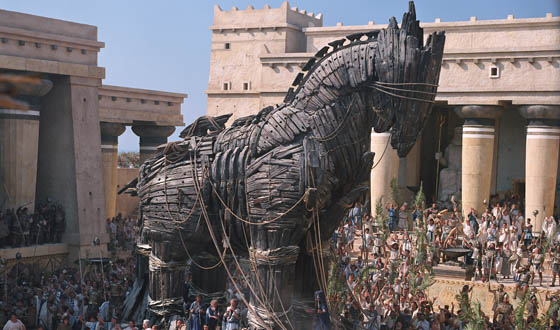
We live in an age of Trojan Horse Policies, everywhere and in many fields. People are manipulated into "taking back control"  while handing over control to vested interests whose concerns have little to do with good governance or even public benefit.  We need to face the fact that many would be delighted to see the BBC scrapped because it competes with private interests. But if private interests are so great, why are they so afraid of competition?  The idea that culture is part of civilization prevails:  the Royal Albert Hall stands as a monument to an enlightened age where policymakers had faith in the ability of ordinary people to progress through knowledge. Unfortunately, market forces operate for the benefit of whoever profits by fair means or foul.  Market forces can be manipulated, against the wider interests of the community.  Some ideals that we cherish, like public health, education, the arts and the environment,  need communal involvement.  When  market forces become mantra,  the minority profit at the expense of the majority. Market forces are a political construct, and not necessarily good for the wider economy. 

Thursday, 20 April 2017

The Ghost of Sir Henry Wood? BBC Proms 2017


The 2017 BBC Proms Season, just announced, is a travesty, far adrift from the founding principles of the Proms, and indeed of the BBC itself.  Once the BBC stood for excellence, with its guiding principles to "educate, entertain and inform", the logic being that the public can tell good quality from bad, and value learning and self-development.  Now we have a Proms season whose priorities are not musical so much as an ad for a BBC that is itself dumbed down beyond recognition.  Will the ghost of Sir Henry Wood rise, like the Commendatore, to smite those who have despoiled his legacy?  

The First Night is only 70 minutes or so, so it won't tax the attention span. True, Igor Levit will play Beethoven, and Edward Gardner will conduct John Adams Harmonium, a big, if limited, blast. so it won't be bad.  But once we could expect more. Daniel Barenboim brings the Staatskapelle Berlin to "launch this year’s cycle of Elgar symphonies". Direct quote from the BBC Proms website. What Elgar symphonic cycle? One on Saturday, the other on Sunday. The Third, realized by Anthony Payne, is probably too outré for the new Proms market.  It's been pushed to the doldrums of late August. Thankfully, Sakari Oramo conducts: he does it well.  

What kind of audience is this year's Proms aimed at?  Read the summary here.  Sure, it's good to have pop, light music etc. but not at the expense of serious music. One of the basic principles of marketing is to believe in what you're trying to sell.  Raise the bar, aim for excellence, and grow the market .Pitch below the lowest possible denominator, and kill whatever audience you already have while lowering standards and decreasing expectations.  If the primary product is music, then sell music,. All the gimmicky sales patter in the world won't make up for non-product.  If people really believe  Scott Walker is a "Godlike genius", good for them, but don't downgrade Beethoven.

Why sacrifice an existing market to try selling to another which might have completely different priorities?  Or perhaps that is the hidden agenda. The Far Right, the commercial sector, and vested interests have everything to gain from dumbing the BBC down. Sir Henry Wood believed that people were able, and willing to learn. Now, we live in an era where any kind of expertise is sneered at. Getting ahead means dismantling the edifices of advancement.  There's a whole lot more at stake than just the Proms and the BBC.

Fortunately, some of the principles of Proms planning remain, since they follow rules so simple anyone can master them.  Add a few big names - Haitink, Christie, Rattle, Salonen, Bychkov, Gardiner - and the punters will pay.  Bring in the BBC orchestras, most of which are good enough to do serious music and do it well enough without scaring the unwary.  Mark non-musical anniversaries like "Reformation Day" a term Martin Luther would have baulked at, then throw in music that has little to do with one of the revolutions in European history.  Hire famous foreign bands like the Royal Concertgebouw Orchestra Amsterdam, whom everyone loves, and a few cheaper ones. Throw in a few blockbusters like Schoenberg  Gurrelieder.(Rattle 19/8) .and  Handel Israel in Egypt on 1/8 (William Christie and the Orchestra of the Age of Enlightenment), Bring along an opera (usually Fidelio which needs little staging) and import a ready-made from Glyndebourne and bingo! The formula works, like a well-oiled machine, running with minimal human intervention.

Thus, for those who actually like music  there are other good things to seek out. Hidden under the banner "Take a musical thrill-ride from the chaos of creation" on 19/7 is Pascal Dusapin's new Outscape. Look out too for Thomas Larcher's Nocturne-Insomnia on 15/8  New British works - David Sawer's The Greatest Happiness Principle on 29/7, and Mark-Anthony Turnage Hibiki on 14/8. Excellent younger conductors like François-Xavier Roth and Les Siècles (16/8), Mirga Gražinytė-Tyla (21/8),  and Jakub Hrůša (26/8 - good programme).  Formula is all very well, and formula has saved the season  Read my picks HERE.  But eventually it will not be enough to rely on mechanical formula. It's all very well to meet political targets but long term, it is music that matters, not flashy marketing.

Thursday, 2 February 2017

Paris en fête : How to make classical music fun !


How to make classical music fun without dumbing down! Paris en fête,with François-Xavier Roth conducting Les Siècles at the Philharmonie de Paris this week, broadcast live HERE.  Proof that "education" without genuine excellence is counter-productive. This should be compulsory viewing for bureaucrats and audiences who think culture must be forced down grimly like it were poison. Please read my article End the Missionary Position in Classical Music !  This concert was so good that I've listened several times over; presumably many in the audience want more, too.  Roth is a wonderful communicator, whose enthusiasm inspires because he believes in what he does: he doesn't play games and doesn't ever dumb down.

Carmen, first. But "Who is Carmen?"  asks Antoine Pecqeuer,  another born communicator who doesn't need hype to do what he does. Carmen is popular the world over because she's a personality. Carmen lives forever: self centred Don Josés will never understand.  Thus the essence of what opera should be: human emotions in universal, infinite variety. Which is why small minds do get art.  As Pecqeuer reminded us, Carmen bombed at its premiere because it was ahead of its time. Isabelle Druet talks about Carmen so unaffectedly that the Habanera seems an extension of the personality.  Part of the fun, too, is that the Choeur des Grand Ecoles is bigger than you'd ever get on an opera stage. 

Bizet, Saint-Saëns, Délibes, Berlioz, Offenbach, a programme of pieces familiar to French audience  but with a twist to show that French repertoire is not parochial - the Bachannale from Samson et Delila. Pecqeuer talks about French tradition, from Lully to Boulez, and Roth expands. Dance is the foundation for rhythm,  structure and inventiveness. Thus, Un bal from the Symphonie fantastique.   From Berlioz, instrumental experiments and sophisticated colour.  "What does Paris mean to you?", Pecqeuer asks the audience, many of whom are young children. "Le pain" says one, totally matter of fact.  Then, the overture from La vie Parisienne, and the Infernal Gallop from Orphée aux Enfers. By now the audience are really getting into the spirit.  The Infernal Gallop, "the can can", yet again, this time with the audience singing along, Roth speeding up the tempi. Everyone's exhilarated, high on the thrill.  Is classical music elitist or dull?  No way!  Those at this concert will come away feeling that music is a vital part of life.   

Friday, 20 January 2017

Simon Rattle LSO Turnage Mahler Barbican


This was no "ordinary" event! When Simon Rattle conducted the London Symphony Orchestra in Mark-Anthony Turnage and Mahler at the Barbican, a statement was being made, of much wider significance than the concert itself.  Consider the context.  Though he formally becomes the LSO's Music Director later this year, their association goes way back. Rattle is perhaps the greatest mover and shaker that British music has experienced since Sir Henry Wood.  His whole life has been dedicated to a love of music that goes beyond conducting, and reaches all aspects of cultural experience.

This concert was mega-profile for many reasons. This was the world premiere of Mark-Anthony Turnage's Remembering 'in memoriam Evan Scofield' , a joint commission between the LSO, the Berliner Philharmoniker and the Boston Symphony Orchestra. Turnage is one of the great British composers of our time, and also international, given his long association with the US and his interest in jazz.  Remembering was written about a promising young man whose life was cut short by cancer at the age of only 25.  Before he died, however, Scofield asked that those who survived him might have the adventures he missed out on. By scattering his ashes, those who loved him could travel with him where he could not have otherwise gone: imagination transcending the annihilation of death. A metaphor for creativity, whose results live beyond their maker.

Rattle and Turnage, when they were young
Remembering is a long way from the wildness of Greek and the audacity of Anna Nicole. It resembles Frieze, but may well mark a new period in Turnage's development. It's a very personal work, since the composer knew the dedicatee extremely well. Turnage and John Scofield, the jazz guitarist, Evan's father, collaborated on many projects, including Scorched in 2004.  Written in four movements, Remembering resembles a symphony. The first movement is fast and angular, with whips of jerky expression typical  of Turnage's funky jazz-influenced style.  Suddenly the pace speeds up and the movement ends abruptly.  Elongated lines mark the second movement, purposefully dragging as if it were possible to hold back time. Metallic percussion, the cool, pure chill of high flutes.   Quiet. ominous rumblings underpin the sharp protests in the scherzo, which cuts out abruptly, like the previous movements, its mood left hanging in the air.  Cello and viola duet in the finale. The pace is elegaic, deliberate, cut by a moment in which the orchestra suddenly flares up with sudden energy, before retreating into passages of great refinement and beauty.  Muted trumpets, elegant winds: ultimately the mood is transcendence, far from the jerky rhythms of the world. Two "hammerblows" struck on tubular bells.  The third is beyond our ken.

It was in context with Turnage's Remembering that the Mahler 6th performance which followed can be appreciated.  Audiences are used to listening from recordings, but musicians hear from the experience of concert performance.  Rattle has been conducting Mahler for forty years,  and was, indeed, instrumental in bringing Mahler to widespread public attention in this country. The LSO have also been playing Mahler since way back, under numerous different conductors.  On this occasion, Rattle and the LSO approached Mahler through the prism of Turnage's Remembering, which being new,  would have taken more rehearsal and study time.

This "Tragic" was tragic, but also non-tragic. The hammerblow didn't cut him short – yet – and he went on to greater heights.  Andante-Scherzo worked well in this performance, reinforcing the idea of memory.  The "Alma Theme" represents happiness, summer, nature, all those good things that make life worth living. When the chill descends, the iciness is all the more poignant, having looked back on what will not come again. A beautifully poised andante, the LSO playing with a tenderness that takes more skill tio achieve than big, noisy outbursts.  If music can be as sublime as this, it can never be extinguished, it lives on forever, whatever happens to the individuals playing it at any given point in time. Thus the grotesque absurdity of death which the Scherzo represents is but a setback on a longer journey. The fierce driving passages, and the wailing brass give way to a macabre dance,and eventually to much sparer figures from which the Alma theme can be perceived, before the screams start again.  The Finale didn't feel depressing, but why should it have to?  I liked the punch with which Rattle and the LSO concluded : more defiance than defeat. Things are not alright when someone dies, but if you know your Mahler, you know that the end is not the end.

Last week, Rattle and the LSO announced plans for a future which gives prominence to new British music. Given that London might miss out on a world-class concert hall, and that Paris and Berlin might supplant London as a centre for excellence, focusing on British music might be compensation, up to a point.  This season at the Barbican sees several premieres of new British work, Turnage's Remembering being the high-profile first.  But whether our politicians like it or not, classical music is a European thing, a  culture of such richness and depth  that it would be churlish to blank it out in favour of insularity.  As Rattle also said last week, the point is that London concert halls just don't have the capacity to do good music justice. It's not just a question of acoustics.  At the Barbican and Royal Festival Hall, players are squashed together like sardines. What the public doesn't see is that backstage working conditions aren't up to scratch, either.  Read my pieces on why we need a world class concert hall in London HERE. 

This concert was also the first full concert-length live broadcast by the London Symphony Orchestra, which has done podcasts before but nothing quite as high profile as this. Through the Digital Concert Hall. which originated in the Rattle era,  the Berliner Philharmoniker reaches audiences anywhere, breaking down insularity, benefiting all who care about excellence.  Musician-led broadcasts are a good way forward, keeping profits in house and breaking the artistic dominance of third parties.  Perhaps equally important, audiences get to listen the way musicians listen, through whole concerts and in context.  Listen to the Rattle LSO Turnage Mahler concert on medici tv and on the LSO YouTube channel (which flopped out for part of the live broadcast).  

Saturday, 14 January 2017

Why the City of London backs World Class Music Centre


The City of London Corporation has announced that it will fund the completion of the study into a business case for a new, world class centre for music in London.  This is the feasibility study that was in progress until last November when it was abruptly cut short by the government. The Corporation has pledged £2.5 million  towards the £5.5 million cost of the study, of which £1.25 million has already been spent.  A shortfall, but still a tiny proportion of the £80 million the Corporation spends each year on the arts in London. Why does the Corporation value this project?  Because the arts are a major part of the economy.  In a global market,  Britain needs to stay competitive or fall backward.

Opposition to the world class centre for music reflects long-term British resentment against London.  That reductionist philosophy is embedded so deeply into the Arts Council England's DNA that the organization isn't structurally capable of adapting to change, or of reflecting the realities of the business. Fact is, Britain is a  centralized country and always has been.  For a brief time in the Industrial Revolution, northern regions competed with London but the modern economy is now international.  A report released last year (read more here)  showed that in 2014/15 London generated almost as much tax as the next 37 cities, and contributes 30% of the entire tax income in the nation.  The imbalance can be changed by a political agenda that wrecks London, while hoping that the slack can mysteriously be taken up elsewhere.  Alternatively, policy makers could recognize that London generates income for the entire country, and in an international. technological world this isn't going to disappear overnight.

It's nonsense to suggest that a world class centre for London will only benefit London and tourists. Everyone wins when there is a centre for excellence that generates talent, earns income and raises the nation's profile. The arts are "foreign policy", more effective, in the long term, than guns and bombs.  The Victorians were making political statements when they built the Royal Albert Hall and the museums around it.  At the British Museum, one marvels at the Empire that ripped artefacts from Greece, Egypt and Assyria, and gets the implicit message. London's heritage is everyone's heritage, whether or not they go there themselves. And they can, if they care.

Technology is also changing the way the arts reach potential audiences.  Through its Digital Concert Hall, the Berliner Philharmoniker reaches anyone, anywhere in the world with internet access. Increasingly, other orchestras and opera houses are wising up to the potential of digital marketing. Even the Met is streaming its archives online. The day when record companies controlled things is over.  Now orchestras and opera houses can themselves decide artistic content and feasibility. Smaller organizations can co-operate to spread costs. Profits stay closer to source. When listeners can access the world,  geographic boundaries count for less, while opening up the market for diversity.  Orchestras won't all have to sound the same, to fit the old-style mass market, and repertoire can be less narrow.

Yet it's also imperative to recognize that excellence in the arts is generated when there is a large enough critical mass of talent concentrated together so creative people can stimulate each other. Poets can live as hermits, if they wish, but orchestral musicians, almost by definition, operate communally. Even more so with opera houses, where the creative community is even greater, and costs are contained by keeping people together. It's all very well to prioritize micro-mini ventures in out-of-the-way places, but reality is critical mass. All the technology in the world does not compensate for bringing people together in direct, personal contact. The bigger the group, the wider the creative horizons.  Excellence "is" education. I'ts all very well to suggest Birmingham or Glasgow or whatever, but fact is, London is where it's at.  Shakespeare needed to leave Stratford for London to do what he did.

This week, the Elbphilharmonie opened in Hamburg (read my analysis, not just a review,  here).  The NDR Elphilharmonie Orchester is good, though it's not mega-league.  But with the new hall, it's challenged to excel itself, and every orchestra that can will want to perform there, which will again raise the stakes. The city-state of Hamburg, a state of the German federation in its own right, had vision enough to realize that the arts are an important part  of the economy and of the wider community: an investment for the future on many different levels.  London's orchestras are very good indeed, but they're trapped in inadequate facilities. The acoustics of the Royal Festival Hall and the Barbican are only the tip of the iceberg. Berlin, Paris, St Petersburg and now Hamburg: what about London?  Someone seriously suggested that the British economy would survive Brexit by selling more tea, scones and jam, though such things can be made well elsewhere. Not rocket science!   But unfortunately that small-mindedness reflects the reductionist, self-destructive lack of vision that could suffocate the arts and the economy as a whole. 

Read this too Can post Brexit London survive as Europe's cultural and financial capital ?

Thursday, 12 January 2017

Game changer ! Elbphilharmonie grand opening


Das Eröffnungskonzert der Elbphilharmonie, the opening concert of the Elbphilharmonie in Hamburg. The building looms like a giant ship on a promontory on the harbour: a reminder of Hamburg's maritime and commercial heritage. The lower floors match surrounding buildings, while the upper floors and roof reflect the skie : an inspired concept in architectural terms.  But what really makes the Elbphilharmonie interesting is that it's a game changer in many ways, with the potential to transform the whole way the European music business operates.  

"Freude" said the grandees making speeches, which is significant, for great art is inspired by joy, not small=minded negativity. The creative genius of Beethoven stood  at the start and finish of this communal celebration, with the Overture to the Creatures of Prometheus op 43 and the sublime Symphony no 9.  In Greek mythology, Prometheus stole fire from the gods to empower men, an act which symbolizes enlightenment. That's why the arts matter. They generate creativity and, with that, the enthusiasm that generates change in many things, including economic regeneration. This new hall is a landmark that could challenge the dominance of Berlin and Paris. Not for nothing, the concert honoured Johannes Brahms, Hamburg's native son, who lived in Vienna, but remained, at heart, solidly North German.  In Britain, we've no way to compete, since British arts policy favours micro-endeavour. The fact is, excellence needs vision, and commitment.  The long-term benefits to the nation are infinitely greater than can be measured in simple terms.  The drive that went into making Hamburg the major port that it is, is the kind of drive we need in the arts.

Thomas Hengelbrock and the NDR Elbphilharmonie Orchester chose a programme that demonstrated what the new building can do. The platform, larger than usual, nestles surrounded by different tiers of seating, rather like Berlin and Paris, so sound resonates more evenly than in conventional coffin-shaped halls.  Bernd Alois Zimmermann's Photoptosis (1968) tested the acoustic to the limit. Scored for a very large orchestra, the piece can be very loud indeed, but here what struck me most was the richness of sound, not the volume. The big climaxes are carefully constructed, with myriad layers of detail, some so subtle they can get lost. Yet in this hall, even the most refined components can be heard and relished.  Suddenly, the hall was plunged into darkness, small rows of lights shining from the dense gloom like stars. The plangent strains of a Praetorius motet rang out, as if being heard across the centuries. In a split second, the 16th and the 20th century connected. Also, from an eyrie above the platform, the orchestra's principal oboe played Pan, from Britten's Six Metamorphoses from Ovid op 49. Philippe Jaroussky sang Italian baroque airs, accompanied by harp, from a position above the stage, the clear, pure beauty of his voice carrying effortlessly round the large auditorium., In one of the interval clips, he's seen testing the acoustic by exploring with his voice as he walks around.  Then, Messiaen and Wagner, sounding clear and crisp. What a joy it must be for an orchestra to play in these surroundings, especially as the off-stage facilities are luxe class compared to many less generous venues. The best orchestras will now want to visit Hamburg: this superb acoustic will lift the game for everyone. Read more HERE about the technical aspects that make the acoustics in the auditorium.

For this grand opening gala, the whole Philharmonie building exterior became the backdrop for a spectacular light show. This, too, made a statement, since the light show would have been visible across the harbour. The Elbphilharmonie light show could become a feature of Hamburg's civic life, just like the way Hong Kong skyscrapers become a gigantic canvas for illuminations during the Christmas season (where the flat outside wall of the main local concert hall is the focus of a light show)  The arts aren't just for toffs. Involving the wider community outside the concert hall is a form of outreach and education without distracting from the main business of music making.  Indeed, excellence "is" education. It opens up ears and minds. 

This programme also featured Wolfgang Rihm, billed as"Germany's greatest living composer", though he couldn't attend so Hengelbrock raised a placard with Rihm's name on it , a nice humorous touch.  Rihm, Zimmermann and Rolf Liebermann, together with Mendelssohn and Brahms, Wagner and Beethoven: another point being made, that audiences can cope with diversity without having to be coddled. There are other halls in the new Philharmonie, better suited to smaller ensembles and chamber music. There's another concert on Sunday which will also be broadcast. Click on photo at right to see the building in cross-section. Yet another reason why the Elbphilharmonie is a game changer : It represents a new way of bringing music to audiences. HD was a start, but stymied because it depended on cinema distributors who didn't make enough money to promote it. But modern technology means that audiences can listen any time they want online, wherever they may be.  Investing in orchestra-led, or opera-house led  streaming means that those who make music get the full benefits of marketing, and also have greater control over artistic content.  Can record companies still control the market and create instant media darlings when there's good music around for those who care about quality as opposed to celebrity  No more provincial boundaries. And so the concert ended with the Ode to Joy, Beethoven 9, Bryn Terfel, Pavol Breslik, Wiebke Lehmkuhl, Hanna-Elisabeth Müller, the NDR Choir and the Choir of Bayerischen Rundfunks.  "Alle Menschen wurden Bruder"!" we've heard that thousands of times, but this time it felt fresh and real.


Friday, 29 April 2016

New Artistic Director ENO - what lies ahead ?

Just announced, many long months after the departure of John Berry, the new Artistic Director of the ENO - Daniel Kramer.    The ENO press release emphasizes "The appointment was made by a panel of ENO Board Members chaired by Harry Brunjes, including Louise Jeffreys and Anthony Whitworth-Jones. The views of members of the Orchestra and Chorus and the senior artistic team were also taken into account. Daniel was unanimously chosen as the exceptional individual from a very strong field of candidates".They probably need a show of unanimity in these troubled times. 

The Chairman of the ENO Board,  Harry Brunjes, says "This marks a turning point in the Company’s history as we move towards a new approach to planning seasons and reaching out to new audiences in London and indeed throughout the country."  Kramer himself says "My intention is to ..... inspire audiences night after night with a thrilling programme of musical diversity, attracting audiences from opera to operetta through to popular music. We will work, too, with the wider community outside the Coliseum, to develop emerging talent and new audiences. We are here to play and sing for you."

Hmmmm.....what does that really mean? Popular music? Leaving the Coliseum? What about the ENO's tradition of cutting-edge innovation ? Or any commitment to new English-language opera ? Will the ENO become yet another small-scale company presenting safe and bland "family" entertainment in sub sub West End venues. As I've written so many times, it is short-sighted to sacrifice the unique nature of the ENO for short-term expediency.  Unfortunately, arts policy in this country bears no relation to the realities of the arts as part of the economy. This lack of basic business nous, with its petty-minded parochialism, spells death for creativity. Read my piece Solutions for the ENO: vision not pettiness. 

What will any Artistic Director be able to do against this background of small-minded philistinism ? Kramer's first essay with the ENO was Birtwistle's Punch and Judy at the Young Vic.  The  brashness of that production worked fine because the opera  depicts puppets obsessed with mindless destruction.  There are deeper undercurrents in the work, but usually lost beneath the shock value.  His other work in mainstream opera was Bartók's Duke Bluebeard's Castle  in 2009, part of a double bill with an very dull Rite of Spring.  Kramer's Duke Bluebeard's Castle wasn't Bartók's, but Josef Fritzl's. I don't at all mind free adaptations but this oversimplified the fundamentals of the opera. Read my review here. 

There's nothing wrong with sensationalism per se,  as long as it has artistic and musical basis, but how will that square with the new constraints the ENO seems fated to adopt ?  Kramer directs the new Tristan und Isolde, which starts at the ENO in June.  But an Artistic Director does more than direct.   Will Kramer have the vision to create a genuinely interesting new profile for the ENO?  Operetta isn't the way to go. It may appeal to audiences determined to divest opera of intellect, but as Chabrier's L'Etoile at the ROH showed, operetta doesn't work in a big house.  Operetta does need wit and flair.  Remember the disastrous Die Fledermaus in 2013 ? So maybe the way ahead is musicals and showtime tat.  Will the Coliseum return to its music hall origins?  Many have much to gain from that. But not those who care about opera as art. 

Wednesday, 13 April 2016

Not pizzazz but pizza : BBC Proms 2016


Generated by machine? The BBC Proms 2016 season just announced might well have been designed by algorithm. Once,the Proms meant pizzazz. Now we get pizza, and not good pizza but a frozen, soggy machine product.

It's way too early to blame the new Proms Director, David Pickard, who's been in the job only a short time. The malaise has been setting in for some years: Roger Wright was right to get the h out. The Culture White Paper is symptomatic of the demented mindlessness that passes for arts policy.  Report after report, written in the same comatose Watch with Mother style. Someone should draw a flow chart and identify the suits behind the system. They might all be the same!  No, the arts aren't a substitute for an education system, nor a means of social engineering. In this Brave New World, we have soma, not sustenance.

On the First Night of the Proms, predictably, with the BBC SO, Sakari Oramo, Elgar, Tchaikovsky and Prokofiev. Nothing wrong with that, but we can get that fare anytime, anywhere, even on Classic FM.  All the right boxes have been ticked. Nice things there and popular performers, Dare we say it, but maybe the BBC has turned its back on its founding principles. Even the highlights, like the ROH Mussorgsky Boris Gudonov and Berlioz Romeo et Juliette (John Eliot Gardiner) are things serious listeners will have heard elsewhere. But maybe the BBC and the Proms have given up on serious music. Instead, we have the stranglehold of Ten Pieces, that moronic list of approved works drawn up as if by Stalinist diktat.  It was good enough for a laugh for about ten seconds, but it's counter-productive. Read my piece on Ten Pieces Motherhood and Poisoned Apple Pie.  

Although there are nice tidbits along the way, serious listeners might need to wait until  Prom 45 on August 19th for  Janáček The Makropulous Case when Jiří Bělohlávek brings his singers from Prague. His concerts with the BBC SO were milestones, bringing Czech repertoire into the mainstream. At Prom 68 on 4th September, Rossini Semiramide with Operas Rara, the Orchestra of the Age of Enlightenment should be good. The Staatskapelle Berlin and the Dresden Staatskapelle (Barenboim and Thielemann)  raise the game immensely. Despite some nice things, this is a Proms season that's afraid of its own shadow. The season seems to have been designed for the Last Night of the Proms market - not the loyalists having fun, but for the millions who tune in but don't otherwise worry too much about listening.  Guess us dinosaurs who actually like music don't belong anymore.  

See also  Sir Henry Wood, radical : New Music at the Proms. An antidote to the formulaic corporate speak that seems to be suffocating the BBC

Thursday, 24 March 2016

Solutions for the ENO? Vision not pettiness


Recrimination is like masturbation. It's all very well, but not ultimately  productive. Myopia has  marred too much of the debate about the future of the ENO: small minds focusing on small issues, unwilling or unable to handle wider issues.  The ENO deserves better.  So read Rupert Christiansen's latest on the ENO.  It's worrying when you find  common ground with Rupert, though in person, he's always  nice to me. But then, so is David Mellor. Agree or disagree, the article's better than the woefully vacuous cut-and-paste that usually passes for opinion. 

So whither the ENO? The ENO plays a vital role in keeping the cultural ecology in this country healthy. Many people, for reasons of their own, would be glad to see it go, but the ENO's demise will damage the system long term. The fact is, the arts market is global, and will become increasingly more so with technological change.  Like it or not that means London.  London is economically, demographically, historically where it's at.  Spreading resources might serve political agendas, but that's not how things work in the real world.  Shakespeare didn't stay in Stratford.  Communal arts need a focused community in order to thrive. Micro-mini organizations just can't provide the right critical mass.  It's wiser to concentrate resources for maximum impact, rather than to water things down by multiplication.

Politicians and their stooges with their pork-barrel values cannot comprehend that you can't grow culture by diktat. The arts are not a form of social engineering. The arts are no panacea for inequality, deprivation and a poor education system. If schools could operate properly, arts organizations shouldn't need to do their job for them. Politicians love the word "accessibility" because it throws blame on the arts and diverts attention from real problems  elsewhere.

What then are the options for the ENO? The absolute fundamental is that it's an arts organization whose primary purpose is to deliver artistic excellence. And that it does, give or take inevitable misses among hits. The nature of art is risk and innovation. That was the message of Die Meistersinger von Nürnberg which the ENO produced last year in a remarkably effective translation (Read my review HERE).  So innovative work isn't good box office? Think The Mastersinger, Satyagraha, Benevenuto Cellini. Sadly, there are audiences who'd prefer safe, semi-amateur work. There were some who thought that Pagliacci at the ROH should have dispensed with the irony Leoncavallo so specifically highlighted in the Prologue. We'd all become clowns to please that mob. Real success in the arts cannot be measured by sales alone.  What the ENO does best is what it should be doing. Suits may whine, but making money for the sake of making money is not a good way to go.  In the current situation, I'm not sure that mounting more productions is an option.  Maybe things like Sweeney Todd can pay the bills, but they shouldn't become what the ENO stands for.

This is where the ENO stands to make most money, by spreading costs and risks and working with other opera companies and houses, not only in the UK but abroad. It's been doing this for years, making arrangements with the Met, with Amsterdam and so on.  This is how the business works and why it is done. It's where attention should focus, not on gimmicks like a café.  The ENO can't afford to go out of town itself, but it can make money by giving other houses a  home in London and give them higher profiles, and profits to the benefit of all.  At a stroke that would integrate London with other parts of the country, like Wales, the North and Scotland. It would blow out of the water the case for diverting funds from London. The case is not regions versus London, but regions and London working together.   Building up the ENO both in terms of production and in nurturing creativity would reinforce Britain's credibility as a centre for artistic excellence in an increasingly competitive global market.

Besides, sales percentages would look better if there weren't so many seats to sell. The answer is not, however, moving to smaller premises.  The Coliseum is the finest, biggest theatre in the best possible position in the West End.  If the ENO had to move, it would lose the immense benefits of being so central, which would further cut into box office. It would also have to pay commercial rents elsewhere instead of enjoying its current "rent protection" status, which would again rip apart its finances. So why the pressure to leave the Coliseum?  Changing the capacity percentage means nothing if the company loses out big time.  The sad fact is that the Coliseum is a magnet for those who'd like it turned over to commercial  interests, even though it was financed by public money.  One can understand tycoons salivating, but opera fans shouldn't be fooled. The ENO could collapse under the double whammy of losing its prime position and facing higher overheads. Better I think to look for other ways of using the building than as a café, such as closing the uppermost levels and hiring them out for other use.

The onus, therefore, isn't thinking small but thinking big.  The ENO is in a unique position because it serves an English-speaking market. English is a world language, so the marketing possibilities are enormous.  Nowadays, anyone can click onto the network whether they're in Huddersfield or Hokkaido. Salford or Seoul. They'll go where there's something compelling to listen to, not because it pleases local politicians.  Moreover, because the ENO has a commitment to the English language, it could use that to its advantage by promoting work in English. Already it has a reputation for Britten, Turnage,  Glass and Adams, which it could build on. It's brought other British repertoire to the fore, like Vaughan Williams's Riders to the Sea and the wonderful Pilgrim's Progress (see my review HERE)   Supporting modern British repertoire is also vitally important.  There is good new work in English out there, but unfortunately a public and a press that doesn't know or care.  Imagine if the ENO had nabbed George Benjamin's Written on Skin?

There's also no reason the ENO couldn't do other British repertoire like plays or concerts, which don't cost so much to mount but would draw income.  That would make the most of being so close to Trafalgar Square and St Martins in the Fields, where people go for music already.  to corner the tourist market, whi8chn iusn't just international but also British.   What the ENO really needs is vision, not suits and bean counting. But it can't do vision unless it gets support from Arts Council England, from the government and from the otherwise petty-minded public.

Tuesday, 22 March 2016

Whither Wigglesworth? ENO Director quits

Mark Wigglesworth has resigned as Music Director at the ENO. It's regrettable, but shouldn't be a shock. Wiggleworth's appointment was a surprise, too, when it was first announced in January last year. He was a catch for the ENO since he's a good conductor, charismatic and, to put it delicately, a personality. a strong person to have around at a time of crisis. I had high hopes. I'm shattered, but not surprised. Wigglesworth isn't a guy to take crap. Read HERE my latest pice Solutions for the ENO ? Vision not pettiness  making suggestions for marketing the ENO in the context of national and international global market.  That's where the money lies, niot in cutting staff.

At the time, though, Rupert Christiansen said "the appointment of Wigglesworth will raise eyebrows in the business........ he comes marked with a chequered track record. Ever since he appeared on the musical scene as a boy wonder and was appointed Associate Conductor of the BBC Symphony Orchestra in 1991 at the tender age of 27, he has been dogged by accusations that he is explosively difficult to work with: the evidence includes the abrupt termination of his relationship with the BBC Symphony Orchestra, as well as a musical directorship of La Monnaie in Brussels which lasted only months. He has never “gone steady” with any other major operatic organisation." 

For a change Rupert and I  agreed. We've both been around a while. At the time I wrote"Wigglesworth gets very good jobs but doesn't necessarily conform. Being emollient is part of a conductor's job description. In fact there are several conductors who are better at pleasing benefactors and corporate interests than at making music..... Maybe Mark Wigglesworth is exactly what the ENO needs: someone who will speak his mind at a time when the ENO is being bullied into becoming bland to please a section of the public who don't really like opera, music, stagecraft or indeed anything that challenges them........In the wild game of conductor chess, who knows who will be moving where and when? Whatever happens, the next few years at the ENO are not going to be boring."

Since the start of the season in September, the ENO has been building up Wigglesworth's profile because he's good publicity.  He was an asset and they needed to keep him happy. So his departure will be construed as a major blow against,the ENO.  But let's put this into,perspective.

No doubt some in the media will tut-tut cleverly and find a way to blame the ENO for its own demise. But situations like these are never the fault of any one individual. Basically, we don't really know for sure who is behind what and why, though I'm pretty sure things are not what they seem. Remember how Martyn Rose slammed John Berry for "being the problem". Berry's been gone for ages. But it's much easier for the media to churn out stale old mantras than to analyze the situation.  The ENO is not facing a  crisis because of any one individual, or group but because its funding has been savagely cut by Arts Council England.  Blaming the Board is a bit pointless when it has no room to manouvre.

A lot of people would have a lot to gain if the ENO were to collapse,  and its assets, such as the Coliseum, were stripped. But that's myopic. In the long term, the ENO is a vital part of the industry for the whole of Britain, as well as beyond.  When will the media wake up?

Please see my numerous articles on the ENO, on arts policy in this country and more, specifically:

ENO Radical Rethink:
|The ENO Chorus and the Death of 1000 Cuts
The Case for a Concert Hall in London - Wider Perspectives

Friday, 18 March 2016

ENO Chorus - latest news


The ENO has struck a deal with Equity whereby the ENO Chorus will be employed on nine-month contracts August to April inclusive. It's not an ideal solution for many obvious reasons - how are the chorus members going to afford living in London without incomes? In theory, they will have first right of refusal should the ENO  create other work during the summer, butt hat's not guaranteed. Still, what choice do either the ENO or Equity have? The cuts are happening not because the ENO board wants them but because the company's budget was slashed by the Arts Council England, for reasons still not entirely transparent.  Cuts are apparently being made in  executive salaries, and management positions aren't being filled. The problem doesn't lie with Cressida Pollock, or with the Board of the ENO, but with the punitive loss of funding. Current arts policy in this country simply does not recognize the importance of the arts in the economy or how the ENO is integrated into the system.

Will the ENO die a Death of 1000 Cuts? Are the cuts to the Chorus just part of a wider strategy? Maybe some would prefer micro mini companies and semi-amateur performance, sharing the goodies round rather than concentrating them where they're most effective. Please read my articles:

|The ENO Chorus and the Death of 1000 Cuts
The Case for a Concert Hall in London - Wider Perspectives


Thursday, 10 March 2016

Trifecta : Equilbey links Harnoncourt, a Concert Hall for London and women conductors


New on medici.tv a superlative concert in which Laurence Equilbey conducts Beethoven at the Philharmonie de Paris. The performasnce is brilliant, but it also illustrates three themes in the news this week :

The Legacy of Nikolaus Harnoncourt

Equilbey's career is based on firm foundations in baroque and early 19th century repertoire. Her style embodies the principles that Harnoncourt so passionately believed in.  But read my article Nikolaus Harnoncourt : his true significance  for more detail.  Equilbey also inherits long-standing French cultural values, which go back to Descartes, Rameau, Voltaire and even Louis XIV - the values of clear-headed intelligence, clarity of concept, audacity and inventiveness.  It is no accident that Pierre Boulez was French, and exceptionally well informed. Modern European performance practice absolutely stems from the combination of these influences. It is also no accident that there are many specialist orchestras that can experiment with highly individual approaches. Equilbey works with the Insula Orchestra, which uses period instruments.  Listen to their Beethoven, where valveless horns and gutsy (literally) strings created a taut, muscularity which makes Beethoven feel radical.  Assumptions based on 1960's and 70's styles elsewhere are irrelevant, a sign of generalization based on guesswork rather than real understanding.

The Importance of a World Class Concert Hall

This concert took place in the new Philharmonie de Paris. Even on broadcast, the sound quality is exceptional. yes, you can hear audience noise but that only makes the experience more direct.  The Paris Philharmonie ( based on Boulez's idea of a Cité de la Musique) raises the benchmark for everyone. Since the future of music almost certainly lies with an international market and with new technology, such standards of excellence are paramount. London absolutely needs a truly world-class concert hall if it is to compete . It's all very well to prefer second rate and small time but  that is short sighted and petty minded.  London needs a world-class centre maybe more than it needs Julian Lloyd Webber! Please read my article London's New Concert Hall - the wider perspective  and many others on the lack of vision in British arts policy (and indeed in modern Britain).

Women in Music

Perhaps the BBC and British media don't really take the idea of women in music seriously. If  they did, they'd realize that there are quite a few top-rank, world-class women conductors around.  What's more, some of them have the originality and panache that marks them as world class.  It's simply not enough to rely on the novelty of gender.  Why doesn't the British media wake up to Equilbey, Susanna Mälkki, Emmanuelle Haïm and others. Women conductors aren't necessarily niche unless they're forced to be.  Tokenism is a niche, too, and far less worthy of respect.  In any case, it's offensive and insensitive to make too much about "milestones" about women conductors that mean nothing to the millions of women all over the world who struggle simply to stay alive, and often don't succeed.  


Friday, 4 March 2016

The ENO Chorus and the Death of 1000 Cuts


The primary purpose of any serious arts organization is to create excellence. High artistic standards are the Golden Eggs that give the goose its reason for existence. Compromise those standards and you might as well cook the goose and carve it up for dinner. Which would be fine for those guests who benefit from the immediate proceeds, but what happens when there are no geese to produce golden eggs any longer? That is the real crisis facing the ENO, and, indeed, British arts in general.

British arts policy suffers from a perfect storm of short-sighted superficiality, the  presence of vested interests, and sheer bloody mindedness. I've written many times about the need for joined-up thinking, acknowledging the role the arts play in the national and international economic system.  But pigs might fly. Business and politics have become Supermarket Sweep: the Tv game show where you fill your trolley to maximum value in a limited time, whether you need the goods or not. The electorate get what they deserve.

That the ENO is in crisis isn't news, but given the level of media coverage on it and on the arts in general, one wonders if journalism isn't in crisis, too. Once, in theory, journalism was independent,  analytical and informative.  I've given up on the Telegraph.  At least, to the Guardian's credit, they've changed their Arts Correspondent to someone who makes an effort.   The Murdoch-owned Times wisely lets its readers provide the story, rather more revealingly than a house writer might dare. But the BBC coverage has reached a nadir. Shameful, especially worrying since the BBC itself is under serious threat.

No, the crisis at the ENO isn't caused by the current CEO, Cressida Pollock. She's inherited problems so great - and not just of the ENO's doing - that I feared she'd be a lamb to the slaughter. That she's survived even this long deserves respect.  While much of the original restructuring plan - especially the café - probably won't work.

Hence the idea of cutting back the chorus and orchestra to save money.  This isn't good. The ENO chorus is wonderful, the foundation on which most productions are built, since the ENO can't afford top international stars, other than those it talent spotted when they were younger. The loyalty of some ENO big names, like Stuart Skelton, Iain Paterson etc. says a lot about the high regard they have for the ENO's artistic standards. Take heed! The ENO chorus and orchestra are good because they are a team of professionals  who work together well. You can't replace that expertise with the equivalent of a pick-up band chosen at random according to who happens to be around at any given time. Anyone worth hiring needs consistency of employment, not zero-hour contracts.  So the ENO doesn't operate year round   Neither do most arts organizations. In any case, summer festivals would be pinched out if they were. To avoid cutting back on chorus and orchestra, the ENO management is taking voluntary cuts in pay. Respect that.  Potentially the biggest source of revenue is production-sharing, which reduces cost and risk.  The opera business is international, and integrated: the ENO is part of a wider network. It's sheer nonsense to assume, as has been suggested, that this tried and true system was an ego trip by any one individual.  The ENO is part of this system because it does good work. Mess with the quality of the ENO artistic team and mess with the system.

We don't really know the state of ENO finances. In the last year for which figures are available, the balance sheet was in the black (just).  These figures are audited: demanding to see the books makes one wonder what the motivations really are.  Things cut both ways: The Arts Council England hasn't been specific about the reasons behind the special measures. So where is the pressure coming from?  Much of the debate has focussed on divorcing the ENO from its base, the Coliseum, the biggest theatre in London, situated in a prize position in the heart of the West End's showland. The freehold of the Coliseum is the ENO's greatest assets - a veritable goldmine.

In the course of the debate in the Times, Sir Peter Jonas, former Chairman of the Board of the ENO,  revealed on 12.12.15 that the ENO board "secured the Coliseum for £12.4 million to ensure ENO’s future. The funds were raised directly from government with £1 million of lottery funding. An extra £1 million was donated privately to kickstart the building’s renovation. The Arts Council did not contribute and, perhaps out of pique, demanded a charge be put on the title whereby if ENO should cease to exist in its present form the Arts Council could appropriate the freehold.".

Since the Arts Council doesn't itself operate as an arts organization, it could presumably find ways of passing the freehold onto others. whose priorities might be different.Many winners ! But the losers will be the British arts industry  as a whole.

See also my What's really ahead for the ENO ?

Saturday, 30 January 2016

Gorgeous Georgia - gemlike Tbilisi Opera House


Tbilisi in Georgia knows the value of culture and of the arts.  The refurbished Tbilisi Opera and Ballet Theatre looks like a fabulous jewel box, overflowing with treasures. Every surface seems ornamented with mosaics, frescoes, gilding and light. What's more the wonderfully Byzantine style is apparently uniquely Georgian,. The new theatre will be a monument to Georgian art and tradition that the whole nation can be proud of. This theatre literally puts Tbilisi on the map.

After six years of restoration, the Tbilisi Opera house opens tonight with an opera, Abesalom and Eteri,  by Georgia's greatest composer, Zacharia  Paliashvili (1871-1933),  after whom the theatre is named. The performance will feature leading Georgian singers, though not Paata Burchuladze who is taking a year off  from singing to do other things, and may possibly run for political office. Read more about Paliashivili and the opera HERE.   HERE is a link to more photos. 

 In contrast, British arts policy is defiantly reductionist. In the long term this meanness of spirit could strangle creativity, killing the goose that laid the golden egg that made Britain famous.