Showing posts with label Wagner Siegfried. Show all posts

Tuesday, 30 July 2013

Bayreuth Siegfried - Lance Ryan redeemed

Siegfried at Bayreuth, 29/7/13, (broadcast live by BR Klassik) showed why Lance Ryan is the Siegfried of choice on the Wagner circuit. At Bayreuth, where it really counts, Ryan was very good indeed. In London, his mind may have been focused on Bayreuth, so his Proms performance was a shock.  Ryan's strengths lie in his diction and projection. He is so clear that any problems are magnified. Robert Dean Smith, on the other hand, can get away with anything because he can't be heard. Ryan doesn't have the most floridly beautiful  voice, but he uses it wisely. This Siegfried had authority. We could glimpse the genuine hero Siegfried might have become had he had the chance.

Kirill Petrenko conducted. Where Barenboim relished muscular energy, Petrenko went for clean lines and clarity, the energy purposefully contained. How wonderful it was to hear two very different interpretations only two days apart. Both valid, both authoritative. Wagner conducted with committment always gives us something to think about. Petrenko was specially good at defining the rumbling undercurrents that flow through this opera. The orchestra doesn't have as many "star turns", as in, say Götterdämmerung but it conveys atmosphere. Petrenko's textures suggested the density of rocky outcrops rising above a dense forest. Fafner feels overwhelmingly present, even though he doesn't actually appear until the second Act. He's breathing, ominously, while everyone else is busy singing, scrapping and posing riddles. A bit like Erda. Perhaps this sounds silly, but my dog, who hears opera all the time and usually ignores it, jumped up and paid attention when Fafner growled out of my PC. Staffies don't know what operas are "about" but they sure can recognize sounds!

Burkhard Ulrich's Mime wasn't quite as manically kinetic as the score might suggest, but he negotiated the twists and slithers in the part effectively. Trolls are dangerous when they don't look like trolls. Real life Mimes hide their treachery by sounding smooth.  Wolfgang Koch's Wanderer sang with slow-moving gravity. It can't have been more than 20 years since Wotan fought with Brünnhilde over Siegmund, but he's aged dramatically. Koch's Wanderer is fast becoming an Erda, too. Nadine Weissmann's Erda, by contrast, sounded refreshingly sprightly. Her sleep must be doing her good, and she doesn't want to be disturbed. Martin Winkler's Alberich was lively, taunting and tantalizing.

But the show revolved around Lance Ryan. Significantly, Wagner doesn't write the part in this opera for effusive emotion. That comes in Götterdämmerung when Siegfried has, more or less, grown up.   But while he's in the forest, he's still in fragments, like the sword. Mime splutters and splatters. Siegfried sings in brief bursts: a surly teenager ! Mime spars with the Wanderer and with Alberich  on equal grounds. Until Siegfried has forged the sword, he's no match for anyone. In this performance I was hugely impressed by the way Ryan transformed. With the wonky, out of tune horn warbles, Siegfried is taking his first baby steps so to speak. The Bayreuth horn player sounded surprisngly bluesy, intensifying the humour. Gradually Ryan's voice rises and fills out. Rich vibrato isn't his thing, but his sound rings clear and pure. No forcing or stutter this time. Ryan's Siegfried is  pristine, like the child of Nature he's portraying. Mirella Hagen's Waldvogel is a little shrill, but that only serves to highlight Siegfried's growing confidence. By the time Ryan confronts Fafner. he's fully formed, and Fafner's smart enough to notice. This time, when Siegfried meets Brünnhilde, he's most certainly the kind of man a Brünhilde might fancy, even if she's still half awake.  Now, both Siegfried and Brünnhilde are dazzled by the dawn and the glorious new prospects that await them. Catherine Foster sang a sweet, girlish Brünnhilde. She's the first English soprano to sing the part in Bayreuth (Susan Bullock has done it just about everywhere else). But Lance Ryan's Siegfried steals the show.

Saturday, 27 July 2013

Wagner Siegfried Prom Barenboim


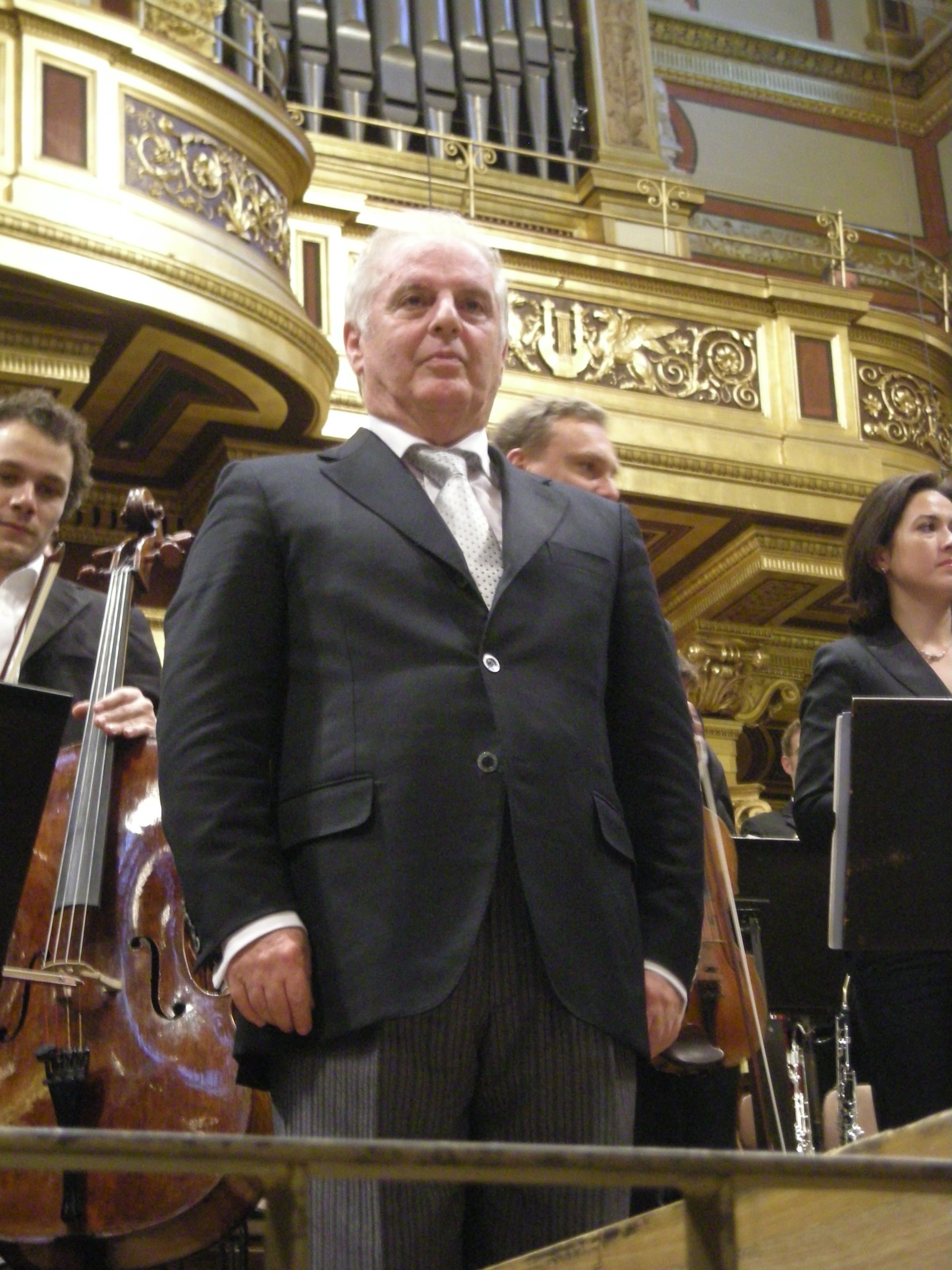
The Proms Wagner Ring continued with Siegfried, Prom 18. Tonight, Daniel Barenboim and the Staatskapelle Berlin were as one, united. Much has been written about the confrontation at Die Walküre Prom 15. Although I was sitting concert master side near the podium I didn't witness it because I was dashing out to beat the queue at the bar, desperate for ice and tonic. In any case, so what? Performers are intense. They put so much of themselves into what they do that they overreact. They're human. We shouldn't be judgemental. Perhaps the altercation concentrated everyone's minds. This was a vivid, muscular performance, vindicating orchestra and conductor.

The rumbling mumurs that begin the opera gave way to purposeful forward thrust. Suggestions of Fafner's slithering form coloured the lower winds and brasses.  Barenboim's Ring with the Staatskapelle Berlin is atmospheric, creating the twisted undergrowth that informs the whole saga. It's not "glamorous" like the Met Ring, but sinewy and intelligent. The Staatskapelle play with natural grace and sensuality, carrying off Barenboim's fast paced tempi with complete assurance. Exquisitely beautiful details and solo playing. Götterdämmerung will give this orchestra even more to show their style.

Peter Bronder's Mime crackled with manic energy. The role is far more difficult to sing than many realize. Mime's mind twists, constantly plotting, manipulating and slithering out of traps. Thus Wagner compresses many complex nuances into short, spiky outbursts, which a singer must negotiate with slippery finesse. Fafner slithers because he's a reptile, but he doesn't have Mime's malevolence. Bronder's voice negotiates the tricky, slippery turns and spits sharp siblilants the way a snake might flash its forked tongue. High notes suggest hysteria, low notes drip with poison. Absolute precision is essential. As Mime knows, there's no margin for error. Bronder is at his best when challenged by Alberich and the Wanderer. Until the very end, Siegfried is no match for his wiles. Bronder's clear bright tone suggests unnatural light, the opposite of the healthy sunshine which will wake Brünnhilde. Although born in Hertfordshire, Bronder is a native German speaker and has spent most of his career in German-speaking countries. True character tenors are in short supply. We need more Bronder in this country.

Lance Ryan sang Siegfried with the Staatskapelle earlier this year. His is a serviceable voice that lends itself to a wide repertoire. It's not distinctive but thankfully isn't saccharine, Met style, thank goodness.  Ryan creates vibrato by extending vowels, suggesting effort rather than natural control. His top is pinched and there's not much colour.  But a voice doesn't need to be beautiful to work well in drama. Witness Simon O'Neill's perceptive Siegmund, exuding character and personality. But who is Ryan's Siegfried? Siegfried is an emotional blank canvas  because he hasn't learned fear, or much else about life, for that matter. His first experiments with the horn are tentative and distorted, as he's still learning. But it's strange to hear the horn player growing ever more fluent and expressive while the singer doesn't keep pace. Ryan is straightforward, but there's more to Siegfried than being reliable. 

In this Ring, Barenboim uses different singers for each incarnation of Wotan. Terje Stensvold's Wanderer is Wotan in old age. aware that the future is no longer in his hands. Stensvold paces the part to suggest that the Wanderer is slowing, running to ground. It doesn't matter that his vowels shade towards Norwegian. Wotan isn't German, but an offshoot from Nordic tradition. It's enough that Stensvold has presence and gravitas. Erda is older than Time itself, the only figure who can treat Wotan like a child. Anna Larsson's Erda was gloriously resonant: she sounds youthful and full of life. Erda may be ancient, but Larsson shows she will be more enduring than Wotan because she connects to the pure source of moral values he has polluted.

Johannes Martin Kränzle sang a convincing Alberich, well characterized and detailed, a fitting counter to Broder's Mime. Eric Halfvarson a suitably eloquent Fafner. Rinnat Moriah sang the Wood Bird. But everyone was waiting for Nina Stemme. The softness in her delivery was impressive, for she portrayed Brünnhilde as vulnerable and feminine. She's about to become mortal. Later she will find her Valkyrie soul again, but for the moment, Stemme showed her as woman. The tessitura lies very high for her fach,  but Stemme approaches it with dream-like lyricism. "Heil dir, Sonne!" she sang, "Heil dir, Licht", as if she were drinking in the life-giving, healing properties of Nature. Stemme is fairly new to Brünnhilde, though Ryan has done Siegfried many times. Yet this  Brünnhilde left Siegfried far behind.  I thought about the message of renewal in this opera, and of the dawning of a new era, where the values oif Valhalla  will be swept away. Brünnhilde is the true hero of the whole Ring. I can hardly wait for Sunday, Götterdämmerung, Prom 20..
But see HERE = Bayreuth Siegfried Lance Ryan redeemed two days later !
My review of the Proms Die Walküre  is HERE  You might also enjoy Fritz (Metropolis) Lang's Ring of the Nibelungs (1924 film) HERE, with video !

Friday, 26 July 2013

Siegfried not Wagner but Lang

To get us in the mood for Wagner Siegfried with Barenboim, Prom 18 tonight, Fritz Lang's Siegfried from 1924, four years before he made Metropolis.(read more about that HERE). "Farewell, Siegfried, son of King Siegmund, you will never get to Worms!" 

This Siegfried is a golden prince who for some reason lives under a World Ash tree on good terms with a community of trolls. They're quite endearing. When they walk they stomp. legs wide apart.  One guts fish while three childlike trolls (ugly Rhinemaidens?) scamper about.  Siegfried forges a powerful sword. "Siegfried, son of King Siegmund", says Mime,"ride home to Xanten. Even I cannot teach you any more!"  In the woods, Siegfried meets an amazingly realistic reptile, constructed in an era when special effects weren't done by computer, but made by hand, and moved by machines. Fantastic scene! A less convincing mechanical bird tells Siegfried to bathe in the dragon's blood to become invincible..He gets the "Wonder Cap"  from Alberich and steals the Nibelungen Treasures.

Siegfried, now with 12 Knights of his own, arrives in Worms, where King Gunther of Burgundy and his sister Kriemhilde reside in stylized art deco medievalism.Study the sequences, they're a visual delight. Hagen, who wears a magnificent winged cap, tells Gunther to fetch Brunhild, Queen of The Northlands. She lives in a castle surrounded by flames with a regiment of amazons. Defeated in a tournament she is taken back to Worms. More spectacular art deco designs!  "Traditional" costumes were never as audacious as these. The set is immense, allowing dramatic panorama shots, not easy to achieve with early camera technology. This is medievalism as modernity, done with great style. Please read what I wrote about Fritz Lang's four hour Die Nibelungen saga HERE .


Monday, 18 June 2012

Erik Nelson Werner - Siegmund, Opera North

Erik Nelson Werner sings Siegmund in Opera North's Wagner Die Walküre. Tim Ashley in the Guardian said "the evening belongs to Erik Nelson Werner's Siegmund and Alwyn Mellor's Sieglinde – glorious, the pair of them, their erotic rapture, heroism and guilt all entirely credible."  That's quite some achievement since the attention's usually on Brünnhilde and Wotan, and of course the Ride of the Valkyries. No supriose because Erik Nelson Werner is very good indeed.  Listen to the live broadcast on BBC Radio 3 on Wednesday 20th from 4.45pm

Erik Nelson Werner is American but grew up in Germany and is completely fluent in both language and culture - a rarer attribute than most realize. He's also a strong, charismatic personality, with the kind of presence that works well on stage. I first heard him in 1998 when he won the Audience Prize at the Wigmore Hall International Song Competition, where other contestants and their families voted for him, as well as the audience! That was the year that no-one won first prize, for reasons still unknown. But as is often the case, singers with real potential don't fit  narrow criteria. Werner also chose an idiosyncratic programme (Fortner, no less). That's the sort of man he is. Our faith in him has paid off. Over the years, he's steadily built his career in Germany and in  the US. Read more HERE. He used to be a baritone, but is now a tenor, well suited to roles like Siegmund where he can use the resonance at the lower end of the range to create intensity.  I've written about the Schubert Winterreise he devised (mixed with readings from Goethe's Werther) for Long Beach Opera (see here and watch the video clip) Werner is definitely not boring! The clips below are from some time back.

Monday, 7 November 2011

The Curse of the Ring - Siegfried and the Met

A project as big as Wagner's Ring is, or should be, planned years in advance, but the Met seems to have taken on board criticisms of this complex Ring cycle. But has it learned the real lesson of the Ring?

In this Siegfried, the notorious Machine isn't called upon to do anything spectacular. It's now a giant projection screen for a banal, generic light show, which could easily be achieved through simpler means. It's a tragic waste of the sophisticated technology available. Many will gloat, taking pleasure from seeing the biggest house in the country humbled. That's silly, short-term thinking, because technology is not the problem, but the way it is used. In the first two parts of the cycle, the Machine generated some very creative ideas, suggesting its potential as an artistic device, but now the buzz is gone. The Met's Faith in the Machine is no different to the old obsession with maximalist excess. Trouble is, trappings don't make opera any more than bling buys taste.

The whole point of the Ring is that Wagner doesn't equate wealth with virtue. Quite the contrary. So it's ironic that the old values of conspicuous consumption should override vision. But for many audiences, opera isn't about art, but about display and ostentation. So the Met is in a double bind.

This Siegfried is remarkably benign and ideas-free, almost Disneyfied.  Even Eric Owens's Alberich is more lovable than lethal. He sings well, but the non-direction limits the part to cartoon.  Owens deserved better. Gerhard Siegel is extremely experienced but this Mime sanitizes menace so it won't disturb, whatever the text and music tell us. Siegel is a wonderful artist, but this production isn't interested  in his  interpretive abilities. As he walks offstage, sweating under that heavy costume, he gets waylaid by Renée Fleming, who wants to make small talk. Siegel's naturally witty, so does good snappy one-liners, but his real job is singing, not playing along with chat-show farce. Evidently, the chatter is more important  to the Met than the artist or the role, because they think audiences must be kept amused and can't deal with deeper issues.  Sure it's interesting to see the mechanics of opera, but the chat is usually so artificial. Fleming feigns surprise when Siegel mentions his heart attack at the Met two years ago, her eyes fixed on the autocue above the camera.

During Die Walküre, Bryn Terfel brushed off the the chat, saying "Sorry, Renee, I've got another Act to sing". He was right. His first duty is to his art. He wanted to stay in character and rest his voice, not fritter it away. This time, though, they weren't going to let him escape.As the Wanderer, Wotan is distressed because he realizes he has little power now to influence events. Terfel's Wanderer simmered with suppressed violence. Terfel has never been part of the Establishment, despite his status. He's a natural outsider, who only plays the game when it suits him. This gives hisWotan its metaphysical intensity. Sometimes Terfel can be frustrating,  but here he was fully engaged. His voice bristled, breathing depth into every phrase, revealing the Wanderer's emotional complexity. Someone once told me, "Watch the eyes"  Actors who pose make the right gestures, but their eyes betray them. Terfel's eye(s) flash with many conflicting feelings, since he's so  instinctively in character that even involuntary muscles contribute to his portrayal.

Jay Hunter Morris is the answer to the Met's dreams. Like it or not, movie values influence opera these days and Morris has matinee idol good looks. Few seriously expected Ben Heppner to sing Siegfried in HD broadcast, at this stage in his career, whatever the state of his voice. (Gary Lehman would have been fine, and he can sing Tannhäuser). But Morris's sudden rise to prominence has sensation value. It's a Star is Born scenario everyone can sympathise with, so the Met is right to market it for all it's worth. This is exactly the magic this otherwise dull production needs to catch public attention. It's wonderful human interest and the audience gets to share the dream. You want to wish him well. Morris is fine, but the voice is pretty rather than truly lyrical.  It's not specially distinctive and unstable at the top. Many infelicities in this performance, though he evened out for the crucial final love duet. The Met publicity department makes a lot of the fact that it's a demanding role and that there aren't that many true Heldentenors around, but Morris is not a miracle discovery, though he's great box office.

This production is helped, too, by Fabio Luisi's light, almost Mozartean finesse, which was nicely vernal in the woodland scene, supporting Morris well. Having heard Mojca Erdmann live and on CD several times I was very worried about her Woodbird, but she sang it nicely. Pity about the staging though!  The mock-forest film projection was bad enough but the depiction of the bird was plain embarrassing. An oriole the size of a turkey, run in repeat loop so it flies in the same formation most of the time. Of course this is no natural bird, but this was so bad it would shame an amateur production. Disney would do it better.

Deborah Voigt's Brünnhilde was interesting because she made the connection between Brünnhilde and the  Woodbird, both of whom are critical to Siegfried's development.  Her fast, tight vibrato resonates like a bird, for Brünnhilde, now mortal, is nesting at last.  It's cosy and domestic, very charming.  A glorious Heil dir, Sonne! and she looks pleased with herself, as she should.

Tuesday, 14 June 2011

Barenboim Boulez, Wagner Liszt Staatskapelle Berlin South Bank

At first I thought, I can't write about this, I can't do it justice. But then I thought, that never stopped anyone else. So I stayed up late in the hope that Mark Berry at Boulezian would be writing and sure enough, he popped up. Worth waiting for! Why can't more music writing be as thoughtful as this? Here's another good link, to Edward Seckerson.  Less technical but perceptive and sincere. I read reviews to learn how people relate to what they hear, not simply to see who was where when.

Liszt is a composer I associate, rightly or wrongly, with flamboyant virtuosi who scream "Look at me!" when they play. So the prospect of Daniel Barenboim and Pierre Boulez doing Liszt was hard to resist. Barenboim's playing was dignified with classical restraint, but not dull, emphasizing the solid structure beneath the flash. For a non-Lisztian like me, it was fascinating to hear how Boulez integrated the piano part with the orchestra. Giving the soloist more space made for greater classical balance, further complementing Barenboim's music-focussed approach. Different, but stimulating.

For Barenboim and Boulez, it's the music that counts, not celebrity. They challenge you musically. Thus Wagner's A Faust Overture. A cheeky choice, since Liszt's Faust Symphony is by far more sophisticated, Liszt wins hands down, there. In the hands of lesser conductors, Wagner's Faust makes little impact. Boulez, brings out the structure so at least we can hear how Wagner might have been thinking in terms of in his youth.

Boulez's Ring for Bayreuth was a revolution.While Patrice Chéreau's direction was striking at the time, Boulez's conducting still sounds so fresh that it still sounds innovative. You feel you're hearing Wagner come alive from the score, undimmed by performance traditions. In the opera, you have to connect to Siegfried, but in stand alone concert performance, you hear it "as music" on its own terms. Siegfried the character, though a hero, is also an immature prat, which is why Wagner offs him. Boulez is anything but stupid. This Siegfried Idyll was extraordinarily personal, and expressive. Perhaps it's because the orchestra knows Boulez so well, that the playing seemed much more intimate than it does normally.

An intimate, personal Siegrfried Idyll? But Boulez made it feel that way. It flowed, mightily, like the Rhine itself, with an inexorable sense of direction. This is what the river symbolizes and why it's such a powerful metaphor for the undercurrents in the Ring. Exquisitely defined details along the way,so beautiful that it's almost heartbreaking to know that they must inevitably pass away.

All of us go on a Rhine Journey of our own through life. Listening to Boulez and the Staatskapelle Berlin made me think what the music might "really" mean, as symphonic statement. Don't swallow the superficial clichés in the media, but go to source, like he does with music. This performance was overwhelming because it was so deep and intense. Only an automaton could fail to be moved. Boulez has had a remarkable life : perhaps he's thinking on where he's headed. But from the passion he puts into the coda, it feels spiritually affirmative and uplifting. Like his Mahler. Mass standing ovation, from an audience who'd most likely come for Barenboim, not Boulez.