Showing posts with label Chinese stereotypes. Show all posts

Friday, 23 March 2018

Glière The Red Poppy and Soviet non-realism

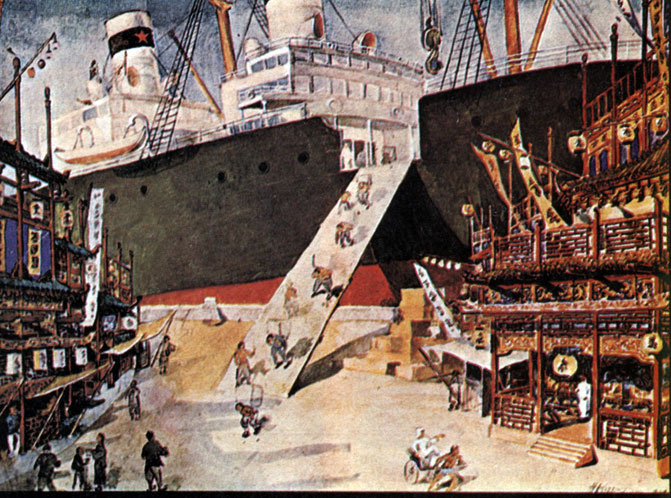
The Harbour Scene in Glière's The Red Poppy
As part of the Voices of Revolution series at the South Bank, Vladimir Ashkenazy conducted the Philharmonia Orchestra in Mosolov's The Iron Foundry,  Prokofiev's Piano Concerto no 3 (Behzod Abduraimov), Glière's Concerto for coloratura soprano and orchestra and the Suite from Glière's The Red Poppy. The Iron Foundry and The Red Poppy were written  around 1927, when the Revolution was safely established, and culture in the Soviet Union was briefly progressive, even avant garde. It represented the hope that a new world order could be achieved through progress and Russian leadership. Later, Stalinism, and "the will of the people" would dictate the conservatism that comes with mass populist values.  The Iron Foundry marks one aspect of Futurism: faith in industrial processes.  It's a blast ! It also connects to other artistic works of the period, not only in Russia, from Fritz Lang's Metropolis (read more here) to Machinist Hopkins (more here). I've written about The Iron Foundry and Soviet Futurism before, (see labels like Futurism and Eisenstein) so I decided to watch the full ballet version of The Red Poppy in a full-colour production from Bratislava in 1954. 

Glière's The Red Poppy is set in China. Nothing unusual about that given western taste for exotic locales.  Significantly, Turandot premiered in 1927, around the same time as The Red Poppy. Since a huge part of Asia was in fact part of the Russian Empire, it was perfectly natural for Russian composers and artists to incorporate "eastern" themes. Hence Borodin's Prince Igor, and much else.   Yet there's more to The Red Poppy.  It's poltical, and connects to a wider context of Soviet expansionism.  The film, Storm over Asia (Vsevolod Pudokin, 1928) depicts a Mongolian herdsman mistreated by the British (generic capitalist) who eventually drives them from his land.  The timing of The Red Poppy is worth noting.  It's no accident either that the title is "red" poppy, since the "white" poppy produces the opium which caused the Opium Wars and the Unequal Treaties.   China was in the throes of modernizing after thousands of years of feudalism, and the young Republic forced to call on help from outside. The Chinese couldn't really rely on western powers who had an interest in keeping China subservient, so they called in the Soviets.  The Chinese Communist Party was minute, founded only in 1921, so it didn't seem a threat. But by 1924, Comintern had such influence that it could organize massive strikes in the main Treaty Ports, threatening the control of western powers.  The leader of the Comintern in China was codenamed Borodin, a name familiar to many Chinese since his music was well known in China.  Hanns Eisler's elder brother was also involved, lower down the scale. The Chinese soon got rid of the Comintern, but eventually the CCP took hold. 

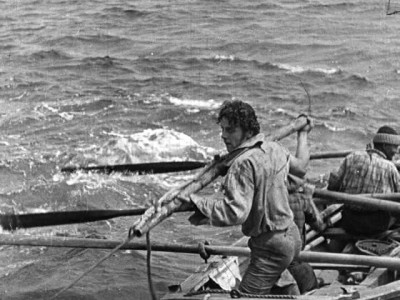
Glière's The Red Poppy depicts the harbour in a Treaty Port (as sen in the photo above, taken from the original production). Coolies, working on a pittance, are unloading goods for foreigners and the rich. In the Bratislava production the cargo is marked "From the USA" and contains guns.  The workers are mistreated, not only by western capitalism but by Chinese collaborators, depicted - alas - like Fu Man Chu stereotypes. Glière incorporates many different musical styles to emphasize the contrast between cultures - foxtrots and jazz for the capitalists,  bizarre pastiche Chinoiserie for the Chinese, and The Internationale for the Soviets and "good" Chines partisans.   The original, being a ballet, contains numerous set pieces for dance, including passages where notes flutter breathlessly, so the dancers do a lot of en pointe, their feet arched as if they had bound feet (another western stereotype of Chinese culture).  In ballet, dance tells the story, so plots don't need much depth.  A Chinese nightclub dancer called Tai-Choa notices how nice the Soviet sailors are (they have a famous dance number).  There are "Malay" dancers too, who have no function but to add another element of exotic soft porn  - "Malays" no real Malay would recognize.  In a protracted dream sequence, induced by smoking dope (as stereotype Chinese were expected to do), Tai-Choa finds herself in a temple with a giant Buddha. Demons dressed like generals in Beijing opera threaten her, but she's saved by good guy warriors in white (!) commanded by a Chinese partisan. The Chinese villian tries to get Tai-Choa to poison the Soviet Captain (whom she loves)  but she won't do it. The temple/courtyard is raided and the Captain and his men enter.  The Chinese villain raises his gun and shoots, but Taï-Choa sees what's happening and takes the shot, and dies.
Russian music was ubiquitous in China long before the Communists came to power. After 1917, hundreds of thousands of "White" Russians flooded into China to escape, swelling the number of western musicians in China,  forming dance bands and orchestras, even supporting Russian language opera houses. Glière's earlier music would have been quite well known, though The Red Poppy with its overtly political character would probably have been banned before 1949.  After the Sino-Soviet split in 1957, it would have been banned again.  But by then, decades of militant entertainment of all persuasions had become part of the Chinese scene, giving rise to a distinctly Chinese form of political ballet, which blends agit prop with the stylization of Chinese opera.

Wednesday, 14 June 2017

Doming Lam - Hong Kong Music Series, St John's Smith Square

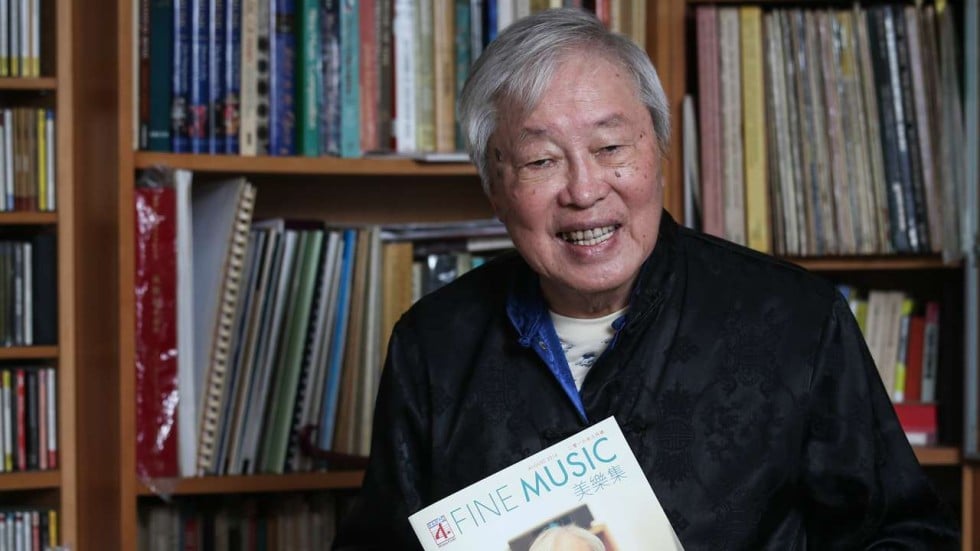
Doming Lam, from SCMP

Hong Kong music, and indeed most modern Chinese music, might be nowhere were it not for Doming Lam ( 林樂培), who features in the Hong Kong Music Series, the biggest celebration of Hong Kong classical music ever held in Britain.  Hong Kong is a dynamic, thriving and vibrant city whose cultural life reflects the cosmopolitan creativity that makes the place flourish, despite all odds. In in the west, people only know movies, and don't realize just how much more there is in Hong Kong arts. The Hong Kong Music Series presents five productions, four concerts and one opera, at various central venues in London from 7th to 28th July.  More details HERE

Doming Lam was born in Macau in August 1926. He studied in Toronto and Los Angeles (with Miklós Rózsa). Returning to Hong Kong in 1964, he soon became a leading figure, composing, conducting and promoting music in a city where performance is highly regarded.  With his engaging personality, he's a good communicator, almost a household name, which is more than can be said about many serious composers.  Maintaining an international presence, he's a Member of the International Society for Contemporary Music (ISCM) . He also has a section in Grove. Photo at left shows Doming Lam in  his  youth when he compered a popular classical music radio show. The keynote concert in the Hong Kong Music Series will be held at St John's Smith Square on 7 July (book HERE)   Titled  "Music Interflow", the programme  illustrates the dialogue between western and Chinese music.  Doming Lam's Three Night Songs of Li Bai  will be a highlight. It's a short piece for solo voice and piano, written in 1957, but marks a significant thread in Lam's development.

Li Bai, who lived in the Tang period, was a scholarly poet who lived in solitude, eschewing worldly power.   Many of his poems dwell on Nature, specifically the moon.  He often wrote about wine, but drunkenness provided cover for the expression of deep emotion.  In traditional Chinese society, the scholar gentry were a distinct class.. Although many had careers in public service, they didn't necessarily have power or wealth, but had moral and intellectual authority.  Chinese classical music reflects these cultural values: music for contemplation and private edification.   Effectively, a chamber music ethos.  In the 19th century, Chinese audiences embraced western orchestral music. Conservatories were set up in Beijing and Shanghai. Read more HERE about Xian Xing Hai and  HERE about Ma Sicong, two important composers from the same southern delta region that Doming Lam comes from.  Guangdong culture is very distinctive: even the dialect is based on nine tones, difficult for non-native born to master.  The advent of large, western style orchestras stimulated the growth of large ensembles for Chinese music, generating a whole new genre.  Doming Lam writes music for western and Chinese orchestras, as well as synthesizing both forms anew.  He also writes large scale choral works. Read HERE for a list of his works, with links to scores and recordings.

Clarence Mak
The concert at St John's Smith Square on 7/7 includes works by Clarence  Mak, Lui Man Shing,  Tsui Wai-lam, Mailina Tsui and Chan Man Tat, music based on Chinese aesthetics, cognizant of western influence. The programme also includes works by Britten, Quilter, Bridge and Delius.  See the connections?  Chamber music and song - refined music for reflective individuals   Conducted by Lo King Man, the performers play western and Chinese instruments. The singers are Colette Lam and mezzo Carol Lin, who will also be singing in the opera Datong ; the Chinese Utopia at the Richmond Theatre on 27th and 28th July. Book HERE.  I'll write more later about the opera, and about the concert with Chinese opera in the Hong Kong Music Series.  Both deserve more time and space !  Besides, it's not easy to come to Chinese music, even modern Chinese music, without understanding the background and unique values.  Because the English-speaking world is west-oriented, it helps to understand alternative perspectives.  There is so much to discover!   To find out more, please follow the labels below to Chinese music, Chinese opera, Chinese movies, Chinese culture and history. 

Sunday, 28 May 2017

Race, Religion and Whaling : Down to the Sea in Ships

Down to the Sea in Ships (1922, Elmer Clifton) is famous because it made Clara Bow a star, but it's even more interesting as a semi-historical document.  It's also a surprisngly subversive commentary on race, religion and hypocrisy.

When this film was made whaling in tall ships was still an important industry, and many of the shots are authentic, shot with local whalers, who still practised their trade. This film is much more than a movie. The plot is melodrama, but plays out against a background which would be impossible to replicate today.  Though the story is set in the mid-nineteenth century (the Gold Rush is news), those times were living memory to many people 100 years ago. Just as Nosferatu (1921 - read more here) depicts a Germany of the recent past which was soon to vanish, So when we look at the whalers in their small boats, struggling with the ocean, we aren't watching stunt men, but men who really did know how to ride the waves.  There are shots where we can see whole herds of whales, and porpoises, swimming freely. Possibly not so easy to envisage today.  Down to the Sea in Ships is like a last, loving snapshot of a world we might reconstruct but can never experience. The best scenes, shot on the high seas, are grainy and not posed for dramatic effect, but they were made when motion picture technology was barely 25 years old.  Special credits then, to the two photographers, A G Penrod and Paul H Allen, "who, in small boats, stood by their cameras, at the risk of their lives, to film the fighting whales".  But there's even more to this film than meets the eye: its sub-texts on social issues are way ahead of its time. 

Down to the Sea in Ships was made by "The Whaling Film Corporation", specially set up for the purpose and shot in New Bedford, Massachusetts, where the premiere took place. At the time, cinema wasn't dominated by big studios but by small independents, so this film is also a record of a film making model completely different to Hollywood, much closer to European art film of the period.  The director/producer was Elmer Clifton (1890-1949) who worked with D W Griffith, though in this film he shows a very different approach to movie-making.  

This film is not studio spectacular but direct engagement with Nature.  Nowadays there'd be warnings that "no real animals were harmed in filming". Not so in 1922. The massive sperm whale the whalers kill was probably a real whale.  No way the technology of the time was fancy enough to fake a whale like this. It fights back, flipping over one of the boats. The men fall into the sea but look as though they've done that before.  When the whale pulls three boats and their crews (weighing 6000 tons the subtitles tell us) the whale wasn't acting.  There are shots of blubber being stripped off the carcass, buckets filled with sperm and so on, lovingly captured in detail.  Presumably that's what happened : the whalers had to make a living and weren't paid much by the film company.  So if the filming is grainy, and the shots unposed, without the special effects we expect today, we shouldn't complain.  Although some scenes are clearly staged, technology of the time wasn't advanced enough to fake all that we see. The whaling ship, with three masts and nine sails, was almost certainly authentic. As the credits say "The brawny boatsteerer still throws the hand harpoon".  Though the hero is cast as boatsteerer, the man doing the job was evidently the real thing. 

It's interesting, then, hat the close knit community depicted is staunchly Quaker, though Quakers eschew killing.  I had a hard time squaring that with hunting whales almost to extinction, but I guess that's because we live in more enlightened times and don't depend on whales for fuel, bones and oil.  Quakers were whalers for economic reasons.  Captain Morgan is a retired whaleman, ramrod straight and unbending, and rich.  A bit of a tyrant too, who insists his daughter Patience cannot marry outside the faith or profession.  He's so uptight he complains that Patience's wedding shawl is "gay" because it has a fringe.  Being pig-headed is his downfall, though he doesn't live to find out.  For he's easily fooled.  Two men plot to steal his ships. One is Finner, a ne'er do well, the other is Siggs, from a "nearby city".

Siggs is seen dressed in Chinese clothes with Chinese antiques.  "You're almost white" says Finner.   Down to the sea in Ships is a whole lot less innocent than you'd expect.  Although race laws prevailed in the United States and elsewhere, not everyone was racist. Please see my piece  Broken Blossoms : Racist reversal the 1919  film by D W Griffith, Clifton's mentor, which subverts racist stereotypes and was banned in British colonies for fifty years as a result.  Griffith's Birth of a Nation presented the KKK in a good light, demeaning their victims.  But Clifton, who never made it big in Hollywood,  went on to make low-budget independent movies on difficult social issues. As in Broken Blossoms, and other films on race relations like The Cheat : racism and dishonesty (read more here)  fiendish orientals are defined as sex-obsessed maniacs, lusting for white women. The actor playing Siggs leers and grimaces, like a masked demon.  All Siggs has to do to pass as Quaker is wear a Quaker hat and talk thee and thou.  Is he mixed race, (in the 1850's) or is his race a ruse to justify titilliation? .And, in this film,  Finner is even more of a lecher, salivating over Dot,  Morgan's pre-pubescent  orphan granddaughter.  Later he attempts to rape her. (Dot and Finner in the photo below)


Dot is played by Clara Bow then aged 16 and chubby faced.  Captain Morgan cannot understand Dot, who was found floating on a raft when her parents' ship,went down.  Maybe she's not his at all.  She's a forceful whirlwind of a girl, more tomboy than lady, who hangs out with the labourers at the copper works and shamelessly pulls Jimmy's newly grown whiskers. Grandad grew rich from killing animals. Dot confronts men who tease a dog. She gets into fights. Eventually, she dresses as a boy to run off to sea when Jimmy signs on as a whaler.  Bow plays the part so well that she steals the show: the other actors are wooden in comparison.  And what a part it is, so unusual and so daring for its time.  Her more famous It Girl roles are tame stereotypes in comparison.

Patience is a wimp, who still plays with dolls, though she's at least in her 20's.  Siggs prevails on Captain Morgan, who,lets him court Patience. But Dexter, the Boy Next Door, returns from college and he and Patience fall in love. Finner gets Dexter shanghai'd on a whaling ship. Unfortunate term, given the racism in the depiction of Siggs, but a reminder that white men got screwed by a brutal system too.   Finner kills the master of the ship and takes control.  Dot, dressed as a cabin boy defends Jimmy when Finner fights him, and reveal she's a girl.  Finner gets caught molesting her and is locked in a cage. Dexter ends up becoming Boatsteerer, having earned the respect of the crew.  Having caught the big sperm whale (more innuemdo) the ship sails back to New Bedford. That very day, Patience is marrying Siggs, having promised her Dad on his deathbed to do so.  Dexter runs through a thunderstorm to the church, smashing a window, disrupting the ceremony and the decorum of Quaker propriety. Love prevails!  Next year Patience has a baby instead of a doll, and Dot cavorts in a flower strewn meadow with Jimmy. Along the way we see other vignettes of "real" life, like the Black ex-slaves of the Sea Islands, and Tacoma, Patience's First Nation maid, with an uncredited actress who clearly isn't white, and is dressed in Missionary Indian costume.
Sunday, 10 July 2016

Shangri-la Finborough Theatre - more than just a play


“You like your minorities like your pandas – picturesque, cuddly, endangered, helpless. But I refuse to be a panda. I refuse to go extinct. I want to live, to live well, to live like them.”

More than just a new play,  Shangri-la is a play that connects to issues rarely discussed but that need to be addressed.  It runs at the Finbourough Theatre from 12th July to 5th August.

"Bunny, a young indigenous woman, has witnessed her family’s livelihood destroyed by mass tourism. She dreams of escape — as a globe-trotting photographer. Nelson, her liberal Chinese boss, dreams of a new kind of tourism that's sustainable and enables genuine cultural exchange. Their white Western clients yearn for escape, for the touch of something authentic.........What happens when the only thing you have to sell is your culture? When the only way to free yourself is to betray your roots?"

Does tourism destroy the very culture it seeks to promote ?  Shangri-la is written by Amy Ng who has personal experience of the westernmost regions of China and Tibet. A historian by training (Yale and Oxford), she understands the wider issues  that impact on societies "opened" to western tourism  READ MORE HERE and especially read about the discussion forums that are taking place with the play.

Monday, 2 May 2016

Chinese ukulele star 1925 ?

Dressed in a "Chinese" costume, strumming a ukulele and singing skat.  Nee Wong was a novelty act in vaudeville, who appeared on Broadway and in London's West End. Billed as "a regular Chinese 'Ukulele Ike'" and "The Gentleman of the Orient" and  "One of vaudeville's most talented entertainers in Nee Wong, a lackadaisical young Chinese (sic). Nee Wong can make a ukulele talk. He sings American songs and translates them into Chinese, giving his audience a little lesson in Chinese pronunciation."
Audiences marvelled, and even today some  are fooled.
 
But even his identity was an act. Nee Wong's costume isn't Chinese. It's a circus clown version of the kind of tunic Chinese women - not men - wore or rather weren't wearing in the 1920's. The famous movie clip from 1925 shows him singing,  but he's singing gobbledegook, not Chinese.

Nee Wong was no more "Chinese" than white folks in blackface playing banjos and singing "African" were black. In reality, Nee Wong was Filipino, born Alfredo Oppus in Baclayon in 1895.  He worked as a labour organizer  with a Filipino battalion in California just after the First World War.  As "Nee Wong" he made a living impersonating "
the gaits and mien of the Chinese, Japanese, and Filipino as observed by an Occidental at the cross roads of Oriental San Francisco".  Read more HERE on a specialist ukulele blog which is ace on ukulele technique, and also read the comments below about Oppus, the man.
Nee Wong presumably had to make a living and didn't do badly. His act says much more about his era, when non-whites couldn't break into the mainstream unless they pandered to racist stereotypes, pretending to be what they were not, serving an audience that didn't care. White guys donned blackface, strummed banjos and pretended to be "African". Real black guys had to adopt demeaning caricature. Stepin Fetchit's very name implies servility and borderline mental defectiveness.  Even as late as the 1960's Screamin' Jay Hawkins pranced about on prime-time TV, grunting "voodoo", in a get-up that came straight out of 1920s' witch doctor movies. There were lots of acts like these then, many of them white folks pretending to be what they were not. But what was the psychological toll of demeaning oneself and living a lie? These acts weren't harmless fun because they reinforced racist values.  At least, Oppus seems to have broken away. By the 1940's he's seen in photos doing a straight act.  Others didn't, some trapped in tragic fantasy. I don't know what happened to Alfredo Oppus, but I'm glad he saw past illusion.

Tuesday, 29 March 2016

Sexploitation and stereotypes : Anna May Wong and Li Li-hua

Is Anna May Wong a symbol of Chinese womanhood? To those in the west, perhaps. Her genius lay in her creation of a persona so stunningly original that she's stiill the defining icon of exotic beauty. Strikingly photogenic, she commanded the camera into submission. Modern supermodels look good because fashion stylists and photographers work on them. Anna May Wong was her own stylist, her art was her own image.  She has become an object of identity for many who look Chinese but whose connections with Chinese culture are minimal. In any environment where you're a minority, relating to others who might be like yourself is sensible human instinct.

Anna May Wong's persona was so compelling that the image has become self-fulfilling. Looks are a mirror on which other people project their own fantasies. instinctively channelling western fantasies. Instinctively, she knew her market, fuelling western stereotypes about the Orient. She was successful because in many ways she was more American than Chinese. She embodied the side of Grant Street where tourists thrill to the "Chinese experiece". Better that than being totally insular.  But looks are a mirror on which other people project what they want to see, not necessarily what's really inside.  Therein lies the danger.  Icons can replace reality, and sometimes that iconography can be poison.

Because she usually played herself in different costumes, Anna May Wong wasn't a great actress. Only occasionally do we get a glimpse of real feelings, such as when she flashes a look of contempt at actresses in yellowface who got better billing than she did. But that's what the public wanted, an inscrutable ouitsider. The word "alien" has sinister connotations.  Her roles rarely varied beyond fashinn-plate stylization: those eyes at once alluring and pointedly opaque. When she moved, she writhed like a snake, playing to the stereotype of Orientals (of hybrid type) whose temptations led to doom. In Piccadilly (1928), perhaps her most famous film, she plays an exotic dancer who hynoptises nightclub audiences but can't integrate into "civilized" society. The villain, of course, isn't society but an inscrutable Chinaman. In The Cheat (1915) Sessue Hayakawa played a sophisticate less dishonest than those around him, but paid the price for not being white. Read my piece on The Cheat HERE.  

Piccadilly gets admired because it features an oriental in a central role, rather bthan a bit part, but it reinforces unpleasant negative stereotypes. Thus it's more offensive than The Cheat or DW Griffith's Broken Blossoms (1919) where white people play Chinese but the message is radically anti-racist. Read my piece on Broken Blossoms HERE. There were more Asians in Hollywood than most realize, but Anna May Wong's movies were a step backward, not forward.

And Asian cinema was full of Asians. Movies were made in China from around 1909. Shanghai, then the biggest city in the world, supported a huge film industry serving a mass audience. Because art was an integral part of modernization and education, Chinese movies usually carried social comment, many of a quality equal to anything in the west.  Chinese cinema featured women of all types, heroines and victims, and ordinary women living normal lives (as far as film can be normal).   


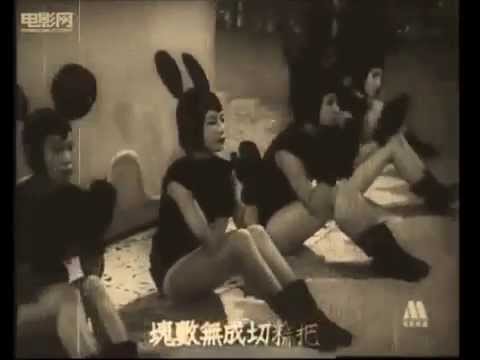
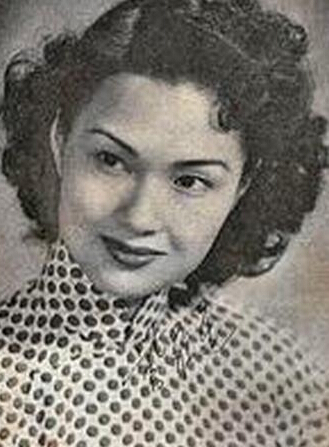
Below a clip from Colourful  万紫千红 (1943. The director was Fang Peilin. The star was the then 18 year old  Li Li Hua (李麗華) later a megastar for Shaw Brothers Studio. Here she plays a starstruck young girl, so desperate for the good life that she gets drawn into the world of Shanghai nightlife. There are many Chinese movies which satirize and reverse cultural stereotypes, including fantasies with exotic dancing femmes fatales, like Anna May Wong played. The photo above is a still from Colourful, showing a high kicking chorus line, the women dressed in traditional Chinese robes. Also a still from the same movie where the chorus girls are dressed as Mickey Mouse. 

 But this is enough for now.  Please explore the label "Chinese movies" in the list on the right - this site is one of the main sites in English about Chinese film. 

Monday, 28 December 2015

The Song of Malaya ; a song for the displaced


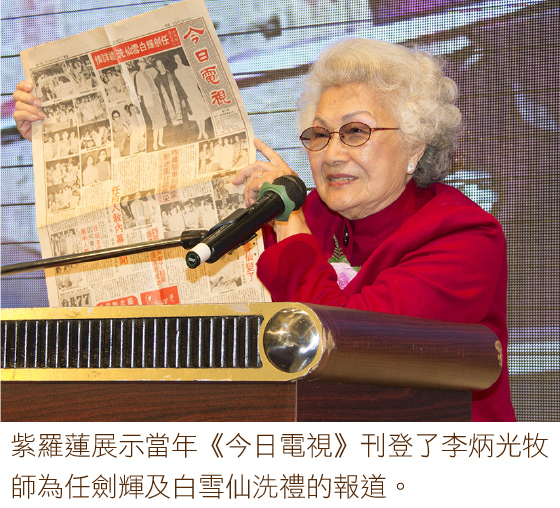
Tse Lo lin (紫羅蓮) died this week aged 90.  Song of Malaya (馬來亞之戀) (1954) was one of her most famous movies, for which she also wrote the script. The film is much more than a romance in an exotic locale. It deals with issues like the traumatic dislocation of war, the identity of overseas Chinese, and the moral and cultural obligations of an individual to society.  An extremely beautiful film and very moving. Tse also founded and managed the production company. She was then only 30 years old - quite an achievement for any young actress, anywhere.

Tse was caught up in the Japanese occupation of Hong Kong, and forced to participate in the high-profile film the Japanese Army made to commemorate their victory. It is an important historical document, since it was begun within weeks of the fall of Hong Kong on December 25th 1941, when the city was still scarred by battle. Re-enactments were filmed as accurately as possible, on location, with the supervison  of officers who had taken part. Tse played a small part as a local girl, but was most certainly not a collaborator. She was smuggled out in considerable danger, rejoining other members of the Hong Kong film industry who had regrouped as exiles in Free China. China had been at war with Japan since1931. Shanghai and Canton had been conquered. The biggest mass migration in history occured when around 25 million people became refugees,trekking from the coast to the Himilayas.  The charismatic  actor Ng Chor Fan already was a figure in the anti-Japanese resistance, having been an activist since the early 1930's, making patriotic movies and organizing refugee relief. Chinese cinema always has had a social and moral conscience.

In The Song of Malaya (aka Love in Malaya), Tse plays Yuk-kin, a girl who has lost her homeland and family in the war, and travels to Kuala Lumpur, searching for her father who had emigrated years before. Since Malaya had also been occupied by the Japanese, the background of social upheaval hangs heavily on the film.  Tse arrives in Malaya,  excited by the strange new surroundings, but she's dispossesed. Luckily, she's taken in by kind local Chinese, some of whom had been in Malaya so long that they had acculturated as Malay. She meets and is attracted to Mr Wong (played by Cheung Wood Yau) who runs a school for the Wah Kiu (overseas Chinese) so they can learn Chinese and understand their identity in a multi-cultural society.  He's from China, too, and, like Tse, has lost all contact with his family and native region.  Eventually, Tse meets up with her father, (played by Ng Chor Fan) who is now a westernized businessman with a Wah Kiu wife (Mary Man Lee) who wears sarong kebaya and acculturates Malay. Imagine the tensions.

Tse goes to live in Singapore with her Dad and finish her education. Her father's associate, Mr Cheung (played by Cheung Ying), falls in love with her and wants to marry her. Below, in the clip, we can see Tse sing about Malaya, new hopes and dreams and of friendship between Wah Kiu and  China-born. Watch the dynamic between her and her audience. She waves at Schoolteacher Wong, who waves back at her. But things are not to be. Wong's wife and son come out of China, but Wong dies, and presumably they're destitute again. Tse marries Cheung, and they plan a round-the-world honeymoon. But Tse knows where her destiny lies, and Cheung is a good man. So they use their money to continue Wong's mission to provide a good education for the Wah Kiu.

Tse, the woman, not the character, was deeply religious and stopped making movies in the mid-1960's  to raise a family. Her marriage ended early in divorce, and she moved to Seattle, bringing up her daughters.  So she, and they, became Wah Kiu, like millions of other Chinese who have emigrated and live often outside their roots. Not refugees like Tse's character in the movie, but displaced people who forge new identities. I wish The Song of Malaya could be released again because in some ways it's even more relevant now. In the second clip, which mixes the intro with short clips from the film, the scene at the building site is symbolic.The cranes work well, but the peasant hauls soil in a wheelbarrow. Together they build a channel for a river.  Hence, integration and commitment, not anomie.


Wednesday, 14 October 2015

Cultural minefield - Daughter of the Samurai


There's just so much odd with Arnold Fanck's venture into Japanese cinema it's hard to know where to start, but that very strangeness yields insights into the way different cultures view each other  Fanck's Daughter of the Samurai was made about a decade after his masterpieces like The Holy Mountain (1926) and The White Hell of Pitz Palu (1929)  By this stage in his life, Fanck wasn't "free". He had to do what the Third Reich wanted, or else. Compared with Leni Riefenstahl's films, like The Triumph of the Will,  Daughter of the Samurai is not a "Nazi" film as some suggest. On the contrary, it's film by a European who doesn't know much about Japanese culture, or Japanese cinema, but does know mountains.

Fanck created Bergfilm: poetic, esoteric movies filmed in the Alps, with actors and cameramen who did their own climbing, often in dangerous conditions, with little of the equipment climbers rely upon today. This sense of first person danger permeates the films. Fanck was a geologist who knew how mountains were formed  and how powerful they were. In Bergfilms, mountains are the real stars, towering majestically over all else, including the actors, auteurs and cameraman. The mountains are highly symbolic, connecting to the intellectual challenges of the late Romantic period. To call them "German westerns" is hopelessly superficial.

Daughter of the Samurai was largely shot in the studio, though there are wonderful shots of Mount Fuji, of terraced rice fields and snow-covered peaks,  showing that Fanck and his cinematographers still had an eye for the patterns of Nature. In this film, they also show shots of industrial processes and stylized dancers. They even respond to the rhythms of rice-planting : like mountain climbing , planting rice is repetitive and physically demanding, but worth doing for an ultimate reward.

The film was made in 1937, when Japan yet again invaded China. Germany and Japan became wartime allies since they had a common enemy: Russia. At the time neither was at war with the west. The Germans were happy to support Japan's invasion of China. Both countries wanted Lebensraum.  In Daughter of the Samurai, a Japanese man who speaks German and a German woman who speaks Japanese  meet on board ship. Teruo Yamato (whose name means "Japan") is played by Isamu Kosugi, a star and director in the Japanese film industry which was as sophisticated and active as anything in Europe.  Therein lies some of the tension in the background. In theory the film was a joint Gertman/Japanese venture, but the Germans won. Daughter of the Samurai is totally Eurocentric. It is not racist, because the Japanese are treated with sympathy, but not as equals. There are good shots of Japanese progress, eg modern buildings, fast trains, neon lights etc, but like most foreigners the film-makers fall back on clichés like cherry blossom and lanterns. Swastika flag and the Rising Sun flags fly together for a brief moment but that's about as political as the film gets. Perhaps the Germans  just didn't know how advanced the Japanese cinema industry really was, even then. The film isn't deliberately offensive, but it sustains colonialist ideas. No surprise that the Japanese weren't amused.

Setsuko Hara plays Mitsuko, Terou's dutiful wife. She too was a big star in  Japan and, like Kosugi, international in the sense that she travelled a lot in the west. Teruo's father is played by Sessue Hayakawa,  who emigrated to the US  and made his name in American movies. Had he stayed in Hollywood during the war years, he would have been interned in the notorious camps for Nisei, where thousands perished.  So it's ironic to see him in this film funded by the Nazi regime.  That's him in the photo above with Ruth Eweier, the German blonde whom Mitsuko  fears will take her husband away. Here's a good shot of the two women in a modern kitchen. A sophisticate like Hara probably had a western kitchen (she's still alive, aged 95) but you can understand the pointed cultural tension.

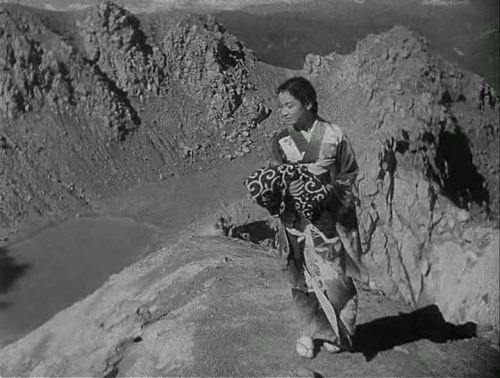
Being a daughter of samurai, Mitsuko decides to kill herself. Teruo, realizing what she's doing, jumps into his fancy car, driving on hairpin bends on a  cliffside. The road collapses round a lake. He then swims the whole way across, and climbs a volcano, burning his feet. Amazingly, he meets Mitsuko at the summit though she left their house and walked all the way, dressed in a kimono. Nonetheless, we get to see good shots of cliffs and mountains - traces of Bergfilm, after all.  Some scenes are quite spectacular. .The volcano erupts, destroying the Yamato farmhouse in the valley. Somehow, though, Teruo and Mitsuko survive. His feet are bandaged but she's in full Geisha regalia.  Unlike Fanck's gutsy heroine Leni Riefenstahl, Hara must revert to being an unrealistic "Japanese wife". You can understand why the Japanese director and crew, highly experienced professionals, were annoyed.

Now, it's time to offend the Chinese. Teruo and Mitsuko move to Manchuria, where they farm with tractors, since they're modern, unlike the Chinese peasants whose land they have occupied. Daughter of the Samurai doesn't set out to annoy, any more than many other films of the time, like The Good Earth, made in Hollywood in the same year, and a big hit with non-Asian audiences. These films just represent the way whites looked upon non-whites, which was how things were then. As long as we see Daughter of the Samurai in context, it's OK.


Thursday, 30 July 2015

Prom 15 Transformations Xian Zhang Prokofiev, Qigang Chen, Rachmaninoiv


At BBC Prom 15, Xian Zhang did wonders with the BBC National Orchestra of Wales . Tonight, they seemed transformed, totally energized. electrified with dynamic purpose. They haven't sounded this inspired in recent years. Something good is happening in Cardiff.

Prokofiev's Symphony no 1 in D major burst into vivacious life. The capricious high jinks in the music were expressed with athletic verve, the orchestra so together that they sounded like a single organism.  Zhang is unassuming and down to earth, totally focused on music, rather than on  persona. When the media made a big fuss about the first female conductor to lead the Last Night of the Proms, Zhang quietly said that real equality would be reached when gender isn't a novelty. In any case, we must not forget that millions of women around the world suffer far worse problems than being on a podium. Zhang clearly loves making music. and has the personality and technique to do what she does extremely well.

More transformation came in Qigang Chen's Iris dévoilée (2001), the composer's best-known work, receiving its much belated UK premiere.  Chen's Joie Eternelle, a trumpet concerto commissioned by the BBC for Alison Balcom featured at last year's Proms (read more here).  Iris dévoilée is a far more substantial piece and deserves its reputation as Chen's masterpiece. Unlike so much music written to bridge Chinese and Western music, Iris dévoilée fully integrates the diverse aesthetics so they work together  especially for audiences familiar with Chinese music other than pastiche. Iris dévoilée is real music that stands on its own terms. The 45-minute work evolves over nine sections, each of which describes an aspect of feminity. It's Frauenliebe und -Leben for much grander forces, though Chen is able to recognize that he's a man, observing from the outside. 

The first movement, "Ingenue", describes a very young woman. The pipa, guzheng and erhu predominate, creating a sound world that suggests the purity and intimacy of  Chinese chamber music, traditionally played in private scholarly circles. This young girl is sheltered,  nurtured in purity. "Chaste" describes a slightly older woman, probably married, but still following the virtues of her class and status. Meng Meng sings a manifestation of the Jing role type in kunqu opera, the most refined and ancient of Chinese opera genres (which are all quite distinct).  Hence the elaborate makeup and costume. Chen, however, doesn't write Meng's music in true kunqu style.  Her lines  float and stretch freely, without the underpinning of percussion that gives Chinese opera its characteristic grounding. Instead we hear harps and western strings. Perhaps the "chaste" woman, here, living the life society expects of her, is inwardly trying to fly beyond ?  

 Meng's lines jump away from traditional form. She's still singing in Putonghau while the other two sopranos sang abstract vocalize, which might sound Chinese to westerners but sounds western to Chinese ears. Piia and Anu Komsi (Mrs Sakari Oramo) are highly sought after because they can both reach surreally high tessitura, and sustain lines almost beyond human endurance. Their presence in this performance is luxury casting, for few ordinary singers can do the vocal gymnastics they are capable of.  Meng, good as she is, is outclassed, but that perhaps is the inner meaning of this piece: the transformation of a virtuous  Chinese girl into a diva who transcends cultural boundaries. The Komsi twins make "Libertine" sound positively joyful.

The three inner movements , "Sensitive", "Tender" and " Jealous" are more serene, allowing Chen to write rather beautiful music, in a style that shows his total integration in French style, which has long embraced orientalisme. Chen was Messiaen's last pupil, and the influence shows. Long strident sounds introduce a complete change. A violin plays maddeningly high lines, matched by the Komsis' gravity-defying tessitura. Meng sang again, in a quite un-Chinese wail, while the plaintive sounds of erhu reawaken a sense of melancholy for a lost past. The Erhu is the most "vocal" of Chinese instruments, which when well played sounds like an ethereal singing voice. Here, the soloist, Nan Wang, was very much the fourth voice in the section.  In "Hysterical" , Meng's part becomes an aural tantrum, a manic parody of Chinese opera, 

The final movement , "Voluptuous", enters with high, sensuous violin, the winds and strings creating sensual textures. Meng now sings on her own, in languid, measured vocalise. It's exotic and deliciously alien.She's become one with the Komsis, and it suits her well. They now sang what might be described as caterwauling  fake Chinese. Humourous and gaily subversive. The erhu, pipa and guzheng return, blending Chinese and western elements seamlessly together in perfect, magical integration.

Rachmaninov Symphony no 2 in E minor Op 27 followed. Gloriously played, full of colour and incident, executed with remarkable vif by Zhang and BBC NOW. A superb performasnce to which I can't do justice. Anyone can write about Rachmaninov, so I won't. Besides very few can write reasonably well about both Chinese and western music and their differing vocal values. So that's what I've tried to do.  Lots more on Chinese music, Chinese stereotypes, Chinese opera and unusual instruments on my site. Please explore.

Listen online to this Prom HERE 

Thursday, 23 July 2015

Black in Britain - musicians and stereotypes


Good article "From slavery to singing star: celebrating Thomas Rutling, by Ronald Samm, who is a singer himself. Samm is starring in a piece on Rutling's life at Harrogate, where Rutling settled down. Samm was also one of the security guards in Tansy Davies' much misunderstood  Between Worlds  at the ENO. What must it have been like to be black in Britain in late Victorian times when any kind of non-white person was an exotic alien?  Rutling is seated above, middle row left. In his tux he could pass for a banker or a patron of the Royal Opera House. But look at the banjo and guitar in the foreground. The Fisk Jubilee Singers were admired but they still had to conform to stereotypes. No way was the public ready for blacks  as equals in "serious" music.

Rutling (1854-1915) was a contemporary of Samuel Coleridge-Taylor (1875-1912), whose blackness was an accident of birth, and who grew up in an all-white environment, admired by Elgar and feted at the Three Choirs Festival. To Coleridge-Taylor's credit, he set out to learn about black identity, writing music influenced by generic "African" ideas and Black American music. Being a proper English gentleman meant he was received by the President of the United States. Ordinary black Americans  didn't get invited to the White House except as menials.  To Coleridge-Taylor's credit, he went out of his way to learn about black culture and meet black American artists and intellectuals, Coleridge-Taylor's music is possibly better known in the US today than in Britain. Read my article "Who really was Coleridge-Taylor ?" HERE, and my other pieces on him by clicking the label below.

Coleridge-Taylor's music is fascinating because he was genuinely trying to come to terms with non-white western aesthetics, much in the way that French composers from Bizet on explored exotic themes. Imagine if he'd worked with Ravel and developed a whole new musical language?  But he's also important as a perspective on race in late colonial times. Jeffrey Green's biography Samuel Coleridge-Taylor:: a Musical, Life is  essential reading. It's based on exhaustive first-hand research, presented with genuine knowledge of background and the composer's position in society. Even now, black people are exploited for novelty value, an approach which is fundamentally racist even if it's not intentional.  Jeffrey Green's sensitive book gives Coleridge-Taylor the dignity and respect he deserves.

William Grant Still (1895-1978) grew up in a black community in the South, so his experiences of black identity were more acute than Coleridge-Taylor's, and very different indeed to the prettified fantasy of Delius's Koanga. Grant Still was middle class and educated, but had to adapt to a certain amount of stereotype to make a living.  Fortunately, he lived long enough to be recognized as a musician and part of the Harlem Renaissance.

Back to Ronald Samm and his ideas on the role of black singers today. If this really was an equal world, the issue wouldn't arise, but the fact is, the number of black people in classical music doesn't reflect demographic reality.  Like it or not, classical music is perceived as being elitist. The myth reinforces prejudice, intensifying the problem.  One of the stupidest things in current arts policy is the idea that music can somehow change society, but in reality, unless society itself changes, we aren't going to get more blacks on stage and in the audience. Non-white people get patronized all the time. More talking down doesn't help. Besides, being non-white can sometimes be an artistic advantage. Last year, Eva-Maria Westbroek sang Puccini Manon Lescaut.  Westbroek's lush blonde voluptuousness was nicely set off by Lester Lynch as her brother. In a sense having a black guy as lowlife feeds stereotype, but the dynamic between Westbroek and Lynch was electric. Brother and sister, enthusiastic parters in crime, enjoying every moment.

Wednesday, 17 September 2014

Chameleon woman Li Xianglan


Yoshiko Ōtaka 大鷹 淑子) died this week, aged 94, of a heart attack. Who was she, and why does it matter? Otaka was a glamour actress who starred in the film Shina no Yoru (China Nights) (1940), using her Chinese name  and identity, Li Xianglan. Nearly everyone knows the song from that film, albeit in its racist, bowdlerized version. Just as Otaka masde propaganda films for the Japanese invasion of China, she made propaganda films for the American occupation of Japan, under the name Shirley Yamaguchi.  A "Chameleon woman", because that's the way to survive in difficult times.

China Nights is so notorious in China, that its very mention still gives some people bad memories. I approached it with trepidation. Once you get over the propaganda aspects, though, it's not such a bad movie. You can see why it convinced many Japanese at the time that they were doing good for the Chinese by invading their country,, bombing and killing. Please read my analysis of the film here. "China Nights - totally politically incorect". 

In the film, Li plays a Chinese partisan who learns to realize that the Japanese are nice people who just want to civilize the Chinese. Needless to say, this didn't go down well with the Chinese. As a symbol of Japanese oppression, she was vilified. Just as she was about to be sentenced to death, it was revealed that she wasn't Chinese at all, but a Japanese who had been adopted by Chinese. So it wasn't treason by patrotism for the wrong side.  Sher moved to Japan wherte she made more movies and becamer a member of the Japanese parliament. Her life is thus a snapshot of turbulent times. A chameleon lady, who switched names, nationalities and professions (she wasn't all that good a singer either). She was a woman who survived because she had to be what the peiople around her expected her to be. Not really so different from millions of other women after all.  What is a stereotype, after all? Below, another of her famous songs, sung in Chinese, 


Saturday, 9 August 2014

The Forgotten Soldiers of Empire


If you do only one thing to remember the First World War do this : watch David Olusoga's powerful documentary Martial Races on BBC i-player (link here)  This opens up a whole new dimensions which many British people know nothing about. We're never going to appreciate the magnitude of 1914-1918 until we appreciate its world-wide significance.

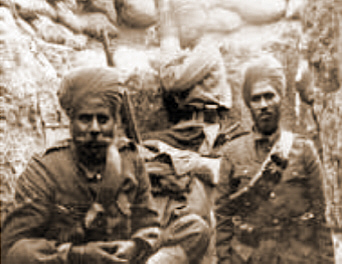
Did Empire save Britain and France? Could they have won the war without using colonial nations?  A million African, Indian, Black American and Chinese people took part, some fighting front line in the trenches, others supplying the back-up labour without which no army can survive. Hundreds of thousands died, and each man left behind a family and a community. These men didn't march off to war cheering. They were not volunteers, but men trapped by circumstances. In Africa and Asia, people were so poor that men would join up from sheer desperation.  Many of the Africans were rounded up by agents and chained. Slaves, not jolly volunteers fighting for a cause.

These men were simple peasants who didn't know much past their own villages, far less about the world. Thousands had never worn shoes in their lives. Suddenly they had to wear heavy, ill-fitting army boots and live in damp trenches.Nowadays even in remote areas people have TV, internet and mobile phones, even a smattering of education. A hundred years ago, these peasants might as well have been rocketed into space, so alien was the environment they found themselves in. Even now there are dozens of different language groups in Africa and Asia. A hundred years ago men from diffrerent villages might not speak the same dialect. Suddenly they're all thrown together, with hardly anyonen to talk to.

The concept of  "Lesser breeds" underpinned Imperialist thinking. The West didn't colonialize for love. Social change and modernization were side effects, not goals. Olusoga reads from British Army records which describe the different communities of the Indian subcontinent as if they were breeds of dogs or horses. Unpleasant as these things are, we need to acknowledge them if we're  to move on.

1914-1918 was a world war, with global causes and global consequences. It came about in many ways as a continuation of colonial rivalry. The British and the French grabbed colonies first, excluding the Germans, Japanese and Americans.  1914-18 didn't happen because some Serb shot an archduke. In the Middle East, the Germans (and their allies the Turks) were struggling with the Russians and British for control of oil fields. Then, as now. And so the British and French used their "resources" in the form of human fodder.

Olusoga's documentary is meticulously well researched and presented. This is the kind of exceptional high quality that the BBC was once known for. Most of this material is well documented in academic circles, but there's  material here that's never been seen in public before. Olusoga makes it human and personal.  To understand our present we need to understand our past. This series is very, very important.

Sunday, 8 December 2013

Hung Sin Nui has died

 
Hung Sin Nui (紅線女) has died. Her passing is a huge event, for it represents the end of a glorious era in the development of Cantonese culture.  Cantonese culture is quite distinct from the culture of other regions of China. It's feisty, inventive, droll and pugnacious. It's not for nothing that China's revolutions start in the South and the world is populated with migrants from the region. Hung Sin Nui was one of the most important Cantonese opera singers of her time, but also played straight roles in costume as well as modern dramas.  There's no rigid barrier between genres in China.. She was also a passionate advocate of Cantonese culture and progressive values. The characters she played were independent minded woman with personality, role models not only for women but also for men in a rapidly-changing society. Hung Sin Nui heroines aren't passive : they think and feel and act ! 

Hung Sin Nui was a stage name, chosen for meaning. "Hung" means red : for happiness, prosperity and art.  "Sin" means thread, implying the refinement and strength of silk, which can be woven in endless filaments. "Nui" mean girl, a bit anonymous, but suggests universal experience. "Red" ironically has another connotation. At the height of her fame, in the 1950's she left Hong Kong and returned to Guang Zhou (Canton) as a statement of faith. She suffered in the Cultural Revolution but her ideals weren't dimmed. She promoted Cantonese opera and culture and kept the arts alive.

Born in the Shun Tak area, from which so many opera stars emerged, Hung Sin Nui began performing at 16. Very soon after, she married Ma Tse Tsang (馬師曾), the biggest star of the time,who created modern Cantonese opera. Read Virgil Ho's book "Understanding Canton, rethinking Popular Culture in the Republican Era (buy it here), Hung Sin Nui was Ma's muse, but also a star in her own right, making many films on her own. When a good account of the development of Cantonese opera and culture in the second half of the last century gets written, Hung Sin Nui will feature greatly.

So much material to choose ! But I've picked a short, funny piece from the film The Judge goes to Pieces (審死官)from 1948 (see the full film here). Hung Sin Nui plays the wife, who saves a pregnant woman who is escaping a murderous family. In the short clip below, she does a tour de force of Cantonese Sprechstimme. The story is comic but with deeper implications. The married couple (the husband played by Hung Sin Nui's real life husband Ma Tse tsang)  are childless and unhappy, but by helping a stranger they are rewarded. The baby inherits his father's estate, and Ma Tse Tsang's character ends up being made a judge.

Tuesday, 16 July 2013

The Keys of the Kingdom Gregory Peck busts stereotypes

"A Christian is a good man, but I have found that a Confucianist usually has a better sense of humour".

The Keys of the Kingdom (1944) is such a famous movie that it hardly needs to be written about. But I love it because of its moral values. It's spiritual but mocks cant. It's also an interesting insight into western attitudes on China.  All his life, Francis Chisholm (Gregory Peck) has been a failure in the eyes of the world. To get him out of the way, the Church sends him to a God-forsaken outpost in China. There's no parish, and the locals resent him. He's reduced to living in a derelict stable. If that's God's wish so be it. Jesus was born in a stable, too.

Then Joseph turns up, and things change. Joseph is played by Benson Fong. Fong's roles were defined by the Hollywood stereotype of Chinese as well-meaning but simple-minded menials. In real life, Fong, second generation US born, spoke good Cantonese and went along with the game. because he  had no choice.

Father Chisholm doesn't know medicine but cures the son of a high official, Mr Chia, played by a Caucasian in yellowface. Think about that, when Mr Chia's aide - a very minor role - is played by Philip Ahn, a good actor and a Chinese-American.  Father Chisholm won't accept the man's conversion in return, because he believes religion should be chosen by free will. Nonetheless, Mr Chia gives land and money for a mission.  Nuns arrive to help. They're dressed in white starched wimples, despite having trekked a thousand miles from the nearest sea port.  They're also arrogant, ordering a "Chinese coolie" around. It's Father Chisholm, or Shen Fu as he's known in the local community. He's dressed in native clothes, working with the earth, helping "hands on".

Miraculously, Father Francis's boyhood friend Willy turns  up. He's a hard-drinking atheist, but he does good because he's a doctor, and sets up the mission hospital. .On his deathbed he still rejects religion. The town is being besieged by warring forces.  Richard Loo, also US-born Chinese, plays Major Shen, the  leader of the Imperial Army. He's sophisticated and elegant. He lets the mission use a mansion for a hospital. It's burned to the ground when Gregory Peck and Benson Fong outwit the corrupt rebel commander (played by a Caucasian with a very high voice). Loo thanks Peck and Fong."We wiped out 32 of the enemy", he says. "One more killing like that and you'll force ME to become a Christian".

The Bishop arrives, It's Vincent Price oozing unctuous nastiness. "I must admit China fascinates me", he drools. He's done well for himself, thanks to his position of privilege. "And I disagree violently with those of our world who still regard the Chinese as an inferior race. Truly, there are no limits to the benefits of a belief in God and plenty of soap and water" It's horrifying, but even to this day, there are many who profess to "love" China but regard the Chinese as no more than servants or scenery.

After dinner, Joseph is washing up in the kitchen. He tells Father Chisholm, "I'm thinking a sinful thought". He drops the Bishop's prized bottle of Amontillado, brought from "home". Benson Fong looks sheepish, but defiant. "The benefits of soap and water" he says "made the sherry bottle fall and break". The Bishop leaves in Mr Chia's fancy sedan chair. He can't understand why the High Official doesn't want to convert, given the benefits that might accrue. "I shall never be able to fathom the oriental mind. It's inscrutable, positively inscrutable".  The Reverend Mother comes to Father Chisholm, saying she had wanted to go home. But witnessing the Bishop's arrogance made her realize that Father Chisholm's simple goodness restored her faith and vocation. Ten years later, they're still together, having rebuilt the mission and prospered. Father Chisholm, now old and grey, asks one of the children what he'd rather do, learn Cathechism or eat honey. "Eat honey" says the kid, without hesitation. The priest grins. "God loves you for telling the truth"

Eventually Father Chisholm has to go back to Europe,. The people of the mission line up to bid him farewell  Benson Fong delivers a sincere farewell. The Church hasn't been good to Father Chisholm and he's forced to retire. But he accepts it with good grace. Perhaps the Church thinks he's a failure because he hasn't achieved enough and his parishioners think he's an oddball. Maybe he was happy in China because he identified with it and its resilient people. "Exploited and abandoned by the world around her, starving and struggling to realize what was then just a dream. Unity and dignity  and a place in the sun"

The film was made at the height of the Japanese invasion of China, when the US government wholeheartedly supported the Chinese war effort. The sentiments, and the optimistic farewell scene, reflect the politics of the time. The US was instrumental in negotiating the end of the extra-territorial system and the creation of New China. But The Keys of the Kingdom works on another level which unfortunately is all too relevant today.  It dissects casual stereotypes about race and culture and treats people as Father Chisholm does, "all creatures of heaven" whatever that heaven might be.We don't need the "missionary position". The "natives|" wherever they may be, aren't passive children but  people can think and choose whatever they want to believe.

Monday, 5 November 2012

Han Suyin 1917-2012

Han Suyin has died. Everyone's heard of her novel, Love is a Many Spendoured Thing,  because it was turned into a hit movie in the 1950's.  Read the book, the movie is pure Hollywood. But Han Suyin was far more interesting as a person than as a writer.  Her novels are autobiographical, rather than works of fiction. Indeed, one of my aunts who knew her personally said that one of the characters in Love Is a Many Spendoured Thing was a composite based on several Hong Kong doctors they both knew, including my uncle.  Her books are therefore a form of highly subjective social commentary.

To people in the west, Han Suyin symbolizes China. In fact, she wasn't Chinese but mixed race and very westernized. She wrote in English, not in Chinese. To Chinese people in China, she'a an anomaly.  There are plenty of Chinese novelists, but  Han Suyin was different, sometimes trying too hard. You can read the outlines of her life anywhere on the web and read her formal autobiographies, especially the early instalments like A Mortal Flower, and Destination Chung King. (Her accounts of her parents lives aren't first hand so a little highly coloured)  But from me, you'll get a more individual perspective.

 For me, Han Suyin was an example of someone growing up "between" cultures, always alert to cultural clues people in mainstream societies take for granted without noticing. "We always have to negotiate," a prominent Eurasian woman of her generation told me. "We are interpreters all the time". And she didn't mean just language. One thing for sure, being Eurasian means always being the outsider.

 In colonial times, mixed-race people were considered degenerate, quite literally "mongrels" and "lesser breeds". Remember Madama Butterfly? Many assume that mixed-race children came from prostitution when in fact this was most certainly not the case. What kind of handicap is that to live under? But because Empire depended on the bluff that white people were somehow destined to rule, any contagion with the natives was politically dynamite. The downside of being Eurasian was that Eurasians were always under pressure to prove themselves worthy. On the other hand,  that gave them "hybrid vigour", as my father used to say. 

 Nowadays there are hundreds of thousands of Chinese growing up in the west, largely cut off from the experience of growing up in a community where everyone is rooted in Chinese culture. When children grow up, they want to be like their peers, so it's hardly suprising that cultural dilution is pretty much the norm today. This new generation has a whole new set of identity issues to develop, and many more options. Having Chinese DNA does not make anyone Chinese in the deepest sense of values and mores. "Bananas" people joke, "yellow on the outside, white on the inside". Since it's almost impossible to completely penetrate a culture as complex as Chinese, there aren't any reverse bananas.

So how do foreign born and raised Chinese develop their identity? Having a Chinese face does not automatically make anyone Chinese. That's not a value judgement. It's realism. People respond in the way the culture they grow up in teaches them to think.  If they grow up in large communities with a common background, and know the language, that helps. But not everyone is in that position. I thought I had myself figured until I went to the west as an adult, and it threw me off balance for years. That I think is the challenge Chinese growing up outside Chinese society need to tackle. What is identity, after all? Do we create our own as we go through life? Are we fated to be "outsiders"?  That's not such a bad thing because conversely, you're not bound by what others expect you to be.  Face is not destiny. There will be lots of different ways, personal to each individual. Han Suyin found her own way, controversial as it was. Others will find their own.

Monday, 15 October 2012

Why did Mo Yan win the Nobel Prize? Red Sorghum

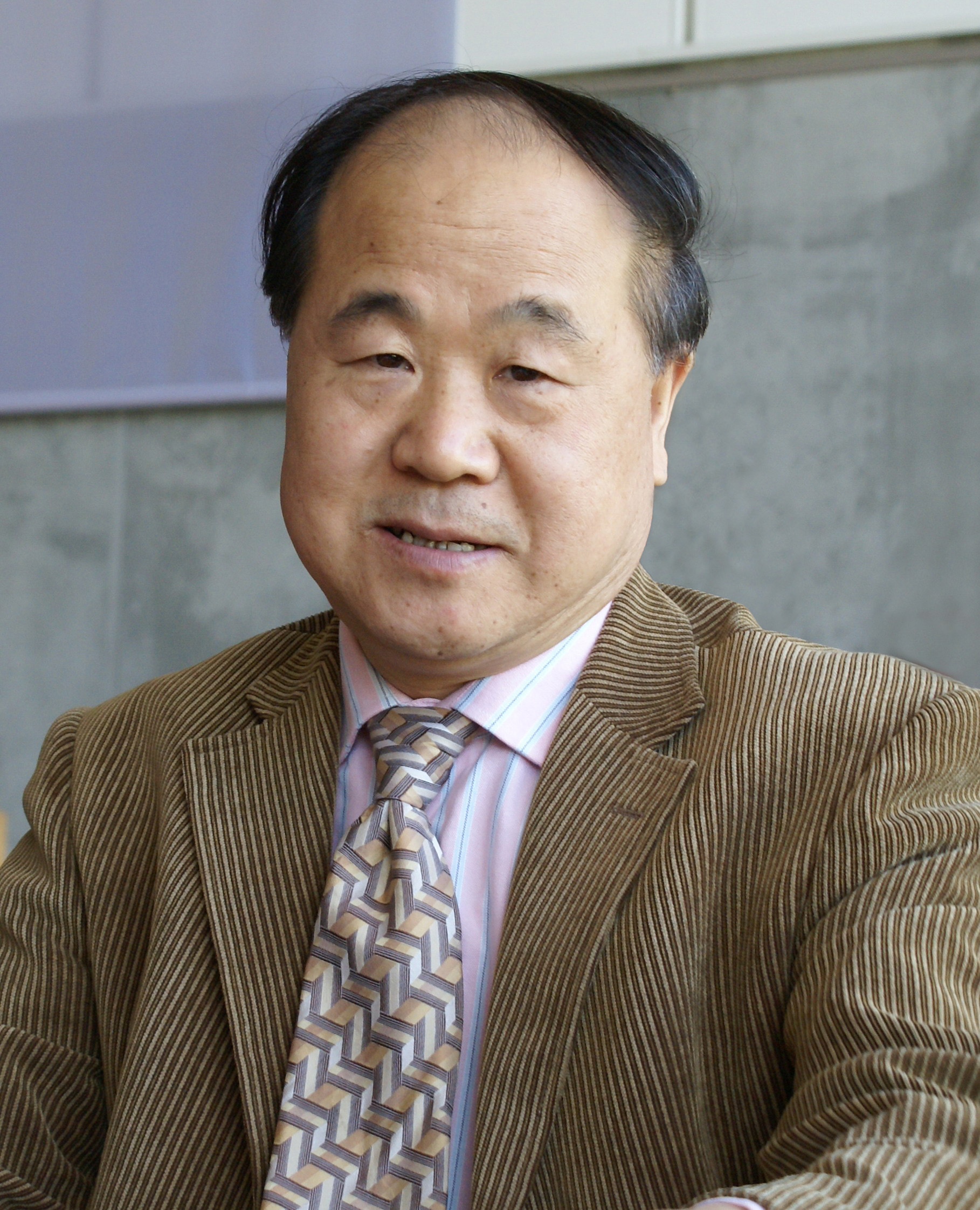
 When Mo Yan (莫言) won the 2012 Nobel Prize for Literature, many had never heard of him. That's fair enough as the world is dominated by Anglophone culture, and let's face it, the average man in the street doesn't read formal literature. The NY Times has published two articles that verge on racist. One article stupidly ignores a thousand years of Chinese literature by assuming the Chinese needed to learn from Victorian novels but didn't. A second article, better informed, insinuates that there are impure motives behind the selection. The Nobel Prize committee have said they made the award for artistic merit. They are reminding the world that high culture exists beyond the narrow confines of west-centric experience. This should be an opportunity to find out who Mo Yan is, and why he's respected.

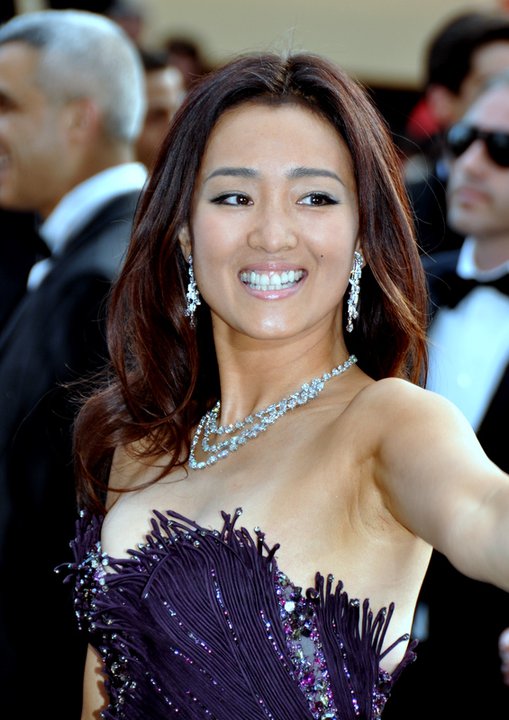
Mo Yan's writing connects to an ancient tradition of epic saga. Think The Water Margin, where a band of renegades roam Song Dynsty China.  Even in tales like these, there's an element of social commentary, challenging the reader to adapt the tale for wider situations. One of Mo Yan's most famous novels, the trilogy of  Red Sorghum, was written some years before the Tien an men massacre. That says something. It was filmed very soon after publication by Zhang Yimao, and marked the debut of Gong Li. The film itself is important because it was the beginning of a vital new age in Chinese cinema. Red Sorghum the movie (1987) tells the story of an unseen narrator's ancestors, living in feudal times where brides were bought. It's set in a factory that makes kaoliang wine: part industrial, part agrarian. The fields of sorghum play a crucial part in the plot. The crop provides the sorghum that turns into wine. But it's also featureless, a place of hidden dangers that can be trampled. 

The flow of narrative is like the flow of wine. Songs run through, connecting events to ancient oral tradition. "Drink, drink, good wine, good wine, Kaoliang wine!" the workers sing when they want to let off steam after hard labour. Drunkeness is a brief escape into emotional freedom. The song repeats several times, like a leitmotiv. The wine is red, like blood. The film is poetically saturated with shades of red, from the bride's outfit to the disemboweling of an animal. Gong Li's character gets raped several times, by different men, yet she survives. Another metaphor for China. Eventually she's killed by partisans (Communist) in the forest of sorghum fields. Her child is seen crying, surrounded by flames, but we kn0ow the story isn't over. 

The movie is deliberately stylized, stressing the story's mythic quality. Perhaps this connects to the stylization of oral tradition. Although the events are 20th century, there's a powerful sense of timelessness, as if it were an ancient folk drama. Zhang Yimao's use of red saturation cloaks the story so you have to watch through a veil of mystery, just as the bride enters her new life with her face covered. Don't expect Hollywood-style action. This film is a kind of psychodrama acted out ritually in a procession of images. 

In an article for Le Monde, Mo Yan described his initial inspiration. During the Cultural Revolution, he watched a North Korean movie, which had intense effects on Chinese audiences. People who could not confront the pain in their own lives could find emotional release through the ritualized detachment of a propaganda movie. "We weren’t crying over the tragic destiny of a young girl who sold flowers", said Mo Yan, "but, rather, over ourselves and our country. The screening of this film in China was a considerable political event. It was the sign of the total failure of the Great Cultural Revolution that Mao Zedong had unleashed. The tears had washed the eyes of the people, had allowed them to draw the lessons from this tragedy, and they started to hope for a normal life."

Zhang Yimao's later films have a similar mythic quality. Action is oblique, just as human beings have to observe rather than act on impulse. Surfaces are gloriously glossy, to deflect from the emotional turmoil within. Gong Li was Zhang's muse because her face could capture fleeting feelings behind  a smooth exterior. She smiles, exposing teeth that haven't been cosmeticized for the media. Yet her eyes are hesitant, hinting of secret sorrows. She is an actress who emotes rather than one who says lines and fakes feelings. Her teeth act, too, for they are wide, strong and utterly pure, like the characters she plays. We follow Gong Li in different roles, because we identify with what she symbolizes. Perhaps this cinematic insight derives from Chinese opera, where stock characters are used,  but convey feeling through associations the audience has picked up over long experience. The audience knows tunes and gestures, but are creating new drama in their own minds.

In an interesting article in The New Yorker, Richard Brody refers to the virtues of Zhang Yimao's  movie of Red Sorghum. "The four elements that leap out now are memory, music, talk, and madness. The very fact that the story is told in the framework of a voice-over that tells the tale as it came down from the narrator’s grandfather, the protagonist, suggests the very importance of memory itself—not in the form of official histories but personal stories." Read more here. The Le Monde article is quoted therein.

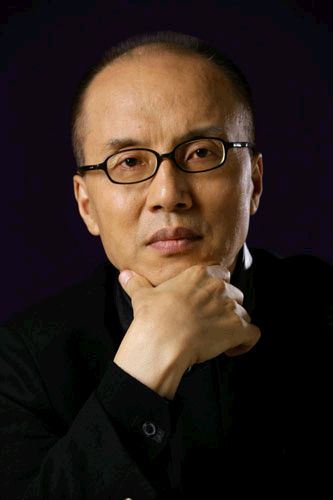
photo of Mo Yan by Johannes Kolfhaus Gymn. Marienthal, photo of Gong Li by Georges Biard

Thursday, 23 August 2012

The earliest Kung Fu movie ? 黃飛鴻傳

Wong Fei Hung 黃飛鴻傳 (1847-1924) was a Kung Fu master, from Foshan in Guangdong, centre of major kung fu traditions. In the west, people associate kung fu with fighting, gang wars, and Bruce Lee, but in China, kung fu "fighting" is just part of several streams of activity. Wong Fei Hung practised Chinese medicine, which is based on holistic theories. Herbal tinctures and teas are tools, but almost more so, the idea of body and mind harmony. Hence the connection between "fighting" and healing. The word "kung fu" means effort, disciple, dedication. Tai Chi is another manifestation,  also the Cantonese tea ceremony (which has become somewhat fetishized).

So here is an early Hong Kong movie about Wong Fei Hung, made in October 1949. Although kung fu movies were made from the earliest days of Chinese cinema back in the early days of the Republic, this one is extremely important, because it emphasizes the cultural context.. It was made with "kung fu" spirit. The director, Hu Peng (胡鵬), and his team wanted to make a record of Cantonese culture and values, not merely "entertainment". So the film starts with an amazing (and long) sequence showing a lion dance. Lion dances are still common today (and associated with kung fu schools) but this one is so detailed, it's worth studying as historical archive. A young apprentice comes to learn from Wong Fei hung, who explains that he's only the current teacher, himself the pupil of seefu gone before. Humility, not ego, is the path to learning.

Kung fu practioners also served a social and political function. The Shaolin monks honed their skills so they could do good for others. When the non-Chinese Qing conquered China, Shaolin was one of the covert forms of resistance. When the dynasty began falling apart, the tradition became even more prominent, especially in the Guangdong region, where many early revolutionaries connected to this renaissance in traditional culture. The idealism of Sun Yat Sen in some ways reflects this much older ethos. Sun practised western medicine and was a Christian, so he embodied the basic moral concept of healing and helping, in a "!modern" form. It's highly significant that many of his supporters  were Cantonese. In this film, Wong Fei Hung is asked to help a  merchant whose rival wants to scam him and steal his beautiful wife. The locals don't depend on police but the vigilante (and ethical) function of kung fu.

Wong Fei Hung (played by Kwan Tak-hing (關德興)(1915-1995) quietly sizes the situation up and solves the problem. The wife  is played by Lee Laan 李蘭, the first Miss Hong Kong in 1946. She acts extremely well - how beautifully the film depicts domestic life and virtues in 19th century Foshan. Some of Wong Fei Hung's men aren't so principled. One of them beats up a rival. Wong Fei Hung is furious "I taught you this power to protect yourself. I didn't teach you to cause trouble!"

This film ends with a scene in a brothel, where everyone's listening to  a "Dragon Boat Song". The singer is Chao Fei Fei, who's not a movie actor but a real traditional singer. This was an oral tradition, practised by itinerant musicians who worked in tea houses and private events, improvising songs about ordinary life and toipical current events, often with a satirical twist. (In the 1960's , Sun Ma Se Tsang recreated the style in modern form.)  This particular song is about a downtrodden prostitute who dreams of better things, a good summation of the early Republic period). This film is also one of the earliest surviving records of this type of singing, which no-one bothered to film, much less record or notate until Bell Yung's work in the 1970's.  By that time, the old school singers were working oin street corners, like beggars.. My classmate and I, in our teens, used to go to listen every time we could, but we didn't have the means to record "Hong Kong street Blues".

This particular film ends here, but cotinued to many parts, all directed by Hu Peng and his team, and starring the same cast led by Kwan Tak-hing, the last (I think of 10) in the late 1950's, after whcih Hu went onto direct more conventional swordplay films. There are dozens of  movies based on Wong Fei Hung, but these are unique as a historic archive because oif the care that went into making them authentic.  When Wong Fei Hung died in 1924, his family and followers moved on to Hong Kong. Cantonese martial arts, opera and film are all connected, in a way incomprehensible in the west. Indeed, these inytimates of the "real"Wong fei Hung were involved in the making of the early films. In this film, there are  many actors who go onto big careers as character stars, in non kung fu movies,  like Shek Yin (石堅) and Ma Siu Ying (馬笑英).

LOTS more on Cantonese culture, film and music on this site, please explore.