Showing posts with label Dallapiccola Luigi. Show all posts

Friday, 27 January 2012

Luigi Dallapiccola Il Prigioniero Salonen South Bank

At last, Luigi Dallapiccola's Il prigioniero came to the South Bank. How happy Esa-Pekka Salonen must be that he returned to London, where he has a top orchestra in the Philharmonia, who relish exploring new repertoire, and audiences who appreciate what they can do. Il prigioniero is the latest adventure in a series of ground-breaking performances like Gurrelieder, Zemlinsky's Lyric Symphony and the Bartók year.

Programming Beethoven's Fifth Symphony with Dallapiccola was perceptive. Il prigioniero could be Fidelio with bite. As the inmates at Guantanamo Bay can tell us, happy endings don't happen. However, the Philharmonia put so much effort into Dallapiccola that Beethoven managed to fall flat. Nonetheless we can hear Beethoven any time and can always grab a good CD. Il prigioniero needs to be experienced live.

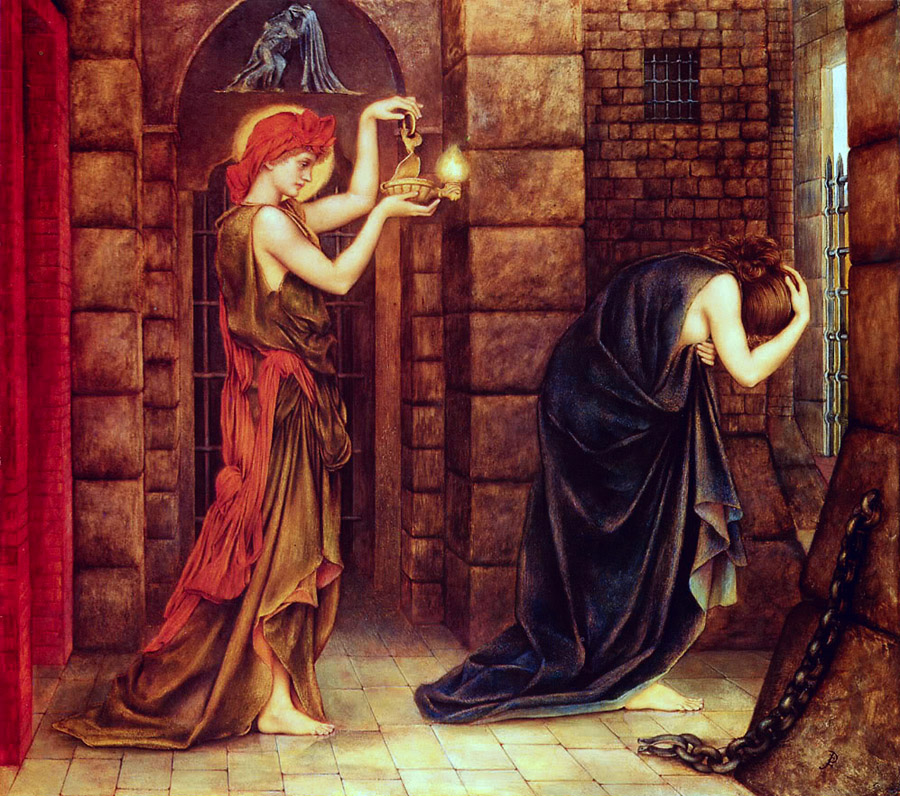
The Royal Festival Hall was shrouded in atmospheric darkness. (Semi staging by David Edwards, Lighting by David Holmes)The savage, angular opening chords of the Prologue lacerated. When Dallapiccola was writing, most of Europe was one big political prison. No cross-dressing wife, inexplicably fooling prison guards. Instead, a mother wailing at the all powerful Grand Inquisitor, whose head transforms into a skull. No false hopes. Above the stage, a choir sings, and the RFH organ booms menacingly. The Inquisitor holds the reins of Church and State (the setting is the revolt of the Spanish Netherlands). The prisoner sings graphically about suffering - iron and fire, fear of sleep and fear of being awake. He's no Florestan, but an ordinary, terrified man. A warden offers hope. He carries a lighted candle, he calls the prisoner "Fratello" (brother) and tells him about uprisings in Ghent and other cities. The warden sings of a giant bell ringing for freedom, which gives Dallapiccola a chance to write a  fugue-like section, full orchestra and organ in full throttle. For a moment the prisoner feels like a hero. Somehow he crawls out of the dungeon and feels fresh air, and thinks of distant mountains. But it's a cynical trap. The prisoner and his fellows are burned at the stake. The cruellest torture is the illusion of hope.

Il prigioniero isn't easy to stage, for it's effectively a one-man opera, with the mother and warden fulfilling limited parts. It's not a chamber opera, either, for the orchestral forces are vast. Indeed, I doubt that full staging would add anything the imagination can't suggest. Lauri Vasar sang the prisoner very effectively, nice ringing tone with just enough desperation at the edges. Paoletta Marrocu sang his mother, veiled in black, gesturing like a figure in a Greek chorus. The Warders/priests were sung by Peter Hoare, Brian Galliford and Francisco Javier Borda. Yet Il prigioniero isn't really a "singing" opera so much as a symphonic work with voices and storyline.  Not so different from Fidelio, after all. The performance was vividly dramatic, Salonen firmly keeping the pace with lethal  intensity. Moments of wildness leap out from the dark textures, like the fragile candle that brought the prisoner hope. In this opera, the orchestral players are protagonists, and here the members of the Philharmonia were "singing" with individuality and verve.

Generic programme notes are worthless now anyone can search on Wikipedia. Fortunately, Misha Donat's programme notes are superb, informative and filled with the kind of insight that comes from genuine knowledge and experience. Notes like this serve a purpose other than to fill space. Donat describes Dallapiccola's use of dodecaphony, showing that twelve tone series and emotional truth are by no means incompatible. He also recounts the episode when Schoenberg visited Florence in 1924. Most people couldn't get his music at all. As Alban Berg said in 1933, "In Italy they are just discovering Richard Strauss". Two men in the audience, however, were fascinated. One was 20 year old Dallapiccola. The other, a terminally ill Giacomo Puccini, who'd driven 50 miles to get there.  Perhaps Il Prigioniero links to Tosca, of all things. It's exactly what happened to Cavaradossi, but Tosca hogs attention. NOW we know whty Salonen was so good in Dallapiccola (apart from the fact he studied the composer in his youth)  There's a new recording of Il prigioniero where Salonen conducts the Swedish Radio Symphony, LINK HERE

Monday, 2 January 2012

Coming up, busy January

Lots to look forward to in January in London! The new season starts today (2/1) with another cast of La Traviata at the Royal Opera House. This time, Ermonela Jaho sings Violetta. Jaho stole the show last time she sang the part in this production, and has continued to impress - remember her Suor Angelica?  Violetta is a courtesan and hasn't reached the top of her profession by being a moribund victim.  In any case, could someone dying of TB sing like that? Paolo Cavanelli's dark Germont will be a good foil to Jaho's passion. Alfredos are Stephen Costello and Vittorio Grigolo.

The Royal Opera House also offers a mini-Mozart festival : Don Giovanni, Le nozze de Figaro and Così fan tutte, all revivals but worth catching for the casts (best prob. Le nozze). See Gerald Finley naked, or hear Erwin Schrott.  In February, a controversial new Rusalka!

At the ENO, Der Rosenkavalier revived with big English stars. Or should one say "The Rose Knight"? Strictly Gershwin, an interesting Gershwin themed ballet from English National Ballet starts 4th Jan to extend the party season. Gershwin's a good composer, who should be taken more seriously.

At the South Bank, an important series curated by Vladimir Jurowski, Sergei Prokofiev : a man of the people? Notice the question mark. Why did Prokofiev turn his back on the west and success to return to the Soviet Union? What were his artistic, as well as personal motivations?  Hopefully this won't be yet another bland retrospecrive of greatest hits but more stimulating. Jurowski's choice of repertoire is intriguing and indicates a strong line of thought. I've spent time watching Eisenstein's saga of Ivan the Terrible, for which Prokofiev wrote the score, and will be writing about that here soon.  Simon Callow is doing readings from Prokofiev's diaries. Yannick Nézet-Séguin conducts the final night on 1st Feb

Extremely important London Sinfonietta gig Wolfgang Rihm at 60, QEH 24/1. Rihm is one of the seminal modern German composers, though sadlu underrated in Britain. Four UK premieres, no less. It will be a great chance to hear the London Sinfonietta in meaty repertoire again, and to prepare for the ENO production of Rihm's very early opera Jakob Lenz in the summer. Indeed, the opera may seem pale compared with what Rihm is doing now, 35 years later.

Much stronger opera-wise will be Luigi Dallapiccola's Il prigioniero at RFH on 26th January. Dallapiccola was writing when Mussolini's alliance with Hitler reached its peak in the last years of the war. Il prigioniero is  Fidelio without false optimism and contrived happy end. Perhaps that's why Esa Pekka Salonen is conducting Beethoven's Fifth as a kind of extended overture.  

Lots on at the Wigmore Hall, too, leading up to Schubert's Birthday on 31/1 which is always a highlight of the WH year. This year, Werner Güra does the honours. William Lyne discovered him 15 years ago, on the recommedation of Peter Schreier. Some pedigree! Güra was so young then that he froze, but since then he's blossomed. Güra shows what Lieder singing is really about. Starting on 10th January is another Wigmore Hall speciality, a three day intensive workshop which really gets to grip with a subject. Focus this time is on is Stravinsky's A Soldier's Tale.  Nine hours study, one hour concert (2/2) But if something's worth doing, do it well. Also highly recommended: Christoph Prégardien singing Hugo Wolf on 10/1 and a concert with, among others, Stuart Jackson, a very original and distinctive young singer who won 2nd prize at the Wigmore Hall Song Competition. (read more HERE) 

The English Oratorio Celebration continues at the Barbican (read more HERE) with Haydn The Seasons with Paul McCreesh. There's a big Total Immersion on Jonathan Harvey, culminating in his Wagner Dream which had extreme notices when it premiered in Amsterdam two years ago. It's not Wagner per se but Harvey, re-examining Wagner through Harvey's Buddhist beliefs. Oliver Knussen doesn't conduct as often as he used to or should, so make a point of going to his Barbican date on 13/1. Excellent programme - Castiglioni, Schoenberg Kammersymphonie, Sandy Goehr premiere and  Miakovsky's Symphony no 10. Typical Knussen passions, should be fun.

And if that's not enough, Pau Badura-Skoda makes a rare appearance at Kings Place on 18/1!