Showing posts with label Gardner Edward. Show all posts

Saturday, 30 November 2019

Britten Peter Grimes - Skelton, Gardner, Bergen Philharmonic Orchestra


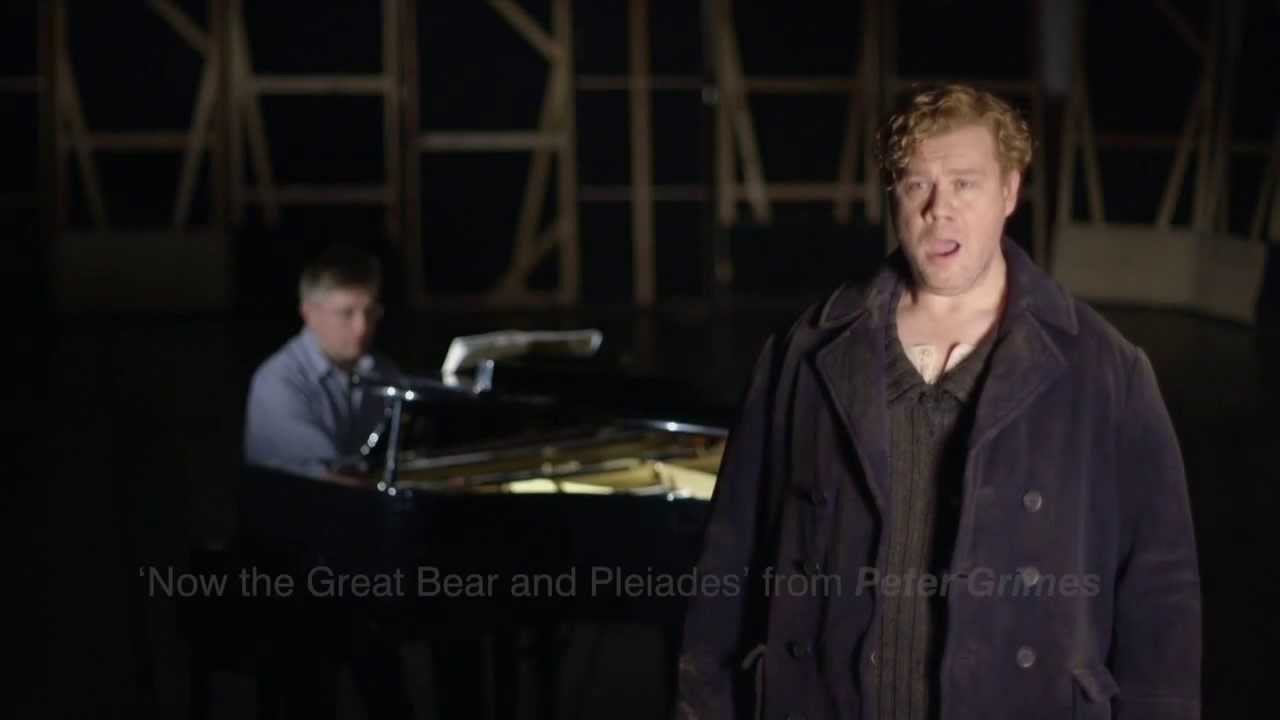
Britten's Peter Grimes at the Royal Festival Hall with Stuart Skelton, Edward Gardner conducting the Bergen Philharmonic Orchestra. Exactly the same cast (except for the Boy apprentice) in London as at Bergen in May 2017. What an outstanding performance that was ! How does London compare ?

When "Sexy Ed" Gardner left the ENO for Bergen, many of his fans wept openly, but it was a wise move on his part, since, until that time, his career had been relatively insular. He needed to branch out, both in terms of international exposure and in terms of repertoire. And the Bergen Philharmonic, one of the oldest orchestras in Europe, needed livening up.  A match made in Heaven?

Bergen is sounding better than it has in years, much sparkier and classier, without losing a distinctive flavour.  The cast list was superb - possibly one of the best that can be put together at present - so no surprises there. But what impressed me even more was the Bergen Philharmonic. This Peter Grimes seemed to come to them intuitively: they don't at all have an "English" sound, but that's all to the good.   Though Britten was an Englishman through and through, his music is far too individual to fit pigeonholes.

This Peter Grimes sounded like a force of Nature, surging like a storm blowing across the North Sea. You could feel the pull of the ocean in this playing.  The Bergeners seem to connect  instinctively to how unseen forces might control destiny, just as nature controls tides, winds and waves. Seamen, like Grimes, understand these things, or they don't survive. Grimes doesn't survive, but what happens to him is more than the pettiness of a small provincial community. When he sails out alone, and tips his boat, he's offering himself in a kind of sacrificial atonement.  He may have been abused himself as a boy, forced into a trade he might not have chosen.  His music suggests that there's a sensitive, poetic side to his personality he may have had to repress, even had other choices been open to him.
Skelton's been singing the part so long and so well that  he can convey Grimes's personality in myriad nuances. But with the Bergen Philharmonic around him, it's as if the Furies themselves were swirling about him, invisible to us, but in his head.  His "Now the Great Bear and Pleiades" was beautiful, but his long Act Three monologue was haunted, he and the orchestra observing the subtle, but important, changes as Grimes's mind begins to unravel. Now we know why Ellen Orford sets such store in knitting. She needs control, every bit as much as Mrs Sedley and Auntie do in their own ways. Ellen isn't as nice as she thinks she is.  Notice how Britten writes Grand Opera parody into her music, when she decides to shelter the child from Hobson the carrier. On some level, Ellen is a diva, a heroine in her own mind, trapped in a small town with no prospects, like everyone else in this claustrophobic community.  Giselle Allen sings well, but Ellen is, like Grimes, illuminated by the music around her. Because Peter Grimes was Britten's first mature opera, and probably Britain's first mature opera, too, it's tempting to think of it primarily as an opera.  But the orchestral writing is magnificent and highly inventive: not for nothing that the Sea Interludes work so well as stand-alone.  Britten knew the music of his time, and the operas of Alban Berg in particular, where orchestral passages shape the narrative.  In Peter Grimes, the orchestration is huge in comparison to Britten's later works, knitting  the opera together, in a sense.  The swells and surges are huge, but not significantly fulsome in the way that, say, The Flying Dutchman is cataclysmic.  Britten, being English, is too polite. Not all that many detect the way Britten used quirky humour to subvert convention.  But it's there, all right.

Please read my numerous pieces on Peter Grimes, and on  Gloriana HERE and on Albert Herring HERE. Britten is oblique : his targets don't know when they're being got at. Gardner "gets" Britten, so he brought out the undercurrents.  Perhaps there is prostitution in places like Aldeburgh, but it's pretty discreet.  The music in the pub echoes American dance-hall music, which Britten knew from his sojourn in America, and would have included for a purpose. Peter Grimes isn't really set in 18th-century or even 19th-century Suffolk, whatever the origins of the tale.  Auntie, her customers and her Nieces sell out, but Peter Grimes is the one character who doesn't lose his integrity, warped as he may be. Grimes doesn't do games. And so he has to die.

Gardner and the Bergen Philharmonic players are magnificent in the big surging swells. Wonderful percussion, the timpani rumbling like thunder.  Thor, beating his hammer. And why not? The Vikings roamed the North Sea.  Their genes must be part of coastal DNA. Baleful horns, moaning bassoons.   But the quieter passages were even more revealing. Britten observed the world around him. We can hear "star" music andd delicate diminuendoes that glow like phosphoresence over the water at night, or the sparkle of light on a Sunday morning. Outstanding playing from the lead violist, who got a well-deserved curtain call on her own. Beautiful harp playing,and strings that kept together smoothly enough, while still sounding individual and lively, like the choruses, where the variety of voices adds vividness to the impact.

Thursday, 25 July 2019

No surprise ! Edward Gardner to head London Philharmonic Orchestra


No surprise ! Edward Gardner  confirmed as Chief at the London Philharmonic, replacing Vladimir Jurowski.  Welcome, though not "news", since it was only a question of time before Gardner found a new home in the UK.  Gardner has long been the Great Hope of British conducting, often compared to Simon Rattle.  He flirts like a star, too. It's part of the job! That's charisma.  He's not called "Sexy Ed" for nothing. But all that wouldn't matter, since he is an extremely good conductor and motivator.  He's done wonders for the Bergen Philharmonic Orchestra, who are an excellent orchestra, but he's put them firmly onto the international map.  Gardner's career has implications for the British music scene as a whole.  His background is solidly British, and he's done a lot of British repertoire, old and new. In fact, the first time I heard him conduct orchestral repertoire, in 2005, he conducted Walton's Symphony no 1, Sibelius and Julian Anderson.  Gardner's conducted the LPO before, and the CBSO, and the BBCSO and much else, and has recorded extensively, mainly for Chandos.  He was also Music Director at the English National Orchestra for nearly ten years. That, too, is a factor in his appointment because the LPO is the resident orchestra at the Glyndebourne Festival, where they do opera.  He was also chief of Glyndebourne on Tour before he joined the ENO. The LPO has done lots of opera unstaged, so he fits the bill.

Monday, 13 August 2018

Vaughan Williams Dona Nobis Pacem - Prom 41 Gardner, Elgar, Boulanger


Prom 41 at the Royal Albert Hall, London, with Edward Gardner conducting the BBCSO in Vaughan Williams' Dona nobis pacem, Elgar's Cello Concerto (Jean-Guihen Queyras) and Lili Boulanger .   Extremely perceptive performances that revealed deep insight, far more profound than the ostensible  "1918" theme   Neither Boulanger nor Elgar had direct experience of war, but, like all decent people with any conscience, they cared about what was happening around them, and could address the human impact of war.

Boulanger's Pour les funerailles d'un soldat is a grave processional, a far more mature piece than the miniatures she is usually represented by on programmes that stress her gender and youth, as opposed to her music.  A steady pace, drum rolls, the tolling of bells and rising frisson in the orchestra enhance the solemn choral backdrop. The strength of  Alexandre Duhamel's delivery added even more gravitas.  At the end, wordless sighs vocalized by the voices of the BBC Symphony Chorus.  This provided context for Elgar's Cello Concerto in G minor op 85 (1918-9) which, in some ways,  is am abstract funeral of sorts.  Jean-Guihen Queyras defined the first theme drawing out the richness, as if to savour it.  Gardner and the BBCSO reiterated the theme with sweeping expansiveness.  Theme and response repeat,  replicating the rising and falling figures which move like processional.  Queyras's tone was beautiful, suggesting the warmth of Elgar's vision, yet also pointedly poignant.  As so often in Elgar, confidence is undercut by an awareness that things do not remain the same forever.  Although Gardner's approach was not as full blooded as, say, Barbirolli, he conducted with refined sensitivity, which worked well with Queyras's sophisticated elegance.  The sudden changes of direction were nicely defined, enhancing the interaction between soloist and orchestra.  Though we've heard Elgar's Cello Concerto so many times, this approach was perfectly valid, and rewarding because it was slightly unusual.  For an encore, Queyras chose Dutilleux, one of the Trois strophes sur le nom de Sacher, a brave choice in a place like the Royal Albert Hall where sensitive playing is usually drowned out.  But Queyras's mastery held the audience spellbound.

But the highlight of Prom 41 was, undoubtedly, Ralph Vaughan Williams' Dona nobis pacem, which Gardner approached with astonishing originality, bringing out the power in the message. Perhaps in modern times, we can better appreciate the visceral intensity.  Gardner also drew out the structural cohesion of the piece, and even brought out its cyclic qualities, which are themselves part of meaning.  Beware of over-emphasizing the use of different texts. (Think Elgar Sea Pictures, for example)  What matters is how Vaughan Williams draws together different strands of human experience into an integrated whole.  Sophie Bevan stood in the organ loft, distant but not too distant, a reminder that the organ and its restrained undertones pulse at the heart of this piece.  Bevan floated her lines so they penetrated the vastness of the hall, the exqusite purity of her tone reflected in the winds. Within moments serenity was shattered by savage chords, the pounding of timpani and the call of trumpets.  "Beat! Beat ! Drums" is a Dies Irae in all but name, the lines swirling and whipping like flames, swept by violent forces, the BBC SO and Chorus unleashing fury.

Neal Davies sang the Reconciliation, where the word “beautiful" is repeated, not only by the soloist but by the chorus. Beautiful, because "mine Enemy is dead, a man as divine as myself is dead".  This is the core "anti war" sentiment, refuting the idea that war resolves things: in death, all men are equal. Thus the deliberate phrasing, where Davies parsed the sentence with pauses. "I draw near", he continued, approaching the intimate moment of the kiss, with reverence.  A violin melody singing alone, garlanded, like the soprano was earlier, by hushed chorus.  Thus a brief repeat of the Dona Nobis Pacem, plaintive and austere with a rumble of muffled drums as the Dirge began, its quiet , relentless pace suggesting the cortege described in Walt Whitman's text.  With the four strophes, the chorus burst out defiantly. "I hear the great drums pounding...and every blow of the great convulsive drums strikes me through and through".  This is vintage Vaughan Williams in every way, with its echoes of Symphony no 3,  the tag "pastoral" more ironic than literal.  The text, also Whitman, refers to "two veterans, son and father" who die together, buried in a double grave, statistically an unlikely image in modern warfare, but one which works in metaphysical terms, underlining relentless futility, where one war engenders the next.  No words needed in the orchestral postlude, from which Davies re-emerges as the voice of the Angel of Death; the words "Dona nobis pacem" now appear almost as screams of protest.  The swirling furies of the Dies Irae return, to a text from the Book of Jeremiah."There is no balm in Gilead".

Most dramatic of all was the final section. "O Man, greatly beloved" sang Davies with fulsome affirmation, followed by orchestra and chorus in a series of quotations from the Old Testament. Gardner defined the ebb and flow, intensifying the trajectory: If all things must change, there may be resolutions beyond the grave, and from war.  Thus Dona nobis pacem rang again, clean, pure and bright, Bevan holding the last words so they seemed to vibrate into eternity.
Photos: Roger Thomas
 

Thursday, 24 May 2018

Bergen Philharmonic Berlioz Grande Messe des Morts

Edward Gardner in Bergen
Livestreamed from Norway, Edward Gardner conducted the Bergen Philharmonic Orchestra in Berlioz Grande Messe des Morts
op 5 1837, with Bror Magnus Tødenes, the Edvard Grieg Kor, the Bergen Philharmonic Choir, Collegiûm Mûsicûm Chorus and the Royal Northern College of Music Choir. An expansively smooth introduction, the long lines stretching as if reaching out into space. Interpretively valid, since a Requiem is a quest for meaning in the face of death.  This long, surging line was picked up by the choirs, creating a magnificent effect in a relatively small auditorium like the Grieghallen.  Maximum impact without strain : the prayer-like moments, like hushed Kyrie, were very well judged, and all the more moving for that.  Rich dark undertones in the orchestra introduced the Dies Irae, where the choral writing pits different sections against each other, to create a sense of division and anxiety. The fanfare blazed - brass underpinned by rumbling thunder, voices rising slowly and darkly, like the spirits of the dead.  Hellfire conjured up in a concert hall !  No wonder the Lachrymosa felt sorrowful.  Even at this stage in his career, Berlioz was a man of the theatre.

Gardner emphasized the details suggesting Catholic ritual : the choirs singing quietly, like penitents.  Though the orchestra is huge, it did not over-dominate : our sympathy should be with the lost souls.  A wonderfully bright start to the next section, sharp, clear intonation indicating the passage away from hell to resolution. Crisp interaction between female and male voiuce, creating animation, contrasting well with the sudden descent into darkness: low chords and distant trumpets, pulsating strings and more fanfares. I loved the groaning bassoons, followed by clear, pure high voices.  Now, when the choirs sing of tearfulness, their voices are edged with hope. The four brass choirs called from above the main platform, like the Last Trumpets of Revelation, followed by huge waves of timpani, and the crash of cymbals.  Exceptionally vivid brass playing - where has Bergen been hiding these players ? They're world class.  It felt as if the Bergen Philharmonic were ushering in the End of Time.

But that's not negative because that's when the the dead will rise again. "Domine, domine".  Thus the new theme arising from the orchestra, with long, sweeping lines again, this time more serene and comforting.  "Libera!"  and a heartfelt "Amen!".  Ominous tubas, as baleful as ophicleides.

In the Sanctus, the individual emerges from the throng. Bror Magnus Tødenes's delivery was powerful, not Heldentenor, but hero, nonetheless, his voice ringing out and soaring into the performance space. The echo in the hall created a halo around the voice, making it feel as if it were reverberating from heaven.  Long chords, too, in the Agnus Dei, hushed reverential singing, winds and brass projecting into space.  The long chords signify transition, the crossing of great distances spiritual as well as temporal.  The pace was measured, the destination looming into focus with great portent. 

Berlioz Grande Messe des Morts is dramatic, but this performance was more dramatic than many, particularly as the impact was created by quality, not quantity for its own sake.  Gardner, with his background in opera, realizes that drama lies in contrast and tension, clarity of form and meaning.  When he left the English National Opera for Bergen, many of my friends wept because he was their hearthrob, "Sexy Ed".  But I thought the move was wise, and told him so. He grinned. He was right. He needed to broaden his scope and prove himself as head of a really good orchestra.  With Bergen, he's hit the jackpot.   Bergen may be a relatively small city but the Bergen Philharmonic Orchestra is one of the oldest public orchestras. If they sounded a little tired some years back, they are now revitalized and dynamic,  very much one of the great orchestras of Europe. Even their livestream is classy. The presenter knows what he's talking about musically and assumes his audiences do too - why do some orchestras hire presenters who kid around and act stupid ?  Bergen treats its audiences with respect, and deserves respect in return.  This performance was being recorded by Chandos for future release. Grab it. 
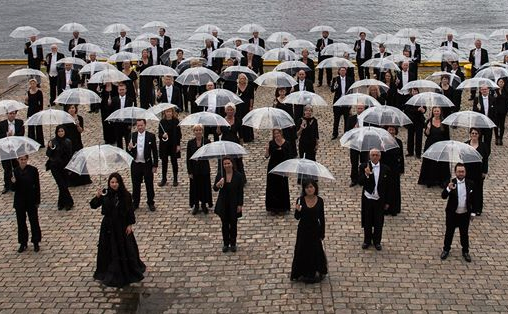
It rains, in Bergen !

Friday, 15 December 2017

Verdi Otello Bergen Philharmonic - Gardner Skelton Moore Lynch


Verdi Otello livestream from Norway with the Bergen Philharmonic Orchestra conducted by Edward Garner with a superb cast, led by Stuart Skelton, Latonia Moore, and Lester Lynch (full list here) and four choirs, the Bergen Philharmonic Chorus, the Edvard Grieg Kor, Collegiûm Mûsicûm Kor, the Bergen pikekor and Bergen guttekor (Children’s Choruses) with  chorus master Håkon Matti Skrede.   The Bergen Philharmonic Orchestra was founded in 1765, just a few years after the Leipzig Gewandhaus Orchestra : Scandinavian musical culture has very strong roots, and is thriving still.   Tucked away in the far north, Bergen may be a hidden treasure, but, as this performance proved, it's world class.

Otello is one of Stuart Skelton's signature roles.  He's matured into the part, singing with even morer depth and richness than before, negotiating the range fearlessly, for Otello is a hero who has  achieved great deeds.  Significantly though, a storm is brewing in the orchestra as he arrives in Cyprus in triumph.  Skelton sang that "Esulate" like a roar, like a lion pre-emting danger.  But what was most striking about Skelton's portrayal was its subtlety.  His Otello is a man who has confronted overwhelming obstacles all his life and has no delusions about apparent success.   When he does find the love he needed so much, his inner insecurities prove his undoing.  His tragedy is that he's a good man, destroyed by those more venal than himself.  "Fuggirmi io sol non so!"  After Otello has killed Desdemona, Skelton's singing is coloured by such sincerity that, despite the crime, Otello is, for his last moments alive, revealed in his true nobility.

Skelton's Otello proves that make-up has nothing to do with artistry.  We see the "real" face of Otello and feel his emotions direct.  Blacking-up has been anathema in Britain and most of Europe for decades, and it should be.  Blackface reinforces the idea that people are defined by outward    appearance  It may not have been racist in Shakepeare's time, but it is now. .Otello is an outsider, as is clear in the plot and in the music. No-one should need a caricature Darkie to understand the opera.  So Bergen deserves absolute respect for giving us a white Otello and a black Desdemona - people are people, and equal, whatever the colour of their skin.

Latonia Moore is beautiful, in every sense. Her voice is lustrously pure.  She creates Desdemona as a  halo that glows with spiritual light, which is much more to the point of the opera.  Desdemona  is an almost visionary personality who sees the innate goodness in Otello and who is prepared to sacrifice herself for love. A soul sister of Gilda and Violetta Valéry.  Moore is also sexy, suggesting Desdemona's love of life. The natural sensuality in her voice intensifies characterization, for Desdemona, like other Verdi heroines, isn't virginal though her moral strength elevates her saint-like self-denial.  In the first Act, Moore was surrounded by the children's choruses,  all of them looking, and sounding, angelic.  One young girl looked like she had stars in her eyes - no wonder she was looking at Moore with genuine fondness.  Though the staging was minimal, it serves to enhance Moore's artistry, Her dialogue with Hanna Hipp's Emilia was lucidly intimate. Curtains and bed linen don't create personality : good singing does. Incidentally Hanna Hipp sang Emilia at the Royal Opera House. I first heard her in student productions at the Guildhall School of Music and Drama. She's good.

I was looking forward to Lester Lynch's Iago, too, after his Lescaut in Baden-Baden, where he achieved a hugely impressive dynamic with Eva-Maria Westbroek. The pair interacted so well that  they really felt like brother and sister, sparring and flirting.  Manon wasn't the only rebel in that family.  As  Iago, Lynch generated similar energy, his voice curling with menace, key words darting forth with venom.  Yet again, there's no reason why Iago "has" to be any particular race. Scumballs lurk anywhere.

This Bergen Otello is hard-hitting and emotionally secure,the orchestra playing with vigorous élan. A clean "northern" Otello (staging by Peter Mumford) and no worse for that. Otello is universal. It's not Mediterranean, nor Italian, nor Shakespearean but human drama, for all times and places.

Sunday, 22 October 2017

Julian Anderson Total Immersion Barbican


Julian Anderson Total Immersion at the Barbican with the BBC SO. yesterday.   The evening programme was a well chosen retrospective.  Anderson is prolific to a fault, so he can be uneven, so this was a good opportunity to relive his Greatest Hits.  Nearly all these pieces are available on the NMC recording The Book of Hours (Knussen, Sakari Oramo, Martyn Brabbins etc) so it was good, also, to hear them conducted anew by Edward Gardner, who started conducting Anderson even before he started at the ENO.  Indeed, Gardner conducted Anderson's Symphony in his very first concert at the Barbican 10 years ago (see my review).
Despite its non-committal title, Anderson's Symphony, too, was inspired by art and nature; in this case Axel Gallen-Kallela’s painting of Lake Keitele. It doesn’t matter what the picture looks like,, since the piece isn't literal but an abstract mood piece. For a full minute, all you can hear are vague sounds, like the rushing of a stream almost at freezing point. It’s wonderfully impressionist – you imagine the cold and the stillness, the wind, birds flying overheard. Ultimately, though, it’s the inventive, multi-layered orchestration that entrances. Flurries of harmony take off in different directions, and melody starts in one part of the orchestra, to be completed in another. Symphony isn’t formally divided into parts, but the development is fascinating. 

Anderson's Eden (2005) was inspired by Brancusi’s sculpture ‘The Kiss’, where two solid figures become one monolithic whole through their kiss.  Despite the plangent textures, this isn't the Eden of the Bible so much as Adam and Eve before the Fall, animal instincts without knowledge of sin.  It's not a literal representation.   Viola and cello curlU sensuously around each other, embracing, so to speak, in melody. The spirit is passionate, yet austere and simple, as clean as the lines of Brancusi’s style. As the orchestra takes over, the melody expands into something much more open and primeval. Anderson’s use of "medieval" references evokes the timeless imagery of ancient sculpture.
He uses "hockets", melodies shared out between two or more instruments, which create a fluid sense of movement. It evokes thoughts of medieval part-song, as well as of the pealing of bells. The unsteady timbre of non-tempered tuning adds to the sense of strange unworldliness.


Eden and Imagin'd Corners are companion pieces, which explore the potential of non-tempered tuning in the latter case for five horns and orchestra. These make a more "natural" sounding intonation.. Early music in a sense, but also verging on atonality while connecting to a more ancient tradition.  Four of the soloists move from different parts of the hall in a pattern that recreates "imagin’d corners", while one remains ensconced between brass and woodwinds. In this exuberant piece, the trumpet calls out, answered by the horns in joyous non-harmony.
Best of all, the most recent work (2015), Anderson's In lieblicher Bläue based on the poem by Friedrich Hölderlin.which inspired Hans Werner Henze's Kammermusik 1958 (Please read my review of the landmark new recording by the Scharoun Ensemble Berlin).  Anderson's version is scored for violin and orchestra (soloist Carolin Widmann) . Though wordless, it's almost music theatre since Widmann moves around the performance space coming in and out of view, eventually turning her back on the audience.  Channeling  Hölderlin, isolated in his visionary fantasies, cut off from the "real"  world, not giving a damn !  Thus the single chords, the violin tentatively "exploring" space, responding to the "moonlight" shimmering in the orchestra  first with long stretching lines. then with vivid bursts of excitement.  A huge arc of orchestral sound, swirling and spinning round as if the moon were illuminating the poet's troubled mind. Delicate touches of poercussion, bell-like sounds but also violent chords.  The violin emerges again, long beautiful lines behind which the orchestra rumbles disturbingly.  Then a flurry of single plucked notes: too disjointed to form melody. Hölderlin's fragmented mind.  Scurrying figures and high tessitura. Squeaks of excitement ?  Darker angular chords in the orchestra and elusive figures, half-formed and a more haunted terrain.  The violin (and Hölderlin)  remained unperturbed, long serene lines lit by "moonlight". No resolution. Gradually the textures thinned out and the violin sang , alone sound so high thatn it dissipated into silence.  

Friday, 14 July 2017

Secret messages ? First Night of the BBC Proms 2017


Secret messages? The First Night of The BBC Proms 2017: as always a thrilling sense of occasion. But what occasion, and who was it really for?  These are questions that the BBC and Proms team need to address. It's not enough to rely on formula.  This year we've seen what happens when politicians function like robots. spouting empty slogans on autopilot.   Big institutions like governments can't hang on to power "by right", but must earn their place. The evening kicked off with a new British work, to show how hip the Proms Team are.  For a change real music! Tom Coult's St John's Dance is an interesting exercise in perpetual motion and tempi, engrossing enough to hold attention, without being too taxing. Certainly better than some of the mindless pap we've had some seasons.  But beware! St John's Dance was a form of mass hysteria, where people kept dancing on, unheeding to their deaths.

Sir Henry Wood created the Proms on the principle that people were perfectly capable of learning if inspired by excellence and extremely high standards. His vision doesn't apply today when arts policy aims for the lowest possible denominator, on the assumption that people are too stupid to cope with anything that isn't dumbed down.  If arts managers don't have faith in their own product, how can they hope to convince others? And where is the real market?  Even the BBC has twigged that it's a fallacy that the arts depend on audiences who don't like serious music.  So why not put that into practice? The whole thrust of British arts policy is reductionist, uncreative and wrong.  White Papers might repeat the same old assumptions but that doesn't mean they're right and can't be stopped.  British arts policy is fundamentally misguided because it does't reflect economic reality.

Until such time as policy makers have the guts to question, we can but hope that some centres of excellence remain.  Like Beethoven, for example, whose vision and courage we need more than ever in this era of small-minded shallowness.   How wonderful to hear Igor Levit playing Beethoven's Piano Concerto no 3 in C minor, with Edward Gardner conducting the BBC Symphony Orchestra.  Fact is, excellence is by its very nature elitist.  Ordinary people are perfectly capable of smarting up rather than dumbing down.  Hooray!  This is what real music is all about: raising horizons.  For his encore, Levit chose Beethoven's Ode to Joy, transcribed for piano by Franz Liszt.   Culture doesn't exist in isolation: it crosses borders.  The arts business is international and must remain so.  Not long ago,  Her Majesty the Queen opened Parliament wearing a blue and yellow hat.  She's not allowed an opinion, but she's no fool, and she's not easily swayed by populist media.  Long may she reign!

Extravaganzas are part of the fun of First Nights of the Proms, so this year we had John Adams's Harmonium.   Four hundred and fifty singers - the BBC Symphony Chorus and BBC Youth Choir, joined by additional forces, ranged all round the back of the stage at the Royal Albert Hall.   Impressive to look at, and very well performed.  Harmonium predicates on huge swathes of sound composed of tiny cells   Sometimes the singers aren't singing text but creating planes of wordless noise.  Not being a fan of the composer, I won't comment on the piece as music, but everyone seemed to be having a good time.  The whole musical part of the Prom over in record short time to allow endless chatter and self-promotion on the part of BBC marketeers.

Each year I cover 30-40 Proms, so please keep coming back.  Please see my other pieces on the Proms, this year and in the past and on the Proms and Arts Policy. 

Wednesday, 31 May 2017

Britten in Bergen : Peter Grimes, Edward Gardner


Benjamin Britten in Bergen with Edward Gardner conducting Peter Grimes with the Bergen Philharmonic Orchestra livestreamed from Norway.  Stuart Skelton, the Grimes of  choice these days, headed an ideal cast (details here) and singers from the Bergen Opera.  Is livestream the future?  Not everyone wants to watch opera in a cinema, and most serious listeners have good-quality sound systems linked to their home PCs.  HD is dead. Opera companies and orchestras can now find ways of presenting themselves direct to audiences beyond their physical location.  This livestream didn't repeat, because livestream isn't cheap, but the Bergen Philharmonic Orchestra is bringing Peter Grimes to Edinburgh this August. It should be the highlight of this year's Edinburgh International Festival, if what we heard tonight is anything to go by.

When "Sexy Ed" Gardner left the ENO for Bergen, many of his fans wept openly, but it was a wise move on his part, since until that time, his career had been relatively insular. He needed to branch out, both in terms of international exposure and in terms of repertoire. And the Bergen Philharmonic, one of the oldest orchestras in Europe, needed livening up.  A match made in Heaven?  Bergen is sounding better than it has in years, much sparkier and classier, without losing a distinctive flavour.  The cast list was superb - possibly one of the best that can be put together at present - so no surprises there.

But what impressed me even more was the Bergen Philharmonic. This Peter Grimes seemed to come to them intuitively: they don't at all have an "English" sound, but that's all to the good.   Though Britten was an Englishman through and through, his music is far too individual to fit pigeonholes.  This Peter Grimes sounded like a force of Nature, surging like a storm blowing across the North Sea. You could feel the pull of the ocean in this playing.  The Bergeners seem to connect  instinctively to how unseen forces might control destiny, just as nature controls tides, winds and waves.  Seamen, like Grimes, understand these things, or they don't survive. Grimes doesn't survive, but what happens to him is more than the pettiness of a small provincial community. When he sails out alone, and tips his boat, he's offering himself in a kind of sacrificial atonement.  He may have been abused himself as a boy, forced into a trade he might not have chosen.  His music suggests that there's a sensitive, poetic side to his personality he may have had to repress, even had other choices been open to him.   Skelton's been singing the part so long and so well that  he can convey Grimes's personality in myriad nuances. But with the Bergen Philharmonic around him, it's as if the Furies themselves were swirkling about him, invisible to us, but ringing in his head.  His "Now the Great Bear and Plieades" was beautiful, but his long Act Three monologue was haunted, he and the orchestra observing the subtle, but important changes as Grimes's mind begins to unravel.

Now we know why Ellen Orford sets such store in knitting. She needs control, every bit as much as Mrs Sedley and Auntie do in their own ways. Ellen isn't as nice as she thinks she is.  Notice how Britten writes Grand Opera parody into her music, when she decides to shelter the child from Hobson the carrier. On some level, Ellen is a diva, a heroine in her own mind, trapped in a small town with no prospects, like everyone else in this claustrophobic community.  Giselle Allen sings well, but Ellen is, like Grimes, illuminated by the music around her.

 Because Peter Grimes was Britten's first mature opera, and probably Britain's first mature opera, too, it's tempting think of it primarily as an opera.  But the orchestral writing is magnificent and highly inventive: not for nothing that the Sea Interludes work so well as stand-alone.  Britten knew the music of his time, and the operas of Alban Berg in particular, where orchestral passages shape the narrative.  In Peter Grimes, the orchestration is huge in comparison to Britten's later works, knitting  the opera together, in a sense.  The swells and surges are huge, but not significantly fulsome in the way that, say, The Flying Dutchman is cataclysmic.  Britten, being English, is too polite. Not all that many detect the way Britten used quirky humour to subvert convention.   But it's there, all right. Please read my pieces on Gloriana HERE and on Albert Herring HERE. Britten is oblique : his targets don't know when they're being got at. 

Gardner "gets" Britten, so he brought out the undercurrents.  Perhaps there is prostitution in places like Aldeburgh, but it's pretty discreet.  The music in the pub echoes American dance-hall music, which Britten knew from his sojourn in America, and would have included for a purpose. Peter Grimes isn't really set in 18th-century or even 19th-century Suffolk, whatever the origins of the tale.  Auntie, her customers and her Nieces sell out, but Peter Grimes is the one character who doesn't lose his integrity, warped as he may be. Grimes doesn't do games. And so he has to die.

Gardner and the Bergen Philharmonic players are magnificent in the big surging swells. Wonderful percussion, the timpani rumbling like thunder.  Thor, beating his hammer. And why not? The Vikings roamed the North Sea.  Their genes must be part of coastal DNA. Baleful horns, moaning bassoons.   But the quieter passages were even more revealing.  Britten observed the world around him. We can hear "star" music and delicate diminuendoes that glow like phosphoresence over the water at night, or the sparkle of light on a Sunday morning. Outstanding playing from the lead violists, who got a well-deserved curtain call on her own. Beautiful harp playing,and strings that kept together smoothly enough, while still sounding individual and lively, like the choruses, where the variety of voices adds vividness to the impact.

Please see my other posts on Britten, on Norway, on Peter Grimes, Stuart Skelton  Roderick Williams and James Gilchrisdt etc by follwingbthe labels below

Wednesday, 9 September 2015

Why I could not write up Raymond Yiu's Symphony before now


It's taken me two weeks to write up the Prom where Ed Gardner conducted Britten, Nielsen, Yiu and Janácek.  Listen to the repeat broadcast HERE)  I was busy covering FX Roth (Boulez, Ligeti, Bartók)  and Oramo Sibelius Kullervo, but the real reason was that Raymond Yiu's Symphony moved me on a very personal level.  It's not easy to write about things that still hit a raw nerve, even after half a lifetime. But it's absolutely vital that music like this is being written. Many congratulations to whoever in the BBC commissioned this. It takes courage to programme something like this piece which deals with subjects that do matter and continue to resonate.

Yiu's Symphony, though contemporary, springs from the tradition which inspired Britten and Gerald Finzi.  Literary sources are chosen with erudition, and incorporated with other musical references to create a highly individual and original piece which is not song symphony so much as a concerto for countertenor and orchestra.  And why countertenor?  Andrew Watts will "own" the piece for posterity, since the writing follows the unique qualities of his voice. But other countertenors should attempt it too, and soon, because there are few pieces which apply the unusual timbre of the Fach with such thoughtfulness and feeling.  The countertenor voice is unique,and beautiful for the very reason that it sounds as though it were coming from another plane of existence. It's hyper-natural, transcending ordinary reality. It can express, obliquely, things that can't be fully articulated in a mundane world. There has been a lot written for the voice type in recent years, but Yiu's Symphony is unusual in that the countertenor voice is the protagonist - strong, resolute . As in baroque times, the countertenor is hero.

Yet, crucially, a hero who has lived. "I play not marches for accepted victories only, I play marches for conquer'd and slain persons", Watts sang. The word "music" recurs, in slightly different forms, sometimes with the last "c" stressed forcefully, suggesting the "k" of old spelling, connecting present to past. The second movement has a descriptive title "String with Cadence multiply Song" which is confusing, but there's no question what it means in purely abstract terms. Sharp rushing series unfold in short cadences, interspersed with incident: sudden flashes of brilliant light, quietly plaintive violin and flute. "Come back, often and take hold of me", Watts sang. The quotation is from Constantine Cavafy and refers to the way memories connect to physical sensations "when the lips and the skin remember and the hands feel as if they were touching once more".

The fourth movement, quoting Thom Gunn's poem "In Time of Plague" refers explicitly to AIDS and the way it wiped out a generation - the talented, the talentless, interesting people and homophobes locked in the closet.  Someone at the epicentre,  who survived, described himself now surrounded by ghosts. The non-vocal writing in this part is sensitively sensual and rather beautiful. There are echoes of Scarlatti (for reasons deeply personal to the composer) and to the music so many danced to in the club scenes of the 70's and 80's.  It all seems so innocent now. Yet there was so much bigotry then that people would cross the street to avoid "contamination". That bigotry might yet resurface: we must never forget compassion and human suffering, in any form. The poem in this section isn't much, but the music is good, and evokes a whole lost world.

The final Adagietto con affecto quotes John Donne "The Anniversarie". The words are simple, and the musical setting dignified and austere, yet warmed by human feeling.  The orchestra rises in crescendo, which then dissipates into delicate textures. Watts sang "Only our love hath no decay".tenderly, rising to a poignant cry on the word "Yesterday".  An exquisite extended coda which suggest moonlight, stars and the triumph of caring emotions.  Afterwards, the lady next to me, who didn't normally do classical music, remarked on its beauty. There can be few tributes more sincere than that!

A wonderful Carl Nielsen Flute Concerto (1926) with the effervescent, sensual playing of Emily Beynon, a rather straightforward Britten Sinfonia da Requiem (Op 20, 1940) and a sassy Janácek. Sinfonietta ((1926); altogether a good Prom with Gardner and the BBC SO. We can hear the last two any time, and we ought to hear Nielsen's Flute Concerto more often, but it isn't every day we hear something as singular as Raymond Yiu's Symphony.

Photo: Roger Thomas

Sunday, 14 September 2014

ENO Otello - all the makings of a great classic


Verdi Otello at the English National Opera. Definitely worth seeing, especially when things have settled after the premiere. The set is so stylish that it would have been an overwhelming experience at the Royal Opera House with a top notch international cast and conductor and sung in Italian. Fundamentally, opera  costs money. Economies of scale are utterly  relevant.  It just does not make business sense to throw money at micro mini opera companies and pub opera, while squandering the existing body of experience we have inn the ENO and ROH.  This new ENO Otello is good, but how much better it would have been in a climate which recognizes that serious art needs serious support.

This Otello has huge potential, and should get the recognition it deserves. This beautiful set, designed by Jon  Morrell, is  extraordinarily versatile.  Sets as good as this take real expertise, and a genuine sense of creative vision.  Morrell's strong basic structure reflects the  drama itself,  where the characters are caught by unrelenting fate. Onto this bedrock, Adam Silverman's lighting designs are powerfully evocative/ We saw lightning strike, and discordant, disturbing switches of light and darkness. This storm suggests that cosmic forces operate behind the drama that is to follow. The same basic set adapts easily to depict the walls of an Italianate palace,  not in Venice but in Cyprus, a fortress. Hard marble elegance and crumbling paintwork, as one sees so often. Otello is a hero who has achieved great public honours,  but his success is a facade. Yet he's insecure. Iago destroys him by manipulating his inner weakness.

This staging is so expressive that it told the story with great effect and really needs to be revived, soon, perhaps even in  a bigger house with cast and conducting to do it justice. Edward Gardner is dearly loved  and even more popular now he's moving on. Read my "What Bergen means" HERE.  He's good but he's not necessarily an instinctive Verdi conductor. We shouldn't let our fondness for Sexy Ed make us forget that not everyone can be exceptional in everything.  Some very nice playing though: the Song of the Willow was poignant enough that my companion thought of the Shepherd in Tristan und Isolde.  Verdi needs more passionate extremes, perhaps even a sense of madness, especially in an opera about how a great man can be destroyed by irrational emotion.

An excellent Otello in Stuart Skelton. He had the force to evoke Otello's power, but not at the expense of sensitivity. Although it's no longer acceptable to stage Otello painted up like a Black Minstrel, we must never forget wny Shakepeare made Otello a black man. Against all odds, he's risen to power in a society ruled by powerful families who don't value outsiders unless they're useful. Cyprus is a fortified colonial outpost, not part of the metropolitan Establishment in Venice. The lightness in Skelton's timbre is good at creating the more sensitive side of the character. Skelton's Otello is a likeable man, with whom one can sympathize, but he's not quite demonic enough.  Otello is a tragedy because the character kills what he loves most. Otello  might be a seething cauldron of complexes, but Skelton's much too lovable to terrify, though he sings so well,  It's not face paint that makes a good Otello, but the way his personality is expressed.

The contrast between Desdemona's "whiteness" and her husband's "blackness" underlines the gap between them; a gap so deep that it's resolved in violence. Leah Crocetto looks the part, and has nice, round plummy tones. But there's a lot more to the role than niceness. Crocetto's singing was good, but more suited to concert performance. Good singing too from the rest of the cast, Allan Claytron's Cassio shone. Significantly, he wore a blond wig, which might be another reason for Otello's insecurity. Jonathan Summers sang Iago, and  Pamela Helen Stephen sang Emilia, his wife.  Peter Van Hulle  sang Rodrigo, Charles Johnston sang Montano and Barnaby Rea gave more to the small part of Ludovico than it usually gets.

All these relationships are important, and written into the music and libretto. David Alden is an excellent director, but the dynamic in the first two acts was relatively subdued, becoming much tighter in the third and fourth acts. In a livelier cultural climate, Alden could have done more with the veiled undercurrents in the drama, but these days short-term success dictates art.  David Alden is one of the grand old men of British theatre and opera. John Berry, ENO Artistic Director, presented Alden with an award marking Alden's thirty years at the ENO, starting witha Mazeppa a production that apparently had audience members fighting in the aisles.  The present obsession with small scale might leave us with nothing but pub opera, which might suit some. But for me, really good opera needs audacity and the resources to think big and bold.

Tuesday, 19 August 2014

Bells and Guns : Rachmaninov Tchaikovsky Stravinsky Gardner Prom 43


Blockbuster Prom 43, sure to be seared into the memory of all who were there. Queues round the block, punters turned away in droves. Tchaikovsky's 1812 Overture s such a showpiece that it usually gets played at open-air events, complete with fireworks. the presence  of "Sexy Ed", the charismatic Edward Gardner, and the prospect of big band massed choirs and big orchestras - no wonder the Royal Albert Hall was packed to capacity.

 Musical considerations give way to sheer spectacle when it comes to the 1812. Fortunately the ghost of Sir Henry Wood and his high standards still pervades over the Proms. Hence we heard the original version with massed choirs. The BBC SO Chorus and the Crouch End Chorus balanced volume with finesse, not something easily achieved by party-piece outdoor performances. They were wonderfully hushed and reverential, creating a  suitably "Russian" atmosphere, against which the brass, percussion and cannonades seem all the more shocking.  Only at the Royal Albert Hall can  this combination of circus and music be carried off quite so well.

Rachmaninov's The Bells needs similar extravagance. Edgar Allen Poe’s original poems were substantially changed in the Russian translation of The Bells but that doesn’t matter. Rachmaninov got enough from the translation to create a new, original work that would be one of his favourites. Artists need creative licence: in The Bells, Rachmaninov creates a distinctive landscape, each scena regulated by different kinds of bell sounds. Perhaps the Russia he remembered was like that, where the rhythm of life  was accompanied by the bells of the Church, by folk festivities and so on.  Silvery sleigh bells give way to wedding bells,.Winter turns to Spring. Stuart Skelton (another good reason for catching this Prom) sang the tenor part, and Albina Shagimuratova the part of a happy bride, or perhaps, by extension, a future Mother Russia with dreams of fertility and renewal. But then something goes horribly wrong . In the presto third movement, the bells sound alarm, Do we hear flames and destruction in that dangerously wild orchestration? The choral parts were sung with discipline: even in crisis, the peasants stick together. Stillness, muffled drumbeats. then Mikhail Petrenko's powerful voice intoned, the choruses following as if in procession in his wake. Click on photo below to enlarge. It's Ilya Repin's Religious Procession at Kursk, later the scene of the biggest tank battle in world history. 

Sad woodwinds created pathos, and the sense of real wind blowing away what had gone before . Much will always be made of the techniques with which Rachmaninov creates sounds that sound like bells but are illusion. Upright piano played percussively, perhaps a very private joke coming from a virtuoso soloist turned composer. In this centenary year, our perceptions are coloured by what we know happened to Rachmaninov's Russia after he wrote the piece in 1913. Perhaps that's why, in later years, Rachmaninov would look back on The Bells as a favourite, a sort of musical icon preserving a world irrevocably changed.

Although this Prom was billed as "Russian", Gardner's style isn't  "authentically" Russian.  (I'm thinking of Svetlanov's  recording of The Bells)  National identity doesn't define art. Baiba Skride played the violin inStravinsky's Scherzo fantastique and his Concerto for Violin in D with such feeling and elegance that it didn't really matter whether Stravinsky was Russian or French or a dispossessed Russian living in America. His music is universal, stylish, whimsical and fiendishly difficult at turns.

Please keep visiting my site, always something different. Tonight Britten's War Requiem Andris nelsons - bound to be good. Please see the numerous posts Ive written on Britten War requiem (and on Britten)

Sunday, 4 May 2014

ENO Thebans Julian Anderson scores for English opera

The English National Opera's Julian Anderson Thebans at the Coliseum, London, absolutely justifies the ENO's mission: opera, in English, and of national significance. Anderson is one of the most influential figures in modern British music. He's always written with a distinctively "visual" personality, translating concrete images into abstract music (Read my article Julian Anderson - visual composer.  Thebans may be his first official foray into formal opera, but he's been heading towards it for years.

"Is this a contemporary opera?" asked someone in the audience. A good comment, since "isms" are irrelevant to art.  Greek tragedy is universal because it deals with concepts that transcend time and place. Its very power comes from abstraction.  Frank McGuinness's text distils the essence of the drama in a spartan (oops) way Anderson can tell the story through his music. Orchestrally, Thebans is so vivid that  I closed my eyes during the First Act to better absorb how the drama was being told by  the orchestra, and the interplay between orchestra and voices. Massive towers of sound suggest the relentless Fate that will destroy Oedipus and his issue. Pierre Audi's staging, with Tom Pye's designs,  reflects the music extremely well.  Strong horizontals against towering verticals giving form to the structure in the score. The choruses are very well blocked, their movements reflecting the movement, and the tension in the music. Towers filled with rock loom over the stage: Antigone, Oedipus's daughter, will be entombed alive in an insane, sterile parody of the womb of the Earth.

Edward Gardner conducts with savage but tightly controlled ferocity. Gardner chose Anderson's Symphony for his high-profile Barbican concert nearly ten years ago, tellingly combined with Walton's Symphony no 1.  He understands Anderson, and his place in British music. Gardner shows how Anderson's textures are created.  Gardner is wise to expand his portfolio and seek further challenges in orchestral repertoire. He could perhaps be the "British" conductor of choice, with a new, distictive approach.

The powerful blocks of sound that create such impact are not crude monoliths  but built up in  carefully delineated levels of density. Anderson knew Gérard Grisey and Tristan Murail. He knows how microtones operate. I also thought of Harrison Birtwistle, specifically  Earth Dances, where tectonic planes of sound are shaped by layers of smaller fragments.  Birtwistle's syyle is strikingly organic, as if it grows naturally from great depths. Audi's staging again reflects this musical concept. In the Second Act, The Future, lights shine through the towers of rock, highlighting the invisible gaps behind solid objects (probably styrofoam). The lights suggest fire, perhaps volcanic forces rising from the bowels of the planet. Antigone defies oppression. She is the "light" that leads Oedipus who has gouged out his eyes.

The Second Act, which tells her story, is exceptionally well written, worthy of being staged on its own as a stand-alone. A second interval after a 20 minute act would normally kill an opera, but in this case feels necessary: you need to escape the intensity. The writing for the choruses is also very good indeed. Anderson sings in choirs himself. Like Greek choruses, Anderson's chorus pronounce judgement. From way up at the top of the auditorium, the choruses explode, augmented either in numbers or electronically: the effect is overwhelming, yet the voice types are not muddled.

In this powerful Second Act, music and visuals glow black, white, indigo, red and gold. This intensifies the desolation at Colonus, the portal of Death. The music becomes sepulchral. At times I caught echoes of plainchant. The devastaion is all the more harrowing because we have just seen how the curse on Oedipus outlasts his death.

Roland Wood sang Oedipus. He has been unwell for some weeks, so we didn't hear him at full capacity, so all the more respect to him. I hope he doesn't harm his voice by pushing it for this premiere, important as it is. Julia Sporsén sang Antigone. Lyrical beauty doesn't necessarily come into this role, so Sporsén created the strength in the part well. Peter Hoare's Creon was superb, helped by the oddly sensual passages Anderson writes for the part. Creon's monolgue in Act Two is disturbingly enticing. Anderson also uses countertenor for good effect, so Christopher Ainslie singing connected to baroque style while also suggesting the surreal intervention of Theseus.  The whole Oedipal saga  circulates around Jocasta, though she's swiftly despatched fairly early on.  Anderson gives Susan Bickley a good aria, and Audi's costume designer Christof Hetzer further illuminates the past by dressing her - alone - in royal blue.

Friday, 2 May 2014

Julian Anderson - "visual" composer

Julian Anderson's Thebans comes to the ENO Saturday. I'm intrigued because Anderson has always been a good "visual" composer. Eden, for example, translates Brancusi's The Kiss. Two solid figures become one : viola and cello curl sensuously around each other, embracing, so to speak, in melody.

One of Anderson's "Great Hits", The Book of Hours, takes its cue from Les Trés riches heures du Duc de Berry, illuminated painstakingly by hand and gilded with real gold. That rather describes Anderson's technique, too. Not one slipped note, everything intensely coloured, and enhanced by electronic effects applied at first like fine gold leaf over rich painting. Layers of texture and colour again, deftly applied in careful miniature to create a flamboyant yet deeply satisfying whole. The first part is beautiful, an intricate tracery built around four basic notes. Its exotic textures are interrupted two-thirds of the way through by a strange electronic interlude. After a Luftpause, deliberately creating distance from what has gone before, the second part opens with deliberate distortion - people who listen for sound will get a shock! It´s the sound of a scratched LP, a reminder perhaps that recorded music is artificial and ephemeral. Then the distortion clears and the music reveals itself again, reborn and even more vivid. Towards the end there's an apocalyptic electronic cadenza, which fits in with basic ideas in medieval cosmology, such as "the world overturnn'd". In other words, fate, sudden upheaval, etc, ideas which are strikingly modern in our uncertain modern era. Of course you don't need to know any of this, though Anderson is far too literary a composer not to be aware of this extra dimension.

Edward Gardner is conducting Thebans at the Coliseum. Anderson and Gardner go back a long way. Gardner conducted Anderson's Symphony at his big Barbican debut nearly ten years ago. Symphony was inspired by art: Axel Gallen-Kallela´s painting of Lake Keitele. Gallen-Kallela is the best known Finnish painter of his time, and his works will be known to any Sibelius fan. It doesn´t matter what the picture looks like, this is its spiritual atmosphere. For a full minute, all you can hear are vague sounds, like the rushing of a stream almost at freezing point. It´s wonderfully impressionist - you imagine the cold and the stillness, the wind, birds flying overheard. Ultimately, though it´s the inventive, multi-layered orchestration that entrances. Flurries of harmony take off in different directions, and melody starts in one part of the orchestra, to be completed in another. Julian Anderson is the current composer-in-residence at the Wigmore Hall. Read about his concert last year, which placed his music in the context of Hans Abrahamsen and Salvatore Sciarrino, whose music also contains a strong visual element. Read more HERE.

Thursday, 8 August 2013

Holst Lutoslawski Prom 32

Holst, Lutoslawski and Sexy Ed, BBC Proms 32 - what's not to like? The Planets may have brought the punters in, but it was Holst's lesser known  Egdon Heath and Lutoslawski that made this Prom a magical experience. Enjoy Gardner's lively Planets on i-player, but listen to the first part of Prom 32 for an even greater experience.

Lutoslawski's Symphonic Variations are astonishing. They sparkle with inventiveness, less "variations on  a theme" than an adventure in sound, exploring infinite possibilities, enlivened by wit and a sense of freedom. All condensed into the space of a few minutes, less than a movement in many symphonies. Astonishingly, Lutoslawski wrote this when he was only 23. It has the madcap verve of Britten's Simple Symphony (1934) but is far less buttoned down (and British).  The BBC shoves Lutoslawski into a straitjacket by pigeonholing him as Polish, but for once silly national boundaries make a bit of sense. This year we've had a lot of his music: Esa-Pekka Salonen, who knew the composer well, did an excellent retrospective with the Philharmonia at the South Bank (review here) and Simon Rattle has been doing Lutoslawski all year with the Bertliner Philharmoniker. Rattle also knew Lutoslawki personally and championed Szymanowski long before anyone else in this country. As for me, I missed hearing Lutoslawski himself conduct his Third Symphony in 1992 when the Newbury Festival was at its artistic peak. I've regretted it ever since.

While I listened to Holst's The Planets I kept thinking of Lutoslawski and Szymanowski, because they were voyagers in the most extravagant sense of the term.  Both set out on voyages of discovery where no-one had quite been before. Gustav Holst 's interest in eclectic subjects gave him the stimulus to be truly creative. He didn't do exotic just for show. We might not have The Planets at all if his horizons weren't "out of this world". So it was wonderful to hear his Egdon Heath sandwiched between Lutosklawski. Egdon Heath doesn't really exist. It's a state of mind, invented by Thomas Hardy to evoke a mysterious, elemental world where sturdy peasant yeoman live with the forces of nature, which are often malign. This Wessex is a blasted heath, with scrubland and sour soil. Nowadays Hardy Country is conurbation, acres of warehouses and tract housing. But one strange phenomenom still exists: the Blue Pool near Wareham, where chemical residues turn the water an unnatural, glowing shade. I digress, but it's relevant. Holst's Edgdon Heath seems still and calm but it teems with life. Edward Gardner's controlled poise works extremely well: the BBCSO murmur, hinting at things unseen. This, too, is a work that defies category. It's worlds away from the robust philistine spirit of the comfortable middle class of Middle England.  It also defies silly definitions of "modern" being a choice between tonal systems. It's amazingly modern in spirit, while connecting to possibly ancient mysteries. This painting of the Blue Pool was made in 1913 (Derwent Lees). Like Holst's Egdon Heath, it's way outside its time.

And Lutoslawski's Piano Concerto, with Louis Lortie, soloist? That was so magical that I can't find words to express how it made me feel. Listen for yourself. This Proms performance was even better than the recording because it felt so personal and direct. Listen for yourself and dream!

Tuesday, 19 February 2013

Edward Gardner - what Bergen means

Edward Gardner's been appointed Chief Conductor of the Bergen Philharmonic Orchestra. starting October 2015. Some media reports suggest that he's doing it for the weather as it rains a lot in Bergen.  So what does it really mean?

Gardner is the Great Hope of British conducting, often compared to Simon Rattle,  He's a good conductor, and very charismatic. He flirts like a pro, too. It's part of the job! His career has implications for the British music scene as a whole.  It's been five years since Gardner shot to prominence as Music Director at the ENO. Before that he was relatively unknown, though he'd been head of Glyndebourne On Tour, where Robin Ticciati  is now before taking over the main Festival in 2014. Gardner has worked with numerous different orchestras and is currently Principal Guest Conductor at the CBSO, whose Chief Conductor is Andris Nelsons. Gardner neeeds  significant international tenure to expand his CV.

Although Bergen is a  fairly small town, (pop under 300,000), it's culturally significant.  The orchestra was founded in 1765, which makes it contemporary with the Leipzig Gewandhaus Orchestra.  It's significant that Gardner takes over in 2015, the 250th anniversary of the orchestra's foundation, when all ears will be on Bergen. Gardner has conducted this orchestra many times before, so they already have a good relationship. Bergen also punches above its weight because it has a strong recording profile, but Gardner is a much more interesting conductor than some the orchestra has had in the recent past.  Gardner's also contracted to Chandos, who plan major initiatives with him and with Bergen in future years. Gardner's best known for conducting opera, so Bergen will consolidate his reputation in the orchestral mainstream. It will also mean high profile recordings, which will reach international audiences. Maximum impact! Gardner (and his management) are shrewd. He's not going to Bergen for the scenery. He's being positioned for greater things in the longer term.