Showing posts with label Monteverdi. Show all posts

Monday, 6 October 2014

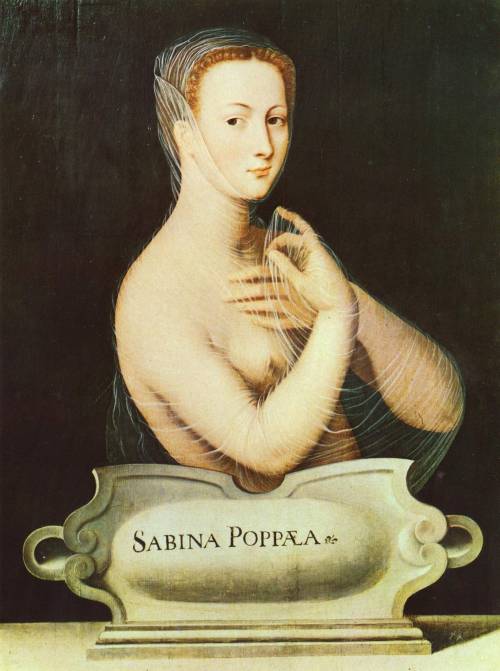
MonteverdiL'incoronazione di Poppea, Barbican

Robert Howarth conducted The Academy of Ancient Music in a performance of Monteverdi L'incoronazione di Poppea at the Barbican Hall.  Claire Seymour writes in Opera Today:

"Set in the reign of Nero, it depicts the irresistible power and tragic pathos of human love, as the passion of Nero and Poppea ruthlessly sweeps aside all hindrances and finds ultimate fulfilment in the Queen’s coronation. In the Prologue which precedes the three Acts, Fortuna, Virtù and Amor dispute which of them has most power. In this richly sensory and sensual performance by the Academy of Ancient Music under the musical direction of Robert Howarth, there was no doubt that Amor is justified in claiming victory."

Please read the Full review HERE in Opera Today

Wednesday, 26 March 2014

ROH and the Roundhouse - new Monteverdi L'Orfeo

The Royal Opera House and the Roundhouse have announced a new partnership. They're doing a joint production of Monteverdi's L'Orfeo in January 2015. This follows on the ROH Cavalli's L'Ormindo,  a joint venture with Shakespeare's Globe Theatre. It's the first time that ROH has done L'Orfeo, which is hardly surprisng: the opera is very early baroque, better suited to small, eclectic houses and period  performance. The Roundhouse in North London is edgier and gritter, an iconic space in its own way. This is the first time an opera has been staged there and the production has been specially conceived around it. Orpheus goes into the Underworld: glorious music but not a "pretty" story.

Marcus Davey, the Chief Executive and Artistic Director of the Roundhouse, said: “We are really delighted to be fusing the expertise of the Roundhouse and the Royal Opera House to create an important new version of this great opera. Developing L’Orfeo together is an opportunity to think of our building in a new way and introduce our audiences – many of whom are under 25, to opera"  Although  the Roundhouse has a committment to young audiences, and will be planning events around the production, artistic standards should not be compromised. Christian Curnyn will be conducting the specialist ensemble the Early Opera Company, so musical standards will be very high.  The singers are good, too, and include Gyula Orendt,  Susana Hurrell, Susan Bickley and Mary Bevan. Audience new to baroque may rise to the challenge, and baroque regulars to a unique performance space.
 
Michael Boyd, former Artistic Director of the Royal Shakespeare Company, makes his opera directing debut. He is known for his many productions of Shakespeare plays. Utterly relevant experience. Monteverdi and Shakespeare were contemporaries.

ADDENDUM (because i was in a rush earlier). As I said last year when plans for the Cavalli L'Ormindo were revealed (more here) "For a long time, it's been apparent that the Royal Opera House needs a new medium sized performance space  for productions that are smaller scale than merit the main house but too big for the Linbury Studio Theatre. Perhaps the Sam Wanamaker Playhouse might fit the bill? Certainly it would be an interesting place to do baroque and other works loosely connected to the 17th and 18th centuries, but I don't think it's a long term total alliance.  Outsourcing is not a bad idea. The ENO has been using the Young Vic for years, and the Barbican is expanding across the road and to Milton Court. It makes business sense and doesn't involve spending millions. Only the South Bank seems fixated on  keeping things in one place whatever the cost or the logic"

By using alternative performance spaces the ROH can expand the repertoire it can offer at relatively low costs - no fancy building costs, for example. Opera fans benefit because they get more than can be fitted into existing premises, and more unusual repertoire. More importantly, perhaps, it's what Kasper Holten has been talking about for some time, creating a loose network of different opera companies. Thus ETO and Music Theatre Wales have a London "home". It's not practical for ROH to tour, so the arrangements aren't reciprocal other than in the sense that opera in general will benefit from the exchange of ideas and relationships. Intriguingly, the network might one day include European houses .  Long term this is good for the UK opera world in general.

Working with the Roundhouse has specific benefits. The Roundhouse has a good reputation working with young musicians and communities.  What it doesn't have, and will never have, is the ROH's expertise in theatre and opera.  It makes sense for them to connect and share, ratther than starting from scratch. The ROH will provide  musicians and stage nous, and the Roundhouse will be organizing its own activities around the opera.  :

Friday, 17 January 2014

Barbican Baroque Blockbusters 2014-15 (3)

Despite its brutalist architecture, the Barbican is Britain's foremost centre for baroque and early music. It sponsors top-flight international musicians and larger -scale works. The 2014/15 season offers many delights.

The Academy of Ancient Music, based at the Barbican,  presents Monteverdi L'incoronazione di Poppea on 4 Oct - excellent cast including Antonacci. Richard Egarr conducts the AAM.  Six days later on 10/10, Joyce DiDonato heads a possibly even better cast in Handel Alcina, Harry Bicket conducts the English Concert. Only 4 years ago Marc Minkowski conducted an excellent Alcina (read more here). DiDonato should be outstanding though because she can really camp up the curlicues in this crazy part!

Even more spectacular will be the big Rameau extravaganza on 18/11. William Christie conducts Les Arts Florissantes and an excellent French cast in Rameau's Daphnis et Églé (Pastorale héroïque) and La Naissance d’Osiris (Acte de ballet).  Rameau in his time was considered shockingly avant garde. Christie understands that and conducts Rameau with the ideal mix of wit and audacity. (Please read my review of Christie's Rameau Hippolyte et Aricie at Glyndebourne). Les Arts Flo are doing Monteverdi too, Madrigals book 8 (24/5).

More still! Europa Galante and Fabio Bondi on 20/2, Vivaldi L'Oraculo in Messina,. Again a superlative European cast - Vivica Genaux no less. And if that's not enough, Handel Hercules (not so common) on 4 March, Harry Bicket, the English Concert and some of the best British baroque singers. The AAM is also doing Scarlatti and Mozart (4/2/15 Christopher Hogwood) and of course, Handel's Messiah for Christmas and Bach St Matthews for Easter. .

There is so much going on at the Barbican that it pays to read the full schedule carefully and spot the treasures. Please also see my piece on  the Barbican 2014-15 LSO and international orchestras season and my analysis of the Barbican's 2014-2015 BBC SO and related goodies. Far too many interesting things to deal with in one post.

Friday, 25 March 2011

Monteverdi Return of Ulysses ENO Young Vic

Monteverdi meets Reservoir Dogs! The ENO  Return of Ulysses  (Il ritorno d'Ulisse in patria) at the Young Vic hits you in the face. Blood-splattered bodies, but it's all there in the libretto.  Full frontal nudity, oral sex, not quite 17th century style, but perfectly in keeping with the psychic mayhem in the opera. This is great theatre and will be a hit among the theatre crowd. Thank goodness! Another nail in the coffin to the notion that universal drama can't be updated. Monteverdi himself wasn't doing authentic Greek tragedy.

Because the Young Vic is an amazing performance space, anything feels direct and involving. It's only when the initial wow factor wears off that flaws are revealed. But first the positives. Börkur Jónsson's set is superb. All glass, everything exposed, so even when singers sit on the toilet, there's nowhere to hide. Fate will get you, there's no escape. This designer-palace looks like a kitchen showroom, too perfect to be real. Which is the drama again. And because it moves, scene changes move quickly, which keeps up the dramatic pace.

Striking set, but rather less striking direction. With a cast as large as this, Benedict Andrews has his work cut out. His solution is to have everyone doing something all the time, like Ericlea (Diana Montague) frying eggs which get thrown against walls, or Iro (Brian Galliford) in a clown mask slobbing in front of a TV. The giant film screens don't help much except fill the high empty space at the Young Vic. Maybe the idea is to make the opera feel like cinema, where many threads unfold at the same time. Maybe Andrews wants a cumulative effect of mindless, repetitive banality, against which the basic drama unfolds, but it's distracting. It's great to see Tom Randle's assets (hinted at in the text) but why does Minerva (Ruby Hughes) cover herself in flour? And why are things thrown at the walls and cleaned? I suspect there's a reason, but it's secondary to the main course. The kitchen simile can be taken too far.

Tom Randle has presence, whatever he does, so his Ulisse vibrates heroic intensity, giving depth to the stylization inherent in Greek myth and in baroque opera. Pamela Helen Stephen adds something to Penelope, too. Her faithfulness seems more like frigidity. Pity Randle and Stephen together look like Obama and Palin (thank goodness no glasses). Katherine Manley's sex mad maid Melanto is well sung and characterized, so she's a good foil to Penelope's hang-ups, Thomas Hobbs's Telemaco played straight but very well sung. Because the performance is in English, you don't miss the exqusite vocal decorations a true baroque performance needs. No discredit to the cast, some of whom, like Iestyn Morris, cannot suppress their singerly souls (good for him!). Here, the emphasis is primarily on singers as actors not the other way round.

Occasionally, a glimpse of what might have been. When Randle and Eumete (Nigel Robson) sing together, their voices are garlanded by the otherworldly sounds of the lirione, played by Erin Headley, who pioneered the instrument's revival and is its greatest exponent.

The lirione is a kind of large viol, with extra strings, so it can produce amazingly rich, wailing chords extending the singing expressively. Authentic Monteverdi continuo. Opportunities to hear period chamber performance aren't common, so it was a great pity that the orchestra was pretty much sidelined. Period instruments are beautiful to look at as well as to hear - that's why they're ornamented. Here, we had not only the lirione but also baroque guitar (one of the theorbo players doubling),and a flûte à bec (period recorder) (Rebecca Miles). Gutsy, energetic battaglias for the fight scenes, in the earthy way period instruments evoke. Jonathan Cohen conducted members of the ENO Orchestra from the harpsichord.

But did the Young Vic audience even notice? With all the emphasis on stage drama, what about the drama inherent in the music? This music is a whole lot more than soundtrack. Because the staging is modern, there's no reason why authentic period playing can't be incorporated into a modern production. Indeed, I'd suggest the mores of baroque playing add to the sense of dislocation that is central to Ulysses's dilemma. He's a relic from the past returned to a stange new world.  I'm the last person in the world to knock modern staging (I even "got" the ENO Lucrezia Borgia) but in this production, musical values were pretty much ignored as irrelevant. Busy staging is always popular because it gives the audience lots to look at rather than to think or listen. This Return of Ulysses will be a big hit because it's strong on theatre (and movie) values. But fundamentally, it really isn't any different from the many other ENO stagings made by people who don't understand music. This isn't a mentally taxing production, and makes a great show on its own terms.

Photos credit Johan Persson, ENO.

Tuesday, 4 January 2011

Monteverdi comes to Spitalfields

Monteverdi and Italian baroque masters materialize in Spitalfields, London, an area which one might charitably call rough. Bars all round, noise, traffic and drunks, The church itself has been under renovation for years. But in this unpromising setting, the Spitalfields music festival thrives.

Tomorrow, Wednesday 5th La Venexiana and their director, Claudio Cavina, specialists in Italian baroque, present a concert of Monteverdi madrigals - this should be good as La Venexiana are very well established in their field. This is their first time at Spitalfields.

Friday 7th is an all -day Monteverdi Exploration. At 10.30 am  there's a special presentation for primary schools on Monteverdi's Seventh Book of Madrigals. Primary schools? Yes, and why not? Properly done the concert plus narration could  inspire kids too young to have been brainwashed into  thinking they can't somehow like classical music, even something as relatively esoteric as Monteverdi. This may well be the event to attend, just to see how the kids react.

Two concerts that evening : Exaudi at 6.30pm, always exciting, singing Madrigals Book 3. Later at 8.30 pm  Retrospect Ensemble perform instrumental music by Monteverdi and his contemporaries. In between, on Thursday, Paul Agnew will give a concert performance of Orfeo Act V with Mahan Esfahani, David Miller and Jonathan Manson (harpsichord, theorbo, gamba). Charpentier, Caccini and Lanier, too.

Wednesday, 23 June 2010

Hugues Cuénod, 108 - Happy Birthday!

Aged 10, Hugues Cuénod attended a concert celebrating Camille Saint-Säens's 78th birthday. Saint-Saëns played  piano with Ignace Paderewski,while Felia Litvine sang. That was 1913. This weekend, Hugues Cuénod reaches his 108th birthday. He still lives in Vevey, in Switzerland, where he was born. He's frail now, sleeps a lot, but still has his wits about him.

Cuénod's famous in the Anglophone world because he made his debut at the Met in his 80's. But the Met isn't the world. Cuénod trained in Vienna and Paris in the 1920's, singing whatever amused him - operetta,  Mozart, Krenek's Jonny spielt auf in 1928, and "Negro spirituals" which he learned from a black American tenor, and recorded in the 1930's.

He didn't hear Pelléas et Mélisande til 1922, but knew many of the people involved with it, including both Mary Garden, Debussy's choice for Mélisande, and Georgette Leblanc, Maurice Maeterlinck's mistress, for whom he'd written the libretto. LeBlanc told him a story about how she and Maeterlinck were canoodling in a park when her husband appeared. Maeterlinck shot up a tree to hide. The scene went into the opera!

Cuénod sang Bach with Vincent D'Indy (in French) and knew the severe, "Protestant" Bach tradition in Geneva. He met Nadia Boulanger in 1934, just when she needed a singer to illustrate her teaching of Monteverdi, thus making him the first "modern" Monteverdi specialist. Boulanger was no purist, playing piano rather than harpsichord or fortepiano, and with heavy-handed gusto, but they made Monteverdi exciting and fun.  He also sang Cavalli and other early operas.. Without Hugues Cuénod, the baroque revival of the 20th century might not have happened so quickly..

Yet, as Cuénod cheerfully says, he's never taken life too seriously. Boulanger was notoriously demanding. Igor Markevitch, also a Vevey boy, and friend of both, called her "Herr Doktor" behind her back. Cuénod could defuse situations with his easy, laconic humour.  He, after all was the man who could croon like Jean Sablon so well that he formed a duo with a soprano, called Bob et Babette, to sing French language pop songs. There's a great photo of them in 1937, looking so wholesome and sweet it's almost a joke!

Cuénod also knew  Noel Coward, whom he described to an  interviewer as "an English Sacha Guitry". They did a thing called The Green Carnations which was so openly gay, even Coward was worried how it might go down. Maybe the public didn't twig. When Switzerland allowed gay marriage, Cuénod was one of the first to take advantage, marrying in his late 80's. They're still together, after 40 years.

 Of course, Cuénod knew Stravinsky, their circles connected in many ways. Stravinsky wrote Sellem the auctioneer in The Rake's Progress for him, a short but characterful role, making the most of Cuénod's dramatic strengths. (one of his favourite roles was the Stammerer in Smetana's The Bartered Bride). Everyone in the business went to the premiere, and Cuénod's opera career blossomed better than any agent could have dreamed. That's how he was asked to sing The Captain in Wozzeck at La Scala with Tito Gobbi.

Cuénod also became an enduring fixture at Glyndebourne.. He was also a regular at Aldeburgh, for many years. Britten wanted him to sing duets with Peter Pears, but it didn't work out because their voices and styles were too different. "Harnessing a horse with a steer", said Cuénod, discreetly.
.
So Happy Birthday Hugues Cuénod, and many more to come!
Photo credit : Charles Sigel
Monday, 10 May 2010

Monteverdi L'Orfeo Milan full broadcast


Full broadcast (no cuts, no intervals) of Monteverdi L'Orfeo on BBC Radio 3 online and on demand until Thursday afternoon UK time.  This is the production from Milan's Teatro La Scala in September 2009. Rinaldo Alessandrini conducts, but it's La Scala, so not quite the typical baroque ambience Monteverdi would have recognized. Still, it's visually stunning, elegant and classical in the true sense of the word (Robert Wilson).  Lots of still photos on the BBC site and two clips here. Singing a little uneven but some very beautiful momemts. Sara Mingardo and  Roberta Invernizzi lovely, Georg Nigl could be a bit higher toned.  I like the way Alessandrini gets the La Scala orchestra to sound vigorous and unpolished. It's still Verdi Monteverdi but enjoyable nonetheless. I don't know why the BBC gives a link to Naxos, very shallow work there. I've been so busy this week, but finally made the time to listen and enjoy.

Saturday, 15 August 2009

Existential angst and puppet invasions

Puppets are subversive. They may be carved of wood but like most human beings, they only come to life when their strings are pulled. Egads! Puppets are sinister. An old sock can come alive when someone shoves their hand up it and talks squeaky. Some kids were scared witless by Shari Lewis (for those who remember the 50's kid show) . Puppets come with dementedly jolly jingles, rictus grins and implied menace. If the fairy can make Pinocchio into a "real boy" can real boys be turned into marionettes?

Perhaps that's why puppets have existential angst. They remind us that we too are toys that can be manipulated by others. So puppets pack a punch when it comes to theatre. For thousands of years story tellers have used puppets to illustrate their art. Unreality is part of the magic. So when puppets invade theatre and music, they add extra dimensions.

This week Philip Glass's new symphony had its premiere at the Proms. Nice, because it works the way Buddhist chant works, creating a state between consciousness. On the other hand, you wish there was something to look at to concentrate the mind. That's perhaps why his Satyagraha at the ENO was brilliant. The repetitive music evoked the relentless struggle of India's ground-down masses. But the puppets! Huge, towering marionettes who walked like giants, acting out the ancient sagas of Hindu gods. They injected a whole new level into the opera, expanding its meaning. Gandhi was a little man but what he achieved was heroic. That memorable production was created by Improbable, a truly innovative theatre group that combines puppets, circus, athletics, and visual images. So much potential, so many possibilties. Theatre, opera and music directors take note - Improbable is a fantastic resource.

Even more recently, we saw how circus skills can save an unstageable opera like Saariaho's L'Amour de loin. Read about that HERE.

And now, Monteverdi's Return of Ulysses gets the puppet treatment at the Edinburch Festival. The singers will be shadowed by huge puppets, operated on sticks like Indonesian wayang where puppets enact ancient sagas. The puppeteers are Handspring Puppet Company. This Ulysses has been seen in France, Belguim, New York and Luxembourg. Read about it HERE with photos and production shots.

"While working on Ulisse I had occasion to take my five year-old nephew for a chest x-ray. The child was stood at the machine and positioned using a video screen next to the x-ray machine. On the video screen you could see the moving skeleton of the child, the incredibly fine and fragile collarbones, the thin pylon of the spine and in the jaw not just the child’s teeth, but also the adult teeth still on the bone, waiting to erupt." says the designer, William Kentridge. Read the whole article, it's very detailed and different. Baroque is fantasy, the ultimate union of artifice and illusion, referencing myth and human concepts. So Monteverdi and puppets could be made for each other.

Coming up next : Birtwistle's The Mask of Orpheus at the Proms. The one original performance, in 1986, was staged with puppets: parallel figures shadowing the spoken and sung roles. Birtwistle's Punch and Judy is about puppets, the strange British idea that children should be entertained by scenes of domestic violence and police corruption. Puppetry as a tool for evil indoctrination. That's why the opera upsets me so much. That's what Birtwistle was trying to show. Watch this space.

Monday, 29 June 2009

Hugues Cuénod, 107


Please note, I'll be doing LOTS more about Cuénod in 2010 including a few exclusives you won't find anywhere else !!!!!!! So please bookmark this site, subscribe and keep coming back.  HERE is the latest post. Celebrate Hugues Cuénod who turned 107 on 26th June. Read the interesting blog (in French) Comme Il vous plaira. by Charles Sigel. To read the post click HERE
It's lovely, scroll down by one message to get to the Letter to Hugues Cuénod. Cuénod knew everyone in French (and other) music circles, often close enough to tutoyer.

Here is a clip of a recording made in 1937. The pianist is Nadia Boulanger. The recording was possibly made in the home of the Princesse de Polignac. It's like listening in on another, private world. The princess, who was an heiress of the man who invented sewing machines, was a great patron of the arts. She held soirees in her palace, attended by the likes of Poulenc, Ravel, Stravinsky, and many others, where many premieres were played sometimes dedicated by one of the group to another. These were private, so most were not recorded, so what survives is precious.

How fresh and young Cuénod sounds. No wonder he was still singing into his mid 80's. The other singer is Paul Derenne, also a tenor. I don't know who plays the violin as I thought the princess was a pianist.