Showing posts with label BCMG. Show all posts

Tuesday, 22 October 2019

David Sawer Rumpelstiltskin, April\March - Martyn Brabbins, BCMG, NMC


From NMC specialists in modern British music, David Sawer Rumpelstitlskin, with Martyn Brabbins conducting the Birmingham Contemporary Music Group, the team who premiered the ballet in 2010 and also the Rumpelstiltkin Suite (2011) featured here, recorded at a performance at the Wigmore Hall in 2013.  Rumpelstiltskin was one of the BCMG's most successful commissions : this commercial release has long been awaited.

Rumpelstiltskin is a fairy tale so grim even Disney stays clear. A bankrupt miller fools bailiffs, claiming that his daughter can spin straw into gold.  Up pops an ugly dwarf, who staves off the crisis, but keeps the girl prisoner. Though the miller was lying about the girl's ability to spin gold from straw, the Dwarf makes the scam come true.  The King is fooled and makes the girl his queen. When the dwarf returns to collect his payoff, the the girl steals the secret of the spell and gets rid of him by revealing his name. He shatters into many pieces. The girl's as dishonest as her father was. She thinks she's entitled to riches she didn't earn, and destroys the outsider to whom she owed her good fortune. What kind of moral does this tell? Sawer's take on the tale is uncompromising : it's a parable for modern times.

The fully staged original (Stewart Laing) presented the tale with stark stylization, the set a box-like structure which emphasized the claustrophia : scams are being woven, caught up in their own mad logic. Even then, though, music was integral to the narrative.  Members of the BCMG moved on stage in and out of the set, the action standing still at critical points to highlight solo players. Effectively, instruments as singers, telling the story without words. The idea of weaving and stalking flowed from the structure of the score. One ensemble with muffled tuba, trumpet, horn, clarinets, oboe, flute, bassoon, bass - dark, ominous - represented one force. The other, smaller ensemble led by harp, with violin, viola, cello represented something more fragile. At first, the girl, but later the Dwarf, destroyed when she loses her innocence. Both groups merge and change like a puzzle "spun" from sound on different levels. Interpretively, this expresses the changing alliances in the plot, the good becoming evil, the strong becoming weak.

Sawer's Rumpelstilstkin Suite concentrates the intensity still further. In the first movement, "The Idle Boast", tuba and bassoon suggest the miller's bombast, and probably also the Dwarf's pride. Trumpets call out, "naming" the miller with sounds of alarm, much as the girl eventually names the Dwarf. As the spell takes hold, the harp, winds and strings, evoke the sound of busy spinning - percussive strikes imitating the shuttle of the spinning wheel flying frantically back and forth. Gradually, the pile of gold rises higher and higher til perhaps we can't see the girl anymore behind the wall of booming orchestral sound. Trumpets announce "The Wedding and Coronation" but what are the baleful sounds of bassoon and clarinet telling us ? The procession goes on its merry way, figures repeating as if in perpetual motion. Bassoon and tuba dance along : as long as surfaces shine, no-one questions. All must be gold.  "The Guessing Game" is brief but tense, strings duelling brass and winds. In the "The Dwarf Alone", the mood is darker : the harp at its lowest register, the brass and winds pacing tense patterns, as if the Dwarf was stomping his feet.  The trumpet blows raspberries, cruelly mocking the Dwarf's dilemma. Rumpelstiltskin does his last dance, clumsy, grotesques, with strident  interjections from the brass, long, high pitched screams and turbulent circular lines suggesting upheaval. The sharp percussive sounds which once suggested the shuttle of the spinning wheel return.  The Dwarf dies but the girls keeps spinning her scam.

Cat's-eye (1986) is an early work, but already Sawer's distinctive feel for dramatic dialectic is apparent. Instruments operate in pairs and in larger groups, with piano and harp at the centre, interacting with nervous, jerky frisson, in constantly changing patterns, each of the seven sections developing what went before. Sustained chords contrast with staccato, moments of near-silence with explosive outburst. Like the sense of perpetual motion in the Rumpelstiltskin Suite, Cat's-Eye generates and regenerates itself with inventive energy.

With April\March (2106), Sawer adapts concepts of time and time reversal, to create an intricate puzzle.  Note the backslash in the title ! Inspired by Jorge Luis Borges's short story A survey of the Works of Herbert Quain,  Sawer experiments with ideas of symmetry, rules subverted and reformulated, sequences moving backwards as well as forward. A melody is heard as if from a distant past, but its lines blur, as if it were being heard back to front.  "Time", writes Steph Power for NMC, "is key to Sawer's music on many levels. It's the precision of his timing, allied with an instinct for structural proportaion and elegance that enables him to explore oppositional tensions with such verve. Boldness and clarity of texture, surprise, economy of ecxpression and an ear for the catchily skew-whiff combine in ways that see-saw between equilibrium and dis-equilbrium, while always remaining cogent  and direct".  Though this music is accessible to listen to, it isn't easy to play.  Martyn Brabbins and The Birmingham Contemporary Music Group perform it with the precision and idiomatic panache it deserves.

Tuesday, 2 May 2017

Howard Skempton - The Rime of the Ancient Mariner NMC Roderick Williams

Another hit for NMC, specialists in modern British music: Howard Skempton The Rime of the Ancient Mariner with Roderick Williams and the Birmingham Contemporary Music Group, conducted by Martyn Brabbins. This recording breaks new ground, its appeal reaching beyond  new-music circles.

Samuel Taylor  Coleridge's The Rime of the Ancient Mariner intrigues because there's nothing else quite like it in English verse. Though its tone suggests ancient saga, its subject was unequivocally modern, in the sense that it caught the Zeitgeist of the Romantic era's fascination with the "Gothic". The Mariner breaks unspoken  rules and kills the Albatross. He and his shipmates are cursed, dying of thirst though there's "water, water everywhere" around them.  Two centuries later, the Rime still haunts. The Mariner's journey is a descent into the darker unconscious. Like the wedding guest, we "fear thee, ancient Mariner! I fear thy skinny hand!"

Howard Skempton's setting grows from the ballad so symbiotically it seems a "living thing". The vocal part reflects the strange obsessive nature of the text, which draws the listener in as if hypnotized.  The cadences rise upwards and down, at a pace which suggests a hard march. Coleridge began the poem while hiking on the moors.  Roderick Williams is a remarkable narrator, capturing the demented undercurrents in the verse. The lines run like a form of Sprechstimme, not recitation, yet not quite singing. This nightmare does not let a voice take full flight. Williams has a gift for natural, direct communication, without theatrical histrionics. He makes us sympathetic to the Mariner as a mortal man, which makes his fate all the more tragic.

The voice is accompanied at first only by the cello, legato drawn drone-like, as if it were some ancient, primitive instrument, or, indeed, a force of nature, like a sinister wail.  The cello carries the music for a while, until other voices join in in subtle combinations. The double bass quietly murmurs, suggesting sinister depths.  The viola leads the violins, an aptly quirky reverse of "natural order". When the ship is becalmed -- "As idle as a painted ship/Upon a painted ocean" -- the music hovers almost imperceptibly, as if listening out for a breeze. When things change, the piano and other players create a tumult.  When the visionary figures appear, the high violins at last take flight.  Coleridge  writes movement into his lines, which Skempton translates into abstract sound.  We listen, as if spellbound, to the strange, unworldly atmosphere.  Maurice and Sheila Millward, who suggested the setting and commissioned the piece, had insight. Skempton's The Rime of the Ancient Mariner is a remarkable work which needs to become part of the canon of British music.

Like an earworm, this music burrows into your subconciousness.  The cadences in the text haunt the music, reflecting, perhaps, the tides of the ocean, and the pulse of the human body.  You're mesmerized, absorbing the surreal atmosphere so it seems almost natural. Though you're hypnotized, almost against your will, you keep listening, fascinated by the detail and inventiveness concealed within the relentless pulse.  The wedding guest must have felt the same way! It's a tribute to Skempton's skill that his music adds greatly to the effect of the poetry, enhancing its effects without overwhelming its strange personality.


On this disc, Skempton's The Rime of the Ancient Mariner is paired with Only the Sound Remains, taking as a starting point an idea from Edward Thomas's The Mill Water.   The mill is gone, and its sounds have fallen still.  Yet "In calm moonlight, Gloom infinite, The sound comes surging in upon the sense:".  Thus there's no need here for a voice part: the orchestral sounds evoke the sounds that once might have been heard, though the men and machines who made them are now long gone.  John Fallas's booklet notes for NMC explain further. "Skempton's pervasive but pervasively disguised/transformed nine-note scales are the secret code generating everything, from the spare, angular counterpoint into dramatic minor chords or sudden outbreaks of warm, major key consonance". The Rime of the Ancient Mariner in particular is a tour de force, not at all easy to perform, so treasure this recording. It will become a classic.


Sunday, 6 December 2015

Roderick Williams, BCMG Wigmore Hall - New Songs to English Poetry


At the Wigmore Hall, the London premiere of a major new work by Howard Skempton, The Rime of the Ancient Mariner, with Roderick Williams and BCMG, the Birmingham Contemporary Music Group.

Samuel Taylor  Coleridge's The Rime of the Ancient Mariner intrigues because there's nothing quite like it in English verse. Though its tone suggests ancient saga, its subject was unequivocally modern, in the sense it caught the Zeitgeist of the Romantic era's fascination with the "Gothic". The Mariner breaks unspoken  rules and kills the Albatross. He and his shipmates are cursed, dying of thirst though there's "water, water everywhere" around them.  Two centuries later, the Rime still haunts. The Mariner's journey is a descent into the darker unconscious. Like the wedding guest, we "fear thee, ancient Mariner ! I fear they skinny hand!"

Howard Skempton's setting grows from the ballad, so symbiotically it seems a "living thing". The vocal part reflects the strange obsessive nature of the text which draws the listener in as if hypnotized.  The cadences rise upwards and down, at a pace which suggests a hard march. Coleridge began the poem while hiking on the moors.  Roderick Williams is a remarkable narrator, capturing the demented undercurrents in the verse. The lines run like a form of Sprechstimme, not recitation, yet not quite singing. This nightmare does not let a voice take full flight. Williams has a gift for natural, direct communication, without theatrical histrionics. He makes us sympathetic to the Mariner as a mortal man, which makes his fate all the more tragic.

The voice is accompanied at first only by the cello (Ulrich Heinen), legato drawn drone-like, as if it were some ancient, primitive instrument, or, indeed, a force of nature, like a sinister wail.  The cello carries the music for a while, until other voices join in in subtle combinations. The double bass (John Tattersdill) quietly murmurs, suggesting sinister depths.  The viola (Christopher Yates) leads the violins. When the ship is becalmed -- "As idle as a painted ship/Upon a painted ocean" -- the music hovers almost imperceptibly, as if listening out for a breeze. When things change, the piano (Malcolm Wilson) and other players create a tumult.  When the visionary figures appear, the high violins at last take flight.  Coleridge  writes movement into his lines, which Skempton translates into abstract sound.  We listen, as if spellbound to the strange, unworldly atmosphere.  Maurice and Sheila Millward, who suggested the setting and commissioned the piece, had insight. Skempton's The Rime of the Ancient Mariner is a remarkable work which needs to become part of the canon of British music.

The BCMG Wigmore Hall concert began with  Dominic  Muldowney's An English Songbook (2011) with a new song, "Smooth between the Sea and Land", a BCMG commission receiving its London premiere. This song is a setting of A E Housman, and reflects the poet's distinctive timbre, which stands out in contrast to the three settings of W H Auden, whose arch sophistication demands music of equal bite. Muldowney;'s "At Last the Secret is Out"  and "Funeral Blues" reflect Auden's verbal intelligence, Yet when Roderick Williams sang "Stop the clocks.....", one could feel the sensitivity which Auden concealed behind his combative, cynical surface.

Songs to poems by Edward Thomas  and John Betjeman bridged the divide between Auden and Housman,  with Muldowney creating a  nice, almost bluesy feel as if shadowing the spirit of the 1920's.  Muldowney responds even better to Shakespeare. His version of "Winter " nips along, as if skidding on ice. "tu-whit, tu-who, a merry note", sharply  manic. Finest of all, Muldowney's "Fear no more the Heat of the Sun".  This song is the heart of the cycle, connecting to "Funeral Blues" and "Winter", but also in mood to the other songs in the group. It's a wonderful song, at once elegaic, yet tender. With Skempton and Muldowney, the art of English Song is alive and well.

This review  appears in Opera Today

Saturday, 25 July 2015

Vibrant Organic Growth - BCMG Prom Boulez, Betsy Jolas

Nature renews itself with constant, organic change. Good ideas grow and proliferate. As demonstrated in the well-planned programme by the Birmingham Contemporary Music Group conducted by Franck Ollu at Cadogan Hall, the first of this year's Proms Saturday Matinees at the Cadogan Hall, London.

Pierre Boulez Notations were originally written as a keyboard haiku.,  Hence their elusive, quirky charm. Later, Boulez was to orchestrate Notations I-IV and  VII.  Today, though, we heard Johannes Schöllhorn's orchestration for small ensemble of Notations 2, 11 and 10  and his own mysterious 13th which Boulez didn't write. Creative outgrowth on Schöllhorn's part, and very enjoyable for that.  Susanna Mälkki will conduct Boulez's own orchestrations of Notatioms at Monday's Prom 13.

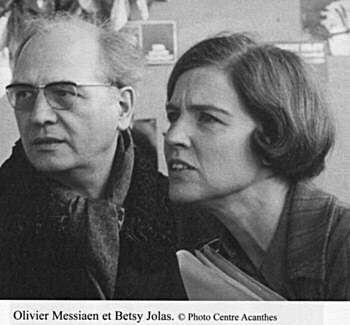
Betsy Jolas is a year younger than Boulez. Both were students of Messiaen, Jolas eventually taking over Messiaen's teaching duties at the Paris Conservatoire. Her Wanderlied, for violoncello and 15 instruments, dates from 2003. It's based on a poem by Jolas's father, Eugène Jolas, describing an old woman who journeys, telling stories to all, whether they care to hear or not. A Leiermann, perhaps, the spirit of creative integrity despite all odds. The cello part meanders purposefully, leading the orchestration around it, which reacts and proliferates in response.


Ophiocordyceps unilateralis s.l., is a long title for a miniature in five parts running around seven minutes., but it's accurate, describing a fungus that attacks ants . When they die, their bodies provide nutrients for a new  generation of microscopic life. Shiori Usui's piece is delicately observed. First tiny cells ripple along in cheery formation, while some slowly start to wander in another direction.
Longer elliptical lines overwhelm. The rustling stops but then is replaced by outbursts of energetic freedom. Abstract musical ideas used creatively to replicate the complexity of Nature. Joanna Lee's Hammer of Solitude followed, apparently written in homage to Boulez's Le marteau sans maître. Hilary Summers sang the text and scraps of words and exhalations, but it's an otherwise unoriginal work. 

Usui's Ophiocordyceps unilateralis s.l. for all its quiet refinement is a much more accomplished piece and worked far better with the ideas of organic growth that mark Boulez's Dérive 2. While Dérive 1 was a miniature piano concerto, the ideas in Dérive 2 proliferate with energetic abundance. Often, when thinking of this piece I visualize the Mandelbrot theory, where simple cells generate multidimensional patterns, with endless variations and invention - the very stuff of life itself.  Ollu and the BCMG performed with such joie de vivre that the piece seemed to levitate of its own volition. Anyone who insists Boulez is dry hasn't understood this work.
  
Listen again to the BCMG Boulez Prom again on BBC Radio 3 

Monday, 7 April 2014

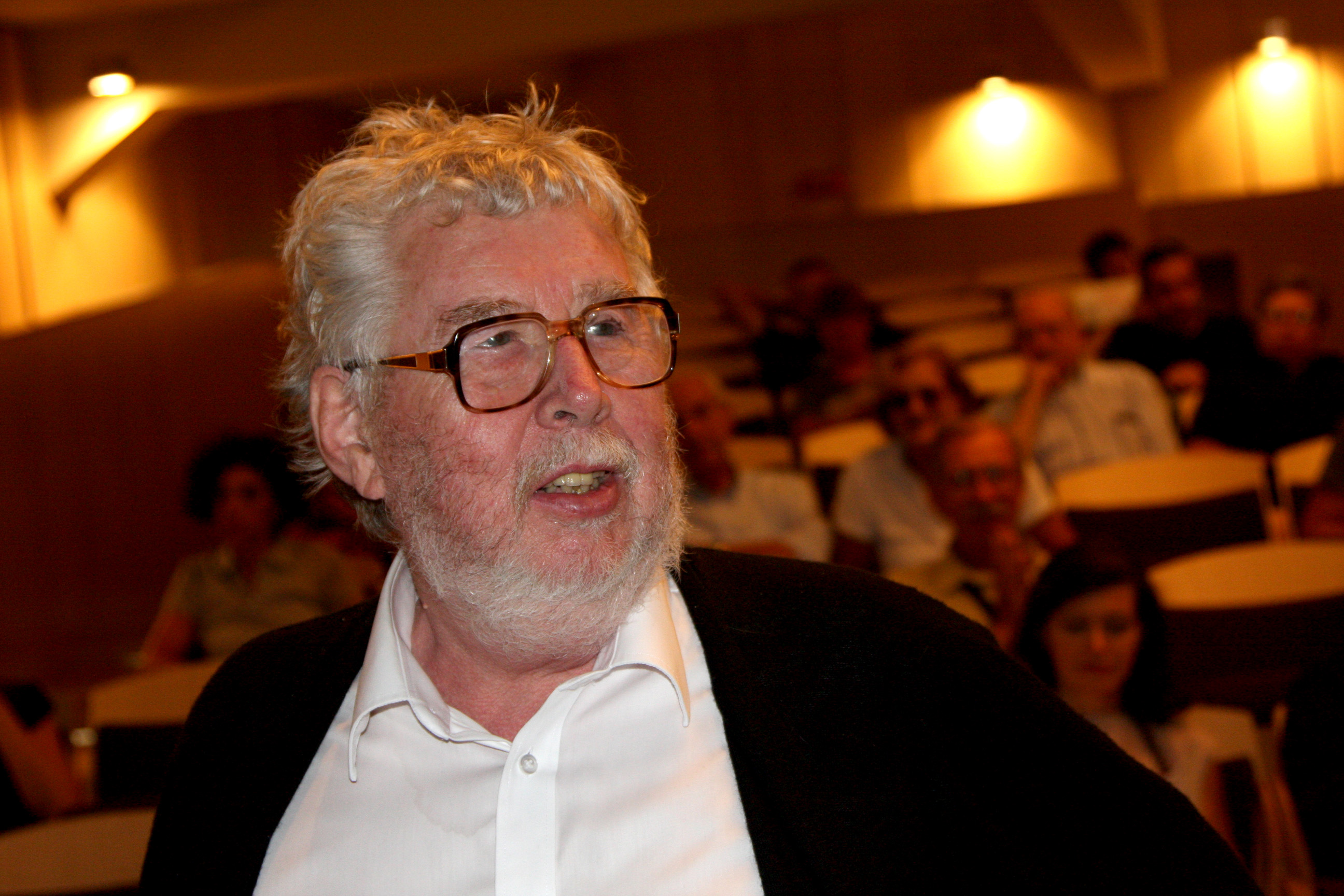
Harrison Birtwistle 80 major Barbican retrospective

"The Barbican marks Sir Harrison Birtwistle’s 80th birthday with
Birtwistle at 80, celebrating one of the great iconoclasts of British
classical music with performances of his operatic, orchestral and chamber masterpieces" so states the publicity.

Birtwistle is easily the greatest British composer of his generation.He's a true original who doesn't follow safe, established paths or court populist favour. Like Benjamin Britten, he isn't "Establsihment" by a long shot. If he ever becomes Master of the Queen's Music, we'd be in for a shock. Knowing Birtwistle, he'd give a good-natured shrug and chuckle with a twinkle in his eye.

The Barbican series is thus extremely important.  "At the heart of the series are two of Birtwistle’s most contrasting operas, Gawain (1991) and Yan Tan Tethera (1984), presented in concert hall stagings directed by John Lloyd Davies......Rooted in the English tradition, whether chivalric or folk, these operas highlight Birtwistle’s deep interest in ancient myths and rituals." The director comments "Birtwistle is one of the most viscerally theatrical of composers. All his works embody his obsession for his characters “to have blood in their veins and sex in their loins”.The great Arthurian myth of Gawain and the raw, wind-scoured Wiltshire plains of Yan Tan Tethera share familiar Birtwistle devices of ritual and repetition, yet even in a concert-hall staging what overwhelms the listener is the theatrical power, inventiveness and energy of the composer’s musical imagination.’
 
On Friday 16 May, the Barbican and the BBC Symphony Orchestra present the iconic opera Gawain, based on the late 14th-century English romance Sir Gawain and the Green Knight, with a libretto by David Harsent. Martyn Brabbins conducts a star cast including bass Sir John Tomlinson singing the Green Knight, a role that he created for the world premiere at Covent Garden in 1991, and baritone Leigh Melrose in the title role. On Tuesday 29 May, the Barbican and Britten Sinfonia join forces for a co-production of the chamber opera Yan Tan Tethera. With text provided by Tony Harrison, the piece is based on a supernatural folk tale of two shepherds counting their sheep and encountering the devil. Led by Baldur Brönnimann, the cast includes baritone Roderick Williams in the role of Alan and soprano Claire Booth as Hannah.

"The themes of myth, ritual and landscape are also evident in the other events that are part of the Barbican’s celebration. Oliver Knussen conducts the Birmingham Contemporary Music Group in Birtwistle’s early breakthrough piece Tragoedia (1965), inspired by Greek theatre and mythology (Sunday 25 May – Milton Court).  The performance is part of a programme showcasing chamber works and songs from across the composer’s career, including Silbury Air (1977 – revisited in 2003), inspired by the prehistoric mound of Silbury Hill in Wiltshire, and the recent Fantasia Upon All the Notes (2012). The monumental orchestral work Earth Dances is presented by the London Symphony Orchestra and Principal Guest Conductor Daniel Harding (Tuesday 20 May). At the core of the piece, which is based on Birtwistle’s fascination with nature and the shifts and changes affecting landscape, is a geological metaphor: the orchestra is divided into six “strata” with ever-changing relationships reflecting those of the earth’s layers."

"Closing the series on Friday 30 May, Britten Sinfonia and conductor Baldur Brönnimann focus on Birtwistle’s quintessential Britishness and his relation to the pastoral tradition, in the context of an evening of British music inspired by landscape and national identity. The programme features Birtwistle’s The Fields of Sorrow and Melencolia I, and works by Holst and Vaughan Williams (including the latter’s suite Flos Campi for viola, small orchestra and small chorus with soloist Maxim Rysanov and Britten Sinfonia Voices directed by Eamonn Dougan). As a pre-concert
event, the Arditti Quartet – who will also be presenting the world premiere of a new Birtwistle work during their 40th birthday celebration at the Barbican on 26 April – pay homage to the composer with a performance of String Quartet:The Tree of Strings. With its title taken from a poem in Gaelic by Sorly MacLean, String Quartet:The Tree of Strings is deeply rooted in a sense of place, powerfully evoking the desolate history of the Scottish island of Raasay where MacLean was born and where
the composer himself lived in the 1980s. "
 

For more details, please see here.    
Please also follow the label "Birtwistle" on this site  : I've covered more Birtwistle than most, and havce written about many of the works above.

Monday, 31 March 2014

Royal Opera House 2014-15 season analysed


The Royal Opera House's 2014-15 season is a good balance of artistic venture and business savvy. London must be doing something right with sales running at 96% capacity and HD broadcast attendance running neck and neck with live performances. When opera houses and orchestras seem to be imploding elsewhere, it's worth taking careful note of the ROH strategy.

Seven new productions in the main house, plus others in the Linbury Studio, mixed with regular revivals.  In tough times, it's easy for houses to play safe but that is not good for the long term health of the arts. The Royal Opera House thus offers a well-planned balance of familiar and new

Shock! Horror! the new season opens in September not with a glizty gala but with something truly provocative - Mark Anthony Turnage's Anna Nicole. Not only that, but with prices max £25. The catch is students only but that's a positive. It will get the kids into the house on their own terms with their own peers.  BRILLIANT idea. No doubt there will be spoilsports who think young people shouldn't be exposed to four-letter words, but that's patronizing. Kids are sharper than they get credit for. Do-gooding "outreach" means zilch if you don't trust kids to think for themselves. What happened to Anna Nicole was obscene and Turnage tells it like it is. Although I didn't like it at its premiere Anna Nicole grew on me the more times I heard it. I'm going again and taking a whole bunch of under 30's. Read more HERE.
 
Other revivals include Der fliegende Holländer with Bryn Terfel, Adrianna Pieczonka  and Andris Nelsons - definitely not to be sniffed at! Terfel is also singing his signature Dulcamara in Donizetti L'elisir d'amore. I'm also looking forward to Tristan und Isolde with Stephen Gould and Nina Stemme in the greatly misunderstood Christof Loy production, the first ROH production to face orchestrated booing. Booing is intimidation, the denial of artistic expression. But I guess those who get their kicks from bullying will be out in force. Read my "More tradition than meets the eye" HERE and  HERE.

 Very exciting fare for those who like interesting repertoire:

1. Umberto Giordano Andrea Chénier with Jonas Kaufmann, making his role debut. Any role debut with Kaufmann is big news, and he can probably do this notoriously difficult part better than anyone else in the business these days. This opera isn't standard rep because it's hard to pull off without ideal singers but with this cast (Kaufmann, Eva-Maria Westbroek and Željko Lučić) the ROH will probably leave the Met's current production for dead. Antonio Pappano conducts  He's been  confirmed Music Director "at least" until the end of the 2017 season.

2  Karol Szymanowski's Król Roger with Mariusz Kwiecień . The music in this opera is ravishingly beautiful, expressing the love that dares not tell its name. It's a fabulous opera but its depths aren't often plumbed as deeply - and disturbingly - as they could be. Kwiecień pretty much "owns" the part of Król Roger, the king hypnotized by a beautiful, mysterious stranger. I can't imagine Kwiecień being coy.  Kaspar Holten directs, which I think bodes well. 

3 Rossini Guillaume Tell, is one of the hallmarks of Antonio Pappano's career : Listen to his recording with his Rome band, the Accademia di Santa Cecilia.  He's bringing the same soloists to London - Gerald Finley, John Osborn and Malin Byström. We are in for a treat. This is another opera that's not easy to stage but will be directed by Damiano Michieletto. This is the French version of an opera by an Italian  It's not so much "about" Switzerland (which has French, Italian and German -speaking communities) but about freedom, the essence of creative art..

4  Verdi I due Foscaro . "Maybe", says Pappano, "not one of Verdi's finest works but important because it deals with an elderly father, who's seen a lot about life". Which may suit Plácido Domingo at this stage of his career - life imitating art. Francesco Meli sings the son and Maria Argesta (handpicked by Pappano in Italy), sings the son's wife.

5 Kurt Weill/Bertolt Brecht The Rise and Fall of the City of Mahagonny.  Kasper Holten says he wants to do a lot more operas from the first part of the 20th century, which should be really interesting. What lies in store in future years ?  A Janáček project, he hints. Possibly more? Rupert Christiansen complained that there was too much Italian repertoire and no Russian. So what, I thought. We can't have everything all the time.  We've had Lady Macbeth of Mtensk, The Tsar's Bride, Tsar Saltan and Eugene Onegin. This year we have Król Roger (in Polish) , decidedly "East" German Brecht and Weill and Czech/Moravian Janáček to come. Mahagonny is an excellent choice because it's quite flamboyant by Brecht standards, with big choruses and bizarre situations. John Fulljames should bring out its subversive anarchy well. 

6. Verdi Un Ballo in maschera. with Calleja, Hvorostovsky, Monastryka and Serafin. Worth going to for the singing alone. The director is Katharina Thoma, so be prepared for erudite, intelligent  dramaturgy. She does not dumb down: we're well advised to study the score as carefully as she does. 

7. Mozart Idomeneo with Matthew Polenzani, conducted by period specialist Marc Minkowski, in his debut at the Royal Opera House - hooray ! Director is Martin Kušej whose work in Zurich sticks in  my mind. Should we expect feathers?

 8. Philip Glass The Trial (based on Kafka) - specially commissioned for Music Theatre Wales, with which the ROH has a long and fruitful partnership . Lots on MTW and Glass on this site - please explore).

9. Harrison Birtwistle The Cure, a co-commission with the Aldeburgh Festival, with support from the London Sinfonietta, paired with Birtwistle's The Corridor, which I heard at Aldeburgh a few years ago.

10. The Royal Opera House's role in promoting British opera should not be underestimated. That's MUCH more important than promoting Russian opera! The ROH is also presenting David Sawer's Rumplestiltskin (read more here)  and The  Lighthouse Keepers.  Sawer is emerging as a genuine talent, so don't miss this double bill when it reaches the Linbury next year. This is a joint ROH/BCMG venture. Don't underestimate the importance of these partnerships.

11. Monteverdi L'Orfeo at the Roundhouse. This is significant because it links ROH's stagecraft expertise with the Roundhouse's extensive work with students and young people, which I've written about in some depth here.


photo of Pappano and Holten, : Johann Person, photo of Eva Maria Westbroek : Bill Cooper

Sunday, 9 February 2014

Glorious Wigmore Hall Summer 2014

The Wigmore Hall is even more impressive when you compare it with much bigger venues.. The WH can't afford (or accommodate)  celebrity orchestras and conductors,. Instead it targets more serious audiences who want good music, not necessarily pricey tickets.

The Wigmore Hall does do big-name orchestras  and voices, but in a concise way. Christophe Rousset brings Les Talens Lyriques to Wigmore Street twice this season. First, on 13/4  they're giving Leçons de ténèbre - Couperin and Charpentier. Since this falls during the solemn rituals of Hioly Week, the programme will have special extra-musical significance. This concert will go very nicely with the Charpentier and Lalande concert on 12/4 with Le Poème Harmonique (Vincent Dumestre) , who have done so much for Lalande. Then, on 28/4, Les Talens Lyriques return for a programme of arias written for Farinelli. Farinelli was of course a castrato. Such voices would not now exist, so Rousset has brought in Ann Hallenberg. She will be singing Giacomelli, Hasse, Neapolitans Nicola Popora and Leonardo Leo, and several pieces written by Farinelli's brother, the compoaser Riccardo Broachi.

In 1728, Handel met the French violinist and composer Jean-Marie Leclair in London. The London Handel Players commemorate this  exchange with a concert on 10/4. This will be an important event as Lawrence Cummings and Adrian Butterworth are Leclair specialist, having edited some of his works. Stile Antico promises something even more glorious on 11 May with "Treasures of the Renaissance": vocal works by Byrd, Gombert, Clemens non papa, Lassus, Tallis, Praetorius, Palestrina and a world premiere by Huw Watkins. Watkins thing for detail might work very well here.

More French sacred music on 30/5 with Le Concert Spirituel and Hervé Niquet - Charpentier, Lully and a rare piece for women's voices by Louis Le Prince, chapel master at Lisieux, 150 years before St Thérèse was born. Two more must-go baroque evenings in July: Philippe Jaroussky improvises on Henry Purcell with L'Arpeggiata on 10/7. and the Cardinall's Musick celebrate their 25th anniversary on 27/7. In between, other gems like Iestyn Davies,  Lawrence Zazzo, Florilegium, The Early Opera Company and the English Concert. 

If your tastes are more moderrn, you weill already have booked for Ensemble Intercontemporain on 27/4 doing small ensemble pieces by Berg and Kurtag plus Schumann and Yann Robin (UK Premiere). Also unmissable, the Arditti Quartet on 15/5 -  Scelsi String Quartet 4, Kurtag, Lachenmann and Julian Anderson. In a slightly different vein, there's an Edwin Roxburgh Study Day on Sunday 26/4. The Birmingham Contemporary Music Group return to the Wigmore Hall on 20 June for a wonderful programme (Knussen, Henze, Elliott Carter, Adès, Woolrich etc)

"Normal" Wigmore Hall fare is pretty enticing too - Prégardien and Bostridge singing Schubert (not together), Marc-Andre Hamelin, Perényi and Schiff, Imogen Cooper, Ma and Stott, Anna Prohaska, The Jerusalem Quartet (Shostakovich), the Elias String Quartet (Beethoven) and a Rachmaninov Song series.   

Tuesday, 17 September 2013

"1000 people shouting" BCMG 2013/14

A piece for 1000 people shouting in the street? The Birmingham Contemporary Music Group thinks so. They've commissioned David Lang's "marvellously crazy idea"for a major piece for outdoor performance, with a vast community of singers, perhaps involving movement in some way, and to a text of his own writing. BCMG has faith in David Lang. They premiered his My Evil Twin in 1992 and The Passing Measures in 1998. The first was for 14 performers, the second for 43 performers.  Stephen Newbould, artistic director for BCMG, says: "With David one always feels a gauntlet is being thrown down, and all one can do is pick it up".  Crowd Out is a work "with no instruments, other than the human voice (whispering, chanting, singing as well as shouting) and a work for anyone to perform alonside musicians of BCMG". In June 2014, Millennium Point in Birmingham will be a stunning setting for this unique experience.

But first, BCMG starts its 2013/14 season on October 6th with a concert conducted by Oliver Knussen in a programme that includes Ligeti's Chamber Comncerto, the full orchestral version of Schoenberg's Five Orchestral Pieces and work by Alexander Goehr, Niccolò Castiglioni and Helen Grime. Knussen and the BCMG will appear at the Barbican in May 2014 for Harrison Birtwistle's 80th Birthday celebrations. They'll also be appearing in April at the Library of Congress in Washington DC and later at the Wigmore Hall, London.

"New music isn't scary if you start young, without hangups. BCMG does a lot with young musicians and with families. In January, they're doing an inventive programme round Thomas Adès' Living Toys, weaving theatrical and visual elements with music to create colourful and engaging concerts to ignite young imaginations."

Plus recording plans and other premieres. More here. .

Wednesday, 26 June 2013

Fiendish Fun Knussen BCMG Aldeburgh

Serious music doesn't need to be dour. Oliver Knussen connducted the BCMG at Snape, Aldeburgh, in a programme that sparkled with wit and whimsy. Really serious composers have nothing to fear from humour.

Britten's The Sword in the Stone (1939) was written for children's radio, when the media took children seroiously enough to give them real music instead of pap. Bright children could get hooked on real music for life. This is so vivid that any imaginative child can visualize the story. It's very superior music for cartoons, which Britten enjoyed.  Trumpet calls  and mock marches describe the young prince.. Rumbling bassoons suggest old Merlin rumbling along trying to keep his dignity. Who else has drawn a sword from a stone (or rather a World Ash Tree? Britten also parodies Siegfried's journey : the wood dove here sounds like a curlew, suggesting that Britten was hinting at thoughts children as sensitive (and odd) as he would have intuited beneath the surface charm.

Hans Werner Henze was fascinated by Britten and by Aldeburgh, so Knussen returns the compliment with Henze's The Emperor's Nightingale ( L'usignolo dell'imperatore) (1959) . Again, the starting point is fairy tale, and the movements describe the different characters. The Nightingale is defined by flute and the mechanical nightingale by piccolo. Marimba, celeste and bass clarinet suggest exotic, diaphanous mysteries. Like the Emperor, the listener is seduced, Gloriously translucent textures, beautifully realized. 

Pierre-Laurent Aimard joined Knussen and the BCMG for Elliott Carter's Dialogues (2003), with which he has been closely associated. Dialogues evolves from a fairly simple cell of patterns but is the basis for a vibrant exchange between piano and orchestra. Sometimes they are in harmony, sometimes they disagree, but it is an engagement. The soloists have “voices” as if they were highly individual characters having an animated discourse. Rhythms and tempi are also in constant flux. The piano attempts to dominate but is knocked back by the others. The cor anglais is particularly droll and a high woodwind screams in short bursts. The piano growls with menace then launches into a very fast, almost manic run, but is stopped in its tracks by an exclamation from a high-pitched piccolo. I though of a cartoon policeman blowing his whistle! 

Carter's Dialogues II (2010) received its UK premiere. In keeping with Carter's "late, late style" it's pared down to essentials. This time, the piano rumbles, like an angry bull poised to charge. The brass is more assertive. Less whimsical and inventive than Dialogues, Dialogues II feels like a rematch where the combatants are having one last bash for old times's sake. t doesn't feel aggressive though. At the end, there's a wonderful extended chord  where the whole ensemble sings in unison and the piece ends, suddenly, with great emphasis. 

Magnus Lindberg has also long been associated with Aldeburgh, so Red House received its premiere with Knussen, an old friend. The piece is panoramic in concept, a "landscape" piece that evokes the spirit of Aldeburgh. The Red House was Britten's home, secluded in woodland but not far from the sea. Broad, sweeping arcs of sound suggest wide, open horizons. The skies over Aldeburgh, the beach and  the ocean, bracing winds, blowing in from Northern Europe : all symbolic of Britten's music. Lindberg also suggests aspects of Britten;s work, from the diaphanous Sea Interludes to the mock-heroics of the Elizabethan works. The piece is very Lindberg, though. I was reminded of his Seht die Sonne from 2007. 

Witold Lutoslawski's Venetian Games (1961) is a mood piece suggesting Venice, its canals and perhaps its relationship wiuth the seas beyond. Knussen's programming is fiendishly erudite and part of the fun of listening to his choices comes from figuring out his "devious games".  Here he connects Lutoslawski to Henze (where the Emperor's Nightingale premiered) and to Britten, who of course was inspired by Venice. It's an early piece, heavily influenced by John Cage's ideas of chance and adventure. Knussen enters aleatoric mode with playful delight.

Sunday, 7 April 2013

George Benjamin Day Into the Little Hill Wigmore Hall

The Wigmore Hall's George Benjamin Day followed on from the success of Benjamin's Written on Skin at the Royal Opera House. It was a wonderful opportunity to reassess Benjamin's first, ground-breaking opera Into the Little Hill.  

The world of Into the Little Hill is deliberately mysterious and confusing. Two singers  (last night Hilary Summers and Susanna Andersson) present different parts, They use indirect speech, so phrases like "...said the man" carry as much weight as the words themselves. This unusual device, which Benjamin also uses in Written on Skin thus has an almost ritualistic significance. Perhaps Benjamin is creating distance between narrative and audience, redirecting attention onto the drama in the music?  As pure music, both Into the Little Hill and Written on Skin are fascinating. Images and forms emerge and dissipate. The big, dramatic chords in Written on Skin operate like the cinematic "curtains" between scenes in Berg's Lulu. There are less big moments in Into the Little Hill but a concert performance gives us a chance to hear the close-ups in stronger focus. 

At the Wigmore Hall, the Birmingham Contemporary Music Group gave an account which showed the intricacy of Benjamin's construction. Martin Crimp's narrative may be confusing, but that's the whole point. It is poetry, not prose.  In the strange world of Into the Little Hill, all the normal signposts we use to navigate a plot are hidden. We have to be alert and listen  acutely. As rats do. That in itself is disturbing, for the Rat is sinister. But is he any more sinister than the Minister?

"I followed the sound, said the man with no ears". The Pied Piper led the children of Hamelin from their homes into the bowels of the earth. Given the repressive nature of the Minister's regime, perhaps the Way of the Rat might be oddly liberating.  What are Benjamin and Crimp hinting at when they use the image of music?  The  minister tries to sanitize the extermination, but the man witrh no ears keeps asking "and music", the word shining with lyrical beauty, illuminating the murkiness around the lies. The narrative is not linear but progresses in stages, with tunes. In the final section, the children burrow under the earth, "into the little hill". Yet the music becomes transparent, like "particles of light".  "Our home is under the earth", both singers intone together. "With the Angel under the earth, and the deeper we burrow the brighter his music burns". 

In Written on Skin, the Boy is a painter, but the Woman, with her child-like innocence, intuits that art can represent a higher level of truth.  In Into the Little Hill, music, an intangible form of art, leads us away from the poisoned double-think of the minister's regime. In both operas, the purity of Benjamin's music rises upwards, leading us out of  nightmarish tangles. Instead of conventional plot resolution, the "answers" are indirect. In Written on Skin, the woman becomes Agnès, no longer anonymous but a person with purpose. She becomes a figure who transcends time and place, suspended forever in the painted illumination.  Please read my review of Benjamin's Written on Skin HERE and of Into the Little Hill HERE.

The impact of Into the Little Hill was reinforced by being heard with David Sawer's Rumplestiltskin Suite (2011) and Francesco Antonioni's Ballata (2008); both also inspired by folk tales. Anyone who still believes that "fairy tales" are not grim probably believes in fairies, or rather the kind of vacuous mindless fairy of cartoon stereotype. Antonioni says of Ballata that "the iambic rhythm that flows throughb the piece is commonly associated with the narration, the conversation, the litanies of women in churches, the gradual revelation of a secret".

Much more revealing for me was David Sawer's Rumplestiltkin Suite. because it was more concise, the intensity concentrated into a brief, sharp shock. Rumplestiltskin's psychotic rage is violently dramatic, but the music that describes the miller is even more intriguing. The miller plays mind games. He's dishonest and cruel. Like the Rat in Into the Little Hill, Rumplestiltskin isn't necessarily the villain. Sawer's Rumplestitlskin Suite is very good indeed. I liked the "straw and gold" of the original opera (see review here), so hearing the Suite makes me hope that we''ll be able to see Sawer's Rumplestiltskin again soon.


Thursday, 7 March 2013

George Benjamin Wigmore Hall series

George Benjamin's Written on Skin is on at the Royal Opera House from tomorrow.  HERE IS MY REVIEW. There is no way I am missing Written on Skin. To appreciate Written on Skin, get to know Into the Little Hill.   Opera is a relatively new genre for  Benjamin, so it's also good to  approach it in context with his other music. AND HERE IS MY REVIEW OF THE WIGMORE HALL CONCERT comparing Into the Little Hill with Written on Skin.

Benjamin  is next year's Wigmore Hall composer-in-residence, so the Wigmore Hall is doing a Benjamin series culminating in George Benjamin Day on April 6th. The Birmingham Contemporary Music Group will be doing Benjamin's first opera, Into the Lttle Hill, this time in concert performance with Hilary Summers and Susanna Andersson singing. This was a watershed for Benjamin, previously known for his painstakingly meticulous working methods.  Woring with Martin Crimp, the librettist, challenged Benjamin, who worked at what was, for him, breakneck speed. Taking risks makes for highly charged drama. Into the Little Hill is a tightly focussed chamber opera, whose depths reveal themselves obliquely. I love Into the Little Hill. I've written about it extensively. Read my piece on the performance at the Linbury  HERE  Given Benjamin's penchant for detailed embroidery, I wondered how he'd cope with Written On Skin, to be heard in a large House. If the stunning Aix-en-Provence premiere is anything to go by, he's mastered larger form. Perhaps on some level, Benjamin identifies with the artist who creates detailed, glowing illuminations.

The programme will also feature Francesco Antonioni's Ballata and David Sawer's Rumpelstiltskin Suite, based on Sawer's opera Rumpelstiltskin, another BCMG speciality. Read my article "Gold and Straw" HERE about the full opera when it wass staged at the Spitalfields Music Festival.

The concert will be preceded by a talk with John Gilhooly and a concert at 11.30 featuring Benjamin's music for small ensemble (Carolin Widmann, Adam Walker and Marino Formenti)  which will include the beautiful Shadowlines. played by Benjamin himself.
If you can't wait til April 6th, don't worry. On March 20th Benjamin is pianist at a concert with Fretwork, the viol consort, Tabea Zimmermann, Antoine Tamestsit and Susan Bickley. For me the draw will be Upon Silence, a very early piece from 1990 for mezzo soprano and seven strings. They'll also be doing Benjamin's Piano Figures (2004) and Viola, Viola (1999) .  Piano Figures is a series of ten miniatures each built around a mood growing from a simple motivic cell. As in many things in life, "simple" doesn't mean "easy". These pieces don't demand extreme virtuosic technique, but they do challenge the mind. Each vignette builds on a mood or image ("Spell", "In the mirror", "Whirling") but moves on swiftly without exhausting the possibilities. That sense of rapt listening comes through in Viola, viola (1999). Themes bounce between each player, the balance constantly shifting. Long, exploratory lines, countered by affirmative semi-staccato, a pulse connecting, then gracefully receding. The rest of the programme will include works by Alexandcer Goehr, Benjamin's mentor and teacher.

Tuesday, 21 August 2012

Mad dances - BCMG Prom Knussen Bainbridge

When the Birmingham Contemporary Music Group visits the BBC Proms it's a big occasion. While the London Sinfonietta holds a hallowed place, the BCMG advantage is that it works closely with the best British composers. (photo left c Chris Nash)

Beneath Oliver Knussen's quirky playfulness lies an extremely original mind. Knussen's creativity takes on so many forms that's it's meant he doesn't compose as much as he should. On Saturday 25/8 (Prom 56), Knussen conducts his Third Symphony. It's a seminal work, from which many other pieces evolve. Read more HERE.  Ophelia's Last Dance is a 2010 outgrowth from the ideas in the symphony. In Shakepeare, Ophelia dances and sings mad songs in her distress. This time Ophelia is alone, no orchestra around her. Huw Watkins (himself a major composer) plays the twists and angles with elegance. Even in her madness, Ophelia is graceful. Aphoristic as it is. Ophelia's Last Dance creates a strong emotional impact, particularly after the 1974 Ophelia Dances. Knusssen has come a long way, but the core of his sensibility remains undimmed.

Just as Knussen links past to present, Alexander Goehr's .... a musical offering (JSB) 1985....  ruminates on J S Bach, presenting a musical offering from a 1985 perspective. Goehr's filigree tracery charms though it's not a major contribution to the canon. And why should it be? There's plenty of room for creative whimsy in music, as Knussen so often demonstrates. 

More problematic was Simon Bainbridge's The Garden of Earthly Delights, a BBC Commission receiving its world premiere. One of Bainbridge's great strengths is that he writes music which feels rooted in space and visual stimuli (read more about him by following the label below). The Garden of Earthly Delights takes its inspiration from Hieronymus Bosch's triptych of the same name.  Bainbridge has a thing for triptychs and their formal structure, and his sensitivity to multiple layers generates very interesting musical writing indeed, deftly conducted by Nicholas Collon.

Unfortunately, Bainbridge's music is saddled with spoken text. What is this prolix babble, ostentatiously delivered? Maybe it purports to show Bosch's fractured psyche,  but its false bucolic pretentiousness doesn't reflect the fundamental dignity of Bosch's vision.  It also bears little relation to Bainbridge's music. Hopefully the piece will be revised drastically because there's enough interest to satisfy in the music and sung parts (well defined by Andrew Watts,  Lucy Schaufer and the Sinfonietta Voices). Like Ophelia, Bosch may have been mad by some standards, but his madness generated art, not stupidity.

Wednesday, 4 July 2012

BCMG - exciting 25th anniversary season

Ambitious season ahead for the Birmingham Contemporary Music Group, as it celebrates its 25th anniversary. More than FOUR world premieres! The BCMG was founded by members of the City of Birmingham Symphony Orchestra with a nod from Simon Rattle, so they could focus on playing new music, outside the mainstream repertoire.

It's now recognized as one of the most exciting new music ensembles in the world. British  new music thrives because of the BCMG, so take note!  This year, there'll be world premieres of new works by Alexander Goehr, Richard Baker, Magnus Lindberg, Joanna Lee, David Sawer and Simon Bainbridge. Four of the new works ( Goehr, Baker and two by David Sawer) have been commissioned through BCMG’s remarkable public commissioning scheme, Sound Investment.  

Simon Bainbridge : Garden of Earthly Delights 18th August, BBC Proms Nicholas Collon conducts a 22-player BCMG ensemble, an eight-voice choir (London Sinfonietta Voices), mezzo-soprano Anne-Marie Owens and counter-tenor Andrew Watts. "The work is inspired by Hieronymus Bosch's extraordinary painting of the same name, which presents the viewer with many powerfully evocative and inventive images. Musically, the piece centres on a vocal duo, out of whose sumptuous polyphonic web the character of Hieronymus Bosch is created. Both painter and guide, he leads audiences through a sequence of the most unearthly landscapes ever painted. The music will be in three sections, mirroring the three panels of the painting - Eden, the Garden of Earthly Delights and Hell".

Alexander Goehr : To These Dark Steps. 30th September 2012, CBSO centre, Birmingham "Written for BCMG, the CBSO Youth Chorus and tenor voice (Andrew Staples),To These Dark Steps is based on texts by the poet Gabriel Levin, whose friendship with Goehr grew out of a shared interest in Greek tragedy,cemented later by their involvement in political protest in Israel. The subject of the poems is music itself, and the act of listening to 20th century composers – Webern, Ligeti, Messiaen, – whose compositions frame Goehr’s new work. Oliver Knussen conducts.

Magnus Lindberg : new work,  Aldeburgh Festival June 2013
This is really big as Lindberg is such an important composer and an Aldeburgh regular. "Magnus Lindberg’s new work for BCMG (conducted by Oliver Knussen) has been commissioned by The Royal Philharmonic Society [RPS] and The Britten-Pears Foundation as part of a programme of major co-commissions to mark the RPS’s bicentenary and Britten’s centenary in 2013. The BCMG commission is one of six to leading international composers who will write works for different ensembles - each reflecting the range of Britten’s compositional output".


David Sawer : The Lighthouse Keepers - Cheltenham Music Festival July 2013 "David Sawer’s Rumpelstiltskin, premiered and toured in 2009/10, was one of BCMG’s most successful commissions". (Read about it at the Spitalfields Music Festival here).  "It was always Sawer’s intention that Rumpelstiltskin should become the second half of a double-bill, with another new work, The Lighthouse Keepers, based on a 1905 French play, as a shorter first half. This is a claustrophobic tale of father and son lighthouse-keepers. The son reveals he has been bitten by a dog and is rabid, and begs his father to kill him, just as the light goes out and a ship approaches the rocks…."

This will be a highlight of the Cheltenham Music Festival and the BCMG will go on to tour the double bill in 2014/15. Sawer describes this smaller scale work for two actors and 9 musicians "as having the look of an ‘on-stage radio play’". BCMG, conducted by Martyn Brabbins, premieres this work in Cheltenham alongside Morton Feldman/Samuel Beckett’s radio play Words and Music (which BCMG first toured in 2002)

David Sawer : Rumplestiltskin Suite, April 2013, Wigmore Hall London and CBSO Centre, Birmingham
Sawer has also created an instrumental suite which George Benjamin will conduct alongside his own fairytale-inspired work Into the Little Hill. Benjamin's Into The Little Hill is one of the masterpieces of modern British music, and was a BCMG project. It's so good that, though it's a revival, it's essential for anyone who takes modern music seriously. Read more about it here. I've seen it several times and heartily recommend the CD.

CBSO centre photo: Graham Taylor, Sawer's Rumplestitlskin photo : Keith Pattison

Friday, 15 July 2011

Luke Bedord Seven Angels full review Linbury BCMG

As promised here is a link to my full, formal review of Luke Bedford's Seven Angels which premiered in Birmingham and reached London on 12th July. I hope this opera will be heard again, in concert form and revived, because it is a lot deeper than most reports might suggest. It's not an "easy" work as it's deliberately ambiguous. Because the climactic scene is the Conference, where authority figures shout platitudes, it's easy to think that that's what the opera is about. But since when did politicians shouting slogans mean what they say ? So beware ! As in life, you can follow slogans or you can think.
photo credit : Alastair Muir

Wednesday, 13 July 2011

Luke Bedford Seven Angels BCMG London - first thoughts

FULL formal review HERE.   These are/were my first thoughts. What you put into any experience affects what you get out. That's the message of Luke Bedford's Seven Angels and one which audiences should remember too. Don't come expecting Mamma Mia. Seven Angels isn't the musical equivalent of fast food. Instead, it works its way outwards from an inner core of musical depth. A tone poem with voices.Seven Angels is a work by a musician that reveals itself as music taking opera form, just as the angels come to earth to act out characters in a role play. 

Seven Angels is allegory, and like allegory,  it works obliquely through images.  The starting point is John Milton's Paradise Lost but don't make the mistake of expecting a literal, or even literary traverse. There are huge hints in the staging (John Fulljames, The Opera Group). Books everywhere, hundreds of them, and projections behind of pages. Millions of words, some legible, some not. A veritable cacophony of written text.

But what are words, when you think about it? They're just expressive markings for communication, not communication itself. The Prince consumes books, stuffing pages torn straight from their covers, until he looks like he's going to burst. Consume is the operative word. It's only when his plate is empty that he sees himself reflected in the shining metal. Later, members if the Conference gather to discuss the evils of overconsumption at a table made from piles of books. Like the Tower of Babel, it collapses. Words alone are delusion. So listen to Bedford's Seven Angels  as a musical evolution whose secrets are encoded in the orchestration, vocal and instrumental.

Seven Angels starts with a mysteriously opaque murmur that gradually takes shape: a metaphor for the chemical forces that existed before the creation of the universe. Just as the Bible describes Seven Days of Creation, the music moves in plateaux, ideas developing in groups, then moving onwards to new planes. The dark brooding primordial sweep gives way to brightness and sharp, rhythmic ostinato. The pulse is quickening. Very subtle and imaginative musical writing. In fact, I think Seven Angels should be heard in concert performance, to focus on the musical logic. The visuals are extremely important but this is a work that needs to unfold on different levels.  Like George Benjamin's Into the Little Hill, Bedford's Seven Angels needs to be absorbed slowly : it's not at all superficial, and can't be gobbled up in one sitting!

The angels are trying to figure out how the world became the way it is. Instinctively, they recreate the earth's imagined history by acting out the narrative we see on stage. Significantly, they don't know the answers. They're doing role play to stimulate ideas which they don't get from reading books. So, too, the way into Bedford's Seven Angels is intuitive.  Don't get distracted by the earnest allusions to eco-politics and G20 banquets where politicians talk, stuffing themselves while the poor starve. The ranting here comes from the angels pretending to be "politicians". Politcian-speak, words without meaning. You can choose whethervto take it at face value. Seven Angels is a reminder that the real riches of existence aren't to be taken for granted.  The Garden of Eden isn't about apple trees but about deeper values. That's why the tree in this production is paper, a cardboard cut-out that pops out of a book. The real fruit of Seven Angels is the sensitivity you can get from letting it work on your soul.

Musically, Seven Angels is very strong indeed. Small ensemble, but extremely unusual and used in inventivce, creative ways. The piano creates a sort of framework like an inner mertronome over which undulations of low winds and strings palpitate. It feels like the breathing of a living organism. Then, angular agitation, sharp rhythmic ostinato: the organism jerking into action, perhaps. The orchestration is subtle. What is that strange wailing you hear in the second half ? Contrabassoon as solo voice, horribly unsettling, but beautiful in a strange, ethereal way. Very strong integration between vocal and non-vocal forces. The four low violas rumble, a singer snores. The angels stand in line, snapping the pages of books, so the sound becomes another form of percussion. It's remarkably effective, and might be an element of staging that survives into future productions. When the angels return where they came ftrom, the orchestra creates howling concentric patterns of sound, whirring like a clock being wound backwards. Extraordinarily vivid.

This libretto, by Glyn Maxwell, "sings" even on the page, for text that is sung is music, not mere shapes on a page. Bedford translates it extremely sensitively. Each angel is distinctive, and lines can be heard clearly when needed, retreating into the orchestration  as instruments do, when a more diffuse effect is neeeded. No heroic feats of gymnastic singing needed. These angels are feeling their way into human situations.  The lines are semi-conversational, with occasional flights of wild fantasy (the queen in particular - a telling psychological touch). This gives it surprising freedom and must make it a pleasure to sing.  I can imagine what Seven Angels might be like with truly top rank singers, but these communiucate well. It's almost an anachronism to refer to these singers as "cast" because they function as part of the whole orchestration, like the individual musicians of the Birmingham Contemporary Music Ensemble. Nicholas Collon conducts.

For an opera where musical values mean so much, The Opera Group's staging is integral to the production. I specially loved the images of the cosmos, white specks of light flickering in darkness, replicated in filmed projections and in the costumes the singers wear. Star People, yes! Grey jackets, like the ash on the barren desert they visit. Books are lined up in rainbow colours : another image of the Paradise that's been lost. Luke Bedford's Seven Angels is how opera should be done, libretto and staging growing with the music from an early stage. It's an extremely rewarding experience, much more emotionally satisfying than a lot of recent new opera. So what if it's not quick-fix. The finest meals are the ones that nourish, not the ones that come in fancy plastic packaging.(and I don't mean Mark Antony Turnage who's OK)

And exactly as I've said, I've ruminated and read the work over, and have written a much more interesting piece than this ! HERE it is in Opera Today.
Photos copyright Alastair Muir. Christopher Lemmings as The Prince, Rhona McKail as The Waitress, Owen Gilhooly as the General, Keel Watson as The King, Emma Selway as the Queen, Joseph Shovelton as the Industrialist.

Tuesday, 14 June 2011

Luke Bedford Seven Angels - first glimpse!

Luke Bedford's Seven Angels premieres in Birmingham on 18th June,then tours, and comes to the Linbury, London on 12 July. Anything Bedford writes is an event, because he's one of the best British composers around. He's especially good at writing for voice. Get to it if you can. It sounds intriguing. (My first review is just up HERE)
Opera Today carries a big interview with Bedford about Seven Angels. A scoop - nothing as detailed as this so far. Bedford talks about the opera and its music, and also about its genesis from concept to production. Writing for the stage is different to writing for the concert hall, so read how Bedford goes about doing it. Glyn Maxwell's libretto is so poetic it seems to sing off the page. Director is John Fulljames of The Opera Group. "He has a deep and sensitive understanding of what I'm trying to do", says Bedford.

Since no-one but those involved has yet heard Seven Angels, the Opera Today article is good background. Amazing story..Click on the link, which leads to other links about the production, The Opera Group, BCMG and the Royal Opera House. Below is a a clip courtesy of The Opera group. (Luke Bedford's photo copyright Ben Ealovega)

Friday, 10 June 2011

John Fulljames - why he's Good News for ROH

Exciting  news that John Fulljames has been appointed Associate Director for Opera at the Royal Opera House. He'll be working with Kaspar Holten who becomes Director from September 2011.  Fulljames is a daring, but inspired choice. This is significant news because it might mean a shift towards a more creative approach to opera.

As Anthony Pappano says in the press release, "we're constantly striving to present the very best on our stages". What that may translate to, who knows? But it's better than endless revivals of safe repertoire aimed at the West End market rather than at opera aficionados. I've wriiten about Holten before. Read here about his Copenhagen Ring which is interesting enough to stimulate Wagnerites and accessible enough to engage new audiences. A friernd has also written me about his movie Juan, based on Don Giovanni - more about that soon ! (there's a video clip on this site already, from March).  Fulljames is a daring, brilliant choice because he's close to cutting edge but isn't self indulgent. Look at the photo (Courtesy Johan Persson, BCMG).  Fulljames is looking at the singers while following a score !  

Think on that. In theory, everyone's supposed to work from the score. In practice we get abominations like Monty Python Faust. Fulljames got a First in Physics at Cambridge but all along has also been a musician. He even sang, for a while, so he understands voice. Each production he's made grows from understanding what's unique in whatever opera he's staging. This makes his work so stimulating because he seems to hear things with fresh ears. I adored his George Benjamin Into the Little Hill  last year. Read in detail about it at Aldeburgh and at the Linbury, ROH. Quite detailed description but read it to see why Fulljames's work is such a unique fusion of musical and visual expression. Berlow is a photo of Fulljames and Claire Booth preparing Into the Little Hill.(Courtesy BCMG, Katie Leedale) Again, the score is the star!

Fulljames is currently working on Luke Bedford's new opera Seven Angels with the Birmingham Contemporary Music Group and the Opera Group.  It's Bedford's first opera, eagerly anticiapted because he's perhaps the brightest young hope in British music, and one with a natural gift for writing for voice. Writing for stage is different to writing for the concert hall, so Bedford worked right from the start with Glyn Maxwell the poet. The text is ravishing, and so is what I've heard of the music. BE THERE. Bedford also worked with Fulljames and artist Takamine Tadasu almost from the onset, so the production grows organically from the music. "He has a deep and sensitive understanding of what I'm trying to do", says Bedford.

Fulljames's recent productions for The Opera Group include George Benjamin’s Into the Little Hill, Kurt Weill’s Street Scene, Jonathan Dove’s The Enchanted Pig and Galt MacDermot's Human Comedy (all three with the Young Vic), Elena Langer's The Lion's Face, Varjak Paw, The Shops, Blond Eckbert and Shostakovich The Nose. Street Scene recently won the “Best Musical” award at the Evening Standard Theatre Awards. Recent productions elsewhere include The Excursions of Mr Broucek, Romeo et Juliette and Hansel and Gretel (Opera North), Gianni Schicchi, Zemlinsky Florentine Tragedy and Mavra (Greek National Opera), Von Heute auf Morgen (Lyon) Tobias and the Angel (Young Vic), Nabucco (Opera Holland Park). In 2008, John directed Rimsky-Korsakov’s Snegurochka for Wexford Festival which opened the new opera house in Wexford, Ireland. John’s previous productions in Ireland were Susannah (Wexford) and The Emperor of Atlantis (OTC) both of which won the Best Opera Production Award at the Irish Theatre Awards. He's worked with many of the great directors in Europe and even directed The Ring in Bilbao and Seville.

More detail to follow in an article in Opera Today.

Wednesday, 18 August 2010

Luke Bedford opera - BCMG 2010/11 season

2010-2011 with the BCMG (Birmingham Contemporary Music Group) looks exciting. Luke Bedford's first opera, Seven Angels, eagerly awaited by all who know how well Bedford writes for voice.

"Seven angels fall through space and time. When they come to rest in a desert landscape they imagine the creation of a legendary garden that once flourished there, and its destruction from greed and neglect". The text, by Glyn Maxwell, is nspired by Paradise Lost. The opera interprets the themes of John Milton’s great epic poem for a modern audience facing the potentially apocalyptic consequences of a changing climate and diminishing resources.

If it is anything like Bedford's Good Dream She has, also inspired by Milton, and adapted by Maxwell, it should be wonderful. Please read more about that by clicking the link. Lots on Bedford on this site!

Featuring seven singers and BCMG players, conducted by Nicholas Collon, Luke Bedford’s music for the opera is "both dark and seductive, tense and lyrical by turns, and integrates solo voices and choral textures", say those who've heard it. If it's anything like Good Dream She Has, wo!

The opera’s post-apocalyptic landscape is realised by Japanese visual artist Tadasu Takamine. Seven Angels is the first collaboration between BCMG and The Opera Group.  They were the team that briought the wonderful George Benjamin Into The Little Hill , so again the prospect looks good. Follow the link and see why.

Seven interesting concerts !. See the BCMG site for more details. Looks like I'm heading for Birmingham on 10th October for Simon Holt, Rolf Hind and Helmut Lachenmann. Lots more coming up - Rebecca Saunders (Visible Traces, read more about her here),  Mark Anthony Turnage, Birtwistle, Morton Feldman, (The viola in my life, a favourite) etc. And Ollie Knussen, too, of course.

Sunday, 8 August 2010

Prom 28 BCMG Knussen Bedford Abrahamsen Benjamin

The BCMG (Birmingham Contemporary Music Group) came to late night Prom 28, with a programme of Hans Abrahamsen, Luke Bedford, Oliver Knussen and George Benjamin. (photo credit Pepe Araneda)

Hans Abrahamsen's Wald (2008-9) is a joint commission between the BBC and the Asko/Schönberg Ensemble, The title hadn't really registered on me before listening, but my first impressions were of dense textures, multiple layers of strange, half-heard sounds, which keep moving forward, into "clearings" of greater lightness. Like exploring a mysterious woodland, where sights are half-glimpsed in shadows, and invisible creatures teem in the undergrowth. Percussion on the right, distanced from the rest of orchestra, clustered around piano and marimba. Layers on layers. A primeval past is evoked by natural horns, and the creatures of the forest by scuttling, scattering techniques on strings and low winds. Read the programme notes by Julian Anderson for more.

"Music is pictures of music", says Abrahamsen. "That is a strong underlying element in my world of ideas when I compose - as is the fictional aspect that one moves around in an imaginary space of music. What one hears is pictures - basically, music is already there." Wald is a beautiful work, which goes far beyond literal representation. It works when you enter the mood, experiencing it on its own terms.

I've written about Abrahamsen's Schnee, which is also very organic, the layers building up like falling snow, muffling and changing what is heard. A good friend thinks it's the most boring piece ever, "like watching snow fall". So the atmosphere doesn't work for everyone, but for me it's like Buddhist prayer, very purifying. It's out on CD now.

Luke Bedford's another exceptionally interesting composer/ LOTS about him on this site, follow the labels and search! Or voit tout en aventure bowled me over when I first heard it in 2006, for it is a truly remarkable piece, one of the most voice-friendly works in the repertoire. Claire Booth looks about 8 months pregnant now, and I worried about the strain on her, but Bedford's lines move like speech, rising and falling  naturally. Crescendi build up gently, so Booth can breathe effortlessly  into the words. Or voit tout en aventure is already something of a perennial, and Booth's been singing it with BCMG from its premiere. This, too, is on CD, an essential, I think. Bedford's written an opera, scheduled for 2011.

More layers with Oliver Knussen's Two Organa (1994). Only six minutes in total, but densely constructeed. The first part uses only white notes, dizzying polyphonic fireworks over a deeper pulse of plainchant. The second adds a secret puzzle: Schoenberg's name is spelt in pitches, concealed in joyous cross-harmonies.

George Benjamin was due to conduct this Prom with his Three Inventions for Chamber Orchestra. Although he wasn't there, this was ironically a fitting tribute to Benjamin's bereavement, for one of these inventions was written in memoriam of Olivier Messaien, Benjamin's creative father figure. It quickly segues into the longer, elegaic Lento titled Alexander Goehr, who is most certainly still alive, but the overall thrust feels dignified, respect warmed by love.

I was very impressed by Ilan Volkov, called in at short notice. When he conducted the BBC Scottish Symphony Orchestra, it often felt like something was being held back.  I wonder now that it was the orchestra itself, who may be happier with one of their own. Volkov is young, eclectic and an outsider. He deserves an orchestra that appreciates him. He's still principal guest conductor at BBCSSO, but hopefully, he'll find a niche in London or in mainland Europe.