Showing posts with label Pessanha. Show all posts

Sunday, 10 February 2019

Music to Smoke Opium by - Luís de Freitas-Branco Paraísos Artificiais


Luís de Freitas-Branco (1890-1955) Paraísos Artificiais 1910, a symphonic poem inspired by Thomas de Quincey's Confessions of an English Opium Eater.  Swirling lines flow, lit by harps. shapes shifting in and out of focus as if shrouded by smoke. A woodwind theme arises, seductive and sweet like narcotic perfume. The strings surge, breathing expansively. The andante section sparkles with single note flurries (plucked strings, like lutes) with just a hint of exotic temple bells.  But danger intrudes. Darker themes swell up, angular chords, haunted by brooding, somnolent figures. Nonethelss the flute melody meanders on, poised and unpertured by the horn calls of alarm, and the piece dissolves in relative calm.  It's a sophisticated work, as witty as it is subtle, an imaginative work for a composer aged just 19, especially when you consider that Debussy La Mer had premiered barely five years before, and the innovations of the early 20th century were still to come. . 

Freitas-Branco canme from an aristocratic fasmily, wealthy enough that he and his brother Pedro, who became Portgal's most famous conductor, could study music in Paris and Berlin. But in 1908, the King of Portugal and his heir were assassinated, throwing the country into turmoil.  Freitas-Branco had to find his identity in new territory, like so many others in Europe during that period, often searching exotic forms for a way ahead.  Freitas-Branco had an advantage in that his country had five hundred years of non-European form to reference.  He would have known of the Portuguese Orientalists  such as Camillo Pessanha, who lived in Macau, wrote poems about Chinese music and smoked opium on a regular basis (when modernized Chinese disdained it).     

Many years ago, the specialist label Portugalsom Strauss carried a catalogue of several hundred titles, ranging from early music and baroque to mid 20th century works.  Much of this work is equal to much that was happening elsewhere in Euriope, so it’s a real shame it's hardly knoiwn outside Portugal.  Both Luís and Pedro de Freitas-Branco were represented by lots of different discs.  Naxos has relicensed a small fraction of the Portugalsom catalogiue, but it's high time that more of it were made available, and in better recordings and performance. Lucky for me, I was working then where I could accumulate a few, though I didn't have the money or time to get in as deeply as I wished.

Friday, 10 August 2018

Ao longo da viola morosa

Ao longo da viola morosa
Vai adormecendo a parlenda,
Sem que, amadornado, eu atenda
A lengalenga fastidiosa.
Sem que o meu coração se prenda,
Enquanto, nasal, minuciosa,
Ao longo da viola morosa,
Vai adormecendo a parlenda.
Mas que cicatriz melindrosa
Há nele, que essa viola ofenda
E faz que as asitas distenda
Numa agitação dolorosa?
Ao longo da viola, morosa...

Viola Chinesa by
Camillo Pessanha (1867-1926)   Pessanha, a Portuguese poet, who lived
in Macau, acculturating as Chinese, though never fully integrated.  In
this poem he describes a "Chinese viola" playing a nasal yet meticulous
melody which lulls into strange reverie.  What is this "mournful
agitation"  ? Why are foreigners hypnotized by these strange
imaginings?  The poem was dedicated to Wenceslau de Moraes, Pessanha's
friend who lived the same dream, but in Japan, the two of them outsiders
wherever they went.   In the above photograph, Pessanha is dressed as a
Chinese peasant, while sitting in the gardens of the Villa Leitão in
Macau, owned by the Leitão family, once wealthy and powerful in that
city, now dispersed all over the world, the villa itself long gone.  The
photo below shows Pessanha and Moraes on a visit to Hong Kong in 1895.

Pessanha's descedants still live in Macau, and are related to the Jorge family, who are distantly related to my ancestors. One of the Jorges amassed a huge
collection of Chinese antiques, which covered nearly every inch of his
own villa. My grandmother, who visited often, said that real Ming  and Qing 
porcelains covered nearly every surface in the villa, all over the
walls, in even the washrooms.  In the 1860's, the Jorge family rescued
treasures looted from the Summer Palace in Beijing in the Second Opium
War.  They met the troop ships returning from the north, offering the
soldiers beer for the wonders they'd stolen.  The collection was photographed,
catalogued and printed in a book by Vincente Jorge, printed in 1940,
which I found in an antique shop and gave my father.  A limited edition,
the frontispiece hand painted in water colours (sprays of wisteria).  That
book is now lost, too, as is the Jorge collection, supposedly destroyed
when the ship carrying it out of Macau was sunk by pirates in the late
1940's .  The photo below shows the Villa Leitão c.1890, published by  a
family collaterally related to my own.  And so past glories, past dreams, disappearing into nothing......to live for the moment, and to live well, while you can.

Saturday, 20 December 2014

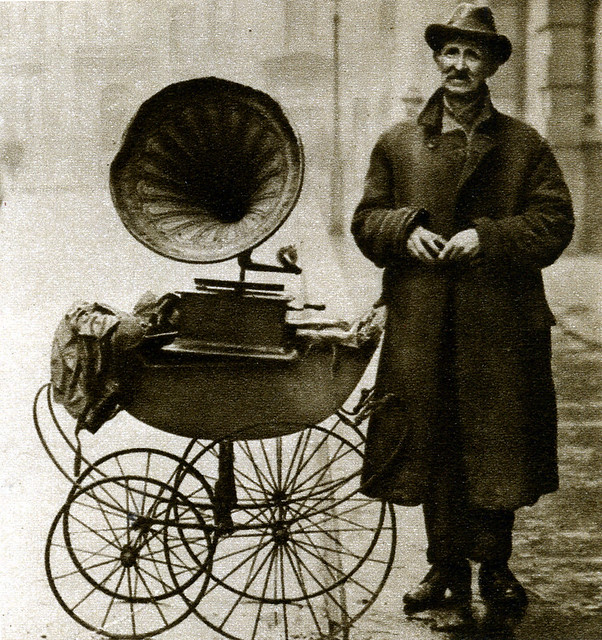
Fonógrafo - a poem about recording technology


A poem about the latest technology - phonographs! The poet is Camilo Pessanha ( 1867-1926) who left Portugal for Macau in 1894.  So chances are, he listened to phonographs, which reached the China coast almost as soon as they became commercially available in Europe. Pessanha went to Macau because he was  fascinated by the exotic mysteries of alien cultures. In Macau, he lived as a Chinese, learning the language, collecting art and even becoming addicted to opium. His art collection isn't that great and his poetry in Chinese not nearly as good as his poetry in Portuguese, but at least he tried, like quite a few intellectuals in his time. So perhaps it's no surprise that he was fascinatedd by the possibilities of sound reproduction.

Imagine someone hearing sound technologiy for the first time, pondering on what it might mean. Pessanha describes the voice of a comedy actor, declaiming to an audience. But the actor is long since dead, and the original audience too. The odour of the crypt, and of dust, enters the air. Change the record! Now a barcarolle, suggesting lilies floating on the water, and sensual dreams evoked by the "extática corola". The record changes again. Now, the sound of a golden bugle (clarim) suggesting daffodils greeting the dawn. Then, silence. The poet thinks of Spring, morning and the scent of violets.

I'm not sure if the poem was written in Macau, since Pessanha did return to Europe for short periods, although he made his home in Macau and is buried there with his son, with whom he scrapped.  (Just now, a kind friend said the poem was written in Macau in 1920.)  But the poem is nostalgic, connecting the phonograph's ability to preserve ephemeral moments in the past and make them seem fresh again.  Definitely a poem we should think about, now that we take recording for granted. The photo shows Pessanha in a garden in Macau with another poet, Wenceslau Morales, who went to live in Japan and studied Japanese. Pessanha is the one reclining on the deckchair, looking doped up. Those pots in the background would be Qing antiques now, and the furniture. But thanks to photography (Chinese studio) the poets, the dog, and the plants are preserved forever.


Vai declamando um cômico defunto. Uma plateia ri, perdidamente,
 Do bom jarreta... E há um odor no ambiente.  A cripta e a pó, - do anacrônico assunto. 

Muda o registo, eis uma barcarola: Lírios, lírios, águas do rio, a lua... Ante o Seu corpo o sonho meu flutua Sobre um paul, - extática corola. 

 Muda outra vez: gorjeios, estribilhos Dum clarim de oiro - o cheiro de junquilhos, Vívido e agro! - tocando a alvorada... 

Cessou. E, amorosa, a alma das cornetas Quebrou-se agora orvalhada e velada. Primavera. Manhã. Que eflúvio de violetas!