Showing posts with label Weimar. Show all posts

Saturday, 17 November 2018

Insights into Schreker's compositional processes

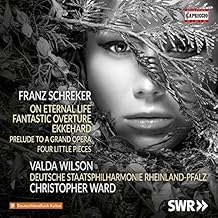
Franz Schreker Orchestral Works, from SWR with Christopher Ward conducting the Deutsche Staatsphilharmonie Rheinland-Pfalz, new from Capriccio, continuing their Schreker series, which has so far covered the early operas and a good recording of Der Geburtstag der Infantin and Das Weib des Intaphernes. The disc includes important though less well known works like the Vorspeil zu einer grossen Oper “Memnon”, the mini-song symphony Vom Ewigen Liebe and the short but significant Vier kleine Stucke fur grosses Orchester. Together this collection forms a study of Schreker's compositional development, making this recording far more valuable than many, for anyone seriously interested in the composer and his time.


Ekkehard, Schreker's op 12 from 1902-3 is a symphonic overture. That no opera eventuated hardly matters : it's a tone poem on an operatic subject, a hybrid not unlike Richard Strauss's Don Juan, from the same period, though Schreker's individuality is detectable even at this early stage in his career. Based on a novel popular in the mid 19th century, Ekkehard tells the story of a 10th century monk from St Gallen, who is brought from his monastery as a teacher for a duchess, but falls passionately in love with her. Thus the grand opening chords, horn calls evoking the grandeur of the vision ahead. This theme alternates with a quieter motif which might represent the monk, or his awe at arriving at the palace. Thunderous timpani, crashing cymbals, brass fanfares remind us that the splendour the monk sees around him is built upon military might. A passage for organ, reflecting Ekkehard's true background, is soon overwhelmed by a fierce march, possibly a march into battle. Ekkehard's infatuation is doomed. The overture draws to a close with sadder, darker motifs as Ekkehard returns once more to the mountains. This overture deals with ideas that Schreker would go on to develop with greater sophistication in Der Geburtstag der Infantin and even in Die Gezeichneten : the use of medievalism as cover for modern concerns, the concept that true art isn't based on mass values and above all the contrast between exterior beauty and inner corruption.

The Phantastische Ouverture op 15 (1904) shows how Schreker, in his mid-twenties, was seeking orchestral possibilities from the starting point of drama. There is no programme to this overture. The opening motifs are drawn with ominous power, soon undercut by fast moving, fragmentary figures which hurtle forwards. A new motif emerges, also animated but more sustained, sweeping confidently to the conclusion, where bell-like peals herald exuberant chords.

With Vom ewigen Leben, Schreker has proceeded to different territory. This started as two songs for voice and piano, completed in 1922. Five years later, Schreker orchestrated them into a coherent whole. The texts come from Walt Whitman's Leaves of Grass, used in German translation. The first section, "Wurzeln und Halme sind dies nur" is delicate, silvery percussion mirroring the soprano's high timbre, complemented by strings and restrained woodwinds. The silvery textures blend into the woodwinds of the second part, "Das Gras", where flutes and clarinets circle the soprano (Valda Wilson). This section is nearly three times as long as the first, with extended orchestral interludes. The sophistication of the orchestral writing makes this a true “orchestral art song” much greater than the sum of its parts.

Cinema was the new art form of the 20th century, growing from drama, opera and music. It was as if Wagner's concept of Gesammstkunstwerk had been made possible by new technology. The connections between music and film were clear. Silent films were accompanied by live performance. Many early art films, such as Berlin Symphony of a Great City (1927) used a musical framework on which to pin a non- narrative, semi-symphonic structure. Berlin was one of the most important centres of art film, where masterpieces like The Cabinet of Dr Caligari (1921) were produced. It was natural that creative artists like Schreker would have recognized the connection between film and music . Like Alban Berg and others, Schreker understood the potential of cinema, and the significance of new sound technology. Indeed, Schreker and Schoenberg were in regular contact on the subject of music and film, and in January 1929, Schreker, a Director of the Berlin Academy of the Arts, became responsible for the music section of the new German Society for Sound and Vision. Hanns Eisler, Schreker's contemporary, wrote the first major theoretical work on music for film, and made a good living writing film music without sacrificing art.

Schreker's Vier kleine Stücke fur grosses Orchester (Four little sketches for large orchestra) (1930) is therefore a response by the composer to a new genre, not much different to the way he wrote overtures as experiments for opera. They should not be dismissed as “late works” simply because the composer died three years later, but as the work of a composer still brave enough to explore. Turning to film was not a diminution of his powers but rather a continuation of what he'd done before, but in a new direction.

Schreker's Vier kleine Stucke fur grosses Orchester demonstrates the way in which music could be used to advance drama and work with visuals. Each of these sketches is short but vivid, evoking a mood or emotion to intensify the images shown on screen. Dialogue in silent films was limited, for obvious reasons reduced to minimal intertitles, and voice technology still fairly primitive that “talkies” killed many silent actors, and early film music largely songs and interludes. Timoroso (marked zugend) is not timid so much as tentative, a curtain raiser promising wonders to come. Violente (marked hestig, ungestum) is flamboyant, its zig zag rhythms exotic, setting the scene for “oriental” adventure films so popular at the time. Incalzando (marked Eindringlich) casts haunting mystery, with lines that could adapt to a variety of situations where characters might need to pause for thought. Gradevole (marked Gefallig) alternates dance-like energy with serenity, which again could be adapted to different scenes. Emphatic timpani !

Just as Schreker's Vorspeil zu einer Drama (1913) led to Die Gezeichneten, the Vorspeil zu einer Grossen Oper (Memnon) (1933), Schreker's last completed work, might have been a working model for a truly “grand” opera. We shall never know. In Greek mythology, Memnon was a great warrior, a god king from Ethiopia (ie an outsider like so many Schreker heroes) who came to the aid of others but was killed. Thus exotic sounds, woodwinds imitating Arabic pipes set the scene, strings weaving sensually above a steady pulse which may suggest the tread of a camel caravan. The pace is broken by dissonant chords, ushering cross-currents of sound weaving in different directions. Dramatic, yet disturbing. Though harps introduce a calmer but still oriental mood. The “caravan” motif attempts to return, but is swept back by wild, flying turbulence, underpinned by undertones of almost brutal percussion. Dark, brooding colours emerge, against which lyrical moments seem plaintive, though they persist. Swirling themes, rising perhaps like dust off the desert or distant smoke, are undercut by ominous rumbling. Horns call, and the orchestra surges, before suddenly breaking off and falling silent. Given that this Vorspeil was written effectively in exile, when the Nazis were hounding out “degenerate” modern composers, Schreker didn't have a chance. Vorspeil zu einer Grossen Oper (Memnon) was premiered in March 1958 by Hans Rosbaud, champion of new music, for SWR in Baden-Baden so it is rather moving that SWR sponsored this new recording.
Please also read my other posts on Schreker and on the music of the Weimar period, including Walter Braunfels, Hanns Eisler, Zemlinsky, Schoenberg, Suppressed Composers, Weimar and other silent film etc etc

Monday, 2 July 2018

Bye-Bye Berlin - classy Weimar with true jazz feel

Weimar Berlin has been evoked in music, film and literature so often that it takes real originality to recreate the Zeitgeist with fresh insight.  Fortunately, this new recording Bye-Bye Berlin from Harmonia Mundi does just that  and more, combining lesser known pieces with the better known, presenting them with proper musical sophistication. This disc is worth getting because it's much better quality than most.  Marion Rampal, Quatuor Manfred and Raphaël Imbert have worked together for many years creating a style where top quality musicianship matters without sacrificing the subversive, louche spirit of Weimar and the Jazz Age.

Youkali comes from Maria Galante, a play based on a novel by Jacques Deval, for which Kurt Weill wrote songs and incidental music. The heroine is a prostitute who works South America, an exotic context to match the sensually swaying lines.  Erwin Schulhoff's Chanson follows, from his Cinq Études du jazz (1927) arranged for chamber ensemble.  The stylishness of these musicians shines : players adept in classical technique with an idiomatic feel for jazz.  The fourth movement from Schulhoff's First String Quartet is equally accomplished.  Paul Hindemith's trascription for chamber ensemble of Wagner's The Flying Dutchman is animated, more good humoured satire than serious horror, in keeping with the defiant wit of Mischa Spoliansky's The Lavender Song.  No-one should be forced to conform ! Nein from Hanns Eisler's Kammerkantate no 6 is followed by the Langsam movement from Kurt Weill's String Quartet in B minor (1918). Between them, famous Brecht/Weill  like Die Moritat von Mackie Messer, and Barbara-Song, and Brecht/Eisler songs like Solidarltätslied, which works rather well as art song and I saw many friends from Eisler's The Hollywood Liederbook.  Two songs by Friedrich Hollaender from the film A Foreign Affair,  The Ruins of Berlin and Black Market take us to the postwar period.  Hollaender's most famous song  Falling in Love again from the film The Blue Angel, made immortal by Marlene Dietrich. To conclude, an art song with a jazzy feel, Die Nachtigall from Alban Berg's Seben Frühe Lieder.

Tuesday, 2 January 2018

Thielemann swings ! Silvesterkonzert Dresden


The Vienna Philharmonic Orchestra has named Christian Thielemann as conductior of the 2019 Vienna New Years Concert.  All the more reason Thielemann's Silvesterkonzert with the Dresden Staatskapelle.  He's done similar repertoire at the Dresden New Year's Eve concerts for years. Come 2018/2019 he'll be nipping back and forth, but one thing for sure, he'll be interesting.  Dresden Silvesterkonzerts don't always follow the same formula.  This year's concert marked the centenary of  UFA GmbH, the conglomerate behind the German film industry.  Yet the concert was more than music from the movies. Outside Germany, UFA is associated with the Nazis, who took it over in 1933. With the rise of Far Right extremism all round the world, it might be safer to steer clear. But it's far braver to confront the past, warts and all.  If we don't learn from the past, we'll make the same mistakes. 
With some trepidation, I approached the programme. But the UFA situation is far more complex than simple black and white. Deliberate pun on the technology behind Weimar film. For UFA was associated with some of the finest art movies ever made, and with directors like Fritz Lang and F W Murnau.  Goebbels wasn't the first to realize that film could be used for mind control.  Witness the wave of Soviet films like October (more here) which are works of art but also propaganda.  When the Nazis came to power, the studios churned out stuff like Jud Süß which I confess I haven't been able to watch for more than a few minutes. And hundreds of Africans and Roma were forced to work in slave conditions.  But  UFA made over 1000 films in this period and not all can be condemned.  The gradation between art and the abuse of art is a dilemma we need to confront, if we are to learn. 
Thielemann began with Erich Korngold's main theme and love scene from Captain Blood.  Korngold  didn't work at UFA but his music epitomizes what we'd now call "Hollywood Style" but like so many in Hollywood, he was European. Chances are he would have followed Max Reinhardt to the US whatever the circumstances, but by remembering him we also honour those who did not have a choice  Theo Mackeben remained in Germany, writing operettas and film scores, but  he knew Brecht and Weill, having conducted the premiere of Die Dreigroschenoper.  Angela Denoke sang his song Frauen sind keine Engel, not as politcial as Weill but certainly racy.   Hans May went into exile, but to Britain, not Hollywood, where he was part of the then-thriving British film industry.   Daniel Behle sang May's Heut ist der schönste Tag.  The show stopper, though, was Ich bin von Kopf bis Fuß auf Liebe eingestellt made famous by Marlene Dietrich. Elisabeth Kulman looked the part in a silvery gown, but vocally she's a lot stronger than Dietrich and could sing the "cadenza" arrangement.  The song comes from Josef von Sternberg's The Blue Angel  (1930) starring Marlene Dietrich.  The real star of that film was Emil Jannings, who'd established a career in Hollywood silent film.  He "reverse migrated" back to Germany. After 1933 he made movies for UFA on historical subjects, which in the circumstances had political overtones. Was he nationalist or Nazi ? Does nationalism necessarily lead to evil things ?
The Dresden Staatskapelle musicians morphed into dance band for fox trots, setting the mood for songs by Werner Richard Heymann, two from Die Drei von der Tankstelle (1930). The songs have an almost Schlager-like gaiety.   Saxophones and guitars turned the Staatskapelle into jazzband, with Daniel Behle hamming up stylishly in top hat and tails.  A moment for contemplation, though, with melancholy torch songs by Michael Jary, sensitively sung by Elisabeth Kullman.  Jary was a jazz musician, a genre the Nazis despised, but managed to scrape a living writing film scores for UFA. More songs by Mackeben , Friedrich Hollaender and Robert Stolz, "the luckiest man in the world" who made and lost several fortunes in the theatre. Winding up old, penniless and stateless in Paris, he was about to be imprisoned as an enemy alien, when he was saved by a beautiful 19-year-old heiress,who fell in love with him at first sight and became his (I think) sixth wife. They went to Hollywood where he made another fortune in movie music before returning to Dahlem and then Vienna (read more here).
Altogether a delicious concert,  played with total conviction, the material treated as serious music, not just "movie music".  One of the finest classical,orchestras in the world, letting their hair down without dropping a note.  When Christian Thielemann swings, he swings like a natural!  Thielemann and the orchestra had much more substantial music to work with in Georg Haentzschel's Große Suite in sechs Sätzen zu Münchhausen from one of the most extravagant movies UFA ever made, József Baky's Münchhausen (1943).  Goebbels gave UFA an unlimited budget. The Grand Canal in Venice, no less,  was closed off for the filming.  Thousands of extras were employed, including, alas, African prisoners of war and German-born men from former colonies in West Africa.  Münchhausen travels to the palace of the Grand Sultan, where the Turks are comic and the eunuchs camp. That's fairly benign by the standards of the time and not only in Nazi Germany, one should emphasize.  The Black men are dressed in silks, as slaves.  One wonders what was going on in their heads ?  At least they were - relatively - safe and many survived.  This is such an amazing movie that I'll write more in depth later.  Like the Wizard of Oz, it's fantasy but with quietly subversive political undercurrents,. The script was by Erich Kästner, definitely not a Nazi.

Thursday, 27 October 2016

Maschinist Hopkins : Surrealism in opera


Max Brand's Maschinist Hopkins, which premiered in Duisberg in 1929: an opera where the music functions like a giant machine, an "industrial" opera inspired by the futurist, modernist expressionism of the Zeitgeist of the 1920's. Think of Fritz Lang's film Metropolis (1927) about which I've written here.

The Prelude to Maschinist Hopkins whirrs ominously, at first tentatively, then builds up a head of steam and bursts into life.   We're in the Proletarierviertel of a huge city, in "Bondy's Bar". Jim, a foreman, is with Nell, his wife. Note the vaguely Anglo names,  a typical construct of the period, frequently used by Bertolt Brecht.  Think The Rise and Fall of Mahagonny,  and "psychological" films like Nerven and Dr Caligari.  Next, we're in the Maschinenhalle at night. The machines are still operating but the voices of the choir are strangely unnatural, as if they've been hypnotized in robotic motion. The different parts of the chorus interact, like cogs in a wheel, churning together. Individual voices rise above the murmur "Schweiget ! Wartet!", some voices vocalizing at top pitch, like vapours of steam.  then the music jerks and chunders. Nell can hear the voices of the wheels. "Schwester Welle, schnell, schnell, quelle, quelle".  Jim's silhouette appears in a window: he's upset because Nell isn't at home where she should be. He and Bill, a machinist can't comprehend why Nell is wailing.  Time passes.  Bill the worker has become a capitalist, sitting in a snazzy modern  office, conducting business all over the world.  But all is not well. Maschinist Hopkins warns that the workers will strike. Bill kicks him out, but Nell sympathizes.

Suddenly, bizarrely, we're in a pleasure garden with a jazz band singing skat about "Turkestan". The text and music were by George Antheil,  a bona fide American, though a leading figure in the Paris avant garde at the time. (Lots more on him on this site.)   A long tango, where dancers in eccentric dress strut their stuff.  The shock of the surreal !  "I'll buy that!" says Bill.  The orchestra plays a mysterious, bluesy tune. Are Nell and Bill under a spell?  On the terrace they sing a love duet "Stille, schweigen", the sounds of a saxophone weaving around the strings.  Imagine the love duet from Die tote Stadt, edges blurred and smoky.

Just as we drift off in reverie, the machine intrudes. We're back in the Maschinenhall, all systems in motion. Wild, circular lines, suggesting mad frenzy, interpolating with violent stark chords, then a wild climax with sirens, wind machines and cymbals. Almost  Edgard Varèse.  the choirs sing sotto voce, with menace. Tension builds up again: jagged percussion. Hopkins cries "Die Maschinen sollen stehen"! Ellipses of brass, crashing cymbals.  Another sudden, disconcerting change. Nell is putting on makeup in the dressing room of a theatre. "Mirrors are mysterious things" she muses.  Hopkins materializes behind her. She offers him money to get out. He won't be bought: he thinks she's killed Jim (who hasn't appeared for a while). They tussle.  Chords like the "curtains" in  Wozzeck.  Outside, the Kappellmeister and Regisseur remain busily unaware. "Hahahahaha...." Nell turns up, arms full of flowers   But is all well ? Hopkins knifes Bill in the darkness. Bill's final cries include the word "Nell!" In an empty street by a long, forbidding wall, a scene straight out of the movies.  Nell meets Hopkins.  "Why, why" she cries. But Hopkins knows  "Es kann nichts sein".

Switch! Back to Bondy's bar, packed with workers on a night out. Bill, in grubby clothes, sits with a glass of schnapps, looking forlorn. The orchestra strikes up a manic, whirling dance.  Young girl sings a ditty about youth. An out-of-tune electric piano plays a foxtrot. Men pour into the bar, teasing Bill, mocking Nell.  Bill can take no more and leaves, but, outside in the alley, he hears Nell, telling him she's nearly home.  Is it a dream? the music builds to a frenzy. There's a scream and repeated blows are heard. Cut back to the Maschinenhalle at night, where the machines churn and the workers' voices chant, drone-like. Who can Bill turn to?   He goes to the switch which powers the machine. It sings, with the voice of Nell "In my womb, you will be reborn", which makes sense if you remember the Female Figure in Metropolis.  Screams all round, "Stop him ! Stop him". Hopkins appears and knocks Bill out.  But dawn is breaking, and the machines rev up once again. "Ein neuen Tag der Arbeit jetzt an!" he sings. The workers join in, chanting mechanistically "Arbeit ! Arbeit ! Arbeit !"

If ever an opera begged to be remade as film, it's Maschinist Hopkins where scene changes are so sudden and drastic, angles so skewed and awry that  they'd probably need to be shot in black and white.  Great chorus scenes, lines of workers, dancers, robots moving en masse and in formation.   Musically, Maschinist Hopkins captures the frantic spirit of the Jazz Age as defined in a grim, industrial, Middle European context.  Just as Max Brand's later experiments in electronic music and synthesizers came - just - after the pioneers in the field, so does his opera connect to other operas and films of its time. But a jolly romp it is and fun.  And it's much better to look ahead than to be clueless.  I've been listening to the recording from ORF where Peter Keuchsnig conducted the Radiosymphonie-Orchester Wien, the ORF-Chor, Cynthia Makris, Günther Neumann and Bodo Brinkmann, recorded in the Musikverein in 1988. 

Please explorre more around this site, lots and lots on Weimar music, art film and opera

Tuesday, 11 October 2016

Sex and Nuns : Hindemith Sancta Susanna


Paul Hindemith's opera Sancta Susanna still has the power to scandalize. Nearly 100 years after it was written, (January/February 1921) it's still a shocker in many ways. It's a psycho-drama, where the emotions of the protagonists are thrown into extreme focus, the music emphasizing psychic trauma.  Sancta Susanna bends musical form, pushing the borders of tonality, just as the narrative pushes the boundaries of convention. Sister Susanna is praying in a convent chapel, as nuns are supposed to do. But it's May, it's warm, and the open windows let in the perfume of lilac blossom.  Then, strange other sounds. "It's the organ" says Sister Klementia, and we do hear an organ  exhaling. But why is an organ being played at midnight ?

Hindemith's music is ambiguous. Though tonal, it's fundamentally untamed, like the breathing of a wild animal  that might turn savage if roused.  Which is very much what the opera is dealing with : the explosion of sub-conscious instinct in circumstances of repressive order. The Zeitgeist of the early 20th century, to which early psychology gave vocabulary, but which has, of course, existed since the beginning of mankind.  And thus we hear a melody on solo flute, as lovely and as lyrical as something the Greeks would have played in a mythical Arcadia.  Is it the voice of the Nightingale, another age-old symbol ?  Against this loveliness, angular blocks of sound and increasing dissonance.   John Fulljames's production, with designs by Johan Engels,  lets the music speak. The stage is dark - as in a chapel at midnight - crucial details spotlighted as if by moonlight. We see the crucifix towering above, shining white, as if it were porcelain, hard and impermeable, yet easily broken.  Below, the altar, a simple grey plinth that could be a tombstone as much as a table for offerings.  Or a bed.

For the sounds Susanna hears come from a young couple copulating outside a window.  Fulljames depicts this by using acrobats who hang, suspended from the ceiling, their bodies naked, yet held in by black straps.  Not bondage gear, but a reminder that society holds sexuality in check  through moral bonds and ropes. The acrobats move like dancers, writhing in frenzy.  I thought about Renaissance sculpture, where voluptuous bodies contort, yet are held frozen in stone.  Like statues of Jesus, whose agonies are not sexual, but stylized in art.  And nuns, who contemplate religious intensity but are restrained by vows of chastity. Sister  Susanna doesn't know what sex is, but she knows it has an effect on her.  What happens when a nun's love turns to physical lust ?  Naked bodies, blood and upturned eyes, the sensuality of flowers and incense, the singing of angels real or unreal : It's hardly surprising that some can get carried away. Sister Beate was entombed for her sin. That doesn't stop Sister Susana , who rips off her white garment, revealing a body built for the enjoyment of pleasure. She's covered in arcane writings and drawings, as if some ancient curse was embedded onto her skin.  Other nuns appear, in black shrouds like niqab.  they hold their hands up in horror, like denizens of a Greek tragedy. But they, too, have arcane inscriptions on their hands and faces.  Sister Susanna mounts the altar. She doesn't rip the loincloth off the image of Jesus, as the original stage instructions suggested.  Nor do we need to see a spider crawling over her - the ensemble of nuns move like a monstrous spider. It's enough that she lies with he legs apart as the statue on the crucifix miraculously, blasphemously, moves down towards her. 

Bernhard Kontarsky conducted the Orchestra de l'Opéra de Lyon. The soloists were Agnes Selma Weiland - Susanna,  and Magdalena Anna Hofmann - Klementia.  Hindemith's vocal lines are impressionistic, phrases cut off hardly completed, ominous rumbles and flights up the register which  are nothing now but were something in 1921/2.   Superlatively detailed acting helps a lot. Fulljames inspires the singers so their body language expresses what their words can barely articulate. Wonderful close ups, tiny gestures, for this is very much "inner drama".

Sancta Susanna  was one of a triptych of operas Hindemith write based on the plays of August Stamm (1878-1915)  the other two being Mörder, Hoffnung der Frauen op. 12 (1921), and Das Nusch-Nuschi op. 20 (1921) . The common thread: a fascination with morbid psychopathology, ofetn with exotic, erotic connotations. Absolutely the Spirit of the Age,  manifesting in the paintings of the Munich Secession, in literature, film and music. Santa Susanna's cousins are Salome, Elektra, Ewartung, the operas of Franz Schreker and Rudi Stephan's bizarre Die ersten Menchen, which like Sancta Susanna premiered in Frankfort, but a year earlier.  Cinema can depict things that can't be done on stage. Thus the masterpiece movies of the early 1920's like The Cabinet of Dr Caligari,   Der Vampyr and a host of other films some of which I've written about here (see the labels Weimar and movies silent)

Thursday, 1 September 2016

Berge in Flammen : Mountains in flames


Berge in Flammen, Mountains on Fire -  Bergfilm, art film, and war film, conceived and directed By Luis Trenker (1892-1990).  You'd think, from English language media, that 1914-1918 happened only on the western front. Not so! Millions died on the eastern front and in the south, in the Alps. All the more reason for watching Berge in Flammen, set in the Dolomites during the war of attrition that ran almost non stop from 1915 to 1917.  Imagine, trenches in mountains way above the snowline,dug into permafrost, cut off from supply lines.

Largely filmed on location,  the camera crew were themselves  skilled mountaineers - some of these shots would have been technically difficult to carry off.  Yet Berge in Flammen is an astonishingly beautiful film, a symphony of high peaks, snowfields and rockwalls,  shot from dizzying, expressionist angles.  Nature as poetry, dwarfing the silly battles below.  Global warming and safety regulations probably mean that films like this can't be made again. In any case, the South Tyrol depicted here is largely memory, but that, too, is a reason for seeing this film and appreciating its message. Not for nothing is this film bilingual, and those involved in the making thereof, a mix of Germans, Austrians, Frenchmen and Italians. Very much the "can do" camaraderie of the mountains. Some of the camera crew were not only climbers but also actors.

An idyllic beginning. Florian Dimal (Luis Trenker) and Arthur Franchini (Luigi Serventi) help each other up a rockstack.  They're free climbing, using only ropes, no helmets, no fancy modern gear.  But in the valley below, the church bells ring, It's August 1914. Franz Josef, the Emperor, has announced war. Florian and Arthur end up on different sides. Fantastic shots of life in underground caves and trenches tunneled through metres of snow.  Rickety ladders up steep slopes. Constant bombardment and with that, rock falls. Not many "special effects" in this filming. When the men trek through snow up to their hips, they're not acting. Bergfilme audiences knew about mountains and the technical aspects of climbing . 

Machine guns on precipices, hand grenades thrown by men clinging to ledges. Barbed wire and frozen bodies.  A sentry goes snow blind in a storm, frozen to the sandbags he was guarding. At one stage an officer with binoculars watches the action. The man at his shoulder is shot by a sniper. The officer keeps talking, unaware that his companion is dead.  Soldiers scale vertical cliffs, using mechanical drills to place explosives or maximum damage.  It doesn't take much to set off an  avalanches .And avalanches happen all the time. Most Bergfilme include shots of skiers in mass formation, but those here are particularly impressive because the men wear white coats with hoods, moving like apparitions.  The snowfields on glaciers are as spectacular as the cliffs and peaks.

Meanwhile, Florian's village has been occupied by the Italians.  Florian's home is billeted but the soldiers friendly. "Farina!"  says an Italian. "Mehl" says Pia, Florian's wife.  Florian is sent out alone, in secret on reconnaissance.  But he can't stay.  Crawling back up to the summit, during an enemy barrage, he's shot at by his own men, though is saved. The fortress is dynamited :  the whole peak explodes.  Twenty years later, Florian and Arthur (from Rome) ascend the mountains again, over the old battlefield. A vista of the Twin peaks of the Dolomites. They sit happily, together, no need for words.  The soundtrack, incidentally is very good, as modern as the cinematography.  The composer was Giuseppe Becci.


Sunday, 6 September 2015

Vulture Wally

Die Geier-Wally, or "Vulture Wally", the novel from 1875 by  by Wilhelmine von Hillern (1836-1916). It's  best known to many from the opera La Wally (1892) by Alfredo Catalani. I've been watching the film version, made in 1921, a smash hit in the post-1918 era. Perhaps it was popular because it portrays a woman who can't be tamed -- a free spirit whom the inhibitions of society cannot restrain.  Wally represents the "New Woman" of the modern world. The photo at right comes from the frontispiece of the 1921 reprint of the novel.  

Die Geier-Wally is not a true Bergfilm like Arnold Fanck's Die heilige Berg, made only 5 years later, technologically and artistically a far greater work of art, but it's interesting and apparently much closer to the novel than to the opera. Walburga Stromminger was a fearless teenager, a tomboy as tough as a mountain goat. The villagers on the alpine valley don't like a vulture, which might presumably attack their herds. Wally  volunteers to go get it. She's lowered down a steep cliff by rope and beats off the giant bird (2 metre wing span) with a dagger. The vulture fights back because it's guarding its nest, so perhaps it wasn't an evil spirit. Anyway, from thence Walburga is known as Geier-Wally, or Das Geier-Mädchen, the Vulture Maiden. In the film, she's next seen making her First Communion in a pretty dress, with a fancy cake and flowers ,  conventional feminine conformity. But then she climbs a tree, most unladylike. She also falls hopelessly in love with Bären-Joseph, who's killed a big bear that was supposedly a danger to the community. Wally's father, the Höchstbauer, is the richest man in town and wants Wally to marry Vincenz Gellner. Wally, who can chop wood better than a man, accidentally knocks Gellner out, and is thrown out of the house by her father. She 's also mad at Joseph who seems attracted to an outsider, Afra, so she storms off to live alone in the mountains, like a Berggeisr or mountain spirit of legend. Only when she's driven by desperation does she seek the company of humans.

When Old Stromminger dies, Wally returns as lady of the Höchstbauer manor. She's dressed in fancy velvets but has no illusions about the people around her, who once were so happy to condemn her. A bull runs amok and Joseph is gored trying to tame it. A village celebration is held. In front of everyone Joseph dares Wally to resist a kiss. The pair stalk each other until Wally collapses.  It's a cruel prank, for which Wally wants revenge. Gellner chases Joseph into the hills, where he falls into a ravine. Guilt-stricken Wally descends into the abyss and saves him. Afra, it turns out, is his sister. Wally and Josph embrace, lovers at last. Consider the psycho-sexual and violent undertones  and the element of class war ! The Romantiker wasn't "romantic".  Wilhelmine von Hillern must have been an interesting person, though she lived an ostensibly upper middle class existence.

What's also interesting about this film which was made by Gloria-Filme Catalani in Berlin, is that Henny Porten, who plays Wally, was also,part of the production team. Unlike the director Ewald André Dupont and designer Paul Leni, who both ended up in Hollywood, Porten remained in Germany, making movies for UFA to protect her Jewish husband. Both survived the Third Reich. Leni's designs add a lot to the film, for he chooses dizzyingly Expressionist angles to accentuate the steepness of the mountains, and the predicament Wally faces. Although the interior scenes are detailed to the point of claustrophobia, the mountain scenes look "modern" in that Leni sets up shots of white snow background with jagged trees and rocks - virtues of B&W, which colour can't quite emulate.

Saturday, 29 November 2014

World's first gay movie ? Anders als die Anderen


The world's first gay movie? Anders als die Andern, made in 1919, has been restored, though some  scenes are still lost, a testament to the vicissitudes of an era when homosexuality was an unspeakable crime. In Anders als die Anderen,  Paul Körner, a virtuoso violinist, has a successful career, but he knows he's "different to the others" in mainstream society. In a vision, he sees a parade of gay people throughout history, forced to conceal their identity in a hostile world. Körner has an adoring fan, Kurt Sievers, who follows him everywhere.  Kurt's pretty innocent and loves Körner as an artist. When a blackmailer confronts Körner, Kurt is shocked and runs away. Eventually, the blackmailer is tried and sentenced, but Körner is jailed too because homosexuality was then a crime.  Ostracised, and his career in ruins, he commits suicide. Young Kurt wants to die, too, but is told by Magnus Hirschfeld (no less) that he must live on, to fight injustice.

"Science, not superstition!"  The film uses "scientific" testimony to prove that being gay is part of human nature. Magnus Hirschfeld is seen giving an illustrated lecture with photos of "virile women" and transvestite men posing in their underwear, like specimens in a zoo. To modern eyes, that's offensive, but less so a hundred years ago when people went to freak shows and exhibited skeletons of Africans and other "sub-races". Dodgy science, as if human nature can be so easily classified. Maybe I've jjust got an aversion to pinning labels on people. At least Hirschfeld mentions the French Revolution and the idea that men are born equal. The idea that all people have a right to an identity fits better with modern thinking, though the rise of kook konservatism would deny that.  The director was Richard Oswald (1883-1963), who made dozens of films in the Weimar era, including the well-known Alraune (1928) starring Brigitte Helm, which deals with  quack science. Körner is played by Conrad Veidt, matinee idol, who  made many films in Germany before escaping to star in many more films as a dodgy German.  I also like the film for its  sets - "modern" architecture of the time, much of it destroyed in the Depression and war that followed..
 

Saturday, 11 January 2014

Genuine the Vampire - Wiene download

Robert Wiene's Genuine the Vampire (1920) was  eclipsed by The Cabinet of Dr Caligari, completed a few months earlier. But Genuine the Vampire is genuinely interesting, and not just for the hilarious name.  There's Genuine in all her glory wearing a dangerously revealing costume of belts and straps over what one hopes is a body suit but might be real flesh since she flashes naked thighs many times, and strikes poses that let the viewer linger. There's more nudity in this film than possibly any other of its period, and possibly long after. Note the coy "butterfly wings" and the stylized pose. One of the features of this film is the way Wiene freezes formal, stylized poses. In Dr Caligari and other films of the time, movements are theatrical, but not to this extent. In Genuine the Vampire, the poses are so stiff and held for so long that they clearly reference tableaux vivants, which were often used in pornography on the reasoning that, if the body resembled sculpture and wasn't natural, it could be deemed legit.

Genuine the Vampire isn't a vampire story in the Bram Stoker mode but quite explicitly connects to psychology theories popular in the late 19th and early 20th centuries. The film unfolds like a dream, where characters emerge and disappear without logic.  Genuine was an African goddess, kidnapped and sold as a slave to Lord Melo who keeps her prisoner in a geodesic dome in his mansion. Each day a barber comes to shave Lord M, who seems to like being shaved while he's sleeping. One day the barber can't come but Lord M's grandson Florian turns up. Like everyone else in this film, his costume is bizarre - exaggerated love locks and waxed curls and jodphurs. When Florian shaves his grandad, Genuine tells him to kill the old man, so he does. Go figure.

Other personages appear - a Black Slave (in real life possibly from Kamerun) , and Henry and Percy who seem relatively normal.  Genuine appears in different costumes, one made of ostrich feathers, with a Madam Pompadour head dress. Because the action is so slow, viewing the decor is very much part of the experience. The sets are Expressionist paintings, jagged angles and blocks, a collision of Franz Marc, the Cubists and Second Empire excess. Because the plot isn't rationale, the story ends when a mob waving scythes invade the mansion. Notice though that the mob aren't peasants. Their scythes are working tools but symbols of death.

Genuine is played by Fern Andra, in real life Verna Andrews from Watseka, Illinois (1893-1974) who married a Baron von und zu, though he was dead by the time she made this movie. Those strange set designs are by Walther Reimann, the painter and architect who did the sets for The Cabinet of Dr Caligari.  For a download of Dr Caligari, please see HERE.


Friday, 10 January 2014

Papageno in silhouette Reiniger 1935

More Weimar silhouettes from Lotte Reiniger, this time a ten-minute fantasy on Papageno, made in 1935 as part of her projected series "Silhouetten Opernhaus", the first of which was Zehn Minuten Mozart (1930). described by her as a "Schattenspile zu Meisterwerken der Tonkunst", animations that illustrated music.  Zehn Minuten Mozart brings together snippets from different works by Mozart to form a coy narrative which delights a Romantic imagination. Papageno is much more sophisticated, concentrating on Papageno and his relationship to nature.


The tighter focus allows Reiniger to create exceptionally elaborate silhouettes - look at  tracery of ferns and vines, which bring out  the delicate intricacy of the music perhaps in a way no staged performance can. Look at Papageno's bells at right . It's hard to believe they were crafted form cardboard. And enjoy the birds as they move and sing. Papageno is teaching them how to sing his name. When Papageno and Papagena sing of their future offspring, a stork pierces eggs and little children dressed as birds pop out.

Reiniger's silhouettes grew out of the old German tradition of Scherenschnitte. The figures could be photographed frame by frame so they could seem to dance on film.  Truly unique and magical, uniting ancient and modern. This is a film which echoes the designs of the 1930's yet feels true to Mozart and feels immortal. Becaause it was made with sound, we also get authentic period performance as soundtrack.

I've written about Lotte Reiniger before (see my piece Weimar animation on Reiniger's The Star of Bethlehem which gives links to the British Film Institute archive. Reiniger knew just about everyone in avant garde film circles, many of whom I've written about on this site (see Ruttman : Berlin, DieSinfonie der Grossstadt) Even when she had to stay out of Nazi Germany, she hung out with the likes of Renoir and Cocteau. Interestingly, the assistant she uses on this film is Arthur Neher. Any relation to Caspar Neher, whom she must have known from Brecht/Eisler circles?


Tuesday, 24 December 2013

Weimar animation - The Star of Bethlehem

Strikingly modern image - but it's from 1921  It comes from Lotte Reiniger's film The Star of Bethlehem originally made in Germany but best known in the version below, produced in 1953, using the Glyndebourne chorus,  though they aren't listed in the credits. In the early days of film, artists were experimenting with many new techniques, from short stop animations (Meliés, Segundo do Chomo ) to posed shots of insects (Wladyslaw Starewicz), light shows (Walther Ruttmann) and sophisticated fantasy (René Clair) so it was perhaps natural that Reiniger, who worked in avant garde film circles, should turn to the German art of Scherenschnitte which had thrived in the 18th and 19th century, before photography took hold.

Silhouettes and puppets bridge folk art and sophisticated commercial performance. As a child, Goethe had an elaborate toy theatre where he acted out dramas of his own creation.  Silhouettes, puppets and street theatre have roots not only in German culture but also in Turkish, Chinese and Indonesian Wayang. Thus Reiniger's use of Scherenschnitte fuses tradition and modernity, folk tradition and high tech art. .

Lotte Reiniger's Scherenschitte are beautifully executed - look at the lace tracery on the angel's wings - but she adapts the form so the figures move, and can be posed like puppets, and animated for film.  The figures are black, so you see only the outlines: you fill in the magic with your imagination. Early 20th century audiences would have connected the images in this film with silhouettes they'd known from their own childhoods and responded to the magic of memory. Twenty-first century audiences, bombarded with a multiplicity of styles, would do well to ponder the simplicity of Reiniger's art, which uses naive form in a highly sophisticated, non-naive way to recreate a sense of mystery and wonder.

Reiniger and her husband, Carl Koch, were both closely involved with Weimar left wing circles. In 1933, they left Grermany, settling first in France, reaching England in 1949. Reiniger left her archive to the British Film Institute which has released a 2 DVD set of her fairy films. Read more here about how they've been restoring the original The Star of Bethlehem, painstakingly removing the desiccated cellotape that held the cardboard joints in place while filming took place. They are also replacing the long sequence of flying devils which were "considered so scary that they were cut from the American release". Some things, alas, don't change. From the stills in the article quoted above, those demons seem a crucial part of the whole. So perhaps the version below will be replaced by something less sanitized. Also recommended, a documentary made about Reiniger in1970, which is well worth the rental price of £1.

Tuesday, 25 June 2013

Weimar Psychosis Nerven 1919

Nerven (Nerves) was made in 1919, a year before The Cabinet of Dr Caligari. Nerven is even weirder than Caligari but isn't nearly as well known. It wasn't a box office success, and the director, Robert Reinert, died poor in 1925. The film still hasn't been restored in its entirety but what remains is enough to suggest that Nerven is an amazing example of Weimar Expressionism.

"Glückliche Kinder, die Ihr noch nichts von Nerven wißt!" "Nerves" meaning panic attacks, intense emotions and delusions. The Prologue, like an Overture, shows a madman murdering a woman, then stopping to give water to a bird in a cage "Poor creature, without water it will die". Images of chaos and nudity give way to the formal opening of Act One. Business magnate Roloff announces to his shareholders that he's invented a machine that will make them masters of the world. He stands alone, framed against rows of men in business suits, but cries "Die Fahne hoch!" the rallying cry of Socialism. Suddenly  the factory is destroyed. There's rioting in the streets. Johannes the Teacher addresses the crowd, He connects social unrest to war and inequality. Do we see a flashback of Johannes walking through a pile of corpses? Or is Johannes thinking symbolically? A naked man wields a sword over other naked men.

 The film then cuts back to Roloff's palace, where his sister, Marja, is about to marry a Graf, though her heart is elsewhere. Roloff visualizes Marja being raped by Johannes and testifies in court. He's convicted though, because his blind sister's attempt to save him backfires. Marja tells her brother that she was only possessed by Johannes' idealism and leaves to work with the poor. Overwhelmed by guilt, Roloff thinks he's going mad. There's a fantastic sequence where he sees the marble floors of his palace awash with blood. He wanders through a landscape of superimposed images. (see photo above)  Is he in a forest or is he being pursued by the dead? He thinks he's murdered Johannes, and his wife collapses. Is she upset that Roloff's mad, or is there something else?

Johannes is released from prison. Roloff has a vision in which he thinks he's murdered his wife, Elisabeth. There's another fantastic "psychotic" sequence in a speeding car. He begs Johannes for forgiveness, and for poison. "Euthansie". Now it's Johannes's turn to hide a secret crime. 


Out on the streets again, Johannes tries to curb mob violence. In a pointed reversal of the image of Roloff standing before his shareholders, Johannes tells the crowd "Arbeit ist Macht!" ie progress through new values based on healthy, natural living. "So wie ein Mensch, der nicht arbeitest, an Lieb und Seele verkommt, so muss ein Volk untergehen, dass nichts arbeitet". Hardly words to appeal to audiences in 1919 facing mass unemployment. Marja and her Graf have become intolerant streetfighters, distorting Johannes's non-violent ideals. The film doesn't make explicit the connection between this and the Freikorps and Socialists, but Germans in the upheaval after the First World War would hardly need reminding. 

Elisabeth, Roloff's widow, leaves the palace, just as Marja did, and goes to live with Johannes.  They've been in love for ages but the idyll can't last. When Elisabeth realizes that Roloff committed suicide to free her, she sees that as a form of murder. Now she goes mad in turn, burning the palace to the ground. The servants flee. More shots of chaotically moving figures. Johannes braves the flames to save Elisaeth. But his faithful dog tells him that the blind sister is trapped in the burning mansion. The dog appears at several critical points in the story, literally "pushing doors open". Like the blind sister and the tame deer in the deer park, the dog is a symbol of innocence and positive action. It's worth watching the scenes where the dog runs round the burning palace, his paws on the balcony railings.
  
The blind sister dies. Now Johannes and Elisabeth have both caused the death of others. She enters a convent. In the city, there's rioting. Marja's Graf confesses that he didn't believe in the ideals he and Marja fought for. He'd given everything up for love. Marja dies next. "Ist alles Lüge auf der Welt? Auch die Ideale?" Truth and delusion, reality and madness. Roloff's psychosis was a symptom of what was happening in the world around him. 

Although much is made of war imagery in this film, the theme of religion is just as significant. Johannes, is a quasi-Jesus figure. Roloff's palace looks like an elaborate cloister, and there are small details, like Christ's feet impaled on the cross in the background when a young gardener is killed by a Freikorps-like militia. 

In Epilogue, Johannes goes  to the convent and declares love and forgiveness for Elisabeth. They walk arm in arm into the garden but suddenly Joihannes throws his arms in the arm in a grand gesture. Is he falling to the ground? Has he been struck by insight or by a heart attack? The only hint is an intertitle "Von der Gesundung der Menschheit....."

Once again "reality" dissolves. In the next frame, a semi naked man and woman (not Johannes or Elisabeth) are seen climbing up a mountain. The man raises his hands as Johannes did, saluting a glorious panorama of alpine peaks. The man and woman, now both in loincloths embrace. "Stammeltern eines neues, glücklichen.Geschlechts werden". A pagan Adam and Eve? A couple are seen ploughing an alpine pasture with their ox. "Zurück nach Natur!: Arbeit!....Neue Nerven, neue Menschen!"  Are fresh air and exercise a cure for"nerves" ? Perhaps. Compare this film  to G W Pabst's Secrets of a Soul (Geheimnisse einer Seele) (1926) (read more here)  which doesn'tb really endorse talk therapy, however much psychoanalysts might want it to. 

Thursday, 11 April 2013

Pabst Freud Weimar - Secrets of a Soul

G W Pabst's film Secrets of a Soul (Geheimnisse einer Seele) (1926) is the story of Martin,  a wealthy Berlin scientist, who is crippled by anxiety. He develops a phobia of knives, terrified that he might kill his wife. Pabst worked closely with two noted psychologists, Karl Abraham and Hanns Sachs, so the film is often approached as a window into psychiatric practice in the 1920's, lovingly dissected by psychoanalysts, who see it was a vindication of their profession. But is it? Seen from other perspectives, it's actually quite damning.

Martin is shaving with a cut-throat razor, removing the hairs that testosterone makes men grow. He looks at the nape of his wife's neck and experiences horrible feelings. A woman is murdered nearby. The killer escapes to Munich, but Martin is gripped by fear and guilt.  He is intimate with his wife,  The couple haven't been able to have a child. Even the family dog has puppies, but Martin's house is empty.  Eventually a woman - almost certainly not his mother, but a mother figure, suggests he should see a doctor who will cure him. "After many months of hard work" the intertitles tell us, Martin recalls a childhood event which forms the basis of all his adult anguish. Instantly, he's "cured". An epilogue shows Martin fishing in an idyllic mountain setting. He looks up towards a chalet to see his wife embracing a child. Martin skips along a path like a happy child. Then you notice that the banks of the stream are unnaturally straight and uneven.  He drops the whole bucket of fish he's caught. Is this a happy ending, or is Pabst undermining the very idea of resolution? Perhaps this is just another dream sequence. Wish fulfilment but not reality.

Central to the drama is a long dream  sequence, filmed with the full artillery of modernist techniques of the time.  Multiple exposures superimposed on each other suggest the hidden layers of Martin's soul. A tree is shot in white against a black background, A whole village of cardboard buildings pop out, and a tower shaped explicitly like a penis drills it way to the surface as if emerging from the subconscious. The cupola on the tower is shaped like the pith helmet Martin's wife's cousin wears in the tropics. The cousin has sent Martin and his wife gifts from exotic lands - a sheathed knife and very well carved soapstone idol.  Since many educated Europeans at the time were fairly aware oif theosophy and orientalist ideas (they read Tagore, for example), it's quite possible that Pabst and at least some of his audience recognized the idol as Kuanyin, the Goddess of Mercy, whom some traditions describe as hermaphrodite.

Freud intepreted dreams. So have shamans in all cultures. But visual images are also the stock in trade of film makers and theatre directors. Coming to Secrets of a Soul from an opera staging perspective reveals a lot more than conventional Freudian analysis might suggest. Visual images, by their very nature, are open to multiple interpretation. Two people looking at the same object from different angles will see it differently. Seeing is a process which involves emotional input , dependent on the sensitivity of the viewer and his/her ability to think from perspectives other than their own. Thus there's so much resistance to opera stagings : audiences forget that all performances involve interpretation. There's no fixed formula. Visual literacy is like emotional intelligence. The art is in making connections, and in making connections that ring true, supported by other connections.

Because we're now so accustomed to Freudian imagery, many aspects of Secrets of a Soul are easy to identify, such as the phallic tower and the pop-gun the man in the helmet fires at Martin from the tree. Much has been made of Martin's supposed impotence or homosexuality because we're used to reading those signs. But Pabst was an artist. He wasn't confined to simple, literal images. Commentators largely ignore the women in the film, but anyone familiar with Pabst's other films (Pandora's Box, Die Dreigroschenoper etc)  will be alert to his ideas of female power.  Martin works in a lab where his assistants are women, and they're strong minded.  A little girl visits, and Martin is clearly delighted. Does that suggest his love for children is tainted?  In the absence of other clues, we can't assume. The images of dogs, the household, the meal, Kuanyin, all connect to the idea of childhood and fertility. Martin dreams of his wife in an exotic harem, clearly enjoying herself.  Martin fiddles with a key because he can't enter his house. But perhaps the key missing in a straightforward Freudian analysis is the simple fact that Martin  has married a woman with whom he grew up as a sister? No wonder he can love her but can't get her pregnant.

Martin has a flashback to a childhood Christmas when he, his wife and her cousin were playing together. We see toy trains and remember the phallic trains in his big dream. We see Martin shown a new baby, while the girl who will be his wife hands a toy doll to her cousin. Aha! Insight! The psychoanalyst helps Martin make the connection. But why should an innocent gesture like that mature into murderous anxiety? If all psychiatric problems were that easy to solve, life would be so simple. Because this is a silent film, intertitles are sparse: people watched, rather than reading words. Nonetheless the psychoanalyst has more to say than anyone else and he speaks in jargon. Perhaps Pabst is making a point by casting Werner Krauss as Martin. Krauss was the mad doctor in The Cabinet of Dr Caligari (1921) where the doctor/patient/relationship is upside down. Pabst shows Martin in his lab, mixing potions. Perhaps he's suggesting that science and pseudo science aren't that far apart? Artists interpreted dreams and visual images long before psychoanalysis came into the frame. Reading images is not a science, but a creative art in itself.

Thursday, 28 March 2013

Lulu WNO

It was good that Welsh National Opera brought Alban Berg's Lulu to Milton Keynes on a snowy evening. The colours in this staging were so lurid that the London scene came as a relief. That would be an interesting idea to develop, since in some ways Lulu has been seeking death all along.  A much more obvious reason for the bright colours was that David Pountney and his design team (Johan Engels and Jeanne-Marie Lecca) were being faithful to the circus theme which sets the tone for the opera. "Hereinspaziert in die Menagerie". Actors with realistic looking animal masks filled the stage among uprights that looked like reels of film.  This was a good reference to the theme of cinema, for film, even more so than circus, deals with illusion. And Lulu is an opera about illusion, where nothing is quite what it seems.

"There's so much to look at" exclaimed a lady behind me. "Good " said her husband, "we don't have to listen to that music" Again that's a valid point, for this Lulu was a good way of bringing modern music to audiences who think modern music is dangerous. They loved the show, which proves it was a success. Seduced by the colours, the animals, corpses hanging from meat hooks, girl on girl action and two scenes of in your face full frontal nudity, West End audiences would have loved this too. There's something to be said for that.

Because this Lulu is touring together with Janáček The Cunning Little Vixen and Puccini Madama Butterfly, it's not unreasonable to seek a common thread between the three operas.  In his introduction, Pountney makes his concept clear. Berg and Janáček were writing in the same period, when proto-feminist ideas were gaining ground, and sexual freedom provoked challenge. Certainly this is the case with The Cunning Little Vixen, where Janáček explicitly equates the Vixen's personality with natural urges, justifying his own longing for Camila Stosslova who in real life held him at arm's length.  I've written extensively on Janáček 's Dangerous Women and their subversive challenges. I like my Vixens with fangs! Yet Janáček's heroines are ultimately projections of the composer's own fantasies.

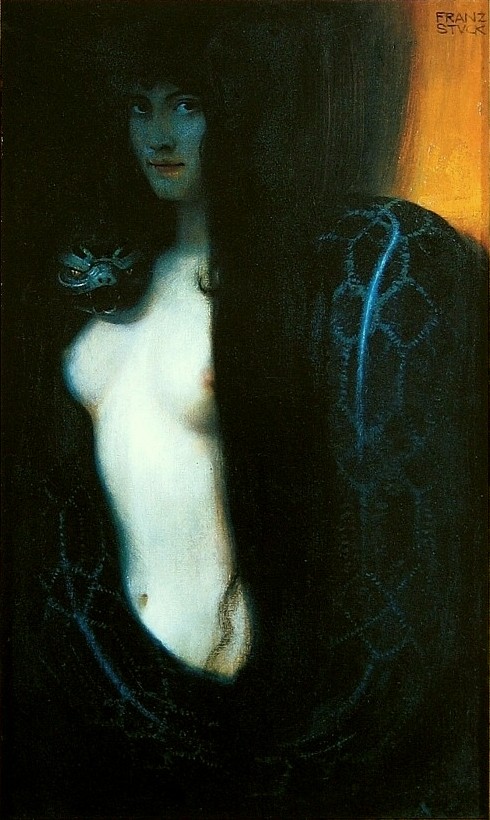
Lulu definitely has a liberation context, for women's rights were very much a part of the Munich Secessionist zeitgeist which was much more radical than the softer focus Viennese Secession. Read about Franziska zu Reventlow and follow the labels below for "Munich" and "women, feisty".  This was the world that inspired Wedekind, Franz von Stuck, and later Strauss and Brecht. Without Munich, we would not have Weimar Berlin. Lots on this site about Weimar, too, and the connections between Brecht and Berg.  Plenty on Weimar film, too, which is relevant in any consideration of Lulu.  See Mädchen in Uniform here. So I'm more than sympathetic with  Pountney's basic approach.

Lulu does say she found herself while she was in prison without men, and Countess Geschwitz talks of studying law and helping women. Berg, whose own sister was a lesbian and a rebel, could have been tongue in cheek quoting quite a few women in that period.  But is Lulu a real person or a projection of other people's fantasies? Is she even a sexual being ? She's had a traumatic life on the streets since she was 12.  She is like an abused child who has learned that sex is a means of survival, not a pleasure. Her seductions are a form of aggression, not lust.  She doesn't trust enough to love.What is her relationship to the decrepit Schilgoch, who like Berg is asthmatic? Not for nothing did the composer double Schilgoch with the Animal Tamer, and write in many references to composing and music.

Given Berg's obsessive compulsive fascination with patterns and secret clues, we can't take anything too literally. Lulu can be interpreted as a cryptic drama arising from musical abstraction.  Krzysztof Warlikowski's recent Lulu with Barbara Hannigan and Christof Loy's much misunderstood ROH production access levels in this amazingly complex opera beyond anything in this WNO production. 

Helene Berg may have guessed at the real danger in Berg's Third Act, which to my mind marks an almost revolutionary new phase in Berg's writing.The Paris scene, for example, starts with the "circus" imagery, but now extends to a wider political sphere. It doesn't depict prostitution per se, but the way society prostitutes itself in pursuit of illusion.  The stock market scenario is central to meaning. Everyone trades, no-one escapes. Lulu is not a free spirit at all.  Some dislike the Paris scene because it's so diverse, but the real meaning is in the music, which spirals in concentric circles.  Is Berg entering new territory where the idea of narrative becomes supplanted by musical drama?  When Berg brings the men back in new guises, he's extending the idea of illusion still further. Jack the Ripper, for example, bears little resemblance to the "real" Jack the Ripper.  The London scene brings Dr Schõn back, which is good symmetry. When I first heard the Third Act soon after its its completion, I couldn't make head or tail of it.  One of the insights of Loy's production is that it takes away the obvious markers in terms of costume, and makes you think about the rarified inner logic. 

The two act version ends with Lulu's escape from prison and her seduction of Alwa on the same sofa on which his father bled to death.  This would have felt right until the full extent of Berg's work was revealed.  According to Douglas Jarman, "Of the 1326 bars only 87 were not fully notated in Berg's short score and with one exception, all these "problematic passages" could be completed with Berg's intentions either by following the indications provided in the score or by doubling the instrumental parts". The exception he mentions is the barrel organ music in scene two, but Jarman says "an indication ...is to be found at the end of the Variation movement of the Symphonic Variations where the first four bars appear...in Berg's own orchestration".  So the Paris scene is true Berg almost in entirety and the barrel organ music is Cerha. Would we reject Mozart's Requiem or Deryck Cooke's performing version of Mahler 10 because they aren't 100% ? Earlier this year Daniel Barenboim conducted a "new" version of Lulu with major cuts, eliminating the Paris scene and the Animal Tamer, and adding spoken texts from Kierkegaard. The WNO production apparently uses a new edition prepared by Eberhard Kloke which changes the Paris Act which was original Berg. The emphasis seems to be to spotlight the prostitution dialogue between Lulu and pimp. Perhaps the WNO Lulu would have worked better in the two act version.

Saturday, 26 January 2013

Weimar Lesbian exposé ? Mädchen in Uniform

Mädchen in Uniform (1931) is one of the great classics of Weimar film. Beautifully framed and shot, it's a work of art in sheer visual terms. But even more importantly, it was the first major film to depict lesbian love. Whatever your orientation, though, this film is so good it needs to be seen by everyone: it's a key moment in film and social history.

The script was written by Christa Winsloe, who also wrote the original play the film is based on. Winsloe was also openly gay, and circulated in avant garde circles in Munich and Berlin in the liberal days before 1933. It's partly autobiographical, since Winsloe was herself a motherless child incarcerated in a disciplinarian Prussian school. Boys were sent to military schools like this from an early age, so the story could apply just as well to men as to women.  One thinks of Frederck the Great, brutalized by his father, his artistic soul turned to steel.

The school is run by a tough old headmistress. Perhaps she was traumatized herself by the kind of society that placed duty, honour and self-sacrifice above all else. The girls wear strange uniforms and are subject to constant rules and inspections. Nonetheless, their natural vivacity wins out. They play, intrigue and concoct plans to beat the system. Into this milieu comes Manuela von Meinhardis (played by Herta Thiele), who is sensitive and dreamy. Desperate for any kind of affection, she falls hopelessly in love with a teacher, Fräulein von Bernburg (Dorothea Wieck) who shows her a little basic kindness. This story could apply to any unhappy, neglected child, even without the lesbian context.  When I first saw the film in its post-war release, I didn't pick up the gay connotations at all. Even the notorious kiss scene came over as perfectly natural, which is as it should be.

Christa Winsloe's original play ends with Manuela's suicide. In the film, Manuela is rescued by her classmates as she hangs over the precipice over the staircase, which resembles a "well of loneliness", though Winsloe's play long predated Radclyffe Hall's novel of that name. While Fräulein von Bernburg in the play dares not stand up to the system, in the film she defies the headmistress and makes the keynote statement "What you call sin, I call the great spirit of love, which takes a thousand forms".

The reason for the change isn't because the film was produced by a man, as is sometimes suggested, but because the film was part of the socio-political aesthetic of Weimar cinema. Winsloe sanctioned the change to emphasize the difference between the values of the past and the "new" German spirit.  The producer, Carl Froelich, later became a Nazi, but the star Herta Thiele, associated with Berholt Brecht and Ernst Busch. She's the star of the socialist flagship movie Kuhle Wampe (1933)  (full download here) with music by Hanns Eisler. Thus, in line with socalist idealism,  Manuela is saved by her comrades and justice prevails. If only real life was as straightforward.

Hanns Eisler's music for Kuhle Wampe is so brilliant that it almost eclipses the film. I'll write more about it later, but there's quite a bit about Eisler on this site. The music for Mädchen in Uniform was written by Hansom Milde-Meißner, a name that rings bells but I can't track on Google (which is NOT a substitute for real learning). The music is atmospheric, evoking the bells of Potsdam, military trumpets and mysterious undercurrents. Listen to the final scene, where the headmistress walks away from Fräulein von Bernburg and her defiant outburst. The old lady is dignified, walking stiffly and slowly down a corridor. But the music goes berserk, wavering madly. Will the headmistress crack up, or will she further suppress her instincts and those whom she controls?

There is a remake of  Mädchen in Uniform from 1958, starring Romy Schneider. It's pretty good, but softer focus. The girls in the 1931 version stage Schiller's Don Carlos, while the girls in 1958 stage Romeo and Juliet. Perhaps this says something about the decline of modern popular culture. Good, well-educated Prussians would have realized what Don Carlos meant. Tyranny and the theme of thwarted love, absolutely the theme of Mädchen in Uniform.

If you like this read Franziska zu Reventlow, Queen of the Munich Secession,  Gay Salomé 1923,
Das blaue Licht -Leni Riefenstahl . Kuhle Wampe - full download and lots more on early Weimar film.

Monday, 1 August 2011

Das blaue Licht - Riefenstahl

Feral girl leaps off mountains? Not Catalani's La Wally but Junta, wild child of Santa Maria, in Leni Riefenstahl's 1932 movie Das blaue Licht. Some 1930's pilots land in a village in the Italian Alps. It's so remote that there haven't been visitors for 200 years. Real peasants in the film, I think, since their teeth are twisted, missing and black! The children gather round and show the strangers huge chunks of glittering gemstones, and a painting of Junta.

Junta lived in a hut in the high mountains, sleeping on straw, foraging for food, her only friend a young shepherd boy who tends his flock in the alpine meadows. Junta and the boy "converse" with animals, as if they have clairvoyant skills (watch for the shots of attentive goats and dogs). Think of Grieg's Haugtussa, where the shepherd girl has second sight and communes with nature spirits, whom no-one else can see. Many mountain communities have similar legends.

The villagers live tough, repressed lives that centre round church and work, while Junta prances about in a torn minidress and flaunts her bare legs. Some nights when there's a full moon, the locals can see a strange blue light, glinting hiugh up in the mountain peaks. Young men in the village are driven mad and haver to be locked up, or they head off into the mountains and fall to their deaths. The villagers think Junta must be a witch, and drive her away when she comes near.  One day a posthorn call announces the arrival of a painter. A High Romantic, who wears trousers with a flap in front and wants to paint mountains. Like an animal, Junta's instincts are to be wary but gradually she trusts him enough to let him stay in her hut.

One night, when she slips away into the darkness, he follows without her knowing. Higher and higher she climbs, past a waterfall that comes straight down at 90 degrees from a great height. Then she disappears into a crack among the stones. The painter looks in. It's a cave, covered with blue crystals  that emit a wondrous, unearthly glow.Junta sits transfixed, as if she's communing with some unearthly spirit. It's the source of the blue light that drives village lads insane. Having learned Junta's secret, the painter tells the villagers and they head off to the cave while Junta sleeps.

She wakes and climbs back up a 400 metre rockface, absolutely vertical. Apparently, these films were shot without stuntmen, though the angles might have been exaggerated. But there's Riefenstahl climbing up the cliff in a dress, ballerina pumps and bare hands. No ropes, no crampons. In those days even fulltime mountain men dressed in "normal" clothes. The cameramen must have been like goats, too, for some of these shots are breathtaking and taken at dizzying angles. Riefenstahl jumps from pinnacle to pinnacle (as in photo above) clambers up mountain "chimneys" one foot on each side. This whole genre of Bergfilme, pioneered by Dr Arnold Frank, are reverently studied by climbers today.

When Junta gets to her cave, she finds it stripped bare. The villagers have denuded it. Bereft, Junta wanders away in distress and falls to her death. The film is allegory, exquisitely filmed at a stately pace, so you don't rush. Climbers don't rush, they savour every move or they slip. There's hardly any dialogue, since Junta doesn't speak much. In any case the villagers speak an Italian dialect, and the painter speaks German. No real communication, another sub theme in the film.

Reiefenstahl was just 30 when she made Das blaue Licht, which she directed as well as acted in (and did the stunts). Interestingly, the script was written jointly by Riefenstahl and Béla Balázs, a German Jewish writer who lived in Hungary. He was a socialist who went to the Soviet Union after 1933. He wrote a script for Die Dreigroschenoper which Brecht commandeered, and also the libretto for Bartók 's Bluebeard's Castle. Obviously his name was removed by the Nazi censors, and also the names of other Jews involved, but it does shed light on Weimar avant garde artistic circles. Riefenstahl was compromised, but remained adamant to her death, aged 101, that what she did was art.