Showing posts with label Berliner Philharmoniker. Show all posts

Saturday, 26 October 2019

Edgard Varèse, FX Roth, Berliner Philharmoniker


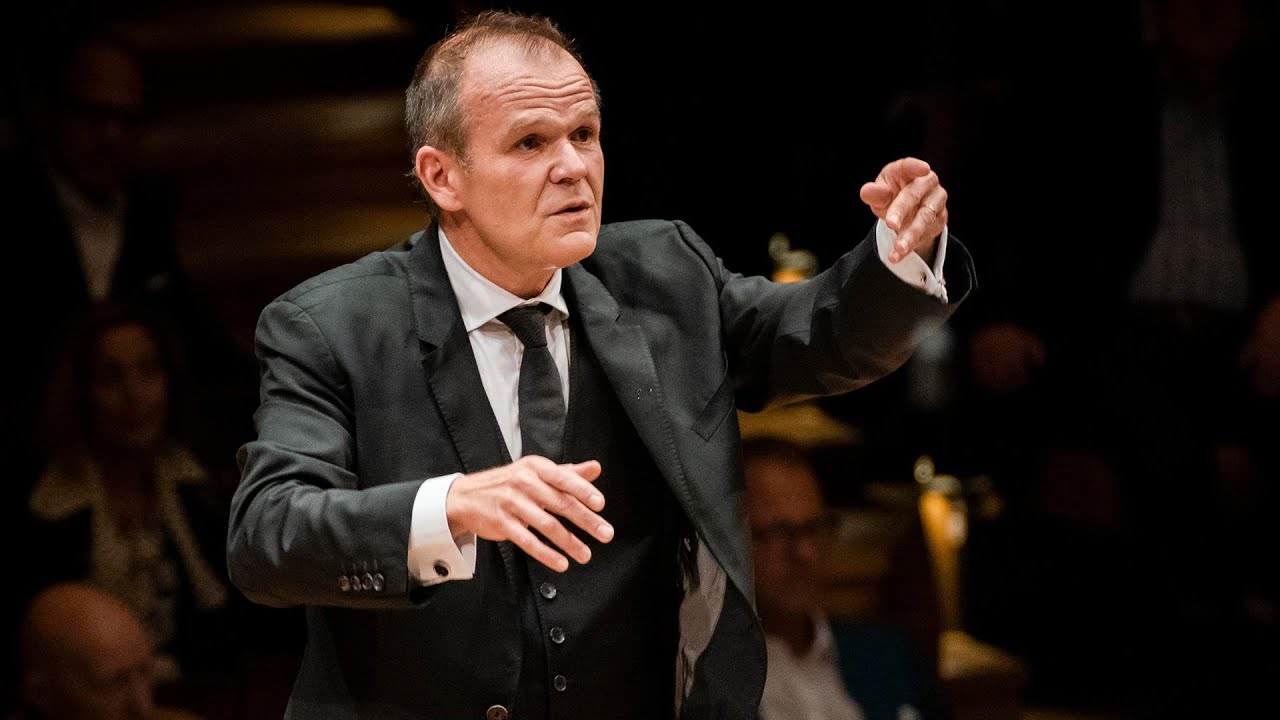
Edgard Varèse Night  - two concerts - at the Philharmonie, François-Xavier Roth conducting the Berliner Philharmoniker, with Pierre-Laurent Aimard.  By sheer coincidence, this waas the day after the death of Chou Wen-chung, Varèse's friend and foremost scholar. (Please read more here)   Thoughtful programming !  First off, Joseph Haydn Symphony No. 59 in A major “Fire Symphony”an early work, from the 1760's.  The connection to Edgard Varèse?  Haydn was a court composer, obligated to turning out music for his employer,  Prince Nikolaus Esterházy. Yet Haydn created the modern symphony, paving the way for many others.  Varèse was a lone figure, pioneering new forms in a new world. The first concert featured Béla Bartók, another highly individual personality, who didn't write conventional symphonic works, but forged new approaches to other forms.

Pierre-Laurent Aimard played Bartók's Concerto for Piano and Orchestra No. 3, Sz 119 (1945), followed by Roth and the Berliners with Bartók's Dance Suite, Sz 77(1923). Stylish ! Varèse's Arcana for large Orchestra completed the set. Arcana is the biggest of Varèse's works, and relatively accessible.  The original version,from 1925-7,is scored for massive forces, roughly 120 players altogether,  68
 strings, 20 woodwinds, 20 brass and a phalanx of percussionsts playing 40 different instruments from timpani to castanets.  It's also very visual : watching is very much part of the experience.  It's not every day you see rows of trumpets and trombones, some muted, some not playing together, or 8 horns raised heavenwards. This time,we heard the more compact  revision from 1960, which balanced more neatly with Haydn and
Bartók. Arcana is big, but its bigness springs from its musical function. It proceeds like a gigantic beast, its component parts articulated to move in stately formation, groups of instruments impacting on each other in constantly varying combinations. Whatever Varèse meant by its title, the piece moves as if it were a mythical creature brought to life by arcane spells and incantations. Varèse might be called the Wild Man of Modern Music, but he was aware of the importance of structure and progression. 

Logically then to the Late Night concert with members of the Berliner Philharmoniker in smaller ensemble. Varèse Density 21.5 for solo flute, emerging mysteriously like primeval sound, a single melodic instrument developing many different motifs. In Intégrales the piercing cry of the clarinet is answered by rumblings and fractured tappings in the percussion, the other winds picking up on the clarinet's long lines. At moments a snatch of a vaguely familiar tune, almost like Ravel Boléro which was not published at the time Intégrales was completed in 1923. Hyperprism, for winds and percussion, experiments with new sounds, the "klaxon" of Amériques, just one of the procession of timbres, textures and rhythms. Ionisation is orchestrated solely for percussion instruments. The concept, though, is ancient, since much non-western music is percussion based.  It connects, too, to the “primitive” that fascinated modern artists like Braque, and the ethos of Africa, "the Dark Continent" to New York audiences who were horrified by the piece at its premiere in 1933. Ions are particles that build up to form larger units. so Ionisation foresees the idea of cells of sound multiplying to form more complex structures, while fragmenting and re-forming.  Octandre for seven Winds and Double Bass is a group of three miniatures. In the first movement, marked assez lent, an oboe calls, answered by clarinet, both pitched closely so their sounds seem to vibrate off each other. This vibration becomes even more marked in the second movement, marked Très vif et nerveux, the dichotomy developed still further in the last movement marked Grave-Animé et jubilatoire. Nothing primitive in this tightly crafted orchestration.  Sarah Aristidou was the soloist in Offrandes from 1921, soon after the groundbreaking Amériques.  The instrumentaion is relatively conventional, but the vocal lines are freer and more modern, pitched high like the instruments the voice imitates. The texts come from Vicente Huidbrodo and José Juan Tablada.

Saturday, 24 August 2019

Petrenko, Berliner Philharmoniker, Beethoven 9 live from Brandenburg Gate


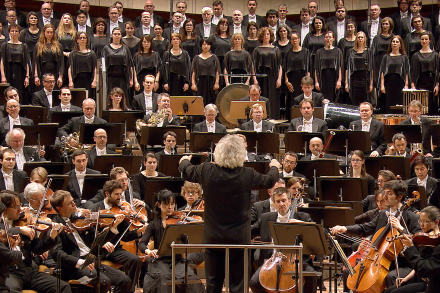
Live from the Brandenburger Tor (Brandenburg Gate), Kirill Petrenko conducted the Berliner Philharmoniker in Beethoven's Symphony no 9 to an audience of thousands. It's been just over four years since Peternko was appointed Chief Conductor but this is his first official appearance. Massive publicity, which is fair enough - the Berliner Philharmoniker was among the first to pioneer orchestra-led online performance. Now, it's fairly standard practice. Anyone, anywhere in the world, can listen in. The Berlin Phil is effectively everyone's "local" orchestra, bringing world class playing to anyone who wants to listen in.  This raises the bar for everyone - audiences, musicians  - but I think people respond better to upmarket than to dumbing down.  Live broadcasts are also increasingly important because they reset the balance in favour of musicians and music, in an era when the delivery of music, such as streaming, increasingly divorces product from performance. Music is a human art, made by human beings for other human beings.

Thus the value of mega-scale open air extravaganzas like this concert by the world-famous Brandenburger Tor, literally in the backyard of the Philharmonie.  Until 1989, that massive square was No Man's Land, covered in weeds and barbed wire.  The Brandenburg Gate is significant, too. With its grand columns and Quadriga above, it was built to commemorate the apogee of Prussian culture, which celebrated learning, enlightenment, the arts, science and business enterprise.  When the Nazis came to power bthat heritage was bastardized. The great grandson of the architect, a relative of Henning von Treskow, who was executed by the Nazis for taking part in the plot to assasinate Hitler, observed wryly that the horses in the statue were placed so their metaphorical droppings would land on the heads of rulers who lost touch with reality. And so the Quadriga has witnessed the comings and goings of despots of all kinds.  That symbolusm, in the context of Beethoven's Ninth, cannot be stressed enough. ""Alle Menschen werden Bruder,Wo den sanfter Flugel weilt".

And so the new season of the Berliner Philharmoniker should be celebrated on a grand scale : it represents the triumph of music and musicianship against the odds. A good season ahead - lots to look forward to. I'm less sure about the PR.  Deutsche Welle calls it "Petrenko Fever" thoughn that might be popular journalism.  Yet it shouldn't be forgotten that he wasn't the first choice  when the oircheestra originally sought a new Chief. They were so evenly divided between choosing Thielemann and Nelsons that they called off voting for several months. Suddenly, Petrenko's appointment was announced out of the blue. Orchestra members said that they'd been eager to work with him since he'd conducted them twice several years before. But since he's based in Munich and Berlin, it wouldn't have been hard to fit him in somehow. No-one turns down a gig with these Berliners.  Petrenko is good, but his reputation is largely based on opera.  Every new Chief brings something new to an orchestra. Karajan created it as a recording orchestra,  Abbado, a completely different personality, focused on musicians and musicianship. Rattle broadened the repertoire and did good outreach (the Digital Concert Hall happened in his era). So what will Petrenko bring that will be unique ?

Anyway, back to the open air livestream at the Brandenburger Tor . It's not a "first" as some media are saying. Barenboim conducted Beethoven's Symphony no 9 in 2017 outside the Staatsoper unter den Linden, to a crowd estimated at around 10,000.  The Brandenburg Tower is just at the end of Unter den Linden, so the idea wasn't original at all.  Open air concerts get done in many major cities - London included, when Trafalgar Square is packed out and London traffic comes to a standstill.   The Berliners have been doing open art at theWaldbühne for ages. No point in comparing performances, since the Berliner Philharmoniker is the classiest band in town and does orchestral all year round.   Very brisk tempi. Barenboim's concert started earlier in the day and was family-friendly, celebrating the city as much as the band itself,  Petrenko's aimed at a more formal concert-going audience which is fair enough. That's what the Berliner Phil does !

Wednesday, 28 December 2016

Feral Varèse Arcana Andris Nelsons Berlioz Debussy


Edgard Varèse Arcana with Andris Nelsons and the Berliner Philharmoniker, from the Musikfest Berlin, available til 31/12 in the Digital Concert Hall.  Grab the chance !  Arcana (1925-7)is scored for massive forces-   roughly 120 players altogether,  68 strings, 20 woodwinds, 20 brass and a phalanx of percussionists playing 40 different instruments from timpani to castanets.  Every performance is a feat of logistics, so it doesn't get done as often as it should be.  It's also extremely visual : watching is very much part of the experience.  It's not every day you see rows of trumpets and trombones, some muted, some not,playing together, or 8 horns raised heavenwards. Arcana is big, but its bigness springs from its musical function. Arcana proceeds like a gigantic beast, its component parts articulated to move in stately formation, groups of instruments impacting on each other in constantly varying combinations. I've never quite been sure what Varèse  meant by its title, but I've often imagined it as a mythical creature brought to life by arcane spells and incantations. 

Compared to Varèse's more esoteric innovations,   most for smaller ensembles,  Arcana is relatively easy to follow since it's constructed like a series of variations with interlocking inner cells and permutations thereof.  Although it isn't by any means electronic, it functions like a machine, where different sections operate in parallel and together towards a common purpose.  Very much the Zeitgeist of the 1920's of Futurism and things to come.  Andris Nelson's approach is deliberately unhurried, allowing the monster to waken and walk at its own pace without being pushed. I get a kick from speedier tempi but Nelsons reveals the textures and colours.  Watch him beat the inaudible passages bar by bar showing how silence is part of the structure.  Instinctively, Nelsons half-crouched, like a feral animal, listening to the world around him before making a move. This was intuitive and almost certainly unconscious,  but definitely in tune with the spirit of Arcana and also with the Debussy Prélude à l'après-midi d'un faune which preceded it. Consider the connections between the two pieces, and their elusive physicality.  Someone could do Arcana as ballet, though they'd need a big budget.  It would certainly lend itself to visual patterns and recurring images.

Nelsons' Berlioz Symphonie fantastique op 14, was thus coloured by being heard in conjunction with Varèse and Debussy. Symphonie fantastique is so dramatic that lesser conductors cheat by playing up the dramatic kitsch.  We've all heard this piece so often that it's easy to coast along.  Not Nelsons. He instead  emphasizes the intelligence in the orchestration.  Berlioz's genius lay in the way he could use instruments to create myriad textures and colours. He studied instruments for their own sake, and was open to new, innovative sounds like that of the saxophone.  Not really all that far from Varèse and his experiments with klaxons and ondes martenot.  Yet again, Nelsons emphasized the underlying musical logic and the finesse with which Berlioz built up his palette.  The Berliner Philharmoniker are so good that they can do refinement with natural, unforced élan.  Like a composer using the tools available to him, Nelsons knows this orchestra well enough to inspire them so they play as if the work were fresh and vivid.

Listen out specially for the quiet passages, like in the third movement, where the shepherd  listens to the gentle rustling of leaves and contemplates a moment of solitude. Gradually more complex feelings rush in, but to understand, we must listen attentively, picking up every nuance.  Shepherds, like animals in nature, listening acutely to the sounds around them : the faun again, the "creature" in Arcana  ?  Noisiness dulls the senses.  The Dream of the Night of the Sabbath was vivid because our minds had been cleared of detritus.  Listen to those crazed winds! Some audiences think music exists to serve the listener, and like conductors who deliver in that way. True artists, though, are more likely to think that they (and their audiences) exist to serve the music. Nelsons and the Berliner Philharmoniker belong in the latter category, most definitely. 

Saturday, 24 September 2016

Gatti Berlin Phil : French Modernism Honegger


"Masterworks of French Modernism", the title of Daniele Gatti's concert with the Berliner Philharmoniker. Debussy La Mer, the key piece that opened new horizons, a magical work which, like the ocean keeps changing, revealing its depths in good performance. "God is in the detail" said Gatti in the interval interview, explaining how the arc of a performance is built upon many layers of detail.  The term "Impressionism" is a tag that's stuck because it does describe the idea of creating a whole made up of tiny cells of pure colour.  Impressionist paintings shocked viewers because they seemed to shine from within, because each stroke of paint seemed to glow with inner light.   Now, perhaps The Shock of The New has worn off with millions of reproductions on coffee mugs, t shirts and so on.  But in music, every good performance is new, an original recreation in its own right.    Daniele Gatti is too good to do routine, and with an orchestra as good as the Berliner Philharmoniker, there was no way this performance would fail.  There are so many brilliant La Mers around that we've all heard better, but also even more that are infinitely worse, and that's something to be glad about in a world where mediocrity is increasingly prized over excellence. Not a "coffee mug" performance by any means, even if the real revelations on this occasion came in Honegger and Dutilleux.

Arthur Honegger's Symphony no 3 and Henri Dutilleux Métaboles have both been part of the Berlin Philharmonic's repertoire for some years. Simon Rattle conducted Métaboles as recently as 2013, with more or less the same musicians.  Although much of Dutilleux's best work lies in miniatures and chamber pieces, Métaboles  is scored for large orchestra.  It flows over five movements each wiuth a distinctive personality : not variations but a series of developments, characterized by meticulous detail - a kind of refined embroidery.  To borrow metaphors from painting, Pointillism, as opposed to Impressionism.  Gatti's approach is softer grained than Rattle's, which may be more authentic but which might appeal to the already converted than to those coming new to the composer.  There is a powerful Dutilleux lobby, so influential that it could demand chapters on Dutilleux in books about Messiaen.  A bit petty, since both composers are very different indeed, and there's no need to play silly status games. Better to absorb the music on its own terms.  A few years ago, I attended a Dutilleux recital at the Wigmore Hall (read more here). The composer, then aged 92, was present, enjoying himself hugely because Jan Pascal Tortelier's father was a close personal friend.  Afterwards, my friend and I had a long dinner, leaving close to midnight. And who should we see but Henri Dutilleux, walking back to his hotel around the block. We waved. He beamed.

Herbert Karajan conducted Honegger's Symphony no 3 (Symphonie Liturgique)  with the Berliners in 1969, so long ago that it's pointless to compare.  Whoever uploaded the performance to YT knew what they were doing by illustrating it with a drawing by George Rouault. Connections to painting again.  No pretty pointillism for Rouault : his work is marked by ferocious dark outlines, defining the images within . The colours in his famous series of paintings of Christ seem to glow like stained glass even though they are oppressed by savage framework, which is utterly appropriate.

Written in the winter of 1945/6, Honegger's piece deals explicitly with the horrors of war, and the challenges of a new era. The Dies Irae with its ferocious outcries, expresses anguish.  Rouault's suffering Christ, depicted in sound.   Honegger, being Swiss was a neutral in occupied France, but no less involved with what was going on around him.  The second movement, De profundis clamavi, is a slow, but not peaceful meditation. What must we do that to counter violence and hate ?  Slower, more amorphous figures, long lines that seem to float on a stream of mysterious detail.  Gatti's unhurried attentiveness works well: we cannot afford to gloss over these complexities. This is the dark soul of the whole symphony.  The movement concludes with intense outbursts from the brass, angular shapes against the horizontal keening in the strings. The last movement, Dona Nobis Pacem, doesn't, however, "grant us peace". Instead, it moves in the form of a solemn procession, lit with violent alarums from brass.  One could visualize a cortege marching at night,  the darkness broken by malevolent flames, whipped by turbulent winds. Obvious connections with Honegger's masterpiece Jeanne d'Arc au Bûcher written in 1938, when Honegger was well aware of the threat posed by Hitler.  Joan of Arc stands up to invaders, but is martyred.  As the flames rise round her, though, she sees visions of saints and angels, and the voices who lead her return at last, taking  her up to heaven. Peace, of a sort, is achieved but only through confronting evil and suffering : no avoidance, no prettying up.  Honegger's Symphony no 3 isn't just a masterwork of modernism but a powerful document of how music can inspire the mind and soul.  Please read my other work on Honegger and especially on  Jeanne d'Arc au Bûcher by following the links below and on the right.

Sunday, 10 January 2016

Star Wars Pelléas et Mélisande - Rattle


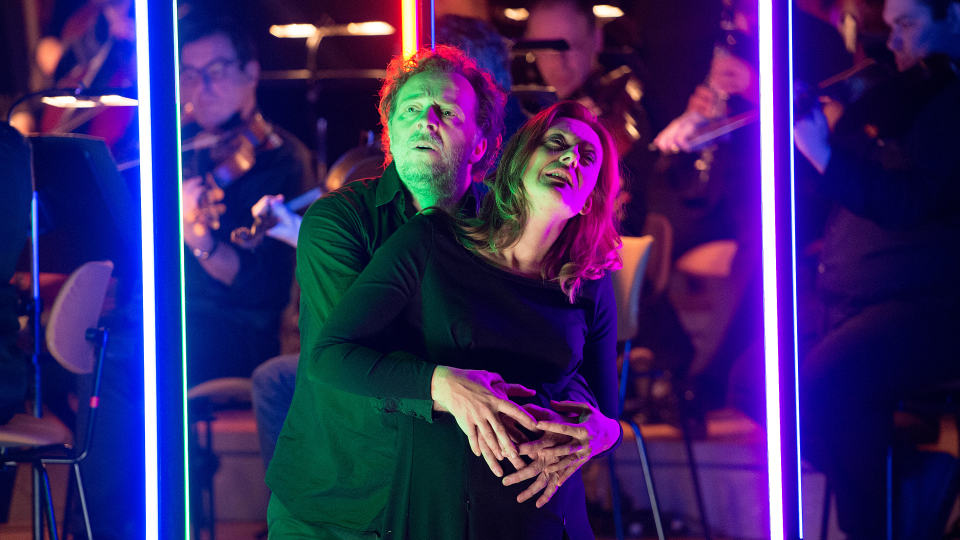
Simon Rattle brought Debussy Pelléas et Mélisande to London tonight, at the Barbican Hall instead of the Philharmonie, Berlin, and with the LSO instead of the Berliner Philharmoniker.  This new production has been called the Star Wars Pelléas et Mélisande because there are columns of light, like the light sabres. That's not inappropriate since the opera is in a sense a cosmic battle between avatars.

The opera deals with real emotions, like insecurity and jealousy, but the situation is anything but realistic.  Who is Mélisande? Why does she go from man to man, repelled by them yet submissive  Is she human at all, or a projection of the fantasies of those around her? The emotions this opera deals with are real enough but Allemonde is a dream state rather than reality. What is Allemonde? Is it a kingdom or a state of mind? Yniold is scared of the starving peasants, but why is he out on  his own playing with a golden ball?  The tower, the pool and the impossibly long hair are all symbols of sexual portent. The contrasts between debiltating heat and suffocating darkness suggest psychological responses to physical states.  For all we know, Allemonde is the subconscious, and we are the blind men. 

So, in principle, no objection to Pelléas et Mélisande as Star Wars. Peter Sellars' semi-staging was designed around the performing space that is the Philharmonie, making use of the wide wings around the main stage, and using the different levels to depict the unsettling  heights and depths in the narrative.  Centre stage, Magdalena Kožená and Christian Gerhaher lie on a black plinth which serves as pondside and tower. Gerhaher and Gerald Finley climb an unsteady angle lit in green light when they descend into the caverns beneath the castle.  The Philharmonie and the Barbican, however, are very different structures, so the Berlin staging can't really be replicated at the Barbican. The acting can, though it was a problem since it consists mainly of stylized gesture.  Close up it bordered on ham acting, which these singers would not otherwise do, since they're all natural stage animals. Maybe Sellars thinks the characters are drugged? Again, in principle, this is fine, reflecting the stylization inherent in the plot, but  I didn't like it.

Maybe the idea is to enhance the  sense of non-reality so we can focus on the music? Although I haven't listened to my old tapes of Rattle's earlier performances of Pelléas et Mélisande, this time I felt the pace seemed drawn out, as if the languors in the text were affecting the orchestra. Still, the Berliner Philharmoniker doesn't ever play badly, and it was good to listen to the details of colour and light.   Those who oppose a world-class concert hall for London need to hear what a difference a really good hall makes.  The Barbican just isn't Philharmonie class.  Rattle is most certainly not thinking in terms of vanity project but common sense.

When Rattle conducted Pelléas et Mélisande in Berlin ten years ago, with Simon Keenlyside in his prime, the performance was wonderful, much better than at the Royal Opera House.  This time around, Gerald Finley sings Golaud as he did before, his voice darker and possibly closer to Golaud's gruff personality. Magdalena Kožená sang Mélisande as she did in Berlin in 2008 and Christian Gerhaher sings Pelléas, somewhat disengaged. Perhaps the roles are supposed to be that way, but a bit more engagement might have livened things up. I don't like the current fashion for  Kožená-baiting, reminiscent of the hate campaigns against Callas and Schwarzkopf.  She's not in their league but she's not bad. Mélisande sits a little too close to Lulu for her, but she's done amazing Martinu Juliettas.  Bernarda Fink sang Geneviève and Franz Josef Selig sang a sprightly Arkel.  I bought a ticket to the Barbican when they went on sale last year, but didn't go at the last moment.  Much as I love the LSO and the Barbican, I want to remember the Philharmonie and the Berliner Philharmoniker. 

Monday, 22 June 2015

Kirill Petrenko Chief Conductor Berlin Philharmonic


Kirill Petrenko has been named Chief Conductor of the Berlin Philharmonic Orchestra. A surprise, to those who know who is he (as opposed to those who mix him up with Vasily and Mikhail, who is a buddy of Kirill but not of Vasily).  It's also a surprise because Petrenko has only conducted Berlin three times, the last time being in 2012. The choice was made, according to the publicity material, because the orchestra loved working with him and were eager to have him back as soon as possible. But Petrenko is based in Munich, hardly a major commute to Berlin, and his Munich schedule, even allowing for Bayreuth, isn't so onerous that he couldn't have fitted something in during the last three years. The Berliner's schedule is tight too, but is it really that tight that they couldn't fit him in if they liked him so much ?

Moreover, he's primarily an opera conductor. Perhaps the Berliners want to move more in that direction, as they have been doing so under Rattle, and the two main contenders for Chefdirigent were Andris Nelsons and Christian Thielemann, true masters of the genre. He's no Furtwängler either. There are dozens of conductors who can make an orchestra feel good and sound good, but Berlin is already one of the best in the world: It doesn't need ego massage, quite the contrary. Rattle brought exceptional gifts of communication and outreach from his years of experience in Birmingham. The situation doesn't apply in |Munich, which has in some ways become a duller place since Nagano left. So why Petrenko?  To most of the world, he's a blank sheet, and will be loved precisely because he's not a Nelsons or Thielemann. Safe is fine, and usually popular, but it's not quite the same as artistic vision.  A blank sheet is easiyto remodel to suit a brand image. The repackaging has already started, for better or worse.

Tuesday, 12 May 2015

Black smoke : Latest Berlin Philharmonic election news


Latest on the Berlin Philharmonic's election of a new Music Director. Black smoke signals ! At the Vatican, when cardinals elect a new Pope, white smoke signals indicate a decision has been reached. Black smoke signals signify impasse.  The Berliners haven't decided. Far from that being a problem, in many ways, it's a sign of strength.  There is a lot more at stake than choosing a new conductor. It's a sign of maturity that these musicians are thinking seriously about where they want to be in 10 or 15 years, and can compromise when they can't agree. .Rushing to rash judgement isn't wise in most things in life. Much better that the Berliners take their time to cogitate. The sky won't collapse.

They won't stop playing, for one thing. They'll simply continue working with different conductors and contenders as they've been doing for years. The members of this orchestra are so good, and so well connected that  they can afford to look after themselves. The Berliner Philharmoniker "brand"  will survive.  If anything, the brand will be enhanced because the members of this orchestra are thinking about why they operate.  So hooray for them ! Here's the press release in full :

"Orchestra Board member Peter Riegelbauer said: “After an orchestra assembly which lasted 11 hours, we have unfortunately come to no decision. There were positive and lively discussions and several rounds of voting, but unfortunately we were unable to agree on a conductor.”
123 members of the orchestra who were eligible to vote were present. Riegelbauer continued: “We must continue this process and this election. That will have to take place within one year. We are very confident that we will come to a decision then. The process of this election will be continued, and the orchestra assembly will meet regularly, but we will take the time that is necessary. That can last one year.” The mood during the assembly was described by all participants as very constructive, cooperative and friendly."

Earlier in the day there was a rumour, quickly denied, that Andris Nelsons had been chosen. When, hours later, nothing was confirmed, I thought, either the election's too close to call, or someone's looking into other ramifications.  I don't believe the story that Nelsons turned the offer down of his own accord. Otherwise why run at all ?   A few months ago, he said he was "too young" for the job, which fooled no-one.  Furtwängler was younger than Nelsons is now when he took up the job, and in an era when age was more feted than youth. Delaying the vote gives breathing space for a lot of different parties. Nelsons is probably kicking himself for grabbing a pawn and sacrificing the King. Last week, the British electorate were forced into divisive polarization, resulting into extremism which may not reflect what people really want. Let's hope that the Berliner Philharmoniker won't be pushed into such corners.

Sunday, 10 May 2015

Berlin Philharmonic elects new Chief Conductor


The Berliner Philharmoniker elects its new chief conductor on May 11th.  Just like the UK elections on Thursday, the race is too close to call, and the results might be a surprise. Everyone has an opinion on who should win, but the only opinion that counts will come from the musicians themselves, who know their orchestra better than anyone else, who know the conductors they work with, and have a pretty good idea of where they want to go in the next 10 years or so. Choosing a Chief for an orchestra of this importance is not simply a beauty contest, but a statement of artistic principle. In any case, there are no silly prizes for making the most unlikely guess. The Berliner Philharmoniker "brand" is so important that whoever they choose will have reasonable business sense, and know how the market works.  These musicians, at the heart of Europe, with personal networks beyond the imaginings of armchair experts,  aren't going to choose casually.

Latest update : no result ! So please read my piece :  Black Smoke, evaluating the impasse, more positive than negative.

Guesswork is pointless on its own. Wiser to think in terms of "why" not "who". Furtwängler and those before him established the Berlin Philharmonic's standards of excellence. Whether they liked Karajan or not is irrelevant: he pretty much created the market for recordings at a time when that industry was starting to take off.  Under Abbado, they reached even higher standards of artistic excellence. He built up Lucerne and the network of other orchestras which feed into Berlin, and create the co-operative vibe that makes Berlin the place to be for musicians.  They chose Rattle not because he built CBSO from scratch, but because he's a charismatic communicator. Just as the Berliners pioneered the burgeoning market for LPs , they've pioneered the digital market, which reaches far beyond. All over the world now, the Berliners are the "local band" whose live concerts can be enjoyed everywhere, by anyone. They're at a pinnacle. Where might they be going next?

I predicted the UK election results, not by preference but by rational deduction. So maybe I'll risk a guess on Berlin, though it might well result in an equally shocking upset.  The contenders are conductors way above my league, so I've no delusions that they'll quake in their boots because of my comments.  

Front runners are Andris Nelsons and Christian Thielemann, both regulars at the Philharmonie.  Nelsons would be the absolute cert if he hadn't grabbed a pawn and sacrificed a king. Whether he'll leave Boston as he left Birmingham, who knows? He's a prize racehorse who needs the challenge of being at the top.  Lebrecht did an April Fools spoof knocking Thielemann, which fooled many. But any orchestra that thrived under Karajan is probably aware that you don't have to love a man if he has artistic nous. In any case, the Berliners are strong enough to work with him, as they have done so for years. So what if he has a bust of Frederick the Great  It's not a thought crime.

Semyon Bychkov, whose work in Köln has been infinitely eclipsed by his more recent work, especially in opera,  which the Berliners have started to do more of, with good effect.

Daniel Harding,  who's been a Berliner since he was 19, working with Abbado and his many orchestras. A brilliant musician with very strong interpretive skills, though not the kind of flamboyant personality non-musicians seem to prefer.  But the Berliners are musicians, not armchair pundits.

Vladimir Jurowski, whom we know so well in London. Again, a Berliner since his teens, not connected to Russian circles since his dad left Russia when he was a kid. Intellectual, good at interesting programmes, but rather unworldly for political cut and thrust. Nontheless, he's confirmed til 2020 at the LPO, so he's a survivor.

Alan Gilbert, who possibly knows more what's going on than most outsiders do. He's conducted Berlin more than most (bar Nelsons and Thielemann),  and a much better fit in Europe than in the US.  The Royal Philharmonic Society invited him to give their keynote speech in April (full link here), in which he discussed the changing role of orchestras in the digital age. The Berliners are so good that they don't need a conductor to tell them how to play, but they do need someone with  a perspective on the future. 

I have a much longer list, with some wild cards, (including Volkov)  but the choice isn't up to me but to the Berliners themselves.  Chances are they're not going to go for grotesque but for sensible and musicianly. 

Here's a healthy bit of reasoned analysis in Die Zeit where they tend to have a pretty good feel for what's what.

Monday, 16 February 2015

Simon Rattle Berlin Philharmonic Mahler 2 London


Simon Rattle has been conducting Mahler's Second Symphony since he was a teenager. He's conducted it with the Berliner Philharmoniker many times, also with the same opener, Helmut Lachenmann's Tableau for Orchestra, and also with the same soloists (photo above was taken at the Philharmonie in Berlin).  Yet Rattle and the Berliners are so good that they can make even the familiar sound fresh and spontaneous. Nothing routine about this performance!  (Available here in audio for 28 days.) If it's possible to imagine Mahler 2 performed en fête, this was it. The players were relaxed, yet energized, clearly enjoying their second London residence in a few years, eager to share their love for the symphony with a new audience. And "celebration" is absolutely a valid interpretation of Mahler. The symphony isn't titled "The Resurrection" for nothing.

The Allegro Maestoso is marked "mit durchaus_ernstem_und_feierlichem_Ausdruck" for it was inspired by the funeral of Hans von Bülow, Mahler's mentor.  But it begins with a great burst of energy:  gravity doesn't preclude fervour. Many years ago, I heard Bernard Haitink conduct this movement with tempi so slow that his players struggled to maintain a line. It felt as if the body were gradually switching off and shutting down. It was terrifying. I could hardly draw breath. Rattle's tempi weren't so extreme, but he observed the sense of deliberation. This is a march, but with a purposeful destination. For many of us who love Mahler, the excitement in his music comes, not from rabble-rousing rush, but from this sense of intelligence. Hence the importance of  observing detail, marking each stage of the descent: the pastoral passages suggesting memory, the quiet pizzicato "footsteps" that scurry forwards, the horn calls that introduced the sudden, spiralling denoument.

Thus were we prepared for the warm breezes of the second movement, (particularly lustrous harp playing). and the third, marked "In ruhig fließender Bewegung" with its references to the world of Des Knaben Wunderhorn.  The departed may be dead, physically, but Nature is working its miracles. The "Fischpredigt" passage began with a  bang, the quirky woodwind melody leaping energetically, the strings surging with energized power. From this emerged the Urlicht.  Magdalena Kožená is better in this part than she gets credit for, because the honesty in her singing was truly "aber schlicht", pure, like the elusive violin part around the voice, so, when the music explodes in the last movement, we appreciate the contrast. Splendid, full-sounding strings, then the magic of the offstage trumpet, suggesting heaven: a true piece of theatre on Mahler's part, but filled with metaphysical meaning. Tiny, delicate pizzicato lead to soaring passages which suggest panoramic vistas, the "mountains" of Mahler's Third Symphony which Rattle and the Berliners do so well (read more here).  Then the cataclysmic "earthquake " which suggests Messiaen  Et exspecto resurrection mortuorum, another Rattle/Berlin Phil favourite (read more here). Wilder and wilder, as if purgatory itself were being ripped apart. Exquisite winds and strings - what else would one expect from the Berliners  The LSO and CBSO choruses intoned softly, like penitents in procession, over which rose Kožená and Kate Royal's voices.

As Mahler wrote of the finale “what happens now is far from expected: no divine judgement, no blessed and no damned, no Good and no Evil, and no judge”. And “there is no judgement, no just men, no punishment and no reward….. just a feeling of love which illuminates and fills us with blissful knowledge of all existence”. So what if this wasn't the most divine, most ideal performance? It was a great experience.

The BBC is marking Simon Rattle's 60th birthday in a big way. Most of the concerts in this London residency are being broadcast, audio on BBC Radio 3 (here) and some on BBC TV I-player (here) .   Although I've written about the Mahler concert, the Sibelius concert are even better.  Be cautious with the documentary about Rattle and his career (here), which comes over like an advertisement, surprisingly amateur for an occasion as high profle as this. Talking heads filmed in pseudo vox pop style, not once but twice! Technical naffness aside, the subject himself is fascinating, so fast forward past the first 25 minutes.

Monday, 9 February 2015

Rattle Sibelius Barbican LIVE plus Conductor Chess

Simon Rattle at the Barbican this week, conducting the Brerlin Philharmonic in all the Sibelius symphonies.  Tickets sold out almost as soon as they went on sale. Luckily, the concerts  will be broadcast on BBC Radio 3 HERE HERE and HERE.  Rattle has been conducting Sibelius since early days at the City of Birmingham Symphony Orchestra. He's good. With the  Berliners, he has an orchestra that did Sibelius with Karajan.  Enjoy! This is what the BBC does well and best. Long may this commitment to quality outlast current fashion. You can also listen to Rattle and the band doing Sibelius on the Berliner Philharmoniker Digital Concert Hall.

On Saturday night, Rattle and the Berliners  do Mahler Symphony no 2 and Helmut Lachenmann's spectacular Tableau,  "a short, intense work which uses a huge conventional orchestra to unconventional ends. It's a perfect foil to the Mahler, a typical Rattle juxtaposition designed to make an audience sit up and think."  You bet!  This will also be broadcast on BBC Radio 3 HERE. 

Rattle  was the wildly charismatic whizz who turned the CBSO from a small-town band to one of the great orchestras in this country. The CBSO has aince become a springboard for Sakari Oramo and for Andris Nelsons, Edward Garner regularly works there too. What the Berliners needed when they chose Rattle in 2002 was a man who could develop the orchestra's profile. Obviously it was a superlative orchestra, and still is, but Rattle opened things out in other directions, helping to usher in the Berliner Philharmoniker we have today, with its international focus and adventurous programming.  There's a lot more to conducting than waving a stick.

After the Berliner Philharmoniker, there are no further peaks to conquer. Rumour has it that Rattle will take over at the Londoin Symphony Orchestra, where he's much loved. The band isn't as stellar as the band in Berlin, but Rattle's job would be to grow the LSO and the Barbican. In a way, back to his roots. Speaking of roots, the photo shows Rattle when his hair was dark - that's a natural Afro!

This week Alan Gilbert suddenly announced that he'll quit the New York Philharmonic. I don't know the inside story and I won't make wild guesses as to who might replace him.  Gilbert has conducted the Berlin Phil almost as many times as Dudamel, who Rattle took on as a protégé right from the start, and is bankable, if not musically demanding.  Soneone's got to pay the bills! Orchestras do not choose chief conductors on a whim. Any really significant orchestra (and its board) has some kind of vision for the future. and looks for a good fit.

Conductor chess is a game of skill, and genuine knowledge. I've discussed the Berlin succession before (follow my label Conductor Chess below and on the right)  Always, always, ask the questions first before speculating on answers. Where does the Berlin Philharmoniker want to go in 10 or 15 years.  Does the NY Phil want to go backwards or forwards.  As for Alan Gilbert, I hope he'll return to Europe  where his musical interests seem to lie.  There are huge differences between the US and Europe in terms of music, culture and audiences. Europe is the biggest pond of all, in which the biggest fish swim. That said, I don't think Gilbert will get Berlin, but there are other jobs coming up soon.

Monday, 1 December 2014

Conductor Chess : Berliner Philharmoniker


Who will claim the biggest prize on the whole orchestral chessboard when Simon Rattle steps down as Chief Conductor of the Berliner Philharmoniker? Much speculation, some of it decidedly dubious. An orchestra like the Berlin Phil doesn't play games when the stakes are as high as this. Chances are they want someone with something unique to offer, who will remain at the helm for long enough to make an impact. They picked Simon Rattle over Daniel Barenboim because he  was charismatic, dynamic and had a good track record, pretty much putting the City of Birmingham Symphony Orchestra on the map.  In Berlin, he's developed players, repertoire and audiences.

The obvious contenders would be conductors with whom the Berliners have worked most frequently: Andris Nelsons, Christian Thielemann, Semyon Bychkov, Daniel Harding, Yannick Nézet-Séguin.  Alan Gilbert's conducted them at least 5 times, and Gustavo Dudamel 6 times, so who knows?  Dudamel was a Rattle protegé. Deutsche Grammophon rushed into a long-term contract with him right at the start of his career, and invested a lot in promoting him. He sells tickets. But the Berliners don't need that long term. Andris Nelsons would be the ideal choice, since he has the artistiry the Berliners really thrive on, and the charisma essential for a job at this level. He must be kicking himself for having entered into lesser commitments instead of being patient.  Grabbing a pawn and sacrificing the king. He's a Bayreuth favourite, too. Unless he can find a way of "moving closer to Latvia" as he wished,  Nelsons may have to concede to Christian Thielemann, who's brilliant, high profile and has creative integrity. So he's not clubbable? But then neither was Karajan.

Still, the real question isn't so much who will take over but where the Berliner Philharmoniker wants to go in the next 15 to 20 years. That predicates on a younger person, though not youth for its own sake. The Berliner Philharmoniker has re-shaped the whole game. They've mastered the internet for one thing. The Digital Concert Hall brings the Berlin Phil into every PC in the world, making it everyone's "local" orchestra. There'll always be a place for local orchestras (thank goodness) but no place for insularity. Good orchestras are good because they've always developed their own unique identities. The way ahead maybe is distinctive repertoire and individual style: not the kind of safe, bland and corporate that appeals to  conservative sponsors. I don't believe that audiences are as dumbed-down as the media assumes, but when audiences are subject to dumbed-down media (like the "new" BBC Radio 3) expectations will slump. The Berliners on their own can't compensate for that, but they can aim for that section of the audience that still values learning . Having mastered digital distribution, perhaps the Berliners can master the next big challenge: creative vision and courage, not sloppy populism.

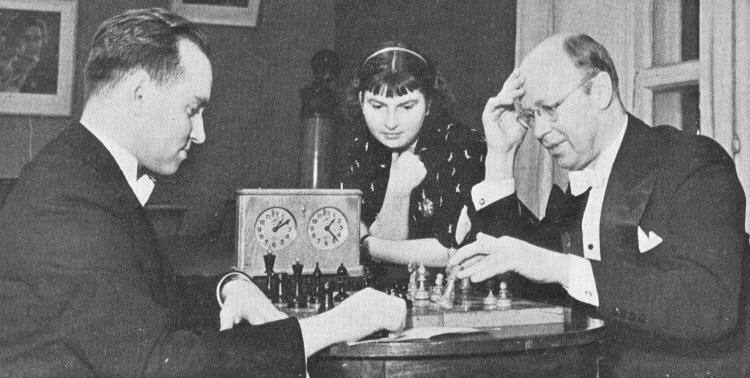
The photo above shows David Oistrakh and Sergei Prokofiev having a good time.

Sunday, 7 September 2014

Bach St Matthew Passion Rattle Berlin Prom


Peter Sellars's Bach St Matthew Passion Prom with Simon Rattle and the Berliner Philharmoniker can't have been anyone's top pick of the season because it's been done so many times and in so many places since first produced five years ago. There's a DVD and a relatively recent performance on the Berliner Philharmoniker Digital Concert Hall with much the same cast as we had in London.In principle, there's absolutely no reason Bach Passions should not be staged.  Strict Lutherans didn't do theatre, but theatre is very much part of Christian tradition. Latin  Masses were mystical, artistic experiences. Modern masses put the emphasis back on what Christianity means, rather than thrills like flowers, statues and incense.

There's also no reason why Bach Passions shouldn't be reinterpreted in new terms. That said, it depends on what  the new terms are. I'm no fan of Peter Sellars's self-indulgent, often maudlin stagings which say more about him than about the music he's staging (which is fair enough).  Since I've seen the production several times I wasn't going to rush out to the Royal Albert Hall.  This isn't Sellars's worst. It's  relatively austere and moving in a simplistic way, which  might appeal to some. A friend did, however, go last night.  Here's his review ! 

Saturday, 6 September 2014

Stravinsky Rachmaninov Rattle Berlin Phil Prom

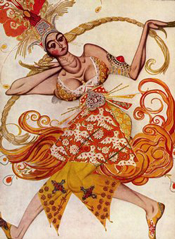
Surprisingly symphonic - Igor Stravinsky's Firebird (L'oiseau d'or) with Simon Rattle conducting the Berliner Philharmoniker. BBC Prom 64. What a pleasure it was to hear this familiar music played with such elegance and grace! Although The Firebird was written too be danced to, this performance was a reminder that it is also very fine pure music.  Rattle and the Berliner Philharmoniker dispelled memories of the more raucous suites, concentrating instead on the inherent beauty of the piece. Strictly speaking, music for ballet needs to follow the human body, and the physical capacities of dancers. As an orchestral piece, the music moves in a very different way because instrumental musicians spread the effort between them. With Rattle and the Berliners, The Firebird could breathe on its own, revealing its strange, exotic mysteries at its own pace.

Rattle preceded Stravinsky's Firebird with Rachmaninov's Symphonic Dances (1940) which wasn't actually written to be danced to. The Symphonic Dances are an exercise in memory. Rachmaninov was re-imaging the Russia of his youth through the splendour of the ballet. Quite probably the work could be choreographed, but its pulse is fundamentally symphonic.

While Rachmaninov re-images Russian ballet, Stravinsky's Firebird was written for the Ballets Russes. By pairing the two pieces, Rattle emphasizes the Firebird's fundamentally orchestral origins. Six years ago to the very day, Vladimir Jurowski conducted this full Firebird at the Proms, pairing it with Rimsky-Korsakov's opera Kashchey the Immortal. (more here)   Rattle's Firebird dances, but with abstract sounds. The "dancers" are instruments, who create impressions of dance in the imagination.

The strings pivoted en pointe, percussion suggested bright, golden colour. The Berliners are such good players that they make the music move as if it were a physical force, sliding and turning with exquisite grace.  While Jurowski's Firebird emphasized the savagery of Russian myth (ie the ogre), Rattle's Firebird emphasized its idealistic magic. The woodwind melodies rose sensuously from a swathe of shining strings: exotic, mysterious and seductively tantalizing. This Firebird  flew free from the original fairy tale, soaring onto an altogether more elevated, esoteric stratosphere. The woodwind and violin  melodies sounded exquisitely poignant: so perfect in its beauty that it broke my heart, knowing that it couldn't last.

Rattle didn't need to milk up the inherent drama. The Berlin Philharmonic are so good that they respond well to understated conducting.  Rattle isn't Gergiev. That's not a value judgement, since both their approaches are valid. Rattle's dynamics aren't extreme, but they're atmospheric, creating a Firebird of great sensitivity and depth. When the woodwinds theme returned for the last time, warmed by strings and harps, it felt like a kind of apotheosis, a transcendance Mahler would have been pleased with.

Listen to Rattle and the Berliners  in this same programme in their 2014-15 season opener on the Berliner Philharmoniker Digital Concert Hall.  The Prom performance is more relaxed but equally enjoyable. Such is the magic of the Proms and the Royal Albert Hall!

For their encore, Rattle and the Berliners played the Intermezzo from Puccini Manon Lescaut,the opera they performed at Baden-Baden (reviewed by me here)

Wednesday, 16 July 2014

FREE Herbert von Karajan - today only


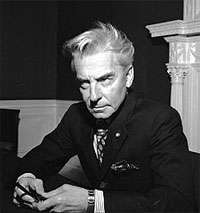
Herbert von Karajan died 25 years ago today. He was Chief Conductor of the Berlin Philharmonic from 1966 to 1989. The Berliner Philharmoniker website now contains a section dedicated to his memory. In the Digital Concert Hall "you will find recordings of the Unitel company from the sixties and seventies, including Dvořák’s Symphony “From the New World”, a Brahms cycle, Beethoven’s Symphonies Nos. 3, 6, 7 and 9 and the documentary Karajan – The Second Life."

"On today’s anniversary, these films as well as the recording of the memorial concert for Herbert von Karajan which took place in Salzburg cathedral in the summer of 1999 with the Berliner Philharmoniker and Claudio Abbado, are available free of charge. Further films with Herbert von Karajan will be released in the Digital Concert Hall into next year. During this time we will also talk to musicians of the Berliner Philharmoniker about their memories of Herbert von Karajan and these conversations will be made available as a documentary"  Read more here

Further recording s will be released in the next few weeks, Altogether they will create an excellent one-stop archive. If you're already registered, log in and watch for free. If you're not already registered, you can register and enjoy, too. But just for today. It's definitely worth signing up because you get access to all the Berliner Philharmoniker concerts, year round, and all those in the archive. So we have to pay to participate, but that's fair enough. The arts cost money. For a reasonable fee, you get the world's finest orchestra (arguably) right in your own room, wherever you might live. Politicians grumble that classical music doesn't breach the masses. That's not true. You can't measure audiences simply in terms of filling halls.

Many in my generation were conditioned to hate Karajan for his politics and his style, just as trolls today hold extreme views on contemporary conductors. I don't do bandwagons, as anyone who reads me regularly will know. I really came to Sibelius through Karajan's chilling, almost demonic interpretations. Pity Adorno kept his ears closed.