Utterly mad but absolutely right - Richard Strauss's
Ariadne auf Naxos started the Glyndebourne 2013 season with an explosion. Strauss could hardly have made his intentions more clear.
Ariadne auf Naxos
is not "about" Greek myth so much as a satire on art and the way art is
made. Strauss could hardly have made his intentions more clear. His music is a
clue. There are, of course, references to Mozart, but these are
prettified and tarted up. Are Strauss and Hofmannsthal suggesting that
the Composer courts success rather than art for arts sake? He is,
after all, writing for "the richest man in Vienna". The Music Master (Thomas Allen) clashes with the Major-domo (William Relton), but the firework display takes priority.
Ariadne auf Naxos is an indictment of the system..
The Vorspeil and Opera are distinct, but only up to a point. Strauss pits art against artifice, disguisng the true, radical meaning of his work behind a veneer of elegant stylization. But these are mind games. As Zerbinetta tells the Composer, "
Auf dem Theater spiele ich die Kokette, wer sagt, dass mein Herz dabei im Spiele ist? Ich scheine munter und bin doch traurig, gelte für gesellig und bin doch so einsam" (In the theatre I play the coquette. But who says my heart is in the game? I seem cheerful, but I'm sad. I play to the crowd, but I'm so alone".)
Katharina Thoma's staging is erudite. Years later, firebombs would destroy many German theatres, symbolically wiping out the German musical tradition. Obviously this was nothing in comparison to the destruction wrought by politicians and their philistine followers, but to a man like Strauss, whose world revolved around Dresden and Munich, the bombings were a metaphor for mindless barbarism. "The holiest shrine in the world", he wrote "Z
erstört!". Although Strauss could not forsee the future,
Ariadne auf Naxos was written during the First World War. As a modern audience, we cannot forget the far more destructive war that came after. There are relevant connections between
Ariadne auf Naxos and
Metamorphosen, which is perhaps Strauss's most explicit comment on the madness that is war. Until we stop giggling when someone opens his cloak to reveal RAF logos, we have learned nothing.
Strauss's score gives us other clues. The stock characters reference standard
commedia dell'arte where figures are hidden behind masks. Greek myth itself uses archetypes as metaphor. If Ariadne were a "real" person, she'd be sectioned under the Mental Health Act, given her obsessive delusions about Theseus and suicide. Given that she and Bacchus both come from family backgrounds where women have sex with gods and monsters, they have a lot in common. But what psychiatrist would countenance that? Soile Isokoski sang the glorious aria "Ein Schönes war" so beautifully that we could feel Ariadne's tragedy as if it
were personal and universal. "Und ging im Licht und freute sich des Lebens!" became a brave cry of protest against the hospital where "normal" people don't understand her extreme personality. Yet like Zerbinetta, Ariadne will not be silenced. In the end, she (sort of) gets what she needs, escaping the mundane world in which she's trapped into a kind of warped apotheosis of love, death and delusion.
Strauss had mixed feelings about
Tristan und Isolde. His own take on the Liebestod is delicously delirious. The references to the "drink" is particularly ironic, given that mental hospitals dispense chemical solutions just as Brangäne dispensed a drink that didn't do what it was supposed to. Strauss writes the nurses's last song so they have to warble like mad Rhinemaidens, totally uncomprehending what's going on round them. Against his better instincts, Bacchus (Sergey Skorokhodov) cannot help but succumb. At the end, Thoma's staging shows the hospital curtains billowing out like the sails of a ship, heading out at last for the freedom of the seas. The "sails" are lit by a red glow. Is this sunset or fire ? Is Valhalla burning ? Or does it suggest Dresden, Munich, Tokyo, Hiroshima, Hamburg or many other cities destroyed since?

Isokoski is one of the great Strauss singers of our time, so it was a pity that the production made more of Laura Claycomb's one-dimensional Zerbinetta.The part is central to the work as Zerbinetta interacts with the Composer (Kate Lindsey) while the Prima Donna (Soile Isokoski) s too wrapped up in her "role" as mega-star. Ariadne is frigid. Zerbinetta goes to the opposite extreme. Given that Greek myth is full of bestiality and explicit sex, we really should not be alarmed that Zerbinetta, who doesn't feature in antiquity, is a nympho. Compared with Ariadne's mother, Zerbinetta is almost healthy. Claycomb is good at being strident and brassy, so if the subtlety in the role didn't come over well, there was much else in the production to savour. When Claycomb throws off the restraints of the straitjacket, we thrill at the strength of her spirit. It's a brilliant image, totally in keeping with the meaning of the opera on many levels.

Although the Vorspeil and the Opera are, ostensibly separate, they are integral to each other. The Composer sings in the first part because he/she's written a score. But when the Opera actually takes place, the characters transform, as if they've taken on lives of their own. Hoffmansthal and Strauss don't give the Composer anything to sing in the second part. The Composer storms out when he realizes that scores don't exist in limbo but are changed by circumstances and performance. Hence the psychic creative storm as this bombshell drops. In Thoma's production, the Composer is struck dumb with the horror that he/she is no longer "in control". As a successful composer, Strauss knew full well that a score only becomes an opera when it is performed by musicians who think and feel. There is no such thing as "non-interpretation". Now, Lindsey makes her presence felt through her acting, rather than by her singing, in a thoughtful reversal of roles. The Composer "is" part of the opera, silent or otherwise.

Strauss's score is brilliantly anarchic, extending the idea of multiple levels of reality. The Mozart and
commedia dell'arte references jostle with references to Wagner, popular dance tunes and woozy bursts of fantasy. Vladimir Jurowski has a wonderful feel for Strauss's sense of humour. The brasses of the London Philharmonic Orchestra blare just enough so we can hear the parody, the winds (especially the bassoons) wail like a bunch of mock tubas. The strings reminded me of Strauss'
Metamorphosen. Humour is even more difficult to express in abstract music than more obvious emotions, because by its very nature, it's quixotic, tilting at the windmills of rigid literality.
Hence the vignettes, which Thoma stages so well. They break the intensity, injecting an irreverent sense of the absurd. The nymphs, Naiad, Dryad and Echo are mindless, not "carers" so much as nurses who follow rules without question. But how lovingly they are sung and acted by Ana Maria Labin, Adriana Di Paola, and Gabriela Istoc. The Four Comedians, Harlequin, Scaramuccio, Truffaldino and Brighella (Dmitri Vargin, James Kryshak, Torben J
ürgens and Andrew Stenson) are even more impressively performed. When they dance, every movement matches perfectly with the music: even their toes are tuned just right. The figures may be "fools" but they're done with panache and precision. They practically steal the show.
This Glyndebourne Strauss Ariadne auf Naxos has the makings of a classic, once audiences realize how genuinely true it is to the savage wit of Strauss and Hoffmansthal. Ariadne auf Naxos subverts delusion and false images. We need its irreverence more than ever.
Catch the screenings. Full review and cast list in Opera Today.
photos by Alastair Muir, courtesy Glyndebourne Festival
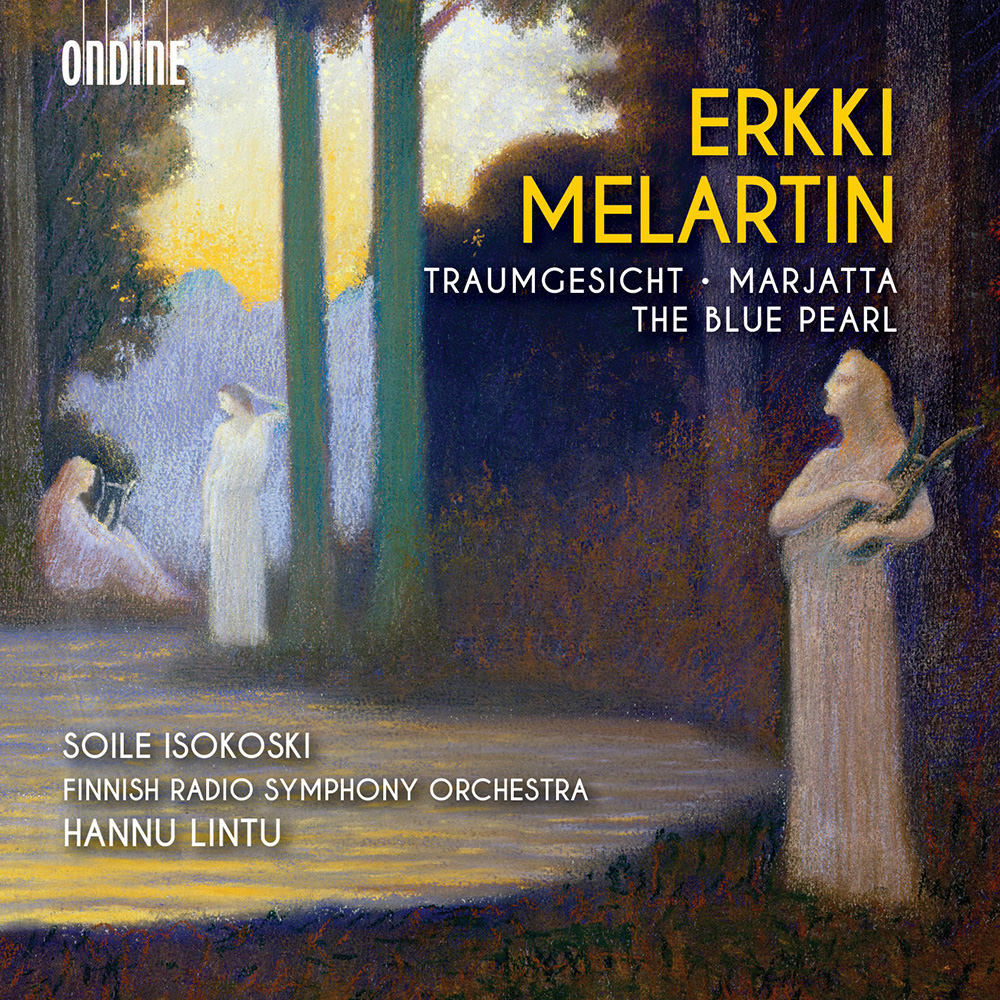
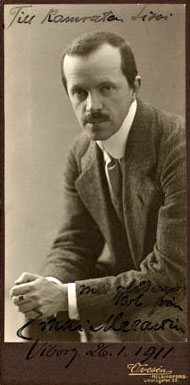 Soile Isokoski has been singing Melartin for decade : her Soumeni suloksi disc from 2000 remains one of the finest introductions to Finnish art song, and with all respect to Karita Mattila, Isokoski has probably done more for Finnish song since, perhaps, Aino Akté, for whom Melartin's Marjatta (op 79, 1914) was commissioned. Marjatta is based on the final canto in the Kalevala, where Väinämöinen orders Marjatta's new-born son (fathered by a lingonberry!) to be put to death, but is thwarted when an old man appears, baptising the child, declaring the child the new King of Karelia. Väinämöinen's old ways are no more and he skulks away, vowing one day to return, but leaves a kantele "for the children of Suomi". The connection between Marjatta and Sibelius Luonottar (1913), also commissioned for Aino Akté. Luonottar describes the creation of the universe, Marjatta the end of the mythical saga. The connections are so obvious that it's more than likely that Melartin was positioning himself directly in relationship to Sibelius. Marjatta shimmers with the sounds of cuckoo song, emphasizing springtime and renewal. Fluttering figures in the strings suggest winds, or new growth. Flutes, violins and celesta combine, creating a delicate, fragile mood of hope. The warmth of Isokoski's singing suggests that this new Karelia will prosper. At the end of Marjatta, Melartin gives the singer one grand climax heralded by trumpet calls. But how one longs for the truly extraordinary genius of Luonottar and its ferociously imaginative challenges! Musically, there's no comparison. Perhaps Marjatta is a follow-on from Melartin's opera Aino (1912) which I remember from way back, though I haven't listened to it for a while.


