Showing posts with label Killmayer Wilhelm. Show all posts

Friday, 25 August 2017

Wilhelm Killmayer, visionary, in memoriam


Wilhelm Killmayer died this week, just one day short of his 90th birthday.  Killmayer was utterly unique, even among the many inventive minds in music over the last 60 years.  Killmayer was deeply immersed in European culture, re-examining its soul and creating anew. Listening to Killmayer is like visiting a sanctuary, where the ur-sources of creativity flow pure and clean, endlessly refreshing the artistic imagination.  Think on that idea of an eternally clear fountain, springing from great depths, sparkling in the sunlight.  It captures the spirit of Killmayer's music.  "All that white!" a pianist once exclaimed, looking at a score. 

But as Killmayer said, "Silence liberates us.  It helps us to listen to
ourselves. Music can make us forget ourselves. It can also make us
become aware of ourselves
."  


That's a very zen concept. In Chinese painting, blank spaces are an essential part of composition because they balance literal with imponderable, letting the viewers exercise their minds.  Killmayer's music is luminous,  transparent. and incredibly

beautiful.  It's radical because it's both challenging and intuitive, activating mind and soul.  Killmayer connects to the idealism of Ancient Greece, or rather the German Romantic  reinvention thereof. One of his heroes was Friedrich Hölderlin,  the poet and thinker who crossed boundaries to the extent that he ended up incarcerated at Tübingen in a tower that had been part of the medieval city wall,. He'd sit singing to the moon and writing poems so odd and so spartan that many thought him mad.  Yet Hölderlin's late period has perhaps been even more influential in the 20th century. Perhaps, in his isolation, that 19th century mystic speaks for the modern soul.  

Killmayer's two cycles, the Hölderlin-Lieder, (1986 and 1988) are an extraordinary achievement.  Like Hölderlin's fragments, the songs begin and end as if materializing out of the ether.  Some are little more than disconncted phrases or passages of prose which don't make logical sense though their poetic import feels profound.   Strange harmonies, extremely high, taxing tessitura, delicate matching of voice, solo instruments (flutes and piano) and string lines that stretch into space.  Lots of silence, when the music seems to hover unheard except in the mind of the poet. As he listens, we listen too, blanking out the detritus of mindless noise that is normal life.    

All this variety, lit by an immaculate but unworldy, unnatural glow,  The word "Greichenland",  for example, suddenly bursting forth, sung with exquisite rapture.  For as Hölderlin glimpses an unattainable, ideal vision beyond reality, we too can ponder a world beyond.  Killmayer's Hölderlin-Lieder are, to me, one of the truly great masterpieces of the 20th century, which is saying something, given that there was so much music then that it's still hard to process.  I turn to the Hölderlin-Lieder whenever I need to clear my head of muzak and refocus.  "Sonnenschien !" "Wahrheit".  And gosh, it's beautiful, once you get into its magical vibe.  Kind of like being in Ancient Greece with a solitary shepherd and his lute.  Or flute). So what if Killmayer isn't populist mass market ? Like  Hölderlin, Heine and Goethe, significant artists and intellectuals are often way ahead of their time.  

"A single note is very precious for me - like a crystal or a flower" . (Wilhelm Killmayer)

Wilhelm Killmayer was born in Munich and trained with Carl Orff.  His ideas on magical realism may or may not have come from Orff , though probably they were in Killmayer all along. Killmayer was also a man of the theatre, working with the Munich and Frankfurt opera and ballet houses.  Hence Yolimba, one of his greatest hits. Most of his work, however, is orchestral and chamber music, and for me, his art song to German poets.  So much to choose from ! A long and rewarding journey.  Killmayer's influence is substantial.  Wolfgang Rihm is his highest profile admirer, but there are many. But perhaps what I love most about Killmayer is his humanity. His work is informed by warmth and gentle humour, values not sufficiently respected in this age where might means right.   Orphaned at the age of six, at 66 Killmayer became the father of twins.  A lifestyle change if ever there was!  Killmayer took to the experience with characteristic goodwill. "I need to write more, now", he apparently joked.  Fortunately, he left us with a solid body of work to cherish and explore, though more of it should be recorded.  

Die Sonne glänzt, es blühen die Gefilde,
Die Tage kommen blütenreich und milde, 


Der Abend blüht hinzu, und helle Tage gehen
Vom Himmel abwärts, wo die Tag entstehen. 

 Das Jahr erscheint mit Zeiten
Wie eine Pracht, wo Feste sich verbreiten,


Der Menschen Tätigkeit beginnt
mit neuem Ziele,
So sind die Zeichen in der Welt,
der Wunder viele.
 

Friedrich Hölderlin , first song in Killmayer's Hölderlin-Lieder

Wednesday, 1 March 2017

Morgen kommt der Aschermittwoch

Ernst Hanfstängl (1840 Dresden 1897 Capri) Aschermittwoch aus unserer Rubrik
Am Aschermittwoch ist alles vorbei, die Schwüre von Treue sie brechen entzwei Von all deinen Küssen darf ich nichts mehr wissen Wie schön es auch sei dann ist alles vorbei Trink auf die Freude, denn heut ist heut das was erfreut, hat noch nie gereut fülle mit Leichtsinn dir den Pokal  Karneval, Karneval - Jupp Schmitz, popular song from the 50's.

Ash Wednesday is an important day in the liturgical calender.  Palm cRosses which marked the previous Holy Week are burned, preparing the way for the next, but the symbolism goes deeper.  "Dust to dust, ashes to ashes". So much for the vanities of this material world . We're all going to end up in smoke. Which is why Easter matters: it offers hope and some form of meaning.  In medieval  tradition, fasts were broken by feasting, drinking and excess. "Eat, drink and be merry while you can"  Because good times may not come again.  So excess and wild abadon are haunted. When you wake with a hangover, you know about Hell.  Perfect material for Heinrich Heine.


Dieser Liebe toller Fasching, Dieser Taumel unsrer Herzen,
 Geht zu Ende, und ernüchtert Gähnen wir einander an! 
 Ausgetrunken ist der Kelch, Der mit Sinnenrausch gefüllt war, 
Schäumend, lodernd, bis am Rande; Ausgetrunken ist der Kelch. 

Es verstummen auch die Geigen, Die zum Tanze mächtig spielten, 
 Zu dem Tanz der Leidenschaft; Auch die Geigen, sie verstummen. 
 Es erlöschen auch die Lampen, Die das wilde Licht ergossen 
 Auf den bunten Mummenschanz; Auch die Lampen, sie erlöschen.

 Morgen kommt der Aschermittwoch, Und ich zeichne deine Stirne 
Mit dem Aschenkreuz und spreche: Weib bedenke, daß du Staub bist.

(This lovely Fasching, this wild frenzy of our hearts. It's ending. Sobering up, we yawn at one another.  The cup's drained empty, which once intoxicated - foaming, flaming, overflowing the brim.  The violins are silent that once led the merry dance. (reference to the Devil)  The lamps are out, too, which gave light in the darkness for merry Mummenshanz (masked and costumed clown figures) .  Tomorrow it is Ash Wednesday and I'll mark your forehead with a cross of ash.  And whisper : Woman, think on it : You, too, are dust)

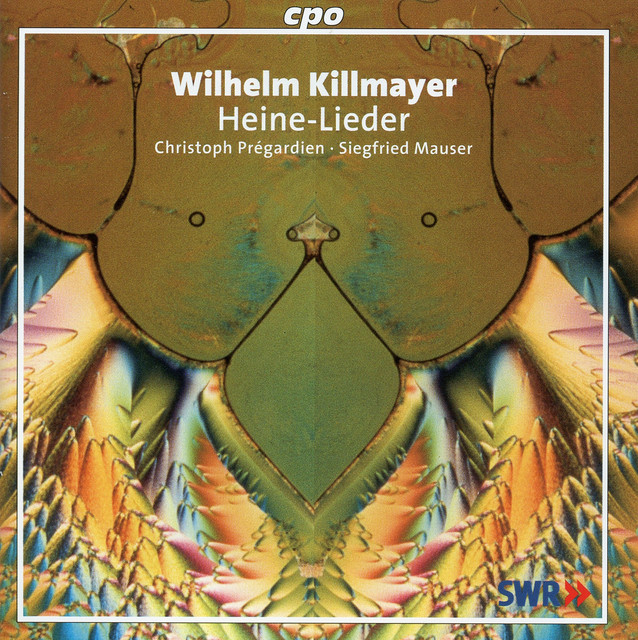
As far as I know this poem has only ever been set as a song once, by Wilhelm Killmayer, mentor of Wolfgang Rihm, part of Killmayer's eclectic and highly original traverse through Heine.  The piano introduction pounds, throbbing like a violent headache.  The vocal lines rise and break off suddenly into silence. The piano comments only in brief staccato flashes. A passage suggests a violin, playing in memory., and the vocal line is circular, like in a dance  The pace slows down, as f unwinding voice and piano alternating. The last strophe is striking. Like liturgical chant, it's dignified but plaintive, like an echo from the medieval past.  Killmayer substitutes the word "Menschen" for "Weibe". The last line is chant. Two phrases:  : "Mensch' bedenke"....."dass du Staub bist!"  Then the piano tolls single chords, like a funeral bell.  Get the CD here (Prégardien, Mauser)  and the score from Schott.

Friday, 24 January 2014

Magic and mayhem : Christoph Prégardien Wigmore Hall


Christoph Prégardien has always been a master of creative, exciting ways with Lieder. He and Michael Gees gave a recital at the Wigmore Hall, London, which showed how vigorous the Lieder tradition continues to be.

Prégardien and Gees created a programme that illuminated the liveliness of the Romantic imagination. Nature spirits abound, and fairy tales and ghostly figures of legend. Lulled into fantasy, one might miss the hints of danger that lurk behind these charming dreamscapes. The Romantics were intrigued by the subconcious long before the language of psychology was coined.

The recital began with one of the most lyrical songs in the whole Lieder repertoire, Carl Loewe's Der Nöck (Op129/2 1857)  to a poem by August Kopisch. A Nix, a male water sprite who plays his harp by a wild waterfall. Its waves hang suspended in mid air, the vapours forming a rainbow halo around the Nix. Circular figures in the piano part suggest tumbling waters. Prégardien breathed into the long vowel sounds so they rolled beautifully We could hear what the text means when it refers to a nightingale, silenced in awe. Suddenly the magic is broken when humans draw near. The waves roar, the trees stand tall, and the nightingale flees, until it's safe for the Nöck to reveal himself again. Prégardien and Gees paired Loewe's song with Franz Schubert.s Der Zwerg (D771, 1822) to a poem by Matthäus von Collin. A queen and a dwarf are alone on a boat on a lake. Love, murder and possible suicide haunt the idyll. The Id is released, violently, in a blissful setting.

Franz Liszt's Es war ein König in Thule (S278/2 1856) sets a poem from Goethe's Faust.  Schubert's setting is more folkloric, reflecting the innocence of Gretchen sings in  the novel. Liszt's setting is more elaborate. Lovely, falling diminuendos describe the way the King drinks one last time from his chalice, before throwing it "hinunter in die Flut". Perhaps the queen who gave him the chalice was herself a nature spirit  who lived beneath the lake?  Prégardien intoned the line "Trank nie einen Tropfen mehr" solemnly : the King has died.

Prégardien has championed the songs of Franz Lachner (1803-1890), who knew Schubert, Loewe, Schumann and Wagner, and worked in court circles in Munich, where he learned only too well what the Romantic imagination could do to real kings like Ludwig II. Lachner's Die Meerfrau  was written in Vienna,  comes from early in his career and sets a poem by Heinrich Heine. A  water spirit appears and drags a mortal to a watery grave. The song comes from Lachner's magnum opus,  Sängerfahrt op 33 (1831) where there are numerous songs on  similar themes of supernatural seduction and death. Ironically, Lachner wrote the collection on the eve of his own marriage, dedicating it to his bride. One wonders what modern psychoanalysts might make of that. Prégardien and Gees also performed Lachner's Ein Traumbild from the same collection. Tjhe final strophe is particularly luscious: The cock crows at dawn, and the vampire seductress flees. 

Prégardien and Gees also performed Liszt's Die Loreley (S273/2 1854-9), whose long prelude contains the Tristan motif in germ, before it was developed by Wagner. As Richard Stokes writes in his programme notes, it "begins with a leap of a diminished seventh : the voice however begins with a fourth ...and then soars a sixth - identical in harmonic terms with the piano's diminished sevenths".  In the context of  these feverish succubi,  Hugo Wolf's Ritter Kurts Brautfahrt (1888) made an interesting contrast.  On the way to his wedding, the Knight meets many temptations that almost throw him off course, including a mystery nursemaid who claims that her charge is his child. Yet it's quite a cheery song with cryptic in-jokes that refer to the music of Wolf's friend, the composer Karl Goldmark, who lent Wolf money, knowing he wouldn't be repaid.

Prégardien's unique timbre and ability to float legato has inspired several composers, most notably Wilhelm Killmayer (b 1927). Killmayer's  Hölderlin Lieder were written for Peter Schreier and are, I think, the most exquisite songs of the last half of the last century. Prégardien has recorded them too.  Killmayer wrote his Heine Lieder for Prégardien, setting 35 songs by Heine. Killmayer's songs don't imitate Schumann's. They engage with the meaning of Heine's texts in a highly original style, with pauses, and piano resonances that float in the air. The effect resembles speech, yet also inner contemplation. Killmayer revisits the poets of the past, and writes music for them in  a new, refreshing way.

 In this Wigmore Hall recital, Prégardien and Gees performed Killmayer's Schön-Rohtraut (2004).  The poem is Eduard Mörike, from 1838. Rohtraut is King Ringang's daughter. She doesn't spin or sew, but hunts annd fishes like a man. Mörike was inspired by the strange sound of the names, which he found in an ancient book, but the princess could be a reincarnation of the wild and elusive "Peregrina" who might have led Mörike astray. The lines are simple and repetitive, which suits Killmayer's abstract, almost zen-like purity. As Rohtraut leads the boy into the woods, his excitement mounts. Killmayer's delicate, fluttering note sequences suggest a heart beating with nervous anticipation. We feel we are at one with the boy, as enthralled as he. 

Michael Gees is himself a composer, and Prégardien has performed and recorded his songs several times. This time, we heard Gees's Der Zauberlehrling (2005) where he sets Goethe's poem about the sorcerer's apprentice who uses magic to wash the floor and conjures up a flood. Gees setting is delightful. Rolling, rumbling figures to suggest the rising waters, and a stiff march to suggest the legions of broomsticks.  Syncopated rhythms and zany downbeats, used with great flair. The audience burst into spontaneous applause. Gees and Prégardien were taken by surprise. Gees was thrilled, and beamed with happiness. It's heart warming to see a composer get respect like that.

The recital ended with old favourites like Loewe's Edward (Op1/11818) Tom der Reimer (Op 135a 1860), Schumann's Belsazar (Op57 1840) ans Wolf's Der Feuerreiter (1888).  Schubert's Erlkönig made a rousing encore, Since Prégardien and Gees had done Loewe's Erlkönig (Op 1/23 1818)  earlier in the evening, it was good to reflect on the differences between the two settings. Loewe's real answer to Schubert's Erlkönig is his Herr Oluf, which is another song of prenuptial anxiety, murder and mayhem, . Prégardien and Gees could be doing recitals like this over and over and not exhaust the  Lieder repertoire. 

A more formal version of this review appears in Opera Today.

Friday, 24 December 2010

Heinrich Heine's non-naive Nativity


Heinrich Heine isn't someone you'd normally associate with Nativity scenes. So pay attention when Heine does Christmas.

Wilhelm Killmayer (b 1927) set Heine's Die heiligen drei Könige as part of his Heine Lieder. Killmayer is extremely underrated, but worshiped by those who know his work, including Wolfgang Rihm, who calls him his master. Killmayer's music is whimsical and gentle, but packs a powerful emotional and mental punch.

Killmayer arranges 35 songs to Heine poems in four progressive themes. His choice is perceptive even if you think you know Heine by heart. The first section starts with the idea of dreams and aspirations. Ideas gradually build up towards a final section Die Macht des Gesanges, the power of song. Die heiligen drei Könige appears almost at the end of the fourth cycle, ie. near the goal. See why Killmayer is so sharp? The Three Kings have come from the East (das Morgenland) searching for something they know is essential even if they don't know what it is. The piano part is rhythmic yet sways  slightly of centre: camels, with long legs crossing a desert?

How do we get to Bethleham, they ask Ihr leiben Buben und Mädchen (You dear little bumpkins and lassies) Heine's humour - exotic Kings from afar chatting to yokellish (and very German) children. But of course no-one knows, so the Kings continue following the Star. Killmayer sets the Goldener Stern. so it shoots right above the stave, almost unattainable. (Killmayer is kind to the singer, as the build up is gradual).   But what a lovely glow on words like leuchtete lieblich und heiter. (shining sweetly and bright). Piano part sweet, good natured, confident that the star leads the right way..

Then the star stops over Joseph's house. Killmayer sets this totally matter of fact, like it's the most natural thing in the world for strange Kings to pop in on a peasant. No decoration, but typical Killmayer silence, single notes that make you listen. Decoration is reserved for the line Das sind sie hineingegangen, which Killmayer sets on a soaring arc. You're drawn into the little house, so to speak.

Inside the house, gorgeous tumult! Das Öchslein brüllte, das Kindlein schrie. The oxen moo and the Baby screams. It's more vivid auf Deutsch, but Killmayer wants to capture the sense of energy generated by different layers of sound. No plasterboard Nativity this, but full of life and action.

Then the glorious finale. The Kings burst into song. They've found their miracle. Killmayer sets the word "Sangen" in multiple patterns, so it feels ecstatic. One "sangen" draws the "a" out for at least 8 measures. Meanwhile, the pianist's left hand delineates a steady rhythm, the right embroidering a truly lyrical melody. The whole Killmayer cycle started on the theme of dreams and seeking knowledge. Now the resolution through The Power of Song. Yet it's a non-naive Nativity.

Neither Killmayer nor Heine do superficial. Killmayer ends his cycle on a completely different note. Children, Heine says, sing in the darkness so they won't be afraid. So the poet ein tolles Kind (a big Kid) sings in his all-too-dark life of strife. Here the translation of the last two lines (Susan Mary Praeder) is superb, capturing the fear but adding wry humour and irony. She  uses a rhyming couplet, very Germanic. "The song may not be so delightful, but it's freed me from all things frightful" So the culmination of this long cycle is astonishingly modern. We live in horrible times, but as long as we have the power of song, we have hope.

Killmayer's Heine-Lieder cycle is huge, so not many singers have the heft to carry it off, especially with its constant changes of mood. But it's  remarkably well thought through. Killmayer understands Heine well, and in the process creates anew the whole concept of Lieder cycle. Meaning is what Lieder is really about, not just surface beauty. Killmayer's trademark is a kind of observant silence and stillness, that draws the listener in.  Although the cycle as a whole is daunting to sing, there's no reason why the sections can't be performed on their own,  Die heiligen drei Könige is a small masterpiece on its own and really should be part of the repertoire. It's very deep, its meaning applies beyond just Christmas. When Pen Hadow (my kind of guy) walked to the North Pole (and got trapped) a few years ago, I played this song on continuous loop so much that I had to get an extra copy of the CD. Things weren't easy for me at the time, but the idea of Hadow trudging through the Arctic seemed totally in keeping with Heine's poem and Killmayer's setting.

Killmayer's Heine Lieder are difficult to sing yet easy to listen to. Killmayer is a warm, humorous and totally individual person who defies stereotype. Start with the Heine-Lieder and go onto the truly outstanding Hölderlin-Lieder which I think is one of the most significant works of the late 20th century. Grab the sole recording of Killmayer's Heine-Lieder if you get a chance. (Christoph Prégardien and Siegfried Mauser, CPO)  Or get the score bei Schott. The painting, oddly enough, is Hieronymus Bosch.

Tuesday, 13 April 2010

Wilhelm Killmayer - Artist of the Air

"Silence liberates us. It helps us to listen to ourselves. Music can make us forget ourselves. It can also make us become aware of ourselves.".- Wilhelm Killmayer

It's a very zen comment, it expresses more than meets the eye.  Killmayer's music's clear, cogent, transparent. and incredibly beautiful.  It's radical because it's the complete opposite to the  way prescriptive, materialistic society.operates. .Wolfgang Rihm adores him.

Here is an article. "Wilhelm Killmayer, Artist of the Air" by Sandeep Bhagwati on what Killmayer showed him. "Muddles occur when people try and order the world - the world by itself is not muddled. So the opposite of muddle is to let sounds sort themselves out....."every sound is my friend" Killmayer once said. You respect friends, you are attentive to them, you listen and you let them breathe and have their own life"

The article is just a draft, but in many ways that's good, because Killmayer's music doesn't "teach" but stimulates the listener to open his or her own mind.  "So much white space on his manuscripts" someone once exclaimed, but they aren't blank. They're filled with feelings, possibilties, horizons opening out into unseen panoramas. I'm trying to write about some of Killmayer's most accessible works, Wilhelm Killmayer: Heine-Lieder but each song expands so much, I can't find the words. I'm caught in rapture, hardly daring to move, they're so magical..

Sunday, 14 March 2010

Wolfgang Rihm, Barbican and Wilhelm Killmayer

Fabulous Total Immersion Day on Wolfgang Rihm at the Barbican London, on his birthday, too. What's more the concerts are being broadcast on www.bbc.co.uk/radio 3 over the next few weeks so anyone can listen, online, on demand, internationally for 7 days after broadcast. This means "real" total immersion because the best way to really get to know new works is to listen, again and again. And with Rihm, that's rewarding. One of the big, unfamiliar works is an hour long Concerto Séraphin which you need time to absorb. More on the day's concerts later and also about Rihm himself - wonderful man. (Scroll down or search for the Arditti Quartet Rihm concert.)

And Wilhelm Killmayer? One of Rihm's heroes, which makes him important. Checking Amazon, there are only a few recordings listed, but go to Schott Music, his publishers, for scores. And to JPC for many more recordings, and at much better prices than Amazon.

Why Killmayer? If Rihm thinks he's his mentor, so should others. Killmayer (b 1927) is an exact contemporary of Boulez and Henze but hardly known outside western Germany. He once quipped that he started writing more in his 60's because he got married and promptly had 3 more kids and needed the money! But seriously, his music is very good indeed. Over the next few weeks, I'll write more about him because there's next to nothing in English. (There's even a biography in German.)

Killmayer's Hölderlin-Lieder is exceptional. In fact I'd say that it's one of the best art song cycles written in the last 60 years. Since song is my big thing this is no minor praise. This is a very important cycle because it's so beautiful. Moreover, it's Hölderlin. Hölderlin's late poetry really came into its own in the 20th century, when people could appreciate the "madman ravings" as something more esoteric. Many exist only in broken fragments, so setting them to music is an exercise in writing for silence, for dislocated, disjointed expression. There are many 20th century Hölderlin settings, but Killmayer's make a virtue of their fragmentary, visionary spirit.

Killmayer even revisited Heine, and the Schumann settings in particular. His Heine-Lieder are wonderful, an extremely useful adjunct to Schumann. No CD available at the moment, but Schott should have the score. It's essential reading, because it shows how a modern composer relates to Schumann and the Lieder tradition, but reinvents it anew.