Showing posts with label Wagner Das Rheingold. Show all posts

Monday, 24 September 2012

Extra Dry Rheingold, not Wagner


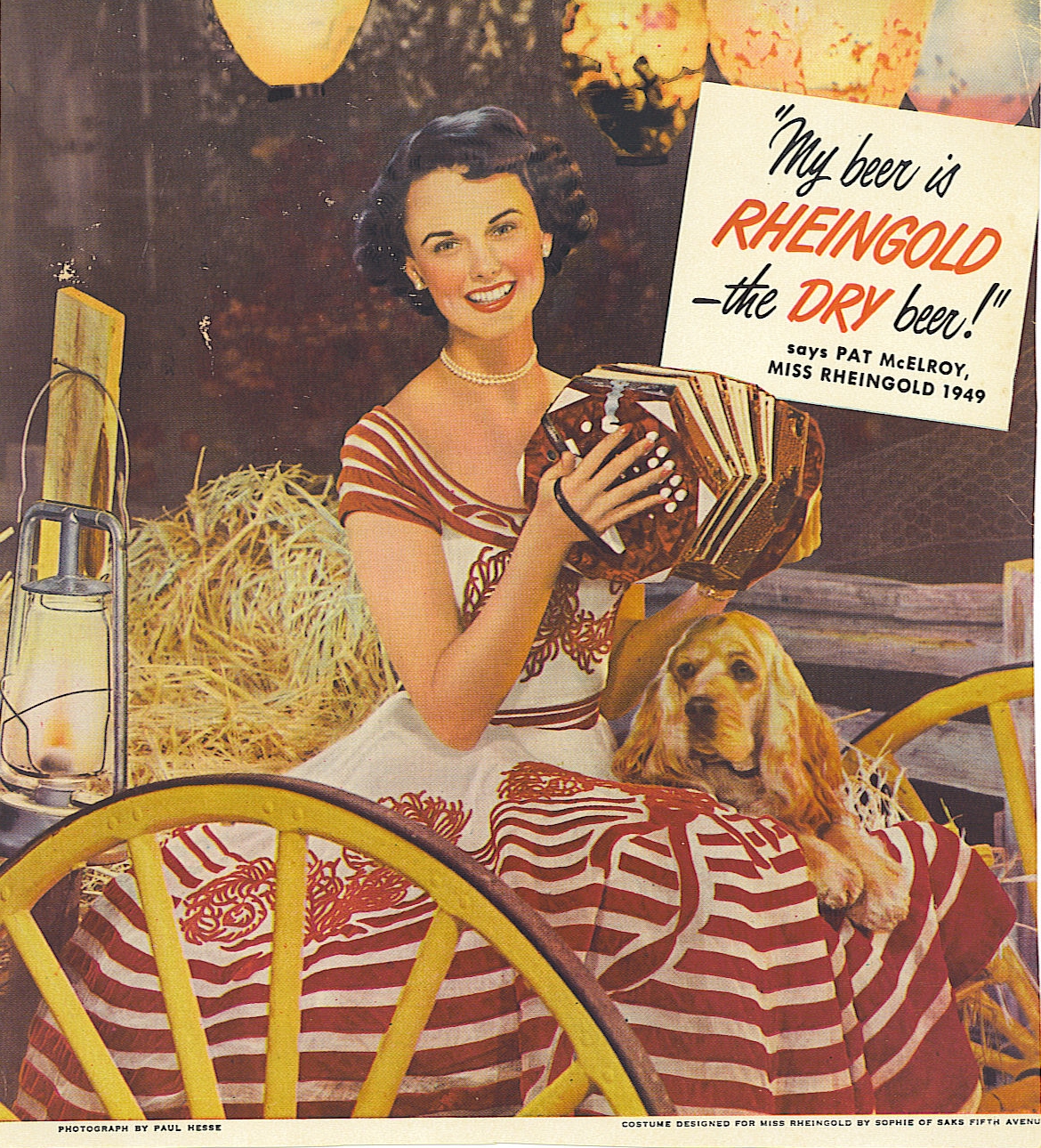
Is it sheer coincidence that Keith Warner's heavily marketed Wagner Ring of the Nibelungen opens at the Royal Opera House London at the same time as the Oktoberfest opens in Munich?  Commercialism rears its ugly head! But at least in this case, one can reflect that sixty years ago audiences knew what "Rheingold" meant and associated it with liquid gold. Notice the bombastic "orchestra".  Perhaps those audiences even got the irony of using arch anti-capitalist Richard Wagner in a crass commercial. 

What is the message of Das Rheingold  and of the entire Ring Cycle?  Whoever holds the Ring is cursed. Alberich rips off the oppressed Nibelung working class. Wotan  rips off Alberich. Fafner and Fasolt scrap with each other. Wotan's scams go far wider than cheating on a mortgage. He cheats on his wife. He doesn't "do" responsibility, even when he tries to protect his daughter. Hagen and Gunther think they can rip off Siegfried.  "Des Ringes Herr als des Ringes Knecht"  Alberich's curse applies to himself since he stole the Rheingold in the first place. An indictment of the Capitalist system!

Thickets of moral compromise. So grüss' ich die Burg, sicher vor Bang' und Grau'n! sings Wotan as he accepts his entitlement. But heed what Loge has to say : Ihrem Ende eilen sie zu, die so stark in Bestehen sich wähnen. Fast schäm' ich mich, mit ihnen zu schaffen; zur leckenden Lohe mich wieder zu wandeln, spür' ich lockende Lust. The Ring is for the rich. Plebs need not apply. But as beer, Das Rheingold is available to all. For details of the ROH broadcast schedule, please see here.

Monday, 4 April 2011

Kaspar Holten's Copenhagen Ring

Does Kaspar Bech Holten's Copenhagen Ring tell us anything of what he'll bring to the Royal Opera House when he takes over Elaine Padmore's role in 2012? Maybe, but maybe not. This famed Ring put Copenhagen on the opera map,  and was received with great acclaim. It's not a cop-out like the Schenk/Levine production which even the Met was forced to retire. Neither is it so innovative that it might disturb mainstream audiences. Musically it's pretty good, not over the top or staid. One of the worries about Holten's appointment is that he doesn't have widespread international experience, but if this is what he gets from a mainly Scandinavian cast, it's not unpromising. This Wotan is Johan Reuter's performance of a lifetime. Maybe there are less divas in Denmark, but Holten won't be the only one at the helm in London.

Because this Ring was closely connected to the 2005 opening of the new Copenhagen Opera House, the building features prominently in the production. It must have been fun for the audience! For those of us not familiar with the city, there are still enough in-jokes to keep us amused, like the Norns surfacing as audience members in the stalls, complete with programmes and opera glasses.  Cue for a Ring that's deliberately non-mythic, but instead focussed on domestic realism. Holten even casts a genuine giant for Fasolt (who sings and acts superbly). Real wood dove, too, and it flies.

The Gods and their pawns aren't divine but human - almost embarrassingly human sometimes. Erda is semi-comatose in bed. Wotan/The Wanderer kisses her dutifully but he's clearly scared. Is she his Elderly Mother who will tell him off?  The whole Ring saga is told as if it were Brünnhilde's memory, as she's seen rummaging through old books while the Rheingold theme is reprised in Götterdämmerung. Strictly speaking, it's not as if she didn't already know, but it affirms her resolve to return the Ring to whom it belongs.

Thus the story progresses from 1920's Flapper to post WW2 austerity to the Swinging 60's where rebel teenager Siegfried decorates his room with sitar, guitar and hippy wall hangings. The kitchen in which Mime cooks up his spells is Danish Modern chic - pine, red and white kitchenware. Generational change is a feature of the Ring, so in principle it's not inappropriate to think of the Ring in compressed 20th century terms.

Humour, too. Fafner sits in a wheelchair bossing Fasolt about. Capitalist pig! Alberich scrawls his crazy theories on a blackboard. Hagen wipes the board clean, leaving for last a double helix : is DNA destiny? Can Hagen really get his Dad off his back by stabbing him?  Siegfried leaves the forest for married life in a room full of pot plants, where the Wood Dove's confined in a tiny cage. Now wonder he wants to escape!  While all these vignettes have wider meaning, humour isn't Wagner's forte. It's almost impossible to imagine Brünnhilde fussing about with a watering can. She may no longer be a  Walküre but no way will she ever be a bimbo.

De-mythologizing has its place, since The Ring is very much a universal story of strong personalities caught up in a web of moral compromise. That's why some thoughtful commentators have suggested the Copenhagen Ring as a good introduction to the cycle, so newcomers get used to it as drama before they go on to the more complex metaphysics. Better this than the Met Ring which substitued costumes for ideas and froze Wagner interpretation where Cosima might have wanted. For me, the best balance on film is probably Audi's Amsterdam Ring. I've seen and loved Sawallisch/Lenhoff but it's not on DVD.

There are some excellent moments in the Copenhagen Ring. Wotan and Loge's journey into Nebelheim  for example, and Wotan's truly horrific temper tantrum as he tears Alberich's arm off to get the Ring (a bracelet here, easier to see on stage). Loge cringes in shock. Even better is the Rock under which Fasolt-made-monster stands guard. Thick, black tentacles reach underground to his lair.  The final Immolation comes complete with real flames. Hagen's arm burns as he lunges at the Ring. Live, this must have been quite an experience.

Much less interesting is the emphasis on old age. Everyone grows old here, even the Gods. Wotan changes from youthful Reuter to James Johnson's Wanderer (without explanation).There is also something unpleasant about depicting decrepitude where it isn't really relevant. Where age versus youth does matter is the Brünnhilde/Siegfried relationship. Iréne Theorin was in her 40's when this was made but looks 25 years older. Sings vigorously, though. As Siegfried, Stig Andersen's face is painted white and looks 50. Inexplicably, in this Ring Brünnhilde is hugely pregnant which makes her aged apppearance truly unnatural.  Brünnhilde pregnant?  In the publicity material she cradles an infant. That's so not Wagner it doesn't bear thinking about. So maybe we can expect something controversial from Holten after all.

Monday, 11 October 2010

Met Das Rheingold - controversial implications?

The long-term implications of the Met Das Rheingold are far more radical than the merits or demerits of the production itself. Despite Robert Lepage's high tech mechanics, this Das Rheingold is regressive, old wine in new skins. Of course it uses state of the art technology, to rival any movie or computer game. Experienced live it must be fantastic. Wagner used the latest mechanics in his time to create ultimate theatre. Using the best modern technology is perfectly valid. Unfortunately, that's where the insight in this Met production stops.

There is no such thing as non-interpretation. Even when we read a score, our minds are processing the relationship between the notes, "interpreting" through imagination. Conducting, direction, staging and individual performance are all part of a process. "Doing the notes" just isn't enough. The main flaw in the Met Rheingold is that there's no coherent interpretation. Letting Lepage's set take the attention lets Levine off the hook. Maybe that's why the Met personnel looked so pleased with themselves.

Ideas-free Wagner isn't Wagner. The Ring is such an amazing work that it supports multiple interpretations. So what's the Met telling us? There are good visual moments in this production, the best of which illustrates Wotan and Loge's voyage to Nibelheim. The white slats look dangerous, twisting and writhing as the pair proceed. Impossible, slippery angles - just like the scam they're planning for Alberich. Here, the set is "acting", adding depth to meaning, so it serves a purpose.

Not all stage directions are equal. Wagner wanted the Rheinmaidens to swim realistically, since by stage techniques in his time that would have been miraculous, emphasizing their supernatural powers. The Met's Rheinmaidens can "swim" since they flap their flippers and emit bubbles generated by their singing. But Wagner's point was that they were spirits, not fish.  Realism is only relative: what matters here is that they should be seeen as free spirits, not women harnessed to guy-ropes. Having them run about on rocks or whatever depicts that essential natural freedom infinitely better than slavishly following the "swimming" instructions.

Similarly, what role does the Rainbow Bridge play in the drama? It's meant to look gorgeous, but the fact is that Valhalla is a scam. Through the entire Ring this theme repeats: power and wealth mean nothing if they're gained by ill means.  Which is why Wagner fixed on "rainbow" - something beautiful that's just a trick of the light. The audience that raged when the Bridge didn't function on the first night missed the point. The Rainbow Bridge is an illusion. Making it material kills its symbolic portent.

Perhaps the tree of golden apples was marginalized because it didn't fit this studiously non-interpretive approach. The apples aren't snacks but sustenance: soulfood in every sense. The tree references the World-Ash tree and the conflict between nature and non-nature which is so much a part of the Ring.  But since technological excess is the God in this Rheingold, such things don't fit in.

There probably will be no more technologically realistic Das Rheingold than this. Just as there can be no physically more realistic Rigoletto than the RAI Mantua film. Both productions follow stage directions literally. But real drama comes from understanding how all elements in an opera work and work together, not on their own.  Both this Rheingold and that Rigoletto demonstrate that real drama is created by understanding ideas, not by rigidly following what's on paper.

Now that we've got the technology to do most anything, we've come full circle, back to the idea that drama springs from imagination, not from tangible material things. That's what the Greeks knew with their utterly minimal stagings and archetypes. that's what Shakespeare knew, when he staged Julius Caesar in the costumes of his own time. The Ring has so much to tell us because it's universal. It's time to realize that ideas aren't constrained by physical trappings and that music in music drama is abstract, open to multiple interpretations.

Many will rage at the Met Rheingold because it's high tech and is expensive.  But that's where the quest for literalism has been leading to. Now that we've got there, maybe we'll realize that it's delusion. The real values of drama - and Wagner drama in particular - lie deeper.  Das Rheingold isn't the first part of the Ring but a prelude, referencing what is to come. It's only when Brünnhilde throws the Ring back to the Rheinmaidens that she breaks the curse. All the gold in the world is dross if you don't follow basic morality. And so,  perhaps we too can be freed so we can concentrate on basic dramatic meaning.

Musically, the Met Rhingold is disappointing, whatever the reports may suggest. Even on film, where voices are enhamced and balanced, there were lapses, not important in themselves but a symptom of the general incoherence. Pleasant enough perforrmances but uninspired, soft-centred, lacking committment or motivation. To his credit, Bryn Terfel holds himself aloof. Why should he be intense when no-one else bothers?

Some extremely hammy acting from the lesser parts, glaringly obvious in the filmed close-ups rather than on stage. This ties in with the fundamentally non-interpretive approach, dependent on externals rather than thinking things through. Direction matters because it helps singers understand why what they do relates to role and to ensemble. There's a lot more to creating drama than walking backwards wired to a cable. Park and Bark leads to Comic Book Performance.

Wonderful-looking set, and a great experience, But set isn't direction. Blaming Lepage isn't fair. What about Levine, what about the whole Met ethos, which favours elaboration and excess? For a production this high profile, not a lot of effort seems to have gone into thinking the music out throroughly. There was little sense of structure, drama or dare I say it - direction.. A conductor can't abrogate vision or interpretation any more than than a director can leave things to the set and costumes.  With his experience, Levine ought to have something to contribute. Mahler and Alfred Roller understood each other because each had the concept of interpreting Wagner to intensify meaning, the heart of the drama. "It's more than just the notes." Mahler said in another context but the idea applies. 

But maybe that's all wrong and what the public wants is opera that looks good but nullifies drama and meaning. Maybe it's all a clever game to reinstate the old Otto Shenck set and formalize it for all time. But if art is worth anything, it grows, lives, and breathes. "Kinder macht neu!" said Wagner. But until such time as audiences listen to what he really says, instead of demanding window-dressed regression, maybe we're doomed. Wagner without meaning is pointless. Doesn't anyone get why Alberich, Wotan and later Siegfried are cursed?
Please read my piece on Robert LePage's Rakes Progress in 2008 (when LePage and Gelb discussed the Met Ring)
Saturday, 9 October 2010

Real Rheingold?


At the start of the Met Das Rheingold, someone proudly announces that "James Levine is the best Wagner conductor that ever was!". Which explains a lot about the Met and its audiences.

Here's a clip from some nobodies known as Karajan, Schreier and the Berlin Philharmonic. What do Europeans know about opera, someone said to me recently. Well listen to this! I've chosen this clip because it illustrates one of the trickier sequences to stage, when Wotan and Loge enter the underworld of the Nibelungs. It's not as flashy as say, the Rainbow bridge, but in terms of the meaning of the Ring, it's critical, This scene embodies the conflict between the Gods and Alberich, between the haves and have-nots. This scene at the Met is well done, the best part of the whole production. It's good at filling the interlude  of the journey, But apart from that the expensive staging doesn't add to drama or meaning. It looks fantastic, so that'a plus.

The comment about Levine probably indicates a lot more than it seems. Basically, this is the same old Levine Ring from 30 years ago, with a high tech trendy backdrop. Why is it scary to think of Wagner's ideas? It's the drama that meant most to Wagner, and the complex, cosmic rationale behind them  Sets are a means to an end, not an end in themselves. I'll be writing more about the Lepage production, which is quite weak apart from the fancy technology. But what's even more interesting is what the wider implications are. What makes an opera dramatic? And what makes Wagner opera in particular what it is? Do people really care about meaning? Here's my analysis of the Met's Rheingold.

Met Rheingold and MORE coming up

High-tech Wagner? That's exactly what would have appealed to the old boy, who was fascinated by new possibilities. He was the man who dreamed up the mechanical dragon and wanted to crack the illusion of Rhinemaidens swimming. So in principle the new Das Rheingold at the Met with all that machinery and special effects fits that concept. But is it enough?

The Met Das Rheingold is screening in cinemas all over this week. Here's a review from NY:
"It will be no surprise to me, a year or five from now, when someone falls to her or his death from the guy-wires that configure so much of Robert Lepage’s new state-of-the-art (ah! But which art?) production of Der Ring des Nibelung. "
For more, please read the full piece in Opera Today.

HERE is my analysis based on the HD broadcast. 

Lots of opera on screen and on radio this week. Catch the last day of WNO's Rigoletto with Keenlyside and David Soar on BBC Radio 3, which gets replaced at 1800 GMT Saturday by Jonas Kaufmann in Lohengrin from Bayreuth. In the regular Thursday opera slot, also BBC Radio 3, there's a very good Smetana Bartered Bride from Prague - very bright and sparky. Don't miss. On Thursday 14th the slot switches to Berlioz Damnation of Faust from Nederlandse Opera.  What riches we have! All of these are available online, internationally and most on demand, so everyone can join.