Saturday, 11 January 2014

Genuine the Vampire - Wiene download

Robert Wiene's Genuine the Vampire (1920) was  eclipsed by The Cabinet of Dr Caligari, completed a few months earlier. But Genuine the Vampire is genuinely interesting, and not just for the hilarious name.  There's Genuine in all her glory wearing a dangerously revealing costume of belts and straps over what one hopes is a body suit but might be real flesh since she flashes naked thighs many times, and strikes poses that let the viewer linger. There's more nudity in this film than possibly any other of its period, and possibly long after. Note the coy "butterfly wings" and the stylized pose. One of the features of this film is the way Wiene freezes formal, stylized poses. In Dr Caligari and other films of the time, movements are theatrical, but not to this extent. In Genuine the Vampire, the poses are so stiff and held for so long that they clearly reference tableaux vivants, which were often used in pornography on the reasoning that, if the body resembled sculpture and wasn't natural, it could be deemed legit.

Genuine the Vampire isn't a vampire story in the Bram Stoker mode but quite explicitly connects to psychology theories popular in the late 19th and early 20th centuries. The film unfolds like a dream, where characters emerge and disappear without logic.  Genuine was an African goddess, kidnapped and sold as a slave to Lord Melo who keeps her prisoner in a geodesic dome in his mansion. Each day a barber comes to shave Lord M, who seems to like being shaved while he's sleeping. One day the barber can't come but Lord M's grandson Florian turns up. Like everyone else in this film, his costume is bizarre - exaggerated love locks and waxed curls and jodphurs. When Florian shaves his grandad, Genuine tells him to kill the old man, so he does. Go figure.

Other personages appear - a Black Slave (in real life possibly from Kamerun) , and Henry and Percy who seem relatively normal.  Genuine appears in different costumes, one made of ostrich feathers, with a Madam Pompadour head dress. Because the action is so slow, viewing the decor is very much part of the experience. The sets are Expressionist paintings, jagged angles and blocks, a collision of Franz Marc, the Cubists and Second Empire excess. Because the plot isn't rationale, the story ends when a mob waving scythes invade the mansion. Notice though that the mob aren't peasants. Their scythes are working tools but symbols of death.

Genuine is played by Fern Andra, in real life Verna Andrews from Watseka, Illinois (1893-1974) who married a Baron von und zu, though he was dead by the time she made this movie. Those strange set designs are by Walther Reimann, the painter and architect who did the sets for The Cabinet of Dr Caligari.  For a download of Dr Caligari, please see HERE.


Friday, 10 January 2014

Papageno in silhouette Reiniger 1935

More Weimar silhouettes from Lotte Reiniger, this time a ten-minute fantasy on Papageno, made in 1935 as part of her projected series "Silhouetten Opernhaus", the first of which was Zehn Minuten Mozart (1930). described by her as a "Schattenspile zu Meisterwerken der Tonkunst", animations that illustrated music.  Zehn Minuten Mozart brings together snippets from different works by Mozart to form a coy narrative which delights a Romantic imagination. Papageno is much more sophisticated, concentrating on Papageno and his relationship to nature.


The tighter focus allows Reiniger to create exceptionally elaborate silhouettes - look at  tracery of ferns and vines, which bring out  the delicate intricacy of the music perhaps in a way no staged performance can. Look at Papageno's bells at right . It's hard to believe they were crafted form cardboard. And enjoy the birds as they move and sing. Papageno is teaching them how to sing his name. When Papageno and Papagena sing of their future offspring, a stork pierces eggs and little children dressed as birds pop out.

Reiniger's silhouettes grew out of the old German tradition of Scherenschnitte. The figures could be photographed frame by frame so they could seem to dance on film.  Truly unique and magical, uniting ancient and modern. This is a film which echoes the designs of the 1930's yet feels true to Mozart and feels immortal. Becaause it was made with sound, we also get authentic period performance as soundtrack.

I've written about Lotte Reiniger before (see my piece Weimar animation on Reiniger's The Star of Bethlehem which gives links to the British Film Institute archive. Reiniger knew just about everyone in avant garde film circles, many of whom I've written about on this site (see Ruttman : Berlin, DieSinfonie der Grossstadt) Even when she had to stay out of Nazi Germany, she hung out with the likes of Renoir and Cocteau. Interestingly, the assistant she uses on this film is Arthur Neher. Any relation to Caspar Neher, whom she must have known from Brecht/Eisler circles?


Thursday, 9 January 2014

VOTE NOW South Bank Breakthrough Award

VOTE NOW - voting ends tomorrow - for the South Bank Breakthrough Awards. Results will be unveiled later this month on Sky HD. These awards cover everything  - pop. TV, comedy, drama, visual arts and theatre.  Most interesting, though, is the South Bank Breakthrough Artists Award nominations because the choices don't favour the very rich and very famous. For opera and classical, the nominations are : Alessandro Talevi and Anna Clyne. HERE is a link to the voting form. 

Alessandro Talevi is the nominee for opera. Last October, he directed the Welsh National Opera's Roberto Devereux. "With this thrilling performance of Roberto Devereux ......The Welsh National Opera vindicates its decision to stage Donizetti's Tudor trilogy" said the Guardian.  For Opera North, he created Don Giovanni in 2012 and The Turn of the Screw in 2010. His productions have also been seen in Puglia, Central City Colorado (the hippest secret in the US opera world), Sweden and of course many, many times in London. His productions spring from an intuitive feel for the way music itself creates drama. A true original.

Anna Clyne is the nominee for classical music. Her Masquerade featured at the BBC Last Night of the Proms, when they were making a big splash to promote women artists. Here is an analysis by new music specialist 5:4.

Harrison Birtwistle and Thomas Adès are composers but they have to compete against a blogger – Alex Ross – for the main a award for classical music. That award is sponsored by the South Bank. Say no more. So I've chosen to vote for music instead, Thomas Adès's Totentanz  - real music - which I wrote about HERE.

Wednesday, 8 January 2014

Goerne Andsnes Mahler Shostakovich Wigmore Hall

At the Wigmore Hall, London, Matthias Goerne and Lief Ove Andsnes performed Mahler in a unique programme built around Shostakovich's  Suite on Verses of Michelangelo Buonarroti op 145 (1974). Who but Goerne would dare such an eclectic juxtaposition, framing six songs from Shostakovich's eleven song cycle with songs drawn from Mahler's entire output, each of which presents formidable challenges? Most singers would pale at the very prospect of singing songs from the Rückert Lieder, Des Knaben Wunderhorn, Kindertôtenlieder, and transcriptions from the symphonies, but by throwing Shostakovich into the mix, Goerne drew out new perspectives in both Mahler and Shostakovich. This was a daring, even shocking programme, and technically a formidable undertaking, but Goerne carried it off with conviction and superlative artistry.

The Mahler anniversary year brought forth Mahlerkugeln, commercially palatable but poisonous to art.  Goerne's Mahler isn't like that, but as uncompromising and demanding as the composer himself.  He's been singing Mahler for nearly 20 years, his interpretations enhanced with an intuitive appreciation of the music as a whole. I've seen him sneak into the audience after singing, and watched him listening intensely to the orchestra and conductor he'd just worked with playing symphonies with no vocal part. This in itself is an insight: song infuses all of Mahler's music and vice versa. Mahler's songs aren't really made for celebrity showcases, but for those who care about the idiom as a whole.

Hearing Mahler on equal terms with Shostakovich broadens the equation, shedding light on Shostakovich's admiration for Mahler. Goerne has made a speciality of  Suite on Verses of Michelangelo Buonarroti  Here he did the piano and voice original with Andsnes, but the memory of the much richer, more complex orchestral version hung over it inaudibly, much in the way that knowing Mahler's orchestral music enhances appreciation of his songs.

The programme was divided in themes based around each of the Shostakovich songs. in Utro (Morning), the poet describes his lover's golden tresses, garlanded by flowers.  The mood is sensual, perfumed with the promise of love. Goerne began with the most delicate of Rückert songs Ich atmet' einen Linden Duft, where the music sways like an invisible fragrance. Melancholy infuses Shostakovich's song, as if in the moment of embrace he can foresee parting. Seamlessly, Goerne and Andsnes  flowed into Wo die schõnen Trompeten blasen, where the woman thinks her lover has returned. But he's an illusion, foretelling death.  These songs aren't to be taken at face values. Goerne's hushed tones suggested sadness, quietly understated.

The expansive long lines in Razluka (Separation) express distances, in time and in space. The poet cannot live without love, and dies, leaving the memory of his devotion as a pledge. Michelangelo, being an artist, lives eternally in the works he left behind. Goerne followed Razluka with Es sungen drei Engel einen súßen Gesang, the transcription for solo voice and piano of the Wunderhorn song that appears in Mahler's Symphony no 3. In the symphony, the youthful chorus sounds innocent, but the song deals with life after death. Similarly, in Das irdische Leben the child dies because its needs are unfulfilled. Goerne emphasized the word "Totenbahr" to drive home the point. Two songs from Kindertotenlieder followed, Nun seh' ich wohl, warum so dunkle Flammen and Wenn dien Mütterlein, where Rückert describes seeing the images of his dead children. Was dir nur Augen sind in diesen Tagen" sang Goerne,  purposefully, "in künft'gen Nächten sind es dir nur Sterne" Death is just one of those "separations" (Razluka) that will be overcome. Yet again, Goerne and Andsnes performed the piano/voice transcription of Urlicht from Mahler's Symphony no 2. We don't need to hear the mezzo and the choir, but we remember them and the part the song plays in the symphony.

In Noch, Michelangelo describes a marble angel that breathes, both a work of man and of God. Shostakovich wrote this cycle as he approached his own death, possibly anxious that once he was dead, the Soviets might suppress his music, so the connections to Rückert and to Mahler are clear. "Ich bin gestorben" sang Goerne with quiet dignity, rising to forceful rstraint "In meinem Himmel, in meinem Lieben, in meinem Lied". Ich bin der Welt Abhandedn gekommen as a song of protest? In this performance, totally convincing.

Hence Goerne and Andsnes launched without a break into Shostakovich Bessmertiye (Immortality).
with its defiant capriciousness. "No ya ne myortv, khot i opushchen v zemlyu" (I am not dead, though I lie in the earth). The critical line rises gloriously, agilely upward "I am alive in the hearts of all who love"  Andnes played the "shining" motif evoking a balalaika, a folk instrument that can't be suppressed, but in this performance, the Mahler images of light and "Urlicht" were more dominant than in performances with a true Russian bass like Dmitri Hvorostovsky. But deep basses can't quite manage the agility needed for Mahler.

In Dante, Shostakovich unleashed the pent-up savagery he must have felt, living in a repressed society. Dante's writings, the text reminds us,  were "regarded with scorn by the general mob", bur  Michelangelo would prefer to suffer than deny art. Ya b luchshey doli v mire ne zhelal!" sang "I could wish for no finer earthly life".  Goerne has spoken Russian since childhood. He was young enough to receive the benefits of a DDR education without suffering hardship, but any sensitive person can identify with the idea of art overcoming obstacles. One has only to think of Masur and the Leipziger Gewandhaus Orchester in the tense times of 1989. 

Hearing Mahler's Revelge in this context  makes the song much more pointed than a mere ghost story. The dead soldiers march through the town at night, singing "tralalee, tralalay, tralala" but the words were sung with a hollow mechanical edge. Entirely appropriate because in war, men are turned into machine fodder. The point might have been made even more savagely if Goerne and Andnes had included Shostakovich's Gnev (Anger) which specifically pins the blame on the abuse of  power. "For Rome is a forest full of murderers". However, I suspect that would have shifted the balance too far from Mahler.

Instead, we had Smert (Death), whose slow, sinking lines move in penitential procession. The strings of Andsnes's piano were suppressed to create a sense of hollowness, like footsteps treading implacably towards death. Shostakovich's full cycle ends on an upbeat, light motifs skipping into eternity. This performance ended with Mahler's Der Tamboursg'sell, where the drummer might seem unconcerned about his imminent execution. He says goodbye to the military, rank by rank, but we don't know what he's done to deserve being killed. Perhaps, to interpret this song, we need to consider other sources,the times and even the context. When we listen to anything, we hear more than what's immediately before us. This recital had such an impact on me that I was thinking about how Mahler and Shostakovich fitted into a wider musical scheme of things. Goerne and Andsnes sang Beethoven An die Hoffnung Op 94 for an encore, with the glorious, "O Hoffnung", glowing with hope and the references to angels, midnight and transcendence. I could almost visualize composers  moving in succession : Beethoven, Schubert, Brahms, Mahler, Shostakovich and many more, and think of performers, performances and music other than song. The recital was over, but still having an impact on me. 

This article appears in Opera Today

Sunday, 5 January 2014

Strauss Elektra Goerke Broadcast Royal Opera House

Another chance to hear Richard Strauss Elektra from the Royal Opera House : listen here on BBC Radio 3. Christine Goerke, Adrianne Pieczonka, Michaela Schuster and Iain Paterson sing, Andris Nelsons conducts. When this production premiered it was savagely attacked, much in the same way other good productions - and operas -  are met with hostility. One critic even complained that the palace wasn't "regal" enough.  But what's "regal" about regicide, madness and bloodthirsty revenge? Thankfully, five years on, audiences have matured. Tickets sold at a discount on the first night but word of mouth recommendations ensured that they sold out solid by the middle of the run.

This broadcast of Elektra was recorded live at the Royal House in September. Here's what I wrote at the time :

"Richard Strauss Elektra at the Royal Opera House is every bit as explosive as reports indicated.  Audiences are  perfectly capable of appreciating extreme trauma as drama. At last, this intelligent production gets the superlative performances it deserves, suggesting that Elektra should feature more regularly in the ROH repertoire. There's more to opera than tired rehashes of Così, Traviata and Carmen. It takes courage to do Elektra with the intensity it merits. Get to this before the run ends, because it's very powerful. If ROH has the foresight to film this, it will become a cult on DVD.

Andris Nelsons conducted. No mistaking this Strauss for Johann! Nelsons is always dynamic, but Elektra seems to have electrified him.  He relishes the danger of Strauss's most adventurous score, which threatens to break through the bounds of tonality, just as Elektra herself breaks through the bounds of convention. Nelsons stretched the Royal Opera House orchestra, and they responded with unusually idiomatic freedom, almost as though they were a specialist ensemble like the London Sinfonietta.  His tempi are well judged, creating huge surges of tension. It's as if the palace itself were alive, breathing like Elektra herself, a volcano, a force of nature about to erupt. The ghost of Agamemnon hovers oppressively over the drama. The King doesn't need to sing. His "Schatten" looms in the backdrop, and his voice is in the orchestra. Dark bassoons and basses slither, rumbling under the seething strings. Details emerge like brief releases of tension: sour, bitter woodwinds, oscillating like the pan-pipes of mad dancers.

Yet Elektra affects us most emotionally when we identify with her as a human being. Charles Edwards, the director, wanted to avoid the caricature of Elektra as a mad harpie. "A lot of her music is soft, amazingly tender...... Elektra, for all her righteousness, is deeply damaged: everything that's weiblich, human and fertile about her, she’s had to repress, yet she doesn’t hold it against her sister who stands for all she can never have.” In 2008, this was Mark Elder's first Elektra. He overdid the restraint at the expense of drama. This music needs a schizophrenic dynamic between oppressive extreme and fragile vulnerability. Nelsons gets the contrast perfectly. At critical moments the orchestra almost falls silent as singers growl sotto voce. The impact is all the more unsettling.

Christine Goerke is astonishingly good. She projects crescendi at maximum volume without sounding shrill or forced, though that might well be within the character. Goerke's technical control allows her to create Elektra as a fully rounded personality, a normal woman driven to extremes. She terrifies the maids because at least one of them identifies with her. Women are brutalized in societies like this. Goerke's "inner Elektra" is equally impressive. When she sings about Elektra having once been beautiful, Goerke's voice mellows into rich rubato: we can "see"  the young innocent she used to be. Edward's Personenregie is exceptional. Every gesture, every modulation works expressively. When Goerrke sings "Orest! Orest!" , she does so with such Sensucht that you can visualize her "Traumbild".  Nelson's conducting in this section  glowed with wistfulness.

For all we know, Agamemnon was a brute, and Klytemnestra was redressing the balance. Michaela Schuster's Klytemnestra is still young enough to hope for happiness. Schuster's voice is vibrant and sensual, and she moves with energy and litheness. Psychologically, this is perceptive. If Klytemnestra were a desiccated hag, we might not feel the desperation which led her to this cataclysm. The insomnia sequence suggests how deeply conflicted she is. Klytemnestra is strong, but Schuster (very well blocked) was able to suggest that there are savage cracks beneath her surface.

This is one seriously dysfunctional family, but we're drawn to them because they're realisitic. Adrianne Pieczonka sings Chrysothemis with authority, so one feels that the character is mature enough to make choices even if they're not the ones her sister makes. Were it not for Elektra's sacrifice and Orest's courage, Chrysothemis might have become trapped in the same syndrome of denial and revenge turned unhealthily inward.

Iain Patterson sang Orest with enough character to make the role a credible hero. The role isn't massive, but Patterson makes a far stronger impact than some who've done the role. With genes like these, Orest needs to be credible. Again, the direction is good. When Patterson climbs into the castle, hanging onto a rope, it feels, and looks dangerous. When he and Elektra embrace, it feels genuine. "The dogs recognized me": a deft human touch in the libretto, which Patterson sings with warmth. In this revival, there isn't a single role, however minor, that isn't well cast and well directed.

This time round, the staging and direction are even more focused. The revolving door as plot device works extremely well. It's a kind of Tardis, compressing the violence beyond the stage, its movement reflecting the sudden switches of fate in this opera and in its turbulent music. The palace wall looks impenetrable, but the cloth backdrop reminds us that the inner rooms will be breached, and Klytemnestra, for all her power, will die. Debris is strewn over the stage, and bodies, but purposefully. We are "inside" the fractured psyches that inhabit this opera and its insights into human psychology."

photos :  Clive Barda, 2013 Royal Opera House

Saturday, 4 January 2014

Hugo Wolf Spanisches Liederbuch new CD

The classic recording of Hugo Wolf's Spanisches Liederbuch is the version with Dietrich Fischer-Dieskau and Elizabeth Schwarzkopf, with Gerald Moore. This new recording, Vol. 7,  the latest in Stone Records' Complete Hugo Wolf series is a refreshing contrast. The soloists, with all respect, aren't in the league of DFD or Schwarzkopf but they offer a very different perspective.

Wolf's Spanisches Liederbuch is far less immediately popular than his Italienisches Liederbuch, but to Wolf aficionados it is valuable because it shows Wolf entering a new creative phase. The collection, in its full 44-song version, is an imaginary panorama of "Spanish" culture, filtered through the Austro-German sensibility of Wolf and the poets Paul Heyse and Emmanuel Geibel. The ten Geistliche Lieder, on religious themes, are available on Volume 6 of the Stone Records complete Wolf series. This new disc focuses on the Weltlisches Lieder, the 34 songs of worldly love. The songs don't form a narrative. They function more as a kaleidoscope of scenes evoking life in a warm, exotic climate where lovers in perfumed gardens play tambourines and exchange secret glances: highly charged passions veiled in mystery and allusion. The Spanisches Liederbuch is dramatic in a more sophisticated way than Wolf's opera Der Corregidor, which incorporates two of the songs in the set, Herz, versage nicht geschwind and In dem Schatten meiner Locken, one of the most ravishing pieces in the whole art song canon. .

The "South" seduced German poets much in the way that exotic, oriental locales fired their imaginations, offering alternatives to sober, rationale propriety. Wolf's Italienisches and Spanisches Liederbuchs are his West-ostlicher Divan. Wolf was not Viennese but came from Windischgratz in what is now Slovenia.  He longed for Italy, but when his friends arranged for him to visit, he had what seems like a panic attack and could not go. Richard Stokes, in his notes for this disc, describes Wolf's interest in Spain. "Alarcón's ironic and somewhat  acid style appealed to Wolf, whose own letters bristle with sardonic wit". Wolf writes local colour into the music, though fundamentally the tone is his own, not touristic. 

One of the great delights of this recording is Sholto Kynoch's playing   He's one of the best song pianists of his generation, and Music Director of Oxford Lieder, but here he excels. Listen to the fluidity which he brings to Klinge, klinge mein Pandero: the notes dance brightly, capturing the way a tambourine suddenly changes direction as its sides are turned. Such freedom, and such fun! And in Geh, Geliebter, geh jetzt! the piano sparkles with wild ecstasy, returning to earth so gently that it feels the song may never end.  Four voices feature - Birgid Steinberger, Anna Huntley, Benjamin Hulett and Marcus Farnsworth, instead of the usual soprano /baritone format. This exchange animates the performance, which was recorded live in the Holywell Music Room. The Spanisches Liederbuch, especially with the Geistliches Lieder, which anchor the secular songs are quite an undertaking, which is why the collection isn't performed very often, except by artists of the standing of Mathias Goerne and Christine Schäfer. Using four voices lessens the pressure, and gives inner momentum.  The singing is energetic, which suits the nature of these "worldly" songs.  . This disc is released both in hard copy and as download.  Visit Stone Records for more detail.

Friday, 3 January 2014

January at the Wigmore Hall

Back to real music at the Wigmore Hall in January! On Saturday all day, Apartment House presents an eclectic programme. Interesting, even though I don't know any of the works featured I might go.

Absolutely unmissable is Matthias Goerne's recital on 7/1, with Lief Ove Andsnes. Amazingly challenging programme mixing Mahler songs with Shostakovich's Suite on verses of Michelangelo Buonarroti. Goerne's approach to both composers is highly original and perceptive. Definitely an event for serious fans of song and good repertoire. It's been sold out for months.It could tie in well with the four-part Wigmore Hall series on Russian music with Roy Stafford which runs each Thursday this month.

EIGHT TOP CONCERTS IN A ROW! Angelika Kirchschlager and Jean-Yves Thibaudet do another very strong Brahms and Liszt programme on 20/1. The very next day Christoph Prégardien and  Michael Gees do an interesting programme which mixes big names like Schubert and Wolf with less well known contempraries like Loewe and Franz Lachner, whom Prégardien has done so much to promote. Search this site for more on Lachner.Very interesting baroque and early music, too. On 22nd  La Nuova Music presents Francesco Conti's 1732 opera Issipile prepared for the Hapsburg court. Top soloists, which will make the evening very worthwhile indeed. And on 23rd the acclaimed Jack Quartet performs Ferneyhough, Anderson and others. On 24/1 Sara Mingardo sings Venetian baroque, and on 25th the Nash Ensemble, with Latonia Moore, Kim Cresswell and Roderick Willliams do American songs (Barber, Ives, Copland, Gershwin) - probably way above the usual. Luca Pisaroni sings Beethoven, Reichardt and Brahms with Wolfram Rieger on 26th and on 27/1 Florian Boesch sings Schubert and Wolf with Malcolm Martineau. I might also go to Mauro Peter's debut on 28/1 and to Classical Opera Haydn/Mozart on 30/1. That's ten recitals in eleven days, or eleven if you include Peter Grimes at the ENO on 29th. . I can't even contemplate the chamber music recitals, and other things that otherwise would be very tempting. I might as well camp on the pavement.

Thursday, 2 January 2014

Stressed Strauss, Fixing Die Fledermaus


On New Year's Eve, the Met unveiled its new Strauss Die Fledermaus, directed by Jeremy Sams.  From still photos, it looks stunning, with designs by Robert Jones. That giant dome (vaguely like a punch bowl) looks as if it's about to explode, drowning the cast. The plot revolves on cheating and deception. Alcohol lowers inhibitions. In vino veritas. But indulgence can destroy. Much of the rage against Christopher Alden's English National Opera production last year was levelled by those who know the tunes but don't know the plot. Die Fledermaus isn't mindless fizz. In Europe, the passing of the old year was traditionally linked to death. Without something to escape from, the hedonism of Die Fledermaus would be less intense.

Part of the fun of Der Fledermaus is that it's an opera in fancy-dress costume, pretending to be something it's not. It adapts, which is the nature of good art.  Sams's The Enchanted Island upset audiences who didn't know enough about baroque style to recognize its audacious inventiveness. Like the characters in Die Fledermaus, some people invest too much in what other people think of them to appreciate real values. So I had no problem with Sams's English texts, which moved vivaciously enough. The music carries the words. But the spoken dialogue (Douglas Carter Beane) was a disaster, like a bad sitcom in its last season. It took itself far too seriously, smothering the wit in a soup of arch self-consciousness.  

Die Fledermaus is tough because Strauss sends up the whole idea of "good singing". The singers must hiccup and slur, like drunks who can't talk right, far less sing properly. Even a diva like Elisabeth Schwarzkopf could let her hair down to do the music right. The Met cast were far too inhibited and reverential to let themselves respond to the music. Karajan's recording is a classic because he gets the tension and edginess beneath the fluff.  Kleiber's version works because it has maniacal panache. Remember the Met Midsummer Night's Dream, with good principals (Kim, Rose and Davies) let down by a team that didn't get Britten, Britain or Shakespeare. Maybe it's a cultural thing.  At Met interval talks, announcers coo as if they're in a church.

There is a lot going for the Met's new Sams Die Fledermaus : at least the cast aren't held down by Schenk's suffocating old curtains that act as costumes. But the performances will need rethinking, and the spoken parts rewritten. Dare I say it, but one of the most dramatically convincing Die Fledermauses is the 1944 Ufa Film (released in 1946) where the producers re-arranged the action? The film starts with Dr Falke being humiliated in a bat costume. This is the incident from which the  plot evolves, with its themes of  betrayal and revenge, and the reversal of master/servant power relationships.The spoken dialogue is snappy, too. in those circumstances, film makers could see something more in the piece than airhead bedroom farce.

Wednesday, 1 January 2014

Catch up on New Year's internet broadcasts

Thank you so much Andrzej for this list of international internet broadcasts for first week of January :

31/12 Berlin Philharmoniker Silvesterkonzert
Simon Rattle, Lang Lang
Repeat on medici.tv, and on the Berliner-Philharmoniker site.

31/12 Semperoper Dresden Silversterkonzert
Christian Thielemann, Renée Fleming, Klaus Florian Vogt
Repeat on  ZDF HD
(Renée sings way off key). 

1/1/14 Wiener Neujahrskonzert Daniel Barenboim, Vienna Philharmoniker
Broadcast everywhere! But with video on BBC I-player

5/1/14 Gerhaher singt Schumann Coburg 
3SAT 1030

5/1/14 Don Giovanni Netrebko etc Baden-Baden Mezzo SD 1600hr

7/1/14 Einstein on the Beach Théâtre du Châtelet de Paris Mezzo 1740hr

12/1/14 VERDI GALA GENOVA LIVESTREAM 1900 hr

16/1/14 Madama Butterfly Echalaz Met free live stream

Please note some are pay, some not available in all countries, and 3SAt needs special connections. .

I missed the Vienna Staatsoper Die Fledermaus with prehistoric costumes (Schenk)  but heard the MET Die Fledermaus in the new production by Jeremy Sams which looks wonderful on stills. Pity about the spoken dialogue, which was strained and arch, like  a bad sitcom. Awful singing - far too self conscious.  Perhaps it's a cultural thing. In Europe, humour and art are subversive. That's why Karajan and Kleiber are so good - they  bring out the tension and savagery in the operetta. Au fond, Die Fledermaus is not frothy kitsch. Alcohol loosens inhibitions. Beware!

100 years ago today

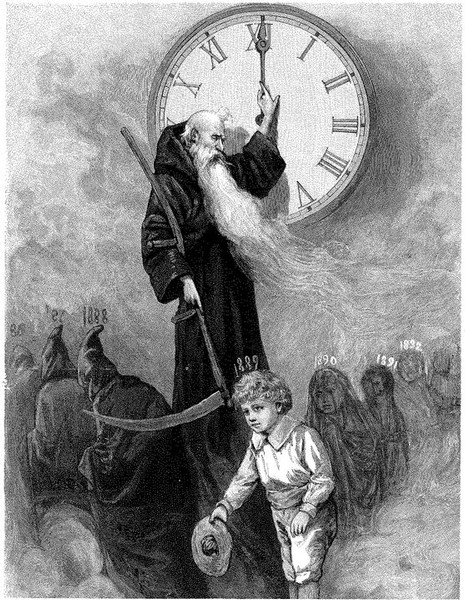
100 years ago today - the world was still innocent, oblivious of what was to come. New Year 1915 greetings cards depicted military images but traditional symbols of good luck still dominated on 1/1/14.  The First World War is a watershed in world history, but change is something that happens all the time, even if we don't notice.

The same applies in music history. On 1/1/1814, Bach was "obscure", and on 1/1/1914 Schubert's works still weren't organized into D numbers. As always the best form of armament is knowledge. "If we don't learn the lessons of history, we repeat the mistakes"

Please see "This year, I'll be wearing a poppy for the last time."

Tuesday, 31 December 2013

Happy New Year 2014 Hong Kong Fireworks

New Year Fireworks in Macau- 15 min ago


Midnight Macau time - 4pm GMT

2013 - looking back

Not so much the highs and lows of 2013 but a guess at what the year might have meant. Anniversary years bring composers mass publicity but that's not necessarily a good thing. Mahler's anniversary turned him into Mahlerkugeln. Wagner, Verdi and Britten fared rather better, though. 

This year's BBC Proms will be remembered for Daniel Barenboim's concert performances of the Ring. This summer I did a Wagner Marathon - London, Salzburg, Bayreuth. Read more here for links to individual reviews, including Herheim's wonderful Die Meistersinger von Nürnberg. True, there's been plenty of commercialized Wagner but he's a composer who resists too much dumbing down. Contrary to those who thought Verdi was ignored,the BBC has been doing Verdi all year. There's a lot of Verdi around (and some of it sounds the same - ha!). In any case The Royal Opera House and Salzburg did exceptional Les vêpres siciliennes and Don Carlo. And it was good to hear non-opera Verdi at the Proms and elsewhere. 

And then there's Britten. Russian and American audiences may think they've discovered him but there's a long, long way to go. Even in Britain, where Britten is performed and studied more than anywhere else, the composer is still an unorthodox, contradictory figure who defies simplistic stereotype. This year we've heard every single thing Britten wrote, including the juvenilia and discarded works. It's been an extraordinarily rewarding year. There is more on Britten on this site than anywhere else that's not Britten-only, so please explore. I reviewed four of the six or more War Requiems this year, and the wonderful Aldeburgh centenary performance, which was oddly ignored in the media. Knussen knows Britten musically better than most.

Opera-wise things have been stimulating, revealing a lot more about audiences than the productions themselves. Audiences scream because they want "historic" but when they get genuinely historically informed productions like Les vêpres sicilennes, Robert Le Diable and  La donna del lago, they can't recognize it. Some were outraged because the ROH  Nabucco favoured the ascetic, invisble God of Israel instead of graven images. Evidently, history got it wrong.

Excellent baroque this year, too, also demolishing myths against period-informed performance.  The baroque era was flamboyant, adventuresome and daring - should its music be the opposite Thankfully in Britain we're close enough to France and Germany where baroque practice is robust.  "If it's good enough for Bill Christie", said a friend of Glyndebourne's audacious Rameau Hippolyte et Aricie "It's good enough for me". 

Many good concerts this year but one I'll remember was Wolfgang Holzmair with Imogen Cooper, at the Oxford Lieder festival, doing Schubert's Mayrhofer songs (repeated at the Wigmore Hall). I was mesmerized by every note and every word, far too overwhelmed to write it up. Do not miss Oxford Lieder's Schubert Festival in 2014. Two extremely good recordings this year : Matthias Goerne's Eisler Lieder with Thomas Larcher, almost better than his game changing version with Eric Schneider, and Goerne's Erlkönig with Andreas Haefliger, seventh volume inn the DG Schubert series.  Read about their Wolf and Liszt concert at the Wigmore Hall to see why they are so exceptional.  I only review about half or a third of what I listen to, leaving out the very best, the very worst and stuff about which there's nothing specially worth saying. The joys of being independent !

Saturday, 28 December 2013

Shostakovich Bolt Ballet online

At last online, Dimitri Shostakovich's "lost" ballet Bolt , the famous Bolshoi production choreographed  by Alexei Ratmansky. The premiere in 1931 was greeted with vociferous opposition, and the ballet remained unknown until a complete edition was prepared for Gennady Rozhdestvensky to conduct in 1995. 
Bolt, Shostakovich's op 27a, is scored in eight movements, allowing the ballet to develop over a series of vignettes. Ostensibly, the ballet praises the discipline of a totalitarian state. Like soldiers, workers and athletes operate in well drilled formation like parts of a machine. Ratmansky adapts this to his choreography. The dancers move in tight units, their limbs jerking rhythmically like robots. In the second scene, the workers are exercising in a yard before starting work. A bureaucrat shouts "one, two, three, four" and their bodies obey. Viewed from above, the camera shows what the Bureaucrat sees - a neat, obedient ensemble. Close up (from the workers' level) we notice that one dancer gradually falls out of step. The music is lyrical, but in a mindlessly simplistic way, like folk song adapted as propaganda.  Sour trombones announce something more mysterious.  Swan Lake satirized?  The Rebel and shy girlfriend enact a tentative courtship, interrupted  by strident, violent brass and a formation of workers in red uniforms who obediently writhe in mechanical gestures as the men in white suits (the bureaucrats) beam with joy. Then, dancers in white uniforms. Have the inmates absorbed the values of the system? On cue, they shout slogans. Notice the stylized propaganda gestures - arms thrust upwards, earnest expressions.

The "hero" Koelkov relaxes with friends in a bar. Lovely opportunities for solo dancers to show their individual "personalities". The music seduces - jazz-like riffs, languid woodwinds. Femme fatale with gypsy roses in her hair looks on as Girlfriend in white enters, aghast. A bar room fight, and a thief.  Do, lowlifes believe "Property is Theft"?  A bolt is quietly produced. Then a magical interlude where the stage is dark, and lights shine like stars. The Bolt is thrown into the machine  Red smoke pours out as the dancers jerk and leap. The lights turn out to be searchlights, as in a prison yard, and the walls move into action. Night descends again, and out of the darkness, athletes appear dancing in bright costumes. Then, wonderful contraptions that look like battleships, complete with fake waves. Inside, a dancer, his or her movements constrained by the complex fusellage they have to carry. Everything in order, right.  Girlfriend dances to maniacally cheerful music., but her movements are violent. Madder still, a xylophone solo with rude trombone raspberries. When the Apotheosis comes, the stage is bathed in golden light. Trumpets announce the New Machine. The Red workers return, even more dehumanized in plastic suits with gas masks, dance a grotesque formation and head off on scooters. Are we in hell, and are the red workers demons? Whatever the first production might have looked like, that first audience must have realized how subversive the ballet really is, despite the "triumphant" finale., straight out of a totalitarian  state celebration. Perhaps the premiere audience got the irony and were disturbed.

Also watch the documentary here Bolt, avant garde kitsch which puts the ballet into context, connecting it to radical film and theatre of the period. Bolt was Ratmansky's first big success before he emigrated to the US. Will Bolt be done again at the Bolshoi  Will Ratmansky work again at this level, and in Russia?  Who knows? Perhaps it's the nature of good art to unsettle rather than to soothe. In 2006, the Marrinsky came to the Coliseum in London with four ambitious programmes - The Nose, conducted by Gergiev, a different version of Lady Macbeth of Mtensk, and a trimmed down version of Shostakovich's The Golden Age which deals with a similar theme of athletes in a Soviet system. Gergiev didn't conduct and the piece sounded a mess, nothing like the outstandingly vivid recording of the complete ballet, conducted by José Serebrier.  Get it HERE. I'll write about that later when I have more time, because it's a good companion to  Bolt. The Golden Age is better as music, but Bolt is tighter in dramatic terms.

Friday, 27 December 2013

Martha Eggerth dies, aged 101

Merry Widow no more : Martha Eggerth died yesterday aged 101. Eggerth and her husband Jan Kiepura were the stars of Central European musicals and operetta from the 1920's onwards. Hear them sing Usta milczą (The Merry Widow) HERE. Affectionate warmth from him, gorgeously elaborate coloratura from her, and then they sing together cheerfully as she decorates the lines with manic trills. That good natured happiness was their trademark : it still shines today.

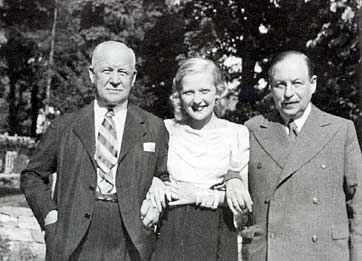
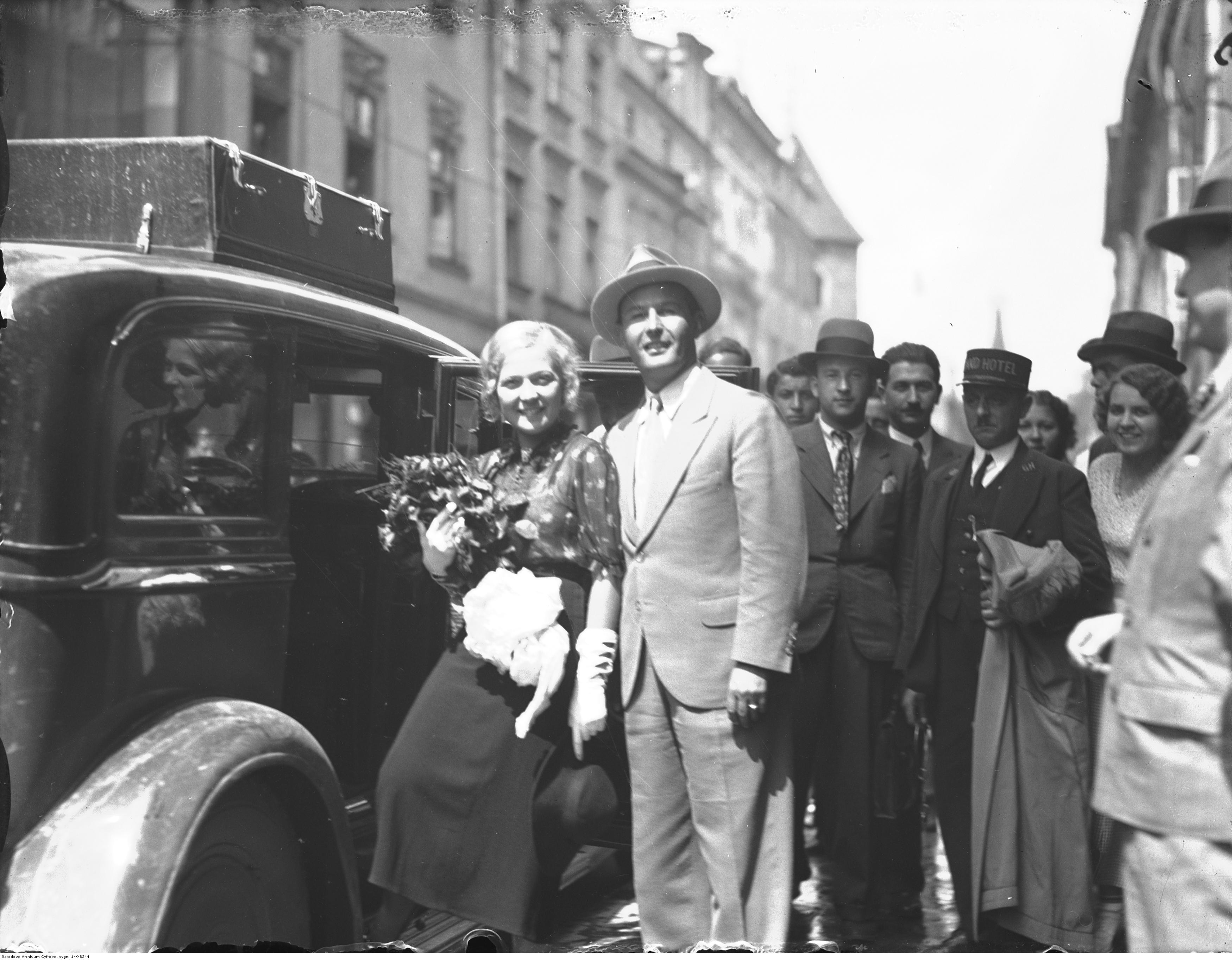
Born in Hungary before the First World War, Marta Eggerth was a megastar in 1930's operetta and musicals.  She appeared in Emmerich (Imre) Kálmán's Czardasfurstin, or Die Herzogin von Chicago  (read my review here).  She also know Franz Lehar, Robert Stolz and many others. In this photo, she's with Kalman and Lehar.  In 1936, she married the tenor Jan Kiepura and together they went on to even greater success. He was the Pavarotti and Domingo of his time, and more, ansd she the fairy-tale like symbol of beauty. Kiepura and Eggerth are also important to us now because they were artists who moved  freely between genres. No viciousness then about "crossover". Today they'd be pilloried  by media trolls. Thank goodness their work can still give us pleasure today !

In this article from the Washington Post, she talks about her life in the US. "I live in the present", she says.  Please also see my post from 2.12, "Bittersweet Polish Valentine" about the concert she and Kiepura gave on his return to Kraków in 1958. He was so popular that crowds gathered around the couple, welcoming them. Kiepura jumped onto a car and sang, impromptu. The article also contains a very rare link (off air) to the broadcast he gave on Polish radio at that time. Kiepura sing the Noel Coward song "Bittersweet", and Kiepura explains the text to the audience, who had not been able to hear English cabaret for many years.