Sunday, 2 July 2017

Schreker Die Gezeichneten - Metzmacher Warlikowski


Franz Schreker Die Gezeichneten from the Bayerische Staatsoper, Munich, conducted by Ingo Metzmacher, easily the most rewarding full performance ever. Metzmacher gets Schreker – revealing his modernity and originality.   There are many kinds of "modern". The idea that 20th-century music can only be atonal/tonal, or dissonant /romantic, is nonsense, a notion compounded by audiences who don't actually listen, but think through preconception. Schreker was a highly original composer, very much a man attuned to the creative ferment of his time, fuelled as it was by new ideas and social change.  Die Gezeichneten flows from the same Zeitgeist that produced Freud, Expressionism, modern art and literature.  In the libretto, Schreker makes a wry dig at Puccini and Strauss, meaning, I think, Johann rather than Richard, for Die Gezeichneten has a lot in common with Die Frau ohne Schatten.  Both operas, written at the same time and premiered within a year of each other, explore the nature of creative art through a lens of morbid psychology, which is a theme which runs through much of Schreker's work.  Directed by Kryzsztof Warlikowski, this production is musically sensitive and well informed, and also connects the opera to other currents in art and society in its time. This Die Gezeichneten goes a long way to restoring Schreker's true status in cultural history.

Metzmacher conducts the Vorspiel so the surging pulse heaves, as if propelled by ocean tides.  Salvago's Elysium is an island, as isolated as the man himself, surrounded by currents beyond his control.  The moon controls tides. The image of the moon appears in the libretto, intensified by musical figures that describe darkness and flickering light.  To the Greeks, the moon symbolized Athena, the goddess of art.  For Goethe, the moon symbolized chastity, inspired by his patroness, the Duchess of Weimar.  As the Vorspeil proceeds,  we see Salvago (John Daszak) , his head covered by a bag, looking towards an orb of white light that dominates the darkened stage.  Later, when Carlotta (Catherine Nagelstad) is seduced, the orb turns red (as described in the text).

Complex dichotomies operate throughout this opera, reflecting conflicts that can never be reconciled.  Ugliness and beauty, creativity and destruction, purity and corruption: thus the churning tensions in the music.  Metzmacher isn't afraid to emphasize the contrast between lush orchestration and the savage undercurrents.  Luxury is deception. Like the grotto, beauty is delusion.  Women are violated. Lust is joyless, motivated by power, money, and something even more sinister. Carlotta succumbs, as graphically described in the text and music. Wisely, Warlikowski doesn't depict the scene, concentrating on Tamare's braggadocio and the music around it. Salvago isn't as upset by the idea of Carlotta being raped as by the realization that she might have had a part in proceedings.  We see her dressed in white, her dress back to front.  The ensemble that follows isn't a trio, because all three characters are singing at cross-purposes.  No dissonance but no harmony, either.  Wonderfully astute writing on Schreker's part and well executed in performance.

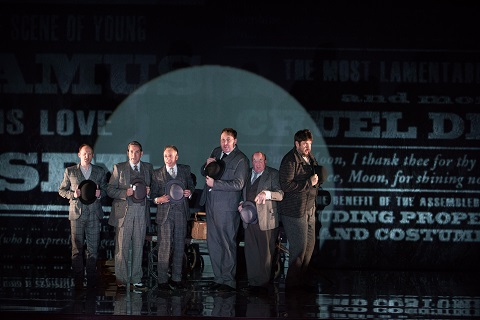
Salvago creates Elysium to please his friends, as if by creating art he can compensate for his physical ugliness. How far is he culpable when his friends misuse his grotto for evil?  Carlotta falls in love with him partly because she can see good in him, but also because she sees the potential for artistic creation of her own.  In some ways, the second act is the heart of the whole opera. Carlotta's friend paints only hands, but the hands she paints are so expressive that they can portray whole stories. Art is invention, but can reveal deeper truths.  Thus Carlotta, an artist, sees  more  in Salvago than meets the eye.  Thus scene is brilliantly depicted, with imagination and sensitivity.  A second stage appears behind the singers. At first we see what appears to be a dragonfly, which turns out to be a young girl. She has the head of a mouse.  Her family are around her, too, sometimes interacting. Humans with mouse heads. We are in Die Frau ohne Schatten territory, or rather the world of surreal symbolism that fascinated a generation familiar with Classical antiquity, discovering psychology and Jungian archetypes. Clips of silent movies appear  behind the action. Scenes from Der Golem, and Frankenstein, where a "monster" shows tenderness to a little girl, then scenes from The Phantom of the Opera and Nosferatu where the "monster" isn't benign.  Thus Warlikowski makes connections between Die Gezeichneten and other Schreker operas, with other cultural memes which confront sexuality and fear.
 
Warlikowski doesn't need to show Carlotta with paintbrush and easel.  Her painting exists in her soul.  Does she love her creation more than reality?  Why does he pull back, paralyzed with inhibition, when his wildest dreams come true as she declares her love ? Why does she, too, pull back on the eve of their wedding ? Does she intuit that their relationship will be sterile due to his inhibitions ? Does she respond to Tamaro because he's sexual, or because he has the courage Salvago lacks?  Christopher Maltman, as Tamaro, is a hunk. Salvago lives in his head, while Tamaro lives in his body. He doesn't like mirrors because they make him face himself.  But can he escape? Warlikowski's staging (sets by Malgorzala Szczesniak) hints as what is not said.  Mirrors, often distorted, appear now and again, sometimes as physical mirrors, sometimes as subsidiary characters like Mattuccia (Heike Grotzinger) and Pietro (Dean Power), usually roles so small they don't get attention, but which exist for a reason. Salvago isn't the only person trapped in games in the guise of service to others.  A wonderful touch - Metzmacher himself is glimpsed on stage from time to time, reflected in the mirrors.
 
In this production, Salvago's spoken monologue is included, which makes a difference  since it shows how he reflects on his own condition though he can't break out of it.  Though he  didn't rape women, he is morally culpable by making the violence possible,. Extremely moving, especially since Daszak delivered it with great dignity.

Schreker writes an angelus into the music before the party.  Angels appear on stage, but angels dressed in nude suits.  They (male and female) are supposed to resemble showgirls but they dance so deftly en pointe that they're clearly ballet dancers with great technique.  The wedding guests are prissy: they don't like nakedness but sex is all around.  Later a voluptuous stripper bumps and grinds beside Salvago, who doesn't notice.  Either he's too uptight or he can't see the beauty beneath her poundage.  Eventually, like so many others before her in this production, she ends up inert, in a display case, unused.

At the end, Tamare sings about a village fiddler gone mad because  the girl he loved found another man. This is a reference to a medieval legend, which pops up often in German literature and song.  Salvago asks for his cap and bells. Has he gone mad, or are he and Tamare re-enacting an old saga ?? There are so many levels in Schreker's Die Gezeichneten, skilfully blended together,  Warlikowski's silent movie clips and business suits extend what is already in the opera, though  few productions come as close to its true spirit.  Altogether, the finest Die Gezeichneten that I can imagine, full of detail and sensitive to music and meaning.  Bayerische Staatsoper productions don't usually make it to DVD, but the audio recording to get is  the one on right HERE. Lothar Zagrosek, DSO Berlin from the Decca Entartete Musik series, which is the benchmark reference. Outstanding, and even Matthias Goerne (aged 26) in a minor role.

Please see my other articles on Schreker, Braunfels and others (including Strauss), and on silent film and Weimar.

Saturday, 1 July 2017

Anders Nelsson loves Hong Kong

Anders Nelsson is a shining example of what people can do when they genuinely integrate with the community around them. Inequality exists in all societies, all round the world., it's no one's "fault", it's just the way things are.  In some situations inequality can be exacerbated by other factors.  The man in the video below is singing in Cantonese. His accent's so good you might think he's dubbed.  But it's Anders himself.  He's fluent because he integrated so completely into the community that he bridged the divides in society around him.  When he was young, he was a pop star, who we adored.  Now, he's loved even more deeply because of what he's done with his life since.  It possibly helped that his parents were missionaries, who took Christian values seriously. They were also poor, and lived among the community they served, as equals. They weren't part of the power structure.  It's all too easy to be an Eternal Tourist, enjoying the benefits of a place but not really connecting on equal terms. Anders is proof that things can change.


Thursday, 29 June 2017

Beyond the Senses: Chinese Chamber Music as Music Theatre


Perhaps the most unusual musical event in London this summer: Beyond the Senses "One Colour, One Fragrance" (一色一香) where Chinese classical music is presented as music theatre - a new way of experiencing this most eclectic form of chamber music.  It's "Atmospheric Music Theatre", pure, esoteric music, not opera, using subtle effects to extend the artistic experience.  Using the natural timbres of Chinese musical instruments, coupled with poetry, songs, music, dance and various visual elements, the performance cultivates an appreciation of the culture behind the music.
 
The Wuji Ensemble are a group of virtuoso Chinese instrument specialists who, with Artistic Director the composer Law Wing Fai ( 羅永暉), create performances which connect music with emotional expression.  Almost a new art form, this oblique, understated approach works well with the aesthetic of Chinese chamber music, where intense feelings are released in private contemplation.   In Hong Kong, the Wuji Ensemble are well-regarded.   In London, the Wuji style will be particularly rewarding for audiences who don't know Chinese music, or  those with a background in western chamber music: the basic ethos isn't really so different, though the instrumental colours will be a wonder! Beyond the Senses comes to London as part of the Hong Kong Music Series, sponsored by the Hong Kong Arts Development Council. It's a one-off event, unlikely to repeated anytime soon unless you travel to Hong Kong for more.  BOOK HERE for tickets on 15th July at the Shaw Theatre (near Euston Station) Please also see my article on the first concert in the Hong Kong Music Series, on 7th July at St John's Smith Square 

Most of the music in Beyond the Senses is by Law Wing Fai, who was the founding Head of Composition of the Hong Kong Academy for Performing Arts, where he is still composer in residence. At Stanford, he did his Masters in Composition and Electronic Music. Although many of his works are primarily in the western orchestral style, he incorporated Chinese themes and instruments.  His Chinese music is even more extensive, covering not only chamber music but also music for Chinese orchestra, choral works and opera.  He also wrote music for avant garde Cantonese art film.  A composer with an instinct for drama, a modern man revitalizing tradition.  He's in Grove and also the Hong Kong Composers Guild.

Beyond the Senses features the renowned Kunju artist Kong Aiping in her ground-breaking reinterpretation of classical Chinese poetry. Set against a serene garden, the main character Ru Yu wanders around and starts to recite and sing about the scenery around her. She eventually realizes that what she sees and hears are but illusory and unreal, and slowly comes to realize the enlightenment and transcendence of life. On the stage, amidst the light strums of the pipa and voice, all enter into a realm of meditation and contemplation.  Thus the performance begins with a recitation of a poem "Strolling in the Garden" , then travels through three scena where different pieces of music are connected by thematic images: Autumn Palette, Water Zen and Listening to the Incense, concluding in an improvisation.   For programme and list of performers, please see HERE. Below, clips of some of the works included in the Hong Kong premiere in 2015.


Monday, 26 June 2017

Alan Gilbert NDR Elbphilharmonie Orchester - the real potential


New horizons for Alan Gilbert, new Chief Conductor  of the NDR Elbphilharmonie Orchester.  This isn't an ordinary move in the game of Conductor Chess by any means.  It's a Bishop's Move, which could change the whole board. The new Elbphilharmonie and the support network behind it has the potential to change the whole game.  Read my piece Elbphilharmonie - Game Changer HERE.  Gilbert hasn't flip-flopped by any means - he's landed on his feet up and running with one of the most exciting developments in the whole industry.

Although Hamburg is Germany's second-largest city, and wealthy, the heart of German orchestral life centres on the Big Three - Berlin, Leipzig and Dresden, cities whose cultural pedigree reflects centuries of top-level patronage. The NDR Elbphilharmonie Orchester was founded in 1945, from the ruins of war, in which much of Hamburg was destroyed. It was a radio orchestra, no small thing  since German broadcasting itself has a grand tradition. With the new Elbphilharmonie building it now has one of the finest homes of any orchestra in the world, backed up by a package of other services. Even the backstage facilities are so good that other orchestras want to come visit, which also ups the game. The population of Germany is close to 82 million, and the population of Europe as a whole 743 million. Hamburg is smaller than New York,  but it's strategically placed.  If the Elbphilharmonie develops into a cultural hotspot, the orchestra is in a good position.  Gilbert's in a win-win situation.

With the new building, new frontiers. While the orchestra isn't in the league of the Big Three, or centres of exceptional excellence like Lucerne,  Hamburg could provide something unique. The gala Opening Concert honoured Johannes Brahms, native son, and  composers with North German connections, of whom there are quite a few, many of them modern.  Gilbert's interests thus dovetail neatly with European taste.  Lyons, for example, where his career took off, and where I first heard him, is progressive.  One of the high-profile international broadcasts from the Elbphilharmonie featured  Shostakovich and K A Hartmann, a Bavarian yes, but one of the most important composers of the 20th century (Please read my piece here). Germany is in a unique position in that it's culturally very diverse and vibrant, and open-minded.  That concert featured the Vienna Philharmonic Orchestra, not nearly as conservative as one might assume, conducted by Ingo Metzmacher, a Hartmann maven and one of the more interesting conductors on the circuit.  With all respect to Gilbert, he's not in Metzmacher's class, but he is audience friendly and can reach those who speak no language other than English.

When Gilbert unexpectedly announced he wouldn't renew his contract with the New York Philharmonic Orchestra, there was much speculation, since he's a NY homeboy with family connections who might, in theory, have toed whatever line was needed.  No speculation from me. But read this well-informed piece from Michael Cooper  : Alan Gilbert wanted to save the New York Philharmonic : What happened ?   All too often, commentary goes along the lines of "I like/don't like" as opposed to analysis and a basic understanding of business logistics.  Recordings are just artefacts, they aren't what happens in the real world of performance, and these days, the recording industry doesn't have a stranglehold on what reaches the market.  e need to remember that music is a living force, that never stops changing. It doesn't exist in hermetically sealed limbo.

A conductor does a lot more than conduct: he's a conduit for ideas and reflection, primarily musical, of course, but ideas that impact on human experience.   Claudio Abbado, whose birthday is today, was a communicator of genius.  Very few even come close to Abbado in terms of insight and empathy.  But Gilbert is a pretty good thinker.  Some months back, he was being interviewed by NDR Kultur (not the orchestra, but they would have heard it).  They threw a tricky question : what did he think of Donald Trump ?

Being diplomatic, Gilbert hesitated, choosing each word as carefully as possible.  "I think it's a time in which art and beauty have more importance and relevance than ever,. I hope it's not too much to say that at the heart of what we do as musicians is the search for truth. These days there seems to be a full scale assault on the principles of The Age of Enlightenment. As musiciqns, we need to assert ourselves powerfully to show that there is still beauty and there is truth in the world. I've been working with musicians, colleagues and friends to use what we do, to use the platform we occupy to make this world a better place. The thing about music is that it is an international language, and it can speak to people from all different cultural, linguistic and religious backgrounds. .... I hope that what we can offer to the world is a message of inclusion and shared humanity" (Full clip here).  

"Inclusion and shared humanity." Dangerous words, these days!  But not at all untypical of the way Gilbert's been thinking for ages, in terms of orchestras and their place in society.  Below, another, longer clip, in which Gilbert talks about the NDR Elbphilharmonie Orchester and himself (they go back together a long time).  It's upbeat, as it should be. Who knows what lies ahead ? But Gilbert and the NDR Elbphilharmonie Orchester together could be a force for good. Please also read my many pieces on arts policy, and on the new Concert Hall for London.  


Saturday, 24 June 2017

La voix humaine, Kings Place, Sarah Minns Opera Up Close


Francis Poulenc La voix humaine  with Sarah Minns at Kings Place, London, five performances from 2nd July to 20th August. It's a new production from Opera Up Close.  Booking details HERE.  Podcast HERE.

This will be sung in English, using Joseph Machlis's "official" translation of the libretto published by Ricordi in 1977. Pianist/Musical Director is Richard Black, Director is Robin Norton-Hale.


La voix humaine is a taut psycho drama demanding above average acting skills, and the stamina to hold intensity without respite for over an hour. Not many singers can pull it off well,  but Sarah Minns almost certainly can. She's an exceptionally good actress, as well as singer, and has made a speciality of operatic one-handers, including two UK premieres: Katarzyna Brochocka's The Young Wife (read more here) and even better still, Manfred Trojahn's Rilke song cycle, Insomnia, about Lou Andreas-Salomé, the mysterious woman who captivated Nietzsche, Freud, Rilke and Paul Rée.  Trojahn's piece is fairly well known in Germany, though not in Britain. It's a challenge because the action unfolds as a series of scena  based on extracts from letters rather than formal narrative.  Musically and emotionally sophisticated, and rewarding.  Minns didn't just steal the show: she "was" the show, creating Andreas-Salomé's mysterious, compelling personality to perfection.  On stage, she "became" the part so convincingly that it was a shock to see her later without costume and makeup, chatting happily like a normal person.  Art and reality!  Poulenc's La voix humaine is a tour de force, but with Minns, it should be worth experiencing.

Minns was also the star of  John Barber's Eleanor Vale at Wedmore Opera in Somerset, an opera that's strong enough on its own terms to be worth reviving. Read more about that HERE. 


Friday, 23 June 2017

Elgar - music for military band SOMM

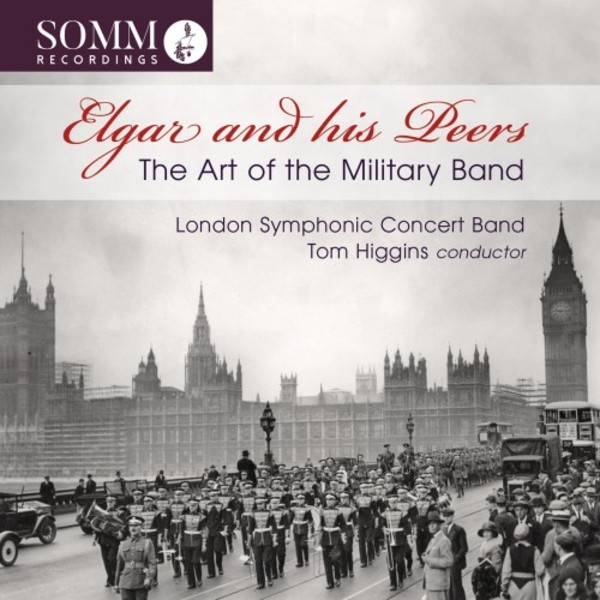
Elgar and his peers: The Art of the Military Band, new from SOMM.  Brass bands, both concert and military, are ideal for large-scale, open air ceremonies, where sound has to carry over a distance.  These requirements affect instrumentation. Brass  and military bands have huge followings, but listeners used to  mainstream orchestral performance can acquire a taste for the genre, through transcriptions like those on this recording.

Two transcriptions in this colletion, adapting Elgar's  Pomp and Circumstance op 89, nos 2 and 5, illustrate the art of writing for military band as opposed to concert orchestra.  Both are vigorous, perfectly enjoyable on their own terms.  Also included are two chorales from J S Bach's St Matthew Passion, which Elgar transcribed for brass band.  Inspired by hearing a  Bavarian brass band playing hymns from a church tower, Elgar arranged two chorales for the Three Choirs festival in 1911. These were played at the top of Worcester Cathedral before the main performance. Novelties, but also educational. 

The more substantial With Proud Thanksgiving was commissioned by the League of Arts for National and Civic Ceremonies to dedicate the unveiling of the Cenotaph in London, on the anniversary of the Armistice, in the presence of King George V and numerous dignitaries, and the choir of Westminster Abbey.  The Worcester Herald, ever loyal to Elgar, reported "It is hoped that on the unveiling every choir in London - both Church and secular - will, take part in the ceremony".  Things didn't quite turn out that way.  This new SOMM recording is a world premiere.  Elgar's original was transcribed for military band by Frank Winterbottom, Professor of Instrumentation at the Royal School for Military Music, who had also made arrangements for Elgar's The Crown of India and Seviliana   Elgar later made his own version of the hybrid for full orchestra and chorus, which was first heard in the Royal Albert Hall on 7th May, 1921.

Thunderous drum rolls mark the introduction to With Proud Thanksgiving, "Solemn the drums thrill" runs the text, taken from Lawrence Binyon's For the Fallen, which Elgar had previously used as the third poem set in The Spirit of England.  Thus the same dignified marching pace, as in a funeral procession, the long vocal,lines projected forcefully, "as the stars shall be bright when we are dust".

In contrast,  the Queen Alexandra Memorial Ode, So Many True Princesses Who Have Gone, to a poem by John Masefield, the Poet Laureate, marking the unveiling, in 1932,  of the memorial sculpture to Queen Alexandra at Marlborough House, not indoors, but on the wall facing the street . "So many true princesses who have gone over the sea.......have given all things, and been ill repaid,"  Alexandra was an immigrant, a Danish princess with German origins. "Hatred has followed them and bitter days" Masefield continued :  But Alexandra  "won our hearts, and lives within them still".  Masefield describes London as a "day-long multitude, the lighted dark, the night-long wheels, the glaring  in  the sky". Remarkably modern imagery, and a tenderness not often associated with State occasions.  Elgar's setting is thus more private tribute than public piety. Though written for large choir and orchestra, it adapts well for smaller forces, as in this transcription by Tom Higgins for wind band, where the basic instrumental colours, such as reeds and flutes prevail in contrast to the brass.

Elgar 's Severn Suite, op 87, (1930) was commissioned as a test piece for a brass band competition,  the full score by Elgar himself.  The version heard here is a transcription for military band by Henry Geehl, who lowered the key from C major to B flat, to suit the requirements of military, as opposed to brass band.  Written in five movements played without a break, it's semi-symphonic and exits also in orchestral form.  Elgar didn't write the titles describing Worcester landmarks, which were added on publication.

This recording also includes works by Ralph Vaughan Williams: Sea Songs (1923) and Toccata Marziale (1924), the latter a very interesting band version of what might otherwise be a piece for organ,  There's also a March for Band by Thomas Beecham, as composer, rather than conductor and Three Humoresques by B Walton O'Donnell , the Madras-born son of a military musician in the Indian Army.  O'Donnell joined the army himself, and became a bandmaster before joining the BBC.  Tom Higgins, who helped create the very successful SOMM recording of Elgar's The Fringes of the Fleet (more here) conducts the London Symphonic Concert Band, a new specialist ensemble, and the Joyful Company of Singers.


Tuesday, 20 June 2017

Monumental Dvořák:Stabat Mater Bělohlávek Czech Philharmonic Orchestra

The spirit of Jiří Bělohlávek, who died on 31st May, hangs over this new release of Dvořák Stabat Mater, though this recording was made in April 2016.  The piece was one of Bělohlávek's favourites,  and was played in his honour at the Czech Philharmonic Orchestra's memorial to him at the Rudolfinium, Prague, last Sunday. Although Bělohlávek made at least three recordings of this cantata, this performance reflects a lifetime's devotion to Dvořák and to the cause of Czech music.  It is a monument,  profound and greatly moving.  

"Stabat Mater" refers to the image of Mary, contemplating  Jesus, dying on the Cross.  Intense anguish, yet also reverence,  The introduction to the long first movement begins with strings, winds and horns, their lines ascending heavenwards. The theme "Stabat Mater" emerges in the orchestra at an early stage, before the voices join in. The pulse suggests the pulse of a human body. Yet, despite the intense anguish of grieving, the movement is serene.Almost from the outset, we have been reminded of resurrection, the triumph of eternal life over death. Thus the repeating ebb and flow in the music suggests a process of gradual movement.  Structurally, the Cantata resembles a kind of sculpture, the long and important first movement providing a foundation for the nine subsequent movements, the last reflecting the first on a smaller scale.  This important first movement provides the foundation for the other nine shorter movements.  Dvořák, who was devout, may also have had in mind the Novena sequences of prayers said in private silence, often devoted to the Virgin Mary Thus the fundamental mood of this piece is devotional, even serene. We all know the Pietà of Michelangelo, and how the cool, pure strength of marble forms a bedrock over which fine details can be carved.  Bělohlávek's approach was sculptural, in the sense that he showed how form and structure expressed meaning.  Beautiful playing from the Czech Philharmonic Orchestra, who have this music's soul.  Monumental, yes, but very personal and moving.

The Rudolfinium, empty after Bělohlávek's memorial
These firm foundations illuminated the voices. Michael Spyres's tenor rang like a clarion : "Stabat Mater, dolorosa", soon joined by the womanly voices of Eri Nakamura and Elisabeth Kulmann.  Jongmin Park's bass added burnished ballast.  Gradually then the quartet and choir sections give way to more defined sections for choir or choir and soloists. The Prague Philharmonic Choir are excellent - a pity that Bělohlávek could not have brought them to London, though our own BBC Singers and Symphony Chorus are superb.  In the final movement, though, all voices are united, the orchestra with them.  "Quando corpus morietor, Fac, ut animae donetur, Paradisi gloria!". the chorale "Amen" a garland of glory.  Yet note the ending, where solo instruments again ascend upwards, the last "Amen" glowing with warmth.

Please see my tribute to Bělohlávek here with lots of links. 

Monday, 19 June 2017

Schubert, Wanderer - Florian Boesch Wigmore Hall


A summit reached at the end of a long journey: Florian Boesch and Malcolm Martineau at the Wigmore Hall, as the two-year Complete Schubert Song series draws to a close. Unmistakably a high point  in the whole traverse. A well-planned programme of much-loved songs performed exceptionally well, with less well known repertoire presented with intelligent flourish.

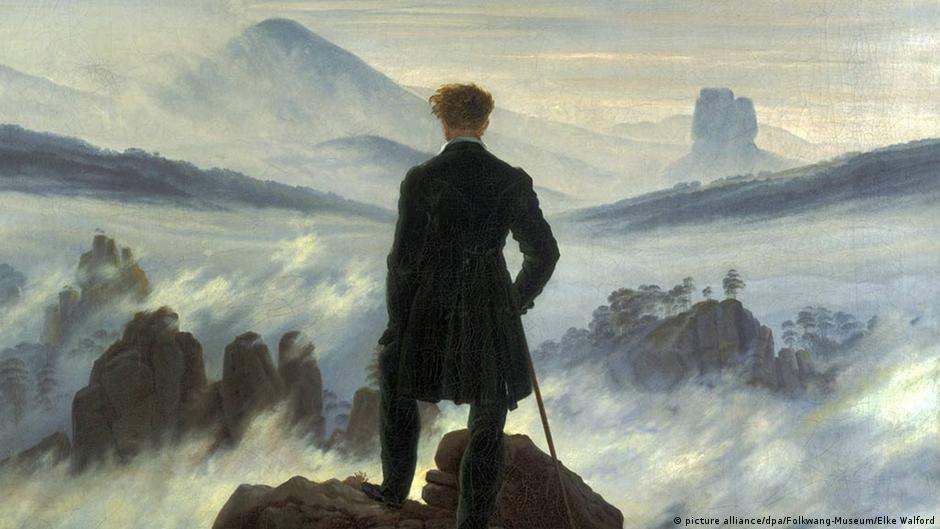
Boesch and Martineau began at the peak, with Schubert's Der Wanderer D493, (1816 Schmidt von Lübeck).  "Ich komme vom Gebirge her".  A deceptively simple phrase, but delivered by Boesch with great authority, for this song is the quintessential symbol of the whole Romantic revolution.   The song is itself a journey.  The resolute beginning gives way to desolation, then to the short, lyrical "Wo bist du, wo bist du, mein Geliebtes Land".  As Richard Stokes has written, the song "takes the form of a short cantata".  Boesch's flexibility allowed him to mark the transitions clearly without sacrificing the line.   In the last verse, his voice moved from firmness to despair, descending to ghostly whisper, so the last words rang out with anguished finality, connecting the last verse with the first. One of the most rewarding performances of  Der Wanderer I've ever heard, and I've heard hundreds.  

With its regular, repetitive lines, Der Pilgerweise D 789 (1823). can sometimes sound undistinguished, but Boesch and Martineau brought out its depths.  The pilgrim is a beggar who struggles on though "Thread after thread is torn from the fabric of his happiness". So why carry on? No mention of religious faith in this text, written by Schubert's raffish friend Franz von Schober.  Perhaps this pilgrim is the epitome of an artist, driven to create.  He's poor but has the gift of song. Boesch coloured the words with gentleness, suggesting quiet strength.   Rewarded be, those who hear the song so well interpreted.

In  Der Wanderer an den Mond D870 (1826, Seidl), Martineau depicted the steady tramping pace in the piano part, over which the vocal lines float with carefree lyricism.  In some ways, this song is the opposite of Der Wanderer.  In the context of this programme, we were looking backwards before moving forward.  I had wondered why Boesch's body language had become quite jaunty towards the end of Der Wanderer an den Mond.  This fitted the upbeat mood, but also proved a good introduction to An den Mond (D468 (1816,Hölty)  Provocatively, Boesch spoke a few words before starting. "What's this song about? Who,is dead, the girl, or the man?"  It's a curious poem, with an unidentified protagonist gazing down from the sky. Who is weeping on who's grave?  A stimulating approach. There's no reason Lieder should be grim and stiff. Perhaps this was a song Schubert played in the company of friends, enjoying themselves for sheer pleasure.  Two more happy songs: Der Zufriedene D320 (!815, Reissig) and Der Weiberfreund D271 (1815, Abraham Cowley, translated Ratschky).  The first concise and pointed, the second risqué.  From contemporary drawings, we can assume that Liederabend audiences were open minded.  Endless variety: the pious An Die Natur D372 (1815-6, Stolberg-Stolberg), with Bundeslied D258 (1815, Goethe). Schubert treats this as a drinking song, while Beethoven, setting the same text, makes connections to the drinking clubs of the time which fuelled political action. Thus Boesch and Martineau ended the set with Lacheln und Weinen D777 (1823, Rückert).  Laughter and tears - the landscape of Lieder is vast and varied.

Der Sieg D805, (1824 Mayrhofer) is an anthem, but its brave front is disguised by references to classical antiquity.  The protagonist has slain the Sphinx. The song  resumes in repose ("O unbewölktes Leben !") but the way Boesch sang the critical line "Und meine Hand - sie traf" haunted the peace with a sense of horror.  Two songs of Spring, Frühlingsglaube D686 (1820 Uhland) and Im Frühling with An den Schlaf D447 (1816, anon) and Abendstern D 806 (1824 Mayrhofer), beautifully articulated by Boesch and Martineau.

This set of songs was balanced by the final set, with Prometheus D674 (1819 Goethe) and Grenzen der Menschheit D716 (1821 Goethe) , powerful songs which Boesch can sing with authority, all the more moving because his approach can evoke more sensitive feelings. Limitations of mankind, for men are human, not gods.  Thus the unforced elegance of Boesch's An den Mind D296 (1819, Goethe and the tenderness in the two "motherhood" songs, Grablied für die Mutter D616 (1818 anon) and Die Mutter Erde D788 (1823 Stolberg-Stolberg).  It's surprising that this song isn't performed more often as it exemplifies many of the themes in this Wanderer journey.  The piano introduction is finely poised, suggesting slow footsteps "schwer und schwül".  In the moonlight, someone is being buried.  Diminuendos and a minor key, but the mood is "erhellt von sanfter Hoffnungn Schein"  Mother Earth holds us all.  Death does not triumph.   This concert was being recorded live. If it's released, this song will be one of the highlights.  Boesch and Martineau's encores were An den Mond D296 (Goethe) and Nachtviolen D752 (!824 Mayrhofer).

Thursday, 15 June 2017

The "full" Edvard Grieg Peer Gynt

From the 1876 premiere of Grieg's Peer Gynt
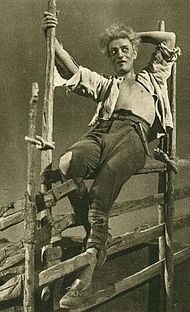
 Edvard Grieg's birthday, a good excuse to listen again to Peer Gynt op 23 in the edition by Finn Benestad from 1988, which keeps the order of the composer's score from the premiere performance in 1876, omitting the cuts made in later performances, but including Grieg's fuller orchestration from the 1886 performances in Copenhagen.   The original play by Henrik Ibsen was a Lesedrama, a play meant to be read, as opposed to being watched on stage.  The full text apparently takes five hours to act out, plus another hour or so of music - quite tiring, I presume. But in book form, you can savour the ideas without pressure, reading back and forth. Peer Gynt is an allegory that doesn't exist in real time.  Ibsen was satirizing aspects of Norwegian mentality in the period when the country was a colony of Denmark. Life was hard : the peasants so poor that many did live, like Peer, in rags, scrambling to survive by using their wits. 

Peer uses his imagination to get ahead, but he's also a rascal who scams other people, especially women, and gets scammed himself, also by women.  Peer goes to North Africa, but at heart he's the same local yokel who hangs out with trolls, whose take on reality is defiantly perverse  Whatever the Bøygen is, he doesn't overcome it so much as scam his way past. In the end, he's back where he came from.  Solveig doesn't have much sense either. She still loves the scoundrel.  Not all so different from the Troll King who feasts on cow turds and ox piss, whether bitter or sweet "as long as they're our cow turds and ox piss".  Grieg's music is so wonderful that you can blissfully enjoy fantasies of fjords, mountains and goblins, but knowing the context is even more rewarding.

I first heard the "full" edition with dialogue in 2001 when Manfred Honeck conducted it with the Gothenburg Symphony Orchestra, with Bo Skovhus, who stole the show, even from a star like Barbara Bonney.  In 2011, Marc Minkowski conducted the BBC SO at the Barbican Hall with Miah Persson,  Johannes Weisser and Anita Hallenberg.

There are numerous recordings of Grieg's Peer Gynt suites but extended versions  with text are few.   In 2005, the Bergen Philharmonic Orchestra under  Ole-Kristian Ruud recorded the incidental  music with  dialogue in Norwegian. The following year, Guillaume Tournaire conducted the Orchestre de la Suisse Romande  in the world premiere of the Perroux edition, with texts in English translation.  Hearing the music in context is important, but once you've got the picture, so to speak, it's better to hear the words in Norwegian, since the language fits the music so well. 

The Orchestre de la Suisse Romande have much more stylish polish but the Bergeners are nicely down to earth. The Bergen singers and choir are clearly native speakers, which gives their singing natural verve. On the other hand,  the "Swiss" orchestra used a professional Hardanger player, using a traditional fiddle, as opposed to a violin. This electrifies the performance, giving it a wildness and crazy freedom conventional orchestras can't quite manage.   It shouldn't be too difficult for Bergen to one day record the piece again with an authentic Hardanger fiddle.  They're sounding particularly good these days with Edward Gardner, so maybe they should revisit the full Peer Gynt.
 
Please see my other posts on Grieg, Norway, Norwegian film and Ibsen by following the labels below. 

Wednesday, 14 June 2017

Doming Lam - Hong Kong Music Series, St John's Smith Square

Doming Lam, from SCMP

Hong Kong music, and indeed most modern Chinese music, might be nowhere were it not for Doming Lam ( 林樂培), who features in the Hong Kong Music Series, the biggest celebration of Hong Kong classical music ever held in Britain.  Hong Kong is a dynamic, thriving and vibrant city whose cultural life reflects the cosmopolitan creativity that makes the place flourish, despite all odds. In in the west, people only know movies, and don't realize just how much more there is in Hong Kong arts. The Hong Kong Music Series presents five productions, four concerts and one opera, at various central venues in London from 7th to 28th July.  More details HERE

Doming Lam was born in Macau in August 1926. He studied in Toronto and Los Angeles (with Miklós Rózsa). Returning to Hong Kong in 1964, he soon became a leading figure, composing, conducting and promoting music in a city where performance is highly regarded.  With his engaging personality, he's a good communicator, almost a household name, which is more than can be said about many serious composers.  Maintaining an international presence, he's a Member of the International Society for Contemporary Music (ISCM) . He also has a section in Grove. Photo at left shows Doming Lam in  his  youth when he compered a popular classical music radio show. The keynote concert in the Hong Kong Music Series will be held at St John's Smith Square on 7 July (book HERE)   Titled  "Music Interflow", the programme  illustrates the dialogue between western and Chinese music.  Doming Lam's Three Night Songs of Li Bai  will be a highlight. It's a short piece for solo voice and piano, written in 1957, but marks a significant thread in Lam's development.

Li Bai, who lived in the Tang period, was a scholarly poet who lived in solitude, eschewing worldly power.   Many of his poems dwell on Nature, specifically the moon.  He often wrote about wine, but drunkenness provided cover for the expression of deep emotion.  In traditional Chinese society, the scholar gentry were a distinct class.. Although many had careers in public service, they didn't necessarily have power or wealth, but had moral and intellectual authority.  Chinese classical music reflects these cultural values: music for contemplation and private edification.   Effectively, a chamber music ethos.  In the 19th century, Chinese audiences embraced western orchestral music. Conservatories were set up in Beijing and Shanghai. Read more HERE about Xian Xing Hai and  HERE about Ma Sicong, two important composers from the same southern delta region that Doming Lam comes from.  Guangdong culture is very distinctive: even the dialect is based on nine tones, difficult for non-native born to master.  The advent of large, western style orchestras stimulated the growth of large ensembles for Chinese music, generating a whole new genre.  Doming Lam writes music for western and Chinese orchestras, as well as synthesizing both forms anew.  He also writes large scale choral works. Read HERE for a list of his works, with links to scores and recordings.

Clarence Mak
The concert at St John's Smith Square on 7/7 includes works by Clarence  Mak, Lui Man Shing,  Tsui Wai-lam, Mailina Tsui and Chan Man Tat, music based on Chinese aesthetics, cognizant of western influence. The programme also includes works by Britten, Quilter, Bridge and Delius.  See the connections?  Chamber music and song - refined music for reflective individuals   Conducted by Lo King Man, the performers play western and Chinese instruments. The singers are Colette Lam and mezzo Carol Lin, who will also be singing in the opera Datong ; the Chinese Utopia at the Richmond Theatre on 27th and 28th July. Book HERE.  I'll write more later about the opera, and about the concert with Chinese opera in the Hong Kong Music Series.  Both deserve more time and space !  Besides, it's not easy to come to Chinese music, even modern Chinese music, without understanding the background and unique values.  Because the English-speaking world is west-oriented, it helps to understand alternative perspectives.  There is so much to discover!   To find out more, please follow the labels below to Chinese music, Chinese opera, Chinese movies, Chinese culture and history. 

Monday, 12 June 2017

Shostakovich plays Shostakovich


Russia Day, but this year marked by a crackdown on protest and opposition.  So back to the dark days of 1941, with Shostakovich alone, without orchestra, playing an extract from his Symphony no 7.

Sunday, 11 June 2017

Aldeburgh Festival - Britten A Midsummer Night's Dream

The Mechanicals : photo credit Hugo Glendinning
The 2017 season of the Aldeburgh Festival began with Britten A Midsummer Night's Dream.  Here's a review in Opera Today by Claire Seymour, author of The Operas of Benjamin Britten : Expression and Evasion.   

Please read the article in full HERE. 


Thursday, 8 June 2017

Calypso General Election


In 2011, Parliament passed a Fixed Term Election law designed to block frivolous, costly electioneering.  So why another General Election? If the Referendum result was as binding and unshakeable as Brexiteers make out, what's there to prove?  To strengthen negotiations with the EU  at the price iof dividing the nation, stirring up hate and destroying the values that made Britain great in the first place?  There's a lot more to good government than politics. And a healthy democracy is not a one-party state.  So here's a look back at 1951, the snap election called after the 1950 election didn't secure a big enough majority for Labour.  Lord Beginner was an immigrant, who spoke patois and didn't have a posh education. But he took an interest in what was going on, and he took part.

"This is a Calypso about the General Election in Great Britain. Me, Lord Beginner, make this calypso in the style of the old minor calypso which we sing in Trinidad since many years ago"
.
General Election we had in Great Britain, caused a sensation. independents also Liberal. It was essential. Socialist was glad, Communists was sad, Conservatives did cheer at the results in Trafalgar Square.

Chorus :  But I was confused, waiting to hear the news. Me and Dorothy in the rain and the cold in the whole night Piccadilly. 

Two long days there was announced in the parties with both majorities. It was said that the King was listening, so nothing was missing, traffic could not pass, Police had a task. It was the best election I'll say, proudly there til the break of day. At Piccadilly was a grand illumination, names went up in rotation. Some said, we will get more employment, others said better house rent. Balloons  went up too, I saw  red and blue,  for Attlee supporters draw, and for Churchill who won the war 

Get the recording from Honest Jons HERE. In fact, invest in the whole 6 CD set . Calypso was social commentary as much as entertainment.