Showing posts with label Stephan Rudi. Show all posts

Monday, 26 November 2018

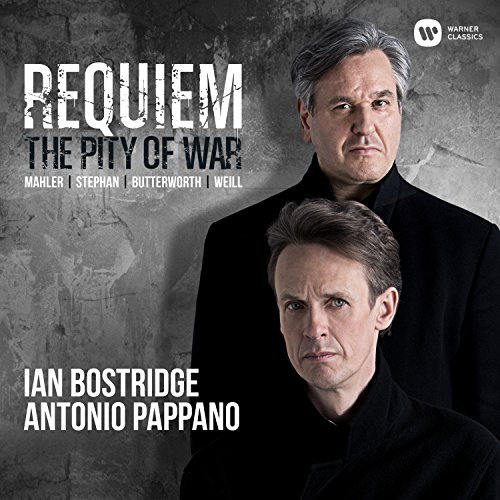
Requiem : The Pity of War - Bostridge Pappano


"Requiem: the Pity of War with Ian Bostridge and Antonio Pappano.  The inspiration came from Benjamin Britten's War Requiem, which Bostridge has done numerous times. Britten's War Requiem," he writes "seems to express in art Winston Churchill's notion of the 1914-18 conflict as the initiator of the 20th century's own Thirty Years War" since it spans the First and Second World Wars, blending the poetry of Wilfred Owen, poet of the trenches and the spirit of reconciliation that motivated the commission marking the  rebuilding of Coventry Cathedral. Thus the quotation from Owen, "My subject is War, and the Pity of War". "How might one reflect the experience and significance of the conflict" writes Bostridge "in a song recital ?". The answer might be this excellent programme, with interesting repertoire choices and approaches to more familiar material. Bostridge and Pappano, whose partnership is long and fruiful, are doing this recital live at the Barbican Hall on December 5th. The recording, from Warner Classics, is now available, well produced with good illustrations.

Bostridge and Pappano begin with George Butterworth's Six Songs from A Shropshire Lad, perhaps th best known English song cycle with a connection to war, given that Butterworth  was killed in the Somme in August 1916.  Housman's poems were published in 1896 : the war they pertain to might  be the Boer War, or colonial wars, but the connotations are not specifically military. They deal with more generalized concepts of youth and death, impermanence and loss.  Even though Butterworth collected folk song, a quasi-folk song approach doesn't necessarily apply.  Bostridge and Pappano demonstrate an art song approach, which may at first seem unsettling, but works on a more esoteric level  In "When I was One and Twenty" the last words "'tis true, 'tis true" are held open ended, suggesting possibilities beyond text. If the dynamic lines in "Look not into mine Eyes" are more extreme than usual, this emphasizes the unease that lies behind the poem : the lad "that many loved in vain" does not reveal himself, to anyone. "A Jonquil, not a Grecian Lad". "Is my team ploughing" feels decidedly supernatural.

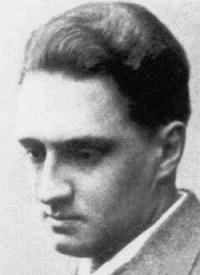
This disc is worth getting, though for a superlative performance of Rudi Stephan’s song cycle Ich will dir singen ein Hohelied. Stephan was an extremely promising composer as his best-known works, the two Musik für Orkester in einem Satz attest, his opera Der ersten Mensch being a prototype of Expressionist music theatre.  The six songs in this cycle, to poems by Gerda von Robertus (1873-1939) inhabit a world much closer to aesthetics of the period when exoticism was heightened  by an awareness of the dangers of the subconcious.  The poems are terse aphorisms, Stephan's settings concise. The nearest equivalent might be Alban Berg's Altenberg-Lieder, also from the same period (1911-12) In "Kythera", "Der Rosen Düfte liebeatmend schwingen in welchen Weilen" while the sound of aoelian harps drifts from afar. The setting floats gently, held sotto voce.  In "Pantherlied" the piano line ripples, suggesting pent-up animal energy.  The text in "Abendfrieden" is little more than a series of broken phrases which Stephan uses to create a song so delicate that it seems to hover in stillness. This oscillation occurs also in individual words like "Sonnenfeuer" which need careful shaping, but Bostridge captures the right vulnerabilty.  "In Nachbars Garten duftet" describes a linden tree, which shivers "dammerlauschig kühl". Yet this is no pastoral. Lovers embrace, but why do the poet's eyes "overflow in burning pain"?  The song is as magical as a song by Hugo Wolf, but with a kick in the tail.  The mood of secrecy continues in "Glück zu Zweien" where "in the hubbub of the crowd, we found the silence of shared feeling".  The vocal line stretches and curls, twining like "Zwei Könige wir, die finden das Reich ihrer Einsamkeiten". Throughout this cycle, tension has been building up, which finds release in the final song "Das Hohelied der Nacht". Yet again Stephan observes the fragmented nature of the phrases,  using them to proceed rapidly to the last line "Du küsst es mir vom Munde", which rises like a cry of sudden triumph.  These songs are miniature masterpieces and are done reasonably often, but Bostridge brings out the inner musical logic better than anyone else, with his intuitive feel for meaning and the curling, curving timbre of his voice.  Incidentally,  Stephan died in strange circumstances. The night before he died, he could not sleep, surrounded by the agonized cries of the wounded all around.  In the early hours of the morning, he stood upright in his trench at Tarnopol in Galicia on the Eastern Front, and shouted  "Ich halte es nicht aus!" and was promptly shot by a sniper.  He was barely 28.  

From the sophistication of Rudi Stephan to the relative straightforwardness of Kurt Weill's Four Walt Whitman Songs.  Bostridge varies the marching rhythms in "Beat ! Beat ! The Drums" with articulation that twists in protest. If  "Captain ! My captain !" is a strophic ballad, "Come up from the Fields, my Father, there's a letter" is dramatic, delivered here with appropriate portent.  The military antecedents of "The Dirge for Two Veterans" are impeccable. Gustav Holst set this text ("The Last Sunbeam") in 1914, and it was also set by Vaughan Williams (in Dona Nobis Pacem).  Weill wrote these songs after Pearl Harbor, when the United States joined the Second World War.  Like Britten's War Requiem, they help this Bostridge and Pappano programme bridge two World Wars.   
Three songs from Mahler's Des Knaben Wunderhorn conclude the programme. Again, these are not folk songs, but art songs.  Significantly, the songs chosen here are ghost songs, which suit a singer who is a superlative Peter Quint. In "Revelge", skeletons march through a town at night, and "Der Tambourg'sell" is a death knell, Pappano's piano "drumming" as Bostridge's voice rises to near-scream before descending to the low rumble of the refrain "Gute Nacht".  Best of all, though, is "Wo die Schöne Trompeten blasen" where Bostridge and Pappano capture the spookiness that pervades the song even before the girl knows what's going on. She, too, will die before the year is over.

Sunday, 11 November 2018

Germans and Britons - Leipzig marks the End of the First World War

What real heroes did when it rained in the Somme

(For my piece on Vladimir Jurowski's inspired Eternal Flame concert for Armistice day, please read here)   From Leipzig Peterskirche, the Gedenkkonzert 100 Jahre Ende ertsen Weltkreig (Memorial Concert marking 100 years after the End of the First World War) - Max Reger, Rudi Stephan, Walter Braunfels, Gustav Holst, Ernest Farrar and Samuel Barber.  Alexander Shelley conducts the MDR-Rundfunkchor und MDR-Sinfonieorchester, broadcast via BR Klassik.  It's worth watching as well as listening, as the Peterskirche was bombed during the Second World War, remaining a ruin for many years. Appropriately the concert began with Max Reger's Totenfeier, a section from his incomplete Lateinisches Requiem Op. 145a. The word "Requiem" repeats, weaving through the orchestration like an unbreakable thread, expressing the idea of a funeral procession  

Rudi Stephan's Musik für Orkester in einem Satz (1910) followed. Stephan was killed in battle on 28th September 1915, aged only 28.  It's not a "war" piece, but its initial elegaic mood fits in well . Long , exploratory lines lead to wilder animation, trumpets and other brass calling forward.  Perhaps these are military, but perhaps not, since the instruments can signify different things in different times.  Elliptical lines : watch the trombone tubes moving back and forth. An extended inner section, hushed and mysterious, with muffled pulse, strings rising upwards, the top graced by clarinet, flutes and cello, delicate bell sounds for colour.  As the piece draws to a close the strings swell and a stange, angular melody emerges. It's whimsical yet also provocative, stimulating the orchestra into epressive outburst.  After a diminuendo, the temporary stillness gives way to more invention - whistling string lines, dizzy exuberance and emphatic final chords.  Not music of defeat or disillusion.  This isn't recycled retro but intelligent and highly original, reflecting the creative ferment of Secession Munich, and possibly the "modern" Germany of Weimar art and film and literature. Stephan is definitely on the radar in Germany. There are no less than three recordings of his opera Die ersten Menschen on the market.  It's so "Expressionist" that it's not easy to follow if you're expecting verisimo and washes of colour, but think in terms of Jungian archetypes, semi-pagan folklore and so on. Indeed, the spirit of Schoenberg Moses und Aron (1932) seems to be there in germ.  Imagine if Stephan had lived : he would have felt much common ground with Franz Schreker and Walter Braunfels.  

Throughout his whole career, Braunfels was obssessed by war and the causes of war. To reinterpret his passionate anti-militarism as soft centred "romantic" is a travesty.  Be careful which conductors you listen to. In this concert, he was represented by just one song  Auf ein Soldatengrab op 26 to a poem by Hermann Hesse, written in 1915. ".....Der Jugend wandelt licht in weiten Räumen und hört der Ahnen Chor aus dunklem Quell im heligen Berge träumen".  Please read HERE for more about Braunfels' Orchestral Songs and also look up "Braunfels" on the link below.   

Gustav Holst's Ode to Death (1919) blends voices and orchestra to create lush textures which suddenly ignite into crescendo. returning again to ethereal harmonies "Over the treetops I float thee along, over the rising and sinking waves, come lovely and soothing death, come with joy!". Harps and fine, bell-like tones in the orchestra suggest transcendence.  Ernest Farrar lived for a while in Dresden, not all that far from Leipzig,  so it was good to hear him represented here.   Like Stephan and Braunfels, Farrar was a soldier though he was killed only two days after arriving at the front.  His Heroic Elegy Op 36 was completed in 1916, before he went to war.  Unsurprisngly, it is a war piece, a slow march, lit by flares of intensity : not so much a funeral march biut the long hard slog of soldiers entering a  battlefield, hearing gunfire in the distance, the inexorable tread emphasized by pounding timpani.  The ending is striking - single phrases repeated with silence between, growing ever quieter til all sound disappears.  Samuel Barber's Agnus Dei, in the context of the First World War is something of an anomaly, being Barber's 1966 adaptation of his Adagio for Strings. No ostensible 1914-1918 connectioins here other than that the text used is the Agnus Dei from the Requiem Mass with the words "Dona Nobis Pacem", which just happens to fit.  Sure the Americans entered the war in 1917, but wouldn't it have been fitting to acknowledge the French or the Belgians, Russians or Italians ?   Debussy Berceuse héroïque is about the same length, though without choir, and carries the same message : that patriotism born of love is better than nationalism born of hate.   


 . 

Tuesday, 19 August 2014

Lest We Forget Prom - RVW Butterworth Stephan Kelly Manze BBC SSO


 "They carry back bright to the coiner the mintage of man, The lads that will die in their glory and never be old." 

 A E Housman was writing about handsome farm boys going off to the Boer War. Maybe he was more concerned with the loss of their physical beauty but Prom 42 "Lest We Forget"  with Andrew Manze and the BBC Scottish Symphony Orchestra reminded us of the lost music which the three younger composers featured in this concert might have produced.

Roderick Williams sang George Butterworth's Six Songs From a Shropshire Lad.  He never disappoints. He sang with the commitment and heroism the occasion of a keynote Prom warrants. I've written extensively about George Butterworth, (read more here) so I'll just comment on the version  we heard here. It's not strictly Butterworth but a modern orchestral adaptation. Butterworth wrote two separate pieces based on Housman's verse, one for voice and piano and an entirely orchestral version, A Shropshire Lad: a Rhapsody. where the themes are reiterated. Maybe piano song doesn't work so well in the Royal Albert Hall, but it would have been wiser to pick the orchestral piece. Much as I adore Roderick Williams, I think we need to appreciate Butterworth for more than his songs. When there is enough authentic Butterworth around, can't we "honour the fallen" by  using the man's own work?

Butterworth's orchestral A Shropshire Lad would have worked better with the rest of the programme too, especially with Rudi Stephan's Music for Orchestra no. 2 (1912, rev. 1913), Stephan's breakthrough piece which won him a publisher and a lot of favourable attention. It's superb. It's full of interesting ideas, crafted together with flair: definitely a distinctive voice. Listen to the rebroadcast : this isn't recycled retro but intelligent and highly original, reflecting the creative ferment of Secession Munich, and possibly the "modern" Germany of Weimar art and, film and literature. Stephan might have given Alban Berg (also a serving soldier) a great deal to think about. Stephan is definitely on the radar in Germany. There are no less than three recordings of his opera Die ersten Menschen on the market. I'll write about that when I have time - please come back.

In contrast, Frederick Kelly's Elegy for Strings was written in memoriam Rupert Brooke. Kelly is also remembered because he was born in Sydney of Irish parents and served in Gallipoli, and is thus a figure in Australian music history. It's a lovely, elegiac piece with a good violin part, but without the character of Stephan and Butterworth.

Ralph Vaughan Williams was too old to fight in the frontline but served in an ambulance unit, experiencing bombardment knowing he'd have to go out and pick up the carnage. Vaughan Williams's Symphony no 3 "The Pastoral"  may be "about " landscape in an abstract sense, but it's even more about the strange, new landscape of the trenches. Ancient farms and villages were flattened, pitted with craters like the moon. The terrain still hasn't recovered.  RVW's ambiguous swirling tonality suggests psychic dislocation. This isn't "cowpat school", though you can "feel" the mud. It's far more unsettling.

RVWs 3rd is a companion to his 2nd, the "London" Symphony, dedicated  to and inspired by George Butterworth, so hearing the 3rd at this Prom was particularly poignant. Andrew Manze and the BBC SSO  gave a dignified account. An excellent "distant" trumpet, and nicely defined references to typical RVW themes expressing nostaglia and, well, Sensucht,  and loss. Unusually, Manze used a tenor, Allan Clayton to sing the vocal part. A male voice is probably more appropriate in the circumstances  and RVW knew his Bible well enough to know that angels were often men. The trumpet can be diffuse, since RVW was remembering a real trumpeter playing in the landscape. But the dead and dying were all too present. Clayton's "manly" tenor rang out loud and clear. No, we must not shy from the reality of war. There's violence in the crescendi, and folk tunes pop up as  ghosts. Perhaps the voice, like the violin part, loosely reminiscent of The Lark Ascending, is reminding us that life, and nature, will soar upwards from the ruins.