Showing posts with label Czechoslovakia. Show all posts

Saturday, 27 October 2018

Svatý Václav (St Wenceslaus) Czech icon in film

At the Barbican, Sunday 28th October, commemorating the 100th anniversary of the declaration of the Czech Republic, a rare screening of the film Svatý Václav (St Wenceslaus), patron saint of Bohemia.  The film was a grand scale spectacular, planned to mark the 1000th anniversary of the assassination of the King on 28th September 935. Hence two national holidays 28th September and 28th October.  Given that the saintly King Vaclav symbolizes Czech identity in so many ways why did the film fall into obscurity, only to be revived fairly recently ? It's not easily available to buy, so catch the 2010 screening in Prague  (no translation -you have to pay attention !) with the original orchestral score by Oskar Nedbal and Jaroslav Křička,or go to the Barbican where it will be accompanied by singers and musicians from Cappella Mariana, the Prague-based early-music ensemble specialising in medieval polyphony.  

Directed by Jan Stanislav Kolár, Svatý Václav is made in a cinematic style similar to Fritz Lang's saga Die Nibelung (1924) (Please read my summary here) so expect stylized acting and costumes, which in fact have their own non-naturalistic charm.  This suits the treatment, part based on historical fact, part on legend, which, given what Vaclav means to the Czech nation, is even more potent.  The film opens with a shot of a fortified castle on a hill : the home of King Bořivoj (played by the director himself) and Queen Ludmily who are baptised as Christians in 873.  As we know from Lohengrin, Christianity was by no means a given in that era.  While hunting in a forest, Prince Vratislav meets Drahomíra, who rides horses like a knight and throws spears like a hero. She's not a Christian but converts to marry him. When their son Vaclav is born, grandmother Ludmila snatches him away at birth and brings him up properly devout.  Vaclav and his brother Boleslav and sister Přibyslava grow up happily in the castle, built like a stockade from whole logs from the surrounding forests.  People dance, sing and trade with foreign merchants, but Vaclav likes praying before a cross of stone.  Even when he's helping in the kitchen, the boy prays so fervently that he burns dinner.  Not surprisngly Drahomíra, estranged from her children, plots revenge, and Ludmily is strangled to death, with her own scarf.  When he hears of his grandmother's death, Vaclav goes into action against the pagans, banging a giant cymbal as a call to arms. Panoramic shots of knights lined up on ridges above the plains, scores of footsoldiers running through valleys, trumpeters blowing horns that look like mammoth tusks.   

Vaclav also has to battle with Germans, led  by Heinrich der Vogler, whose helmet is emblazoned  with the black wings of an eagle, a metre high.  The Germans are fomidable - proper chainmail, bigger horses, but the Czechs hold their own.  Vaclav is injured, but survives. Eventually he captures Heinrich's son (rather effeminate, in this film) but instead of killing him, restores him to his father in exchange for peace.  The Czech knights are welcomed into the German court and presented with holy Christian relics.  Meanwhile Boleslav is plotting, aided by sympathisers of the old order and Drahomíra's old friend, the giant Košvan.  At a feast in the castle, pipers pipe and dancers make merry. Mead is poured from goblets, but Boleslaw plans to poison his brother. A blind harpist sings a ballad about a King showing his sons that a sheaf of staves cannot be broken, though each staff on its own can break.  When the King dies, the brothers fight and are themselves killed by enemies   Boleslav listens and pours away the poison.  Vaclav raises his chalice and prays.  He embraces Boleslav and leaves.  On the battlements, Vaclav stands alone, in th night breeze. Radmilo, Košvan's daughter, realizes that’s how saintly Vaclav might be. Boleslav is racked with anguish but doesn't stop Košvan's assassins from cornering Vaclav at the gate of the castle and killing him.  A storm blows up, so fierce that the killers are driven away. Vaclav's body rests in state.  Suddenly, the Drahomíra appears and weeps over the martyred Vaclav.  Boleslav is declared King but she blocks his path. "Matko!" he says (mother).  A glowing crucifix appears, like a miracle,  over Vaclav's corpse. Boleslav cries for forgiveness. (I think, I don't read Czech)  Svatý Václav is actually a very good movie, even without  the patriotic and religious context.  Definitely recommended.  

Please also see my other posts on cinema in this period, Czech and Weimar. For example:
 Erotikon - the drama Janacek didn't write
The White Plague - Hugo and Pavel Haas
and lots more on Hugo Haas's later work

Wednesday, 1 February 2017

Jansons, BRSO Philharmonie Paris : Mahler, Sommer, Rachmaninov

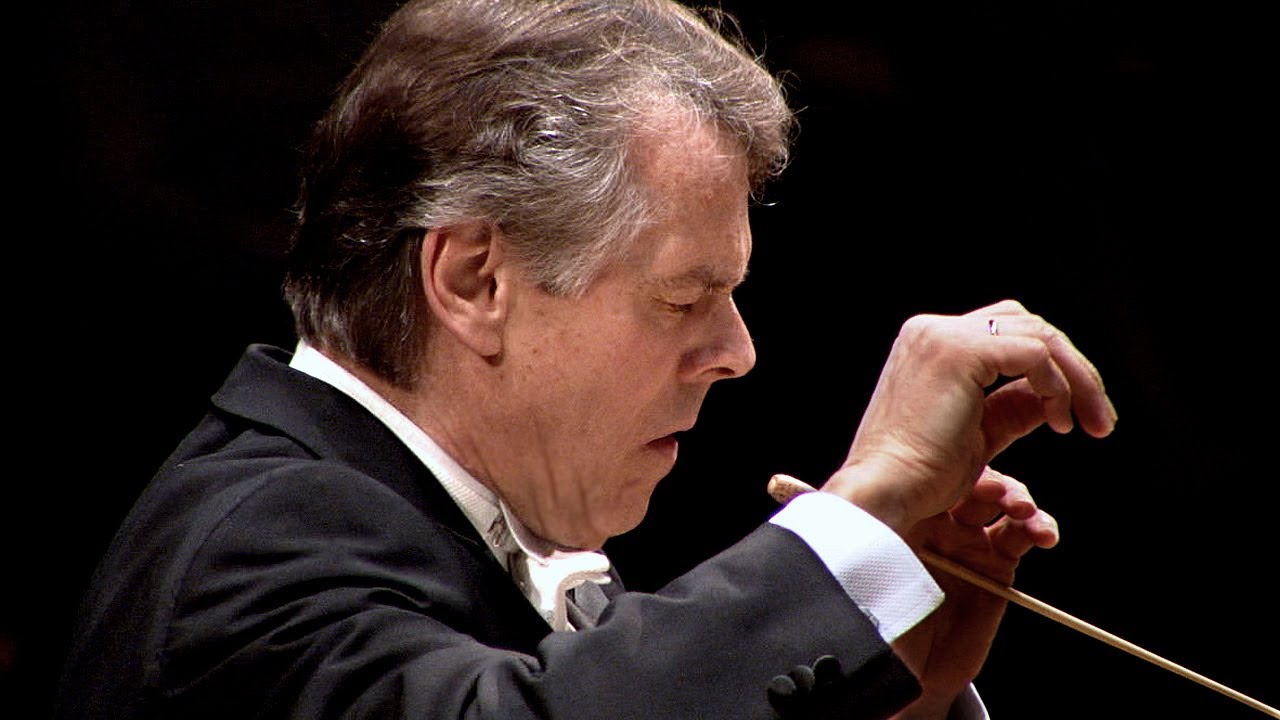
Live from the Philharmonie de Paris, in the Grande Salle Pierre Boulez, Mariss Jansons conducts the Symphonieorchester des Bayerischen Rundfunks. in a programme they'll be touring in six cities in Europe in the next few weeks.

Highlight, for me was Mahler Kindertotenlieder. Gerhild Romberger substituted at short notice for Waltraud Meier, but I was pleased, since Meier, though she's greatly loved, isn't quite what she was .In this repertoire, Romberger is superb, wiyh the sensitivity that marks a true recitalist. Kindertotenlieder deals with painful  emotions. Can there be any grief more difficult to deal with than the death of children?  The poet, Friedrich Rückert, lost two children in very short succession. He wrote from personal experience when he described looking downwards "auf die Stelle, näher nach der Schwelle, dort, wo würde dein lieb Gesichtchen sein. Wenn du freudenhelle trätest mit herein". Although the songs are so familiar that moment still knocks me out.  You don't make up details like that unless you've been there.  Yet what is striking about these songs is their sincerity.  No overblown pathos but instead an unselfconscious directness evident in the sparseness of the scoring.

As a group, the five songs of Kindertotenlieder form a prototype symphony. Meaning is thus embedded into structure. The children will not develop into adults, the cycle will not grow, but remains suspended in miniature. A solo oboe sets the plaintive tone, colours added with utmost delicacy: glockenspiel, for example, at once child-like and fragile.  Kindertotenlieder is not theatrical.  Romberger's well-modulated delivery evokes the images of darkness and light which suffuse the cycle. She sings with an inwardness that imparts her words with grave grandeur.  The turbulence in the final song is disturbing: symphonies shouldn't end with scherzo-like violence!  But then, neither should children die. Note the piling up of sibilants : Saus, Braus, Haus. Then a kind of transcendence. "Von keinem Sturm erschrecket, von Gottes Hand bedecket."  Rounded tones, tenderness, voice and orchestra cradled in a kind of lullaby.  

Before Kindertotenlieder, Jansons conducted Vladimir Sommer (1921-1997),  Antigone: Overture to the Tragedy of Sophocles (1957).  It's certainly turbulent, strings whirling like demented Furies, the winds screaming long planes of sound that shatter into frantic staccato, trumpets blazing forth.  It's dramatic, as the subject would suggest. Yet single instruments like clarinets and oboes fly above the storm, bassoon and muted trumpets leading into a quieter phase.  Purposeful blocks of sound, the call of a flute, later a small solo trumpet, muted.  An explosion of timpani, a single woodwind, then silence.  Since Sommer is new to me, I  checked out what I could,and was mightily impressed by his Vocal Symphony (1958) for contralto, speaker, choir and orchestra.  

Jansons concluded with Rachmaninov Symphonic Dances (1940)  By turns, colourful, spooky, rich and nostalgic, this brought out some very fine playing from the BRSO. This performance is also available on BR Klassik. 

Thursday, 6 October 2016

Švanda Dudák - Schwanda der Dudelsackpfeifer


At the Semperoper, Dresden, revived again this December, Švanda Dudák or Schwanda der Dudelsackpfiefer, the opera by Jaromír Weinberger (1896-1967). When it premiered in 1927, it became an instant hit, performed numerous times. Its success was cut short by the Nazi annexation of the Sudetenland and later of the Czech Republic. Weinberger, being Jewish, had to flee but the opera would have been proscribed in any case because it would have been deemed subversive.  Švanda Dudák is a nationalist work,  celebrating Czech identity. It's based on the play Strakonický dudák, by Josef Kajetán Tyl (1808-1856), who opposed the Hapsburgs and was involved in the uprisings of 1848 and thereafter.  To this day, there's a brewery in Strakonice called "Dudel" which uses bagpipes in its marketing material.

Central European bagpipes, and the specifically Bohemian Dudel, are symbolic, because they connect to folk traditions and communal music making. They'd be played at country dances, in beer halls and in local celebrations, played by individuals, often by itinerant musicians.  The bags were made of goatskin, woolly edges left hanging, and the pipes of goat horn. Goats, of course, signify the Devil.  Dancing, drunkeness, sex and individualism : a provocative mix.  Scottish bagpipes, used in mass tattoos and in battle, are rather different.

Švanda the bagpiper has just got married, ie settled down, when the rascal Babinský suggests they run away. They leave the farm for a palace, The Queen is under a spell, her heart frozen like ice.  Švanda's music brings her back to life, but when she finds out he's married, she orders his execution.  A spell that can be switched on and off, as suits ?  Švanda  escapes, by music and by magic, but then ends up in Hell because he made a silly promise to his wife.  Švanda  and Babinský challenge the Devil himself, cheating him at his own game and playing the Dudel with its uncanny powers.  Švanda Dudák is thus slyly subversive.  Švanda's music gets him out of tricky situations. He's an unpretentious Czech peasant but he has the smarts !  Not for nothing did  Smetana embed a reference to Švanda in Má vlast. 

Weinberger's opera begins with a spunky overture where trumpets blare and timpani crash : not Austro-Germanic but Slavic. The violin melody breaks free, and a swaggering theme suggests  irrepressible energy.  the horns call, injecting nostalgia, but the expansive thrust leads forward.  Although the subject is folkloric, Weinberger's style is not as distinctive as, say, Janáček,,  but not everyone needs to be a genius to be good enough to listen to. and this is certainly worthwhile.  I even relish the vaguely jazz elements, which remind us how up to date Weinberger and his audiences were.  Read more here  about Weinberger and his background with Max Reger - the Dresden connection again (see my article on Dresden and Reger here).  Švanda Dudák isn't a "rare" opera, or difficult.  Weinberger himself, who committed suicide in 1967, would have been aware of the recording conducted by Winfried Zillig in Frankfurt in 1948, which features a youthful Christa Ludwig as the Queen.  It's in German, which works very well, and is very good.  Postwar, Zillig conducted a lot of music which had been suppressed under the Reich, and his performances were broadcast on the radio, which was how Europeans then got their music, not from recordings. .  The 2012 Semperoper Dresden production is in Czech, and available on CD. There are numerous recordings of the Polka and Fugue, so popular that Leopold Stokowski considered using them in Fantasia. 
Top photo coutest Semperoper Dresdem, lower photo a bill for the first run of the opera in 1927

Monday, 5 October 2015

Hangmen also die! Fritz Lang, Brecht and Hanns Eisler


Reissued last year on DVD in a restoration by the BFI, Fritz Lang's Hangmen also Die!. (1943).  Lang worked with Bertolt Brecht on the script, which loosely recounts the reprisals that followed the assasination of Reinhard Heydrich in Prague in May 1942. The score was written by Hanns Eisler. The producer was Arnold Pressbuger.  Some of the actors were émigrés, too.  In theory,  the co-operation of so many Weimar exiles could have made the movie quite something. The film isn't quite a masterpiece though it's good and gripping. Its value lies in its political significance. It ends with the word "Not" held on screen for several moments. Does this mean "Not" as in German? Could be. But the words "The End" follow, reminding the audience at the time that the Reich was still in power, and that the struggle against Hitler must continue.

Although Hanns Eisler received one of his Oscar nominations for the soundtrack, there isn't a lot of music in this movie, which is fair enough. The subject is grim, the mood too tense for background diversion. Eisler writes a stirring introduction, heard as the camera pans over mock-up scenes of Prague. When his music does enter, it's atmospheric. In the scene in a restaurant, the music suggests dance music, though it comes over slightly distorted. No-one is really in the mood for dancing when hostages are being taken and suspects hunted down. Later there's a scene when arrested people are taken off in trucks to their deaths. It's oddly clean and antiseptic: it's Hollywood, after all.  The final screenplay used wasn't echt Brecht or Lang. The men start singing a maudlin rhyming song which ends with the cry "No surrender!". It's a far cry from Solidaritätslied but could be the kind of song ordinary people might sing, which is part of the purpose behind making the movie, which was to inspire the masses. Luckily, there's plenty of really top notch Eisler elsewhere.

By Hollywood thriller standards, Hangmen also Die! is a  movie that keeps you on your toes. I first saw it as a teenager, fascinated by Weimar and its aftermath though I didn't yet know who Hanns Eisler was, but I vividly remember the atmosphere.

Tuesday, 29 September 2015

Strange afterlives : Hugo and Pavel Haas

Pavel and Hugo Haas
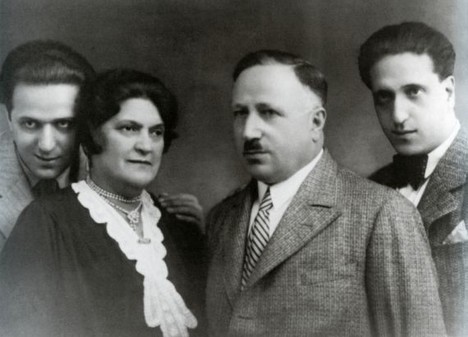
Pavel Haas and Hugo Haas : brothers from Brno who led very different lives.   Pavel, the composer, was incarcerated in Terezin and murdered in Auschwitz. Hugo, a movie star and director, far more famous in his time, was able to escape and start a second career in Hollywood. Both brothers seem to have suffered a strange afterlife in that their reputations are miscontrued. Perhaps it's the way English language sources have dominated the internet, distorting reality.

From 1919 to 1921, Pavel Haas studied at the Brno Conservatory of which Janáček  was Director. Even in those early days,  no Czech composer could fail not to be influenced by Janáček,  but any decent composer finds his or her own, original voice. Pavel Haas's String Quartet no 1 (1920), suggests that Haas was well aware of the avant garde in other parts of Europe. Janáček wasn't a cuddly personality.  Read here what Haas said of him. Haas wrote mainly chamber music and songs. My favourites are the String Quartet no 3 and his Four Songs on Chinese Poetry (1944), though look under the label "Theresienstadt" below for more.
 
Pavel and Hugo, with their parents
Hugo Haas started in the movies in 1925 and soon became a matinee idol, involved with, literally, dozens of movies of all kinds. Many of these films are still highly regarded and available, but you'd have to check Czech language sources to find them, since the English-language media seem to ignore them altogether.  Although I don't speak Czech I used to follow them well enough because the acting and direction was so vivid.  Perhaps the most remarkable of Hugo's many movies was Bílá nemoc, or The White Plague  This was made in 1937, when Hitler was threatening Czechoslovakia, but the rest oif Europe didn't seem to care. The script was by Karel Čapek, who also wrote the play on which Janáček based The Makropulos Affair. In that "Czech renaissance" (1914-1938), the arts were very much in the vanguard of social progress. And the music score was by Pavel Haas.
.
In Bílá nemoc,there's a sudden frame of a man in the howling mob outside the Dictator's palace (which is monumentalist Art Deco and filled with geometric symbols) . It's Dr Galen (Hugo Haas). There's a mysterious plague in the country, which starts as white spots on the body and kills everyone it touches. Everyone's paranoid about contamination. Galen has a cure but he's not allowed to use it because his political terms are too high. So he's only allowed to treat the destitute in Ward 13, who don't count. But those he treats, survive. Gradually the plague spreads, and the paranoia. The Dictator visits the research hospital but Galen isn't allowed near him. Galen is anti-war, and that's another form of plague. Eventually, Baron Krog, the second most powerful man in the land, gets sick and is saved when he promises to respect Galen's ideas. Galen meets the dictator. Both of them fought in the Great War, but the Dictator believes war is a good thing and Galen thinks otherwise. Soon, the Dictator gets infected too, has a change of heart, signs ceasefire documents, and summons Galen. Galen tries to pass through the howling crowds, but they confront him when he talks anti-war and they beat him to death. No-one now to stop the plague, or the war. And of course, we now know what happened when Hitler marched in a few months after the movie was made.

Being prominent, Hugo Haas was able to escape, while Pavel didn't. Via Austria and Portugal, he arrived in Hollywood where he had to begin all over again as an actor of small parts, though he had been a very experienced director and producer. Eventually he found a niche in smaller studios where he made films which are only B movies because their budgets were small. Many of them have the characteristic flavour of his earlier career when he was as big at the box office as the glitzier stars of Hollywood.  Watch, for example, The Other Woman (1954) in which Haas plays a film director who *used to be something in Europe", as an extra whispers. His boss insists he should be more "American". "Movies for kiddies?" snorts Haas in contempt. He gives a wannabe a chance, but when she blows her lines, she blackmails him. She's a  twisted loser but destroys him. Eventually she's found strangled, but by then Haas's life is ruined. The last frame ends as the first, where Haas is seen screaming from behind bars. First time round, he was showing actors how to emote. this time, it's him behind bars for real.

Pavel Haas, wife and daughter
Pavel Haas made movies, too, since he wrote several film scores for Hugo and the Czech cinema industry. Ironically, the film in which he actually appears, as himself, was the Nazi propaganda film glorifying the joys of Theresienstadt. He conducts his Study for Strings with an orchestra made up of camp inmates. The fragment is short but potent - the kinds of  "modern" music Nazis don't like. Hugo's son Ivan,incidentally, appears in Hugo's later films, in small roles. Maybe he gets overlooked, but not by those who care about Hugo and Pavel Haas and the world they knew.

Wednesday, 13 May 2015

Má vlast and China : Smetana's role in the modernization of China


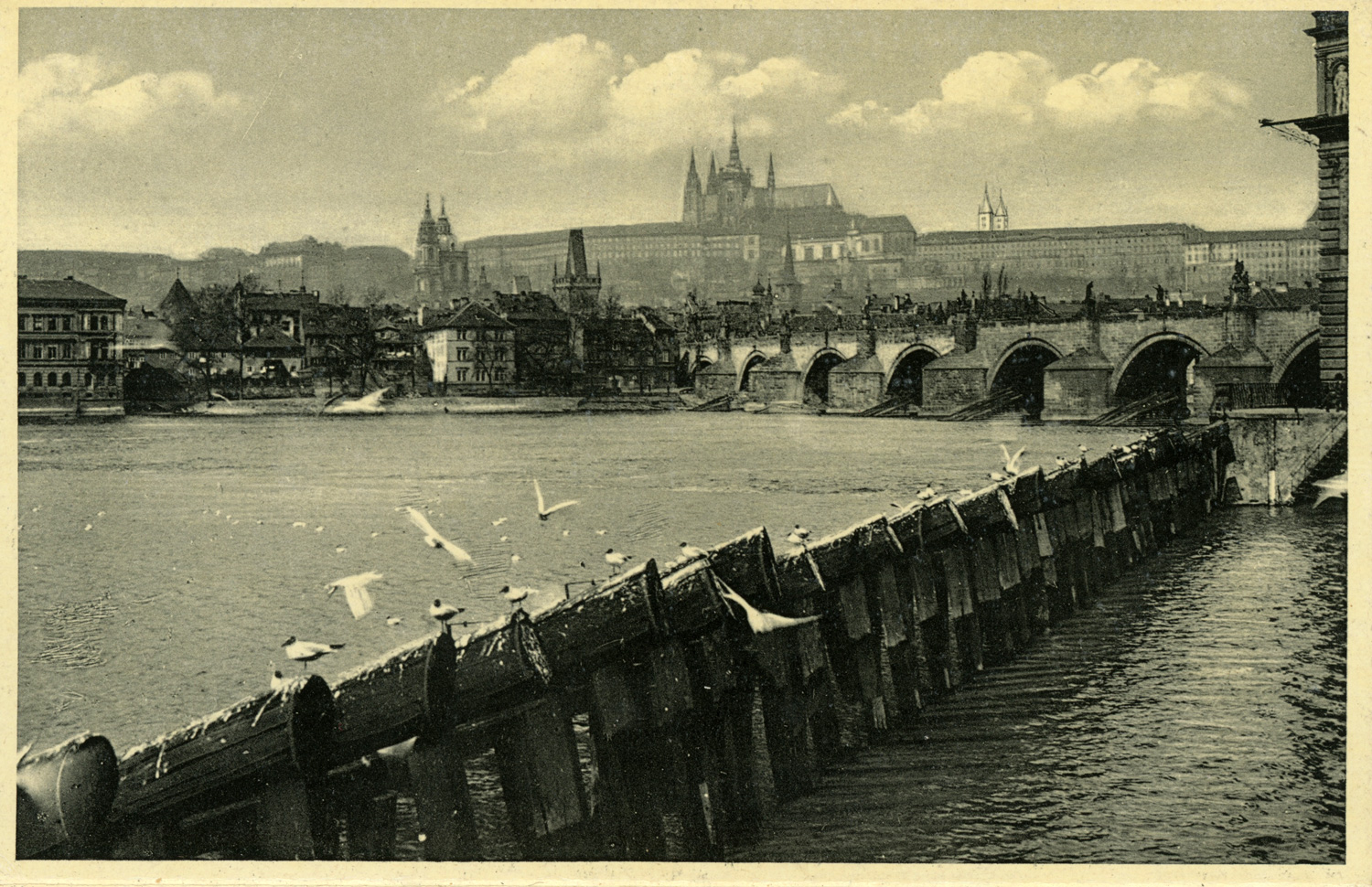
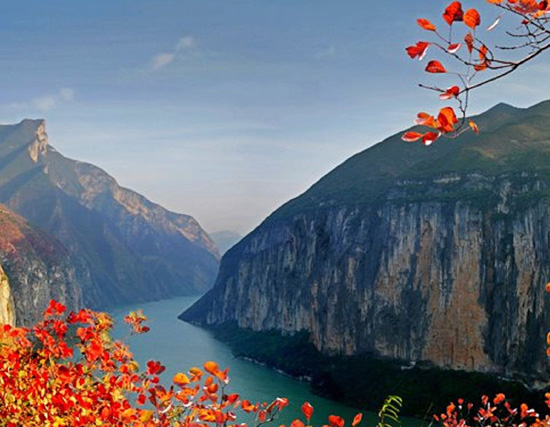
Smetana's Má vlast was inspired by images of Bohemia, its landscape, and its history. It's much more than a "scenic route" . The original images may be specific to Bohemia, referring to the Hussite uprising, but, translated into abstract music, they convey deep, universal emotions, which transcend place and time.  Thus Má vlast was one of the most popular pieces of music in China.  It expressed the same feelings of national identity that were so critical to the modernization of China. Just as the Vltava flows through Bohemia, the Yellow River (the Huang He) flows through China.  Chinese civilization began on the fertile basin beside the river, rather like Egyptian culture flourished around the Nile. Yet the river twists in a strange course causing catastrophic floods. "China's sorrow", at once the source of prosperity and suffering.  Further south, the Yangtze flows through central China, from the Himalayas to Shanghai, with an equally great impact on the development of China.

The Huang He symbolizes Chinese identity: hard working, enterprising, resilient, undaunted by encroachments and hardship.  So it's perhaps no surprise that Má vlast meant so much to Chinese people. In the early Republic, especially after the May Fourth Movement, education drove modernization.  Chinese intellectuals believed that change came through changing hearts and minds, by education, learning and the arts. Even the Communists espoused this ideal, until the grotesque upheaval of the Cultural Revolution. Considering that China had to break from over 4000 years of feudalism, it's quite amazing how much has changed since 1911.  Although no-one has collected all concert programmes and broadcast data, anecdotally, Má vlast had a huge impact on the modernization of China. Listeners who might have no idea of Prague could connect to its surging emotions and visualize rivers closer to home.  

The popularity of Má vlast  led also to the popularity of other Smetana works.  The Bartered Bride, for example, was allegedly the most performed western opera in China.  When I was a kid, I thought it "was" Chinese though it wasn't Chinese music.  I'm old enough, too,  to remember when arranged marriages were still common, . Such is the universal power of music that it can reach millions of people as long as it captures their imagination. That's what's wrong about current music education in the UK: it doesn't deal with imagination or with the human soul.   

Please read my review of Dalibor at the Barbican HERE 

and my article Yellow River Cantata


Sunday, 3 May 2015

Smetana Dalibor Barbican Bělohlávek


Jiří Bělohlávek's annual Czech opera series at the Barbican, London, with the BBC SO continiued  with Bedřich Smetana's Dalibor.  Bělohlávek has done more than anyone to bring authentic Czech music to Britain, and to the BBC Symphony Orchestra, where he was Chief Conductor for many years.  They've got the idiom under their skin, now, and for Bělohlávek they played with expressive vigour. Smetana has been called "The Father of Czech Music", for he was the first to embrace characteristic Czech folk style, fused with the bright, sharp syntax of the Czech language. Dalibor is a particularly important milestone, since it's explicitly nationalistic.  though disguised as folklore. The Hapsburgs ruled Bohemia from Vienna, and after 1848 clamped down on what they saw as sedition.  Dalibor took part in an uprising, destroying a castle and killing the burgrave. Although Smetana downplays the politics (to escape the censors) the message of Dalibor is loud and clear: Czechs love music, and with music they shall triumph over repression.

Dalibor is a hero: "Dalibor! Dalibor" the chorus (the BBC Singers) rings out with fervour, picked up wordlessly by the orchestra throughout the opera. Jitka, a country girl (Alžběta Poláčková) tells us how he saved her as an orphan. Already though, we have a hint of his otherworldly purity. She sings as though she's describing a saint.  Wonderful "processional" music marks the entry of Vladislav, the Czech King (Ivan Kusnjer). Bělohlávek has been bringing the top singers from the Prague  National Theatre, which he's been conducting for years, so these singers are now greeted in London as if they were familiar friends.  Besides, they can sing Czech repertoire better than anyone else. Kusnjer's voice rang with dignity. Like Pontius Pilate, this King doesn't want to kill, but  Milada the Burgrave's sister wants revenge.

Dana Burešova sang Milada. She's another much-loved regular visitor.  She sang the female lead in The Jacobin, The Bartered Bride and most of Bělohlávek's other London performances of Czech opera.  Milada is a forceful lady, and Burešova's magnificent singing does her justice. The part calls for great vocal control, for the lines ring out with the intensity of a trumpet call, though  Milada's femininity is underlined by lustrous harp. Later Milada disguises herself as a harp-playing minstrel to charm her way into the prison.

Dalibor himself (Richard Samek) is more of an enigma. He killed the Burgrave because the Burgrave killed his friend Zdenek, who doesn't appear in the opera, but lingers, ghost-like, in the strings. Zdenek was a violinist, and Dalibor's love for him is so great that he'd rather be dead than live without him. Nonetheless, when he meets Milada, his love suddenly switches to her (on Zdenek's musical messages). Dalibor's a violinist, too. We don't hear him play but we hear the violins in the orchestra surround him in a halo of sound.  The smooth legato in his part suggests a bow gliding over strings.  Beneš the jailer ( Jan Stava), also a violinist, lets him have his old instrument to pass the time, which Milada delivers. The violin is thus the means by which Dalibor could escape from the dungeon. If he wished, of course, because he doesn't. When he's caught by Budivoj (Svatopluc Sem, another regular)  and told he's to be executed, he's meekly accepting. Perhaps he knows that his real secret weapon isn't his life but his music.

"We Czechs love music" the text explicitly states, so the whole opera is a coded protest, though the Hapsburg Empire ended only with the end of the First World War. Dalibor is wildly popular in Czech-speaking areas but the message is universal. When Gustav Mahler conducted Dalibor in Vienna in 1892, he may also have been making a private statement.  Mahler was a boy from small town Bohemia, where his father had followed the same profession as Smetana's father had done nearly 100 years before. Unlike Smetana, Mahler made it to the capital of the Hapsburg empire, chosen and protected by the Emperor himself.  Much is made of Mahler's use of Ländler, reflecting the sounds he would have grown up with in a German-speaking area in the provinces.  Mahler had been writing since his teens on themes connected to Des Knaben Wunderhorn, even writing his own poems. Almost certainly he would have been aware of Smetana  In Dalibor, for example, Jitka and Vitek (Aleš Voráček) sing a love duet which could come straight out of Wunderhorn, though it's clearly Czech. Dalibor is clearly inspired by Beethoven Fidelio, although musically it's very different. But might Mahler have thought of Dalibor when he wrote Das  Lied des Verfolgten im Turm with its passionate refrain,  "Die Gedanken sind frei! "
Photos: Roger Thomas

Thursday, 2 April 2015

Major Alphonse Mucha retrospective UK


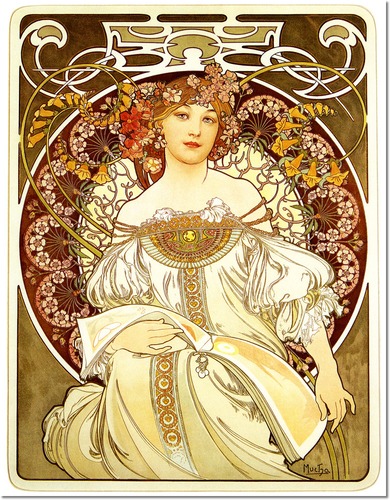
Alphonse Mucha : In Quest of Beauty, a major retrospective, comes to Britain. It will explore Mucha’s idea of beauty – the core principle underlying his artistic philosophy. "Featuring works mainly from Mucha’s Paris period, the exhibition will examine how Mucha’s distinctive style, popularly known as 'le style Mucha' in Paris, evolved and became synonymous with the international Art Nouveau style. The exhibition will also look at how his artistic philosophy is reflected in the development of his work beyond the ‘Art Nouveau’ period, with examples of works produced after his return to the Czech lands in 1910."

"The exhibition will make links between Mucha's work and philosophy and the Art Nouveau environment and Aesthetic collection of the Russell-Cotes Museum. Sir Merton Russell-Cotes's Bournemouth residence, built in the 'Art Nouveau' style as a home for his Japanese and High Victorian art collections, is an expression of the 'cult of beauty' - a notion celebrated by followers of the Aesthetic Movement in Britain. It will provide a fascinating spiritual backdrop to Mucha’s art."READ MORE HERE.

Mucha worked at a time when the lines between commercial art and fine art weren't quite so separate: think Toulouse Lautrec, Aubrey Beardsley. Mucha's art blends strong formal structure with elaborate inventive elements. Often his symbols come from Nature - the fertility of plants, the concept of constant growth and multiplication. The women are provocatively sensual, but unattainable fantasy.  It's elaborate in a 19th century way, but with the freshness of 20th century sensibility.    This, I think, creates an edgy tension which lifts it above the merely pictoral.

Mucha's son married Vitezslava Kapralova, the composer, about whom there's a lot on this site (follow the labels below) . Please read my article "Vitezslava Kapralova : Remarkable Woman, Remarkable Times", on the cultural renaissance in Czech culture between 1918 and 1938.

Monday, 16 April 2012

Bernarda Fink Dvořák Wigmore Hall

The Wigmore Hall Dvořák series culminated in a concert by Bernarda Fink and Roger Vignoles. Fink is the foremost Dvořák mezzo around. Her recordings (some with Roger Vignoles) are benchmarks. So it was a surprise that the Wigmore Hall wasn't packed out. Maybe it was the Friday 13th factor, maybe it was Easter when people are out of London. Perhaps, ironically, it was the simple fact that Fink's Dvořák and Brahms are so well known; audiences forget how live performance is nothing like recording.  Fink is a natural recitalist (not all singers are, even if they're good). She smiled graciously and sang as if she was singing for a private gathering of friends. That's aplomb! Dvořák and Brahms songs aren't meant for flashy display. Bernarda Fink makes them feel personal, as natural as on- to-one conversation.

The recital was preceded by a talk by Professor Jan Smaczny. Talks and programme notes these days are often inept filler, but Smaczny is in an altogether different league. He's a genuine scholar with first hand, original knowledge. He speaks about Dvořák's manuscripts with the authority of someone who knows them well. "Dvořák used them like a diary, noting daily events in the margins". Many Czech specialists don't communicate well in English, so our perceptions are shaped by anglocentrism. Smaczny understands the context of Czech culture and Dvořák's part in the evolution of Czech music. We don't hear Smaczny often enough in London but should. This is the sort of quality the Wigmore Hall should embrace.

Dvořák's orchestral music is permeated by his affinity for song. As Smaczny says, songs "were pivotal to his developing musical style,  and frequently gave notice  of important changes of direction  in his expressive language". Thius it was good to hear Fink and Vignoles start with Dvořák's Six Songs From the Queen's Court Manuscript op 7 (1872). The texts were based on what were believed to be authentic medieval sources, but were modern invention. No matter, for they inspired awareness of Czech national identity. The poems are pastoral, like imitation folk song. Gentle, rolling piano creating a pleasant background to the sharp sibilants in the words. The warmth in Fink's voice complements the images of summer and youth, yet she catches the undertones of sorrow. Sensucht, one might say if the songs were German.
 
Yet in the last song, "Jahody" (Strawberries) Dvořák becomes much more adventurous. Fink captures the strange unresolved tension in  the first strophe. A girl has been gathering strawberries but a thorn has cut her foot and it's infected. She can't walk and her lover is angry. The piano part describes his impatience and the sound of his horse galloping off, taking the lovers to another place where they snatch a few moments of love, before dashing home again. With its sudden changes of pace and mood, the song is unsettling, almost a miniature opera. Fink expresses the urgency and fear that makes the song dramatic, without overdoing the "voices" or excess histrionics.

Brahms's Deutsche Volkslieder (publ 1894), are similarly art song masquerading as folk song, so Fink and Vignoles performed four songs, a sample of Brahms's two large collections of Volkslieder that aren't actually Volkslieder. Mature Brahms and early Dvořák don't really compare, but Fink and Vignoles followed these with five of the ten Dvořák Biblical Songs from op 99 (1894) (no.s 1, 2, 3, 8 and 10) to even the score. One instinctively thinks of Brahms's Vier ernste Gesänge (op 121 1897) which of course was written for low baritone, That's an idea, programme them together with different singers.

Bernarda Fink has made Dvořák Five Biblical Songs one of her trademarks. She sang it at the high profile Dvořák anniversary concert in Prague Castle in 1991. (read more here and listen to a clip). She's sung these songs many times at the Wigmore Hall, so if her performance on this occasion wasn't as compelling as usual, it evoked many good memories. 

It was good to hear how Slovenian contemporaries of Brahms and Dvořák approached song in their own language. From what we heard this evening, Benjmin Ipavec (1829-1908) and Anton Lajovic (1878-1960) wrote pleasant though undistinguished Biedermeyer. Lucilan Škerjanc (1900-1973) though, is more cosmopiltan and original. In "Evening Impression", Fink's sensitive phrasing and upward soaring lines created emotion and shape. The poem, by Igo Gruden is lovely, even in translation. Fink and Vignoles make a case for it as mainstream repertoire. To hear more, there's a recording by Fink and her brother Marcos ( a bass baritone), both native speakers, on Harmonia Mundi.

Fink and Vignoles performed another set of Brahms songs, including the wonderful Von ewiger Liebe (op 43/1 1894) before returning to Dvořák In Folk tone (op 73, 1886).  Perhaps Fink had been waiting for them, since her singing  now moved from attractive to truly inspired. These songs are sophisticated in the best sense. Moods change swiftly, hinting at submerged meaning, tantalizing the listener. Fink's keening legato gave the first song, a lullaby, a searching edge that made one realize it wasn't about a baby. The piano part, too, is unashamedly sensual.  In the second song, a girl is scything and sees her forner lover. The piano sounds bright and optimistic, but the vocal part breaks into strident staccato "Šuhaj, šuhaj z druhej strany". She taunts him fiercely, but inside her heart is breaking. Fink repeats the final line "už si v mojom srdci riastla"  wistfully, with great tenderness. Simiarly, the lilting piano in the third song sounds happy, but the firm deliberation in Fink's voice suggests that this steel has been forged through fire. More defiance still, in the final song where the piano prances like the swift pony. Fink's voice dances along too, but Dvořák uses the sharp Czech sibilants to suggest the "arrow" which cuts through the lover's heart.

More soon in Opera Today. 

Monday, 6 February 2012

Dvořák - The Jacobin Bělohlávek Barbican

In advance of the new Rusalka at the Royal Opera House, the Barbican and the BBC Symphony Orchestra brought Dvořák's  The Jacobin. While not really "rare" (a friend has seen 5 productions, including Prague). The Jacobin isn't standard fare, but enhances Dvořák's other works. This performance conducted by Jiři Bělohlávek was exceptionally vivid, almost eclipsing Jiři Pinkas's acclaimed recording. When this gets broadcast  and released on CD, it will set a new benchmark. 

Right from the prelude, it was clear that Bělohlávek's vision of the work is passionately inspired. Angular rhythms sharply defined, reflecting the pungent, sharp consonants of the Czech language. More significantly he doesn't soften the wayward crosscurrents, but understands why they're fundamental to the meaning of the opera. Its subject is radical - the overthrow of oppressive regimes. Even Pinkas had to be careful in 1977 when his recording was made, under the communist regime. Now Bělohlávek can reveal The Jacobin in its true colours. 

The opera is set in a Bohemian village where the local ruler controls all aspects of the peasants' lives. Dvořák makes much of church and children's choirs, for they represent the population, subservient to authority, acting as a group without independence. The photo shows a castle in Bohemia, perched above the village below. But it's almost 1789, and far away in France, revolution is simmering. So the Jacobin is a threat to the cosy, paternalistic system, especially because he's an outsider from far away. Or so the locals think. But he isn't. The dangerous stranger is the son of Count Vilém, but the Count's mind has been poisoned by Adolf, the usurper. Dvořák was writing at a time when Austria ruled Czechoslovakia, and nationalist sentiments were running high.  So The Jacobin is inflammatory, with its suggestion that the natural order has been encroached upon. Under the Nazi occupation of Czechoslovakia, "Adolf's" name had to changed, but the same principle applied in Hapsburg times. Bohuš, the Count's only son, the maligned "Jacobin" is the next legitimate ruler.  

Dvořák writes gloriously folkloristic colour in order to emphasize Bohemian identity. Indeed, it's so vivid that the opera might easily be dismissed as bucolic fantasy. But Bělohlávek's approach shows how much more there is to this music than quaintness. This is Dvořák, the composer who engaged with the New World, who connected to what was happening around him. Beneath  the picturesque surface, life could be savage. the authorities acted arbitrarily. The Burgrave Filip threatens to have Jiři, his rival in love, conscripted. That wasn't an empty threat as local authorities exercised that kind of power, which often meant death. Later, the Stranger (Bohuš in disguise) gets arrested and could easily have been disappeared forever. So the dark edge to Bělohlávek's interpretation is absolutely perceptive, the dissonances and countermelodies expressing the turbulent upheaval essential to meaning. 

Yet the energy Bělohlávek gets from his orchestra and singers also reflects the subversive humour in the opera. The subplot revolves around Benda, the music teacher, who is a failed composer, much more obsesssed by getting his performances off the ground than in what's really going on round him.  He stops the Burgrave from conscripting Jiři, not because it's a cruel abuse of authority but because he needs a tenor for his music! Wry self mockery on Dvořák's part? This opera isn't about the power of music as such, but how that power is used.  Benda's daughter Terinka is in love with young Jiři, so they have to hide their love by pretending to sing a duet. But when Benda looks at the sheet music, it's clear they aren't following the script.  The Jacobin's wife, Julie, uses music even more proactively.  Her husband is in prison and could be killed at any time, so she sneaks into the castle and plays the harp and melts the Count's heart.  Bohuš isn't a Jacobin, she says, but a Girondist on the run. That's OK then, says the count, and father and son reunite. Adolf is ousted and the succession will go to Julie's children "who have never known their native land". Fabulous rousing finale! 

The female roles in the Jacobin are crucial, for it's the women who are proactive, not the men. We don't know why Julie was such a threat that she was the reason the Count kicked out his son in the first place, but she's the one who has saved Bohuš in exile and now saves him again, by pluckily hiding in the old Countess's room ("where nothing has changed")  and plays the harp melody which melts the Count's heart. Dana Burešová is a principal of the National Theatre in Prague, where Bělohlávek regularly works. She's now familiar in London, because Bělohlávek has made it his mission to bring Czech repertoire to this country, and .Burešová shows how much better it is when sung idiomatically, in its own language.  

Indeed, Dvořák emphasized the female presence by adding the aria "In autumn's hazel shrubs, love no longer gives glory".  It expands Terinka's role in the plot immeasurably because it's so beautiful, and lovingly sung by Lucie Fišer Silkenová. Even the old wet nurse, Lotinka (Lynette Alcantara) is pivotal, though she hasn't much to sing.

Svatopluk Sem created a darkly brooding, assertive Bohuš. He, too, is a leading figure in Prague. Jaroslav Březina isn't Benno Blachut, but then, no-one is, and Březina's extensive experience created a Benda with real depth of character, very impressive. Jan Martinik's Count Vilém covered a wide range, emotionally and musically, and Aleš Voráček's Jiři was fresh and pert. Jiři Hájek's Adolf was creepily sinister, not an exaggerated stage villian but a man of sly menace, true to the role. Jozef Benci's Burgrave Filip was very good. Filip is ponderous, stupid and slime, but Benci shows he's not fundamentally evil, just blinded by vanity and power, as so many apparatchiks are. 

How fortunate we are in London to at last have a proper connection to Czech repertoire through Bělohlávek  His role in promoting Janácek, Martinu, Smetana, Suk, and Dvořák is inestimable, because his approach is so idiomatic, non-anglicized and extremely perceptive. We're into a whole new era of appreciating Czech music. The impact of this electrifying performance was enhanced by discreet semi-staging (Kenneth Richardson) who has worked  closely with Bělohlávek  many times before. The focus is thus on the music, not the "folklore". In the finale, the choruses, very nearly fooled into denouncing the Jacobin, now praise him, waving Czech flags. "Slava! Slava!" they have been singing to the powers that be. This time, at last, Svoboda!

FULL review here on Opera Today. Please see my numerous other posts on Janácek, Martinu, Smetana, Suk, Dvořák and Czech music and culture (incl film)

Monday, 9 January 2012

Violent, explosive Má vlast. - Václav Talich


Heartfelt thank you to the reader who sent me a copy of the recent Supraphon reissue of Václav Talich's remarkable performance of Smetana Má vlast. This is no ordinary concert, it's a historic moment. It's 5th June 1939. The Germans had occupied Czechoslovakia with the blessing of the British, ending the cultural renaissance that was the first Czech Republic. Conducting Má vlast was symbolic protest and the Prague audience knew it. This performance, the second in a series, was broadcast on Czech radio, and woud have been lost forever had it not been picked up by Norwegian radio, and almost miraculously survived on a pioneer tape recording. 

It's an explosive, violent performance. Talich knows that his audience know the piece so well that they can cope with a radically different interpretation. "Our homeland", this performance seems to scream, "betrayed to Hitler"! The audience bursts spontaneously into applause between movements because they, too, are expressing rage at the situation their country faces. This isn't silly "audience participation" but part of the message the Czechs are sending the Nazis. The crowd won't stop, and perhaps some knew they'd soon be silenced forever. So listen to those roaring voices and respect.

The two final movements, Tábor and Blanik, are more than picturesque rural vistas.Tábor was the centre of the Hussite wars in the 15th century which shaped Bohemian identity. So Talich exaggerates the violence in the music, the menacing slow tempi, fast, marching tempi, thunderous timpani like cannon fire, brass that seems to spit flame. The Hussite ancestors of that audience might have used quaint muskets and leather armour. Smetana himself could never have imagined that their descendants would face tanks, planes and bombs. But it works, powerfully. Listen to the "flying" motif repeated all over the orchestra, building in confidence.

Blanik is the mountain where St Wenceslas is supposed to lie asleep until the country needs to be saved.That's the statue in St Wenceslas Square, not far from the concert hall where Talich was conducting. This final movement draws together the whole piece, the idea of the Moldau continuing to flow and fertilise the country, the Hussite hymns and the Wenceslas legend, promising hope. Then the audience spontaneously bursts into singing the Czech national anthem. This isn't a concert, it's a statement. Some of that audience would have gone home passing the statue. Few of them would have missed the significance. Seventy three years later, nearly all of them are dead but here they are preserved on tape.

This fantastic disc includes six of Dvořák's Slavonic Dances, recorded on 13th June 1939, a week after that searing  Má vlast.  Again, the performance is unusually ferocious and defiant.  Everyone is listening intently, but they are hearing more than Dvořák. So much of the way we experience any performance is coloured by what is inside ourselves. Lord no, I don't ever want to experience music in such circumstances. Nor are interpretations like this always true to the composer's intent.  But by God, we need this recording to remind us what music can mean.

---------------------------

Talich (1883-1961) was a key figure in music circles during the first Czech Republic, a friend of Josef Suk, and of Leoš Janáček, several of whose operas he premiered. Had he been American, German or British, he might be a household name. Talich's reputation isn't what it might be, thanks to internal Czech politics at the time. He didn't get on with a key politician who became culture minister in several governments and was able to stifle those he didn't like, among them Janáček. This politician is caricatured in Janáček's The Excursions of Mr. Brouček (which also refers to the Hussites).  After the German surrender, Talich walked back to Prague and was promptly arrested for collaboration. There was no evidence and he was released but Talich's career was blocked. Irony isn't it, that when even the Nazis couldn't completely silence Czech artists, some toadying beetles managed quite well.

Please also read Kapralova - songs of Czech Independence, Bílá nemoc - Hugo and Pavel Haas (Czech anti-Nazi film) and of course lots on Janáček, Smetana, Dvořák, Suk and many, many others suppressed by the Nazis. Interesting too that Má vlast was one of most popular pieces of music in 20th century China. Maybe they were responding to it like Talich did, though with different cultural landmarks?

Thursday, 15 September 2011

Hans Krása at the West Wycombe Chamber Music Festival

That's Hans Krása (1899-1944). The occasion this photo was taken? It's a still from the Nazi propaganda film glorifying Theresienstadt, the model camp where inmates could live happily and healthily and make music. Krasa is listening attentively to Karl Ancerl conduct the Theresienstadt Orchestra. Everyone knows darn well they're being used but it it buys the camp time, what choice do they have?

Great opportunity to heard Krása's Passacaglia and Fugue plus Tanec for String Trio at the new West Wycombe Chamber Music Festival. There are two festivals with similar names but this one's strictly chamber music, and new. It's run by Lawrence Power the violist, familar to many from his work with the Nash Ensemble. Other Nash players included are Paul Watkins, Annabelle Meare and Stephanie Gonley. Also taking part are Anthony Marwood, Simon Crawford Philips, Bjørg Lewis (Mrs Paul), and Guy Johnston. Chamber musicians interconnect through many different networks. The Nash Ensemble played these two Hans Krása works for string trio at the Theresienstadt/Terezin Memorial weekend at the Wigmore Hall in June 2010. Read more about that here and use the "Theresienstadt" label on the right.

West Wycombe is on the western outskirts of High Wycombe, so is easy to reach by car up or down the M40/M25. Famous for the 18th century Hell Fire Club. Good 16th century pub on the main street (or was), so you can make a day of it. Lawrence Power grew up near there, I used to live there once too. Nice place.Musically, though, it's bound to be worth going to just for the concerts, as these are among the best players in the country. Also on the programmes, Dvorak, Brahms, Schumann and Shostakovich. More details HERE.

Thursday, 1 September 2011

Bílá nemoc - Hugo and Pavel Haas

A dictator stands on a balcony addressing the masses. "We are a great country, we need space to live" The crowds roar in hysterical approval. Might is Right, so it's OK to declare war on "small rotten countries" next door. Bílá nemoc, or The White Plague is a fascinating film because it was made in Czechoslovakia in 1937. The Czechs knew what a larger country meant by Lebensraum, but the rest of Europe wasn't listening. The script was written by Karel Čapek, who wrote the text for Janáček's The Makropulous Case and much radical social commentary. Čapek died of natural causes in 1938, thereby escaping the Nazis, who were after him. Watch this movie and see why.

This film is also interesting because it was directed by and starred Hugo Haas, brother of Pavel Haas, the composer who was murdered in Auschwitz in 1944. Hugo Haas was a big star in Czechoslovakia, working until at least 1940, starring in films with Lída Baarová, whom Goebbels made his mistress. Pavel, his elder brother, wrote film scores for sevearl of Hugo's movies. One I've heard (film: Mazlíček,The Pet) sounds more like Hanns Eisler at his most didactic than Haas's chamber music, but it fits the nature of the film.  Pavel was sent to Theresienstadt and later Auschwitz. Hugo Haas manged to get to Hollywood, where by 1945, he starred in John Wayne movies and in King Solomon's Mines, and made his own B movies. [Since writing this, I've been able to see quite a few of Haas's American movies which are of an extremely high standrad]

In Bílá nemoc,there's a sudden frame of a man in the howling mob outside the Dictator's palace (which is monumentalist Art Deco and filled with geormetric symbols) . It's Dr Galen (Hugo Haas). There's a mysterious plague in the country, which starts as white spots on the body and kills everyone it touches. Everyone's paranoid about contamination. Galen has a cure but he's not allowed to use it because his terms are too high. So he's only allowed to treat the destitute in Ward 13, who don't count. But those he treats, survive. Gradually the plague spreads, and the paranoia. The Dictator visits the research hospital but Galen isn't allowed near him. Galen is anti-war, and that's another form of plague. Eventually, Baron Krog, the second most powerful man in the land gets sick and is saved when he promises to respect Galen's ideas.  Galen meets the dictator. Both of them fought in the Great War, but the Dictator believes war is a good thing and Galen thinks otherwise. Soon, the Dictator gets infected too, has a change of heart, signs ceasefire documents, and summons Galen. Galen tries to pass through the howling crowds, but they confront him when he talks anti-war and they beat him to death. No-one now to stop the plague, or the war.

PLENTY more on this site and in-depth too, on Czech and Weimar music and film, Entartete Musik, Theresienstadt composers, anti-war and non-violence. For me this subject is a principle of belief. Please  explore

Wednesday, 17 March 2010

Janáček's dangerous women

Is Janácek proto-feminist? Janáček depicts remarkable women from Makropoulos to Málinka, who moves from being a maid to Queen of the Moon in The Excursions of Mr Brouček. None of them meek bimbettes, not even when they're put upon like Katya and Jenůfa. At first, it seems as though he's celebrating feisty women - think of The Cunning Little Vixen who cannot be tamed. Or the gypsy girl who leads the nice boy astray in The Diary of One who Disappeared.

In his personal life, the composer treated women like dirt. He pursued Zdenka when she was only 14, but treated her abusively for the rest of her life. Ironically she was ludicrously loyal. We also know what happened because an observant maid wrote an inside account. Even the servants in Janáček's life weren't illiterate ciphers.

He loved his daughter Olga but sent her off to Russia when she was ill. When she came home to die, he praised her in music. And Zdenka's mother stood by him (and paid the bills), only to be rewarded with mother-in-law from hell portraits like Kabanicha, Mila's mother and (to a lesser extent) Kostelnička. Just as well Kamila Stösslová didn't fall for him, but callously exploited his weaknesses. She refused to sleep with him, because she was "chaste". So he blamed social pressure. "Poor Kamila! Can't let her end up like Katya!"


Janáček's women are vividly characterized. Yet it's not really because he likes them, but because they symbolize something he wants for himself. Even before he met Stösslová he was fantasizing about illicit relationships thwarted by other people. Živný in Osud even meets his wife in a spa (where Janáček later went with Kamila), and spends most of the opera in extended monologue about his own needs. The wife, Mila, spends much of the time dead.

Yet again, The Diary of One who Disappeared is the breakthrough. The gypsy girl is wild, a human Vixen, who lives in the woods and doesn't do houses, She's brown from the sun, She seduces the young man in the open air, among bushes. Eventually he turns his back on civilization, and joins her vagabond ways. Sexually she's extremely proactive, pulling up her skirt in case the lad doesn't get it.

Significantly, Stösslová was very dark, almost gypsy-like though she was hardly a sylph. She flirted but did not yield. For Janáček, the thrill of the chase, the allure of the illicit meant a lot more than the idea of relationships and responsibility. In his correspondence with Kamila (and it was largely an affair by mail) he says he wants kids with her, knowing full well the "children" will be his music. Breaking from convention, for Janáček, meant creative release.

Perhaps that's why he's so interested in wanton women who defy society. It makes them seem racy, wild and free. Quite possibly he wouldn't have coped with modern permissiveness where there's no guilt and fear. Kostelnička's religious, but not puritan. She kills Jenůfa's baby because she wants her stepdaughter to have another chance at life. She kills from misplaced love and accepts she must pay the price.

Kabanicha, on the other hand, is fanatical to the point of obsession. She's not repressed - the Dikoj scene proves. But she's a monomaniacal control freak. That's why she hides the key, insteads of just locking the gate. The scene is the key that unlocks deeper levels of meaning in the opera. Because she's so rich, Kabanicha knows she can manipulate things. So after Katya dies, she thanks people for showing her family respect. She gets away with it because no-one questions wealth. Janáček is saying, "Watch out!"

Money, too, is how Mme Makropoulos has been able to pull strings for centuries. She's almost as cold and cynical as Kabanicha, but significantly, she's learned that power can become a curse. Authority means nothing in itself. Makropoulos is gorgeous, but Janáček has long gone past erotic frisson. Just as in The Excursions of Mr Brouček. he's making trenchant social comment. Janáček was a ratbag and he didn't do authority.

This puts From the House of the Dead into perspective. No women here to provide cover for other ideas. In Dostoyevsky, Janáček has found an outlet for his subversive radicalism.

A few years ago, I heard Jan Smaczny describe Janáček 's brushes with music critics and politicians. One of the men he lampooned eventually became Minister of Culture. No big government grants and publicity for Janáček, then, especially under Communism when his irreverence would not have gone down well. Janáček was Russophile because he didn't like The Austrian Empire (and Zdenka's family were German speaking upper middle class). Had he lived to see Soviet tanks, in 1948 and 1968, his Czech loyalties would have won out. No way was the Communist regime going to risk promoting him too much.

This approach also has implications for performance practice. Janáček spent a lot of time listening to folk melodies, but deliberately didn't write "folk music". In his maturity, he was discovering new means of expression, relevant to the age he was living in, The Czech and Moravian nations were not backward. Think Kafka, or The Good Soldier Švejk, both contemporary. Janáček was no faux naive bucolic. His nationalism wasn't picturesque, but progressive. So it's probably not a good idea to think of Janáček as tourists might, but to approach him as a Czech (Moravian) modernist.

Lots more on Janáček on this site, and come back Saturday, after the Cunning Little Vixen. Tomorrow I'll upload videos of an early Vixen movie !