Showing posts with label Aldeburgh 2015. Show all posts

Friday, 26 June 2015

Benjamin Aldeburgh London Sinfonietta Birtwistle Knussen

At Aldeburgh, George Benjamin, Pierre-Laurent Aimard, Birtwistle, Knussen - a veritable roll call of big names in contemporary music in modern Britain.In some ways, it was a bit of history, too, since the three major British pieces are fairly early, but have connections with the London Sinfonietta.

Harrison Birtwistle's  Carmen arcadiae mechanicae perpetuum ("a perpetual song of mechanical arcady") was a London Sinfonietta premiere, conducted by Birtwistle himself in 1978. Like a Klee painting, it's built from six basic "mechanisms" which fracture and regroup to form 22 blocks. Each is distinct, some punctuated by percussion, others by dark splats of brass. Each tableau is heralded by a high horn call.  Benjamin's precision allowed individual cells to be heard clearly, as if illuminated, creating an aura of perpetual motion. The piece sparkled, much like the way brushstrokes in an Impressionist  painting let light shine through.  The craggy, zig-zag rhythms sounded gloriously wayward, and the sudden ending bristled with a lively twist.

Benjamin loves Oliver Knussen's Songs without Voices (1991/2) . It's easy to hear why. The exquisite delicacy of these pieces lends itself well to Benjamin's refined sensibilities. Songs without voices?  Because they aren't tied to any specific text, other than the brief title, the listener is freed creatively to "hear" in the imagination. The listener becomes part of the creative process.  For me, the quiet stillness of Fantastico (Winter’s Foil)  suggest the pale light of winter and the way one's breath become visible in cold air. I've never seen open plains, but I could visualize the long outward reaching lines in Maestoso (Prairie Sunset) translated into long, horizontal vistas. In the third song Leggerio : The First Dandelion , I could hardly breathe for fear of shattering the stillness  One could read the original poems (Walt Whitman) but I think the pieces work better as more abstract conceptua, so every listener will have a different experience. In the final song,  Adagio: Elegaic Arabesques, the cor anglais leads, delineating elegant patterns.
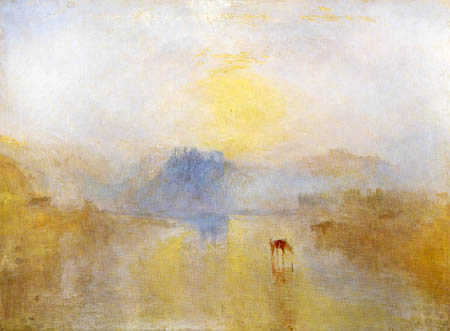
George Benjamin's At First Light was premiered by the London Sinfonietta in 1992, with Simon Rattle conducting. The piece was inspired by JMW Turner's painting Norham Castle at Sunrise, an early modern "abstract" painting  Benjamin has said, "A solid object can be formed as a clearly defined punctuated musical phrase". A short, brisk opening dissipates into extended silence.A second movement full of incident - something's stirring! This unfolds into a final movement where long, continuous harmonies interweave.

This concert at the Britten Studio mirrored the concert Benjamin conducted at the Maltings, both ending with Pierre-Laurent Aimard, whose Ravel Piano Concerto in G major in the earlier concert was the impassioned highlight of an oddly lacklustre evening, which began with a soggy Wagner Siegfried Idyll and included Benjamin's very early A Mind in Winter with Claire Booth as soloist. The Mahler Chamber Orchestra are very good indeed, so it was a relief to hear them back on form the next night with François-Xavier Roth. Read my review of that concert HERE. Tom Coult's Beautiful caged thing sounded like early Benjamin, too, but then he's young and a Benjamin pupil.  But it's good that new work by young artists gets heard at Aldeburgh. That was Britten's objective. Saed Haddad's In Contradiction for two cellos and ensemble was more engaging, contrasting ideas and blocks of sound in a tight, energetic structure. Haddad was a Benjamin pupil more than ten years ago, and has found his own, distinctive voice. If Aimard's Ravel was good, his Ligeti Piano Concerto was even better. He traversed its lively, zany high spirits with joyous delight. Aimard has performed most of the key modern works for piano, and knew most of the composers personally, including Ligeti. We are very lucky indeed to have him at Aldeburgh. 
It is set in three movements: in the short, opening one, superimposed fanfares burst into hazy, undefined textures. After a pause the extended second movement follows, itself subdivided into several contrasted sections, full of abrupt changes in mood and tension. The concluding movement arrives without a break, and progresses in a continuous, flowing line illuminated with ever more resonant harmonies. - See more at: http://www.fabermusic.com/repertoire/at-first-light-761#sthash.q7E7q1ka.dpuf
A ‘solid object’ can be formed as a punctuated, clearly defined musical phrase. This can be ‘melted’ into a flowing, nebulous continuum of sound. There can be all manner of transformations and interactions between these two ways of writing. Equally important, however, this piece is a contemplation of dawn, a celebration of the colours and noises of daybreak. - See more at: http://www.fabermusic.com/repertoire/at-first-light-761#sthash.q7E7q1ka.dpuf
Elegiac Arabesques) Songs With

Friday, 19 June 2015

Brilliant pairings : François-Xavier Roth Mahler Chamber Orchestra Aldeburgh

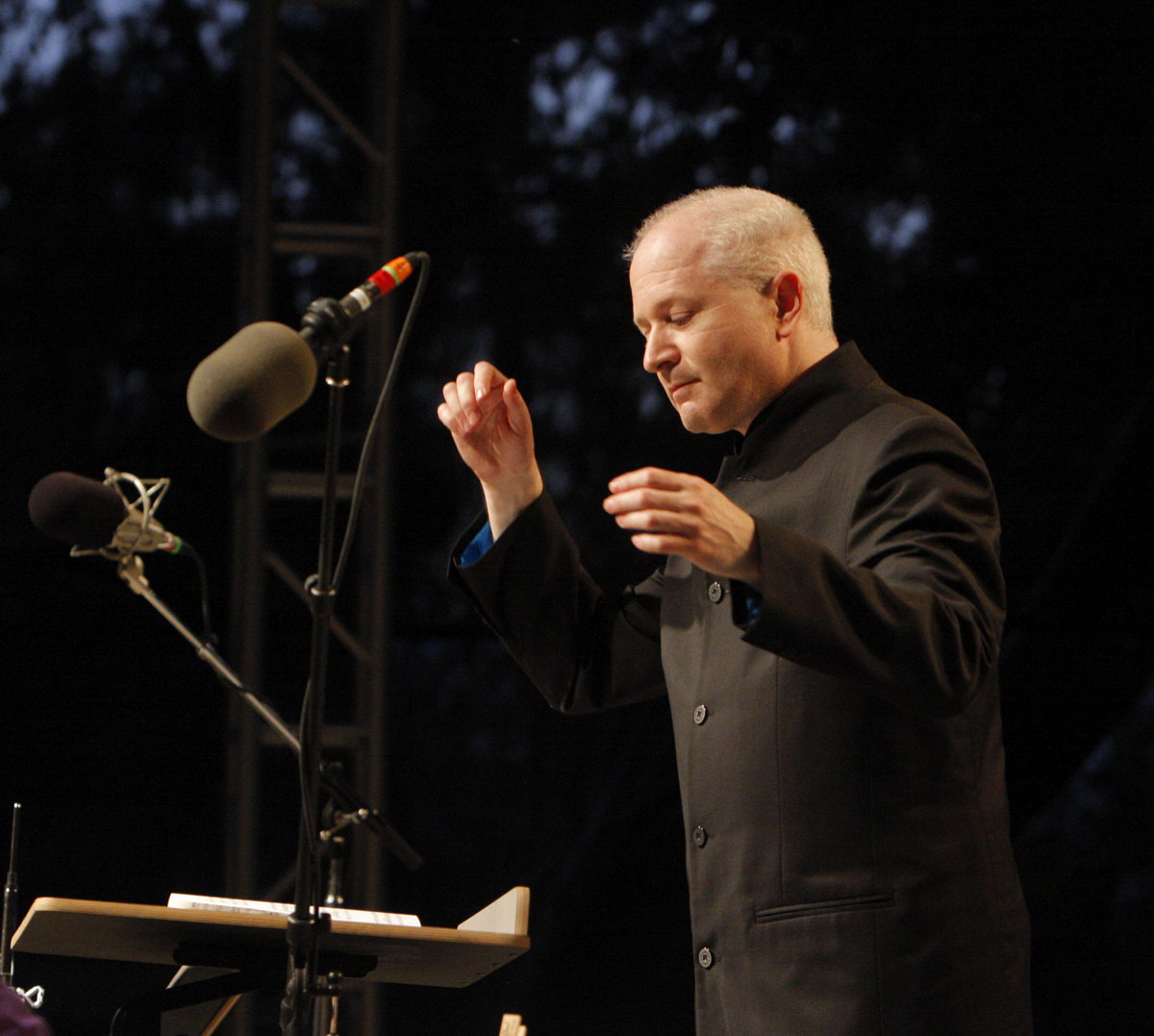
François-Xavier Roth's concert with the Mahler Chamber Orchestra at the Aldeburgh Festival will probably be the highlight of this year's festival. That the print media ignored it speaks volumes about the London press. Roth is one of the most exciting conductors of his generation because nearly everything he does is musically astute and well informed. The Mahler Chamber Orchestra is a superlative ensemble, and with Roth they achieve great heights.  Absolutely this was the concert to go to. Fortunately the BBC recognized the significance and recorded it for broadcast, still available HERE.

Roth is a fascinating conductor because his background lies both in baroque and in new music,  He has conducted Lully, using a staff like Lully did, but without mishap, giving physical emphasis to the underlying rhythm and liveliness in the music. Roth's musical intelligence generates great energy and insight.  Read more here about some of the connections between French baroque and new music. The Mahler Chamber Orchestra  is part of the network of orchestras founded by Claudio Abbado,. Standards are exceptionally high.  It's an exclusive network that includes the Berlin Philharmonic and the Lucerne Festival. Musicians are chosen individually for the quality of their work. Because they work together a lot, they know each other well. But they're fresh and fluid because they work with different orchestras, within the network and beyond. No fossilizing here!

The programme was eclectic. This was Roth's debut at Aldeburgh. He loves it as the regulars do because it promotes new music in context with what's gone before, exactly as Britten himself  wished.  The Overture to Mozart's The Marriage of Figaro exploded into life, reminding us how audacious Mozart must have sounded when he was writing "new music". Figaro the servant will outwit his master. Subversive stuff in a era when authority could not be challenged. Rarely can it have been performed with such vivacious energy. But that's the joy of hearing it in a mixed performance, with a chamber orchestra. They can put everything into the moment without having to save themselves for the rest of the opera, knowing that the audience can figure Figaro for themselves.

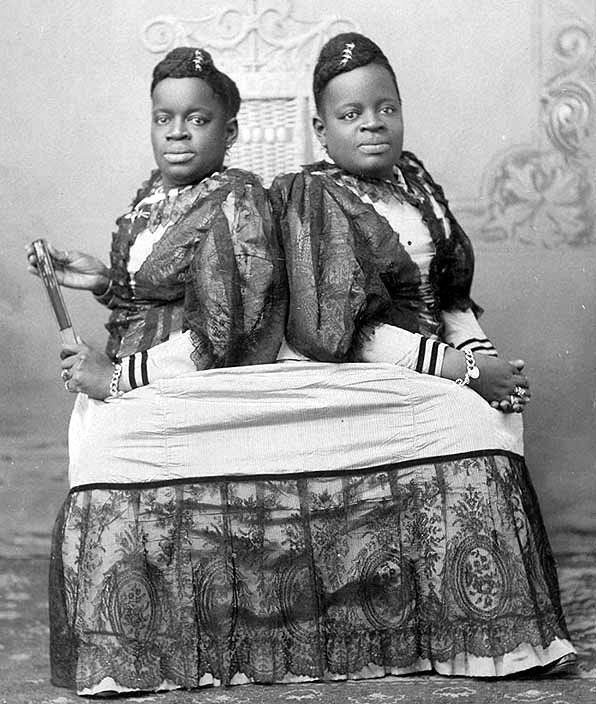
Hearing audacious Mozart prepared us for the inventiveness of Luke Bedford's Wonderful Two Headed Nightingale.  The connections are deep. Bedford uses the same instrumentation as Mozart's Sinfonia Concertante. The purity of concept enhances the intricate interrelationship between the violin (Matthew Truscott) and viola (Joel Winter) and the orchestra. The title refers to the conjoined twins Millie and Christine McCoy, who became singers, escaping a lifetime of slavery or freak shows through their music. As a piece of "pure" abstract music Wonderful Two Headed Nightingale works well  because the dialogue between the soloists is reflected  sensitively in the orchestra, suggesting intricate patterns of harmony and non-harmony. Like conjoined twins, the soloists have to co-operate, yet their voices are - literally - very different. The violin line soars and moves with graceful ease, at times flying so high that it seems to dissipate into the stratosphere, like "a lark ascending". The viola supports it, but , more earthbound, discreetly demurs. playing chords that prod and provoke. Altered tuning adds to the sense of mystery. The "voices" are echoed by pairs of oboes and horns - more "conjoined twins" adding haunting, almost mournful texture, reminding us that the twins' situation would only end in death and silence.  It's an exquisite piece, utterly original and distinctive, fast becoming part of the canon. 

The connection between new music and the baroque was further emphasized with Ravel's Le tombeau de Couperin. In 1919, this was new music too, even more radical than Ravel's original version for piano. In many ways, it's more "baroque" in spirit , for the delicacy of the orchestration mimics a harpsichord, Couperin's own instrument. Under the baton of a baroque specialist like  François-Xavier Roth, the dance elements seem liberating, the oboe part seductive, like a lithe dancer. The strings played with such grace that the notes seem to dissolve into sheer light: an approach very close to much contemporary music.


George Benjamin loves Le tombeau de Couperin., for it fits well with the pointillist refinement of his own style.  Benjamin's  Three Inventions for Chamber Orchestra diverges from much of his earlier work, in that its last movement goes for maximum impact, with huge gongs placed antiphonally, encircling the rest of the orchestra in their embrace. Yet, tellingly, the percussion did not overwhelm: loudness for its own sake is for boors.  I was sitting barely three metres away, yet could hear musicality, not noise.  Sensitive playing!  The combinations of flugelhorn, euphonium and contrabassoon (good to see Gordon Laing again)  evoke a sense of strangeness, lightened by bright, bell-like percussion and pizzicato.  One could imagine the sounds of a forest, birds in the canopy, rustlings in the undergrowth below, through which one progresses with purposeful deliberation.

Schubert's Symphony no 5 reiterated some of the themes of what went before, the pairing of instruments, the values of purity, and even the audacity of Mozart, which so appealed to Schubert, who was only 19 when he wrote the piece. Far from being "minor" it's Lieder ohne Worte, where discipline of form enhances expression, ideal for a Liederabend of chamber musicians.  The Mahler Chamber Orchestra responded with grace, the playing so lyrical that one could dream of dancers. Roth gets such brightness and energy from this orchestra that it's hard to believe that it's the first time he's worked with them in public. They seem an ideal fit, in the Abbado and Daniel Harding spirit, though Roth is a quirkier character. Great hopes for the future!

Wednesday, 17 June 2015

François-Xavier Roth, Mahler Chamber Orchestra, Aldeburgh Festival

François-Xavier Roth conducted the Mahler Chamber Orchestra on the second of their concerts at the Aldeburgh Festival.  The Mahler Chamber Orchestra, founded by Claudio Abbado, is one of the finest in the world, connecting to Abbado's network of elite orchestras which include the Berlin Philharmonic and the Lucerne Festival Orchestra. Seriously influential, with exceptionally high standards. They don't come to Britain nearly enough so their visit to Aldeburgh was truly a major occasion. François-Xavier Roth is one of the most interesting conductors around too, a brilliant fit for the ideals of excellence that these orchestras stand for. An absolutely unmissable experience, thankfully recorded for broadcast on BBC Radio 3. Please read my review of the concert HERE.

Roth's background is in baroque. He founded Les Siècles, the brilliant, innovative period ensemble whose performances sparkle with the energy and wit that epitomizes the French baroque spirit. He conducts a great deal of new music, too. His Boulez is exceptionally good. Boulez's legacy is safe in Roth's hands. Baroque and New Music, one might ask? But the connection is very strong indeed. French baroque music,  especially Rameau, was inspired by dance. Hence the physical exuberance of the genre, with its energy and life-affirming vigour.  Dance rhythms are precise for the simple reason that dancers move in formation,  interacting with each  other in  formal patterns, even when they incorporate individuality. Think about formal French gardens of the period, with their clear outlines and intricate forms. Nature seems to be contained, yet it's utterly present. Birds fly free overhead, and within the neat hedges we see an orderly glimpse of natural surroundings beyond the walls.  Thus precision and clear definition are absolutely a part of French style, translating into music. A good orchestra - especially a chamber orchestra - operates as a tightly knit ensemble. The more intricate the steps, the greater the need to observe clear lines, or the kinetic energy is lost. What would modern music sound like if microtonal complexities were reduced to haphazard blur? Accuracy, clarity and precision are fundamental to good performance.  Emotions can be expressed through intelligence, guided by insight into the composer.

Aldeburgh has always been a place for new music. Britten wasn't part of the conventional British world.  He valued the idea of creativity , and the idea that music could forever be born in new forms and styles. Make no mistake, Aldeburgh is, and always was, a place where new music thrives. The best British composers of our time, have found support in Aldeburgh, and through the lively spirit of the Britten Pears Foundation. It's no accident that Britten was fascinated by early music and the baroque. He wasn't alone. Over in Paris, Messiaen taught his students the importance of clarity. In a dawn chorus, thousands of different birds sing, but each bird has its individual voice, which shouldn't be lost.

The Mahler Chamber Orchestra's programmes at Aldeburgh were suitably eclectic. No thinking in little boxes here, but an embrace of  the spirit of creative adventure that's at the heart of really good, original music.  So imaginative indeed, that they deserve being written about in more depth than I can do here. So listen to the BBC broadcast and be blown away, and come back to this site later when I come back from today's trip to Aldeburgh.

Monday, 15 June 2015

Harrison Birtwistle The Corridor The Cure Aldeburgh

Harrison's Birtwistle's The Corridor and The Cure at the Britten Studio at Snape, Aldeburgh, also coming to the Linbury Studio Theatre in London in July. Six years separate the operas, but in many ways they are two interlocking parts, typical of Birtwistle's fascination with puzzles.  Both pieces  employ the same combination of players - two voices, violin, viola, violoncello, clarinet, flute and harp. Both are inspired by Greek archetypes, and deal with cosmic issues of life, death and creative regeneration. Together, they could inspire a much deeper exploration of the inventive maze that is the source oif Birtwistle's imagination. In theory, anyway.

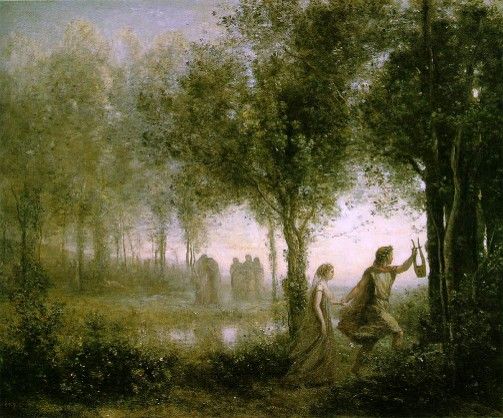
This new production of The Corridor dispensed with the dancers who shadowed the singers in Peter Gill's production in 2009.  Because the piece was new then the dancing confused and distracted though it was valid in principle, dance being very much part of meaning. This time, it was much easier to focus on the sheer beauty of Birtwistlle's writing, and of David Harsent's poetry, bot lucidly evoking the stylized elegance of Greek theatre.  This time Mark Padmore  and Elizabeth Atherton (Orpheus and Eurydice) emerged from an abyss behind the musicians of the London Sinfonietta, moving slowly along a slope. Orpheus is trying to  lead Eurydice out of the Underworld. Orpheus passes effortlessly through. Eurydice hesitates and is lost. The action, such as it is, operates within a compressed moment  in which Eurydice relives her wedding day and her death.

The music unfolds in a progression of frames, suggesting parallel concepts of time. Orpheus's music moves forwards. Eurydice's lingers, savouring what remains of memory, but her long lines draw her back, like ropes or sinister tentacles.  Further games with time: Eurydice can foresee the future, including  Orpheus's death, when he's torn apart by Meniads, but she herself can go no further. He stands in the light, in greenery (symbolizing fertility). The harpist plays behind him: for the harp signifies Orpheus's lute.  He's a musician, and his art is creative life. With a last heartfelt cry, Padmore sings "Eurydice", or rather speaks the name with minimal ornamentation, emphasizing his desolation.

The Corridor runs roughly 45 minutes, as does The Cure, separated by an interval of around half an hour. Chamber opera predicates on concision, ideal for the Greek antecedents of these micro operas, so the long interval was ominous, but that's not in itself a problem as audiences, especially at Aldeburgh, are laid back and receptive. Medea (Atherton) stands in  a green circle which might suggest her isolation as well as her occult powers., with a volcano behind her, and moons above. Visually this is stunning.  Lots of bright jewel colours and activity to watch, frequent transformations wrought be lighting.  Comic book cuteness, which is not irrelevant when we remember the harsh primary colours and deliberate stereotypes of Birtwistle's Punch and Judy or Down by the Greenwood Side.  But, just as dancing obscured the first The Corridor , the visual high jinks in this The Cure overwhelm the music. It's almost certain to appeal to those who don't actually like Birtwistle's music. They'll have plenty to enjoy without actually having to listen.. 

Unfortunately, the big story about this production will have been missed by those who went out for a drink in the interval.  Not everyone does, and nor should they have too, since space is at a premium in places like The Britten Studio and the Linbury Theatre. I was told that apparently the production team had threatened not to continue the performance unless people got out.  Unfortunately, many people believed this and left reluctantly.  So much pressure was put on the audience that by the end, only ten or so people held out, calling the bluff, some in corners or standing against the wall.  Audiences at Aldeburgh are generally music people rather than opera people so maybe they accept what opera people would see through.  But they're also so "British", too polite to complain even when they're upset. There's no way to quantify what they really feel. 

The reasons given were a combination of supposedly artistic values. "It's Royal Opera House Policy", I was told. No it is not. Even when there's a double bill of different operas at the Linbury, no one is forced to leave  Because Aldeburgh is primarily a house for chamber opera, there have been numerous double bills there, without any problem. Remember Benjamin's Into the Little Hill, paired with Luciano Berio's Recital 1, where stage preparations were integrated into the performance, or the Oliver Knussen Sendak double bill,, Where the Wild Things Ate and Higgelty Piggelty Pop, both with much more complicated staging. Or even the first The Corridor, paired with Birtwistle's Semper Dowland, semper dolens. at the Britten Studio. In any case, The Corridor and The Cure are so similar that they'd work even better with only a short pause.   

The idea that audiences shouldn't observe stagework is also specious. All theatre is illusion. No one's fooled. People can decide for themselves. Some are even interested in stagecraft.  Indeed, since stagecraft is an art form in itself, the better audiences understand how it works, the better. What would Benjamin Britten have thought, with his committment to practical opera  making?  

The Aldeburgh Festival is dearly loved and supported because it has an ethos of treating audiences well. The staff often go the extra mile to be nice. Audience members are potential friends - and Friends - so it makes no sense to treat  people harmlessly sitting in a hall with resentment.  Artistic judgements are all very well, but the Aldeburgh Festival has a duty of care towards its audiences. Thus, I believe that they'll stand up for that and not be pushed into wrong positions. 

Friday, 6 February 2015

Aldeburgh Music Festival 2015 details


Booking for the 2015 Aldeburgh Music Festival starts soon. Plan ahead. Serious music values, properly marketed.  Benjamin Britten believed that good music could speak for itself, and that audiences had the intelligence to rise to the challenge. Thank goodness for Roger Wright as Chief Executive and Pierre-Laurent Aimard as Festival Director

From Britten to Britain's greatest living composer - Harrison Birtwistle, whose new opera, The Cure, opens the 2015 Aldeburgh season. Nearly 50 years ago, Birtwistle's Punch and Judy featured at Aldeburgh - so shockingly original that Britten and Pears are alleged to have walked out. The scandal didn't hurt Birtwistle, whose reputation thrived on the publicity. It's almost impossible that Britten, who knew how to read a score, could not have known what Punch and Judy would be like. Aldeburgh meant too much to Britten that he''d risk wrecking the festival with something bad. It's a tribute to Britten that he could value talent even when it wasn't quite to his taste: an attribute one should respect. .

"Taking as its starting point Jason’s triumphant arrival home with the Golden Fleece, The Cure casts an intense focus on the magical rejuvenation of his father by his sorceress lover Medea. ‘I came across a few lines from John Gower’s poem Confessio Amantis, says Birtwistle, ‘that describe the moment when, at night and under a full moon, Medea goes out to gather herbs with which to make a potion that will rejuvenate Jason’s father Aeson: Upon hir clothes gert sche was, / Al specheles and on the gras / Sche glod forth as an Addre doth... It seemed, to me, like a beginning... and so it was.’ Geoffrey Patterson conducts the London Sinfonietta. Elizabeth Atherton and Mark Padmore sing. I wrote about The Corridor HERE, five years ago. This Birtwistle double bill moves to London at the Linbury later in June.

From Birtwistle to Pierre Boulez, arguably the most influential musician of his time.  Aldebutrgh marks his 90th birthday with numerous concerts and films. George Benjamin  and François-Xavier Roth conduct two concerts with the highly regarded Mahler Chamber Orchestra, two very good programmes worth writing more about. Boulez, and also Benjamin, Bedford, Ravel, Schubert and Mozart. Somewhat different, on 17th (Susana Malkki) A Pierre Dream , an "acoustic and theatrical journey through a lifetime of musical adventures, innovations and discoveries performed within a specially commissioned design by world renowned architect Frank Gehry". mixing "live performance of works spanning over six decades of his creative career with rare on-screen archival footage and new interviews."   This is followed by what might be a more substantial study day into two key Boulez pieces,, Livre pour quatuor and the Piano Sonata no 3. Plenty more Aimard, Benjamin, and Knussen,  through the rest of the festival , always rewarding.

Aldeburgh doesn't do the current fashion for superficiality. Instead of routine Britten done indifferently, this year Aldeburgh is doing an in-depth, serious exploration of Britten's Prince of the Pagodas.  When this was revived at the Royal Opera House in 2012,  it was met, in some circles, by incomprehension that was shameful, especially considering that there are whole books on the subject.  Even without reading, who could miss the non-western influences?  The Prince of the Pagodas  is so unorthodox that it opened new doors for Britten. The ballet will not be performed in full, though a film of the Kenneth Macmillan production will be screened.  Knussen will be conducting extracts.  The Study Day, on 25/6  will go into Britten's interest in the Far East, which dated back to his youth and his relationship with Colin McPhee. Aldebugh's also doing a Gamelan workshop and screening films about the ballet. Utterly fascinating - I've written a lot about it HERE and HERE

Early music and baroque always feature heavily at Aldeburgh, reflecting Britten's interest in forms outside the 19th century western tradition.  Andreas Scholl is giving concerts and masterclasses. The Monteverdi Choir are doing three concerts of Bach and Mozart. For the first time in years, no Bach Mass in B but an even more intriguing mix of other works.  I'm apassionate Aldeburgh devotee and go to as much as I can every year ! Please look at the lables on the right and click on previous year's festivals and about the town which I love so well. Also, this is the biggest Benjamin Britten site around.

Here's the link to the Aldeburgh Music website