Showing posts with label Britten Curlew River. Show all posts

Monday, 18 November 2013

Britten 100 BBC Radio 3 this week

Benjamin Britten and the BBC : the first, ground breaking co-operation between a composer and mass media. Britten believed that serious music could communicate to ordinary people, and the BBC helped bring Britten to the masses, fulfilling its remit to "educate, entertain and inform". Sadly, far too many political and social factors have shifted the market downwards. But still we can remember the ideal.  You could travel to Aldeburgh this week, where there will be many activities, such as mass sing alongs  or you could avoid the crowds and listen on BBC Radio 3. For the offerings on TV (even more interesting ) please see here.

On Britten's birthday (Friday 22nd November), Oliver Knussen will be conducting the keynote concert at Snape Maltings :"unmissable with its combination of the rarely heard, well-known and new."  which means Britten: Cantata Academica,  Four Sea Interludes and Passacaglia from Peter Grimes, Ryan Wigglesworth: Locke's Theatre (world premiere) and Britten's early, glorious Spring Symphony. My review of that is HERE ("Unorthodox Symphonitst"


On Saturday 23rd, two  more LIVE transmissions. First at  1755, the cantata St Nicolas from Aldeburgh Parish Church. Singers include the Jubilee Opera Chorus, Aldeburgh Voices, The Suffolk Ensemble, Ben Parry (conductor) with Alan Oke is the main role. This will be special because it's "local", featuring people who live in and around Aldeburgh, in keeoing wiuth Britten's ideas on music being part of community life.  Second,  LIVE transmission, this time from the Barbican : Britten's Albert Herring.  My review of it is HERE Albert Herring, Pickled

And on Sunday 24th, Noyes Fludde from Lowestoft. Although I love that opera, it's one that really needs to be experienced live. Created for children, everything rests on the process of performance not on the results.  (Read about the excellent Blackheath Noyes Fludde here).

Also worth listening to are performances of Britten String Quartets and Cello Suite (10 pm Friday and Saturday and at 11 pm recordings of Britten playing Schubert and conducting Bach and Haydn (with Rostopovich). Hopefully, there won't be much "presenting" to kill the music.Lots of talk shows, too, if that's your thing.

Top recommendation last : All three Church Parables, recorded in June at Orford Church - Curlew River, (Saturday 1400). This was infinitely truer to Britten's intentions than the disappointing Barbican St Giles's performance last week, much better musically informed and more dramatically incisive. Also, James Gilchrist as the Madwoman was outstanding, even better than Bostridge, which is saying something. Please read my review here.  On Sunday 1400, The Burning Fiery Furnace (reviewed here) and on Monday  26th 1400 The Prodigal Son.


Friday, 15 November 2013

Barbican Britten Curlew River Bostridge review

Perhaps if I hadn't been looking forward so much to the Barbican Britten Curlew River, I would have been less disappointed. Tradition dictates that Curlew River should be done in a church because that's how it was first done in Britten's time. But what counts above all else is artistic merit.  If this had been a concert staging, in the Barbican Hall or Barbican Theatre, this Curlew River might have worked. St Giles Cripplegate is just all wrong for this. It's the wrong period, for one thing, its late Reformation and Puritan connections unsympathetic to the mysticism of the early Dark Ages fens, where being a Christian was something to be remarked upon. As a work of art, Curlew River is strong enough to make a powerful impact on its own terms, without needing a specific setting.

The physical constraints of St Giles don't make for good theatre. The nave became an extended stage,. Netia Jones's film projections were good, their monochrome starkness appropriate for the piece, but their impact was  spoiled because they could only be seen in full by the orchestra. Sightlines were blocked by pillars. The audience was crammed into the margins of the building. Perhaps one should not feel comfortable in Curlew River, but neither should the experience be penitential. Stages are usually horizontal for a very good reason. The Procession is important to the meaning of this piece,. Though the monks did walk down the nave,  they were kept busy changing their clothes while the Britten Sinfonia played. While the monks do become protagonists in the drama, this re-costuming is a clumsy misuse of space.

Fortunately, when Ian Bostridge started to sing, the drama at last began to kick in. The Madwoman is sneered at because, in her extreme grief, she has lost all conventional decorum. She''s an aristocrat but wanders alone in the wilds, wailing. Her speech is too "high born", too alien for the Fensmen. For me, this is critical to interpretation because the Madwoman is an outsider, a refined person of taste, driven to behave in extremes by the loss of her son, her pride and joy. Bostridge sings the part with all its contortions, fragments and wayward swoops, but does the staging show him trying to knit while he sits on the ferry?  She's no ordinary Mum. After the Madwoman hears the story of the Boy and his death, Bostridge's voice became firm, with almost demonic force. For all we know,  the Madwoman conjures up the vision of the Boy in her mind? Bostridge's purposeful singing suggests that she does have that kind of creative strength. Bostridge was  relatively restrained, considering what he could do with the part, given the right staging, but this bland directing was not the occasion. .No doubt the Madwoman finds peace hearing that the dead will rise. But why do the river people treat the Boy as a saint and giver of miracles?  The plaintive cry of the curlew recurs, suggesting primitive animist mysteries, and the "Japanese" cadences suggest alien worlds where western doctrine has no meaning. There is a lot more to Curlew River than straightforward Christianity.

Mark Stone sang the down-to earth Ferryman  and Neal Davies the Traveller, like the Madwoman, an outsider from places beyond. Gwynne Howell sang the Abbot, grown weary with experience, and Duncan Tarboton sang the Boy, as youthful as the Abbot is old.  William Lacey directed the Britten Sinfonia. Unfortunately, St Giles is perpendicular, so voices are funnelled upwards and muffled. Only Bostridge, right in the middle of the nave was fully audible. With a cast as good as this, it was a waste of good singers.

More thoughts : fomal ritual is central to the interpretation. In the original production Britten supervised, the ,monlks worte masks, the way Noh actors did.  It intensifies the surreal emotional distance so important to the piece. If Britten was writing "naturalistric" why then the use of Japanese form and cadences ? Why not simply writre it like Waly Waly ? Perhaps audiences prefer Britten minus his music.. It's sad that this anniversary years should be taught to disregard the music. If German directors tr8ed this, audiences would scream "Regie!"

More on Benjamin Britten on this site than only any other non specialist site. Please explore ! For Curlew River please read here and here. For Netia Jones please read here and here. (Knussen's Sendak operas, Jones's best work to date. This Curlew River,was an amateurish, superficial  Sunday School homily in comparison. See also the comment below. The Barbican should be professional enough to look after its customers properly.

Thursday, 14 November 2013

Barbican Britten Curlew River tonight

The excellent Barbican Britten series continues tonight with Curlew River.at St Giles, Cripplegate (repeat performances til Saturday).  Of all Britten's operas, Curlew River used to frighten me most because it's so raw and painful. And so alien, musically, operating on two different levels.  It's not comfortable, but that's exactly why it's Great Britten.

The Madwoman has been driven insane by grief: but is she a woman at all ? Could she be an extension of an artist, driven mad by the loss of beauty? What hits me about this opera is the extreme sense of anxiety which isn't really resolved by the ending. Tha Madwoman's search seems metaphysical. Curlew River feels claustrophobic. At night, when the mists roll in at Aldeburgh, the reed beds can feel overwhelming: You could lose your sense of direction on all levels: the very ground shifts and moves on the water. As Aschenbach sings in Death in Venice, could the gondolier be the ferryman on the River Styx? The parallels between Curlew River and Death in Venice are very strong. The waters bring people together but that very communication means death. Cholera, in Venice, mindless cruelty on Curlew River. For me, both operas are now the key to "inner" Britten, in which the composer comes very close to revealing his private fears and his mission as an artist.

In Curlew River, Britten connected the formalism of Japanese theatre with the rituals of Catholic liturgical music. Neither form was populist, both the esoteric preserve of an educated minority. Yet Britten, with his passionate belief in communication and in the community, also incorporated elements of medieval mystery plays, where complex ideas were expressed in simplified form. The characters in Curlew River are larger than life, almost symbolist archetypes, and the music they have to sing is extreme. Nowadays. we're so used to naturalism in film and theatre that we forget how recently it took hold.  By eschewing naturalism, Britten connects Curlew River to much more ancient traditions. The stylized ritual also serves as a an emotional mask, distancing the artists from his audiences. This reticence can be offputting, Britten isn't touchy-feely. But his emotions are so intense that they have to be faced obliquely, as if through a mask.

Yoshi Oida has directed both Curlew River and Death in Venice. His productions are outstanding because they deal with the inner ideas of each piece. His Death in Venice incorporated the walls of The Maltings Theatre at Snape, merging art with reality. Besides, Venice does look like that when you're in a gondola. It's not grand palaces but dark, smelly water. The whole point of the opera is that luxury is illusion, like rouge on an old man. Deborah Warner's Death in Venice turned Britten into glossy fashion photoshoot: It was Regie at its worst, but adored by audiences who don't care about music or ideas. Oida's Curlew River, also created for Aix-en-Provence, creates the boat as cosmic crucible, an island surrounded by real water. Nerve wracking tension, but also great beauty.

This Summer, I heard Curlew River at Orford Church, where Britten himself supervised the first performance. Read my review HERE. Frederic Wake Walker brought out levels in the piece most people miss. Orford Church was vandalized in the Reformation. Many other churches were destroyed by violent mobs, jealous of the culture and values medieval learning represented. The Boy in Curlew river is a nobleman's son, the last of his aristocratic line. He's stolen and left to die by a mindless brute.  We should wail with the Madwoman at the annihilation of beauty and art.  One-dimensional, productions like the ENO Death in Venice and the ETO Rape of Lucretia emasculate Britten, turning his difficult, quirky complexity into popular product.  Maybe the public prefer Britten castrated? I think of the ravaged ruins around Aldeburgh, and weep.

Thursday, 27 June 2013

City of London Festival Update

The City of London Festival started Sunday. This is the biggest and best CoLF in ages - more events, more venues and an extremely well planned programme that brings together many different aspects of London's cultural and historical heritage. Read my summary of the programme HERE.

The major highlight next week will br Benjamin Britten's Church Parables in Southwark Cathedral.  This is the same Frederic Wake-Walker Mahogany Opera production heard earlier at Orford Church as part of the Aldeburgh Festival. Hearing all three pieces together is special, because it brings out the connections and underlines the structure central to their conception.  All three Parables begin and end with formal processions, where monks intone Latin plainchant.  Britten makes the connection with non-western music and specifically Japanese Noh theatre. Both are emotionally remote, allowing the suspension of ego. Thus ritualistic stylization is absolutely fundamental to Britten's conception. It's in the music and was also in the original stage instructions. This production expresses the ideas extremely well. Ignore anyone who thinks Britten's interest in non-western music was late flowering or that the staging should be naturalistic. Read my reviews of the performances at Orford Church : Curlew River and The Prodigal Son and The Burning Fiery Furnace. 

 Aurora Orchestra who play - and act -  in the Church Parables will be giving a concert on Sunday 7th at LSO St Luke's - Boulez Mémorial and Beethoven 8th. If you need another Britrten fix, Tony Palmer's film Nocturne is being screened at the Barbican on Tuesday 7th. It's good, one of his better films. Read my review HERE.

(photo Ewan Munro, London)

Wednesday, 8 May 2013

Big B's at the Barbican and how to get them

Big B's at the Barbican 2013-14 season - Berlioz, Brahms, Bruckner, Britten, Birtwistle, Beethoven and even a bit of Boulez. Now that the booklet is out, we can look more closely at what's on offer with the caveat - be aware! All venues do complex multi buys but plan this Barbican.

Brahms is straightforward enough. The Leipzig Gewandhaus Orchestra with Riccardo Chailly are doing all four Brahms symphonies at the end of October, each juxtaposed with concerto works. With performers like this and soloists like Leonidas Kavakos, Pierre-Laurent Aimard, and Arcadi Volodos, you can't go wrong. Two string quartets concerts too. .Prices up to £65 per person per main concert. It's not cheap but with quality like this, you can't really expect gimmioks. It will be good to hear Chailly and the Leipzigers traverse Brahms, especially as they're spacing their concerts with rest time between, a relief after their rushed Beethoven symphony series.

Programming for Berlioz is more diffuse. Valery Gergiev conducts the LSO in four concerts. For me, the key concerts will be The Damnation of Faust (3 & 7th Nov) and Roméo et Juliette (6th & 13th Nov), because the casts are very good indeed - Olga Borodina, Ildar Abdrazakov asnd Michael Spyres. Gergiev's approach to Roméo et Juliette is likely to be completely different to Mark Elder's OAE performance in 2012 (read analysis here), but part of the way we get deeper into repertoire is by hearing alternative takes. You can book discounts thru LSO multibuy for these, but if you want to go to Berlioz L'enfance du Christ on 15/12 you'll need to book thru the BBCSO multibuy.

In May 2014, the Barbican celebrates Birtwistle at 80. Birtwistle is easily Britain's most significant composer since Britten (though some might say since Purcell). Two concert stagings of his operas Gawain and Yan Tan Tethera (16/5/14 and 29/5/14).  Martyn Brabbins, Leigh Melrose and John Tomlinson in the former. Baldur Brönnimann, Roderick Williams, Claire Booth, Andrew Kennedy in the latter. In addition, Daniel Harding conducts Birtwistle's seminal Earth Dances on 20/5 with the LSO, Oliver Knussen conducts an all-Birtwistle programme which includes Silbury Air on 25/5. Brönnimann conducts another concert on 30/5 where Birtwistle features with Holst and RVW. The secret to discounts lies with the orchestras. Harding's concert is part of the LSO series but Brönnimann's second concert is part of the Britten Sinfonia series. No discounts for the operas or the BCMG/Knussen concerts. Since all of these together form a kind of "Total Immersion" they are all worth going to regardless of price.At a time when the arts face cuts, we in the audience had better be prepared to support what we care for.

The Benjamin Britten series is the one to be vigilant about. Some of the concerts are absolute essentials, Ian Bostridge is singing Britten's Our Hunting Fathers on 8/11/13. This is one of the keys into Britten's soul. Britten's music is sometimes hard to take because he's emotionally oblique, but that surface reserve hides intense spiritual turbulence. Britten without bite isn't Britten. We need to hear the wild oceans and surreal nightmares in his music: they inform the tightness of his idiom. Bostridge comes closer to anyone else, including Peter Pears, to accessing the darkest, deepest levels of Britten's inner world. When Bostridge sings Britten he isn't "easy listening" and smooth. But then, Britten isn't either. In this centenary year we need more than ever to connect to Britten beneath the surface, and to understand just how radical he really is.

Bostridge is also singing The Madwoman in Britten's Curlew River on 14 and 16/5 at St Giles Cripplegate. Curlew River is an extremely disturbing work on many levels. It uses Japanese and medieval European form to deal with a subject so traumatic that it can't, perhaps, be dealt with other than in this indirect, stylized way. It's also a piece that needs to be experienced rather than simply listened to. Hence the performance will take place in a church, augmented by a multi media staging by Netia Jones, who understands Britten's aesthetic.

Britten's 100th birthday on 22/11 is being celebrated by The Sixteen with a  programme of Britten choral pieces, while Steuart Bedford, a Britten associate, is conducting Albert Herring with the BBC SO on 23/11, The really high profile spectacular will be a performance of the War Requiem at the Royal Albert Hall on 30./11. Semyon Bychkov conducts the BBCSO, soloists are Marina Poplavskaya, Andrew Kennedy and Roderick Williams. This will almost certainly be broadcast, either on BBC Radio 3 or on TV, it's that important, but you want to be part of it live and tell your grandchildren.

Now for the pricing catch. The Barbican  heavily advertises  an "Illuminating Britten" weekend on 8-10/11 for £95 which gives you a 20% discount on tickets for the concert on 8/11 and to a programme of dances to Britten's music at the Barbican Theatre. No discounts to the other concerts mentioned above, particularly the War Requiem, except for Albert Herring which is part of the BBCSO multibuy. What is "illuminating Britten"?  It's "three days of concerts, films, mini-recitals and discussions featuring those...who have a special understanding of Britten's music. Curated by film maker John Bridcut." It sounds very similar to other composer events, like the Knussen, Elliott Carter,, George  Benjamin and other Immersion weekends in recent years,  except that it costs lots more and you have to pay full price for the really big concerts. Bridcut is a genius at marketing, but  that also means that anyone into Britten has already seen the films, read the books and heard some of the music.

 Like it or not, but if we want culture, we're going to have to take some responsibility for paying. 
PS Thanks to Ri ch for the great photo !

Friday, 1 February 2013

Different Britten - Aldeburgh Music Festival 2013


Aldeburgh is a place of pilgrimage if  you're serious about Benjamin Britten.  Perhaps more than most composers, Britten's music connects to the landscape he knew. Among the reed beds at Snape, and by the ocean (especially in winter), you can intuit more about Britten than rational analysis could reveal. Britten's years in America were a kind of creative impasse. Then he read George Crabbe's The Borough. "I suddenly realized where I belonged and what I lacked". Rushing home, he found his creative destiny. Peter Grimes was the immediate result.

Naturally, Peter Grimes is the centrepiece of this centenary year's Aldeburgh Festival of Music and the Arts. The Festival opens with a concert performance of Peter Grimes on Friday 7th June, repeated on Sunday 9th.  Veteran Britten specialist Steuart Bedford conducts.  Although there will be other Peter Grimes productions this year with starrier orchestras and casts, hearing this production at The Maltings in Snape will have extra, non-musical significance, because the opera was written across the road, literally, when Britten lived at the Old  Mill.

What's more, there'll be Peter Grimes on the Beach, a unique realization of the opera enacted outdoors, on the beach at Aldeburgh. This could be very good, as open air performances have been a feature at Aldeburgh for years, and they know how to do these things well.  Tim Albery directs, with sets, costumes, lighting and sound design by Sounds Intermedia. The singing will be live, though the orchestra will be recorded - instruments and weather don't mix. Since the sounds of the sea and shingle permeate the music, it will be atmospheric to feel the wind, smell the ocean, and feel the wild forces of nature engulf the performance.  As night descends, and darkness envelops the plot, the audience will be drawn into the proceedings, just as the townsfolk in the opera are complicit in what happens. If the weather is mild, it might be an anti-climax, but you are never likely to experience anything quite like this again.

hen Britten lived in Crag House, on Crabbe Street, the window in his study opened straight onto the beach. Crag Path itself is a steep, narrow set of steps which the townsfolk in George Crabbe's time would have used frequently to get from the church to their homes and boats. Crag House is five minutes walk from Jubilee Hall, where the first Aldeburgh Music Festival was held 66 years ago. Concerts are still held there, though it's small and unsophisticated. Renovation would ruin the ambience.

Felix Barrett and Punchdrunk Theatre will be  doing a series of events called The Borough, part way between George Crabbe's original poem (entitled The Borough)  and Britten's opera. Punchdrunk is unique in that they merge performance and audience, performance space and "real" surroundings. Small groups will be able to participate on "individual theatrical journeys" around the places Crabbe and Britten knew, blending modern reality with artistic imagination.

All three of Britten's Church Parables will be performed at Orford, in the church for which they were written. Seating is limited, and parking almost non-existent, but that, I think, is part of what the Parables entail. They aren't "easy", but almost penitential. Theatre in ritualistic form. There are parallels with medieval mystery plays, where spiritual concepts are more important than dramatic narrative. Curlew River is one of the most uncompromising works Britten ever wrote, but also crucial. It's inspired by Noh drama, so it's stylized and orientalist,  but it deals with a theme fundamental to Britten's psyche. The current hysteria about Britten's sex life shows how little his music is understood. Britten's interest in boys wasn't erotic so much as a working out of deep anxieties about identity and loss.  Prurient and small-minded folks should be forced to sit through Curlew River over and over again until they appreciate Britten's passionate protest at the loss of innocence. From this stems his pacifism and his sense of social justice. Miss these thing and you might as well not know Britten at all.

Curlew River is followed by The Burning Fiery Furnace and The Prodigal Son. The church parables are extremely well cast, including James Gilchrist, Lukas Jakobski, Rodney Earl Clarke and Samuel Evans, with Roger Vignoles  as music director. Mahogany Opera (Frederic Wake-Walker) won't be using the oroiginal designs, but those inspired by Mara Amats, an artist based in the region, who had a dramatic life.

Public booking for the Aldeburgh Festival starts 13th February. In the tradition Britten himself established, there will be a lot more than Britten to listen to. Dowland, Bach, Elliott Carter, Henze, Jonathan Harvey and even Stockhausen Kontakte on 15th June. For more, visit the Aldeburgh Festival site HERE.

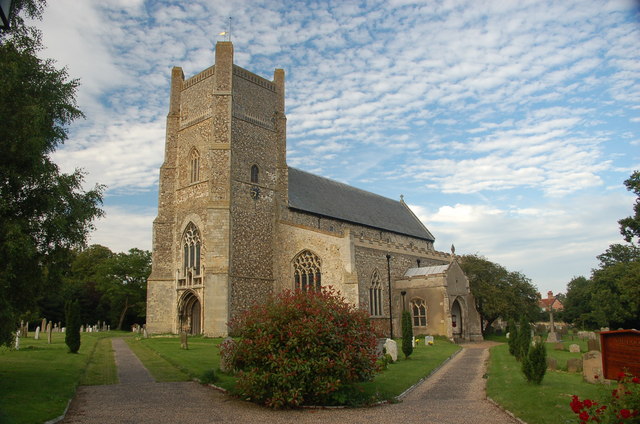
 photo of Aldeburgh Beach, :Stephen Nunney. Photo of Orford Church : Gary Radford

Monday, 5 November 2012

Yoshi Oida - Curlew River


Tonight at the ENO - Ralph Vaughan Williams The Pilgrim's Progress.Yoshi Oida directs.(MY REVIEW IS HERE). That's seriously important. As I wrote in April about the ENO 2012-13 season, The Pilgrim's Progress is "not an "easy" opera,  and needs a director who understands stylized allegory. The reason that this will be important is the choice of director, Yoshi Oida. Oida is astoundingly sensitive. His Britten Death in Venice was exceptional. (read more here) It ran within a month of the ENO Deborah Warner Death in Venice. Two drastically opposite approaches.Warner's was high on glossy fashion shoot glamour, Aschenbach relegated to the sidelines in every way. Oida's approach was psychological, with Aschenbach foremost, action happening around him and in his mind."

This is absolutely pertinent to The Pilgrim's Progress, since that too is more allegory than opera,  Expect a "storyline" and big numbers and you'd be stumped. If anyone can pull this spiritual saga off, it's Yoshi Oida.

So take the opportunity to watch Yoshi Oida's production of Benjamin Britrten's Curlew River from the Aix en Provence Festival. In Curlew River a boy has been kidnapped and probably murdered. His mother, maddened by grief, searches for him but cannot cross the river on her own. Emotionally, this is one of Britten's most traumatic pieces, for the feelings are so raw that it's hard to concentrate. Anyone who thinks Britten wasn't traumatized by the loss of innocence has no idea about Britten at all. Oida's staging is so stark that you're hypnotized by the sheer horror of the psychic dilemma.  This seminally important production of Britten's Curlew River is now available for download on Classical TV. You might have to pay to view, but it's worth it.