Showing posts with label Szymanowski. Show all posts

Thursday, 18 April 2019

Andrew Davis : Tippett Szymanowski Debussy Barbican

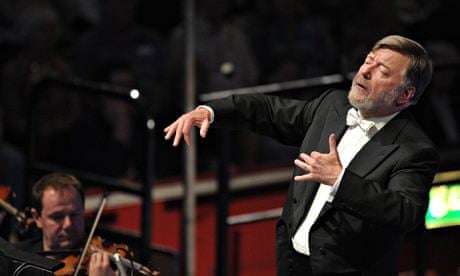
Andrew Davis photo: Chris Christodoulou, bBC
Andrew Davis conducted the BBC SO at the Barbican Hall in London. Top billing to Michael Tippett's The Rose Lake, almost exactly a year after Simon Rattle conducted it with the London Symphony Orchestra, with whom it has been associated since its premiere with Colin Davis in 1995. The Rose Lake is a video in music, inspired by Le lac rose in Sénégal, which Tippett visited in 1990.  As the angle of the sun changed, the colours in the landscape changed, a concept that translates well into a study of orchestral colour.  It was "a continuous five part composition, in essence a set of variations .....a song without words for orchestra", as Tippett wrote at the time.  The sections with programmatic titles mix with sections where only tempo gives clue to meaning, the twelve short segments moving forward in sequence, suggesting the passage of time. Dense but lucid layers of sound as beautifully structured as mosaic.  Andrew Davis, though, brings out its descriptive nature. The panoply of marimbas, vibraphone, and xylophone rustled, suggesting breezes, grasses, rushing water. The massed percsussion even suggested "African" sounds, woodwinds and brass calling like wild creatures against a savannah of strings.  In the organic "earth forms" and especially in the bird and bell sounds, The Rose Lake resembles the music of Olivier Messiaen. Thus the logic of programming it with masters of colour and transparency like Symanowski and Debussy.  A pity that Rattle paired it with Mahler Symphony no 10, with which it has almost nothing in common, since Rattle's feel for Szymanowski and Debussy runs very deep indeed, Rattle being one of Szymanowski's modern pioneers.  Rattle would have made the connections more strongly, but Davis presents it on its own  terms, less Messiaen and divine inspiration than tone poem but perfectly valid. 

Szymanowski's Violin Concerto no 1 dates from around 1916, when he was making a creative breakthrough. To quote Jim Samson, the foremost Szymanowski scholar, writing as long ago as 1981, "the orchestra is conceived rather as a reservoir from which may be drawn an infinite variety of timbral combinations....the string body...sub divided into many parts, further characterized by the most delicate combinations of arco and pizzicato, harmonics, sul tasto, sul ponticello and tremolando effects".As Jim Samson said in his book, The Music of Karol Szymanowski (1981), in the Violin Concert no 1 "the formal scheme is totally unique and represents an ingenious solution to the problem of building extended structures without resorting to sonata form". The almost chaotic proliferation of sub groups and themes within the orchestra, contrasted with extended violin cantilenas, soaring high above the orchestra, are so refined and so rarified that they seem to propel the music into new stratospheres, beyond earthly possibilities. Mandelbrot patterns, in music, mathematically precise, yet full of the vigour of natural, organic growth.  Though a contemporary of Debussy, Stravinsky and Bartók, Szymanowski's music defies category and is astonishingly prophetic. No surprise then that Boulez adored him, and made the keynote recording with Christian Tetzlaff and the Vienna Philharmonic Orchestra.  I enjoyed Lisa Batiashvili's more romantic approach with Andrew Davis and the BBCSO but to really get the full wonder of the piece you need Tetzlaff and Boulez.  

This concert concluded with Alain Altinoglu's suite on Debussy's Pelléas et Mélisande.  Please read more about the background HERE. Nothing whatseover wrong with suites. These days there's ill-informed prejudice against them butn they serve a good purpose. In the case of Pelléas et Mélisande a suite arrangement is perfectly valid, since  it focuses on the orchestral aspects of the opera - Debussy's only opera - presenting it almost as tone poem like La Mer. Thus it can be programmed more readily in the concert hall, bringing it to non-opera audiences. The opera itself  is by no means a typical narrative opera, so this orchestral approach has its merits. 

Tuesday, 23 October 2018

Piotr Beczała - Italian and Polish Art Song Wigmore Hall

Piotr Beczała - photo Anja Frora
Can Piotr Beczała sing the pants off Jonas Kaufmann ? Beczała is a major celebrity who could fill a big house, like Kaufmann does, and at Kaufmann prices.  Instead, Beczała  and Helmut Deutsch reached out to that truly dedicated core audience that has made the reputation of the Wigmore Hall : an audience which takes music seriously enough to stretch themselves with an eclectic evening of Polish and Italian song.

The two parts of the programme reflected two aspects of Beczała's artistic persona. As an opera singer, he has sung in Italian, German, French,  Russian, Czech and Polish.  The Italian songs  he chose for this occasion showed the dramatic possibilities in art song - art song for opera singers, vehicles for technique and expressiveness.  The programme began with three songs from 36 Arie di stile antico by Stefano Donaudy (1879-1925), a Sicilian contemporary of Puccini's, which were taken up soon after publication by singers like Caruso and Tito Schipa.  Beczała's crisp diction made Freschi luoghi, prati aulenti sparkle, contrasting well with the darker O del mio amato ben. Followed by  four songs from 8 rispetti by Ermanno Wolf-Ferrari (1876-1948). Although Ottorino Respighi wrote operas, he also composed a substantial body of orchestral and chamber music.  The songs on this programe thus represent an approach to art song which favours the more private, personal medium of voice and piano. The songs of Paolo Tosti (1846-1916)served as a bridge between Donaudy and Wolf-Ferrari and Respighi.

The second part of the programme focused on Beczała's Polish roots. Throughout his career, he has made a point of promoting Poland's rich musical heritage.  He sang The Shepherd in Karol Szymanowski's Król Roger in the 2003 Warsaw production, and has also done many of the composer’s songs for male voice.  For this Wigmore Hall recital Beczała chose Szymanowski's Sześć pieśni (Six Songs), his op  2, completed when he was still a student, aged 18. Significantly, all are also settings of living poets, contemporaries of the composer.  Although Szymanowski was to make his name as a cosmopolitan sophisticate, these songs show that his Polish identity went deep. The texts here were by Kazimierz Przerwa-Tetmajer (1860-1940) . Przerwa-Tetmajer was both a nationalist and modernist, given that Secessionism and Symbolism were forces for renewal, all over Europe.  Each of these poems is brief, but the imagery is so concentrated that meaning is left deliberately elusive. The first two songs, in a minor key, are autumnal, but the strong piano part suggests resolve. In both songs, rise the image of a woman who may no longer exist. With the third song,  We mgłach (In the Mist) the vocal line curves mysteriously, like the mists and streams in the evening cool.  What's happening ? "Bez dna, bez dna! bez granic!" sings Majzner, (No bottom, no bottom, without borders!).  In dreams, the poet hears mysterious voices calling . In the last song, Pielgrzym, the line rises, swelling with hope. "Gdziekolwiek zwrócę krok, wszędzie mi jedno, na północ pójdę, czyli na południe", (Everywhere I turn, from the north I will go south)   Immediately one thinks of the Persian Song of the Night in Szymanowski’s Symphony no 3 and in the Shepherd in the opera Król Roger whose singing changes the King's life.  

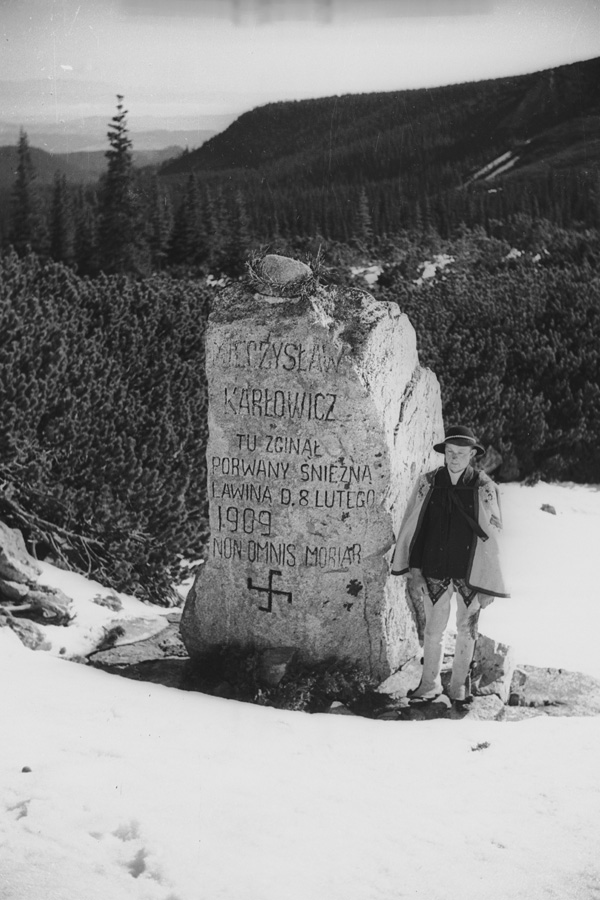
Mieczław Karłowicz (1876-1909) and Szymanowski were influenced by the Young Poland movement, a literary and artistic aesthetic not dissimilar to the Secession in Munich and Vienna, but with specifically nationalist elements.  Pointedly, Beczała and Deutsch paired the early Szymanowski songs with Karłowicz's settings of poems by the same Kazimierz Przerwa-Tetmajer . Indeed, both set the same text,  Czasem, gdy długo na pół sennie marżę (Sometimes when long I drowsily dream) which describes a strange, disembodied voice, heard in a dream. "I do not know if this is loive, or death, that sings" .  The piano part in Karłowicz's version is particularly sophisticated, suggesting perhaps Liszt or Chopin, though the style is distinctiely fin de siècle.  In Na spokojnnym, ciemnym morzu (On the calm, dark sea)  (op3 no 4 1896) the poet imagines sinking into oblivion. "Let me revel in Nothingness".  In recitals, reading the text while listening is not a good idea. You might get the words, but you cut yourself off from nuance and musical truth. Much, much better to concentrate on singer and pianist and use your intuition. Because Beczała and Deutsch are so very good at what they do, intuitive listening was surprisingly accurate.  The moody piano part suggested strange dissonance, and the edge in Beczała's voice suggested psychic anomie. The stillness in  W wieczorną ciszę (In the calm of the evening) (op3 no 8) is ominous.  Again, the poet disassociates from the world. perishing "in the dark emptiness".  The Przerwa-Tetmajer texts are so surreal that they evoke very fine expression from Karłowicz.   Ironically, the composer died young,  killed while skiing in the mountains.

Also from Karłowicz's op 3 are the songs Przed nocą wieczną (Before eternal night) and Zaczarowana królewna (The Enchanted Princess) settings respectively of Zygmunt Krasinski and Adam Asnyk, receiving relatively more straightforward treatment from the composer, but as evocatively performed by Beczała and Deutsch. Beczała has appeared in several Polish operas, including Stanisław Monicuisko's Halka and Straszny dwór  (The Haunted Manor) - please read about that here.  After the intensity of the very beautiful Karłowicz songs, the Monicuisko songs were rather more down to earth.  Monicuisko (1819-1872) reflected an earlier aesthetic than that of Karłowicz : more nationalistic, closer to Smetana than to the world at the turn of the 20th century.  Thus robust songs about sweethearts and spinning wheels, complete with atmospheric piano figures, and Polna różyczka so vividly sung by Beczała  that it was instantly recognizable as a setting of Goethe's Heidenröslein, without needing translation.  Then  Monicuisko's Krawkowiaczek (The Krakow Boy) who fools around but loves only Halka.  For an encore, another wonderful Karłowicz  song The Golden years of Childhood.  "It's my favourite" said Beczała : almost as well crafted as the Przerwa-Tetmajer songs but warmer and cheerier.

Thursday, 20 September 2018

Rattle LSO Barbican - Janáček Szymanowski Sibelius


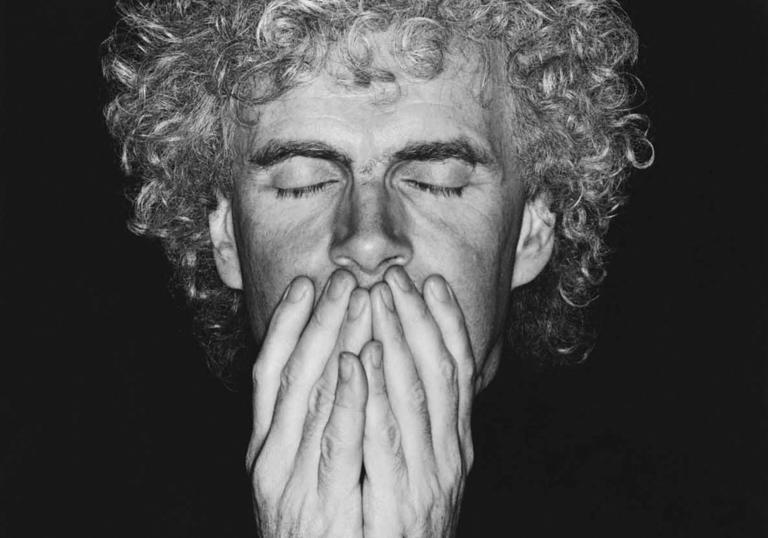
Sir Simon Rattle and the London Symphony Orchestra at the Barbican Hall with Janáček’s Sinfonietta, Sibelius Symphony no 5 and Szymanowkski 's Violin Concerto with Janine Jansen, following on from Sunday’s season opener where Rattle and the LSO did Birtwistle, Holst, Turnage and Benjamin Britten.  Please read more about that first concert in my review HERE which was a wonderful experience.  As always, with Rattle, intelligent, thoughtful programming.  Just as the thread in the first concert was "New Music Britain" linking Holst, Birtwistle, Britten and Turnage, the thread in this second concert might have been "Britain and New Music in Europe".  Janáček and Sibelius had huge followings in Britain from very early on, and Szymanowski became a Szymanowski hot spot more than 30 years ago, almost entirely thanks to Rattle's early championship.
Janáček, Szymanowski and Sibelius - three Rattle specilaities upon whom much of his reputation is based.

How I wish that I'd been able to get to both conecrts, since the LSO live broadcast omitted Syzmanowski, which I'd been looking forward to.  Rattle, who learned his Szymanowski from Witold Lutoslawski, made Britain a Szymanowski hot spot more than 30 years ago, when the Communists still controlled Poland, and weren't giving the composer the recognition he enjoys today.  Rattle's recordings are still the leaders in the field : you need to know them to fully appreciate the composer. So my regret at not hearing Jansen in the Violin Concerto is tempered by knowing there are alternatives.  She's done the piece many times, including with Rattle and with the LSO.  

Rosa Newmarch, a great musicologist, was aware of Janáček amost before he found his own instinctive voice as a composer late in life, promoting him passionately in Britain,sponsoring his visit to London in 1926.  In return, Janáček rededicated the Sinfonietta in her honour.  A precedent was established. Only ten years later Vítězslava Kaprálová, aged only 22, was invited to London to conduct her own Military Sinfonietta with the BBC Symphony Orchestra, a work which pays direct homage to Janáček, at a time when Czechoslovakia was being threatened by the Nazi regime.  Later Rafael Kubelík was to revive interest in Janáček at the Royal Opera House.  Rosa Newmarch was an extraordinarily influential person, working tirelessly for what she cared about and she  herself deserves to be given greater acknowkedgement.  Please try and get to the Oxford Lieder Festival on 16th October to hear Philip Ross Bullock speak about Newmarch, Janáček and the music of Bohemia, Moravia and Slovakia. It's followed by a recital of Janáček's seminally important Diary of One who Disappeared, with Toby Spence and Julius Drake. Please read more here.

The fanfare with which Janáček’s Sinfonietta begins was bracingly bright, the row of trumpeters aligned at the back of the orchestra a blazing sight. Though the piece was initially written to celebrate Czechoslovakia's military, it is as much about freedom and free spirits as about the military.  The sharpness of Rattle's attack heralded the transition to woodwind melodies, reminiscent of the pipes in a military band, but also reminscent of the sounds of the countryside.  Rattle's approach on this occasion (he's conducted it many times) was vivacious, very open-air.  I specially liked the way the fanfare resurfaced, with warmth and vigour rather than brass for the sake of brass.  Long string lines floated over resolute foundations, describing the buildings that loom over the city, making a nice contrast with the fourth movement where the trumpets lead a merry march, horns in accord.  At last we reach " The Town Hall, Brno" as the last movement is titled.  The kings, queens and church no longer reign, though their heritage informs the new Republic.  Those cheerfully awry rhythms might suggest the jubilation of the people. The return of the fanfare chorale thus created a sense of unity: past and future linked together with heady optimism.
Britain fell in love with Sibelius very early on. Indeed, the composer's popularity in the west contributed towards international support for the independence of Finland, an example of art influencing life.  Again, Rosa Newmarch was in on Sibelius fairly early on. Finlandia was heard twice at the 1906 Proms. Rattle's Sibelius continues a long British tradition forged by Beecham, Boult,  Barbirolli, Berglund and others.  Most British audiences grow up with Sibelius implanted into their listening DNA, and Rattle has been a part of that.  Rattle's Sibelius most certainly is to be reckoned with, not brutalist like Karajan, but more sympathetic to the other forces in the music.  Rattle in 2018 with the LSO is of course very different from Rattle with the City of Birmingham Symphony Orchestra twenty years ago, but this was a very good performance.  Much of the stylishness of the Berliner Philharmoniker may have rubbed off on Rattle, and the LSO are sounding more inspired and classier than ever.  A "warm" Sibelius 5, with grandeur and magnificence, but also human and humane : Sibelius with a soul, so to speak, and all the better for that.  Livestream here for 30 days

Sunday, 24 September 2017

Szymanowski Songs for tenor - We mgłach

Karol Szymanowski We mgłach (In the Mist)  Songs op 2. 5, 7, and 11 with Rafał Majzner  and  Katarzyna Rzeszutek  from Dux Recordings, in Poland, continuing their specialist series on Szymanowski which began with releases of his music for solo piano.   Majzner is a Szymanowski specialist. He has written extensively about tenor roles in Szymanowski's operas, roles which are often critically clues as to meaning.  Szymanowski's songs for soprano and

piano are very well known but his songs for tenor less so, making this

disc a must for anyone interested in this most unusual of composers. 

This recording is therefore a must for anyone into Szymanowski, but with one caveat : No texts, no translations.  Since the disc is aimed at Polish audiences, that's no big deal.  The rest of us need to do homework, but that's a good thing. English speakers are so insular that they need to make the effort to find out about Polish culture, history and intellectual life.  Some texts are available (ie Lieder.net). Although there aren't any good translations, in a way that's good because it means employing listening skills - understanding the emotional content, responding to the sound of words and the shape of phrases. Active listening, not passive, involving the mind.  That's the way to learn.  (Help greatly welcomed !). Perhaps Dux Recordings could put the texts up on their website ?


The four sets of songs on this recording date from 1900 to 1905, at a very early stage in Szymanowski's career, when he was still a student.  Significantly, all are also settings of living poets, contemporaries of the composer.  Szymanowski began Sześć pieśni (Six Songs), his op  2, aged only 18.  Although the composer was to make his name as a cosmopolitan sophisticate, these songs show that his roots in Polish culture went deep. The texts here were by Kazimierz Przerwa-Tetmajer (1860-1940) . Przerwa-Tetmajer was both a nationalist and modernist, given that Secessionism and Symbolism were forces for renewal, all over Europe.   Each of these poems is brief, but the imagery is so concentrated that meaning is left deliberately elusive.  The first two songs, in a minor key, are autumnal, but the strong piano part suggests resolve. In both songs, the image of a woman who may no longer exist. With the third song,  We mgłach (In the Mist) the vocal line curves mysteriously, like the mists and streams in the evening cool.  What's happening ? "Bez dna, bez dna! bez granic!" sings Majzner, (No bottom, no bottom, without borders!).  In dreams, the poet hears mysterious voices calling . In the last song, Pielgrzym, the line rises, swelling with hope. "Gdziekolwiek zwrócę krok, wszędzie mi jedno, na północ pójdę, czyli na południe", (Everywhere I turn, from the north I will go south)   Immediately one thinks of the Persian Song of the Night in Szymanowski’s Symphony no 3 and in the Shepherd in the opera Król Roger whose singing changes the King's life. 

Szymanowski's Trzy fragmenty z poematów Jana Kasprowicza op 5 1902 (Three Fragments from Poems by Jan Kaprowicz) are epigrams, short and succint.  Majzner's delivery is elegant yet emotionally expressive.  I can't find translations, but the songs are intriguing.  Łabędź (The Swan) op 7 from 1904, to a poem by Tadeusz Berent, is intense : whatever this swan might be, it's not serene.  

Most intriguing of all, Cztery pieśni (Four Songs) op 11  (1904-5) to poems b y Tadeusz Micinski (1873 - 1918).  A long piano line moves purposefully forward. The vocal lines form patterns, words repeated with different variations.  Something obsessive ?. "Straszą mnie widma i tajemne zbrodnie" (I'm scared of ghosts and secret crimes ?)  Majzner's voice rises in heroic exclamation.  What are these references to Druids and Thermopylae ? In the second song, we are in an enchanted forest, like a child afraid of fairy tales.  The vocal line elides, the piano part seductively leading onwards.   Are we in the world of magical fantasy, tinged with menace, a theme that runs so often through Szymanowski's other work ?  The pace quickens, alert with anticipation, for the sounds are seductive and the imagery rich.  When we reach the final song, Rycz burzo, the rhythms roll in full flow. Turbulent storms, wildly churning figures in the piano.  `References To Prometheus and the mountains of Pelion.Heroic   singing from Majzner, almost a Heldentenor.  Defiance. But the piano rumbles ominously and the song ends, in hushed minor. "cichy, bezkresny niepojęty ból!" (quiet, endless, inconceivable pain)

Hopefully, Dux recordings will continue their saga through Szymanowski's songs and other works 

Please see my other pieces on Szymanowski by clicking on the labels below.

Sunday, 17 May 2015

Superb new article on Szymanowski King Roger


Wonderful article on Karol Szymaowski King Roger in Soundproof Room HERE.   This is the sort of well-informed, thoughtful writing I love to read. One only has to listen to Szymaowski's music to realize that it isn't "backward looking" or "Germanic". Highly recommended ! .

Numerous articles on Szymanowski on my site too, follow the label on right "Szymanowski"

Tuesday, 5 May 2015

Text sublimated : Pappano, Royal Opera House Orchestra


Ambition achieved ! Antonio Pappano brought the Orchestra of the Royal Opera House out of the pit and onto the stage, the centre of attention in their own right. Concert performances are nothing new at the Royal Opera House . Pappano's been doing them for years. In his capacity as Music Director at the Accademia Nazionale di Santa Cecilia , he conducts orchestral repertoire most of the time. So it makes total sense that the Royal Opera (and Royal Ballet) should inaugurate a new series of concert performances to showcase their orchestra. Even more significantly, though, the experience of opera, or ballet, is much enhanced by an understanding of the musical background and context.

Orchestral concerts can be a richly rewarding extension of the opera and ballet experience. People go out for many different reasons, and combinations thereof. Some go for megastar singers, or dancers, or for colourful costumes (whatever the actual nature of the work being performed). Some may even go for the pleasure of being outraged  Before this concert, Pappano specifically mentioned Karol Szymanowski Król Roger, the sensation of the season, (reviewed HERE)  The opera is so unusual that it's more productive to approach it, not as a stand-alone opera, but through the perspective of the composer's music as a whole.  Its themes run throughout Szymanowski's output.  It's very closely related to his  "The Song of he Night", Szymanowski's Third Symphony in particular. No Szymanowski song symphonies or orchestral songs this time, though, but  works by Ravel, Chausson and Skryabin, his contemporaries and influences.

Opera orchestras, unlike symphony orchestras, play the same piece repeatedly through a run, and don't usually venture far from the basic canon, so it must be refreshing to tackle new repertoire. Yet their experience with drama and dance give them an edge. As soon as they launched into Maurice Ravel's " Une barque sur l'ocean", from Miroirs, we could hear the surge of giant waves, as vividly played as if the music were illustrating some grand piece of theatre. The piece was originally written for solo piano, but orchestrated by Ravel himself. One could almost see the ocean swell, and imagine the tidal surge animating the waters.  In the imagination,  one could envisage the barque sailing towards unknown adventures. Shéhérazade immediately came to mind, an "opera" without words or voices, telling a glorious, dramatic story. "Alborada del gracioso", also based on Miroirs revealed another mood. A guitarist, possibly Spanish, is playing.. Exuberant pizzicato suggest the plucking of strings, and the fast moving feet of dancers. The ROH orchestra is, of course a "dance band" as Pappano has said. Instinctively, they understand the relationship between music and physical movement. 

Anna Caterina Antonacci brought diva glamour to Ernest Chausson's Poème de l'amour et de la mer. Yet again, the orchestra's flair for dramatic colour revealed itself.  Although Antonacci is a star, and sang expressively, this time, I, at least, was paying attention to the interplay between instruments, the abstract "voices" over which the solo voice wafts.  Again, we heard the surge of the seas, reflecting the passion of the love song,  The orchestra describes meaning so vividly that the meaning oif the text is amplified without obscuring the main vocal line.

Perhaps Pappano wanted to inject a bit of comic  relief between the florid intensity of Chausson and Skyriabin. Hence Leonard Bernstein's Fancy Free. There's a Royal Ballet connection, since the piece was conducted by Bernstein himself at Covent Garden in 1946.  It's a chance for the orchestra to demonstrate different styles , eg jazz, big band music and so on, with some lively parts for solo players to "dance", as dancers might, in front of the ensemble.  It's clever and cheerful for the occasion, but one wonders if West Side Story, which I love, might be the closest Bernstein got to the emotional depths of opera. 

And thus to Alexander Skryabin's Le Poème de l'exctase, with which the concert reached its heady climax. Wave after wave of extravagant, impressionistic chromaticism : perhaps such ecstasy is too extreme to be confined within the parameters of text.  In many ways, this, too is a song symphony though the singers are invisible, sublimated into instrumentation.  Skryabin simply supplies titles : "His Soul, in an orgy of love" and "The realization of a fantastic dream".. The listener interprets meaning through imagination. A hundred years after its premiere,  Le Poème de l'exctase, is still so shockingly avant garde that the concept of words abstracted into music still unsettles some.The Szymanowski connection is very strong indeed. King Roger dreams, tantalized by fantasies of sensual discovery.  ends with a cataclysmic blast of aural light,. Has King Roger  found apotheosis  Has he, too, discovered that his god is as beautiful as himself ? Skryabin's  Le Poème de l'exctase, also ends in a blaze of dazzling light, so powerful that I had to cover my ears so as not to be overwhelmed.   The opera and tone poem are very different but very much connected. Skryabin's title for his third movement is "The glory of his own art", a Nietzschean triumph of will, perhaps, or a statement of faith in the transformative power of art. Entirely in tune with the values of Król Roger

This article appears also in Opera Today

Saturday, 2 May 2015

Penetrating Szymanowski Król Roger Royal Opera House


Karol Szymanowski Król Roger  at the Royal Opera House, London. Szymanowski originally called it a "mysterium".  What is the key to the mystery that is Król Roger? What does the work mean, and why does it defy  most conventional measures of operatic form?  Yet that's precisely why it fascinates.  Just as dreams don't have boundaries, the secret is to approach it for what it is. Kasper Holten's production is so psychologically and musically astute that it gets very close indeed to the soul of this quirky,and highly original work. 

The burgundy and gold luxury of the Royal Opera House auditorium is hidden in darkness. Strange sound emerge from the pit.  We're propelled straight into the drama without an overture. It's unsettling.  Are we eavesdropping on a secret  religious ritual?  The chorus sing with somnolent torpor, as if hypnotized by orthodox incantation. Yet this music also, oddly, suggests the rhythmic breathing of deep sleep.

A huge head fills the stage. Is it King Roger, sleeping, about to embark on a tantalizing voyage? The head is a masterstroke of stage design (Steffen Aarfing).  For we feel literally close to the man it represents.  It's an inert figure, yet seems to come alive, with subtle lighting (Jon Clark) and video projections (Luke Halls)  that move and change with the music.  King Roger becomes human, the deeper he sinks into sleep. Sleep, dreams, images of night and stars, nebulous illusion - themes that recur throughout the libretto  and in the abstract music in the score. Sudden alarm! The Archbishop and deaconess (Alan Ewing and Agnes Zwierko) intone like Guardians of the psyche. The chorus rage, demanding that King Roger kills the stranger in their midst.

Significantly, Szymanowski gives little background information as to why this Good Shepherd (Saimir Pirgu) might be.  He just "is", plucked from nowhere by his God, who is, uncannily, as beautiful as he is. Pirgu's timbre is golden and seductive, evoking the images of sunshine,smiles and embraces in the text.  The god is Dionysius, of course, the god of wine, intoxication and altered realities. In vino veritas, as in dreams.. There's no need to dress the Shepherd up as bucolic boor or metallic robot (as in productions by Warlikowski and Pountney).  Here, he's a handsome lad in sharp threads, exactly what a King might fall in love with, were he so inclined. One of the joys of Holten's production is that it faces the idea of sexual repression with common sense and dignity. A King and a strict Christian is supposed to marry and reproduce, whatever his basic instincts. As the King's chancellor, Edrisi (Kim Begley), comments, the King hasn't kissed the Queen with passion for quite some time.

The Head turns round, at a leisurely pace, allowing us to exult in orchestral colour and complexity.  Antonio Pappano was in his element, conducting the orchestra so they seem to be enjoying themselves, inspired by the myriad colours and moods with which Szymanowski challenges them.  We hear Moorish themes, pungent and exotic, even an approximation of the ululating calls to prayer that ring across long distances. Indeed, the libretto specifically mentions, several times, that the call of the Shepherd rings out over long distances, arising, even from the waves in the ocean. We hear tambourines tinkle - gypsy calls, maybe, as potent to Eastern European imagination as the "Moorish" elements Szymanowski loved so well. The Shepherd's music is garlanded  by high-pitched violin obbligatos,  so typical of the composer that they're almost his fingerprint. Two harps were positioned in a box in the stalls circle, a stroke of theatre integrating sounds with visuals. 
 . 
In the Second Act, the Head is fully reversed, showing the innards of the King's brain, so to speak. He may live in a palace, but in his head, he's trapped in a maze of steps and corridors, with flimsy--looking handrails. Not much safety or comfort.   Now, King Roger is confronting his fears. Mariusz Kwiecień is the King Roger of choice these days, having done the part so many times  He started well, but was under strain, thoughtfully disguised as part of the characterization. In the interval, Kasper Holten told the audience that Kwiecień was unwell but had bravely agreed to go on anyway. Massive cheer, for the star and also for the way Holten communicated the problem. Dance is very much part of Bacchic practice, so there are dances in the score and references to dance in the text.  Thus it was a very good idea to use dancers to express the sexuality which Roger cannot  directly address.  The dancers (all male) writhed in orgiastic excess, yet were cheerful  and  cheeky (in every sense) . Full body suits, which revealed yet didn't reveal, also very much  in the spirit of the opera.  How could King Roger resist? There's more humour in this opera than one realizes. The business of passwords, for example, which anyone could guess. Part of the Shepherd's appeal is that he smiles a lot . He knows that one doesn't have to be "in control" to be happy.

Queen Roxanne (Georgia Jarman), seemed to have a good time, too.   After all , it was she who sang of mercy, persuading Roger to suppress the Id of Church and State and meet with the Shepherd in secret  Roxanne's part is fearsomely difficult, but Jarman was excellent. She projected well, blending volume with rich tone: a strong, charismatic portrayal, even though the character is a cipher, an alter-ego of the King.  Much of the time she was singing wordless vocalise. . In conventional opera, we're supposed to hear  the words, but in Król Roger, communication comes in many different forms, as in real life. King Roger can't articulate his deepest feelings, so the music does it for him, in abstraction.  Words in this opera are much more impressionistic. Visual images proliferate in the text with such abandon nhat they could not possibly be illustrated in concrete terms. There are references to jasmine petals scenting the breeze, and to lotuses on the Ganges (odd in a story supposedly set in Sicily) . But night-blooming lotuses are botanically impossible. Szymanowski's more interested in the cumulative effect of exotic images than in narrative logic.  In this sonic dreamscape, arias and recitative would go completely against the surreal mystery. Król Roger is the opposite of an oratorio where the message is clear. It's also not so much opera but a dramatic orchestral  tone poem with voices.

In Act Three, King Roger is back in the structure with which the opera began. This time, no Head, but as himself.   A strange theme of sacrifice enters, without explanation. Such is the logic of dream. The Shepherd has gone up in a cloud of smoke to the heavens.  A real fire smoulders on the ROH stage - you can smell the gas that feeds the flames.  Into this pyre, chorus members throw what appear to be books.  "Love, hate, all empty words" sings  Kwiecień   No rule books to follow, no formulaic rituals. What happens to Roger in the end?  We don't know except that he greets the morning sun with delirious joy.  A bright light shines from the roof of the auditorium.  Has Dionysius connected with Apollo?  Or on some more esoteric level, has Roger sensed a new dawn?  Or has he just woken refreshed from a night of subconcious imaginings? Szymanowkski leaves the answers open, and Holten doesn't impose solutions.  In dreams, the subconcious throws up clues,  but it's up to us to intuit the answers. This Royal Opera House Król Roger faithfully respects the composer and the originality of the music.  Would that audiences and critics knew the work so well. So perhaps  this Król Roger will help people start their own journeys into the wonderful world of Szymanowski. !

Please see my article Hashish Dream ? Szymanowski's Król Roger

Monday, 27 April 2015

Hashish Dream? Szymanowski Król Roger

Karol Szymanowski's Król Roger (King Roger) op 46, at the Royal Opera House, London, from Friday  My review is HERE. . Król Roger is remarkable, and deserves to be appreciated as a key work in 20th century opera.  There are no excuses for claiming that it's obscure. Simon Rattle championed Szymanowski more than 30 years ago. His recording, with Thomas Hampson as King Roger, remains a benchmark.  Indeed, Rattle recorded most of Szymanowski's orchestral output, an achievement for which he deserves respect. Since then, there have been numerous productions and recordings, and two DVDs. So how will London audiences react?  As always, the key to assessing any production lies in knowing the repertoire.

Szymanowski suffers from being stereotyped, pigeonholed into arbitrary categories. Of course he was influenced by Wagner - who wasn't?   It's not enough to repeat the old clichés about Strauss and Wagner  In any case French and Russian influences are much more relevant. Think Debussy and Scraibin, if one must.  Labels are a form of lazy listening. Any decent composer is unique. Szymanowski was quirky, individualistic, non-conformist  and highly original.  It's much wiser to approach Król Roger through an appreciation of his music as a whole than to shoehorn him into artificial categories.. No-one needs to know Szymanowski to appreciate Król Roger, but listening with an open mind, and heart, is a better start.

Szymanowski managed the feat of annoying both the Communist Party and the Catholic Church in Poland, so be warned! Beneath those luscious chromatic colours lies a much more disturbing, uncompromising view of the world.  Król Roger scandalized audiences at its second performance in Duisberg in 1928. Presumably Warsaw audiences at the premiere were more discreet.. What manner of opera was this, that sounded lush but dripped emanations of poison? Quite likely some of the ROH audience and especially the press won't get it at all, since the underlying ideas are still subversive.  Król Roger remains a "mysterium"as the composer originally described it.  Perceiving that mystery is crucial to interpretation.

Although Król Roger is set in medieval Sicily, neither Szymanowski nor his librettist, Jarosław Iwaszkiewicz, had any illusions that it was anything other than a work of the imagination.  A signature of Szymanowski's style is that he blends in alien, exotic elements,, usually Islamic,  as alternatives to conventional Northern European values. and disguise his ideas under a wash of romantic adventure, so their threat will be missed by those who don't get past the surface. Someone once described Szymanowski's fantasies as "a hashish dream", but sometimes, in dreams, as in other altered states, lies wisdom.

It's significant that in Król Roger, Szymanowski makes explicit references to the Orthodox Church. The opera begins without an overture, leading straight into what sounds like church ceremonial   A strange point of entry, but right, since. Król Roger is  very much spiritual contemplation cloaked as drama. The choruses show that the King is very much subject to the power of the Church he serves. He's not really a free agent. The music hangs hypnotically, suggesting a kind of paralysis of the soul, functioning by ritual rather than true belief.   A hashish dream in itself ?  Into this, the Shepherd appears, upsetting certainities.  The music and stage directions imply that he's a manifestation of Dionysius, with culy hair, a "wild man" who comes from the unknown and from a suppressed, ancient past. That he's a shepherd, like Jesus, makes him all the more unsettling for good Christians.

"My God is as beautiful as I am" the Shepherd declares.  Eventually, smiling elusively, he stares directly into King Roger's eyes. The King cannot remain as he was. This homosexual sub-plot runs through much of Szymanowski's work. But the Shepherd unleashes repressed sexual needs in those around him, including the Queen, Roxana, who stands up to the mob demanding his death. Again, the music speaks more strongly than words. At first, Roxana sings words,  but gradually transcends text into abstract vocalise, almost as if she's in a delirium beyond the constraints of articulate expression.   Listen to Roxanna's Song, a tour de force of primal emotion which, in 1926, was very much ahead of its time.  Even Lulu seems tame, .It's significant that Boulez discovered Szymanowski  through scores in his youth but didn't get round to recording until much later.  The germs of Boulez's innovative way with text may well lie not far from Szymanowski and Król Roger.

King Roger undertakes a pilgrimage, ending up in the ruins of an ancient temple, rather like Tannhäuser in reverse, though both reject pure, chaste gods for something more subversive.  Roger doesn't opt to follow the Shepherd, though, but makes his own choice, whatever that might be, as he greets the dawn. The Sun is a powerful, primeval symbol, the emblem of Apollo, of the Incas, of Louis XIV and more.  It's the source of life and light. Again, the music speaks louder than words.  Szymanowski almost certainly would have known of Thomas Mann's Death in Venice (1912). Indeed, he wrote a novel of his own,  Efebos, the manuscript of which is now lost.

 Perhaps the best short introduction to  Król Roger is to listen to his masterpiece, his Symphony No 3 "The Song of the Night".  Read more about that HERE.  In the mist of intoxicatingly deliriious music, a lone voice rises from the orchestra singing about a love that can only be expressed in the darkness of night.  In his non-vocal music, particularly the Violin Concerto, Syzmanowski employs pitches so high they almost escape the human ear, held by legato so extreme they're almost impossible to carry off.  Even in relatively lesser works like The Love Songs of Hafiz, or The Songs of an  Infatuation Muezzin or even Harnasie  the vocal lines see,m to defy gravity and the limitations of voice. . Again and again,  recurring themes of night. stars, love, and repression, that mark Król Roger, clothed in dazzling chromatic colour and stratospheric timbres, designed to seduce and yet, always elusive, to deflect the gaze of insensitive observers from the secret mysteries within.


Above, I've used contemporary images of Szymanowski, which underline the period in which he worked.  Król Roger dates from the 1920's, although its origins begin much earlier, with Szymanowskli's fascination with the mythical East and what it symbolizes. Although a Polish nationalist, Szymanowski's interest in folk music came at a later stage in his life. Like Bartók, Szymanowski looked forward, even with ancient material, like the legend of Dionysius. 

I don't know what Kasper Holten's new production of Król Roger at the Royal Opera House will be like, though a big plus is that he's got the best Roger in the business at the moment, Mariusz Kwiecień, who sang the part in the Opéra Bastille Król Roger a few years ago, directed by Krzysztof Warlikowski and conducted by Kazushi Ono. Musically, that's the best version available,  and stage-wise extremely perceptive.  Warlikowski layers his visuals so  the singers, chorus and film projections are in dream-like reverie, luridly but ambiguously coloured, very much in the spirit of the music and the composer.  There's also a Pountney production for Bregenz which I cannot stand, because everything's reduced to clear outlines and brightly lit, not helped by very average performances. There are others worth seeking out : Piotr Beczala sang The Shepherd fairly early in his career.  Please see my numerous other posts on Szymanowski,  on ROH and on 20th century music.  
Wednesday, 3 December 2014

Revenge for the Boundary Wall

Revenge for the Boundary Wall - an opera with a title like that has got be interesting..it's a short comic opera in four acts, by Ztgmunt Noskowski (1846-1909), a leading figure in the Warsaw music world of his time. read more about him HERE.  His orchestral and chamber music is relatively well known   On Polskie Radio,  you can download a selection of recordings.

Revenge for the Boundary Wall (Zemsta za mur graniczny) was one of his last works, completed in full piano score in 1908, and orchestrated for performance in 1926. It can be heard on BBC Radio 3 here and on a Polish website. Both are the same performance, from Warsaw last year.

Robert Gierlach (Czesnik Raptusiewicz /Cup-Bearer, baritone), Aleksandra Kubas-Kruk (Klara/Czesnik's niece, soprano), Wojtech Gierlach (Rejent Milczek /Notary, bass), Pawel Skaluba (Waclaw/Rejent's Son, tenor), Anna Lubanska (Postolina, mezzo-soprano), Ryszard Minkiewicz (Papkin, tenor), Dariusz Machej (Dyndalski, bass), Polish Radio Chorus, Izabela Polakowska (Chorus Director), Wroclaw Philharmonic Chorus, Agnieszka Franków-Zelazny (Chorus Director), Polish Radio Symphont Orchestra, Lukasz Borowicz (conductor)

Plesase see my numerous posts on Szymanowski and on other Polish composers

Sunday, 24 August 2014

Komsi Oramo Prom Russian (and other) Fairy Tales

Wonderfully evocative!  In BBC Prom 49, Sakari Oramo conducted the BBC SO showing how exotic dreams and magical tales still inspire creative art.  The soloist was Anu Komsi, Oramo's wife and twin sister of Piia Komsi, both coloraturas with such remarkable range that they've inspired several works written specially for them.. Although this Prom was billed "Russian Fairy Tales" it could well have been billed as a showpiece for Anu Komsi's exquisite singing. .

Ravel's Mother Goose Suite (Ma mère l’oye)  created the perfect mood. Lustrous, shimmering textures, sparkling with light and delight. Fairy Tales are beautiful, but strictly speaking they're wasted on children. As Bruno Bettelheim demonstrated decades ago,  fairy tales deal with the subconscious, and are a lot darker than they're made out to be.  Beneath the gossamer in Ravel's music lie details which suggest something more sinister. Hollow-sounding woodwinds, brass like the call of hunting horns. Could the high-pitched violins suggest pain and longing?  Do the horns suggest hunting, or death? Why is the princess of the pagodas, Laideronnette, supposed to be ugly? No answers.  In this magical realm answers mean less than dreams.

In Jukka Tiensuu: Voice verser (2012?),  Anu Komsi's voice operates like a magical force of nature. Her tessitura is so high it seems almost unearthly, and her projection so powerful that her voice seems to stretch into infinity. High winds and strings cry out, like high-flying sea birds.  Strings form elliptical sounds like waves.  Immediately I thought of Sibelius Luonnotar (more here) where the voice represents the primeval being who created the universe, after swimming for centuries in an endless ocean. When Komsi's voice switches from extended legato to sudden staccato, she makes gasping sounds that could be Luonnotar giving birth to the earth, stars and skies. Yet for all this extreme virtuosity, this is a quirkily humorous piece which  suggests play and joyful interaction between singer and orchestra. This is music with wit and and spirit, proving that "new" music can be fun and spark the imagination. We can also hear why so many are in love with Komsi's voice. She's technically superb but can also convey warmth and feeling.

Amazingly, Komsi recovered her voice after the interval, to sing Karol Szymanowski's Songs of a Fairy Tale Princess. Komsi and Szymanowski could have been made for each other. Both favour tessituras so high that that they seem to defy gravity.  Much of Szymanowski's output created parts for violin, where only the best violinists can sustain extended lines at the top of register. Komsi makes great feats sound easy. Szymanowski's fantasy was far more than lush reverie.  In the years before 1914, he visited the Middle East and North Africa, fascinated by the exotic sounds he heard. Like many composers in his time, Szymanowski was searching for alternatives to  western tradition.  There's nothing tame about this ulullating legato, these strange leaps up and down scales.

 In the first song, The Lonely Moon, the phrases cry out like imams calling the faithful to prayer, designed to carry over vast distances.  Perhaps this is intentional, for the mood suggests longing, reaching out towards something that can never be grasped. The trills and melismas in The Nightingale allow Komsi's voice to flutter like a bird trying to escape its cage. In The Song of the Wave, Szymanowski catches the idea of surging movement, sparkling arpeggiatos dancing over rolling rhythm. The ocean is beautiful, but the sailor might drown.  Whether the singer is lover or Nereid hardly matters. Szymanowski wrote the songs for voice and piano in 1913 orchestrating  the three above in 1933 when he'd rediscovered Poland and modernism. At this Prom we hear Sakari Oramo's new orchestrations for the three other songs,  sensitively  in keeping with Szymanowski's style yet sympathetic to the uniquesness of Komsi's voice. Infinitely better than the pointless, unidiomatic orchestration of Butterworth Andrew Manze used in his Lest We Forget Prom last week.

To complete this evening of exotic dreams, Rimsky-Korsakov Sheherazade. Yet again Oramo weaved his magic. The BBC SO played with great beauty, not disguising the little dark details that conceal what Sheherazade will be faced with if she can't spin more tales of fantasy.

Monday, 31 March 2014

Royal Opera House 2014-15 season analysed


The Royal Opera House's 2014-15 season is a good balance of artistic venture and business savvy. London must be doing something right with sales running at 96% capacity and HD broadcast attendance running neck and neck with live performances. When opera houses and orchestras seem to be imploding elsewhere, it's worth taking careful note of the ROH strategy.

Seven new productions in the main house, plus others in the Linbury Studio, mixed with regular revivals.  In tough times, it's easy for houses to play safe but that is not good for the long term health of the arts. The Royal Opera House thus offers a well-planned balance of familiar and new

Shock! Horror! the new season opens in September not with a glizty gala but with something truly provocative - Mark Anthony Turnage's Anna Nicole. Not only that, but with prices max £25. The catch is students only but that's a positive. It will get the kids into the house on their own terms with their own peers.  BRILLIANT idea. No doubt there will be spoilsports who think young people shouldn't be exposed to four-letter words, but that's patronizing. Kids are sharper than they get credit for. Do-gooding "outreach" means zilch if you don't trust kids to think for themselves. What happened to Anna Nicole was obscene and Turnage tells it like it is. Although I didn't like it at its premiere Anna Nicole grew on me the more times I heard it. I'm going again and taking a whole bunch of under 30's. Read more HERE.
 
Other revivals include Der fliegende Holländer with Bryn Terfel, Adrianna Pieczonka  and Andris Nelsons - definitely not to be sniffed at! Terfel is also singing his signature Dulcamara in Donizetti L'elisir d'amore. I'm also looking forward to Tristan und Isolde with Stephen Gould and Nina Stemme in the greatly misunderstood Christof Loy production, the first ROH production to face orchestrated booing. Booing is intimidation, the denial of artistic expression. But I guess those who get their kicks from bullying will be out in force. Read my "More tradition than meets the eye" HERE and  HERE.

 Very exciting fare for those who like interesting repertoire:

1. Umberto Giordano Andrea Chénier with Jonas Kaufmann, making his role debut. Any role debut with Kaufmann is big news, and he can probably do this notoriously difficult part better than anyone else in the business these days. This opera isn't standard rep because it's hard to pull off without ideal singers but with this cast (Kaufmann, Eva-Maria Westbroek and Željko Lučić) the ROH will probably leave the Met's current production for dead. Antonio Pappano conducts  He's been  confirmed Music Director "at least" until the end of the 2017 season.

2  Karol Szymanowski's Król Roger with Mariusz Kwiecień . The music in this opera is ravishingly beautiful, expressing the love that dares not tell its name. It's a fabulous opera but its depths aren't often plumbed as deeply - and disturbingly - as they could be. Kwiecień pretty much "owns" the part of Król Roger, the king hypnotized by a beautiful, mysterious stranger. I can't imagine Kwiecień being coy.  Kaspar Holten directs, which I think bodes well. 

3 Rossini Guillaume Tell, is one of the hallmarks of Antonio Pappano's career : Listen to his recording with his Rome band, the Accademia di Santa Cecilia.  He's bringing the same soloists to London - Gerald Finley, John Osborn and Malin Byström. We are in for a treat. This is another opera that's not easy to stage but will be directed by Damiano Michieletto. This is the French version of an opera by an Italian  It's not so much "about" Switzerland (which has French, Italian and German -speaking communities) but about freedom, the essence of creative art..

4  Verdi I due Foscaro . "Maybe", says Pappano, "not one of Verdi's finest works but important because it deals with an elderly father, who's seen a lot about life". Which may suit Plácido Domingo at this stage of his career - life imitating art. Francesco Meli sings the son and Maria Argesta (handpicked by Pappano in Italy), sings the son's wife.

5 Kurt Weill/Bertolt Brecht The Rise and Fall of the City of Mahagonny.  Kasper Holten says he wants to do a lot more operas from the first part of the 20th century, which should be really interesting. What lies in store in future years ?  A Janáček project, he hints. Possibly more? Rupert Christiansen complained that there was too much Italian repertoire and no Russian. So what, I thought. We can't have everything all the time.  We've had Lady Macbeth of Mtensk, The Tsar's Bride, Tsar Saltan and Eugene Onegin. This year we have Król Roger (in Polish) , decidedly "East" German Brecht and Weill and Czech/Moravian Janáček to come. Mahagonny is an excellent choice because it's quite flamboyant by Brecht standards, with big choruses and bizarre situations. John Fulljames should bring out its subversive anarchy well. 

6. Verdi Un Ballo in maschera. with Calleja, Hvorostovsky, Monastryka and Serafin. Worth going to for the singing alone. The director is Katharina Thoma, so be prepared for erudite, intelligent  dramaturgy. She does not dumb down: we're well advised to study the score as carefully as she does. 

7. Mozart Idomeneo with Matthew Polenzani, conducted by period specialist Marc Minkowski, in his debut at the Royal Opera House - hooray ! Director is Martin Kušej whose work in Zurich sticks in  my mind. Should we expect feathers?

 8. Philip Glass The Trial (based on Kafka) - specially commissioned for Music Theatre Wales, with which the ROH has a long and fruitful partnership . Lots on MTW and Glass on this site - please explore).

9. Harrison Birtwistle The Cure, a co-commission with the Aldeburgh Festival, with support from the London Sinfonietta, paired with Birtwistle's The Corridor, which I heard at Aldeburgh a few years ago.

10. The Royal Opera House's role in promoting British opera should not be underestimated. That's MUCH more important than promoting Russian opera! The ROH is also presenting David Sawer's Rumplestiltskin (read more here)  and The  Lighthouse Keepers.  Sawer is emerging as a genuine talent, so don't miss this double bill when it reaches the Linbury next year. This is a joint ROH/BCMG venture. Don't underestimate the importance of these partnerships.

11. Monteverdi L'Orfeo at the Roundhouse. This is significant because it links ROH's stagecraft expertise with the Roundhouse's extensive work with students and young people, which I've written about in some depth here.


photo of Pappano and Holten, : Johann Person, photo of Eva Maria Westbroek : Bill Cooper

Thursday, 25 July 2013

Happy peasants? Elgar Tchaikovsky Prom 16

Elgar Falstaff and Tchaikovsky Symphony no 4 at BBC Proms 16?  What as the rationale?  Jac van Steen and the BBC National Orchestra of Wales showed how strange combinations can affect the way we hear things, and not quite in the way we expect.

Tchaikovsky told his patron Madam von Meck the final movement in his Fourth Symphony described a village fair where the peasants were merry, oblivious of all suffering. 

"How lucky they are that all their feelings are simple and spontaneous. Reproach yourself and do not say that all the world is sad. Simple but strong joys do exist. Rejoice in other’s rejoicing."

Madame von Meck wouldn't have approved of Tchaikovsky's real inner life, so he told her what she wanted to hear.  Does hearing Elgar's Falstaff  in this context change the perspective on how we listen to Elgar?  Elgar was an outsider who adopted establishment values as a kind of emotional cover. On the other hand, he seems to have been a genuinely affable soul who liked having jolly japes. Falstaff is an inventive jaunt, full of joie de vivre. At the end, Falstaff dies but it's not Grand Tragedy.  Elgar loved it so much that he recorded his interpretation for posterity. Falstaff basks in the warm afterglow of late Edwardian innocence. Too much irony would spoil the dream. Van Steen and the BBC NOW played up its high spirits.

Van Steen paired Elgar's Falstaff with William Walton's Falstaff, or rather the fourth movement of a suite based on Walton's music for the 1944 film made during the Second World War when the populace needed cheering up. Like Madam von Meck, the audience didn't want to hear anything that might upset them.  I much preferred Elgar's joyful lack of guile. For Elgar, light hearted didn't preclude sincerity.

Between Elgar and Walton, Granville Bantock's Sapphic Poem (1906), a variant of the better-known Sappho, a large-scale piece for soprano and orchestra.There's an excellent recording by Vernon Handley and a very young Susan Bickley. Raphael Wallfisch was a superlative cello soloist. Performances as brilliant as this can "make" a piece. He followed with a section from Bantock's  Hamabdil (1919).

Fond as I am of Sappho  and the Sapphic Poem, there's something about Bantock that leaves me cold. He was obssessed by exotic fantasies, to the extent that nearly everything he wrote was a kind of technicolour travelogue. Last week at the Proms we heard a very rough and ready Szymanowski Symphony no 3 (more here). Szymanowski used exotic fantasy as a means of expressing musical and emotional ideas  For him, it was a means to an end. For Bantock, exoticism was an end in itself. Exoticism was his lifestyle statement, much in the way some people need to define themselves by the labels they wear and the brands they buy. Bantock was wildly fashionable in his time because he gave the public what they wanted to hear, without distressing them with anything too disturbing.

There a world of difference between Szymanowski's priorities and Bantock's florid flavourings. Since Bantock is this year's BBC Proms British Composer, we'll be hearing more. No doubt the Szymanowski comparison will come up, but it's wholly misleading.

Hearing Tchaikowsky's Symphony no 4 after Falstaff and the fake Falstaffs was like a bracing fresh breeze. Van Steen's approach was bracing. The turbulent motif in the Andante was unsettling, suggesting conflicts not easily resolved.  The crazy figures in the Scherzo seemed demented. Tchaikovsky said that the final movement represented peasants who didn't care about neurosis or self doubt. Madame von Meck read that as meaning "happy". For Tchaikovsky, perhaps, it meant that the world wouldn't understand people like himself, which is an altogether different interpretation.

Friday, 19 July 2013

Szymanowski Strauss Søndergård Stenhammer

Thomas Søndergård conducted Stenhammer, Szymanowski and Strauss at BBC Prom 9 (BBC National Orchestra of Wales). Why shouldn't we play with alliteration when far too much emphasis is placed on nationality and other relative irrelevancies?  Music is music whatever its "nationality". Narrow definitions of nationality ignore the reality of the creative imagination. Beautifully executed Stenhammer Excelsior  ending with a dramatic punch.Whether that's German, Swedish, Danish or Welsh, who cares ?  It's good music..

Karol Szymanowski came from a part of the Ukraine which became part of Russia when he was young. In later life he had a house in Zakopane but essentially he was upper class and international. If anything, his horizons were defined by dreams. Although he went as a tourist to romantic places, he inhabited them mainly in his dreams. Like so many buttoned-up Europeans, he could express dangerous ideas under the disguise of alien and exotic.

Søndergård conducted the fourth Szymanowski Symphony no 3 (Song of the Night) heard in London in barely 18 months. It's fast becoming a "greatest hit". Read my Scriabin on Speed and my review of the Eötvös at the Barbican.  Numerous posts on Szymanowski on this site. Søndergård's approach to Szymanowski leans towards Boulez's exceptionally lucid interpretation. Boulez responded to Szymanowski's sense of adventure and liberation. Under the cover of night, the poet (and composer) could express secrets otherwise too dangerous to reveal.  Søndergård shaped the murmuring rumble at the beginning with great portent, so the tenor emerged as if glimpsed in a clearing. In some passages, the BBC NOW played with a limpidity that made me think, oddly enough, of Britten's Sea Interludes, which also express dark undercurrents. The "dance" theme was also nicely done, though with rather less electric excitement than Boulez gives it. Søndergård's good at creating the thicket of confluent sounds, keeping individual elements, like the bright "footsteps", clear,.

Michael Weinius has a firm, authoritative tone. His "O nie spij, druhu, nocy tej" (O, sleep not, dearest friend this night") rang out with defiance. His timbre is harder than some tenors who've done the piece before, but it worked well, partly because the violin part was more understated than usual. The BBC Symphony Chorus and the BBC National Chorus of Wales were forthright rather than mysterious, so Weinius's strength provided good balance.

Last year at the Proms, Bernard Haitink conducted the Vienna Philharmonic Orchestra in an exceptionally wonderful Richard Strauss Ein Alpensinfonie An Alpine Symphony (read more here). It would be too much to ask for lightning to strike twice. Søndergård's traverse was very good in the sunlit passages. The orchestra was steady and sturdy. Hillwalking in the Brecon Beacons, or Snowdonia, perhaps. Great panoramas, and danger when the clouds descend and winter sets in. Not quite the extremes of the high Alps, though, but  Søndergård's interpretation fitted nicely with Strauss's good-natured humour.  The photo above (Bill Boaden) shows Tryfan, which I almost scaled but was driven back by inclement weather.


Monday, 20 August 2012

Summary - Edinburgh Gergiev LSO Brahms Szymanowski


Gergiev's Brahms and Szymanowski series at the Edinburgh Festival, ahead of the Barbican tour later this year, has majored in loudness and big climaxes, with a lack of dynamic variation or subtlety. Few of the works on the programme lend themselves well to this approach and this, combined with the surprising programming, has made the listening experience patchy. There have been rare moments when a less bombastic approach has crept in and some very enjoyable music has resulted. Several of these were in the final performance [link to review of this].

There have been some surprise hits too, in particular a good and illuminating account of Szymanowski's rarely performed Second Symphony, especially its theme-and-variation-style second movement. The concert including this is well worth going to, just for the opportunity to hear this particular work.

Hearing the initially surprising pairing with Brahms does find occasional points of illumination, such as the second symphony of Szymanowski's (a good account, see above) with the finale of the Brahms Fourth, and the so-called Haydn variations with both. One of the threads in parallel for the two composers which is brought into focus by hearing this unusual joint cycle is  that from an expansive middle period - for Szymanowksi perhaps his most individualistic and distinctive - there is a return to more traditional forms and influences.

Brahms's Fourth Symphony was found 'severe' by early listeners and collaborators such as Clara Schumann, and whilst I recognise the considerable achievement of its finale, I can appreciate this criticism and in some ways find his Second and Third symphonies easier and more enjoyable to listen to. There is something  more forbiding and austere  about the more academic and structured Fourth, where Brahms seeks to resolve the post-Beethoven differently by returning to Baroque influenced musical architecture but coloured and viewed through the lens of the Romantic era in which he lived and wrote. This however, was better served by Gergiev's possibly surprising approach to Brahms, which has tended – perhaps surprisingly - towards cool and technical, characterised by precision rather than feeling. It is almost as if he sought to overcompensate against the risk of bringing too much theatricality with him from the opera house, instead being at best rather controlled and at times almost impatient or even perfunctory.

Szymanowski, long inspired by travel and the exotic, in his late period looked more to his homeland and to overt influences of folk music, such as from the Tatra  Mountains where he made his home, which can be heard in the Fourth Symphony's third (last) movement. Unlike Brahms – one of whose greatest achievements  was the agnostic German Requiem – Szymanowski turned or returned to traditional religion, for example setting a very beautiful Stabat Mater, which is to be heard in London in 2013 and  a Litany to the Virgin Mary (contemporaneous with the fourth symphony and the second violin conerto heard here).

Alongside the return to the culture and religion of his homeland, he abandoned such rich orchestral colour and lush soundworld for a leaner, more ascetic aesthetic, brought out well in the moving performance of the Second Violin Concerto by Leonidas Kavakos. Both composers seemed to have returned to tradition from a high water mark of emotional expressiveness  and expansiveness, to look homewards rather than abroad and to the past rather than to the future in their late works, the last being a particualr disappointment to the emerging young composer Lutoslawski, who saw Szymanowksi as a leading force in Polish modernism and was disappointed by this conservatism.

The later works of both these composers being leaner and more pared down in their mood  meant though  that they were better suited to the style of playing here, hence the performances of these late works were more enjoyable. The softer, more mellow mid-period of both composers has suffered most, especially that of Szymanowski which calls for positive lushness, not merely for softness, delicacy or lyricism. The leaner more ascetic and more formal later works fared better. The good reception received on the opening night for the first violin concerto, which is of the Romantic middle period, was largely due to the excellent playing and local popularity of  soloist Nicola Benedettini.

One of the points to emerge from the programming in this cycle is that amongst Szymanowski's considerable output, works with a solo line  fare better for both audience and performers. A virtuostic pianist himself, and the close friend of a virtuoso violinist, he writes well for both of these instruments and for voice. The inclusion of one or more soloists seems to bring a welcome focus and make these works more readily coherent and hence more accessible. Most of the real successes of this series fell into this category.

In a recent interview, Gergiev – who is known for his command of the Russian repertoire and for his opera conducting - has expressed his desire to claim Szymanowski as a Russian composer and emphasise his Russian connections. This may go some way towards explaining why his interpretation of this composer's works emphasises theatricality.  (Interestingly, it is notable that arguably the most successful collaboration in overall terms of the entire cycle was with a fellow Russian soloist.) It is not, though, a position completely congruent with the stated aims of the promoters of the concert cycle, who wish to portray Symanowski as a European composer and to emphasise his links westwards rather than eastwards.

However, the listener may readily discern an influence or connection with several other composers when hearing Szymanowski, not only the somewhat tenuous one put forward here with Brahms. The Fourth Symphony might well suggest Ravel, but its Nietzschian inspirations are in common with Delius, in particular the Mass of Life, which I have already referred to, as well as that composer more generally, again a point I made here earlier. Russian inspirations and connections are not hard to make: not only Scriabin (like Szymanowski, an impressive pianist) – quite obviously – but also Stravinsky, and at times Rachmaninov. However, they are perhaps connections more on the fringes than firmly within the Russian mainstream.

What may emerge is that Szymanowski – who for much of his life viewed himself as a cosmopolitan and an explorer – was eclectic and influenced by many styles, experimenting musically and travelling widely. Perhaps Szymanowski  belongs not to Europe,  nor exclusively to Russia but both; and perhaps he is a universalist who is not tied to one cultural influence alone? This might well be how he would have liked to see himself and how he would have liked to be remembered.

There is an argument that rather than try to pigeon-hole his writing with one particular tradition or musical influence, it could more informatively be presented alongside a variety of composers and works with which it had relationships. It has been suggested elsewhere that Szymanowksi is best heard in small doses: perhaps a more sympathetic view would be that it is best heard alongside helpful programming of suitable repertoire.

It would almost seem that, as his 60th birthday approaches, rather than offer a valedictory tour of his best and best known repertoire, Gergiev – known for Russian repertoire and his association with the Kirov/ Marinsky  Opera - has set himself a personal challenge to conduct the music least suited to his style and temperament that he could find and came up with the camp, extravagant and indeed homoerotic Polish aristocrat Szymanowksi on the one hand, and and the measured but tender warmth of Brahms, backlit by the slow tide of the North  Sea, on the other. One might also wonder whether the objective was to explore different approaches, or to try to fit a one-size-for-all Russian-style performance to as many composers as possible? Is this the musical equivalent of the celebrity jungle challenge, or of driving tanks down the streets of Paris? The end result is rather like eating Turkish delight with steak, the steak being a bit tough and the Turkish delight having too much gelatine and not enough sugar!

So who benefits from this musical equivalent of the bush-tucker challenge? Probably the soloists - who all emerge well: Nicola Benedettini; Steve Davislim; Denis Matsuev and perhaps especially Leonidas Kavikos. Also, very much, Roman Simovic, leader of the LSO, who has had consistently good solos across several works.

Should London audiences go to this mishmash when it transfers to the Barbican? The final concert is well worth seeing, for the very dynamic chemistry at the front of stage in the second violin concerto alone, the good account of Szymanowksi four a further bonus. The second is also worth  going to, for the opportunity to hear  a live performance and a good account of the Szymanowksi two. If you enjoyed Eotvos' account of the Song of the Night, only go to this account of that same work if you want to be reminded how good that was. If you are – or might be – interested in hearing more of Szymanowksi, this performance cycle could give a very misleading impression and there are a number of more sympathetic interpretations  available on recordings, including a budget  set of the complete works issued by Naxos, which I have reviewed for MusicWebInternational, a bargain at under £20, good playing if patchy sound quality. It is regrettable that the admirable initiative to tour a major cycle of this composer's work so as to make it better known to audiences in western Europe presents  them with this mainly unsympathetic and idiosyncratic interpretation. If you want a good account of the Brahms symphonies, the LSO/ Haitink partnership  is not surpassed here, now available from the orchestra at a modest price, nor are any of the DG recordings.

Gergiev is conducting Tchaikovsky Cinderella on the final weekend of the Edinburgh Festival, and also at BBC Prom 52 on 22nd August

photo: Marco Borggreve