Showing posts with label Tippett Michael. Show all posts

Thursday, 18 April 2019

Andrew Davis : Tippett Szymanowski Debussy Barbican

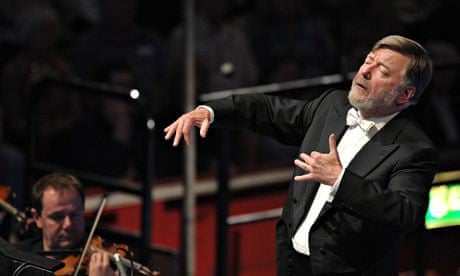
Andrew Davis photo: Chris Christodoulou, bBC
Andrew Davis conducted the BBC SO at the Barbican Hall in London. Top billing to Michael Tippett's The Rose Lake, almost exactly a year after Simon Rattle conducted it with the London Symphony Orchestra, with whom it has been associated since its premiere with Colin Davis in 1995. The Rose Lake is a video in music, inspired by Le lac rose in Sénégal, which Tippett visited in 1990.  As the angle of the sun changed, the colours in the landscape changed, a concept that translates well into a study of orchestral colour.  It was "a continuous five part composition, in essence a set of variations .....a song without words for orchestra", as Tippett wrote at the time.  The sections with programmatic titles mix with sections where only tempo gives clue to meaning, the twelve short segments moving forward in sequence, suggesting the passage of time. Dense but lucid layers of sound as beautifully structured as mosaic.  Andrew Davis, though, brings out its descriptive nature. The panoply of marimbas, vibraphone, and xylophone rustled, suggesting breezes, grasses, rushing water. The massed percsussion even suggested "African" sounds, woodwinds and brass calling like wild creatures against a savannah of strings.  In the organic "earth forms" and especially in the bird and bell sounds, The Rose Lake resembles the music of Olivier Messiaen. Thus the logic of programming it with masters of colour and transparency like Symanowski and Debussy.  A pity that Rattle paired it with Mahler Symphony no 10, with which it has almost nothing in common, since Rattle's feel for Szymanowski and Debussy runs very deep indeed, Rattle being one of Szymanowski's modern pioneers.  Rattle would have made the connections more strongly, but Davis presents it on its own  terms, less Messiaen and divine inspiration than tone poem but perfectly valid. 

Szymanowski's Violin Concerto no 1 dates from around 1916, when he was making a creative breakthrough. To quote Jim Samson, the foremost Szymanowski scholar, writing as long ago as 1981, "the orchestra is conceived rather as a reservoir from which may be drawn an infinite variety of timbral combinations....the string body...sub divided into many parts, further characterized by the most delicate combinations of arco and pizzicato, harmonics, sul tasto, sul ponticello and tremolando effects".As Jim Samson said in his book, The Music of Karol Szymanowski (1981), in the Violin Concert no 1 "the formal scheme is totally unique and represents an ingenious solution to the problem of building extended structures without resorting to sonata form". The almost chaotic proliferation of sub groups and themes within the orchestra, contrasted with extended violin cantilenas, soaring high above the orchestra, are so refined and so rarified that they seem to propel the music into new stratospheres, beyond earthly possibilities. Mandelbrot patterns, in music, mathematically precise, yet full of the vigour of natural, organic growth.  Though a contemporary of Debussy, Stravinsky and Bartók, Szymanowski's music defies category and is astonishingly prophetic. No surprise then that Boulez adored him, and made the keynote recording with Christian Tetzlaff and the Vienna Philharmonic Orchestra.  I enjoyed Lisa Batiashvili's more romantic approach with Andrew Davis and the BBCSO but to really get the full wonder of the piece you need Tetzlaff and Boulez.  

This concert concluded with Alain Altinoglu's suite on Debussy's Pelléas et Mélisande.  Please read more about the background HERE. Nothing whatseover wrong with suites. These days there's ill-informed prejudice against them butn they serve a good purpose. In the case of Pelléas et Mélisande a suite arrangement is perfectly valid, since  it focuses on the orchestral aspects of the opera - Debussy's only opera - presenting it almost as tone poem like La Mer. Thus it can be programmed more readily in the concert hall, bringing it to non-opera audiences. The opera itself  is by no means a typical narrative opera, so this orchestral approach has its merits. 

Monday, 23 April 2018

Valedictory Mahler 10, Tippett The Rose Lake - Rattle, LSO


Simon Rattle and the London Symphony Orchestra in Michael Tippett The Rose Lake and Mahler  Symphony no 10  (Cooke III performing edition) at the Barbican, London.   Mega mega high profile, advertised a year ago, livestreamed internationally and broadcast on the BBC.  Members of the LSO in white tie.  In the audience - Marina Mahler, grand daughter of the composer and Colin Matthews, one of Deryck Cooke's team. While still a teenager, Matthews (b.1946) was so interested in Cooke's work that he contacted him : the rest is history.  Interval features are usually time for tea, but Matthews is worth listening to as he sheds new light. The symphony will never, ever be "complete", and that is its fascination.  The challenge, in performance, is to present it with a sense of open-endedness and possibility.  Rattle took the last minutes sedately, for they are too precious to rush through, letting them breathe and rise, like the finale of Mahler Symphony no 9, dissolving into infinity.  Even more potently, he drew the connections between beginning and end - shrill strings reminiscent of the "death scream" against darker, warmer hues,  almost, but not quite resolving the duality in the first movement. In so many ways this duality is the heart of the entire work, but  poignantly, it hangs tantalizingly unfinished.  Very sophisicated, and very moving.
Rattle's Mahler springs from a very long British tradition, which goes back many decades.  As a music student, Britten bought Horenstein's 1927 recoirding of Kindertotenlieder and drove his friends nuts playing it over and over.  After 1933, the influx of emigrés - including  Bertholdt Goldschmidt - strengthened the connections. Rattle, like so many others, imbibed his Mahler from Walter, Barbirolli, Haitink, Horenstein etc. all of whom were active in Britain. Rattle's Mahler thus reflects a wider European tradition, as opposed to, say, the Bernstein mould.  From what we now know about Mahler,  this tradition better reflects the composer himself, which specially pertains to this last work.
The Adagio began with exquisite refinement : gossamer textures floated, the yearning string lines enhanced by the entry of a deeper, more resonant theme.  The horns break away, as if they're leading us further into the realms of Mahler's creative imagination.  Perhaps these two themes represent Mahler and Alma, his "ewiger weiblicher" Muse.  The relationship was central to Mahler's creativity, so background knowledge does impact on performance practice.  Rattle judged the duality with poised balance, but pointedly highlighted the fragile figure before the final return of the "Alma " theme, shaded by horns.  As so often in Mahler, equanimity even born from struggle, cannot last. When the "scream chord",was released a cataclysmic blast of near dissonance.  The allusions to alpine meadows returned, but muted, tinged with melancholy.
The swaggering Weltlauf  in the wild first Scherzo brutally mocked the refinement of the Adagio.  The world runs on, whether it suits us or not. No neurotic self pity here : not Mahler's style.  The rapid changes of meter and tempo were well defined, but not necessarily manic, which is no fault, since the movement ends with glorious, exuberant vigour, tautly defined, heralded by trumpets which in Mahler signify forward movement, not stagnation.   This time the dichotomy between themes feels dangerous, the throwing down of a creative gauntlet?  Far from being neurotic, Mahler was entering a new phase in life, and possibly new creative challenges.  The jerky figures in the strings, winds and brass felt deliciously wicked.   The Purgatorio is short but structurally important, linking the first and the more complex second Scherzo.  On the title page of the second Scherzo, Mahler writes “The Devil is dancing it with me! Madness, seize me … destroy me! Let me forget that I exist, so that I cease to be.” But a careful observer will note that Mahler then adds “dass ich ver ….” (so that I ….) and trails off without completing the idea. It’s a preposition, but this whole work is a kind of preposition, well served by Rattle's non-dogmatic touch.

A delicate yet quirky waltz circulates through this movement, in counterpoise to the demonic tensions. Significantly the lone voice of the violin is joined by other individual voices, including oboe, flute and bassoon.  Yet where was Mahler heading ? The brooding tuba heralded the heavy tread of the "Fireman's Funeral" in the Finale.   Alma and Mahler had watched the funeral, of a fireman from their hotel room.  Only Alma knew what that meant to the composer, so we can only speculate in musical terms.  Though there are many funeral marches in Mahler, this one's particularly chilling because it's so uncompromising, muted horns and trumpets, bassoons and tuba in solemn procession.  Yet a flute sang, its voice rising upwards : like a bird, like a soul, free of worldly constraints.  Though the tuba still mourned, solo trumpet led the orchestra forward, proceeding quietly but with the poise with which Rattle marked the first movement. The "death scream" returns, but now less strident, more integrated into the whole.  A wonderful performance, even by the standrds of the LSO at its best.   Though Ratlle has conducted numerous Mahler 10's,  this was one for the ages.

A remarkable programme, too, beginning with Tippett's The Rose Lake.  There's little connection between Tippett's The Rose Lake and Mahler 10, but  who cares ?  This performance was in itself mega high profile,  since it's not often heard live, which Tippett fans would have been anticipating all year.  Rattle has always been good at developing repertoire, and part of his remit as Music Director of the LSO is to promote modern British music.  Please read HERE about his keynote concert at the start of the season where he conducted an eclectic programme of  Elgar, Birtwistle, Knussen and Adès.  More to come !  Sir Colin Davis conducted the LSO in the first recording of the piece twenty-one years ago, and Richard Hickox conducted the BBC National Orchestra oF Wales in 2005.  Those versions very different, as was this performance with Rattle, which was easily up in the same league as Davis and Hickox, the LSO sounding revitalized, playing better than they've played in years.
Ostensibly, The Rose Lake is a video in music, inspired by Le lac rose in Sénégal, which Tippett visited in 1990.  As the angle of the sun changed, the colours in the landscape changed, a concept that translates well into a study of orchestral colour.  It was "a continuous five part composition, in essence a set of variations .....a song without words for orchestra", as Tippett wrote at the time. 

The sections with programmatic titles mix with sections where only tempo gives clue to meaning, the twelve short segments moving forward in sequence, suggesting the passage of time. Dense but lucid layers of sound as beautifully structured as mosaic. I thought of Birtwistle Earth Dances, but lighter and shining.  In the organic "earth forms" and especially in the bird sounds, I thought of Olivier Messiaen, who was also fascinated by radiant aural colour and keyed percussion.          
Wednesday, 19 February 2014

King Priam and Paul Bunyan ETO

The worst of Britten and the best of Tippett?  English Touring Opera presents Benjamin Britten's Paul Bunyan with Michael Tippett's King Priam at the Linbury Theatre, Royal Opera House. HERE IS MY RE£VIEW OF PAUL BUNYAN. The combination is interesting on many levels. Ideally both operas should be considered in relationship with each other, though I don't really expect this to be done. But it's worth a thought because this combination doesn't often come around. ETO is most definitely to be admired for mounting this ambitious pairing.

Both operas employ large casts, but with relatively little depth of characterization, almost large oratorios more than opera in the usual sense.  Labels like "comic operetta" are meaningless in themselves unless analyzed. Paul Bunyan is whimsical but it in its own way it deals with isssues even more complex than Tippett addresses. In 1941, Britten was experimenting with a new kind of music theatre. Peter Grimes was just a few years away, but by then Britten has learned to use music to create personalities who feel authentic and involve us in their dilemmas. King Priam, written 1958/61, is shaped by the composer's need to express theoretical themes in the guise of narrative. Perhaps it's significant that Tippett's great masterpiece, Boyhood's End, grew from the connection between Tippett, Britten and Pears. The textual perambulations mesh well with Tippett's setting. It's a wonderful piece. Yet one wonders what Britten would have done with it, given that the subject would have been so dear to his heart.

Britten's Paul Bunyan is usually mounted as if it were a straightforward musical about America. But is that what it really is? Taking Britten (and Auden)  at face value,  prettified is never a good idea. Paul Bunyan is a curious beast. Sometimes it sounds like a parody of a Broadway musical, even less rugged than a prettified Hollywood western. The rhyming couplets are deliberately faux-naive. Britten is Tourist in the Redwoods.  He's not even attempting realism. America, or the idea of America symbolized by the Paul Bunyan myth, meant something different to him from the America that surrounded him when he went there in April 1939, before the outbreak of war, when Britons still believed that Chamberlain could hold Hitler at bay. Britten-haters use his sojourn in America to attack him for being unpatriotic, ignoring the fact that he returned at some danger to himself and joined the war effort in other ways than by fighting. So what was Britten searching for when he went to America?

Far from writing a hymn to Americana, in Paul Bunyan Britten engaged with the ideal of America as Arcadia, knowing full well that ideals often don't work out in reality. The "brave new world" he was hoping to find turned out to be just as crass as the Europe he'd left. Britten knew about McCarthy and the purge of Un-American intellectuals. Some years ago Donald Mitchell, the eminent Britten scholar, was doing some research under the Freedom of Information Act and came across a letter signed by J Edgar Hoover himself in 1942 condemning Peter Pears, and another from 1967 condemning Britten. In both cases, the "evidence" is heavily blacked out. "A strange footnote", writes Mitchell, "a rare insight into a disreputable feature of 20th century politics in America and nearer home".Indeed, Peter Grimes clearly deals with the persecution of individuals by a mob of repressed conformists desperate to impose their paranoia on what they don't understand.

So the clumsiness of some of the musical writing in Paul Bunyan is in fact artistic licence. Parts of the piece sound corny because what they depict is corniness. Like Peter Grimes, Paul Bunyan and Babe are too big for their boots in a world where pettiness rules. Paul Bunyan is a stylized vision of  "a Forest, full of Innocent Beasts. There are none who blush at the memory of an Ancient Farm, None who hide beneath dyed fabrics a Malicious Art ".

"It is a Spring morning without benefit of young persons. It is a sky that has never registered weeping or rebellion.............It is America. But Not Yet. 

WANTED: Disturbers of Public Order,. men without foresight or fear 

WANTED:  Energetic Madmen, those who have Thought Themselves a body large enough to devour their dreams 

WANTED: The Lost, those Indestructibles whom Defeat can never Change. Poets of the Bottle, Clergymen of a Ridiculous Gospel, Actors who should have been Engineers, and Lawyers who should have been Sea Captains. Saints of Circumstance, Desperados, and Unsuccessful Wanderers and all who can hear The Invitation of The Earth. America, youngest of her daughters, awaits the Barbarians in marriage"

The words ring out with the false theatricality of a "Wanted" poster in the Wild West. The words are framed by a woodwind melody that might evoke birdsong in a virgin forest. But note its sour tone. This is no Wood Dove. Britten's Paul Bunyan may not know fear but he's no Siegfried.


Thursday, 5 December 2013

Mark Padmore Michael Tippett Wigmore Hall

In the first of four concerts at the Wigmore Hall featuring the music of Michael Tippett, Mark Padmore joined the Heath Quartet in a recital which included Boyhood's End.

If the jury is still out on Tippett, Boyhood's End  (1943) is a masterpiece. It sets a marvellously written poem by W H Hudson (1840-1922). Hudson grew up in South America, where he spent an idyllic childhood roaming  largely free of adult supervison.  Plants and birds are meticulously observed, as if the act of describing them might bring them back to life, in a far grimmer, conformist England. The lines are long, almost prose-like. Hudson wants to lie back, gazing at the sky "peopled  with millions and myriads of glistening balls of thisteldown, ever floating by" The words impose a structure onto the piece which Tippet observes, restricting the piano part (James Baillieu) so it's minimalist enough not to disturb the magic. Padmore carried the prose line convincingly, so that it felt like conversation, yet expressed the circular musical line, which turns and twists, as if  Hudson is examining objects through an imaginary microscope. Padmore sang each word with careful deliberation. Hudson is fighting against transcience,, trying to recapture a past forever lost, "To gaze and gaze, until to me they are living things, and I, in an ecstasy am with them, floating in that immense shining void!"  The final word suddenly lifts upwards, as if severed. Padmore didn't soften the shock.  It's meant to hit you in the ear and make you feel Hudson's pain.

Perhaps the reason why Boyhood's End works so well is because Hudson's  unselfconscious innocence imposes discipline on Tippett's normal verbosity. In The Heart's Assurance (1950), Tippett sets five poems by three poets, which in itself would pose no problems for most composers. Perhaps Tippett tried to express too much with too few resources. The piano line churns about ostentatiously: the vocal lines struggle to keep up. "Oh never, never  never trust your pride of movement". Tippett forces as many notes into each word as he can. That's fine in theory, but the effect is clumsy, the way a stutter overtakes communication.  In "The Dancer", the convoluted phrasing might suggest dance, and the piano part is attractive. But even  singers as good as Padmore can't disguise the choppiness. The studied artiness of  "Remember your Lovers" might impress, but for me it creates emotional distance, understandable given that the songs were written to mark the death of Tippett's closest female friend. Britten did emotional distance too, but with far more fluency.

The Wigmore Hall  retrospective is built around Tippett's five string quartets, performed by the Heath Quartet, who won the Royal Philharmonic Society's Young Artisrs Award. At this recital, they played Tippett's String Quarter no 1 (1934, revised 1943) and String Quartet no 3 (1945, revised 1975)  The latter has clearly discernible shape, and a good variety of invention. The Heath Quartet imbue it with youthful high spirits. The next recital in this series is 17th January, Padmore will join the Heath again, with Steven Osborne and Craig Ogden.

Monday, 18 November 2013

Rewriting Michael Tippett

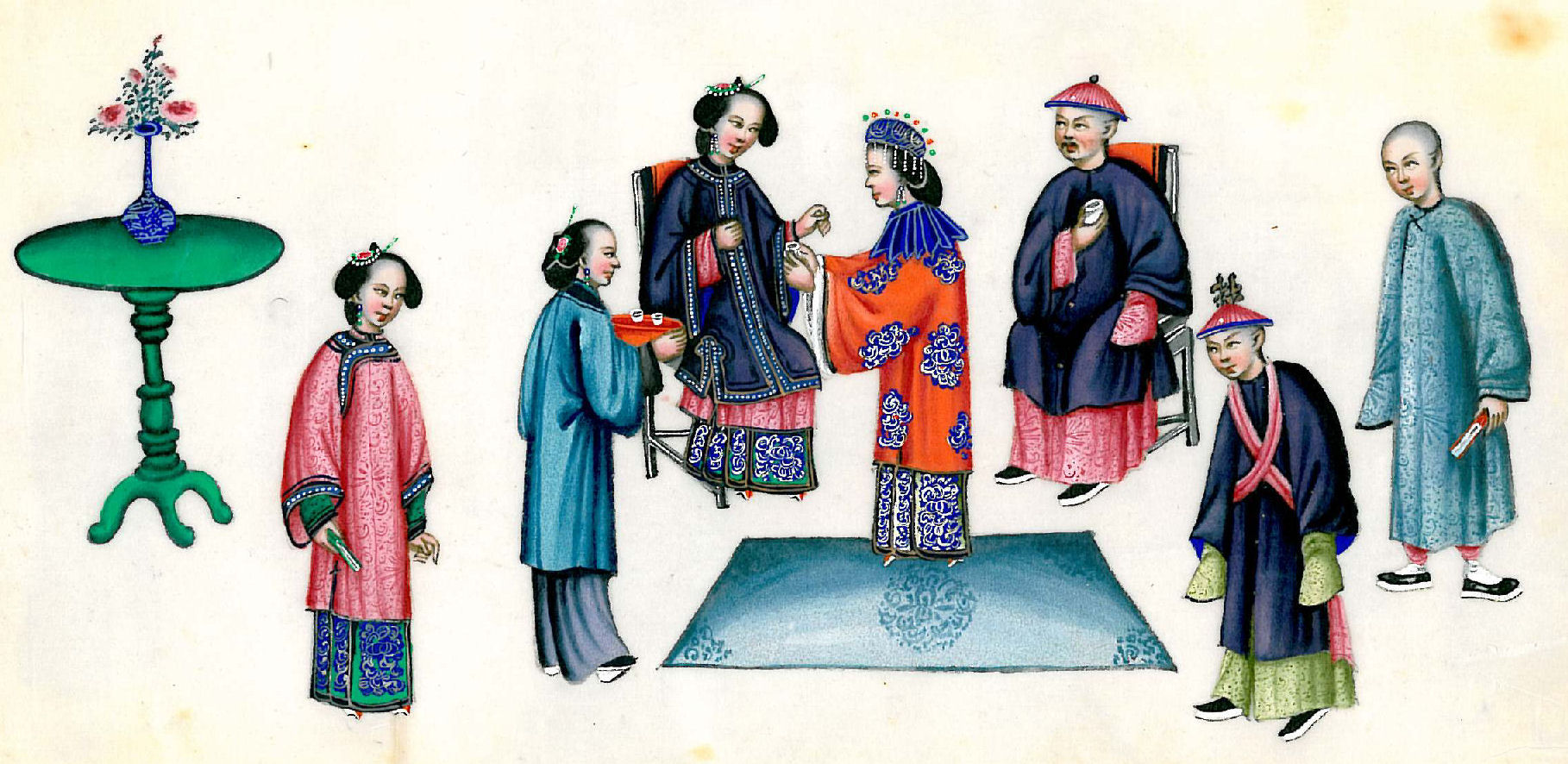
I rewrote Michael Tippett Midsummer Marriage.  Scrapped most of the text, re-orchestrated it drastically  to bring out the structural formality, which has a point.  Then, a brainwave! Thinking of Chinese weddings, where the bride ceremoniously serves tea, I hit on the idea: why not have her stamp on a tea cup and break into a wild dance of liberation? Greeks and Jews smash crockery at their weddings.  It certainly shook Tippett up. How could he have missed the irreverent mischief in Shakespeare and Mendelssohn? Alas, when I woke, the new manuscript blurred from my dream.
PS click photo to enlarge. It's a 19th century Cantonese watercolour on rice paper

Thursday, 22 August 2013

Exceptionally well written review Tippett Britten Elgar Prom 51

An exceptionally well-written review of Prom 51 Tippett, Britten and Elgar, Daniel Harding and Ian Bostridge. Read it HERE in Opera Today. It's by Claire Seymour, which is why it's so well informed and analyzed. If only more music writing were on this level!

On Tippett : "In the Adagio cantabile Harding placed more emphasis on the adagio than cantabile. The conductor took a risk not only with the tempo, but also with the dynamics, resisting the temptation to let the arching lines grow and swell, restraining the strings to a mezzo piano.

On Britten : "Bostridge totally immersed himself in this work, musically, emotionally and physically, at times leaning (dangerously?) far backwards, elsewhere thrusting his hands nonchalantly in his pockets, sometimes fixing his eye confrontationally on the audience. Willing to throw caution to the winds, Bostridge gave a technically flawless account, the arresting characterisation absolutely convincing. It is hard to imagine a better performance of Britten’s thrilling song-cycle. "

.On Elgar : "The racing scherzo, by contrast, wickedly transformed the theme of the first movement into a nightmarish vision of horror, and there was plenty of pomp and majesty in the final ‘Moderato e maestoso’, although here again the recapitulation did not fully achieve a sense of liberating affirmation. But, the final bars were wonderfully contemplative and whispered; a shame, then, that the spell-binding silence that Harding desired was shattered by overly hasty, impatient applause."

Wednesday, 21 August 2013

Dangerous Britten, Tippett and Elgar Prom 51

Rebels at the BBC Proms? In Prom 51, Daniel Harding conducted Tippett, Britten and Elgar with the LSO and Ian Bostridge. British greats, yes. But nothing Establishment.The Fanfare from Tippett's The Mask of Time might have heralded a conventionally stolid celebration of British music, but Harding drew out the "secret" background. This time, the Fanfare blasted us back to 1939, and the Concerto for Double String Orchestra. Context matters, for England was on the verge of war. Tippett, being politically aware could hardly have been confident or cheerful.  In the Concerto, Tippett builds conflict, pitting the two parts of the orchestra against each other and creates a sense of divisiveness by combining themes that seem loosely connected. Free of slogans and earnest wordiness, he expresses himself more effectively through abstract music. The Concerto works in purely musical terms because it isn't elevated agit prop (though that can make great music too). Its angular, jagged edges engage us in self doubt and contradiction. Prince Charles might find it all a bit too "modern" but this is Tippett at his best.

Benjamin Britten's Les Illuminations also starts with a Fanfare, but the strings are jerky and nervous, crackling with tension.  Les Illuminations was also written on the verge of war, when Britten was in despair about the future of Europe and his own future as a composer who wanted to create something new and original but hadn't quite found his mission. Although the text is in French, it is a mistake to assume that Les Illuminations is French music or that it must be performed in a French style.

It's vital, in performance, to appreciate what Britten (whose command of French was poor) was trying to do. Rimbaud's poems are short outbursts of feverish emotion. The imagery is highly condensed  meaning elusive. You can almost feel Rimbaud hyperventilating. Having escaped the bourgeois confines of provincial France, Rimbaud was intoxicated by London and its frantic sense of modernity but he was desperately poor. He completed Les Illuminations while working in a garrett in Reading, trying to scrape a living. Britten respects the almost kaleidoscopic fragmentation of ideas  by breaking words up into individual sounds, then elides lines into dizzying freefall. The last thing you want is "conversational". Bostridge captures the sense of surreal, almost hysterical psychic dislocation, so fundamental to interpretation. Again and again, the phrase ""J'ai seul la clef de cette parade sauvage!" explodes  as ecstatic revelation, but each time with slightly different colouring. Perhaps there is no "key" other than the immediacy of the moment.

"Tourillons, tourillons", turbulent, sudden switches of timbre and pace. Bostridge draws out the extreme in the music, reaching ethereally high pitches, growling along low passages, colouring sounds with sensual nuance. The piece was originally performed by a soprano, perhaps because the deepest levels in the piece might have been too hard to cope with in Britten's buttoned-up Britain.. Bostridge brings out the profound danger in the piece, twisting his tongue and projecting sound as if savouring some mind-altering potion, enjoying the delicious challenge of things unknown. Perhaps the violin solo functions as the snake offering an apple in Eden? Bostridge and Harding have been doing Britten together for years, developing a singularly original and very perceptive approach. Their recording of Our Hunting Fathers is absolutely brilliant, as is their Billy Budd. (more here). Perhaps some might prefer their Britten sweeter and prettier, but for me Britten's music can't really be performed by "ordinary" tenors. Imagine Placido Domingo!

Elgar's Symphony no 2 (1911)  is stylistically so adventurous, (for its time and place) that one wonders if the composer might have felt he was entering new territory he might not want to examine too closely, rather like Sibelius on the completion of his last great works. Harding emphasizes the clarity with which Elgar contrasts divergent themes. We hear the familiar "warm" Elgar confidence, but also a more subtle sense of unease, in the best and most creative sense of the word. Without a degree of soul searching and questioning, can good art exist? Elgar, despite his worldly honours and clubbability, was essentially an "outsider" as all true artists are on some level.  Listen to the whole broadcast HERE.  And for an exceptionally well informed and well written review of this Prom, read Claire Seymour in Opera Today.

Saturday, 17 August 2013

Tippett : The Midsummer Marriage Prom 45

Michael Tippett The Midsummer Marriage BBC Prom 45 reviewed by Robert Hugill in Opera Today

Compare Tippett's The Midsummer Marriage (1955) with Benjamin Britten's A Midsummers Nights Dream (1960). Tippett's studied, self-conscious earnestness doesn't fit well with Shakespeare, which is perhaps why the plot diverges.  Britten's approach is altogether more magical, and for that matter, genuinely musical. This photo shows Tippett's uncanny resemblance to HRH Prince Charles. Secret Twins! Think about that and the more troubling connotations. If Tippett serves no other purpose, he is a reminder of how much British music owes Benjamin Britten.. 

"Sir Michael Tippett's The Midsummer Marriage has a lot of things against it, it requires a large cast including dancers and a large chorus and orchestra, the plot with its elements of Jungian analysis is confusing, the composer's libretto with its colloquial elements now sounds rather dated and frankly a bit embarrassing.

But you only have to listen to the music to be entranced. From the opening moments of Sir Andrew Davis's performance with the BBC Symphony Orchestra at the Proms in the Royal Albert Hall on 16 August 2013, you knew that you were in for a very special occasion."

Thursday, 2 August 2012

More on Tippett, A Child of our Time Prom 25

As promised, Here's an extract of Claire Seymour's review of Michael Tippett's A Child of Our Time Prom 25/Robertson in Opera Today.

"Tippett’s masterstroke was to include within his universal reflections and specific narrative, five Negro spirituals: “I felt I had to express collective feelings and that could only be done by collective tunes such as Negro spirituals, for these tunes contain a deposit of generations of common experience.” (Tippett, ‘Poets in a barren age’, in Moving into Aquarius (London: Palladin, 1974), p.152.). But, it was also a decision which resulted in an inherent technical and aesthetic difficulty: how to successfully assimilate a sophisticated western classical idiom with the simple, pure language of the spiritual?"

"The problem of integrating opposing musical genres was not entirely overcome in this stirring and uplifting performance by the BBC Proms Youth Choir - the massed forces of several UK youth choirs who, having attended an intensive course in Birmingham, were brought together with the BBC Symphony Orchestra under the baton of David Robertson."

Incidentally this Prom was the first major London event for Simon Halsey, who for so many years conducted (and still does) The CBSO Choir and the Berliner Philharmoniker Choir.  On this form, he should raise the stakes in London, too (more here)

Blacks, Jews and Nazis - Tippett A Child of our Time Prom 25

Intelligence and sensitivity went into creatiung the programme for David Robertson's  BBC Prom 25. Because the 2012 BBC Proms are focussing on big choral masses and oratorios, and youth ensembles,  Michael Tippett's A Child of Our Time would have had to be included. But placing it in the context of this brilliantly thoughtful programme elevated it way beyond "just" music, and made this Prom the most intellectually profound of the whole season (and that includes the Barenboim Beethoven which was moving but not deep).

Robertson started with Charles Ives The Unanswerreed Question. It's highly conceptual. Three sepaate units operate at different tempi. They don't connect, so what we hear comes from how we ourselves combine the layers. Strings intone a quiet, almost hypnotic line. Against this emerges a solo trumpet repeatedly  calling  out into aural space. Is this the questioner asking "serious things" as the composer suggested? A woodwind quartet chatters angular clutter, but the trumpet keeps searching, seeking and receives no answer. It's astonishing that this piece was written in 1906, for it employs concepts of multiple disaparate layers and the acoustic properties of the performance space. In six minutes, Charles Ives is metaphorically creating the world where there's data coming at us from all sides and levels.  It's  up to us to process it, if we can.

Everyone knows Samuel Barber's Adagio for Strings op 11, in many different contexts, but at this Prom, Robertson had it grow fluidly out of Ives, as if the two were companions, each amplifying the other's meaning. On this occasion, I was struck by the hymn-like low rumble of the strings, thinking oddly enough of Morton Feldman's Rothko Chapel as the strings floated upwards, higher and higher.A threnody for troubled times.

Solo trumpet (Håkan Hardenberger) and reduced orchestra again for Bernd Alois Zimmerman's Nobody Knows the Trouble I've seen. It was written in 1954. Zimmermann, who didn't grow up with Black music, was responding to the Holocaust and what it meant for Germany and for humanity as a whole. It's a mistake to make too much of the jazz and gospel aspects of this piece, because Zimmermann is using the kind of Black music the Nazis hated in a spiritual way, almost reminiscent of Bach. Robertson wisely underplayed the "bluesy" aspects, and the processioinal towards the end was much more a procession for lost souls than New Orleans funeral. It's not meant to "swing". .Zimmermann killed himself in 1970, never finding his "unanswered questions".(lots on him on this site)

Michael Tippett's A Child of Our Time can be heard in many different contexts, but Roberston's Prom 25 highlighted its true significance. It's more than "English Oratorio" even though Tippett clearly references Handel and Bach. The piece was inspired by the man who assassinated a German diplomat in Paris. Tippett describes the traumas that drove the refugee to revenge. "Among them was a young boiy of 8 who was kept in hiding" intones the Narrator (Jubilant Sykes, glorious name). Tippett develops the man's relationship with his mother. Sally Matthews sang ringing tops and Paul Groves was plausible as the son. But it'ss no mystery that oppressed people want to strike back. Ultimately, Kristallnacht and the Holocaust would have happened anyway, regardless of any one person's actions. Far more interesting is what one act of violence can mean against a far greater maelstorm of madness, but Tippett doesn't go there. Sarah Connolly lifts the solo alto part so it satisfies, even if Tippett doesn't ask the questions no-one can answer.

Perhaps Tippett is using him as a symbol of the oppressed of all times and places. Hence the framework of Black spirituals framing the narrative, distancing it from Europe. But that replicates the way Black culture has been exploited and "colonized".  Two wrongs don't make a right. Ideologically I'm not comfortable with that, so I was glad that Robertson didn't overemphasize this aspect of the piece, but let the very British choirs do their natural thing. Robertson is best when he's conducting music he cares about, and in this Prom his disciplned rigour brought out the best in the BBC SO.

There'll be a more detailed review of Tippett by Claire Seymour, the Benjamin Britten specialist, in Opera Today.