Showing posts with label Tchaikovsky. Show all posts

Friday, 27 September 2019

Vladimir Jurowski : Britten (Julia Fischer), Tchaikovsky, Knussen LPO

Vladimir Jurowki and Julia Fischer with the London Philharmonic Orchestra in Beijing, March 2019


We'll miss Vladimir Jurowski when he moves on from the London Philharmonic Orchestra, after 18 years, 11 of these as Principal Conductor. Jurowski is a man who thinks deeply, creating programmes that are more than the sum of their parts, often venturing into repertoire off the beaten track.  This concert at the Royal Festival Hall brought together Oliver Knussen (Scriabin Settings), Benjamin Britten (Violin Concerto) and Tchaikovsky (Symphony no 6, the "Pathétique"

Knussen's Scriabin Settings (from 1978) have recieved many performances over the years, most recently at the Knussen Memorial at Aldeburgh in June. Based on Scriabin's late miniatures for piano for small ensemble, Knussen's arrangement extends the colours without sacrificing transparency. Despite the chamber-like forces, "Désir" hints at what massed strings might sound like : an intriguing whisper, stirring the imagination.  High, bright winds weave filigree patterns in "Nuances", leading seamlessly into "Caresse dansée" where the tones are darker and more sensual, leading to the livelier  "Feuillet d'Album".  In "Enigne" the flute danced brightly before the elusive conclusion. Though Scriabin is the muse, Knussen's Scriabin Settings are true Knussen territory : whimsical, open-hearted and aphoristic.


Julia Fischer was the soloist in Britten's Violin Concerto op 15, 1938-9.  The introductory lines here were elegant, a brief moment of serenity before the agitato, where angular figures were underlined by percusion, suggesting gunfire.  Spain had fallen to Franco, supported by the Nazis. To an anti-fascist like Britten, and many others,  exile must have seemed the only hope for civilization.  The Violin Concerto is a scream of anguish, so intense that  it has affected reception.. It takes courage to write a deeply uncomforting statement like this.  Perhaps only now can we appreciate its place in the canon of major works by a composer for whom cruelty and the loss of innocence were moral crimes. While the second movement begins vivace, the mood is bittersweet, Fischer recognizing the importance of the tight, tense pizzicato contradicting the sweep of the strings. Fischer platyed the long, meandering lines with melancholy, intensifying the contrast with the turbulent animando, where brass and timpani dominate.  Nonetheless, the violin breaks free, true to itself,  fast paced passages flying at high tessitura, above the darkness around it :  hollow wood, the violin beaten like percussion, as if it were a folk instrument in a far away homeland, before a cadenza that soared above murmuring brass, the orchestra muted so it felt deliberately distant.  Jurowski delineated the passacaglia so it felt like an anthem, undaunted and austere, rising (like the violin) ever upward.  Thus fortified, the violin could reprise something of the confidence with which the piece began, Fischer playing with steady assurance, the orchestral strings like a chorale behind her.  From the orchestral strings, a suggestion of guitars : the ghosts of the dead in Spain, rising again, led by the violin, marching quietly onward. Listening to the Violin Concerto, perhaps we can already hear Britten confronting the fundamental bleakness of the human condition, from which there is little escape.

By pairing Britten's Violin Concerto with Tchaikovsky's Symphony No. 6 in B minor, Op. 74, Jurowski highlighted the more disturbing aspects of the symphony.  Because it's heard so often and sometimes receives performances that don't do it justice, the depth of its pathos aren't always done with the commitment that Jurowski brings to its interpretation.  Wonderful colours, too, in the orchestral playing, enhancing the complex, shifting moods.  The pulse in the third movement flowed with purpose, the march aspects defiant, like a march to the scaffold, undertaken without fear or regret.  In the final movement a surging undertow grew in power, long string lines stretching as though the composer wanted to savour them for as long as possible before silence descended. 

Sunday, 25 August 2019

Gergiev, Mariinsky, Tchaikovsky Symphonies no 4 & 5

Valery Gergiev and the Mariinsky Orchestra with Tchaikovsky Symphony no 4 in F minor op 36 and Symphony no 5 in E minor op 64 from the Mariinsky's own label.  Gergiev has conducted Tchaikovsky numerous times, often with interesting approaches, and with many different orchestras over a long period, but his rapport with the Mariinsky is very close. Together they've done Tchaikovsky so often that most of what they do is worth hearing. This performance is fairly well known, recorded at the Salle Pleyel in January 2010, it has been released on DVD and previously on CD together with Tchaikovsky's Symphony no 6, which is being re-released separately.  This new release is an opportunity to focus on the relationship between the fourth and fifth symphonies.

Tchaikovsky's Symphony no 4 was written in the same period as his opera Eugene Onegin.  An admirer sent him a love letter and precipitatively they married. The experience was a disaster : the composer allegedly attempting suicide to escape. Life reflecting art. This intensity comes through in Gergiev's bleak approach.  In the opening fanfare, the "Fate" theme is  defined with uncompromising forcefulness. Bright "daydream" figures ("daydreams") but overwhelmed by strident brass,  the "Fate" theme re-asserting itself with full force. In the second movement, an adantino, Gergiev finds tenderness, but here, too, the mood is tinged with melancholy. It represents memories now firmly in the past.  The oboe sings alone, surrounded by shadowy strings which surge with heartfelt pathos. With its array of strange images, the scherzo represents a puzzle. The composer wrote to Madame von Meck, that when the imagination is released, it runs untrammeled.  Thus the sense of liberation in the finale, the brass augemented by percussion and clashing cymbals, before the main theme returns, now assertive and defiant.  Gergiev is at his uninhibited best.

The first movement of Tchaikovsky's Fifth is brooding, but gives way to a purposeful march,  which, introduced by clarinet and bassoon, opens out expansively, taking into its sweep various minor themes, before receding back into funereal hush.  Gergiev shapes the outburst before the conclusion with such power that the hush seemed poisoned, even baleful. The andante cantabile thus felt haunted, long, slow strings stretching, framing the horn solo, here beautifully done, at once wistful and serene. Clarinet and bassoon, and later strings, take up the melody, supporting before the "fate" fanfare wells up, underlined by timpani. Yet the melody, and the  horn, re-appear, and the orchestra surges once more before subsiding into silence.  Gergiev and the Mariinsky strike a good balance between glorious melody and the darkness around it. The brief Valse is an interlude, like the scherzo in the Fourth Symphony, whose apparent insouciance is cut short by the tense ostinato of the last chords. This serves to highlight the intensity of the finale, where the "fate" theme with its pounding, running figures lead the orchestra into grand surge, swelling and passionate.  Gergiev and his orchestra shape the brass chords firmly, electrifying their solemn portent.  In the triumphant march, these "fate" chords become integrated into the affirmative whole,  with a majestic fortissimo and fast paced presto.  No more funereal gloom : the final coda explodes with vigour. 

Friday, 1 September 2017

Semyon Bychkov Tchaikovsky Manfred, Taneyev Rachmaninov

In Prom 63, Semyon Bychkov  conducted Kiril Gerstein and the BBC Symphony  Orchestra in Taneyev, Rachmaninov and Tchaikovsky in an almost identical programme to the concert they did at the Barbican last October in their Tchaikovsky Project Series.  But Bychkov, Gerstein and the BBC SO are always worth hearing. It was also interesting to listen to Bychkov's Manfred Symphony op 58 again, in the space of a week, since Riccardo Chailly conducted the same symphony at the opening gala of the Lucerne Festival, paired with Mendelssohn's A Midsummers Night's Dream.

Two different perspectives, two different approaches but both valid and both worthwhile.  Chailly and the Lucerne Festival Orchestra were astonishingly good: the magical transparency of Mendelssohn enhancing the High Romantic supernatural nature of Tchaikovsky's Manfred.  A truly illuminating, inspired  performance! Much as I  love the BBC SO, the Lucerne Festival Orchestra are altogether in a more spectacular league, the musicians hand picked from the finest orchestras in Europe, playing together for love. Always a special occasion; no comparisons really possible. Chailly's Prom  last week with the La Scala Philharmonic came nowhere near, partly because the programme (Brahms and Respighi) was less inspired.  So track down  Chailly's  Lucerne Mendelssohn and Manfred, which was filmed live for broadcast.  No disrespect to Bychkov, but Lucerne was exceptional. 

Bychkov framed Tchaikovsky's Manfred Symphony op 58 with Sergei Taneyev's Oresteia op 6 (1889) placing the focus on Taneyev's connections to Tchaikovsky.  In a way, this diminishes Taneyev, for Oresteia isn't very Tchaikovskian.   It's a tone poem based on Greek mythology which surprisingly doesn't figure much in Russian repertoire, at least from the assumptions we now have about the style. A lovely violin melody weaves through the piece, connecting fast-flowing passages that suggest, perhaps the Furies, wild climaxes contrasted with a serene section , harps decorating strings.  Bychkov's reasons for pairing this with Manfred are much stronger.  Orestes is a doomed hero, who kills his mother urged by his sister, and is himself killed by a snake. 

Thus the cosmic struggle in Manfred, which Byron set in the high Alps. In Byron's time, the Alps symbolized danger, the vastness of nature dwarfing humankind. Schumann's Manfred is Romantic in the true, wild Germanic sense. Tchaikovsky, however. was even more a man of the theatre, so Bychkov's approach emphasized the panoramic, scenic aspects of the piece.   He created the backdrop to the drama vividly: generous, sweeping lines suggesting limitless horizons.   As the tempo quickened, the orchestra soared upward: searching lines contrasting well with the sudden crashing climax with which the first movement ends. 

Perhaps this is the moment when Manfred meets his mysterious half sister Astarte. What is the nature of their relationship (bearing in mind Byron's unnatural relationship with his own half sister)? And, why the mountains?  The second movement, marked vivace con spirito, describes a mountain spirit, one of the elementals who haunt Alpine lore. They are fairies, but also signify danger, their elusiveness defying human control.  Thus the high violin melody that flies above, and away, from the main orchestral foundation.

The third movement describes the mountain folk, who carve out marginal lives in harsh conditions, yet seem happy as they dance, presumably in pure, open air festivals. They're tough folk and down to earth, while Manfred, though a hero, is rather more quixotic. Like Byron himself, maybe, a towering figure but one with dark complexes and possibly a death wish.  Tolling bells suggest danger. The music descends into a stranger mood, sounds crashing against each other as if the earth itself was imploding,"fire" pouring forth from the rapid rivulets of sound.  Manfred fights off the evil spirits who tempt him, but chooses to die on his own terms. What might Tchaikovsky have made of this? The finale was grand, the pace brisk, craggy peaks and descents sharply defined, dizzying figures suggesting turbulence. Not mountain breezes, but perhaps something more demonic.  The organ underlined the cosmological nature of Manfred's predicament.  Although the drama dissipates at the end of the symphony, textures are more refined, more esoteric, one feels that perhaps Manfred is entering a new frontier, beyond the ken of mankind. Hence details, like the horn calling the hero on, and the dizzying upwards rush towards a serene conclusion that might suggest spiritual sublimation. Chailly was better at evoking the demonic supernatural levels in the piece lurking behind the scenery, but Bychkov's account was heady stuff.

In between Taneyev and Manfred, Rachmaninov's Piano Concerto no 1 with Kiril Gerstein, a moment of relative sanity between the two doomed heroes at either end of this Prom. 

Saturday, 22 October 2016

Semyon Bychkov Tchaikovsky Project Beloved Friend Barbican


Semyon Bychkov's Tchaikovsky Project "Beloved Friend" continues this week at the Barbican Centre, London. It's an ambitious series connected to a series of recordings with the Czech Philharmonic Orchestra, with concerts taking place in London with the BBC SO and in New York with the New York Philharmonic, next year. The concerts (at least in London) were augmented with a play by Ronald Harwood on the relationship between Tchaikovsky and Madame von Meck, the "beloved friend" in question. Major publicity, too: flyers were distributed at the Royal Albert Hall during the Proms, almost guaranteed to get attention.  So, why are so many tickets still unsold, even for Monday's concert at the Barbican? Tchaikovsky should sell out, particularly with upmarket stars like Bychkov and Kirill Gerstein, and interesting programmes which feature lesser known but important choices like the original 1879 version of Tchaikovsky's Piano Concerto no 2.  Although the London music scene is unusually quiet at the moment there doesn't seem to have been much public reaction.   Even Friday's concert with the Symphony Pathétique and Rachmaninov The Bells hasn't sold out.  It doesn't make much sense, since the first concert, broadcast live on BBC Radio 3 was pretty good.

Tchaikovsky's Manfred Symphony op 58 is a huge beast, nearly an hour long, and full of dynamic extremes. Inspired by Byron's poem Manfred it tells of a hero confronting supernatural demonic forces in a cosmic struggle that takes place in the Alps. In Byron's time, the Alps symbolized danger, the vastness of nature dwarfing humankind. Schumann's Manfred is Romantic in the true, wild Germanic sense. Tchaikovsky, however. was Russian and a man of the theatre, so Bychkov's approach emphasized the expansiveness that gives the piece context.  Bychkov's a great opera conductor, he knows how music can "speak"on its own terms.  He created the panoramic backdrop to the drama vividly: generous, sweeping lines suggesting limitless horizons.   As the tempo quickened, the orchestra soared upward: searching lines contrasting well with the sudden crashing climax with which the first movement ends.  Perhaps this is the moment when Manfred meets his mysterious half sister Astarte. What is the nature of their relationship (bearing in mind Byron's unnatural relationship with his own half sister) ? And, why the mountains?  The second movement, marked vivace con spirito, describes a mountain spirit, one of the elementals who haunt Alpine lore. They are fairies, but also signify danger, their elusiveness defying human control.  Thus the high violin melody that flies above, and away, from the main orchestral foundation.

The third movement describes the mountain folk, who carve out marginal lives in harsh conditions, yet seem happy as they dance, presumably in pure, open air festivals. They're tough folk and down to earth, while Manfred, though a hero, is rather more quixotic. Like Byron himself, maybe, a towering figure but one with dark complexes. Tolling bells suggest danger. The music descends into a stranger mood, sounds crashing against each other as if the earth itself was imploding,"fire" pouring forth from the rapid rivulets of sound.  Manfred fights off the evil spirits who tempt him, but chooses to die on his own terms. What might Tchaikovsky have made of this? The finale was grand, the pace brisk, craggy peaks and descents sharply defined, dizzying figures suggesting turbulence. Not mountain breezes, but perhaps something more demonic.  The organ underlined the cosmological nature of Manfred's predicament.  Bychkov recently conducted a magnificent Strauss Alpine Symphony. Read my review here - Mordwand !   Bychkov's Manfred Symphony, like his Alpine Symphony  were definitely not "tourist trail".  Although the drama dissipates at the end of the symphony, textures are more refined, more esoteric, one feels that perhaps Manfred is entering a new frontier, beyond the ken of mankind. Hence details, like the horn calling the hero on, and the dizzying upwards rush towards a serene conclusion that might suggest spiritual sublimation.

This programme began with Kirill Gerstein and the Piano Concerto no 2, in the much longer original  version, like Manfred,  monumental in its traverse.  Maybe audiences take Tchaikovsky - and Bychkov and the BBC SO - for granted and don't realize how much goes into performance at this level of excellence; things like this don't just "happen".  So get to Monday's concert if you can, which features "Three faces of Tchaikovsky: the graceful, elegant Serenade with its stunning melodies; the single finished movement of the unfinished Third Piano Concerto, the composer’s last work; and the Dante-inspired tone-poem Francesca de Rimini with its portrayal of a forbidden love" to quote the Barbican ad, and Taneyev's Overture to Oresteia.  Perhaps the most intriguing of all three concerts in Bychkov's Beloved Friends Tchaikovsky Project.  

Sunday, 28 August 2016

Sensational chemistry ! Mirga Gražinytė-Tyla CBSO Abrahamsen Tchaikovsky


Mirga Gražinytė-Tyla and the City of Birmingham Symphony Orchestra  in a truly sensational Prom 55 at the Royal Albert Hall, an occasion which those of us lucky enough to have been there will not forget. The CBSO is unique. Its members have an uncanny knack for picking relatively unknown conductors and growing with them.  They picked Simon Rattle as Music Director when he was 25, Sakari Oramo at 31, Andris Nelsons at age 30, and now Mirga Gražinytė-Tyla, also 30.  This symbiotic relationship between orchestra and conductors makes the CBSO what it is: a very different dynamic from the usual way orchestras are run.  In each case the orchestra shaped the conductor as much as the conductor shaped the orchestra.  This close relationship - like family, some say - is fundamental to understanding the orchestra and, indeed, its conductors, who carry the CBSO imprint with them just as much as the orchestra developed duringn their stewardship. The CBSO is easily one of the Big Five in British music, and absolutely world class.  Mirga Gražinytė-Tyla has a lot to live up to, but from this Prom, it's clear that she has what it takes.

Just as Rattle, Oramo and Nelsons are utterly individual and distinctive, Mirga Gražinytė-Tyla is very much her own person. She's so petite that the official BBC photographer had a hard time getting her in the frame, dwarfed as she was by all around her. But, as so often, looks mislead. Gražinytė-Tyla is an unusually athletic conductor, her face as animated as her body, yet every movement she makes is purposeful.  Her tiny hands flutter but communicate with such authority that the whole orchestra seems transfixed.  Excellence at the level the CBSO has reached doesn't come about by accident.  Good music deserves nothing less.

The Overture to Mozart's The Magic Flute sparkled: clean, shining brass, vivacious winds, strings whizzing along with manic brio. So expressive that the spirit of the opera - and its composer - seemed to materialize. Magical, yes, but also with diabolic fervour.  In the opera, Tamino is tested. Sarastro  is no cuddly father figure.  Thus the discipline in the CBSO's playing underlined the moral resolve that lies at the heart of the Singspiele, which is by no means a pretty bit of fluff.  Being a Freemason in Mozart's time was secretive and rather sinister. Gražinytė-Tyla's background lies in vocal music. Like Nelsons, she could achieve great things if she did opera.  To my delight, she announced plans on the radio rebroadcast for a concert performance of Mozart Idomeneo in a future CBSO season.

Hans Abrahamsen's Let Me Tell You was commissioned for Barbara Hannigan, who has performed the piece many times since its 2013 premiere with Andris Nelsons and the Berlin Philharmonic Orchestra. It's had so much exposure that it's become a celebrity star turn, which distracts from its considerable musical qualities.  Abrahamsen's greatest popular hit is ironically, a bit of an anomaly.  At roughly 35 minutes, it's longer  than all the vocal music put together that Abrahamsen has written in his long and productive career.  The words are those of  Shakespeare's Ophelia, who was torn between her love for Hamlet and her grief at the death of her father. As she sings, she falls into a brook and drowns.  Thus the long, limpid lines that suggest flowing liquids,  circular figures that suggest the vortex that will drag Ophelia to the depths   The ethereal qualities of Hannigan's voice give her singing an unworldly strangeness that is at once crystal clear and elusively opaque.   The voice is  disembodied, like the wind and brass instruments that form the core oif the piece. If Hannigan were an instrument she'd do circular breathing.  Sudden flights upward and turns of pitch. Syllables fragment and reform, like droplets of water reflected in light - wonderfully delicate textures created by harp, celeste, and percussion with tubular bells and tiny wooden objects scraped and beaten, making sounds like grasses blowing in the wind. Sounds of nature, too subtle and too elusive to identify.

Let Me Tell You is in many ways not a song sequence at all but another of Abrahamsen's intensely detailed soundscapes like Wald and Schnee.  "Music is pictures of music", Abrahamsen once said. "That is a strong underlying element in my world of ideas when I compose - as is the fictional aspect that one moves around in an imaginary space of music. What one hears is pictures - basically, music is already there."   In Let Me Tell You, Abrahamsen collaborated with Paul Griffiths, the author and music historian, whose books on modern music are still, after 30 years, still the best informed. In comparison, The Rest is Noise is Reader's Digest. For me, Abrahamsen's music is magical and full of wonder. The CBSO has a thing for Abrahamsen, too. Earlier this year, Ilan Volkov conducted Abrahamsen's  Left, alone. (read more here)

Gražinytė-Tyla and the CBSO concluded with Tchaikovsky Symphony No 4 in F minor. Everyone knows that, or thinks they do, which is why it's important to always keep listening.  The mark of a good conductor is whether he or she cares enough about the music to find something special about it. Routine performances can be the death of art. Tchaikovsky's Fourth is a highly dramatic work, almost schizoid in its juxtaposition of sweet lyricism and heartbreaking crescendi.  This was an exciting performance, but exciting because it blazed with the excitement that comes from excellence. I used to hang out with theoretical physicists who could wax ecstatic about elegant theorems.   There are many different ways of feeling emotion. I was thrilled by this performance, bursting as it was with vivacious joy and energy, all the more exciting because it was executed with such natural poise.

Bottom photo: Roger Thomas

Tuesday, 19 August 2014

Bells and Guns : Rachmaninov Tchaikovsky Stravinsky Gardner Prom 43


Blockbuster Prom 43, sure to be seared into the memory of all who were there. Queues round the block, punters turned away in droves. Tchaikovsky's 1812 Overture s such a showpiece that it usually gets played at open-air events, complete with fireworks. the presence  of "Sexy Ed", the charismatic Edward Gardner, and the prospect of big band massed choirs and big orchestras - no wonder the Royal Albert Hall was packed to capacity.

 Musical considerations give way to sheer spectacle when it comes to the 1812. Fortunately the ghost of Sir Henry Wood and his high standards still pervades over the Proms. Hence we heard the original version with massed choirs. The BBC SO Chorus and the Crouch End Chorus balanced volume with finesse, not something easily achieved by party-piece outdoor performances. They were wonderfully hushed and reverential, creating a  suitably "Russian" atmosphere, against which the brass, percussion and cannonades seem all the more shocking.  Only at the Royal Albert Hall can  this combination of circus and music be carried off quite so well.

Rachmaninov's The Bells needs similar extravagance. Edgar Allen Poe’s original poems were substantially changed in the Russian translation of The Bells but that doesn’t matter. Rachmaninov got enough from the translation to create a new, original work that would be one of his favourites. Artists need creative licence: in The Bells, Rachmaninov creates a distinctive landscape, each scena regulated by different kinds of bell sounds. Perhaps the Russia he remembered was like that, where the rhythm of life  was accompanied by the bells of the Church, by folk festivities and so on.  Silvery sleigh bells give way to wedding bells,.Winter turns to Spring. Stuart Skelton (another good reason for catching this Prom) sang the tenor part, and Albina Shagimuratova the part of a happy bride, or perhaps, by extension, a future Mother Russia with dreams of fertility and renewal. But then something goes horribly wrong . In the presto third movement, the bells sound alarm, Do we hear flames and destruction in that dangerously wild orchestration? The choral parts were sung with discipline: even in crisis, the peasants stick together. Stillness, muffled drumbeats. then Mikhail Petrenko's powerful voice intoned, the choruses following as if in procession in his wake. Click on photo below to enlarge. It's Ilya Repin's Religious Procession at Kursk, later the scene of the biggest tank battle in world history. 

Sad woodwinds created pathos, and the sense of real wind blowing away what had gone before . Much will always be made of the techniques with which Rachmaninov creates sounds that sound like bells but are illusion. Upright piano played percussively, perhaps a very private joke coming from a virtuoso soloist turned composer. In this centenary year, our perceptions are coloured by what we know happened to Rachmaninov's Russia after he wrote the piece in 1913. Perhaps that's why, in later years, Rachmaninov would look back on The Bells as a favourite, a sort of musical icon preserving a world irrevocably changed.

Although this Prom was billed as "Russian", Gardner's style isn't  "authentically" Russian.  (I'm thinking of Svetlanov's  recording of The Bells)  National identity doesn't define art. Baiba Skride played the violin inStravinsky's Scherzo fantastique and his Concerto for Violin in D with such feeling and elegance that it didn't really matter whether Stravinsky was Russian or French or a dispossessed Russian living in America. His music is universal, stylish, whimsical and fiendishly difficult at turns.

Please keep visiting my site, always something different. Tonight Britten's War Requiem Andris nelsons - bound to be good. Please see the numerous posts Ive written on Britten War requiem (and on Britten)

Thursday, 25 July 2013

Happy peasants? Elgar Tchaikovsky Prom 16

Elgar Falstaff and Tchaikovsky Symphony no 4 at BBC Proms 16?  What as the rationale?  Jac van Steen and the BBC National Orchestra of Wales showed how strange combinations can affect the way we hear things, and not quite in the way we expect.

Tchaikovsky told his patron Madam von Meck the final movement in his Fourth Symphony described a village fair where the peasants were merry, oblivious of all suffering. 

"How lucky they are that all their feelings are simple and spontaneous. Reproach yourself and do not say that all the world is sad. Simple but strong joys do exist. Rejoice in other’s rejoicing."

Madame von Meck wouldn't have approved of Tchaikovsky's real inner life, so he told her what she wanted to hear.  Does hearing Elgar's Falstaff  in this context change the perspective on how we listen to Elgar?  Elgar was an outsider who adopted establishment values as a kind of emotional cover. On the other hand, he seems to have been a genuinely affable soul who liked having jolly japes. Falstaff is an inventive jaunt, full of joie de vivre. At the end, Falstaff dies but it's not Grand Tragedy.  Elgar loved it so much that he recorded his interpretation for posterity. Falstaff basks in the warm afterglow of late Edwardian innocence. Too much irony would spoil the dream. Van Steen and the BBC NOW played up its high spirits.

Van Steen paired Elgar's Falstaff with William Walton's Falstaff, or rather the fourth movement of a suite based on Walton's music for the 1944 film made during the Second World War when the populace needed cheering up. Like Madam von Meck, the audience didn't want to hear anything that might upset them.  I much preferred Elgar's joyful lack of guile. For Elgar, light hearted didn't preclude sincerity.

Between Elgar and Walton, Granville Bantock's Sapphic Poem (1906), a variant of the better-known Sappho, a large-scale piece for soprano and orchestra.There's an excellent recording by Vernon Handley and a very young Susan Bickley. Raphael Wallfisch was a superlative cello soloist. Performances as brilliant as this can "make" a piece. He followed with a section from Bantock's  Hamabdil (1919).

Fond as I am of Sappho  and the Sapphic Poem, there's something about Bantock that leaves me cold. He was obssessed by exotic fantasies, to the extent that nearly everything he wrote was a kind of technicolour travelogue. Last week at the Proms we heard a very rough and ready Szymanowski Symphony no 3 (more here). Szymanowski used exotic fantasy as a means of expressing musical and emotional ideas  For him, it was a means to an end. For Bantock, exoticism was an end in itself. Exoticism was his lifestyle statement, much in the way some people need to define themselves by the labels they wear and the brands they buy. Bantock was wildly fashionable in his time because he gave the public what they wanted to hear, without distressing them with anything too disturbing.

There a world of difference between Szymanowski's priorities and Bantock's florid flavourings. Since Bantock is this year's BBC Proms British Composer, we'll be hearing more. No doubt the Szymanowski comparison will come up, but it's wholly misleading.

Hearing Tchaikowsky's Symphony no 4 after Falstaff and the fake Falstaffs was like a bracing fresh breeze. Van Steen's approach was bracing. The turbulent motif in the Andante was unsettling, suggesting conflicts not easily resolved.  The crazy figures in the Scherzo seemed demented. Tchaikovsky said that the final movement represented peasants who didn't care about neurosis or self doubt. Madame von Meck read that as meaning "happy". For Tchaikovsky, perhaps, it meant that the world wouldn't understand people like himself, which is an altogether different interpretation.

Tuesday, 5 February 2013

Décor or staging? Holten Eugene Onegin Royal Opera House

Kaspar Holten's production of Tchaikovaky's Eugene Onegin was eagerly awaited; the new Artistic Director of the Royal Opera House is a man of ideas. What vision would he have in store for us in his first London production? The curtains revealed a gorgeous set, in glowing jewel colours - greens, blues, with Tatyana dressed in scarlet. Except there were two Tatyanas.  Stick-thin Tatyana (Vigdis Hentzer Olsen) was a ballerina, acting out the letter scene in jerking, twitching spasms. It's true that the Young Tatyana confuses fantasy with reality.

Certainly, the idea of Tatyana with a will of iron is one worth developing, especially with Krassimira Stoyanova in the role. She throws herself into the part so well that occasional squally phrases seem part of Tatyana's extreme personality. But she's forced to stand aside, and the intensity of the scene disintegrates. The rest of the household is eclipsed, despite fine performances from Diane Montague, Elena Maximova and especially Kathleen Wilkinson. Shorn from context, Tatyana's dreams of an alternative to her dreary life are reduced to mere tantrum. There's more to Tatyana than this. Stoyanova, with her heft and range, indicates how much is missing but she's undermined by the staging.
 
Holten's basic concept is that Tatyana and Onegin are looking back on their youth, which is perfectly in keeping with Pushkin.  It could work. Perhaps Onegin and Tatyana haven't matured even if they've grown older, but it's an idea that needs developing more than simply through the use of doubles. With his background in athletics, Simon Keenlyside moves well enough that he almost matches his dancer double, Thom Rackett, but isn't given much with which to define Onegin's personality.

Dance is integral to this opera, not only because it's Tchaikovsky, but because the composer uses dance as a metaphor. Madame Larina's guests dance a cotillon. Its strict formation emphasizes the conformist nature of the society in which they live. The dance is a form of mating ritual, a reference to the fertility of Nature, and to Mother Russia, eternally renewed with each passing generation.  Instead we get a sheaf of corn propped up against a wall.

There is a difference between décor and staging. Décor is nice, but staging should add meaning.  These designs, by Mia Stensgaard and Katrina Lindsay, turn this Eugene Onegin into a TV costume drama. That will please audiences who think no further than period costumes, and don't care whether a staging reflects the opera. Even Deborah Warner's staging for the ENO where the audience applauded the scenery, said more about the shallow, materialist society in this opera than Holten's does. (Read more here).

This production disconnects not only from the inner drama, but more worrryingly, from Tchaikovsky's music.  The interlude between Acts 2 and 3 depicts Onegin's exile. It can be turbulent, soul-searching, even disturbing. What we see are a few ballerinas  in gauze, dancing like wraiths. Maybe Onegin is seeing the ghosts of his past, but it's introduced at the expense of a much deeper level of interpretation.  The aristocrats are dancing, too, acting out rituals of wealth and social precedence. "It bores me", sings Keenlyside with heartfelt sincerity. We don't need to see them, but we should hear them as an impenetrable wall of sound. Tatyana and Onegin have to hide their feelings, but Tchaikovsky can express what cannot be sung through the orchestra. Robin Ticciati might tell us, even if the staging doesn't. What has Tatyana chosen by marrying Gremin (Peter Rose) and rejecting romance? Pushkin, Tchaikovsky and Onegin all knew just how overwhelming society could be. There's no sense of fatalism in this staging, but plenty in the music. A conductor needs to reflect what's happening on stage, but Ticciati is too obedient. He's good but he needs to be more independent and assertive.

Pavol Breslik as Lensky makes this ROH Eugene Onegin an absolute must.  This was a superlative performance. Breslik's voice is seductive, suggesting depths of Lensky's character that most productions skip past.  Breslik's "Kuda, kuda" is so full of feeling that one thinks of youth, energy, beauty. A male version of Mother Russia, perhaps, a life force that's extinguished for reasons we can't comprehend.  The duel scene is staged so badly that it's barely obvious that Lensky lets himself be shot, which is fundamental to the interpretation of the work. Were it not for Breslik's singing, or for Jihoon Kim's demonic Zaretsky, we'd be none the wiser.

Kaspar Holten's Eugene Onegin is worth going to, despite my misgivings, because it is provocative. It makes you think, even if not quite in the way Holten intended. That, for me, is much more important than the merits oif demerits of the staging: opera should provoke and stimulate. Even if we don't agree, we're using our minds.  It's infinitely better that Holten engages us than if he played safe.  He's not boring!  Let's face it, London is not ready for Kryzysztov Warlikowski and his absolutely outstanding Eugene Onegin, also with Pavol Breslik. Read more about that here.  Holten could ease London audiences gently into a brighter future. With him, the Royal Opera House is in good, if quirky, hands.

Photos : Bill Cooper, Royal Opera House

Sunday, 25 March 2012

Sensation but no scandal - Munich Eugene Onegin

Near hysteria in some circles over Munich Opera's Tchaikovsky Eugene Onegin, the notorious "Brokeback Mountain" production. Perhaps we shouldn't be surprised given that some audiences think Dvořák based Rusalka on The Little Mermaid.  But the production isn't scandalous, unless you're disturbed by homosexuality (and alas, many people are). On the contrary, this Eugene Onegin is thought provoking. Which to many is the biggest danger of all.

Kryzysztov Warlikowski and his set designer Malgorzata Szczescinak scare away the easily scandalized with a luridly psychedelic first act. But as Anna Netrebko says "I'm from Krasnodar where everything's so grey. We need bright colours".  Life in this provincial community is drab but the locals cheer themselves up by dressing up and having parties. Like the Larin community, they're in a time warp but too unworldy to know. The 1970's costumes evoke a period where people conformed, even when they thought they were hip. Although we don't see trees and nature, it must be Spring since the locals are enacting a kind of mating ritual. Girls preen like exotic birds, ogling the boys. The text keeps referring to marriage, as the basis of social order. So we don't see cartoon Russian caricatures? Instead, we get to see the people on the estate as human beings.

Tatiana (Ekaterina Scherbachenko) stands out even more as an individual than if she were styled in white dimity. The other women exaggerate their femininity, but Tatiana appears in blouse and trousers. It's not just that she reads and dreams, she's fundamentally not part of the pack. Larina (Heike Grotzinger) is particularly moving because she's not idealized Happy Mum, but a faded former beauty, keeping up pretences. Larina and Tatiana are personalities. Olga (Alisa Kolosova) is blandness in big wig and silly dress. She doesn't get to sing much because she has so little to say for herself. Tchaikovsky disappears her as soon as she doesn't fit the narrative.

This set makes you care about the people. In their cheap, tawdry finery they're trying to make something of their lives. The effemininate MC and the tacky male strippers - is this the best life offers these poor souls? And yet like millions of women they settle for what they can. This Eugene Onegin is about a whole lot more than the sexuality of the two men. The tragedy is far wider.

When Tatiana is alone, the gaudy set disaapears, replaced by atmospheric blueness. This austerity reflects her true character, When she writes the letter, she strips down, just as she's stripping off convention and propriety. Nice girls don't write compromisng letters to strange men, but Tatiana can see no other escape. Her long monolgue is directed with great subtlety. Scherbachenko moves with each nuance in the music, expressing it through her body as well as her voice. This is Regie made by someone who understands music, text and meaning.

Tchaikovsky makes a point of Lensky and Olga having been childhood friends. She's clearly less of a challenge than Tatiana, and we know from Kibbutzers that people raised as siblings often don't marry. Pavol Breslik is an outstanding Lensky. He sings with gravity and colour, so he doesn't feel like a baby-faced ingenue but more like a real man. Interestingly, when Breslik has to throw dopey kisses at Olga, Scherbachenko stand between them her features sharpened with contempt.  Tatiana's smart enough to size Lensky up, but even she gets Onegin wrong. Just as Taiana decides Onegin should be what she thinks he is, Lensky thinks Olga should be what he wants, even after he's dead.

There's a lot of dance in this opera, but Warlikowski understands that it's also in the singing parts. Again and again, pairings and reversals, carefully blocked movements and images. Scherbachenko and Onegin (Simon Keenlyside) waltz as if they're stalking each other. Later the scene between Onegin, Tatiana and Gremin (Ain Anger) is also tautly choreographed to express the tension in their relationships. Anger also plays Saretski, the second during the duel. It's not accidental. Warlikowski doesn't treat Gremin as plot device but makes the character potent, and provocative, in every way. Some Gremins are so geriatric that Onegin only has to wait til he drops dead. This Gremin strokes Tatiana's feet and legs. Thus when Onegin realizes that he's lost Tatiana, the element of sexual rivalry makes the tragedy more intense.

Significantly, Tchaikovsky doesn't write all that much for Onegin to sing, reserving the big arias for Tatiana and Lensky. Onegin is the man onto whom they project themselves. Both are jealous where he's concerned. Onegin's emotionally honest. He doesn't let Tatiana draw him into her plans, but neither does he denounce her publicly (which would have ruined her). Lensky, though, is more difficult to read. He and Onegin have been best friends for years, so how come he gets so upset by Onegin paying attention to Olga? Why is he willing to risk his life, and his friend's life, for a fairly minor misunderstnding? Even brainless Olga thinks he's "strange".  Breslik's Kuda, Kuda is elegaic, as if he's looking forward to death for some reason.

Although the duel scene takes place in an anonymous hotel room, it's lit in surreal pale blue. You feel the frozen emotional wasteland and hear it in the music. Seeing it is largely irrelevant. Rigidity (Saretsky's rules) contrasted with confusion and fear. Onegin and Lensky's final duet is heart rending.What are these two feeling? Breslik paces the room, then removes his shirt and gestures towards his belt. It could be as innocent as Onegin's dancing with Olga. Onegin panics and shoots him dead.  Tchaikovsky's stage directions make it clear that Lensky hasn't a chance and doesn't fire, so the shooting itself is no big deal.

This is when Warlikowski's production becomes truly controversial. Second and Third Acts are bridged seamlessly, so Onegin visualizes dancers in the Overture, which merges into the ballroom scene where he confronts Tatiana and Gremin.  Bare chested dancers, wth leather gilets, jeans and cowboy hats, cavorting on the bed. Not quite Sugar Plum Fairies. Onegin is profoundly distraught, not just by Lensky's death but by what the dancers imply. Perhaps he wasn't so innocent when he danced with Olga. Perhaps he was jealous she was marrying Lensky?  He feels guilt, for many reasons. He holds the gun to his head, and it's gently removed by a chambermaid.  This is good, because she's the same woman who sang Fillipievna (Elena Zilio), who had no time for romantic extremes. Onegin's confused dream sequence leads him to the final confronation, with Tatiana and Gremin.

Onegin and Lensky aren't gay so much as men questioning their identity. Orientation isn't necessarily hard wired from birth, but can be suppressed and change. Warlikowski connects the bargains the women on the Larin estate make so they can survive in the real world to the compromises men made in those days when heterosexuality was enforced. Being gay was treason because it defied the "natural" order, again symbolized by the fruitfulness of the Larin estate. Onegin is an outsider, and doesn't do the marriage game, but he's not against society per se. It's society that doesn't make room for him. It's not invalid to read homosexuality into Eugene Onegin because it's a way of explaining Onegin's isolation. Besides, Tchaikovsky himself was homosexual, and there was no way he would have been able to deal with the topic expliciutly. While it's not good to read too much autiobiography into his setting of Pushkin's story, it's likely that he could see connections. Madam von Meck, for example, wrote letters rather than have flesh and blood relationships, and Tchaikovsky had a fake marriage that didn't fool those who knew where his real interests lay. Pushkin of course died in a duel about women, but Tchaikovsky was creating a new work of art.

For my review of the Kaspar Holten Eugene Onegin at the Royal Operas Housde, pleas see here. 

Wednesday, 21 March 2012

Eugene Onegin Munich live stream

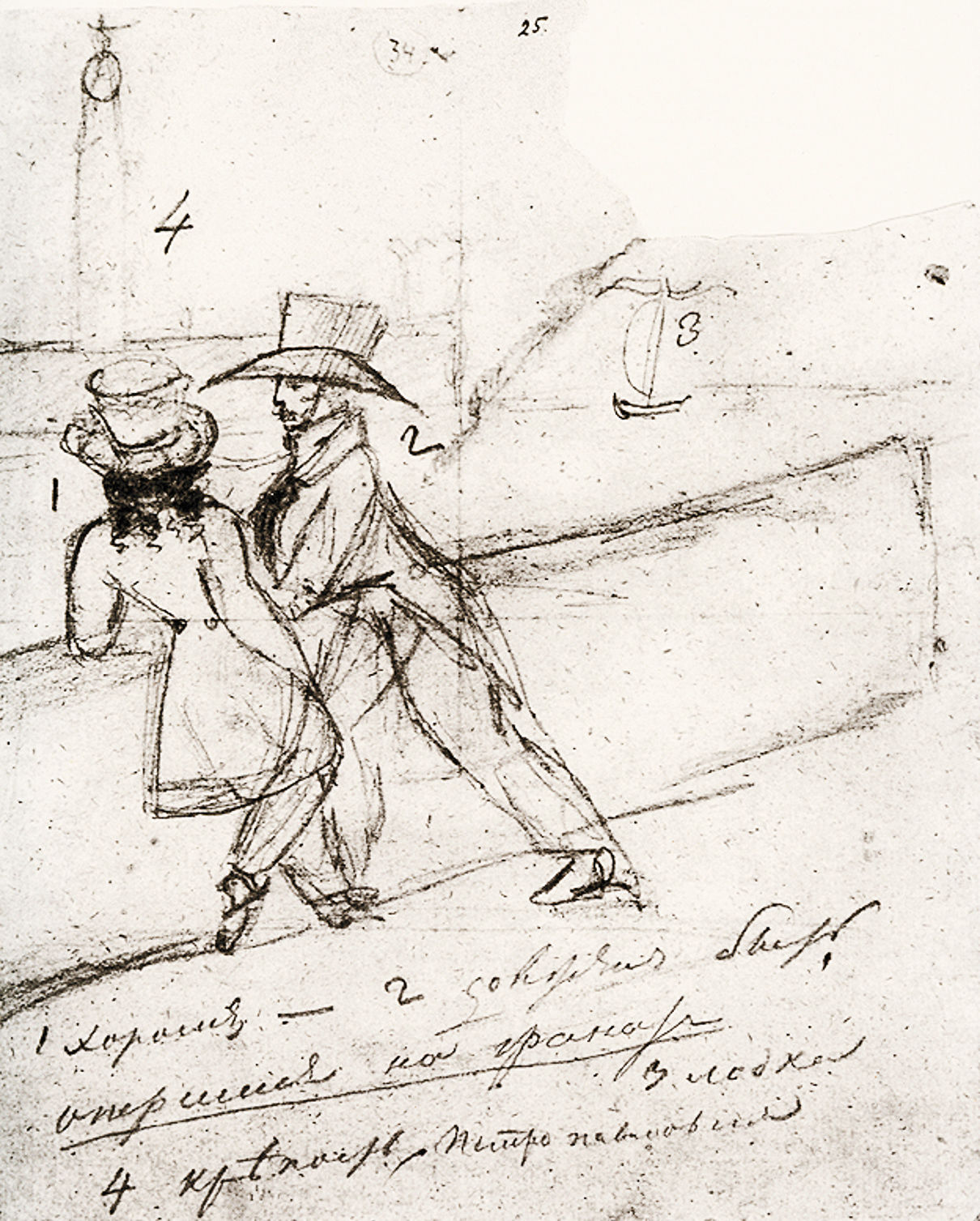
Tchaikovsky Eugene Onegin live stream from Munich, Saturday night 24/3 at 7pm German time (6pm UK)  Watch it free on this link here. See the video trailer HERE and enjoy production photos HERE. The video shows the original cast from 2007 (Michael Volle!). This is the famous and controversial Krzysztof Warlikowski production. "Warlikowskis Interpretation, die den Titelhelden als Gefangenen seiner unterdrückten Homosexualität porträtiert, wird seit der Premiere viel diskutiert, hat sich aber mittlerweile zu einem Publikumsmagneten entwickelt." Is Onegin in the closet? That would explain a great deal. It also puts his feelings for Tatiana into context. He doesn't love her as a woman but as an idea of something vaguely female, which could be as nebulous as Mother Russia. And why does Lensky make such a big deal about a silly non-issue? What's he trying to suppress?  (Shades of Ken Russell Women in Love?) .You can just bet that this will probe a lot deeper into the opera than Deborah Warner's ENO version (Please read my "Applauding the scenery")  So they're not wearing Pushkin costumes?  (the picture is Pushkin's own drawing of himself and Onegin on the banks of the River Neva). (anyone who can decipher Pushkin's handwriting might know what the pair are up to).  Fact is, Tchaikovsky was gay and couldn't very well be open about it then. At the very least this should start people thinking about the composer, the music and why he might have written what he did. This revival stars Simon Keenlyside, Pavol Breslik, Ekaterina Scherbachenko.

Wednesday, 14 March 2012

Daring and purpose - Royal Opera House 2012-2013

Fascinating Royal Opera House 2012-13 season mixes daring with prudence – passionate. "Opera is an emotional fitness centre", says Kasper Holten, Director of Opera, because it exercises many different feelings. Through opera, we engage with the drama of being human. Running an opera house is more than just business. Its "product" is creativity. If opera houses scale back and play safe, they lose the vision that makes opera thrilling in the first place. Holten's strategy for straitened times is daring. Grow the audience from strength, giving patrons something to get excited about, whether they're new to the genre or not.

Six new opera productions, higher profile revivals and an ambitious programme of external events that will expand the reach of the Royal Opera House far beyond Covent Garden.  More live HD broadcasts, so ROH premieres can reach wider audiences. More links with smaller, independent companies. Even an experimental pricing structure. The whole atmosphere is a buzz, reflecting Holten's dual responsibilties as manager and as creative artist.

Obviously the big Wagner Ring will dominate the autumn season. It's sold out, despite sky-high prices, but Wagner's anniversary is most definitely a special occasion. This production is aimed at a more general audience than a core of Wagner aficionados. Bryn Terfel, Susan Bullock and other stars ensure its success. This is a new Keith Warner production, conducted by Antonio Pappano. Wagner is always interesting and the sheer sense of occasion is part of the attraction. It takes the Met to really destroy the Ring. The ROH Ring should keep the house afloat for years.

In December, Giacomo Meyerbeer's Robert Le Diable makes its first London appearance since around 1890.  Once, Robert Le Diable was un succès fou, a sensation to which all Europe flocked, for it marked a new style in French opera. Heinrich Heine attended, incorporating it into his poetry "Es ist ein großes Zauberstück, Voll Teufelslust und Liebe" (read the full story here).  The painting at right is Degas, Ballet from Robert le Diable (1876). Some of the arias are very well known, since Joan Sutherland was very fond of them. So hearing it in context is a great opportunity. There's a renaissance in 19th century French opera, and the ROH has been on the crest, with Massenet, Berlioz and Gounod. The cast is superb. Brian Hymel who so impressed as the Prince in Rusalka, will be singing with Diana Damrau, Marina Poplavskaya, John Relyea and Jean-François Borras. This repertoire diverges from the Italianate style so fashionable at present, so  it's good news for opera adventurers exploring "new" perspectives.

Benjamin Britten's centenary falls in November 2013, so the eyes of the world will be on how Britain honours the greatest opera composer it has produced. Britten often visited the ROH (he used to eat at Bertorelli's) but he wasn't really part of the ROH in-crowd then. So it's good that the Royal Opera House is giving him his due, and with a twist Britten would have appreciated.  Had the ROH been boring and played safe, we'd get another Peter Grimes. Instead, Holten has chosen the extremely rare Gloriana, which even Britten true believers don't know well. This is thrilling, as Gloriana is problematic to stage, for Britten experiments with Elizabethan form.  There's only one recording (dull) and an Opus Arte DVD with Opera North (brilliant) which treats the work in cinematic style, which is an excellent solution. (review here). It would be hard to top that but the Royal Opera House has resources few other have, and Richard Jones as director could make it work. Strong British cast:: Susan Bullock, Kate Royal, Toby Spence, Mark Stone and other stalwarts, conducted by Paul Daniel. Definitely a "historic event".

Three of the most important British composers are highlighted this year. Britten, Harrison Birtwistle and George Benjamin, "The 3 B's" quips Holten. Perhaps the most significant British opera in recent years, Harrison Birtwistle's The Minotaur, is revived at last in January. Get to this, since the DVD is inertly filmed, something I hope Holten will address at some stage, since film is the next frontier in bringing opera to audiences outside the house. Like any other part of staging it needs to be done well. John Tomlinson, Christine Rice, Andrew Watts and Johan Reuter return, and Alan Oke sings the part created by Philip Langridge (read the interview I did with him here about The Minotaur and about Birtwistle, his close friend).

George Benjamin's new opera, Written on the Skin, premieres March 8 2013. This is a very important occasion indeed, and will be heard in eight European cities. Benjamin's not a fast writer, but painstakingly scrupulous, and this is his most ambitious large work to date. The libretto is by Martin Crimp, with whom Benjamin created the masterpiece Into the Little Hill. Read more about that here. The plot's dramatic. A rich man hires an artist to illuminate a manuscriipt. The rich man kills the artist when the latter falls in love wuth the former's wife and has him baked into a pie and served for dinner. Barbara Hannigan sings the wife,  which means the part will be fiendishly inventive and demanding. That's Hannigan's speciality (read about her singing Boulez here on this site). Obviously a countertenor role to match, this time Bejun Mehta. Benjamin is a quinessentially European composer, so it's good that Written on the Skin will be broadcast live, internationally in HD.

The Royal Opera House has always been good for Verdi. The new season brings a Verdi Immersion, three operas in sucession, a sort of Verdi Ring, since his anniversary coincides with Wagner's. The series starts, appropriately, with Nabucco, in a new production by Daniele Abbado and Alison Chitty. Plácido Domingo and Leo Nucci alternate Nabucco. Domingo's presence alone will make this an attraction. He's an icon as much as a singer. Acting isn't affected by age. Domingo can project character, which is what this role needs.  Since it's Nabucco, the Royal Opera House chorus will be in their element. and they're so good they could carry the show. Nabucco is followed by Don Carlos in May and Simon Boccanegra in June/July. Although the latter are revivals, if they're worth doing, they're worth doing well, so the ROH is are injecting high-quality standards worthy of the best new productions. Antonio Pappano is taking over the conducting and Verdi is his speciality. Absolutely top quality singers - Harteros, Kaufmann, Kwiecień, Furlanetto, Halvarson, Hampson. Even if you've seen these umpteen tmes before, this time they will sound fresh.

It's good that the Royal Opera  House has in Holten a director who is a hands-on theatre person, because that ensures he's on the ball as an artist. February brings his first ROH production, Tchaikovsky's  Eugene Onegin.  Partly Russian cast with Simon Keenlyside for popular appeal. Robin Ticciati, the new incumbent at Glyndebourne, conducts. Since the ROH will be working more with other houses like the innovative Music Theatre Wales, what might this signify, if it means anything at all? Chances are that this time the audience won't mindlessly applaud the scenery as they did at the ENO, but instead pay attention to the music.

Also an indicator of new creative times is Gioachino Rossini La Donna del Lago in May, a new production directed by John Fulljames, Associate Director  This is significant because it was to have been a co-production, but the Royal Opera House pulled out and created their own.  This is radical, but it's much better to do good work than regurgitate a turkey. Operas have a long run in time, so it's a wonder this doesn't happen more often and save more reputations, time and money. Holten describes Fulljames as the ROH "dramaturge", an artistic philospher with very strong theatre skills, as anyone familiar with his work over the years will recognize. Fulljames's new production was put together efficiently, using pre-existing technical resources for new purposes. This isn't recycling, but resourcefulness, as it takes a genuinely creative mind to work round difficulties. Much trickier than working from a blank canvas. Perhaps this is a good way forward at a time of budget restraint?  The cast includes Joyce DiDonato, Juan Diego Flórez, specialists in this repertoire, so for singing alone, this new La Donna del Lago will be intriguing.

The more you look into the Royal Opera House 2012-13 season, the more there is to look forward to! Further details on the ROH website HERE and on Opera Today.
photo: Peter Suranyi

Monday, 14 November 2011

Applauding the Scenery - Eugene Onegin, ENO

When audiences applaud the scenery, it's a bad sign. This ENO Eugene Onegin at the Coliseum is visually stunning. Everything glitters. Polished mirror surfaces, luscious costumes. It's like being in a fashion shoot for a glamour magazine, circa 1955. You gasp at the maximalist opulence. But when Onegin cries out "Oh, the tedium", he strikes an emotional chord.

Onegin's outburst comes during the ball at St Petersburg. The staging  is spectacular, with columns towering over the stage, lit to resemble gold and marble. It's glorious. So why isn't Onegin impressed? If Deborah Warner had asked that question, this production might have come to life. Socially, Onegin's better connected than the Larin family, and much loved. Tatyana's only the latest in a long line of admirers, of all kinds. But he chooses deliberately to be an outsider. Tatyana lives in book-filled fantasy, unlike her nurse for whom love is an irrelevant concept. She falls for him because he's dangerous. Writing that letter was traumatic, because it was  shockingly, unlady-like by the conventions of the time.  Yet Onegin doesn't  reject her as a person, but because he's not into the status games that marriage entails.  What is he really after?  Is he a symbol of the artistic soul?

Psychologically, there are many levels in this opera, but this production is more concerned with surface appearances. The First Act misses altogether the clues to Tatyana's fertile imagination that the garden represents. Maybe this set portrays her mind, but it's a shambles, and there's nothing else to support that take on Tatyana's personality. It's a pity as this act should establish why Onegin cares about Tatyana. Like the garden, she stands for the fertility of Russian tradition. Purity, not ostentation. (for more explanation, please see the comments below)  But we get the trademark Warner busy crowd, where supernumeraries wander about contributing nothing but attention deficit. At least when the crowd are dancing, they serve a purpose.

The visual glory of this production will make it it a huge success, particularly for audiences who like the very trappings of status Onegin so clearly rejects. (For more on Met values please see here).  On one level, the opera supports a regressive interpretation, since Onegin realizes how empty his life is without love. Tatyana sticks with her husband, apparently choosing status over all else. But I've often wondered what the next act might have been. Quite possibly, Pushkin and Tchaikovsky had ideas on the resolution, but in Tsarist times, the message might have had them banned. So perhaps Warner's retreat into appearances has a point, since even now, it isn't safe to think of Onegin questioning social mores.

Performances supported this approach to the opera. Extremely creditable singing and playing, but without the fire which might come from direction that engaged with the drama. Amanda Echalaz has a lovely voice, and sings clearly, but the part isn't developed. Is Tatyana sexual, or a fantasist, or wild, or at heart a domesticated conformist like her sister? Similarly Audun Iversen as Onegin sings correctly, but isn't expected to portray the darker aspects of Onegin's personality. Toby Spence's Vladimir Lensky comes over impressively partly because the role is less complex. Even then, one might ask, why is he so irrationally jealous? A production that focussed on the Onegin/Lensky relationship might be perceptive.  Let's not forget how Pushkin died, and Tchaikovsky's sexuality. That's why the duel scene is crucial to the whole interpretation.  The text stresses how important it is to follow rules. "A man is about to die". Yet there's no tension on this stage. Spence is directed to stand still long enough for Iverson to take aim and fire. As my companion said, duels were fought with pistols, not rifles, which handle too clumsily. Is the production implying that Lensky has a death wish? Lensky, who plays by the rules of society, gets killed. Onegin who plays by the rules of the duel, has to flee.

Extremely good performances in the minor roles. Catherine Wyn-Rogers' Filippyevna, for example, singing well and acting by instinct. Adrian Thompson, David Stout and Brindley Sherratt as Triquet, Zaretsky and Prince Gremin respectively, making their parts more than vignettes. Edward Gardner's conducting, however, was more in line with Warner's glossy surfaces. The orchestra played correctly, even elegantly, but the pungent Slavic soul in this music was smoothed over.  This Tchaikovsky Eugene Onegin will be a huge success, especially at the Met. It's going to sell and sell, and will be around for the next 20 years. In revival, the direction might be tightened up, and singers with less genteel personalities might be allowed more freedom (witness Wyn-Rogers' individuality).  So even if you don't catch it at the ENO this season, there will be many more chances in years to come.

Photo credits : Neil Libbert, courtesy ENO (detals embedded)

Monday, 19 July 2010

Manfred Schumann Tchaikovsky Prom 4

Manfred x 2 at Prom 4: excellent idea, programming Schumann's Manfred Overture  with Tchaikovsky's Manfred Symphony, one amplifying the other. Amplification is the right word because the hero /anti hero Manfred swings between extremes, sees visions of the supernatural, hears voices from nowhere, and has religious delusions. Manfred is the ultimate Romantic hero/anti-hero, regardless of whether Lord Byron created him in his own image.

Romanticism was a revolt against the Age of Reason. Instead of classical elegance, extreme distortions, and obsession with the macabre. Nowadays we'd pin psychiatric labels on many Romantic heroes, but in the early 19th century they represented a revolutionary breaking away from earlier ways of thinking. Instead of Absolute Monarchs, the idea of the Individual making his own rules. Romanticism unleashed the subconscious and electrified European literature, art, philosophy and music.

Robert Schumann doesn't get the respect he's due because the impact of Romanticism isn't fully appreciated. Because he ended up "mad", his later work has been minimized. Yet in many ways, late Schumann is interesting because he's breaking away, experimenting with new forms of expression.

Growing up in Leipzig, Schumann was uncommonly literary.  John  Daverio, the most intuitive of Schumann scholars, felt that text was integral to the music far more deeply than in the sense of word-painting. Schumann liked the shape of syntax, the rhythms of declamation.  Schumann's music drama is "difficult" if we expect it to evolve like Meyerbeer, or even Wagner, with conventional narrative. Instead, it's closer to abstract, conceptual art. Das Paradies und die Peri is pretty much established now, and Genoveva received a major performance in Paris last year (Please read my 2 posts on Genoveva HERE and HERE) Perhaps it's time for a revival of the full Manfred. 

On the strength of this performance, it could work, given playing as passionate as Vassily Petrenko raised from the Royal Liverpool Philharmonic Orchestra. Romantic music is full of sprites, fairies, witches and mystery Abbots, so Manfred really isn't unusual per se. Think Peer Gynt who travels from Norway to Africa, or The Wolf's Glen in Der Freischütz.  No need for realism. Besides, nowadays we have film. Late Schumann has a lot to offer the 21st century. (Read Daverio on "Schumann's New Way" and on Music drama.)

Petrenko and the RLPO were even better in Tchaikovsky's Manfred Symphony, which was so good I'm staying up to hear it again on rebroadcast later tonight. Extremely vivid, dramatic, intense. The manic extremes don't endear this symphony to those who think of Tchaik as Nutcracker, but for cussed, curséd souls like me, it's thrilling. A rollercoaster ride emotionally, without the danger of having to "live" such extremes.
The  two paintings are by John Martin, an English Academician, who lived at the same time as Schumann. Note the swirling, circular thrusts of the lines, reality dissolving into abstraction. T he first is where Manfred ascends the Jungfrau and teeters on a precipice, terrifying the chamois hunting peasant. Look how the mountains curve inwards, unnaturally, and blend with the clouds. Lakes as deep and  psychedelic as that? 

And right, the Witch appears in an equally surreal Romantic landscape, also with circular light. The spirits appear as images of light. Caspar David Friedrich's Romanticism is completely different: Martin connects to Turner, and the Impressionists to come.  (Click images to enlarge) 

In between the two Manfreds, Simon Trpčeski played Rachmaninov Piano Concerto No 2. Wonderful, free playing. "I get the feeling, it doesn't matter the exact notes in live performance," he says.. This man's a true musician.  Pity about other commentary, though.  The BBC needs to dumb down a bit to reach mass audiences, but to assume we can't relate to Rachmaninov without thinking of movie theme tunes is plain stupid. Maybe for some, but we're not all morons. 
Please see the beautifully written review by Richard Landau HERE.
Listen to the repeat broadcast HERE and HERE

Sunday, 27 December 2009

Swans at Swan Lake

The last time I saw Matthew Bourne's Swan Lake was when Princess Diana was still alive and AIDS was less controlled than it is today. It was shocking. Fifteen years on, society has changed so much. It's still a beautiful, intelligent production and deserves its place as an iconic Xmas show. The Boxing Day audience at Sadler's Wells was made up of large multi-generational family groups, small girls in evening gowns and furs, tourists and couples on a night out. A good mix, which will ensure the ballet remains in the repertoire.

It's a good revival because it's up to date. In the ballet within a ballet scene the bimbette's mobile goes off in the Royal Box and some of the men in the audience quite possibly patronise sleazy clubs when they're not playing paterfamilias. Although Prince Charles still gets valets to put toothpaste on his toothbrush, and his lucrative business ventures get tax breaks, the satire's less pointed these days. The electric corgi still gets a laugh, though. The Queen's quite loveable, much more of a character than the Prince.

How much did this audience relate to the first scene (the overture) where the Prince writhes in bed? What causes his discomfort? Perhaps the swans offer an alternative to the formality of the palace. Or is there a darker sub-text? The swan choreography is brilliant, observed from nature. Fingers pointed, held at right angles the palm, arms curved, so they look like the necks of swans. The costumes too evoke the shape of swans – baggy feathered culottes for weight, chests barely covered, muscles exposed. Movements are strong, too, for swans are tough creatures you don't want to mess with in real life. Female dancers are tougher than they look, but an all-male swan corps is wilder and more primitive than the usual flutter of tutus. You think, Nijinsky with his priapic tail as the Faun, doing unspeakable things to the scarf and the earth.

The scene in which the swans mob the Prince is vivid - anyone who's ever seen how swans fight over bread knows how single-mindedly violent they can be. So it's all the more tender when the leading swan lifts the wounded boy with his head, not his arms. A swan's wings are for flight, the neck and heads for more subtle expression.

Fifteen years ago, society was different and thank goodness some things have changed. Thanks in no small part to Princess Diana defying mass hysteria, kissing Aids sufferers like the big swan kisses the broken Prince. Neither of them survives but at least they have moments of tenderness. So in many ways, it's a good thing that Bourne's Swan Lake can be marketed as feel-good family entertainment.

Thursday, 24 December 2009

This Xmas - explosions of ballet


Someone once told me that you have to know Russia to really appreciate Russian art. Outside, life's grim, dark, gloomy and deprived. Inside, it explodes in golden, glowing light. You don't want the magic to end. I thought of this while watching The Tsarina's Slippers (Tchaikovsky's Cherevichki) from the Royal Opera House broadcast on BBC TV2 today.

"Don't take the children" said Rupert Christiansen in the Telegraph, "they'll be bored rigid and never want to go near an opera again". True, it's a long three hours, but quite pleasant if you think of it as an escape from reality rather than an opera in the usual sense. If it's snowbound St Petersburg outside, this would be a kind of paradise.

Ignore the plot and focus on the riotous colour. Peasants in gaudy costumes, in gingerbread houses alive with folksy stencils. The palace is a confection of white and yellow, with a gold-plated statue of the Tsarina centre stage, from which emit dancers in red velvet and ermine, and brightly attired cossacks. Even the devil looks cute, against a blue and green backdrop (nice water spirits, too). It's possibly even better on TV where you get close=up details, like the courtiers' costumes with images of the palace embroidered on their hems and in their head-dresses.

Off the wall fantasy is just the right thing this year with snowstorms everywhere. The fun thing about a lot of ballet is that it's escapist, and works even when it's not mentally taxing. So I did enjoy The Tsarina's Slippers, perhaps because I was in the right laidback mood. Later on tonight on BBCTV4, there's Swan Lake at the Mariinsky. In complete contrast I'm off to Matthew Bourne's Swan Lake on Saturday at Sadler's Wells. Yesterday there was an interesting Rite of Spring on TV, with bondage gear and break dancing. A man pirouetting on his wrist, doing backflips. The audience, not the usual ballet crowd, loved it. Tomorrow there's La Bohème on BBCTV2 at 1610 GMT. Netrebko and Villazon, Bertrand de Billy and Bavarian Radio Symphony Orchestra. Follow the links to view online (no repeats) Short intervals - no ads !!!!!

photo credit :Marije van Moerkerk