Showing posts with label Birtwistle. Show all posts

Saturday, 13 April 2019

Sir Harrison Birtwistle in Focus : Nash Ensemble, Wigmore Hall

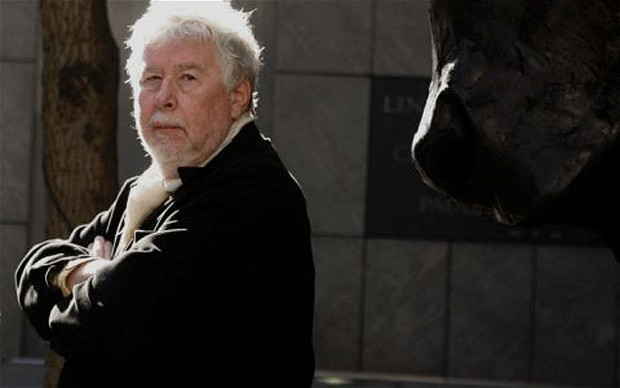
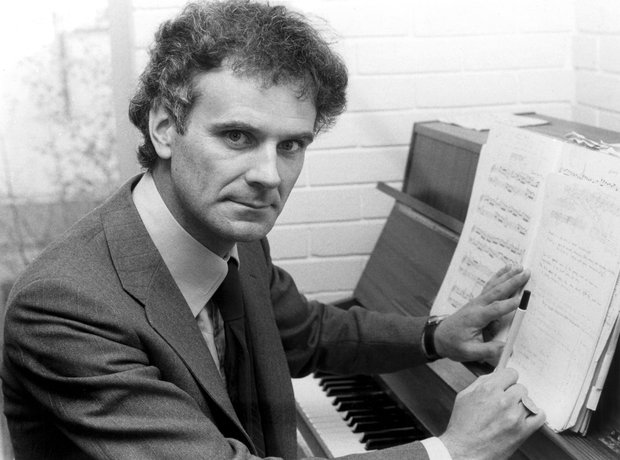
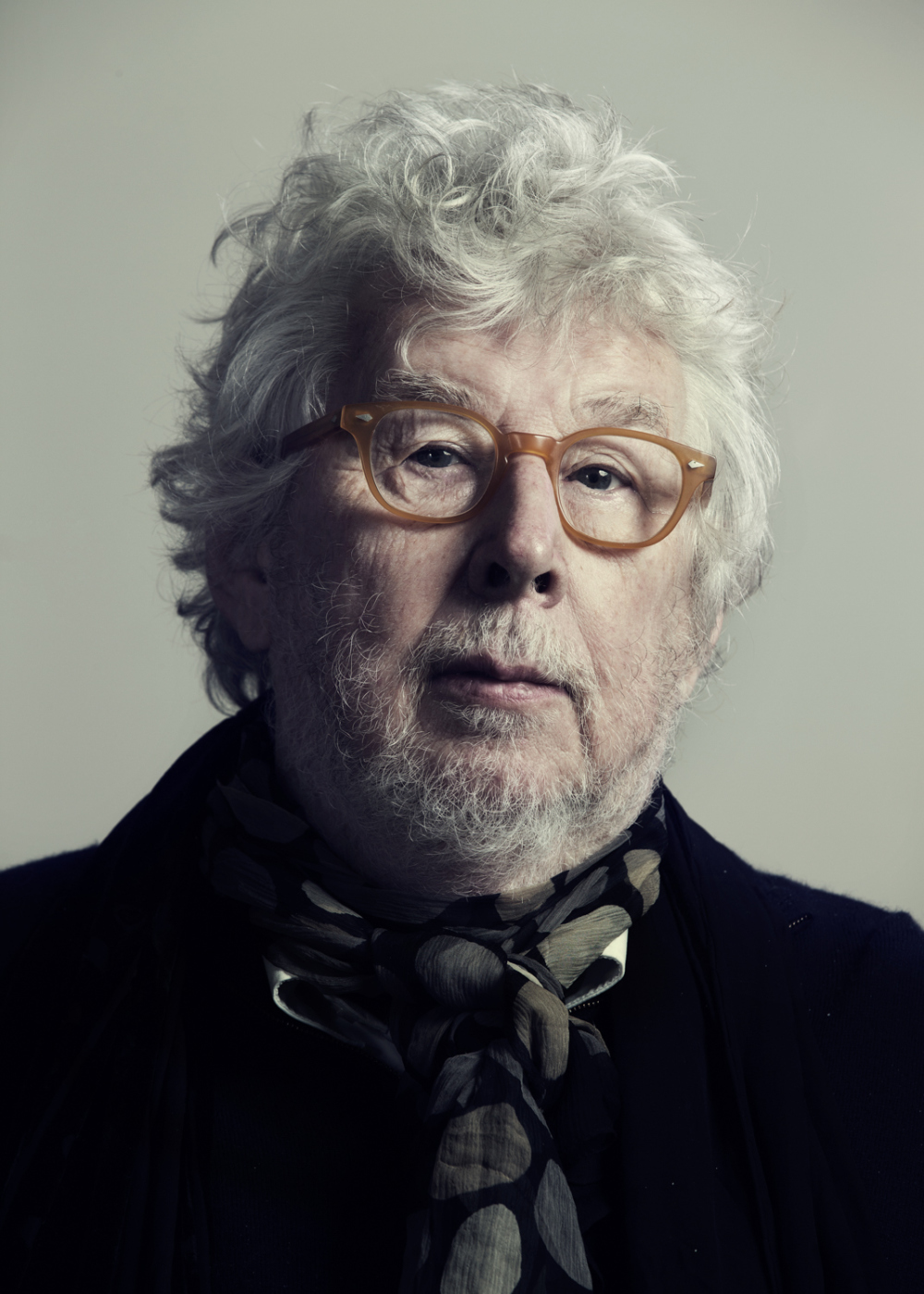
Sir Harrison Birtwistle (Photo credit Simon Harsent)
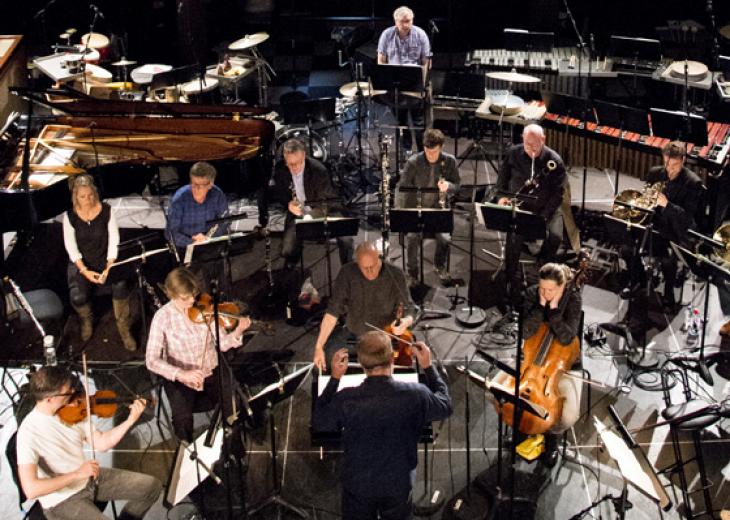
At the Wigmore Hall, the Nash Ensemble Focus on Sir Harrison Birtwistle: or rather the "latest" focus, since the Nash and Birtwistle have had a fruitful relationship for years.  Indeed, four pieces on this programme were commissions from the Nash and Artitsic Director Amelia Freedman (who was also in the audience) : Birtwistle's Fantasia upon all the notes (2011), Elliott Carter's Mosaic (2004) and that perennnial favourite, Birtwistle's The Woman and the Hare (1999).  Highlights of the evening, however were two new pices, Birtwistle's Duet for Eight Strings, and Oliver Knussen's Study for 'Metamorphosis' for solo bassoon.

Birtwistle will turn 85 in July, but still looks sprightly, his dry humour undimmed.  His Duet for Eight Strings (2018-2019) shows that musically he's in top form, as inventive and thought-provoking as ever.  He described this Duet as "a string quartet for two players". He put his hands together, fingers intertwined, and moved them to show how the two focal points of the piece connect while remaining distinct.  More formally, the piece "alternates between passages of double-stopped chords in rhythmic unison (or near unison) in which the four strings oif the viola and the four of the cello form a single unit of eight strings, 'hocket' passages of rhythmically interlocking exchanges, in which the two/four string units combine to produce a contrasting kind of eight-string texture" (Anthony Burton's programme notes). Seated in the front row, two metres from Lawrence Power and Adrian Brendel, that sense of connectedness felt so strong it was as if I was being drawn into the performer's circle of energy : uncommonly intense.  Another of Birtwistle's intricate puzzles within puzzles, this one with the extra dimension of drawing the listener.  The piece evolves as a series of separate units, hockets as pauses which aren't really silent, but contribute to structure. The sections aren't variations so much as new ideas, imaginatively articulated, yet in typical Birtwistle style, aphoristic and elusive.   Such a sense of invisible connections ! My partner said, later, "If Knussen were here, he'd say 'let's do that again !". I thought, too, of Elliott Carter's sense of whimsy. Many happy memories at Aldeburgh and elsewhere.

Knussen's Study for 'Metamorphosis' for solo bassoon followed, with Ursula Leveaux. Originally written in 1972 and revised in 2018, it's Knussen in middle age looking back on early work.  Though it's a "study", it feels like a whole, unified piece.  It's also a good partner for Birtwistle's Duet, since the bassoon seems to be duetting itself, playfully, but with purpose.

Seven years ago, the Nash Ensemble premiered Birtwistle's Fantasia upon all the notes. Despite the title, this has little to do with Henry Purcell's Fantazia upon one note.  Birtwistle's Fantasia is another intricate puzzle. Initially, the  two violins (Benjamin Nabarro and Michael Gurevich) dominate, with fierce chords, followed by flute and clarinet (Philippa Davies and  Sarah Newbould) and viola and cello (Lawrence Power and Adrian Brendel), the harp (Lucy Wakeford)  serving as pivot and continuo.  Intricately poised playing - maybe the Purcell connection operates on a deeper level.  At times, the harp is beaten for percussive effect.  More harp-as-leader in Elliott Carter's Mosaic (2004) for harp, flute, oboe, clarinet (Richard Hosford, string trio and double bass (Tom Goodman). Again, patterns of cells multiplying and developing.

The Nash Ensemble were joined by Claire Booth for Birtwistle's Three Songs from the Holy Forest (2016-7). This has connections with Birtwistle's Moth Requiem (2013) a mysterious piece for chamber ensemble and small group of female voices which chant the Latin names of moths.  Like the Moth Requiem, these three songs soar, float, and suddenly dart in new directions: very much like the movement of a moth.  The texts here, to poems by Robin Blaser, are more extensive. The vocal line is more defined too, though it swoops and hovers in short phrases, Booth's voice plangent and almost abstract : singer as wind instrument.  An alto flute replicates and extends the vocal line : two "voices" enclosed in the ensemble, like the moth  Blaser envisaged, trapped inside a piano, its wings making the piano strings vibrate.  Birtwistle wrote his own poems for Songs by Myself (1984).  The haiku-like nature of the texts fit well with the enigmatic minimalism of the orchestration.  Booth's voice moves : at once languid and melancholy, beautifully captured by the sounds of the vibraphone (Richard Benjafield).

"If anything", Philip Langridge told me in 2008,"Birtwistle’s music has become more impressive with time. He writes mathematically, in the way Bach writes mathematically, but with great emotion. To sing Birtwistle, you have to understand the ‘maths’ first, to get the figures right, to get the intervals right".  So to Birtwistle's The Woman and the Hare, another Nash Ensemble classic, to poems by Stephen Harsent. The Woman and the Hare are ancient symbols. Whatever their meaning, they connect to mysteries : Moonlight, wildness, the subconscious. Typical Birtwistle territory. Here the singer's strange, curving lines are shadowed by a reciter (Simone Leona Hueber). Yet spoken words, intoned at a clipped pace suggesting tension, not meant to elucidate : they serve as counterpoint to the singer's keening, flowing lines and ethereal pitch.  Duality, again. The ensemble sussurates around them, silvery tones, rustlings, low rumbles, sounds that might evoke sudden frantic movement, even a sense of danger.   Something happens : we do not know, but we're hypnotised by the singer's  gravity-defying  legato. Is the hare consumed ? "Her flesh falls from the bone" says the reciter.   But when Booth sings, the hare has the last word. "Look with new eyes /everything in place/  lush landscape.... moonrise". Transformational. 

Monday, 17 September 2018

Joyous but sharp - Rattle, LSO, New Music Britain

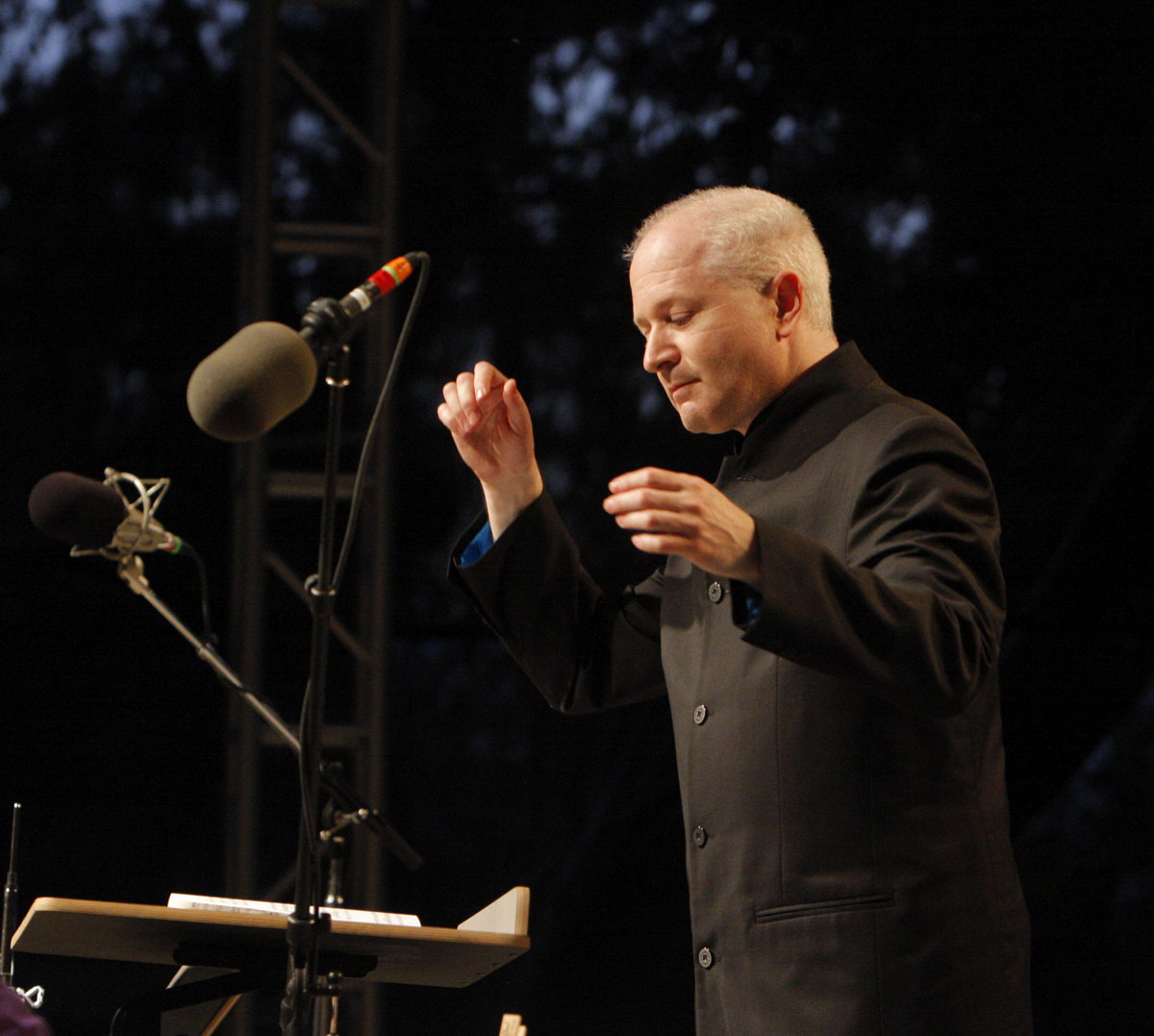
Sir Simon Rattle, photo; Oliver Helbig, courtesy Askonas Holt
Sir Simon Rattle and the  London Symphony Orchestra marked the opening of the 2018-2019 season with a blast.  Literally, for Sir Harrison Birtwistle's new piece Donum Simoni MMXVIII was an explosion of brass - four trumpets, trombones, horns and tuba, bursting into the Barbican Hall. When Sir Harry makes a statement, he makes it big and bold !  Short as it was, this fanfare was more substantial than it might have seemed at first.  Like the composer himself, it was forthright and direct - no messing about.  Hence the gruff low timbres and pugnacious sassiness, punctuated by percussion, with woodwind interjection, and later a tuba solo. Characteristic Birtwistle quirks and earthiness.  Oddly enough the piece sounded like the way Birtwistle speaks in conversation. Since Birtwistle and Rattle have had a long relationship that goes back to the mid 1970's, Donum Simoni is personal, like an autographed portrait of the composer with an affectionate dedication to an old friend.

In a masterstroke of provocative but inspired programing, Rattle followed Birtwistle with Gustav Holst. Holst's Egdon Heath (A homage to Thomas Hardy) op 47 (1927) is rooted in the idea of timeless landscape.  Like Hardy's Wessex, Egdon Heath doesn't exist, though it feels as though it should.  Low rumbling harmonies, long, ambiguous string lines that seem to be hovering between tonalities: like mist above a heath.  Tempi speed up, but clear, long lines return and an anthem-like motif emerges : almost Elgarian in the way that it evokes time and place.  A single trumpet rang clear and the sounds dissolved into the ether around them. Though Rattle has built his reputation on new music, he has done a lot of Elgar and Sibelius. This Egdon Heath was a beautifully textured tone poem rich with feeling.  Rattle is making connections between Holst and Birttwistle, who creates imaginary landscapes, rough hewn from almost organic forces, merging past, present and future in co-existing layers.  Some may scream that Holst isn't "modern" but yes he was, in his own way.

Rattle's gift for intelligent musical juxtapositions is one of his strengths, from which we can learn.
Rattle and Mark-Anthony Turnage have worked together for decades, too. Rattle premiered Turnage's Remembering 'in memoriam Evan Scofield'  with the LSO at the Barbican last year (read more here) and with the Berliner Philharmoniker in Berlin. Turnage's Dispelling the Fears from 1994/5 is a much earlier work.  Trumpet players Philip Cobb and Gábor Tarkövi are principals of the LSO and the Berliner Philharmoniker respectively, so this performance was also a drawing together of past, present and future.  The two trumpets stalk each other in dialogue and at cross-purposes, connecting and disconnecting with the orchestra around them.  Though it is a serious work, there's wit in it too, which connected it, in turn, to Benjamin Britten's Spring Symphony.

Britten's Spring Symphony (1948) is big, flamboyant and bursting with good-humoured high jinks -  an excellent choice with which to open a new season.  Rattle and the London Symphony Orchestra were joined here by soloists Alice Coote, Elizabeth Watts and Allan Clayton  with the London Symphony Chorus (Simon Halsey), the Tiffin Boy's Choir, the Tiffin Girls' School Choir and the Tiffin Children's Chorus (James Day).  The Spring Symphony is more than symphony : it is a piece of music theatre, where visuals count.   Here, the  youth choruses walked into the Barbican Hall and sang from the edge of the platform, up one aisle and on the stage itself.   Not quite as stunning as last year's Berlioz Damnation of Faust when Rattle and the LSO were joined by young singers who seemed to materialize everywhere (Please read more here).   But the difference lay in the music itself.  Cheerful as the Spring Symphony is, there's something very "English" about it, and its high spirits need a certain degree of discretion.  In terms of Britten's output it occupies a strange place. It's not Peter Grimes, but closer to another genre dear to Britten's heart : community music-making for the sheer pleasure of making music together.  

Thus the sprawling structure, four parts with twelve distinct sections, which together form a large, impressionistic portrait of Spring in its many manifestations. A Birtwistle "landscape" of sorts   If there's any symphonic predecessor, it might be Mahler's Symphony no 3 where summer rushes in with exuberant vigour.  Like the god Pan, artists don't follow rules : they create.  Thus the many different texts from various sources,  some medieval, some modern, and the variety of settings and styles.  Wisely, Rattle didn't try to homogenize them, but kept the separate parts distinct, so each shone on its own merits.   A blazing "Shine out, fair sun !" set the mood. There are many Brittenesque elements in the piece which would be fun to isolate, and relate to, later works, but it is enough that the work as a whole flows naturally as a series of tableaux.  Lively performances : everyone having a good time.  whih is as things should be. Rattle, a consummate communicator, knows how to share his enthusiasm with performers and with audiences. A lot of fuss these days is made of grim-faced pious "music education" but this is how things actually work in the real world.  Note the final section "London to thee I do present the merry month of May". 

Please see my review of Rattle's second concert with the LSO Britain and European New Music - Britain's connections with Janáček, Szymanowski and Sibelius.

Tuesday, 23 January 2018

London Sinfonietta Landmarks Revisited !

Fifty years of the London Sinfonietta marked by a programme closely connected to the Sinfnietta's glory days - Xenakis, Birtwistle, Colin Matthews and Wolfgang Rihm.  I was at the live concert last November at St John’s Smith Square,  broadcast at last on BBC Radio 3 (available online, on demand for a month) . Here is what I wrote then. It's  still valid !

"A great London Sinfonietta experience with Martyn Brabbins conducting
Xenakis, Birtwistle, Wolfgang Rihm and Colin Matthews at St John's,
Smith Square.  As the London Sinfonietta nears its 50th anniversary,
it’s good to hear them presenting landmarks from their core repertoire. 
Good music is always "Unfinished Business", revealing  more with each
experience. Governments want to divest themselves of responsibility for
education, forcing orchestras to change their focus. But excellence "is"
education, and education doesn't just mean people who wouldn't normally
listen to music.  Hopefully the London Sinfonietta will return to its
pioneering roots and be proud of what they do.


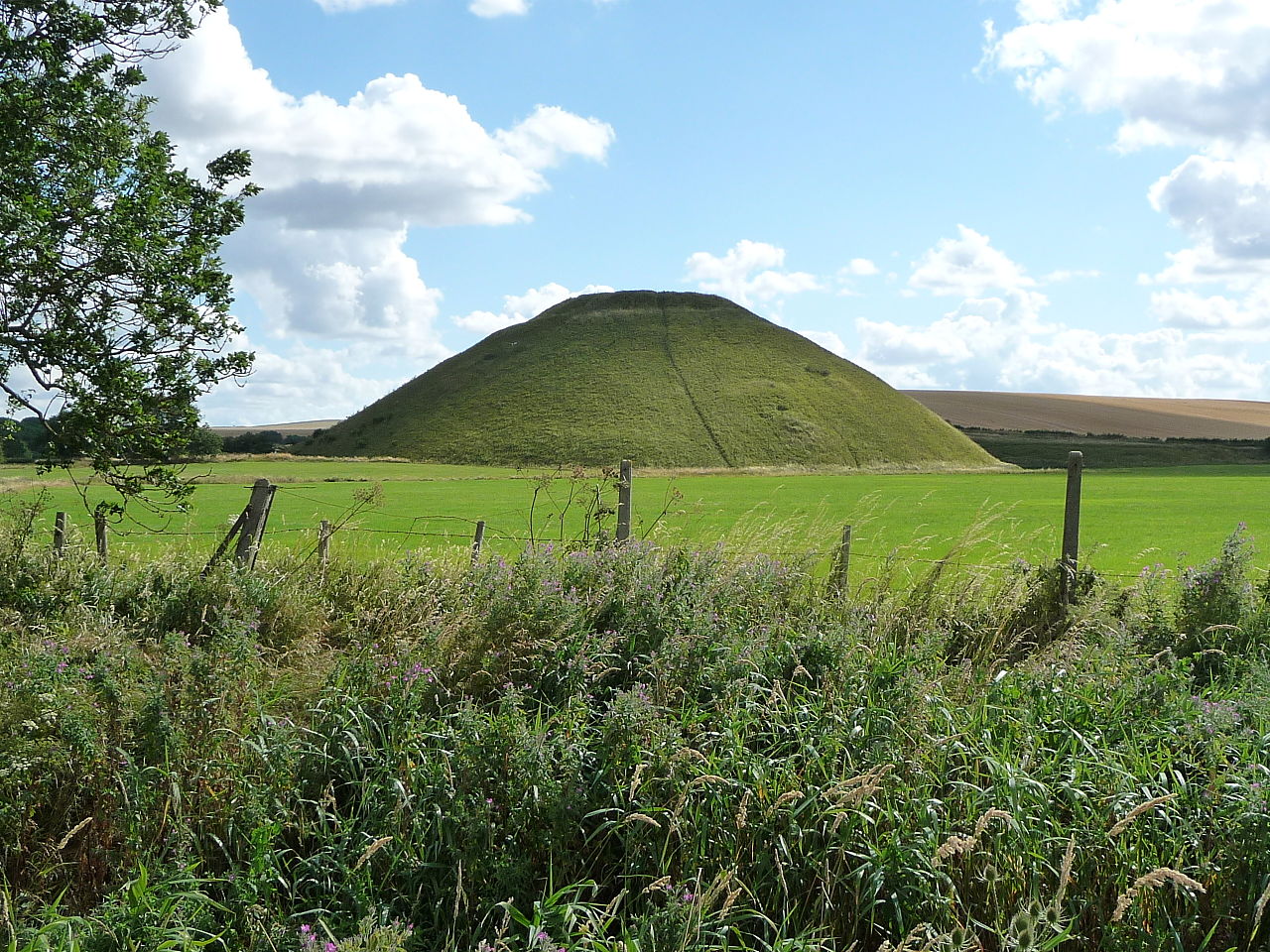
Harrison Birtwistle's Silbury Air ( 1977/2003) is a case in point.  It's one of the great classics of the repertoire, inspired by Silbury Hill, a neolithic mound rising steeply above the flat plains of Wiltshire. In foggy conditions, it looms above the mist as if it were a strange alien entity.  It connects to other prehistoric land forms in the area, such as Avebury, Long Barrow and Stonehenge.  Building these  monuments may have taken millennia, constructed as they were without modern tools. Yet no-one knows who built them, or why.  "Unfinished Business", mysteries we may never solve.  Silbury Air is an evocation in musical form of many ideas Birtwistle has been developing over many years: layers of sound like geological strata, cells growing organically into denser blocks,  always moving.  Tiny percussive fragments (including harp and piano - Rolf Hind)  grew into a long seamless drone, with oboe, B flat clarinet and trombone.  Flurries of notes, building up patterns.  Temple blocks and metallic brass : lines swaying in characteristic Birtwistle waywardness.  Could we hear neolithic workmen hammering away ? And echoes of The Rite of Spring ? Textures thinned out : high strings and winds, surprisingly subdued, mysterious brass chords, percussion in various forms beating time.  Ticking sounds
, too  - the passage of time - an elusive flute theme rising above.  Single harp chords. Hard to tell when sound merged into silence, but that, I think, is the point.

Organic growth, too, in Iannis Xenakis Thalleïn (1984)  The title means "sprouting"  Thus the sudden but sustained chord, exploding like a siren, high-pitched sounds rising upwards, rhythmic cells bubbling along. An exotic glissando that decelerated before rising up again - a tendril, unfurling and swaying. Further loops of sound (winds and brass), sparkling flurries and single notes plucked on piano and percussion.  The music moves through several distinct phases, ideas carried through and developed anew.  Dense textures alternated with stark staccato, evolving into florid glissando multitudes.  Percussion chords anchored wildly rhythmic figures.  Single chords along the
keyboard danced with drums and strings.   Long wailing brass and  single chord percussion. The "siren" opening returned, in new form, with a strong brass line. Xenakis creates shapes with sound, shapes so inventive that they could be depicted in visual form.

As I listened to Xenakis, I thought of Boulez's many Notations,  reconfiguring and growing like a Mandelbrot, the very essence of life.  So it was good to hear Colin Matthews’ Contraflow (1992)  after Xenakis Thalleïn. Again, the idea of shapes spiralling and unfolding, with joyous
proliferation.  It's "contraflow" in the sense of two forces meeting and merging. C
olin Matthews is a major figure in British new music and very much a part of the London Sinfonietta heritage.

Since this concert was a sampler programme, we didn't get to hear the whole of Wolfgang Rihm's Chiffre-Zyklus (1982-6), which evolved from Chiffre I through a series of different instrumental groupings to form a traverse, though each section can be played individually.  Here, though, we heard Chiffres II (of X) subtitled "Silence to be Beaten" (1983). From near silence, a strident chord which breaks into zig zags, movement further propelled by rushing rhythms, capricious figures for winds and brass, alternating by piano beating time like a metronome.  Energetic blocks of sound which suddenly disappear into near-silence.  High-pitched sound, interrupted by thwacks of timpani. Further near silence, rumbling percussion, tense single keys crackling across the keyboard. The climax builds up in waves of varied detail.  A marching pace, led by brass calls. Gradually, the textures open out again: sighing winds, single notes on the piano, and silence returns. What a ride!     

Sunday, 26 November 2017

London Sinfonietta Landmarks - Birtwistle Xenakis Matthews Rihm

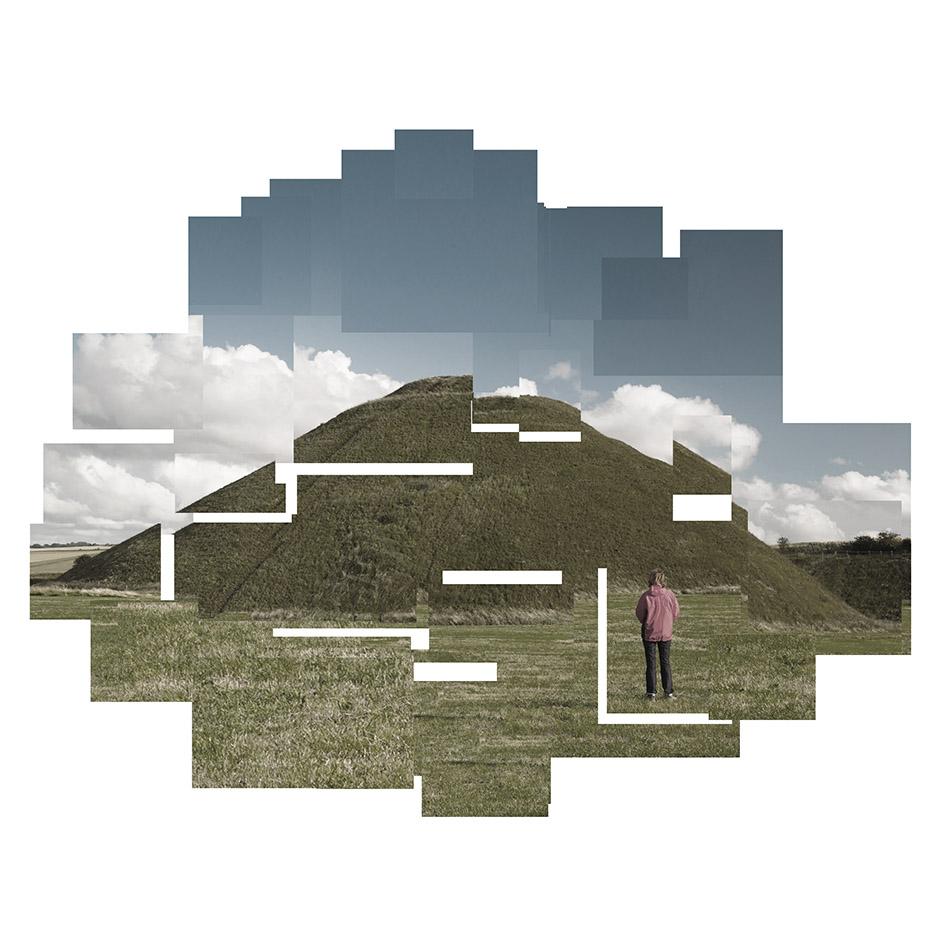
Silbury Hill collage, from London Sinfonietta
 A great London Sinfonietta experience with Martyn Brabbins conducting Xenakis, Birtwistle, Wolfgang Rihm and Colin Matthews at St John's, Smith Square.  As the London Sinfonietta nears its 50th anniversary, it’s good to hear them presenting landmarks from their core repertoire.  Good music is always "Unfinished Business", revealing  more with each experience. Governments want to divest themselves of responsibility for education, forcing orchestras to change their focus. But excellence "is" education, and education doesn't just mean people who wouldn't normally listen to music.  Hopefully the London Sinfonietta will return to its pioneering roots and be proud of what they do.
Harrison Birtwistle's Silbury Air ( 1977/2003) is a case in point.  It's one of the great classics of the repertoire, inspired by Silbury Hill, a neolithic mound rising steeply above the flat plains of Wiltshire. In foggy conditions, it looms above the mist as if it were a strange alien entity.  It connects to other prehistoric land forms in the area, such as Avebury, Long Barrow and Stonehenge.  Building these  monuments may have taken millennia, constructed as they were without modern tools. Yet no-one knows who built them, or why.  "Unfinished Business", mysteries we may never solve.  Silbury Air is an evocation in musical form of many ideas Birtwistle has been developing over many years: layers of sound like geological strata, cells growing organically into denser blocks,  always moving.  Tiny percussive fragments (including harp and piano - Rolf Hind)  grew into a long seamless drone, with oboe, B flat clarinet and trombone.  Flurries of notes, building up patterns.  Temple blocks and metallic brass : lines swaying in characteristic Birtwistle waywardness.  Could we hear neolithic workmen hammering away ? And echoes of The Rite of Spring ? Textures thinned out : high strings and winds, surprisingly subdued, mysterious brass chords, percussion in various forms beating time.  Ticking sounds, too  - the passage of time - an elusive flute theme rising above.  Single harp chords. Hard to tell when sound merged into silence, but that, I think, is the point.

Organic growth, too, in Iannis Xenakis Thalleïn (1984)  The title means "sprouting"  Thus the sudden but sustained chord, exploding like a siren, high-pitched sounds rising upwards, rhythmic cells bubbling along. An exotic glissando that decelerated before rising up again - a tendril, unfurling and swaying. Further loops of sound (winds and brass), sparkling flurries and single notes plucked on piano and percussion.  The music moves through several distinct phases, ideas carried through and developed anew.  Dense textures alternated with stark staccato, evolving into florid glissando multitudes.  Percussion chords anchored wildly rhythmic figures.  Single chords along the keyboard danced with drums and strings.   Long wailing brass and  single chord percussion. The "siren" opening returned, in new form, with a strong brass line. Xenakis creates shapes with sound, shapes so inventive that they could be depicted in visual form.

As I listened to Xenakis, I thought of Boulez's many Notations,  reconfiguring and growing like a Mandelbrot, the very essence of life.  So it was good to hear Colin Matthews’ Contraflow (1992)  after Xenakis Thalleïn. Again, the idea of shapes spiralling and unfolding, with joyous proliferation.  It's "contraflow" in the sense of two forces meeting and merging. Colin Matthews is a major figure in British new music and very much a part of the London Sinfonietta heritage.

Since this concert was a sampler programme, we didn't get to hear the whole of Wolfgang Rihm's Chiffre-Zyklus (1982-6), which evolved from Chiffre I through a series of different instrumental groupings to form a traverse, though each section can be played individually.  Here, though, we heard Chiffres II (of X) subtitled "Silence to be Beaten" (1983). From near silence, a strident chord which breaks into zig zags, movement further propelled by rushing rhythms, capricious figures for winds and brass, alternating by piano beating time like a metronome.  Energetic blocks of sound which suddenly disappear into near-silence.  High-pitched sound, interrupted by thwacks of timpani. Further near silence, rumbling percussion, tense single keys crackling across the keyboard. The climax builds up in waves of varied detail.  A marching pace, led by brass calls. Gradually, the textures open out again: sighing winds, single notes on the piano, and silence returns.  What a ride!      

Monday, 9 October 2017

Unfinished Business: London Sinfonietta 50 years


"Thank goodness for the London Sinfonietta!" (as the London Sinfonietta quotes me on the front page of their website. True, indeed ! without the London Sinfonietta, music in this country would have been dull indeed. The London Sinfonietta were pioneers, much more than "just" an ensemble. They were a powerhouse of creative, innovative thinking, generating a sea change in musical thinking which continues to flourish today.  Thus Unfinished Business, marking the forthcoming 50th anniversary of the London Sinfonietta, which starts Wednesday 11th October at St John’s Smith Square, starts with Hans Werner Henze's iconic Voices. Henze  himself conducted it with the Sinfonietta on their 1978 recording, re-released a few years ago. Please read my summary here.
 
Henze was closely associated with the London Sinfonietta who played a lot of his music, composer and orchestra both defined by the events of 1968.  They hosted a major retrospective to mark his 75th birthday, which is when I  met him.  He was a lion, but kind hearted enough to be nice to a nobody like me.  Henze is dead, but not forgotten. Currently I'm enjoying a new recording of his Neue Volkslieder und Hirtengesänge  and Kammermusik 1958 with Andrew Staples and the Sharoun Ensemble Berlin, conducted by Daniel Harding - it's wonderful, read more here.  This time round, David Atherton conducts Voices.  He's a Sinfonietta veteran too : the concert should be an almost historic occasion. 


Later in the season, Iannis Xenakis, Luciano Berio, Harrison Bitwistle, Gyorgy Ligeti, Wolfgang Rihm, Karlheinz Stockhausen and others, just a few of the numerous composers who have been associated with the ensemble from way back. The London Sinfonietta has a lot to be proud of !   A welcome return to its Glory Days, when it presented excellence with style and commitment.  For a while, it seemed that the ethos had changed. Governments promote the idea that orchestras should make education a priority but that's a political argument, not artistic logic.  If governments really cared about education they';d fund it in the first place, and let orchestras do what they do best., which is make music that inspires listeners to learn.   Excellence itself "is" education.  Please see a few of the numerous concerts and recordings I've covered over the years, including:
Beat Furrer FAMA 2016

Hans Abraham Schnee Simon Holt

George Benjamin Into the Little Hill

Stockhausen Trans und Harmonien

  and loads more ........click on composer names

Monday, 17 July 2017

Harrison Birtwistle Deep Time : Barenboim Prom 4


The UK premiere of Sir Harrison Birtwistle's Deep Time, at the Proms in the Royal Albert Hall,  with Daniel Barenboim who conducted the world premiere at the Philharmonie, Berlin, in May.this year.  Just as Barenboim's Elgar pedigree goes back a long way, so does his relationship with Birtwistle.  They've known each other since the 60's. Barenboim also gave the premieres of  Birtwistle's Exody in 1998 and of The Last Supper in 2000.

In an interview for his publishers Boosey & Hawkes, Birtwistle explained the term "Deep Time".  "...coined by John McPhee in a 1981 book Basin and Range, which refers to the idea of measuring things on a vast temporal scale beyond human comprehension such as the age of rocks. The concept of Deep Time follows on from the work of the 18th century Scottish geologist James Hutton who proposed that the processes of rock erosion, sedimentation and formation have ‘no vestige of a beginning, no prospect of an end’, a state of perpetual change...."   It's an idea which fits in well with the concepts that seem to lie beneath so much of Birtwistle's work: stratas and layers,  levels of time parallel and co-existence, puzzles, mysteries and patterns, often evolving as if generated by abstract but organic life forces.  Earth Dances, of course, and The Triumph of Time but also mysteries like The Minotaur and Silbury Air. 

Deep Time seems to evolve out of nothingness. Bars are marked in silence until sound emerges almost imperceptibly. Slow, circular figures dragging forward contarst with sparkling figures comprising short, quick-paced cells.   Rhythms build up quickly to an exuberant angular dance, which then morph into flying figures which float above the steady pulse.   Crashing metallic percussion, the growl of dark, low brass and woodwinds. Base, middle and top notes like a complex but earthy scent.  Large, dense structures and fleeting whips of high-pitched sound, propelling forward thrust.  A soprano saxophone calls, marking intervals: wooden blocks are beaten in typically wayward Birtwistle zig-zag patterns.  Planes of sound from strings and winds, suggesting boundless vistas.  Towards the conclusion, trickling, tiny fragments, quirky changes of direction, and a return to long, slow, rumbles. As the music passes onwards,  cymbals clash and long planes stretch until at last the music dissipates into nothingness once more. Not before the brass and metallic percussion assert themselves once more, in quirky farewell.  I didn't think so much of inexorably slow forces but of a multiplicity of actions on different levels.  Birtwistle is never boring!  He turned 83 this weekend, but creatively he's lithe and agile. 


Barenboim nails the Proms: Elgar, Citizen of the World

Two giants of British music - Edward Elgar and Harrison Birtwistle with Daniel Barenboim and Staatskapelle Berlin, Prom 4 Royal Albert Hall.  Barenboim's Elgar credentials go back decades to the early years of his marriage to Jacqueline du Pré, when they made exciting music together with the trendiest young crowd in the business at the time. Over the years Barenboim's approach to Elgar has matured, becoming more magisterial and more elegant.  Though Elgar was thoroughly English, he was not a "Little Englander". Though celebrated by the Establishment., he wasn't born to the Establishment but made his own way. In his day, there was  integration between British and European music. Elgar was a citizen of the world well aware of what was happening around him.  

Thus Barenboim's sophisticated, cosmopolitan Elgar Symphony no 2 in E flat major, where the "Spirit of Delight" flowed with graceful confidence, truly "nobilimente".  each theme suggesting open vistas and expansive horizons.  There are hints of the kind of music one might associate with celebration - holidays at spas, gala occasions, even the Proms of Sir Henry Wood. But the mood changes. Celli and basses introduce a darker mood.  The themes return, but more urgent, descending into haunted quietude. When the expansive tutti return, they seem defiant, rushing towards frantic climax. Speaking like a poet, Elgar said that this was "a sort of malign influence wandering through a summer night in a garden".   The themes in the Larghetto were stretched,just enough to emphasize the idea of fragility, of holding onto something elusive.  "Rarely. rarely comest Thou, O Spirit of Delight" ...... "Wherefore hast thou left me now/ Many a day and night?  Far less funeral march than personal and deeply felt nostalgia for something inevitably slipping away.  

Thus the wildness of the Rondo, swirling cross-currents, cut off mid flow in a short,  sharp climax. .   Elgar wrote, enigmatically, "Venice and Tintagel" , referring possibly to pleasant times he'd enjoyed in the past, both places being popular with turn of the century travellers. There are even hints of tea dance music and jazz.  Think Thomas Mann Death in Venice, though Elgar got there first., completing the symphony before the novella was published. In the circulating themes and sense of constant movement, perhaps we can imagine the idea of throngs of tourists, each on individual voyages, which will inevitably come to an end. The bustle and wild, whipping lines with which the movement ends certainly suggest hurried departure.   Elgar and his peers weren't to know that the era of European expansion was soon to end, but we cannot blank out our awareness of the war and what followed. Nor should we : music isn't just ink on paper.  Art engages the soul.  Thus the final movement, the  Moderato e Maestoso,  seemed to glow, the last chords fading slowly, like dying embers.  Dignified and very moving.  

At Prom 2 the previous evening, Barenboim and the Staatskapelle Berlin had performed Elgar Symphony no. 1 in A flat major (1908) together with Sibelius Violin Concerto (1904) with soloist Lisa Bathiashvili. Two works by almost contemporary composers, written within a similar period.  Interesting combination, but not nearly so intriguing as Prom 4 pairing Elgar Symphony no 2 (1910) with Harrison Birtwistle's Deep Time (2017).  Since that's an important new work, it deserves a piece all on its own, which I've written about here.  

But one more observation on Elgar the European.  For their encore on Saturday, Barenboim and the Staatskapelle Berlin launched into the famous Elgar Pomp and Circumstance March no 1.  Brilliant wit !  That piece has become hackneyed in the popular mind, having been associated with jingoism, flag waving and Last Night of the Proms silliness.  Which is ironic since pomposity is not a good thing.  "Pride, pomp, and circumstance of glorious war!"  Othello is in agony, having been tricked by Iago into doubting Desdemona.  His past victories and the status he won through war have come to naught. He'll end up losing everything. Because he's listened to a fraudster!   It was wonderful to hear the piece played as serious music and as a proper concert work. Refined and stylish, yet also beaming with good humour. How many in the audience "got it" I wonder ?

Saturday, 11 February 2017

Harrison Birtwistle's secret opera? King Lear

Harrison Birtwistle's secret opera, King Lear ?  Dementia is not madness but the last flaring up of a brave soul, raging that the world is closing in on him: a final explosion of creative defiance against the cruelty of fate.  All the elements of Birtwistle's style - cryptic clues embedded in complex mazes,  geological blocks of sound built layer upon layer, sudden flashes of quirky illumination.  Birtwistle and Lear were meant to be. Plus, a perfect role for John Tomlinson. While everything around him disintegrates, this Lear will hold himself together, searching for patterns against all odds.  Lear's madness is a rage against the storm and gathering night. 

In typical Birtwistle fashion, an anti-overture that functions as a finale in reverse. A densely detailed, long introduction that creates Lear in his prime as a forceful personality for whom creativity was the very stuff of life. Themes and sub-themes suggest Lear's  inventive mind and passion for experience, so intense that the layers jostle for attention. An overwhelming challenge. But so is life.  Great theatre: knocking the audience off their seats right from the start. Gradually as the opera proceeds, themes fall away until what's left is a basic line, repeated fitfully, refusing to end.  People with dementia do rituals because repeated routines provide a structure to hold onto.  One old man told me why he liked touching the walls of his room. "So I can remember the shape of space". Utterly logical and a very Birtwistle concept.

Lear's lines are short. Words suddenly shoot out in a torrent, sometimes in mechanical  patterns. Towards the end, words themselves disintegrate into fragments, a boon for a singer conserving his resources.  If the singer barks and growls, so be it ! He's earned the right of respite.  As the orchestra sang the full story at the beginning of this opera, it will sing for Lear when his own voice becomes dim. Other parts appear fleetingly,but they aren't central, often submerged within a chorus whose form and composition varies.  Sometimes the chorus explodes in mad chatter while Lear listens. Sometimes the  voices fade sotto voce, hiding secrets. Every now and then, flurries of lyrical sound, representing a world beyond that is now elusive, but was so good that it was worth living in.  Little trios, like the daughters when they were young.

Birtwistle's King Lear is a masterpiece, fierce, difficult to play and conduct, but relatively easy to stage.  But why didn't London notice?  Too distracted by Jonas Kaufmann at the Barbican?  Tonight I had a surreal dream and woke, wondering who the librettist might be. Not Harsent, maybe Martin  Crimp.  Then I realized that the whole opera had been a dream, so intensely vivid and detailed that I'd remebered it in full from the night before, and was revisiting the night after.  Another level of non-reality, framing the "real" opera. 

"Blow, winds, and crack your cheeks! rage! blow!
You cataracts and hurricanoes, spout
Till you have drench'd our steeples, drown'd the cocks!
You sulphurous and thought-executing fires,
Vaunt-couriers to oak-cleaving thunderbolts,
Singe my white head!
"
.

Monday, 14 March 2016

Farewell to Stromness and to Max

Peter Maxwell Davies is dead. In his long career, there were many different "Maxes". Something for everyone, which may be part of his appeal. In later years he was appointed Master of the Queen's Music, an accolade not all that many composers would relish, though Judith Weir is a wise choice of successor.

In his youth Maxwell Davies was part of the "Manchester Group" (NOT 'school), the epicentre of the British avant garde at the time, mixing with figures like Alexander Goehr and Harrison Birtwistle, whose The Fires of London Maxwell Davies eventually inherited.  From this period came Eight Songs for a Mad King (1969) yet also Seven In Nomines (1965) blending themes from John Taverner with  entirely new work. The fifth of the seven sections is pivotal. He described it as a "realization of circular canon, with the plainsong on a cross inside a circle", almost as if he were setting a graphic shape to music. The last time I saw Maxwell Davies in the flesh was when he shared a stage with Harrison Birtwistle in a tribute to Pierre Boulez.  Some in that audience weren't old enough to remember the Manchester years.

In 1971 Maxwell Davies moved to a remote croft in the Orkneys. The spartan landscape, its mysterious past and its very remoteness inspired a new stage in the composer’s creative evolution. He met the poet George Mackay Brown, whose Fishermen with Ploughs provided the text for Maxwell Davies' From Stone to Thorn. The connection with poetry is so strong that the vocal line predominates, the orchestration, in comparison, is fairly conventional, Maxwell Davies’ identification with Orkney also manifested itself in his sponsorship of the Stromness Festival and commitment to the islands' preservation. The first Stromness Festival was ushered in with the Hymn to St Magnus, based on a twelfth century manuscript. It begins with an adaptation of the original hymn, opening out to the complex, dramatic Sonata Prima which seems to evoke the seascape and the ancient legend. In the Sonata Seconda, the whole panoply of percussion bursts forth in a controlled cacophony, underpinned by strings and clarinet. It is as if the bells of church litany, ships bells at sea, bells as signals of distress and of worship, were all participating in a grand theatrical vision.

Max never lost his interest in Italy, where he studied with Goffredo Petrassi. Almost like a latter-day William Walton, this Italian connection  warmed Maxwell Davies's work. I have a soft spot for the slight though sweet Roma Amor (1998)

There's lots and lots more Maxwell Davies to be had, including operas and symphonies, but for me, what will endure of his work might just be the least self conscious, and most intuitive,  the piano interludes  from the Yellowcake Revue (1980) which packs a  punch, written as it was in a frenzy of passionate protest against uranium mining in the Shetlands. I've only heard the full version once, with the fiery Tourist Board Song ( "Oh come to Sunny Warbeth") with its eerie uranium glow., which is a pity, because it's good.  The first piano interlude, Farewell to Stromness is hypnotically beautiful, evoking the timeless spirit of the islands, pristine, pure and unpolluted.  I've often wondered if there was a connection between Farewell to Stromness and Paul McCartney's Mull of Kintyre. (1977) : two songs that have seared themselves into the way we Sassenachs perceive Scotland.

Thursday, 14 January 2016

Boulez, Birtwistle and Max - the famed Boulez at 80 concert


Now available on BBC I player, the famous concert "Boulez at 80" where Boulez, Harrison Birtwistle and Peter Maxwell Davies all met together on stage at the Barbican, London, when Boulez was presented with a medal from the British Association of Composers. Birtwistle spoke of how he had, as a young man, seen Boulez’s score for Le marteau sans maître. He’d seen nothing like it before, and it became his “rite of passage” musically. Boulez was an “immaculately uncompromising” composer and conductor whose example showed the paucity of populist, surface-level music. “A concert hall is not a museum”, he added, for music like Boulez’s “propels us into the future”. Then Boulez, humbly and simply, went back to work.

Boulez and Birtwistle go way back: Boulez's recordings of Birtwistle, like Theseus Games, are the absolute benchmarks. Birtwistle and Maxwell Davies go back a long way too but for decades they weren't on the best of terms, though, subsequently, the huge revival of interest in Birtwistle has brought Max into the spotlight, too.

This film is also important for the interview at 53 minutes in where Boulez explodes some of the myths said about him (direct link here). He explains the context of the story about blowing up opera houses. This came from his frustration at the way opera houses were managed, where a conductor didn't know who the orchestral players or evern the cast might be. As he says, Mahler said much the same thing, and so does Christoph von Dohnanyi (more HERE). He also explains the famous quote "I sleep faster", which was a bon mot about how he managed to cram so much into his days. He didn't sleep 2 hours a night!  On ideologies "You have to find your discipline in order to break it. If you are constantly constrained by your discipline you become sterile. Ideologies are very interesting, at one point, when they are forging something, but when they are not forging something, when they are empty, then that is detrimental to your capacity of inventing"  It's pertinent that Boulez's own music soon went way beyond serialism, in no small part due to John Cage's ideas on chance. Boulez likes modertn music but that's not "ideology". There are composers obsessed with formula but not him.

Charles Hazlewood talks about discipline in conducting. Maybe because I am a composer", says Boulez, " I think the composer is more important than the performer.. not too much of an ego, simply that. But I try to understand what the composer is tryingb to say, and when you see how carefully he has written a score, then you try to be as careful as he was. So then I'm careful about the balance, the style, the  dynamic, the exactitude (which in the French meaning of the word has different connotations to English). On Le soleil des eaux, he speaks of the way he wrote the original before he became  estabhished as a conductor, but when he conducted it with the BBC in  the early 1960's he could  see, from a conductor's perspective , how it could be improved. As to his legacy  "I don't care, I won't be around!< he grins. "Each generation takes from its past and goes ahead."

In was at this concert, back in November 2005.  Look who else was in the audience ! I'm in frame, too, but a blurred dot. Everyone looks so young. Some are no longer with us. Below my notes then on Le soleil des eaux.

Le soleil des eaux was written in 1948, when Boulez was barely 23. Already, though, it shows his distinctive personality, and still sounds strikingly original some sixty years later. René Char was a surrealist, and a member of the French Resistance. These poems come from a post-war political protest and were published barely a year before Boulez set them. Here attention is on the voice, which leaps up the scale, and turns capriciously, like the goldfinch’s darting movements. Boulez observes nature clearly – Messiaen taught him well. [Elizabeth] Atherton was in her element now, gloriously. The high timbre suited her well and she shaped the languor of the lines. Drama is added with sudden flashes of orchestral interjection, which the vocal part complements. “L’homme fusille”, sings Atherton “cache-toi!” (man is armed, hide!), with emphasis on the urgent “cache-toi!”. The second song, La Sorgue, Chanson pour Yvonne, is a much larger work, its powerful imagery condensed into barely five minutes. 

 The piece starts with a delicate otherworldly weaving of wordless soprano singing, harp and vibraphone. Then the orchestra and large chorus surge in, with the power of a mighty river unleashed. The choral writing is so finely textured that individual voices spread across the spectrum. The idea isn’t that specific words should stand out, but rather the impressionistic effect of multi-layered sound. This really is vocal writing as instrumental, where the total image matters. It’s emphasised by the regular cries of “Rivière!” when the choir pulls as one, before relaunching into the flow. Also reversed is the conventional role of soloist: the soprano’s contribution is to soar over and around the massed voices, singing a line that is literally “beyond” words. Boulez chose this piece, seldom performed live because of its personnel demands, as his own tribute to the BBC Symphony and Singers, who have made it one of their specialities."

Friday, 26 June 2015

Benjamin Aldeburgh London Sinfonietta Birtwistle Knussen

At Aldeburgh, George Benjamin, Pierre-Laurent Aimard, Birtwistle, Knussen - a veritable roll call of big names in contemporary music in modern Britain.In some ways, it was a bit of history, too, since the three major British pieces are fairly early, but have connections with the London Sinfonietta.

Harrison Birtwistle's  Carmen arcadiae mechanicae perpetuum ("a perpetual song of mechanical arcady") was a London Sinfonietta premiere, conducted by Birtwistle himself in 1978. Like a Klee painting, it's built from six basic "mechanisms" which fracture and regroup to form 22 blocks. Each is distinct, some punctuated by percussion, others by dark splats of brass. Each tableau is heralded by a high horn call.  Benjamin's precision allowed individual cells to be heard clearly, as if illuminated, creating an aura of perpetual motion. The piece sparkled, much like the way brushstrokes in an Impressionist  painting let light shine through.  The craggy, zig-zag rhythms sounded gloriously wayward, and the sudden ending bristled with a lively twist.

Benjamin loves Oliver Knussen's Songs without Voices (1991/2) . It's easy to hear why. The exquisite delicacy of these pieces lends itself well to Benjamin's refined sensibilities. Songs without voices?  Because they aren't tied to any specific text, other than the brief title, the listener is freed creatively to "hear" in the imagination. The listener becomes part of the creative process.  For me, the quiet stillness of Fantastico (Winter’s Foil)  suggest the pale light of winter and the way one's breath become visible in cold air. I've never seen open plains, but I could visualize the long outward reaching lines in Maestoso (Prairie Sunset) translated into long, horizontal vistas. In the third song Leggerio : The First Dandelion , I could hardly breathe for fear of shattering the stillness  One could read the original poems (Walt Whitman) but I think the pieces work better as more abstract conceptua, so every listener will have a different experience. In the final song,  Adagio: Elegaic Arabesques, the cor anglais leads, delineating elegant patterns.

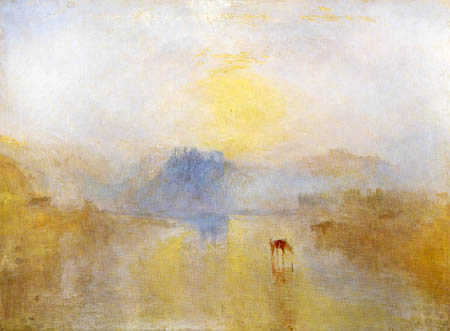
George Benjamin's At First Light was premiered by the London Sinfonietta in 1992, with Simon Rattle conducting. The piece was inspired by JMW Turner's painting Norham Castle at Sunrise, an early modern "abstract" painting  Benjamin has said, "A solid object can be formed as a clearly defined punctuated musical phrase". A short, brisk opening dissipates into extended silence.A second movement full of incident - something's stirring! This unfolds into a final movement where long, continuous harmonies interweave.

This concert at the Britten Studio mirrored the concert Benjamin conducted at the Maltings, both ending with Pierre-Laurent Aimard, whose Ravel Piano Concerto in G major in the earlier concert was the impassioned highlight of an oddly lacklustre evening, which began with a soggy Wagner Siegfried Idyll and included Benjamin's very early A Mind in Winter with Claire Booth as soloist. The Mahler Chamber Orchestra are very good indeed, so it was a relief to hear them back on form the next night with François-Xavier Roth. Read my review of that concert HERE. Tom Coult's Beautiful caged thing sounded like early Benjamin, too, but then he's young and a Benjamin pupil.  But it's good that new work by young artists gets heard at Aldeburgh. That was Britten's objective. Saed Haddad's In Contradiction for two cellos and ensemble was more engaging, contrasting ideas and blocks of sound in a tight, energetic structure. Haddad was a Benjamin pupil more than ten years ago, and has found his own, distinctive voice. If Aimard's Ravel was good, his Ligeti Piano Concerto was even better. He traversed its lively, zany high spirits with joyous delight. Aimard has performed most of the key modern works for piano, and knew most of the composers personally, including Ligeti. We are very lucky indeed to have him at Aldeburgh. 
It is set in three movements: in the short, opening one, superimposed fanfares burst into hazy, undefined textures. After a pause the extended second movement follows, itself subdivided into several contrasted sections, full of abrupt changes in mood and tension. The concluding movement arrives without a break, and progresses in a continuous, flowing line illuminated with ever more resonant harmonies. - See more at: http://www.fabermusic.com/repertoire/at-first-light-761#sthash.q7E7q1ka.dpuf
A ‘solid object’ can be formed as a punctuated, clearly defined musical phrase. This can be ‘melted’ into a flowing, nebulous continuum of sound. There can be all manner of transformations and interactions between these two ways of writing. Equally important, however, this piece is a contemplation of dawn, a celebration of the colours and noises of daybreak. - See more at: http://www.fabermusic.com/repertoire/at-first-light-761#sthash.q7E7q1ka.dpuf
Elegiac Arabesques) Songs With

Monday, 15 June 2015

Harrison Birtwistle The Corridor The Cure Aldeburgh

Harrison's Birtwistle's The Corridor and The Cure at the Britten Studio at Snape, Aldeburgh, also coming to the Linbury Studio Theatre in London in July. Six years separate the operas, but in many ways they are two interlocking parts, typical of Birtwistle's fascination with puzzles.  Both pieces  employ the same combination of players - two voices, violin, viola, violoncello, clarinet, flute and harp. Both are inspired by Greek archetypes, and deal with cosmic issues of life, death and creative regeneration. Together, they could inspire a much deeper exploration of the inventive maze that is the source oif Birtwistle's imagination. In theory, anyway.

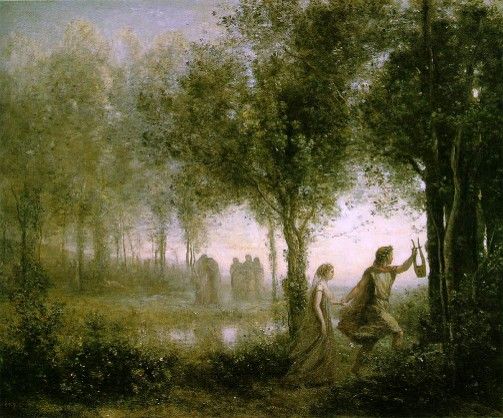
This new production of The Corridor dispensed with the dancers who shadowed the singers in Peter Gill's production in 2009.  Because the piece was new then the dancing confused and distracted though it was valid in principle, dance being very much part of meaning. This time, it was much easier to focus on the sheer beauty of Birtwistlle's writing, and of David Harsent's poetry, bot lucidly evoking the stylized elegance of Greek theatre.  This time Mark Padmore  and Elizabeth Atherton (Orpheus and Eurydice) emerged from an abyss behind the musicians of the London Sinfonietta, moving slowly along a slope. Orpheus is trying to  lead Eurydice out of the Underworld. Orpheus passes effortlessly through. Eurydice hesitates and is lost. The action, such as it is, operates within a compressed moment  in which Eurydice relives her wedding day and her death.

The music unfolds in a progression of frames, suggesting parallel concepts of time. Orpheus's music moves forwards. Eurydice's lingers, savouring what remains of memory, but her long lines draw her back, like ropes or sinister tentacles.  Further games with time: Eurydice can foresee the future, including  Orpheus's death, when he's torn apart by Meniads, but she herself can go no further. He stands in the light, in greenery (symbolizing fertility). The harpist plays behind him: for the harp signifies Orpheus's lute.  He's a musician, and his art is creative life. With a last heartfelt cry, Padmore sings "Eurydice", or rather speaks the name with minimal ornamentation, emphasizing his desolation.

The Corridor runs roughly 45 minutes, as does The Cure, separated by an interval of around half an hour. Chamber opera predicates on concision, ideal for the Greek antecedents of these micro operas, so the long interval was ominous, but that's not in itself a problem as audiences, especially at Aldeburgh, are laid back and receptive. Medea (Atherton) stands in  a green circle which might suggest her isolation as well as her occult powers., with a volcano behind her, and moons above. Visually this is stunning.  Lots of bright jewel colours and activity to watch, frequent transformations wrought be lighting.  Comic book cuteness, which is not irrelevant when we remember the harsh primary colours and deliberate stereotypes of Birtwistle's Punch and Judy or Down by the Greenwood Side.  But, just as dancing obscured the first The Corridor , the visual high jinks in this The Cure overwhelm the music. It's almost certain to appeal to those who don't actually like Birtwistle's music. They'll have plenty to enjoy without actually having to listen.. 

Unfortunately, the big story about this production will have been missed by those who went out for a drink in the interval.  Not everyone does, and nor should they have too, since space is at a premium in places like The Britten Studio and the Linbury Theatre. I was told that apparently the production team had threatened not to continue the performance unless people got out.  Unfortunately, many people believed this and left reluctantly.  So much pressure was put on the audience that by the end, only ten or so people held out, calling the bluff, some in corners or standing against the wall.  Audiences at Aldeburgh are generally music people rather than opera people so maybe they accept what opera people would see through.  But they're also so "British", too polite to complain even when they're upset. There's no way to quantify what they really feel. 

The reasons given were a combination of supposedly artistic values. "It's Royal Opera House Policy", I was told. No it is not. Even when there's a double bill of different operas at the Linbury, no one is forced to leave  Because Aldeburgh is primarily a house for chamber opera, there have been numerous double bills there, without any problem. Remember Benjamin's Into the Little Hill, paired with Luciano Berio's Recital 1, where stage preparations were integrated into the performance, or the Oliver Knussen Sendak double bill,, Where the Wild Things Ate and Higgelty Piggelty Pop, both with much more complicated staging. Or even the first The Corridor, paired with Birtwistle's Semper Dowland, semper dolens. at the Britten Studio. In any case, The Corridor and The Cure are so similar that they'd work even better with only a short pause.   

The idea that audiences shouldn't observe stagework is also specious. All theatre is illusion. No one's fooled. People can decide for themselves. Some are even interested in stagecraft.  Indeed, since stagecraft is an art form in itself, the better audiences understand how it works, the better. What would Benjamin Britten have thought, with his committment to practical opera  making?  

The Aldeburgh Festival is dearly loved and supported because it has an ethos of treating audiences well. The staff often go the extra mile to be nice. Audience members are potential friends - and Friends - so it makes no sense to treat  people harmlessly sitting in a hall with resentment.  Artistic judgements are all very well, but the Aldeburgh Festival has a duty of care towards its audiences. Thus, I believe that they'll stand up for that and not be pushed into wrong positions. 

Thursday, 19 March 2015

Poetry beyond words - Nash Ensemble Wigmore Hall


The Nash Ensemble's 50th Anniversary Celebrations at the Wigmore Hall were crowned by a recital that typifies the Nash's visionary mission.  Above, the dearly-loved founder, Amelia Freeman,  a quietly revolutionary figure in  her own way, who has immeasurably enriched the cultural life of this country. Ostensibly, the concert featured some of the best modern British composers, plus Elliott Carter, an honorary Brit, since his music has been so passionately championed in this country.  But a deeper perusal of the programme revealed even greater depths.. "Poetry beyond Words" I thought, since most of the pieces transformed their original sources in text and visual images into exquisitely original works of art. Lieder ohne Worte: an affirmation of the life force that is creativity.

Simon Holt's Shadow Realm  (1983) gets its title from a poem by Magnus Enzensberger (a favourite of Hans Werner Henze).  ".....for a while/ i step out of my shadow/for a while.....".  Holt's music penetrates the elusive mysteries of the text, going beyond the words to express its spirit. It's structured in two halves, "shadowing" one another, but scored for an unusual combination of clarinet, harp and cello, creating a three-way conversation  creating a further shadow around the duality of its conception. It's a miniature, only eight minutes long, but its concision is so elegant that it puts to shame many works which drown in verbose meandering. Holt was only 25 when it was written: a remarkable original achievement by a composer whose self-effacing manner belies a mind of great originality. It says much about the Nash Ensemble that they commissioned it, long before Holt became famous.

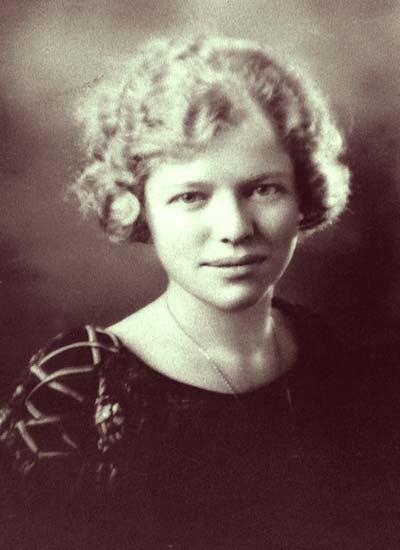
The poems of Lorine Niedecker (1903-1970) pack intense meaning into fragmentary, haiku-like lines, some of which don't even follow grammatical syntax. But therein lies their beauty.(that's her in the photo). Harrison Birtwistle's Nine Settings of Lorine Niedecker (1998-2000), another Nash commission, distils each poem with a kind of almost homeopathic concentration, communicating the spirit of the poems, far more creatively  than mere word-painting.  Claire Booth sings arching lines which reach upwards and outwards, sustaining the legato, while the cello weaves around, without interruption, coming into its own only when the voice falls silent, like an elusive echo, Eventually, the poems seem to move away, beyond human hearing. The music gradually slows down, voice and cello retreating together with melancholy "footsteps", each note expressed with solemn dignity.  Birtwistle recognizes the fundamental structure of Niedecker's text, but emphasizing syllables and single words, rather than phrases. " thru bird/start, wing/drip, weed/drift", though in the text the words are joined. Perhaps this captures the sense of water, dripping quietly in some vast stillness. Yet it's also typically Birtwistlean puzzle-making,  creating patterns within patterns, layers within layers. Beautiful moments linger in the memory, like the "You, ah you, of mourning doves", where the poet plays with the word "you", which sounds like dove call yet also evokes human meaning, while the composer, for once, infuses the word "mourning" drawing its resonance out, like the cooing of the bird.

One of the great joys of Julian Anderson's music is that he's an extraordinarily visual composer. Graphic images inspire his music and enrich its interpretation. His Alhambra Fantasy (2000) was stimulated by Islamic architecture, The Book of Hours (2005) by the miniatures in  Trés riches heures du Duc de Berry, and even Symphony (2003), despite its non-committal title, owes much to the paintings of Sibelius's friend, Axel Gallen-Kallela. Yet again, the Nash Ensemble recognized his unique gift almost from the start.  Poetry Nearing Silence (1997) was inspired by  The Heart of a Humument, a book of paintings by Tom Phillips, where random words from an obscure novel were picked at random, then adventurously illustrated.  See more here.  Just as Phillips transforms words into visuals, Anderson transforms ideas into abstract music. Eight highly individual segments unfold over 12 minutes. Each has a title, borrowed from the book, though the settings as such aren't literal.  In the third segment "my future as the star in a film of my room", one of the violinists plays percussion (a ratchet), which whirrs like the cranking of an old-fashioned camera. In the Wigmore Hall, the sound is decidely disturbing, but that's perhaps Anderson's intention : we can't take what we hear for granted. In theory, the segments travel round Europe - Vienna, Bohemia, Carpathia, Paris. Far away landscapes of the imagination: perhaps we hear references to Janáček's Sinfonietta, crazily buoyant but cheerful. The Nash play at being folk musicians, imitating alphorns and shepherd's pipes.  Everything in joyous transformation!  Gradually, the clarinet (Richard Hosford) draws things together, as silence descends.  Although Anderson doesn't employ voice in this piece, it feels like song, because the instrumentation has such personality.


The recital began with the world premiere of  Richard Causton's Piano  Quintet (2015), dedicated to the Nash. It's lively and inventive. Violins and viola tease cello and piano, provoking and taunting, whiling off in all directions.  Gradually the piano (Tim Horton)  restores harmony with a gracious cantilena.  Peter Maxwell Davies's String Quintet (2014) also received its world premiere. Four movements, each with a different mood and form, the Chacony being the most vivid. Before that, Elliott Carter's Poems of Louis Zukofsky (2008), with Claire Booth and Richard Hosford.  Carter expresses the shape of the poems as they are laid out in print. There are silences in poems which create an impact by the way they look on the page denser scoring where needed, the vocal line calling out into aural space.  Zukofsky's copyright holder issues stern warnings against quotation and use.  A very different attitude to the immensely rewarding creative inter-relationship between different art forms which made this concert so rewarding. 

If I haven't written much about the performances, that's because the Nash Ensemble are always good, and reliable.  The players on this occasion were Tim Horton (piano), Philippa Davies (flute), Richard Hosford (clarinet), David Adams (violin), Michael Gurevich (violin), Lawrence Power (viola), James Boyd (violin), Björg Lewis (cello), Adrian Brendel (cello), Lucy Wakefield (harp) and Claire Booth (soprano), and Lionel Friend (conductor).  This article also appears in Opera Today.

This concert was recorded for broadcast on BBC Radio 3 on 13th June 2015

Monday, 27 October 2014

Harrison Birtwistle Punch and Judy - new production

A new production of Harrison Birtwistle's Punch and Judy now available online on arte tv. Although Punch and Judy was Birtwistle's big public breakthrough, it's rarely done, so any chance to see it is worthwhile. This new production comes from the small but enterprising Armel Opera Festival  based in Budapest, though this performance comes from Vienna.  Neither cast nor production are world-class but  finesse is perhaps the last thing you'd want in Punch and Judy, Indeed, the raw enthusiasm of the cast and the rough edges in the production are rather effective in an opera where fairground puppets go berserk and beat each other up. The orchestra, Amadeus Ensemble Wien, conducted by Walter Kobéra,  definitely has a feel for Birtwistle's idiom  The theatre is very small, which emphasizes the intense, claustrophobic atmosphere. All in all, a good, idiomatic realization.

"Punch and Judy" is a delightful "tragical comedy or comic tragedy", which rather sums up its anarchic spirit. When it was premiered at Aldeburgh in 1968, Benjamin Britten reportedly walked out. There's doubt about the story since it's unlikely that Britten would have intoroduced it to Aldeburgh in the first place without having seen the score.. Time, however, has vindicated Birtwistle, who has now become almost part of the establishment. without sacrificing his idiosyncratic soul. 

Punch is a vicious psychotic, and the policeman almost equally evil. Violence is staple fare in popular culture – think of Sylvester the Cat and Tweetie Pie. On the other hand, Tweetie Pie always escapes, and is clearly a character to identify with. Punch, however, is an unredeemed psychotic, an evil force straight out of the Id, controlling and himself uncontrollable. Traditionally, Punch and Judy are puppets safely contained within the confines of a booth. On stage, however, they are unrestrained and wander dangerously free. Birtwistle creates a tight musical structure to hold in the drama, a kind of musical puppet booth, perhaps even a prison without walls. The action starts and ends with the Choregos (Greek chorus), who comment on the action with an element of detachment: when he himself is drawn into the action part way through, it’s quite unsettling, as Birtwistle no doubt knew. The music is also organised in distinct sections, modelled explicitly on the Bach Passions. This adds yet another disturbing element to the whole, but has a certain logic, given that Birtwistle has said he considered the St Matthew Passion "an ideal in that the very layout and structure of the work constitute a kind of theatre which does not depend on theatrical realisation to make its point".

Fifty years on, the music doesn’t sound nearly as bizarre as it must have sounded at first hearing. Indeed, now we've heard fifty more years of Birtwistle's strikingly original idiom, we can appreciate Punch and Judy all the more.  Oddly enough I can now hear the Brittenesque aspects of Birtwistle's music, and imagine what might have drawn Britten to Birtwistle in the first place, even if Punch and Judy might have seemed a bit much, once.

Tuesday, 15 July 2014

Happy Birthday, Harrison Birtwistle !

HAPPY BIRTHDAY HARRY! Today is Sir Harrison Birtwistle's 80th birthday - many happy returns and many more good years ahead! May he thrive like Elliott Carter, always finding new challenges. Birtwistle is Britain's greatest living composer - no-one else comes near, by leagues.  Tonight, BBC Radio 3 is broadcasting Gawain, Birtwistle's breakthrough opera. It's from the performance this May at the Barbican, which you can read about HERE. Read about the NMC recording HERE.

Fifty years ago, Birtwistle was one of the Manchester-based Young Turks who created British music in the wake of Britten and Vaughan Williams, the two disparate, discrete musical tribes in this country up to that time. The words "disparate" and "discrete" used correctly! The kind of word-game that Birtwistle loves to play. Alas, with the dumbing-down of language, that aspect of Birtwistle's art may well be lost to future generations. Birtwistle is audacious, but behind his affable mask lies an acutely precise intellect, occupied with  puzzles, games and conundrums. His music fascinates because it's alive with layers whirring away, operating on many levels at once, vivid detail growing as if they were organic life-forms.

Birtistle connects to Boulez, to Messiaen, even to Webern, and also to the complexities of the avant garde in Europe, yet his music seems to spring from some ancient source. When I listen to Birtwistle, I feel the earth move, in the sense that one might pick up on invisible magnetic fields under a calm landscape. Go to Avebury or Silbury at night, when the tourists are gone, and commune withthe souls of the ancients who built those mysteries. Listen to Earth Dances,  to Yan Tan Tethera. and much more and "hear" something so rooted in primeval mysteries that it can only be expressed obliquely through music. Birtwistle plays with time, mechanisms and myth - From Harrison's Clocks to the Maze of The Minotaur, a vast universe of ideas and sounds.

I've often wondered about what really happened when Birtwistle's Punch and Judy was heard at Aldeburgh. The story goes that Britten walked out in despair, alternatively that he went out for a drink. It's even been suggested that the rumour was played up to emphasize Birtwistle's notoriety. Maybe we shall never know, since Britten and Pears are long dead, but it hardly matters. Britten could read a score and he wasn't so stupid that he included things at Aldeburgh he didn't know about. The point, I think, is that music doesn't exist "for" a particular listener, but for itself. And Birtwistle fits with the Aldeburgh aesthetic better than most. Britten and Birtwistle, the two greatest names in 20th century British music.

More on Birtwistle on this site than almost anywhere else.

Friday, 30 May 2014

Birtwistle - Yan Tan Tethera, Barbican


Latest in the Barbican's Birtwistle at 80 celebration, Harrison Birtwistle's Yan Tan Tethera, from 1984. For a change titles like "A Mechanical Pastoral"  add to meaning. The piece is "pastoral", a rumination on folk traditions which date from before Christian times. Whatever period these shepherds may live in, they connect intimately with an ancient landscape. Yet Birtwistle's music is constructed with mathematical precision. Perhaps he's suggesting clocks, as he has done elsewhere, alluding to Time itself, operating on many different levels at once.  Geological layers, layers of language, repetitive layers and interconnections in the score.  Yan Tan Tethera is a maze in music, like the mysteries that might lie beneath the sarsen stones and prehistoric burial mounds.

The narrative is extremely simple. Just as in a medieval mystery play the characters are symbols, not characters in themselves but links to cosmic truths. In theatre history, the idea of psychological character development is very recent indeed.  Alan (Roderick Williams) comes from the northlands, Caleb Raven is a Wiltshire man, who pokes the ground, looking for buried treasure. "I wave to him but he never waves back" sings Williams. Caleb Raven (Omar Ebrahim) doesn't like immigrants. His name itself hints at Cain and Abel, his surname sinister and his abode the mound of Adam. Alan came south against his will, driven by the sound of an invisible piper who is also the Bad 'Un, ie, a Satanic figure (Daniel Norman). Alan starts off with two sheep, who multiply to a large flock: Alan's wife Hannah (Claire Booth) gives birth to twins who mysteriously multiply while Alan is imprisoned under the earth by Caleb Raven, jealous of his good fortune.

Mathematical puzzles in the music, too - diabolic triads and triplet, repeated patterns that vary in sequence.  Baldur Brönnimann, a new-music specialist, conducts with unsentimental lucidity. Waffle isn't Birtwistle's thing. (Shame about the poor unsigned programme notes.) The very title "Yan Tan Tethera" refers to archaic methods of counting and measurement. so accuracy is of the essence.The Britten Sinfonia and the Britten Sinfonia Voices responded well to Brönnimann's tight phrasing. "Pastoral" in Birtwistle's case doesn't mean dreamy, but earthy and gritty. John Lloyd Davies' semi-staging. employed the image of sarsens, standing on flat plains. Now they stand immobile, but once they were transported from far away. In a piece like this, "singing" doesn't mean elaborate coloratura, but solid pitch and down to earth diction. Roderick Williams is perhaps the best baritone in English repertoire in this country, and Omar Ebrahim the best for avant garde (though Williams sings a lot of new music). Together the pair were ideal counterparts, two opposing poles, like the landscape they occupy in the score. .More on Birtwistle on this site than most anywhere. please explore.
Photo (top): Roger Thomas

Saturday, 17 May 2014

Tomlinson triumphs - Harrison Birtwistle Gawain Barbican

John Tomlinson stole the show in Harrison Birtwistle's Gawain, at the Barbican, London. In  the Salzburg production last year, he wore a green slime costume (pictured at right) but this semi staging might have been even more impressive. We could see Tomlinson's every expression, and  relate to him not only as the Green Knight but as an  artist and human being.  His voice roared, growling with menace and portent: yet when he raised his eyebrows and opened his eyes wide, one could glimpse a strangely refined sensibility. "Who is it", this Green Knight, and how did he come to be? What are the more esoteric connections between the Green Knight and Gawain? Who is Sir Bertilak? Does he belong to Arthur's Court (since his wife hangs out there) or is he supernatural? How does he connect to the Green Knight, his next door neighbour in the forest?  And where is Gawain heading when he takes the First Step on his next journey?  All provocative questions, which can't be answered but must be asked - a choice that's "no choice". Everything connects, as in a tightly wrought  puzzle,  Tomlinson's insights into Birtwistle's world are unique: we're fortunate that the music will suit his voice long after he retires from other parts. Tomlinson's Green Knight is even more commanding now than it was 20 years ago. Those tricky long passages up and down the scale are difficult to sing, but are now enhanced by an overlay of Weltschmerz, that's quite endearing.

Like most people,  I learned Gawain from the old Elgar Howarth/Royal Opera House Orchestra recording from 1994, just re-issued by NMC Records (review here). Howarth is good - he premiered many Birtwistle operas , but Martyn Brabbins with the BBC SO are  even better. The complex layers and textures in Birtwistle's music shone, details illuminated to show their place in the whole, The  pace was electrifying, pulling inexorably forward, despite the murmurs of overwhelming doom. This conflict between opposing forces  reflects Bitwistles idiom - circular forms, ritualized processsions and progressions from which there's no escape. Gawain is hypnotized. Orchestra and voices are closely integrated. Morgan le Fay's lullaby is picked up first by the harp, its strings held tightly so when plucked it sounds like a manic lute, such as Orpheus might have strummed.  Brass and strings scream with clarity so intense that they might be expressing what the singers dare not articulate. The Turning of the Seasons has a stylized rhythm, like the rhythm of time, but Brabbins and the BBCSO  make it grandly processional. Hidden from view the BBC Singers sang the choruses, the sound beamed round the auditorium by Sounds Intemedia: a wonderfully theatrical effect,. Later, as Gawain returns tom the "real" world a quartet of flutes herald, a parody of trumpets, but also perhaps a reference to the Spring that is to come. Ingo Metzmacher conducted in Salzburg, Brabbins and Metzmacher are both specialists in contemporary music, so they can create Birtwistle's audacious blend of violence and - dare I say it - Romantic intrigue.

Leigh Melrose sang Gawain. Much as I love Francois le Roux, Melrose is  far more persuasive. Gawain starts out naive, so a bright, light timbre works fine for a while. On his journey to the Green Chapel, Gawain matures. Melrose's voice becomes more assertive. Indeed, he reveals Gawain as a younger version of the Green Knight himself. It isn't just that their music connects, but Melrose intuits the steel in Gawain's personality. He does't need religious incantations or magic armour. He's begun to find himself, while for Arthur and his Court, nothing has changed. "How will I live in this tyranny of virtue" sang Melrose with such resolve that you sense what he means by "I am the sudden guest, unwanted, raw, as winter weather, bringing news no-one wants to hear". Melrose isn't a bass so he can't sing The Green Knight, a tour de forces of the lower register, but he makes Gawain feel like a hero in that mould. (the photo shows Christopher Maltman in Salzburg).

Laura Aikin's Morgan Le Fay was more complex and subtle than Marie Angel for Howarth in 1994. There's a point to the shrillness Angel produced, as Morgan le Fay is dangerous. But she's not evil. Aikin brings out the sensuality in the part, suggesting that Morgan le Fay is an Earth spirit, a female version of the Green Knight.  Her lullaby was sweet and perverse, but sincere - how hard it must be to sing those ululations!  Perhaps Bishop Baldwin, chanting in Latin is a lesser, earth-bound copy, lulling peoiple to sleep with words they can't understand. William Towers, greatly underrated, sang the Bishop  far better than one would expect, given the limitations of the part. He's a counter tenor with a delicuously masculine bite to his voice, suggesting demons hidden behind angelic sounds.

Jennifer Johnston sang Lady de Hautdesert, as she did in Salzburg. Her rich mezzo colours the part so it feels both comfortinga nd seductive - all the more reason to respect Gawain for not giving in! Good balance between her voice and Aikin's. In their dialogues, their voices entwined, suggesting the dense undergrowth of a forest, where vines overlap each other, forming an impenetrable thicket. I closed my eyes better to listen to the way their voices overlapped. Did I see their eyes smile? I wasn't sleeping, just trapped in the wonders of their music.

Jeffrey Lloyd-Roberts sang King Arthur, nice and solid. John Graham-Hall sang A Fool, bringing out the wisdom behind the mania. Rachel Nicholls sang Guinevere, Ivan Ludlow sang Agravain  and Robert Anthony Gardiner sang Ywain. How delicious those names are, a reminder of Birtwistle's zest for word play

John Lloyd Davies's semi staging was dramatic and to the point. No need for too much literalism. Gawain is myth, not history. The people sitting near John  Tomlinson when he went "hunting" as Bertilak must have had fun as he leaned off the stage, wielding his axe at them.

Top photo of John Tomlinson : BBC/Mark Allan, courtesy Barbican Centre

Lots more on this site about Birtwistle - more than anywhere else . Please explore.