Showing posts with label Wagner Gotterdammerung. Show all posts

Tuesday, 6 September 2016

Alberich not! Secrets of really creative people

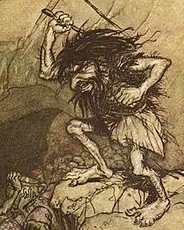
"Schläfst du, Hagen, mein Sohn?" Hagen is asleep, but Toxic Dad invades his mind, controlling him from beyond the grave (assuming Alberich is dead, which is unlikely).  Hagen has no beef with Siegfried but a billion resentments agaist Gunther and Gutrune who have by rights what Hagen has not.  So Toxic Dad worms his way into Hagen's subconscious. "Hasse die Frohen! Mich Lustfreien, Leidbelasteten liebst du so, wie du sollst! ".  Alberich, the ultimate non-creative person who can only cheat and steal.

What are the secrets of genuinely creative people? Just now a friend sent me an image from source I'd like to reproduce but can't. So here's the gist of it, and many thanks to whoever did it in the first place.  Seeing it made me so happy ! And by sharing, maybe I can make others happy, too.

Visualize two poles. Creative People and Non-creative.

C's compliment. Non-c's criticize

C's talk about ideas. Non-c's talk about people
 
C's embrace change. Non-c's fear change

C's learn, continuously. Non-c's know everything, always

C's accept responsibility for their own failures.  Non-c's blame others

C's have a sense of gratitude for their blessings. Non-c's wallow in entitlement. 

Will Hagen be c or non c ?  Will he "Hasse die Frohen!" like Toxic Dad ?  Siegfried's no hero because he can't think past his own needs. For Wagner, the real hero of the Ring is Brünnhilde who returns to the Rhinemaidens what Alberich stole. 


Thursday, 1 August 2013

Bayreuth Götterdämmerung 2013

 Götterdämmerung at Bayreuth, 2013: Wagner's Holy Grail. Kyrill Petrenko conducted with authority. In Siegfried, his dense textures and firm tempi evoked vast rock formations and impenetrable forests. In Götterdämmerung, the atmosphere changes. Now Petrenko's tempi became sharper. The orchestra zipped urgently forward, creating the tension and anxiety we should feel as the Ring draws to its conclusion. When Siegfried greets the Rhinemaidens, the music flows lyrically. But the undertow in the orchestra reminds us that all will soon end. The Rhinemaidens sound sweet and innocent, but the whole saga might not have happened if they hadn't been more attentive to the Ring in the first place. 

And so, we, too, should be more attentive with what we have. These days, opera audiences are bear-baiting bullies, who go for the pleasure of being abusing. There is no such thing as non-interpretation. Even when we read a score, we are "interpreting" the relationship between the marks on paper and what we hear in our minds. Love or loathe a production, it's someone's point of view. In normal life, people can disagree rationally. But shouting others down on principle is the mindset of the mob. Opera houses used to restrict photos before a performance so people wouldn't make up their minds  beforehand, based on minimal knowledge. Screaming abuse is easy when you don't care about what people say.  So I've listened audio-only, avoiding the pictures, in order to focus on the music. The Ring suggests that we should go back to true values. And in Wagner, true values pivot on ideas. 

Siegfried in Götterdämmerung is very different from Siegfried in Siegfried. The tessitura's less of a stretch, but characterization is more of a challenge. Once, Siegfried was a blank, now he's tasted the ways of the world and is sucked into its material values. Lance Ryan's deliberate, clear diction served him well. No need for decorative frills. This Siegfried could be a better master of the Hall of the Gibichungs because he's firm and decisive. No wonder Gunther and Gutrune are entranced.  Siegfried's just easily fooled but, as Ryan shows, he's direct and without guile. In his scene at the rock with Brünnhilde, Ryan';s voice takes on a metallic edge which is perceptive, for Siegfried is controlled, robot-like, by someone else. When he sings the word "Brünnhilde" before he dies, Ryan breathes into the word, so it expands with real emotion. The "spell" is broken, but too late.

In this performance, the relationship between Siegfried, Gunther and Hagen was less evenlty balanced than in Barenboim's Proms Götterdämmerung (more here) because Ryan was clearly the dominant force. Attila Jun's Hagen gives him a challenge, though. When the trombones, horns and tubas wailed in the dream sequence, Jun's voice hardened, suggesting suppressed rebellion and rage. Jun's an interesting singer, who can convey feelings which aren't strictly obvious in the text, but which colour character. For example, when Gunther casually dismisses Hagen when he and Siegfried go to kidnap Brünnhilde, Jun's voice almost imperceptibly flinches. He obeys but he's not happy. I didn't see him grab the ring from Siegfried's body  but I could sure hear the violence when Jun sang "Her den Ring!"
Alejandro Marco-Buhrmester's Gunther is more reserved, closer vocally to Koch and Ulrich in Siegfried (more here) The rest of the cast was nicely done, but the chorus was particularly good. They really sounded like a mob of thugs perpared to do whatever their leaders tell them, even when they cry "Was tatest du!"in horror.

In Götterdämmerung, Brünnhilde's part is infinitely more demanding than in Siegfried. At last we got to hear what Catherine Foster is capable of. While she's not the most complex or heroic Brünnhilde one could imagine. her voice feels sturdy and forceful. Since she's spent her career in German-speaking countries, her voice was new to me, but she's interesting. Certainly she has stamina. This Immolation was grand, and Petrenko's orchestra excelled itself, describing the soaring, redemptive flames, complete with flying embers.

Monday, 29 July 2013

Sensational singing Götterdämmerung Barenboim Prom Wagner

With this phenomenal  Prom 20 Götterdämmerung, Daniel Barenboim's traverse through Wagner's Ring reached its culmination. After the Prom, Barenboim spoke of the "communion" this journey has brought to performers and to the audience. Barenboim and the Staatskapelle Berlin have upped the ante for all future performances with this ground-breaking interpretation. I will;never forget this experience. This Götterdämmerung felt like a historic moment.

 This  Götterdämmerung, was historic, too, because of the singers. Nina Stemme and Andreas Schager were making their high profile Proms debuts as Brünnhilde and Siegfried. Because the BBC Proms are broadcast internationally, there can be no greater exposure. But bear in mind, too, that that creates tremendous pressure. Nina Stemme is one of the greatest Isoldes of our time, and everyone was expecting miracles. Brünnhilde and Isolde may be sisters in spirit, but Brünnhilde is a very different prospect. She's a Valkyrie, a woman-warrior and the true hero of the entire Ring. On Brünnhilde all interpretations evolve. Stemme's Brünnhilde is feminine and surprisngly fragile. When she's led into the Hall of the Gibichungs, Stemme sings softly, showing how Brünnhilde is lost, for once, out of her depth ins a strange new environment. Stemme's Immolation Scene was magical. Standing in the organ loft, lit by ethereal light, Stemme delivered a performance that would put many others to shame. As the "flames" rose in the orchestra, Stemme expressed Brünnhilde's resolve and strength. Although Brünnhilde returns the ring to the Rhinemaidens and Valhalla and its values are destroyed, we can't really be sure what happens next. So no false sense of triumph, but rather valediction for what has passed. Stemme is still finding her way into the role, good as she was. One day, she'll be truly superb. We were hearing her Brünnhilde in germination, and have something good to remember.

The sensation of the evening was Andreas Schager. True Heldentenors are rare and a singer like this is rarer still. Schager's voice is full of natural colour and beauty, which he uses well, creating myriad nuances and shadings. His phrasing is intelligent, bringing out character and meaning.  In Wagner, it's not enough, ever, to sing words without meaning. Each time Schager sang, I felt that I was learning more about Siegfried than I'd fathomed before. Every  passage was individual, purposefully and beautifully expressed. Schager's voice is flexible, so he can do subtle changes of inflection without sacrificing line. He also has stamina. Though the part isn't a killer like that in Siegfried, it shouldn't pose problems. Schager has strong lungs but also strong technique. 

He can also act. He inhabits the part so intuitively that his body becomes an extension of his singing. His movements are instinctive and expressive.  Schager could not have had much coaching for the part since he only stepped into the Berlin production at short notice, and from what I've read, it was one devoid of Personenregie. When Schager moves, we remember that Siegfried grew up with animals in the forest, a true child of nature. Even when he dons a suit, Schager's agility suggests that the real Siegfried still lives within. The sheer joy and energy in Schager's singing makes us realize that, for Siegfried, everything is new and exciting. The interaction between Schager and Anna Samuil's Gutrune is fascinating. These two are natural partners, frisky and playful. If Siegfried had had a chance to grow up normally. he might have picked a Gutrune. Let's not forget, his love for Brünnhilde, though genuine, resulted from unusual circumstances. As even Brünnhilde sings, "Zu neuen Taten, teurer Helde, wie liebt' ich dich, ließ ich dich nicht?" The Journey Down the Rhine expresses the wonder of expansive new horizons. When Schager's Siegfried dies, it's like something in all of us dies, too.

Waltraud Meier, one of the great Kundrys, Isoldes and Sieglindes of all time, sang  Waltraute and the Second Norn.  Her dialogue with Stemme's Brünnhilde was touching. Waltraute acts as Brünnhilde's conscience. Her voice still carries authority. This Waltraute was no mere incident in proceedings, but a turning point, reminding Brünnhilde where her duty lay. 

Mikhail Petrenko's Hagen was intriguing, as original as Barenboim's approach to the opera itself. . Petrenko's voice is firm, but clear and bright for his fach.That's good, for it brings out Hagen's human qualities rather than a more "mythic" portrayal. Hagen's conflicted by his heritage. Alberich (Johannes Martin Kränzle) haunts him, but he's been brought up among the Gibichung.  Petrenko's consonants bite, suggesting inner pain. The relationship between Petrenko's Hagen and Schager's Siegfried is thus even more interesting, because they're both outsiders in an alien environment. Listen to the interaction between the voices. Petrenko listens and responds. He's not simply doing a star turn of his own.

Gerd Grochowski's Gunther felt fresh and modern too. The moments when Grochowski, Petrenko and Schager sang together were particularly impressive, each contributing something individual.The fervent cries of "Bruderschaft" are sincere. It's male bonding. Siegfried has never known what it's like to be in social situations. Growchowski's Gunther isn't weak, but an optimist. And Petrenko's sensitive, conflicted Hagen suggests that Hagen truly wants to be part of a group, at last. 

And the orchestra and conductor? I've run out of time, energy and superlatives.  Mark Berry will be reviewing this Prom for Opera Today. Read HERE.  

This Prom can be heard for 7 days on BBC I player. It will also be recorded. 

 Please also see my posts on the Proms Die Walkure, Siegfried and Tristan und Isolde .


Sensation! Andreas Schager Siegfried Prom Barenboim

BBC Prom 20, 2013 felt like an historic occasion. Wagner Götterdämmerung with Daniel Barenboim and the Staatskapelle Berlin. It was an astonishing performance. No-one who was there will ever forget it . But the sensation of the evening was Andreas Schager. He was absolutely outstanding. Tonight I think, history was being made. True heldentenors are rare and one like Schager must be rarer still. His voice is divine, and he can act, both with his voice and body. Proms appearances are ultra high profile. Everyone all over the world wants to know who Schager is. His website crashed earlier tonight.  (It needs a more sophisticated revamp.)

HERE is my review of  Götterdämmerung Prom 20

It's just not possible for any singer to sing Siegfried out of the blue. Austrian born, Berlin resident Andreas Schager has quietly been building up a career in the smaller but more esoteric German houses, gaining the sort of experience that comes with hard work and total immersion in repertoire. He sings a lot of Wagner and did the title role in Rienzi twice, including this January in Hamburg. He's not a Met-style publicity creation and puts the hype about the Met Siegfried into perspectiive.  I was wracking my brain trying to remember where I'd heard Schager before and remembered the superb Mozart Magic Flute from Berlin this April. Schager sings the first Armoured Man. It's not a huge part, but he's singing it with the Berliner Philharmoniker and for Simon Rattle -- recommended! At around this time, Mark Berry heard him substitute at very short notice for Ian Storey Lance Ryan as Siegfried when Barenboim conducted Götterdämmerung in Berlin. A lucky hreak! But lucky breaks work only if you're ready and able, and Schager is ready, judging from this Proms performance.


Thursday, 12 July 2012

Live from Munich Götterdämmerung

LIVE webcast from Bavarian State Opera, Munich Richard Wagner Götterdämmerung. Nina Stemme, Stephen Gould, Wolfgang Koch, Iain Patterson. Alas it clashes with Debussy Pelléas et Mélisande at the Proms and doesn't repeat. For weeks there's a drought culturally and then there's a flood. So anyone who watches this, please let me know.
photo Wilfried Hösl

Monday, 13 February 2012

Met Götterdämmerung - the tragedy

The Met's Siegfried was Wagner as Walt Disney might have presented it. But at least Disney had charm. The Met Götterdämmerung isn't even a cartoon, but a sketch discarded before its ideas are even formed. The Met Ring cycle started with technical problems, but what killed it was its complete inability to connect to Wagner or his music. Its failure, though, highlights what the Ring really is all about: don't put faith in material items, but focus on deeper values. The Met has not learned the lesson of the Ring. It's still relying on big money gestures, not on artistic insight. That's the real curse of the Met Ring. To sell, it has to sell out. (Please read here for more)

With Götterdämmerung, no-one can blame Robert Lepage's Machine, for now it's reduced to little more than a blank screen onto which light shows are projected. All pretence at engaging with Wagner's emotional power is discarded. This is a showcase for celebrities. Perhaps that's why Lepage doesn't seem to have bothered about directing. Experienced singers like Terfel and Kaufmann can direct themselves, and both know what Wagner's is about. Thus Die Walküre had outstanding moments, by far the best installment in the cycle. For a moment, it seemed that the Met Ring might at last deliver. But then the artistic schizophrenia started and sabotaged all hope. (Please read more here).

Deborah Voigt may be a diva, but she's no Brünnhilde. Brünnhilde may be a spolied brat Daddy's Girl, but there's a lot more emotional complexity in the part than Voigt's frighteningly one-dimesnional portrayal even begins to suggest. In Siegfried, Voigt's unvaried fast vibrato was interesting since it suggested a dove cooing as it made its nest. In Götterdämmerung, it  distracted like a maddening tic.Voigt's acting was restricted to widening her eyes and clenching her chin, her vocal tone unvaried. One minute, she thinks she sees Siegfried coming, then she sings about being betrayed. Emotionally it's a huge switch, reflected in the music, but Voigt hardly twitches. Brünnhilde's entry into the Hall of the Gibichungs can be a soul-destroying experience - it is for her - but Voigt's aplomb wasn't stirred. Fans who've come to hear a diva do her thing were probably thrilled, but in Voigt's self-absorbed triumph. there was no room for Brünnhilde 

Voigt and Jay Hunter Morris are made for each other, vocally and interpretively so well matched that one wonders what they'd sound like with other partners. It wouldn't have been fair to judge Morris's performance in Siegfried as he said he hadn't had time to rehearse. Everyone loves an outsider who becomes an overnight sensation. It's human interest and the Met PR went into hyperdrive. They needed a sensation to distract from the productions!  So they made a possibly scripted mini film about him which was extraordinarly effective, creating a fan market. Morris looks good, but his isn't a voice with much inherent colour or range. It's light rather than truly lyrical, and tires easily. As Martin Bernheimer says. Morris's "prime virtues involved stamina, cheer and availability." The Met PR keeps rambling on about stamina, but Morris's voice fell apart badly in the third act. Of course it's a tough part but it's not impossible. A lot of work has been done on him since Siegfried, with good results in the lower register but it's not clear if this is a voice with longevity.

In any case, stamina alone is not a virtue, nor is cheer. There is a lot more to Siegfried than Morris develops. He's good looking, which is enough to convince the fans. But like the Rheingold, glitter isn't enough. Everyone hails Seigfried as a hero, but Wagner shows that Siegfried's a gullible boor who doesn't actually like women and whose successes come from not knowing fear. Siegfried has magic props to help him on his way, but he doesn't have wisdom. There are dark sides to Siegfried, and Brünnhilde's the real hero of the Ring. Morris's pretty, boyish Siegfried works well with Voigt's little girl Brünnhilde, but in this production, neither are called on to do much. Ironically, another lesson of the Ring is that self-awareness and self-knowledge aren't the same thing.

In that sense, Hagen is a kind of hero, for unlike Siegfried, he has an inner life and questions himself when he's lost in dreams. (Please read some of what I've written about him here). Hans-Peter König is a very experienced Wagner singer, who understands that the role is more than boom and gloom, which might throw those expecting Hagen as stock villain. Wagner underlines the mystery in the role with music that becomes tonally ambiguous, but unfortunately the Met's horns took this too literally and went out of tune, diverting from König's subtle, dignified performance.  In comparison, Eric Owens' Alberich was a comic book buffoon (Owens is good but this was a carry over from the comic book Siegfried).

As Waltraute, Waltraud Meier's huge Wagnerian heritage helped her too, though for good reason, she didn't seem much inspired in relation to what was happening around her. Iain Patterson's extensive European experience also informed hs portrayal of Gunther. Gunther isn't as weak as the Met PR would have, for he, like Hagen (must be in mum's genes) intuits the enormity of the situation. In one of the few good moments in this production, Patterson washes his hands of Siegried's blood in the waterfall where the Rhinemaidens sported. The implication may be that we're all culpable if we don't stand up to venality as Brünnhilde (not Voigt) does.

The Rhinemaidens sang joyfully, sliding down The Machine when the music slides and dips. This time no silly fake swimming as in Das Rheingold. Please read more here. The Norns were less appealing, one being rather poor. Choruses were lusty and animated, sounding much more sincere than some of the principals.

Utterly daft ending. Ludicrous horse, wimpy immolation. Someone in the cinema audience where I was thought it meant that The Ring ends happily with the lovers going up to Heaven. Perfectly reasonable conclusion, given the misguided staging, as if Lepage and co had given up altogether.

It's occured to me how delighted some people might feel about the failure of this new Met Ring. Perhaps seeing the Met humbled to the level of  third-rank provincial might cheer some, but it's a loss to everyone, even outside the US.  Fabio Luisi was well respected in Europe and brings a fresher. more elegant brio to the orchestra, opening up new possibilities. But maybe there are too many who oppose change at all costs, and want to bring back the old order. Alas, the Met Ring is old order beneath a new veneer.

Please also see Boulezian here.  Dr Berry is the author of Treacherous Bonds and Laughing Fires : Politics and Religion in Wagner's Ring.
Monday, 4 April 2011

Kaspar Holten's Copenhagen Ring

Does Kaspar Bech Holten's Copenhagen Ring tell us anything of what he'll bring to the Royal Opera House when he takes over Elaine Padmore's role in 2012? Maybe, but maybe not. This famed Ring put Copenhagen on the opera map,  and was received with great acclaim. It's not a cop-out like the Schenk/Levine production which even the Met was forced to retire. Neither is it so innovative that it might disturb mainstream audiences. Musically it's pretty good, not over the top or staid. One of the worries about Holten's appointment is that he doesn't have widespread international experience, but if this is what he gets from a mainly Scandinavian cast, it's not unpromising. This Wotan is Johan Reuter's performance of a lifetime. Maybe there are less divas in Denmark, but Holten won't be the only one at the helm in London.

Because this Ring was closely connected to the 2005 opening of the new Copenhagen Opera House, the building features prominently in the production. It must have been fun for the audience! For those of us not familiar with the city, there are still enough in-jokes to keep us amused, like the Norns surfacing as audience members in the stalls, complete with programmes and opera glasses.  Cue for a Ring that's deliberately non-mythic, but instead focussed on domestic realism. Holten even casts a genuine giant for Fasolt (who sings and acts superbly). Real wood dove, too, and it flies.

The Gods and their pawns aren't divine but human - almost embarrassingly human sometimes. Erda is semi-comatose in bed. Wotan/The Wanderer kisses her dutifully but he's clearly scared. Is she his Elderly Mother who will tell him off?  The whole Ring saga is told as if it were Brünnhilde's memory, as she's seen rummaging through old books while the Rheingold theme is reprised in Götterdämmerung. Strictly speaking, it's not as if she didn't already know, but it affirms her resolve to return the Ring to whom it belongs.

Thus the story progresses from 1920's Flapper to post WW2 austerity to the Swinging 60's where rebel teenager Siegfried decorates his room with sitar, guitar and hippy wall hangings. The kitchen in which Mime cooks up his spells is Danish Modern chic - pine, red and white kitchenware. Generational change is a feature of the Ring, so in principle it's not inappropriate to think of the Ring in compressed 20th century terms.

Humour, too. Fafner sits in a wheelchair bossing Fasolt about. Capitalist pig! Alberich scrawls his crazy theories on a blackboard. Hagen wipes the board clean, leaving for last a double helix : is DNA destiny? Can Hagen really get his Dad off his back by stabbing him?  Siegfried leaves the forest for married life in a room full of pot plants, where the Wood Dove's confined in a tiny cage. Now wonder he wants to escape!  While all these vignettes have wider meaning, humour isn't Wagner's forte. It's almost impossible to imagine Brünnhilde fussing about with a watering can. She may no longer be a  Walküre but no way will she ever be a bimbo.

De-mythologizing has its place, since The Ring is very much a universal story of strong personalities caught up in a web of moral compromise. That's why some thoughtful commentators have suggested the Copenhagen Ring as a good introduction to the cycle, so newcomers get used to it as drama before they go on to the more complex metaphysics. Better this than the Met Ring which substitued costumes for ideas and froze Wagner interpretation where Cosima might have wanted. For me, the best balance on film is probably Audi's Amsterdam Ring. I've seen and loved Sawallisch/Lenhoff but it's not on DVD.

There are some excellent moments in the Copenhagen Ring. Wotan and Loge's journey into Nebelheim  for example, and Wotan's truly horrific temper tantrum as he tears Alberich's arm off to get the Ring (a bracelet here, easier to see on stage). Loge cringes in shock. Even better is the Rock under which Fasolt-made-monster stands guard. Thick, black tentacles reach underground to his lair.  The final Immolation comes complete with real flames. Hagen's arm burns as he lunges at the Ring. Live, this must have been quite an experience.

Much less interesting is the emphasis on old age. Everyone grows old here, even the Gods. Wotan changes from youthful Reuter to James Johnson's Wanderer (without explanation).There is also something unpleasant about depicting decrepitude where it isn't really relevant. Where age versus youth does matter is the Brünnhilde/Siegfried relationship. Iréne Theorin was in her 40's when this was made but looks 25 years older. Sings vigorously, though. As Siegfried, Stig Andersen's face is painted white and looks 50. Inexplicably, in this Ring Brünnhilde is hugely pregnant which makes her aged apppearance truly unnatural.  Brünnhilde pregnant?  In the publicity material she cradles an infant. That's so not Wagner it doesn't bear thinking about. So maybe we can expect something controversial from Holten after all.

Thursday, 8 April 2010

Götterdämmerung Berlin Rattle - the movie

Currently on the Berliner-Philharmoniker site, there's a film of Götterdämmerung. Go to "Digital Concert Hall- archives - specials")  There's a trailer to watch, and, if you want the whole film, it's 15 euros for 48 hours. This I think is the performance from Berlin last year, but it's the same production that was at Aix and recently in Salzburg. Please see boulezian and intermezzo for their reports. Excellent photos, too.

This Götterdämmerung was my Easter treat, sort of, because it's a thoroughly decent performance. Rattle has a good feel for Wagner's majestic, sweeping themes. Maybe not the blackest of Götterdämmerungs, but that is OK.  Indeed, a really dark interpretation wouldn't fit well with this production, by Stéphane Braunschweig. It's stylish and quite attractive - clean lines, nice, simple black plinths for The Hall of the Gibichungs. Which makes you realize how empty their palace is and how sterile their lives really are.

The colour scheme is black, white, red, symbolizing, perhaps another Reich which used power for evil means: Alberich's true successors. So for me, Mikhail Petrenko's Hagen was interesting because he acts the "apparatchik" aspects of the role so well. This is where the film comes into its own, you can see close-ups of his face, so the subtle grimaces and tics register.  Petrenko's Hagen is a conniving  lowlife who uses the sytem for the sake of manipulating power. Watch how Petrenko whips up the mob: they wail, his eyes are dead. At least Alberich had a goal, to stomp on anyone bigger than himself. This Hagen is a cold-blooded fish without redeeming graces. A well-observed characterization.

Ben Heppner's Siegfried is the perfect counterbalance. Heppner's not young and is a bit pudgy..  But that's fine, too, because arguably, Siegfried isn't really a hero at all. Without all the background that goes before, in a stand alone Götterdämmerung, his weaknesses are revealed.  There's no need to present Siegfried as an athlete, Think of all the middle me who delude themselves.  Being fearless means nothing if you're easily manipulated.  Being a hero means nothing if you promptly dump the treasure you've won.  If Siegfried had any sense he'd have stuck with Brünnhilde instead of squandering his good luck. Wagner's no fool. Those who let themselves be taken in by the Hagens of this world can't really plead "magic".

Brünnhilde's the real hero of this opera, and indeed, of the whole Ring cycle, because she's the one that doesn't play power games.  She's the one who saves Sieglinde, gets immolated for her kindness and then gets screwed (in many ways) by the kid she saved. And when she gives the Rhinemaidens their ring, they'll probably lose it again, because they, too, are fools.  Katarina Dalayman's
Brünnhilde is pretty good but a bit too Aryan maiden, and indeed an anoionymous memeber of a group of clones..

That, I think is the weakness of this production. The basic premise is promising, but it's not fully explored or developed.  It's not Dalayman's fault, it's the production's inability, for whatever reason, to push the ideas too far. Understandable, perhaps, because the Nazi thing has been done so often, it's become a cliché for lazy minds to fall back on. And Germans are not the only ones fooled by evil rulers.

So the production pulls back because the real message is still too explosive to face.  Wagner's saying things that are frighteningly valid today. But you can't reallly expect too much danger or relevance in high-profile productions.  Still, I'm glad I heard this, way above average playing. _lease ex[plore this site - plenty on Wagner, stage craft, etc.

Tuesday, 15 September 2009

Schläfst du, Hagen, mein Sohn?


Who is Hagen? my friends and I are discussing. Is he evil by choice or by nature? are we all Hagens to some extent? Understanding Hagen helps elucidate the moral dilemmas in the Ring.

Hagen is Gunther's kid brother via Grimhilde who for some reason was seduced by Alberich. But it's not all that clear how the relationship came about. In any case Grimhilde told Hagen to respect Gunther. So despite his envy, he does what his mum tells him. Gunther's pretty laidback about having an illegitmate half-dwarf for a brother and admires him for his brains. Very interesting family dynamic - if only we knew more.

When did Grimhilde die and what was she like? These do pertain to the relationships and to Hagen's character. What we do know is that Hagen knows about the gold and about Siegfried and the dragon.

But Gutrune, who knows Siegfried must have a past, has no qualms about accepting a potion that will ensnare the hero. She's not evil, but potions don't play fair. So she's compromised morally. She does this because she thinks she can't win any other way. But low self-esteem doesn't justify cheating. When she finally acknowledges Brünnhilde it's too late, the damage is done. In Gunther's case the moral perjury is even greater. The Gibichungs are no different from the gods who grabbed Valhalla without paying the builders. only pettier and more venal.

Whatever Hagen may be, he's not a mediocrity aiming above his station. That is why he's interesting, he has moral potential. He's dutiful, in his own way, guarding Gibichung interests, whatever they may mean to him - Gibich wasn't his dad. So he's an unhappy, tortured soul: on some level he can't surpress his traumas. So Alberich comes into his subconscious : Schläfst du, Hagen, mein Sohn? Notice, Hagen is asleep, but he's not at rest.

Thus Alberich weaves the plot, carefully playing on Hagen's insecurities. The poor guy resists der schlimmer Albe, even dissing his mother, perhaps the only person who loved him, because she gave him courage. (Mut in this case meaning I think more than ordinary valour but a strong personality). Alberich cuts straight to Hagen's weak spot, his insecurity and envy. Hassen die Frohen! Hate those who are happy and have what you have not. Alberich has no values other than to destroy. Just as he mistreated the Nibelungs, he manipulates his son's unhappiness. Alberich is a troll in the modern sense of the word, which is why he can't understand what Siegfried stands for. Fool as he is, Siegfried wants to seek adventures, so much so that he dumps Brünnhilde to seek the unknown. Hagen has never had that freedom of choice, he's trapped in the hall of the Gibichungs because of his past (which is why it's interesting to ponder).

Hagen has no beef with Wotan. He's manipulated into acting out Alberich's revenge. There's little emphasis on what Hagen will gain from grabbing power, but plenty on why Hagen must take sides with Alberich's vendetta. You belong to me, Alberich implies, we're both of the night. Die wir bekämpfen mit nächtigem Krieg, schon gibt ihnen Not unser Neid. and in doing so, liebst du (mich), wie du sollst! Talk about toxic parents!

So is Hagen evil? He does evil things and eventually stabs Siegfried. Hagen and Gunther only fall out when Hagen claims the Ring, which according to Alberich is "his" inheritance. And look what happens when Brünnhilde does her thing and asserts her moral authority by throwing the Ring back to its rightful owners and sacrifices herself to the flames. Hagen cries Zurück vom Ring! Keep away from the Ring and all it implies. He loses his cool and jumps into the river, presumably to die. Has he found some kind of redemption in a sub-Brünnhilde purification? Hagen has more personality depth than Gunther or Gutrune so it's he who can make the connection with what the Ring stands for, and why he can't go on.

So Hagen isn't a bad guy per se, but a kind of Everyman. Most people feel insecure and jealous of others and are easily swayed by what others think. Perhaps it's human nature to knock tbose who have what the rest of us don't have. We all get dragged along by leaders with persuasive powers. It's the story of Bayreuth, post-Wagner. It leads to things like Kristallnacht. Some never wake up and realize. But Hagen has his moment of illumination (lit up by the fires around Brünnhilde), so perhaps he redeems his conflicted soul.