Showing posts with label Abbado Claudio. Show all posts

Tuesday, 26 June 2018

Happy Birthday, Claudio Abbado, 85


Happy Birthday, Claudio Abbado, who would have been 85 today - still young, still productive, still blazing new trails.  To celebrate, I'm listening to the Lucerne Festival performance of Mahler Symphony no 2, the stuff of legend !

Thursday, 20 August 2015

Abbado - Music not muzak


Hearing the silence ?  I've been watching the documentary Claudio Abbado: Hearing the Silence, by Paul Smaczny, available through Euroarts.  It's been available for 15 years or so, but still worth revisiting.  Some will be aghast at the very idea of "hearing silence" but I think true  music lovers will understand.  When we "listen to the silence", we're making space in our souls for real music, not muzak.

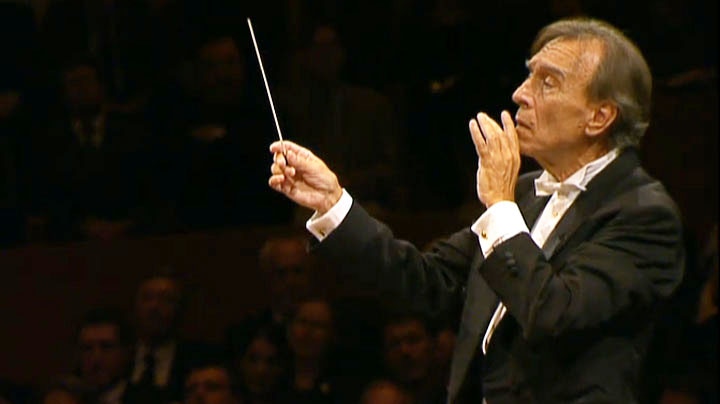
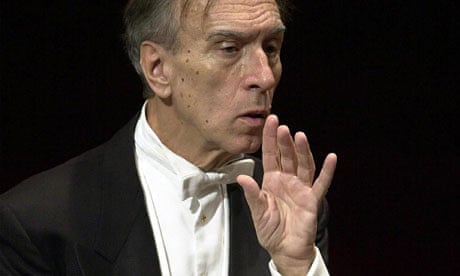
Abbado had "the most beautiful left hand I've ever seen, says" Daniel Harding, who went to work with Abbado aged 19 and was part of Abbado's elite Mahler Chamber Orchestra. "It's like (he was) massaging something that already exists, ..he's almost not 'making' it but allowing it to happen and then moulding it..... you get the feeling that the music is a physical presence you can actually touch and manipulate."  Albrecht Mayer, principal oboe at the Berliner Philharmoniker says "You see a movement of the hands, and you change automatically - you change yourself, not just the way you play".

That phrase "changing yourself" is critical. Abbado inspired his players to listen to something other than themselves. Abbado is quoted as saying he liked audiences that didn't rush to applaud. These days long silences have become a silly cliché, but I think what Abbado meant was the genuine silence that comes when an audience is really listening and thinking about what they've hearD. Nowadays, we've become locked into the idea of like/not like, as if the world were a Facebook meme. But great art exists in an altogether more rarefied place, something eternal that stretches the depth of human experience. Like/dislike is irrelevant: what matters is what you've learned from the experience.

"What  drives me is the love of my job" says Abbado. "and the passion for things I find inspiring, when I get a chance to immerse myself , to deepen my knowledge of a score, or a book". Abbado, who knows scores better than most, still learning? "If I can deepen that knowledge, I will always do so...  the starting point is always love". .

There's a clip from a rehearsal of the famous Lucerne Festival concert in 2003, which Abbado conducted after his near fatal bout with cancer. He looked  gaunt, since his half his insides were gone.  But he was conducting Mahler Symphony no 2., truly  a heartfelt resurrection.  No-one who heard it could ever forget. Even without knowing the background, this was a shattering performance.  One of  the secrets of Abbado's genius, especially in later years, was that he didn't take things for granted but aimed for the highest possible standards of excellence. That excellence came from choosng the finest players, and players who could work together so well that even in large ensemble, they functioned like chamber players, listening to each other. "Hearing the cross currents", as Mayer says, "not cobbled together like patchwork".

"There are no limits", Abbado is heard saying "(music)  is an ongoing process, a constant quest, a quest for new forms of music-making, a permanent state of enrichment. You arrive at a certain point and you have to go on from there"  .These days when hate, wilful ignorance and intolerant egotism seem to be taking over the world, I think we need Abbado's ideals more than ever.  As Elly Ameling once told a masterclass, "We are here for the music, and not the other way round".  

Thursday, 23 January 2014

More free Abbado tribute broadcasts

More free Abbado tributes

On Medici.tv: Mahler Symphony no 9 Lucerne, 2010 (one of the best).  Communion in art: that was Claudio Abbado’s almost sacred power. It is with a sincere humility and a profound respect that we wish to pay a tribute to this great musician and humanist; this is why, until January 31st, we broadcast for the first time on medici.tv, and for free, this outstanding performance of Mahler’s Ninth Symphony recorded at the Lucerne Festival in 2010... Watch the concert for free until Jan. 31st

 The Berliner Philharmoniker has had an Abbado archive for some years which covers most of his time in Berlin. Now, for a limited period, it can all be watched for free:


European Concert 1991 from Prague
European Concert 1994 from Meiningen
The Berliner Philharmoniker in Tokyo
European Concert 1996 from St. Petersburg
New Year’s Eve Concert 1996 »Dances and Gypsy Tunes«
Johannes Brahms: Ein deutsches Requiem
New Year’s Eve Concert 1997 »Tribute to Carmen«
European Concert 1998 from Stockholm
New Year’s Eve Concert 1998 »Songs of Love and Desire«
W.A. Mozart: Requiem. Herbert von Karajan Memorial Concert
New Year’s Eve Concert 1999 »Grand Finales«
Beethoven: Symphonies Nos. 1–8
Beethoven: Symphony No. 9 (European Concert 2000 from Berlin)
New Year’s Eve Concert 2000 »Viva Verdi«
Beethoven: Chorfantasie / Mendelssohn: Symphony No. 2
European Concert 2002 from Palermo
Documentary »The silence that follows the music«

Abbado, Pollini Prohaska - 2011 video


Courtesy of The Berliner Philharmoniker, a recent interview with Claudio Abbado and two friends, old and new - Maurizio Pollini and Anna Prohaska

Monday, 24 June 2013

Abbado Beethoven complete symphonies

It's Abbado week on medici.tv, honouring the conductor on his 80th birthday. A complete traverse of the symphonies with the Berliner Philharmoniker. Also : most of the Mahler symphonies Abbado has filmed, a Mozart Requiem and the Brandenburg Concerti. These have been online and on DVD for a while but they're so inspiring that it's a joy to hear them again (free too if you have abn annual subscription) Details HERE

Wednesday, 1 May 2013

Douglas Boyd - Garsington Opera at Wormsley

 “Aim for excellence”, says Douglas Boyd, new Artistic Director of Garsington Opera at Wormsley, “and the audience will follow you”.
Wise words. With the spectacular new Pavilion, Garsington Opera is on the verge of great new things. Read the FULL INTERVIEW here in Opera Today. 
"Excellence is an ideal he learned from his earliest days as a musician, playing the oboe in Claudio Abbado’s European Community Youth Orchestra and later in the Chamber Orchestra of Europe. “Abbado has an absolutely enormous influence on me”, he adds, explaining how Abbado’s ideals shape his vision"...

“Abbado instilled into us right from the start that excellence is a fundamental to strive for. It’s not a given. Although we were young, we played each concert as if our lives depended on it. So my mantra is “dedication and energy”. When you aim for the highest possible level of excellence, then you start with a fighting chance”.

The new season at Garsington Opera at Wormsley starts on 7th June with Mozart Die Entführung aus dem Serail. This will be followed by Giacomo Rossini’s Maometto Secondo in its first full performance in this country. Garsington Opera is famous for Rossini specialities. This will be the twelfth new Rossini production staged here since 1994.  Maometto Secondo is particularly interesting, especially in modern times. Read more here. The main summer Festival concludes with Englebert Humperdinck’s Hänsel und Gretel.

For more details, please see the Garsington Opera at Wormsley website.

Tuesday, 7 August 2012

Lucerne starts with a Requiem - Mozart

The Lucerne Festival starts tomorrow with a Requiem, albeit Mozart's Requiem, conducted by Claudio Abbado. Soloists Anna Prohaska, Sarah Mingardo, Maximillian Schmidt and René Pape. The rich, well connected and the usual host of freeloaders will be out in force, but us common folks who listen for the music can catch it LIVE on Medici TV from 1730 Swiss time. 

Monday, 2 July 2012

Kaufmann Stemme Abbado Lucerne Fidelio

Beethoven Fidelio at the Lucerne Festival, 2010 is now out on CD. Jonas Kaufmann sings Florestan, Nina Stemme sings Leonore, Claudio Abbado conducts. Jim Zychowicz reviews the recording in Opera Today.

"Kaufmann’s Florestan is outstanding, with the pitch, tone, and delivery creating a powerful image of the wrongfully imprisoned husband. His opening line “Gott, welch Dunkel hier” conveys the sense of pathos the audience must feel at the sight of the doomed man. This is not a heart-on-the-sleeve performance, but a full-bodied, soulful Florestan, whose case is argued as strongly in the phrasing of the music. It is a role that Kaufmann makes his own, with a command of line and tone that make it seem as if Beethoven composed the role for him. The range is easily within the grasp of Florestan in this effortless and impassioned performance."

 Zychowicz finds Nina Stemme "understated", but that's a perfectly valid and "interpretive choice in this performance, and this allows Stemme to bring out the details of rhythm, figurations, and phrasing. Her part in the quartet 'Mir ist so wunderbar' is remarkable, with a sensitive interpretation guiding the performance."   A good point. Performances shouldn't be judged in isolation, like short clips on a jukebox. Especially in opera, where a singer is projecting an interpretation built on the whole production and his or her relationship to other singers and to the orchestra. Opera performance is ensemble, even interactive. That's why bleeding chunks or compilations encourage sloppy listening. Evidently they serve a purpose, but they don't really represent what goes on in performance. Carefully cropped snapshots, not the real experience.

So listen to this Fidelio in full. Review in Opera Today HERE.

Wednesday, 24 August 2011

Berliner Philharmoniker Abbado Era - archives released online

"I am Claudio to everyone." Claudio Abbado told the Berliner Philharmoniker when he became their Chief Conductor in 1989. The contrast with Herbert von Karajan could not greater. It was the sign of a new era which has transformed not only the orchestra but much of the current European orchestral ethos. In an unprecedented tribute to Abbado's vision, the Berliner Philharmoniker is releasing a huge archive of Abbado concerts in its Digital Concert Hall.

What treasures! A complete cycle of Beethoven Symphonies, chosen from a huge selection of concerts over the years. The May Day Concert from 1991 in Prague - part of the Berliner Philharmoniker's tradition of performing in historic European cities. New Year's Eve concerts, Japan tours, and Paul Smaczny's documentary, The Silence that Follows, not new but a classic in the art of music documentary. Mozart, Verdi, Brahms, Mendelssohn (a particularly fine Lobesgesang), fabulous soloists. The series is a wonderful record of how the Berliner Philharmoniker has developed over the years. Abbado, the Berliners and other institutions and conductors associated with them, like the Lucerne Festival and the Gustav Mahler Jugendorchester, are the crest of a whole resurgence of creative music-making. What is the future of classical music? I hope it lies with ultra high standards and professionalism.  Follow this link here to the Berliner Philharmoniker Digital Concert Hall series on "The Abbado Era".

Tuesday, 24 May 2011

Verdi Macbeth - TWO full downloads

Opinion? Everyone does opinion. Informed opinion? it helps when the groundwork has been done, even if it's  basic background.  Anyway here's a Goodies Bag for Verdi Macbeth, starting at the Royal Opera House tonight. . Not one but TWO free streaming online downloads, and a description of the new critical edition.  Both come from Opera Today, a wonderful resource. The first download is Claudio Abbado, conducting at La Scala Milan in 1975. The second is Vienna, 2009, for Keenlyside fans. Enjoy !

Thursday, 19 May 2011

Abbado Mahler Das Lied von der Erde Berlin - review

There was no way any performance of Mahler's Das Lied von der Erde with Claudio Abbado and the Berliner Philharmoniker would be anything but good. It was Mahler's Todestag after all,  everyone was reverent. But it exceeded all expectations because of Anne Sofie von Otter. She's by no means a typical Mahler singer, but that's exactly why she was so fantastic.

Scrap the clichés about how Der Abschied "should" be done: von Otter goes straight back to the score, and moreover to her soul, the source of real Mahler singing. Her voice is on the light side, so don't expect ultra-rich sumptuousness. There are different ways of expressing emotion. Von Otter's performance was wonderful because it was pure and direct. No diva-like affectations, no self-conscious playing to the audience. Such things impress, but ultimately they are ego trips for the singer, putting a barrier between listener and music. And Das Lied von der Erde, like so much Mahler, is about the sublimation of the ego.

Von Otter's interpretation highlighted Mahler, not herself. She's not as youthful as she was, but her voice is in excellent shape, enhanced by the depth emotional maturity can bring.  Complete technical control, firm tone, no wavering for adornment's sake.  Throught the text, there are references to lotuses and to ponds, which in China, almost always imply lotuses. These links are not superficial chinoiserie but fundamental to the whole meaning of this symphony. Lotuses are the symbol of purity becuase they rise upwards from murky depths. They look delicate but they're resilient. They survive and renew themselves year after year. Von Otter's singing has a pellucid quality that reminds me of the simple, unfussy purity of the lotus. She has grit and strength, but she projects legato so it expands with radiant lucidity. This is the essence of  O Schönheit! O ewigen Liebens.

Von Otter's clarity worked perfectly with the way Claudio Abbado conducted the Berliner Philharmoniker.  Can any other orchestra match the Berliners for lucidity and sheer finesse?  This was a performance that connected to the many images of darkness, contrasted with shimmering light in the text and in the music - mirror reflections, sparkling water, sunlight.... instruments reflected by others (flute/clarinet, violins/harp). Unmuddied, unsullied.  Even tutti moments were sharply outlined. Three mandolins, heard clearly and distinctly. And what lines - strutting, angular ostinato, not heavy handed but energetic.You could "see" the horses' muscles, and imagine the throbbing of a heartbeat, all references to a powerful life force.  Even more exquisite the surging, shimmering lines, rising ever upwards.  Combining Das Lied von der Erde with the Adagio from what would have been Mahler's Tenth Symphony enhanced both works. Shorn of the rest of the draft movements, the Adagio can be interpreted different ways, but Abbado and the Berliners know what was to come. Together, the two works are a hymn to life and the transcendence of death.  Hence, free-spirited exuberance rising from absolute technical refinement. Abbado looked even more haggard than usual, but even that added to the sense that this concert was a milestone experience.

Jonas Kauffmann, too, has matured. This performance showed him singing with much greater depth and gravitas than ever before. Das Trinklied vom Jammer der Erde isn't a drinking song. On the contrary, it's a savage, passionate protest against death and its curtailment of earthly happiness. Kaufmann spat out the lines about the ape on the tomb with appropriate violence. The image is horrific, especially for Chinese sensibilities. The ape represents the triumph of barbarism: apes aren't schön gekleidet and don't write verse or converse. Kaufmann's interpretation was flawless, impressively dignified. Unfortunately, his voice showd signs of strain, probably from having come fresh from a glorious Siegmund. But it didn't really matter if his top wasn't quite as smooth as it could be. Much better that he put his effort into emotional truth into what he was doing, singing meaning rather than surface beauty.

Although the live broadcast is over, the Berliner Philharmoniker will be archiving this concert, so it will be available online in the Digital Concert Hall. It was amazing, opening up new interpretive possibilties. Hearing it made me feel high, not on alcohol, but with the joy of life.  Please read my other posts on Mahler, Abbado, Das Lied von Der Erde and other related subjects.,. Lots on this site that's original, not seen anywhere else.

Monday, 16 May 2011

Live, Abbado, Mahler Das Lied von der Erde Berlin

Live on Wednesday 18th May, the anniversary of Mahler's death one hundred years ago. Claudio Abbado conducts the Berliner Philharmoniker in Mahler's Das Lied von der Erde, paired with the Adagio from what would have been Mahler's Tenth Symphony. LINK HERE.

This anniversary year has been marred  by too many jumping on the bandwagon. Abbado and the Berliners will, however, do the composer justice. This could be a concert to remember for a long time. Soloists are Anne Sofie von Otter and Jonas Kaufmann. I first encountered Kaufmann singing this at Edinburgh, years ago, when he'd just moved out of the Munich training system.  It was a disaster. As someone said at the time "But isn't Das Lied von der Erde a set of drinking songs?"  which kind of summed it up. "No, it's not", I wept.  Fortunately for all of us, Kaufmann has matured tremendously. Years ago I used to think he'd be best in repertoire that suits the soft focus of his voice - ideal in Strauss, Rossini etc - but his Lohengrin and Siegmund show he's developed. Anne Sofie von Otter's voice has become richer and deeper too, "warmed by life" which does count for something. There's more to Mahler than surface magnificence. What makes him what he is is, I think, emotional complexity, which comes from within.

I will be writing a full commenatry about this AMAZING performance later, but for the time being here arev two other posts on Das Lied von der Erde, one about the Chinese imagery and the other about more personal experiences.  Please come back, there's lots on Mahler on this site and original stuff you won't find elsewhere !

Tuesday, 1 March 2011

Boulez, Aimard, Abbado, Bruckner South Bank

Exquisite Labyrinth, the name for a Boulez extravaganza at the South Bank on 2nd October 2011, Pierre Boulez conductes Ensemble Intercontemporain at the Royal Festival Hall. They're doing Pli selon Pli with Barbara Hannigan. From noon that same day, Pierre Laurent Aimard and Tamara Stefanovich play three Boulez concerts : Notations I-XII, Piano Sonata 1 to 3, Incises and Structures Book 2. Aimard also gives a talk about Boulez before the big evening concert. A genuine "total immersion" now that the BBC Barbican series has gone horribly downmarket (of which more later, and about Ferneyhough who deserved better)

Members of the Lucerne Festival Orchestra (of whom many are Berliner-Philharmoniker) will be present at Boulez Day, some playing in the evening concert, some listening in. Because Claudio Abbado brings the extended Lucerne Festival Orchestra to the South Bank on October 10th and 11th. Both nights are built around Bruckner's Fifth Symphony. First night companion piece is Schumann with Hélène Grimaud, second night, Mozart's Haffner Symphony.

This year there's a Liszt Forum on 15/10 and two Aimard concerts 8/11 and 7/12 where he'll be playing Liszt in context - Wagner, Scriabin, Bartók and Stroppa (featured composer at Aldeburgh this summer)

Thursday, 24 February 2011

Abbado Fidelio Lucerne Stemme Kaufmann

Now online !  Claudio Abbado conducts Beethoven Fidelio last year in Lucerne. Follow link HERE
Nina Stemme, Jonas Kaufmann, Peter Mattei, Falk Struckmann.....and of course THAT orchestra.  It IS being repeated after all, for 6 days. Listen !

Wonderful performance, clearly concerft not staging as the voices project the same way, no muffling from set and Orchestra gets its due place atb the back. Which is good, as Fidelio is as much an orchestral work than an opera. Despite the drama in the story, it's interesting hoiw Beethoven tells the story via orchestra and spoken word rather than through the singing. Superb declamation, too, showing how "musical" spoken word can be. Minus the spoken segments, Fidelio is not what Beethoven intended , even if it's more "operatic".

Monday, 23 August 2010

Abbado Mahler 7 Lucerne Festival

The equivocal nature of Mahler’s Seventh Symphony makes performers respond in an individual way. It is as if Mahler is setting a challenge that will separate the creative from the conformists. In the same way, it is a challenge for listeners. Can they follow the interpretation? Can they feel what the performer is trying to express? There are no “right” answers : the challenge is in the process. As E M Forster said, “Only connect”. Sometimes when I listen to this symphony I think of Mahler with his uncompromising intellect and originality, looking at us, with a grin, whispering “Only connect”.

This is what I wrote about Claudio Abbado conducting the Lucerne Festival Orchestra in Mahler's Symphony no 7 in 2005.  It's also available on download from medici.tv.medici.tv

What then is Abbado expressing? This version has the conductor working with the Lucerne Festival Orchestra, an orchestra hand picked from among the finest musicians in Europe. The great names are here - Kolja Blacher, Antonello Manacorda, Albrecht Mayer, Sabine Meyer and her Bläserensemble, members of the Hagen and Alban Berg Quartets, members of the Mahler Chamber Orchestra. Abbado has worked with them individually and collectively many times, and they know each other well. Coming together to play is an exhilarating experience, all the more stimulating because it is a seasonal event, rather than a regular fixture. This gives the performance a wonderful blend of precision and spontaneity: these are musicians at the peak, technically, playing for the sheer enjoyment of being together and sharing their love of the music. This means Abbado can create an unusually acute, chamber-like performance.

It is the refinement and sensitivity of this interpretation that is refreshing. Abbado recorded this in May 2001 with the Berlin Philharmonic, when he was their chief conductor. That performance was assured and expansive, making the most of the Berliners feel for the grand scale. Although many of the Berlin players are on the Lucerne Orchestra too, Abbado has chosen a very different, more sophisticated approach. The famed figure on posthorn that signals the opening asserts itself, but leads naturally into the ensemble, without overly dominating. This chamber approach enhances details like the flurries in the exposition, warning, perhaps, of “night winds” to come. What is even more striking, though, is the expert precision with which these players respond to the conductor. They switch from the march theme to strings as if they were a single organism. Playing of this calibre is exciting, particularly when you appreciate just how many players are involved.

Abbado takes the march theme not as a rigid militarist march but as something crisper, and faster paced. It is less tied to 19th century reality, and becomes more abstract, more timeless. In the first Nachtmusik, the horns are exquisite, expressly like alpine horns ushering in nightfall. The movement has a duality like that between night and day, darkness and light. Yet, as in the first movement, the music moves forward to the scurrying sounds of clarinets and pizzicato strings. The swirling motifs in the Scherzo cut off with breathtaking suddenness. They deliberately unsettle any complacency. This same unsentimentality illuminates the second Nachtmusik. Serenading mandolins and guitars are typical Romantic cliché. Yet again, this orchestra lifts the movement out of the 19th century with its clean, modern sound. Lush, resonantly mysterious playing is a given, but then Abbado puts finger to mouth, indicating gradual silence. The music softens into a strange but convincing combination of understated yet precise playing.

In contrast, the Rondo Finale is even more electric. In his notes to the recording, Donald Mitchell states; “The violent, unprepared contrast is akin to parting the curtains in a dark room and finding oneself dazzled by brilliant sunlight”. It’s an ambiguous, contradictory movement, but what stands out is its powerful sense of energy. This is where a crack orchestra like this proves its worth. The precise, vivid commitment of this playing carries all with it. This is its excitement. There’s no place here for sloppy blurred playing. There is no need for the composer to resolve the ambiguities of the night, which are part of nature.

Mahler throws himself into the light as if in an act of faith. The Lucerne Orchestra explodes with sheer exhilaration. It’s glorious. Abbado shines with happiness and clutches his chest – an unconscious gesture, but one which for me was incredibly poignant. Life is fragile, but Mahler lived it fully and passionately. He wrote the equivocal Nachtmusiks before the rest of the symphony. Perhaps then the Finale is, like Urlicht in the Second Symphony, or the Finale in the Eighth, a statement of faith in life itself? I don’t know. But this performance certainly had me thinking on new lines, the sign of a truly original and thought-provoking interpretation. One day, perhaps, when audiences become more attuned to modern approaches to Mahler, the Lucerne Festival concerts will be appreciated for their role in developing Mahler performance practice.

Please also read about Ingo Metzmacher's Mahler 7 at the Proms 2010, That was wonderful, too, because Metzmacher and DSO Berlin make a virtue of the contradictions, a good flow between the contrasting moods, the crazy distortions which made people call this the "Symphony of the NIght". Plrease keep coming back to this site if you like Mahler, he's been the lodestone of my life for many years. I remember Des Knaben Wunderhorn Dietrich Fischer Dieskau/Elisabeth Schwarzkopf when it came out! But I was pretty young then.

Saturday, 21 August 2010

Abbado Mahler 9 Lucerne live August 2010

Claudio Abbado conducted Mahler 9th Symphony at the Lucerne Festival this evening, broadcast live on arte.tv. Abbado's Mahler is always superlative, but this was wonderful. Lucerne means a lot to him, as does this orchestra, his pride and joy.

Abbado looks older and frailer than usual, which may or may not give an edge to his performance. Mahler's Ninth Symphony is valedictory, even though the idea that it's obsessed with death has long been squashed. Mahler is looking back, for he's reached a kind of crossroads in his life.

Yet he's also looking forwards, into the unknown. That amazing finale, where the music soars ever upward, higher and higher, floating free, above petty concerns. The Ultimate Sublimation in music, perhaps, but I think, and perhaps Abbado thinks, it's life-affirming.

There's warmth in this symphony, even humour - the cheeky piccolo that cuts through the solemn brass, the lively whips of sound that enliven the long planes. In the  second movement, Im Tempo eines gemächlichen Ländlers., the painfully nostalgic violin gives way to a build up to crazier forces. In this performance, the peasant dance was wild and  wacky, sudden switches of mood, like fleet footed dance steps. A bit like fate, which throws the best laid plans. So nimble, in fact, that the TV camera didn't catch the violin's interjections at one point.

Focus on where the symphony is heading, because with Mahler, there's always a goal, which colours all that leads towards it.  The last movement begins with strings alone, "the voice of the individual", unsupported and alone. In this performance, the strings were exquisitely dignified. At the beginning of a long journey, no need to rush. Many little Ruckblicks, reiterations of themes that have gone before, like memories. Muffled horns, a brace of oboes and  restrained bassoon, just audible enough against the gossamer cloud of strings.

The Lucerne Festival Orchestra is exquisite, the finest musicians in Europe coming together because they know each other well and love working together. They're like extended family, and some are family, most of them so familiar it's like seeing old friends. Kolya! Sabine! you think, which adds an extra dimension to the experience. The intimacy shows in the playing - such coherence, such sensitivity, as if they're a huge chamber ensemble. These players have such fluent control, they hardly seem to be playing at all, as if the music was floating naturally out of them. Last year Bernard Haitink's Mahler 9th at the Proms with the LSO was wonderful, but the Lucerne Orchestra is simply in an altogether more elevated league . 

Almost unbelievably luminous textures, such refinement that the music seems spun from light. Each new stage reached leads to another, even more rarified, like air in the Alps, the purer the higher you go. At the end, Abbado looked exhausted, like he'd been reaching the peaks in his soul. For a long time he stood silent. Suddenly his eyes opened wide in wonder. Throughout the symphony I could hardly breathe, so intent on "being" with the orchestra, so when the sounds ceased, it felt like extra bars existed beyond the score. No way was this Mahler's "final word". He leaves the music open ended, as if its floating on its own volition, beyond what mere mortals can hear.

Hopefully this concert will be broadcast again, on demand. In the meantime, there are DVDs of Abbado's Mahler at Lucerne to enjoy. Each performance is different, of course, and this one was specially moving because it's such a mature reading. Abbado and this orchestra go back a long way together, but this performance feels like theirs is a journey that won't end, even after the music stops. Irrational, perhaps, but since when did music this sublime have to be rational?

Please see my other pieces on Mahler, plenty on this site. Use search button or labels. There will be more, because it's Mahler year, but it would be hard to beat Abbado's Mahler/(though watch out for the coming Berliner Philharmoniker Mahler season. Many of the Berliners play at Lucerne).  And listen to Eschenbach's Mahler series with the Orchestre de Paris online. PLEASE also see what I've just written about Abbado's Mahler 7 at Lucerne in 2005.