Showing posts with label Rattle Simon. Show all posts

Monday, 16 September 2019

Transcendent Simon Rattle : Messiaen Éclairs sur l’Au-delà, LSO Barbican


Sir Simon Rattle conducted Messiaen Éclairs sur l’Au-delà with the London Symphony Orchestra at the Barbican, London, an even bigger occasion for some than the previous night's season opener, an all-British gala featuring Emily Howard, Colin Matthews and William Walton. (Please see Robert Hugill's review here). Rattle's British music credentials are very strong indeed. He's close to Matthews and has done lots of Walton. (Please read my review of Rattle conducting Walton's Belshazzar's Feast with the LSO just a few weeks ago). Rattle's committment to Olivier Messiaen is even stronger. British audiences took to Messiaen very early on, to the extent that he's influenced British music (think George Benjamin)  and Rattle was one of the first to bring Messiaen's larger scale works to mass attention. He conducted Éclairs sur l’Au-delà when he was with the City of Birmingham Symphony Orchestra (his recording is one of the better ones, bar Myunwhun Chung, both eclipsing by far Zubin Mehta's prosaic approach). Later he did Éclairs sur l’Au-delà with the Berlin Philharmonic Orchestra.  Quite probably Éclairs sur l’Au-delà  is a Rattle signature piece not only because he likes doing it but because he understands Messiaen's unorthodox sensibility. With Messiaen, you need to share Messiaen's wonder at the miracle of life, and value the humility (and humour) behind the majestic extravaganzas.

Not for nothing does the traverse begin with the Apparition du Christ glorieux where long brass lines stretch as if into infinity. Rattle makes them glow : think of the rays of light which illuminate images of Christ risen from the dead.  Literally, lightning over the world. To a practicising Catholic like Messiaen, that's the central message of faith : "For God so loved the world he gave his only-begotten Son". Hence the shimmering but steady pace, firmly defined, without sentimentality. This section is amplified by the two which follow, La constellation du Sagittaire and L’oiseau-lyre et la ville-fiancée. One evokes the constellations in the universe, with powerful chords whose metallic resonance suggests great distances and things not of this earth, preparing us for the lively dance of the lyrebirds. Messiaen's use of birdsong is not novelty, but rooted firmly in his core beliefs about the cosmos. Birds, he said, descended from dinosaurs, and have been on this planet longer than man. The thousands of species attest to the variety of evolution.  Jerky, quirky figures, darted at wild angles : the movement of birds, closely observed by an man who spent his life learning from them - yes, learning, for Messiaen was humble. To him, even the smallest  and most vulnerable creatures had value because they reflected the Creator's love for the pure and fragile. Rattle understands the freedom and originality in this music and the way it transcends conventional form. Messiaen's students were taught to think for themselves and to create, not to be tied to rigid formulae.

In Les élus marqués du sceau, referring to the Book of Revelation and its prophecy of survival in the Apocalypse. Nothing triumphalist here, for Messiaen or for Rattle. Swirling textures with bittersweet details. The serenity of Demeurer dans l’amour suggests redemption to come.  Nothing "romantic" in this love, for it is divine love, between mankind and a higher power.

The fanfares of  Les Sept Anges aux sept trompettes represent the seven angles with seven trumpets who appear at the End of Time, when the earth is rent asunder.  Wooden, hollow, metallic sounds, thudding percussion, crashing gongs. Rattle understands the conection between Éclairs sur l’Au-delà  and Et exspecto resurrectionem mortuorum, another work which he has conducted memnorably many times.  (Please read my review of one Rattle performance, though I've written extensively on the piece). This gives context to the next section, Et Dieu essuiera toute larme de leurs yeux.  From near silence, the sound of birdsong in the winds, and rustling vibrations in the strings.  (Remember the symbolism of birds to Messiaen). A vaguely hymn-like anthem on horns was cut across by the liveliness of the solo flute, sparkling with freshness and freedom.  The birds in this section refer to the idea of evolution, dinosaurs being reborn as birds. A tender, loving performance by the LSO principals.

After this interlude, Messiaen returns to the heavens with Les étoiles et la gloire, in their majesty, and then back to the birds with Plusieurs oiseaux des arbres de vieFrom the lowest timbres in the orchestra came brighter outbursts, exploratory figures growing in confidence, cheered by tiny bird-like figures in the winds and percussion (songs and darting rhythms).  Typically Messiaen zany exuberance.  The reference in Plusieurs oiseaux des arbres de vie is to the image of Christ and the Tree of Life, filled with birds : an image of growth and renewal, shelter and abundant life.  Again, humour, with a  slightly comical passage, which may perhaps represents the ghosts of clumsy dinosaurs, now born again.

With the drama of Le chemin de l’invisible, the symphony continues on its journey. And a symphony it is, despite its eleven sections which together form a traverse towards a resolution.  Angular, wild rhythms, like the movemnts of many birds rushing en masse, fanfares and long, circular arcs suggesting ebb and flow. Rattle doesn't lose sight of the destination. The lush textures were propelled by a sense of movement, unrushed but untoppable. Éclairs sur l’Au-delà was Messiaen's last major work, written as he approached the end of his life. This affects interpretation : miss this and miss the whole point.  Ever a realist, Messiaen understood mortality, but, imbued by faith, he contemplated the future. Unlike Et exspecto resurrectionem mortuorum which ponders the fate of mankind, Éclairs sur l’Au-delà is personal : a man facing what is to come to all, no matter how exalted. That's why I like Rattle's Messiaen, because  it's human scale, and humane. Le chemin de l'invisble ends with a crash but leads to Le Christ, lumière du Paradis, with which Éclairs sur l’Au-delà  began.  Full cycle, alpha and omega. This structure matters, given Messiaen's faith.  No-one wants to die, everyone worries about the unknown and leaving those one loves, but Messiaen drew comfort from the idea that death is not an end but a kind of rebirth, and union with God.  In the serenity of this final section, the long lines evoked eternity, horizons without end. The LSO strings seemed to shimmer with a preternatural glow, Rattle always aware of the transfiguration that would have meant so much to the composer.  Whatever ones' own beliefs, this is powerfully spiritual, and Rattle's approach deeply convincing. 

Tuesday, 20 August 2019

Simon Rattle's musical challenge : Koechlin, Varèse and William Walton

Sir Simon Rattle, photo : Doug Peters
Simon Rattle Prom with the London Symphony Orchestra, programmed with typical intelligence  - Koechlin, Edgard Varèse and Walton's Belshazzar's Feast.  Disparate pieces that did work together in context, enlivened by a conductor with a genuinely inquisitive musical mind.  What does Charles Koechlin's Les Bandar-log op 176 (1939-40)  have in common with Edgard Varèse's Amériques ? and with William Walton's Belshazzar's Feast ?

Koechlin 's Les Bndar-log is a late work, writtn towards the end of the composer's life. Koechlin was bitter that the world had moved on, nearly 40 years after Debussy and Stravinsky. In Rudyard Kipling's poems, the monkeys of Bandar-log are scrawny  - brown - upstarts - put in their place by a bullying bear.  The racist implications of the piece are never far away. Koechlin's subtitle "the scherzo of the monkeys " isn't meant to be Disney-cute, it's a scherzo. Some composers of Koechlin's period blamed modernity on Jews, (Schoenberg and oddly enough Kurt Weill, who wasn't particularly modern), so the racist implications of the piece are relevant.  It's ironic that it's become the work by which Koechlin is best  known ! By placing it together with Varèse's Amériques, Rattle, with his gentle sense of humour, brings out strange similarities. Both pieces are composites, smaller units put together like a mosiac to form something bigger. Koechlin veers from style to style, waywardly, like monkeys move in the jungle.  Varèse builds blocks of shape as a cubist painter might do, adding vivid impressionistic detail, creating a virtual city in sound, full of life and incident.  Here, we heard the original 1921 version, with a larger orchestra, and extended percussion, which includes klaxon. For him, the modern represented hope, and his music has endured, its influence far-reaching. Amériques was effectivelyVarèse's opus one, and the work expresses the thrill of moving to a new continent, full of promise. Hearing the 1921 original is a reminder of how strikingly innovative the piece is, still fresh and vibrant after nearly 100 years.

Walton's Belshazzar's Feast (1931) has been done numerous times at the Proms, including two First Nights, and for good reason. It's a blockbuster, the LSO augmented by Orfeo Catala, Orfeo Catala Youth Choir, the London Symphony Chorus and soloist Gerald Finley.  The setting is ostensibly Babylon and biblical, but Walton's approach was modern and secular.  It's a thrilling piece - long lines that zig zag and extend wildly, against thunderoyus timpani. The score is quasi Hollywood, maximizing excess, with brass bands thrown into the heady mix.  Biblical as its context may be, it's hardly pious, but very much a piece of its time (1931) when the jazz age still prevailed and the Bright Young Things partied like there'd be no tomorrow.  Long, zig zag vocal lines swaying exuberatantly, punctuated by timpani, heightended by brass.  Belshazzar's having a rave.  "Babylon was a great city" sang Finlay with solemn portent, enumerating the treasures: "...chariots, slaves and the souls of men". Singing with unbridled delight, the choir let rip, with great freshness.  "Praise thee !, Praise thee !"  But as we know, parties don't last forever.  Ominous sounds from the orchestra. The King sees a hand writing on the wall "Mene, mene tekel upharsim". The  "Hebrew" sound of trumpets. the choir emphasising the baritone's words with dramatic finality "Slain! Slain”. Then we're back to zany 30's celebration. "Hallelujah ! Hallelujah!" Flamboyant riffs give way to ecstatic swoons.  "And the Light of  e Lord shall shine on us".  Yet more ecstatic Hallelujahs. "Make a joyful noise!"  A wonderful, vivid performsnce: Rattle understands the modernity and freedom that makes this piece so much more than  yet another British oratorio. Most animated Belshazzar's Feast in years, and there's been lots of competition.

Friday, 11 January 2019

Wickedly idiomatic Carl Nielsen - Rattle, LSO Abrahamsen


Simon Rattle and the London Symphony Orchestra at the Barbican in Sibelius Symphony no 7, Hans Abrahamsen's Let Me Tell You (with Barbara Hannigan) and Carl Nielsen Symphony no 4 .  Rattle has conducted one of the finest Sibelius 7th's on record, and done it live numerous times, so no surprises expected : this was good, but the real fun was yet to come.
Rattle conducted Hans Abrahamsen's Let Me Tell You better than most of the many who have conducted the piece over the last few years, which is saying something, since it's been done so often and by so many.  Just as  Sibelius was cursed by the popularity of Valse triste at the expensen of his more substantial work, Let Me Tell You has become the curse of Abrahamsen.  Contemporary music for those who don't like contemporary music !  At roughly 35 minutes, it's longer than all the vocal music put together that Abrahamsen has written in his long and productive career.  It's good enough but not typical of his greatest work.   Let Me Tell You was created as a vehicle for Barbara Hannigan, so it fits her voice so well that she could be singing it well into later years.  Not that there were any problems here : she's nailed it so perfectly that she hardly needs to do much more.  The fans have come for her,  and her persona.  Rattle, on the other hand, made the orchestra sing , revealing the beauty in the music itself. : shimmering, liquid lines that flow and circulate, wrapping round the voice.  this l;oveliness is poison : Ophelia kills herself by drowning, throwing herself into the vortex of a stream.  Syllables fragment and reform, like droplets of water reflected in light - wonderfully delicate textures created by harp, celeste, and percussion with tubular bells and tiny wooden objects scraped and beaten, making sounds like grasses blowing in the wind. Sounds of nature, too subtle and too elusive to identify, reminiscent of Abrahamsen's greatest works like Schnee and Wald, though Hannigan takes precedence.   "Music is pictures of music", Abrahamsen once said. "That is a strong underlying element in my world of ideas when I compose - as is the fictional aspect that one moves around in an imaginary space of music. What one hears is pictures - basically, music is already there."   In Let Me Tell You, Abrahamsen collaborated with Paul Griffiths, the author and music historian, whose books on modern music are still, after 30 years, the best informed. In comparison, The Rest is Noise is Reader's Digest.
The revelation of the evening was Rattle's appoach to Carl Nielsen's Symphony no 4 op 29, The "Unextinguishable"  (Det Uudslukkelige). This, too, is a staple in Rattle's repertoire, but this performance was inspired.   The sharp attack in the opening bars contrasted with the lyrical first theme, zig zag chords introducing a more vigorous theme, produced here with a swagger, followed by quieter figures, like prancing footsteps. Sassy, expansive figures against moodier passages, exuberance underlined by percussion, winds and brass.  I thought of the series of photographs Nielsen was so proud of, where he grins and grimaces and hams up for the camera (see more here).  The Four (and more) Temperaments ! Just when we're getting into Nielsen's zany vibe, he slips into an elusive mood.   If the symphony deals with the concept of life inextinguishable, it is presented in infinite variety, though the same basic ideas evolve and proliferate, like units in Mandelbrot diagrams,  Nielsen anticipating later composers, even Boulez. The third movement, marked poco adagio quasi andante, wasn't a leisurely stroll, but purposeful.  Woodwinds called, and the strings sprang back to life.  Rattle drew forth an almost bluesy quality from the orchestra which was prescient, given that, even in wartime, one might sense a future where new influences might enliven the mix.  For a moment dark forces emerged :  percussion like gunfire, brass screaming tension, but gradually these gave way to joyous conclusion.  Nothing sentimental or escapist about this despite the vaguely MGM drum rolls. That wasn't Nielsen's style, quirky and defiant as he was. Wonderful, precise playing from the LSO who respond to Rattle better than they do for nearly anyone else.

Thursday, 20 September 2018

Rattle LSO Barbican - Janáček Szymanowski Sibelius


Sir Simon Rattle and the London Symphony Orchestra at the Barbican Hall with Janáček’s Sinfonietta, Sibelius Symphony no 5 and Szymanowkski 's Violin Concerto with Janine Jansen, following on from Sunday’s season opener where Rattle and the LSO did Birtwistle, Holst, Turnage and Benjamin Britten.  Please read more about that first concert in my review HERE which was a wonderful experience.  As always, with Rattle, intelligent, thoughtful programming.  Just as the thread in the first concert was "New Music Britain" linking Holst, Birtwistle, Britten and Turnage, the thread in this second concert might have been "Britain and New Music in Europe".  Janáček and Sibelius had huge followings in Britain from very early on, and Szymanowski became a Szymanowski hot spot more than 30 years ago, almost entirely thanks to Rattle's early championship.
Janáček, Szymanowski and Sibelius - three Rattle specilaities upon whom much of his reputation is based.

How I wish that I'd been able to get to both conecrts, since the LSO live broadcast omitted Syzmanowski, which I'd been looking forward to.  Rattle, who learned his Szymanowski from Witold Lutoslawski, made Britain a Szymanowski hot spot more than 30 years ago, when the Communists still controlled Poland, and weren't giving the composer the recognition he enjoys today.  Rattle's recordings are still the leaders in the field : you need to know them to fully appreciate the composer. So my regret at not hearing Jansen in the Violin Concerto is tempered by knowing there are alternatives.  She's done the piece many times, including with Rattle and with the LSO.  

Rosa Newmarch, a great musicologist, was aware of Janáček amost before he found his own instinctive voice as a composer late in life, promoting him passionately in Britain,sponsoring his visit to London in 1926.  In return, Janáček rededicated the Sinfonietta in her honour.  A precedent was established. Only ten years later Vítězslava Kaprálová, aged only 22, was invited to London to conduct her own Military Sinfonietta with the BBC Symphony Orchestra, a work which pays direct homage to Janáček, at a time when Czechoslovakia was being threatened by the Nazi regime.  Later Rafael Kubelík was to revive interest in Janáček at the Royal Opera House.  Rosa Newmarch was an extraordinarily influential person, working tirelessly for what she cared about and she  herself deserves to be given greater acknowkedgement.  Please try and get to the Oxford Lieder Festival on 16th October to hear Philip Ross Bullock speak about Newmarch, Janáček and the music of Bohemia, Moravia and Slovakia. It's followed by a recital of Janáček's seminally important Diary of One who Disappeared, with Toby Spence and Julius Drake. Please read more here.

The fanfare with which Janáček’s Sinfonietta begins was bracingly bright, the row of trumpeters aligned at the back of the orchestra a blazing sight. Though the piece was initially written to celebrate Czechoslovakia's military, it is as much about freedom and free spirits as about the military.  The sharpness of Rattle's attack heralded the transition to woodwind melodies, reminiscent of the pipes in a military band, but also reminscent of the sounds of the countryside.  Rattle's approach on this occasion (he's conducted it many times) was vivacious, very open-air.  I specially liked the way the fanfare resurfaced, with warmth and vigour rather than brass for the sake of brass.  Long string lines floated over resolute foundations, describing the buildings that loom over the city, making a nice contrast with the fourth movement where the trumpets lead a merry march, horns in accord.  At last we reach " The Town Hall, Brno" as the last movement is titled.  The kings, queens and church no longer reign, though their heritage informs the new Republic.  Those cheerfully awry rhythms might suggest the jubilation of the people. The return of the fanfare chorale thus created a sense of unity: past and future linked together with heady optimism.
Britain fell in love with Sibelius very early on. Indeed, the composer's popularity in the west contributed towards international support for the independence of Finland, an example of art influencing life.  Again, Rosa Newmarch was in on Sibelius fairly early on. Finlandia was heard twice at the 1906 Proms. Rattle's Sibelius continues a long British tradition forged by Beecham, Boult,  Barbirolli, Berglund and others.  Most British audiences grow up with Sibelius implanted into their listening DNA, and Rattle has been a part of that.  Rattle's Sibelius most certainly is to be reckoned with, not brutalist like Karajan, but more sympathetic to the other forces in the music.  Rattle in 2018 with the LSO is of course very different from Rattle with the City of Birmingham Symphony Orchestra twenty years ago, but this was a very good performance.  Much of the stylishness of the Berliner Philharmoniker may have rubbed off on Rattle, and the LSO are sounding more inspired and classier than ever.  A "warm" Sibelius 5, with grandeur and magnificence, but also human and humane : Sibelius with a soul, so to speak, and all the better for that.  Livestream here for 30 days

Monday, 17 September 2018

Joyous but sharp - Rattle, LSO, New Music Britain

Sir Simon Rattle, photo; Oliver Helbig, courtesy Askonas Holt
Sir Simon Rattle and the  London Symphony Orchestra marked the opening of the 2018-2019 season with a blast.  Literally, for Sir Harrison Birtwistle's new piece Donum Simoni MMXVIII was an explosion of brass - four trumpets, trombones, horns and tuba, bursting into the Barbican Hall. When Sir Harry makes a statement, he makes it big and bold !  Short as it was, this fanfare was more substantial than it might have seemed at first.  Like the composer himself, it was forthright and direct - no messing about.  Hence the gruff low timbres and pugnacious sassiness, punctuated by percussion, with woodwind interjection, and later a tuba solo. Characteristic Birtwistle quirks and earthiness.  Oddly enough the piece sounded like the way Birtwistle speaks in conversation. Since Birtwistle and Rattle have had a long relationship that goes back to the mid 1970's, Donum Simoni is personal, like an autographed portrait of the composer with an affectionate dedication to an old friend.

In a masterstroke of provocative but inspired programing, Rattle followed Birtwistle with Gustav Holst. Holst's Egdon Heath (A homage to Thomas Hardy) op 47 (1927) is rooted in the idea of timeless landscape.  Like Hardy's Wessex, Egdon Heath doesn't exist, though it feels as though it should.  Low rumbling harmonies, long, ambiguous string lines that seem to be hovering between tonalities: like mist above a heath.  Tempi speed up, but clear, long lines return and an anthem-like motif emerges : almost Elgarian in the way that it evokes time and place.  A single trumpet rang clear and the sounds dissolved into the ether around them. Though Rattle has built his reputation on new music, he has done a lot of Elgar and Sibelius. This Egdon Heath was a beautifully textured tone poem rich with feeling.  Rattle is making connections between Holst and Birttwistle, who creates imaginary landscapes, rough hewn from almost organic forces, merging past, present and future in co-existing layers.  Some may scream that Holst isn't "modern" but yes he was, in his own way.

Rattle's gift for intelligent musical juxtapositions is one of his strengths, from which we can learn.
Rattle and Mark-Anthony Turnage have worked together for decades, too. Rattle premiered Turnage's Remembering 'in memoriam Evan Scofield'  with the LSO at the Barbican last year (read more here) and with the Berliner Philharmoniker in Berlin. Turnage's Dispelling the Fears from 1994/5 is a much earlier work.  Trumpet players Philip Cobb and Gábor Tarkövi are principals of the LSO and the Berliner Philharmoniker respectively, so this performance was also a drawing together of past, present and future.  The two trumpets stalk each other in dialogue and at cross-purposes, connecting and disconnecting with the orchestra around them.  Though it is a serious work, there's wit in it too, which connected it, in turn, to Benjamin Britten's Spring Symphony.

Britten's Spring Symphony (1948) is big, flamboyant and bursting with good-humoured high jinks -  an excellent choice with which to open a new season.  Rattle and the London Symphony Orchestra were joined here by soloists Alice Coote, Elizabeth Watts and Allan Clayton  with the London Symphony Chorus (Simon Halsey), the Tiffin Boy's Choir, the Tiffin Girls' School Choir and the Tiffin Children's Chorus (James Day).  The Spring Symphony is more than symphony : it is a piece of music theatre, where visuals count.   Here, the  youth choruses walked into the Barbican Hall and sang from the edge of the platform, up one aisle and on the stage itself.   Not quite as stunning as last year's Berlioz Damnation of Faust when Rattle and the LSO were joined by young singers who seemed to materialize everywhere (Please read more here).   But the difference lay in the music itself.  Cheerful as the Spring Symphony is, there's something very "English" about it, and its high spirits need a certain degree of discretion.  In terms of Britten's output it occupies a strange place. It's not Peter Grimes, but closer to another genre dear to Britten's heart : community music-making for the sheer pleasure of making music together.  

Thus the sprawling structure, four parts with twelve distinct sections, which together form a large, impressionistic portrait of Spring in its many manifestations. A Birtwistle "landscape" of sorts   If there's any symphonic predecessor, it might be Mahler's Symphony no 3 where summer rushes in with exuberant vigour.  Like the god Pan, artists don't follow rules : they create.  Thus the many different texts from various sources,  some medieval, some modern, and the variety of settings and styles.  Wisely, Rattle didn't try to homogenize them, but kept the separate parts distinct, so each shone on its own merits.   A blazing "Shine out, fair sun !" set the mood. There are many Brittenesque elements in the piece which would be fun to isolate, and relate to, later works, but it is enough that the work as a whole flows naturally as a series of tableaux.  Lively performances : everyone having a good time.  whih is as things should be. Rattle, a consummate communicator, knows how to share his enthusiasm with performers and with audiences. A lot of fuss these days is made of grim-faced pious "music education" but this is how things actually work in the real world.  Note the final section "London to thee I do present the merry month of May". 

Please see my review of Rattle's second concert with the LSO Britain and European New Music - Britain's connections with Janáček, Szymanowski and Sibelius.

Monday, 20 August 2018

No leaden boots - Rattle's Ravel Prom


Sir Simon Rattle's all-Ravel BBC Prom 48 was a highlight of the season. Rattle's Ravel is highly individual, alert to whimsy and adventure in the music.  Sparkling performances from the London Symphony orchestra.  Such animation and vivacity is of the essence in Ravel’s Ma M ère l’Oye, heard here in its full ballet version, rather than the better known suite.  Agility and fleetness of foot - no room here for leaden boots !  Magdalena Kožená joined her husband and his new orchestra in Shéhérazade, and later was part of the team in L’enfant et les SortilègesThe dimensions of the Royal Albert Hall are too vast for diaphanous magic, so I stayed home and listened to the broadcast, but my friends were present.  Here is Claire Seymour's review in Opera Today : Please read it in full.  Anyone can write, but not everyone can write well, mixing knowledge with analysis, bringing the experience to life. Listening link HERE


Sunday, 24 June 2018

Rattle's Valediction : farewell as Chief in Berlin (listening link)


Simon Rattle's farewell concert as chief Conductor of the Berliner Philharmoniker livestreamed Thursday,  now audio-only on Deutschland Kultur til 26th June. Mahler Symphony no 6,  chosen because that was what they did in their first concert together some thirty years ago. In the sixteen years that Rattle has been Chief Conductor , the Berlin Philharmonic has developed and grown.  They're sounding wonderful.  Harding has been doing Mahler 6 since he was in his early 20's and over the years, his approach has deepened. This "farewell" with the Berliners was a valediction.   Nuts to assume that this symphony is "tragic" because of its name tag The third hammer blow emphatically does not fall !  As nearly always in Mahler resolution is not defeat but a kind of liberation. 
Forcefulness right from the start, the marching pace confidently defined. From this the more esoteric theme emerged, strings suggesting new, distant horizons.  Dichotomy matters in Mahler, and Rattle gets the way the composer layers different concepts of texture and motion. Magnificent surge led by the strings, evoking warmth and perhaps, memories of a happy past, punctuated by the march.  Thus the quirky shrillness that creeps in, for the march is (like so much in Mahler) almost grotesque, since time does not stand still, however much we might regret.  The richness in the Berliner's playing emphasizes the beauty of life, enhanced by the "sparkling" near silence that follows and the return of the "horizons" theme and plaintive violins and winds.  A good sense of struggle between what the march symbolizes and the sassy freedom it attempts to suppress, and a vigorous conclusion to the first movement, intensifying the poignant tenderness of the Andante.  Many of the Berlin musicians are consummate soloists and Rattle highlights the finesse of their playing  This is a gorgeous orchestra, and Rattle makes the most of what they can do.  Shimmering, mesmerizing beauty, so lovely you could almost weep.  Yet deeper timbres take over, propelling the movement forward : alas, we cannot linger !  The last moments gleam, phrases stretching out like the last rays of a golden sunset before darkness sets in.
Thus the vigour in the scherzo with its "screams" and sharp outbursts against the surge.  Yet in the quieter passages, the pulse remains strong, the heartbeat regular.  When the elusive "dance" appears it's like a reiminder that better times haven't been in vain, even though the groaning basses and bassoons might demur.  Again, Rattle defines the themes well, bringing out their mysterious interplay.  Thus we can follow the logic of the trajectory,  where all the strands are drawn together in the Finale.  Every sound contributes to the whole, nothing wasted, nothing lost in this powerful conception, and withn the Berliners, everything works, perfectly. Everyone talks aboutb the hammer blows as they are sheer theatre, but the cowbells matter, too. As the "clouds" of darkness draw in, the pace slows so we can take in the enormity of what they might represent. Then suddenly the symphony ends with an emphatic flourish.  We might expect the finality of death but Mahler lets  the ending hang.  It's not "over" when it ends.
A wonderful performance and very individual.  An orchestra is a business like any other, and Rattle's leadership has built upon Abbado's legacy.  Karajan may have been made conductor for life, but that's not necessarily a healthy situation, for any organization.  Better that Rattle's built on Abbado's legacy, where musicians count, not just the boss man, and where the enjoyment of music for its own sake is fundamental, and open to all.  What  Rattle brought to Berlin was his enthusiasm and his sheer love of music, and a solid track record of orchestral development. (which is why London wants him so much).  . Every Chief symbolizes a new era, and in the last 16 years, the Berlin marque has expanded and grown.  What of the future ?
 

.

Monday, 23 April 2018

Valedictory Mahler 10, Tippett The Rose Lake - Rattle, LSO


Simon Rattle and the London Symphony Orchestra in Michael Tippett The Rose Lake and Mahler  Symphony no 10  (Cooke III performing edition) at the Barbican, London.   Mega mega high profile, advertised a year ago, livestreamed internationally and broadcast on the BBC.  Members of the LSO in white tie.  In the audience - Marina Mahler, grand daughter of the composer and Colin Matthews, one of Deryck Cooke's team. While still a teenager, Matthews (b.1946) was so interested in Cooke's work that he contacted him : the rest is history.  Interval features are usually time for tea, but Matthews is worth listening to as he sheds new light. The symphony will never, ever be "complete", and that is its fascination.  The challenge, in performance, is to present it with a sense of open-endedness and possibility.  Rattle took the last minutes sedately, for they are too precious to rush through, letting them breathe and rise, like the finale of Mahler Symphony no 9, dissolving into infinity.  Even more potently, he drew the connections between beginning and end - shrill strings reminiscent of the "death scream" against darker, warmer hues,  almost, but not quite resolving the duality in the first movement. In so many ways this duality is the heart of the entire work, but  poignantly, it hangs tantalizingly unfinished.  Very sophisicated, and very moving.
Rattle's Mahler springs from a very long British tradition, which goes back many decades.  As a music student, Britten bought Horenstein's 1927 recoirding of Kindertotenlieder and drove his friends nuts playing it over and over.  After 1933, the influx of emigrés - including  Bertholdt Goldschmidt - strengthened the connections. Rattle, like so many others, imbibed his Mahler from Walter, Barbirolli, Haitink, Horenstein etc. all of whom were active in Britain. Rattle's Mahler thus reflects a wider European tradition, as opposed to, say, the Bernstein mould.  From what we now know about Mahler,  this tradition better reflects the composer himself, which specially pertains to this last work.
The Adagio began with exquisite refinement : gossamer textures floated, the yearning string lines enhanced by the entry of a deeper, more resonant theme.  The horns break away, as if they're leading us further into the realms of Mahler's creative imagination.  Perhaps these two themes represent Mahler and Alma, his "ewiger weiblicher" Muse.  The relationship was central to Mahler's creativity, so background knowledge does impact on performance practice.  Rattle judged the duality with poised balance, but pointedly highlighted the fragile figure before the final return of the "Alma " theme, shaded by horns.  As so often in Mahler, equanimity even born from struggle, cannot last. When the "scream chord",was released a cataclysmic blast of near dissonance.  The allusions to alpine meadows returned, but muted, tinged with melancholy.
The swaggering Weltlauf  in the wild first Scherzo brutally mocked the refinement of the Adagio.  The world runs on, whether it suits us or not. No neurotic self pity here : not Mahler's style.  The rapid changes of meter and tempo were well defined, but not necessarily manic, which is no fault, since the movement ends with glorious, exuberant vigour, tautly defined, heralded by trumpets which in Mahler signify forward movement, not stagnation.   This time the dichotomy between themes feels dangerous, the throwing down of a creative gauntlet?  Far from being neurotic, Mahler was entering a new phase in life, and possibly new creative challenges.  The jerky figures in the strings, winds and brass felt deliciously wicked.   The Purgatorio is short but structurally important, linking the first and the more complex second Scherzo.  On the title page of the second Scherzo, Mahler writes “The Devil is dancing it with me! Madness, seize me … destroy me! Let me forget that I exist, so that I cease to be.” But a careful observer will note that Mahler then adds “dass ich ver ….” (so that I ….) and trails off without completing the idea. It’s a preposition, but this whole work is a kind of preposition, well served by Rattle's non-dogmatic touch.

A delicate yet quirky waltz circulates through this movement, in counterpoise to the demonic tensions. Significantly the lone voice of the violin is joined by other individual voices, including oboe, flute and bassoon.  Yet where was Mahler heading ? The brooding tuba heralded the heavy tread of the "Fireman's Funeral" in the Finale.   Alma and Mahler had watched the funeral, of a fireman from their hotel room.  Only Alma knew what that meant to the composer, so we can only speculate in musical terms.  Though there are many funeral marches in Mahler, this one's particularly chilling because it's so uncompromising, muted horns and trumpets, bassoons and tuba in solemn procession.  Yet a flute sang, its voice rising upwards : like a bird, like a soul, free of worldly constraints.  Though the tuba still mourned, solo trumpet led the orchestra forward, proceeding quietly but with the poise with which Rattle marked the first movement. The "death scream" returns, but now less strident, more integrated into the whole.  A wonderful performance, even by the standrds of the LSO at its best.   Though Ratlle has conducted numerous Mahler 10's,  this was one for the ages.

A remarkable programme, too, beginning with Tippett's The Rose Lake.  There's little connection between Tippett's The Rose Lake and Mahler 10, but  who cares ?  This performance was in itself mega high profile,  since it's not often heard live, which Tippett fans would have been anticipating all year.  Rattle has always been good at developing repertoire, and part of his remit as Music Director of the LSO is to promote modern British music.  Please read HERE about his keynote concert at the start of the season where he conducted an eclectic programme of  Elgar, Birtwistle, Knussen and Adès.  More to come !  Sir Colin Davis conducted the LSO in the first recording of the piece twenty-one years ago, and Richard Hickox conducted the BBC National Orchestra oF Wales in 2005.  Those versions very different, as was this performance with Rattle, which was easily up in the same league as Davis and Hickox, the LSO sounding revitalized, playing better than they've played in years.
Ostensibly, The Rose Lake is a video in music, inspired by Le lac rose in Sénégal, which Tippett visited in 1990.  As the angle of the sun changed, the colours in the landscape changed, a concept that translates well into a study of orchestral colour.  It was "a continuous five part composition, in essence a set of variations .....a song without words for orchestra", as Tippett wrote at the time. 

The sections with programmatic titles mix with sections where only tempo gives clue to meaning, the twelve short segments moving forward in sequence, suggesting the passage of time. Dense but lucid layers of sound as beautifully structured as mosaic. I thought of Birtwistle Earth Dances, but lighter and shining.  In the organic "earth forms" and especially in the bird sounds, I thought of Olivier Messiaen, who was also fascinated by radiant aural colour and keyed percussion.          

Wednesday, 17 January 2018

Rattle 20th Century Masters : Janáček Carter Berg Bartók

One of Simon Rattle's great strengths is creating musically-intelligent programmes. This latest, with the London Symphony Orchestra at the Barbican, brought together the final works of four 20th Century Masters - Janáček, Carter, Berg and Bartók.  A few years ago, he conducted Schoenberg's Op 16, Webern's Op 6 and Berg's Op 6 together, showing the connection between Mahler and the Second Viennese School (horrible misleading term).  Rattle's programmes are more than the sum of their parts: they make you think.  They also de-mystify modern music  which is important. Every era was/is modern in its own time, and 20th century music has been around longer than almost anyone alive.  Music is constantly evolving and won't suddenly fossilize.

Sadly, there still are folks who believe that suddenly, overnight, Schoenberg imposed dodecaphony on the world. Such folk often think that Berg's Violin Concerto is a throwback to some ill-defined notion of "romantic" music.  That's musically illiterate nonsense on so many levels that it's shameful. Violins have an uncanny capacity to pull on the heart strings and the piece is very deeply felt.  But it's still modern. Listeners who can't get past the "Memory of an Angel" starting point aren't paying attention.  Berg was in the midst of writing Lulu, and was even personally more loyal to Schoenberg than most. The angel in question was Manon Gropius, whose family were very much in the centre of what was modern and up to date. And, like so much else in Berg, there are cryptic hidden messages, with darker, non-angelic subtexts.  Isabelle Faust has played Berg's Violin Concerto so many times that it's almost her signature piece.  Her approach is dignified, with the depth that comes with emotional maturity.  Genuine, sincere feeling, not the cheap sentimentality that sometimes surrounds reception.  Faust's playing has gravity, its poise informed by restraint, creating a tension which gets far closer to the soul of the piece.  The timbres are occluded, as if in shadow, textures disintegrating gently, as reality fades to memory. Tonality hovers on the point of breaking and then dissolves, when no more can be said.  The quote "Es ist genug", is a reference to Bach. No more can be said.  Berg, even at his most passionate, uses structure with the clarity of a mathematical mind. Puzzles and patterns are integral.  Faust's playing is extraordinarily beautiful because she understands the possibilities of expression that come by extending the borders of form.

Rattle prepared us for the modernity of Berg's Violin Concerto by prefacing it with the Overture from  Janáček's From the House of the Dead and Elliott Carter's Instances.  Carter's Instances was completed in 2012, premiered in Britain by Oliver Knussen. It was Carter's last work, written at the age of 103, ad probably wins the prize for "world's oldest composer composition". But how lively it is, and how inventive. Carter's "Late, late style", as he called it is freewheeling. At his age, he said, he didn't need to prove anything to anyone. For pragmatic reasons his late works are short and epigrammatic but no less inventive for that. In Instances, one can almost hear Carter grinning. 

Janáček's music, with its angular rhythms and quirky discords doesn't fit  into neat little music history stereotypes. Janáček probably didn't know, or care, what was happening in France, Germany and Austria , but like his contemporaries in the 1920's,  he was forging his own original and distinctive path.  When Boulez began conducting Janáček some years back, there were howls of rage from some quarters. But Boulez loved the music for its own sake and he had, in fact, been studying Janáček since the early 1970's.   Rattle forged his own career in modern music, bringing Szymanowski, for example, to public attention long before most anyone else.  Szymanowski might seem "romantic" to some, but his intense chromaticism connects to Debussy and to Bartók.

And so Rattle and the LSO concluded with Bartók's Concerto for Orchestra.  In 1940, Bartók was in a new land, where he hadn't settled  and became despondent.  Once he began writing, though, his mood lifted as if rejuvenated.  Although there are familiar "Hungarian" themes in the piece, it is not fundamentally nostalgic.  Bartók was looking back on his past, well aware of what was happening in the Europe he'd left behind, and of the right wing extremism in Hungary, whose government aligned itself with Hitler.  Rattle brought out the granite-like inner strength in the piece and the firm lines beneath the nostalgia. Perhaps Bartók was drawing on sources in his psyche that went much deeper than folkloric colour. The ethereal opening theme developed until it emerged with expansive confidence. The music seemed to oscillate, highlighting the more disturbing undercurrents in the work.  Rattle negotiated the constant flux in the work, tempi spiriting along as if propelled by winds of change.

Thursday, 14 December 2017

Powerful statement - Rattle Metamorphosen, Das Lied von der Erde


By pairing  Mahler Das Lied von der Erde (Simon O'Neill, Christian Gerhaher) with Strauss Metamorphosen, Simon Rattle and the London Symphony Orchestra were making a truly powerful statement. The Barbican performance last night was no ordinary concert. This performance was extraordinary because it carried a message. Metamorphosen deals with annihilation, the symbolic death of civilisation. Das Lied von der Erde confronts annihilation but offers transcendance, through metamorphosis.  Whether Rattle realized or not, the Massacre of Nanking started on this day, 80 years ago, one incident in a century of horrors. Music doesn't exist in a vacuum. It can enhance our sensitivity to what happens around us.

In Metamorphosen, Strauss overturns the cliché that strings are necessarily "romantic". His strings operate together like a chorale, in which the voices are too numb to articulate except through abstract sound.  Hence the haunted sussurations, generating a haze of sound which both suggests and obscures meaning.  The bombing of German opera houses was, to Strauss, symptomatic of a much wider trauma : the scenes of past triumphs literally going up in smoke. Rattle and the LSO strings defined  the textures so well that the effect was almost claustrophobic : moments when the first violin rose above the density shone, illuminating the background.  Rattle also, suggests how "modern" the piece is, with its subtleties and its Night and Fog ambiguity.

Simon O'Neill and Christian Gerhaher were the soloists in Das Lied von der Erde, an interesting combination since their voices are so different, and a choice which also intensified meaning.  In performance, singers interact with each other, and with the orchestra, so a good choice of singers contributes to interpretation.

O'Neill is a Wagner tenor, capable of great force. He's also a singer who inhabits roles, bringing out the psychology of the characters he portrays. Wagner heroes aren't nice, or romantic, so the metallic quality in O'Neill's timbre works particularly well in suggesting inner conflict.  Some of his keynote roles are Siegmund and Tannhäuser, men who have experienced life to the full.  In Das Trinklied von Jammer der Erde,  the tenor does not want to die, and struggles against Fate. Defiantly, he raises his Gold'nen Pokale to drink himself insensate. Even when O'Neill sang the word "Das Firmament" he laced it with poisoned irony. The harsh truth is that apes will howl on abandoned graves. In Chinese culture where heritage is sacred, this image is horrific : the Id consuming the Ego, barbarity annihilating civilization. When O'Neill sang the words "wild-gespenstische Gestalt", he spat them out with a savagery that showed how well he understood the context.

In complete contrast, Christian Gerhaher sang with serene smoothness,  which worked well with O'Neill's intensity. DasTrinklied vom Jammer der Erde and Der Abschied form two pillars, between which the protagonist reflects upon his life. The voices don't operate in dialogue, but suggest  different parts of the same persona, as does the mirror image of  the half  moon bridge reflected in the pond.  Gerhaher had been singing for years before he shot to international stardom in Tannhäuser with an astonishingly beautiful O du holdes Abendstern, still his signature role.  Wolfram represents purity, the Wartburg tradition where battles are fought by song. Wolfram's a paragon, Tannhäuser raddled and cursed, but Elisabeth chose the bad boy, who had lived.  Gerhaher is one of the finest Wolframs ever, but O'Neill, is an excellent Tannhäuser.  In so many ways, this Das Lied von der Erde could have been Tannhäuser the Rematch, a level of meaning that's essential to understanding.

Das Lied von der Erde represents a traverse from life to sublimated afterlife. The images in this song symphony are pretty, but doomed.  O'Neill established the right emotional tone, while Gerhaher's serenity acted a foil.  The images in the text are pretty, but pointed.   The young men will no longer prance on their horses as they did when young, the friends in the pavilion will part. Gerhaher's calm smoothness reminded me  of Kuan Yin, the Goddess of Mercy, who salves troubled souls. Lotus blossoms dignify Kuan Yin in Chinese mythology. The roots grow in darkness and dirt, but the flowers grow towards the sun. The maidens pluck them because they are edible : a source of nutrition in every sense. Eventually the poet/protagonist is silenced, with only a bird (woodwind) as guide (like Siegfried).  Then in Der Abschied  the journey metamorphosed onto another level altogether.  Gerhaher's singing here was exquisite, well modulated and even paced, the last words "ewig...ewig...ewig" expressed with depth and richness.

This Rattle/LSO Das Lied von der Erde was also outstanding because Rattle understood its structural architecture.  The work is remarkably symmetric, dualities creating internal links within and between each section. The singers’ voices are paralleled by flute and oboe. The repeating refrain "Dunkel ist das Leben ist der Tod" connects to the much more esoteric "ewigs" with which the work ends.  Each song ends with an emphatic break, which Rattle clearly marks, for each song closes a door and moves on. In Der Abschied, there are multiple inner sections, interspersed with orchestral interludes which serve to mark transitions. Whatever is happening now is beyond the realm of words alone: like a kind of transition in which something is gradually distilled into a new plane of existence.  Think about the Purgatorio in what would have been Mahler's tenth. A pulse like a heartbeat throbs in the early songs,  which gradually resolves into the calm almost-breathing stillness in the end.  It may be fashionable in some quarters  to knock Rattle on principle because he's successful and famous, but that overlooks the fact that he has very strong musical instincts.  And the LSO plays for him as if divinely inspired.

Friday, 22 September 2017

Simon Rattle's Stravinsky Saga LSO Barbican


In one Herculean, heroic programme, Stravinsky's Firebird, Petroushka and The Rite of Spring, with Simon Rattle conducting the London Symphony Orchestra at the Barbican Hall, London. Rattle  believes in what he does and he does it extremely well.  Rattle offers a vision of what the arts might be in Britain if policies were predicated not in dumbing down but smarting up. This is how classical music should be presented, with verve, imagination and flair.  And excellence, without which "education" in itself means nothing. 
 
Something of Gergiev's tortured genius rubbed off on the LSO, even if his visits were brief and unpredictable. Rattle's been conducting Stravinsky since his youth - many in the audience grew uo with his recordings with the City of Birmingham Symphony Orchestra. He's also conducted a lot of Stravinsky with the Berliner Philharmoniker.  This saga of a programme was a test of stamina. Rattle and the LSO must have been exhausted by the end.  In two and a half hours we traversed the revolution that changed modern music, ballet and modern art forever.  This performance was more than a concert. It re-created the exhilaration that Stravinsky and his contemporaries might have felt in those brief years when the Ballets Russe ventured fearlessly into the new and thrilling.

The sense of occasion seemed to inspire the LSO, who were playing with greater pizzazz and animation than they've done in a long time.  A superb Firebird, in its true colours from 1910.  The Suite is all very well but this full version allows the legend to unfold properly, displaying its true glories.  All music for dance respects the human body, turning physical limitations into art.  In The Firebird, dance literally takes flight, for the Firebird is an immortal with magical powers, who defies the bounds of nature.  As orchestral music  The Firebird is liberated, the music flying free.  A wonderful sense of portent in this performance, low winds moaning, harps and strings sparkling.  The finesse of LSO musicianship : every detail defined with crystalline clarity. A virtual jewelbox come alive, colours shining like gems viewed through light. Yet Rattle's instinct for drama enhanced the underlying sadness in the piece: the Prince, like Kaschchey the Immortal, cannot remain unchanged. Thus the seductive oboes and cors anglais and the mournful bassoons.  In The Firebird, Stravinsky was also paying tribute to Rimsky-Korakov's Kaschchey The Immortal and even to The Legend of The Invisible City of Kitezh.  so the piece is haunted. Please read my piece Lost No More on the connections between Rimsky-Korsakov and Stravinsky. 

Stravinsky's Petrushka tells a story couched in folklore terms, but it's also an allegory of ritual magic. The puppets aren't masters of their fate. They act out a timeless show of love and loss. Thus the stylized sequences, ideally suited for choreography : decidedly non-symphonic.  Yet Petrushka also works in oddly concerto-like form, the Petrushka theme on different instruments interacting with the orchestral whole. Petrushka outfoxes the Magician and rises from the dead.  Rattle shaped the piece carefully, showing how the "fragmented" structure  works as a kind of ritual procession. From Stravinsky to Messiaen, more connections than one might expect.   Vivid "Russian" images evoked by the colours in the orchestra.

And, at last The Rite of Spring. The journey from Kaschchey to the Twentieth Century is reached, through an invocation of primeval earth magic. The future glimpsed through prehistory.  Rattle shaped the huge angular blocks of sound so they felt like shifting tectonic plates, the cymbals crashing like lava exploding from the core of the Earth.  Yet even more impressive the elusive "vernal" theme that rises, organically, like a miracle from the chaos.  Listen again on BBC Radio 3.

Please see my pieces on the other major concerts in the LSO's This is Rattle series at the Barbican :
National Treasures : British Composers  Elgar, Birtwistle, Ades, Knussen and Grimes 
Blazing Berlioz : the Damnation of Faust


Monday, 18 September 2017

Blazing Berlioz Damnation of Faust Simon Rattle Barbican


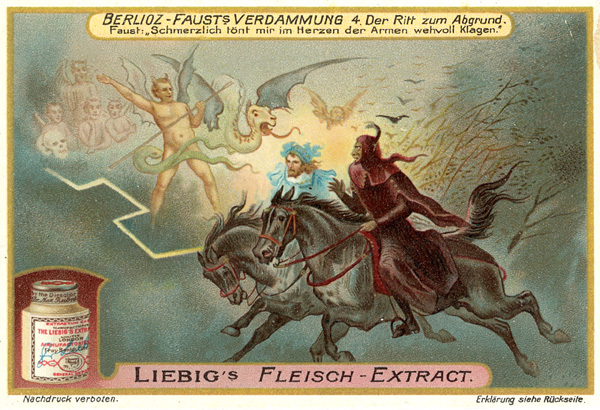
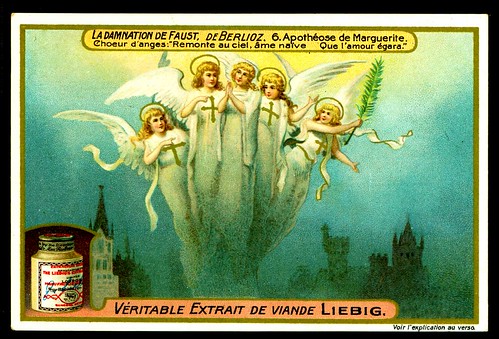
Blazing Berlioz The Damnation of Faust at the Barbican with Sir Simon Rattle, Bryan Hymel, Christopher Purves, Karen Cargill, Gabor Bretz, The London Symphony Orchestra, The London Symphony Chorus directed by Simon Halsey, Rattle's chorus master of choice for nearly 35 years. Towards the end, the Tiffin Boys' Choir, the Tiffin Girl's' Choir and Tiffin Children's Choir (choirmaster James Day) filed into the darkened auditorium to sing The Apotheosis of Marguerite, their voices pure and angelic, their faces shining.  An astonishingly theatrical touch, but absolutely right.  If Simon Rattle can achieve such excellence in the cramped confines of the Barbican Hall, imagine how Britain's cultural life would be transformed if a world class concert hall with state of the art facilities were built.  The arts are central to the nation's economy and prestige. Britain cannot afford to slip.

As Rattle has said, the London Symphony Orchestra have the potential to do a lot more repertoire, given the chance. Berlioz The Damnation of Faust is an extravagant work. The stage was crowded with performers, and the volume projected into the shoebox that is the Barbican Hall  threatened at times to overwhelm.   On the BBC Radio 3 re broadcast and on medici.tv the sound balance might be better, but the live experience was intoxicating, despite the acoustic.  Wisely, Rattle held his forces back, emphasizing instead the intricate orchestration  and textures that make this piece so exciting.  It is a sprawling drama, whose theatrical effects are embedded in the music.  In Berlioz's time audiences didn't need literal realism. They paid attention to the music. This performance was so vivid that the Barbican Hall seemed transformed as if by magic, as Berlioz's music came alive.

Faust, the old scholar, watches peasants dancing in the countryside. "Tra la la , Haha ha!" sing the chorus.  It is Easter. Spring has come. Nature blossoms. Christ has risen.  Dare Faust dream of rejuvenation ?    Bryan Hymel sang Faust, the rich, ringing warmth in his voice bringing colour to the role. Hymel then injected chill fear."Hélas! doux chants du ciel, pourquoi dans sa poussière Réveiller le maudit?". Faust is no fool : he already senses the immensity of what is to come.
A Faust as strong as Hymel needs an equally singular Méphistophélès.  Christopher Purves provided an authoritative counterbalance.  The expressiveness in Hymel's voice contrasted with the authority in Purves's voice and his purposeful enunciation. The way Purves sang "Ô pure émotion!" showed how Méphistophélès had sized  Faust up.   A strong Brander, too, in Gabor Bretz.  Though the part isn't big, it's important, for Brander is to the students what Méphistophélès is to Faust. The chorus sang lines that swayed from side to side, as drinkers do.  But an undercurrent of violence runs through the merriment. Purves sings the Song of the Flea but the drunks think it's funny.   In the Voici des roses, Purves suggested the thoughtful side of Méphistophélès.'s character:  low winds and strings evoking melancholy.  The devil is dangerous because he understands human sensitivity, and uses that to manipulate.  Perhaps Méphistophélès. is a kind of Oberon, for Faust is lulled into a dream by a magical flute melody, later taken up by the strings, and the songs of gnomes and sylphs.  A magical scene which owes much to Mendelssohn.

For Faust, a reverie of love. For the students, mindless delusion as they march off to war. Hymel's  aria "Merci, doux crépuscule! " was a star turn, beautifully articulated, glowing with feeling. The phrase "Que j’aime ce silence," glowed beautifully, followed by a deeply felt "et comme je respire Un air pur!"  The orchestra responded in kind, with transparently delicate textures.  When Méphistophélès. butts in, a violin plucks a banal ditty, like a student with a lute. But Faust is made of far finer stff, as is Marguerite.  Karen Cargill sang the Song of the King of Thule .with sincerity.  The song is a paean to fidelity, loyalty so strong it defies death. Garlanded by viola and cellos, it's anothe moment of "silence" where Méphistophélès and the world cannot reach.

Berlioz's The Damnation of Faust owes as much to Shakespeatre as to Goethe. In the magical Evocation, fireflies dance, piccolos playing bright figures augmented by darker hued winds and strings. Textures as transparent as these need this kind of definition There was humour, too, in the trombones and tuba,  which not every orchestra can carry off as well as the LSO.  Purves curled his tongue around the final words, with the menace of a snake, for now Faust and Marguerite have their encounter.  Hymel's "Ange adoré"  glowed resplendently, and his cry "Marguerite est à moi!." scaled the heights.  But the world intrudes, After fast paced exchanges, the lovers are torn apart.  The cross currents between soloists, choirs and orchestra were very well defined.

Then, back to solitude. Cargill's Romance showed her at her finest. matched by evocative oboe accompaniment.  Although some incarnations of Faust emphasize the God/Devil angles in the legend, Berlioz was very much a Romantic, for whom Nature was an alternative diety. Thus the importance of the Invocation. Hymel sang the aria Nature immense, impénétrable et fière, with such fervour it seemed an act of faith.  But Fast is doomed.  Méphistophélès and Faust set off on horses that fly through the sky, defying the laws of Nature.   Wailing woodwinds, and a frenzied pace in the orchestra, tensely plucked pizzicato.  The children's voices screamed "Ah!" and the tubas wailed pounding staccato, Now, Méphistophélès has little need for formal language. "Hop ! Hop!" screamed Purves. My flesh creeped, thinking of the "Hop Hop" at the end of Wozzeck.  The men's chorus walked on stage, among the orchestra, singing their demonic chorus : skat lyrics before the term was invented, interspersed with machine-gun staccato.  Are the demons the students and soldiers?

"Hosana !" sang the  choirs at the back of the stage. Harps sggested angels, and the palpitating, ascending rhythms, the flapping of wings, or the image of water (as opposed to the fires of hell)   And then the children's choirs filed into the auditorium, illuminating the darkness with their high, pure voices.  Like a miracle !

Sunday, 17 September 2017

Beefcake ! Berlioz Damnation of Faust Barbican


My review of the Damnation of Faust with Simon Rattle and the London Symphony Orchestra at the  Barbican is HERE


Berlioz The Damnation of Faust - Simon Rattle  - Bryan Hymel, Christopher Purves, Karen Cargill,  London Symphony Orchestra, Barbican, London . Review HERE. Watch this space and read my other posts on Faust and his many incarnations - not just Berlioz !  (see labels below)

Friday, 15 September 2017

National Treasures : Simon Rattle LSO Elgar Birtwistle Knussen Adès

Sir Simon Rattle conducting the LSO. photo Tristram Kenton, courtesy LSO

"This is Rattle" the title of a ten-day Barbican festival inaugurating Sir Simon Rattle as new Music Director at the London Symphony Orchestra.  There's a lot more to being Music Director than conducting.  Rattle is a brilliant communicator whose enthusiasm fires up those around him.  He's the best possible ambassador for the LSO, the Barbican and for British music all round. This concert could mark an historic occasion.  Will Rattle revitalize the LSO and London, as  he transformed the City of Birmingham and its Symphony Orchestra ?  Will Rattle succeed single handedly in reversing the insular philistinism that's plaguing this nation?   In our celebrity-obsessed age, you need a celebrity to reach the masses.  If the new concert hall for London is ever built - and it should be  - somehow Rattle's role should be recognized. This inaugural concert of the new LSO and Barbican season might, in time, prove an historic occasion.  For my review of Rattle's Berlioz Damnation of Faust, click here.

And now, to the music! An all-British programme proving that British music is alive and thriving.  When Sir Edward Elgar was "Britain's Greatest Living Composer", his music was often associated with Birmingham.  Rattle's Elgar credentials go way back  Thus the Enigma Variations, its cheerful geniality matching the occasion.  Once Elgar was "new music". But good music keeps evolving. Britain's "Greatest Living Composer" is now Sir Harrison Birtwistle, so original that his contemporaries, alive or not, don't come close.

Birtwistle's Concerto for Violin and Orchestra (2010-11) is classic Birtwistle. It operates on several simultaneous layers, moving in well defined patterns, proceeding with the deliberation of ritual magic. It also connects to Birtwistle's operas and music theatre. The soloist, Christian Tetzlaff, for whom it was commissioned, always hold centre stage, the orchestra acting like a  chorus.  A rumbling introduction, suggesting portent.  Almost immediately the violin spins into life - quirky, angular figures - characteristic Birtwistle zig-zags, lit by sudden explosions in the orchestra - high strings, then low winds, and an underlying pulse which emerges in bursts of ostinato.  Five "dialogues" in which the violin discourses with individual instruments.  Unlike Greek drama where the chorus comments on proceedings, the orchestra follows the soloist, interacting with the inventiveness in the violin part. Frequent exclamation points - a gong,  bell-like marimba like a laugh of recognition,  exotic sounds whose meaning may be unclear but significant, nonetheless.  Wild outbursts and delicate, wayward passages.  The violin sings at the top of its register, tantalizingly beyond and above the orchestra, which responds with groaning blasts. Inventive, richly rewarding and enlivened by Birtwistle's whimsical wit.  An excellent companion piece to Elgar's Enigma Variations: the pair should be heard together more often.

Simon Rattle's associations with Oliver Knussen and Thomas Adès are even closer.  Rattle premiered Adès's Asyla in 1995 in Birmingham and recorded it with the CBSO and later with the  Berliner Philharmoniker.  Indeed, he included it in his inaugural concert in Berlin in 2002.  The title "Asyla" refers to asylums, places of refuge as well as incarceration.  It's pertinent, since it's a piece of incessant variations. Inspired by techno music and the idea of repeated mechanical patterns, it channels obsession into energy. Though the famous third movement allegedly depicts swarming hordes bobbing up and down in a crowded nightclub, probably high on drugs, the same could apply to shamanistic dance, where shamans, often high on peyote, dance themselves into oblivion, thereby releasing their subconscious.  Asylum as escape and refuge, yet also dangerous.  Thus the grand Hollywoodesque climax, an ejaculation in many ways.  Asyla can be read as a series of variations, though, unlike Birtwistle and Elgar, these variations are tinged with insanity and desperation.   Adès's finest work feeds off this primal energy. Perhaps it needs challenge to keep the sparkplugs firing.  Some of his later work isn't as good as Asyla, or The Tempest, or America: a Prophecy, but he's still an important composer. 


Pointedly, Rattle included Oliver Knussen in his pantheon. Knussen has been a regular at the Barbican, so Rattle could hardly fail to acknowledge his role in promoting new music, in London, in Birmingham and at Aldeburgh.   But their relationship is closer than that : Rattle conducted Knussen when Knussen was barely out of his teens.  Knussen's Symphony no 3 (1973-79) takes its cue from Shakespeare's Ophelia, distraught with grief, singing "mad songs" in Hamlet For more background, please read the description  on Faber, who are Knussen's publishers.  The piece has been in Rattle's repertoire since CBSO days. It's a pity that the only recording of this work was not by Rattle, who reveals Knussen's Symphony in its full glory:  (Knussen's conducted it lots, too). It's an amazing work, at turns quirky, magical, demented and inspired. 

Knussen's Third Symphony is wordless, but its sinuous figures suggest curving, swaying movement, like a dancer turning in circles. Knussen has referred to its "cinematic" nature and "the potential relationship in film between a tough and fluid narrative form and detail which can be frozen or 'blown up' at any point." Without words, Knussen creates drama, in the shifting layers and tempi. Each permutation unfolds like a frenzied dance, or perhaps processional, given the size of these orchestral forces. The orchestra is huge - especially for a piece that lasts 15 minutes, but at its heart lie just three players, a sub unit of celeste, harp and guitar (alternating mandolin). Does that suggest Mahler's Seventh Symphony, and its strange Nachtmusik? Knussen and Mahler don't sound the least bit similar, but the comparison is fruitful, because both symphonies evoke contradictory responses. That's part of their enigmatic power.  Knussen's symphony "dances" with grave dignity, strong tutti chords suggesting fractured intensity. Darkness and blinding bright light. Yet at the heart, quiet, simple sounds suggesting the fragile human soul within.

A wonderful performance - let's hope Rattle and the LSO do it again, in tribute, for Knussen is very much "more" than a composer, just as Rattle is "more" than a conductor. Knussen's a towering figure in every way, who has done more than most for music in this country.  Because his energies have found so many outlets, he hasn't written as much as he might have, but almost everything he does write is top notch, top rank.

Among the many composers Knussen has nurtured is Helen Grime.  Appropriately, Rattle chose her for the the piece with which the concert began - Fanfare - from a much larger work still in progress.  Another excellent choice, linking the past to the future, proof that music in Britain is alive and well and deserves to thrive. 

Saturday, 9 September 2017

Demon Dalmations !


Demon Dalmations ! Simon Rattle on the LSO season opener, The Damnation of Faust.

"“Every musician of my generation learnt about Berlioz from the LSO’s recordings with Colin Davis,” he says. “I remember being completely bowled over by their performance of orchestral extracts from Faust when I was about eight, and my sister quietly saying to me, ‘Actually, Simon, it’s the damnation of Faust, not the dalmatian.’ I’d assumed it was a story about a dog.”

(from an interview with the Times)


Sunday, 20 August 2017

Glorious Gurrelieder : Simon Rattle brings Schoenberg to the Proms


Prom 46, Schoenberg Gurrelieder with Simon Rattle and the London Symphony Orchestra, Simon O'Neill, Eva-Maria Westbroek, Karen Cargill, Peter Hoare, Christopher Purves and Thomas Quasthoff.  And three wonderful choirs - the CBSO Chorus, the London Symphony Chorus and Orfeó Català from Barcelona, with Chorus Master Simon Halsey, Rattle's close associate for 35 years.  No wonder tickets almost sold out as soon as they went on sale. Everyone in town seemed to be there. Thomas Quasthoff sat in the coffee shop, holding court with friends and fans. Simon Rattle got cheered when he came in  sight on the stage, still in street clothes, by Prommers who were already seated half an hour early. 

Gurrelieder is a spectacular so extravagant that, for maximum effect, it needs to be experienced in a performing space where the vast forces can let rip in all their glory.  Rattle has conducted it many times in many places,  but there's nothing like the Royal Albert Hall for sensational presence, so he was able to unleash the full forces of Gurrelieder without inhibition.  For Gurrelieder is meant to be overwhelming, Waldemar defies God, who wreaks cosmic vengeance. He and his men are doomed to spend eternity riding through the night in a hunt. The peasants (here a single symbolic figure) are terrified by the supernatural, but Klaus-Narr, being a Fool, can recognize the ghosts for what they are - cosmic forces, and the demonic power of Nature.

Gurrelieder starts with a rhapsodic prelude, string lines swelling and heaving, harps adding warmth, woodwinds delicate, naturalistic touches. The reference is probably Siegfried's Journey down the Rhine, for Waldemar is about to embark on a journey of destiny.  Like Siegfried, Waldemar spends his innocence hunting in the woods, where Tove is concealed.  Hence the Wood Dove, like the Wood Dove in Siegfried, an all-seeing avatar.  Dense forests, in Germanic culture, symbolize powerful, though sinister, primeval forces.  The subconscious, source of creativity and danger.   Gurrelieder is  song symphony of Wagnerian proportions.  Simon O'Neill, being a very experienced Wagnerian, brought dramatic authority to the role. Waldemar is no Tristan but a king who thinks he can throw curses at God. If anything, he's a Flying Dutchman, doomed to sail the seas forever.  O'Neill's Waldemar is an embattled soul, tormented and defiant, instinctively understanding the part.  Waldemar is not a Romantic Hero, but a man cursed, struggling against Fate. Thus the roles of Waldemar and Tove, though well written musically, aren't particularly well developed in  terms of psychological complexity.  For Schoenberg, they are figures in a landscape, who will become incorporated into Nature and nature legend around them.  Nonetheless, Eva-Maria Westbroek created Tove with great vocal depth,  and Karen Cargill sang the Wood Dove, a bird of darker portent than Siegfried's wood dove.

Schoenberg was only twenty-six when he wrote what was to become the First Part of Gurrelieder, but in the interim, he developed a highly original identity. In Part Two, the harps still sing, but the sweeping strings are broken by fearsome chords  which replicate the word "Herrgott! Herrgott!" which O'Neill sang with intense flourish.  Note the text, carefully.  Waldemar accepts his fate, but frames it as a creative destiny.   He chides God. "Das heisst Tyran, nicht Herrscher sein!". Like any earthly king, God needs Fools to keep him in order. Thus the significance of Klaus-Narr and of the Narrator, both figures who can see beyond events and guess significance.  In the years between the time Schoenberg began writing Gurrelieder and completing it, he developed a distinct creative identity. The true artist, as innovator, will often be alone, even vilified, but artistic integrity is paramount.  thus "Lass mich, Herr, die Kappe deines Hofnarrn tragen!".

The peasant (Christopher Purves) is horrified by the sight of Waldemar's Ghost Riders in the sky (complete with echoes of hunting horn).  His response is to hide, pray and bolt his door "noch Stahl und Stein, so kann mir nichts Böses zum Haus Herein!"  "Holla!" to all that.  The men's voices in the choirs sing a wild, rhythmic chorus, alternating explosive force with singing of hushed subtlety.  O'Neill sang Waldemar's "Mit Toves Stimme" so it rang out as an anthem: the  love that keeps Waldemar singing is like the inspiration an artists needs to create.


The music that introduces Klaus-Narr  is quirky but pointed, The Fool (Peter Hoare) is himself a ghost, serving his dead King in the same way that his king serves the God who doomed him.  Hoare let the lines curl round his tongue, spitting them out in line with the odd angular rhythms in the music. Waldemar will not be cowed.  Trumpets call, and hunting horns. Waldemar's still a huntsman and fighter who will  barge his way into Heaven. The huge chords in the orchestra return, but fade away, for dawn is about to break.  The Men's voices sang in dramatic hush as Waldemar's men sank back into the grave.  Rattle and the LSO created a haunting orchestral Prelude, settingb the tone for the entry of the Narrator (Thomas Quasthoff). Brooding somnolemce, eddies of quirky sound, like will o' the wisps illuminating darkness.   In many ways, the part is the heart and soul of the piece, for it's written as Sprechstimme, neither song nor speech, a device which Schoenberg was to make distinctively his own. This section is extraordinary, so unusual and so powerful that it leaves the listener stunned.  Quasthoff did the Narrator (and the Peasant) with Rattle in  Berlin in 2000.  Though he's long ceased singing, he can still act, and speak the part with a singer's ear for song.  It's quite a part. I will never forget hearing Hans Hotter do it way back in 1994, when he was already in his eighties.  And then the chorus exploded in that glorious "Seht die Sonne!"

This Prom was recorded for repeat online broadcast, and filmed for TV broadcast on September 3rd (BBC TV 4). 

This review also appears - with extra pics - in Opera Today

Photo: Roger Thomas