Showing posts with label Grieg Edvard. Show all posts

Friday, 15 February 2019

Mirga Gražinytė-Tyla : Peer Gynt and other choral stars


Edvard Grieg's Peer Gynt a choral blockbuster ?  Mirga Gražinytė-Tyla conducted Grieg's full incidental music to Ibsen's play with the City of Birmingham Symphony Orchestra, showing how the choral sections make a difference to the way the drama is received.  Peer Gynt is so well-known through extracts that the original context is lost.  Not a fjord in sight, except in a metaphorical sense. Peer Gynt isn't a hero. Ibsen's original as a Leseopera, an opera to be read and meditated upon, not "just" entertainment. He satirized aspects of Norwegian mentality in the period when the country was a colony of Denmark.  Peer's adventures are fraught with danger, supernatural as well as physical, The innate tension between moments of beauty and wildness creates a dynamic which is fundamental to interpretation.

Gražinytė-Tyla's approach brought out the power that lies beneath the surface : a vivid reading, bristling with energy.  Not for nothing does Grieg's wedding procession end with ferocious chords. Peer disrupts proceedings and gets kicked out for fighting.  Thus the first chorus with its almost primitive savagery : the subconscious being released.  Congratulations to the CBSO chorus (chorus master Julian Wilkins) showing their metttle. Indeed, this whole programme focusssed on choral music though no doubt the media will think in more simplistic nationalist terms. Thius does matter, since Gražinytė-Tyla has a choral background and is in an ideal position to build on CBSO's reputation for choral music of all kinds.

Having established the drama, Gražinytė-Tyla could focus on the interplay between expansive lyricism and more unusual forms, from the "barbarism" of the Hall of the Troll King to the exoticism of the Arabian dances.  In the Abduction of the Bride, the chorus led into Ingrid's Lament with soloist Klara Ek, and the Death of Åse prepared the way for Solveig's Song : both expressions of love and loss.  In Peer's Homecoming, the CBSO played with strong definition so the obvious imagery (a ship on the sea) seemed enhanced by forces beyond Nature. The Whitsun hymn, sung right afterwards, indicates that this conflation of inner and outer worlds is no accident, but central to meaning. Peer lives in the world of the imagination, feckless until he comes to appreciate true values.  Thus the finale, when Klara Ek, the soloist, the chorus and orchestra come together in glorious balance.

The programme began with neither conductor nor orchestra but with the City of Birmingham Youth Chorus in Esa-Pekka Salonen's Dona Nobis Pacem (2010) a five minute a capella miniature. Salonen plays with chords and textures, the three words of the text repeated in undulating cadence, the last notes held until they dissolve in silence.  Because it's so minimal, careful modulation like this is of the essence.  The freshness of these young voices connected well to Einojuhani Rautavaara's Cantus Arcticus: Concerto for Birds and Orchestra, where recorded bird song replaces chorus.  The orchestra reacts and responds, gradually coming into its own : long, searching lines, suggesting distance, flutes singing together as if they were birds.  A cello sings, its melody enhanced by the cries of birds.  For a moment, the orchestra falls silent, "listening" to birdsong before embarking on long, surging lines that expand, flutes in full flight, low voiced winds adding depth, until the music disappears beyond audibility.  These two pieces combine extremely well.  In both cases the performers must be listeners, sensitive to the subtlest nuance.

Back to more conventionally choral chorus with Jean Sibelius's Rakastava (The Lover), op 14 (1912).  More thoughtful programming from Gražinytė-Tyla, the minimal accompaniment reflecting the delicacy in Salonen and Rautavaara. The men's voices dominate at first - the cycle was originally scored for unaccompanied male voice -  but the women's voices enter with brighter, brisker figures until both reach parity.  Yet again the value of sensitive singing, hushed but precise.  Sibelius En Saga op 9  (1892) was also played well, (great solo moments !), Gražinytė-Tyla conducting with the clarity that brings out structure and detail. 

Saturday, 12 August 2017

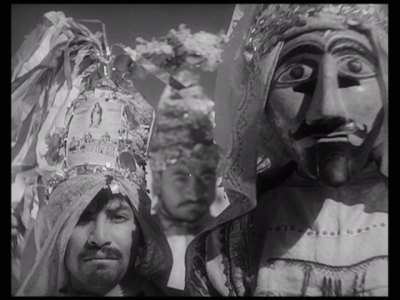
Peer Gynt - naked Charlton Heston, aged 17

Long before Ben Hur, Charlton Heston as Peer Gynt ! Charlton Heston, aged 17, in the surprisingly sensitive film based on Ibsen and Grieg's Peer Gynt.  The film was made in the summer of 1941 as a school project  at New Trier High School in Willamette, where Heston was a student.  It was filmed in the woods in Illinois and Wisconsin, where thousands of Norwegian immigrated during bthe 19th and 20th century.  At one time, there were more Norwegian newspapers in that part of America than there were in Norway.  So the film doesn't need much in the way of sets, using the landscape as it was.  Real mountains, valleys and forests and rivers that can pass for fjords.

The actors were students, most of whom can't act, but look healthy and enthusiastic.  Kids then didn't do dope, TV or computers.  Their faces are so fresh, they don't look like they've ever worn makeup. Although the film is clumsily made, that very naivety suits the story much better than something more sophisticated.

It's also good that the film was shot without spoken dialogue.  The actors' mouths move, without sound, like in a silent movie. Even this is a plus, because it adds to the sense that the story exists in a strange, eternal world  outside time and place, where trolls live, and from which Peer can escape predicaments as if by magic.  The sound track, a recording of Grieg, was added after filming.  The recording quality is horrible, but I quite like the clumsiness because it fits the gaucheness of the film and the primeval nature of the story.  I have watched with the sound off, while playing a CD, but that doesn't work.

Enjoy the village wedding, and the march of the trolls, with their crude costumes and lumpy dancing.  The Bøygen though, was made for the movies. A disembodied head appears ,wobbling in front of dark curtains. He speaks - with an American accent !  Heston is, unquestionably, the star. After all, Peer Gynt lives only for himself ! The camera lingers lovingly on his face and body. He's often seen with his chest oiled up, his features lit so he resembles a  Greek God.  He's so beautiful that you can see why Peer is so much in love with himself. (Heston has a slight , ironic smile, he knows it's only a movie).  The crew were amateurs, too, though the director, who also wielded a camera, David Bradley went on to a proper career in Hollywood.  He was also one the cameramen : maybe we can tell, since some angles and frames are very inventive, while others are shot without much imagination.

Nice dressing up games in the Desert scenes, shot on a beach, the women in bikinis, the "Arabs" playing home made instruments.  No sound, of course, leave that to Grieg.  When sound does again intrude, it happens when Peer grows old and hears Solveig's Song (badly sung, in English).  Please also see my other pieces on Grieg and on Peer Gynt . HERE is a link to my description of the two main recordings of the incidental music with added text. Ole-Kristian Ruud and Guillaume Tournaire. Time for a new one, I hope.

Saturday, 15 December 2012

The Full Peer Gynt Grieg, Barbican

As soon as the Barbican announced its 2012-13 season I rejoiced. (Full review here)  Edvard Grieg's Peer Gynt op 23 is rarely heard in full: usually we hear the Suites thereon and popular extracts like Morgenstimmung,  the Hall of the Mountain King, and Solveig's Song The version tonight will be based on an edition prepared in the 1990's  which frames the music with pieces of spoken dialogue from Henrik Ibsen's original play. Music with incidental speech, this time, not play with incidental music !


The "full" Grieg Peer Gynt was premiered in UK at the 2001 BBC Proms.  Bo Skovhus, dressed in green and red Norwegian costume, sang Peer Gynt. Until that point I'd never appreciated why Skovhus had such a following. After hearing his superlative performance, I too was hooked. Barbara Bonney sang Solveig. In those days, she was the pre-eminent Scandinavian song specialist. Manfred Honeck conducted the Gothenburg Symphony Orchestra. Three speakers, including Simon Callow.

The performers tonight at the Barbican will be Miah Persson (usually divine), Johannes Weisser, Anita Hallenberg and the BBCSO under Marc Minkowski.Tonight's concert is being reviewed in Opera Today. Part of the charm of this version is that we get to hear the big choral sections. In The Hall of the Mountain King is great fun when you hear the wild Troll chorus! When Peer Gynt meets the Bøyg (a monster) the orchestra recoils in horrror. The chorus screams in alarm, but is calmed by a hymn tune,  complete with organ.

There's an interesting version of Solveig's song by Chinese coloratura Zhou Xiao yuan HERE, which you won't find elsewhere easily. This song is one of Miah Persson's signatures, so  it should be a great experience.  Below an extract from Grieg "full" Peer Gynt op 23. Don 't recognize? that's why it is needed.

.

Wednesday, 18 January 2012

Barbican 2012 2013 Opera and Vocal

Hooray for the Barbican, going for baroque on baroque! The Barbican is ideal - big enough to afford top performers, small enough not to overwhelm the aesthetic. Even though soloists haven't yet been announced, it's likely that Les Talens Lyriques Lully Phaéton, cond. Christophe Rousset on 8/3/13 will be a highlight - just 15 months to go! Another relative rarity - Handel Imeneo on 29/5/13. It's not Blockbuster Handel, but more delicate, and the cast is excellent - Rebecca Bottone, character soprano par excellence who lifts everything she's in. Already I'm looking forward to what Robert Hugill will write about this (read his review of a much less stellar performance).

David Daniels will sing in that and also in Handel Radamisto (10/2/13) with Harry Bicket, English Consort, Luca Pisaroni, Patrica Bardon and Elizabeth Watts - infinitely stronger cast than the ENO staging. Two Les Arts Florissante performances - John Eliot Gardiner conducts Handel Belsahazzar on 13/12/12 and Paul Agnew conducts Monteverdi Madrigals Book 5 on 15/6/13. It's JEG's 75th birthday next March, and he's celebrating by conducting Stravinsky Oedipus Rex.

If baroque don't rock your boat, there's a full Grieg Peer Gynt 15/12/12 with Miah Persson, Ann Hallenberg, Johannes Weisser, BBCSO and BBC Singers and the wonderful Marc Minkowski. Although everyone knows bits of Peer Gynt, hearing it as a whole is extremely rewarding. And just the thought of Miah Persson singing Solvieg's Song gives me goosebumps.

Donizetti's Belisaro (28/10/12) with Mark Elder, BBCSO and an interesting Poulenc Les animaux modèles (26/4/13) with readings and video projections, which can be fine, done well. Stéphane Denève conducts the BBCSO.

Re British opera, you could go for Britten The Turn of the Screw (Andrew Kennedy, Sally Matthews, Colin Davis,16/4/13) but far more unusual would be the Oliver Knussen double bill, Where the Wild Things Are and Higgelty Piggelty Pop!  (3/11/12). It's a matinee, because they were inspired by books Knussen's daughter used to read.  Although this will be a must for people with kids, it's also a good outing for those who don't have them, since this kind of zany good humour is so Knussenesque. He mostly conducts these days but he's a pretty good composer too.

Wild card: John Adams The Gospel according to the Other Mary, a Barbican co-commission. (16/3/13). Adams can be variable, see Nixon in China, but the subject's very tricky. Gustavo Dudamel's first big, big opera premiere with the LA Phil and Peter Sellars directing. Maybe it will be good, but my gut instincts are that this constellation will bring out fashion victims in force.  Two weeks later, Valery Gergiev conducts Szymanowski Stabat Mater and Brahms German Requiem. Will Gergiev bring us back to earth? He has his merits, and could say much in Szymanowski.

Recitals with Juan Diego Florez, Joyce DiDonato, Renée Fleming,  Elina Garanca, Cecelia Bartoli and Magdalena Kozcena.

Tomorrow : Barbican orchestral 2012-3. Please also see Barbican 2011-2 vocal and Barbican orchestral 2011-2, as 2012 has only just begun! For link, see here.

Thursday, 4 August 2011

Percy Grainger plays Grieg Morgenstimmung


Percy Grainger plays Edvard Grieg Morgenstimmung. Lots more composer plays composer gems on this site !

Wednesday, 27 July 2011

Solvieg's Song in Chinese


I've posted this before but now it feels right to hear it again. Solvieg's Song sung in Putonghua, stunning singer who could shatter glass with her Cs.

Sunday, 24 July 2011

Norway - Grieg, landscape and Utøya

Edvard Grieg wrote to a young urban composer "You need an inoculation of mountain stuff into your work.  For Grieg, the pure air and physicality of mountain living inspired a deep emotional response. He wrote about the "youthful combativeness" of Norway, "like the music of harsh triads compared with all the sugary seventh chords " in Denmark. In Norway, he said "the conflict concerns spiritual existence" while in the urban south it was "just a matter of trivialities".

That's probably arguable if you're Italian or German or Finnish or Czech,  but what Grieg is getting at is the concept that composers are shaped on an instinctive level by the landscape around them. For Grieg, the very remoteness of Norway's landscape symbolized the distancing he needed to counteract the Austro-German musical hegemony. Mountains, fjords and harsh winters concentrate the mind . What is trivial and commonplace is dwarfed by the power of nature. In his seminal Grieg: Music, Landscape and Norwegian Identity,(2006) Daniel M Grimley shows how landscape inspired a sense of identity that gave rise to concepts which would shape Norwegian culture. Speaking of Gangar op 54/2. Grimley demonstrates how Grieg develops a powerful structure by contrasting dynamic and static elements. "It is, arguably", he concludes, "the denial of personal subjectivity and the longing for transcendence that this systematic organisation and division of musical space creates that is the most powerful expression of Grieg’s landscape."

Grimley naturally focuses on Grieg, Bull and the poets who inspired them (and changed the very language).  But similar things were happening in the visual arts. Edvard Munch immediately springs to mind, but there were many other painters and craftsmen. Just as elsewhere in Europe, new concepts of design were sweeping away the past, so too in Scandinavia. About 25 years ago there was an exhibition at the Royal Academy called "Northern Light", which showed how art nouveau and Japanese design concepts meshed well with the nature-oriented simplicity of Norwegian life. Recently I wrote about Delius in this context, but the concept applies even more so to Grieg and his contemporaries (who got there first).(painting is Nikolai Astrup (1880-1928 ) Read more about him HERE

Everyone is going to have different ideas on any subject but that doesn't mean it's right to destroy anyone who doesn't agree. Now, thanks to the internet,  ideas about community and identity are being redefined. Once we jostled on with others and at some level realized that no-one really is omnipotent. Now any nutcase can link to other nutters and convince themselves that their reality is more important than anyone else's. This new community reinforces absolutism, in poltics and everything else.  In the moral vacuum of modern communications, perspective disappears, and with that tolerance and decency.  And I don't mean just gunmen. Again, Norwegian myth to the rescue.  Trolls don't venture forth, learn, develop. They are fools but they get their kicks from destroying travellers who do. They usually win because they operate  thru networks of fellow trolls.  Significantly, trolls live under bridges and travellers seek wide open spaces. Out in the mountains and in the vastness of nature, we're forced to realize how grubby bigotry can be.

I've written a lot over the years about what mountains signify in music, especially in Mahler. Please read HERE and HERE for example. Also please read here about Thorbjørn, who was a Traveller, in every sense.

Thursday, 31 March 2011

Zhou Xiaoyan sings Grieg


Zhou Xiaoyan 周小燕 (b 1918). One of the great Chinese singers and singing teachers. Born in Wuhan to an intellectual family, she went to France to study at the Paris Conservatoire. She sang in French and Czech opera houses before patriotically returning to China in 1947. WSestern classical music was very popular in China until the Cultural Revolution., so Zhou had a successful career giving concerts (mostly mixed recitals), making records and teaching. I can't imagine the equivalent in the west. Pavarotti ? She's still alive, living I think in Shanghai.

Sunday, 23 January 2011

Grieg plays Grieg - resurrecting the mammoth

 Here, Edvard Grieg plays his own A Butterfly on a piano roll made in 1906. Under the surface noise and primitive sound capture, enough remains that we get an idea of what Grieg himself sounded like, as a pianist.  There are numerous ancient recordings like this about, remastered, cleaned up and reissued. On this site you can hear Mahler play Mahler, (transcriptions of songs and symphonic segments), Debussy and Rachmaninov playing Debussy and Brahms playing Brahms.

Now there's a new reconstruction from Simax records, specialists in Scandinavian repertoire. Two enthusiasts, Sigurd Slåttebrekk and Tony Harrison, have recreated Grieg in a new recording Chasing the Butterfly. What they've done is a mix of cleaning the original and replaying it on Grieg's own piano the low tech way - fingers and feet on keys and pedals. The result is such that you can play Grieg and Slåttebrekk together and marvel at the similarity. Please read the article here in the Financial Times for more detail. 

Reconstructions fascinate because we assume that we're hearing how the composer would have wanted the music played. But it's dangerous to assume that these very early recordings have any kind of interpretive authority. Real performance traditions developed from full, live concerts. These early recordings were semi-experimental. Recording technology 1880-1920 had major limitations. Often they ran only a few minutes - sometimes as little as 120 seconds - so performances had to be tailored to fit the medium, not the other way around. In any case, performers knew that most people wouldn't be listening to cylinders except as snapshots of the real thing. Because the technology was expensive, often only one take was made, not necessarily the best. And many composers aren't specially wonderful performers (compare Debussy and Rachmaninov). When we think of recording, we're referencing 90 years of "proper" recordings. But those who lived pre-1920 did not think in those terms at all. Yiou can almost imagine Mahler sniffing: "If you think you MUST play X at those tempi, you're nuts".

So resurrecting the Mammoth in music history is fascinating, but of limited real application in terms of performance practice. What makes music isn't slavishly following some sacred rule, but bringing out the spirit in the music. It'll always be personal, created afresh by intelligent, capable performers. Still, it's fascinating to listen to these ancient clips that preserve a moment of a composer's life even though he and those helping him make the artefact are long gone. Below is Brahms, playing for Thomas A Edison in 1889. (Also see Edison's film of Hong Kong in 1898  on this site, and his films on Native Americns dancing in 1894):

Sunday, 17 October 2010

Oxford Lieder Festival report

Oxford Lieder is much more than a series of recitals, it's the tip of an all-year programme. First, two logistically challenging enterprises. A mass schools exercise, where kids from many different schools in the area joined together in a choir. You can imagine the organizing that goes into this, it didn't happen overnight. They sang in the new atrium at the Ashmolean Museum. This is architecturally spectacular, glass and light - enjoy the photos on the link, they're gorgeous.

Friday afternoon rush hour open air concert on Broad Street - not usual busker fare but Brahms and Schumann part songs. Since this part of Broad Street is now pedestrian, it attracted a big crowd, over 100. Getting Schumann and Brahms to the people!

In the evening gala concert, Wolfgang Holzmair and Julius Drake in the Holywell Music Room. All Schumann, some more uncommon fare, like Abends am Strand and Belsatzar. The first tied together themes throughout the programme - old sailors remembering past adventures on the Ganges and in Lapland. Lotusblooms, throughout this recital, and partnerships, too, such as Die beiden Grenadier and the Kerner-Lieder drinking songs. Crammed into the Holywell Music Room were regulars who come every year plus several Famous Names perfectly happy to sit with us on the benches. Holzmair's programmes are always very well constructed, as his knowledge of repertoire is extensive. (Read about his blending of Schubert and Krenek's Reisebuch aus den österreichischen Alpen by clicking on the blue link.

Belsatzar is a mini music drama: Holzmair acts with his voice, not overdone, but communicative. Schumann's ventures into opera aren't appreciated because he's experimenting with a new kind of music theatre, and we're more conditioned to conventional form. But one way into his operas is through extended ballads like this. Read about Schumann's Genoveva here.

Three different concerts and two talks on Day 2. Katarina Karnéus sang Grieg's Haugtassa, and Scandinavian songs. Haugtassa ranks for me among the best song cycles ever, it's so beautiful and so magical. I missed Richard Wigmore's pre-concert talk, which was a pity, because it would have been good. Butb there's always Daniel Grimley's book, Grieg:  music, landscape and Norwegian Identity which has a big segment on Haugtassa.

Karnéus is a specialist in Scandinavian song, and has made numerous recordings, including Haugtassa. Check out the BIS site for more - they have the complete Sibelius songs, for example. Anne Sofie von Otter's recording is the classic, but Karnéus's voice is attractively rounded and charming.. It says much about Oxford Lieder that they can attract artists of Karnéus's calibre. She'd fill a much bigger house than the Hoywell, but it was a privilege to hear her in this intimate setting. The songs are about a simple country girl, who encounters love and other mysteries. It definitely benefits from the Holywell atmosphere(apart from drunken students howling outside at the end).

The late-night concert was in the medieval New College Ante-Chapel. Schubert Songs for guitar played by Christoph Denoth, a specialist in baroque guitar, Schubert was a keen guitarist and made some transcriptions himself. There's an excellent recording of Die schöne Müllerin by Peter Schreier with Konrad Ragossing, which gives a whole new perspective on the cycle.

And earlier Angela Bic, winner of the 2009 Kathleen Ferrier Song Prize. She's actually appeared at OLF before, in 2008, proving OLF's reputation for spotting talent at an early stage. Next week, I'm going to hear Tilman Lichdi, completely new to me but he's appeared in the US.

Oxford Lieder runs on a shoestring budget, but the emphasis is on helping others. So, though funds are tight, there's a Scholarship. It's generous, big enough to seriously make a difference when you're at the start of your career. This year's award went to Stuart Jackson, still at RAM but a very distinctive voice with good range. I heard him in a Friends recital two weeks ago - definitely someone to listen out for.

Sholto Kynoch gave an excellent talk on Lieder resources on the web. I learned so much, including  a tip I ought to know but didn't "Control F" helps find things quick on a big database. Emily Ezust's Lieder and Song Texts (Lieder,net) collection features nearly 100,000 songs, cross references to poets, composers, first lines etc. It's such an important asset that when the site went down for a day last year, it was a news item in Lieder circles. Also, Bachtrack, excellent for checking what's on. Bookmark these or use the links on the right of this page. They're there because I use them all the time. Sholto also showed us how to navigate IMSLP. This is a collection of public domain scores uploaded by international library services. Full of rarities, useful references. Always so much to learn!

Much more to come on Oxford Lieder - here's the website, complete brochure embedded.
photo credit : Benjamin Harte

Tuesday, 21 September 2010

Ole Bull 200

The name Ole Bull's familiar to all, but how many have heard his music? Norway's greatest fiddler, a charismatic personality, who was to Norway what Sibelius was to Finland, only a lot more flamboyant.

Last week he was featured Composer of the Week on BBC Radio 3. Four broadcasts still available on demand. Most BBC Composer of the Weeks are boring, repeated many times, but this Ole Bull series is brand new, unusually well researched and informative. Plus, none of this music is familiar, so grab the opportunity to hear something very different indeed.

Bull's career and music – he was born in 1810 and died in 1880 – are set in the context of Norwegian culture at the time, when the country was still ruled by Denmark and later was in a political union with Sweden, and national identity was still evolving. Music, literature, poetry, even a new language Nynorsk. Listen specially to programmes 3 and 4. What sounds like Edvard Grieg sonetimes is, sometimes isn't - it's Bull! And the pianist/composer Agathe Backer Grøndahl is included - she who raised a huge familiy on her own and wrote music nights.

Friday, 23 October 2009

Våren the mystery


Edvard Grieg's wonderful Våren is running through my head. It's so beautiful, but the meaning is so elusive. The beginning of the poem, (Aasmund Olafsson Vinje 1818-1870) is fairly straightforward:
Enno ein Gong fekk eg Vetren å sjå
for Våren å røma;
Heggen med Tre som der Blomar var på,
eg atter såg bløma.
It seemed winter would not end, but now the first wild cherries are coming into bloom. Spring has come ! The ice is breaking, snow melts, rivers and waterfalls flow again. The grass is green and the birds are singing. I picked a flower. But then the poem changes mood:
Federnes Ånder eg trudde det var,
som dansa og sukka.
Derfor eg fann millom Bjørkar og Bar
i Våren ei Gåta;
derfor det Ljod i den Fløyta eg skar,
meg tyktes å gråta
What does it really mean? The words are pristinely elegant, like haiku. But like clean, pure air and the scent of early blossom, its meaning can only be intuited, not firmly grasped. What are these pictures of conifers and birches, of spruce branches sprouting the first fur-like signs of green lichen? In Grieg's setting, we can feel nostalgia, deeply felt but intangible feelings that imply that Spring, welcome as it is, means leaving the past behind. Often the song is called "Last Spring", assuming that the poet thinks he might not survive another winter. But that's not actually in the text, it's just received opinion. Possibly it comes from Grieg, who wrote the song when he was feeling old. Vinje's Norway was primitive, in the best sense of the word: things were tough and the people hardy, but death was part of life. Yet Vinje is evoking much more than standard Romantic death-obsession. He's expressing moods too complex to put into words. Grieg's setting is a wonderful, evocative commentary. So the meaning of the song is elusive and has to be felt in the soul. Which is why it's so beautiful for me.

More soon - thanks to a wonderful Norwegian, the poem's been elucidated, and the song, too !