Showing posts with label St John's Smith Square. Show all posts

Thursday, 17 January 2019

Clara Schumann 200th Anniversary Festival, St John's Smith Square


Clara  Schumann 200th Anniversary Festival at St. John's Smith Square, London,  22nd - 24th February  : "a weekend of music and discussion on Clara Schumann – pianist, composer, wife, mother, friend, and muse.".  Clara  was a pioneer - one of the first "celebrity pianists" like Chopin or Liszt.  She toured Europe, drawing  large audiences wherever she went, so much in demand that she was effectively the breadwinner in the family. She organized her own schedule, bookings and what  today we'd call "management". And all this at  a time when women were expected to eschew public activity, and middle class married women in particular were supposed to stay at home. She certainly had enough children to keep her occupied, and Robert must have been hell to live with at times.

All the more reason to honour her, not merely as the wife of a great composer. Without her, Robert might not have produced the masterpieces of his Liederjahr, and much else.  Indeed, Robert and Clara as a pair were social pioneers, too, since Robert  supported her career and independence. Not many men were so progressive.  He also encouraged her to branch out as a composer. The Festival begins on Friday 22nd with a recital featuring Clara's complete works for voice and piano with Sophie Karthäuser, Alessandro Fisher and pianist Eugene Asti, who recorded the songs for Hyperion.  The recital,is preceeded by a talk by Natasha Loges, who is an excellent speaker : definitely recommended.  On Saturday 23rd Eugene Asti will lead a masterclass in Clara's songs for singer-pianist duos  from Oxford Lieder Young Artists. This should be high quality, a notch above many masterclasses. This scheme is an offshoot of the OxfordLiedervFestival, organized by Sholto Kynoch, with which Asti, Natasha and Stephen Loges have been connected for many years. 

Two further concerts on Saturday 23rd February.  "The Old Masters", (a term used by Clara to refer to the likes of Bach and Handel) juxtaposes Bach’s Prelude and Fugue No. 3 in C sharp BWV848 (a staple piece from Clara’s recital repertoire) with three of Clara’s own works from 1845, all performed by Gamal Khamis. The concert ends with another piece that nods towards the Baroque – Brahms’ Handel Variations Op. 24 (dedicated to Clara), performed by Mishka Rushdie Momen. In their early years of marriage, Robert and Clara devoted
considerable time to the study of fugue and counterpoint, notably Bach’s complete Well-Tempered Clavier which Robert referred to as his “daily bread”.  The evening recital, titled "Clara and Robert" concludes with familiar numbers from Robert’s Myrthen, which he presented to Clara as a gift on their wedding day, and some Rückert settings from Clara and Robert’s joint opus. This progarmme includes Clara’s early Variations on a Theme by Robert Schumann Op. 20. The second half of this concert follows a similar vein; Beethoven’s song cycle An die
ferne Geliebte
Op. 98
, with its longing for a distant loved one, precedes Robert’s Fantasy in C which includes a brief quotation from the Beethoven cycle, undoubtedly penned with Clara in mind.


Three concerts on Sunday 24th February.  The first,  starting at 11 am, is "Clara and Brahms" and features Clara’s Piano Trio in G minor Op. 17 (her only piano trio) togetherwith one of her personal favourites – Brahms’ dramatic and turbulent Piano Trio in C minor Op. 101. Both works will be performed by the Busch Trio.  Felix Mendelssohn and his close friendship with the Schumanns (and Brahms) is celebrated in “The Mendelssohn Connection” in the afternnon. The tight-knit nature of this friendship group is reflected by the opening works – 2 Brahms settings of poetry by Felix Schumann (son of Clara and Robert, who they named after Felix Mendelssohn). The rest of the programme consists solely of works by Felix Mendelssohn – a selection of Lieder; his Lieder ohne Worte Book 5 Op. 62 for solo piano (dedicated to Clara), with its well-known Ein Frühlingslied; and, to conclude, the stunning Piano Four Hands in A MWV T 4 ‘Allegro Brilliant’ Op. 92, which Clara and Felix played together in Leipzig.Mhairi Lawson (soprano) joins Asti, Momen and Khamis.

The final concert begins with two pieces as a memento of Clara's friendship with the violinist Joseph Joachim: firstly, Clara’s own 3
Romances
, one of her more frequently performed works nowadays; and secondly, the F-A-E Sonata which the composers dedicated to Joseph. This piece was first played through at a friendly get together by Clara and Joseph at Clara’s home. Both works will be performed by members of the Busch Trio. The Clara Schumann Festival ends with Brahms’ Vier ernste Gesänge, written towards the end of his life. The songs were first played to a group of close friends at a private gathering immediately after Clara’s funeral. After the cycle was published, Brahms sent a copy to Clara’s daughter Marie Schumann. Accompanying the score was a letter in which Brahms wrote: “…You will not be able to play through these songs just now because the words would be too affecting. But I beg you to regard them… as a true memorial to your beloved mother.” Brahms passed away 11 months after Clara. Stephen Loges sings, accompanied by Eugene Asti, with Omri Epstein and Mathieu van Bellen (violin).

Tickets available HERE, for individual recitals or weekend pass.

Sunday, 23 December 2018

Festive Bach Christmas Oratorio : Orchestra of the Age of Enlightenment SJSS


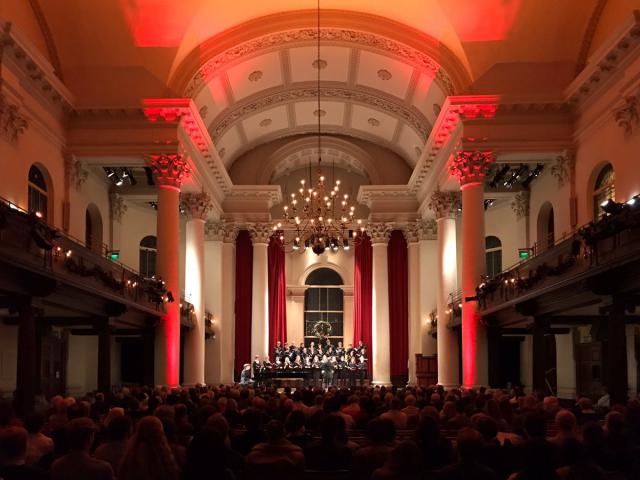
Festive Bach Weihnachts-Oratorium (Christmas Oratorio) BVW248 at St John's Smith Square with The Orchestra of the Age of Enlightenment conducted by Stephen Layton, with the Choir of Trinity College, Cambridge, and soloists Anna Dennis, Helen Charlston, Gwilym Bowen, and Matthew Brook.  Wonderful to experience it at St John's Smith Square  at Christmas, once a baroque church, now one of the most celebrated of vanues for baroque and early music.  The lights of the chandelier were reflected in the window behind : a magical optical illusion. The auditorium was lit in gold and red.  During the performance a door was opened so light shone in from the back of the hall as well as from the front.  If this was an accident, it was a happy one.  Going home along the Thames by the Embankment increased the impact still further.

The Orchestra of the Age of Enlightenment  - who are incapable of doing dull - felt freer and livelier  in this joyfyul atmosphere.  A punchy opening : natural horns and drums creating a suitably rustic ambience. Christ was born in a stable, to a refugee mother fleeing from persecution   Forget that, and miss the whole point of the Nativity.  The audacity of the concept : God Made Man  ! "Jauchzet, frohlocket! auf, preiset die Tage" A miracle has happened. If we don't feel excitement, there's something wrong with us, whatever we believe, be excited.  Hence the value of period performance, where unsophisticated instruments are played with energetic verve,  creating music which, however divine, never loses a human touch.  The brighter, lighter textures of period instruments sparkle at faster tempi, further enhancing the sense of adventure. For singers, this means greater emphasis on diction and clarity.  For singers of the calibre of the Choir of Trinity College, Cambridge, this presents no problems.  You don't get to sing at this level unless you're very good, and most of these singers have come through top level youth ensembles. The Oxbridge style matters, too, giving the singing youthful freshness and enthusiasm that comes from the heart.  In Part II, "The Adoration of the Shepherds", the mood is more contemplative. Layton brought out gentler rhythms, evoking the rocking of a cradle :gentle rapture. "Ach mein herzliebes Jesulein, Mach dir ein rein sanft Bettelein".

The voices became hushed,  soloists blended into the chorus.


The Evangelist is a tenor (Gwilym Bowen), higher voices in the baroque are associated with heroes.  The "English tenor" Fach has its roots in the ardent rapture of the sacred oratorio, where sincerity is of the essence, beauty lies in the ideas being expressed not independent thereof.  The Evangelist is haloed by cello, bassoon and continuo.  The purity of the concept of the Nativity is further highlighted by the restraint of Bach's orchestration.  Soloists are supported with the addition of other instruments: oboe d'amore forr the alto, trumpet and extra violins for the bass.  The larger orchestra comes into focus when the voices are employed in larger combinations. In this performance, the occasion being Christmas, we heard Parts I, II and III with Part VI, where all four soloists participate, in accord with chorus and orchestra. Again, the mood is worshipful, but not subdued, despite the more restrained tempi, for the miracle of the Nativity has come to pass. 

Friday, 18 May 2018

Painterly Charpentier Histoires sacrées : London Festival of the Baroque

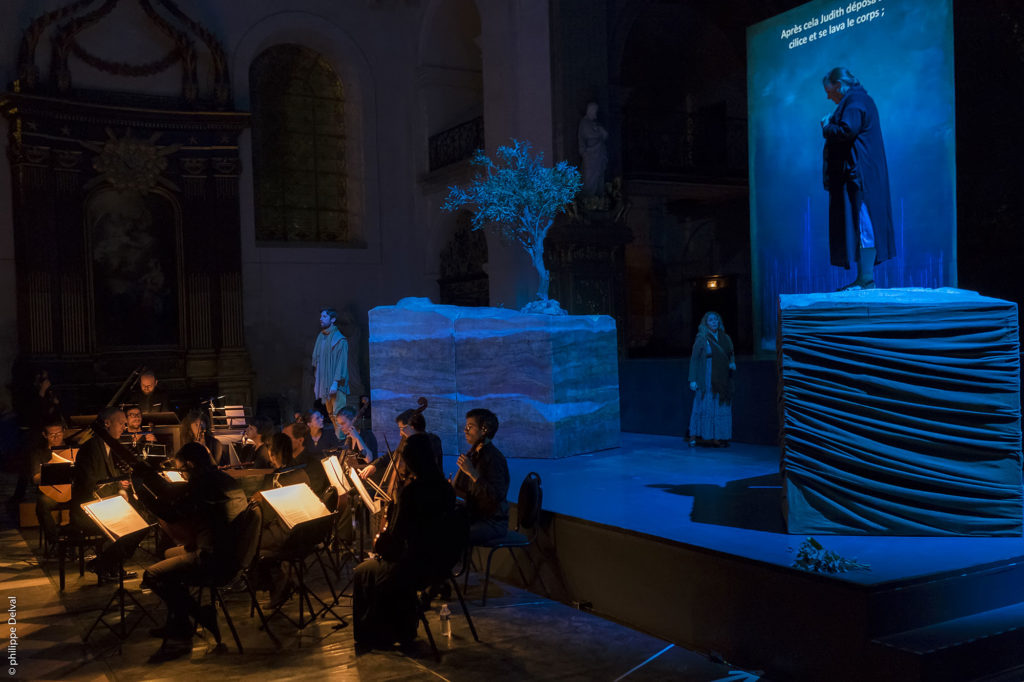
photo: Philippe Delval
Marc-Antoine Charpentier Histoires sacrées with Ensemble Correspondances, conducted by Sébastien Daucé,  at St John's Smith Square, part of the London Festival of the Baroque 2018.  This striking staging, by Vincent Huguet, brought out its austere glory: every bit a treasure of the Grand Siècle, though this grandeur was dedicated not to Sun God but to God.  Religion as theatre : and why not ?  Like the architecture and ornamentation in baroque churches,  devotional art served faith.  Although St John's Smith Square was built in the less florid Northern Baroque style,  Huguet's production transformed it, so it glowed.  It felt as if we had stepped into a painting by Caravaggio or Velázquez.
Charpentier's Histoires sacrées has its roots both in sacred oratorio and in the mystery plays of the Middle Ages. Charpentier's audiences were well versed in biblical and liturgical texts, so they could appreciate these "stories" told with sophistication.  At the heart of this programme were three histoires - Judith ou Béthulie libérée H.391, Madeleine en larmes H.343 and Cécile Vierge et Martyre H.397, framed by Ô Sacrement de Piété H.274 as prelude, Au parfum de tes onguents H.510 as interlude, and Sous l’abri de ta miséricorde H.28 as postlude. This formal structure connects the three central characters, each of them a strong woman : Judith  kills the Assyrian Holofernes who persecutes the Hebrews,  Magdalena sings of her love for Christ and St Cecilia is martyred because she will not renounce her faith.  Their stories are told through dramatic recitative, interspersed with choral and instrumental commentary and spoken narrative.  While Judith's story is the most developed, with many sections and variations, the others have individual character.  Magdalena's relatively short song is introduced by the vocal interlude, which mentions "scented oils", thus enhancing, figuratively, her odour of sanctity.  The section about St Cecilia is bright and defiant, like the flames which devour the saint’s body, but not her soul. Towards the conclusion, the harpsichord, breaking from continuo, sings in joyous cadenza.  
Although the text was in Latin, the stories themselves aren't hard to follow, and the work as a whole is propelled by vibrant musical logic, flowing freely from superb performances by the whole Ensemble Correspondances team.  Modern performances of Charpentier's Histoires sacrées were pioneered some years ago by Gérard Lesni and Il Seminario Musicale but there is still much more in this rich vein to be discovered.  Sébastien Daucé and Ensemble Correspondances present these three histoires with flair, enhanced immeasurably by Vincent Huguet's production. Huguet, who worked with Patrice Chéreau, understands the innate human drama in these narratives, though they may be expressed in stylized form.  Large objects that resemble rockfaces, such as we see in 17th century depictions of biblical scenes, including symbolic olive trees.  The idea that painting, or art, should be "realistic" is actually quite recent, and didn't apply in Charpentier's time.  The simplicity of the sets also means that they can be moved quickly and quietly, without interrupting the flow of  performance.  Colours are added by lighting effects.  Thoughtfully, the designers made use of the configuration of the building itself,  using one of the high windows behind the stage to let light shine in "from above" as so often happens in devotional painting.  As daylight faded to night, nature itself became part of the narrative.  The singer's movements also reflected those in religious painting - hands raised and pointed, directing attention away from the singers as themselves to the stories being told.  Altogether a remarkable experience.  How fortunate we were that  Sébastien Daucé  has brought top quality, cutting edge performance practice to London.  
Please also see:

Le concert royale de la nuit : Ensemble Correspondances, London Baroque Festival
Ensemble Correspondances Perpetual Night - Early English Baroque 


 Le Poeme Harmonique - Lalande Motets - Majesté

Why we ALL Need to save St John's Smith Square 

Tuesday, 17 April 2018

Why we ALL need to save St John's Smith Square

Please help save St John's Smith Square ! Follow THIS LINK to see what's happening and why we need to do something.  I've made a donation already andf intend to do more.  Donations alone aren't going to fill the shortfall but they do matter because they are a statement of support.  We must give, in order to send a message to the powers that be.
Though there are several small to medium sized venues all round London, St John's is unique in that it already has a track record for enterprise and excellence.  St John's is unrivalled for baroque and early music, and has been a significant force, over the last 50 years, in the revival of well-informed interest in these genres. This isn't some obscure specialism.  British music and culture in general derive from the glories of the 16th, 17th and 18th centuries. Where would this country be without Handel, Purcell, Blow, Arne and a host of others ? Denigrate the baroque and denigrate the finest flowerings of British culture, since modern British music derives so much from an appreciation of our baroque past. Where would Vaughan Williams, Britten and even Harrison Birtwistle and many others  be without their love of ancient music ?  And with music, much of the wider culture, such as poetry, literature and gistory that once made  Britain great.   SJSS isn't just for those who use it : if benefits the nation.   It's a heritage project in the widest sense.

St John's Smith Square proved its value while the Queen Elizabeth Hall was being renovated, offering a home for the Orchestra of the Age of Enlightenment and the London Sinfonietta.   The place is flexible enough that it can support diffrent types of music and performance.  If the South Bank continues its policies of everything "but" serious music, we may yet need SJSS as a refuge.  Being small and flexible, it's a relatively cheap place to run without the management superstructure large places need to maintain.   The very fact that SJSS has survived so long is a testament to its virtues.  So why wreck what pretty much works ? The building can't be adapted for offices or posh housing, though there might be some who'd like that. 
Long term what needs to be done is support from the public sector, like it or not.  That means the Arts Council England, who now control funding for everything, not only the creative arts but museums, libraries, capital biulding projects, individual start ups and community projects.  Governments like that because it means they can offload responsibility  without being caught in the act.   But it's short sighted thinking.  The arts are an important part of the British economy. They are also part of the image of Britain as a cultivated nation with a heritage to be proud of. Mess that up and everyone loses.  What St John's Smith Square represents is British culture, and its unique tradition. That is not a minority interest, nor even a London thing.  It's the very basis of our heritage, whether or not the man in the street realizes it.  Everyone stands to gain from a national perspective.   For ACE shouldn't that be a priority ?

Wednesday, 14 June 2017

Doming Lam - Hong Kong Music Series, St John's Smith Square

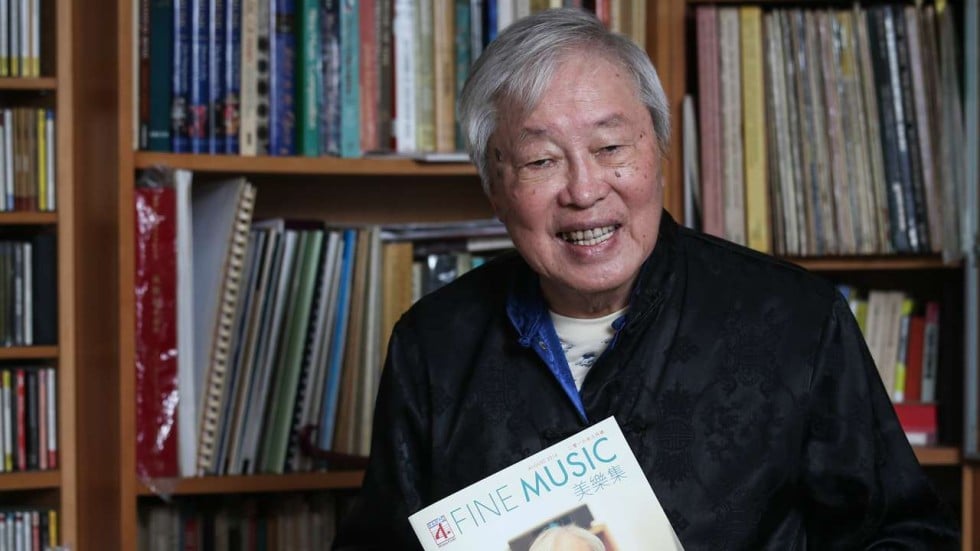
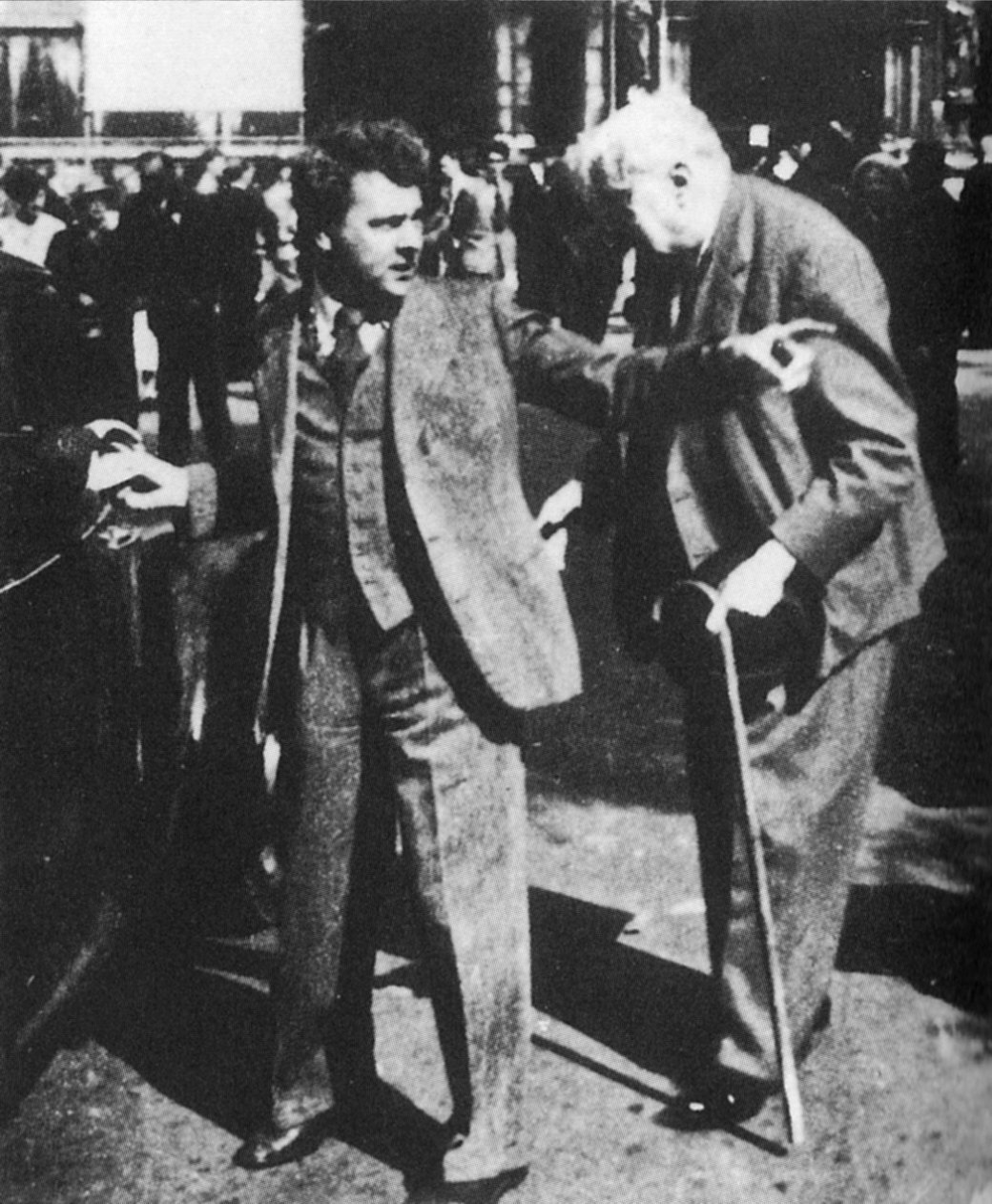
Doming Lam, from SCMP

Hong Kong music, and indeed most modern Chinese music, might be nowhere were it not for Doming Lam ( 林樂培), who features in the Hong Kong Music Series, the biggest celebration of Hong Kong classical music ever held in Britain.  Hong Kong is a dynamic, thriving and vibrant city whose cultural life reflects the cosmopolitan creativity that makes the place flourish, despite all odds. In in the west, people only know movies, and don't realize just how much more there is in Hong Kong arts. The Hong Kong Music Series presents five productions, four concerts and one opera, at various central venues in London from 7th to 28th July.  More details HERE

Doming Lam was born in Macau in August 1926. He studied in Toronto and Los Angeles (with Miklós Rózsa). Returning to Hong Kong in 1964, he soon became a leading figure, composing, conducting and promoting music in a city where performance is highly regarded.  With his engaging personality, he's a good communicator, almost a household name, which is more than can be said about many serious composers.  Maintaining an international presence, he's a Member of the International Society for Contemporary Music (ISCM) . He also has a section in Grove. Photo at left shows Doming Lam in  his  youth when he compered a popular classical music radio show. The keynote concert in the Hong Kong Music Series will be held at St John's Smith Square on 7 July (book HERE)   Titled  "Music Interflow", the programme  illustrates the dialogue between western and Chinese music.  Doming Lam's Three Night Songs of Li Bai  will be a highlight. It's a short piece for solo voice and piano, written in 1957, but marks a significant thread in Lam's development.

Li Bai, who lived in the Tang period, was a scholarly poet who lived in solitude, eschewing worldly power.   Many of his poems dwell on Nature, specifically the moon.  He often wrote about wine, but drunkenness provided cover for the expression of deep emotion.  In traditional Chinese society, the scholar gentry were a distinct class.. Although many had careers in public service, they didn't necessarily have power or wealth, but had moral and intellectual authority.  Chinese classical music reflects these cultural values: music for contemplation and private edification.   Effectively, a chamber music ethos.  In the 19th century, Chinese audiences embraced western orchestral music. Conservatories were set up in Beijing and Shanghai. Read more HERE about Xian Xing Hai and  HERE about Ma Sicong, two important composers from the same southern delta region that Doming Lam comes from.  Guangdong culture is very distinctive: even the dialect is based on nine tones, difficult for non-native born to master.  The advent of large, western style orchestras stimulated the growth of large ensembles for Chinese music, generating a whole new genre.  Doming Lam writes music for western and Chinese orchestras, as well as synthesizing both forms anew.  He also writes large scale choral works. Read HERE for a list of his works, with links to scores and recordings.

Clarence Mak
The concert at St John's Smith Square on 7/7 includes works by Clarence  Mak, Lui Man Shing,  Tsui Wai-lam, Mailina Tsui and Chan Man Tat, music based on Chinese aesthetics, cognizant of western influence. The programme also includes works by Britten, Quilter, Bridge and Delius.  See the connections?  Chamber music and song - refined music for reflective individuals   Conducted by Lo King Man, the performers play western and Chinese instruments. The singers are Colette Lam and mezzo Carol Lin, who will also be singing in the opera Datong ; the Chinese Utopia at the Richmond Theatre on 27th and 28th July. Book HERE.  I'll write more later about the opera, and about the concert with Chinese opera in the Hong Kong Music Series.  Both deserve more time and space !  Besides, it's not easy to come to Chinese music, even modern Chinese music, without understanding the background and unique values.  Because the English-speaking world is west-oriented, it helps to understand alternative perspectives.  There is so much to discover!   To find out more, please follow the labels below to Chinese music, Chinese opera, Chinese movies, Chinese culture and history. 

Wednesday, 16 November 2016

Shakespeare in the late Baroque - Bampton Classical Opera


Shakespeare re-imagined for the very Late Baroque, with Bampton Classical Opera at St John's Smith Square.  "Shakespeare, Shakespeare, Shakespeare....the God of Our Idolatory".  So wrote David Garrick in his  Ode to Shakespeare (1759) through which the actor and showman marketed Shakespeare to new audiences, fanning the flames of "Bardolatory". All Europe was soon caught up in the frenzy.  Fairies, nature spirits and the supernatural inspired the transition between the orderliness of the Enlightenment and the wild, revolutionary spirit of the Romantic Age.  This delightful yet thoughtful concert from Bampton Classical Opera  contrasted two pieces, both from 1776: Thomas Linley's Ode on the Spirits of Shakespeare and Georg Anton Benda's Romeo and Juliet,  showing how two very different composers responded to Shakespeare in their own, original ways.  

Georg Anton Benda (1722-1795)  was a member of a family well-connected to the German musical establishment.  His Romeo und Julie was a three-act "ernsthafte Oper" a Singspiele with prose text by Friedrich Wilhelm Gotter, who also adapted The Tempest.  Benda and Gotter subscribed to the principles of classical antiquity as perceived in their time, dramatic values that predicated on the unity of time, action and place. Thus Shakespeare's Romeo and Juliet was pared down, Benda's Romeo und Juliet focusing on the key characters. Bampton Classical Opera presented a half-hour version of Benda's original, revolving around Juliet (Clare Lloyd-Griffiths) and Romeo (Thomas Herford). Laura (Caroline Kennedy) duets with Juliet, and a single Capulet (Richard Latham) stands in for the feuding families. The choruses (as in Greek drama), sung by Cantandum, thus provide backdrop and commentary.  Lloyd-Griffiths, substituting at short notice for Rosalind Coad, was very well cast.  She has an attractive, bright timbre that captures Juliet's youth and purity.  In the recit and aria, Juliet is already contemplating death "I am trembling with such joy and with such fear....See, the moon turns pale...."

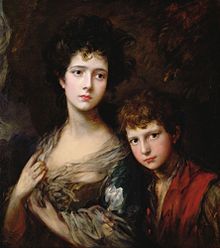
Thomas Linley (1756-1778) was part of the English theatrical and artistic establishment. His father was a famous actor; his sister, also an actress, was a muse of Thomas Gainsborough and married Richard Brinsley Sheridan.  Unfortunately Linley died so young that part of his mystique rests on what he might have been had he matured. Linley's A Lyric Ode on the Fairies, Aerial Beings and Witches of Shakespeare adapts a text by his teenage schoolmate, who also died young.  Its hyberbolic exaggeration  thus represent the enthusiasm of youth.  The Spirit of Avon (Clare Lloyd-Griffiths)  and Fancy (Caroline Kennedy) are memes in an allegory, not fleshed out-personalities as in Shakespeare or, indeed, most opera.  

Linley's Ode began with an overture, very much in a formal style, but more salon piece than Handelian public opera.  Gilly French conducted the Bampton Classical Players, on period instruments including harpsichord,  with antique horns and trumpets, positioned at each side of the stage.  The Englishness of the aesthetic came over well.  "O guardian of that sacred land, where Avon's wood-crowned waters stray" sang the chorus.  Though the Avon in question would be Stratford-on-Avon,  as there are references too to Arden, it may or may not be significant that the Linleys had connections with the Avon of Bath and Bristol.  Thus the Spirit of Avon (Lloyd-Griffiths) addresses Greek detiies advising them that "Shakespeare now demands your lays"  As the Spirit of Avon, Lloyd-Griffiths had more with which to demonstrate her range.  Lloyd-Griffiths is also interesting because she's very English, (though she may be Welsh) and The Spirit of Avon is a kind of Britannia.  English sopranos are a distinct Fach, an aesthetic that's much under-appreciated. Lloyd-Griffiths reminds me of Lucy Crowe. Caroline Kennedy, as Fancy, also has a bigger part, and used it well. Although the mood in the First Part of Linley's Ode glorifies Shakespeare's birth like a divine act (witnessed by Jove himself),  darker mysteries creep in. What to make of the "sordid wishes of the grov'ling crowd that chain the free-born mind"?

In Part II of Linley's Ode, the Fearful Observer (Richard Latham)  sings of the id-like world of the night where "with feeble cries the gliding spectres throng".  Linley responds to these sinister images with vividly dramatic figures, even spookier because they're conjured up with small ensemble and the timbre of period instrumentation.  French and her orchestra rose to the occasion, playing with animated vigour. But dawn breaks, and spells are broken.  The Spirit of Avon announces peace, since these horrors were created by Shakespeare's art.  "For who can wield like Shakespeare's skilful hand, that magic wand, whose potent sway the elves of earth,of air, of sea obey?"  Yet Linley's not just looking back. He sets the final lines with mischevious glee:  "Oh, give another Shakespeare to our Isle". 

St John's Smith Square is a gem of the English baroque: an ideal setting in which to experience Bampton Classical Opera in London. And much else, besides! SJSS is one of the hidden secrets of London's cultural life.  

This review also appears in Opera Today

Saturday, 12 November 2016

Beat Furrer FAMA London Sinfonietta

Photo: ; Markus Sepperer
Beat Furrer's FAMA came to London at last, with the London Sinfonietta. The piece was hailed as "a miracle" at its premiere at Donaueschingen in 2005 by Die Zeit: State of the Art New Music, recognized by mainstream media, which proves that the market for contemporary music lies with lively audiences. FAMA is music as theatre in the widest sense, operating on multiple levels.  In the last ten years, it's been performed many times, and there's a recording on Kairos. Experiencing it live, however, is essential  since it was created as an experience to be enacted live, for maximum impact. It's a multi-sensory immersion: participation is not passive.

Ostensibly, Furrer's text comes from Arthur Schnitzler's novel Fräulein Else, about a girl who likes a fancy life and makes money from entertaining men, but it would be a mistake if this were taken too literally. The narrative isn't straightforward. The opera begins in Latin. then flows into a stream of consciousness, where ideas constantly mutate. What "is" Else's story? We aren't told in straightforward narrative. We learn through induction, empathizing with the clues in the seemingly disjointed text,  and in the oblique imagery in the music.  As we learn in real life.  Significantly,  FAMA begins with a discourse from Ovid, Metamorphoses Book XII, in which Fama the goddess of Rumour intuits meaning by processing what she hears around herself.  What we knows, or think we  know, grows through interpreting impressions from a non-stop flow of data.

Sparkling bell-like sounds, voices intoning fragments, beautifully pitched but elusive, long  elliptical phrases in the orchestra shooting forth, patterns that move and draw back. The first two scenes in FAMA suggest teeming, vibrant happenings, just beyond our grasp.  "Ich höre das Feuer.....ich höre den Regen..... ich höre in meiner Erinnerung.....ich höre das Schweigen."  Then Else emerges, or rather Isabelle Menke intoning Else's words rapid-fire. The syntax isn't conversation, it doesn't communicate. It's an internal monologue, free associating, random thoughts from which we might, or might not, deduce who Else is. Perhaps Else herself is still figuring things out, asking questions, deducing, unsure.  The ensemble reveals little: barely audible  clicks and brushing sounds, as if the players themselves were listening and watching. As Else's  voice rises, tensely, the orchestra bursts into manic life: cacophony, cut through by long, clear metallic lines, replicated by the voice. It's as if the voice and ensemble were reaching out, feeling out to invisible walls,  gauging distance by sound waves.  High, clear notes, flutes and clarinets feeling the way, hesitating, interrupted by sudden flashes of percussion. Sounds come from all directions, often out of sight, often distorted. Else's voice sometimes seems to materialize in the air.  Piano sounds, accordion sounds, are heard as if from great distances across time.  Ticking sounds, sometimes percussion, sometimes bows sawn against strings in bizarrely mechanical fashion.  Every noise matters, no matter how subtle.

"Wie hübsch!" said Menke, with a demented smile.  "How cute it is to walk around naked"  Figuratively, she's watching  herself in a mirror wondering what others think, and what she should be thinking of herself.  The strings bow violent, mechanical angles, the brass blow mocking raspberries. The text describes how Else puts on a coat and walks naked through a hotel lobby. No-one knows.  Then, at first quietly, the sound of a contrabass flute takes over where Else's words end.  Contrabass flute: an instrument which looks so bizarre that just looking at it is an act of theatre.  It's huge, silvery and metallic but, full blast, it's like a siren, blaring menace and mystery.  This contrabass flute interlude is a magnificent coup de théâtre. The whole orchestra screams in response, then falls quiet as the contrabass flute, played by Eva Furrer, continued unchallenged, like a strange dancer, moving and singing with grave but bizarre beauty.

The words "Else, Else, Else" are projected onto the walls. A point is being made, visually, though the words are barely heard, the voices of Exaudi singing pure sound, materializing as if in dream.  The effect was both magical and sinister.  We don't know what happens to Else, but we could hear the swirling tumult in the orchestra. Walls of sound crashed around us, giving way to uncanny chords resonating in near silence. The contrabass flute led a section that seemed almost fugue-like in its grave but quirky dignity.  Else returned briefly. Her last words were "Adresse bleibt Fiala". Whatever that's supposed to mean, I do not know, but the effect was powerful, and lingers tantalisingly in the mind.  FAMA is more focused than Furrer's earlier Hörtheater Begrehen, first released on DVD in 2008, which also deals with multi-level concepts of time, space and sound.  Thus FAMA  lends itself well to semi-concert performance, as we enjoyed at St John's, Smith Square. Although we didn't see the cool, blue walls of the original, the plot. such as there is, predicates on a kind of mental imprisonment.  The gold and burgundy of St John's,  with its elegant chandelier, suggested the outward luxury of Else's profession, which could take place anywhere, not just in the Dolomites.  The drama, and the genius, of Furrer's FAMA is that, through art, we may have come closer to understanding what goes on in Else's soul.

Thank goodness for the London Sinfonietta, returning to their roots in cutting-edge repertoire.  For a while, they seemed caught up in sponsor-pleasing "education", but good work is, in itself, educational.  Any orchestra can do education, but what the London Sinfonietta does is new music better than anyone else.  This FAMA will be broadcast on BBC Radio 3 at an undisclosed date, but make sure you book for the next London Sinfonietta concert at St John's,Smith Square on December 6th when they'll be doing Hans Abrahamsen's Schnee, with Fool is Hurt, a new work by Simon Holt.

This review also appears in Opera Today.  

Tuesday, 28 June 2016

English Baroque Opera, St John's Smith Square

English Baroque opera at St John's , Smith Square, ready for booking now.  The English baroque style is unique, more "classical" than exuberant; southern forms, yet connected to contemporary theatrical values.  St John's, Smith Square, is a gem of British baroque architecture, an ideal place in which to enjoy English baroque music.

Bampton Classical Opera starts the new season with "Diviner Comedies" on 13/9, pairing Thomas Arne's The Judgement of Paris,  "a  witty account of a celestial beauty contest"  with "the supremely lyrical  Gluck Philemon and Baucis, continuing  Bampton's, enterprising exploration of Gluck's lesser-known operas. Paul Wingfield will conduct CHROMA

Henry Purcell Dido and Aeneas on 29/9 with the celebrated La Nuova Musica, led by David Peter Bates. Major headliners - Dame Ann Murray will sing Dido and George Humphreys will sing Aneas.  Again, a very good cast. What's more, with typical adventurous La Nuova Musica flair,  this performance will be illustrated with dancers, choreographed by Zack Winokur. This should be one of the highlights of the season - book early !

Thomas Linley's Lyric Ode: on the Fairies, Aerial Beings and Witches of Shakespeare  features in Bampton Classical Opera's second concert on 15/11. A glorious piece,, vividly dramatic.  It's being paired with excerpts from Georg Benda's Singspeil Romeo and Juliet,which Bampton Opera did in 2007.  Gilly French conducts the Bampton Classical Players and  a cast that includes Rosemary Coad, Caroline Kennedy, Thomas Herford and James Harrison.

Another highlight! The Early Opera Company, conducted by Christian Curnyn, makes a welcome return to St John's on 18/11 with Handel's Serse HWV40 , this time with Anna Stéphany, Rupert Enticknap, Callum Thorpe and Claire Booth, among others.

Lots more, too. La Nuova Musica is doing Bach Mozart and Haydn in December.  And don't forget the famous SJSS Christmas season, which sells out fast because it's so much fun. For more details visit the SJSS . website HERE>


Thursday, 23 June 2016

Vaughan Williams Weekend St John's Smith Square

Ralph Vaughan Williams and Friends Weekend at St John's Smith Square, a glorious three-day celebration of British music. This follows on the success of previous SJSS weekends devoted to Schubert and Schumann.  Curated by Anna Tilbrook, the RVW/SJSS weekend features The Holst Singers, James Gilchrist, Philip Dukes, and Ensemble Elata. The Weekend runs from 7th to 9th October, but get tickets soon as they will sell fast. There's no clash with the Oxford Lieder Festival which starts the following weekend, this year featuring Schumann.


Friday 7th at 7.30 : The Holst Singers conducted by Benjamin Nicholas launch the festival on Friday evening: Parry I was Glad, Stanford Beatoi quorum via, W Lloyd Weber, Howells Requiem, Holst Nunc Dimittis, and RVW's Lord thou hast been our refuge


Saturday 8th at 1 pm :  RVW Songs of Travel, Elgar Salut d'amour, Frank Bridge Oh, that it were so, Rebecca Clarke Passacaglia, Quilter : Go, lovely Rose, Bantock Hebrew Melody, Ivor Gurney Ludlow and Teme

Saturday 8th 4 pm : The Folk Connection  Quilter I will go with my father a-ploughing, Percy Grainger : Molly on the Shoree, RVW : Along the Field, Six Studies in English Folk Song, Winter's Willow and Linden lea, Rebecca Clarke : I'll bid my heart be still, Grainger: Handel in the Strand.

Saturday 8th at 7.30 : The Spiritual Realm  RVW : Rhosymedre, Four Hymns, Orpheus with his lute, Sky above the roof, Silent Noon, Piano Quintet, Finzi : Til the Earth Outwears, Elgar : Chanson de matin, Chanson de nuit (photo above Finzi and RVW, courtesy Finzi Trust)

Sunday 9th at 11.30 : The Shadow of War : Bliss Elegaic Sonnet, Ireland The Darkened valley, Butterworth : Six Songs from A Shropshire Lad, Elgar : Piano Quintet

Sunday 9th at 3 pm : The Shadow of War II : Ireland ;The Soldier, Blow out, you bugles, Spring Sorrow, Elgar : Sospiri, Gurney: Severn Meadows, Lights Out, Sleep, In Flanders, By a Bierside, Howells : Elegy, RVW : On Wenlock Edge


Tuesday, 1 December 2015

Christmas at St John's Smith Square


St John's Smith Square presents its 30th annual Christmas Festival. This season is particularly impressive, bringing together fine choirs and baroque ensembles.

First highlight,  Lars Ulrik Mortensen directs the European Union Baroque Orchestra on Thursday, 3 December, with "Music for Feasts and Banquets" -  Biber, Muffat Marcello and Telemann. Then a series of major choirs, starting with the City of London Choir, the Choir  of Christ's College, Cambridge and the Choir of King's College, London. the Choir of Merton College, Oxford, and the Choir of Clare College, Cambridge,.  For me, treats will include the Choir of Christ Church Cathedral, Oxford  on 14 December with a lovely programme of  English carols, and, on 22 December, Stephen Layton leads the Choir of Trinity College, Cambridge, and the Orchestra of the Age of Enlightenment in what promises to be a very fine Bach Mass in B Minor. Alas, it s been  sold out for ages. 

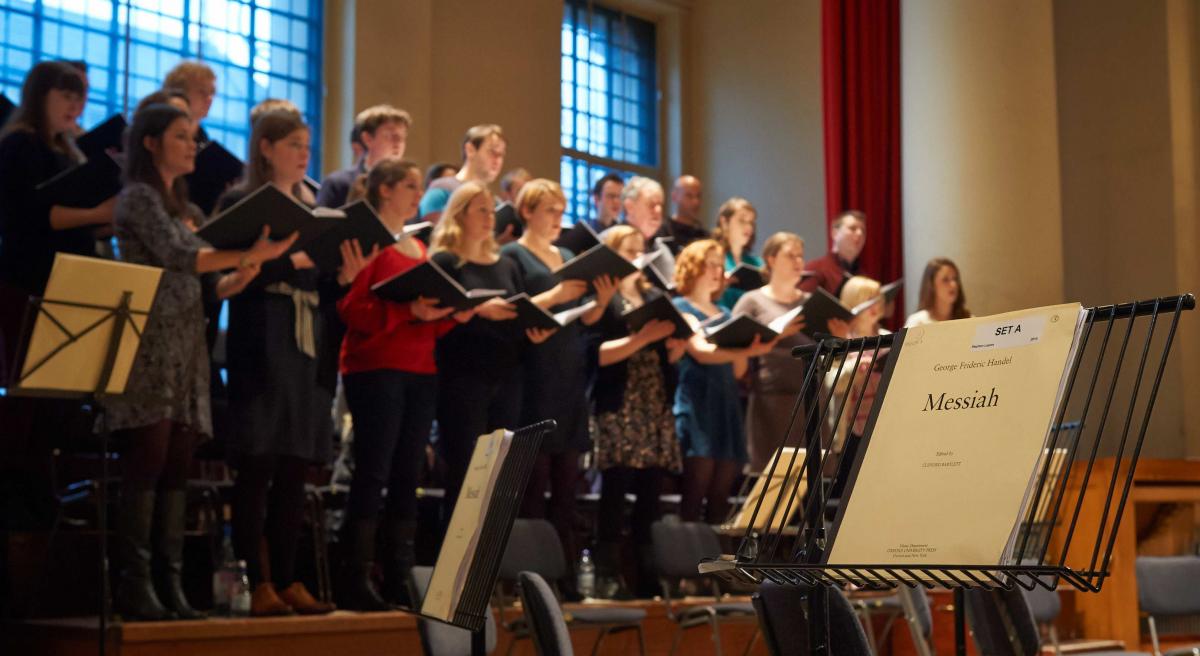
Plenty of other  treats, too. On 12 December, the Chapelle du Roi from Paris bring music from the Chapel Royal Choirs of 16th century England and Spain and on 13 December Siglo De Oro presents a programme of English song, including works by Roderick Williams (as composer), Howells, Warlock and Leighton. On 15 December, Jeffrey Skidmore conducts Ex Cathedra and on 17 December Ensemble Plus Ultra does Praetorius, Victoria and Byrd.  On 21 December, Solomon's Knot returns to SJSS for the fifth year running with Schelle, Kuhnau and Bach.  The Tallis Scholars and Peter Philips have a concert on 19 December. This being Christmas, there's no escaping Handel Messiahs, but  really good Messiah reminds us why it is done so often and by so many, some more earnest than excellent. With Stephen Layton, Polyphony and the Orchestra of the Enlightenment on 23 December, we can be sure of the highest standards, though. Soloists are Katherine Watson, Iestyn Davies, Gwilym Bowen and  Neal Davies no surprise that this has been sold out for ages, too!  The photo above shows Polyphony performing the Messiah at SJSS in recent years.

Celebrations continue into the New Year and culminate with Victoria O magnum mysterium (Mass and Motet) on the Feast of the Epiphany (6 January).  Christmas and the Baroque are closely intertwined. But no-one needs to be religious to enjoy some of the most uplifting music in western civilization. 

Wednesday, 4 November 2015

Fragrant Handel Acis and Galatea La Nuova Musica


Handel Acis and Galatea  with La Nuova Musica and David Peter Bates. St John's Smith Square is the finest period performing space for baroque music in London, but, since it was built as a church it doesn't have space for anything but the most minimal staging.  But La Nuova Musica confronred the problem with a solution worthy of the  audacious spirit of the baroque. Enhanced by fragrance, this Acis  and Galatea highlighted the fundamental sensuality of the drama by stimulating our sense of smell   Invisible staging, no less!
 
"In Handel's time, scents abounded", said Sarah McCartney, who created the fragrance choreography, for choreography it was indeed, extending the impact of the music.  This Acis and Galatea confronted the sanitized conformity of our  modern world and brought us closer to the creative soul of the period.  Scents cannot be seen, but operate subliminally, affecting perception.

 In a serenata, or pastoral masque like this, mood and imagination are paramount. Presumably the invisible scents contributed to the performers  In a amall performasnce space like St John's Smith Square, every note, every facial expression registers.  It can be intimidating. Happiness pervades this work, even when, for a moment,  that happiness is disrupted, so getting the mood right makes a difference.  The singers seemed relaxed, prompted perhaps by the invisible support of fragrance so the elaborate lines and recaps flowed with freedom and grace.

Ed Lyon sang Acis, Even by the standards we're used to hearing from him, this was a delicious performance. He was singing with evident relish, his ornate lines shaped with panache, his delivery natural and direct. His face is full of character.  Makeup and costume would almost have got in the way, for this Acis felt like a real person.  The duet "Happy We!" positively glowed.  After that, high point, Polyphemus (Christopher Purves)  dominates proceedings, but Lyon's Acis fights back. The trio "The flocks shall leave the mountain" was enunciated with the sharp thrusts of battle. When Acis died, Lyon's voice  descended into haunting diminuendo - very moving.

Nonetheless, Christopher Purves did come near stealing the show.  He, too, has a voice that exudes personality, so his Polyphemus, though a fanciful villain, was witty, even lovable. "I rage, I melt, I burn,",Purves sang, his chest puffed up in mock swagger.  Billows of scent heralded his "O ruddier than the cherry.". Because the smells were subtle rather than oppressive, one paid attention when they emanated an intriguing mix of sulphur, earth and water mint.  In a staged performance, we might encounter smoke and such effects. Here, we visualized  using our imaginations.

Galatea was sung by Augusta Hebbert, substituting at short notice for Katherine Manley. Hebbert has been singing with La Nuova Musica for several years, so she fitted in seamlessly.  By the end of the evening, when Galatea is bereft and the masque revolves around her, Hebbert showed her mettle: a very lovely "Heart the seat of soft delight" ,her voice reflecting the characteristic swaying  between crescendo and diminuendo that gives Acis and Galatea such charm.  This rhythm lends itself to dance. Rupert Charlesworth sang Damon and Nicholas Scott sang Coridon.

When the Royal Opera House did Acis and Galatea with Christopher Hogwood some years ago, the singers were shadowed by dancers. No such resources at St John's Smith Square, but La Nuova Musica played with such vivacity that one could dream dance. Neither did the absence of a formal chorus make much difference.  Singers and orchestra interacted so well that the music communicated with freshness and conviction.  At St John's Smith Square, you're so close to the musicians that you feel part of the proceedings.  Particularly good playing from the leader of the violins and from the oboist whose part feels even bigger in what appears to have  been somewhat reduced instrumentation.  The oboe leads, but is supported by recorder, also doubling piuccolo to create the image of a shepherd's pipe.

La Nuova Musica did  Conti L'issipile at the Wigmore Hall last year. Read the review here in in Opera Today.  They are also doing a recital at the Wigmore Hall with Bejun Mehta later this month and Cesti Orontea on 14/12 at the Wigmore Hall. Next year, they return to St John's Smith Square in the spring.

Wednesday, 7 October 2015

Hear and SMELL Handel Acis and Galatea


Hear and SMELL Handel at St John's Smith Square on Monday 2nd November. La Nuova Musica, dedicated to ardent and vivid performances, will present  Handel Acis and Galatea in a performance that will bring a whole new dimension to the idea of "period authenticity".
 
"In Handel's time scents abounded - from animals, lack of public hygiene, both personal and civic, and from expensive perfumes used by wealthy individuals and establishments, including the church. An opera would have been intensely scented, both accidentally and on purpose", says
Sarah McCartney of 4160Tuesday, who is providing value-added period detail. "Posies drowned out the stench of the street; dried flowers and incense created a suitable atmosphere, the wealthy powdered their hair and clothes with costly iris root, and kept deterred fleas and moths with patchouli."

"The 21st Century is scent averse. Smell is probably the only sense which has less to do in the modern world than in previous centuries. We now revere cleanliness and the "natural" scents of fresh, natural fruits (which are usually made with synthetics for practical reasons). It's a very unusual age. Our default is no scent at all, and removing all trace of natural smell from our bodies. For that reason, we won't need to fight the overwhelming olfactory bombardment that the 18th Century would have brought with it. People generally assume that naturals are safer, but in fact it's the other way round. For this project I'm using pure synthetics to avoid even the slightest possibility of any kind of allergic reaction. Rather than aiming for an authentic 18th century fragrance – which 21st Century audiences would find completely intolerable – I have created three light background scents to alter the mood, literally changing the atmosphere. "

La Nuova Musica are fine musicians, so look forward to a good performance in the intimate atmosphere of St John's Smith Square. Excellent soloists - Ed Lyon, Katherine Manley, Christopher Purves, Rupert Charlesworth, and Nick Scott. And perfumed, too !  (note the allergy-free aspects).  For more details, check the SJSS site HERE.

The image above shows Handel's organ on the Royal Opera House stage. Handel came to work at the Theatre Royal, Covent Garden in 1735. Photo belongs to the Royal Opera House archives

Monday, 13 July 2015

St John's Smith Square Bumper Season 2015 2016


Bookings open 12th July for the St John's Smith Square 20156 season. Book early, since the venue is small and intimate, and some of the concerts will sell out fast.  St John's, Smith Square, built 300 years ago, is "a masterpiece of English Baroque architecture........ designed and built by Thomas Archer and has survived fire, lightning, bomb plots and the Blitz. The beauty of the building is matched by an exceptional acoustic and from its restoration as both church and concert hall"  It's unique, and an ideal setting for baroque music. but includes much more.

This year's offerings are specially ambitious, because the Queen Elizabeth Hall is being closed for refurbishment, so performers normally resident there will be crossing the river to SJSS. Exciting news indeed,!  SJSS will be presenting over 250 concerts, expanding into new repertoire and presenting several world premieres, including a new piece by Sir Harrison Birtwistle. It will become a temporary home for orchestras like the Orchestra of the Age of Enlightenment , the London Sinfonietta, the Philharmonia Orchestra and   SJSS will also host the Southbank's International Piano Series and the International Chamber Music Series, and also present concerts by big name performers like Nikolai Demidenko, Steven Osborne, Tafelmusik,  Imogen Cooper, The Jerusalem Quartet, Viktoria Mullova, Nicola Benedetti,  Alexei Grynyuk, Jean-Efflam Bavouzet, the Tallis Scholars, Thomas Trotter, the Gabrieli Consort and many others.

Baroque highlights include concerts with the Orchestra of the Age of Enlightenment, including  a Handel programme with Ian Bostridge, "Bach's Double, Bach's Single" led by Rachel Podger, and "Bach Secular and Sacred". They're also doing an interesting Handel Messiah with Polyphony though I'll be priority booking for their Easter 2016 Bach St John Passion with excellent soloists, including Neal Davies and Stuart Jackson, who is very, very good indeed and deserves much more recognition.  In  May, the OAE offer "Winds of Change" (Mozart symphonies 1 and 33).  Also high priority, Christmas music from La Chapelle du Roi and a very unusual Christmas Passion with Roderick Williams and Siglo di Oro, featuring English Christmas music.  Indeed, SJSS's Christmas mini Festival is excellent, with Ex Cathedra and the choirs of Merton College and Christ Church Cathedral, Oxford, Clare College Cambridge and King's College, London.  Also very worth going to, The European Union Baroque Orchestra, conducted by Lars Ulrik Mortensen, first in October, then again in December. . .

Esa-Pekka Salonen conducts the Philharmonia Orchestra in June in a concert focusing on Stravinsky's late religious works, including the Requiem, in June. Martyn Brabbins conducts the London Sinfonietta with Harrison Birtwistle's new Duets in a Frame .  . SJSS regulars, like the Orchestra of St John's Smith Square, will be back and the London Mozart Players are doing a series of Mozart concertos. Plenty of variety.In September, an intriguing 10 part series, "Occupy the Pianos", built around pianist and composer Rolf Hind. Hind is an interesting personality, so this series should thrill the new music crowd, and perhaps draw in those who aren't as yet, into new music. I'll write more about it later.

St John's Smith Square is also a superb venue for chamber and baroque opera. Salieri's La grotta di Trifonio, from Bampton Opera with Chroma on 15th September. Salieri's reputation was wrecked by the movie Amadeus, but his music is enjoying a revival these days.  Bampton is also doing a double bill of rarities based on Shakespeare, in June - Georg Benda's 1776 Romeo und Julie together with Thomas Linley's Lyric Ode on the Fairies, Aerial Beings and Witches of Shakespeare (also 1776). Mark the date, 12th June.

Also very worthwhile, on November 2nd, Handel Acis and Galatea, with Ed Lyon and Catherine Manley and La Nuova Musica, a very lively, dedicated baroque ensemble.. They're also doing Vivaldi and Handel in February. And maybe even best of all, Rameau Castor et Pollux on 20th November with the Early Opera Company. Ashley Riches and Samuel Boden sing the twins who turn into stars. The Early Opera Company is doing a concert programme in February featuring Sophie Bevan.

For more details, please look HERE on the St John's Smith Square website.