Showing posts with label operetta. Show all posts

Thursday, 23 January 2020

Magic Bagpipes ! Jaromír Weinberger : Schwanda der Dudelsackpfeifer


From Saturday 25th January on Operavision, "the last operetta of the Weimar Era", Jaromír Weinberger's Spring Storm (Frühlingsstürme) commissioned for Berlin’s Admiralspalast, which premiered a few days before January 30th 1933, when Hitler was named Chancellor of Germany, thereby ending the creative flourish that marked the early years of the 20th century.  To prepare I've been revisting Weinberger's Švanda dudák a Czech libretto by Miloš Kareš, which premiered in Prague in 1927 followed by the German premiere in Breslau in 1928, in a translation by Max Brod.  Schwanda der Dudelsackpfeifer was a smash hit, particularly in German speaking countries.  Boosey & Hawkes describes it thus: "The strikingly folksy and yet anything but old-fashioned opera that makes enormous demands on the performers. It is not a “comic opera” for light voices and a mere municipal theater orchestra. The great  conductors of the time, such as Erich Kleiber and Clemens Krauss, stood on the rostrum. It is significant that Weinberger was particularly acclaimed by the German public of the Weimar Republic, that is to say, in a heady phase between the stiff imperial era and the culturally narrow-minded, dull “Third Reich.”

Notice, "It is not a comic opera".  Schwanda, who plays the dudelsack (Bohemian bagpipes)  and Dorota are newlyweds happy in their innocence. One day a stranger hides in the house while Schwanda is out at work. The robber is Babinsky, but like so many crooks he has the gift of the gab. He tells Schwanda about glamorous places and adventures and persuades Schwanda to come away with him right away. They head to the palace so Schwanda can play for the Queen to cheer her up. What he doesn't know is that the reason the Queen's heart is as cold as ice is that she sold her soul to a strange Magician. For a moment he awakes her feelings and everyone breaks into a merry polka. But the Queen can't actually love without needing to possess. Sign of a psychopath ! When she hears that Schwanda's married, she condemns him to death. He's saved at the last moment by Babinsky (who wants a way to grab the Queen's diamonds). Dorota's jealous, so Schwanda says he'll go to hell if he's ever kissed the Queen. But he did, when enchanted,  and goes to hell. The Magician knows the source of the magic : the powers of the Dudelsack, and its music. (Bohemian bagpipes have strong cultural symbolism.) In Hell, the Devil challenges Schwanda and Babinsky to a card game -another ancient meme that runs through Central and Eastern European tradition. Wonderfully demonic music. The Devil assumes he'll win, as usual, but Babinsky beats him by being an even bigger conman. Schwanda's freed, returning to Dorota with his Dudelsack, while Babinsky carries on scamming.

Schwanda der Dudelsackpfeifer is still in the repertoire and gets done fairly frequently. There was a good production at the Semperoper, Dresden in 2016 (Please read more about that HERE). Weinberg was a close associate of Max Reger, which is why he's an adopted Dresden  favourite.  There are also several good reecordings. I like the 1948 one conducted by Winfried Zillig in Frankfurt in 1948. Performance wise it's more rough and ready than the later Hans Wallberg, though Wallberg has a glamour cast of  big name stars - Lucia Popp, Siegfried Jerusalem, Hermann Prey etc. But  the livelier approach of Zillig seems to suit the work better. This isn't necessarily a vehicle for elegant operatic display, it's too earthy and too pointedly pungent.  I love this opera so much. A few years back I had one of those endless nightmares where you go round in circles but can't escape. Suddenly, Schwanda to the rescue ! His music and cheerful nature got me back on track right away !

Tuesday, 31 December 2019

Silvesterkonzert Dresden Das Land des Lächelns Thielemann


Live from the Semperoper, Dresden, this year's Silvesterkonzert : Franz Lehar, extracts from Das Land des Lächelns with Christian Thielemann conducting the Staatskapelle Dresden and soloists Pavol Breslik, Jane Archibald, Erin Morley and Sebastien Kohlhepp.  Core Austro-German repertoire, or rather operetta, good natured and stylish.  Just right for New Year's Eve ! Just because it's party time that doesn't mean dropping standards to fit the fashionable market. Lehar's Das Land des Lächelns (Land of Smiles) is closely associated with Richard Tauber, so it's a star vehicle for a good tenor. In Pavol Bresik we have a singer who not only sing but can create Prince Sou-chong as a believable and human personality.

This makes a difference because the libretto is painfully dated : a part created to showcase white people in yellowface, as if real Asians were no more than caricature.  That genre was normal in the early part of the twentieth century, when imperialism and white supriority went unquestioned.  Implicit in the genre is the idea that races cannot mix, and that exotic aliens, despite their erotic frisson, are dangerous to "normal" people. That is just not acceptable today. Fortunately there's enough in the  operetta that it doesn't have to rely on kitsch stereotype. Bresik's Prince Sou-chong is an ordinary, decent man from a culture which Lisa and her friends don't have a clue about. In "Bei einem Tee à deux", we glimpse for a moment how two people can communicate. He knows more about tea than she ever will, so the balance isn't all in her favour.  Bresik is genuinely sexy : he doesn't need a bucketload of makeup in order to pretend to be what he is not. He comes over as a hunk most people would fancy.  He really does command the stage. That "Dein ist mein ganzes Herz" is more than a Big Tenor Moment. Breslik makes it feel real. In the finale, when the song is repeated, he sings with sincere feeling. Despite the smiles Das Land des Lächelns is human tragedy behind a mask of insouciant good cheer. Smiling through tears, like so much of this genre. Anyone can feel that way, whatever their origins or background. 

Jane Archibald was a good Lisa, beautifully crested, and Erin Morley, (costumed like fake Japanese !) a sympathetic innocent.  Secretly, she loves Graf Gustav von Pottenstein (Sebastien Kohlhepp) but that love is doomed. Thielemann gets lively, animated playing from the Staatskapelle Dresden, bringing out the "orientalism" in the orchestration.  The "Chinesischer Hochzeitszug" is a bit of a gallop, but  then it should be. Lisa's rushing into something she doesn't understand, and Lehar is writing facsimile of music he doesn't understand, either.  But's its fun anyway. When you're sad, don't mope, but get on with things as if everything will turn out right.

Monday, 16 December 2019

Not so Gay Hussar - Emmerich Kálmán - Ein Herbstmanöver, Giessen


Brilliant Emmerich Kálmán Ein Herbstmanöver from the Stadttheater, Giessen in 2018, conducted by Michael Hofstetter now on Oehms Classics. Although it's tagged with the title "The Gay Hussars", that's a misnomer, which refers to an English language version made for New York. Kálmán's original was Tatárjárás, (1908) which roughly translates from Hungarian as "the invasion of the Tatars".   This is crucial, since the Hussars were outsiders, much in the way that the Tatars from Central Asia raged over Europe for centuries before. Like the Tatars, the Hussars were cavalrymen, often mercenaries, whose "otherness" represented wildness and freedom. In Ein Herbstmanöver, the German version first heard at the Theater an der Wien in 1909, the Hussars are partying in a palace, where women swoon over them. Being a Husssar symbolized sexual allure. But party hard, die hard.  Unexpectedly, the men are called to the battlefieldand the party's over. Just five years later, Hussar regiments were slaughtered : horses no match for modern weapons.  "Autumn" here has double meaning.  Although operetta seems light hearted, it's more a case of "smiling through tears". Think Die Fledermaus where pain and desperation are masked - literally - by extravagance and champagne. 

Like Singspiele before them, operettas were almost more theatre than opera, with extensive dialogue,  the repartée topical, witty and sometimes risqué.  This Ein Herbstmanöver from Giessen, also broadcast on German language TV, ran well over three hours in production, but the version for CD focuses on the songs, interspersed with snatches of dialogue as introduction.  The selection flows together well. The pace is racy, capturing the exuberant high spirits that define the genre.  Typical, too, is the sense of creative freedom. Operettas were often re-imagined for different audiences, libretti often adapted for new purposes.  So it's nothing unusual at all, that this version, used dialogue by Balázs Kovalik which might be too idiomatic to translate, and too extensive. It also includes the "Pumper-Duett" from Kálmán's Der Güte Kamerad (1911). The male bonding swagger in the text fits well, as does the idea of "Pumpern", Austrian slang that means "stark, angklopfen" (bang, bang,  keep knocking) - use your imagination to figure that out.  Kálmán's characters employ distince voice types - a mature soprano (Christiane Boesinger) for the Baronin Riza von Marbach, and an authoritative baritone (Grga Peroš) as Oberleutnant von Lörenthy, a lighter baritone (Tomi Wendt)for Wallerstein, the reserve cadet who doesn't like being a soldier, and a heroic tenor (Clemens Kerschbaumer) as Morosi, the virile Volunteer who steals the heart of Treska (Marie Seidler) whose father wants her to marry Lörenthy.  The plot revolves on upheaval. The castle belongs by rights to Lörenthy, but his father was bankrupted by Riza's deceased husband : Lörenthy lost his patrimony and the girl he loved, at the same time. He can't bear to join the party, nor even enter the castle.  Now his commanding officer, Feldmarschall von Lohonnay (Harald Pfeiffer) repeats the pattern with his daughter. This time, though, the world has changed.  Two old retainers, Bence and Kurt (Rainer Hustedt and Rainer Domke), character singers, recount the narrative.  The performances are clear and distinct, and the songs fit the personalities so well that it's easy enough to follow what's going on, with basic German. (synopsis provided, and plenty of photos). 

And the songs are so stylish that you can sit back and enjoy this Ein Herbstmanöver as a basic musical experience.  The Overture is lively, almost manic, with flourishes which might  suggest the galloping of horses or dancers, though the frenzied build up of tension is relentless, inescapably demented. The military trumpet and the suggestion of taps, imply that all will not end well.  Baronin Riza and her ladies are excited by the ball that is to come, and the men : thus the coquettish song, with undertones of waltz. The Marschlied von Marosi is a cheerful setpiece establishing Marosi's personality, getting everyone in party mood.  In contrast, the Lied von Lörenthy is melancholy, a "song to the moon", revealing the suffering Lörenthy has experienced over the years, though his career has prospered.  In bursts Wallerstein, grumbling and protesting : comic relief.  A brief spoken Melodram leads to a Soldatenlieder, where Lörenthy and his men sing of army life: big, punchy choruses ! With Seh ich dich Strahlen, Baronin Riza sings, accompanied by lush strings and harp. "Mein Leben is eigentlich vorbei" - despite her wealth, her life is really over, since she didn't marry the man she loved.  Lörenthy answers "Denkst du daran" ; perhaps Riza didn't dump him. The two are still a pair, after all these years.   

A series of quadrilles, dance songs before the Pumper-Duett and the Tanz-Duett Frauenherzen re-establish the macho atmosphere.  Yet the Serenade reminds us that there are broken hearts in the debris.  Not for long, though. the Kusslied, the Couplet Wallerstein and Walzer-Ensemble chase away doubt : mock hiccups in the vocal lines suggest drunken revelry.  With sneers the Himmel, Herrgott, mayhem breaks out - the music more manic than ever.  "Zigeunermusik", sneers Feldmarschall von Lohonnay as a gypsy violin plays around him. its melody growing ever wilder.  But  Lörenthy begs the gypsy to keep playing . (Robert Varady, soloist).  The Zigeuner (outsider) seems to liberate what has been repressed, too long.  Riza sings of the magic that is love. She and Lörenthy duet , repeating each other’s lines, haloed by harps and strings, before the full orchestra rises to glorious climax.  But the pounding of percussion suggests the pounding of heavy guns.  The chorus cry in frenzy "Gott in Himmel" as the men are called into action. Long, staccato vocal lines suggest gunfire. But the dance goes madly on, as the brass blares. A poignant finale.  The solo violin calls over the sound of distant cannon,  and Bence, the old servant, muses  alone, commenting on the upheavals he has witnessed.  But the choruses continue singing merrily as if oblivious.  

There has been a lot of Kálmán in recent years, some extremely good,  so the composer and genreshold be reasonably familiar. This Giessen version of  Ein Herbstmanöver is so lively, musically-informed and so idiomatic, that this is a welcome outing for this early work which brought him to fame in vienna. 

Thursday, 2 January 2014

Stressed Strauss, Fixing Die Fledermaus


On New Year's Eve, the Met unveiled its new Strauss Die Fledermaus, directed by Jeremy Sams.  From still photos, it looks stunning, with designs by Robert Jones. That giant dome (vaguely like a punch bowl) looks as if it's about to explode, drowning the cast. The plot revolves on cheating and deception. Alcohol lowers inhibitions. In vino veritas. But indulgence can destroy. Much of the rage against Christopher Alden's English National Opera production last year was levelled by those who know the tunes but don't know the plot. Die Fledermaus isn't mindless fizz. In Europe, the passing of the old year was traditionally linked to death. Without something to escape from, the hedonism of Die Fledermaus would be less intense.

Part of the fun of Der Fledermaus is that it's an opera in fancy-dress costume, pretending to be something it's not. It adapts, which is the nature of good art.  Sams's The Enchanted Island upset audiences who didn't know enough about baroque style to recognize its audacious inventiveness. Like the characters in Die Fledermaus, some people invest too much in what other people think of them to appreciate real values. So I had no problem with Sams's English texts, which moved vivaciously enough. The music carries the words. But the spoken dialogue (Douglas Carter Beane) was a disaster, like a bad sitcom in its last season. It took itself far too seriously, smothering the wit in a soup of arch self-consciousness.  

Die Fledermaus is tough because Strauss sends up the whole idea of "good singing". The singers must hiccup and slur, like drunks who can't talk right, far less sing properly. Even a diva like Elisabeth Schwarzkopf could let her hair down to do the music right. The Met cast were far too inhibited and reverential to let themselves respond to the music. Karajan's recording is a classic because he gets the tension and edginess beneath the fluff.  Kleiber's version works because it has maniacal panache. Remember the Met Midsummer Night's Dream, with good principals (Kim, Rose and Davies) let down by a team that didn't get Britten, Britain or Shakespeare. Maybe it's a cultural thing.  At Met interval talks, announcers coo as if they're in a church.

There is a lot going for the Met's new Sams Die Fledermaus : at least the cast aren't held down by Schenk's suffocating old curtains that act as costumes. But the performances will need rethinking, and the spoken parts rewritten. Dare I say it, but one of the most dramatically convincing Die Fledermauses is the 1944 Ufa Film (released in 1946) where the producers re-arranged the action? The film starts with Dr Falke being humiliated in a bat costume. This is the incident from which the  plot evolves, with its themes of  betrayal and revenge, and the reversal of master/servant power relationships.The spoken dialogue is snappy, too. in those circumstances, film makers could see something more in the piece than airhead bedroom farce.

Friday, 27 December 2013

Martha Eggerth dies, aged 101

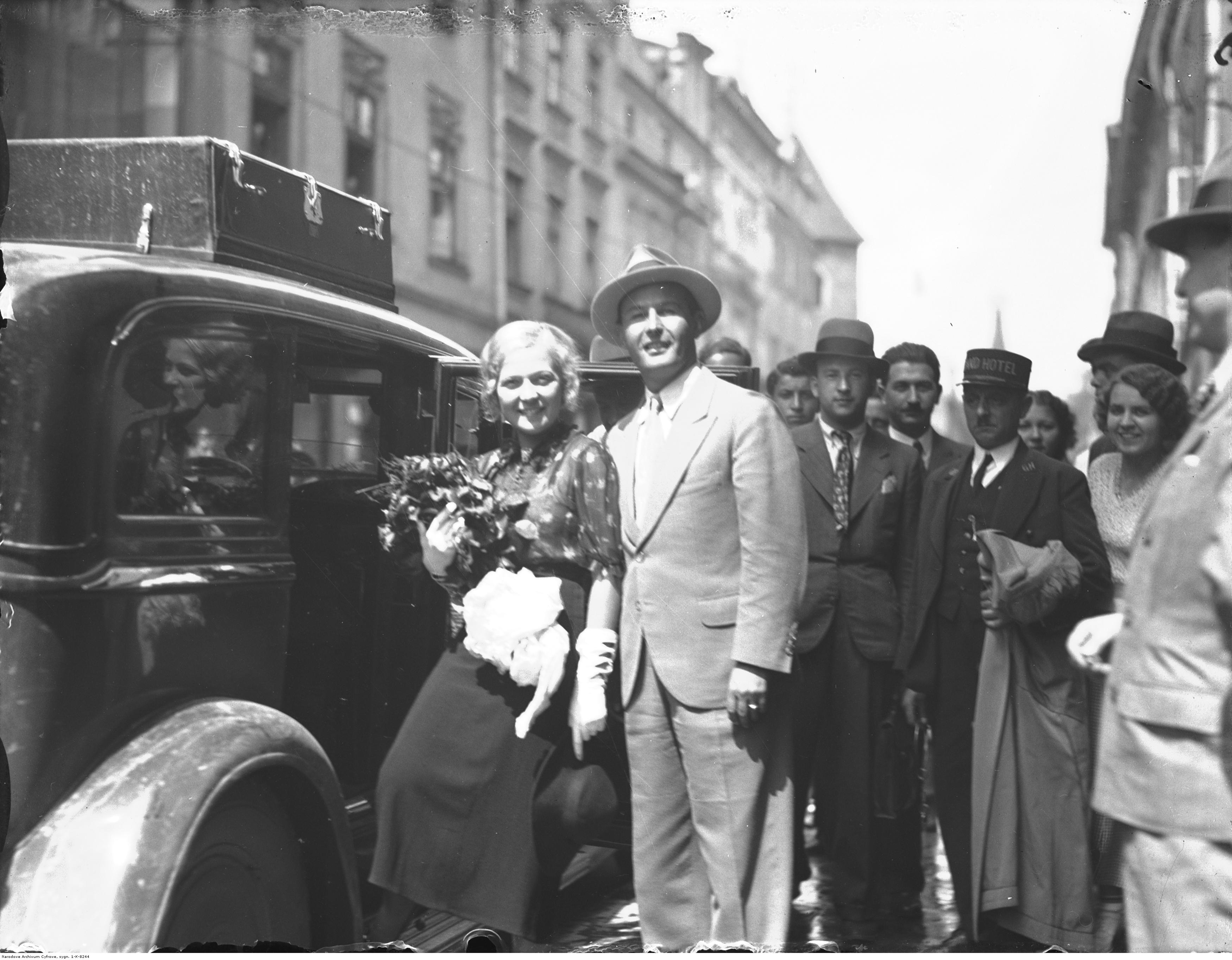
Merry Widow no more : Martha Eggerth died yesterday aged 101. Eggerth and her husband Jan Kiepura were the stars of Central European musicals and operetta from the 1920's onwards. Hear them sing Usta milczą (The Merry Widow) HERE. Affectionate warmth from him, gorgeously elaborate coloratura from her, and then they sing together cheerfully as she decorates the lines with manic trills. That good natured happiness was their trademark : it still shines today.

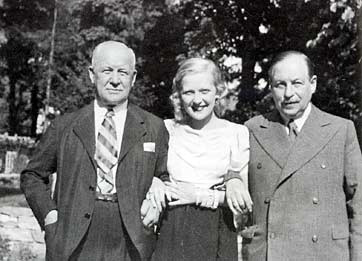
Born in Hungary before the First World War, Marta Eggerth was a megastar in 1930's operetta and musicals.  She appeared in Emmerich (Imre) Kálmán's Czardasfurstin, or Die Herzogin von Chicago  (read my review here).  She also know Franz Lehar, Robert Stolz and many others. In this photo, she's with Kalman and Lehar.  In 1936, she married the tenor Jan Kiepura and together they went on to even greater success. He was the Pavarotti and Domingo of his time, and more, ansd she the fairy-tale like symbol of beauty. Kiepura and Eggerth are also important to us now because they were artists who moved  freely between genres. No viciousness then about "crossover". Today they'd be pilloried  by media trolls. Thank goodness their work can still give us pleasure today !

In this article from the Washington Post, she talks about her life in the US. "I live in the present", she says.  Please also see my post from 2.12, "Bittersweet Polish Valentine" about the concert she and Kiepura gave on his return to Kraków in 1958. He was so popular that crowds gathered around the couple, welcoming them. Kiepura jumped onto a car and sang, impromptu. The article also contains a very rare link (off air) to the broadcast he gave on Polish radio at that time. Kiepura sing the Noel Coward song "Bittersweet", and Kiepura explains the text to the audience, who had not been able to hear English cabaret for many years.

Tuesday, 1 October 2013

Bats! Die Fledermaus ENO Johann Strauss


 I love Johann Strauss II's Die Fledermaus because it's utterly, barmily bats. The plot's mad. Jolly tunes distract lest you get too sober. Christopher Alden's production at the Coliseum for the ENO captures the operetta's crazy spirit well. It reflects the music's polyglot diversity: Csárdás, waltzes, Hussar marches, Italian opera, can-can and Tyrolean Ländler.  Die Fledermaus really shouldn't be played "straight" or literally, because that's not how the music works.

Shadows of bats fly across luxurious satin drapes, and a huge timepiece hangs from the ceiling. Nothing seems to be happening on stage. This is a great opportunity to listen to the music without distraction: Later, we'll hear ticking sounds in the orchestration - watches, clocks or time bombs? But for now, we can indulge in the escapist frou-frou of the Overture. Perhaps we're in an eternal New Year's Eve Gala where time - and reality - stand still? Eun Sun Kim conducts with more energy than effervesence, but that's perfectly valid. There's so much dance in this music that it should feel physical and exuberant.

Gabriel von Eisenstein (Tom Randle) is supposed to be going to jail but goes to a party instead. As if life were so easy! Rodelinda, his wife, (Julia Sporsén) makes much of marital fidelity but keeps her options open. Adele, her maid (Rhian Lois) has ideas above her station.  Prince Orlofsky (Jennifer Holloway) provides them with the means to act out their fantasies, He/she is  a woman acting as a man. The "Bat" is Dr Falke (Richard Burkhard)  luring Eisenstein into a devious trap.  Bats are associated with darkness and with the unconscious. Die Fledermaus, for all its airhead frivolity, has dangerous undercurrents,

At Prince Orlofsky's Ball, everyone turns up in disguise. Prison Governor (Andrew Shore) and Prisoner-to-be pretend to be French aristocrats. Behind a mask, Rodelinda von Eisenstein can manipulate the men around her.  Excellent costumes (Constance Hoffman) for the ENO chorus, too, suggesting images of decadence  and delusion. Set Designs (Allen Moyer) hint obliquely to silent film. This is an erudite touch, since many early movies dealt with dreams and psychological issues. Indeed, Die Fledermaus was filmed as a silent in 1917, directed by Ernst Lubitsch who made several"opera movies" without sound, such as Gypsy Blood (Carmen) (more here).

Good operetta, good conducting and excellent staging. So why did I, to quote Prince Orlofsky, weep at the "chatter and weariness" of these "scenarios of ennui"?

This is a "numbers" operetta, with long sequences of dialogue between the show tunes. Unless the lines are delivered with quickfire wit, they fall flat like stale champagne. The characters became hammy caricatures. Corny accents aren't funny when everyone is doing them. Here, lively farce descended into hammy end-of-pier pantomime. Some singers can sing with magnificent panache. This cast was good by ENO standards, which are not very high, but not good enough to truly animate their roles. It didn't help that  Strauss wrote many opportunities for applause, so the audience dutifully clapped on autopilot,  further killing dramatic pace.  Mindless clapping makes shows drag. Might it be possible to pare the dialogue down to the minimum, even if it meant losing some of the jokes ? But the real problem is that most singers can't do razor-sharp repartee the way good actors can.

Thursday, 12 April 2012

Marta Eggerth is 100 and still singing

Marta Eggerth is 100 years old today and still singing. We need to know because she's a living relic, or as the Japanese say "A living National Treasure".  Born in Hungary before the First World War, she was a megastar in 1930's operetta. She appeared in Emmerich (Imre) Kálmán's Czardasfurstin, or Die Herzogin von Chicago  (read my review here). Plus just about all major operettas, musicals and movies she could be signed for. In 1926, she married the tenor Jan Kiepura and together they went on to even greater success. Kiepura and Eggerth are also important to us now because they were artists who moved  freely between genres. No viciousness then about "crossover". Today they'd be pilloried  by media trolls.

Please read two articles, this one from the Washington Post, which is good on her life in New York. "I live in the present", which mentions a new recording by her son with Kiepura, whose name is Marjan (get it?) and the piece I wrote in February with the very rare clip of Eggerth  and Kiepura singing together in 1958 in Kraków . (two music clips). They were a sensation especially because conditions in post-war Poland were harsh. Kiepura and Eggerth were a reminder of how glamorous things were before the war and the Iron Curtain. No wonder their appearance had such an impact!

Below two more clips of Marta Eggerth, one from Kálmán's Czardasfurstin, and two  from a 1933 movie "Unfinished Symphony" about Schubert . Alas that kitsch image of the composer persists today. Below, she sings Ständchen . In the background peasant girls are singing Der Lindenbaum and Heidenröslein. "It's from Goethe" she tells Schubert, who knew already. Both songs were often sung by amateurs and entered the popular imagination as "folk song", which they weren't, originally. The movie sounds like a scream. "Without rhythm, music would be unthinkable" says Schubert. I'll write more later about the film.

Sunday, 18 March 2012

Viennese operetta as Chinese opera


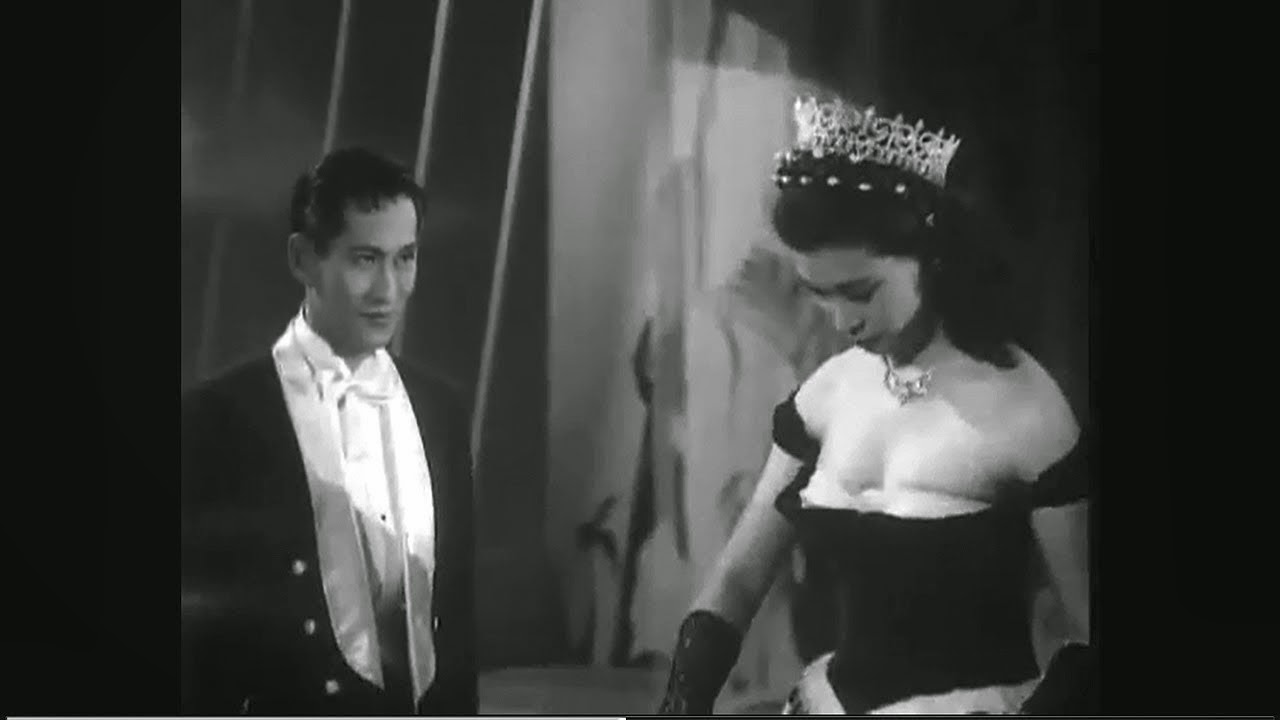
What a scream! A proper Cantonese opera, but also a satire on Viennese operetta. The plot's straight out of 1920/1930's kitsch, milked for all its dotty craziness, but set to musical form that's authentically Cantonese. For most non-Chinese, Chinese opera is hard to penetrate because it involves much understanding of cultural values and customs. Romance of Jade Hall (璇宮艷史)  however, is ideal for western audiences because the plot is a send-up of 1920's and 30's kitch. Ruritanian kingdoms with autocratic aristocrats in crazy costumes, playboy lovers and lots of natty arias. Ukelele solos and badly played gypsy violins! Even a skit based on the tune Oh Susana. Corny enough in Mitteleuropa, hysterically funny with a Chinese cast camping it up for al its worth.

Prince Ali (pronounced Nali) (Cheung Ying 張瑛, famous matinee idol) ventures incognito into other kingdoms where he becomes a hearthrob nightclub singer. Regular fans will squeal at the sight of him with curly wig and lipstick, like a round eye.  Exiled from one kingdom for chasing too many women, he's arrested in another, where the Queen (Law Yim-hing 羅艷卿, another legit Cantonese opera singer) fancies him but can't marry a commoner. Convoluted plot ends well when Ali's true ID is revealed. Best of all, the Prince's sidekick, who wears shiny silk suits and plays the ukelele is Leung Sing Bo (梁醒波) the greatest comedy opera singer and actor of all time. The Queen's comic sidekick is Lolo, Tam Lan-Hing (譚蘭卿) who often paired up with Leung Sing Bo, and is his counterpart in every way. Choruses of palace maidens and princes from fantasy kingdoms.

Otherwise this is true, traditional Cantonese opera (and the movie coyly starts out like that). Rhythmic recitatives, inventive arias, percussion-led interjections. A great introduction to Cantonese opera form. English and Chinese subtitles, but the Cantonese original is best, full of wit and pun. 

Tuesday, 14 February 2012

Bittersweet Polish Valentine

Bittersweet in many ways! An extremely rare recording made off Kraków radio in 1958, a scrap of which almost miraculously survives. Listen to it HERE in good sound quality. Thank you so much to the man who found this tape, and to his father who lovingly made it off air. The tenor is Jan Kiepura, and the soprano Marta Eggerth. He was a famous tenor with an opera background, she a Hungarian-born operetta star, who appeared in Emmerich (Imre) Kálmán's Czardasfurstin, or Die Herzogin von Chicago  (read my review here).

Kiepura and Eggerth worked together extensively, blending their careers and branching out into film. A good symbiotic relationship. Together as a pair they were even hotter than apart. Kiepura spent many years in the US before returning to Europe in the 1930's, so during the war, he and Marta went into exile. But their return to Kraków must have meant a lot to them. Listen to how Kiepura talks enthusiastically to his Kraków audience, explaing what the English song means, and hear how they roar with appreciation. The song is "I'll see you again" from Noel Coward, Bittersweet. "....I'll see you again whenever Spring breaks through again, though my world may go awry, there my heart will ever lie, with the echo of a sigh, goodbye". Kiepura died suddenly in 1966, but Eggerth lives on and will be 100 years old this April. So bittersweet memories all round.  And HERE is a clip of Eggerth and Kiepura in a German film of La Bohème made in 1936. "Ah, Mimi!"

Thursday, 19 March 2009

Die Herzogin von Chicago Kálmán Korngold

To understand the music of the 1920's and 30's it helps to listen to the music of the time. This might sound obvious, but a lot of what is written these days follows assumptions that don't reflect how music was actually heard and made. These sanitized assumptions in turn change the way we hear things, not for the best.

That's why Emmerich (Imre) Kálmán's Die Herzogin von Chicago is such an important piece. Kálmán was a student of Bartók and Kodály, so his credentials are legit, even though Die Herzogin was an immense popular success. In this crazy, witty operetta, Kálmán integrates conventional "serious" music with jazz, and also draws on the long-standing Austro-German tradition of satirical cabaret (which Schoenberg knew about). The opera is a trenchant comment on the impact of America and social revolution on a Europe just emerging from the First World War. It's hilarious, but no less significant for that.

In 2004, the opera was revived in Vienna to great acclaim. The original 1928 version was five hours long with lots of dialogue, much of which was topical controversy at the time. Some of the savage social edge remains, for when the editors condensed the original script they created a scene where corrupt politicians discuss "expediency" while dividing the spoils. Some things don't ever change!

An impossibly wealthy American heiress, Miss Mary, makes a bet with her Chicago friends that she can bag a prince when she goes to Europe, because anything can be bought with money. In fact it's really not all that different in Europe, for in the tiny kingdom of Sylvania, Prince Sándor Boris and his Ministers are trying to keep the cheering natives happy while the King is off to Paris. Then, as now, there’s nothing like a Royal Wedding to please the locals. They even have "Prince" dolls! The Prince's fiancée is in on the act, for act it is. Neither has illusions.

Cut to Miss Mary's arrival. "Cut" is the right word because one of the sub-texts of this operetta is the influence of Hollywood and the movies. Miss Mary’s best friend is Bondy, a film director, who sees all life as an unfolding movie. Throughout the opera there are references to movies. Kálmán creates hyper coloured music for the music sequences, which is surprisngly perceptive as movies at that time were silents. It's worth listening to this opera for the music alone as it tells something about the way film music germinated. Film music didn't just appear from nowhere. So much nonsense is written about composers and film that this opera is an antidote. Kálmán was a near contemporary of Erich Korngold, and they would have known of each other. Interestingly, both moved to California, and back to Vienna where they both died in the early 50's.

The Prince doesn't want to marry the American so gets his aide to play him while he plays the aide. We've all seen this plot device before, and here it's hilariously well done. Miss Mary must know the device too as she pursues the "aide" and dumps the "prince". The Sylvanians want her money and she wants status. Cue for a great party scene with Viennese waltz on gypsy violin, and songs about Schubert and Johann Strauss, who "shall return one day". There's a nightclub scene where Miss Mary does the charleston, and a bizarre parody of Beethoven's Fifth as foxtrot, danced by two bald women. There’s a takeoff of Ernst Krenek’s Johnny Spielt Auf which had been the sensation of Vienna in 1926 – Kálmán steals Krenek’s central image of a black man with a golden saxophone! Krenek’s operetta, incidentally, was also revived in Vienna in 2003, so there are in-jokes within in-jokes.

Of course Miss Mary falls for the Prince in disguise and Princess fiancée falls for Bondy, the movie director. To jazz up the old story, part of the staging involves a backdrop on which scenes from movies are projected. In fact they show the same four characters, got up as fantasy. It's a scream. The Prince and Mary dissolve into a cartoon cowboy and an Indian Princess, called Morgenrot, and cruise along in a canoe in the moonlight – modern eyes might see references to Nelson Eddy and Jeanette McDonald, especially as Bondy is schmoozing Princess Rosemarie! It’s also a great excuse for more wonderful "Indian" dancing that gets progressively more bizarre, because as we know real Native American culture was already being parodied in Hollywood. It makes a surprisingly powerful point about cultural imperialism and what might face Europe if Europeans didn’t hold their own. As one of the directors said, "it’s still relevant".

Despite the whimsy, there is serious stuff. America was showing the Old World a completely different way of living, much more shocking to Europeans then than we realize, after eighty years of familiarity through TV, mass media and cheap travel. That was still the age when European peasants emigrated, never to return. This operetta makes a strong point that, for all their exoticism, Americans are, at heart, dislocated Europeans. Bondy reveals that his grandfather was a Jewish nobody from some tiny hamlet in the middle of nowhere. How shocked the old man would be to see his grandson hobnobbing with royal Sylvanian families!

Then the King comes back, with two Parisian floozies, and tries to put the make on Miss Mary who isn’t falling for that Kuss die Hande nonsense. It is hard to describe just how wild the jokes are from now on, parodying French operetta and German, wordplays and wit, with references to Viennese culture, current events (like monkey glands and Viagra). And of course, everything ends up "happily ever after", though it's like whistling in a graveyard.

Die Herzogin von Chicago is available on CD and DVD - I'd recommend the DVD for the fabulous sets, staging and acting. "Opera archaeology" may have dug the score up and revised it, but this is a fabulous, important moment in music history.