Showing posts with label Elbphilharmonie. Show all posts

Wednesday, 12 February 2020

Triple A's - Mahler 9, Myun-whun Chung, Royal Concertgebouw Amsterdam at the Elbphilharmonie


Life-affirming Mahler Symphony no 9 from Myun-whun Chung, conducting the Royal Concertgebouw Orchestra, Amsterdam, from the Elbphilharmonie, Hamburg.  Triple run of A-Listers ! One of the best conductors around, one of the best orchestras heard in the wonderful acoustic of the Elbphilharmonie. The RCOA has probably done more Mahler than most orchestras, Chung is a Mahler specialist too  so excellence was to be expected,  but wow, was this good !  Really great musicianship at this standard challenges and stretches our appreciation of the music itself.  
There is never any one way to do good music so thank goodness there are musicians who care deeply enough about the music to approach it with such insight. The market for performances that fit listeners’ preconceptions will always be greater than the market for anything new but that's more to do with received opinion. These days many prefer C or D listers because they're less likely to get in the way of fixed certainties. So the more you listen and the more widely you listen, the less the likelihood of fixed positions.  And Mahler's music is so very much open to new possibilities and new horizons.  
Myun-whun Chung, credit Jean-Francois Leclerq, Askonas Holt
In this case, Chung's life-affirming interpretation, brimming with life and the love of life, proves that there is so much more to the symphony than the old cliché that M9 is only about death.  Maybe one day audiences will catch up on the amount we've learned about Mahler, the man and his music in the last 50 years. From the early songs and Das klagende Lied to the final stretches of what was to be the tenth symphony, a powerful life force surges, which cannot be defeated.  The second, third and fouth symphony address the world beyond and in the 8th and Das Lied von der Erde,  there are concepts of tranfiguration onto another plane. 
A wonderfully rich first movement, low timbred winds and brass lit by harps, and strings that move like gentle breezes - always  a sense of movement - andante commodo, an open hearted embrace of life and its diversity.  For a "pulse" this is, suggesting the human body at rest, calmly breathing.  Gradually the palpitations built up towards expansive outbursts, as if invigorated by the flow of life.  When silence descends, marked by timpani ans strident brass, the effect is chilling.

The harp ruminates, and the steady pace resumes.  The music flares up again, fractured angular shapes suggesting tension, alarm and a spiralling descent into darkness, and a wall  of mournful winds and brasses, and at last, a glowing coda, like embers yet undimmed. In Das Lied von der Erde, the poet fears death because he loves life too much to let go. enjoys life too much to leave it. Thus the gradual coming to terms, which also influences the first movement of the 9th, and its culmination, where the orchestra soars in an outburst of defiance. To really understand Mahler, it helps to think of the works as part of a continuum. 


A vigorous second movement, marked "Etwas täppisch und sehr derb".(rustic, simple, earthy). Why Ländler? Ländler are danced by peasants who till the soil, who know that seasons change and that harvests return after winter. This movement is much more than folklore and quaint kitsch, connecting yet again to themes of change and rebirth that run through so much of Mahler's work.  Earthy in that sense doesn't necessarily mean crude, especially when considered in the context of the interpretation as a whole. There's humour here, not grotesque per se. Pan awakes, bringing life !  The pace whipped up, propelled along with force, yet once again, the dance returns, for dance, like Nature, moves in rhythmic cycles.  Poise, more so than turbulence is of the essence.This idea of change and renewal informed the third movement, written in rondo form. A chill seemed to descend with the wild, almost manic figures, the "burleske" mocking any ideas of simple comfort.  Has frost cut down the harvest?  Dark bassoons murmured, the strings went quiet, yet again  from this desolation a melodic string line arose, rising upward. (The violist looked exactly like my father, which for me added poignancy).  Chung captured the sense of forward movement - the trumpet line like a horn in the Alps, resonating from peak to peak. Great walls of sound, looming like cliffs, yet tiny details, like the triangle clearly audible.

In the final movement, Chung again brought out the sense of flowing movement, the "rondo" of the changes of seasons and the passage of time. Thus the growling low brass, as if sounds were coming from the bowels of the earth, while high, string tessituras evoked something more transcendant.  The orchestral Leader (who looks like young Brahms) delineated his line so it seemed to shimmer, weightlessly.  Many of these players would have worked with Bernard Haitink, legendary for the spiritual transparency he could bring to this symphony.  When the warm surge that characterized Chung's first movement returned, the idea of cyclic change felt reaffirmed.  The idea of differences reconciled in the figures for oboe and flute, moderated by harp, and the magnificent coda, where the strings en masse rang out in glowing chorale, leading the orchestra onward, ever forward.    Please listen here, it's wonderful. 


Saturday, 7 September 2019

Elbphilharmonie Gala - Gilbert connects Brahms and Varèse via Bernstein, Ives and Unsuk Chin

Alan Gilbert with the Elbphilharmonie


The Opening Concert of the 2019-2020 season of the Elbphilharmonie, Hamburg, started with typical flourish, Alan Gilbert conducting Brahms's  Symphony no 1 in C minor op 68, Unsuk Chin Frontispiece for Orchestra Bernstein's Symphony no 1 "Jeremiah", Charles Ives The Unanswered Question, and Edgard Varèse's Amériques.  Not a programme for the faint of heart, but executed with great panache! He certainly   seemed relaxed and in his element.  He came to fame conducting the Orchestre National de Lyon and first conducted this Hamburg orchestra, now called the NDR Elbphilharmonie Orchester, 18 years ago. Gilbert has always belonged in Europe, even though he conducts a lot of American repertoire. With the NDR Elbphilharmonie, he can reach audiences who are open minded enough to pay attention.   This programme was also intelligently planned, with enough musical knowledge holding it together, even though it might have seemed sprawling in theory. Yes - plenty to connect Brahms with Varèse !

Johannes Brahms is an emblem of the Elbphilharmonie. Though he went on to fame and fortune elsewhere, he remained at heart a Hamburg homeboy, retaining a no-nonsense North German spirit.  Even in Vienna, that tough Norh Sea/Baltic soul made him individual.  He began working on what was to become his Symphony no 1 when he was twenty-two, completing it twenty-one years later, as he matured. Thus the influence of Beethoven,  Gilbert's approach emphasizing the classical structure and poise.  Horns called forwards, as if reaching out towards distant horizons, before passages evoking hymnal, which develop into fervent anthem, growing richer and more emphatic as the work proceeds. From early Brahms to Unsuk Chin, with whom Gilbert has been associated for many years (he's probably one of her finest interpreters). This was the world premiere of her Frontispiece for Orchestra. It's spiky, bristling with incident. In the second section, Chin's exuberance gave way to stillness, strings stretching languidly, the whole gradually growing  more affirmative - darker, circular figures rolling with forward movement.  Gilbert then conducted  Leonard Bernstein's Symphony no 1 "Jeremiah". This first half of the concert thus formed a cohesive arc - Brahms's first and Bernstein's first, both experimental in their own way, both composers finding themselves, influenced by their backgrounds. Based losely on the Book of Lamentations, the first movement, "Prophecy", suggests foreboding, fulfilled by the second, "Profanation", which is wild and tubulent, unruly figures led by woodwinds, whipped into frenzy by staccato figures and wailing brass.  In the final "Lamentation", the soloist, here Rinat Shaham, intones in Hebrew, her voice rerverberant with vibrato (properly employed).  In the last page, portent is replaced by greater lightness - the voice lighter and purer, textures open ended, with strings shining, supported by winds and brass. A melody (violin and strings) draws the piece to conclusion. 

Chales Ives's The Unanswered Question the first part of the Two Contemplations, is more frequently performed as a stand alone,  as it was here, as "frontispiece" before Varèse's Amériques.  Like so much of Charles Ives’s work, it's extraorinarily experimental, especially considering that it was originally written in 1908 by a composer who rarely got to hear his own music performed.  Though the instrumentation is spare, the work opens out, like a Tardis. There are three separate mini-orchestras, a string ensemble, a woodwind quartet and offstage solo trumpet : a prophecy of Ives's masterpiece, anticipating hs  Symphony no 4.  Beginning and ending in silence is part of the concept - music without boundaries. It's not really a miniature, but leads on to other things. In this case, the pairing with Varèse's Amériques was inspired. This was effectively the composer's opus one, marking his arrival in America, decisively indicating "new worlds".  Here, Gilbert conducted the better-known 1927 version,  rather than the crazier but fun 1921 version Simon Rattle did recently in London.  It's a mistake to think of Varèse's Amériques as little more than noise. There's method in its apparent madness. The cacophonies represent the sounds of modernity and freedom : sounds put tohgether in collage, to create a sense of the teeming energy of a big, modern city (that's where the klaxons come in), Structually the piece operates in large blocks, each section operating on multiple levels, all of them in motion.  Think of skyscrapers, with many storeys, filled with people and machines, below the streets, trains and infrastructure, above, in the skies, moving objects of many kinds. Varèse's Amériques is a seminal work, connecting to futurism, cubism and other innovations in Europe, while breaking completely new ground in terms of music. Its influence cannot be overestimated.  Ives would have been thrilled to have his music side by side with Varèse - both of them prophets unacknowledged in their time.  A bit like Jeremiah !  Listen to the concert HERE.


Wednesday, 23 January 2019

Gergiev Marathon : Russians and Mahler, Elbphilharmonie

Where does Valery Gergiev get his energy ?  Two livestreams back to back from the Elbphilharmonie, both programmes hefty. Mahler Symphony no 4 together with Das Lied von der Erde - a combination most conductors wouldn't dare essay on the same night, let alone after the previous night's all-Russian concert - Stravinsky, Rimsky-Korsakov and Shostakovich Symphony no 4.  The players of the Munich Philharmonic Orchestra must be exhausted.  Yet Gergiev looks calm and refreshed.

He has done Stravinsky's Funeral Song, (Chante funèbre) op 5, so often that it's almost his trademark. Please read my piece Lost No More about his premiere of the piece in St Petersburg in 2016 with the Mariinsky Orchestra. As he did then, he paired it with Rimsky-Korsakov's suite from The Legend of the Invisible City of Kitezh and the Maiden Fevroniya.  This combination is important, given the connection between Rimsky-Korsakov and the young Stravinsky. Towards the end of Funeral Song, (Chante funèbre)  we might detect the last, long chords of The Legend of the Invisible City of Kitezh.  While Stravinsky spoke fondly of the Funeral Song, it's a transitional work rather  than a stand alone major work, so it does need to be programmed as intelligently as Gergiev does.  The Legend of the Invisible City of Kitezh is a much more sophisticated piece, its colours at once delicate and luscious. It's a Gergiev favourite, too, and  this performance was very good indeed.  This time, though, his main focus was Shostakovich Symphony no 4 in C minor op 43. Again, this is something Gergiev could conduct in his sleep if he wished but here he shaped it with the clarity it needs. Some conductors get away with clumsiness in Shostakovich because some audiences like noise and butchness.  But Gergiev delineated the more elusive passages, bringing out the finesse that lurks behind the surface brutalism.  If there is hidden meaning in this symphony, those wayward wind and horn passages might represent free spirits uncowed by the larger forces around them.

The real surprise, for me anyway, was the quality of Gergiev's Mahler on this occasion. To say he's hit or miss with Mahler is an understatement.  One of the most horrible Mahler 4's I've heard was Gergiev, but here he was good, alert to the vulnerability that is  so much part of this symphony, which sometimes makes it feeel threatening to some.  In the first movement, he captured the jaunty sleigh ride well, so it felt purposeful rather than random jollies.  Life is a sleigh ride, full of thrills, but eventually we all die, which is why it connects to the last movement.  Great restraint in the other movements too : the moment should not end too soon.  The soloist, Genia Kühmeier, stood behind the orchestra. The acoustic of the Elbphilharmonie seems to favour singers by spreading sound around them rather than blasting from behind. She was sensual rather than otherworldly but that's perfectly appropriate, given the joy the child takes in earthly pleasures.

Following Mahler 4 with Das Lied von der Erde takes guts, maybe foolhardy guts,  but Gergiev and the Müncheners pulled it off.  Skill there, plus stamina.  Some very good moments, especially the winds, with a decidedly "oriental" touch at times.  Andreas Schager sang the tenor part, Tanja Ariane Baumgartner the alto.  Schager's a very good Wagnerian, a born "stage animal" who inhabited the part psychologically, as good opera singers do.  If his voice sounded stressed at times, it didn't matter. The protagonist is supposed to be stressed, so terrified of death that he drinks himself into oblivion.  One of the best Das Lied von der Erde tenors ever was Peter Schreier whose edgy earnestness conveyed the full horror of his predicament.  Good balance between Schager and Baumgartner, her serenity an answer to his fears. 

Wednesday, 2 January 2019

New Year in Vienna and the Elbphilharmonie Fledermaus


On New Year's Day, Johann Strauss Die Fledermaus live from the Elbphilharmonie, Hamburg, Manfred Honeck conducting the NDR Elbphilharmonie Ochestra, in a stylish semi-staging  by Michael Struminger and Renate Martin.  This is what good semi staging should be, making the most of resources to hand, creating a unique perspective.  The acoustic patterns on the vertical surfaces are replicated in the patterns on the costumes.  The hall at the Elbphilharmonie  rises in multi layers around the main platform, with smaller areas where singers can move between, depending on the action,and can be heard without getting muffled.  The hall "transforms" seamlessly from boudoir to party to prison, a concept which is pretty much central to the meaning of the opera.  Swift changes of scene are of the essence. Think about it - everyone's scamming, pretending to be what they're not. They're locked into farce but they get out, just as quick. Alcohol muddles the mind but releases the unconscious.  Die Fledermaus is satire, and savage satire at that, by no means Schlagobers schmaltz. 

Honeck keeps the music zipping along, too. The last thing you want in Die Fledermaus is ponderous Sitzfleisch ! Honeck also brings out the punch beneath the surface fluff, keeping tempi tight.  The dialogue was snappy - quickfire puns and cracks, visual jokes, switching from German to French and to English, too, for the occasion.  The cast included Bo Skovhus (Gabriel von Eisenstein), Michael Nagy (Dr Falke), Astrid Kesssler (Rosalinde),  Katharina Konradi (Adele), Adrian Angelico as Prince Orlovsky, - singers who can speak and act as well as sing.

This broadcast was the third performance, the second on New Years Eve when so much else was going on - Berlin, Munich, Leipzig, Venice - and of course fireworks and parties in the real world outside.  Not much that I know of in Dresden because the boss man there was in Vienna, conducting the Vienna New Year Gala.  That has never been a concert in the normal sense, but a party. Complaining that it's not sober enough is to miss the whole point, and to complain that Christian Thielemann was too sober on top of that is just plain nuts.  The Gala follows the Opernball : waltzes, polkas, and czardas are dances, and dances (and marches) are for fairly large groups of people who need to keep more or less together so the ensemble doesn't collapse in chaos.  Again, a metaphor for society and for Viennese society in particular.  Dance "is" discipline, you can't flop about and be fuzzy.  All the better that Christian Thielemann understood the music and its background and kept things punchy, not floppy.

Tuesday, 22 August 2017

Elbphilharmonie Worldwide LIVESTREAM all week


Elbphilharmonique Worldwide - livestream all week !

Sunday 27th August 20hr German time


Shanghai Symphony Orchestra (founded 1879, fully orchestral 1907)

Aaron Avshalomov


Hutongs of Peking 


He Zhanhao, Chen Gang


Konzert für Violine und Orchester »Butterfly Lovers«


Dmitri Schostakowitsch


Sinfonie Nr. 5 d-Moll op. 47


Maxim Vengerov, Conductor Yu Long


Tuesday 29th August 20.00 German time


The Baltic Sea Philharmonic Orchestra "Waterworks"conduted by Kristjan Järvi 

Gene Pritsker


Water Possessed,  Afresh


Georg Friedrich Händel


Suite Nr. 2 D-Dur HWV 349 (Auszüge) / Water Music /

Charles Coleman


Drenched 


Philip Glass


Konzert für Violine und Orchester Nr. 2 »The American Four Seasons« 


Philip Glass


Aguas da Amazonia
(Arrangement: Charles Coleman)


Wednesday 30th 20.00 German time


Ingo Metzmacher conducts Gustav Mahler Jugendorchester

Messiaen Turangalîla-symphonie 

Thursday 31st August 20.00 German time


The Gershwin Project with the Ensemble Eterna Brugge

Friday 1st September 1900 hr  German time 


NDR Season Opening Gala Concert 


Ludwig van Beethoven


Sinfonie Nr. 4 B-Dur op. 60


Ludwig van Beethoven Musik zu Goethes Trauerspiel »Egmont« op. 84


NDR Elbphilharmonie Orchester, 

Klaus Maria Brandauer narrator

conductor Thomas Hengelbrock

Nachtstudio

Katharina Konradi soprano

Víkingur Ólafsson piano

Monday, 26 June 2017

Alan Gilbert NDR Elbphilharmonie Orchester - the real potential


New horizons for Alan Gilbert, new Chief Conductor  of the NDR Elbphilharmonie Orchester.  This isn't an ordinary move in the game of Conductor Chess by any means.  It's a Bishop's Move, which could change the whole board. The new Elbphilharmonie and the support network behind it has the potential to change the whole game.  Read my piece Elbphilharmonie - Game Changer HERE Gilbert hasn't flip-flopped by any means - he's landed on his feet up and running with one of the most exciting developments in the whole industry.

Although Hamburg is Germany's second-largest city, and wealthy, the heart of German orchestral life centres on the Big Three - Berlin, Leipzig and Dresden, cities whose cultural pedigree reflects centuries of top-level patronage. The NDR Elbphilharmonie Orchester was founded in 1945, from the ruins of war, in which much of Hamburg was destroyed. It was a radio orchestra, no small thing  since German broadcasting itself has a grand tradition. With the new Elbphilharmonie building it now has one of the finest homes of any orchestra in the world, backed up by a package of other services. Even the backstage facilities are so good that other orchestras want to come visit, which also ups the game. The population of Germany is close to 82 million, and the population of Europe as a whole 743 million. Hamburg is smaller than New York,  but it's strategically placed.  If the Elbphilharmonie develops into a cultural hotspot, the orchestra is in a good position.  Gilbert's in a win-win situation.

With the new building, new frontiers. While the orchestra isn't in the league of the Big Three, or centres of exceptional excellence like Lucerne,  Hamburg could provide something unique. The gala Opening Concert honoured Johannes Brahms, native son, and  composers with North German connections, of whom there are quite a few, many of them modern.  Gilbert's interests thus dovetail neatly with European taste.  Lyons, for example, where his career took off, and where I first heard him, is progressive.  One of the high-profile international broadcasts from the Elbphilharmonie featured  Shostakovich and K A Hartmann, a Bavarian yes, but one of the most important composers of the 20th century (Please read my piece here). Germany is in a unique position in that it's culturally very diverse and vibrant, and open-minded.  That concert featured the Vienna Philharmonic Orchestra, not nearly as conservative as one might assume, conducted by Ingo Metzmacher, a Hartmann maven and one of the more interesting conductors on the circuit.  With all respect to Gilbert, he's not in Metzmacher's class, but he is audience friendly and can reach those who speak no language other than English.

When Gilbert unexpectedly announced he wouldn't renew his contract with the New York Philharmonic Orchestra, there was much speculation, since he's a NY homeboy with family connections who might, in theory, have toed whatever line was needed.  No speculation from me. But read this well-informed piece from Michael Cooper  : Alan Gilbert wanted to save the New York Philharmonic : What happened ?   All too often, commentary goes along the lines of "I like/don't like" as opposed to analysis and a basic understanding of business logistics.  Recordings are just artefacts, they aren't what happens in the real world of performance, and these days, the recording industry doesn't have a stranglehold on what reaches the market.  e need to remember that music is a living force, that never stops changing. It doesn't exist in hermetically sealed limbo.

A conductor does a lot more than conduct: he's a conduit for ideas and reflection, primarily musical, of course, but ideas that impact on human experience.   Claudio Abbado, whose birthday is today, was a communicator of genius.  Very few even come close to Abbado in terms of insight and empathy.  But Gilbert is a pretty good thinker.  Some months back, he was being interviewed by NDR Kultur (not the orchestra, but they would have heard it).  They threw a tricky question : what did he think of Donald Trump ?

Being diplomatic, Gilbert hesitated, choosing each word as carefully as possible.  "I think it's a time in which art and beauty have more importance and relevance than ever,. I hope it's not too much to say that at the heart of what we do as musicians is the search for truth. These days there seems to be a full scale assault on the principles of The Age of Enlightenment. As musiciqns, we need to assert ourselves powerfully to show that there is still beauty and there is truth in the world. I've been working with musicians, colleagues and friends to use what we do, to use the platform we occupy to make this world a better place. The thing about music is that it is an international language, and it can speak to people from all different cultural, linguistic and religious backgrounds. .... I hope that what we can offer to the world is a message of inclusion and shared humanity" (Full clip here).  

"Inclusion and shared humanity." Dangerous words, these days!  But not at all untypical of the way Gilbert's been thinking for ages, in terms of orchestras and their place in society.  Below, another, longer clip, in which Gilbert talks about the NDR Elbphilharmonie Orchester and himself (they go back together a long time).  It's upbeat, as it should be. Who knows what lies ahead ? But Gilbert and the NDR Elbphilharmonie Orchester together could be a force for good. Please also read my many pieces on arts policy, and on the new Concert Hall for London.  


Wednesday, 25 January 2017

Metzmacher Elbphilharmonie K A Hartmann Shostakovich

At the Elbphilharmonie, Hamburg,  Ingo Metzmacher conducted the Vienna Philharmonic Orchestra in a programme that might have seemed innocent when it was planned but nowe is disturbingly prescient: Karl Amadeus Hartmann Symphony no 1 "Versuch eines Requiem" with Shostakovich Symphony no 11 "The year 1905", both completed at the height of the Cold War, but with very different perspectives.

The Elbphilhamonie broadcast this concert internationally, online, a harbinger of good things to come. Hamburg invested heavily in the project, realizing that its potential is far greater than for the city alone. While the Philharmonie Berlin is primarily a home for the Berliner Philharmoniker (though other orchestras use it), the Elbphilharmonie could be a game changer, affecting the whole demographic of the business.

This concert also showcased the hall's superb acoustic (read more here).  Anton Webern's Sechs Stücke für grosses Orchester op. 6 (1909) opened the concert. A large orchestra is needed, not for volume, but for extended palette.  Webern sought to express "Klangfarbenmelodie": myriad details of colour and tonality.  Hence the markings "sehr langsam", and "sehr mäßig", unhurried traverses that let the music unfold, revealing subtle shading.  Metzmacher's tempi were by no means slow, but meticulously well judged.  I hardly dared breathe lest the spell be broken. Exquisite playing: a single chord on  harp, muffled drumstrokes, a triplet on bassoon, all perfectly in place and in cohesion. The Viennese are taken for granted in standard repertoire, but here they were revealed as infinitely better musicians than popular cliché might suggest.  On the wide platform of the Elbphilharmonie, there's a lot of space between players, so they're not constrained by being cramped together. They can probably listen to each other for one thing. Sound moves ambiently with this extra "breathing space", quite a distinctive feature of this new auditorium. 

Gerhild Romberger photo Rosa Frank, Vienna Philharmonic

Ingo Metzmacher is the conductor of choice when it comes to K A Hartmann. He's recorded the complete symphonies and with such insight that it's essential listening for anyone interested, not just in Hartmann but also in his period.  Hartmann began this piece in 1936 as a response to the increasing madness of the Third Reich. The first movement is a miserere based on the poem I Sit and Look Out by Walt Whitman. "I sit and look out. upon all the sorrows of the world, and upon all oppression and shame"  – men and women suffering, domestically and in war, and tyranny, a famine at sea where sailors cast lots as to who should be killed and eaten that the others might live a little longer.  Yet perhaps the true horror is that the poet can observe but not act. " I sitting, look out upon,/ See, hear, and am silent."  The soloist was Gerhild Romberger, whose powerful, dark timbre articulated suppressed anguish. She's one of the most interesting in her Fach, since she also conveys tenderness and sympathy.  In 2014 I heard her sing O Mensch in Mahler's Symphony no 3 with the Leipzig Gewandhaus Orchestra,  truly plaintive, as if she were weeping for the death of the old world and giving birth to the new. Hartmann doesn't set every word in the poem, but his orchestration leaves us in no doubt what's happening. An explosive introduction, a fusillade of trumpets, trombone and percussion: horrors intruding on the isolation of the solo voice.

The second movement "Frühling" references Whitman's When Lilacs last in the Dooryard Bloom'd, mourning the assassination of Lincoln and the American Civil War, but the text is oblique, using the image of a falling star to express the idea of loss.  Hartmann's setting is even less wordy, avoiding Whitman's syntax, which is even trickier in German.  Despite the barrage of sound in the introduction and background, what stands out is the passage where the piano plays quietly, its fragile memory evolving into "starlight" in the strings and winds, the wavering line then taken up by soprano trumpets.  Violin and cello dialogue in the opening theme of the third movement, the piano mediating between them. Gradually, other sections in the orchestra join in – oboes, bassoons and tuba and the strings in succession. The tam tam crashes : reminding us that this relative harmony cannot last.

"Tränen " sings Romberger three times, reflecting the first line of Whitman's Tears.  "O, Wer ist dieser Geist?" she cries, and an apparition materializes in the orchestra, brass blaring, strings screaming, timpani crashing. Romberger's lines growling at the bottom of her register, rise suddenly to the top: she isn't fazed, but totally in control. Again, a quiet passage on piano introduces an unearthly mood. "O, Schatten!" sings Romberger with tenderness.  The shade seems stilled in the light of day.  Metzmacher shapes the long orchestral lines so they pulsate with ominous menace,  gathering strength to strike again.  The night falls. Romberger sings "Tränen", as if falling into hypnosis.  Muted bassoons  then screaming chords of alarm.

Muffled snare drums introduce the Epilogue, a prayer "Bitte", and a return to the apocalyptic traumas of the first movement.  Here the text comes from Whitman's Pensive on Her Dead Gazing, where Mother Earth looks upon corpses in the battlefield. No Valkyries, no Valhalla.  The vocal line is intoned, not lyrical, Sprechstimme, not song.  Then, suddenly, Romberger unleashes her full mezzo power. in a long wail of protest.  Her line becomes incantational again.  "O meiner Toten" she sings. Relentless, repeating figures in the orchestra, then a cataclysmic explosion, the echoes of which carry on into silence. I've written about Hartmann many times – search this site – because in so many ways he's more than "just" a composer but a prophet who intuited the trauma of existence and realized that music is can express human decency even in the presence of evil.  His Symphony no 1 (completed in 1955 towards the end of a long career) bears the subtitle "Versuch eines Requiem", towards a Requiem because the horrors aren't over, and may yet get worse than we can possibly imagine.  No time yet for the resolution of a requiem.  Much respect to Metzmacher, who knows Hartmann's music so well and why it is vitally important. Congratulations too, to the Vienna Philharmonic Orchestra and the Elbphilhamonie for having the courage to do this piece when feel-good superficiality might be more popular.

Hartmann's Symphony no 1 and Shostakovich's Symphony no 11 were completed at about the same time in the mid 1950's, but the two pieces are radically different.  While Shostakovich had to be careful not to annoy the Soviets, he was a public figure, unlike the far more uncompromising Galina Ustvolskaya, who had to play along with the regime to survive. His Symphony no 11 is a public piece, which won him  the Lenin Prize and great popularity.  The subject matter is unashamedly patriotic, commemorating the year 1905 and the December Revolution which was suppressed but entered the political mythology of that Soviet State. There's nothing in principle wrong with propaganda music, but much of the appeal of this symphony lies in the way it plays on emotions to whip up excitement,  and the avoidance of doubt.  Metzmacher and the Vienna Philharmonic Orchestra gave a suitably magnificent account, so vivid and full of drama that you could forget that, at heart, this is cinema music as opposed to, say, reflective art.   Is it a soundtrack to an invisible movie? Perhaps we're supposed to suspend judgement and thrill to the images of violence and turbulence.  But where do such feelings lead? After hearing Hartmann, it's not so easy to blank things out. 

Thursday, 12 January 2017

Game changer ! Elbphilharmonie grand opening


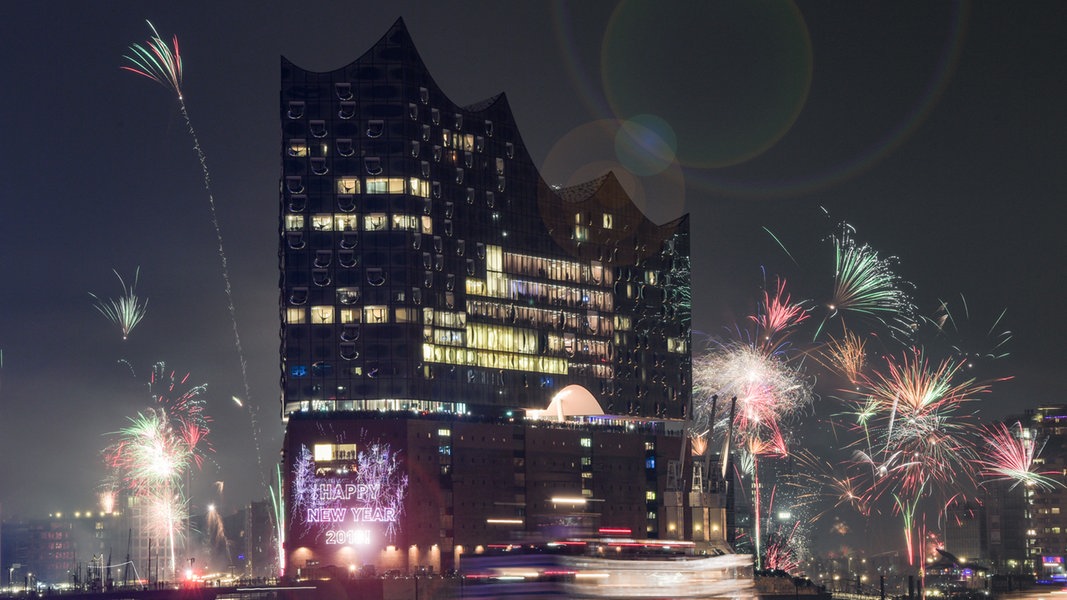
Das Eröffnungskonzert der Elbphilharmonie, the opening concert of the Elbphilharmonie in Hamburg. The building looms like a giant ship on a promontory on the harbour: a reminder of Hamburg's maritime and commercial heritage. The lower floors match surrounding buildings, while the upper floors and roof reflect the skie : an inspired concept in architectural terms.  But what really makes the Elbphilharmonie interesting is that it's a game changer in many ways, with the potential to transform the whole way the European music business operates.  

"Freude" said the grandees making speeches, which is significant, for great art is inspired by joy, not small=minded negativity. The creative genius of Beethoven stood  at the start and finish of this communal celebration, with the Overture to the Creatures of Prometheus op 43 and the sublime Symphony no 9.  In Greek mythology, Prometheus stole fire from the gods to empower men, an act which symbolizes enlightenment. That's why the arts matter. They generate creativity and, with that, the enthusiasm that generates change in many things, including economic regeneration. This new hall is a landmark that could challenge the dominance of Berlin and Paris. Not for nothing, the concert honoured Johannes Brahms, Hamburg's native son, who lived in Vienna, but remained, at heart, solidly North German.  In Britain, we've no way to compete, since British arts policy favours micro-endeavour. The fact is, excellence needs vision, and commitment.  The long-term benefits to the nation are infinitely greater than can be measured in simple terms.  The drive that went into making Hamburg the major port that it is, is the kind of drive we need in the arts.

Thomas Hengelbrock and the NDR Elbphilharmonie Orchester chose a programme that demonstrated what the new building can do. The platform, larger than usual, nestles surrounded by different tiers of seating, rather like Berlin and Paris, so sound resonates more evenly than in conventional coffin-shaped halls.  Bernd Alois Zimmermann's Photoptosis (1968) tested the acoustic to the limit. Scored for a very large orchestra, the piece can be very loud indeed, but here what struck me most was the richness of sound, not the volume. The big climaxes are carefully constructed, with myriad layers of detail, some so subtle they can get lost. Yet in this hall, even the most refined components can be heard and relished.  Suddenly, the hall was plunged into darkness, small rows of lights shining from the dense gloom like stars. The plangent strains of a Praetorius motet rang out, as if being heard across the centuries. In a split second, the 16th and the 20th century connected. Also, from an eyrie above the platform, the orchestra's principal oboe played Pan, from Britten's Six Metamorphoses from Ovid op 49. Philippe Jaroussky sang Italian baroque airs, accompanied by harp, from a position above the stage, the clear, pure beauty of his voice carrying effortlessly round the large auditorium., In one of the interval clips, he's seen testing the acoustic by exploring with his voice as he walks around.  Then, Messiaen and Wagner, sounding clear and crisp. What a joy it must be for an orchestra to play in these surroundings, especially as the off-stage facilities are luxe class compared to many less generous venues. The best orchestras will now want to visit Hamburg: this superb acoustic will lift the game for everyone. Read more HERE about the technical aspects that make the acoustics in the auditorium.

For this grand opening gala, the whole Philharmonie building exterior became the backdrop for a spectacular light show. This, too, made a statement, since the light show would have been visible across the harbour. The Elbphilharmonie light show could become a feature of Hamburg's civic life, just like the way Hong Kong skyscrapers become a gigantic canvas for illuminations during the Christmas season (where the flat outside wall of the main local concert hall is the focus of a light show)  The arts aren't just for toffs. Involving the wider community outside the concert hall is a form of outreach and education without distracting from the main business of music making.  Indeed, excellence "is" education. It opens up ears and minds. 

This programme also featured Wolfgang Rihm, billed as"Germany's greatest living composer", though he couldn't attend so Hengelbrock raised a placard with Rihm's name on it , a nice humorous touch.  Rihm, Zimmermann and Rolf Liebermann, together with Mendelssohn and Brahms, Wagner and Beethoven: another point being made, that audiences can cope with diversity without having to be coddled. There are other halls in the new Philharmonie, better suited to smaller ensembles and chamber music. There's another concert on Sunday which will also be broadcast. Click on photo at right to see the building in cross-section. Yet another reason why the Elbphilharmonie is a game changer : It represents a new way of bringing music to audiences. HD was a start, but stymied because it depended on cinema distributors who didn't make enough money to promote it. But modern technology means that audiences can listen any time they want online, wherever they may be.  Investing in orchestra-led, or opera-house led  streaming means that those who make music get the full benefits of marketing, and also have greater control over artistic content.  Can record companies still control the market and create instant media darlings when there's good music around for those who care about quality as opposed to celebrity  No more provincial boundaries. And so the concert ended with the Ode to Joy, Beethoven 9, Bryn Terfel, Pavol Breslik, Wiebke Lehmkuhl, Hanna-Elisabeth Müller, the NDR Choir and the Choir of Bayerischen Rundfunks.  "Alle Menschen wurden Bruder"!" we've heard that thousands of times, but this time it felt fresh and real.