Showing posts with label BBC Proms 2017. Show all posts

Sunday, 10 September 2017

Vision-free Last Night of the Proms 2017


Nina Stemme at the Last Night of the BBC Proms 2017. She was not the only one left open-mouthed by this year's Non-Event LNOP, which was as vision-free as most of the this year's season.  Formula works, to some extent. Stemme is such a megastar that even those who know zilch about music know who she is and that she does Wagner. So nil imagination  needed to make her do Brünnhilde while singing Rule Britannia. So no-one really goes to the Last Night for music. But Nina Stemme deserves better !  She's an artist not a cartoon.  A few years back, Roderick Williams did it in street clothes. That was infinitely more sincere and moving and more in the spirit of the anthem.  Dressing up is all very well, but it needs to be done with genuine flair and humour,  the way Juan Diego Florez did last year as Inca Prince and the skit on Paddington Bear as homeless immigrant. (Please read more here).  It's not Stemme's fault. It's the marketing philosophy behind the Proms these days that puts commercialism above music.

Formula is all very well and, thanks to formula, there were many good Proms this year, scattered around the crass detritus. Thanks to good performers who actually like music, not the suits behind formula.   How did the Royal Albert Hall get its name ?   The vision of a Prince who believed in excellence and learning.   Who created the Proms ? A man with vision who loved music and believed that ordinary people could appreciate serious music which wasn't dumbed down.   Instead, we're now locked into the "Ten Pieces" mentality, probably the worst case of moronic, musically illiterate goonishness ever. The first year, it was a gimmick but repeated and extended it's become a joke that's gone stale. Yet again, formula without vision.  Alan Davey  claimed "Don't apologise for classical music's complexity. That's its strength". So if he really believes that, why not act on it? For a start, the BBC should scrap the Ten Pieces groupthink and get rid of those behind it.

What makes the Last Night of the Proms so much fun is that it's when Prommers party.  Party, as in having fun, not party as in Party. As someone interviewed for the broadcast said "We Germans can't do that". They've seen where mass rallies and jingoism can lead.   Flag waving wasn't a LNOP tradition til fairly recently, and in principle, there's nothing wrong with it. But there's flag waving because you love your country, and flag waving as a form of passive aggression and intimidation. Again, hidden messages. Parry's Jerusalem arranged by Elgar, setting a poem by William Blake whose real meaning has been misappropriated.  Read more about that here. What's more, Parry's original version is more questioning than truculent. It might not go down well these days.\funny how

Funnyn how Nigerl Farage and his pals in the media are attacking those who handed out EU flags, while conveniently forgetting that Aron Banks, w2ho bankriolled Brexit and UKIP did the same stunt last year. 

What also makes the Last Night great is the sense of spontaneity and irreverence. This is why it responds so well to current affairs and social conscience.  The Conductor's Speech varies, but the best have been the ones which came from the conductor's heart.  That's why conductors need freedom. The job usually falls to the Chief of the BBC SO, the BBC's flagship orchestra, which works so hard all year around.  Sakari Oramo's a genial, engaging character, with integrity. No firebrand he.   But this year, he was reading a script so banal it sounded like it had been cobbled together by BBC management. All bullet points and mealy mouthed platitudes. Like the bit about women conductors. If the Proms really cared about women, why stick to one token conductor, moulded by Bernstein, whose speeches were self-promotion  as opposed to the common cause? Oramo is a good speaker because he's real.   Rumour had it that the political powers that be, in whose hands the BBC's fate lies, wanted to control the LNOP speech. And perhaps they did.

But if such politicians and those who influence them (to put it gently) were so secure in their beliefs, why would they feel threatened by Barenboim and Igor Levit?  We don't live in truly democratic times but in a world where those who control the media control minds and use their power to bypass parliamentary process and the very right to dissent.  Fact is, most people in the music business, and in the business world in general,  have experience dealing with the complexities  of the situation.  Regular Prommers, the ones who come all season for the music, not just for LNOP, often think on the same lines.  So why the fear? In a democracy, you live with alternatives, you don't suppress them.

Nice enough music, though the LNOP isn't really about music. Most memorable apart from Stemme's Liebestod, were Sibelius's Finlandia Hymn in the version made in 1941 with a text relevant to the war between Finland and Russia,  and Zoltán Kodály Budavári Te Deum with Lucy Crowe, Christine Rice, Ben Johnson (looking natty in a beard) and John Relyea.  Good stuff from the BBC Singers and BBC SO Chorus.   Much lesss edifying, though, tye pieces by Mlcolm SAargeant, w2ho was a great marketeer, and \John Adams, both of whom included to fulfill the obssession with formul themes, not for intrinsic musical value.

Many improvements this year in the physical management of the Proms, like not letting latecomers enter willy nilly, and exceptionally helpful ushers and security staff. The people at Door 9 in particular deserve praise, though praise from the public doesn't often get relayed down to the folks on the ground.  The presenters are less hyped-up, too, thank goodness, though some of the chat shows were dire. So many thanks to someone getting things as right as possible.  Hopefully those standards of excellence will apply in future to artistic policy and (dare I say) the Vision Thing.

Friday, 8 September 2017

Shattering power - Mahler 6 Prom Daniel Harding, Vienna Philharmonic Orchestra


Prom 72, Mahler Symphony no 6 with the Vienna Philharmonic Orchestra, Daniel Harding conducting - an incandescent experience, igniting with such force that it seemed to sear itself into the soul.  Mahler himself said that the symphony "would pose riddles only to be solved by a generation which has assimilated and digested my first five symphonies". What might these riddles be?  This symphony causes controversy, much of it supposition and hearsay. Why the tag "Tragic"? Was Mahler really so superstitious that he thought a hammer blow might end his life. And the movement order - even if you know nothing else about the symphony you can sound smart screaming SA/AS.   So all the more reason we need to approach Mahler's Sixth on musical terms and value genuine insight.

The Vienna Philharmonic Orchestra are outstanding, and their playing on this occasion seemed truly inspired.  Daniel Harding's Mahler credentials go back to his teens, when he was appointed by Claudio Abbado as his assistant and gave him Mahler's symphony no 10 to work on. A very wise move. Harding digested more than the first five symphonies. He assimiliated Mahler's output from beginning to end.  Moreover, with the Tenth there was then no received performance tradition: Harding had to find his own, original way. The Tenth is also a good way to start because it's unfinished: thinking in terms of open-ended possibility often stimulates insight.   Abbado was more than a great musician : he understood life. 

Harding has worked with the Vienna Philharmonic Orchestra for many years.  He conducted the Tenth with the orchestra, a recording that still stands as a benchmark (though I rate even higher his later version with the Berliner Philharmoniker).   He's conducted Mahler's 6th several times, including with Berlin, but this performance with the Vienna Philharmonic Orchestra was even better still: free spirited and seemingly spontaneous, often a sign that conductor and orchestra spark the best in each other.   They repeat their Mahler Symphony no 6 at KKL Lucerne later  this week in a hall whose acoustic picks up more detail than the Royal Albert Hall ever could.

The first movement, marked Allegro energetico, blazed from the start. Harding's attack was bracing, for the energyn here represents a battle, a battle for life against the inevitable march of time. Decisiveness matters on a battlefield: trust your instincts and don't flaff about.   The March rhythms were clearly defined, drum rolls and timpani done not so much with military precision as with a passionate sense of elation. The orchestra, like the protagonist,  relishes challenge.  Thus the flow between ferociousness and warmth.  Bright, lively textures in the strings livening the golden richness this orchestra does so well, contrasting well with the chill that creeps into the strings as the symphony progresses.  As so often in Mahler. the quiet moments are the most telling. The woodwind melody rose seductively, suggesting confident self-awareness. The cowbells connect to this theme because they're meant to be heard from a distance. They're elusive, the way that ideals are elusive. They may evoke memories of summers past, but quite possibly they are more than that. Cowbells reassure a farmer that his cows are not lost, even when they're beyond sight.  Interpretively, very significant.  When the march returned, the beat was quieter but with more frenzy in the strings and brass, the sense of impending horror felt almost overwhelming. But Mahler's little hints already indicate that something positive may survive after annihilation.

The Andante was exquisite: the benefits of an orchestra as good as the Viennese where every section is strong. The melody in the strings was so beautifully done it felt almost painful, but it should, for loss means more when what is lost was worth having. Yet the faint suggestion of dance implies circular movement - cycles of change. Consider the Auferstehn in Symphony no 2 and the Abschied in Das Lied von der Erde.  Whatever the "Alma" motif represents, it embodies the idea of an entity finding its own path.  Trombones and bassoons created a grotesque parody of dance, marking the return of the march.   Striking decelerating diminuendo and the woodwind line, escaping as if on tip toe.  A Scherzo that was magnificently wild - demonic by turns, yet spookiest when hushed, the brass muffled and sinister. When the Scherzo precedes the Andante, the effect is exhausting and works well with interpretations that place the symphony as a precursor of the agony of the 20th century, and so on. Andante first places more on the personal and on the connections with Mahler's metaphysics of life and rebirth.  If the answer was easy, there wouldn't be a debate. The current edition, sponsoreed by Reinhold Kubik of the Internationale Gustav Mahler Gesellschaft states Andante first, the way Mahler performed it. 

Perhaps the clue to Mahler's "riddle" lies in the Finale?  The tuba broods ominously, bassoons call, but trumpets, as ever, lead forward, and harps create an image of heaven , either angels or the last movement of Symphony no 4.  The March resumes, Harding leading his forces full forward.  But the strings of the Vienna Philharmonic Orchestra glowed  and the celesta added magic. The sound swelled, as expansive as the peaks of the Salzkammergut.  The size and variety in the orchestra is relevant, since large forces can melt into chaos unless purposefully managed.  To paraphrase Mahler, "an orchestra encompasses the world". Good minds, and good conductors, lead us ahead. 

Perhaps what Mahler is depicting here is a universal horizon, a panorama so great that it transcends the world.  So often I've written about what mountains symbolize in Mahler - journeys made in struggle, rewarded by peaks from which one might imagine heaven, or the glory of life itself.  In Mahler's Symphony no 3 the  craggy terrain becomes spiritual, the Finale ending with a glorious vision of endless possibilities.  In Harding's Mahler 6 with the Vienna Philharmonic, the Finale was exhilarating - wildness and ecstasy alternating, masterfully defined. The mood grew ominous, even cold, But does the hammer blow mean death or is it a way of saying "No! " to something ? From what we know of Mahler the man, he was rational not superstitious, though some of those around him were pretty gullible.  That final, catastrophic crash - with no hammer blow - was so powerful that  it knocked the audience breathless.  In many ways, it's more terrifying "not" to have simple solutions. Whatever happens next, we cannot know, but Mahler (via Harding and the VPO) made us pay attention.  Six thousand people clapped and stamped their feet in applause..

Photos: Roger Thomas

Thursday, 7 September 2017

Jurowski's Pillars : Stravinsky, Shostakovich, Britten Prom


Stravinsky and Shostakovich with Vladimir Jurowski and the London Philharmonic Orchestra. This Prom was typical of Jurowski's genius for intelligent, musically astute programming : Stravinsky's Funeral Song at one end, and Shostakovich Symphony no 11, two pillars,  with Britten's Russian Funeral as supporting buttress, with Prokofiev's Violin Concerto no 1 in D between them. When even Vladimir Putin worries about planetary catastrophe we should need to think how and why we got into a world where some people admire nutcases with nukes.

Stravinsky's Funeral Song was revealed in December last year in St Petersburg, where it had lain undiscovered for over 100 years.  For more background and its significance, please read my article Lost No More : Stravinsky Funeral Song.  Gergiev conducted that performance in a superlative programme connecting Stravinsky with Nicolai Rimsky-Korsakov, whose funeral it marked. These connections are important, because the piece on its own is so short that its impact won't be appreciated out of context.  Gergiev linked it to Rimsky-Korsakov The Legend of the Invisible City of Kitezh and to Stravinsky's The Firebird, a wonderfully unified concept, which Jurowski is doing too at the Royal Festival Hall in February 2018, in a slightly different programme. Mark your calendars.   Combining Stravinsky and Rimsky-Korsakov is musically litterate and satisfying, but for this performance, Jurowski had to fulfil the rigid Proms diktats about dates and nationalism.

Before the Shostakovich symphony, though, Jurowski programmed Benjamin Britten's Russian Funeral (1936), which sets the hymn "You fell as Heroes" commemorating the massacres of the protesters of 1905, which Shostakovich was to incorporate into his Eleventh Symphony in 1957. Earlier this Proms season, we heard Britten's Ballad of Heroes, which has long been misunderstood because listeners can't get past the idea that being anti-war doesn't preclude protest in other forms. The ballad was written after the Spanish Civil War - it's not a call to battle, but a mark of respect for those killed and a protest against oppression. Please read my piece on it HERE.   Hearing Britten before Shostakovich in this context emphasizes the idea of universal struggle against oppression, wherever it might happen, or when. 

 Stravinsky's Funeral Song is about one man and highly personal, while Shostakovich's Symphony no 11 marks the death of multitudes. In 1905, people were massacred on the streets of St Petersburg. Twelve years later, the Tsar was overthrown for good.  Thus the scale of the piece, which not only marks the deaths of 1905, but also the end of Old Russia and the beginning of the New.  Thus the mute stillness of the First Movement "In the Square of the Winter Palace" with its ominous rumblings, and trumpet calls, which gave way to the the more abstract "soaring" theme, rising above the frozen ground, so to speak, as tension gradually rose with percussion defining a  staccato growl.  . Perhaps we can imagine the walls of the palace looming in the solid rising figures but these could also symbolize impenetrable forces of repression.Against these, the winds of change  blow when the strings fly into action, screaming in swirling, wayward lines.   Jurowski's sense of form keeps the scene in sharp definition.

Jurowski conducted with military precision,  contrasting the violence of the attack and the chaos it sliced through.  Thus the eerie silence from which the Funeral Elegy emerged : people are lying dead, but their voices will be heard above.  If anything, Jurowski's control was even more impressive here, allowing the strings and winds to wail, without compromising into insincere sentiment.  Utterly justifying  the connection between this symphony and Stravinsky's Funeral Song.  A magnificent finale, where the angular repetitions march forwards with ferocity.  Though Jurowski, by  nature, is a gentle person, he can be intensely passionate when he needs to be, as truly spiritual people often are.  Where once the soldiers marched on the people, the people now march forth in triumph.  Fanfares can be banal, but Jurowski's clear minded intelligence doesn't degenerate.  The heart of this finale isn't the noise, but the quiet cor anglais and bass clarinet themes. Eventually the Elegy returned, the tocsin bells tolling  clearly above the tumult.  the music breaks off suddenly - the struggle isn't over.  La lutte continua ! everywhere and at all times. Including the present.  

Between the two pillars and supporting buttress of Jurowski's programme, Stravinsky's arrangement of Song of the Volga Boatmen and Prokofiev: Violin Concerto No 1 in D with  Alina Ibragimova, ratherb diluting the overall impact, but that's the Proms for you.

Wednesday, 6 September 2017

Crossed wires? Proms downgrade the Vienna Philharmonic


The Vienna Philharmonic Orchestra at the Proms ought to be top priority. One of the greatest orchestras in the world, and in Mahler, too,  with Daniel Harding , one of the most interesting conductors around.  So why has the BBC Proms Team shunted it aside by a whole hour to accommodate "The 2017 Winning poems inspired by Music in the Proms " ???  Strange priorities - not music. It's not even "about" poetry, which springs from inspired source but a game show - audience participation exploited to boost some management nerd's marketing targets. With all respect to those taking part, there is a world of difference between writing a poem about a  Prom and actually listening to music. Game show tactics to get people to listen to music? Top flight poetry, maybe but game  show spin-off?  Further evidence of the way BBC management downgrades music.  Why not put the poetry show at 630, so the music audience don't miss out if they turn up at 730 ?  Or put Andras Schiff at 845 instead of 930 so music lovers can attend both Proms, and still catch the bus home?

For years now, there's been no music on BBC Radio 3 after 10 pm, as if music people go to bed early.  Nuts ! By definition, concert goers are nightbirds. It;'s what we do.  Some of the most interesting music on BBC R3 is late night broadcast, which fortunately we can access anytime online. Now the BBC's talking about taking "slow radio" to a "new level"  Please read Catherine Bennett "Slow radio is a silly idea"one of the sharpest pieces Guardian culture's done in years   Analytical thinking, instead of the pap that passes for journalism these days. 

Sure, life is too frantic, but mindless vacuousness is not the answer. I loved Aldeburgh's Messiaen bird marathon last year  but that at least had a point. "Slow radio" as envisaged by BBC Radio 3 is mindless corporate muddlespeak taken to a new level   Ambient sound recordings do exist (I have some from my New Age years) but they're pointless unless you choose to listen, when you can't do stuff in the real world.  In any  case, good serious music can transport you to another plane very effectively indeed. Maybe BBC Radio 3 people should try it sometime, instead of chasing gimmicks and marketing fallacies. But after this year's Proms, I suspect that, while some at the BBC Proms Team like music, some at BBC Radio 3 do not. 

Monday, 4 September 2017

Prokofiev's Cantata for the Twentieth Anniversary of the October Revolution - Gergiev Prom


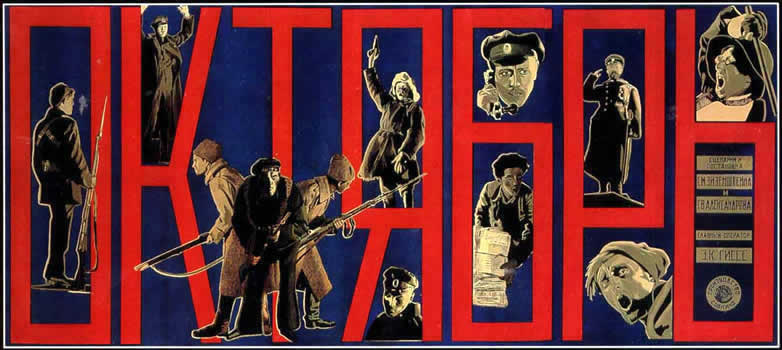
Sergei Prokofiev's  Cantata for the Twentieth Anniversary of the October Revolution, Op 74,  with Valery Gergiev conducting the Mariinsky Orchestra and Chorus. One Day That Shook the World to borrow the subtitle from Sergei Eisenstein's epic film October : Ten Days that Shook the World.  Prokofiev's Cantata was dynamite in many ways. It's an explosion of sound so overwhelming that it needs to be detonated in a performance space as vast as the Royal Albert Hall for full effect. It was also dynamite  because it was modern in musical terms, while purporting to celebrate increasingly regressive Soviet values.  For a while, the Revolution espoused progressive ideas like futurism and modern art,  Eisenstein was probably able to get away with radical innovation ten years after 1917. Twenty years later, Prokofiev was not so lucky. His Cantata was suppressed until Prokofiev and his nemesis Josef Stalin had died, ironically within days of one another.  Now, a hundred years after the Revolution, we can perhaps assess its impact on Russia and the world.  And with Gergiev and the Mariinsky Orchestra and Choir, we probably had the best possible interpreters.  

Eisenstein's film, made ten years after the Russian Revolution of 1917, depicted ten critical days in the struggle, starting with the return of Lenin, culminating with the creation of a new Soviet government dedicated to ideals of peace and equality.  Prokofiev's Cantata unfolds in ten sections, highlighting themes in the revolution, some with explicit texts, others in more cryptic orchestral form. Prokofiev prefaced the Prelude with a quote from Marx and Engels A Communist Manifesto, "A Spectre is haunting Europe, the Spectre of Communism".  Marx and Engels, though, were writing in 1848 when communism was no more than theory.  Prokofiev, on the other hand, had personal experience of what a communist revolution could mean.  One wonders if he's praising the system or hinting at something darker.   

In the second section, the choirs intone "Philosophers have simply explained the world in different ways. The point is to change it". Another equivocal statement that can be read in different ways. Perhaps the setting hides a clue to meaning. Male and female chorus members sing lines that overlap one another,  propelled by strict rhythm like the pounding of machinery.   Rising anthems in the orchestra suggest patriotic pride, but they're cut apart by an Interlude with jagged angles, and ominous crashing percussion. Perhaps we're in some huge, infernal machine.  In the section titled "Marching in Closed Rank", the voices in jerky lockstep, the rhythms are even more pronounced, highlighted with crashing cymbals and brass.  The text quotes Lenin,"...we are singling ourselves out as a special group who have chosen the path of struggle, not the path of compromise". 

Yet Prokofiev follows this with a tiny Interlude of  haunting quietness before the voices return, the women apart from the men.  The revolution has started but its outcome is by no means certain.  Thus rushing, frantic figures, passages where the singing is so fast that, with less articulate voice, the line might collapse. Psychologically true: Trumpets call, metallic bells are beaten. We even hear the hint of ships' bells underlining the reference to "Kronstadt, Vyborg , Revel" (where the Navy mutinied).  We even hear the wail of a klaxon - a touch of Edgard Varèse? Though it's probably a natural response to the images of machinery and violence.  The suggestion of gunfire hangs heavily over the orchestra.

Victory, at last? The women's voices sing a serene hymn, whose sweeping lines mihght evoke traditional hymns of harvest.  The men's voices join in.  ""The machinery of oppression has been toppled". Yet still Prokofiev paints mechanical processes into his music - the regular tread of machines and processes, the singers clapping their hands in joyless rhythm, the percussion section stamping their feet.  A single voice rises from within the closed ranks of the men's choir.  "We need the measured tread of the iron battalions of the proletariat". The combined choirs sing a secular hymn of unquestioning obedience to Lenin and his values.  The words quote Stalin, whose loyalty to Lenin might not have been as pure as the text suggests.

A section marked "Symphony" follows - flying figures, trumpets and flutes leading forward, the suggestion of pipes and drums, then a semi-pastoral melody, the strings singing as if they were describing fields of corn and a bumper harvest.  But grim ostinato intrudes: the timpani growl and the orchestra flies off again in frantic tension.  Perhaps in this extended section, with its sophisticated textures and inventive contrasts, Prokofiev is expressing that which cannot be voiced in a totalitarian society.  The choirs return, singing in unison, men alternating with women, singing a chorale to words by Stalin, praising the Constitution of the Soviet Union. But in a totalitarian state, constitutional procedures don't guarantee a thing. You could end up in a gulag, as Lina Prokofiev discovered.

So is Prokofiev's  Cantata for the Twentieth Anniversary of the October Revolution glorious propaganda? And, if so, for whom and for what purpose? In musical terms it's a lot more sophisticated and subtle than the blatantly crude texts suggest.  Was Prokofiev playing a dangerous double game? We may never know, but the Cantata is a lot more than kitsch  

Prokofiev's Cantata received its first public performance in 1966.  The following year, the Soviet Republic marked its 50th anniversary with a reissue of Eisenstein's October: Ten Days that Shook The World. A new soundtrack was added, specially written by Dimitri Shostakovich. It';s thrilling stuff,. These thoughts absorbed me while listening to  Gergiev and the Mariinsky Orchestra perform Dimitri Shostakovich Symphony no 5 in D minor, written at the same time as Prokofiev's Cantata  This was a wildfire hit with the regime, rehabilitating him in their good books.  Throughout his career, Shostakovich played cat and mouse with the system, not always in the best interests of his music.   This performance was so good that Gergiev rehabilitated it for me: it's not usually my favourite., but this was good.  Gergiev's  also a champion of the music of Galina Ustvolskaya.  Initially, she was in Shostakovich's inner circle but eventually their paths turned apart.  Ustvolskaya's music was so uncompromising that it compromised her status in society.  Who knows what Prokofiev would have made of her?  The Prokofiev that might lurk within this Cantata, that is. Keeping Prokofiev and Shostakovich apart,  Tchaikovsky's  Piano Concerto No. 3 in E flat major with soloist Denis Matsuev.

Sunday, 3 September 2017

Animal instincts : Gatti RCOA Mahler 4 Haydn Prom

Daniele Gatti, Royal Concertgebouw Amsterdam, credit Annedokter

 Danielle Gatti and the Royal Concertgebouw Orchestra Amsterdam  with Haydn Symphony No. 82 in C major, 'The Bear' and Mahler Symphony no 4 at Prom 66 at the Royal Albert Hall.  A combination which enhanced both parts of the programme.  A lively, agile Haydn bringing out its warm hearted humour.  Two hundred and fifty years ago, people thought bear dancing was entertainment. Wild animals tamed and controlled by man!  Nowadays, we realize that the wild animals were the men and the bears victims of torture.  Since bears can't actually dance, the music they danced to was  bucolic. Hence the Dudelsack (bagpipes) with its earthy drone. A top-flight composer, writing for rich folks, (who probably laughed at the peasants, too)  and now, a top-flight  orchestra playing for the Proms. What irony!  But better that than reality.

And so to Mahler's Symphony no 4, the last true Wunderhorn symphony,  which connects to a world long past, where barbarism against people was normal, even admired. It's often assumed that this symphony is cheerful and sunny, and in some contexts it does work very well that way. But beneath the bucolic charm, there's horror. Elftausend Jungfrauen zu tanzen sich trauen, Sankt Ursula selbst dazu Lacht. But St. Ursula caused the death of 11,000 virgins, who followed her in a Crusade across Europe. Most never got to the Holy Land, and even if they had, for what purpose? More irony - sainthood and delusion, the message still relevant in our supposedly more enlightened times.  But it's OK ! the dead kids are singing in Heaven, and there's lots to eat. The animals, like the children,  are happy to die. Wir führen ein geduldig's, Unschuldig's, geduldig's, Ein liebliches Lämmlein zu Tod.  (Please see my article Why Greedy Kids in Mahler 4) 

Mahler, Mengelberg and Diepenbrook, 1904

The interpretation of the final movement in this symphony has a bearing on performance, though there are many possible ways of doing it. The Royal Concertgebouw Orchestra Amsterdam have been doing it since 1904, when it was radical New Music. Yet music is endlessly reborn anew in each performance - different players, different listeners, always something new to discover.  That's yet another hidden message embedded in Mahler's Fourth Symphony.  Das himmlisches Leben  connects to Das irdische Leben, where a child starves because its mother keeps promising to feed it, but doesn't.  And so the dilemma of being an artist with integrity, who creates whether the public gets it or not.  Mahler's sympathies lie with the artist..  

Fortunately some listeners do get it.  Gatti's approach to the symphony is refined but purposeful, never losing sight of the ultimate goal. Bedächtig. Nicht eilen and In gemächlicher bewungen. Ohne hast :  No need to rush, but rather linger in the present, or more accurately, perhaps, in memories of a sunnier past.  Because good things will end. Just as in  Mahler's Symphony no 2, we linger as long as possible, resisting the inevitable. Gatti doesn't drag though, and his pace is sunlit. The Ländler rhythms suggest folk music, peasants - and peasant children - dancing. The RCOA can do rustic with elegance. For all we know, to a Dudelsack or similar middle-European instrument : nothing sophisticated.  Mahler pushes forth with the theme for solo violin, a reference to Freund Hein, the Fiddler whose presence leads to Death.  The Pied Piper, like St Ursula, leading the innocent to doom.  Thus the macabre scordatura tuning.  In deliberate contrast, the third movement, marked Ruhevoll, was particularly well defined. The cataclysmic final section, with its blazing trumpets, timpani and cymbals resolving back to the gentler theme highlighted with harps was good too, preparing the way for the all-important last movement.  

The soloist here was Chen Reiss. A pleasant voice, on the lighter side, which often works well in this part.  though it's not essential, since it can support quite  a lot of sensuality, which is important, since the text refers to earthly, earthy pleasures, like red meat.  It has been done extremely well by heftier voices and even by mezzos.  Gatti and the orchestra supplied the humour. Wonderful "animal" noises like the bleating of sheep and the wailing of oxen.  The orchestra also supplied the colour and drama - sharp, focused playing, reminding us that the knife-like edge is never far away, even in this pastoral vision. 


.   

Thursday, 31 August 2017

Renée Fleming at the Proms Barber Nielsen Oramo


Prom 61 : Renée Fleming sang Samuel Barber Knoxville: Summer of 1915 and Strauss with Sakari Oramo conducting the Royal Stockholm Philharmonic Orchestra (Konserthuset Stockholm), , in a programme that included  Carl Nielsen's Symphony no 2 "The Four Temperaments" and Andrea Tarrodi's Liguria.  Though the Nielsen was the highlight of the performance - done with great verve - BBC marketing played up the diva, whom most of the audience had come to hear. And rightly so, for Fleming is more than just a singer, she's a personality of such stature that any opportunity to hear her now should be cherished.

For me, the draw was Samuel Barber's Knoxville: Summer of 1915 op 24 (1948), an astonishing beautiful piece which I love dearly. There's nothing quite like it.  It's a stream-of-consciousness reverie, heard through a haze of orchestration, evoking what it feels like to be young and protected, still within the embrace of loved ones.  It is high summer,in Tennessee, inn the cool of the evening after a long, hot day. "...It has become that time of evening when people sit on their porches, rocking gently and talking gently and watching the street and the standing up into their sphere of possession of the trees, of birds' hung havens, hangars."  Note the melody with its sense of slow, rhythmic movement, as if the whole world was a cradle, rocking gently in the breeze.  Nothing much happens, and that's the beauty.  In the quietude, even the tiniest detail is lovingly observed, like the streetcar in this distance,  whose "iron whine rises on rising speed; still risen, faints; halts; the faint stinging bell; rises again, still fainter, fainting, lifting, lifts, faints foregone: forgotten."

Time itself seems to slow down and compress. The moment is so precious that the text lingers on images, trying to make them last as long as possible.  Thus the sudden exaltations, with inventive non-words created spontaneously.  "..They are not talking much, and the talk is quiet, of nothing in particular, of nothing at all. The stars are wide and alive, they seem each like a smile of great sweetness, and they seem very near.".   Eventually even the images shrink to their most instinctive essence. The poet is an infant again, the very idea of Self erased,nestledbackin the womb. .  "All my people have larger bodies than mine". But this nostalgia is doomed. The text takes on the semblance of prayer.  Time cannot stand still. These people will die. It's that sense of fragility and loss that makes Barber's Knoxville 1915 such a special piece.

This also makes it more difficult to perform than might seem at first.  The orchestration is deceptively simple - a  sensual woodwind melody, gentle strings, soft rocking rhythms, which need to be created with restraint yet deep feeling.   Received wisdom suggests that the singer should sound child-like, but I'm not so sure, for the protagonist is clearly someone who has grown old and learned what it means to lose what's closest and dearest.  Somehow the singer has to evoke both perspectives at once : artfulness, but without artifice.  There are many recordings, but very few get it right.  Better, I think, simple sincerity.  More than ten years ago, I heard a performance so self consciously over the top that I still shudder. (NOT Renée Fleming)  So  I'm so glad that Renée Fleming has at last commercially released a recording of  Barber's Knoxville Summer of 1915 (with Oramo and the RSPO) because the gap in the discography needs her.  Now, she's no ingénue and needs effort to project in the Royal Albert Hall. If that means sacrificing clarity of text,, for musical line, that's fine by me. She's  still good value.  She was on more familiar ground with the Transformation scene (Ich komme) from Richard Strauss Daphne.

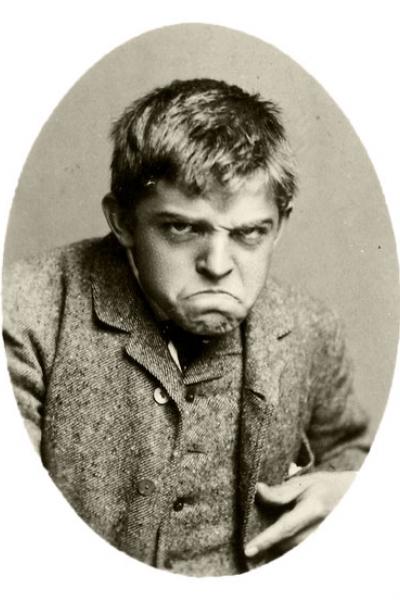
Carl Nielsen's Symphony no 2 "The Four Temperaments" (Op 16, 1902)  describes the  four temperaments - Choleric, Phlegmatic, Melancholic and Sanguine. An interesting companion  piece to Barber's Knoxville the Summer of 1915.   Nielsen, though, defines each mood with greater expansiveness. With glee, even.  One can imagine Nielsen's exuberant high spirits poking fun at people taking themselves too seriously.  There's a famous set of photos for which Nielsen posed, squirming and grunting, twisting his face in exaggerated emotion.  Please see my post here for more photos)  Sakari Oramo is one of the top Nielsen conductors around.  Indeed, he did the Nielsen symphonies as a group in parallel to a similar set around the same time as did John  Storgårds.  Both conductors are good because they have distinctively individual approaches which highlight aspects of the composer's idiom. Oramo's positive-thinking geniality works extremely well, especially in this symphony where each Temperament needs to be defined with almost anarchic humour.  Earthy playing from the Royal Stockholm players, with lots of mischevious spark.  Definitely the high point of the whole evening ! 


The Prom began with Andrea Tarrodi's Liguria, a world premiere, an atmospheric piece evoking the moods of the landscape or seascape around Liguria. Rich, full bodied sounds, moving on multiple levels at once, as dense and teeming in detail as the ocean is.  A central passage where clarinets, flutes and oboes dance together before lively percussion and pizzicato figures. In a third section, the pace and textures build up before detumesence in sparkling figures, lit by tolling bells.  A very well written piece that deserves to be heard again in a programme that gives it more prominence.

Sunday, 27 August 2017

Hussite Hymns - Jakub Hrůša Bohemian Prom


At Prom 56, Jakub Hrůša conducted the BBC Symphony Orchestra in a programme on the theme of the Hussite Wars and their place in Bohemian culture - Smetana, Martinů, Dvořák, Janáček and Josef Suk. Pity the BBC publicity machine branded this  "The Bohemian Reformation", like Nigel Farage squealing "Independence Day" as if the fate of the nation was a movie.  The Hussite movement happened started a hundred years before the Luther Reformation. They were wiped out.  Jan Hus (1369-1416) was burnt at the stake and the religious ideas he espoused largely forgotten. But the movement became a cultural symbol, adapted to the growth of Czech identity. Hrůša's programme was much more than tub-thumping nationalism.  In any case, there's a lot more to national heritage than bombastic bullying. Hrůša's Prom was a sophisticated, musically literate  study of specific themes in Bohemian music history, and needs to be appreciated in musical terms.

Hrůša started with the Hussite hymn Ktož jsú boží bojovníci (Ye Who Are Warriors of God), the men of the BBC Singers singing without accompaniment.  Though we rarely hear the hymn as hymn, its tune is familiar.  Smetana used it in Má vlast, quoting it in the section Tábor which we heard here, the town of Tábor being a Hussite fortress.  Thus the quiet, tense introduction, developed through brass and timpani, which grows bolder as the hymn emerges.  Triumphant climaxes and the hymn theme surges. But as we know, the Hussites were annihilated.  Thus Blaník depicts the even earlier legend that St Wenceslaus, patron saint of Bohemia, will return to defend the nation.  Smetana, writing at a time when Bohemia was ruled by the Hapsburgs, drew connections between the tenth-century saint and the Hussites. The strong angular themes in Tábor return in even greater glory in Blaníkmassive drum rolls and crashing cymbals

In 1938, Czechoslovakia was annexed by Germany, with the implicit approval of Britain.  Bohuslav Martinů's Polní mše, H. 279 Field Mass (1939) was written for Czech exiles fighting with the French against the Germans. Thus the strange instrumentation, with brass and percussion employed to suggest the idea of performance in battlefield conditions.  Drum rolls, marching rhythms,  trumpet calls and a chorus of male voices. But also piano and harmonium and a part for baritone soloist beyond the scope of an average amateur.  Fortunately, in Svatopluk Sem, we heard one of the most distinctive voices in the repertoire. Sem is a stalwart of the National Theatre in Prague, well known to British audiences for his work with Jiří Bělohlávek who transformed the way Czech music is heard in this country.  Sem delivered with great authority, imbuing the words with almost biblical portent.  His text is based on poetry by Jiří Mucha, who was soon to marry Vítezslava Kaprálová. (please read more about her here  Her Military Sinfonietta (1937) would have worked well in this programme, though it doesn't include a part for choir.

In Martinů's Field Mass, the choir acts as foil to the soloist, voices in hushed unison, mass (in every sense) supporting the individual.  Though their music is relatively straightforward Miserere, Kyrie and psalm, this simplicity enhances the idea of mutual support, reflecting the relationship betweenpiano with harmonium, voices and soloists surrounded by atmospheric percussion and brass.  The version we heard at this Prom is the new edition by Paul Wingfield.

Somewhat less spartan instrumentation for Dvořák's Hussite Overture O67 (1883) though the hymn-like purity of the anthem  rings through clearly. The rough hewn faith of the Hussites doesn't support exaggeration.  Full crescendos and running figures, (piccolo and flutes) flying free from the fierce "hammerblows"of the hymn.  A glowing finale, from the BBC SO in full flow.   The pounding rhythms of  the Hussite hymn come to the fore in the Song of the Hussites  from The Excursions of Mr. Brouček to the Moon and to the 15th Century   Here the reference to the hymn is used for satire, contrasting the  morality of the Hussites with the depravity of modern life, represented by the feckless, drunken Mr Brouček. To conclude this huge, ambitious programme,

Josef Suk's Prague op 26 (1904), in a tribute to Jiří Bělohlávek who made the BBC SO one of the finest Czech orchestras outside Czechia.  (Please read my tribute to  Bělohlávek with many links to his London performances of Czech repertoire. ).The same goes for the BBC Singers who sing Czech pretty well.  The piece was written at a dark time in Suk's life, after the death of his wife Ottilie and father-in-law Antonin Dvořàk. It connects to Suk's Asrael Symphony (op 27, 1905)  and even to The Ripening ( op 34, 1912-7).  All three pieces deal with death, made almost bearable by faith, despite extreme grief.In Suk's Prague, the Hussite hymn makes an appearance as a symbol of something that lives on beyond temporal restraints., Suk seems to be surveying the city he loved, contrasting its history of struggle with his present.  Perhaps, as he looked out on the castle, cathedral and the Rudolfinium, he could position his sorrow in a wider context. People die, but cultures remain.   That's why I feel so strongly that the term "Bohemian Reformation" is a crock. There''s a lot more to heritage than simplistic nationalism.  Hrůša conducted Suk's Prague with such intensity, that the performance eclipsed all else in an evening filled with high points. 

Jakub Hrůša's belated Proms debut but he is one of the most exciting conductors around, full of character and individuality.  Though he's young, he's extremely experienced, and at a high level. In the UK, he's conducted at Glyndebourne and with the BBC SO and the Philharmonia, where he becomes Chief Guest Conductor next season.  He is a natural in Czech repertoire, and a possible successor to Bělohlávek, whose memorial he conducted in Prague, but he's also very good in other material. Definitely a conductor to follow. 

Please also read my article Smetana's role in the modernization of China   and many other posts on Czech repertoire, film etc.

Wednesday, 23 August 2017

Prom Oramo Elgar Symphony no 3 BBC SO

Sakari Oramo,BBC SO.  photo :BBC


Sakari Oramo conducted Elgar Symphony no 3 in the performing edition by Anthony Payne, at Prom 51, with the BBC SO.  Big event, because Oramo is one of the great Elgar conductors,. Oramo was Chief Conductor of the City of Birmingham Symphony Orchestra during the 150th anniversary of Elgar's birth. Since Elgar was so closely associated with Birmingham, this was no concert series, but a kind of pilgrimage, attracting the most intense of Elgar devotees. Oramo's performances were outstanding, so much so that he was awarded the first ever Elgar Society Award, despite strong competition. True Elgar fans, whose primary concern is excellence, not the nationality of the conductor.  So please, let us have no more from those who keep harping on about the novelty of a Finn conducting Elgar.  Elgar was championed in Germany before the First World War. A political, not musical eclipse.  Sibelius was championed in Britain very early on in his career, as were Janáček, and Dvořák  We need to get over thinking in insular terms.

Ten years on from those Birmingham concerts, Oramo is even more impressive, his intuitive grasp of Elgar's idiom enriched by maturity, enhanced by the BBC Symphony Orchestra, playing extremely well,  "as if to the manner born", not "manor", for Elgar was someone whom all can relate to.  Oramo brings out the warmth and humanity in Elgar, wonderfully life affirming and fresh.

Elgar did not write a "cycle" of symphonies, completing only two.  The Third is a realization of the sketches he left, elaborated by Anthony Payne, who lived and breathed Elgar so intuitively that this completion is as close as we're ever likely to get to what might have been.   A friend messaged me last night after the Prom. "When are they going to "Sir" Anthony Payne?" And so they should. Payne and his wife  Jane Manning are venerable presences in British music and deserve recognition.


How fortunate we are to have this realization.  It flows freely as if Elgar had become rejuvenated again after a long fallow period.  The introductory passage surged, full of expansive confidence, strong chords giving way to lighter, brighter passages before a typically "Elgarian" flourish.  Oramo brought out the contrasts between turbulence and serenity, suggesting ebullience in the face of despair. The warm-hearted scherzo, an allegretto particularly suited to Oramo's personal style,was well shaped, with an edge of disquiet creeping in, developed further in the third movement. This moved like a waltz, elegantly poised, but veiled,as if being remembered from the past.  Particularly lovely,sad strings. with just enough rubato to suggest the palpitations of the heart.  From this rose the woodwind theme, soaring upwards to a new,more expansive plane. But the mood darkened, underpinned by ominous timpani. Soulful surges,strings, brass and woodwinds together, leading into a section so refined that it seemed to shimmer in haze.  In the Finale, the mood of confidence returns in a march of sorts, with a firm tread, lit by cymbals..Though a sense of unease remains (single chords and a wavering melody) the movement ends affirmatively. Brass figures rise,joined by winds, and "Elgarian" richness in the strings,culminating not in fanfare,but in lingering glow.,with quietly tapping tam tam.   This is important, since Elgar didn't live to complete the piece. It should not end in certainity, but in ambiguity, as a mark of respect.

Before Elgar, Sibelius: Scènes historiques, Suite No. 1 and Saint-Saëns: Piano Concerto No.2 in G minor, with Javier Perianes.

Tuesday, 22 August 2017

Beethoven or Gerald Barry ?


 Prom 50 should have been one of the top picks of the season, with Mirga Gražinytė-Tyla and the City of Birmingham Symphony Orchestra.  Beethoven and Stravinsky......but Gerald Barry ?   Beware any composer who repeatedly compares himself to Beethoven. Even in self-parody, a joke taken too far stops being a joke, but a sad display of The Importance of Being Earnestly Self Important.  No doubt there will be many who'll fall over themselves being clever and flatter Barry for this latest jape (of many). But methinks, it's pretentious tosh. 

Barry's Canada was inspired by a spur of the moment thought, while being held up at an airport in Canada, which he equates with Fidelio, Beethoven, Idealism, Liberty, Oppression and so on, and throws in an extra lick about surveillance society to boot. Gee, clever !  Canada has nowt to do with  much at all unless you like slam bang wham and repeated words and phrases.  Once, Beethoven stood for something. Now in this post-truth universe where anything goes as long as you can get away with it, we get what we deserve.  Barry, not Beethoven.. Kudos to Allan Clayton and to the band, and  to whoever directs Barry's career.  But of course, what do I know?

H K Gruber used to play The Fool but Gruber was genuinely creative and maniacally inventive. Because he wasn't fooling himself. So the Prom audience and performers laughed. But now all laughs are what they seem. Thus perhaps the need for Beethoven-lite, a Symphony no 5 that breezed along merrily, and why not for a change? After Barry, Beethoven can't compete. Fortunately, in the first half we had Beethoven's Overture "Leonore" no 3 and Stravinsky Violin Concerto no 2 with Leila Josefowicz, expressively played. Her encore was Esa-Pekka Salonen's Lachen verlernt - Laughing Unlearnt - which playfully juggles repeated phrases, but which is genuinely witty.

Sunday, 20 August 2017

Glorious Gurrelieder : Simon Rattle brings Schoenberg to the Proms


Prom 46, Schoenberg Gurrelieder with Simon Rattle and the London Symphony Orchestra, Simon O'Neill, Eva-Maria Westbroek, Karen Cargill, Peter Hoare, Christopher Purves and Thomas Quasthoff.  And three wonderful choirs - the CBSO Chorus, the London Symphony Chorus and Orfeó Català from Barcelona, with Chorus Master Simon Halsey, Rattle's close associate for 35 years.  No wonder tickets almost sold out as soon as they went on sale. Everyone in town seemed to be there. Thomas Quasthoff sat in the coffee shop, holding court with friends and fans. Simon Rattle got cheered when he came in  sight on the stage, still in street clothes, by Prommers who were already seated half an hour early. 

Gurrelieder is a spectacular so extravagant that, for maximum effect, it needs to be experienced in a performing space where the vast forces can let rip in all their glory.  Rattle has conducted it many times in many places,  but there's nothing like the Royal Albert Hall for sensational presence, so he was able to unleash the full forces of Gurrelieder without inhibition.  For Gurrelieder is meant to be overwhelming, Waldemar defies God, who wreaks cosmic vengeance. He and his men are doomed to spend eternity riding through the night in a hunt. The peasants (here a single symbolic figure) are terrified by the supernatural, but Klaus-Narr, being a Fool, can recognize the ghosts for what they are - cosmic forces, and the demonic power of Nature.

Gurrelieder starts with a rhapsodic prelude, string lines swelling and heaving, harps adding warmth, woodwinds delicate, naturalistic touches. The reference is probably Siegfried's Journey down the Rhine, for Waldemar is about to embark on a journey of destiny.  Like Siegfried, Waldemar spends his innocence hunting in the woods, where Tove is concealed.  Hence the Wood Dove, like the Wood Dove in Siegfried, an all-seeing avatar.  Dense forests, in Germanic culture, symbolize powerful, though sinister, primeval forces.  The subconscious, source of creativity and danger.   Gurrelieder is  song symphony of Wagnerian proportions.  Simon O'Neill, being a very experienced Wagnerian, brought dramatic authority to the role. Waldemar is no Tristan but a king who thinks he can throw curses at God. If anything, he's a Flying Dutchman, doomed to sail the seas forever.  O'Neill's Waldemar is an embattled soul, tormented and defiant, instinctively understanding the part.  Waldemar is not a Romantic Hero, but a man cursed, struggling against Fate. Thus the roles of Waldemar and Tove, though well written musically, aren't particularly well developed in  terms of psychological complexity.  For Schoenberg, they are figures in a landscape, who will become incorporated into Nature and nature legend around them.  Nonetheless, Eva-Maria Westbroek created Tove with great vocal depth,  and Karen Cargill sang the Wood Dove, a bird of darker portent than Siegfried's wood dove.

Schoenberg was only twenty-six when he wrote what was to become the First Part of Gurrelieder, but in the interim, he developed a highly original identity. In Part Two, the harps still sing, but the sweeping strings are broken by fearsome chords  which replicate the word "Herrgott! Herrgott!" which O'Neill sang with intense flourish.  Note the text, carefully.  Waldemar accepts his fate, but frames it as a creative destiny.   He chides God. "Das heisst Tyran, nicht Herrscher sein!". Like any earthly king, God needs Fools to keep him in order. Thus the significance of Klaus-Narr and of the Narrator, both figures who can see beyond events and guess significance.  In the years between the time Schoenberg began writing Gurrelieder and completing it, he developed a distinct creative identity. The true artist, as innovator, will often be alone, even vilified, but artistic integrity is paramount.  thus "Lass mich, Herr, die Kappe deines Hofnarrn tragen!".

The peasant (Christopher Purves) is horrified by the sight of Waldemar's Ghost Riders in the sky (complete with echoes of hunting horn).  His response is to hide, pray and bolt his door "noch Stahl und Stein, so kann mir nichts Böses zum Haus Herein!"  "Holla!" to all that.  The men's voices in the choirs sing a wild, rhythmic chorus, alternating explosive force with singing of hushed subtlety.  O'Neill sang Waldemar's "Mit Toves Stimme" so it rang out as an anthem: the  love that keeps Waldemar singing is like the inspiration an artists needs to create.


The music that introduces Klaus-Narr  is quirky but pointed, The Fool (Peter Hoare) is himself a ghost, serving his dead King in the same way that his king serves the God who doomed him.  Hoare let the lines curl round his tongue, spitting them out in line with the odd angular rhythms in the music. Waldemar will not be cowed.  Trumpets call, and hunting horns. Waldemar's still a huntsman and fighter who will  barge his way into Heaven. The huge chords in the orchestra return, but fade away, for dawn is about to break.  The Men's voices sang in dramatic hush as Waldemar's men sank back into the grave.  Rattle and the LSO created a haunting orchestral Prelude, settingb the tone for the entry of the Narrator (Thomas Quasthoff). Brooding somnolemce, eddies of quirky sound, like will o' the wisps illuminating darkness.   In many ways, the part is the heart and soul of the piece, for it's written as Sprechstimme, neither song nor speech, a device which Schoenberg was to make distinctively his own. This section is extraordinary, so unusual and so powerful that it leaves the listener stunned.  Quasthoff did the Narrator (and the Peasant) with Rattle in  Berlin in 2000.  Though he's long ceased singing, he can still act, and speak the part with a singer's ear for song.  It's quite a part. I will never forget hearing Hans Hotter do it way back in 1994, when he was already in his eighties.  And then the chorus exploded in that glorious "Seht die Sonne!"

This Prom was recorded for repeat online broadcast, and filmed for TV broadcast on September 3rd (BBC TV 4). 

This review also appears - with extra pics - in Opera Today

Photo: Roger Thomas

Thursday, 17 August 2017

Adventures in exotic worlds - Cédric Tiberghien, François-Xavier Roth Prom


Adventures in exotic worlds ! A vibrant Prom, with François-Xavier Roth, Cédric Tiberghien, and Les Siècles, in an unusually stimulating programme of music by Saint-Saëns  Délibes, Lalo, and César Franck. The French fascination with exoticism wasn't mere decoration. By absorbing alien sounds and values, French composers were able to explore new ideas.  developing a genuinely original synthesis which would transform the French aesthetic. From the expansive worldview of Louis XIV to Rameau, to Debussy and beyond  -  limitless exploration of new horizons and ideas

The music of Saint-Saëns is currently enjoying a revival.  François-Xavier Roth is a Saint-Saëns specialist - his father is the organist Daniel Roth - so it was good to hear the overture from Saint-Saëns' opera La princess Jaune op 30 (1872).  In this opera, a young man called Kornélis is obsessed with things Japanese. He experiments with opium and is transported to a fantasy land with a "Yellow Princess". Although the piece is entirely western,  Saint-Saëns shows an awareness of alien form quite remarkable in that the opera was written only two years after the World Exposition at Paris sensationally brought Asia to the West.  Recently, Roth conducted Saint-Saëns Le timbre d'argent written at about the same time as La Princess Jaune. a joint production between  l'Opéra-Comique, Paris and Palazetto Bru-Zane. (please read more about Le timbre d'argent HERE).  From Délibes Lakmé,  not The Bell Song which is so famous that it's even used on TV ads, but some of the ballet music.  It's possible that Délibes had an inkling of what Indian wind instruments may have sounded like, for the flute solo is decidedly un-western.  It's significant, too, that this was written for dancers, giving a firm rhythmic structure to the piece.

Roth has conducted Saint-Saëns' Concerto for piano and orchestra no 5  (The "Eygptian"), numerous times with different orchestras, but hearing it here with Les Siècles and Cédric Tiberghien, also a passionate advocate of the piece, was a special occasion, made even more unique by the use of a period piano, an 1899 Bechstein, with a remarkably agile, almost bell-like voice. As Tiberghien says in the BBC Radio 3 rebroadcast, in this piece a modern concert grand would sound "ugly".  Certainly, this performance revealed the fragile beauty in the piece which is so  important to interpretation. Although it was written in Luxor, where the composer went on holiday, it is fundamentally an example of Belle Époque syncretism : Fantasy Egypt, not reality, an Egypt where the present is coloured by dreams of the past.  For men of Saint-Saëns' generation, European civilization was the height of progress, and that civilization encompassed the world.  Napoleon's conquest of Egypt differed from the British conquest of India, just as French and British colonialism followed different models.  The difference between French and British attitudes to colonialism affected music history : much more integration on many levels between the colonies and metropolitan France.

Ultimately, Saint-Saëns' Piano concerto no.5 is not picturesque, and not "light music" to be kitsched out with fake palms and camels. It's a work of  bold musical inventiveness and originality.  Tiberghien faced the fearsome technical challenges : arpeggios flew with faultless confidence and elegance, making the frequent changes of imagery flow naturally, like the Nile Delta, with its confluent tributaries, building up a panorama of great richness and detail.  Vaguely Arabic motifs blend into harmonies that are "modern" and European. Thundering passages suggest constant flux,with swirling diminuendos and passages of flamboyant brilliance. Nothing backward here, though the references may come from things remembered.

This is where the period piano and orchestra proved their value.  Saint-Saëns' Piano concerto no.5  isn't "about" Eygpt but about the experience of being in  place where you're only in temporary sojourn : tourists enjoying luxury, dreaming of a past that colours the present.   Hence the idea of fragility, so beautifully evoked in this lively yet delicate performance. The pyramids are evidence that even great pharoahs aren't immortal (except in legend). All too soon, the tourist will be gone,  notice the brisk, no nonsense ending!  Back to daily reality.Tiberghien   made the piano sing, almost like an Arabic string instrument, its plaintive voice much more in keeping with the flutes and other winds, and the horns and trumpets.  This piano wasn't a heavy-handed colonial barking orders at the natives, but one prepared to speak to the orchestra in terms of respect and familiarity.  A truly exquisite performance, spakling with light, but with great depths of insight. 

Tiberghien's encore solo was the Debussy Prelude for piano La Puerta del Vino L123/3, a reverie on Moorish Spain, nicely hushed and intimate.  Then, making the most of this unique combination of period piano and orchestra, the Prom continued with César Franck Les Djinns inspired by a poem by Victor Hugo about supernatural spirits in an Islamic fantasy.  Elaborate figures in the piano part, matched by inventiveness in the orchestral writing.  A strong sense of movement, the piano moving in and out from the orchestra, suggesting the sound of bells. Are the Djinns flying amongst clouds ? We use our imaginations and wonder.

Namouna (Suites Nos. 1 and 2) (1881) comes from Lalo's ballet based on a poem by Alfred de Musset.  More supernatural spirits in Near Eastern fantasy !  Here, Roth and Les Siècles demonstrated the variety of their instruments.  Each of the ten sections depicts a scene, coloured by different sounds. Three sets of percussion - the "bass" with large side drum, the "baritone" with  wider, flat drums and the "tenor" beating a tambour whose sound can be adjusted by tightening the strings that hold the leather to the wood.   Timpani are thrilling, but these very individualistic voices sing with a warmer, more subtle tone. Plus they don't blast away other instruments, At one point the sound of a triangle rang out loud and clear.  Then to the blockbuster : the Bacchanal from Saint-Saëns' Samson et Dalila   so theatrically exotic and so famous that it's become synonymous with "oriental" music  in popular culture. What energy and what fun ! Ideally suited to Roth's sense of humour.

Roth's a born communicator, who has been known to sing to his audience! (read more here), and often speaks to them.    When the Orchestra of SWR Freiburg Baden Baden was on the point of being disbanded, Roth made an impassioned speech at the 2015 Proms  in support of his players and the orchestra's traditions. This time he spoke about this Proms programme and the way music can break down walls between cultures. And thus the encore, a French arrangement (by Felix Roth, son of the conductor) of Get Lucky a song about America by Daft Punk with castanets and maracas, sassy and breezy and full of fun.

Tuesday, 15 August 2017

Bubbling brew : Turnage Hibiki, Prom Ravel Debussy Kazushi Ono


Mark-Anthony Turnage Hibiki (2014) at the BBC Proms, with Kazushi Ono and the BBC Symphony Orchestra, Sally Matthews, Mihoko Fujimura, the New London Children's Choir and the Finchley Children's Music Group, preceded by Debussy and Ravel Piano Concerto in G major with Inon Barnatan, so beautifully played that even someone like me, more into voice and orchestra, could throroughly enjoy.

Ono conducted the premiere of Turnage's Hibiki in Tokyo in December 2016 with the Tokyo Metropolitan Symphony Orchestra of which he is Music Director.  Hibiki is a substantial work for large orchestra, two soloists and childrens' choir. According to the publishers Boosey & Hawkes, it "offers consolation after loss – whether from war, earthquake or tsunami". That's a tall order, almost impossible to fulfil.  Consolation is trivial band aid in the face of such extreme horror.   It's meaningless unless we reflect on the causes of catastrophe and resolve that such things should never, as far as possible, happen again.

Numerous Japanese writers, composers, film makers and artists have reflected on and examined the issues arising from war and nuclear annihilation.  Indeed, you probably can't be an East Asian  intellectual and not ponder 150 years of war and traumatic social change, not only in Japan but in China and the rest of Asia.  Masao Ohki's Hiroshima Symphony, written only 7 years after the bombs fell, is graphically descriptive (read more here) . Ikuma Dan's Hiroshima Symphony (1985) is even more sophisticated.  It's an important piece of world significance. Please read more here)

There's no reason why western composers shouldn't engage with these subjects. We're all part of humanity.  But it's difficult to approach specifically Japanese aspects without an understanding of the cultural, social and historical background.  Mark-Anthony Turnage is good on music with social conscience. Once I got over the shock value of Anna Nicole, I grew to love its insights into consumer-obsessed society and the degradation of those who buy into the scam. Read more HERE  But Anna Nicole is a western icon, and Turnage likes Americana. That doesn't necessarily mean he can't write about other cultures, but I'm not sure how to take Hibiki. Does it penetrate much beneath the surface? Is it enough to address the many long-term implications of Fukushima simply by repeating the name over and over? I'm no composer but I'd rather that the music itself spoke, not the words.  No disrespect to Turnage. Benjamin Britten's Sinfonia da Requiem had so little to do with Japan that he really should not have compromised himself by taking the money.  It would probably take a Beethoven or Bach to write something truly transcendant. "Consolation" isn't enough.

Kazushi Ono did Turnage's Hibiki more than justice. From the BBC SO he drew some very committed playing. They don't do as much Turnage as they should and this is a bit more than typical Turnage, so all honours to them.  Hibiki unfolds over seven sections, like a postcard book..  But Hiroshima and Nagasaki didn't actually lead to Tohoku or the Tsunami or to Fukushima.  Natural disasters aren't man made or specific to any one country.  Nuclear power on its own isn't evil, it's misused and abused. As anyone who's ever watched Japanese movies should know.  See my piece on Godzilla and the Tsunami,  The seven parts together don't cohere. This weakens the impact of the whole and undercuts the claim that it's an act of consolation.  Wisely, Ono marked the breaks with long silences, so each section can be heard alone, without a thread.  Unfortunately, substantial parts of this year's Proms audiences are obsessed with clapping any chance they get. They don't care enough about music to pay attention and listen.

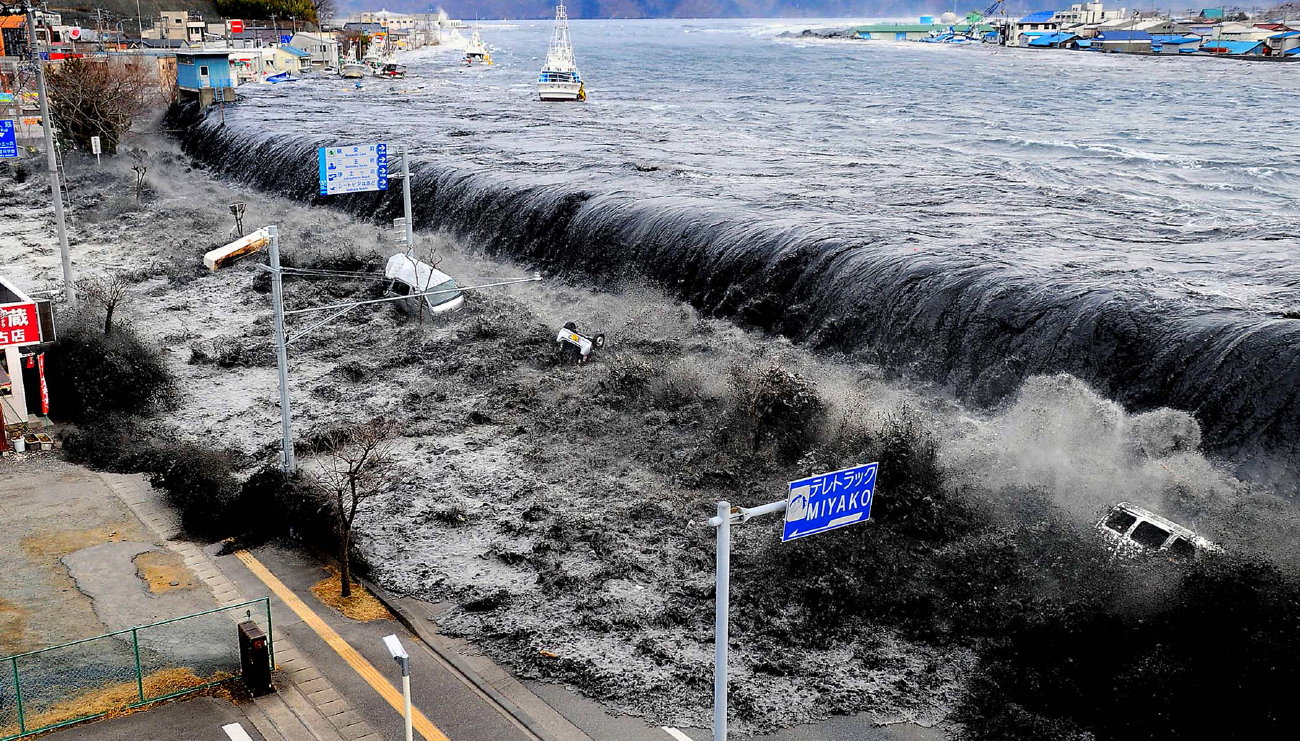
The first two sections are named after Iwate and Miyaga, two of the areas hit by the 2011 Tsunami.  Blocks of sound bubble in the first movement, in jerky ostinato with nice jazzy trumpet calls, high pitched winds and swathes of strings. Oddly cheerful! A long ominous wail marks the start of the second section, suggesting perhaps the flow of the waves rolling onto land. No-one will ever forget the footage caught on film or the frightening silence, broken only by crushing debris.  The timpani pound, brasses wail and the orchestra plays a long line of multiple fragments and layers.  Fearsome growls and the sound of a bell.   There certainly is scope for a piece in which music could translate the idea of multiple fragments and layers of density, flowing and churning in different sequence, but Turnage can't develop the concept in the space of a few minutes.

The third section "Running" represents a poem "Mother Burning" by Sou Sakon which describes the poet running from flames. But the mother, following behind, is engulfed.  Rapid fragments of words and sound, the two soloists singing lines that intersect rather than connect.  Turnage's thing for percussion and screaming brass is used to good effect, the vocal lines more choppily employed: but that's what happens when you're running for your life and can't take long breaths.  The childrens choirs sing an adaptation of a Japanese children's song similar to "Twinkle, twinkle Little Star" The English accents of the young singers, singing in Japanese, add a surreal touch, more poignant than if they were singing in a language they'd normally speak.  The melody is taken up by the mezzo, Mihoku Fujimura, a much welcome regular visitor to the UK.

Suntory Dance , the central movement, makes a striking diversion from the threnodies before and after.  It's also the best section, so good that it could act as a stand-alone concert piece.  Here, Turnage's facility for strong brass and percussion comes to the fore: quirky, wayward rhythms, angular blocks and more busy, bubbling figures from which the idea of "dance" might come.  I don't know why "Suntory", which is the name of the concert hall and of the company that financed it.  They manufacture alcoholic drinks, and one of their big brands is named Hibiki, "Japanese Harmony". The piece is so lively that it could be an  anthem for the company, used in encores and social occasions. So much for the BBC translation that Hibiki just means  "beautiful sound".

After this interlude, darkness returns. Brooding timpani and moaning brass, string lines shining with metallic edge. Lovely woodwind passages: Fujimura sings lines from texts from Monzaemon Chikamatsu’s The Love Suicides at Sonezaki, a  Bunraku drama from 1703. It's such a classic that it's been adapted for cinema, its tale of doomed love a recurrent meme, though what connection this has to Hiroshima or to the Tsunami, I don't know.  Much has been made in the publicity material for Turnage's Hibiki about the Mahler connection, but frankly I cannot hear any resemblance to Das Lied von der Erde,.  But the real subject of Das Lied von der Erde is Mahler himself, and his metaphysics  The orientalism in that piece reflects the original poems Mahler used and adapted for his own purposes. And in any case, they weren't Japanese but Chinese.  No doubt much will be made of this in the media by those who don't really know Das Lied von der Erde.  Double-dose cultural appropriation.

The final section, for orchestra and children's voices, is swirling abstraction, the word "Fukushima" repeated, almost mechanically.  Turnage's Hibiki is good listening but it  doesn't really hold together. The parts are greater than the sum, aside from the vivacious Suntory Dance.   That's excellent, and parts 1, 2 and 4 work well together musically, but parts 3, 4 and6 are weak : No fault of the performers, though.  It's not nearly near the level of Turnage's Remembering : in memoriam Evan Scofield, a work of heartfelt sincerity. (Read more about that HERE)

Sunday, 13 August 2017

Mahler 10 Schubert Dausgaard BBC SSO Prom

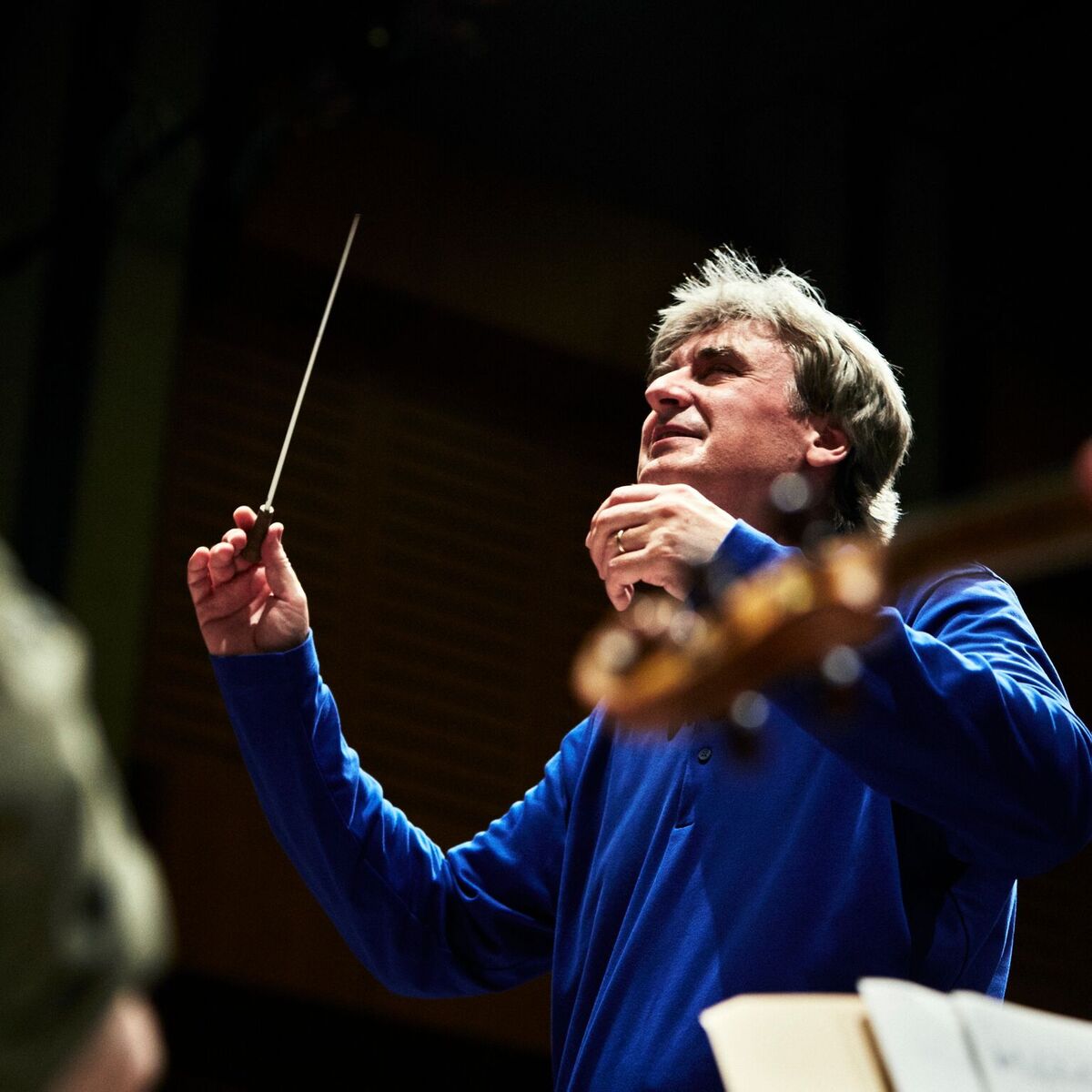
Thomas Dausgaard (Credit: Thomas Grøndahl)
Thomas Dausgaard, new Chief Conductor of the BBC Scottish Symphony Orchestra, with two Unfinished symphonies, Schubert Symphony no 8 Unvollende, and Mahler Symphony no 10.  Uncompleted symphonies always fascinate because they open out tantalizing prospects.   This Prom was interesting because it focused on possibilities. Since we'll never know how the symphonies might have been completed, we listen differently, keeping things open-ended. 

Though neither Dausgaard nor the BBC SSO are new to the Proms, it was their first Prom together in this new season.  Interesting potential, there, too. Dausgaard's less of a showman than Runnicles was, closer, perhaps to Ilan Volkov who was (and is) a thinker, something to value in these times.
Unfinished symphonies help us focus on the music, and on the composer.  The curse of a review system is that performances are judged by the number of stars they get in a review, rather than by how such judgements are arrived at. We get locked into like/dislike instead of analyzing why we think the way we do.  Most performances have something to offer, pro and con: ultimately what counts is what we've learned from the experience.

Deryck Cooke's third performance version remains the standard because it reflects years of immersion in Mahler's work and creative processes. Everyone seems to want a shot at "completing" what would have been Mahler's Tenth symphony, but many aren't worth the effort.  Better, I think, to listen in depth to Cooke,  which brings out the inventiveness that makes Mahler so challenging. In a way this is a schizophrenic symphony,  the duality in the first movement contradicted in the second two. What it's not, though, is a death symphony.  If anything, it deals with light and transfiguration, as in nearly all the other symphonies.  When it was written, Mahler was about to embark on a new stage in his career, possibly even more radical than his past. This affects interpretation.  Where was Mahler heading, and what was he taking with him from the past?

Dausgaard and the BBC SSO created an elegant Adagio, the shimmering opening strings enriched by a richer response.  The celli and basses were positioned in the centre of the orchestra, flanked by the winds, brass to one side, percussion on the other.  Interesting, since the lower strings are in many ways the heart of this movement, whatever it might mean. If the duality represents the composer and his "ewiger weiblicher" muse, the lower timbre might represent the composer himself.  The pace picks up and "scream chords" blazed.  The ending (harps, strings and high winds) was drawn out carefully, opening outwards, not closing in.

The brisk figure that opens the first Scherzo breaks tranquility still further. The strings attempt to recreate the poise of the Adagio but the horns blast it away. I'd like to hear Dausgaard take more risks, even making it more grotesque, for Weltlauf loosely translates as "world running", the world hurtling on its way, mocking the idea that things can never change.  Like Purgatory in theology, the Purgatorio is short but transitional.  On the title page of the second Scherzo, Mahler writes “The Devil is dancing it with me! Madness, seize me … destroy me! Let me forget that I exist, so that I cease to be.” But a careful observer will note that Mahler then adds “dass ich ver ….” (so that I ….) and trails off without completing the idea. It’s a preposition, but this whole work is a kind of preposition, open ended because it isn't complete.  Dausgaard made more of the dreamy waltz that circulates through this section, though, suggesting that the dialogue in the Adagio continues, though it has changed.   Mahler wrote of the Fireman's Funeral in the Finale.  "Only you [Alma] knows what it means".  So it means something, even if we'll never know exactly what.  Here the funeral march solidity wasn't strongly defined though the more delicate "footsteps" were nicely done, leading to the drumstrokes and brooding brass and woodwinds. The resolution that follows ascended slowly upwards, the strings shimmering, the horns calling as hunting horns do. Or the trumpets of angels.  Who knows?  But Mahler isn't standing still.

Every performance teaches you something about the music, and the perspectives from which  it is approached.   Dausgaard's good on detail, carefully building up textures. The piccolo could be heard, even surrounded by tubas, the flutes best of all.  He's less strong on destination.  I prefer more incisive M10's, with stronger forward thrust, where a sense of trauma intensifies the power of the Finale, but this performance was satisfying enough to make me hope for more from Dausgaard and the BBC SSO.

Listening to Mahler's Unfinished after Schubert's Unfinished was also rewarding. While Mahler left plenty for Cooke, Goldschmidt and the Matthews brothers to work on, Schubert's manuscripts leave little trace of what might have been.  For all we know, Schubert might have  had other things to do.    The two movements are fairly similar. but we're left hanging.  Nonetheless, what  we do have is so lovely, it hardly matters.  But we cannot avoid the fact that Mahler had every intention of completing his manuscript, nor dismiss the substantial material he did leave behind.