Wednesday, 11 April 2012

Shocking but perceptive - Herheim Dvorak Rusalka

Stefan Herheim's  Rusalka is magical, capturing the opera's true depths and mysteries. Watch the stream from La Monnaie/De Munt and be prepared to enter the flow, for this is an engrossing approach that takes time to sink in. To Dvorák and his contemporaries, Rusalka and her sisters were not fairies at all. They were ancient nature spirits, the ghosts of women who'd died in shameful circumstances (suicide, murder, abortion, etc), forced to spend eternity seducing mortals and killing them. They inhabit dangeropus waters.. The psychological symbolism's obvious. Fairy tales weren't pretty, but moral parables.

A storm is raging in the overture, rain obliterating the lines of the cityscape. A man struggles with an umbrella, but the winds overwhelm him. A street lady offers him carnations. He's The Vodnik, not depicted as a revolting toad but as a well-dressed businessman. Already, Herheim is making a point. Eventually we'll see The Vodnik destroyed, hair long and lank, a prisoner in the world of mortals. The role is often sketched as caricature, but Herheim shows that The Vodnik had a past, too, from which he can't escape any more than Rusalka can. Notice how little Dvorák gives The Vodnik to sing. Yet he's present in nearly every scene, shadowing Rusalka, trying to warn and save her.  He's by no means an Alberich ripping off Rhinemaidens, but one of them himself. The name is generic for all male Rusalki.

Willard White is such a compelling Vodnik that it's almost as if the role was built around him. A singer and actor of his calibre would be wasted otherwise in this role, but White makes it centre  stage in every way. It's a role for which he'll always be remembered. Watch the way he moves around the other characters who cannot "see" him. It's as if he's shadowing the emotions they feel, undertanding them by moving his body in parallel to theirs. His scenes with Myrto Papatanasiu are particularly tender, but it's his shadowing of the Prince that's most touching. David Pountney's ENO Rusalka suggested unhealthy parent/child sexuality. For Herheim, the Vodnick isn't a dirty old man but a kind of noble savage, who means well but cannot escape the horror of the situation. 

Herheim's approach is strikingly perceptive. To premodern Europeans, Rusalki were part of the ecology, though feared and shunned. In the modern world, who would they be but marginalized figures outside "proper" society. Herheim's set (by Heike Scheele) shows a cityscape, vaguely modern, where details keep changing. One shopfront shows a painting of a sea monster, then displays animated rubber sex dolls, then bridal costumes. Characters take on different roles.The Rusalki themselves, in chorus, are sometimes ladies of the night, sometimes nuns, sometimes "ordinary" people and even, sometimes fairies. Jezibaba is a kind hearted street sleeper who gives the Vodnik flowers. She's not a Rusalki but inhabits the same equivocal position at the edges of society.. Usually I don't like busy stagings, but Herheim uses his symbols with purpose, so each has meaning.

This "city" changes with the light, adapting and elusive, revealing itself slowly. Towards the end, the mortal world disappears altogether. Contrasts of height and horizontals, a pillar rising to link the different worlds, and then disappearing. The whole stage area is used, and the boxes, further unsettling the perspective. Finally we're in Rusalka's world, depicted by swirling mists of green and blue, with moss hanging down from branches above. The Prince (Pavol Cernoch) makes his choice to be kissed and remain there forever. Back in the real world,  dramatic denoument. The Vodnik does something to a woman he can't do to anyone else. As she's wheeleed out by the forensic team, she's revealed as The Foreign Princess (Annalena Persson).  Herheim directs this Rusalka with almost mathematical symmetry, faithfully bringing out the wonders of Dvorák's score, where themes recur and transform. Dvorák writes alarm into staccatos that stab and wrench: one of Herheim's themes is penetration, by knife or by anatomy. Dvorák contrasst grim ostinato with lyrical passages where harps evoke moonlight, beauty and  dare I say - angels. Herheim's nuns sing gloriously but beneath their habits, they wear the fat suits the Rusalki wear when their out of their natural element.  

Rusalka becomes a meditation on womanhood, totally in keeping with Dvorák's liberated appreciation of the women in his own life. Neither Dvorák nor Herheim look down on Rusalka's profession. Seducing and killing is her job. It's only when her feelings are woken that her story becomes tragedy. Jezibaba (Renee Morloc) and the Foreign Princess are depicted as real women, too,with emotions and personality. Just as Herheim shows the depths of the Vodnik's character, we watch The Prince develop from naive sailor to mature adult, who faces his responsibilities and chooses to live ....as a new Vodnik.


When Rusalka was staged (in a different production) at the Royal Opera House this year, Andrew Clements described it as "ugly but not radical".  I didn't like what Morabito aqnd Weiler did either (see my review here) for exactly the same reasons. No real insights at all, though it followed stage directions literally. (Herheim gives up on having the cat force the potion down Rusalka's throat. It's too hard to take it seriously.) Herheim's production may or may not pre-date Salzburg/London,  but it's infintely more perceptive. Herheim accesses meaning and shows just how remarkable this opera is, and how visionary Dvorák really was. Herheim's Rusalka is true to what the compsoer might have intended, and mysteriously beautiful, in its own way.  

Tuesday, 10 April 2012

Schubert breaks music drought - symphony cycle

You can tell nothing's happening in London when the newspapers send their folks to distant regions or to things that don't usually get covered. But there's a respite from the drought online. Lots of operas - Paris Pelléas et Mélisande, Ariadne auf Naxos, the Munich Eugene Onegin (highly recommended) and Rusalka from La Monnaie which I've watched 4 times so far and enjoyed a lot - review to follow. Schubert to the rescue as usual.

More unusually, Mark Minkowski and Les Musiciens du Louvre-Grenoble are doing a complete cycle of Schubert symphonies on Arte liveweb. This is a major event because Schubert's symphonies aren't often heard as a group together. Most significantly, though, Minkowski and his players aren't normally into the Austro-German mainstream that hangs so heavily on Schubert, who died before late 19th century tradition took hold. Instead, Minkowski approaches Schubert afresh. "Il nous fallait dépasser la difficulté de ces œuvres pour retrouver une forme de jeu, d’amusement.". Brightness, experimentation and the joy of being creative. Even in his bleakest moments that creative impulse didn't desert the composer.

A lot of nonsense is written about period performance, and some by its supporters, but what it really has to offer is energy and agility. Nothing precious about that. Far from being effete, period practice highlights structure and movement - no hiding behind texture for its own sake. Witness John Eliot Gardiner's muscular Rigoletto, which proved to be the surprise hit of the recent ROH production (review HERE)


"La démarche est aussi scientifique : il faut trouver l’édition critique la plus proche du manuscrit, tout en s’interrogeant sur certaines liaisons ou reprises qui peuvent parfois paraître maladroites. De leur côté, les musiciens recherchent les instruments anciens les plus appropriés à ce répertoire. « L’emploi d’instruments d’époque permet de mieux faire ressortir le dialogue entre les cordes et les vents. On peut être surpris par certaines sonorités, par exemple les sons bouchés du cor naturel au début de la symphonie « La Grande ». Ce sont des timbres qui, littéralement, “parlent”. Il est aussi intéressant de noter que le hautbois classique employé ici est très proche du hautbois viennois toujours utilisé dans les orchestres à Vienne. »"

Listen to Schubert's 5th, 6th, 7th and 8th symphonies HERE on arte liveweb. 

Monday, 9 April 2012

Lulu butchered? Berg, Barenboim, Berlin, Breth

Lulu minus Act III/1? Of the 1326 bars in the Third Act, only 87 were not fully notated by Berg, and enough sketched of the remainder to give an indication of his purpose. When I first heard the completion in 1980, I remember being totally perplexed, but that's a measure of just how innovative Berg was. I didn't know beans. But the point is that Berg had pretty firm ideas about what he wanted. The two act version is of historic, not artistic value. So why does the new Berlin Lulu eliminate Act III/1 (Paris)? Read more HERE on parterre box. The "new" Berlin version also cuts the animal tamer's part and adds a spoken text by Kierkegaard. That should set those who hate the third act against those who want to hear what Berg wrote. How much or how little of Berg should we get? Evidently there's a precedent for butchering Lulu, endorsed by his widow, Helene Berg.

Without experiencing the "new" Lulu (cuts by Andrea Breth) it's pointless to judge. For me, though Act III/1 pulls together the private Lulu with the public meta-Lulu and places her story in a wider context. She sells favours, the world operates as prostitution. It's no intermezzo but part of the whole: Berg was obsessed by structure. Leaving out the barrel organ music is vaguely justified, since that was the main passage Berg left incomplete, but evidently he wanted it included. Misguided publicity set millions against the ROH Christof Loy Lulu, but for me it was a penetrating insight into character, deliberately stylized, elusive and challenging. He didn't fool around with the score but used what was there. (More here, here and here) . When it comes to creative expression, hate is a dead end. But I can't get my head round leaving one scene in the third act.

As  I hoped, Mark Berry at Boulezian went to the production. Please read his comments HERE.

Forbidden Music - Richard Tauber and Jimmy Durante

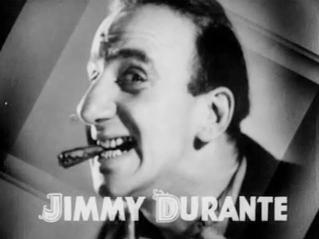
Richard Tauber and Jimmy Durante? In Forbidden Music (The Land without Music) they join forces to capture the popular market. Crossover sinners and singers have always been with us. Paganini was the Lang Lang of his time. Maria Malibran was a sensation at 16, dead at 26, before most singers even begin these days. The modern obsesssion with hating crossover stars says more about bigotry than about music. No one is forced to read the Daily Mail or watch Britain's Got Talent. That Tauber could really sing only makes his participation in commercial kitsch even more  pointed. But those who find fufilment in hate need to sniff out targets to prove how superior they are. Genuinely secure people aren't threatened by others, so why the frenzy?  It's bullying, mob violence by media. Significantly Forbidden Music was written in 1936. "It could never happen in America" cries Jimmy Durante. Oh yes it could.

The principality of Lucca is bankrupt because the natives spend all their time making music, not money. So Austria threatens to invade. (that Austria is mentioned by name is significant too on other levels). So Lucca goes for Lucre and music is banned. Lucca's Economic Miracle attracts International Attention, so a reporter from New York arrives. Jimmy Durante's trademark proboscis looks even funnier when he's wearing early 18th costume. "My giant trunk!" he says, meaning his luggage. Durante's character "Whistler" (pun) pronounces Lucca as "Luck-AH" and mangles local names. But he's no buffoon. He's incensed by repression and supports the locals who want music, even though he's not a musician himself.

Richard Tauber is opera singer Mario Carlini, Lucca's Greatest Export, feted in Vienna. But when he comes home, he's threatened with prison. So concerts have to be organized in secret, through the underground. "There's Revolution in the air!" Even the military are upset. "How can we march without marches?". So Tauber heads a procession of trumpeters, fiddlers and singers who march on the palace. "Let's make music a national industry!" So the Princess (played by Tauber's wife, Diana Napier) reverses the anti-music decree. As if it were so easy in real life. The little opera house opens again and Tauber sings an aria. It's in English, but the sound's so bad and his diction is kaput, so you can't make out the words, but who cares? He does it with a flourish.

Forbidden Music is pretty hammy, certainly not "great art" and no-one had illusions. But as a parable it's a lot sharper than it seems.  It was directed by Walter Forde with music by Oscar Straus (one "s"). Enjoy it here:

Saturday, 7 April 2012

Schubert's Lazarus raised

"I am the resurrection and the life. The one who believes in me will live, even though they die;  and whoever lives by believing in me will never die".

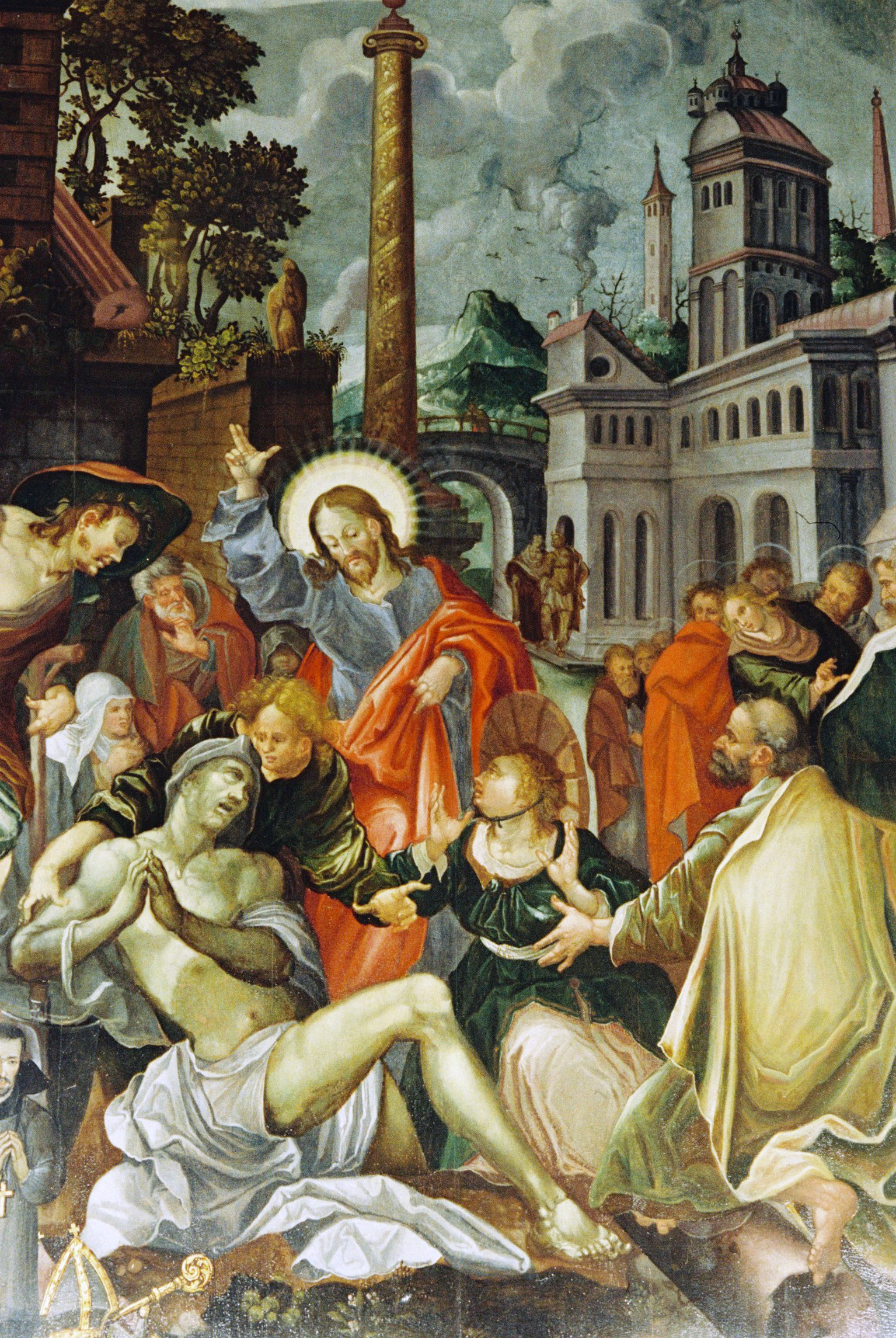
In Christian tradition, Lazarus was the only person to be raised from the dead (Jesus doesn't count, since he wasn't mortal). Lazarus has been lying in his tomb four days when Jesus arrives. "If you'd been there" reproaches Martha, "he wouldn't have died!" Calmly, Jesus calls "Arise!" and Lazarus, partly decomposed, comes out, still wearing his shroud but alive. Why this miracle and not a billion others? It still confuses me, but faith is mystery.

I'm still high on Schubert after the BBC Radio 3 Schubert week, so here is a complete sequence of Schubert's incomplete cantata Lazarus. oder die Feier der Auferstehung (D 689,1820)  Part of it was lost for decades, and pieces are still missing. But enough has been restored to get an idea of how it might have been. There are two main recordings, the one below from the 1990's conducted by Wolfgang Sawallisch and another from 2002 conducted by Helmuth Rilling. Play the whole sequence in 9 parts.

Friday, 6 April 2012

Richard Tauber's camp Pagliacci

Made in the exotic alpine environs of Denham Studios, London,  in 1936/7, Richard Tauber's English language Pagliacci ! Apparently the most expensive British movie made at the time, using a new colour process in some parts, the film lost so much money the company folded. Many involved weren't paid. Bertolt Brecht was although he didn't do anything apart from agree to help. Leoncavallo, Tauber, Hanns Eisler, Brecht and Albert Coates conducting the Boyd Neel Orchestra? The mind boggles. You can see part of the movie on a playlist  HERE.

Easter Cav and Pag streaming

If it's Easter it must be Parsifal,  Bach, and Cav and Pag. New to Medici TV is the Mascagni/Leoncavallo double bill streaming HERE. Violetta Urmana, Vincenzo La Scola, Maria Bayo, Vladimir Galouzine. The production ( I think 2007) comes from Teatro Real in Madrid, conducted by Jesús Lopez Cobos and directed by Giancarlo del Monaco, son of the tenor and stabbed by his wife last year in a drama that could come out of an opera plot, which gives I Pagliacci a poignant edge.

Read more HERE about a really unique I Pagliacci . Hanns Eisler redoes Leoncavallo for the movie, which stars Richard Tauber and was conducted by Albert Coates. "My contribution was nil" said Eisler who needed the money at the time. Brecht was supposed to be involved but didn't get round to it. Imagine that conjuction of different worlds!

Thursday, 5 April 2012

Quasthoff speaks in Der Spiegel

Interesting interview with Thomas Quasthoff in Der Spiegel HERE. It's good because the questions are honest and not hagiographic.TQ's replies are revealing.

"SPIEGEL: You yourself have a big mouth, if I may say so.
Quasthoff: That, of course, was always my weapon. I've become quieter now. It's possible to put things very clearly, concisely and sharply, even when you do it quietly."

TQ's also candid about why he doesn't have "fans in the thalidomide community". At least he refused to sing for the company that made the drug. OTOH most people with thalidomide-related problems are not well off as he is, and I don't think they are envious of him. Lots of them are remarkable successes too, in their own way. And as they grow older, they're developing a whole new set of age-related problems like arthritis, and the compensation they received as children has long run out. For them, it's not a closed issue and they could use more public support.


Another pansy comes out too soon

Some of the live Lieder performances last week on the BBC Spirit of Schubert series were unremarkable but Ian Bostridge's Viola D783 was very good indeed, fresher than on his recording with Leif Ove Adnes (which is recommended). Viola isn't an easy song to pull off well, as there are 19 minimally varied rhyming strophes that take nearly 15 minutes to sing. But Bostridge does it sincerely, revealing its delicate sensitivity.

The text is by Franz von Schober, whose songs (like Die Forellen) often have raffish undertones. A snowdrop rings its bell to announce that Spring is on its way. The viola leaps awake, adorned as a bride in "den Mantel sammetblau, Nimmt das güldene Geschmeid, Und den Brilliantentau" (in a blue velvet cloak, adorned with gold and dew like diamonds). But it's not Spring yet. No bridegroom, no sister flowers. The viola hides, ashamed. Soon, roses, tulips, hyacinths and lilies come out in their finery but it's the humble viola whom Spring calls his "favourite child". The flowers are sent to search her out. (How Disney would have illustrated this!) The viola is found,  her head buried beneath her leaves. It's charming, but any gardener knows roses and lilies don't come out til much later. Or walk. Or think about bridegrooms. This is not a nature song!

Be charmed, too by Hugo Wolf's setting of Eduard Mörike's poem Zitronenfalter im April (HERE) and Karwoche, where violets are portents of death (HERE)

Karwoche violets

Easter brings out the pious. Some genuinely so, some by rote!  So here is Eduard Mörike, set by Hugo Wolf. The poem is Karwoche. "O Woche, Zeugin heiliger Beschwerde! du stimmst so ernst zu dieser Frühlingswonne....der Frühling darf indessen immer keimen" Read the full text and excellent translation by Malcolm Wren on Emily Ezust's Lieder Texts site HERE.

Holy Week is the darkest time of the year for the truly devout, who meditate on the meaning of Jesus's death. Yet it coincides with the arrival of Spring. No accident, for Easter and the Resurrection symbolize Spring in a wider spiritual sense. Christian ideas have deep pre-Christian roots. Think Persephone, or the ancient European goddess  Ostara (variants in spelling). Or even Du Liniang, the Peony Pavilion heroine raised back to life by love. (More here - there was a fault on the broadcast site, might be OK now)

Eduard Mörike was a clergyman, but sensitive to pagan nature spirits, and to irony. So he imagines a girl plucking violets for a wreath which will wither on the altar. "Ach dort, von Trauermelodieen trunken, und süß betäubt von schweren Weihrauchdüften, sucht sie den Bräutigam in Todesgrüften, und Lieb' und Frühling, Alles ist versunken!"

The church is filled with music and incense, but around and beneath are graves. The girl is seeking her bridegroom in the vaults of the dead, "and Love, and Spring, all submerged". Hugo Wolf set this poem twice, once as piano song, once fully orchestrated. In both, the final word "versunken" drops sharply downwards, suggesting sudden chill. Perhaps it's the usual Romantic fascination with death, perhaps it's just an acknowledgement that frosts can blitz a promising Spring (as we've learned this week). Mörike and Wolf are saying, "don't count your blessings too soon".

photo : Chris Gunns

Wednesday, 4 April 2012

Nelsons out of CBSO Gerontius

Andris Nelsons isn't conducting Elgar Dream of Gerontius in Birmingham and at the Barbican on 12th and 14th because his littler baby daughter has been taken ill. It's obviously not a minor matter. Audiences are sympathetic because no conductor can concentrate 100% in situations like that (not nice men, that is). A child is far more important than a concert. In any case, Edward Gardner will be stepping in (Gerontius is hardly rare repertoire). Toby Spence is out too, replaced by Robert Murray. So all good wishes to the baby, to Nelsons and to his wife Kristine Opolais, the soprano.


Ariadne auf Naxos FREE stream from Baden Baden

Richard Strauss Ariadne auf Naxos free streaming from Baden Baden now available on Medici TV. Renée Fleming, Sophie Koch, Eike Wilm Schulte, even René Kollo (as majordomo). Conducted by Christian Thielemann, directed by Philippe Arlaud and filmed by Brian Large - worth watching for what he does, as he's one of the very few who know how to film opera well.

Of the current crop currently available online, I've seen these (click on links for more) Paris Pelléas et Mélisande, Munich Eugene Onegin, Zurich Rossini Otello, Paris La forza del destino (Urmana) and La Monnaie/De Munt Rusalka (Herheim). Review of that to come in the next few days - MUCH better than the one at ROH)

Tuesday, 3 April 2012

Schubert Auf der Donau video


BBC Radio 3's "Spirit of Schubert" week was addictive. Something new to listen to again and again. Like the first ever recording of a song about transvestites! It was written for a club Schubert belonged to. Hear it around 1130 on the Saturday night slot.  Wonderful, too, some of the human stories on the request shows, like Alicia de Larrocha trying out someone's new piano in Zambia.  With such good material, why did they have to go spoil everything with Schubert Lab? We don't need to be treated like morons. At least Schubert Salon had Graham Johnson, who always talks sense. "Classical or Romantic?"  Johnson squelches that. Composers don't think of themselves in categories. Schubert learned from the classics and did his own thing. He helped create "Romantic"  I can't be the only person suffering withdrawal symptoms after this marvellous week. Fortunately some of it can still be heard on repeat for several days.

Above, Dietrich Fischer-Dieskau and Svatoslav Richter in the Napoleon Room of Schloss Ismaning in 1978. The full concert is available on DVD. This excerpt is Auf der Donau D553 (1817). Full text and translation HERE on Emily Ezust's Lieder and Song Texts site, a fantastic resource. A couple are floating down the Danube. The piano part describes gentle waves, the steady movement of oars. But this is a poem by Mayrhofer, for whom water was associated with obliteration. Waves don't keep their shape, they don't stay still.  Then the forceful second strophe, where short, sharp questions cut against the flow. The "armoured strongholds" of men are destroyed in war, but nature (the river)  remains. In the undergrowth (dank, tangled) the boat is becalmed, the men afraid. "Wellen drohn wie Zeiten Untergang" (waves threaten to draw them down, like time has destroyed the castles and towers on the river banks) The word "Untergang" repeated with grave menace. Schubert wasn't to know that Mayrhofer would drown himself in a river years later (The Danube, I think). But even then he didn't set the poem as sunny boat ride.

Monday, 2 April 2012

Job vacancy, exceptional qualifications needed

After seven years at the helm at Garsington Opera, Anthony Whitworth-Jones will be retiring at the end of October. Iain Mackinnon, Chairman of the Board of Directors, said:  “(he had) the foresight and energy to run the opera and take (it) forward.... Anthony’s conception of what the Garsington Opera festival could become came to fruition with the move to its new home at Wormsley".  Mackinnonn is retiring at the same time, when Bernard Taylor will take over. But no replacement as yet for Whitworth-Jones who will be a very hard act to follow indeed.  He was the top man at Glyndebourne, which he joined in 1981. Before that he ran the London Sinfonietta. Expertise like that doesn't come easy.

Three opera this year : Vivaldi L'Olympiade, Mozart Don Giovanni and Offenbach La Perichole. More details HERE on the Garsington Opera site. 

Peony Pavilion full broadcast online

The Peony Pavilion is one of the great classics of world literature, but in our anglocentric straitjackets, most don't know. Imagine the world without Shakespeare, Mozart or Beethoven?. That's what we're missing by not knowing The Peony Pavilion.  Now there's an easy way to get to know it thru a full broadcast of the opera version on Classical TV (link here). The synopsis on the site is good and easy to follow. Thje brooadcast is the 1998 peformance, which is on DVD but not so easy to get hold of.

The original novel was written byTang Xianzu (湯顯祖) (1550-1616), one of the greatest Chinese playwrights, and Peony Pavilion is only one of several of his sagas that have become famous Chinese operas. The Peony Pavilion and its values pervade Chinese culture, so knowing about it is a key to understand how millions of non-anglo people think.

Every region in China has its own variant of Chinese opera, and within each region there are numerous different styles. Most people in the west have seen Beijing opera masks, but Beijing opera is almost more acrobatics than other forms. My thing is Cantonese opera, glorious for voice as the dialect has nine tones, unlike the main national language which has only four. These nine tones can be varied by varying tempo, alliteration etc, so to me it's exqusite. Generally though,  the finest Chinese opera comes from Suzhou, a city synonymous with elegance, refinement and erudition. "The best scholars, the most beautiful women, the loveliest gardens" (some over 1000 years old). And the finest Suzhou opera is kunqu (崑曲).


Kunqu developed in the Ming Dynasty (1368-1644), China's Golden Age in artistic terms, and pre-dates all other forms of opera, both in China and in the west. It now has protected status underr UNESCO. But what's given kunqu a new life has been the work of Professor Pai Hsein-yung (白先勇). The original Peony Pavilion went on for days, the scholarly audience delighting in long literary and philosophic peregrination, which nowadays is lost on most people.

Professor Pai's edition concentrates on the essential drama in the plot A clever girl, Du Liniang, has a vivid dream about meeting the perfect lover. She believes that destiny will guide her lover to her. She dies. Her parents pine and the family mansion becomes derelict. The man is a destitute scholar, so the gardener takes pity and lets him stay in the secret pavilion. He finds the secret portrait the girl hid in a rock in the deserted pavilion. Dead girl reappears as a ghost. Intense love. Girl gets resurrected! (For detailed synopsis and analysis please read HERE).

How "modern" and universal these themes are - Dreams, the subconscious, love, nature and the supernatural, battlescenes, humour, life after death and the idea that virtue is rewarded. One big sub-theme sends up scholars and pretenders, which must have had scholarly audiences creasing up with laughter.

Du Liniang herself is an amazingly adventurous character. She's rich and spoiled but wants to study like a man. Even her snappy maid runs rings round the old fellow sent to teach her, but it's not nasty, and rather touching. Lots of scholars never went on to fame and fortune. Proactive, creative Du outfoxes everyone - her parents, her tutor, the military, her lover and even death.In the video clip below she is painting her own portrait, the audacious hussy, and hides it in a rock by the pavilion so it will be found by her future lover just like in her dream.Even the minor characters are fun, like the pert maid and a wonderful Bandit Queen.

I took a friend to the 2008 Sadler's Wells performance who didn't know much about Chinese culture and he was overwhelmed. It was so colourful and expressive - emotion transcends language. The new version is still over 10 hours, but it flies by, because the story is so strong and the performance, by the Suzhou Kunqu Opera Company, was superb.There is a DVD available of the 1998 premiere. It's been reissued in "normal" DVD form, but I have the original, in a handpainted padded silk presentation box, and signed by Professor Pai.

Although Chinese opera is very stylized, it's this very stylization that gives it the strength to renew itself. Once you're used to the basic rhythms, gestures and cues, there's a lot of interpretive freedom, even room to improvise. Chinese opera fans, like opera fans in the west, cherish minute details (especially now we have film and CD). But even an ancient form like kunqu isn't a museum piece. Like Du Liniang, it gets resurrected and lives anew. (Please see lots of other posts on this site, which is one of the few which discusses Chinese opera, movies and music  in English). You can download a translation of Tang Xianzu's The Peony Pavilion from Project Gutenberg.