Saturday, 13 October 2012

Welsh National Opera British Firsts

Five year series of "British Firsts" at the Welsh National Opera, starting summer 2013, thanks to a £2 million gift from the Getty family, (who are also connected to Garsington Opera at Wormsley)

David Pountney, WNO's Chief Executive and Artistsic Director, says "This series gives us an extraordinary opportunity to re-engage with contemporary opera writing and to transform our perceptions of new music. We hope to dispel the misconception that modern opera is either moribund or incomprehensible to our audiences."

" Nothing could be further from the truth. There is a massive amount of creative energy in the artform and new works are constantly being created all over the world. we can enjoy modern music and modern opera as part of our normal cultural life, just as we enjoy modern cinema, television, books or fashion. It will open the doors to the landscape of the new."

Exciting news, which should shake things up, but nothing dangerously radical. Two of these operas are well known, albeit not in full UK productions.  Jonathan Harvey's Wagner Dream (scheduled for summer 2013) was first heard in 2007 at De Nederlandse Opera. Pierre Audi directed: best possible premiere. When it reached the Barbican in London in January 2012, (semi staged), it was the hottest ticket in town, generating much excitement. Colin Stuart Clarke, a Jonathan Harvey devotee, wrote a thoughtful review for Opera Today, more sympathetic than most. "The vast stretch of Harvey’s available compositional resources was impeccably utilised. Tonal sections made great effect (a lullaby, for example) and yet did not jar in the slightest, instead appearing as just one element in the composer’s palette. The music shares with Wagner’s an ability to take the listener out of temporal time into the composer’s expanded time, and, as with Wagner, the time spent experiencing this piece seemed somehow telescoped, as one became intimately involved with the events and their musical realisation. One one level it felt as if we had been there years; on another, it was a mere moment."

In 2017, WNO will be doing Unsuk Chin's Alice in Wonderland. This, too, was premiered in 2007, in Munich. It was screened at the Barbican London last year. The DVD has been available since 2008. Just as Alice was curious, the opera is curious. Absurdity and silliness can mix well, as Lewis Carroll showed. Chin is highly regarded in some circles, but I felt Alice was too self-indulgent as opera, but was wholly redeemed by Achim Freyer's direction. Alice wears a huge mesh head and meets other giant talking heads-in-boxes. A new edition of the opera was prepared by British composer Lloyd Moore for a US production in 2012. I'm not sure which version we'll hear in Cardiff, but I'm hoping for a tighter orchestration.
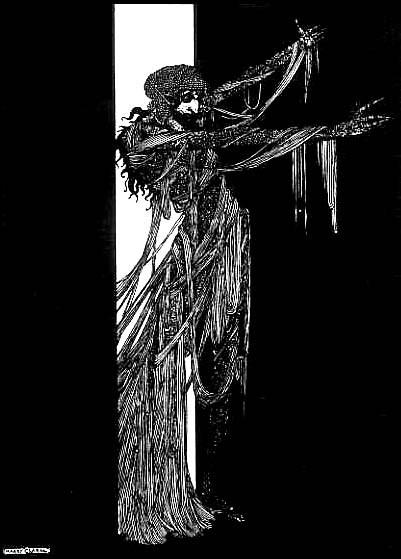
More intriguing might be the Edgar Allan Poe double bill directed by David Pountney in 2014. Claude Debussy’s unfinished one-act opera The Fall of the House of Usher has been orchestrated by Robert Orledge, using additional material from sketches left by Debussy. It will be heard with Gordon Getty’s Usher House. Both will be presented in San Franciscxo in 2015. The picture right is Harry Clarke's illustration from an early French edition of Poe's poem.

Quietly under-publicized is Richard Ayres' Peter Pan, planned for 2015. Ayres (b 1965) is a significant British composer but better known in mainland Europe - which is so often the case. Peter Pan is a joint commission between the Komische Oper Berlin, Stuttgart Opera and WNO, which indicates its potential. Peter Pan might well be the surprise hit among these "British Firsts". We shall hope!

photo credit : Thomas Duesing

Friday, 12 October 2012

Fritz Wunderlich, Romanticism and Die Schöne Müllerin

Fritz Wunderlich died aged only 35, an age when many singers are only just getting into their prime. His Schubert Die Schöne Müllerin is a classic because his voice is so beautiful that it sounds melodic, whatever he might be singing. For that reeason I keep coming back to it, even if it's more exquisite than profound. Hear it in full here.  

The trouble with Romanticism is that people assume it's "romantic" like maudlin Victorian sentimentality. But the Romantics weren't like that at all.  Just as the French Revolution marked an alternative to absolute power, Romanticism inspired emphasis on the individual, not the state, emotional depth as opposed to classical detachment. Ideas and feelings didn't come from "above" but from personal committment and understanding. Without Romanticism would the revolutions of 1848 have been such a watershed? Would the modern world be what it is, (and not in a narrow sense).

Understand Romanticism and you understand Lieder, I think. All good artists create anew: bad artists copy (even if it makes them successful). In the Romantic ethos, art is valid when it's created with integrity and engagement. Machines can't do art. Every genuine artist seeks "truth", grown from an understanding of poet/composer, but also from personal input. That's why listening is so exciting. Over 40 plus years I've heard hundreds of  Die Schöne Müllerin yet can't ever get enough. There's so much to it that there will always be new perspectives. Every performer is an individual, and every listener too, and each experience is coloured by the moment in which it's heard. Fritz Wunderlich never did get old, so we don't know how he might have been singing it aged 45 or 55.  The world has changed a lot in 50 years since Wunderlich made his recording, so I treasure it as a moment crystallized in time.

Thursday, 11 October 2012

Malcolm Arnold "Too bawdy for family audiences"

"Too bawdy for family audiences" the BBC said about Malcolm Arnold's comic opera The Dancing Master, which will at last be premiered at this year's Malcolm Arnold Festival in Northampton next week.

Arnold is a composer whose work everyone knows - remember the whistling song in The Bridge on the River Kwai ? Or "Nick Nack Paddy Whack" the children's marching song from The Inn of the Sixth Happiness?  It would be logical for a man who wrote theme music for dozens of hit movies to write music for the stage. Indeed, his music for ballet is well appreciated, and his orchestral music is vivid. So much will be hanging on this performance of Arnold's opera. "Given that there aren't many British operas, it;'s very significant", says Paul Harris, Arnold's biographer, in this article by Dalya Alberge. "Harris praises Arnold's ensemble writing, particularly an "uplifting" sextet towards the end, the catchy melodies and the "transparency" that allows the voices to come through with both colour and support."

Arnold's The Dancing Master is based on a Restoration comedy from  1671, so perhaps it says something about social mores in 1952 that a comedy of manners  accepted 300 years before didn't go down well in Austerity Britain. Later, Granada turned the opera down because "it wasn't serious enough".

On the other hand, British audiences were hardly afraid of risqué, especially packaged for laughs. The operas of Elizabeth Maconchy, like The Sofa (1957), would be louche today. It's a scream. The libretto was written by Ursula Vaughan Williams. Many years ago, when I suggested that the Ursula/Ralph relationship might have been spicy, I was advised not to upset the legions of staid British music fans. Luckily Ursula was made of stronger stuff and was honest enough to tell the world in no uncertain terms that RVW was fun in bed. Hopefully the Arnold Festival performance will make it to broadcast or CD.


Can Beethoven make life worth living?

THE MUSICAL BRAIN 2012 Conference :The Beethoven Question: Can Art Make Life Worth Living?

The Beethoven Question on 27th and 28th October is s a two-day exploration of Beethoven's life and music and the role the arts can play in overcoming life's adversities. How Beethoven's deafness affected his life and music - What new research into his string quartet writing reveals - Can music make life worth living in the face of adversity

Led by the broadcaster STEPHEN JOHNSON, the weekend features
distinguished speakers and musicians including: Classic FM's JOHN
SUCHET on Beethoven's Life and Deafness; PROF BARRY COOPER on the Piano Sonatas; behavioural neurologist PROF MICHEL TRIMBLE on '_Beethoven, Mad, Bad and Dangerous to Know?'_; composers NIGEL OSBORNE and LLOYD COLEMAN; DR PAUL WHITTAKER founder of Music and the Deaf; PROF RICHARD STOKES on Beethoven: Father of the Lied, LINDSEY DRYDEN's 2012 documentary LOST AND SOUND, on a musician, a dancer and a music critic coping with hearing loss. Also included are three panel discussions: The Need to Compose, The Need to Perform and The Need to Listen and an open forum on Can Art Make Life Worth Living? Concerts, too !
More details HERE


Tuesday, 9 October 2012

Florian Boesch - strong minded Die Schöne Müllerin

Florian Boesch is singing Schubert Die Schöne Müllerin at the Oxford Lieder Festival on Sunday 14th October. This won’t be routine. Radically challenging conventional interpretation, Boesch says “I don’t believe it ends in suicide”.

”Through performing, I've come to understand Die Schöne Müllerin in a different way”. A young miller follows a brook which leads him to a mill. There’s nothing sinister in that per se, for millstreams lead to mills and the miller is looking for work. The miller falls in love with the miller's daughter, but she falls in love with a huntsman. The last song, Des Baches Wiegenlied, is a lullaby, and it’s often assumed that the references to sleep and nightfall mean death.

“It’s much stronger than that”, says Boesch. "The miller is not schizophrenic, he's articulate and has a sophisticated inner consciousness. The Wiegenlied is not romantic simple-mindedness. It's much more profound than a love dream. I believe it is a sensitive human being's way of connecting with his inner self".
 .
"We know about Wilhelm Müller and we understand what an intelligent man he was. Although Müller is known today for Schubert’s setting of his poems, in his own time he was known for much more. He fought in the battles of the Prussian Resistance to Napoleon and passionately supported the Greek wars of independence from the Turks. Romanticism involved more than escapist dreams: it embraced action, freedom and progressive ideas.

Boesch refers to the work of Erwin Ringel, the Austrian psychoanalyst who studied suicide. Ringel’s theory on Presuicidal Syndrome involved three phases: constriction caused by situations in life, aggression channeled inward towards the self, and fantasies about suicide as a form of action.  Not all who think about suicide actually follow through. “In that sense” says Boesch, “we can interpret Die schöne Müllerin as a psychological dialogue.  The miller is thinking about the situation he is in and is trying to imagine how to resolve it.  Thoughtful people are always considering the possibilities before them. The miller doesn't have to be talking to a real brook. The brook is another aspect of his own personality, guiding him to make the right choices."

"So," says Boesch, "consider the text". At times of stress, the miller reflects by projecting his feelings. "In Der Müller und der Bach the dialogue is clear. The man speaks of angels singing  to rest the soul. But the Brook says Ein Sternlein, ein neues, Am Himmel erblinkt (a little star, a new one, shining in the heavens)". Then will rise three roses Die welken nicht wieder, Aus Dornenreis.. From the thorns, new growth that will never wilt. "And then, "says Boesch, the image of "die Engelein schneiden, Die Flügel sich ab und gehn alle Morgen zur Erde hinab", What is an angel without wings? A new woman, who will always return. The brook is the more mature, more positive side of the miller's mind. It's telling him that no matter how bad he feels now there will be new mornings and faithful women in the future. The brook is always moving forward, it does not stand still".

Significantly, Wilhelm Müller had a bad love affair but later married happily. Although Schubert wrote the cycle around the time he learned he had syphilis, it isn't necessarily autobiographical.  "Consider Winterreise" says Boesch. "Again, the man does not have to die or go mad."

Boesch's rationale is far more sophisticated.  "In Das Wirtshaus, the man visits the cemetery. Allhier will ich einkehren, hab' ich bei mir gedacht (here I'll settle, I thought). But he rejects death.  Nun weiter denn, nur weiter, mein treuer Wanderstab!" The walking stick leads him on, just like the brook keeps flowing. The man has many chances to stop and die but he chooses to brave the wild weather and struggle on. "Even in the beginning, there's that phrase Die Liebe liebt das Wandern, Gott hat sie so gemacht, von einem zu dem andern. God is not willing death, but Wandern".

"The word Wunder occurs three times in the cycle at critical points" says Boesch. "it means something strange, like Zauberhaft. So Der Leiermann is 'wunderlicher Alter'. Soll ich mit dir geh'n? Willst zu meinen Liedern Deine Leier dreh'n? .(should I go with you ? Do you want to play my songs be played on your hurdy-gurdy? ). The dogs that howl in Gute Nacht appear again in Der Leiermann, who struggles forward, still trying to play although his fingers are frozen. "So I believe in an inner psychological meaning in Winterreise too".

"When I was 12 years old, my grandfather gave me an LP of recited ballads by Goethe and Schiller", adds Boesch. "Two weeks after Christmas, I knew them all by heart. I was fascinated. I studied violincello for many years, but I realized that I would not be that kind of musician. My music is the text", he says decisively "I love the music of language, and expressing the meaning of words in music."

"A performance involves two people, the pianist and the singer", adds Boesch. "Malcolm Martineau is wonderful, because he's very quick to pick up on what I'm singing, and he's very fast to adjust. Although I have a clear understanding of what I want to do, in performance spontaneous ideas can develop". Sometimes Boesch feels like he's accompanying the pianist. "I like working with pianists like Martineau, Roger Vignoles and Justus Zeyen, because they can adjust so well to spontaneity".


This interview also appears in Opera Today

Monday, 8 October 2012

Father and Son : cultural values in movies

Movies as cultural history : 父與子"Father and Son" says so much about Chinese values that it's a film that should be studied by anyone with any interest in these.  A small boy, Ha Tsai "Shrimpy" lives in a very traditional village. He's even got an old-fashioned haircut, bald at the back, round in the front. He's playing with the other village kids. (The actor was 9 year old Yuen Siu Fai 阮兆輝)

A stranger in a western suit arrives. It's Ha Tsai's Dad (Cheung Wood Yau 張活游) who went to Hong Kong when the kid was a baby and is now taking him to the big city. Father is good at his work and has just been promoted: a model success story. So he buys his son a western suit and takes him to the funfair. "Do you love me?" asks Dad. "I love you so much that I want to tend fields and grow lots of rice for you to eat!" says the kid. Dad gulps. That's not what aspirational fathers want.

But the boss's son's posh schoolmate needs a job and Dad is demoted - no employment laws then. "Connections", a colleague consoles him, "that's what gets you ahead, not merit" . So Dad is determined to give his son the best possible start in life,. In Hong Kong in those days there was no public education, instead all kinds of small schools, some even on rooftops, parents sacrificng themselves so their children might have a better life. Although Father is slightly better off than his poverty-stricken flat mates, he's quite poor. But he enrols the boy in a posh school and gives him a new fancy name, Ng Kwei Sang, which symbolizes his new prospects. But when the teacher calls out the new name, he can't remember it. "I forgot" said the kid, "I'm Shrimpy" The other kids laugh because it's a country bumpkin name.

Father has to borrow money to get the kid a uniform or he can't go on school outings. Interesting the uniform is decidedly bizarre with stripey cap, very un-Chinese. The kids conform and march to a whistle. Kid gets the uniform in a mess and father smacks him. Their flatmate stops the beating "Education is not uniforms!" he cries. It's poignant, because the neighbour is a labourer, probably illiterate, so poor that his son can't go to school at all.  Ah Keung, the neighbour's son, sneaks out in the rain to work as a shoe-shine boy to help his parents. Kids were like that in those days, the whole parent-child relationship based on mutual support.


Ha Tsai  skips school. Father goes berserk. "I pawned things, I borrowed money I don't have, I've even given up meals so you can go to school. How can you destroy my hopes". It's heartbreaking how he's projecting his anxieties onto the boy.

One of Ha Tsai's rich classmates (son of father's boss) throws a birthday party.  Father and son walk all the way up the Peak because they can't afford transport. "Where's your maid? " asks the doorman. Watching the kids play, Dad beams with pride. He doesn't hear what the nasty rich kid says about his son.

One day the posh school gets the kids to sell flowers to raise money for kids who can't afford education. Enterprising Ha Tsai finds his way into a movie studio where mega stars are playing themselves as actors - brilliant!  "Here's a fiver" says Ng Chor fan, which was a whole month's school fees in those days. Ha Tsai's teacher arrives at Ha Tsai's home, "This is your house?" she says. Ha Tsai sold all his flowers but brought no money back.  She thinks he's stolen the money. It turns out that the kid gave it direct to Ah Keung the shoeshine boy, who couldn't afford school. He was right in intention, but he didn't understand the system.

Father is pressured into throwing a birthday party for Ha Tsai, even though he can't possibly afford it.  They don't even have the space, and have to move their furniture out.  But it's the biggest treat Ha Tsai ever had - western soft drinks instead of tea, western cakes, and a cowboy suit. It's an investment in impressing the rich and making the kind of fancy connections that count in getting ahead in the world. When Rich Kid arrives, he's appalled. He's never seen a tenement before, he can't believe people live like that. "Flies!" he screams, "Mummy says flies cause disease". So the rich schoolkids all go away. "Why let all this food go to waste"? says the neighbour,. So the tenement families tuck in and Ha Tsai gets the best party of all.  Next we see Father taking son back to a humble community school where the kids grow their own vegetables and get their clothes dirty.

This film is a cultural document of Chinese values.  Watch it HERE (no English). Parents sacrifice everything that their children might have a better life for themselves. That was why Hong Kong people worked so hard. Hong Kong was prosperous because Hong Kong people made it so. Chinese parents saw education as the key. In this film, we see affluent kids who have no idea how other people struggle and quite possibly grow up to fritter away their expensive educations.

A healthy society grows when people have social conscience. I went to a school where entry was based on merit, so there were extremes of wealth and poverty. One kid told her father that her best friend was struggling. Very discreetly, that father sponsored his child's friend. Someone who was in a position to know who paid for whom told me that it wasn't an isolated incident. In Hong Kong in those days, many people had gone through war and being refugees, even if they prospered later. Maybe those who take good fortune for granted and put others down might be the majority but not all the privileged are morally bankrupt.  On the other hand, once I went to apply for a scholarship and the man administering the charity put pressure on me to co-operate with his filthy desires.  He was not a local, or he would have known that kids from my school were notoriously hard to intimidate. I walked out, but in colonial society you didn't rock the boat. Maybe by not kicking up a fuss, I'm responsible for other people being harmed by that man,  other people who were more desperate for a scholarship than I was, and more intimidated by white guys in suits. but he was exploitative scum, who used charity as a cloak for his bullying.

Berliner Philharmoniker goes American Charles Ives 4

Gershwin, Antheil, Charles Ives and Bernstein - an all-American programme, but with a twist. Often programmes like this make me cringe because they're done with self-conscious folksiness. But Ingo Metzmacher conducts the Berliner Philharmoniker with wry, distinctive style. Each piece stands on its own merits; no special pleading needed. Even Bernstein's Symphonic Dances from West Side Story sounds fresh, the tunes integrated into the overall musical logic. That's saying something!

If Bernstein is the over-exposed "face" of American music, George Gershwin and George Antheil don't get the respect they deserve. Gershwin's 1932 Cuban Overture isn't his greatest work but it's an attempt to use Cuban rhythms in "mainstream" music. What fun it is to see the august players of the Berliner Philharmoniker play bongos, maracas and rhythm sticks! Cuban music aficionados will probably cringe, but the point is made. Even with Gershwin, Cuban doesn't go gringo.

George Antheil's Jazz Symphony (1955 version) is musically a better proposition, and the Berliners give a vigorous account. I prefer the spikier 1925 version, (excellent recording by Ensemble Modern) but Antheil's later, larger orchestration reflects the period in which it was revived. It's apposite, however, in the context of the Bernstein suite. Even at the end of his life, after a long career in Hollywood, Antheil still understood what jazz is. The Berliners did it with style - wildly bluesy trumpet, louche piano, the orchestra deliciously decadent and witty.

Charles Ives's Symphony no 4 was by far the best part of the programme. Metzmacher appeared to be the only conductor, though a second conductor was present.  But much of the leadership came from Pierre-Laurent Aimard who has played the symphony many times. His Ives is idomatic in the sense that he's played all of Ives's music for piano, but his structural clarity doesn't go down well with those who want their Ives "traditional". Too bad, I think. Ives was writing serious music, not retro. A supremely professional exponent like Aimard would have been beyond Ives's wildest dreams.

The beauty of Ives's work, for me, is the way he blends popular culture into sophisticated music. The hymns, songs and marches  shouldn't over-dominate for they are snatches of memory in a much more complex musical conception. Aimard took control from the first bars of the Maestoso, dominant dark chords making a firm statement A single cello responds, and then the choir, singing brief snatches of the hymns whose origins Ives knew so well. Metzmacher conducted so a sense of contemplative silence prevailed, much more in keeping with the mood of the songs than the uncharacteristically muted diction of the Ernst Senff Choir.

The Allegretto is a strange beast, with multiple cross-currents. It's notoriously difficult to conduct, but Metzmacher understands 20th century music so well that he can show how Ives was way ahead of his time. Ives breaks the orchestra into components, playing at different tempi: individual cells operating within a larger mechanism. Aimard leads. playing faster and faster almost to the point that the strings can't keep up. This tension underlines the strange, mechanical repeats in the music. The filming is musically sensitive: two violinists are shown bowing in a strange mechanistic ritual.  Yet the overall impact is of extreme energy, even a sense of madcap zany rebellion in the wayward rhythms. One thinks of New York, where Ives worked, its skyscrapers (even in 1918) and busy infrastructure. Years before Fritz Lang's Metropolis, Ives is creating futurist concepts in music. 

Th offstage ensembles intensify this idea of multiple spheres of activity. A solo violin is heard from above the stage, adding ethereal unworldliness. The second piano plays a relatively easy melody. Their music feels symbolic, like a commentary on the main piano and orchestra below. Then all hell breaks loose. What sounds like a conventional miltary match  develops at a wacky, wayward pace. Most definitely not a march to march to, which may also be part of the underlying meaning.

Metzmacher breaks it off sharply, strengthening the contrast with the Fugue and its mixture of hymn melodies and memories. Is Ives looking back on an idealized past? Ives's father fought in the Civil War and played the games required of patriotic veterans, but from what we know of his life, he wasn't happy or fulfilled. Ives strongly identified wth his father, the black sheep of the family.  Can these references to nostalgia be as simple as they seem? The trombone plays a reference to "Taps", played at the close of day, but also to mark the death of soldiers.

Percussion mark the start of the Finale, suggesting a procession or march. Metzmacher and the Berliners take this so quietly that the mood seems ominous, even though the strings soar in more conventional unison. Aimard reinforces the darkness, firm, assertive playing and absolute precision. Again, Ives contrasts mass with individual. A single violin plays  a slow, gracious figure which contradicts the gloom. Mysterious swaying sounds in the main orchestra, gradually building to a strange climax and retreats. Out of this almost nothingness Aimard plays passages so beautiful that they seem magical. The hazy diction of the choir worked musically, for me, because it put greater emphasis on piano and orchestra than on the literal meaning of the words. That, perhaps, is Metzmacher's achievement. Ives's Fourth Symphony is much greater than the sum of its parts. Listen to this concert on the Berliner-Philharmoniker website.

The photo shows Charles Ives in 1945 (Eugene Smith, courtesy charlesives.org) It's famous because it shows the quirkier side of Ives. Look at that crouch - is he about to spring at the photographer and catch us all unaware? 

Sunday, 7 October 2012

Kaspar Holten Juan

At last, I've seen the film Juan by Kaspar Holten.  Please see my post from April 2011 for links to clips, and read  the first major review which was in Opera Today in July 2011.  This isn't another staging of Don Giovanni, not by any means. Juan is a wholly original concept, taking its cue from the heart of the opera. As film noir on its own terms as cinema, it's extremely impressive.

Juan begins in an opera house. Grand settings, and a performance on stage so gloriously late baroque that it would cost too much to mount in full today. Juan (Christopher Maltman) is in the audience. Elvira (Elizabeth Furtral) is in a box. Eye contact. Suddenly for both, the crowd disappears. Assignation and clearly consensual groping. The gilt and pomp of the opera house aren't reality. The camera pans on elegant marble staircases: luxurious, but hard and cold. Much is hinted at, but not disclosed. When the Commander pulls a gun in this modern setting, you wonder, what sort of man carries weapons into his daughter's rooms?  The railway station imagery above is evocative. Anna is "between trains" looking for connections she may never make.We're not watching a remake of Don Giovanni, but a study of the lost souls in this plot, desperately searching for things they can't articulate. This isn't sordid for sordid's sake. The mean streets, the empty places, all expressions of this terrain of spiritual anomie.

Juan is a pschological study of the characters. Enough of Mozart's music is there so anyone familiar with the opera will be listening on two levels, following the dramatic logic in the film while carrying the opera like a shadow. The effect is deliberately unsettling. "Real" people don't sing, but these characters do, albeit in English, which further distances us from the real Mozart. Humour, too - one of the guests at Zerlina's party is Placido Domingo, in street clothes! Then, when Elvira, Ottavio and Anna gatecrash, the camera switches to the film crew, gesticulating. Flames burn the curtains. Are these special effects? Or does Maltman look genuinely in danger as he runs along the rafters in the ceiling?

One of the strongest points in this film is the way tension builds up to breaking point. Sirens of police cars and anbulances, piercing any semblance of safety. Sudden, stealthy glances. People are stalking each other, trapped in difficult games. In the final act, Juan and Leporello (Mikhail Petrenko) are assaulted by Nature itself, as rain pours down on them. No shelter: no conventional ending with Don Giovanni safely despatched to hell. No final triumphant ensemble.  Instead, the film ends with a wonderful shot of a terrazzo, paved in an intricate pattern of black and white, like a gigantic maze. Anonymous figures in raincoats huddle under umbrellas, walking randomly, without purpose.


Photo : Elvira (Elizabeth Futral), Juan (Christopher Maltman) and Leporello (Mikhail Petrenko) - credit Steffen Aarfing(courtesy juanfilm.dk)

Oxford Lieder Festival 2012 starts Friday

It's October and time for the 11th Oxford Lieder Festival, 2012. On Friday, Sandrine Piau and Roger Vignoles open the season with a recital of French song. Read about her Wigmore Hall recital earlier this year HERE because it looks as if she's singing a very similar programme, built around Debussy Ariettes oubliés. Piau's voice is light and pure, probably even more suited to a small venue like the Holywell Music Room.

In partnership with Stone Records, the Oxford Lieder Festival has been recording all the songs of Hugo Wolf (read about some recordings in the series so far HERE). Wolf's Spanisches Liederbuch features over 2 days, as there are 44 songs in all. The songs in the first part are a mix of religious and erotic, while the secular songs are like miniature operas, where each song tells a story. Birgid Steinberger, who so impressed at last year's OLF (read more HERE), heads a good team.

Florian Boesch and Malcolm Martineau on 14th October. Anyone who goes to the Oxford Lieder Festival has heard Schubert Die schöne Müllerin dozens of times, but Boesch and Martineau make it feel fresh and original.  I've been speaking with Boesch, who says this will be a very different interpretation to what we are used to. Watch this space!

I'm proud to say I've been a Friend since year 2. Oxford Lieder is especially good at nurturing new talent.  Many OLF discoveries go on to great sucess, but return because the OLF atmosphere is good. Back this year are James Gilchrist and Anna Tilbrook, Sophie Danerman, Lucy Crowe, Katarina Karnéus and Alice Coote. How time flies! These singers show why OLF is good to be part of. The secret of OLF is that it encourages the joy of singing, for its own sake, and from this all else follows.

This year the singers to watch out for include Robert Murray (excellent Steersman in the ENO Flying Dutchman), Susanna Andersson (The Baby in Knussen's Higgelty Piggelty Pop!) (reviewed here) and Stuart Jackson,  who won second prize in the Wigmore Hall International Song Competition. They wouldn't give First Prize to someone so young, but Jackson has such a distinctive voice that I could remember him a whole year after I'd first heard him sing a few songs in a private recital.  Voices like this are unique, and should be nurtured. Jackson's sensitive and intelligent qualities are extremely important in art song. I suspect he'll also be good in opera, especially English repertoire.

Robert Murray sings Janáček The Diary of One who Disappeared, one of my all-time favourite cycles, on 18/10. Susanna Andersson sings Schubert with much loved OLF perennial Stephan Loges on 27/10. Stuart Jackson will be singing on OLF's Day of English Song on 20/10, together with Johnny Herford, William Vann, Jonathan McGovern, Lucy Crowe and John Mark Ainsley.

For more information see the Oxford Lieder Festival website here.

photo : Peter Trimming

Thursday, 4 October 2012

Exciting Glyndebourne 2013 - brave new ventures

Exciting developments at Glyndebourne! Many new initiatives that could transform Glyndebourne from a summer festival to a truly international, year-round opera experience.

But first, details of the 2013 season. A new production of Rameau Hippolyte et Aricie,
a first for Glyndebourne and relatively rare in live performance. This is big news because it will be conducted by William Christie who does Rameau with more élan than anyone else. If anything, this could outshine the famed Glyndebourne Purcell The Fairy Queen. (reviewed here) Rameau is even more extravagantly baroque than Purcell, and, of course, is associated with dance more than any other composer before Stravinsky. Imagine the possibilities! Christie is joined again by director Jonathan Kent and designer Paul Brown, so they should be able to come up once more with something spectacular. Sarah Connolly will sing the role of Phèdre. No doubt, this will be a highlight of the whole 2013 year.

The other new production for 2013 will be Richard Strauss Ariadne auf Naxos. Vladimir Jurowski is standing down as Glyndebourne's Music Director after 13 years, but there'll be another chance to hear him there in a special Celebration Concert, where he'll conduct a dramatic realization of Benjamin Britten's Canticles. .Jurowski's legacy will also be marked by the release of four of his performances on the Glyndebourne label - La Cenerentola, Love and Other Demons (Eötvös) , Tristan und Isolde,  and Die Meistersinger von Nürnberg (reviewed here)

Not quite a revival, not quite a new production : Donizetti Don Pasquale.  This hasn't been seen in the main Festival but was very well received during the 2011 Glyndebourne Touring Opera season. This time, Danielle de Neise will be singing Norina. Marking the Britten and Verdi anniversaries, Glyndebourne will revive the Michael Grandage Billy Budd (Padmore instead of Imbrailo) and Richard Jones's acclaimed Falstaff. Le nozze di Figaro sold so well in 2012 that it will be back next year too.

Glyndebourne's Sussex summer season is unique, but its magic can be enjoyed all year round. The 2012 Touring season runs until 8th December and reaches eight British towns. The operas are Rusalka, Le nozze di Figaro and The Yellow Sofa, by Julian Phillips, Glyndebourne's Composer-in Residence. This year there will also be special screenings of the David McVicar Handel Guilio Cesare.  Glyndebourne Touring Opera doesn't merely replicate the main Festival but offers its own specialities, as the hit Don Pasquale proved. The big draw in 2013 will be Benjamin Britten's The Rape of Lucretia, receiving its first Glyndebourne staging since its 1946 premiere with Kathleen Ferrier and Peter Pears, who will be a hard act to follow. Also touring next year will be L'elisr d'amore, Hansel und Gretel and a new commission, Captain Blood's Revenge, aimed at schools and families, an important facet of Glyndebourne's outreach programme.

Glyndebourne also reaches out internationally. New for 2013 is a Digital Festival where all six Festival operas will be broadcast in cinemas and online through a combination of live and recorded-live transmissions. Picturehouse Entertainment will be screening Glyndebourne productions next summer in over 100 cinemas. As a special seasonal treat, the Guardian will also stream the 2007 production of Tristan und Isolde (Bělohlávek, Stemme, Gambrill, Pape) from 26/12/12 to 6/1/13. What's more, Glyndebourne's own recording label is now making its entire catalogue available for digital download, with new releases like The Cunning Little Vixen (reviewed here) and the Ravel double bill L’heure espagnole and L’enfant et les sortilèges, (reviewed here)
photo: Iain Crump

Music in Palestine, Musical Times 1939

From my friend Mischa Horenstein : Please go to his facebook page on Mahler where there's an erudite discussion going on

Music in Palestine
The Musical Times, Vol. 80, No. 1153 (Mar., 1939), p. 225

DURING the summer months a season of popular concerts was given by the Palestine Symphony Orchestra with Jascha Horenstein as chief conductor and Milhaud's 'Suite Provencale' as the principal novelty. The winter season opened later than usual, for owing to the international situation it was impossible for Pierre Monteux to make the journey in October, as originally planned. The subscription season in Tel-Aviv, Haifa and Jerusalem started in November under Eugen Szenkar, who made such an impression here last year, and proved again to be a convincing interpreter of great music, especially of the romanticists and late nineteenth century works. In his second series of concerts Szenkar had Huberman as soloist in the Beethoven Violin Concerto. It was the first time that Huberman had played with an orchestra after his flying accident last year (when there were fears that he would never recover from his injury). His performance was an experience that no member of the vast audiences in the three towns is likely to forget. In addition Huberman gave recitals, assisted by Angelo Kessissoglu, and a concert with chamber orchestra. Some of these concerts were repeated in some larger settlements.

Another event of importance in Palestine musical life was the first performance here of Mahler's third Symphony (the first Symphony was given in the orchestra's first season under Steinberg). Szenkar conducted the work by heart, and the orchestra, enlarged for the occasion, was at its best. The choir was from the Michael Taube chamber choir, and Vittorio Weinberg, a baritone, sang the alto solo.

Szenkar's last concert brought-apart from Beethoven's fifth-Ravel's second suite from the ballet 'Daphnis and Chloe' and the first performance of a thoroughly uninteresting work-Eugen Zador's 'Capriccio Hongrois.'

Szenkar's farewell-outside the regular series of concerts--was a performance of Beethoven's Ninth Symphony, with Elsa Juelich-Taube, Dela Gotthelft, Marcel Noe and Vittorio Weinberg as the vocal quartet, and the choir of the Palestine Oratorio, conducted by Fordhaus Ben Tsissy. The conductors engaged for the rest of the season have been Dobrowen, Szell, Dr. Sargent, and Monteux, who has promised to make up for the cancelled concerts this spring.

Tuesday, 2 October 2012

En avant la musique 1907


Another innovative film by Segundo de Chomon. More elsewhere on this site.

Dancing Baroque? Handel and Rameau

Handel's Giulio Cesare at the ENO raises intereesting questions. Michael Keegan-Dolan is a choreographer, so his staging would naturally emphasize dancing, not singing or even drama. Dance is part of the baroque aesthetic, but to what extent? If any composer is associated with dance it's Rameau. Rameau's rhythms throb in intricate patterns, so energetic that they beg expression through physical action. Prior to Stravinsky, Rameau defined movement in music.

Rameau's Les Indes galantes is now available on medici.tv.  It's a work of near genius, with William Christie and Les Arts Florissantes who have the genre in thir souls. Christie shows how vital and vivid period performance can be, done well and on its own terms. The cast is particularly strong - Partricia Petibon, Nicolas Rivenq, Danielle De Neise, Nathan Berg, João Fernandes, Christoph Stehl,  Malin Hartelius etc) so it's pretty outstanding. Baroque is stylized, but it isn't dull. The acting, directed by Andrei Serban, is full of wit and personality. True to the baroque spirit,  the designs (Marina Draghici) are extravagant. Rameau chose his subjects because they'd be visually exciting to audiences in his day who had probably never seen much of Peruvians, Turks or "the savages of America". Draghici can thus blend elements of alien cultures with fantasy : a Matelot in an Ottoman Court, for example, and a stunning recreation of the Inca God of the Sun. Magically lit and beautifully filmed.

But this Les Indes galantes is essential, I think, for dance fans because it shows how dance can be integrated into an opera. The choreographer is Blanca Li. She "conducts" the dancers as effectively as Christie conducts singers and players. Ensembles move as the music moves, dancers are individualized just as instruments are individualized.  The elegant orderliness of Rameau's music allows quite complex choreography, which Li and her dancers execute flawlessly. For three hours!  These people are seriously fit.  Blanca Li blends different dance styles, like getting the "Savages" to strike angular poses, channelling Diaghilev in the Rite of Spring. Again, the spirit of baroque, all influences joyously mixed in riotous profusion.  I didn't go to the ENO Handel Guilio Cesare last night, having seen Michael Keegan- Dolan's last ENO double bill. His Rite of Spring wasn't bad because the dancing "spoke".  His Duke Bluebeard's Castle fell apart for me because dramatically the ideas weren't thought through. So maybe that's the conundrum choreographers have to face when they stage opera. Dance is a tool, but dramatic logic is what makes dance in opera work.


Monday, 1 October 2012

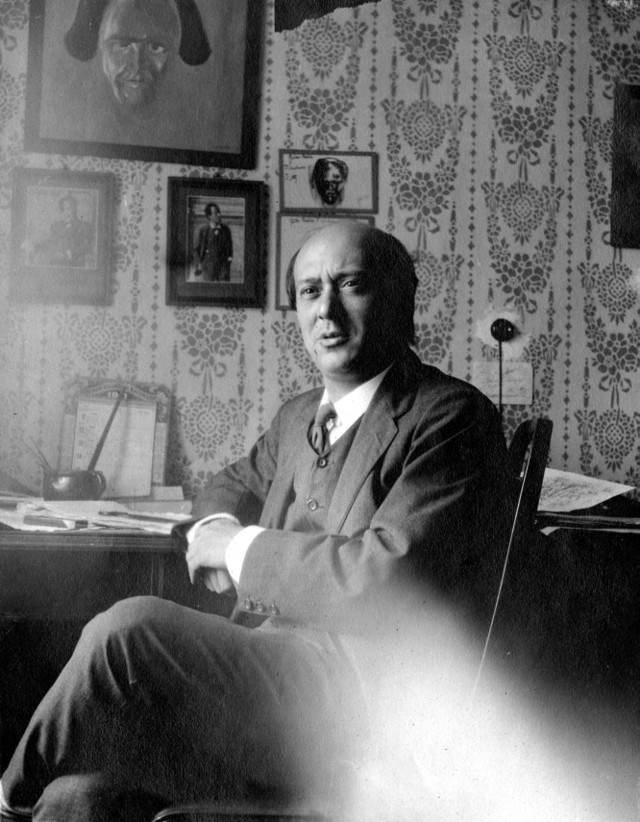
Missing Mahler photo found !

From E Randol Schoenberg, the composer's grandson, comes exciting news! In 1907, Mahler gave Schoenberg a copy of his portrait, and added a personal dedication. Schoenberg treasured it .In this photo, taken in Schoenberg's studio, the Mahler photo is hanging below Schoenberg's painting of Mahler. At some point, the photo went missing. Suddenly, someone contacted the Schoenberg Centre in Vienna, saying a photo had been found "hidden in the back of a boiler room". Read the full story HERE.

Music Theatre Wales - Watkins MacRae double bill

"Oner Night, two Operas", as Music Theatre Wales describes its current double bill, Huw Watkins In the Locked Room and Stuart MacRae's Ghost Patrol. This week at the Linbury, ROH2. Next : Cambridge, Basingstoke, Manchester, Cardiff and other places in Wales. The production premiered at the Edinburgh Festival (reviewed by Juliet Williams  here), so I was delighted to get a chance to hear it too.

The operas are new works jointly commissioned by Music Theatre Wales and Scottish Opera, giving two bright young composers an opportunity to write for the stage. Writing for theatre is different to writing vocal music, so it helps composers develop. We all benefit.

Huw Watkins is well known as a pianist and was picked by Thomas Adès who got him a composing commission in 1998. NMC has just issued a Huw Watkins Debut Disc (review here). Although it's hard to label any composee with style while he's in his mid-thirties, Watkins' music is accessible and open, potentially well suited to opera. In  the Locked Rooom is based on a story by Thomas Hardy. A couple arrive at lodgings where one room is permanently left locked, for the exclusive, unpredictable use of a poet, Pascoe (Håkan Vramsmo). The woman, Susan (Louise Winter) adores poetry and is unsatisfied by her venal materialist partner Stephen (Paul Curievici). As a metaphor, the "locked room" is obvious. What's less obvious is why drop-dead gorgeous Vramsmo, who sings with as much character as he looks, is having an on-off affair with the mature landlady Ella (Ruby Hughes), but this is fundamental to the outcome. . 

The libretto is by David Harsent, whose work with Harrison Birtwistle (The Woman and the Hare, The Minotaur) is exquisite. Harsent's poetry is so subtle that its simplicity is deceptive. It's close to conversation, where meaning is expressed by more than words. Thus the composere has to find a way of filling in meaning around text. Perhaps Watkins is so in awe of Harsent that he doesn't dare, yet, hold his own against him. A plot like this doesn't need illustrating so much as being undermined, creating deeper levels of tension. There are good set piece moments (particularly for Susan) which let the singers shine. All sing well, but Vramsmo and Curievici steal the show because they're both natural actors, and can expand their roles beyond singing. They are directed by Michael McCarthy. Wonderful set, designed by Samal Blak which tells the story remarkably well. When Music Theatre Wales does things, it does them with style.

Stuart MacRae's Ghost Patrol is far more demanding as music, and as such much more satisfying. The text (Louise Welsh)  is clunky and the ideas fairly incoherent, but MacRae writes with the flair of a born dramatist. A drifter Sam (Nicholas Sharratt) breaks into a bar whose owner Alasdair (James McOran-Campbell) recognizes him as a former comrade in the Army and hires him. MacRae uses the tensions to develop a psychologically adept portrayal of posttraumatic stress syndrome. The two ex-soldiers are deeply conflicted,  and their suppressed memories boil to the surface. We can hear the guilt and violence in MacRae's music, crackling with menace and fear. The orchestra springs into vivid action,  so even the rough edges feel right for the subject. Pre-recorded voices and film footage show the civilans the soldiers killed. They haunt Sam and Alasdair, who gradually fall apart emotionally. Perhaps they are even aspects of one another? That shows how perceptive MacRae's music is, for it suggest so much beyond the plot. Alasdair's girlfriend Vicki (Jane Harrington) has lovely music written for her but the part isn't all that integral to the narrative . Harrington just gves it weight by her performance.

Although also in his mid thirties, MacRae is extremely experienced, with several Proms behind him. His Violin Concerto has been recorded by Christian Tetzlaff, no less, and NMC has a CD of MacRae's music. Ilan Volkov conducts the BBC Scottish Symphony Orchestra, where MacRae was resident. If Ghost Patrol is anything to go by, MacRae has great potential.  The joy of Music Theatre Wales productions is that they allow composers to learn their trade as opera writers through practical experience.  Excellent performances, lucid stagings. For more information on upcoming performances, touring to 11th November, please see here.
 photos courtesy Music Theatre Wales