Thursday, 16 May 2013

Andris Nelsons from CBSO to BSO - Chess moves !

Andris Nelsons has been appointed Chief Conductor of the Boston Symphony Orchestra. He's completely different from predecessors like Seiji Osawa and James Levine, so maybe he represents the start of something big? He's a very innovative, adventurous conductor equally at home in orchestral music and opera. His wife is the soprano Kristine Opolais. A Dream Team, though they usually work separately.

In Britain, we've been fortunate that we've been able to hear Nelsons so frequently, and in so many different things. He's been head at the City of Birmingham Symphony Orchestra since 2010, and is a regular at the Royal Opera House.  The CBSO connection is supremely important . More than 30 years ago, Simon Rattle transformed it. Now it's one of the best orchestras in the country. Rattle's vision focussed on progress. He was always interested in 20th century music, specially championing Mahler, Stravisnky, Szymanowski, Lutoslawski and so on. Sakari Oramo (now BBCSO) and Andris Nelsons have further polished the diamond.

Conductor moves are like chess moves. With each move, the whole game changes shape. Nelsons will almost certainly shake up Boston, since he's so very different from, say, Seiji Osawa or James Levine. At a time when the US orchestra scene seems in shambles, will he inject new life into the rest of the country? What can Boston offer to a conductor who commands respect at Bayreuth and the Royal Opera Hose ? And what are Nelsons' long term plans ? At 34, he's young and far too good to while out his career in one city as conductors did in the past.  Things don't work like that in an era of CDs, internet and travel. Where will he be in 10 years ? That's an even bigger question than who's taking over CBSO or what he'll do with the BSO. Nelsons is also unusually charismatic, which gives him the edge: conductors have to inspire as well as conduct well. With his charm, he can achieve great things. Nelsons conducts a lot in Berlin, too: some have suggested that he's the real dark horse favourite to succeed Rattle there, too.

Wednesday, 15 May 2013

Samuel Coleridge-Taylor "Motherless child"

Samuel Coleridge-Taylor's The Song of Hiawatha gets a keynote performance at this year's Three Choirs Festival, which gave him his first major commission: the Ballade in A minor for full orchestra, first heard in Gloucester.  It was his op 33, though he was only 23 years old

Like Antonin Dvořák and Frederick Delius, Coleridge-Taylor travelled to America and was fascinated by the "new" world. He was feted by the President Theodore Roosevelt. Although Coleridge-Taylor was an Englishman culturally, in some parts of the US he would have been considered "a coloured man".  While Vaughan Williams and Butterworth were collecting British folk songs, Coleridge-Taylor was listening to the folk songs of alien cultures. Below, one of his Five Negro Melodies op 59 (1905) to the old spiritual: 


Tuesday, 14 May 2013

Three Choirs Festival Gloucester 2013

What other music Festival can claim a 300-year history? This year marks the 286th Three Choirs Festival, an event central to British music .It's also much more than a music festival. Some people have been regulars for well over 70 years! When the Festival is held in Hereford and Worcester, it's worth booking for a week to enjoy the community dinners, talks and  Shakespeare plays. This year the Festival takes place in Gloucester, just off the M4 from London, and easily reached by train.The Festival Choir is made up of the finest singers from the choirs of all three cathedrals connected to the Festival. In fact, the choirs are its raison d'être, so make a point of listening to at least one of the big choral programmes, even though there's plenty else going on. 

The Three Choirs Festival never loses focus from its original aim, and always starts with an Opening Service and a good choice of music. There's a full Eucharist on Sunday, and a Choral Evensong is usually broadcast by the BBC. The evening Gala on 27/7, however, features Elgar, Rachmaninov and Sibelius. Vladimir Ashkenazy conducts London's Philharmonia Orchestra on Saturday 27th July. Helena Juntunen, the Finnish soprano, sings Sibelius Luonnotar. This could be amazing in the acoustic of Gloucester Cathedral, because the voice part soars and expands outwards. Luonnotar is the spirit of Nature, reaching out across the oceans and the universe, defying cataclysm and time itself. Attend the pre-concert talk and read my article "Luonnotar : Creating the Universe" here. The highlight of the evening, though, will be Rachmaninov's The Bells. Juntunen will be joined by Paul Nilon and Nathan Berg, but the real stars should be the vast mixed voices of the Festival Choir. Imagine hearing the "bells" in the symphony and remembering the bells of the Cathedral and churches around it!

Christmas in July?  On the afternoon of 30/7 there will be an unusual Handel Messiah. The acclaimed early music ensemble, the Dunedin Consort,  will be performing with a good specialist cast led by Rosemary Joshua. Hearing the Festival Chorus in this will be special, for they sing the "story" every Sunday of their lives.  Elgar is another mainstay of the Three Choirs Festival, and The Dream of Gerontius features frequently. This year's Dream will be good, with Kai Rüütel singing the Angel. She was a member of thge Royal Opera House's Young Artist's programme and has presence. She was a distinctive Flora in La Traviata and a good Rhinemaiden in the ROH Ring. She's singing with Toby Spence, who has his own miracle to be glad of, and Matthew Rose. There is also a n Elgar rarity, Falstaff, a four part symphonic studyb that loosely follows Shakespeare's play. A pre concert talk will give its background.

There will also be many recitals, including Wayne Marshall, Philip Lancaster, Andrew Kennedy and Roderick Williams, who is doing a particularly intriguing and probably unique programme. Interesting repertoire, too: Paul Hindemith's Das Marienleben in English, with a pre-performance talk. Read more about Das Marienleben here.

The Three Choirs Festival also showcases important large-scale British works that aren't often performed because the forces they require aren't easy to put together. This year's rarity is Samuel Coleridge-Taylor's complete The Song of Hiawatha, a major multi-section work for large choir and orchestra. The Three Choirs Festival has a special connection with Coleridge-Taylor, since the Festival gave him his first major public performances, on the recommendation of Edward Elgar, no less. (For more on Coleridge-Taylor's life, see these British Library pages.)

In its time, The Song of Hiawatha was a big success, feeding the public appetite for extravagant exotica.  Coleridge-Taylor might have been drawn to Hiawatha because of Longfellow's odd, vaguely "primitive" rhythms and repetitive phrasing. They suggested a way in which non-white traditions might be incorporated into western classical culture. Coleridge-Taylor's father was mixed-race African, although he grew up as an Englishman and had little contact with "native" culture, but he was perceptive enough to pick up on the possibilities. The Song of Hiawatha was completed fifteen years before Stravinsky's Rite of Spring. By the time The Rite of Spring was premiered, Coleridge-Taylor had been dead for a year. Coleridge-Taylor wasn't nearly as radical as Stravinsky, but we should consider him in context.  He was born 4 months after Maurice Ravel. Ravel mined his Basque heritage to experiment with new approaches to music. Yet The Song of Hiawatha was written in 1898, long before Ravel found his voice. This very important performance is being broadcast by BBC Radio 3 later in the year, but it will be such a special occasion that it really should be experienced live.

photo :  Andy Dolman

Sunday, 12 May 2013

"Who's afraid of Alban Berg ?" ENO's new Wozzeck

Even though it's nearly 90 years old,  Alban Berg's Wozzeck can be a hard sell because it's perceived as too "modern" for some. Thus the ENO Wozzeck at the Coliseum is an ideal introduction to the opera, to Berg and indeed to modern music in general. The director, Carrie Cracknell, is a theatre director new to opera, so she approaches the opera as a drama rather than as an opera.  We're reminded that Berg's Wozzeck was based on Georg Büchner's play Woyzeck. Here, the abstract complexities of Berg's score become almost incidental. Still, this Wozzeck is engaging and should prove an excellent introduction for audiences new to the opera.

Cracknell's Wozzeck is a concrete concept, solidly grounded in the present: Wozzeck (Leigh Melrose) is a hard-working squaddie with psychiatric problems who murders Marie (Sara Jakubiak) in a sordid domestic dispute. We could be watching a film, or a social documentary. This is perfectly valid. Many ordinary lives are just as tragic, but they don't get commemorated in great art or music. The set, designed by Tom Scutt, is cluttered, a visual metaphor for Wozzeck's disordered mind.  The structure doesn't change, but action moves from compartment to compartment. Each "room" lights up as needed. Connections are minimal.  The military is an enclosed, authoritarian environment. Wozzeck is trapped, by the set, by the system and by his own mind.

A small boy (Harry Polden) appears very early on in this production. At first he's anonymous, holding a gun pointed at Wozzeck. Berg's stage directions place the child in the frame while Marie and the Drum Major (Bryan Register) have their tryst.  He also appears in the final scene, taunted by other children. But his presence is implicit. Wozzeck may not be the father of the child, but the child is the father of the man. Wozzeck's tragedy began long before the show began. It will repeat, perhaps, with the orphaned child.

Wozzeck's delusions about mushrooms, smells and blood are evidence that he's mad. When Leigh Melrose sings "It reeks!" his voices rises to manic pitch. Given the circumstances he's in, anyone would have psychiatric issues. Wozzeck works hard "for Marie" but for Berg, his abject humiliation goes much deeper. Berg developed his ideas during a stint in the Austrian military during the First World War. He connects Wozzeck's doggedness to the animal-like subservience of the populace to their masters. Arguably, Wozzeck is less insane than the Captain (Tom Randle) or the Doctor (James Morris). Indeed, the Doctor is the craziest of all, with his crackpot theories, emotional blackmail and selective double-think. But he's a symbol of authority. Perhaps it's significant that Berg spent time in a military hospital. James Morris looks wonderful and sings well, but the political edge in this production is nil. When the emphasis is on working class Wozzeck's madness, the Captain and Doctor get off the hook.

As social drama, this Wozzeck is top notch. As a musical experience, it's much less perceptive. Berg's  music is every bit as intricate and maze-like as Wozzeck's mind. Edward Gardner is most impressive conducting the big, dramatic "curtains" Berg writes into the music, a foretaste of the music we would now associate with the movies. There was a TV series called "Dragnet" which used the theme Berg uses to "close" the scene on Wozzeck's death.  Gardner makes that music explode. He's a lot less inclined towards subtleties, like the intricate interweaving of theme and ideas. On the other hand, this wasn't a production where subtlety mattered, so he can be forgiven.  Singing isn't something which can be measured objectively, either. Sara Jakubiak's voice  reached wild crescendi, which suggested the emotional strain Marie was going through but didn't bring out the warmth that Berg wrote into the part. Oddly, what came over strongly was the way the shape of the Coliseum distorts the sound coming from the pit. The orchestra is spread out over the breadth of the stage, so the bassoons and brass dominate more than they would in a more conventional seating plan.

Next season, Keith Warner's Berg Wozzeck is revived at the Royal Opera House. It's set in what looks like a laboratory, lit with extreme, unnatural light. Perhaps we're in the Doctor's mind. "O, meine Theorie! " where obsessiveness overrides humanity. Carrie Cracknell stages Wozzeck's death over a diningb table, which is perfectly fair enough: it's hard to show drowned corpses. Warner solves the problem by having Wozzeck jump into a glass tank, where he floats  helplessly like yet another of the crackpot Doctor's lab experiments. Warner's Wozzeck is truly exceptional, but quite demanding. Cracknell's ENO Wozzeck is excellent preparation.

BBC Proms 2013 First Day Booking QUEUE BUSTER

Queue buster TIP !  One of many Proms rituals is compulsive complaining. One of the usual targets is the first day tickets go on sale. This year  114,000 tickets were sold online in the first 12 hours,  an increase of 17% over 2012, which itself was 12% up on the previous year.  So anyone who logged in a few seconds after 9 am was LUCKY to be number 8000 in the queue.

Top sellers were the Doctor Who Proms and, the First Night of the Proms, which indicates that by far the greatest demand came from buyers after spectacular events, rather than classical music per se. As a friend noticed, once the message came through that Dr Who had sold out the queue moved from 10 per minute to 50 per minute. "Maybe they should have  a separate  queue for Dr Who", he remarked. It might work.

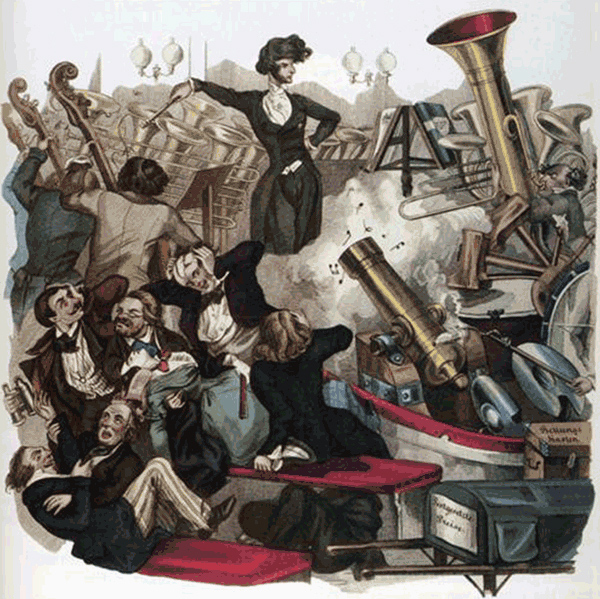
Surprisingly the Wagner Proms weren't swamped. Perhaps there were just too many to choose from, and people can't afford to go to everything. Top seller in the "classical" slot (as opposed to classical augmented by a sense of occasion) were Proms 33 and 35 featuring Maris Janssons and the Bavarian Radio Symphony Orchestra.  Perhaps the programmes were the draw, Beethoven Piano Concerto no 4 with Mitsuko Uchida  and Berlioz Symphonie fantastiique, and Mahler's Second Symphony, always a block buster. Perhaps the draw was down to the relative lack of orchestras from outside the UK, which in some ways is a blessing as some visitors have turned out to be a disappointment. Normally, the Vienna Philharmonic Orchestra would  be a surefire hit but playing Bach under Lorin Maazel ? Maybe not.

Perhaps the secret to getting what you want on the First Day of Booking for the BBC Proms is to go for the top sellers. If everyone takes less time getting things sorted, the queues move faster. There's no need at all to book everything in advance. Let common sense prevail!

Saturday, 11 May 2013

'Tis Nature's Voice - Handel Lufthansa Baroque Festival

The winter of 1739-40 was one of the coldest in  memory. The Thames froze, and snow blocked access to and from London. Two weeks after Handel completed L'Allegro, il Pensoroso ed il Moderato the long frost was broken by a terrible storm which wreaked havoc on the city. How distant Spring must have seemed! This year's Lufthansa Baroque Festival heralds the theme of Spring and Nature, highly welcome after the long winter we've just come through.

What joy it must have been to experience Handel's L'Allegro, il Pensoroso ed il Moderato in St John's, Smith Square, last night at the beginning of this year's Lufthansa Baroque Festival.  It was broadcast live on BBC Radio 3 and will be available online for a week. Paul McCreesh conducts the Gabrieli Consort and players with Gillian Webster, Jeremy Ovenden and Ashley Riches. Bird song in the orchestration! Trills and decoration in the singing. The Happy One likes earthly delights, the Thoughtful One likes contemplative restraint. The Moderator suggests that all pleasures are good, in balance.

Andreas Staier makes his first solo appearance on Sunday, playing at St Peter's Eaton Square in a programme "noble, refined and deeply felt works by the great harpsichord masters of the 17th century, including Louis Couperin, Froberger, J. C. F. Fischer, D'Anglebert and Muffat."  Staier's presence is a measure of the high standing due the Lufthansa Baroque Festival  The youthful European Union Baroque Orchestra plays the same evening, under Lars Urik Mortensen.

On Wednesday, the Festival moves to Westminster Abbey for a grand Purcell celebration., "'Tis Nature's Voice". Purcell was organist there 450 years ago, adding to the sense of occasion. Pavlo Beznosiuk, Ensemble La Fenice, Florilegium, Garth Knox, Imaginarium and Le Jardin Secret to follow, The final gala evening on 18/5 brings the Freiburg Baroque Orchestra with Carolyn Sampson. "Baroque on the High Seas" is a "bracing encounter with the 18th-century ocean in all its facets, from opera arias by Handel and Vivaldi comparing the vicissitudes of love to the ups and downs of the rolling seas, to a typically witty celebration by Telemann of the Hamburg Port Authority. Bring waterproofs!" 

 For more details see the Lufthansa Baroque Festival website. 

Thursday, 9 May 2013

Shakespeare's Globe with ROH extras

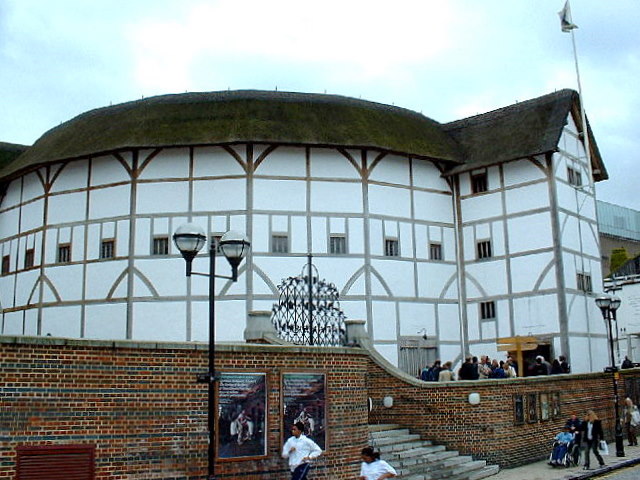
Shakespeare's Globe Theatre isn't the original Elzabethan Globe theatre but a 1997 recreation,  geared to the international market for Shakespeare experiences. It's Stratford-upon-Avon South, and even more "authentic" in some ways in that it's near where Shakespeare actually worked. In January 2014,  the Sam Wanamaker Playhouse opens to the public, extending the Globe's potential. Sam Wanamaker was the visionary behind the new Globe, so it's good that he's being commemorated with a new building that will expand the Globe's potential.

For a long time, it's been apparent that the Royal Opera House needs a new medium sized performance space  for productions that are smaller scale than merit the main house but too big for the Linbury Studio Theatre. Perhaps the Sam Wanamaker Playhouse might fit the bill? Certainly it would be an interesting place to do baroque and other works loosely connected to the 17th and 18th centuries, but I don't think it's a long term total alliance.  Outsourcing is not a bad idea. The ENO has been using the Young Vic for years, and the Barbican is expanding across the road and to Milton Court. It makes business sense and doesn't involve spending millions. Only the South Bank seems fixated on  keeping things in one place whatever the cost or the logic. Read my article : Band Aid or Surgery - rethinking the South Bank)

So the Globe Theatre. Sam Wanamaker Playhouse and the Royal Opera House are planning a joint venture for March 2014. Francesco Cavalli’s L’Ormindo which  was first staged in Venice in 1644 at the Teatro San Cassiano. "The intimate nature of the work performed by nine singers and eight musicians in the intimacy of the theatre will provide a rare experience of Baroque opera, and a level of authenticity that promises to be richly revealing as well as rewarding." Perhaps it might work in the Linbury, but that's not the point. It's being done in a performance space that fits the aesthetic, and suggests new possibilities.Photos of the new theatre's interior show a modern foyer with a classically-inspired but elegant  "Jacobean" stage.

"Kasper Holten, Director of The Royal Opera, directs a production that draws on the theatrical conventions in London at the time, with music under the direction of Christian Curnyn, one of the most sought after Baroque specialists of today. And as the opera will be performed in English, this is a rare opportunity to discover not only the immediacy of a stage world of jealous lovers, elopement and the intervention of Fortune and Destiny but also the unique qualities of Baroque opera itself."

Excellent cast, created under the auspices  of the Early Opera Company, familiar to London baroque audiences. It certainly seems up market, and will help put the Sam Wanamaker Playhouse on the cultural map.

The new Sam Wanamaker Playhouse certainly doesn't exist "just" for opera. Even before L'Ormindo, the SWP will present "Mozart in London" a series related to Mozart's year in London. Trevor Pinnock curates a series of performances and readings which will feature no less than Kristian Bezuidenhout, Carolyn Sampson, Alina Ibragimova and Chiaroscuro. In April 2014, I Fagiolini led by Robert Hollingworth will be doing "The Boat from Venice to Padua", Monteverdi Madrigals and duets and Barca di Venezia per Padova.(1605) a short musical comedy by monk and musical prankster Adriano Banchieri. It will be staged by Peter Wilson. This is typical I Fagilioni adventure!

Hartmann Simplicius Simplicissimus broadcast today

A broadcast of K A Hartmann's Simplicius Simplicissimus on BBC Radio 3 today, available online for 7 days. An anti-fascist, anti-war opera written in Germany while the Nazis were in power? K A Hartmann's Des Simplicius Simplicissimus Jugend was a brave act of conscience, even though the opera wasn't publicly performed until 1948.

Simplicius Simplicissimus is loosely based on H J Chr Grimmelshausen's 1669 book, the frontispiece pictured here. The original was set in the Thirty Years War, a defining trauma in German history, barely appreciated in the English-speaking world. "Anno Domini 1618 wohnten 12 millionen in Deutschland" goes Hartmann's introduction. "Da kam der grosse Kreig". Thirty years later, only 4 million remained. Hartmann uses an alt Deutsch idiom but it's obvious what he really means.

Like the 1669 original, Hartmann sets the opera in tableaux, each act divided into different Bild or Speil subsections, like a series of stylized woodcuts. This formality creates an otherworldly edge to the horrific tale within. A thundering, brooding overture sets the mood of overwhelming chaos. Hartmann's orchestration is spartan: simple trumpets, drums, pipes, a modernist battaglia. From this the male voices develop, chanting in goose-step rhythms.

Simplicius appears. Ein kleiner Bub bei den Schafen, kannte weder Gott noch Menschen, weder Himmel noch Hölle, weder Engel noch Teufel. Notice the pattern of opposite images, which flows throughout the opera. The text is set in rhyming couplets, typical of German tradition, and the music moves in a similar grave two-step. Simplicius is a "Holy Innocent", so pure he knows nothing of heaven or hell. In Tarot the Fool signifies someone who goes forth into the world without fear, facing danger but protected by his purity. Siegfried without the selfishness. Hartmann sets the part for high soprano though the role is male, to emphasize youth and innocence.

"Beware of the Wolf" warns the farmer. Wolf of course was Hitler's nickname. Simplicius doesn't know what a wolf is. so when the Landknecht  appears he thinks the Horseman is the vierbeiniger Schelm und Dieb the farmer warned about. "Weiss nit, Herr Wolf" cries Simplicius but the Landknecht attacks the farm and kills the Knän, die Meuder und das kleine Ursele (these archaic words give the piece a deliberate old world air). A long passage describing the horrors of war, which ends with O armes geknechtetes Deutschland. Now Simplicius has wised up and heads into the forest where he meets a Hermit (another Tarot figure). The Hermit sings music like stylized monastic chant, wavering weirdly. He teaches Simplicius to sing Unser Vater (Our Father). Give us our daily bread". Simplicius, incorrigibly naive, asks auch Käs dazu? (and cheese, too?) Eventually the Hermit dies, leaving Simplicius to face the world alone. Provocatively, Hartmann writes into the death music an echo of the Kaddish.

Another powerful intermezzo, swirling strings, plunging brass, depicting storm clouds perhaps, as Simplicismus is flown into the Governor's mansion. The soldiers boast of their tyranny and blaspheme. This chorus sound like drunken communal singing in a beer cellar, also a reference perhaps to the Nazis. This time Simplicius pipes up "that's no way to speak". "Can you hear the Mauskopf piepsen shouts the Governor. And of course, Simplicius's music is flute and clarinet. The Governor recites rather than sings, not Sprechstimme but oddly discordant. He can't figure the simpleton out.

Then Simplius speaks, at length. Words pour out at a shrill rapid pace, almost no time to take a breath. Using speech instead of song was a deliberate device by Hartmann to confront the audience. Simplicius harangues the listeners, without music to soften the effect. As she finds her strength her words are supported by drums. A militant but not military march? Then suddenly her voice rises in song. Es dröhnt die Stadt, es stapft daher, schäumende bitt're Jammersg'walt. She's joined by the chorus now representing farmers, the victims of the Thirty Years War. Gepriesen sei der Richter der Wahrheit! sings Simplicius, now transformed into a symbol of hope. Behind her muffled drums and cymbals, the choir now softly humming, and the Specher reminds us that by 1648, 8 million Germans were killed.

Significantly, Hartmann dedicated the 1955/6 revision to Carl Orff whose Carmina Burana used a similar fake medieval context, which the Nazis loved, though they missed the subversive undercurrents. Hartmann knew what it was like living in a police state. More double-edged meaning. Simplicissimus is also the title of a magazine that satirized all abuses of power, military, political and religious. It was based in Munich, where Hartmann lived. While the stylized formality presages Stravinsky's The Rake's Progress, Simplicius Simplicissimus stems from the Weimar tradition of political theatre.

 If you like Simplicius Simplicissimus, try Hartmann's Gesangsszene, a prophecy of total collapse, which is eerily prescient of the present economic meltdown. Read more here. More on Hartmann and other composers of this period and persuasion here than on any other site.

The BBC Broadcast is a performance by Juliane Banse, Will Hartmann,, Peter Marsch, Ashley Holland and others, conducted by Markus Stenz with the Netherlands Radio Philharmonic Orchestra.  I don't know if it will come near the Munich performance some years back, which is the best recording available, (more here)

Wednesday, 8 May 2013

Night and cloud : Britten Sinfonia, Bostridge, Barbican

Here is a link to Claire Seymour's review in Opera Today of the Britten Sinfonia concert at the Barbican.  Interesting that they paired Schubert's Notturno for piano trio with Britten's Nocturne. Hands down Britten came off best. I wondered how the Adagietto from Mahler's Fifth would work out with small (ish) ensemble

"Although technically accomplished, the Mahlerian climaxes were a little underwhelming; it’s just not possible to attain the lustrous, penetrating string sound required with such a small number of players. But, there was a clear sense of contour and overall structure, and a haunting ambience was established.

"............Fortunately, Bostridge raised the level of expressivity and musicianship in Britten’s Nocturne for tenor, seven obbligato instrumental soloists and strings. Here Britten’s nuanced scoring allowed the voice, and text, to come across clearly, even in the more dream-like, shaded passages. The individual movements melted into one another as Bostridge conveyed both the rapture and ethereality of night-time worlds. The woodwind soloists were all excellent - the cor anglais was touchingly beautiful in Wilfred Owen’s ‘The Kind Ghosts’, in Keats’ ‘Sleep and Poetry’ clarinet and flute danced an elegant arabesque, and there was some impressive virtuosic bassoon playing. The final movement, a setting of Shakespeare’s ‘When most I wink’ (Sonnet 43) possessed a rhetorical stateliness which was quite troubling, Britten’s setting of the final lines - ‘All days are nights to see till I see thee,/ And nights bright days when dreams do show thee me’ - disturbing in its restless intensity and visceral impact."

Big B's at the Barbican and how to get them

Big B's at the Barbican 2013-14 season - Berlioz, Brahms, Bruckner, Britten, Birtwistle, Beethoven and even a bit of Boulez. Now that the booklet is out, we can look more closely at what's on offer with the caveat - be aware! All venues do complex multi buys but plan this Barbican.

Brahms is straightforward enough. The Leipzig Gewandhaus Orchestra with Riccardo Chailly are doing all four Brahms symphonies at the end of October, each juxtaposed with concerto works. With performers like this and soloists like Leonidas Kavakos, Pierre-Laurent Aimard, and Arcadi Volodos, you can't go wrong. Two string quartets concerts too. .Prices up to £65 per person per main concert. It's not cheap but with quality like this, you can't really expect gimmioks. It will be good to hear Chailly and the Leipzigers traverse Brahms, especially as they're spacing their concerts with rest time between, a relief after their rushed Beethoven symphony series.

Programming for Berlioz is more diffuse. Valery Gergiev conducts the LSO in four concerts. For me, the key concerts will be The Damnation of Faust (3 & 7th Nov) and Roméo et Juliette (6th & 13th Nov), because the casts are very good indeed - Olga Borodina, Ildar Abdrazakov asnd Michael Spyres. Gergiev's approach to Roméo et Juliette is likely to be completely different to Mark Elder's OAE performance in 2012 (read analysis here), but part of the way we get deeper into repertoire is by hearing alternative takes. You can book discounts thru LSO multibuy for these, but if you want to go to Berlioz L'enfance du Christ on 15/12 you'll need to book thru the BBCSO multibuy.

In May 2014, the Barbican celebrates Birtwistle at 80. Birtwistle is easily Britain's most significant composer since Britten (though some might say since Purcell). Two concert stagings of his operas Gawain and Yan Tan Tethera (16/5/14 and 29/5/14).  Martyn Brabbins, Leigh Melrose and John Tomlinson in the former. Baldur Brönnimann, Roderick Williams, Claire Booth, Andrew Kennedy in the latter. In addition, Daniel Harding conducts Birtwistle's seminal Earth Dances on 20/5 with the LSO, Oliver Knussen conducts an all-Birtwistle programme which includes Silbury Air on 25/5. Brönnimann conducts another concert on 30/5 where Birtwistle features with Holst and RVW. The secret to discounts lies with the orchestras. Harding's concert is part of the LSO series but Brönnimann's second concert is part of the Britten Sinfonia series. No discounts for the operas or the BCMG/Knussen concerts. Since all of these together form a kind of "Total Immersion" they are all worth going to regardless of price.At a time when the arts face cuts, we in the audience had better be prepared to support what we care for.

The Benjamin Britten series is the one to be vigilant about. Some of the concerts are absolute essentials, Ian Bostridge is singing Britten's Our Hunting Fathers on 8/11/13. This is one of the keys into Britten's soul. Britten's music is sometimes hard to take because he's emotionally oblique, but that surface reserve hides intense spiritual turbulence. Britten without bite isn't Britten. We need to hear the wild oceans and surreal nightmares in his music: they inform the tightness of his idiom. Bostridge comes closer to anyone else, including Peter Pears, to accessing the darkest, deepest levels of Britten's inner world. When Bostridge sings Britten he isn't "easy listening" and smooth. But then, Britten isn't either. In this centenary year we need more than ever to connect to Britten beneath the surface, and to understand just how radical he really is.

Bostridge is also singing The Madwoman in Britten's Curlew River on 14 and 16/5 at St Giles Cripplegate. Curlew River is an extremely disturbing work on many levels. It uses Japanese and medieval European form to deal with a subject so traumatic that it can't, perhaps, be dealt with other than in this indirect, stylized way. It's also a piece that needs to be experienced rather than simply listened to. Hence the performance will take place in a church, augmented by a multi media staging by Netia Jones, who understands Britten's aesthetic.

Britten's 100th birthday on 22/11 is being celebrated by The Sixteen with a  programme of Britten choral pieces, while Steuart Bedford, a Britten associate, is conducting Albert Herring with the BBC SO on 23/11, The really high profile spectacular will be a performance of the War Requiem at the Royal Albert Hall on 30./11. Semyon Bychkov conducts the BBCSO, soloists are Marina Poplavskaya, Andrew Kennedy and Roderick Williams. This will almost certainly be broadcast, either on BBC Radio 3 or on TV, it's that important, but you want to be part of it live and tell your grandchildren.

Now for the pricing catch. The Barbican  heavily advertises  an "Illuminating Britten" weekend on 8-10/11 for £95 which gives you a 20% discount on tickets for the concert on 8/11 and to a programme of dances to Britten's music at the Barbican Theatre. No discounts to the other concerts mentioned above, particularly the War Requiem, except for Albert Herring which is part of the BBCSO multibuy. What is "illuminating Britten"?  It's "three days of concerts, films, mini-recitals and discussions featuring those...who have a special understanding of Britten's music. Curated by film maker John Bridcut." It sounds very similar to other composer events, like the Knussen, Elliott Carter,, George  Benjamin and other Immersion weekends in recent years,  except that it costs lots more and you have to pay full price for the really big concerts. Bridcut is a genius at marketing, but  that also means that anyone into Britten has already seen the films, read the books and heard some of the music.

 Like it or not, but if we want culture, we're going to have to take some responsibility for paying. 
PS Thanks to Ri ch for the great photo !

Monday, 6 May 2013

Verdi Don Carlo Royal Opera House London

Is it possible to upstage Jonas Kaufmann? Kaufmann was brilliant in this Verdi Don Carlo at the Royal Opera House, London, but the rest of the cast was so good that he was but first among equals. Don Carlo is a vehicle for stars, but this time the stars were everyone on stage and in the pit. Even the solo arias, glorious as they are, grow organically out of perfect ensemble. This was a performance that brought out the true beauty of Verdi's music.

Act One started a little tentatively. Perhaps it takes time for the drama to unfold and Kaufmann knew how much was yet to come. His pacing was deft: when he needed to stun, his voice rang out with ferocious colour. This was a Don Carlo one could imagine defying the Spanish Empire, its violence and tyranny. His vocal authority was matched by physical energy. Kaufmann embodies the part perfectly. His interactions were outstanding. His voice balances well with Anja Harteros (Elisabetta) and Mariusz Kwiecień (Rodrigo), and he allowed the duets and trios to work seamlessly. No big name ego dominance.
 
Verdi  prepares us from the start for the turbulence that will meet Elizabeth of Valois. Even before she leaves home, Elisabetta experiences extreme changes of mood within a compressed period of time. Anja Harteros delineates these intense feelings deftly, without exaggeration, so they arise naturally from her singing.  When she bids goodbye to the Countess of Aremberg (Elizabeth Woods), Harteros sings as though she were bidding farewell to life itself.  Indeed she is, for Elisabetta is now alone, trapped in an alien world. Harteros creates Elisabetta with such conviction that she dominates the drama even when she is silent. Her presence is felt even when others are singing about her. When Harteros sings "Tu che le vanità", we feel that Elisabetta has reached valediction, after a long and tortured journey. She sings of Fontainebleau and her brief day of happiness so tenderly that the agony of "Addio, addio, bei sogni d' or, illusion perduta!" becomes truly overwhelming. Harteros and Kaufmann have taken these roles before together. Here, in London, they achieved transcendence.

Ferruccio Furlanetto was equally outstanding as Philip II. His years of experience in the part give him authority. Verdi writes the part to reflect the personal austerity for which the historical Philip II was known. A solo cello introduces his big aria "Ella giammai m'amò", emphasizing the King's loneliness., despite the trappings of wealth and power around him. Later, violas and basses extend the mood of melancholy. Furlanetto sings with force, but with colour and tenderness. Because he makes us feel the man beneath the public persona, we realize that the tragedy involves Philip as well as his wife and son. Furlanetto makes us realize that the king is just as much trapped by the system as they are. "Beware the Grand Inqusitor!" he cries, for the Grand Inquisitor is perhaps the only truly evil character in this opera.

Verdi introduces the Grand Inquisitor with music that exudes menace. Slow, low rumbling sounds, suggesting a snake slithering, oozing poisonous slime. Eric Halfvarson was indisposed with a cold, but this didn't affect his singing. The Grand Inquisitor is supposed to sound diseased.  "Did God not give his only Son to save the world ?". Theology is twisted for evil purposes.

Mariusz Kwiecień  was a clean voiced, muscular Rodrigo, and a perfect complement to Kaufmann's Don Carlo. The dynamic between them is very good: they're both relatively youthful and fresh. This similarity is important, for it reinforces the tragedy, and the theme of sacrifice. When  Kwiecień sings Rodrigo's last aria, "Per me giunto è il di supreme", he infuses it with warmth and love, so it connects with Elisabetta's farewell to life.

One of Béatrice Uria-Monzon's signature roles is Carmen, so when she sang the Pricess of Eboli, she brought a Carmen-like sharpness to the role, which was entirely in order. Her Veil Song was a showpiece, but the song is a mask, since the princess's true feelings are also hidden behind a veil. When she realizes her mistakes, her personality disintegrates. When  Uria-Monzon sings of the convent, she suggests the horror of living death.

Dusica Bijelic sang a sprightly Tebaldo. Even the Flemish Deputies made an impact greater than the size of their parts: extremely tight ensemble, yet individually characterized. Robert Lloyd sang the apparition of Carlo V credibly. The Royal Opera House Orchestra and chorus, always excellent, were on even better form than usual.  Verdi is Antomio Pappano's great strength. He's inspired towards a highly individual but vivid reading which emphasizes dramatic detail. He's also a singer's conductor, who lets voices breath, as we heard so admirably.

This would have been an almost perfect Verdi Don Carlo, but is lamentably let down by the production. Originally directed by Nicholas Hytner and revived this time by Paul Higgins, it was first seen at the Royal Opera House in 2008.  The designs (by Bob Crowley) feel outdated, serving little dramatic purpose. Huge expanses of space are filled with grids of holes. Perhaps these represent windows, walls or even the spying eyes that are ever present in tyrannical regimes. If the image had been developed well,  it might have enhanced the paranoia that runs through this opera. Instead, the image lies inert,  like a weak joke endlessly repeated.  In the scene where the ladies of the court listen to the Veil Song, there's a wall of red plastic cubes which look like they've descended from Legoland for no obvious reason. 
 
The greatest weakness of this Don Carlo was that the staging missed the deeper, more challenging levels of the opera.  The monastery of Yuste is depicted by the tomb of Charles V with the name "Carlos" engraved in huge letters so they can't possibly be missed.  Charles V, the Holy Roman Emperor, renounced his power and retreated into the monastery where he died ten years before the Revolt of the Netherlands.

Opera isn't history. But when a composer like Verdi adapts history for art, there is a reason. In this production, the political aspects of the story are downplayed. Even the asceticism of Charles V and Philip II is sacrificed to decorative imperative, although the words " addio, bei sogni d' or, illusion perduta!" pertain to more than Elisabetta. This is the kind of production that gives modern staging a bad reputation. Yet because it's comic book cute, it's probably popular. Staging is much more than decor. Like every other element in a production, it should contribute to meaning and drama, rather than distract. A cast of this exceptional quality deserved better.

A longer version of this review with full cast details will appear in Opera Today. 
 Photos : Catherine Ashmore, courtesy Royal Opera House

Saturday, 4 May 2013

New Mariinsky II Theatre Gala Opening

The new Mariinsky Theatre, or Mariinsky II, St Petersburg, looks fantastic. It sounds fantastic too.

The design concept is so innovative that you should read the architectural specs. Here's a link with lots of photos to Diamond Schmitt Architects site.  More details on the Mariinsky site here. The new building is integrated into the historic urban landscape of the city. There's a rooftop ampitheatre with views across St Petersburg. The old building remains, linked to the new over a canal. Jack Diamond, the architect, says "we have used the elements of the old architecture, which are a masonry base and a metal roof. Instead of a classical portico, we have used great structural glass bay-windows......The public areas have an exuberance and a fun because going to the opera house today is, in a sense, in competition with people who can watch it on television, see it on their computer screen, can have videos and play them at will. The difference is that going to an event is a gregarious activity. And I often think that before the show begins, and during intermission, it is not the musicians who are the performers, it is the audience."

Anything new is bound to enrage but from what we've seen so far, the building is strikingly beautiful. The whole structure seems to glow with light and transparency.  How moth eaten and oppressive the red and gold trappings of traditional theatre seem in comparison! Now the focus is on performance, not performance space. The acoustic is breathtaking. It must be balm to sit and listen in a theatre like this, purpose built for music. Yet references to the past abound, blending clean modern elegance with references to theatre history and Russian culture in particular. The Opening Gala shows a backdrop of the "old" theatre with its Imperial Box.  A group of schoolchildren sing the Ave Maria, their young voices ringing out pure and clear: past, present and future unite in a single image.

Simplicity and extrvagance combine. A solo piano demonstrates the glorious acoustic. Then the stage explodes in a gorgeous tableaux: the opening scene of Boris Gudonov, bells ringing triumphantly. The Boyars, priests and Imperial retinue emerge from the crowd of massed peasants. A moment of sheer theatre! Yet there's no heaviness in this staging.The singing shines, not the costumes, though they're suitably "historic". Naturally, there's a political element to the opening of an extremely important new house like the Mariinsky, funded completely by the state. Yet Vladimir Putin is seen sitting in the orchestra stalls. Perhaps this is shrewd. On the other hand, it says much about the role of cultural heritage in Russia. Does art transcend petty concerns? One should sincerely hope so. The men of the Mariinsky chorus emerge from a backdrop showing the Tsar's box. They look like mafia in their dinner jackets, but the sound of their singing connects to the past, distant and not so  distant.

The new Mariinsky opens out internally, too. Although much has been written about the public face of the building, what's intriguing to theatre people is the backstage technology. This, too, must be state of the art, if the Opening Gala is anything to go by. The Mariinsky Ballet are shown dancing Balanchine against a pristine backdrop that suggests a dance studio. The backdrop them morphs into page after page of "etchings" evoking ballets past. Almost miraculously as the music turns to Carmen, the backdrop transforms into full, naturalistic colour.  Later, the Rite of Spring is recreated in Nicolas Roerich's designs and elements of Diaghilev's choreography. A "curtain" of light descends, and René Pape appears, singing Mefistofele.  This is projection technology at its finest, suggesting new possibilities, just as the advent of electric light did 100 years ago. Vivid changes of scene happen in an instant : no clunky machinery, no interruptions to dramatic flow.

Plácido Domingo sings Winterstürme wichen dem Wonnemond. His voice isn't what it was but who cares? Everyone loves him, and rightly so. Later, he takes over from Valéry Gergiev at the podium, and sings along from the pit. Anna Netrebko feigns surprise, but we all know she's in on the joke. Netrebko steals the entire show, singing almost non-stop for the last half an hour of the gala, often solo. Netrebko is in superb form: this evening will be one of the great memories of her life. Putin applauds with a grimace, but who cares? Gergiev, the Birthday Boy, throws his arms around her and kisses her. Surrounded by Pape, Domingo, Nikitin, pretty much the whole company, chorus and ballet, Netrebko is absolutely radiant. The girl from Krasnodar will forever be associated with the new Mariinsky.  Watch the full broadcast here, it's superb, and extremely well filmed. Beats the Bolshoi opening gala by leagues.

Thursday, 2 May 2013

Deanna Durbin EXCLUSIVE personal tribute

"How many child-prodigy artists or entertainers fulfil their youthful promise, pull out of the public eye entirely by their late twenties of their own volition, and are still remembered fondly—by millions—more than six decades later?"

Here is a beautifully written tribute from one singer to another, written by Danielle Woerner, my friend.

 "Deanna Durbin died earlier this week. She was 91, and though she committed her last film to celluloid in 1948, the singer-actress wasn’t forgotten. The darling of Depression-era and 1940s Hollywood, Durbin kept Universal Pictures afloat; and by 1947, at the age of 26, she’d surpassed even Bette Davis as the highest-salaried woman in America.
Unlike Davis, though, Durbin’s characters were never permitted to mature along with the woman who played them. She was typecast as the “plucky” (NY Times obit) young lady who was always able to save the inept adults around her from ruin--often with the help of friends from the less ritzy rungs of the social ladder. (Hayley Mills would take on that can-do girl-next-door role for a while in the early 1960s.) Though Deanna’s singing voice was mature and full for her age, even at 13 when she started in pictures, neither the studio nor her audiences accepted her as anything but a stock ingénue as she herself matured, and the gravity of World War II ruptured our sense of innocence. This was one of the frustrations that caused Durbin to choose retirement in the French countryside (with her third husband, director Charles David) over the “goldfish bowl” she had endured in the film industry. Before she was 30, yet. Since she was brought to Hollywood when just a year old, singing children’s songs by the time she could talk, perhaps that qualifies as one lifetime already.

I was both saddened to hear of her passing this week, and a little surprised she had still been with us. Her self-imposed private exile had worked well. But the obituaries and wikipedia are full of her life’s details. To me, as a singer-actress, what was so special about Durbin was not just the maturity and richness of her voice and technique even in her teens; the naturalness of her acting in 21 movies (they did call them “movies” when she made ‘em); the number of fans she gathered around the world. It was the enduring emotional connection she created with those who watched her in black & white, and listened to her recordings—not only at the time they were made, but for decades after she’d exited the scene. Though ”purity” is often used to describe her, that’s a gloss. Her naturalness was grounded in a quality older and deeper than her years. And she played an iconic role, much bigger than the girl next door. 

 My first exposure to Durbin was in the mid-’80s, when I stumbled upon One Hundred Men and a Girl on the late-night movie, probably Channel 11, in New York City. I was a young classical/operatic soprano, and of course had heard of her—a name always uttered with fondness, it seemed. The 1937 comedy was a sweet predictable story: Durbin persuades world-famous conductor Leopold Stokowski (playing himself) to conduct an orchestra of 100 unemployed musicians, including her trombonist father, portrayed by Adolphe Menjou. The moment when she began singing the Mozart “Alleluia” from the first tier box of the concert hall, walking downstairs and to the foot of the stage as she sang, was etched in my mind as a kind of artistic heroism—albeit chutzpah, in the real world of the music business. Only in the movies. My father, a professional bass soloist in Philadelphia, had worked with Stokowski during the latter’s fitful tenure as conductor of the Philadelphia Orchestra. My childhood included stories of the chimerical, moody Leopold: how he’d pass Dad on the street one day, turning his face away as if he didn’t know him, and the next day would grab Dad by the arm, greet him like a long-lost brother and wonder aloud why Dad had been about to walk by without saying hello. Watching the scene in the movie, I knew Stokowski wasn’t always that lamb in the script who indulgently greeted the young upstart soprano co-opting his rehearsal.

As it happened, a few months after seeing the film, I was late for a rehearsal (another stalled subway train!) at historic Trinity Church in lower Manhattan. As I hurried into the dimly lit sanctuary, I could hear the motet that included my solo already starting overhead. I dashed up the stone stairs to the choir loft just in time to begin singing my part, right on cue. The director—also indulgent—teased me later about my “Deanna Durbin moment.” Thanks to Channel 11, I knew exactly what he meant. The Deanna Durbin moment. The moment when beautiful music, artfully and heartfully executed (OK, ok, by a solo soprano), saves the day for everyone. We could use more such moments, couldn’t we?

Bless you, Deanna. Even if you outgrew the part."


This lovely tribute ties in with another personal remembrance of Deanna Durbin. Five years ago, I was at the Cadogan Hall, where José Serebrier was being interviewed by Edward Seckerson before conducting a concert. The discussion turned to Stokowski, who was Serebrier's mentor and close friend. A lady in the audience stood up to add some words. She must have been in her mid 80's but she was tall, straight and elegant, silver hair immaculately coiffed. She wore expensive slacks and a silk shirt. Quietly, she added, "I knew Stokowski too. I am Deanna Durbin".

Powerhouse ENO 2013/14 season analyzed


The Powerhouse fights back! ENO's 2013/14 season suggests we're back to the days when the ENO was London's edgiest opera house. Ten productions new to London next year- that's around one every three weeks. How can they manage that? By linking up with the liveliest houses in Europe, and bringing in the sharpest talent. This is the kind of creative vision that could kickstart a new Powerhouse era.

One huge coup - Pierre Audi! Audi returns at last to London  after 30 years. This is major news because Audi transformed British theatre in the 1980's with the Almeida Theatre. A whole generation has grown up not realizing how radical the Almeida years were, and how it sparked off the ENO's finest years. Peter Brook, David Hare, Harrison Birtwistle, Mark-Anthony Turnage, Steve Reich, the London Sinfonietta: everybody but everybody was part of the buzz. Audi went on to run De Nederlandse Oper,  and later The Holland Festival. His 1999 Amsterdam Wagner Ring is still one of the most striking productions ever. Amsterdam is one of the most exciting music places in Europe and admirably managed, too.

Audi is directing the world premiere of Julian Anderson's Thebans, a saga based on Greek tragedy with a libretto by Frank McGuiness. A brief piece from the Thebans, "Harmony" will be the first item on the First Night of the BBC Proms 2013. Anderson was himself a singer and writes music that's very visual. Anderson's a Proms regular, both on stage and in the Arena. In May 2007, Ed Gardner conducted Anderson's Symphony at the Barbican, in his first high profile concert after being appointed ENO Music Director. So expect good things from the ENO Thebans, and book tickets early though it doesn't start until May 2014.

Here are the other new productions :

Beethoven Fidelio, (from September) directed by Calixto Bieito. whose very name strikes terror into the hearts of those who think that only they know what the composer intended. Yet those who really engage with his work realize that it is quite reasonable. Bieito's Carmen, for example, in a watered down version for British audiences, was a big box office success at the ENO -- one of the big hits of the ENO last November, (reviewed  here and here) which proves ENO audiences are smarter than the reactionary crowd think. Bieito's Fidelio  was first done in Munich in 2010 with Jonas Kaufmann. We'll get Stuart Skelton, who's good and  the production is well worth seeing. Bieito's "prison" is a labyrinth of the mind - click photo to enlarge. Despite his reputation for bums, Bieito is a very deep thinker with a strong politcial conscience, ideal for an opera like Fidelio, which is not meant to be pretty.

Johann Strauss II Die Fledermaus (from September). This is a joint production with the Canadian Opera Company. Here's a link to the COC website with many photos. It looks off the wall! But lots of fun, which arguably is what Strauss II was on about. The director is Christopher Alden, who says "Fledermaus will be fun! It’s a famous, beloved piece and not just because of the totally brilliant and inspired music or that it’s a frivolous New Year’s Eve entertainment, but it’s a wonderful story with great characters and situations.......... It has a lot to say about society, relationships and marriage".

Mozart The Magic Flute, (November) directed by Simon McBurney, whose Complicité brought us A Dog's Heart (reviewed here) which was such theatre-of-genius that the music didn't matter. With Mozart, McBurney has much more to work on. You need magic in the Magic Flute, and Complicité does magic better than most.  This is a co-production with De Nederlandse Opera, Amsterdam, and the Aix-en-Provence Festival : excellent credentials.

Verdi Rigoletto (February 2014), also a Canadian Opera Company production directed by Christopher Alden. It's set in Verdi's time, not Renaissance Mantua, but those who rage that this isn't "historical" should remember that if contemporary stagings were good enough for Shakespeare, they should be good enough for anyone else. And the Met's Las Vegas Rigoletto didn't cause the skies to fall. Another big plus on this one is Quinn Kelsey, the best of all American imports the ENO has brought us. He sang in the original, so should be well settled by the time the show reaches London.

Handel Rodelinda (February). This is major news, because it's the first product of a new relationship between the ENO and the Bolshoi. London gets first dibs. This is the first ever Handel Opera for the Bolshoi, which is quite remarkable, but they'll be getting the best:  Christian Curmyn conducts, and the cast includes John Mark Ainsley, Iestyn Davies and Rebecca Evans. Director is Richard Jones.

Mozart Cosi fan tutte (May 2014) will be done in English because it's the ENO, but not in an ordinary translation. Instead, it's a new text by poet Martin Crimp (Into the Little Hill, Written on Skin). This will be moving on to the Met in NY, which has had a partnership with the ENO for several years (Eugene Onegin and less successfully Two Boys). Ryan Wigglesworth conducts, Katie Mitchell directs.

Berlioz Benvenuto Cellini (June 2014). The ENO is making a big splash with this because it's Terry Gilliam. Presumably the Monty Python crowds will lap this up and box office receipts will clear what's left of any deficit. His Damnation of Faust was entirely based on himself, rather than the opera, the music or composer, yet was wildly popular, proving that self indulgent "Regie" is loved by the masses as long as they don't have to think or listen. .

Bizet The Pearl Fishers (June 2014). Not, strictly speaking, entirely new, but revamped to make more of the breath-taking sequences where bodies "swim" bathed in undulating blues and greens. I loved this production (directed by Penny Woolcock) first time round and would be thrilled to see it again. This time, Sophie Bevan sings Leila, so even if we don't get Quinn Kelsey again, it will be worth hearing, too.

Thomas Adès Powder Her Face (April 2014). New production, new performance space. Joe Hill-Gibbons directs this modern chamber opera classic in AMBIKA P3, a space for contemporary art at the University of Westminster, "converted from the vast former subterranean concrete hall of the School of Engineering, Baker Street". Photos show exactly that, but I can well imagine the story set in that context. The Duchess did not do worse than the men around her yet the society around her was brutal and rigid. The ENO has been using alternative performance spaces outside the Coliseum for years, and for very good reasons: some operas are better suited to smaller scale. If only the Royal Opera House could find a middle sized external theatre and retire the Linbury for all but the smallest shows! 

Jonathan Belper composer/Matthew Barney director River of Fundament. This is based on Norman Mailer's novel Ancient Evenings, describing the journey of a soul after death, a subject which probably lends itself best to a film/music theatre project.

REVIVALS ! Back by popular demand, classic and much loved productions of Philip Glass's Satyagraha (which I want to see for the fourth time), Puccini Madame Butterfly (Minghella) and  ,  Britten Peter Grimes (the luminous David Alden production and the return of Stuart Skelton))

Statistics: the ENO announced financial figures that show the company to be in better shape than the doomsayers would have.  I hope so, because the ENO is critical to the cultural good health of this country. What it does is unique. It also links London to what's happening internationally, which is good long term.. Also good news is that schemes like Opera Undressed have brought in new audiences, a large number of whom planned to come back again.  This year's new scheme is a sort of "ticket lottery" where you're guaranteed a £20 ticket (in the gods) but might get lucky and be upgraded to somewhere in the orchestra stalls (usually £100 plus).  It's a much better business model than selling tickets off for a song at the last moment, and reminds us in the audience that we can't take cheap seats for granted.

Wednesday, 1 May 2013

Douglas Boyd - Garsington Opera at Wormsley

 “Aim for excellence”, says Douglas Boyd, new Artistic Director of Garsington Opera at Wormsley, “and the audience will follow you”.
Wise words. With the spectacular new Pavilion, Garsington Opera is on the verge of great new things. Read the FULL INTERVIEW here in Opera Today. 
"Excellence is an ideal he learned from his earliest days as a musician, playing the oboe in Claudio Abbado’s European Community Youth Orchestra and later in the Chamber Orchestra of Europe. “Abbado has an absolutely enormous influence on me”, he adds, explaining how Abbado’s ideals shape his vision"...

“Abbado instilled into us right from the start that excellence is a fundamental to strive for. It’s not a given. Although we were young, we played each concert as if our lives depended on it. So my mantra is “dedication and energy”. When you aim for the highest possible level of excellence, then you start with a fighting chance”.

The new season at Garsington Opera at Wormsley starts on 7th June with Mozart Die Entführung aus dem Serail. This will be followed by Giacomo Rossini’s Maometto Secondo in its first full performance in this country. Garsington Opera is famous for Rossini specialities. This will be the twelfth new Rossini production staged here since 1994.  Maometto Secondo is particularly interesting, especially in modern times. Read more here. The main summer Festival concludes with Englebert Humperdinck’s Hänsel und Gretel.

For more details, please see the Garsington Opera at Wormsley website.