Friday, 7 June 2013

Les Vêpres siciliennes changes at ROH

The Royal Opera House has announced a change of choreographer for next season's Les Vêpres siciliennes. This production would have been a highlight of the season because it would have brought together both the Royal Opera House and the Royal Ballet plus stars from the Danish Ballet, with which Kaspar Holten had connections in Copenhagen. They've been looking for a major collaboration like this for years. It would have been spectacular.

Verdi's Les Vêpres siciliennes would have been an ideal vehicle because it centres round a long ballet which is integral to the opera. The music itself is glorious. Verdi's Four Seasons might not be as famous as Vivaldi's but it's extremely well known - it's even on Youtube.  You can't have half an hour of abstract music in an opera, and the ballet reflects the composer's original intentions. If we care about Verdi, we need to hear more than the usual blockbusters. In this Verdi centenary year it's good to focus on Verdi's music in wider context.  One of the top Proms this summer will be Viva Verdi on 20/7 where Antonio Pappano will conduct an unusual Verdi programme.


"There will still be a strong element of dance in the production, however no longer featuring Artists from The Royal Ballet, The Royal Danish Ballet and students from The Royal Ballet School", says the ROH press release. The new choreographer is André de Jong. 

Being a music person, I don't know much about the dance background but Judith Mackrell, a dance critic does. Read her article here.  The choreographer who is leaving is a well-known dancer Johan Kobborg, the partner  of Alina Cojocaru, who announced recently that she's leaving the Royal Ballet at the end of the season.  Dancers don't have long shelf lives and need to make the most of their careers and good for them.  According to Mackrell,  Kobborg is "about to turn 40 and while still a dancer of intelligence and style, he's at the age when the range of his repertory has inevitably begun to diminish. He's also begun focusing on choreography – with a handful of short ballets to his name and a new production of Giselle" in New Zealand. 

"The Royal haven't ignored Kobborg's skills, commissioning his perfectly pitched production of August Bournonville's La Sylphide back in 2006. But the opportunities for him to create new work for the company are very limited. Already the Royal has its resident choreographic triumvirate (Wayne McGregor, Christopher Wheeldon and Liam Scarlett) to accommodate, along with Alastair Marriott, Kristen McNally, and a new generation of choreographic associates. Faced with such a crowded marketplace, it's not surprising that Kobborg is looking for projects elsewhere, and would ideally like the chance to direct a company."

When the Royal Ballet and the Royal Opera House merged, there were those who said that it would be hard to balance the two halves of the house at Covent Garden. Perhaps they were right.

Thursday, 6 June 2013

Multiple Britten this week

The Aldeburgh Festival starts this weekend, and of course, is packed with Benjamin Britten . He never intended it to be a festival about himself and certainly not a festival of "British music" but in this his centenary year, we should be pushing out the boat. Or perhaps I should use different terms, in view of Peter Grimes....

See HERE for my summary of this year's Aldeburgh Festival. The highlights are important although this year some of the performances are geared towards the "Britten industry". On the other hand, Britten believed that music should be accessible, so perhaps the "anniversary year" side effects might not be as negative as they too often are.

Peter Grimes opens the Aldeburgh Festival on Friday and Sunday at the Maltings, Snape. Steuart Bedford heads a worthy cast. Claire Seymour, who wrote the standard reference book on Britten's operas will be reviewing for Opera Today. She's very astute. Keep reading! Friday's concert is being broadcast live  on BBC Radio 3 at 7.15.

Much more unusual will be  Peter Grimes on the Beach, a unique realization of the opera enacted outdoors, on the beach at Aldeburgh. This could be very good, as open air performances have been a feature at Aldeburgh for many years, and they know how to do these things well. That's not til 17th June, around when the Church Parables will be heard.

This week's Britten actually started last night at The Guildhall School of Music and Drama with Owen Wingrave. GSMD productions are always lively and Owen Wingrave is the kind of opera students can really get their teeth into,. Should be good. Further performances on 7th, 10th and 12th.

Today, Paul Bunyan on BBC Radio 3, available online for a week. This is conducted by Richard Hickox for the Royal Opera House in 1999, when ROH used Sadler's Wells for medium sized productions. The photo above (by Ellin Beltz) shows Bunyan and Babe the Blue Ox in the Bunyan park in Klamath, California. See the man in the corner to get a idea of size ! The park is nestled within a forest of giant Redwoods, so you really feel the grand scale of nature. My son went when he was a toddler, and raved about it for months.

Wednesday, 5 June 2013

Maometto II - Rossini specialist David Parry speaks

Rossini's Maometto Secondo receives its British premiere at Garsington Opera at Wormsley this weekend. "It is a masterpiece, says David Parry, the Rossini specialist. Garsington Opera was in the vanguard of the revival of interest in Rossini's work. It is very much a "Rossini house".  I love this opera and wouldn't miss this for anything. There are recordings and even a DVD (not very good) but hearing it live at Wormsley will be an unforgettable experience. Last week, I went to the rehearsals in freezing cold and rain. This weekend, though, there will be glorious sunshine and the gardens will be lovely. Read HERE in Opera Today what David Parry says about Rossini Maometto Secondo.

"All the parts are written with amazing coloratura passages, but that´s not simply for display", adds Parry. "It is a dramatic device. Its principal function is to push singers to the edge of their abilities to project the extreme situations they are singing about".

"Rossini knew the singers he worked with in Naples very well, and knew what he could expect from them. His first Anna, who premiered the role, was Isabella Colbran, whom he later married. Fillipo Galli, who sang Maometto, had a range of over two octaves and was one of the most celebrated basses of the time."I have heard many difficult operas in my life, but Maometto Secondo is one of the most demanding for voice."
photo credit : Studio Elite

Tuesday, 4 June 2013

Great Führer of the sausage people

All you really need to get into The ROH Rossini La donna del lago is that a) it is a work of art based on a work of fiction that was consciously created to revise history and b) that Rossini was Italian. Why else is the guy writing Italianate bel canto trills if he's writing "about" the reality of Scotland? What do composers know about opera!

.All works of art are works of the imagination. Even history is a form of performance art because it can be reshaped through interpretation. And so to the Haggis, which appears in the John Fulljames staging. You don't need to know about the Celtic Society seen dining in the opera to get what the image means. All you need to know is what a haggis basically is, which isn't exactly rocket science. And if you don't know, you can find out.

Haggises are simple cheap food,made from offal and stored for times when fresh meat and veg were scarce. They weren't even Scottish. But they "became" symbols of Scotland when Robert Burns wrote a poem about them and the Celtic Club turned them into a cult. From poor folks' nosh to posh toffs' parties. Nowadays  haggises are siupposed to be served with semi-religious ritual on Burns Night, and stabbed in solemn fashion with a knife. Maybe it's a re-enactment of some Jungian memory of hunting real beasts in wild woodlands. Or it's a total send-up! See how easy it is to create culture and history? Anyone can do it if they try. There's no such thing as "fixed" history. Or performance.

Now for .the Great Führer of the sausage people.  A friend mailed me today to say:
"On Burns Night the Scots recite Burns's lines on the haggis when they stab the beast. Thus:

Fair fa' your honest, sonsie face,
Great chieftain o' the puddin-race

At a Burns Supper in Germany Burns's Lowland Scots lines had been translated into German. They were than translated back into English, thus:

A blessing on your honest, ruddy countenance,
Great Führer of the sausage people
 
So you don't need to know much to get an opera. But you do need to take on board the fact that you don't know everything. We all have different levels of general knowledge but the skill lies in a) using your brain and much more important b) realizing that other peoiple might just have something to say.
 
photo : courtesy Kim Traynor

Sunday, 2 June 2013

Silent film? Glass Perfect American ENO

Philip Glass's The Perfect American at the ENO Coliseum is a visual treat, but the libretto is mind-numbingly anodyne.  This is not classic Glass, but some plastic imitation. Walt Disney's life would make fantastic drama.  Phelim McDermott and Improbable give us wonderful visual images. But Glass and his librettist Rudy Wurlitzer seem to have lost the plot. The Perfect American should have been a silent movie.

As Disney discovered, cartoon characters come alive when they tell a good story. Cartoons are static images, thousands of frames meticulously drawn by hand. They only come alive when a machine runs them in sequence. Movement is illusion. Glass's music can work as drama. His whirring repetitions suggest the mechanical processes used in film. We can "hear" whirring of the camera, and imagine the way individual cells of film are transformed when the projector rolls. Glass makes the connection between cartoons and trains. Both run on tracks, both are inanimates transformed by machine. Thousands of illustrators worked on Disney's films but their work only became art when he processed it. In theory, Philip Glass could have made good music to fit the subject. But even by his own standards, The Perfect American feels like a tired rerun.

There's nothing wrong with repetition per se, but here it's an excuse to pad out a marginal story line. The Perfect American might work as drama if it were cut down to, say, 60 minutes, distilling it down to the essentials. Glass's In the Penal Colony was powerful because it was so tightly written. You felt like you were inside the infernal machine operated by a demonic entity. It even works as pure music, though the Music Theatre Wales staging was superb. (Read my reviews here and here). This is minimalism free of danger or meaning. It's quite pleasant in its own way, an ideal alternative to sleeping pills or a shot of whisky before bed. But Glass needs focus to concentrate his mind from wandering. Listening to The Perfect American without visuals would, I think, be torture.

The Disney Corporation refused to allow the use of Disney images in the production, but Phelim McDermott gets round this by showing the camera. Its round reels look like Mickey's ears. The projection shaft looks like a mouth.. Just as Disney anthromorphised animals, McDermott turns machine into Mouse. Improbable's group sequences are always notable. The chorus moves like a  single organism made from many parts. The chorus helps the figure of Abraham Lincoln move, like a puppet on strings. The political allusions are valid, but curiously undeveloped. The libretto flits from idea to idea without depth or perception.

If Glass were to save The Perfect American as drama, he's be wise to stick to a few strong images and ditch the less relevant. Lincoln (extremely well realized by Zachary James) is worth keeping because McDermott shows him so well, but Disney and Ronald Reagan are innocent indeed compared with the machinations of modern politics. Andy Warhol (John Easterlin) is a character worth saving because Warhol and Disney had so much in common.  If Glass's focus is on Disney as visionary artist, there's a lot of potential.  But the libretto is fatally diffuse.

Christopher Purves sings Walt and David Soar sings Roy Disney. Good performances but the script lets them down. Both singers have enough musical nous to sing their lines so they flow better than what's in the subtitles. Sometimes, Glass's problems with text work out fine because they emphasize meaning. Mechanical expression squashes human speech. In The Perfect American, the text is just plain dumb. These roles are central. Both Disney brothers were visionaries in their own ways. Whether you like multinational corporations or not, they helped create the genre.  Perhaps Glass and his librettist were inhibited by fear of litigation. But the Disneys were remarkable people: the Disney Corporation has nothing to fear. Especially not from a work as inept as this. There is one spark of perception in the text. The Disneys are "hiding behind a mouse and a duck". But that's all. Then the moment is gone.

Soar is an interesting singer, much admired since his early days at WNO. Hopefully we'll hear more of him at the ENO. Donald Kaasch sings William Dantine, the employee fired for organizing a union. As "evidence" that Disney mistreated his employees, it's pretty weak, since far worse things happened and happen still. The Lucy/Josh character (Rosie Lomas) is bizarre. If Lucy is an apparition based on the ghost of an owl Disney killed as a child, there's potential in that too, but the role is so badly drawn (by the librettist, not the singer) that it's a waste of time. We don't really need to know so much about how Disney loved nature. But as my friend exclaimed. "Disney wasn't Janáček!".

An opera that would have been better as silent film? The irony would not have been lost on Walt and Roy.  It doesn't matter how you tell a story as long as you have a story to tell in the first place.

A full review and cast list is in Opera Today

Glass ENO and Coronation Calypso


Tonight, ENO Philip Glass The Perfect American at the Coliseum. Read about Philip Glass's Satyagraha, Einstein on the Beach and his In the Penal Colony on this site. They are relevant. I don't shatter Glass easily but The Perfect American didn't sparkle for me. Review HERE.

But it was nice seeing London decorated for the 60th anniversary of the Queen's Coronation. Less nice the post-midnight road closures. Admirably tasteful banners in maroon and gold. I love the Queen because she comes over as a genuinely decent person, who works extremely hard and cares about the country.  One of the reasons we admire the Queen is because she came to the throne at the right time. The war was over, but there were still bombed areas and memories of rationing, death etc. And  out of this a pretty, conscientious young woman taking on the mantle of Empire. Highly symbolic. Monarchy is image, not logic, and if it remains, the monarch must fill a need. Which is a contradiction in terms when it's hereditary. Long Live the Queen,  Long May She Reign! Preferably til she's 120. and keeps the throne warm for William. In 60 years, Britain has changed a lot, but she's been a wise monarch, interested in what's happening and placing nation above herself.

Anyway, here is a Calypso from 1953, and the singer, nice tenor, is Young Tiger (George E Browne) who was young then but was nearly 87 when he died in 2007. Listen to the inventive words, and the way they twist round the line.  "Her Majesty looked really divine, in her crimson robe furred with ermine", "the night wind was blowing freezing and cold, but I held my ground like a young Creole".

Friday, 31 May 2013

Thielemann complete Ring DG rave review

VERY important release - complete Wagner Der Ring des Nibelungen from DG - Christian Thielemann. " it is indicative of Deutsche Grammophon’s commitment to remaining at the epicenter of the operatic recording industry, even in a supposedly declining market, that precious resources were dedicated to recording, producing, and releasing this souvenir of Sven-Eric Bechtolf’s production of Der Ring des Nibelungen, premièred at the Wiener Staatsoper in November 2011.  The Staatsoper’s ‘pit band,’ from the ranks of which the players of the Wiener Philharmoniker are extracted, has not been represented on authorized commercial recordings since the pioneering DECCA Ring conducted by Sir Georg Solti, and any opportunity to hear one of the world’s finest orchestras in the music of Wagner is especially welcome."

"Benefitting from the unique acoustical qualities of the Staatsoper, this recording is superior in terms of basic sound quality to virtually every other Ring recorded during staged performances, with several crucial scenes displaying the frisson of live performance but the sonic detail of studio recordings."

Read the full, detailed review HERE in Opera Today. 

Britten at the British Library - special exhibition

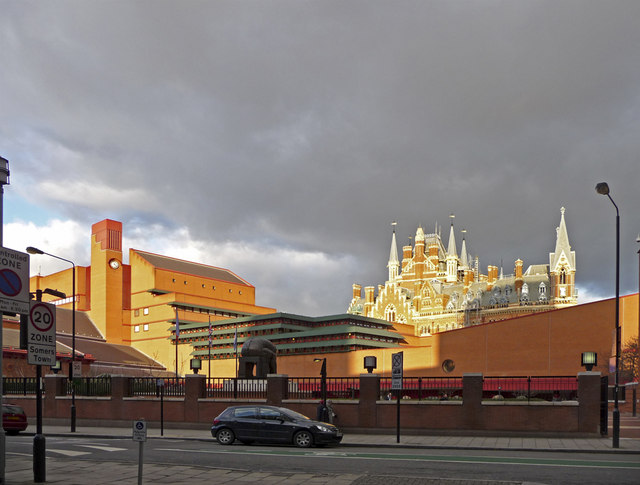
Starting today at the British Library, a new, free exhibition about Benjamin Britten. It explores the literary influences on Britten's music, from Shakespeare and Jonson to Auden and Isherwood, as well as some of the political and musical influences that shaped his work.

Included are:
* the draft score of Britten's music for Instruments of the Orchestra
(repurposed as The Young Person's Guide to the Orchestra), acquired by the British Library in 2012

* other autograph manuscripts, including the music for Night Mail, A Midsummer Night's Dream, and the Serenade for Tenor, Horn and Strings

* photographs, concert programmes and archival material drawn from the Muir Mathieson, Malcolm Sargent and Donald Mitchell archives at the British Library

* extracts from rare or unique sound recordings, including the first productions of Paul Bunyan (1941) and A Midsummer Night's Dream (1960), the whole of the first broadcast performance of Curlew River (1964), and unpublished test pressings of 'Funeral Blues' and 'Tell me the truth about
love' performed by Britten and Peter Pears.

To mark Britten's centenary, the British Library has also digitised all of its Britten manuscripts, which are now available online at http://www.bl.uk/manuscripts in a special arrangement with the rights holders.  Many of the manuscripts are on permanent loan to the Britten-Pears Library in Aldeburgh, under the terms of Britten's will, so we hope the digital facsimiles will make it easy for researchers to study Britten's music wherever they are.

In addition, a number of talks and performances have been arranged. For further details, please see

http://www.bl.uk/whatson/exhibitions/britten/events/index.html
photo: Christine Matthews

Wednesday, 29 May 2013

ROH La donna del lago - fuss and facts

What was all the fuss about the Royal Opera House Rossini La donna del lago? Before the premiere, John Fulljames made the statement "Turning Highlanders into savages is the clear choice of an author; that's what Rossini and Scott are saying. They are saying that these people cannot be taken into modernity." That is not at all the same as saying Highlanders "were" savages. And what's so bad about artists creating works of art?  But the comments unleashed a firestorm. But the whole point of the opera is that it's based on a work of fiction, Scott wrote for the purpose of legitimizing English rule. Walter Scott created a work of the imagination, as did Rossini. Since when did Scotsmen get called Rodrigo?

Authenticity was not an issue for 19th century intellectuals. Of course they admired "primitives". It wasn't just Scotland, but the whole of Europe. The whole concept of Romanticism was predicated on this fascination with wild, untamed places like islands and mountains, and the supposedly "pure" tribes that inhabited them. Think Rousseau, Marie-Antoinette and her shepherdesses, the Brothers Grimm collecting folk tales, Byron in Greece. Romanticism was a radical revolution away from the values of classical Antiquity and what that stood for. Without Romanticism, we might not revere individualism, the birth of psychology and even democratic government. But 19th century intellectuals weren't going to let it all hang out. They needed to sanitize things because they believed in the Idea of Progress and the superiority of western civilization. Scott and his friends loved the idea of Scotland's past but expected it to be colonized culturally.

Ironically, Fulljames's production is better informed and much more faithful to history than detractors realize.History is "made" by those who interpret it. Anyone seriously interested in the past would do well to pay attention to the Royal Opera House production for this very reason.

Towering above all else on stage is a landscape : mountain peaks, a mysterious lake, golden, burnished tones. Exactly like a 19th century painting, Caspar David Friedrich or Edwin Landseer. The idea is that nature is a panorama offering endless possibilities. Throughout this opera, Rossini writes music that evokes wide open spaces, extreme heights and depths, lyricism and a sense of foreboding sadness.

 The sides of the stage are framed with images of an opera house from Rossini's time, reminding us clearly that this is an opera, a work of art created by the imagination. We are looking at Scotland as theatre, interpreted by Scott and Rossini. Gentlemen in frock coats admire glass cases in which Elena, Malcom and Duglas float, suspended in time. That's exactly how 19th century people studied  exotic specimens.  At the end, Elena (the divine Joyce DiDonato) blissfully climbs back into her glass case, complete with heather and ferns. Now, perhaps, she's timeless, the Scotland she represents preserved flawlessly for the edification of 19th century civilization. In the first act, she wears a simple white dress. When she's immortalized, she swathes herself in gaudy tartan. Myth becames fact and the past becomes the future.

It's not a difficult idea to absorb.  As the head of the Sir Walter Scott Club said "(Scott's) great aim in life was the promotion of Scotland as a unity within the United Kingdom." If he and his friends had actually seen the production  they would realize that this is exactly what Fulljames is doing. They spoke before actually seeing the show. "Scott" appears like a Master of Ceremonies. He "is" the father of what we assume Scottish heritage is, and he gets full credit for that.

The Highlanders are, indeed, no more hairy or smelly than anyone else. They're just not like the refined gentlemen of the Celtic Society Scott was active in, with their top hats and watch fobs. Whether the 16th century Highlanders liked it or not, "the future is tartan". Not homespun, vegetable dyed that a hunter might wear so he blends into the landscape, but bright and gaudy that looks good when the hunter is on parade serving the new King. Or the tourist industry.  The gentlemen of the Celtic Society feast on haggis served on silver. Duglas and his men get their meat free range and unprocessed. Life was hard for the common folk. Duglas has to marry his daughter off to someone she doesn't love in order to survive. She's no different from the ordinary women who get pushed around because things are the way they are.  This production is more sympathetic to the real Highlanders than the Romantics were. At a time when some are thinking of Scottish independence, it's not a bad idea to reflect on a Scotland not dominated by Victorian values.

This production is also surprisngly attuned to the music. Rossini writes grandeur but not bluster. His instrumentation is spare : piccolos, small trumpets, a harp, small snare drums. This orchestration is fundamental to the meaning of the opera because it evokes the sense of Nature and freedom  that the Highlanders loved so well. The instruments are shown on stage several times, reminding us how art and meaning connect.  When we see the musicians in the boxes at the side of the stage, we can look closely at what they are playing and appreciate how "rustic" the music is. Later, they are playing for the conquerors and for the state. They're positioned on a raised platform on the main stage, but there's plenty of room between them and the ground: a vestige of the wide open spaces Duglas and the Highlanders once roamed?

The very form of Rossini's music evokes panoramic landscapes and free-ranging prospects. Extreme  ranges of pitch, dizzying flights up and down the register. The vocal lines are gloriously decorative and complex. True bravura stuff: trills and flourishes that burst with life and energy. I don't need to write in depth about the singing because everyone else can, it was that good. But I will write about the orchestra because it was so idiomatic. Rossini needs precision and clarity, and a conductor like Michele Mariotti who understands that bigger is not necessarily better in Rossini. This is very early Romantic music, with more in common with the baroque than with Verdi or Wagner. Besides, Rossini seems fascinated by the purity of Elena and what she represents. She's the lady of the lake, not a lady of the palace.

Then an aspect of the production almost completely overlooked in the controversy. Fulljames uses visual images that reflect images in the music, which themselves reflect the meaning of the opera. The wood panelled walls of the Celtic Society open out on a set depicting a castle on a mountain, lit by mysterious moonlight. Uprights that suggest dangerous crags and peaks, or the extreme ranges of pitch and timbre in the singing. Diagonals which reinforce the swooping, eliding vocal lines, though they serve a practical purpose, allowing singers to move quickly upwards and down without impeding the drama. Dark recesses from which Highlanders emerge like the creatures of the night they hunt: basses and baritones sound just right. Few directors, and even fewer members of the audience understand that abstract music can connect to physical form.  In this production you "hear" the music with your eyes as well as your ears.

Moreover, the singers move easily, so that they can concentrate on singing impressively instead of just looking good. A friend of mine saw the scrapped Paris production, hampered by stiff movement for the principals and "dorkiest dances I ever saw for three men and one woman as warriors, flailing arms and extending legs like Xena Meets The Matrix." (read more here)At least we in London had the Highlanders beat their staves and shields. This production was done in barely two years and in technical terms it's something to respect.

Thee film direction was less adept. Instead of showing the all-important framing device at the sides of the stage, too much attention was placed on closeups of the Gentlemen. Live on stage, you can see the interaction between the 17th and 19th century personnel. In the film, it's confusing to see a Highlander sing while a gentleman is quaffing whisky. We need to see Scott among the singers but Rossini is present in the music. On the other hand these are minor considerations, such as we get in any production.

The main thing is that we should go to an opera to hear how it's interpreted, not carrying preconceptions and hearsay impressions.  Opera is not history. It's not even reality. Why else would Rossini have created Malcom as a trouser role?  Or "not in this case" as Daniella Barcellona (wonderful !) quipped. Walter Scott created something new with The Lady of the Lake and Rossini created something new with La donna del lago, So it's no big deal that we go to a performance for a new perspective.
Monday, 27 May 2013

Renewal Luke Bedford in Portrait


Luke Bedford made a welcome visit to London for the UK premiere of his recent Renewal (2012/13) at the Purcell Room with the London Sinfonietta, conducted by Sian Edwards.

Renewal it was! The piece has all the inventiveness that makes Bedford's work so distinctive, but now with a tougher, more sophisticated edge. Moving to Berlin may welll be part of the new approach. As Bedford said, prices there aren't  low anymore, now that British composers have moved in. Every composer is influenced by life changes: music doesn't grow out of nothing. Renewal marks a a new, more mature period of growth in Bedford's output.

Renewal feels liberating. An exquisite violin melody rises to a high, almost ethereal pitch : does it evoke flight, freedom  or even a quiet, confident ecstasy? Glimpses of this melody appear throughout the piece, a firm foundation for the four sections which explode in bursts of energy, propelled forward by sheer creative momentum.  "Background radiation", Bedford calls it, more prosaically. Angular, but organic cross-rhythms that suggest a kind of primal life-force, The Rite of Spring, but with wit. All the instruments explode on a single chord at the end of the second section. Thwack! then the direction changes, and the merry dance veers off again. Dizzying changes of tempo, sometimes accelerating to breaking point. Sounds seem to inflate and deflate like breathing organisms, adding a nicely sour suggestion of wry humour   A quietly-beaten small drum introduces the gracefully elegiac final section. It's almost Romantic but definitely of our time.

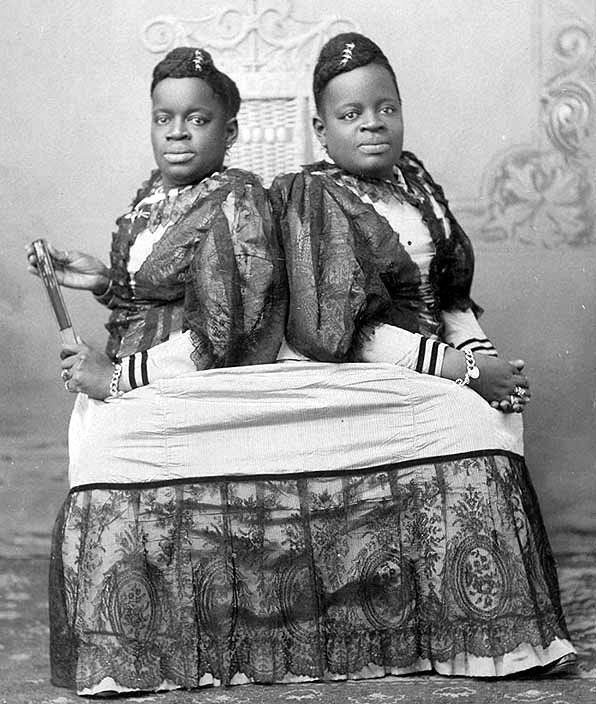
Bedford's Renewal was preceded by Wonderful No-headed Nightingale,  a reworking of his Wonderful Two-headed Nightingale. The " nightingales" were conjoined twins, Millie and Christine McCoy, born as slaves, who made a living as singers in travelling shows. You don't need to know the story except insofar as the music turns the basic concepts into abstract form.  In this version,  the violin and viola (Joan Atherton and Paul Silverthorne) dialogue weaves in and out of the surrounding orchestra. It feels like a study for Renewal which explores the same concepts of unison and free-ranging invention.

Before the repeat of Bedford's Renewal, the London Sinfonietta treated us to Périodes, the second movement from Gerald Grisey's Les espaces acoustiques .  It was a good choice. Les espaces acoustiques grows outwards from extreme simplicity. A basic melodic cell repeats like in spiral, back and forth, each time with tiny gradations of pitch. The viola part is its heartbeat : the 15 minutes of seamless bowing are like a cry from the soul.  In Périodes, though, Grisey expands the breathing motif with an extra level of “rest” as natural rhythmic as walking. It’s never mechanical but blurred, allowing variations of tempo, stillness and pitch. The logic of the final movement in Renewal clicks into place.

LOTS more on Bedford and Grisey elsewhere on this site - please explore

Sunday, 26 May 2013

Parsifal Bayreuth 2012 full streaming

Wagner Parsifal from Bayreuth 2012: full stream download  HERE. This is the Stefan Herheim production with Burkhard Fritz, Kwangchul Youn, Susan Maclean. This is the one that avoids the pretentious pseudo-religious mumbo-jumbo. Since when did Klingsor and Kundry exist in the New Testament? Or Amfortas and Titurel and the whole Grail Knights community, for that matter. Anyone who seriously thinks Parsifal is theologically sound is nuts. Instead, here we can reflect on who the characters might be and how they relate to each other. And indeed, how Parsifal connects to the social and political forces that shaped Wagner's time. Fake piety we can get any time. But those who seriously care about Wagner and his times will get something from this one. It's psychological, and spiritual, on a thoughtful level.


Friday, 24 May 2013

Verdi Falstaff at Glyndebourne

"Laurent Naouri’s Sir John is imposingly wide of girth — thanks to an impressive fat-suit — and generously resounding of voice. His authoritative bellow vanquishes complaints from his snivelling underlings; with beguiling tone, he serenades and courts the ladies. There is no doubting his haughty bumptiousness and Naouri emphasises his essential aristocratic dignity. But, at times this Falstaff is overly curmudgeonly, aggrieved that others do not recognise his ‘nobility’ — an anachronistic note in 1950s England — and his irritability and crabbiness do not endear him. Naouri is light on his feet, despite the prodigious abdominal encumbrance, and can neatly execute a dainty flounce. But, while the voice is sweet and enticing, this Falstaff lacks a certain wicked sparkle in the eye and the debonair charm that might win a feminine heart regardless of his physical decrepitude. Falstaff should be both dignified and vulgar, both arrogant and aware of his own coarseness and comic crassness — he should laugh at himself, so that we can laugh with him."

"Part of the problem is Jones’ uncharacteristic lack of attention to comic detail and gesture; there are a few neat touches — the faux leave-taking courtesies of Ford and Falstaff, the obsequious pleading for forgiveness of the perfidious Bardolfo and Pistola, the tidal wave which bursts through the Fords’ front window when Falstaff tumbles from the window ledge and belly-flops into the Thames — but most of the audience laughter was prompted by the surtitles rather than the stage action itself...."

Read the FULL REVIEW here in Opera Today

Thursday, 23 May 2013

Heinrich Schütz who changed my life

There have been many good musical moments for me, but one stands out above all. Heinrich Schütz, Historia der frölichen und siegreichen Auferstehung unser Herrn Jesus Christus (1623)

Schütz was born one hundred years before J S Bach. He studied with Monteverdi, which probably makes him a link between the Italian and German baroque. Yet he was a Protestant, in an era when people killed each other for religion. He lived through the Thirty Years War, perhaps the most savage conflict Europe experienced before the 20th century. Millions were killed. Entire regions were devastated. Although Schütz worked in relative safety for the Elector of Saxony, the world around him had been in turmoil since the Reformation. For Schütz, comfort was not a given. He writes glorious polyphony, but his beliefs were forged in fire.

Schütz's music is austere and deeply expressive. When you listen to things like Psalmen Davids or Musikalische Exequien you feel like you are totally alone in the darkness, sustained by faith in a power beyond human comprehension. Schütz founded what is now the Staatskapelle Dresden but he didn't have job security. When he fell out of favour at court, he became destitute. His family died young. He lived on alone until the age of 87, which in those days was like being Methuselah.

The first time I heard the Aufersthungshistorie was on a broadcast from the composer's beloved Dresden, it was like a kind of epiphany. I can't explain it, but the music shone out like a blast of light, illuminating everything with a kind of pure spiritual clarity. I don't follow Schütz's religion yet it moved me in a way I've never been able to rationalize. Maybe he connects to something very deep in the human soul penetrating past the trappings of church and society. The piece is written for simple forces, so it can be performed in small, spartan places: opulent palace settings wouldn't work. It's almost entirely a capella, an interplay between the Evangelist and a group of youthful voices, supported by a cache of different violas de gambe and positive organ.

Speaking about Bible-based music, a friend of mine recently said "We all know the story". Yet what makes Schütz's version so powerful is that it feels vivid, fresh, immediate. Until very recently, the Bible had been in Latin, not in German. It must still have felt shocking to hear Jesus depicted by a group of young male voices, their voices weaving like shimmering light. Schütz's Evangelist tells the story in clear, direct terms, as if he's recounting something amazing happening right before his eyes. Even though the story itself is so well known we take it for granted, it IS amazing. A man defies death itself and rises to glory. It IS exciting news.

Schütz's Auferstehungshistorie is so uplifting. In my running days I'd jog along listening to it as I ran. After 40 minutes, I was pretty whacked but then the glorious finale would kick in. Gott sei dank! sing the chorus, in multiple harmonies, while the tenor soars above all Victoria! Victoria!, and the chorus joins in splendidly woven polyphony. No matter how tired I was, when that finale came on, suddenly I'd speed up before collapsing in joyous ecstasy. I can't run now, and I won't live to be 87. But when I'm decrepit and on the point of death, I suspect that "Victoria! Victoria!" will ring in my soul.

The absolute top recommendation is the Berlin Classics recording (get it HERE, with soundclips) originally made during the DDR era when the Communists frowned on religious expression. In Dresden, however, the Schütz tradition was very strong, so no regime could suppress this music. Just as the Iron Curtain collapsed because the Leipzigers used music as protest, the Dresdeners might have realized the significance of music which suggests that men can beat death  The singing is exceptionally inspired, and the ensemble is tight and muscular: as Reformation music probably needed to be. What's more the Evangelist is Peter Schreier. He's practically incandescant with intensity. He was a choirboy in the Dresden Kreuzchor in February 1945, when Dresden's historic city was flattened by a firebomb raid in which tens of thousands were killed. The choirboys were sheltering in a cellar. They were outside the immediate danger zone, but they didn't know that and were terrified. Then, the choirmaster suggested that they join together, singing....

Spooky or not? Schütz seems to follow me around. One day while browsing Benjamin Britten's personal library at the Red House, Aldeburgh, what should be on the shelves ? The original edition of Prof Hans Moser's complete Heinrich Schütz:  His Life and Works. And then I was given a copy for my birthday. 

Wednesday, 22 May 2013

Henri Dutilleux is dead

Henri Dutilleux (1916-2013)  died this morning, aged 97. This photo dates from 2008, when the composer came to London to receive the Gold Medal from The Royal Philharmonic Society. He attended a concert at the Wigmore Hall, given in his honour. Later that evening, who should I meet walking past the Wigmore Hall at midnight? 92-year-old Henri Dutilleux, on his way to his hotel after the post-concert party.

The Wigmore Hall concert was rather special because it was conducted by Jan-Pascal Tortelier, whose father, Paul Tortelier, had studied with Dutilleux at the Paris Conservatoire. How often does a conductor do the music of a composer who has known him since he was in nappies? Dutilleux recounted how he and Paul Tortelier as students were too poor to go out much, but scraped together enough so they could hear Stravinsky conduct Les Noces. So Tortelier fils prefaced his concert with Stravinsky's Concerto in D for string orchestra (1946)  written around the time Dutilleux began to make his own name.

There were many other cryptic references in Tortelier's erudite programme, played by the Nash Ensemble. Dutilleux’s Dyptique- Les Citations is an unusual combination for harpsichord, oboe, percussion and double bass. Britten had also used percussion and harpsichord together, and there’s also a quote from Peter Grimes since the piece was initially written to honour Peter Pears. In typical Dutilleux mode, the composer added the double bass part in 1991 with a quote from  a piece for organ by Jehan Alain, another of Dutilleux's circle, who was killed in battle in 1940.

Extremely high violins introduced Ainsi la nuit, infusing the static first section with gleaming brightness. Again, this is distinctive Dutilleux, with elegant, delicate patterns evolving and changing until the piece reaches its conclusion in another static section where sound seems to float. Indeed, this section is actually called “suspended time”. This performance seemed to choreograph itself, so much were the musicians in accord. The long arches seemed like stretch, the ostinato like en pointe. I was struck by the connection to Les noces.

Tortelier also conducted Mystère d’un Instant so beautifully that Dutilleuex, greatly moved, said that was the finest he had ever heard. This version was a more recent revision of the 1989 original, reducing the number of strings to 18 from 24. There’s a feeling of space and light about this piece. Tones seem to shimmer, wavering between extremes of register, and textures seem to evaporate before reforming. What’s also interesting is Dutilleux’s composing rationale. Instead of using a formal strategy, in each of the ten sections he seeks the “mystery of an instant”, captured spontaneously as the musical idea emerges. Each section is an individual “snapshot” as Dutilleux calls it, like a Hockney collage perhaps, but animated and fluid. There’s a part where four cellos interact, another where high, keening string lines evolve into a tumble of quick, spiralling notes on cimbalom. A wayward drum rhythm unfolds to a jerky, pizzicato sequence on strings, itself superseded by a section where percussion and cimbalom lead. Then the strings soared higher and higher and in came the tam tam beaten at measured intervals, exactly as it would be in an East Asian temple. Dutilleux's reference is explicit, though what it signifies in the wider scheme of things I can’t guess. But that’s why this music is interesting. It may be neat and precise but it alludes to things beyond itself.

At one time some of Dutilleux's admirers resented Messiaen's much higher profile. That's petty. Dutilleux and Messaien are very different indeed. But perhaps they have a common heir in George Benjamin.

Something different for Wagner's Birthday

Happy 200th to Richard Wagner! How he would have enjoyed the attention. It's his due! This is a cartoon from 1876 showing him with the Valkyries. If anyone staged it like this these days, audiences would go berserk. But RW would have loved it.