Thursday, 5 April 2012

Quasthoff speaks in Der Spiegel

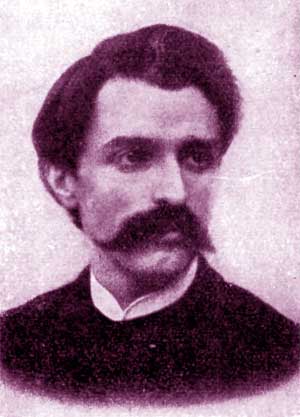
Interesting interview with Thomas Quasthoff in Der Spiegel HERE. It's good because the questions are honest and not hagiographic.TQ's replies are revealing.

"SPIEGEL: You yourself have a big mouth, if I may say so.
Quasthoff: That, of course, was always my weapon. I've become quieter now. It's possible to put things very clearly, concisely and sharply, even when you do it quietly."

TQ's also candid about why he doesn't have "fans in the thalidomide community". At least he refused to sing for the company that made the drug. OTOH most people with thalidomide-related problems are not well off as he is, and I don't think they are envious of him. Lots of them are remarkable successes too, in their own way. And as they grow older, they're developing a whole new set of age-related problems like arthritis, and the compensation they received as children has long run out. For them, it's not a closed issue and they could use more public support.


Another pansy comes out too soon

Some of the live Lieder performances last week on the BBC Spirit of Schubert series were unremarkable but Ian Bostridge's Viola D783 was very good indeed, fresher than on his recording with Leif Ove Adnes (which is recommended). Viola isn't an easy song to pull off well, as there are 19 minimally varied rhyming strophes that take nearly 15 minutes to sing. But Bostridge does it sincerely, revealing its delicate sensitivity.

The text is by Franz von Schober, whose songs (like Die Forellen) often have raffish undertones. A snowdrop rings its bell to announce that Spring is on its way. The viola leaps awake, adorned as a bride in "den Mantel sammetblau, Nimmt das güldene Geschmeid, Und den Brilliantentau" (in a blue velvet cloak, adorned with gold and dew like diamonds). But it's not Spring yet. No bridegroom, no sister flowers. The viola hides, ashamed. Soon, roses, tulips, hyacinths and lilies come out in their finery but it's the humble viola whom Spring calls his "favourite child". The flowers are sent to search her out. (How Disney would have illustrated this!) The viola is found,  her head buried beneath her leaves. It's charming, but any gardener knows roses and lilies don't come out til much later. Or walk. Or think about bridegrooms. This is not a nature song!

Be charmed, too by Hugo Wolf's setting of Eduard Mörike's poem Zitronenfalter im April (HERE) and Karwoche, where violets are portents of death (HERE)

Karwoche violets

Easter brings out the pious. Some genuinely so, some by rote!  So here is Eduard Mörike, set by Hugo Wolf. The poem is Karwoche. "O Woche, Zeugin heiliger Beschwerde! du stimmst so ernst zu dieser Frühlingswonne....der Frühling darf indessen immer keimen" Read the full text and excellent translation by Malcolm Wren on Emily Ezust's Lieder Texts site HERE.

Holy Week is the darkest time of the year for the truly devout, who meditate on the meaning of Jesus's death. Yet it coincides with the arrival of Spring. No accident, for Easter and the Resurrection symbolize Spring in a wider spiritual sense. Christian ideas have deep pre-Christian roots. Think Persephone, or the ancient European goddess  Ostara (variants in spelling). Or even Du Liniang, the Peony Pavilion heroine raised back to life by love. (More here - there was a fault on the broadcast site, might be OK now)

Eduard Mörike was a clergyman, but sensitive to pagan nature spirits, and to irony. So he imagines a girl plucking violets for a wreath which will wither on the altar. "Ach dort, von Trauermelodieen trunken, und süß betäubt von schweren Weihrauchdüften, sucht sie den Bräutigam in Todesgrüften, und Lieb' und Frühling, Alles ist versunken!"

The church is filled with music and incense, but around and beneath are graves. The girl is seeking her bridegroom in the vaults of the dead, "and Love, and Spring, all submerged". Hugo Wolf set this poem twice, once as piano song, once fully orchestrated. In both, the final word "versunken" drops sharply downwards, suggesting sudden chill. Perhaps it's the usual Romantic fascination with death, perhaps it's just an acknowledgement that frosts can blitz a promising Spring (as we've learned this week). Mörike and Wolf are saying, "don't count your blessings too soon".

photo : Chris Gunns

Wednesday, 4 April 2012

Nelsons out of CBSO Gerontius

Andris Nelsons isn't conducting Elgar Dream of Gerontius in Birmingham and at the Barbican on 12th and 14th because his littler baby daughter has been taken ill. It's obviously not a minor matter. Audiences are sympathetic because no conductor can concentrate 100% in situations like that (not nice men, that is). A child is far more important than a concert. In any case, Edward Gardner will be stepping in (Gerontius is hardly rare repertoire). Toby Spence is out too, replaced by Robert Murray. So all good wishes to the baby, to Nelsons and to his wife Kristine Opolais, the soprano.


Ariadne auf Naxos FREE stream from Baden Baden

Richard Strauss Ariadne auf Naxos free streaming from Baden Baden now available on Medici TV. Renée Fleming, Sophie Koch, Eike Wilm Schulte, even René Kollo (as majordomo). Conducted by Christian Thielemann, directed by Philippe Arlaud and filmed by Brian Large - worth watching for what he does, as he's one of the very few who know how to film opera well.

Of the current crop currently available online, I've seen these (click on links for more) Paris Pelléas et Mélisande, Munich Eugene Onegin, Zurich Rossini Otello, Paris La forza del destino (Urmana) and La Monnaie/De Munt Rusalka (Herheim). Review of that to come in the next few days - MUCH better than the one at ROH)

Tuesday, 3 April 2012

Schubert Auf der Donau video


BBC Radio 3's "Spirit of Schubert" week was addictive. Something new to listen to again and again. Like the first ever recording of a song about transvestites! It was written for a club Schubert belonged to. Hear it around 1130 on the Saturday night slot.  Wonderful, too, some of the human stories on the request shows, like Alicia de Larrocha trying out someone's new piano in Zambia.  With such good material, why did they have to go spoil everything with Schubert Lab? We don't need to be treated like morons. At least Schubert Salon had Graham Johnson, who always talks sense. "Classical or Romantic?"  Johnson squelches that. Composers don't think of themselves in categories. Schubert learned from the classics and did his own thing. He helped create "Romantic"  I can't be the only person suffering withdrawal symptoms after this marvellous week. Fortunately some of it can still be heard on repeat for several days.

Above, Dietrich Fischer-Dieskau and Svatoslav Richter in the Napoleon Room of Schloss Ismaning in 1978. The full concert is available on DVD. This excerpt is Auf der Donau D553 (1817). Full text and translation HERE on Emily Ezust's Lieder and Song Texts site, a fantastic resource. A couple are floating down the Danube. The piano part describes gentle waves, the steady movement of oars. But this is a poem by Mayrhofer, for whom water was associated with obliteration. Waves don't keep their shape, they don't stay still.  Then the forceful second strophe, where short, sharp questions cut against the flow. The "armoured strongholds" of men are destroyed in war, but nature (the river)  remains. In the undergrowth (dank, tangled) the boat is becalmed, the men afraid. "Wellen drohn wie Zeiten Untergang" (waves threaten to draw them down, like time has destroyed the castles and towers on the river banks) The word "Untergang" repeated with grave menace. Schubert wasn't to know that Mayrhofer would drown himself in a river years later (The Danube, I think). But even then he didn't set the poem as sunny boat ride.

Monday, 2 April 2012

Job vacancy, exceptional qualifications needed

After seven years at the helm at Garsington Opera, Anthony Whitworth-Jones will be retiring at the end of October. Iain Mackinnon, Chairman of the Board of Directors, said:  “(he had) the foresight and energy to run the opera and take (it) forward.... Anthony’s conception of what the Garsington Opera festival could become came to fruition with the move to its new home at Wormsley".  Mackinnonn is retiring at the same time, when Bernard Taylor will take over. But no replacement as yet for Whitworth-Jones who will be a very hard act to follow indeed.  He was the top man at Glyndebourne, which he joined in 1981. Before that he ran the London Sinfonietta. Expertise like that doesn't come easy.

Three opera this year : Vivaldi L'Olympiade, Mozart Don Giovanni and Offenbach La Perichole. More details HERE on the Garsington Opera site. 

Peony Pavilion full broadcast online

The Peony Pavilion is one of the great classics of world literature, but in our anglocentric straitjackets, most don't know. Imagine the world without Shakespeare, Mozart or Beethoven?. That's what we're missing by not knowing The Peony Pavilion.  Now there's an easy way to get to know it thru a full broadcast of the opera version on Classical TV (link here). The synopsis on the site is good and easy to follow. Thje brooadcast is the 1998 peformance, which is on DVD but not so easy to get hold of.

The original novel was written byTang Xianzu (湯顯祖) (1550-1616), one of the greatest Chinese playwrights, and Peony Pavilion is only one of several of his sagas that have become famous Chinese operas. The Peony Pavilion and its values pervade Chinese culture, so knowing about it is a key to understand how millions of non-anglo people think.

Every region in China has its own variant of Chinese opera, and within each region there are numerous different styles. Most people in the west have seen Beijing opera masks, but Beijing opera is almost more acrobatics than other forms. My thing is Cantonese opera, glorious for voice as the dialect has nine tones, unlike the main national language which has only four. These nine tones can be varied by varying tempo, alliteration etc, so to me it's exqusite. Generally though,  the finest Chinese opera comes from Suzhou, a city synonymous with elegance, refinement and erudition. "The best scholars, the most beautiful women, the loveliest gardens" (some over 1000 years old). And the finest Suzhou opera is kunqu (崑曲).


Kunqu developed in the Ming Dynasty (1368-1644), China's Golden Age in artistic terms, and pre-dates all other forms of opera, both in China and in the west. It now has protected status underr UNESCO. But what's given kunqu a new life has been the work of Professor Pai Hsein-yung (白先勇). The original Peony Pavilion went on for days, the scholarly audience delighting in long literary and philosophic peregrination, which nowadays is lost on most people.

Professor Pai's edition concentrates on the essential drama in the plot A clever girl, Du Liniang, has a vivid dream about meeting the perfect lover. She believes that destiny will guide her lover to her. She dies. Her parents pine and the family mansion becomes derelict. The man is a destitute scholar, so the gardener takes pity and lets him stay in the secret pavilion. He finds the secret portrait the girl hid in a rock in the deserted pavilion. Dead girl reappears as a ghost. Intense love. Girl gets resurrected! (For detailed synopsis and analysis please read HERE).

How "modern" and universal these themes are - Dreams, the subconscious, love, nature and the supernatural, battlescenes, humour, life after death and the idea that virtue is rewarded. One big sub-theme sends up scholars and pretenders, which must have had scholarly audiences creasing up with laughter.

Du Liniang herself is an amazingly adventurous character. She's rich and spoiled but wants to study like a man. Even her snappy maid runs rings round the old fellow sent to teach her, but it's not nasty, and rather touching. Lots of scholars never went on to fame and fortune. Proactive, creative Du outfoxes everyone - her parents, her tutor, the military, her lover and even death.In the video clip below she is painting her own portrait, the audacious hussy, and hides it in a rock by the pavilion so it will be found by her future lover just like in her dream.Even the minor characters are fun, like the pert maid and a wonderful Bandit Queen.

I took a friend to the 2008 Sadler's Wells performance who didn't know much about Chinese culture and he was overwhelmed. It was so colourful and expressive - emotion transcends language. The new version is still over 10 hours, but it flies by, because the story is so strong and the performance, by the Suzhou Kunqu Opera Company, was superb.There is a DVD available of the 1998 premiere. It's been reissued in "normal" DVD form, but I have the original, in a handpainted padded silk presentation box, and signed by Professor Pai.

Although Chinese opera is very stylized, it's this very stylization that gives it the strength to renew itself. Once you're used to the basic rhythms, gestures and cues, there's a lot of interpretive freedom, even room to improvise. Chinese opera fans, like opera fans in the west, cherish minute details (especially now we have film and CD). But even an ancient form like kunqu isn't a museum piece. Like Du Liniang, it gets resurrected and lives anew. (Please see lots of other posts on this site, which is one of the few which discusses Chinese opera, movies and music  in English). You can download a translation of Tang Xianzu's The Peony Pavilion from Project Gutenberg.

Saturday, 31 March 2012

Vigorous Rigoletto - Royal Opera House

How would a period instrument specialist like John Eliot Gardiner approach Rigoletto, Verdi 's sordid tale?  This was his first Rigoletto (though not his first Verdi) but he created it with great insight. There's a lot to be learned from period practice, and anyone who knows it well knows how rambunctious it can be. Gardiner knows the Renaissance was violent. Verdi isn't sentimental and the court at Mantua was cruel.  This was historically-informed practice adapted to repertoire often milked for lush effect. Gardiner's vigorous appraoch might not appeal to all, but it's extremely perceptive. He makes Rigoletto raw and shocking, as it should be.

David McVicar's 2001 production is bleak. The ducal palace is evoked by a metallic wall : shiny but hard . Michael Vale, the designer, uses a large wooden sructure that pivots like the twists in the plot, but the focus remains on the cast. Vocal perfoirmances take their cue from Gardiner and McVicar. Vittorio Grigolo bursts onto the stage in full throttle. "Questa o quella"  is thrown like a gauntlet. The Duke doesn't brook challenge.  Grigolo has the power and showmanship to create the Duke, bursting with arrogant machismo. Like the Duke, he's a force unto himself. The courtiers are a mob for whom subtlety means nothing. Grigolo's Duke uses swagger as a weapon. The Duke's brutishness come over well, moments of decorative richness adding a touch of devious artifice, totally in keeping with character. Yet Grigolo also manages to suggest the Duke's inner fragility. With Gilda, he can play the man he might have been had he not been born to a crown. The duet with Gilda is genuinely tender. In "Ella mi fu rapita", Grigolo let the Duke's mask drop for a moment, singing with genuine tenderness. In many ways this is the heart of the opera for it touches on the Duke's inner psyche. Significantly, Verdi keeps cutting "La donna è mobile" so the sections don't connect. Gardiner emphaszies the disjoint, for by this stage, the Duke is back to his old tricks, morally disintegrating again. Grigolo is a consummate actor and creates the part with more depth than he'll get credit for. The problem is that the Duke himself is hard to pin down.

There have been so many great Rigolettos over the years that Dimitri Platanias has a lot to live up to.  This is his Covent Garden debut, though he has done the role many times elsewhere. McVicar's concept has Rigoletto crawling like a broken spider, which is perfectly valid. Platanias is physically imposing, with a voice to match, so a different concept would perhaps suit him better.  Platanias does Rigoletto's anger rather than his anguish. His dialogues with Gilda show Rigoletto's fatherly side, but don't access the demented, tortured soul within. Nonetheless, he's a good counterbalance to Grigolo's Duke and to Matthew Rose's Sparafucile, sung with the power of an amoral  force of nature. Rose doesn't need to invest the part with histrionics. To Sparafucile, murder is a business transaction without emotional meaning.  Rose's detachment is chilling in itself. In his exchanges with Christine Rice's Maddalena, Rose's sibilants cut with suppressed sexual violence. They're not "brother and sister" in the modern sense of the term, but pimp and whore.

Ekaterina Siurina is an impeccable Gilda. It's her signature role with which she debuted with Dmitri Hvorostovsky at the age of nineteen. A beautifully rounded, sensual "Caro nome" expresses the passion in Gilda's personality, making her love for the Duke perfectly plausible. Gilda is too sheltered to articulate her feelings, but her instincts burst forth. Siurina's clear, ringing timbre and perfect pitch make the long cadenzas bloom with promise, expressing emotions that words can't convey. This intensity makes her sacrifice believable too. When Siurina appears dressed as a boy, her voice glows with purpose, for she's found a way to fulfil her love in a sacrifice only a cloistered Catholic innocent might chose. Ironically, Rigoletto loses his child becauase she's been brainwashed by her upbringing.

This was an extremely rewarding Rigoletto because it cuts past surface glamour and goes to the visceral drama.

More soon in Opera Today, including an article on the live broadcast on 17th April which will be shown simultaneously in cinemas all round the world.  Film is the next frontier in opera. More people will see any production on film than will ever see it in house, so it's essential that opera filming develops as an art form in itself, like conducting, direction, singing and staging. With Kaspar Holten at the helm at the Royal Opera House, perhaps issues in filmed opera wll be taken seriously.  I've written a lot about filmed opera and music and will be writing more.
Photos copyright Johan Persson March 2012, details embedded

Friday, 30 March 2012

Glyndebourne Handel Rinaldo on TV tonight!

Don't forget, Handel Rinaldo from Glyndebourne on BBC4 TV tonight. Wonder how it will turn out on film, which is always different from live. Despite dodgy premise, there are some very good moments in this. Watch Sonia Prina fly thru the sky on her magic bike! And listen to Luca Pisaroni's divine Argante. Read about the live performance HERE . 
And HERE is a link to my review of the Proms performance

BBC Spirit of Schubert Opera Marathon

BBC Radio 3's Spirit of Schubert is pretty amazing : the secret is to listen carefully. Through the Night broadcasts are by far the best bet, because the material is well chosen. Also, no banal chatter, no desperate attempts to be trendy.  Just genuine music! It's been wonderful to hear so many of Schubert's operas together and also in context of his other work. It's more fun than listening on isolated CDs. For example, Die Freunde von Salamanka (Monday) with its chorus "Fidelio! Fidelio!". Guess where the young Schubert got that from.  Compare to the songs Schubert and Beethoven set to the same texts. Matthison's Andenken, for example.The poem uses a device of repeating phrases. Schubert's song is good but Beethoven's is a miracle! Or listen to the arias  from  Die Burgschaft (D435) with Elly Ameling (Tuesday). Listen to this in conjunction with the entirely separate song Die Burgschaft (D246) on Monday. The juxtapositions are part of the fun.

A dear friend and regular reader mailed me to say she felt Schubert's operas are like extended song cycles, with spoken dialogue and music. It's a great insight. That's the key. It helps you appreciate how Schubert's idiom works. Definitely not Grand Opera in the Wagner /Verdi sense but more intimate and personal.  Think about Weber's operas, whose charm lies in the songs and music. Hearing Schubert's opera in context with his part songs and choral work is illuminating. They're all part of the same flowing river. There's a lot of variety, too.  Die Verschwornenen (D787) is delightfully Arcadian while Der Vierjahrige Posten (D190) (Thursday) is a surprisingly strong work which would be excellent material for a ROH2  chamber production.  This would be more sympathetic to the kind of theatres where such pieces were produced in their own time. Listen to these two on the Thursday afternoon opera slot. Or Der Graf von Gleichen (D918) (Wednesday) with Florian Boesch. 

Yesterday there was a potentially interesting discussion when David Pountney and Lionel Friend were asked why Schubert's operas weren't better known. Not that they got to say much, poor guys, it's not that kind of programme..Part of the problem is that it's the British who don't appreciate Singspiele, not the works themselves per se. In German speaking countries, there's a lot more appreciation of the Singspiele tradition which starts from Goethean times and goes on to Brecht/Weill and Hartmann, Braunfels etc. Indeed, you could probably trace it back to medieval mystery plays. That's why there are such high quality recordings. Fierrabras, for example (last Saturday, the classsic Abbado recording) and the Opernhaus Zurich recording on DVD (read more here)  The plot is confusing, but instead of trying to make sense of it, Guth incorporates Schubert himself into the staging so it's perrceptive.

Alfonso and Estrella (Friday am) with an exceptionally strong cast (Fischer-Dieskau, Mathis, Prey, Schreier and Theo Adam). this opera is almost as well known as Fierrabras and there's a DVD, too. If only these broadcasts were available longer because there is so much to take in. Some of the recordings are hard to get hold of. So listen and enjoy.

Thursday, 29 March 2012

Schubert Laboratory or Schubert Lobotomy?

BBC Radio 3's Spirit of Schubert runs on. It's being sold as a gimmick, with come-ons like "Schubert Lab" which examines Schubert "under a microscope". I kid you not! Those words are used. But music isn't scientific. It's subjective.You might learn facts like strudel making but you won't learn Schubert until you listen with your soul. And that's a skill that comes with time and the willingness to fully engage. This isn't Tom Service's fault. It's the result of a continuing process of dumbing down that's affected the whole culture business.

Fundamentally, the media are hooked on the idea that mass means value, not quality. Look at any newspaper. The more outrageous the article, the more comments, even though most of the comments are gibberish. But that doesn't matter, as long as the article gets attention. It's mob rule via new media.  Far from encouraging new ideas and opinions it stifles genuine, independent  thought. Live blogging, for example, works fine with breaking news stories, because no-one knows the story yet. Live blogging during performances is moronic. Sure we're responding every moment but until we've processed all the data we're in no position to understand the whole.  Someone told me recently about a broadcast where tweets went across the screen like subtitles. Yikes! The message there is, don't listen or watch, read what other people think, however fragmentary (and often brainless).  Everyone has an opinion, but it's what goes into making the opinion that counts, and it's not an instant process.

So the BBC Spirit of Schubert is an interesting experiment. It operates on many different levels at the same time, and its range is so wide you have to pick and choose. In Australia, car boot sales are called "Trash and Treasure". In amongst the tat you might find a rare gem. There are some marvellous things on this Spirit of Schubert  week, scattered around so you have to be alert and prepared for surprises. It's quite amazing how much there is. This series is not something anyone can run up in a weekend. Extremely rewarding, though sometimes you have to zap the mute.  For me that's part of the fun, and without fun, what's the point?

You never know what you might learn. Request shows are naff for many different reasons (often nerd territory) but these have thrown up unexpected wonders. One man asked for Peter Dawson's Erl King sung in stilted Victorian English (before German recordings were easily available) Yow, it was dated, but the beauty was in what it meant to the man, who heard it as a boy and became hooked. His Dad bought him a piano, though that was the last thing a military family needed to cart around. A window on a world now gone. But it's a wonderful story, because it shows that people can learn in all kinds of situations.

I love hearing about experiences like this. Once I met someone who had come to Schubert via John Cage. His insights were refreshing and taught me so much. Years ago, before Amazon and Paypal I was part of a gang who smuggled Lieder into China. Passionate listeners, who treasured every song. Every discovery is a step on the road to greater adventure. Hyper-ventilating instant opinions substitute the idea that learning is quick fix and finite.

Last night, at the Royal Festival Hall, there was a schools orchestra event. The place was full of excited under 12's with scaled down instruments. The kids had been having fun playing, improvising, learning to "really" listen and create.  Kids don't need dumbing down, nor adults.  Treat music with respect. In the concert afterwards, Lisa Batiashvili showed the same creative spirit when she conducted as well as played Mozart Violin Concerto No 3, in the absence of the scheduled conductor. It was a chamber experience, the LPO players communicating with her as individuals. Batiashvili's style is lithe and gracious, so the performance was very individual and personal. Exactly opposite to the Mahler 9 mechanically delivered and mangled. On paper, it looked OK, but as music it was awful. Sure, the conductor was a substitute, but this time the back up system did not work. The LPO deserved better.

Wednesday, 28 March 2012

The man who wrote La Wally - Alfredo Catalani

Alfredo Catalani wrote La Wally, but what else do we know about him? He's an intriguing character, so admired in his time that his contemporaries considered him equal to Verdi and the next great hope of Italian opera. Arturo Toscannini revered him so much that he named his daughter "Wally" (rather less unfortunate a name than it would be now). "Catalani has been squeezed into musical histories as an ‘inbetweener’, for his great love of Wagner led him to write operas which seek to reconcile the Verdian tradition with the German music-drama. This lofty ideal has generally endeared him to neither the Verdian nor Wagnerian camps" writes David Chandler, who has collected and collated all known resources about Catalani and produced two new books on the composer.

Read Chandler's article "Alfredo Catalani : the Great In-betweener" HERE. The books are : The First Lives of Alfredo Catalani and Alfredo Catalani: Composer of Lucca. Get them on amazon HERE.  More still, on the publisher's site (Durrant Publishing).

Both are painstakingly researched, using original, contemporary sources, with additional chapters on the music and recordings. It's extremely well analyzed. Many music historians aren't necessarily good historians, but Chandler uses his sources intelligently. The books are very well written indeed. Highly recommended. I'd suggest that we need to understand Catalani to interpret Puccini and those who followed. (Puccini was born in the same town four years after Catalani but taken up by the powerful publisher Ricordi, who promoted him heavily). I had the great fortune to meet David Chandler last year at the Opera Holland Park production of La Wally. HERE is a link to his review "Between Heaven and Earth", in The London Magazine. This is by far the most authoritative review around. If only all commentary could be as thoughtful as this !  It's not only knowedge but the way knowledge is applied. Chandler also writes great stuff for Opera Today.

Belcea Quartet at the Sage Gateshead

An excellent demonstration was made of the first- rate quality of the Sage Gateshead's acoustic by the Belcea Quartet on Wednesday 21 st March. High quality strong playing is familiar in this venue where Thomas Zehtmair often leads  the Northern Sinfonia from the violin. Very fine recordings are also made by this partnership here. This concert though featured the visiting London-based Belcea Quartet, who performed a selection of Beethoven's string quartets, part of a cycle which is making a multi-city tour in both the UK and Europe. There are dates in Italy, Germany and Austria as well as England, giving the Quartet a busy touring schedule (further details on their own website). Particularly fine was No 15 in A minor (Op132), known as the 'Holy Song of Thanks' because Beethoven wrote it whilst convalescing from a serious illness, which closed the concert. The lengthy slow third movement was short of superlative and brought to silence a capacity audience.

Preceding this were No 1 in F (Op18/1), a relatively early work in a brisk and lively style, and No 9 in C (op59/3), one of the Rasumovsky series – a series which in my opinion are some of Beethoven's most satisying, balanced and interesting quartets. Its very haunting andante section of the second movement was a highlight.

This performance reminds the listener that the Sage is arguably the UK's acoustically finest concert hall north of Birmingham and furthermore showcases exceptional playing of these important and substantial works. The Belceas are also in the process of making a set of live recordings of the complete Beethoven Quartets at Snape Maltings which from this showing is a release to be eagerly awaited.

by Juliet Williams

Tuesday, 27 March 2012

Andris Nelsons Baby Crisis

News flash from City of Birmingham Symphony Orchestra: "The Baton may have switched, but the Orchestra plays on".  What's happened is that Andris Nelsons had to pull out an hour before the scheduled concert in Dortmund last week. His 3 month old baby daughter was taken to hospital In Riga. It's clearly not something trivial, as Nelsons won't be back til next  month.  The baby's mother is Kristina Opolais, a sensational Madama Butterfly at ROH last year, who must have been 4 months pregnant at the time, though the audience didn't know. All orchestras have contingency stand-bys, and  Associate Conductor Michael Seal stepped in, and the concert and tour proceeded. So much respect to Andris Nelsons, who has his priorities right.