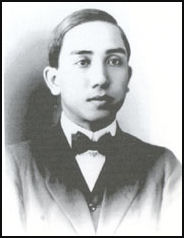
Han Suyin has died. Everyone's heard of her novel, Love is a Many Spendoured Thing, because it was turned into a hit movie in the 1950's. Read the book, the movie is pure Hollywood. But Han Suyin was far more interesting as a person than as a writer. Her novels are autobiographical, rather than works of fiction. Indeed, one of my aunts who knew her personally said that one of the characters in Love Is a Many Spendoured Thing was a composite based on several Hong Kong doctors they both knew, including my uncle. Her books are therefore a form of highly subjective social commentary.
To people in the west, Han Suyin symbolizes China. In fact, she wasn't Chinese but mixed race and very westernized. She wrote in English, not in Chinese. To Chinese people in China, she'a an anomaly. There are plenty of Chinese novelists, but Han Suyin was different, sometimes trying too hard. You can read the outlines of her life anywhere on the web and read her formal autobiographies, especially the early instalments like A Mortal Flower, and Destination Chung King. (Her accounts of her parents lives aren't first hand so a little highly coloured) But from me, you'll get a more individual perspective.
For me, Han Suyin was an example of someone growing up "between" cultures, always alert to cultural clues people in mainstream societies take for granted without noticing. "We always have to negotiate," a prominent Eurasian woman of her generation told me. "We are interpreters all the time". And she didn't mean just language. One thing for sure, being Eurasian means always being the outsider.
In colonial times, mixed-race people were considered degenerate, quite literally "mongrels" and "lesser breeds". Remember Madama Butterfly? Many assume that mixed-race children came from prostitution when in fact this was most certainly not the case. What kind of handicap is that to live under? But because Empire depended on the bluff that white people were somehow destined to rule, any contagion with the natives was politically dynamite. The downside of being Eurasian was that Eurasians were always under pressure to prove themselves worthy. On the other hand, that gave them "hybrid vigour", as my father used to say.
Nowadays there are hundreds of thousands of Chinese growing up in the west, largely cut off from the experience of growing up in a community where everyone is rooted in Chinese culture. When children grow up, they want to be like their peers, so it's hardly suprising that cultural dilution is pretty much the norm today. This new generation has a whole new set of identity issues to develop, and many more options. Having Chinese DNA does not make anyone Chinese in the deepest sense of values and mores. "Bananas" people joke, "yellow on the outside, white on the inside". Since it's almost impossible to completely penetrate a culture as complex as Chinese, there aren't any reverse bananas.
So how do foreign born and raised Chinese develop their identity? Having a Chinese face does not automatically make anyone Chinese. That's not a value judgement. It's realism. People respond in the way the culture they grow up in teaches them to think. If they grow up in large communities with a common background, and know the language, that helps. But not everyone is in that position. I thought I had myself figured until I went to the west as an adult, and it threw me off balance for years. That I think is the challenge Chinese growing up outside Chinese society need to tackle. What is identity, after all? Do we create our own as we go through life? Are we fated to be "outsiders"? That's not such a bad thing because conversely, you're not bound by what others expect you to be. Face is not destiny. There will be lots of different ways, personal to each individual. Han Suyin found her own way, controversial as it was. Others will find their own.