Thursday, 1 January 2015

Michael Kennedy 1926-2014

Michael Kennedy has died, and with him one hopes not, the end of an era when writing about music meant a level of knowledge,  but even more importantly , integrity, humanity and the idea that there's always more to learn. Like Neville Cardus before him, he wasn't formally trained, but had a good ear, and a good mind, things which can't really be taught.  He cared about music and how people listened. As he famously said, there's no need to dumb down, since good people will rise to the stimulation that is good music.

Kennedy's great forte was British music. His work on Elgar raised the bar for British music studies, firmly placing Elgar in the mainstream of European tradition.  He also wrote, and taught about other British composers, like Vaughan Williams. Donald Mitchell, born only 13 days before Kennedy, cornered the market for Britten, but both men promoted Mahler. Mitchell's work on Mahler is scholarly : Kennedy's book on Mahler reached non specialist readers and brought many into the realm of Mahler studies. Kennedy's liner notes and reviews weren't  ephemeral filler but genuinely informative. He wanted to share his enthusiasm and listen more sensitively.He wasn't a celebrity, but eager to keep learning.  Until recent years, he was often at British music events, in the audience, giving talks, and approachable. The last time I saw him, a few years ago, he looked extremely frail. But he will live on forever, in his books and in memory, as long as there are people who believe enough in good music to appreciate that it can inspire without being turned into pabulum. 

Most detailed obit HERE in the Telegraph.

Monday, 29 December 2014

New Year Gala Dresden tonight Thielemann Netrebko


Perhaps the best of the New Year Galas coming up - Christian Thielemann conducts the Staatskapelle Dresden with Anna Netrebko, Pavol Breslik and Juan Diego Florez among others. LIVE on Medici TV, you might have to pay but it's worth it.

Sunday, 28 December 2014

Kerstmatinee 2014 - Mahler, Jansons, Concertgebouw LINK


Live in the Netherlands on Christmas Day - now available on demand, online for a limited period on NP (Netherlands Public Broadcasting) - Mahler Symphony no 4, Mariss Jansons conducts the Royal Concertgebouw Orchestra with Anna Prohaska (perhaps the most ideal soloist for this piece at the moment).  FOLLOW THIS LINK. Kerstmatinees were a grand Dutch tradition for many, many years so it's wonderful to have them revived. Collections of them were issued on recordings, and became collectors' items. This performance is so sparkling and vivid - enjoy !

Operngala Juan Diego Flórez link


For fans,  Juan Diego Flórez ist zu Gast beim Münchner Rundfunkorchester. In einer festlichen Gala präsentiert der Startenor Arien von Bizet bis Offenbach.  One and a half hours, aria after aria , video, too!

Glyndebourne Hansel und Gretel ONLINE


Glyndebourne's Humperdinck Hassel und Gretel FREE online on demand via the Telegraph now til 4th January. BRILLIANT production ! High point of the season.

Saturday, 27 December 2014

Tarzan with genius soundtrack Les Pêcheurs de Perles rare film


Georges Bizet Les Pêcheurs de Perles - a rare film version made for French TV in 1960.  Pearlfishers is notoriously difficult to stage because it's fantasy so exotic that it's hard to capture in believable visual images. Although it's supposedly set in Ceylon, the music (and indeed the plot) bears no resemblance to anything but French grand opera, so it needs to be taken with an imaginative  sense of unreality. Is it ideal, then, for film, which isn't constrained by the physical limits of staging?   Then, perhaps, we could enjoy the faux orientalisme done with the excess the music suggests.

Perhaps that's why Airs de France, a division of RFT (Radio Lyrique) attempted this Les Pêcheurs de Perles. It was filmed like a movie, so the cameras reach angles that couldn't be done in normal opera. There are luscious effects - real palm trees and greenery, realistic-looking mountain boulders for the cast to scramble on. A temple that looks ike a glorious  hybrid of Angkor Wat, South India and 19th century French architecture. Much more naked flesh on the natives than in the photo above, from an early stage production. The  overall effect is Hollywood extravaganza. Think Tarzan movies, with a better than average soundtrack. 

Unfortunately the technology wasn't as advanced as the concept. The cameras don't really cope with movement, which rather spoils the best moments, since the crowd scenes are well choreographed.  The principals stand around like they were made of wood, though their performances, while good, aren't really special enough to electrify proceedings. Lots of shots are out of focus and black and white film doesn't help. This is an opera that begs to be filmed in Technicolor, with  special effects! (remember the scene in the ENO Pearl Fishers where figures were seen "swimming"  suspended in the air spotlit in glorious greens and blues  That was the sort of magic Pearl Fishers can inspire.  Sadly, this film doesn't quite live up to its potential. When the village is torched  the flames are clearly faked, with sparks of diagonal light flashing with the leaden regularity of a malfunctioning bar heater.

Cast  : Léna Pastor - Leila, Michel Cadiou - Nadir, André Jonquères - Zurga, Charles Daguerressar - Nourabad., Chorus & Orchestra of the RTF Radio Lyrique conducted by Georges Derveaux

Friday, 26 December 2014

Die Meistersinger von Nürnberg, East Berlin 1981

Wagner Die Meistersinger von Nürnberg from the GDR in 1981, when the Deutsches Staastoper was in East Berlin.  This production premiered in May 1968, directed by Werner Kelch.  The film captures just one of numerous performances,  most of them conducted by Otmar Suiner and combinations of the same cast, usually headed by the great Theo Adam. The 1981 version features a very young-sounding David in  Peter Schreier (actually aged 46).  The quality of the singing evidently varied: this Walter, Spas Wenkoff, isn't that great. Yet, despite being a product of the conservative Communist East German regime, it must have been strikingly modern and innovative in its day. The GDR may have repressed poliitcal dissent, but it valued artistic ideals. It understood the meaning of the opera with its message of creative renewal and freedom (though it kept being revived).

The congregation in Act One sit in a darkened church, where we can just make out vaguely Gothic, semi-abstract shapes on the walls towering above. This background is oppressive, but so is the society in which Eva has been brought up. Significantly, this same set serves for the room in which the Meistersingers meet.  They look like they're boxed in, trapped in ancient mahogany. This interplay of solid, dark mass and brightness flows through the whole opera. Black and white, like the half-timber architecture of Nürnberg itself, woven into the whole production, but not merely for decorative effect.  Angles and shadows, subtle gradations created by different perspective: the meaning of the opera expressed visually.  Costumes are more or less medieval, but subdued - 16th century clothing technology didn't support the flashy kitsch that passes for medieval today.  Thus the visual emphasis falls on the apprentices in their black and white outfits, many of whom are played by young women, whose voices  make the choruses particularly perky. Spotlighting the apprentices is critical to interpretation, since it's they who are the future: still lively, rebellious, and not yet blinded by convention. Oddly, the principals all seem to have the same bouffant wigs and exaggerated stage makeup, but I think that's more the fashion of the time than anything else.

With a few minimal extra details, the same set  works for Act Two, where Walter, Eva and Sachs  face their dilemmas, and Beckmessser crawls out of the shadows.  The characters are "be-nighted" in every way. The Nightwatchman thus calls time on the chaos. Thus, when dawn rises on  Johannes Tag, the brightness and freshness feels invigorating.  Sachs's workshop is lit by the morning sun, adding a golden glow. A bright blue curtain adds colour. Strange angles and shadows still, since Beckmesser lurks to steal Sachs's manuscript.  When the curtain rises on the field of celebration, it's high noon.  Now the black and white seems healthy and clean. Gone forever the heavy woodwork. Instead, an open grandstand, through which air circulates. Three golden banners. Simplicity, naturalism, none of the oppressive overcrowding favoured by Otto Schenk and  Third Reich Bayreuth. East German socialists  knew only too well what mobs and mass rallies  could unleash. No flowery meadow needed: the gaiety in the orchestra is matched by the liveliness of the youthful Guildsmen, apprentices and young women in yellow skirts and white lace, dancing (not marching) merrily. Freshness, purity, renewal.  The Meistersingers enter, part of the community, smiling and approachable. Walther sings the Prize Song dressed in white satin, edged with black, like a true son of Nürnberg!

The notion of "traditional" versus "modern" production is nonsense. What really matters in opera is how well a production expresses the meaning of an opera. That involves some basic understanding of the music and what the composer might have meant by it. Some audiences, however, could not care less. They want preconceived expectations fulfilled, even if thiose assumptions run totally against the nature of the opera. "Regie" simply means "directed", in French as in German, without the implications in English of "regimentation". "Concept" merely means joined up thinking, putting ideas into broader context.  Wagner himself famously said "Kinder, macht neu". It was Cosima, with her obssesive personality,  and Winifred, with her friendship with Hitler, that espoused the idea of blind conformity to external values, at the expense of genuine engagement with the composer and his ideas. Does Wagner support Sachs or Beckmesser. ?  Does he support the individual (Walther) against the mob? Is Beckmesser right to cheat, lie and steal  to prevent new ideas and new art?  If even the Communist regime in East Germany could produce a Meistersinger like this, which respects Wagner's values, why do some - not all - modern audiences in supposedly democratic societies still not get what Wagner was about?

Thursday, 25 December 2014

Christmas in Vienna 2014 LINK


The 2014 Gala Christmas Concert from the Wiener Konzerthaus was broadcast live on ORF TV this morning (Austria only) but is now available HERE on Arte.tv. 

Alas, not in UK, though it's been possible in the past. No doubt it will appear on other sources.


"Des chants de Noël du monde entier sont au menu de ce concert de l’avent donné à Vienne. L’orchestre de l'ORF, dirigé par Sascha Goetzel, accompagne la Wiener Singakademie et les Petits chanteurs de Vienne, ainsi que quatre solistes : la soprano russe Vesselina Kasarova, la mezzo-soprano bulgare Natalia Ushakova, le ténor mexicain Ramón Vargas et le baryton polonais Artur Rucinski. Au programme : les moments forts du traditionnel concert de l’avent donné le 19 décembre au Wiener Konzerthaus. "

Weihnachtsoratorium online sehen und hören

J S Bach Weinachtsoratorium from Munich TV, still available to enjoy, on demand, internationally and online on BR Klassik HERE.

Weihnachten 1914


Wednesday, 24 December 2014

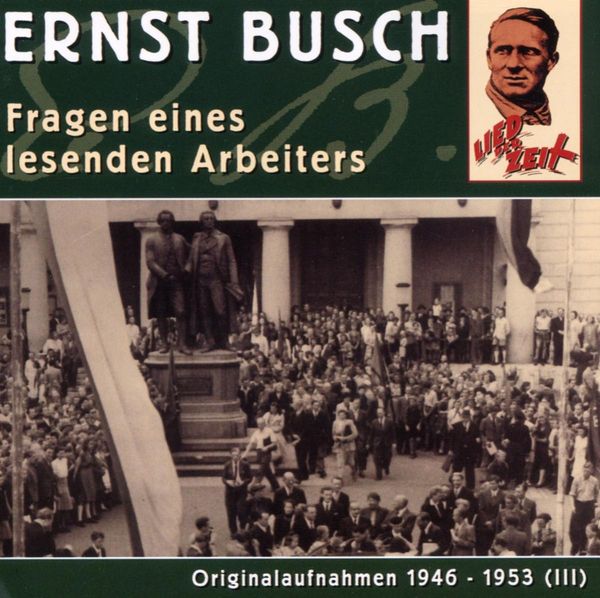
Ernst Busch Alte-neues Weihnachtslied

Traditional German Christmas carol spiced up by Ernst Busch in his inimitable way. Much closer to the real spirit of Christmas than tinsel, big spending and drunken binges !

On hanget korkeat, neitosket

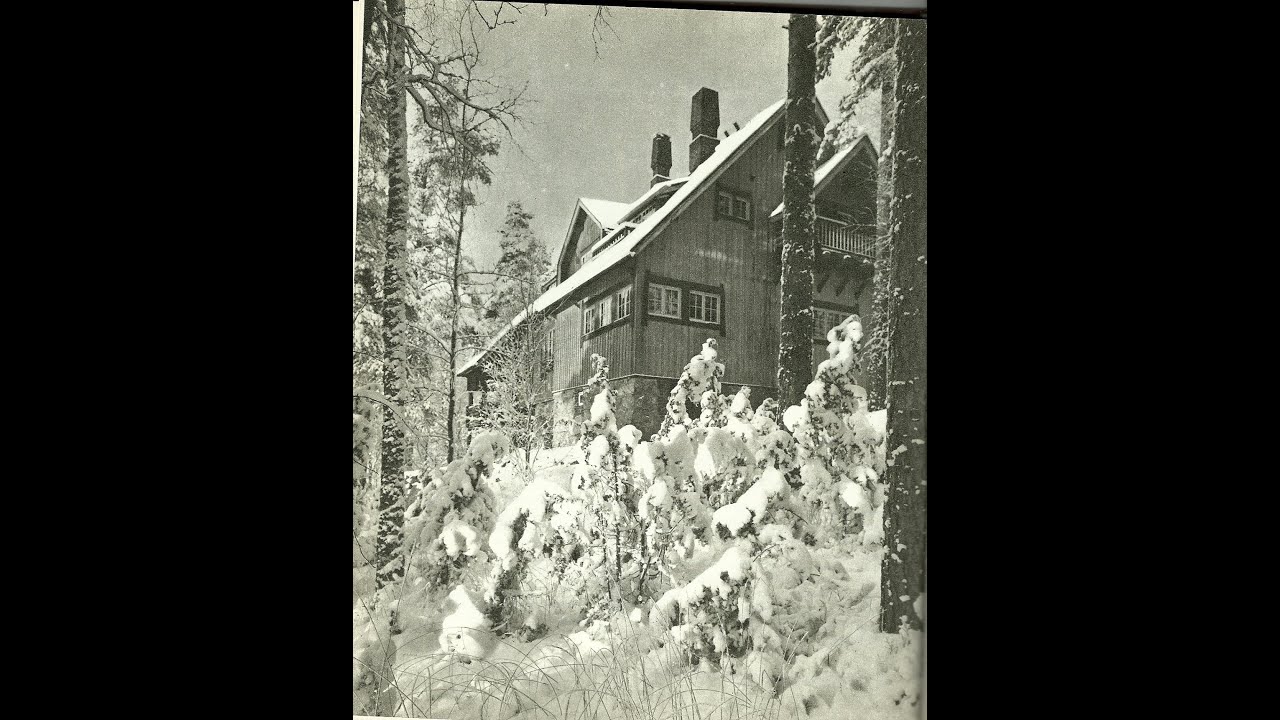
On hanget korkeat, neitosket ("How high the snowdrifts"}.  by Jean Sibelius, op 1/5 published as Viisi joululaulua, a collection of five songs in 1913, but originally written in 1901 for a Helsinki magazine's Christmas edition. The poet was  Willki Joukahainen (1879-1929)  a poet and journalist who would later become a minister of state when Finland became independent. The photo at right shows Ainola, Sibelius's family home, under heavy snow

Listen to the singing and use your imagination to figure out what the words might mean.  The purpose of the exercise is not to guess precise meaning but to respond emotionally to the effect the music has on you. That is all "listening to the music" means, not formal structural analysis or anything like that, but sensitivity to what is being communicated on a deeper level.  Useful life skill, too.

Finnish is a particularly expressive language because of the many vowel sounds which have to be spoken separately, not elided, creating a natural musical line. I don't know what the words in the song mean, but what I get from the music is the steady pace, like the natural rhythms of snowfall. The clear, high registers suggest, to me, the brightness of light on snow,, sunshine or moonlight. The quieter passages suggests to me the hush that envelops the countryside when snow muffles normal sound. This approach to music probably comes naturally to Lieder and orchestral audiences, but would also be useful to cultivate in opera, where music is part of meaning, not just soundtrack. Here is a link to the text, in Finnish, easily babel translated.

 Enjoy and have a peaceful moment!