Friday, 31 May 2013

Thielemann complete Ring DG rave review

VERY important release - complete Wagner Der Ring des Nibelungen from DG - Christian Thielemann. " it is indicative of Deutsche Grammophon’s commitment to remaining at the epicenter of the operatic recording industry, even in a supposedly declining market, that precious resources were dedicated to recording, producing, and releasing this souvenir of Sven-Eric Bechtolf’s production of Der Ring des Nibelungen, premièred at the Wiener Staatsoper in November 2011.  The Staatsoper’s ‘pit band,’ from the ranks of which the players of the Wiener Philharmoniker are extracted, has not been represented on authorized commercial recordings since the pioneering DECCA Ring conducted by Sir Georg Solti, and any opportunity to hear one of the world’s finest orchestras in the music of Wagner is especially welcome."

"Benefitting from the unique acoustical qualities of the Staatsoper, this recording is superior in terms of basic sound quality to virtually every other Ring recorded during staged performances, with several crucial scenes displaying the frisson of live performance but the sonic detail of studio recordings."

Read the full, detailed review HERE in Opera Today. 

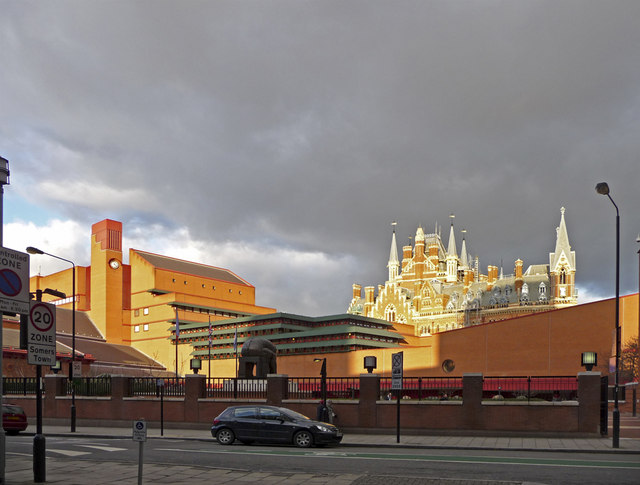
Britten at the British Library - special exhibition

Starting today at the British Library, a new, free exhibition about Benjamin Britten. It explores the literary influences on Britten's music, from Shakespeare and Jonson to Auden and Isherwood, as well as some of the political and musical influences that shaped his work.

Included are:
* the draft score of Britten's music for Instruments of the Orchestra
(repurposed as The Young Person's Guide to the Orchestra), acquired by the British Library in 2012

* other autograph manuscripts, including the music for Night Mail, A Midsummer Night's Dream, and the Serenade for Tenor, Horn and Strings

* photographs, concert programmes and archival material drawn from the Muir Mathieson, Malcolm Sargent and Donald Mitchell archives at the British Library

* extracts from rare or unique sound recordings, including the first productions of Paul Bunyan (1941) and A Midsummer Night's Dream (1960), the whole of the first broadcast performance of Curlew River (1964), and unpublished test pressings of 'Funeral Blues' and 'Tell me the truth about
love' performed by Britten and Peter Pears.

To mark Britten's centenary, the British Library has also digitised all of its Britten manuscripts, which are now available online at http://www.bl.uk/manuscripts in a special arrangement with the rights holders.  Many of the manuscripts are on permanent loan to the Britten-Pears Library in Aldeburgh, under the terms of Britten's will, so we hope the digital facsimiles will make it easy for researchers to study Britten's music wherever they are.

In addition, a number of talks and performances have been arranged. For further details, please see

http://www.bl.uk/whatson/exhibitions/britten/events/index.html
photo: Christine Matthews

Wednesday, 29 May 2013

ROH La donna del lago - fuss and facts

What was all the fuss about the Royal Opera House Rossini La donna del lago? Before the premiere, John Fulljames made the statement "Turning Highlanders into savages is the clear choice of an author; that's what Rossini and Scott are saying. They are saying that these people cannot be taken into modernity." That is not at all the same as saying Highlanders "were" savages. And what's so bad about artists creating works of art?  But the comments unleashed a firestorm. But the whole point of the opera is that it's based on a work of fiction, Scott wrote for the purpose of legitimizing English rule. Walter Scott created a work of the imagination, as did Rossini. Since when did Scotsmen get called Rodrigo?

Authenticity was not an issue for 19th century intellectuals. Of course they admired "primitives". It wasn't just Scotland, but the whole of Europe. The whole concept of Romanticism was predicated on this fascination with wild, untamed places like islands and mountains, and the supposedly "pure" tribes that inhabited them. Think Rousseau, Marie-Antoinette and her shepherdesses, the Brothers Grimm collecting folk tales, Byron in Greece. Romanticism was a radical revolution away from the values of classical Antiquity and what that stood for. Without Romanticism, we might not revere individualism, the birth of psychology and even democratic government. But 19th century intellectuals weren't going to let it all hang out. They needed to sanitize things because they believed in the Idea of Progress and the superiority of western civilization. Scott and his friends loved the idea of Scotland's past but expected it to be colonized culturally.

Ironically, Fulljames's production is better informed and much more faithful to history than detractors realize.History is "made" by those who interpret it. Anyone seriously interested in the past would do well to pay attention to the Royal Opera House production for this very reason.

Towering above all else on stage is a landscape : mountain peaks, a mysterious lake, golden, burnished tones. Exactly like a 19th century painting, Caspar David Friedrich or Edwin Landseer. The idea is that nature is a panorama offering endless possibilities. Throughout this opera, Rossini writes music that evokes wide open spaces, extreme heights and depths, lyricism and a sense of foreboding sadness.

 The sides of the stage are framed with images of an opera house from Rossini's time, reminding us clearly that this is an opera, a work of art created by the imagination. We are looking at Scotland as theatre, interpreted by Scott and Rossini. Gentlemen in frock coats admire glass cases in which Elena, Malcom and Duglas float, suspended in time. That's exactly how 19th century people studied  exotic specimens.  At the end, Elena (the divine Joyce DiDonato) blissfully climbs back into her glass case, complete with heather and ferns. Now, perhaps, she's timeless, the Scotland she represents preserved flawlessly for the edification of 19th century civilization. In the first act, she wears a simple white dress. When she's immortalized, she swathes herself in gaudy tartan. Myth becames fact and the past becomes the future.

It's not a difficult idea to absorb.  As the head of the Sir Walter Scott Club said "(Scott's) great aim in life was the promotion of Scotland as a unity within the United Kingdom." If he and his friends had actually seen the production  they would realize that this is exactly what Fulljames is doing. They spoke before actually seeing the show. "Scott" appears like a Master of Ceremonies. He "is" the father of what we assume Scottish heritage is, and he gets full credit for that.

The Highlanders are, indeed, no more hairy or smelly than anyone else. They're just not like the refined gentlemen of the Celtic Society Scott was active in, with their top hats and watch fobs. Whether the 16th century Highlanders liked it or not, "the future is tartan". Not homespun, vegetable dyed that a hunter might wear so he blends into the landscape, but bright and gaudy that looks good when the hunter is on parade serving the new King. Or the tourist industry.  The gentlemen of the Celtic Society feast on haggis served on silver. Duglas and his men get their meat free range and unprocessed. Life was hard for the common folk. Duglas has to marry his daughter off to someone she doesn't love in order to survive. She's no different from the ordinary women who get pushed around because things are the way they are.  This production is more sympathetic to the real Highlanders than the Romantics were. At a time when some are thinking of Scottish independence, it's not a bad idea to reflect on a Scotland not dominated by Victorian values.

This production is also surprisngly attuned to the music. Rossini writes grandeur but not bluster. His instrumentation is spare : piccolos, small trumpets, a harp, small snare drums. This orchestration is fundamental to the meaning of the opera because it evokes the sense of Nature and freedom  that the Highlanders loved so well. The instruments are shown on stage several times, reminding us how art and meaning connect.  When we see the musicians in the boxes at the side of the stage, we can look closely at what they are playing and appreciate how "rustic" the music is. Later, they are playing for the conquerors and for the state. They're positioned on a raised platform on the main stage, but there's plenty of room between them and the ground: a vestige of the wide open spaces Duglas and the Highlanders once roamed?

The very form of Rossini's music evokes panoramic landscapes and free-ranging prospects. Extreme  ranges of pitch, dizzying flights up and down the register. The vocal lines are gloriously decorative and complex. True bravura stuff: trills and flourishes that burst with life and energy. I don't need to write in depth about the singing because everyone else can, it was that good. But I will write about the orchestra because it was so idiomatic. Rossini needs precision and clarity, and a conductor like Michele Mariotti who understands that bigger is not necessarily better in Rossini. This is very early Romantic music, with more in common with the baroque than with Verdi or Wagner. Besides, Rossini seems fascinated by the purity of Elena and what she represents. She's the lady of the lake, not a lady of the palace.

Then an aspect of the production almost completely overlooked in the controversy. Fulljames uses visual images that reflect images in the music, which themselves reflect the meaning of the opera. The wood panelled walls of the Celtic Society open out on a set depicting a castle on a mountain, lit by mysterious moonlight. Uprights that suggest dangerous crags and peaks, or the extreme ranges of pitch and timbre in the singing. Diagonals which reinforce the swooping, eliding vocal lines, though they serve a practical purpose, allowing singers to move quickly upwards and down without impeding the drama. Dark recesses from which Highlanders emerge like the creatures of the night they hunt: basses and baritones sound just right. Few directors, and even fewer members of the audience understand that abstract music can connect to physical form.  In this production you "hear" the music with your eyes as well as your ears.

Moreover, the singers move easily, so that they can concentrate on singing impressively instead of just looking good. A friend of mine saw the scrapped Paris production, hampered by stiff movement for the principals and "dorkiest dances I ever saw for three men and one woman as warriors, flailing arms and extending legs like Xena Meets The Matrix." (read more here).  At least we in London had the Highlanders beat their staves and shields. This production was done in barely two years and in technical terms it's something to respect.

Thee film direction was less adept. Instead of showing the all-important framing device at the sides of the stage, too much attention was placed on closeups of the Gentlemen. Live on stage, you can see the interaction between the 17th and 19th century personnel. In the film, it's confusing to see a Highlander sing while a gentleman is quaffing whisky. We need to see Scott among the singers but Rossini is present in the music. On the other hand these are minor considerations, such as we get in any production.

The main thing is that we should go to an opera to hear how it's interpreted, not carrying preconceptions and hearsay impressions.  Opera is not history. It's not even reality. Why else would Rossini have created Malcom as a trouser role?  Or "not in this case" as Daniella Barcellona (wonderful !) quipped. Walter Scott created something new with The Lady of the Lake and Rossini created something new with La donna del lago, So it's no big deal that we go to a performance for a new perspective.

Monday, 27 May 2013

Renewal Luke Bedford in Portrait


Luke Bedford made a welcome visit to London for the UK premiere of his recent Renewal (2012/13) at the Purcell Room with the London Sinfonietta, conducted by Sian Edwards.

Renewal it was! The piece has all the inventiveness that makes Bedford's work so distinctive, but now with a tougher, more sophisticated edge. Moving to Berlin may welll be part of the new approach. As Bedford said, prices there aren't  low anymore, now that British composers have moved in. Every composer is influenced by life changes: music doesn't grow out of nothing. Renewal marks a a new, more mature period of growth in Bedford's output.

Renewal feels liberating. An exquisite violin melody rises to a high, almost ethereal pitch : does it evoke flight, freedom  or even a quiet, confident ecstasy? Glimpses of this melody appear throughout the piece, a firm foundation for the four sections which explode in bursts of energy, propelled forward by sheer creative momentum.  "Background radiation", Bedford calls it, more prosaically. Angular, but organic cross-rhythms that suggest a kind of primal life-force, The Rite of Spring, but with wit. All the instruments explode on a single chord at the end of the second section. Thwack! then the direction changes, and the merry dance veers off again. Dizzying changes of tempo, sometimes accelerating to breaking point. Sounds seem to inflate and deflate like breathing organisms, adding a nicely sour suggestion of wry humour   A quietly-beaten small drum introduces the gracefully elegiac final section. It's almost Romantic but definitely of our time.

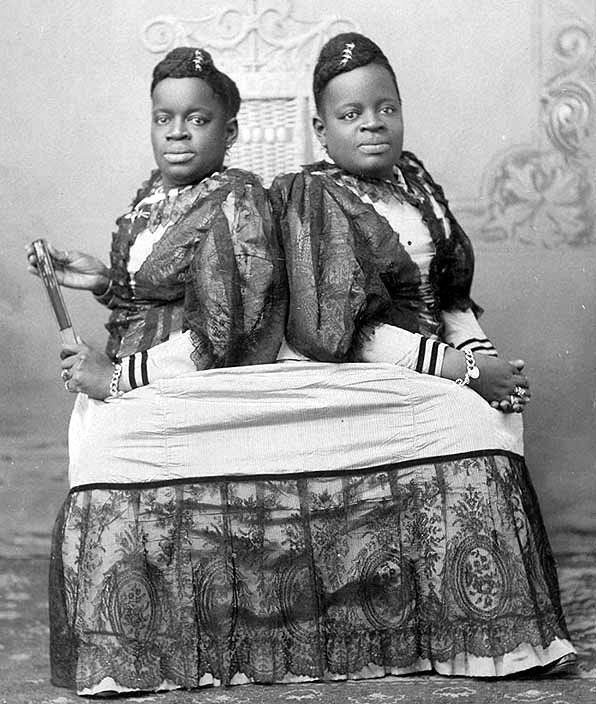
Bedford's Renewal was preceded by Wonderful No-headed Nightingale,  a reworking of his Wonderful Two-headed Nightingale. The " nightingales" were conjoined twins, Millie and Christine McCoy, born as slaves, who made a living as singers in travelling shows. You don't need to know the story except insofar as the music turns the basic concepts into abstract form.  In this version,  the violin and viola (Joan Atherton and Paul Silverthorne) dialogue weaves in and out of the surrounding orchestra. It feels like a study for Renewal which explores the same concepts of unison and free-ranging invention.

Before the repeat of Bedford's Renewal, the London Sinfonietta treated us to Périodes, the second movement from Gerald Grisey's Les espaces acoustiques .  It was a good choice. Les espaces acoustiques grows outwards from extreme simplicity. A basic melodic cell repeats like in spiral, back and forth, each time with tiny gradations of pitch. The viola part is its heartbeat : the 15 minutes of seamless bowing are like a cry from the soul.  In Périodes, though, Grisey expands the breathing motif with an extra level of “rest” as natural rhythmic as walking. It’s never mechanical but blurred, allowing variations of tempo, stillness and pitch. The logic of the final movement in Renewal clicks into place.

LOTS more on Bedford and Grisey elsewhere on this site - please explore

Sunday, 26 May 2013

Parsifal Bayreuth 2012 full streaming

Wagner Parsifal from Bayreuth 2012: full stream download  HERE. This is the Stefan Herheim production with Burkhard Fritz, Kwangchul Youn, Susan Maclean. This is the one that avoids the pretentious pseudo-religious mumbo-jumbo. Since when did Klingsor and Kundry exist in the New Testament? Or Amfortas and Titurel and the whole Grail Knights community, for that matter. Anyone who seriously thinks Parsifal is theologically sound is nuts. Instead, here we can reflect on who the characters might be and how they relate to each other. And indeed, how Parsifal connects to the social and political forces that shaped Wagner's time. Fake piety we can get any time. But those who seriously care about Wagner and his times will get something from this one. It's psychological, and spiritual, on a thoughtful level.


Friday, 24 May 2013

Verdi Falstaff at Glyndebourne

"Laurent Naouri’s Sir John is imposingly wide of girth — thanks to an impressive fat-suit — and generously resounding of voice. His authoritative bellow vanquishes complaints from his snivelling underlings; with beguiling tone, he serenades and courts the ladies. There is no doubting his haughty bumptiousness and Naouri emphasises his essential aristocratic dignity. But, at times this Falstaff is overly curmudgeonly, aggrieved that others do not recognise his ‘nobility’ — an anachronistic note in 1950s England — and his irritability and crabbiness do not endear him. Naouri is light on his feet, despite the prodigious abdominal encumbrance, and can neatly execute a dainty flounce. But, while the voice is sweet and enticing, this Falstaff lacks a certain wicked sparkle in the eye and the debonair charm that might win a feminine heart regardless of his physical decrepitude. Falstaff should be both dignified and vulgar, both arrogant and aware of his own coarseness and comic crassness — he should laugh at himself, so that we can laugh with him."

"Part of the problem is Jones’ uncharacteristic lack of attention to comic detail and gesture; there are a few neat touches — the faux leave-taking courtesies of Ford and Falstaff, the obsequious pleading for forgiveness of the perfidious Bardolfo and Pistola, the tidal wave which bursts through the Fords’ front window when Falstaff tumbles from the window ledge and belly-flops into the Thames — but most of the audience laughter was prompted by the surtitles rather than the stage action itself...."

Read the FULL REVIEW here in Opera Today

Thursday, 23 May 2013

Heinrich Schütz who changed my life

There have been many good musical moments for me, but one stands out above all. Heinrich Schütz, Historia der frölichen und siegreichen Auferstehung unser Herrn Jesus Christus (1623)

Schütz was born one hundred years before J S Bach. He studied with Monteverdi, which probably makes him a link between the Italian and German baroque. Yet he was a Protestant, in an era when people killed each other for religion. He lived through the Thirty Years War, perhaps the most savage conflict Europe experienced before the 20th century. Millions were killed. Entire regions were devastated. Although Schütz worked in relative safety for the Elector of Saxony, the world around him had been in turmoil since the Reformation. For Schütz, comfort was not a given. He writes glorious polyphony, but his beliefs were forged in fire.

Schütz's music is austere and deeply expressive. When you listen to things like Psalmen Davids or Musikalische Exequien you feel like you are totally alone in the darkness, sustained by faith in a power beyond human comprehension. Schütz founded what is now the Staatskapelle Dresden but he didn't have job security. When he fell out of favour at court, he became destitute. His family died young. He lived on alone until the age of 87, which in those days was like being Methuselah.

The first time I heard the Aufersthungshistorie was on a broadcast from the composer's beloved Dresden, it was like a kind of epiphany. I can't explain it, but the music shone out like a blast of light, illuminating everything with a kind of pure spiritual clarity. I don't follow Schütz's religion yet it moved me in a way I've never been able to rationalize. Maybe he connects to something very deep in the human soul penetrating past the trappings of church and society. The piece is written for simple forces, so it can be performed in small, spartan places: opulent palace settings wouldn't work. It's almost entirely a capella, an interplay between the Evangelist and a group of youthful voices, supported by a cache of different violas de gambe and positive organ.

Speaking about Bible-based music, a friend of mine recently said "We all know the story". Yet what makes Schütz's version so powerful is that it feels vivid, fresh, immediate. Until very recently, the Bible had been in Latin, not in German. It must still have felt shocking to hear Jesus depicted by a group of young male voices, their voices weaving like shimmering light. Schütz's Evangelist tells the story in clear, direct terms, as if he's recounting something amazing happening right before his eyes. Even though the story itself is so well known we take it for granted, it IS amazing. A man defies death itself and rises to glory. It IS exciting news.

Schütz's Auferstehungshistorie is so uplifting. In my running days I'd jog along listening to it as I ran. After 40 minutes, I was pretty whacked but then the glorious finale would kick in. Gott sei dank! sing the chorus, in multiple harmonies, while the tenor soars above all Victoria! Victoria!, and the chorus joins in splendidly woven polyphony. No matter how tired I was, when that finale came on, suddenly I'd speed up before collapsing in joyous ecstasy. I can't run now, and I won't live to be 87. But when I'm decrepit and on the point of death, I suspect that "Victoria! Victoria!" will ring in my soul.

The absolute top recommendation is the Berlin Classics recording (get it HERE, with soundclips) originally made during the DDR era when the Communists frowned on religious expression. In Dresden, however, the Schütz tradition was very strong, so no regime could suppress this music. Just as the Iron Curtain collapsed because the Leipzigers used music as protest, the Dresdeners might have realized the significance of music which suggests that men can beat death  The singing is exceptionally inspired, and the ensemble is tight and muscular: as Reformation music probably needed to be. What's more the Evangelist is Peter Schreier. He's practically incandescant with intensity. He was a choirboy in the Dresden Kreuzchor in February 1945, when Dresden's historic city was flattened by a firebomb raid in which tens of thousands were killed. The choirboys were sheltering in a cellar. They were outside the immediate danger zone, but they didn't know that and were terrified. Then, the choirmaster suggested that they join together, singing....

Spooky or not? Schütz seems to follow me around. One day while browsing Benjamin Britten's personal library at the Red House, Aldeburgh, what should be on the shelves ? The original edition of Prof Hans Moser's complete Heinrich Schütz:  His Life and Works. And then I was given a copy for my birthday. 

Wednesday, 22 May 2013

Henri Dutilleux is dead

Henri Dutilleux (1916-2013)  died this morning, aged 97. This photo dates from 2008, when the composer came to London to receive the Gold Medal from The Royal Philharmonic Society. He attended a concert at the Wigmore Hall, given in his honour. Later that evening, who should I meet walking past the Wigmore Hall at midnight? 92-year-old Henri Dutilleux, on his way to his hotel after the post-concert party.

The Wigmore Hall concert was rather special because it was conducted by Jan-Pascal Tortelier, whose father, Paul Tortelier, had studied with Dutilleux at the Paris Conservatoire. How often does a conductor do the music of a composer who has known him since he was in nappies? Dutilleux recounted how he and Paul Tortelier as students were too poor to go out much, but scraped together enough so they could hear Stravinsky conduct Les Noces. So Tortelier fils prefaced his concert with Stravinsky's Concerto in D for string orchestra (1946)  written around the time Dutilleux began to make his own name.

There were many other cryptic references in Tortelier's erudite programme, played by the Nash Ensemble. Dutilleux’s Dyptique- Les Citations is an unusual combination for harpsichord, oboe, percussion and double bass. Britten had also used percussion and harpsichord together, and there’s also a quote from Peter Grimes since the piece was initially written to honour Peter Pears. In typical Dutilleux mode, the composer added the double bass part in 1991 with a quote from  a piece for organ by Jehan Alain, another of Dutilleux's circle, who was killed in battle in 1940.

Extremely high violins introduced Ainsi la nuit, infusing the static first section with gleaming brightness. Again, this is distinctive Dutilleux, with elegant, delicate patterns evolving and changing until the piece reaches its conclusion in another static section where sound seems to float. Indeed, this section is actually called “suspended time”. This performance seemed to choreograph itself, so much were the musicians in accord. The long arches seemed like stretch, the ostinato like en pointe. I was struck by the connection to Les noces.

Tortelier also conducted Mystère d’un Instant so beautifully that Dutilleuex, greatly moved, said that was the finest he had ever heard. This version was a more recent revision of the 1989 original, reducing the number of strings to 18 from 24. There’s a feeling of space and light about this piece. Tones seem to shimmer, wavering between extremes of register, and textures seem to evaporate before reforming. What’s also interesting is Dutilleux’s composing rationale. Instead of using a formal strategy, in each of the ten sections he seeks the “mystery of an instant”, captured spontaneously as the musical idea emerges. Each section is an individual “snapshot” as Dutilleux calls it, like a Hockney collage perhaps, but animated and fluid. There’s a part where four cellos interact, another where high, keening string lines evolve into a tumble of quick, spiralling notes on cimbalom. A wayward drum rhythm unfolds to a jerky, pizzicato sequence on strings, itself superseded by a section where percussion and cimbalom lead. Then the strings soared higher and higher and in came the tam tam beaten at measured intervals, exactly as it would be in an East Asian temple. Dutilleux's reference is explicit, though what it signifies in the wider scheme of things I can’t guess. But that’s why this music is interesting. It may be neat and precise but it alludes to things beyond itself.

At one time some of Dutilleux's admirers resented Messiaen's much higher profile. That's petty. Dutilleux and Messaien are very different indeed. But perhaps they have a common heir in George Benjamin.

Something different for Wagner's Birthday

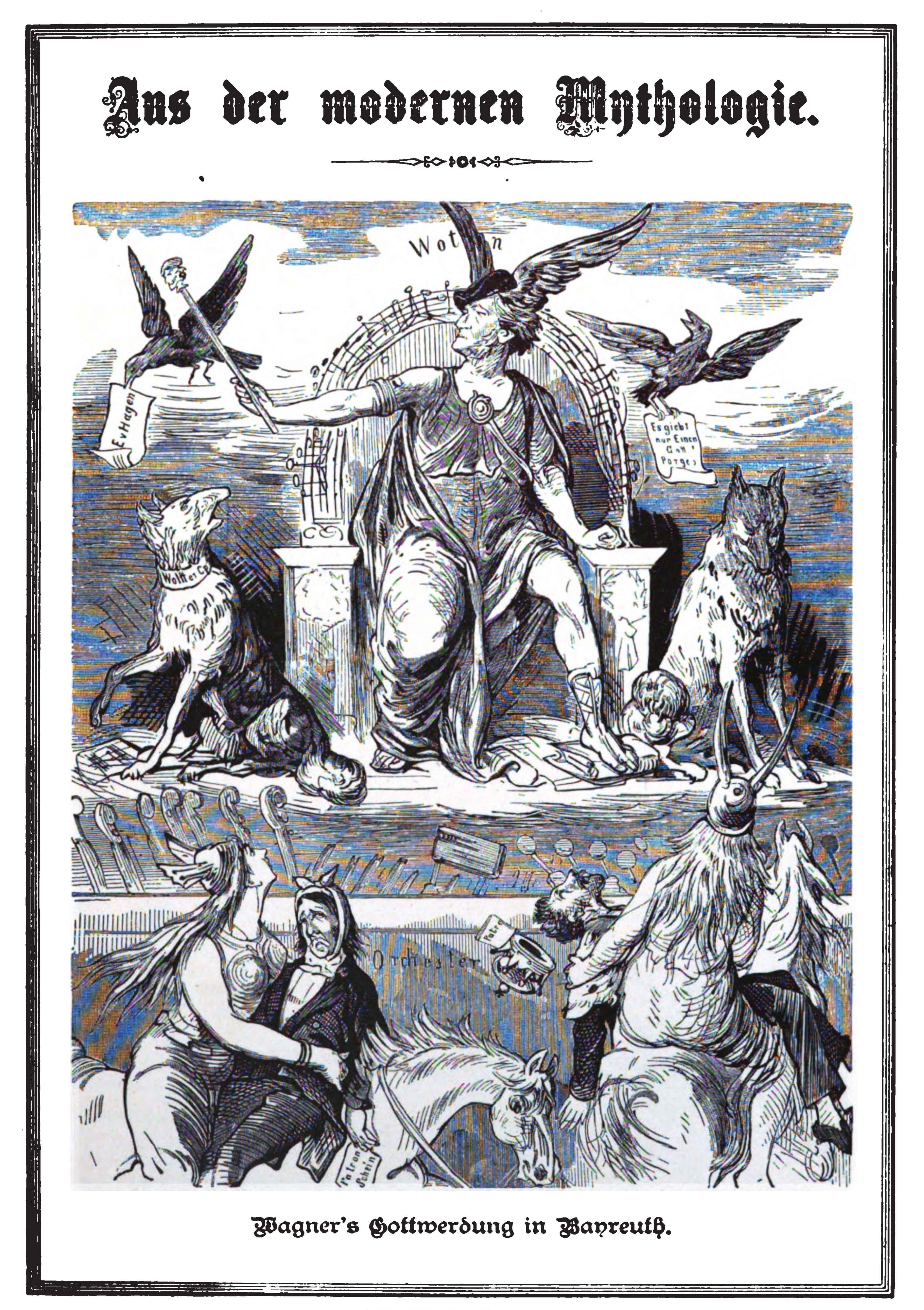
Happy 200th to Richard Wagner! How he would have enjoyed the attention. It's his due! This is a cartoon from 1876 showing him with the Valkyries. If anyone staged it like this these days, audiences would go berserk. But RW would have loved it.

Tuesday, 21 May 2013

How to avoid huge ships when the world is puddle-wonderful

"When the world is puddle-wonderful". and "How to avoid huge ships" Who can resist a titles like that?  And what about "Double Helix", "Caught on the Corner" and "At a distance of less than a yard..."

Already I'm intrigued. How inventive the music must be! Hear what the music sounds like tonight at the latest New Dots venture at the Forge, Camden. 

when the world is puddle-wonderful is by Michael Cutting. Note the lower case. Immediately one thinks Cummings is der Dichter. Cutting is interested on the relationship between words and music and is planning a large work of music theatre  to be completed in 2014. His work has already been performed by Fretwork, the BBC Singers, Lontano and the Endymion Ensemble. He's one of George Benjamin's PhD students. This particular piece isn't for voice as such. Instead the "voices" are flute, clarinet and piano. 

 How to Avoid Huge Ships for Wind Quartet is by Aaron Holloway-Nahum, who is composer in residence with the BBC SO. He's written scores for several art films, which is a plus. Music for film is important because it focuses a composer's mind on communicating. So many have learned their trade from writing for film - Benjamin Britten no less. He's also involved with somethinfg called the Riot Ensemble, which endears him to my heart. How to Avoid Large Ships was the title of .a serious technical guide for mariners. Apparently huge ships are hard to avoid if sea currents are against you and you have no room to manoeuvre. The title sounds funny but it can be life or death. What potential for vivid, inventive and dangerous music! (photo above is by Taras Kalapun from Homs, Syria. Hope he's well!)

Yuko Ohara's Double Helix suggests twisting, twining possibilities. For two instruments the solution would be easy. For solo flute, it's more of a challenge. She's worked with David Sawer, Toshio Hosokawa and Brian Ferneyhough. Emma-Ruth Richards Flute caught on a corner intrigues too. It's not "just" flute but scored for wind quartet. Richards' piece for solo viola is played by Paul Silverthorne. Hear it here. Piers Tattersall's work has featured at previous New Dots concerts. This time, the piece is At a distance of less than a yard... for clarinet, horn and piano.

And as an extra treat Richard Uttley will be playing Barkham Fantasy by Mark Simpson. It was "written during my stay at Barkham, an idyllic converted farmhouse amidst the backdrop of the Devonshire moors. I intended the piece to resemble a ghostly shadow of a slow movement of a Mozart or Haydn piano sonata. Whilst composing I had an unsettling feeling of being watched from a window in the barn. Over the course of my stay I was gradually instilled with a sense of fear and unease which manifested itself in the music I was writing. The idea of ghosts, hauntings and shadows inevitably played a larger part in this piece than I had originally envisaged."  Listen to the soundclip.

Richard Uttley will play with the Atea Wind Quintet. More details of the New Dots concert at the Forge HERE.

Monday, 20 May 2013

Wagner 200 BBC Radio 3 birthday specials

Wagner's 200th Birthday is Wednesday 22nd. How he would have enjoyed the fuss and expected nice presents! Too often anniversaries are an excuse for sloppy programming, but BBC Radio 3 seems to be doing something useful. Here is a link to this week's schedule. It's quite a good introduction to the composer and the man.

Donald Macleod's "Composer of the Week" focuses on Wagner's early Romantic influences, a subject dear to my heart. MacLeod's Composer of the Weeks are sometimes very good and I think this is a new one we haven't heard. He will be shedding "light on Wagner's lesser known, early operas, created under the spell of such diverse influences as the German Romantic operatic tradition of Weber, the "bel canto" style of singing of Bellini, and French Grand Opera of the 1830s. Donald Macleod presents excerpts from Wagner's earliest opera Die Feen, his sunny, Italian-esque Das Liebesverbot, and the 'black sheep' of Wagner's output: his vast operatic spectacular Rienzi - which he later virtually disowned."

Most of the recordings being broadcast are familiar, but there are a few rarities, like Wagner's  arrangement of Beethoven's Choral Symphony and his Piano Sonata. Missing is the Urfassung edition of Der fliegende Hollander resuscitated in 2004, with no Erik, no Daland and no Norway!   This edition shows how Wagner was influenced by popular taste in his time. Rossini probably got there first with La donna del lago (which I'm at tonight). Then Donizetti Lucia di Lammermoor in 1835 and much else. At least Mendelssohn had the guts to hike through the country and see it first hand instead of relying on Walter Scott and Ossian. Since there was no tourist industry in Mendelssohn's time, he really was engaging with the locals and living fairly rough. So much for Wagner thinking Mendelssohn was effete. Perhaps one of the reasons we're not hearing the pre-Edition of DfH is that the only recording is pretty hokey. An edition is not a production. Productions we can see any time but an Urfassung is unique. The Ur-edition is being produced three times this summer in Germany, so who knows, a new recording might come about.

Many of us switch BBC Radio 3 off completely after 10 pm when music turns to chat. This week the chat is rather more elevated. At 22.45 the Essay will present a series on Wagner's philosophers, Wagner and German idealism. Roger Scruton, AC Grayling, Christopher Janaway, Michael Tanner and John Deathridge are the speakers.

Sunday, 19 May 2013

Glyndebourne Strauss Ariadne auf Naxos review

Utterly mad but absolutely right - Richard Strauss's Ariadne auf Naxos started the Glyndebourne 2013 season with an explosion. Strauss could hardly have made his intentions more clear. Ariadne auf Naxos is not "about" Greek myth so much as a satire on art and the way art is made. Strauss could hardly have made his intentions more clear. His music is a clue. There are, of course, references to Mozart, but these are prettified and tarted up. Are Strauss and Hofmannsthal suggesting that the Composer courts success rather than art for arts sake? He is, after all, writing for "the richest man in Vienna".  The Music Master (Thomas Allen) clashes with the Major-domo (William Relton), but the firework display takes priority. Ariadne auf Naxos is an indictment of the system..

The Vorspeil and Opera are distinct, but only up to a point.  Strauss pits art against artifice, disguisng the true, radical meaning of his work behind a veneer of elegant stylization. But these are mind games. As Zerbinetta tells the Composer, "Auf dem Theater spiele ich die Kokette, wer sagt, dass mein Herz dabei im Spiele ist? Ich scheine munter und bin doch traurig, gelte für gesellig und bin doch so einsam" (In the theatre I play the coquette. But who says my heart is in the game? I seem cheerful, but I'm sad. I play to the crowd, but I'm so alone".)

Katharina Thoma's staging is erudite. Years later, firebombs would destroy many German theatres, symbolically wiping out the German musical tradition. Obviously this was nothing in comparison to the destruction wrought by politicians and their philistine followers, but to a man like Strauss, whose world revolved around Dresden and Munich, the bombings were a metaphor for mindless barbarism.   "The holiest shrine in the world", he wrote "Zerstört!". Although Strauss could not forsee the future, Ariadne auf Naxos was written during the First World War. As a modern audience, we cannot forget the far more destructive war that came after. There are relevant connections between Ariadne auf Naxos and Metamorphosen, which is perhaps Strauss's most explicit comment on the madness that is war. Until we stop giggling when someone opens his cloak to reveal RAF logos, we have learned nothing.

Strauss's score gives us other clues. The stock characters reference standard commedia dell'arte where figures are hidden behind masks. Greek myth itself uses archetypes as metaphor. If Ariadne were a "real" person, she'd be sectioned under the Mental Health Act, given her obsessive delusions about Theseus and suicide. Given that she and Bacchus both come from family backgrounds where women have sex with gods and monsters, they have a lot in common. But what psychiatrist would countenance that?  Soile Isokoski sang the glorious aria "Ein Schönes war" so beautifully that we could feel Ariadne's tragedy as if it were personal and universal. "Und ging im Licht und freute sich des Lebens!" became a brave cry of protest against the hospital where "normal" people don't understand her extreme personality. Yet like Zerbinetta, Ariadne will not be silenced. In the end,  she (sort of) gets what she needs, escaping the mundane world in which she's trapped into a kind of warped apotheosis of love, death and delusion.

 Strauss had mixed feelings about Tristan und Isolde. His own take on the Liebestod is delicously delirious. The references to the "drink" is particularly ironic, given that mental hospitals dispense chemical solutions just as Brangäne dispensed a drink that didn't do what it was supposed to.  Strauss writes the nurses's last song so they have to warble like mad Rhinemaidens, totally uncomprehending what's going on round them.  Against his better instincts, Bacchus (Sergey Skorokhodov) cannot help but succumb. At the end, Thoma's staging shows the hospital curtains billowing out like the sails of a ship, heading out at last for the freedom of the seas. The "sails" are lit by a red glow. Is this sunset or fire ? Is Valhalla burning ? Or does it suggest Dresden, Munich, Tokyo, Hiroshima, Hamburg or many other cities destroyed  since?


Isokoski is one of the great Strauss singers of our time, so it was a pity that the production made more of Laura Claycomb's one-dimensional Zerbinetta.The part is central to the work as Zerbinetta interacts with the Composer (Kate Lindsey) while the Prima Donna (Soile Isokoski) s too wrapped up in her "role" as mega-star. Ariadne is frigid. Zerbinetta goes to the opposite extreme. Given that Greek myth is full of bestiality and explicit sex, we really should not be alarmed that Zerbinetta, who doesn't feature in antiquity, is a nympho.  Compared with Ariadne's mother, Zerbinetta is almost healthy. Claycomb is good at being strident and brassy, so if the subtlety in the role didn't come over well, there was much else in the production to savour. When Claycomb throws off the restraints of the straitjacket, we thrill at the strength of her spirit. It's a brilliant image, totally in keeping with the meaning of the opera on many levels.

Although the Vorspeil and the Opera are, ostensibly separate, they are integral to each other. The Composer sings in the first part because he/she's written a score. But when the Opera actually takes place, the characters transform, as if they've taken on lives of their own.  Hoffmansthal and Strauss don't give the Composer anything to sing in the second part. The Composer storms out when he realizes that scores don't exist in limbo but are changed by circumstances and performance. Hence the psychic creative storm as this bombshell drops. In Thoma's production, the Composer is struck dumb with the horror that he/she is no longer "in control".   As a successful composer, Strauss knew full well that a score only becomes an opera when it is performed by musicians who think and feel. There is no such thing as "non-interpretation". Now, Lindsey makes her presence felt through her acting, rather than by her singing, in a thoughtful reversal of roles.  The Composer "is" part of the opera, silent or otherwise.

Strauss's score is brilliantly anarchic, extending the idea of multiple levels of reality. The Mozart and commedia dell'arte references jostle with references to Wagner, popular dance tunes and woozy bursts of fantasy. Vladimir Jurowski has a wonderful feel for Strauss's sense of humour. The brasses of the London Philharmonic Orchestra blare just enough so we can hear the parody, the winds (especially the bassoons) wail like a bunch of mock tubas. The strings reminded me of Strauss' Metamorphosen.  Humour is even more difficult to express in abstract music than more obvious emotions, because by its very nature, it's quixotic, tilting at the windmills of rigid literality.

Hence the vignettes, which Thoma stages so well. They break the intensity, injecting an irreverent sense of the absurd.  The nymphs, Naiad, Dryad and Echo are mindless, not "carers" so much as nurses who follow rules without question. But how lovingly they are sung and acted by Ana Maria Labin, Adriana Di Paola, and Gabriela Istoc. The Four Comedians,  Harlequin, Scaramuccio, Truffaldino and Brighella (Dmitri Vargin, James Kryshak, Torben Jürgens and Andrew Stenson) are even more impressively performed. When they  dance, every movement matches perfectly with the music: even their toes are tuned just right. The figures may be "fools" but they're done with panache and precision.  They practically steal the show. 

This Glyndebourne Strauss Ariadne auf Naxos has the makings of a classic, once audiences realize how genuinely true it is to the savage wit of Strauss and Hoffmansthal.  Ariadne auf Naxos subverts delusion and false images. We need its irreverence more than ever. 

Catch the screenings. Full review and cast list in Opera Today.

photos by Alastair Muir, courtesy Glyndebourne Festival

Glyndebourne Ariadne auf Naxos Kate Lindsey

Utterly mad but absolutely right - Richard Strauss's Ariadne auf Naxos started the Glyndebourne 2013 season with an explosion. Full review HERE. Naiads and Dryads as nurses. Ariadne and Zerbinetta patients in a mental hospital. But then, Strauss could hardly have made his intentions more clear. Vorspiel and Opera are quite distinct. But which is more real? Ariadne auf Naxos is not "about" Greek myth so much as a satire on art and the way art is made. The music is modern : snatches of waltz, moments of woozy fantasy: Strauss is referencing his own times.e
The Composer sings in the Vorspeil  because he/she thinks he/she can create a work of art. But the Opera takes on a manic new life of its own. The Composer (Kate Lindsey) watches in  mute horror  as the parts he thought he dictated express things he/she could hardly envisage. Strauss is sending up the very idea of art. He's also sending up social pretensions. Ariadne and Bacchus hardly come from "normal" families. Is it any surprise that Ariadne's fantasies seem quite insane? Freud would have had something to say about her sexual hangups, and Zerbinetta's lack thereof.  Strauss also satirizes other composers. No one is sacred. Rarely has the connection between Tristan und Isolde and the "opera" within Strauss's opera been made so explicit. Listen to the music and its parody of Wagner. Strauss's Liebestod unfolds as the hospital curtains billow outwards like the sails of a ship, lit by a red glow which suggests fire or sunset. Or, more potently, the burning of Valhalla.  Katharina Thoma's Ariadne auf Naxos is quite mad, but deliciously, deliriously werktreue, respecting Strauss and Hoffmannstahl's savage wit.

Instant opinion is almost always shallow. This production deserves much deeper thought. So I won't review it til tomorrow to do it justice. (please come back).  In the meantime, here is Robert Hugill's interview with Kate Lindsey in Opera Today. That's her in the photo, as The Composer (credit Alastair Muir) HERE IS A LINK TO MY FULL REVIEW WITH PHOTOS

Saturday, 18 May 2013

ROH La donna del lago - the conductor speaks

"Rossini’s La donna del Lago at the Royal Opera House boasts a superstar cast. Joyce DiDonato and Juan Diego Flórez are perhaps the best in these roles in the business at this time. Yet the conductor Michele Mariotti is also hot news. He has only just turned 34, but has extensive experience. He conducted Rigoletto at the Met. “You know,” he smiles, “the Rat Pack Rigoletto”"
 
"Rossini expresses feelings in a more abstract, intellectual way. The structure is almost completely vertical, not contrapuntal. It can look quite ‘frozen’ in theory, but it’s a very different way of expressing feelings. For example, in the Act Two trio, "Qual pena in me gia desta", Elena and her two suitors are singing short, sharp high C’s. But these notes bear swords!” “In the ‘King’s aria’, “O fiamma soave”, you can hear that Uberto cannot be a shepherd because the coloratura is so elegant, so royal that only a king could sing like that. He’s wearing a disguise as a shepherd, but the people in the audience can hear who he really is.”


Read the whole interview here in Opera Today
 Michele Mariotti conducts La donna del lago  (Full review to come)

Above: Michele Mariotti [Photo by Amati Bacciardi (Pesaro) courtesy of Columbia Artists Music]

Friday, 17 May 2013

Joyce DiDonato Rossini : La donna del Lago

Tonight a new production of Rossini's La donna del lago opens at the Royal Opera House. Originally this would have been a reprise of the production at the Opéra national de Paris, but that got pulled. So we in London get the same strong cast led by  Joyce DiDonato and Juan Diego Florez but a staging by Jiohn Fulljames. To get an idea of what's in store and what we're thankfully missing, read James Sohre's review of the 2010 Paris production in Opera Today.

".......For with (Joyce DiDonato's) consummately realized Elena in La Donna del Lago we are privileged to experience that rare perfect marriage of role and artist. This day there was nothing her voice could not do, and she (and Rossini) asked it to do a great deal. Perfectly realized coloratura one moment, melting legato the next, heady leaps to the heights and spot-on plunges to the depths, fizzy fioritura, and plangent despair — Elena la, Elena qua — Ms. DiDonato makes short work of any such challenges as if she were born with this role in her throat."

"The great final set piece Tanti Affeti was such stuff as legends are made of, with our diva not so much singing the aria as inhabiting it. The inevitability of every phrase, the quick-silver contrasts of emotion, the flawless musical instincts backed by one of the best techniques in the world held us utterly mesmerized. Indeed, at one momentary rest I became aware that no one seemed to be breathing. Although we were poised in our seats, mouths agape at the pyrotechnical display, no air was moving in or out lest the perfection of the moment be marred. Only the greatest artists giving the greatest performances can inspire that reaction holding an audience rapt, and Joyce DiDonato must certainly be numbered among them. Her aria effortlessly dispatched, all that was left was for us to roar our approval with such ferocity and persistence that it threatened to bring the plaster down upon our heads. Bravissima, Joyce. Oh hell, Bravississima."

"Would that the physical production had been up to the level of its world class singers.........Lluis Pasqual is credited as the director but it is hard to know what he did really, except have the chorus remain on the sides totally unengaged in the action, and have the soloists routinely circle the stage a bit and then tromp down center one by one in a numbingly repetitive pattern. Pasqual also kept having people spook around on the second and third levels of the balconies, without adding visual interest but at least too boring to even be distracting. Montse Colomé claims the distinction of devising perhaps the dorkiest dances I ever saw for three men and one woman as warriors, flailing arms and extending legs like Xena Meets The Matrix."
  
Don't forget, read the full review, it's delicious ! I've seen clips of the original production and think I would concur.