To honour the millions who died, we need to think about the causes of war in the first place. 1939-45 was in many ways a continuation of 1914-1918, which itself was a rematch of 1936-7, 1870 and 1807-1814, and possibly more. In 1945 the difference was that people realized that one way to avoid war was for people to work together for peace. From this grew Nato and eventually the European Union. The last 75 years have seen a cessation of hostilities longer than Europe has seen in centuries. That doesn't mean that there won't be conflicts, but it's still better than war. Instead we now have populism which thrives on mass hysteria. Not long ago there was an attempt to make Christians think there was a "war on Christianity". It turned out that that was being spread by right-wing extremists, including the AfD. They were resurrecting a meme popular in the Cold War. Then, the targets were Communists, but extremists have no scruples : their targets can switch at any time. Good people need to stick together to stand up to rising extremism of all kinds. Divide and Rule works, all too well. Instead we have a world where the tactics that got Hitler to power are getting people into power who might make Hitler seem small fry. Modern technology could mean media manipulation on a scale greater than we can imagine. The stakes are higher, too. The evil have everything to gain by playing people against each other. But like turkeys voting for Christmas, the masses are easily fooled. . Please read the article in the New York Times by Roger Cohen "The Donald thinks D-Day is all about Him"
"Tradition ist nicht die Anbetung der Asche, sondern die Bewahrung und das Weiterreichen des Feuers" - Gustav Mahler
Thursday, 6 June 2019
Squandering the heritage of D-Day
To honour the millions who died, we need to think about the causes of war in the first place. 1939-45 was in many ways a continuation of 1914-1918, which itself was a rematch of 1936-7, 1870 and 1807-1814, and possibly more. In 1945 the difference was that people realized that one way to avoid war was for people to work together for peace. From this grew Nato and eventually the European Union. The last 75 years have seen a cessation of hostilities longer than Europe has seen in centuries. That doesn't mean that there won't be conflicts, but it's still better than war. Instead we now have populism which thrives on mass hysteria. Not long ago there was an attempt to make Christians think there was a "war on Christianity". It turned out that that was being spread by right-wing extremists, including the AfD. They were resurrecting a meme popular in the Cold War. Then, the targets were Communists, but extremists have no scruples : their targets can switch at any time. Good people need to stick together to stand up to rising extremism of all kinds. Divide and Rule works, all too well. Instead we have a world where the tactics that got Hitler to power are getting people into power who might make Hitler seem small fry. Modern technology could mean media manipulation on a scale greater than we can imagine. The stakes are higher, too. The evil have everything to gain by playing people against each other. But like turkeys voting for Christmas, the masses are easily fooled. . Please read the article in the New York Times by Roger Cohen "The Donald thinks D-Day is all about Him"
Monday, 3 June 2019
Fantastique Lélio Berlioz, F X Roth Les Siècles, Paris
Berlioz Symphonie fantastique and Lélio together, as they should be, with François-Xavier Roth and Les Siècles livestreamed from the Philharmonie de Paris (link here). Though Symphonie fantastique is heard everywhere, all the time, it makes a difference when paired with Lélio because this restores Berlioz's original context. Opus 14 and 14b are meant to connect. Indeed, Lélio can be heard as an extension of the Symphonie fantastique, since together they reflect an intensely creative period in his development. The symphony, subtitled Épisode de la vie d'un artiste ... en cinq parties flows naturally into the Lélio, ou Le retour à la vie, mélologue en six parties. The first part addresses annihilation, the second part revival through creative art, and, heard together, they have symmetry.
When the symphony isn't treated as a stand-alone, there is an impact on interpretation. Roth and Les Siècles use instruments of Berlioz's period to better reflect the colours Berlioz would have used. This gives a more naturalistic, genuinely "Romantic"(big R) warmth to the performance. In "Rêveries", diaphanous textures herald the idée fixe, which here flowed with ardent purpose, establishing the dichotomy between poetic ideals and obsession that gives this symphony such power. Four harps and shimmering strings introduce the waltz. This moment of serenity contrasted with darker timbres, might indicate that happiness may be elusive. The "Scène aux champs" is pastoral, but haunted by more poignant undercurrents. An exquisitely played cor anglais, echoed by unseen oboe : dichotomy again, suggesting that happiness might be beyond reach. Thus the "March au supplice" grows from what has gone before. The steady march is well defined, the Idée fixe leading waywardly forth. An atmospheric "Songe d'une nuit du sabbat". Ophecliedes may reference funeral processions in Berlioz's era, but the ominous grotesques, swirling strings and ringing bells also indicate supernatural malevolence. The demonic forces of Goethe's Die erste Walpurgisnacht are not so very far away. Romanticism, with its instincts for what we'd now call the subconscious, marked a breaking away from the unquestioned order of the Ancien Regime.
Roth's observant approach to structure pulls together the underlying architecture in the Symphonie fantastique, which is particularly relevant when the symphony is heard together with Lélio. Significantly, the narrator (Michel Fau) is alone as Lélio begins, the orchestra silent. This is an existential cry of anguish., delivered by Michel Fau with appropriate drama, even capturing the semi-musical cadences in the text. For Berlioz, the narration was fundamental to concept. Declamation would have come naturally to Berlioz and his contemporaries, who discovered Shakespeare, albeit in the theatrical adaptations that were then the norm, even in England. Moreover, a good narrator like Michel Fau captures the semi-musical cadences in the text, which further links words with music . Lélio is, significantly, a composer. While this is not Sprechstimme by any means, leaving out the narration, or using performances without the distinctive punch of proper French diction, diminishes the impact. "Dieu! je vis encore... Il est donc vrai, la vie comme un serpent s’est glissée dans mon cœur pour le déchirer de nouveau? " This is an existential cry of anguish. Yet there are explicit references to the symphony. "Ce supplice, ces juges, ces bourreaux, ces soldats, les clameurs de cette populace, ces pas graves et cadencés tombant sur mon cœur comme des marteaux de Cyclopes.." In this dark night of the soul, Lélio speaks of the vision "avec son inexplicable sourire, conduisant la ronde infernale autour de mon tombeau!..."
The narration is so closely integrated into the structure that, in the "Ballad of the Fisherman" (based on Goethe's adaptation of Hamlet), Lélio's friend, Horatio (Michael Spyres) sings a lilting song about a nymph while Lélio meditates on life and art. The serene song connects to evoke the watlz in the Symphonie fantastique. Again, the text references music : "Une instrumentation sourde... une harmonie large et sinistre... une lugubre mélodie... un chœur en unissons et octaves... semblable à une grande voix exhalant une plainte menaçante pendant la mystérieuse solennité de la nuit..." In the Chœur d’ombres, the choir (the National Youth Choir of Scotland, chorus master Christopher Bell) sings of death, punctuated by pounding drums - another funeral march, all the more poignant because the voices are fresh and youthful. Yet Lélio's words are truculent. Calling on Shakespeare, he resolves to head to Naples and join brigands. In Romantic terms, the South represented freedom and wildneess, the sun versus the moon, images Goethe employed so well. An artist cannot conform but must find himself through creativity. In the "Chanson de Brigands" the baritone (Florian Sempey) leads the chorus in raucous adventure. On the video transmission, the chorus members put their arms round each others shoulders and move, expressing the energy in the orchestra. Can Lélio dare hope ? "Je me vois dans l’avenir, couronné par l’amour".
After a brief silence, the orchestra now comes into its own : beautifully limpid harps, seductive woodwinds. Now the tenor represents Lélio, singing the imaginary voice of the composer, off-stage. then even Lélio falls silent, as the orchestra creates the magic that is "Sounenirs- La harpe éolienne" where the orchestra extends the sound of the harp with winds and strings, evoking the sound of an aeolian harp, where Nature plays, vibrating through breezes. The pastoralism of "Scène aux champs" now idealized and perfect. Lélio resolves to find new life through art. "Allons! que les esprits chantent et folâtrent! que la tempête gronde, éclate et tonne!......SHAKESPEARE me protège!". The "Fantaisie sur " La tempête " de Shakespeare" is Lélio's redemption. The chorus sing"Miranda! Miranda", and the orchestra creates the storm - both physical and supernatural - that drives her to the island where Caliban is marooned. The pounding rhythms of the idée fixe in the Symphonie fantastique return, transformed, flowing with even greater energy. Until this point, Berlioz employed the orchestra with restraint. Now, in this exhilarating climax, we hear why he needed a full ensemble, supported by choir. Lélio listens, and cries "Encore! Encore, et pour toujours!...".
Roth, Les Siècles and the voices give such an idiomatic, inspired performance that Lélio's words seem addressed to them "votre exécution est remarquable par la précision, l’ensemble, la chaleur; vous avez même reproduit plusieurs nuances fort délicates. Vos progrès sont manifestes; je vois que vous pouvez aborder maintenant des compositions d’un ordre beaucoup plus élevé que cette faible esquisse."
When (not if) this gets to CD/video, it should set a new benchmark in Berlioz performance practice. til then, listen again on the Philharmonie de Paris website.
Lang Lang marries in Versailles
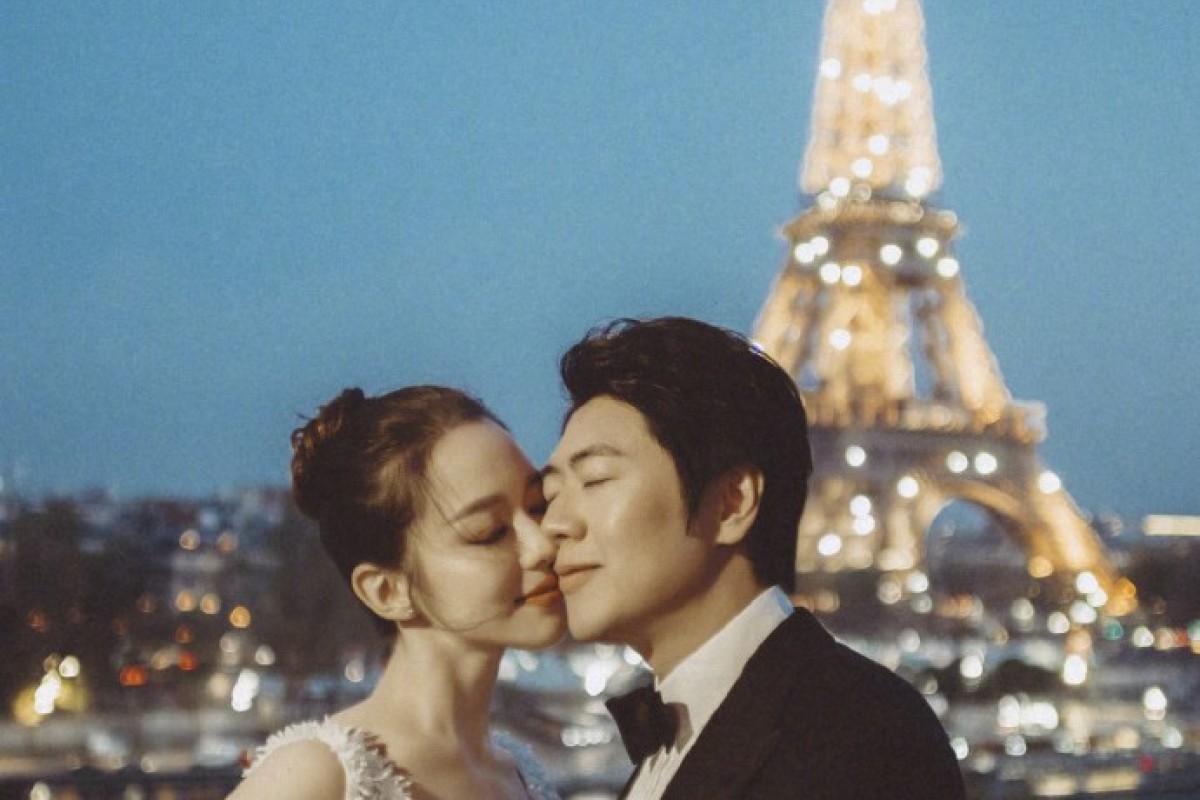
Shattering the dreams of millions, Lang Lang announced his marriage on Weibo. Apparently, he and Gina Alice Redlinger have been an item for some time. She's a German born pianist with a Korean mother. They sure look happy ! Big bash in the palace at Versailles. Article in South China Morning Post.
Sunday, 2 June 2019
Friday, 31 May 2019
The sex life of Victoria and Albert
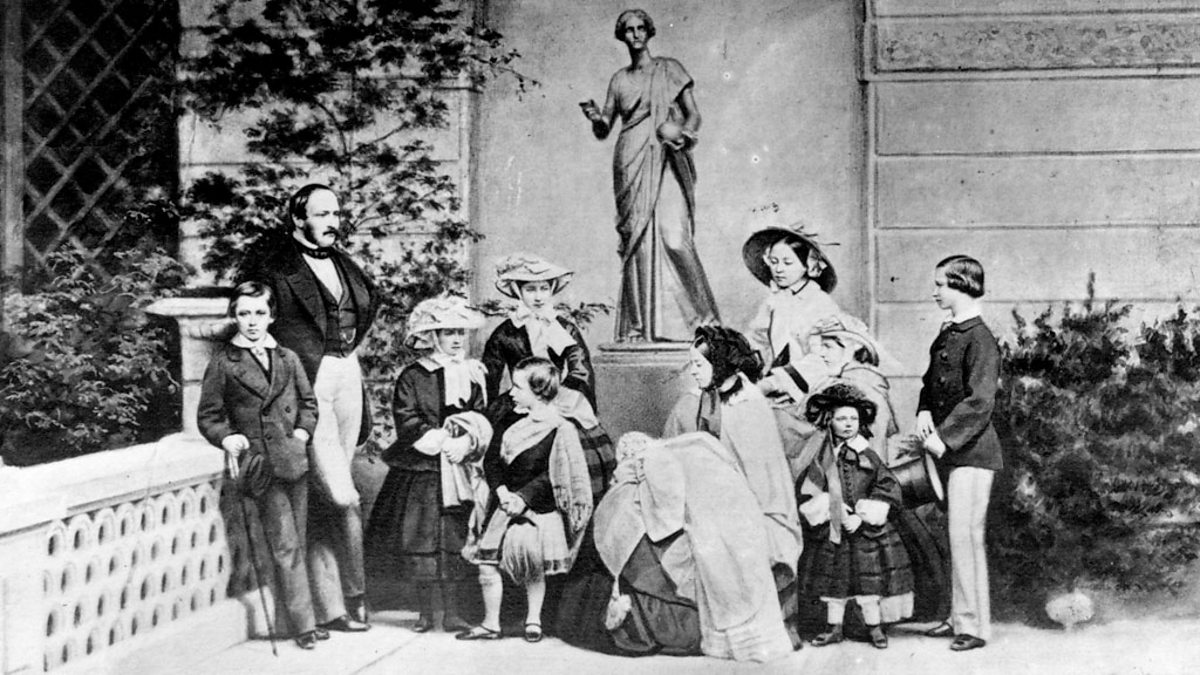
Currently in the news, sensational accounts of the relationship between Queen Victoria and Prince Albert. So he kept making her pregnant so he could "manipulate" her and further his own ambitions ? in the days before birth control, most people had huge families, even if they couldn't afford to keep them well, an accusation that cannot be lodged against the Queen and her husband, who came from the princely line of Saxe-Coburg and Gotha. The House of Hannover had lucked out in 1714, when George became King of England. Victoria and Albert weren't so far apart, socially. Being the only surviving issue of a family not known for statesmanlike virtue, she could have been in a vulnerable position. Albert made Victoria as much as she made him. Without his visionary ideals, the Victorian Age might not have become so associated with the cultural values so central to German intellectuals of the era. How much worse off we'd be had Victoria married a gammon ?
As for their sex life, they both enjoyed themselves without restraint. When told she shouldn't have more children, her response was heartfelt. "Am I no more to have fun in bed"? As for thre notion that post natal depression proves anything, that's nonsense. It can happen to anyone. In any case, it is an insult to Victoria to suggest that Victoria was too stupid to have her own mind. Lie our present Queen, she was no pushover : she read and understood what her governments presented her with. She refused, for example, to outlaw sex between women. It wasn't because she thought women were asexual but rather that she couldn't imagine getting it off without a man. So let's stuff these ideas of Victoria as victim. Millions of women are abused and mistreated. These are the women who need our support, in the real world beyond TV and media sensationalism. Insult Victoria, and you're insulting all women who have managed against the odds.
Apropos Victoria and Albert, I'm looking forward to Prom 40 on 16th August, marking the 200th anniversary of Queen Victoria's birth. Ádám Fischer conducts The Orchestra of the Age of Enlightenment in Mendelssohn, Piano Concerto no 1 in G minor (Stephen Hough) and Symphony no 3 "The Scottish", with Arthur Sullivan's suite on Victoria and Merrie England and a set of songs by Prince Albert himself (Alessandro Fisher, tenor). G&S for the crowds, but Albert of Saxe-Coburg and Gotha as an insight into the private world of Victoria and Albert. Incidentally, Victoria and Clara Schumann were both born the same year. Both of them had numerous children, and were reasonably happy (Robert and Cara kept sex diaries). And both of them were pioneers, created careers almost without precedent.
Tuesday, 28 May 2019
Vaughan Williams Symphonies 7 "Antartica" & 9 : Manze, RLPO
Scott and his companions struggle against overwhelming forces. They are alone, on a vast continent, at the mercy of forces beyond their control. Long sequences are shot without dialogue, focussing on the vast, empty landscape as expressed through the music as if Nature itself had been given voice. The colours are muted : the whiteness of snow, the darkness of night, intensifying the bleakness. The characters are loosely sketched, and Scott's team of dogs feature frequently.. In ths vast landscape, mortals count for very little. Effectively the film "is" music, a tone poem with visuals and occasional moments of speech. The sky will not fall if the symphony is heard with text, since there are other opportunities to hear the purely orchestral version, and it does us good to remember that without the film, the symphony might not exist. In any case, if a listener cannot focus on the music, the fault lies with the listener, since this is mighty fine music indeed.
A well-paced Prelude, the pulse suggesting a slow, purposeful trek in difficult terrain. The orchestra wells up, at once ominous and majestic, spotlit by cymbals before proceeding again: The soprano (Rowan Pierce) heads the wordless chorus, eerily enticing the strugglers forward. In the strings and percussion, there are evocations of winds and swirling snow. In the austere later sections, textures open out, suggesting open horizons: trumpets calling forth as the movement enters a final, expansive crescendo. In "Landscape", the lento movement, Manze's textures are lean, emphasizing the contrast that is to come when the organ enters, ("Ye ice falls !"), a baleful reminder of what the explorers are up against. As the sounds fade, the Intermezzo is introduced by a short sentence. In the Epilogue the value of quotation proves itself. Scott is dead, forced into silence, but his words live on. "I do not regret this journey; we took risks, we knew we took them, things have come out against us, therefore we have no cause for complaint." One could blank these words out, but to ignore them would diminish emotional impact.
Vaughan Williams's final symphony, Symphony no 9, receives an almost elegaic reading from Manze which brings out the darker undercurrents beneath the surface associations with Hardy and Wessex. Tess of the d'Urbervilles wasn't pastoral romance, but tragedy. Against the darkness of this performance, the clarinet and violin sound clean and poignant. In the scherzo, the saxophone trio are appropriately jarring and discordant : the "joke" here is malevolent. The Finale isn't tranquil so much as suppressed.
Saturday, 25 May 2019
Wednesday, 22 May 2019
Visionary Stockhausen Donnerstag : Royal Festival Hall
Donnerstag starts even before the audience enter the concert hall A small ensemble play a "Greeting", a prelude that will be matched by an epilogue at the end. The First Act, "Michael's Jugend" is relatively straightforward, by Stockhausen standards, and loosely autobiographical. Even as a child, Michael is confronted by polar opposites, a loving mother who may be insane and a brutish father who can't comprehend. In miniature, the cosmic battle that is to come. Each character is muliplied, to develop different facets of the avatar. Michael himself is potrayed in several guises : as a boy who moves but does not speak, as a trumpeter (Henri Deléger) and two different tenors, Hubert Mayer and Safir Behloul. The mother Eve is shadowed by a trio, Iris Zerdoud (basset horn), with Elise Chauvin (soprano) and Suzanne Meyer (dancer). Michael's identification with his mother connects to his sexual awakening and thus to his creative birth as an artist. Negqtive forces are represented through Luzifer (Damien Pass, bass, Mathieu Adam, trombone, and Jamil Attar, dancer).
This multiplication of roles also extends to the orchestra. The London Sinfonietta, conducted by Maxime Pascal, is augmented by the Royal Academy of Music Manson Ensemble. Even more radically, physical instruments are shadowed by the invisible" that is the sound desk, projecting sounds that bounce and resonate to fit the dimensions of the performance space, "organic" sounds seemlessly blending with computer generated technology. The music on stage and from the sound desk (Florent Derex, Augustin Muller) is further developed through video design (Yann Chapotel) and atmospheric lighting (Christophe Naillet)., and even more by the staging by Benjamin Lazar.
Lazar’s staging is very perceptive, amplifying the meaning in the score. Stockhausen's fascination with patterns, codes and the symbolism of numbers is not accidental. Runes exist in all cultures, on this planet and perhaps in places beyond our comprehension. Runes are a means of expressing the unexpressable. The detail in this staging by Le Balcon is not accidental, either. Dancers, singers and musicians move in stylized patterns, emphasizing connections, evoking mysterious ritual. At first Michael's voice is the tenor ( Hubert Mayer), but as his identty develops, his musical avatar, Michael-as-Trumpet takes over. The part is huge and demanding, but Henri Deléger holds the whole opera together, from beginning to end : a true virtuoso performance, full of depth and intensity. The trumpet, too, is shadowed, paired with basset horn and clarinet, each well defined : both of them are Woodbirds to the trumpet, leading it, like Siegfried, on a journey of self discovery. These three instruments joyously interact, reinforcing the concept that positive relationships are inherently creative.
In contrast, the Trombone (Mathieu Adam) represents negativity and repression. Stockhausen grew up during the Third Reich and knew how destructive authoitarianism could be. If he was often obsessive in his own life, it was more a matter of focusing things in his own mind than forcing them on others. The trombone is Luzifer's signifier, surrounded by a gang of bassoons, contrabass and other winds. Gang members don't question. But what to make of the tuba, with an even deeper range ? At first the tuba supports the trombone as it duels with the trumpet, but it's placed centre stage, by the piano, gradually moderating until it supports the trumpet. While "Michael's Journey Around the World" is colourful (Balinese bells, African drums) the second half of the Second Act is much more rewarding musically because the instruments tell the story on their own. The physical world "outside" pales into comparison with the inner world of creative relationships. Michael and Mondeva (trumpet and basset horn) dialogue in harmony.
This sets the stage for the critical third Act, "Michael's Heimkehr". As a child the young Micheal guessed where his identity might lie. In word games on his name he sang "Mich-a-hell", "hell" meaning "brightness" in German. The three Eves return, representing not the Three Graces so much as the embodiment of light and growth. The "Young" Michael the dancer's hand gestures suggest upward growth, rustic diagrams of trees being projected on the screen behind. The singers are no longer alone. Members of the New London Chamber Choir, file into the auditorium, supplemented by more singers in the upper balcony. Voices fill the performance space. Even when they exhale wordlessly, they represent humanity. Luzifer had been the highest of angels but rebelled when God chose to be recreated in man. God punished him by imprisoning him in hell (in the English sense of the word), the bowels of the earth, where he lurks, waiting to cause trouble. suddenly the calm on stage is shattered by violent tumult. The trombone blares and a grovelling figure crawls in, his head hidden by a globe, which may reference Michael's travels, but more pointedly refers to the struggle between God and Luzifer over mankind. Michael as trumpeter does battle with Luzifer as trombone and Luzifer retreats, enraged.
In the last scene, "Vision", the three Michaels (tenor, dancer and trumpeter) materialize, as a Trinity. They are surrounded only by light, symbolizing the ideals of creative truth. Donnerstag doesn't end there, though. Just as the "Greeting" at the beginning was a prologue, the Epilogue"Donnerstags-Abschied" takes place outside, with five trumpeters playing in unison in the open air, in this case the fifth floor balcony of the Royal Festival Hall, looking out over the Thames and onto a night sky with moon (Mond-Eva) and stars. The London Sinfonietta have had their ups and downs, but in Donnerstag they were in their true element. Stockhausen is, and should be, a London Sinfonietta thing : audiences can rise to the occasion if they're given something as good as this to engage with. Exceptional solo playing, and solo singing too : Deléger and Adam, with Safir Behloul (wise Michael) and Damien Pass (Luzifer) utterly impressive.
Lots more on this site re Stockhausen and the London Sinfonietta
Philharmonia's New Chief Conductor - Santtu Matias Rouvali
![]() |
| Snttu-Mthias Rouvalli photo :Kaapo Kamu |
The Philharmonia Orchestra is delighted to announce the appointment of Santtu-Matias Rouvali as its next Principal Conductor, only the sixth person to hold the title in its 75-year history. Following in the footsteps of the legendary Riccardo Muti, appointed as the Principal Conductor of the Philharmonia in 1973 at 32, 33-year-old Rouvali is one of the youngest-ever artists appointed as Principal Conductor of a London orchestra.
Rouvali will take up the position for the 2021/22 season. His five-year contract with the Philharmonia will see him working with the Orchestra for 10 weeks a year right across its programme, including leading its flagship London Season as Resident Orchestra at Southbank Centre. Reviews of his performances there have praised his innate musicianship and communicative flair: “…he is the real thing: music unmistakably flows from him,” (Sunday Times).
Rouvali will also conduct the Philharmonia across its UK residencies programme and for further weeks on international tours, also developing recording projects, and working with the Orchestra on its award-winning digital, outreach and audience development programmes.
Speaking about the appointment, Santtu-Matias Rouvali said: “I am honoured to be the new Principal Conductor of the Philharmonia. This is the start of a great adventure: London is such an exciting place for orchestras, and the Philharmonia is at the heart of classical music life in this city. The players of the Philharmonia can do anything: they are enormously talented and show an incredible hunger to create great performances. There is huge possibility with this orchestra, and we will do great things together.”
Monday, 20 May 2019
Longing for Paradise : Albrecht Mayer, Strauss Oboe Concerto
Richard Strauss's Concerto for Oboe and small orchestra in D major (AV 144), receives an outstanding performance, Mayer navigating the technical complexities with finesse. The Allegro moderato begins with a tour de force section of 57 bars which focus attention on the oboe. Gradually, orchestral textures build up around the oboe. If Metamorphosen was written in response to the destruction of war, the Oboe Concerto might represent a reflection on the past and future, the strings in Metamorphosen replaced by the deeper sounds of winds, the oboe supported by flutes, cor anglais, clarinets and bassoons. The serenity of Mayer's playing has purpose, evoking the balance of an idealised past. As he notes these beauties are "perhaps an intimation of Paradise". There are no hints of Strauss's typically ambivalent waltzes, no ironic fractures. Instead interpretation requires "maximum effortlessness. Perhaps Strauss himself soared in something like the pure riches oif its euphony when he wrote it". The Andante is exqusite, enhanced by a sense of melancholy, the oboe singing gracefully. The Vivace-Allegro is lively. With extended solo passages the oboe leads the orchestra in full flow towards the confident conclusion.
Edward Elgar's Soliloquy is also a late work, written in 1930 for oboe and piano for Léon Goossens, though only the second movement was completed. The arrangement for oboe and small orchestra heard here was made in 1967 by Gordon Jacobs. The oboe line stretches expansively, the orchestra responding with hushed tones, before fading elusively away. Also originally conceived for oboe and piano, is Eugene Goossens's Concerto in One Movement for oboe and orchestra (op 45, 1927). The piece traverses different styles - pastoral, energetic, and exotic - the oboe part redolent of Prélude à l'après-midi d'un faun or even The Firebird, though with a touch of wry humour.
Maurice Ravel's Le Tombeau de Couperin, is as much an hommage to French style as a a series of memorials to Ravel's friends who died in the 1914-1918 war. A vivacious Prélude, with the oboe as lithe and athletic as a creature of the forest. The dance origins of the Forlane are sprightly, every "step" in the music vivid. The more formal Minuet and the Rigaudon are vigorous, but beneath this lies sorrow, Oboe and strings interact, two voices entwining like partners in a dance, an allusion that connects the living and the dead.
Sunday, 19 May 2019
Second Farewell to Cambridge Xu Zhimo
The poem is beautiful because it's so subtle. It begins with the lines on which it will end "Quietly I now leave the Cam, gently waving farewell to the western skies where a golden willow stands, like the bride of the sunset." The tree is rooted and will not leave, enduring after the poet is gone. Its branches dip over the river where rushes and duckweed throng, moving in the river's flow. Suddenly a vision : in the dappled waters and weeds, Xu sees a rainbow, shimmering as if in a dream of purity and promise. If only he could be like these weeds, But he moves on, poling his punt towards the fields beyond, not returning until the skies are lit only by stars and moonlight. But the images of silence return : on this evening, even the crickets are still, and do not sing. So "I leave as quietly as I came. I am quiet, gently flicking my sleeve, taking with me not even a wisp of cloud". The reference to the sleeve is significant. Though Xu and his friends usually wore western dress, the poets of the past wore traditional garments with wide silk sleeves, so refinement was built into their slightest movemnent. In this tiny detail, Xu connects past to present, Cambridge to China. The deeper levels of the poiem address impermanence. The cloud, for example, cannot be "taken" because it is immaterial. The flow of the river cannot be stopped, even though for a moment one can enjoy the pools and eddies. The poet is quiet, because silence suggests that time is standing still : any sound might break the spell. Yet there's so much sadness : when the poet arrived, he changed nothing, and when he leaves without changing what he loves so dearly.
Though Xu died young, his legacy is immense. His poetry is immortal, but he also transformed the role of poetry in modern China. He adapted traditional form, using vernacular as well as scholarly form. In his personal life, he was also progressive and forward-thinking. The women in his life were emacipated New Women, from a generation inspired by the reform movements of the time. One of his lovers was Lin Huiyin (林徽因). Ironically, she was turned away from architecture at a US university because she was female. Eventually she qualified, and with her husband Liang Sucheng (林徽因) pioneered the study of ancient Chinese architecture, their expertise used in urban planning and restoration. Xu's affair with Lu Xiaomen (陆小曼) scandalized Chinese society as both were married to other parties at the time. Lu, too, went on to be a well known artist. This background helps to explain the image of the willow tree as bride. Xu was not against marriage, but a passionate believer in the ideals of love. In Chinese culture, marriage means children, continuation and the future. In Cambridge willow and river belong together in symbiosis. Because the poet cannot change that, he has to move on.
Xu's Farewell to Cambridge is so evocative that it's inspired many musical settings, nearly all of them Chinese. A few years back, Cambridge commissioned a setting by John Rutter, which wisely retained the Chinese text : it's quite an achievement for the singers of King’s College Choir to learn to sing in Mandarin.
Friday, 17 May 2019
Hans Werner Henze Phaedra - I was at the world premiere!
![]() |
| Henze Phaedra, Berlin 2007 photo by Ruth Walz |
Hans Werner Henze Phaedra at the Linbury, Royal Opera House, with the Jette Parker Young Artists Programme. On 10th September 2007, I was at the world premiere in Berlin at the unrefurbished Staatsoper unter den Linden. Then, Michael Boder conducted Ensemble Modern, with Joihn Mark Ainsley, Maria Riccarda Wesseling, Marlus Petersen, Axel Köhler and Lauri Vasar. In January 2010 it came to the Barbican London, unstaged but with the same personnel. Over the years I've written quite a bit about Henze and Henze's Phaedra in particular.. Here's what I wrote back in 2007 when it was new and my first impressions fresh.
When he wrote L’Upupa, or TheTriumph of Will some years ago, Hans Werner Henze said it would be his last opera. Approaching his 80’s, Henze was dynamised by a whole new surge of creativity. This new opera, his fourteenth, is even more innovative, its impact enhanced by the intensity of feeling that has gone into it. While Henze was writing it, he had a catastrophic illness. When he recovered, his partner of 40 years, who had nursed him back to health, passed away. “The prospect of mortality”, so the saying goes, “focuses the mind”. Perhaps this accounts for Phaedra’s intensity, for it seems distilled from a lifetime of experience and wisdom. There is so much in it that it will, no doubt, keep revealing new depths.
The central image from which the production develops is that the orchestra, in this case Ensemble Modern, is placed in the centre of the auditorium, between stall and galleries. Raised on a platform, the musicians are reflected directly onto a huge mirror surface on stage. It’s a brilliant concept, because it concentrates so many ideas in this remarkable opera. As Henze has said, it’s a “concert opera”, more than opera or concert music alone. Barriers between musicians and audience are blurred because this is an opera where listeners participate, rather than sit passively uninvolved. It’s a creative challenge. What is reality? What is reflection? How does imagination enhance what we see and hear? This is an opera which engages many levels of creative response. The singers start, standing in a circle round the conductor, then gradually make their way along a catwalk, where they are literally inches from the audience. There’s no way you can miss being engaged. It also opens the music out spatially, reinforcing the sense of ever-expanding horizons. Later, the large mirrors are revealed as a series of mirrors which refract visual images like a kaleidoscope, shifting and rearranging “reality” in constant flux. Similarly, the lighting moves, creating substance, even though it’s achieved simply by shadow and illumination.
This is a brilliant example where staging enhances and amplifies concepts central to the music and to the meaning of the opera.
Henze uses only 23 orchestral players and 5 singers, yet builds intricate textures and sub-textures into the richly vibrant score. Part of this comes from individualised groups of instruments operating like inner cells within the whole. The four string players – only four – operate sometimes as a quartet, sometimes as part of the whole. Piano and celeste feature as distinctive individual voices “within the chorus” so to speak, a subtle reference to the Greek origins of the narrative. There’s a fine swathe of cors anglaise, bassoons and a contraforte, a newer contrabassoon with an even more resonant lower range. Henze’s writing for percussion is particularly lively, for he uses a huge range, and works in sounds which are outside the western mainstream, such as Chinese gongs and wooden bells, at once expressing the atavistic nature of the narrative and its universal significance. The textures in this piece manage to be at once floating, sheer and diaphanous, while operating at far more sonorous deeper levels. With Ensemble Modern, Henze’s ideas can be fully realised because this orchestra is an extended chamber ensemble, attuned to precise virtuoso playing. Henze’s textures are deliberately ambiguous, floating freely between diaphanous transparency and sonorous darkness, brooding with menace. With Boder, the ensemble negotiates the shifting textures deftly. This is music that “acts” in the abstract, for it moves, provocatively, through several simultaneous levels.
Given the spare orchestration with its emphasis on keyboard, brass and percussion, Henze is evoking Britten’s short cantata, Phaedra. Britten and Aldeburgh were formative influences in his career. (Please see what I wrote in 2010 comparing Britten's Phaedra and Henze's Phaedra HERE) Similarly, the references to Wagner reflect Henze’s love-hate relationship with the man who revolutionised opera in his own time. Mozart, Berg and others appear, too, thus “expanding” the music across space and time. It’s as if Henze is looking back on his own life, through a retrospective of opera history.
Like dreams, Greek myths don’t follow any logical rationale, yet have the power to touch the deepest parts of our psyches. Ultimately. this is perhaps what makes Phaedra so emotionally involving. Henze and his librettist Christian Lehnert go straight for the mystery and its unresolved, unresolvable emotional turmoil. This is a drama that can’t be approached literally, so the text itself tantalises, giving clues rather than answers. Ever present, though obliquely hidden in the background is the image of the Labyrinth in which the Minotaur was imprisoned. Here the Minotaur wears an immaculate dinner jacket, a primal, disturbing symbol yet “civilised” in modern dress. Lauri Vasar’s solid baritone reflected the bassoons and Wagnerian tubas in the orchestration.
By writing Artemis for counter tenor, Henze is at once acknowledging the role
of the voice type in opera history and expanding its repertoire for the future. Moreover, he’s exploring the unusual qualities of the voice type, revealing its unique beauty. There is something unworldly about counter tenors, which expresses the exotic, surreal worlds Henze’s music so often evokes. His writing flows naturally with the voice, without distortion, so a singer can focus on meaning rather than sheer vocal gymnastics. Since Artemis is female, and the object of Hippolyt’s love, using a counter tenor to portray her adds another important element to this opera. I’ve long enjoyed Axel Köhler’s singing, and here his clean, fluting tones worked well with Hippolyt’s tenor and with Marlis Petersen’s high, bright soprano.
The two key roles, however, are Phaedra and Hippolyt. The whole opera is electrified by the frenzied energy generated by the polarity between the pair.
After Magdalena Kozena pulled out, Maria Riccarda Wesseling took on the part. This is a stunning role, highly dramatic and intense, a star vehicle if there ever was one, and Wesseling rose to the occasion. Under the wild abandon, her Phaedra was imperious, bristling with tension and power. She moves like a tiger, twisting her body seductively, but the controlled dignity in her singing expressed Phaedra’s strong personality and her ultimate power to destroy, even if she must destroy herself in the process. Hence the tight “bondage” costume, complete with dehumanising headdress, which must be horrendously uncomfortable to sing in. Wesseling’s Phaedra is savage, but as the music and text demonstrate, she’s as much trapped into the violent ethos of this mythic world as the Minotaur in his labyrinth and Hippolyt in his various caves and cages.
Yet it is Hippolyt on which Henze’s opera pivots, and around whom the meaning of the work, whatever it might be, might be found. John Mark Ainsley was superlative. He’s done much excellent work, but this was a leap into another league, artistically. It was superb. His Hippolyt exudes erotic danger, tinged with animal-like primal unconsciousness. No wonder everyone wants a piece of him, and the rape scene is so disturbing. Yet, there’s much more to this Hippolyt, and Ainsley’s characterisation also develops the role in accord with what Henze seems to be aiming at.
The second act, “Evening”, contains some exceptionally good music. The storm scene, for example is truly spectacular, highly atmospheric yet scored in careful detail with counterpoint and cross currents, easily eclipsing Adès’s storm music in The Tempest. The small orchestra is augmented by some recorded sound which adds a subtle yet quite stunning “supernatural” overlay. It is, after all, a psychic storm, from the Underworld, followed by a cataclysmic earthquake which transforms Hippolyt’s fate.
Hippolyt’s central role in this opera is emphasised, too, by having a grand piano on stage. Just as the orchestra had earlier been reflected onto the stage by mirrors, now an instrument, and a solid one at that, is in full focus. Mussbach has Ainsley stride on top of it, singing sometimes unaccompanied, sometimes supported by the piano in the “real” orchestra. It’s a Lieder moment, intimate and personal. It’s also the scene of his final violent
struggle with Phaedra, trumpets and trombones blaring out alarms. The very last scene, when Hippolyt is transformed yet again into the King of the Forest. Vernal flutes and horns evoke feelings of spring and renewal. It is a kind of apotheosis, Ainsley’s voice rising strong and clear : “Ich bin hier in meinem Anfang”. In the glorious final dance, the singers regroup, and darkness becomes light.
I loved L’Upupa, but Phaedra is even richer. It is profound and deeply felt, resonant on many different levels, a major work by a composer who has truly earned his place in the pantheon of opera history.

Thursday, 16 May 2019
Stockhausen Cosmic Prophet at the South Bank 2019
![]() |
| Pierre-Laurent Aimard playing Stockhausen Klavierstück XI with Hr-synphonieorchester Frankfurt in 2016 |
Please read my review of Donnerstag HERE Stockhausen Cosmic Prophet, a new Stockhausen series at the South Bank, London, scene of so many great Stockhausen events over the years. This one's special. (Please click on my label "Stockhausen" below and right for more). The big highlight is Donnerstag aus Licht the first UK staging since 1985 of Stockhausen's fourth opera in his Licht saga. Maxime Pascal conducts the London Sinfonietta, staged with light, computer music design and video. Stockhausen needs to be experienced live for full impact, to achieve his visionary ideals. His is music that's more than music, but conceptual art that provokes and stretches boundaries. All round surround sound event, even in the constraints of the Royal Festival Hall. Some seats still available.
On the weekend of 1st and 2nd June, Stockhausen In Depth, two full days of performances supplemented by talks and workshops. On Saturday night, in the Queen Elizabeth Hall, Pierre-Laurent Aimard does Klavierstück I; Klavierstück II; Klavierstück III; Klavierstück IV; Klavierstück V; Klavierstück VI; Klavierstück VII; Klavierstück VIII; Klavierstück IX; Klavierstück X; Klavierstück XI and Kontakte for electronic sounds, piano, percussion. Aimard is a brilliant Stockhausen pianist, so this should be a must. Aimard will be joined by percussionist Dirk Rothburst of Ensemble musicFabrik, with sound design by Mark Stroppa, the composer and former head of music research at IRCAM. Stick around too for the late night performance of Stimmung with the London Voices.
On Sunday 2nd June at 2.30, Apartment House do Für kommende Zeiten (For Times to Come) "intuitive music", which grows from interaction between performers. Even more stellar (deliberate pun for the Man from Sirius, Zyklus for percussion; Mantra for 2 pianos with 12 antique cymbals, woodblock & 2 ring modulators (and shortwave radio/tape) where Pierre-Laurent Aimard is joined by Tamara Stefanovich and Dirk Rothbrust percussion and Marco Stroppa sound design
Earlier this week, Marc Bridle was at the Royal Festival Hall for Actress x Stockhausen Sin {x} II, Actress being Darren Cunningham, a new work that takes its cue from Stockhausen's Welt-Parlament, the first scene from Stockhausen's Mittwoch, the third opera in the Licht saga. Please read Marc's well-informed analysis of the new work, discussed in the context of Stockhausen's Cosmic Pulses and Mittwoch, as it was staged in Birmingham a few years back. (More on both pieces on this site, too) . Please read Marc's review in full, HERE In Opera Today
Wednesday, 15 May 2019
The Covent Garden Night-Mare
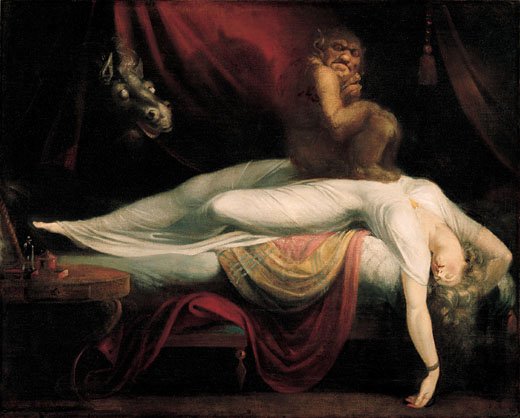
The Royal Opera House Season Launch for 2019-2020 : nice and safe, revivals and new works at the Linbury. There are a few good choices, but, like the BBC Proms, "things ain't what they used to be" On the plus side, it's a chance to save money ! So come up and see this etching - The Covent Garden Night-Mare by Thomas Rowlandson in a colorized version of the original published 1784 . In 1782, Henry Fuseli the Swiss mystic based in Britain exhibited a painting titled The Night Mare which caused a sensation : a woman in her undies lies stretched on a bed, possibly drugged, a demon astride her, a black stallion (symbol of dark desires) looking on. Pretty explicit, but typical of Fuseli, who was a mystic, possibly deranged, and an icon of the Romantic (big R) sensibility with its taste for the macabre and subconscious. Rowlandson is making a point. Fuseli's semi naked woman is replaced by the politician Charles James Fox, naked, possibly drunk, a demon on his back, a more quizzical horse looking on. Fox was a Whig, usually at odds with the mainstream, but the satire here isn't on his politics so much as his reputation as a roué, who hung out at Covent Garden, then the haunt of prostitutes, thieves and degenerates. The (first) Royal Opera House had been built nearly 50 years before, but Fox and his friends probably weren't that much into music.
Monday, 13 May 2019
Time Capsule - Welsh Clog Dancing
Discovered not long ago in the archives of the British Film Institute, Clog Dance, a documentary which is a time capsule that seems to exist as if in a parallel universe. The Welsh village of Porthmadog filmed as if the world outside didn't exist : the streets are empty, the terrraces neat, as if untouched by time. At the turn of the last century, Welsh Slate from the mountains of Ffestiniog was a major export industry and Porthmadoc an international trading port, where Welsh seamen travelled the world. By the time the film was made in 1959 that was almost forgotten memory. Gwenyth Thomas, who was a child then, resolves that her grandchildren should learn their heritage before it's too late. Even the film-making is surreal : by modern standards Mrs Thomas looks aged, though she's probably only in her 60's and her grandchildren looked like they've stepped out of a time warp that could have existed at any time from the 1920's. Suddenly, the camera sitches back to the past : Mrs Thomas becomes a little girl, looking out of a window on the harbour, watching a sailor dancing. The dances are rhythmic, the click of the wooden clogs providing simple percussion. Because the sailors travelled, they adapted dance figures they'd seen abroad, even a "cossack dance" for girls as well as boys. The film shows "the intricate Toby Step", dancing over brooms, and dances to harp accompaniment.
John Edwards, the clog maker, who once made clogs for miners to work in, but now makes clogs for boys to dance in. The film documents his craftsmanship : he chooses the wood, carving it to fit the curve of the foot, binding the uppers to the wooden base with copper and nails. Then he cycles (no gears) through the village, tossing them in front of the new owners’ homes Mrs Thomas then trains her "new material" as the narrator calls the kids she teaches. Clog dancing has become the local craze. The Porthmadog dance team become the first to dance in public and win prizes at eisteddfodau. And they don't just dance. In the film they travel by horse cart, sitting on bales of hay. Then home to "tea and Welsh cakes and melting butter". Most of the scenes are shot with the dancers in costume (bonnets, breeches, aprons) in a room which looks like a farm kitchen, with stone floor and dressers filled with pottery. Even if this nostalgia is re-created for film, it's still nostalgia closer to source than much of the nostalgia industry today. The teacher in the film was a real dancer — Mrs Parker (no first name) and the harpist, who also arranged the music was Eleanor Dwyryd, so there is an element of authenticity in this film though it's clearly referencing times that have passed. But its very innocence gives it charm, and thus sincerity. Clog Dance is an "orphan" film whose rights holders cannot be traced ("President Pictures, made with the help of Yr Part'r Gest"). but its legacy lives on. I wonder what happened to the kid in the film ? Some of them (like George) have such personalities : they can't have been professional actors. View Clog Dance HERE on the BFI website.
Please also see my piece on Nothing Venture : Surreal Nostalgia England 1948 a much stranger film than meets the eye at first, another time warp where everything feels like an eternal, idealized childhood summer where bad guys know their place.