Thursday, 26 April 2012

Si j'etais blanche

"I'd like to be white. It would give me such joy if my breasts and thighs changed colour". Listen to the full song HERE. Immediately, Josephine Baker gets to the nub of what white folks thought of blacks.  Read this excellent analysis of the song by Anna Biller here. Even the dolls little girls play with enforce the idea that white is the only way to be. "Et je disais à l’air accablé, me croyant toute seule brune au monde". But as Anna Biller points out, the girl in the song subtly turns things round in her own favour

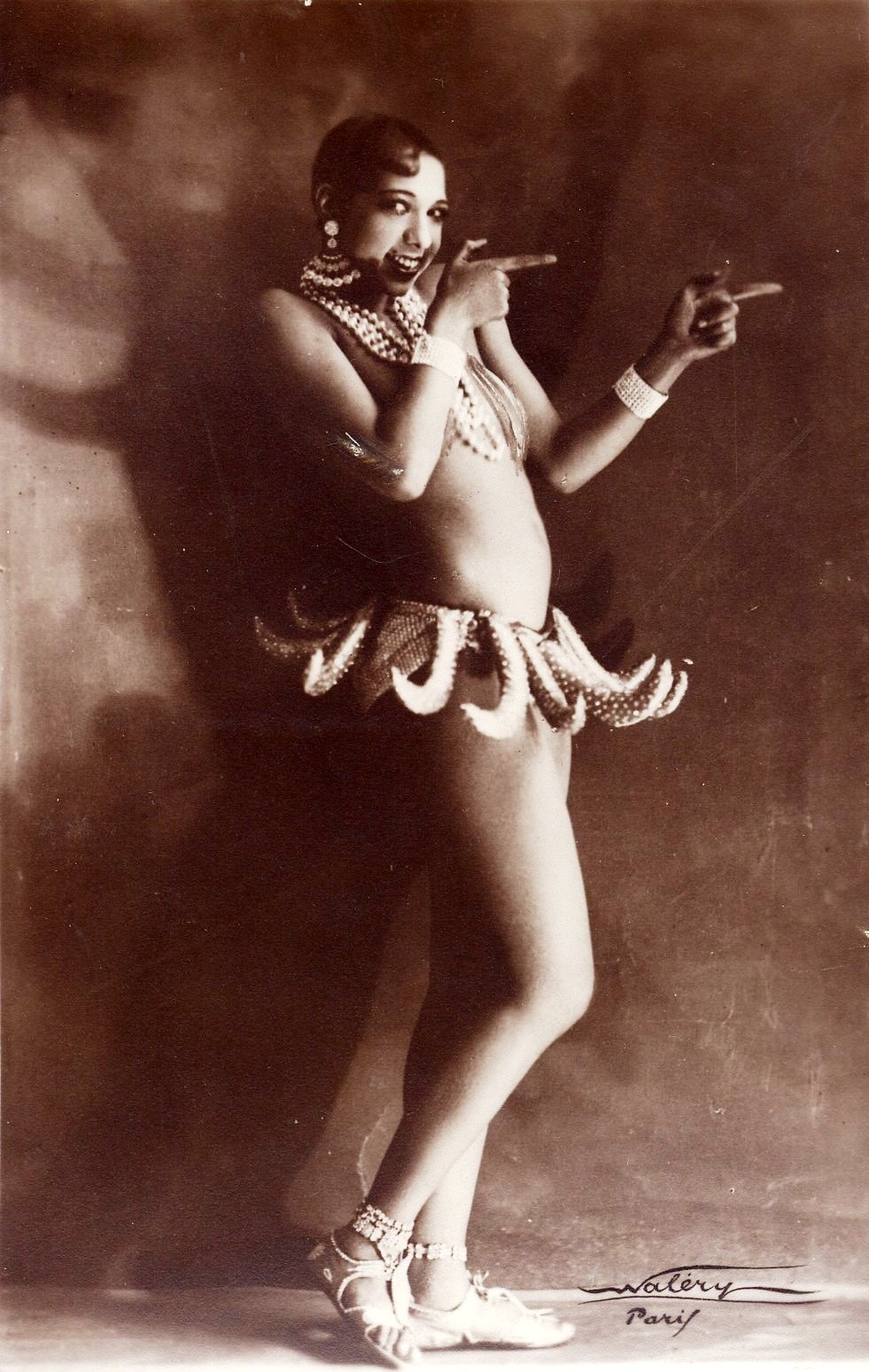
Josephine Baker confronted assumptions about race, class and orientation. In the photo, she's wearing her famous banana outfit which of course moved tantalizingly as she danced. Note the fingers pointing and the banana imagery! The show was set in a fake jungle, a metaphor for the Dark Continent where forbidden, erotic things happen, and white people don't really rule. What a frisson fancy Paris society would have felt as she gyrated on stage while they sat, "civilized" in starched tight collars.

Josephine Baker was part of the cultural revolution that reached Europe from the mid 19th century. Diaghilev and the Ballet Russes, Pierre Loti, the  Impressionists, Debussy, Ravel, Picasso and his friends collecting African art.  (British colonialism was very different). Non-western cultures showed Europeans that other forms of experience were valid. Without non-western cultures, the west might not have become "modern". The whole imperialist world model we're supposed to follow is upside down.

There's perhaps more on this site than most elsewhere on the dialogue between western and non western cultures. Lots on non western culture and on cross-culture issues and stereotypes, particularly as expressed in music and early film). For example, see this, a proper Cantonese opera but a satire on Viennese operetta !

Below is Josephine Baker dancing in 1927. So energetic, so angular, nothing like the way white women danced then. Nor like black American women either, I suspect, who were finding their own way ahead (see my post on Within Our Gates ). But the spirit of the Jazz Age freed up inhibitions and let people express themselves in new ways.  It's no coincidence that the best book about Josephine Baker was written by Patrick O'Connor, the music critic whose speciality was French music and opera. He was too secure to need to sneer at crossover. How the horizons of music writing have narrowed since he's been gone. (read more about him here).

Tuesday, 24 April 2012

Fantastic ENO season 2012-2013 TOP PICKS

Fantastic new ENO season for 2012/13! The most adventurous in years, totally justifying the Outstanding Achievement Olivier the ENO received for "breadth and diversity" of its programme. This is such an amazing season. Full schedule on the ENO site here. Not all the goodies are obvious! So, my top picks below, with explanations why.

Walt Disney changed the world.  One of the many highlights of the ENO's fantastic new season 2012-2013 will be Philip Glass's The Perfect American, a surreal exploration of Disney's imagination.  Opera is fantasy, so Disney's a great subject. Since there was a lot more to Disney than cartoons, the story could be good. The production is by Phelim McDermott whose brilliant puppets and set made Satyagraha genius theatre. (Read more about that here and here). Walt Disney the opera won't come round til next June, but book as soon as you can. Tickets will be gold dust.

The new ENO season starts with fantasy, too. Bohuslav Martinů's Julietta, based on the Paris Opéra production which Edward Gardner fell in love with. If it can inspire him like that, it sounds good. It's a gorgeous opera, last heard in London with Magdalena Kožená, conducted by Jiří Bělohlávek. (more about it here) Listen to the recordings, and catch the magic. This production's directed by Richard Jones, who won the Olivier Award for best director.

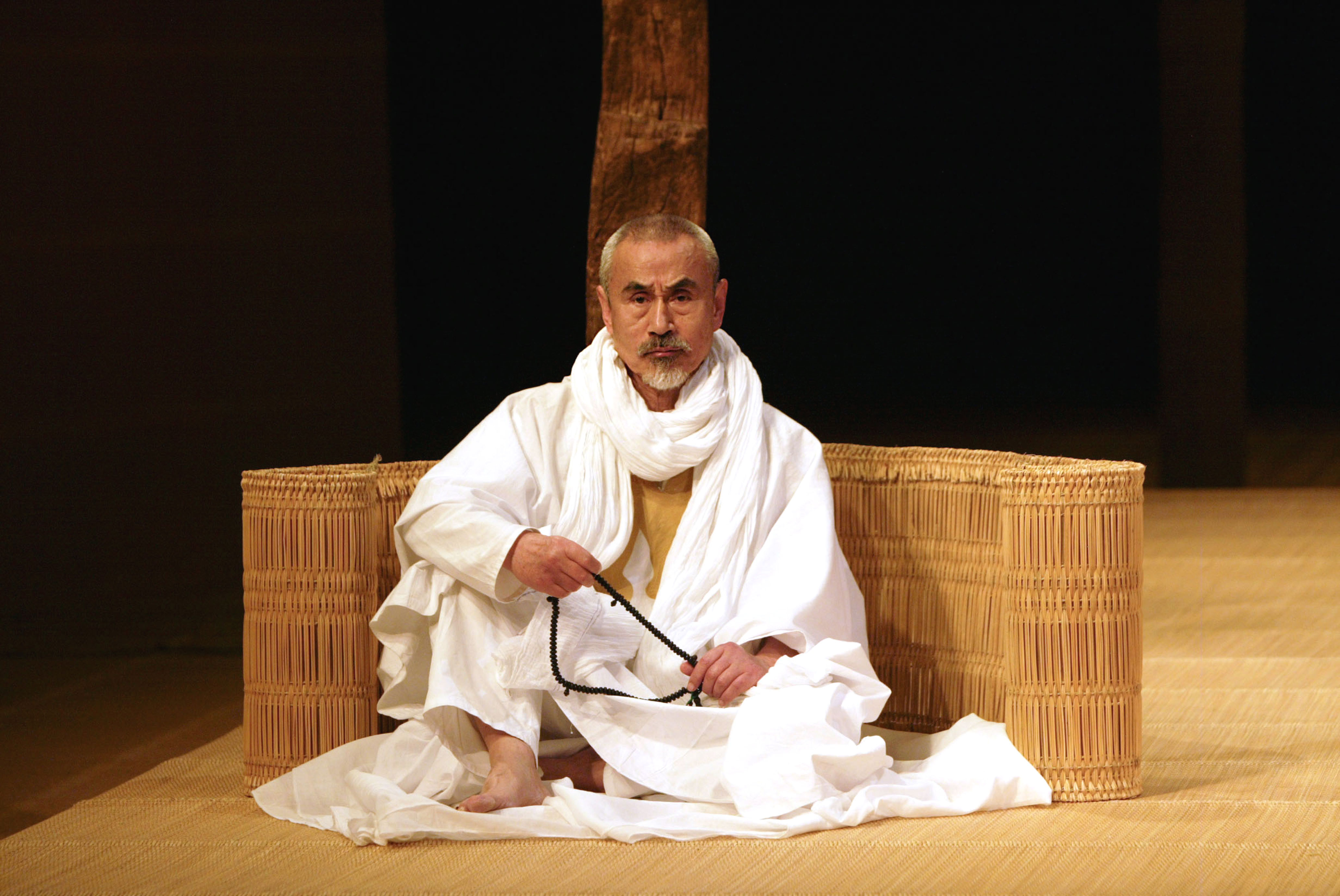
Even more daring - the ENO takes on Ralph Vaughan Williams The Pilgrim's Progress (from 5/11) staged for the first time since its premiere in 1951. It's not an "easy" opera,  and needs a director who understands stylized allegory. The reason that this will be important is the choice of director, Yoshi Oida. Oida is astoundingly sensitive. His Britten Death in Venice was exceptional. (read more here). It ran within a month of the ENO Deborah Warner Death in Venice. Two drastically opposite approaches.Warner's was high on glossy fashion shoot glamour, Aschenbach relegated to the sidelines in every way. Oida's approach was psychological, with Aschenbach foremost, action happening around him and in his mind. Although Aschenbach thinks he's a disinterested observer, in fact, he's caught up in his own fantasies. Oida shows Venice as a mirror of Aschenbach's mind. Claustrophic walls, dank, dangerous waters, a place where everything's nebulous.  Deep in every sense. Exactly the spirit of the music.
 
Oida was chosen to stage Britten in Aldeburgh because his Britten track record is exemplary. Back in 1989 he stunned Aix-en-Provence with his Britten Curlew River. It's preserved on DVD, watch it if you can. He's an inspired choice for The Pilgrim's Progress, which needs a director who understands stylized allegory. Kill for tickets to this, though it will be nothing like the ENO Riders to the Sea which was so literal the music wasn't able to speak. Oida is spiritually as well as musical astute. If anyone can make The Pilgrim's Progress work as theatre, it's Oida. Martyn Brabbins conducts, another reason why this will be a must.

Calixto Bieito? -- the tabloids might scream. Get past the shock value, for Bieito is a very serious director. In his Carmen (from 21/11) he shows the gypsies as marginalized underclass, utterly relevant to modern Europe. In Barcelona (read what I wrote here), it dealt with migrant workers and the "colonization" of Catalunya by foreigners. In London, the focus will shift to more British concerns. Maybe the tabloids will be right. Incendiary stuff ! But these are issues we can't blank out.  Bizet was right on the mark. What's more, Ruxandra Donose is singing Carmen - she's magnificent.

Even more shocking, Peter Konwitschny comes to London! This will have the tabloid mind set foaming at the mouth, especially as he's directing Verdi La Traviata. "My Traviata", he says in the promo video, "is short". And to the point. Ten years ago he did a Meistersinger that confronted the German audience with the implications of the final act. To this day I remember what Tim Ashley wrote then (find it here). Violetta is a strong personality, as she has to be in her profession, but she also trumps Papa Germont at his own game. There are levels and levels in this opera that are rarely touched. Read what Tim Ashley said of Konwitschny's La Traviata in Graz last year here,

The ENO's always been good with baroque. Christopher Curnyn, who conducted an excellent Rameau Castor and Pollux (review here) last year is conducting Charpentier's Medea ifor the ENO in  February, in a new production by David McVicar. Lots of Charpentier around these days, it seems,  and David et Jonathas (William Christie) features in Edinburgh and in Paris later this year. 

More baroque too - Handel's Julius Caesar (from 1/10) in a "fresh, theatrical" new staging by Michael Keegan-Dolan, who brought us the ENO Rite of Spring. He's a choreographer (hence the ballet) so it will be interesting how he makes a Handel opera move. Strong cast - Lawrence Zazzo, Anna Christy and Christian Cumyns, specialist conductor.

Another adventurous new production, Michel van der Aa's The Sunken Garden, in the Barbican Theatre (not the Coliseum) in April.  It's a joint venture between the Holland Festival , the ENO, the Barbican, Toronto and Lyon. Van der Aa's works have been heard in London several times before, so he's not unknown so much as misunderstood as he mixes music and singing with theatre and film. Pierre Audi respects him highly. Together they did a fascinating concert called Liebestod which creatively re-imagined Alban  Berg's relationship with Hanna Fuchs-Robettin (review here). That was conceptual but not too difficult, definitely worth hearing again. If we ever get the chance! The Sunken Garden is an "occult mystery film opera" with Roderick Williams, who also sang in van der Aa's Before Life at the Barbican (see review here) and will be singing in The Sunken Garden.  Roddy, as he's affectionately known, is grossly undervalued. he's easily the first choice English baritone in modern repertoire (and in other repertoire too - remember his Pollux?

Many revivals like the Magic Flute, Don Giovanni, and a new production of Wozzeck in May, conducted by Edward Gardner (no singer details yet). Lots more interesting things to emerge as time goes by.

photos courtesy Getty Images and ENO
photo of Yoshi Oida copyright  Victor Pascal
A more formal version of this will appear soon in Opera Today

Monday, 23 April 2012

Offenbach at the Beach - Garsington Opera

Garsington Opera scores a first AND trumps Philip Glass Einstein on the Beach (next month's sensation at the Barbican).  Garsington Opera is doing Offenbach's La Périchole at home in Wormsley Park  this season, and also screening it live in Skegness at 745pm on 1st July, part of the Skegness arts festival. Quite a venture as this will be aimed at an audience completely new to opera. There will be pre-show music and street theatre performance before the screening, and a fireworks display afterwards. Families are encouraged to come along and do the country house opera experience with picnics on the beach.

Deckchairs provided for early arrivals! Fish and chips and ice cream cones instead of salmon and champagne! Swimsuits (or winter gear, if the weather's bad), but you could always turn up in tux and gown. Stilettos on the shingle!

 It's a good idea to choose this opera instead of Don Giovanni and Vivaldi's rare L'Olympiade, because La Périchole isn't something non-opera audiences will have preconceptions about. Besides, in this production by Jeremy Sams, it will be "a hugely fun and bubbly comedy which will be performed in English, is set in the 1940s in Cuba, follows the highs and lows of the heroine Périchole, an impoverished Peruvian street singer." 
"

Sunday, 22 April 2012

Kathleen Ferrier 100

Today. Kathleen Ferrier would have been 100 years old.  Her career wasn't long, because she died of cancer in 1953. But she's remembered because she made groundbreaking recordings like Mahler Das Lied von der Erde with Bruno Walter. To her, that was "new music" so she approached it completely without expectation.  She wasn't fluent in German but responded emotionally. Walter said that she couldn't stop crying, which in itself says something about her personality. She was so forthright that she had no affectation. She wasn't a self-conscious diva aware of her image. She was so spontaneous that she had to coached out of gestures like holding up her hand while singing "Du, Ring an meinem Finger". She  didn't really have a happy life but she had fun.

 Soon after her death, her sister edited a book with contributions from people who knew her, including Bruno Walter and Neville Cardus. It's lovely: I used to have three copies, including a first edition, but can't find them anywhere. The book was a tribute, but closer to reality than expected. The recent new edition of her letters confirms the impression in the first volume. "Klever Kaff", swearing and partying, altering her own gowns, discovering America after post-war British austerity.

Kathleen Ferrier created the template for British mezzos, although she probably wasn't aware she was doing so and certainly doesn't seem someone who took herself too seriously. Certainly she was in the right place at the right time. Mahler and Walter! She helped make Kindertotenlieder a vehicle for female singers even though it was written from a man's perspective (and most moving sung by a man). She was active when Benjamin Britten was starting to write opera for her voice type. Her Lucretia is deeply affecting. Had she lived, what might she have inspired in Britten, his ideas of womanhood shaped by his mother and Imogen Holst?

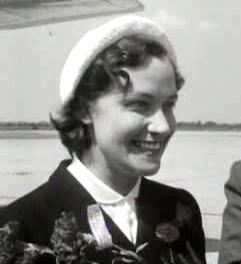
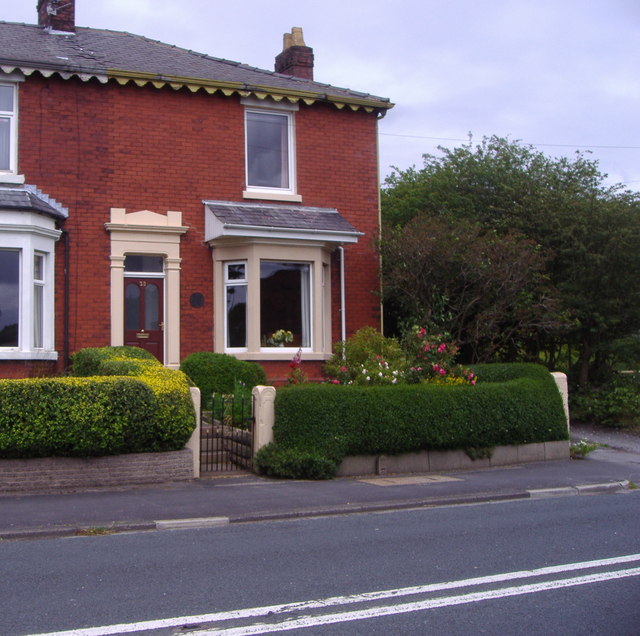
The photo at the top shows Ferrier arriving at Schiphol in 1951 for the Holland Festival. It was a big occasion. She was a big star and might have been even bigger. The smaller photo shows the house where she was born, in Preston.  I could do a clip of her singing Der Abschied, because it's beautiful, but it's so obvious. Besides, everyone knows that. Instead, I'll do her singing Blow the Wind Southerly. There's a story about a very elderly gentleman who couldn't sleep unless he heard this played before he went to bed. A lullaby for adults who can appreciate its deeper sentiments.

"They told me last night there were ships in the offing and I hurried down to the deep rolling sea. But my eye could not see it, wherever might be it, the barque that is bearing my lover to me...... Is it not sweet to hear the breeze singing, as lightly it comes o'er the deep rolling sea? But sweeter and clearer by far 'tis when bringing the barque of my true love in safety to me."

Saturday, 21 April 2012

Der Freischütz - archaeology of filmed opera

So much more to filming opera than point and shoot! Back in the 1960's Hamburg Opera linked up with German TV to film 13 operas. Film is the next frontier in opera, now that technology reaches a whole new market for audiences who'd never be able to attend live. If a good production is filmed badly it ruins the whole experience. Think of the disastrously badly filmed Glyndebourne The Fairy Queen, almost impossible to watch. Film is a whole new discipline. Film directors need to know music as well as film, and need to understand how a production expresses an opera. So, to the archaeology of filmed opera, back in the 1960's when television was creative cutting edge. People watched TV then so there was money in opera TV and broadcasters put their best people on the job. 

One of the Hamburg Opera/NDR opera films was Weber's Der Freischütz.  This production, directed by Gyula Trebitsch, and filmed by Joachim Hess, was unabashedly "period", leather trousers and feathered hats, bodices and aprons. For gents and ladies in that order, not the other way round.  Even now central Europeans join hunting clubs and forage in the forest. In 1968, the world of this Der Freischütz.was living memory, not archaic kitsch. Traditional setting, but by no means dumbed down or brainless. It's not costumes that make a good production but the ideas behind them. 

The film opens with a shot of a print of a 19th century theatre curtain. Cut out figures move across the screen as the credits roll. The Overture is a transition from artifice to "reality" and quite magical in its own way. The villagers are partying but this isn't twee prettiness. The Thirty Years War was traumatic. Millions died. Survival depended on luck. That's why Max is susceptible to Kaspar's magic, and why Agathe's so frightened of omens. Max knows that any moment, his luck may turn, so he's preapared to gamble with the devil.  That this is a hunting community isn't decor, either. These people have no qualms about killing to live. A generation of war also means that peasants who once might have been farmers now know how to use guns. The opera gets underway with the chorus "Victoria!Victoria!". The peasants are cheering Killian, a peasant who presumably learned to shoot in war, while Max was just a forester. No wonder Max is bothered. Significantly, the opera ends when Ottakar and the Hermit, symbols of authority, decide that traditions must change.  Reason  must rule, not superstition. Audiences in Weber's time would have understood that this was more than pastoral fantasy. They lived in an era when feudal was finally giving way.

So don't mistake the peasant costumes for placid or peaceful. Der Freischütz is not glossy, serene or bucolic. That's why Weber writes such vigour into his music. Peasant life was tough, so peasant dancers were as fit as athletes. Their dances are energetic, even stolid, as the music makes clear. Weber's describing a crude life force that comes from living - not necesarily in harmony - with nature. Carlos Kleiber's recording with the Staatskapelle Dresden in 1973 captures the true spirit so well that you can't say you know the opera til you've heard Kleiber

In the film, the Hamburg Philharmonic State Orchestra is conducted by Leopold Ludwig, who is pretty good at atmospheric drama. Since the Wolf's Glen scene is so vividly filmed, there's a good match between music and visuals. These films were based on regular stage productions, so reflect what Hamburg Opera was doing in 1968, so performances are varied, pretty much like in any functioning opera house.  Standards were high, though, because in Germany they take opera, and Der Freischütz seriously. Voices from the past, like Gottlob Frick (Kaspar), Tom Krause, Ernst Kozub.  Watch for Franz Grundheber, later a great Wozzeck for Abbado, in the tiny role of Kilian, which he makes big.  Above all, watch for and listenn to Edith Mathis, then aged 30, as Ännchen. Arlene Saunders sings beautifully but Mathis lights up the screen completely and steals the show. You can almost hear what Saunders is thinking. Mathis always sounded gorgeously fresh and youthful, even when she reached her 60's. Here she exudes sweetness laced with pert intelligence. Agathe panics, but Ännchen is the voice of strong common sense. This film has a cult following because it preserves Mathis  at the start of her career. Hear why below:


Friday, 20 April 2012

Der Freischütz, Colin Davis, Barbican

How I'd looked forward to hearing Colin Davis conduct Carl Maria von Weber's Der Freischütz at the Barbican, London. I love the opera passionately.  After last night's concert I listened again to Davis's 1993  recording, remembering it was quite good, though significantly it's one I rarely listen to. The absolute pinnacle is Carlos Kleiber against whom no-one else measures. So deliberately I blanked Kleiber out and listened to what Davis would show about the opera at this stage in his career. It's always invidious to compare recordings with live, and the Dresden Staatskapelle have Weber in their genes. But I wasn't expecting to hear Der Freischütz as polite English oratorio.

The Barbican audience applauded dutifully, because Sir Colin has earned his place as a national institution and shaped British music. He's the focus of a valedictory ten-concert series at the Barbican next year which will place him among the immortals. At his best, such as in last year's Prom Missa Solemnis, Davis can be brilliant, but not everyone should be expected to show brilliance in all things and at all times.

Part of the problem was that the spoken dialogue was excised in favour of spoken synopsis.  That's probably necessary for English audiences, especially those who've come to hear celebrity rather than the opera. But Weber's dialogue is almost as important to the piece as the orchestra and singing. The pungent repartee links intimately to the staccatos and darting rhythms in the music. Without dialogue, we're hearing the piece cut to shreds. Maybe that's not a problem since audiences are used to extracts these days, but it's an unhealthy way of listening.

Der Freischütz doesn't often get staged but is a classic because the drama is in the music. As the narrator (Malcolm Sinclair) said, the opera's set after the Thirty Years War, in a community that's known nothing but killing. While Davis's Dresden Overture had charm, which is valid, this time the Overture was so sedate it dragged. Tempi on their own mean little, but the lack of coherence was more worrying. The dances weren't charged with the vigourous energy with which they can be done, and the sudden flashes of woodwind didn't chill, like the spooks from the underworld.they represent.  Even the Wolf's Glen sounded like it had been paved over.

Similar decorum marked some of the singing. Simon O'Neill sang Max and Christine Brewer sang Agathe. Both pinched in tone, and tense, but O'Neill uses his voice effectively so it expresses character. Max is no hero, but a decent man trapped by superstitious tradition. Dramatically, O'Neill delivers. Brewer, though, sings Agathe as if she were a low level Isolde, minus the transcendant beauty. This Agathe doesn't have the vivid imagination that makes the character so charming, and her predicament so frightening.  Sally Mattthews's Ännchen has wit. She, and Lucy Hall singing the wreath song, brought much needed freshness and beauty.

Lars Woldt replaced Falk Struckmann at short notice but in some ways that was an advantage as he sang the role as it might have been in a more idiomatic performance. His brooding, menacing Kaspar suggests depths to the role which could be developed well elsewhere. He's barely 40 with a strong opera background. Remember the name, he's got potential. Gidon Saks was a darkly sexy Hermit, which again would be interesting in a thoughtful interpretation of this opera. Stephan Loges's experience enabled him to convincingly create the two very different parts of Ottokar and Zamiel. Martin Snell's Kuno had resonance. The choruses weren't tightly drilled, which was good because they sounded direct, like peasants should. The Huntsman's Chorus, however, could have used the energetic discipline of a march. On the other hand, that would have contradicted the overall flow of the performance. There might be more spark at Saturday's performance, but take it as it is, a memory of past glories. Which, in a sense, Der Freischütz might be. But in the opera, feudal superstitions are replaced by practical good sense.


Apparently this was being record for CD release, probably marketed to those who buy celebrity rather than music.

Thursday, 19 April 2012

BBC Proms 2012 - August, September


Part of the fun of the Proms is figuring out what trends prevail. Test your wits and knowledge of repertoire this year. This is part 2 of 2. For my introduction to the BBC Proms 2012 and the July highlights, please read HERE.

Lots of British music, of course, because the eyes and the ears of the world will be on London. A very British Bach Mass in B minor- Harry Bicket and the English Concert on 2/8. Several large scale youth orchestra concerts  during the Olympics period. One worth braving the crowds for will be the Bernstein Mass on 6th August with 10 - ten !- Welsh choirs and orchestras. Bernstein believed not so much in religious Mass as in mass display, so it should be sheer theatre. Cool down with Scandinavians on 9/8 - Sibelius, Grieg, Nørgård (recommended!) and Delius, an honorary Norwegian. Roderick Williams will sing Delius rare Cynara. Elgar's The Apostles makes another Proms appearance in less than 5 years. For once, not having Three Choirs at the same time means we need more Elgar in London. Jacques Imbrailo sings Jesus, which will make this a must. A Berlioz Requiem on 11/8 (Toby Spence). This isn't a religious trend as some of these composers weren't devout. Delius A Mass fof Life opens the Edinburgh Festival or it would otherwise have been an obvious choice for the Proms.

Schoenberg Gurrelieder on 12th August. The two parts of Gurrelieder differ, posing all kinds of interpretive possibilities. In many ways, it inhabits the world of Dvořák bursting out into glorious light. Not at all the stereotype image of Schoenberg. Christine Schäfer does Pierrot Lunaire on 27/8 with Martyn Brabbins. More Schoenberg before he "became scary". Ralph Vaughan Williams triple bill (Manze, BBC Scottish Symphony Orchestra) and a John Cage Celebration. Then BCMG does modern British composers - Knussen, Goehr and Simon Bainbridge.(more Goehr and Knussen on 25/8).

Next year will be Britten year, but this summer,Edward Gardner holds up the Britten flag with Peter Grimes. Why the BBC notes connect it to the Second World War, I don't know, as Britten didn't like war and the mob behaviour it fosters. But still, if the performance is good, as it should be with this cast. John Adams Nixon in China on 5/9 conducted by Adams himself. Kathleen Kim is singing Madam Mao. She's fesity, and a star to watch out for. The new production of Mozart the Marriage of Figaro sold out completely at Glyndebourne ages ago, so don't miss its visit to the Proms on 28/8 with Robin Ticciati conducting the OAE. The Berliner Philharmoniker and Simon Rattle are back in two programmes, one built around Lutoslawski, the other an eclectic mix of Wagner, Ligeti, Debussy and Ravel. If this will be anything like Rattle's eclectic "Second Viennese School and after" mix in previous years, this will be the one to go to. Riccardo Chailly brings the Leipzig Gewandhaus orchestra back for two concerts, one of which is all-Mendelssohn and for me, a must. Since they are not concluding a long tour this time, we should hear them in top form. Bernard Haitink conducts the Vienna Philharmonic in Bruckner 9th and in Strauss and Hadyn on 7/9. With the Berliners, the Viennese and the Leipzigers, we hardly need any other orchestras, but the St Louis Symphony will be coming too.

BBC Proms 2012 announced - July

Like it or not, the BBC Proms 2012 will clash with the London Olympics.Nearly every city that's hosted the Olympics goes heavily into debt, but what do commissioning governments care? They last only a few years but taxpayers are saddled with costs, traffic chaos, security alerts, general hype etc etc long after the initial contracts are placed. Even the 300-year-old Three Choirs Festival has had to reschedule this year to avoid the Olympics. Everyone else just has to muddle through.

The BBC Proms 2012 are scheduling a series  by Daniel Barenboim and the West-Eastern Divan Orchestra, which is absolutely and totally admirable, for the West-Eastern Divan Orchestra stands for the ideals of peace and goodwill.  They're doing a Beethoven symphony cycle, which is also highly relevant. If there is any decency in this world, they should be listened to properly.. However it's a moot point whether there is decency and fair play in this world. The protests against the Israeli Philharmonic Orchestra backfired. No-one benefitted except those few who wanted to milk publicity for their own reasons. Not the subjects of the protest. So this year, security will be a nightmare. Will it overshadow the music? Or the understanding the West-Eastern Divan Orchestra is about? It's almost impossible to block protest at a place like the Royal Albert Hall, and morally dubious to do so in a democracy. Let's hope sanity prevails this year.

This year's First Night oif the Proms will be an all-English affair whch will be good for the tourists and international audience. Elgar, Delius, Tippett and Turnage. After My Fair Lady, Debussy Pélleas et Mélisande with John Eliot Gardiner. Excellent cast - Laurent Nouri, Phillip Addis, Karen Vour'ch. Alice Coote sings French Song and Karita Matila sings Strauss. This will be hot, and on TV. Handel Judas Maccabeus on 19th July with the best cast British Handelians can muster (Ainsley, Mead, Purves, Rice, Joshua), Laurence Cummings  conducting.

The Royal Opera House Berlioz Les Troyens comes to the Proms on 22nd July. Kaufmann, Brindley Sherrat and good support. Red Letter Day. A further chance to hear idiomatic Smetana and Dvořák on 25/7 with Jiří Bělohlávek who deserves serious resapect. He's one of the best in the world for this repertoire. Pierre Boulez is scheduled to conduct the West-Eastern Divan Orchetsra on 26/7 (Le marteau sans Maitre). It's a late night concert, and hopefully he'll be well again by then. The Barenboim West-Eastern Divan Orchestra Beethoiven cycle culminates in what should be an amazing Beethoven 9 - Rene Pape, Waltraud Meier, Peter Seiffert, Anna Samuil. Even though they don't get to sing until well into the symphony, Beethoven writes the theme into the music almost from the start "Alle Menschen werden Bruder". Let's hope people pay attention this year and pay respect. Some things are more important than publicity.

For more on the BBC Proms 2012 August and September, see HERE. . Always analytical here on this site, please keep coming back. Full details on the BBC Proms site HERE.

photo : Yuichi from Morioka

Wednesday, 18 April 2012

Wolfgang Rihm Jakob Lenz, ENO

When the ENO does really innovative work, it does so with style. Wolfgang Rihm's Jakob Lenz may have taken 34 years to reach London fully staged, but this ENO production made such a strong impression that it might be years before it will be forgotten. The Hampstead Theatre is a more claustrophobic performance space than the Young Vic or the Coliseum, which suits this opera well. Jakob Lenz was the Romantic poet who became insane. The stage is shrouded, as if in a mist, surrounded by realistic looking reeds. A reference to Wozzeck working in the reed beds, hallucinating mushrooms. The play on which Rihm's Jakob Lenz is based was written by Georg Büchner who wrote Woyzeck, the source of Alban Berg's opera.

Crazy, tangled images of reeds and water permeate this production  Jakob Lenz is trapped in his madness : most of the action takes place on a narrow island on a stage within the stage. Lenz (Andrew Shore) keeps falling off the edge into real water, sometimes completely submerged. Pastor Johan Oberlin (Jonathan Best) doesn't seem to notice,  but Lenz's friend Christoph Kaufmann (Richard Roberts) glances warily round the edges, careful not to lose his footing. It feels dangerous.

Lenz's psychosis connects to these waters.  He drags a young girl into the pond and drowns her. Or so he thinks. Reason blurs into unreality, just as land blurs into water in these reed beds. Lenz thinks the girl, whatever she may be, is raised from the dead because he prays. "Lenz", incidentally, means "spring"  which would not have been lost on poet, playwright or composer.  The girl (Lillie Forrester) isn't a real girl, but may be Lenz's idealized projection of himself. "Logical, Logical!" he repeats later, as if mantras will restore order. In that sense, he's not really so different to the pastor and to the church around which this village clings. An outline of the church looms over the proceedings, and its mirror image forms the platform on which Lenz moves.

Hyper-realistic staging for an opera where reality is so distorted that the narrative disintegrates. Lenz is obssessed by Friederike Brion (Suzy Cooper) who was interested in Goethe, not in Lenz, though in Lenz's mind she is a kind of muse. She's seen in powdered wig and face, like a ghostly wraith. An apparition as much as a character, and not a woman, as such. This very busy setting was wise, for Wolfgang Rihm's music is too intense to be easy listening. British audiences aren't used to Rihm yet and need picture postcard images from Caspar David Friedrich to distance themselves from the extreme emotion in this music.


But what music it is! Intensely atmospheric, almost pictorial. Oboes, bass clarinets, bassoon and cellos, moaning ominously like wind in the reeds, echoing the otherworldy choruses. A harpsichord screams in shrill desperation. Hollow wooden tapping, muted percussion like frantic  heartbeats. Sudden cries from small trumpet. Atrinmgs tapped and plucked, sounds half heard from beyond the auditorium. (Conductor : Alex Ingram). Hearing Rihm's Jakob Lenz audio only can drive you crazy, but that's the point. Lenz is an artist. Oberlin isn't, though he's nice. Must artists be driven like Lenz is? Imagination is powerful because it hints at more than it tells.

Performance of a lifetime from Andrew Shore as Jakob Lenz, with strong support from Jonathan Best, Richard Roberts and Suzy Cooper, plus good chorus and actors.  This isn't an opera or a production for those who think Rusalka should be a pretty fairy tale, but it's like a fairy tale in that it deals with situations that can't be easily explained. Georg Büchner's original play (1836) treats psychosis in a modern, non-judgemental way. Generations before, Jakob Lenz might have been burned as a male witch. Büchner tries instead to understand, and Rihm gets us inside Jakob Lenz's head and makes us feel what it might be like. Not comfortable, but most definitely important. Sam Brown is the director, Annemarie Woods the designer. For bringing Rihm's Jakob Lenz to London, the ENO deserves every accolade.

Please see my other posts on Wolfgang Rihm (and of course on Rusalka)  A more formal version of this, with full cast list, will appear soon in Opera Today.

 Photos copyright Stephen Cummiskey, courtesy ENO (details embedded)

Tuesday, 17 April 2012

Nikolaus Harnoncourt against the bland and safe

Nikolaus Harnoncourt doesn't do small talk, so the idea of him giving an interview to the normally vacuous BBC Radio 3 Music Matters seemed a contradiction. But a reader who listened wrote me, praising the interview highly. Listen because it's a real interview, where Harnoncourt is talking in depth and saying controversial things from the heart. He opens out because the interviewer, Suzy Klein, is intelligent.  When you have subjects like Harnoncourt, you don't do sloppy technique. Klein is good, and Harnoncourt responds. This is the sort of thing BBC Radio 3 should be doing if it's to maintain its credibilty.

Harnoncourt talks about his early life in a way that informs what he went on to do. He wanted to be a sculptor. Though he became a musician, that feeling for wood and organic shapes informed his musicianship. Later he would work with ancient instruments that had been locked away in monasteries since their suppression under Joseph II. Instruments have individual voices, and as a string player himself, Harnoncourt appreciated the sounds they "wanted to produce".  Harnoncourt's fascination with period instruments stems from this respect for individuality. He hates dogma. Historicism for its own sake is out, too. He prefers working with musicians who don't specialize. "They don't eat baroque food!" he says, meaning that no-one can truly replicate the baroque mindset. "I'm not a warden in a museum". The great works of history "have no time, the works of Leonardo da Vinci, of the Greek sculptors, of Mozart, they have no time,  they are always up to date and never old". What we learn from period practice is a more sensitive way of listening to instruments and to music.

Harnoncourt speaks about orchestral traditions. In the past, Viennese orchestras were dominated by Czech players. "It was said that only Czechs could play horns properly", he says, "and string players were Hungarian, who knew the gypsy style". In Harnoncourt's youth, American money and American orchestras swept in. "I hated the sound of American orchestras, " he says, where every note is polished and correct. Of George Szell, with whom he worked, he says "He should be happy that I didn't kill him...  there was not one minute of music making", Harnoncourt mimics Otto Klemperer's disdain""Szell? Look at him".  "But he was a kind of god and all the American orchestras tried to imitate him". "Americans are so afraid of making cracks on tones that they shorten their instruments so they will not crack. But that's not music, it is security. For me, security and beauty are not compatible, at all. When you seek beauty you have to go to the rim of catastrophe". If one of his musicians "cracks" because he risks everything to get beauty and fails, "then I thank him for the failure. If you seek security you should find another profession".

So safe, bland and international doesn't appeal to Harnoncourt. Concentus Musicus Wien began as a group of musicians playing for their own pleasure. They had to copy manuscripts by hand, and track down authentic instrumenst to experiment with, some of which were bought with private funds. This "band of renegades " as Suzy Klein describes them, were exploring new approaches to repertoire, informed by what a composer might have heard. " I tried to understand what a composer meant". True artists, like Casals, Busch and even Alfred Deller weren't afraid to make stylistic mistakes if they expressed the true spirit of the music. Erich Kleiber, "the real Kleiber" as Harnoncourt calls him, was so good that if "I had more real musicians like that I would not have left the orchestra". Harnoncourt dismisses the idea of conductors as superheroes ("Karajan had to fight politically to keep his 'von'")  and doesn't like the term Maestro, which he personally reserves for his hairdresser. For him, the composer is god.

Listen to the interview HERE til Sunday. It puts the controversy of HIP versus non-HIP into perspective.  Please also see another voice of common sense "Is Sir Colin more HIP than he lets on?"

Monday, 16 April 2012

Bernarda Fink Dvořák Wigmore Hall

The Wigmore Hall Dvořák series culminated in a concert by Bernarda Fink and Roger Vignoles. Fink is the foremost Dvořák mezzo around. Her recordings (some with Roger Vignoles) are benchmarks. So it was a surprise that the Wigmore Hall wasn't packed out. Maybe it was the Friday 13th factor, maybe it was Easter when people are out of London. Perhaps, ironically, it was the simple fact that Fink's Dvořák and Brahms are so well known; audiences forget how live performance is nothing like recording.  Fink is a natural recitalist (not all singers are, even if they're good). She smiled graciously and sang as if she was singing for a private gathering of friends. That's aplomb! Dvořák and Brahms songs aren't meant for flashy display. Bernarda Fink makes them feel personal, as natural as on- to-one conversation.

The recital was preceded by a talk by Professor Jan Smaczny. Talks and programme notes these days are often inept filler, but Smaczny is in an altogether different league. He's a genuine scholar with first hand, original knowledge. He speaks about Dvořák's manuscripts with the authority of someone who knows them well. "Dvořák used them like a diary, noting daily events in the margins". Many Czech specialists don't communicate well in English, so our perceptions are shaped by anglocentrism. Smaczny understands the context of Czech culture and Dvořák's part in the evolution of Czech music. We don't hear Smaczny often enough in London but should. This is the sort of quality the Wigmore Hall should embrace.

Dvořák's orchestral music is permeated by his affinity for song. As Smaczny says, songs "were pivotal to his developing musical style,  and frequently gave notice  of important changes of direction  in his expressive language". Thius it was good to hear Fink and Vignoles start with Dvořák's Six Songs From the Queen's Court Manuscript op 7 (1872). The texts were based on what were believed to be authentic medieval sources, but were modern invention. No matter, for they inspired awareness of Czech national identity. The poems are pastoral, like imitation folk song. Gentle, rolling piano creating a pleasant background to the sharp sibilants in the words. The warmth in Fink's voice complements the images of summer and youth, yet she catches the undertones of sorrow. Sensucht, one might say if the songs were German.
 
Yet in the last song, "Jahody" (Strawberries) Dvořák becomes much more adventurous. Fink captures the strange unresolved tension in  the first strophe. A girl has been gathering strawberries but a thorn has cut her foot and it's infected. She can't walk and her lover is angry. The piano part describes his impatience and the sound of his horse galloping off, taking the lovers to another place where they snatch a few moments of love, before dashing home again. With its sudden changes of pace and mood, the song is unsettling, almost a miniature opera. Fink expresses the urgency and fear that makes the song dramatic, without overdoing the "voices" or excess histrionics.

Brahms's Deutsche Volkslieder (publ 1894), are similarly art song masquerading as folk song, so Fink and Vignoles performed four songs, a sample of Brahms's two large collections of Volkslieder that aren't actually Volkslieder. Mature Brahms and early Dvořák don't really compare, but Fink and Vignoles followed these with five of the ten Dvořák Biblical Songs from op 99 (1894) (no.s 1, 2, 3, 8 and 10) to even the score. One instinctively thinks of Brahms's Vier ernste Gesänge (op 121 1897) which of course was written for low baritone, That's an idea, programme them together with different singers.

Bernarda Fink has made Dvořák Five Biblical Songs one of her trademarks. She sang it at the high profile Dvořák anniversary concert in Prague Castle in 1991. (read more here and listen to a clip). She's sung these songs many times at the Wigmore Hall, so if her performance on this occasion wasn't as compelling as usual, it evoked many good memories. 

It was good to hear how Slovenian contemporaries of Brahms and Dvořák approached song in their own language. From what we heard this evening, Benjmin Ipavec (1829-1908) and Anton Lajovic (1878-1960) wrote pleasant though undistinguished Biedermeyer. Lucilan Škerjanc (1900-1973) though, is more cosmopiltan and original. In "Evening Impression", Fink's sensitive phrasing and upward soaring lines created emotion and shape. The poem, by Igo Gruden is lovely, even in translation. Fink and Vignoles make a case for it as mainstream repertoire. To hear more, there's a recording by Fink and her brother Marcos ( a bass baritone), both native speakers, on Harmonia Mundi.

Fink and Vignoles performed another set of Brahms songs, including the wonderful Von ewiger Liebe (op 43/1 1894) before returning to Dvořák In Folk tone (op 73, 1886).  Perhaps Fink had been waiting for them, since her singing  now moved from attractive to truly inspired. These songs are sophisticated in the best sense. Moods change swiftly, hinting at submerged meaning, tantalizing the listener. Fink's keening legato gave the first song, a lullaby, a searching edge that made one realize it wasn't about a baby. The piano part, too, is unashamedly sensual.  In the second song, a girl is scything and sees her forner lover. The piano sounds bright and optimistic, but the vocal part breaks into strident staccato "Šuhaj, šuhaj z druhej strany". She taunts him fiercely, but inside her heart is breaking. Fink repeats the final line "už si v mojom srdci riastla"  wistfully, with great tenderness. Simiarly, the lilting piano in the third song sounds happy, but the firm deliberation in Fink's voice suggests that this steel has been forged through fire. More defiance still, in the final song where the piano prances like the swift pony. Fink's voice dances along too, but Dvořák uses the sharp Czech sibilants to suggest the "arrow" which cuts through the lover's heart.

More soon in Opera Today. 

Anna Nicole wins Olivier Awards

Opera isn't what the Olivier Awards are about. They're theatre-oriented,  not music-oriented, so some of their past choices have been odd.

This year the winner of two awards is the ROH Anna Nicole – best music, best director. That means "best opera of the year" which will raise a few eyebrows. The subject herself was tacky, selling her soul for fame, so the opera could hardly be anything else. After the initial shock value wore off, the opera grew on me, as it's actually quite sad, and the music in the second act isn't bad at all.  But best opera? Even considering only the new ones? If anyone should have won an award for this it should have been the ROH Legal Department, combing through every detail avoiding any kind of lawsuit. True to form, Anna Nicole's family tried to make a quick buck by complaining, but didn't get anywhere because everything was public domain, the truth crazier than any fiction. Staging Anna Nicole took genuine courage. If Anna Nicole is revived at the ROH, and Kaspar Holten says it will be one day, I'm going again.  Great fun, though not Immortal Art. Read More HERE and  other posts under the label Turnage)

The ENO wins the prize for Outstanding Achievement in opera for "the breadth and diversity of its artistic programme". The ENO was "nothing if not varied in its 2011 programme", which sounds more like a backhanded compliment than a true accolade. Better to have consistent good quality than mix in a few stinkers. Nobody gets it right all the time. OTOH, the ENO is adventurous. and that's a good thing.  It "takes risks, makes surprising choices, breaks new ground and stages spectacular events". Boring it's not. The one production singled out for an award was Amanda Holden's translation of Rameau's Castor and Pollux. I thought the production was pretty good, and very well conducted, (more here). The Oliviers would have had real credibility if they'd dared cite that for innovation.

Richard Jones wins Best Director for three things : the Royal Opera House Puccini Il Trittico, which really was remarkable (see my review HERE), one of the best productions all year, for his ROH Anna Nicole, ( and also for his Offenbach Tales of Hoffmann at the ENO.

Best Music award goes to Mark-Anthony Turnage for the ROH Anna Nicole and the Sadlers Wells Twice through the heart.

Bernarda Fink Dvořák Biblical Songs

Here's a treat! Bernarda Fink singing Dvořák Biblical Songs in the hgh profile Dvořák anniversary concert at Prague castle in 1991. This was a very big event indeed and was recorded for Czech TV. It's now avaliable from VAI music. Link here.  Fink still looks stylish 20 years later, but how sweet she looked then.  She studied in Prague before the Velvet Revolution. Native speakers admired her even then, so her Czech must be pretty good. Look who's conducting the Prague Philharmonic! Jiří Bělohlávek, the greatest Czech conductor of his generation, who brought so much Czech music to London, and new approaches to the repertoire. It was a disgrace how he was treated after the First Night of the Proms in 2011. So what if a few Londoners think they know Czech music better than he does? At least in Prague he gets the respect he's due.

My review of Bernarda Fink and Roger Vignoles performing Dvořák at the Wigmore Hall follows shortly.

Sunday, 15 April 2012

Catalani's Water Nymphs

Another reason we need to know Alfredo Catalani. This is The Dance of the Water Nymphs from  Catalani's opera Lorely (1890). Harps to lull you into romantic dreams, but almost immediately the strings rip it asunder Darting, nervous energy. These Lorelei are like fishes, beautiful but physically strong and agile. The music seems to flip and twist as a fish does when for  a moment it's glimpsed, leaping out of the water. Sounds of distant hunting horns : the Lorelei seem to listen and react. Alarm, urgency, and a melody which sounds deliberately sweet, as if the Lorelei are springing into job mode, combing their tresses to lure unwary men. A beautiful finale, shimmering like haze over water. This is conducted by Arturo Toscanini, who admired Catalani so much that he named his daughter Wally after Catalani's best known opera. Luckily she lived before the name took on its modern meaning.

Please see other posts on Catalani with useful links !!!! (click on label below)

Les rosbifs : English Exotics

"When mighty Roast Beef was the Englishman's food, It ennobled our brains and enriched our blood, Our soldiers were brave and our courtiers were good. Oh! the Roast Beef of old England and old English Roast Beef! "

"But since we have learnt from all-vapouring France to eat their ragouts as well as to dance,We're fed up with nothing but vain complaisance.  Oh! the Roast Beef of Old England, and old English Roast Beef!"

Springtime brings blossom and gambolling lambs. So what does one do? Eat the lambs. For anthropological research I ventured to a typical English Pub in the Oxfordshire countryside. Pretty garden, a horse tethered at the gate, two friendly black labradors at the back, who could smell the roast beef, lamb and chicken emanating from the kitchen.

The Unicorn is Victorian, a quarter mile from Anthony Worrall Thompson's Greyhound but the food is often just as good and the atmosphere more informal. So for the first time in decades, I ate an English Sunday Roast. It was infinitely better than the one in the photo, which was taken in 2005 elsewhere. The Unicorn's Yorkshire pudding almost covers the whole plate and is delicious - a meal in itself. I could get used to that. The Unicorn's vegetables are better too - fine beans, broccoli properly cooked al dente, not boiled to mush, and crisp, sweet carrots. My friend's dish was so good, he ate every atom. He's English, it's his native duty!

I haven't eaten English (or Welsh) lamb since around 1983 when I discovered, by sheer chance, the Walnut Tree in Abergavenny before it became a foodie magnet. Persian roasts, Lebanese dishes, kebabs, Mongol lamb stew but no Sunday Roast Lamb that I can remember. The Unicorn's special Sunday lunches are famous bercause they're so good and so generous. Home made mint sauce, too. But maybe English fare is too exotic for me. Still, the starter was excellent too - new asparagus from Worcester with ham hock, rocket and baby beans. And rosewater and raspberry cheesecake! Maybe I'm European at heart.