Saturday, 14 June 2014

Britten Owen Wingrave - made for TV


This year's Aldeburgh Music Festival begins with Benjamin Britten's Owen Wingrave, which Britten himself conducted in the same theatre in November 1970. For my review of the Aldeburgh production see HERE.  While the opera was in gestation, the revolutions of 1968 were raging. Paris was brought to a standstill by Danny The Red and student protestors. Russian tanks rolled in to crush the Prague Spring. Buddhist monks burned themselves alive on the streets of Saigon. The US military was bogged down in the unwinnable quagmire of the Vietnam War. Britten saw these images only in print. He didn't, as yet, own a TV set. Yet Owen Wingrave was planned for television and broadcast to the nation by the BBC. It says much about modern Britian that such investment in artistic vision would be permitted today.

The original BBC film of Owen Wingrave is worth watching for obvious historical reasons: the audio-only recording is a benchmark  The cast included most of the Britten specialists of the time, such as Benjamin Luxon, John Shirley-Quirk, Heather Harper, Janet Baker, and  Jennifer Vyvyan. Peter Pears sang Sir Philip Wingrave. Poor Pears, he's a brilliant singer, but he can't act, even when he's playing a stiff old man.

Concentrating on the audio alone, and using your imagination for the visuals is a good idea, because you can engage with what the music depicts. "Listen to the house!" the female singers repeat, their lines intertwining, as if a knot - or noose - were being drawn tight. For the house does speak - "creaks and rustles, groans and moans" (to quote Mrs Coyle). The oppressiveness is almost palpable.  "The "boom of the cannonade", created by percussion and low brass is so sinister that we could be hearing a thousand years of ghosts marching relentlessly towards death; Paramore is thoroughly haunted. Who is the ghost of the boy in the locked room? Is he the bully or the murdered boy, or is he the malevolent force that's been driving Wingraves for centuries?

At first, the original BBC film seems realistic in a conventional sense, traditional enough to please the most narrow-minded conservative. Late Victorian or Edwardian costumes, a period décor. Spencer Coyle's home is a horror of overstuffed furniture, all flat surfaces cluttered with knicknacks. Fans of Antiques Roadshow will swoon. But the opera starts in Paramore, where the portraits of Wingraves past glare down from the walls. But look carefully: the portraits are most definitely not "period" but hideous pastiche. Paint in thrown on in globs, faces distorted as if the Old Masters who painted them were prototype Francis Bacons.  Don't assume the paintwork is disintegrating : perhaps these portraits tell us more about their subjects than we dare know. "Listen to the House!"

As the music leads Owen towards Paramore, we see a series of drawings of the house, from different angles- hideously drawn like bad images off cheap paintings : weeds grow in cracks, the house is in decay. The interior with its wide staircase belongs in a horror movie. When the music depicts fanfares, we see real flags, but made of roughly painted rags. Those who demand "historical realism" in opera stagings absolutely do not get the point. It's also relevant that Britten and Pears were fond of relatively modern art.

Although Britten didn't watch TV until fairly late in life, he watched a lot of films, so he knew very well how film might support abstract musical ideas. Indeed, composers wrote for film almost as soon as sound movies wewre made. Britten's war work included Night Mail. When Owen sings his soliloquy "At last, it's out"  he's seen alone in the park, while images of his family are transposed over him, as their voices intrude upon him. Cinematic technique adapted to music, and vice versa. The interplay between film technique and music is even more interesting in the scene "There was a boy" when the legend of the house is told. The narrator is  heard through an echo chamber -boys voices heard from a distance, and the sound of toy horns and bells. The boys are seen in sepia slow motion, as if in early film. An eerie effect, suggesting a time tunnel.

Owen is probably not much more than 18, between school and a military commission, and Kate's not much older. Indeed, a sub-theme of youth versus age runs through the opera, though it's not dominant. Owen and Kate's music, however, is far too sophisticated for teenagers.  Benjamin Luxon was only 34 when the film was made, but looks and sounds somewhat overblown. Those who insist that appearances matter more than singing just don't understand opera, or indeed art. My ideal Owen is Jacques Imbrailo, not because he looks young but because his voices glistens with purity and strength.

Colin Graham directed the staging, while Brian Large directed the film.  Stage directing and film directing are different disciplines with different perspectives. Very few directors can do both equally well. A good film director takes his cue from the stage director, and both take their cue from the music and the meaning. Large was only 32 when he made this film. He was to go on to become a pioneer in the art of filming opera. Although this film is very dated - it reeks of the 70's  - it's worth seeing because it shows how much more finesse there is today.

Friday, 13 June 2014

Help wanted - BBC

Details of a job at the BBC: Radio 3. Read more here. Anyone who doesn't know the specs shouldn't apply. Chances are, in any case, it's a headhunter deal. As it says in the ad, don't apply to the website but to the recruitment consultants. 

In any case, it's not so much the person as the political climate he or she will have to contend with. Will we get a corporate crawler? Much more likely than someone with flair or imagination. Roger Wright was hamstrung by forces greater than himself. If anything these pressures are even greater now. Good people can't work in environments that place bean counting and political correctness above creativity. The knives after Roger Wright were sharp enough to cut him down but not sharp enough to know how the business really works. Congratulations, "Friends" of BBC Radio 3. Worse may well happen.

Thursday, 12 June 2014

Century of Chinese Cinema BFI

Just started, a month-long series "A Century of Chinese Cinema, at the British Film Insitute. It is worth going to if you don't speak Chinese and haven't seen many Chinese films or know much about Chinese history or culture. Perhaps this is inevitable, but it really would have helped if the choices had been more characteristic, and the introduction more helpful. Most people don't know anything about China, or the role film played in modernizing the country and transforming society. Without context, it's impossible to genuinely understand Chinese cinema.  Watching kung fu movies is no qualification.  Tourists can learn words like "chop suey" but that doesn't mean they can appreciate the Classics

 Nearly the whole of the first section features one film, Spring in a Small Town (1948). It's inevitable that the BFI would need to leave out other equally iconic films of the era, but it's a start anyway. The Director was Fei Mu, 費穆 (1906-1951). It's poetic and very beautiful but part of its impact comes from its context. A young woman is caught in a sterile marriage with an ailing husband. Once, the heroine, Wei Wei and her husband were progressive students in the big city, full of dreams. Now he's slowly dying, from physical ,or spiritual causes, it's not clear. But they're now in his feudal mansion, partly destroyed by war. The walls around the town are ruins, too, but hark to a time when the town was a centre worth defending. Now Wei Wei, much impoverished, walks the old walls, unable to face her sterile present. Of course it's a story about lost romance, but the film became an icon because it expresses a concept of China itself.  It inspired the director Tian Zhuangzhuang (田壯壯) who also made The Blue Kite to revisit Spring in a Small Town in 2002. His version is more than a remake, for it's informed by what was to happen to China after Fei Mu died. Tian faithfully studied every document he could get, and worked together with Zhou Yuwen, who played Wei Wei in 1948.  There is also a film about the remaking of the film which is exceptionally poignant. The actress who played Wei Wei in 1948 speaks with the actress who played the part in 2002. Incredibly poignant and almost as important to film history as the films themselves.

The BFI season includes milestones like Labourer's Love (1922) the earliest existing full film and Dream of the Red Chamber (1927),  and Song at Midnight (1937). Labourer's Love, also known as the Romance of the Fruit Pedlar, looks charming but has a savagely potent subtext, lost on those who think primarily in western terms. Dream of the Red Chamber, based on a traditional saga, was the most ambitious film of its time, made by Law Man Wai, the father of Chinese cinema, whose influence on both Cantonese and Mandarin cinema was far reaching. Song at Midnight isn't simply a horror flick but has musical/political significance.  But what about the many other important films, actors and studios left out? There are numerous DVDs around, many with English subtitles, so it's not as if BFI couldn't have tried harder. Indeed Chinese film seasons are nothing new in the UK. Channel 4 and BFI used to screen them in the past.

In the second section, "The New China", there are two films from the Red Guard period, Red Detachment of Women and The East is Red. These reinforce the stereotypes many in the west have about Chinese people, but strictly speaking, the Red Guard period was an abomination, not the norm. Why not show The White Haired Girl, which explains a lot more about why people thought Communism was a new dawn? It's worth seeing An Unfinished Comedy, This Whole Life of Mine and Two Stage Sisters to appreciate how the creative drive in Chinese film didn't succumb altogther. Without this period, we wouldn't have the later generation of directors, like Zhang Yimou, or Chen Kaige.

Run Run Shaw, who died last year aged 107, transformed Chinese cinema by making big budget extravaganzas based on Chinese history and literature, and distributing them on a world scale. Without Shaw, no Golden Harvest, No Bruce Lee movies, and the whole later genre of historic fight flicks.  Luckily, BFI will be screening one Shaw film,  Love Eterne starring Ivy Ling Po, one of its greatest hits. This is based on an ancient tale of a girl who dresses as a man to study, but falls in love with a fellow student. It's a beautifully made film and a wonderful example of why Shaw Studios was so special. Rights have been sold to a new distributor who hopefully will reissue than in clean format with English subtitles, so that new generations of Chinese - and overseas Chinese who don't speak Chinese - can engage with their culture. Ling Po wasn't the only Shaw Brothers mega star, and certainly not the only megastar in Chinese film. But BFI barely scrapes the surface, missing giants like Lin Dai,  Grace Chang , Li Li-hua, Yam Kim Fai and the myriad stars who combined careers in Chinese opera and Chinese  film. In the west, such crossing of genres would be unthinkable. In Hong Kong it was perfectly natural, because the stars were so good. Non-Chinese film critics and audience might not appreciate the finer points of Chinese opera in its different forms, but ignoring that aspect of Chinese cinema neutralizes  much of the cultural importance.

Two absolutely superb Cantonese dramas. First,  Parents's Love (父母心, 1955) stars Ma Si-Tsang, probably the greatest Cantonese opera star of all. Here, he plays an opera singer down on his luck who ends up singing on the streets for a pittance. He wants his sons to succeed where he's failed This is one of the finest films ever made anywhere, I think, and one of my all-time favourites. I've never seen a copy with English subtitles, so grab the opportunity to see it, even though it probably won't convey the pithiness of the Cantonese dialect. It's utterly amazing, tracing the father's growing humiliation and fear as he realizes that the world is changing and he can't help his sons succeed. Ma Si-Tsang is such a good actor that every muscle in his face expresses feeling: when his voice as the opera singer cracks, it's overwhelmingly painful to watch. His eldest son is played by Lam Ka Sing, the mega opera star/movie star of the next generation.

In the Face of Demolition (危樓春曉1953) isn't quite in that stratosphere, althought it's a beautiful example of the social conscience message in nearly all Chinese movies, at least up til the 1970's. In the 50's people used to live in apartments without walls, subdivided into bedspaces for mutltiple occupants, a microcosm of society. The good guys live by the motto "All for one, one for all". The "respectable" teacher dreams of being a writer, but sinks in desperation to becoming a rent collector, the lowest of the low in this small world. This movie is much loved though there are many others which are even better, such as Father and Son 父與子(1953) and Parent's Love 寸草心 (1953), made in Hong Kong, but in Mandarin. The director was the iconic  Li Pingquan and the cast Fujianese who had fled the Communists.

The last section in the BFI Century of Chinese cinema features "Swordsmen, Gangsters and Ghosts". Fists of Fury and other Bruce Lee movies transformed Chinese cinema. For the first,time a Chinese beat up foreigners! In colonial times that was shocking indeed. People who have grown up since, or who never experienced such things just don't know.  I wonder if people even begin to appreciate Bruce Lee, who was a child star in the golden age of Cantonese film and immersed in its traditions. The BFI is also showing Wong Fei Hung : the Whip that smacks the Candle (1949) which I've written about HERE. This is even more interesting than it might seem, because it's a movie that morphed with numerous retellings and changes of director, over many years. This first film, though, made with the co-operation of Wong Fei Hung's people, is particularly good because it was made lovingly by a company that valued Cantonese cultural heritage. .

More on Chinese film (in English) than almost anywhere else. Please explore. Try Chinese Carmen : The Wild, Wild Rose   and Street Angel (1936) for starters

Wednesday, 11 June 2014

Richard Strauss Remembered - BBC classic


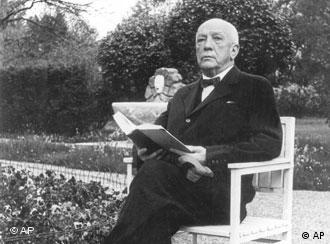
"Our future lies in art, especially in music. In times when spiritual goods are rarer than material ones, and egotism, envy and hatred govern the world, music will do much to re-establish love among mankind" - Richard Strauss. born 150 years ago today.

How the world has changed since Richard Strauss was born !  Through his music we might come to know the man he was and how he coped with the horrors of what happened around him, for better or worse. Today I have been watching Peter Adams's documentary Richard Strauss Remembered. It's a remarkable film. We see most of the extant film footage of the composer and also clips from films and stills of early performances - including Feuersnot.  There's also footage from Robert Wierne's 1926 silent Der Rosenkavalier (read more here)  Members of Strauss's immediate family came together with Alice, his secretary, daughter-in-law and devoted champion. They are seen in Strauss's home in the Bavarian Alps, decorated with elk and deer horns, preserved as it was in his time. It must have been quite an occasion. The musical clips are archive classics, and the script is well written.  As the film ends, we see Strauss in his garden, and hear Kirsten Flagstad sing Im Abendrot as the camera pans on the mountains Strauss loved so dearly.

This film was made for the BBC in 1984. It's a wonderful example of the high-quality work the BBC produced in those days, when the government supported the pursuit of excellence.  Hopefully, the BBC will be able to release it again this anniversary year as a public service. The copy I watched has serious sound problems. Richard Strauss remembered is an exceptional  film because it touches on the value of the arts in difficult times, and on personal integrity. On the other hand, maybe the film is too dangerous given present political pressures.  Goebbels couldn't shut Strauss down, so let's hope "egotism, envy and hatred" don't do so now.

Harriet Harman's plans for arts funding

Harriet Harman, shadow Secretary for State for Culture, Media and Sport made a statement Monday on arts funding recommending drastic changes to the way the arts would be supported if she came into power. An arts minister doesn't need to like the arts but also should not be actively hostile. Read the consultation document  "Young People and the Arts" download here  for a sermon on the role of the arts in the education system.

Harman said recently that she "couldn't see in the (ROH) audience anyone who wasn't like myself: white, metropolitan and middle class".and that  she seldom sees people from her south London constituency at the BBC proms. "It doesn't have to be like that. But to change audiences, there has to be committed, focused intervention".  But that very kind of diktat bothers me.  Why shouldn't people do what they want ? It's not a crime, yet. Surely the arts, by their very nature, are individualistic. Taste cannot be imposed from the barrel of a political gun.

Indeed, the basic assumptions stink of chauvinism, since they're so firmly based on the idea of culture as something that has to be imposed from above onto primitive natives. Read my article "End the Missionary Position in Classical Music" HERE. The document reeks of the very elitism it claims to oppose.  There are many different forms of cultural expression and many different audiences. Anything imposed top down goes against the very nature of creativity. Arts organization will have have to spend more time covering their backs from punitive bureaucracy, diverting funds towards navel gazing, rather than getting on with what they're supposed to be doing.

Harman is using the arts to further an agenda which fundamentally isn't the fault of the arts.  The root of the problem lies in society, not in the arts. In countries like China, South Korea and Japan the arts are honoured because they are intangible assets..The arts cannot be valued in simple terms of mass appeal. They represent the ideals and dreams that drive civilization. At the root of anti-intellectual philistinism lies selfishness. Last week, a friend of mine was accosted on the train to Glyndebourne by someone who despised opera, saying it was "not for her". What does that prove ? Only that some people need to prove something to themselves.

Society is unequal. As long as there are people who feel excluded, there's something wrong with the system.  It's deeply worrying that the post Blair Left finds more mileage in playing on class divisions than on addressing the realities of class and race. Schoolchildren won't be culturally enfranchised until they are economically and socially given the wherewithal to do whatever they want to do with their lives. Why not address illiteracy, or deprivation,  or the many other reasons kids may never overcome their situation ?  What purpose will be achieved by putting pie charts in arts venues achieve? Nothing in real terms, except to whip up class resentment and win votes for unscrupulous MPs. .

Arts organizations will need to divert even more time and money to fulfill bean counting obligations. Most of them already have extensive outreach programmes and involve the community. Not just one offs like giving the homeless jobs in Dialogues des Carmélites, but wider activities like next year's Roundhouse Monteverdi. Schools are cash and time strapped too. Although the arts are part of basic education, schools are already under enough pressure teaching kids how to read, write and count.  When they get support for that, they can support arts activities. The Coalition didn't suddenly curb music education in schools. That's been gradually eroded for the last 30 or 40 years. Fix basic music education before all else. Forget silly gimmicks, like insisting that every child has to attend a concert or opera once a year. That would be counter productive. Young people rebel (thank goodness).  Force feeding would only reinforce the idea that the arts "are not for them". No-one benefits but the army of enforcers. However, a n education in basic human values gives people the ability to think for themselves, in their own time. There must be thousands of people who came to opera as they grew older and more mature. he arts are about choice : each person in his or her own way, in his or her own time. What's so threatening about that ?

So "serious" music is loved by a relatively small section of the community  People don't have to be "stakeholders" to value the arts. Classical music is a form of cultural heritage, which we are all part of, whatever our class or colour or interests. Not everyone needs to go to Covent Garden to prove they care who Mozart was. The important thing is that people value the idea of culture, as an ideal for which anyone can aim for. It does matter that kids from families who don't officially "do culture" should at least know that it's out there for them, if and when they want it.  A minority kid doesn't need to know Beethoven, but he or she does need to know that such people  matter, and that they can aspire too, should they wish to. A friend of mine, now an international scientist, was told at school he could work in a chemist shop. But his parents had ideals and let him he be whatever he wanted to be.

Cutting arts funding harms everyone (except bean counters) because it kills the very thing that makes the arts so valuable. If a product is good, it attracts customers. Adulterate quality, ruin the product.  Why should the disenfranchised pay attention if the so-called toffs themselves destroy the product ? If we don't value the arts for what they really represent, we might as well forget the whole exercise of believing in values at all.  Not everyone has special talents, and some must strive hard to achieve excellence.  That's why excellence is an elusive goal, reached by only the very few. Sure, it's "elite". But that kind of elitism excludes no-one who is prepared to appreciate how it's achieved. Unfortunately we live in a shallow culture where anyone can be an instant expert by misusing google, and genuine knowledge is resented. That's the kind of elitism excellence represents, and which we need. 

Political stereotypes in Britain have changed drastically since 1945. Pity that some folks still cling to cloth cap deference. Maybe the British are too hamstrung by perceived barriers ?  Maybe it's a wider problem. When I hear the Met announcers whisper like children I cringe. Opera isn't only for an elite, or for "grown ups". To put things in TV terms, why should "Downstairs"defer to "Upstairs" ?  That's the premise of The Marriage of Figaro and Don Giovanni. To some extent opera is constrained by those who actually want it to be backward-looking, and have a stake in keeping others out. But good music education (not just for kids) teaches people how to think and listen for themselves without carrying the baggage of false expectations. It's this baggage that stifles appreciation, not the art form itself.

Harriet Harman's proposals are flawed because they destroy the very ideas that make the arts - and education - worthwhile. The arts aren't a form of political football. Winning on points is stupid if the pitch itself is wrecked.  Read more here with- Patrick Wintour in the Guardian, Matthew Holehouse in the Telegraph, both political writers : hardly a peek from arts writers who ought to be concerned.  Another article in the Guardian here. The second write reveals rather a lot about her priorities. .

photo : Lewis Clark

Tuesday, 10 June 2014

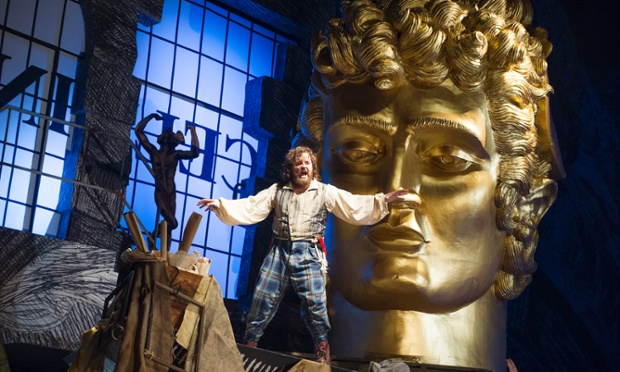
Offenbach Vert-Vert : Garsington Opera at Wormsley


"Monty Python meets the Belles of St Trinians? Sacré bleu !"Jacques Offenbach's Vert-Vert at Garsington Opera at Wormsley  features a girl’s school in collective mourning for a dead parrot".

"The plot, suitably Pythonesque given the dead parrot, is more or less impossible to précis. Suffice it to say we are in a girls convent school in mourning for its dead parrot, Vert-Vert. Cue general lamentations. The girls choose an innocent young man, Valentin, as a substitute parrot....."Rather like a demented Brian Rix farce, mayhem ensues. All is happily resolved in the rousing final chorus (“A slurp of wine”) but in between there are some notably tender and affecting moments. This may be comic but it is comedy with a heart."

Read more HERE in Opera Today reviewed by Douglas Cooksey

"The production - a fine demonstration of ‘more is less’ but nonetheless with several coups de théâtre as when the back of the stage opens wide and the school/chateau is wheeled to the open space beyond with Garsington’s woods as a backdrop or another occasion when the rear of the stage opens to admit the barge named Hortense which bears Valentin away - was an object lesson in pointful economy. .......Most importantly - and this is probably why the genre has never really caught on in Britain - in David Parry we had a conductor who, like Beecham, has the idiom at his fingertips, exuding panache, élan and élegance in equal measure (only French words will do). Beecham once talked of combining the maximum delicacy with the maximum virility, a comment which might well have applied to the Garsington orchestra on this occasion with its polished strings, an excellent first clarinet (Peter Sparks) in his several solos and a notably secure horn section. The score absolutely fizzed along.

Sunday, 8 June 2014

CRINGE worst orchestra EVER

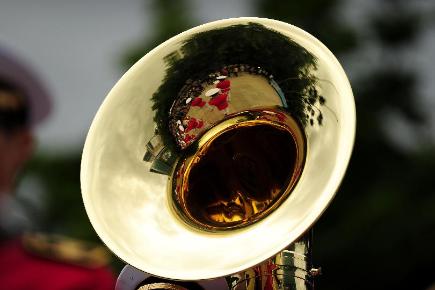
Ear wincingly awful ! Brought tears to my eyes ! Strauss Also sprach Zarathustra . But someone's stuffed things into the brass, who emit horrendous wails.  OTOH, the kids were trying, and the parenst must have been rolling with agony (and laughter). This is what you call, "learning by mistakes". Click HERE to hear the world's worst Strauss performance ever !!!

Saturday, 7 June 2014

Sajid Javid's Big Statement

Sajid Javid MP has made his first public statement since becoming Secretary of State for Culture, Media and Sports. Even before he started, Javid was attacked in terms that bordered on racist. No  party has a monopoly on virtue. In any case, traditional political stereotypes have been toast for forty years. So it's important to read what Javid actually says, as opposed to what others think he says. The most detailed verbatim report is HERE.  Perhaps it says much about the level of arts coverage in this country that the best analysis comes from a political correspondent, not an arts luvvie. Better a Minister for Culture who is honest than one who pretends to be artsy.

"For a bus driver's son, the idea of popping along to the Donmar Warehouse – or even the Bristol Old Vic – to take in a cutting-edge new production was simply not on the agenda. It wasn't what people like me, people from my background did," said Javid, who has elaborated on his thinking in an interview with Mark Lawson for the Guardian. "As a youngster, the closest I ever came to the creative industries was when the careers adviser at Downend comprehensive told me I should work in television – repairing them at Radio Rentals." 

"And while 14% of the UK's population is non-white, BME applicants were awarded just 5.5% of Grants for the Arts awards last year. Why is this? Are BME people simply less artistic, less talented? Of course not." Javid said this mattered because culture was more than a privilege: "If you are not engaged with our cultural life, you're not engaged with our national life. Too many Britons are culturally disenfranchised."

It would be wrong, I think, to cut funding from classical music to fund, say, grime or hiphop, just to be politically correct. Some genres thrive because they're alternative, and free of government interference.  Similarly, it's a mistake to dumb down classical music to make it somehow more accessible. Dumbing down implies that the audiences being targetted are inferior, incapable of being civilized.  Read my article "End the Missionary Position in Classical Music"

The root of the problem lies in society, not in the arts. In countries like China, South Korea and Japan the arts are honoured because they are intangible assets.. In ancient China, peasants might not be able to read, but they knew that the pursuit of knowledge was worthwhile. The arts cannot be valued in simple terms of mass appeal. They represent the ideals and dreams that drive civilization. Of course terrible things happen, even in civilized societies. A society that derides culture descends into barbarism. Goebbels (who invented modern mass media) supposedly said, "When I hear the word Kultur, I reach for my gun".

Unfortunately we do live in a world where people are judged by the colour of their skin and by how much money they have to spend. It's hard enough to break past barriers like that without having to deal with white middle class assumptions of superiority. All people have the potential to make something of their lives whichever way they want to. There's no reason why ethnic minorities or people without money (not necessarily the same thing) shouldn't listen to classical music. But neither should they "have" to.  Everyone in Britain is part of a wider artistic culture, since the western classical music tradition reaches the world over. In hard-headed business terms. supporting that tradition is good for Britain, and for Britons whoever they are.

The Gay Shoe Clerk


Pretty racy for 1903 !

Friday, 6 June 2014

ENO Benvenuto Cellini - no groupthink !


Berlioz Benvenuto Cellini at the ENO reviewed by Mark Berry in Opera Today (read the whole piece here)

"First, a sigh of relief: in almost every respect, this new ENO staging of Benvenuto Cellini marks a significant improvement upon Terry Gilliam’s ‘Springtime for Hitler’ Damnation of Faust. If that sounds like faint praise, for beating a ‘Holocaust as entertainment’ travesty is perhaps setting the bar unreasonably low, then such is not entirely the intention. Gilliam’s Cellini has its virtues, though for me they are considerably fewer than they seemed to be for the audience at large. It is far from unreasonable to depict anarchy and ribaldry in the Carnival, and indeed during the ‘carnival’ overture — though Gilliam’s reported remark that ten minutes of music are ‘too long for the audience to sit through waiting for the show to begin’ are unworthy of anyone working in opera. There is nothing wrong in principle with ‘staging’ an overture, but the reason should be better than that; if the results are a little over the top, they are certainly superior to the justification."

Thursday, 5 June 2014

Rafael Frühbeck de Burgos, Mahler Symphony no 1

Rafael Frühbeck de Burgos is to retire, with immediate effect. "After meeting with my doctors I have come to the following conclusion: I have to recognize publicly that I have cancer and that in this state of health and with deep sorrow I am not able to conduct at my standards and the moment to quit professional matters has come.” What a dignified and honest statement. That is the measure of a man, I think. I'm greatly moved.

Although Frühbeck de Burgos was a regular fixture in London in the late 60's early 70's, in later years his appearances here were relatively rare. I came to "know" him from his recordings with the "New Philharmonia" as it was called then. His recording of Die Meistersinger von Nürnberg (Deutsche Oper Berlin, 1995) is another milestone. Wolfgang Brendel's Hans Sachs is uncommonly wise and warm - a lot like I imagine the conductor himself is. Frühbeck de Burgos didn't record Mahler, but his way with the composer was highly regarded. He was awarded the Gold Medal of the International Gustav Mahler Society in 1996, when such things meant a lot. So when he returned to London after a long hiatus to conduct Mahler Symphony no 1, my friends and I were there.

In this symphony Mahler sets out his calling card, so to speak, so the way a conductor approaches it shows how deeply he's absorbed the composer's idiom. There are brash, vulgar Mahler 1's, perfectly valid in some ways, if you think of Mahler as a wild young man punching his way Titan-like into the world.  Then there are Mahler 1's conducted like Frühbeck de Burgos, where you feel you're hearing  a wise older man looking back fondly on a tempestuous young man's audacious dreams, knowing how the composer will grow and mature.

"This performance placed the First Symphony firmly in the context of Mahler’s early influences", I wrote then. "The imagery of dark, nocturnal forests is central to Germanic folklore, and to the sensibility of the Romantic period. It’s natural, then, that Mahler, so aware of the position of music in connection with other arts, would choose to start the first movement with what are effectively “forest murmurs”, evoking panoply of images pregnant with meaning for his time. Indeed, Siegfried was a kind of “Titan” individual who, like Mahler, had to make his own way in the world. Tentatively, the clarinet and flute break through the murmurs: the clarinet’s kuckuck a direct reference to the cuckoo heralding Spring who will appear in other songs and symphonies. The music then wells up to an unequivocally lyrical transposition of Ging heut’ Morgen übers Feld. Frühbeck de Burgos beamed with happiness, for this is exhilaratingly happy music, especially when separate from the other, darker songs in the cycle. It is, after all, about an idealised “Schöne Welt”. At the crescendo, the whole orchestra seems to explode with enthusiasm, horns and big brass in full fanfare, but Frühbeck de Burgos keeps the textures clear and distinct. It is exciting because it is so breathtakingly pure."
 
" In the second movement, the references to Ländler and folk dance are emphasized. Frühbeck de Burgos had the orchestra play the swaying, swaggering theme with panache, the lovely clarinet embellishments played with instruments held high. The heady, swirling figures in the theme later used in the Second Symphony and Des Antonius von Padua Fischpredigt came across confidently, for this conductor understands Mahler’s quirky sense of humour, which is never far from the surface. It’s not simply that this conductor’s personal geniality brings out the humour: Mahler’s sense of the ludicrous is far more deeply ingrained in his work than is often appreciated. Hence the “funeral march” in the third movement, inspired by a picture in which animals escort a hunter in his cortège This image frightened the composer when he was a child, for it addresses the idea of transience, a world overturned, and a reversal of order. It’s a theme later to be explored in the Dionysian deconstruction in the Third Symphony. In the First Symphony, though, it’s still relatively undeveloped. A well modulated roll of the massed kettledrums announces a colder mood. The slow march here was supported by a surprisingly gentle clash of cymbals, whose reverberations seemed to float on, highlighted by two bursts of sound from the double basses, a simple but telling detail. Then the orchestra reignites in full crescendo. In contrast with the rounded, warm lyricism that had gone before, the “inferno” sequence was wildly angular, trombones, trumpets and tuba in full fanfare. Yet as the conductor raised his hand, in an instant the powerful surge subsided into a recapitulation of the balmier “summer” theme.

"Frühbeck de Burgos uses volume to accentuate the colours and contrasts in the score: it works well because this orchestra is so good they respond immediately, as one. There’s no room for muddy playing in this approach. Thus the final movement really was Stürmisch bewegt, a tsunami of sound relentlessly, powerfully surging forward. It was both beautiful and terrifying at the same time. Yet at no point did the individual strands get lost in the tumult. Highly disciplined and accurate musicianship kept the colours clear and vibrant. Amazingly, the horns sounded almost like bells tolling, the bigger brass providing a deeper undercurrent. Sudden bursts of colour, such as from the flute and clarinet, lit up the curtain of sound created by the rumbling roll of percussion and the extremely well balanced strings. And so this symphony ended in a truly jubilant mood. Just as there were quotes from Lieder to provide subconscious commentary, the quotes now were from Handel “King of Kings, Lord of Lords, and he shall reign forever and ever”. It is, unmistakably, a triumphant ending, bursting with hope, life and vitality. Frühbeck de Burgos has the horns stand up to play in a splendidly theatrical gesture, which fits the exuberant spirit of this music. A complete Mahler cycle tracing the composer’s development, symphony to symphony, from this conductor and an orchestra of this standard would be a wonder to behold."

Garsington Opera's 25th Anniversary : past unites with future


Garsington Opera's 25th anniversary season starts Friday - some seats still available,. But there's a lot more to the season than the three operas on offer. Douglas Boyd, Artistic Director, speaks about this year's programme and about thrilling new developments that could launch Garsington Opera into the next 25 years at the forefront of British country house opera. Read the interview HERE IN Opera Today for more.  

 The late Leonard Ingrams founded Garsington Opera in 1989 in his own home, Garsington Manor. In 2011, the festival moved to Wormsley Park, Mark Getty's estate in the Chiltern Hills. The larger and even more spectacular setting has great potential. The award winning pavilion is now permanent, and its backstage area has been expanded. Garsington Opera's own orchesstra will continue to produce chamber-scale specialist work - Garsington Opera is the foremost house for Rossini rarities  in the UK - but the facilities now cater fro larger scale orchestras and a wider repertoire.

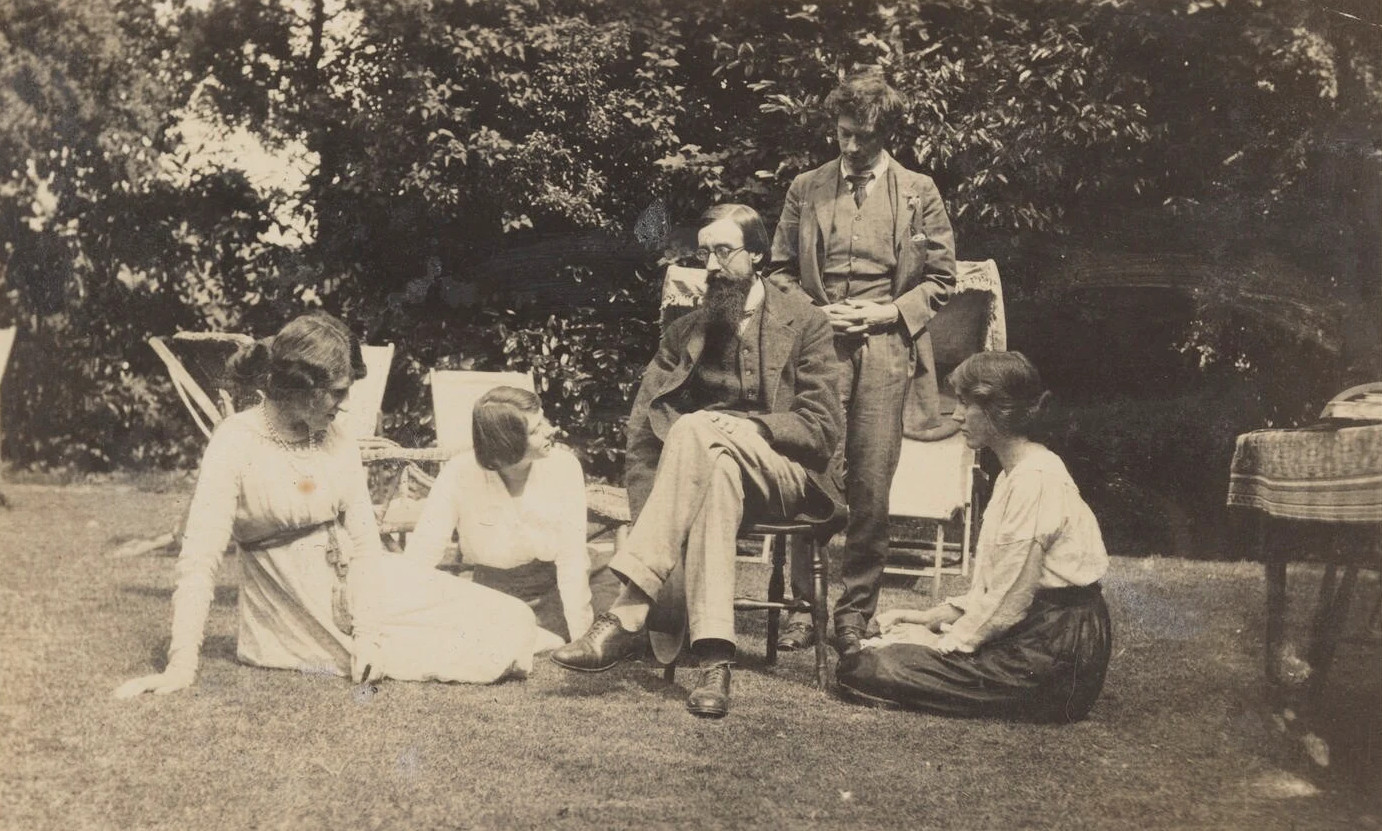
Furthermore, Garsington Opera will be able to create a new niche through which opera, chamber and orchestral music can be heard together with literature and discussions on broader issues. In 1915, Lady Ottoline Morell bought Garsington Manor as a retreat from her estate at Morrell Park in Oxford. Her salon attracted the more adventurous artistic minds of her era - she knew TS Eliot, Virginia Woolf, Bertrand Russell and many others.  At right a photo showing her on the lawn at Garsington with Aldous Huxley, Lytton Strachey, Duncan Grant and Vanessa Bell. Siegfried Sassoon, the war poet, stayed at Garsington Manor while recuperating from the Somme.

This year, Garsington Opera is holding a weekend "Peace in our time?" (note the question mark). Discussions, concert performances, chamber music, masterclasses, cricket matches and poetry readings. By remarkable coincidence, two previously unpublished poems by Siegfried Sassoon will be read in public for the first time. One poem, "Atrocities", was suppressed during war time, but the other is an ode to Beethoven: the composer who perhaps more than others deals with ideas of oppression, war, resistance and hope through brotherhood. Celebrated in a poem by Siegfried Sassoon, who knew war and injustice, and whose poetry stimulated a whole new artistic aesthetic. (Ivor Gurney lived in High Wycombe down the road from Wormsley, and Wilfred Owen lived near Henley-on-Thames)  Perfect dovetail : Garsington Opera's past and its future.

photo of the Garsington Opera Pavilion at Wormlsey by Christopher Jonas

Wednesday, 4 June 2014

Tiananmen Square massacres 25 years on


Twenty five years ago today, the protests at Tiananmen square in Beijing were crushed. The protests seemed to suggest a new era, like the May 4th movement in 1919 which was a watershed in Chinese history (leading among other things to the foundation of the Communist party). So it was traumatic when the protests were ended. Everyone remembers what they were doing when the news came through, also what others were saying and doing. François Bisson was there, in Beijing, right in the heart of the action. He made this film using footage he and a cameramen he knew shot at the time. It's very direct, first person, watch it and "be there" again.

Has anything changed? Yes, a great deal. Although the Party and Army still control the government and the media (my site is banned in China), things are infinitely better. The "Capitalist Roaders" the Red Guards used to rail against have won, sort of. Throughout history, change has happened when ordinary people have opportunities to better themselves. So much for Marxist theory. To some extent it's fortunate that strong central economic control persists, because the Chinese banking system didn't collapse when disaster struck everywhere else. At the top, three powerful and idealistic women bankers who don't believe in Gordon Gecko selfishness. But an economy that size, growing at that rate... Nothing is easy or simple in a nation that size.

But may June 4th 1989 NEVER be forgotten! The subject is still taboo. A whole generation has grown up, hardly knowing what happened. All the more reason that we who can should remember this day and what it means. Twenty-five years ago, my brother was enraged when my elderly father did not condemn the young soldiers who killed the students.  Father was right. From the perspective of country boys from remote provinces, joining the army was an escape from extreme hardship. They couldn't comprehend why educated city folks would reject the regime. So the way forward is not hate but reform, which cannot take place without remembrance. Twenty-five years ago, my little son wore a black armband to his English infant school. No-one knew what it meant. The teachers must have thought I'd indoctrinated the kid. But my son has grown up with a social conscience and good values. I'm so proud of him.

Monday, 2 June 2014

Rattle conducts Poulenc Dialogues des Carmélites, Royal Opera House

Claire Seymour's review of Poulenc, Dialogues des Carmélites, at the Royal Opera House. London. Read the whole piece HERE in Opera Today.

"A black bare stage heaving with a rebellious revolutionary throng; they stare with still hostility directly at the audience, stark light streaming from above. A scene from Boublil’s and Schönberg’s Les Misérables? No. The opening moments of Robert Carsen’s much-acclaimed production of Poulenc’s opera of courage, cruelty and redemption."


"Rattle clearly knows and loves this score: the brass play with purity and restraint in the chorale-like passages, and Rattle creates an iridescent sound-world in which glistening harps ripple and luscious strings surge in rapture, coloured by silky woodwind slithers, but one which is also ominously punctuated by shuddering, jagged rhythmic bursts of terror and brutality. The percussive slashes of the final march to the scaffold reveal the full unleashed force of the Royal Opera House Orchestra. Yet, despite Rattle’s care and attention - and Carsen’s imaginative faithfulness to the composer’s reputed preference for stagings which adopt a monastic austerity - there is no getting away from the fact that the score is dominated by an ever-repeating two-bar progression, in various harmonic inversions and timbral colourings, an infinite chain which becomes increasingly more wearisome and which makes it difficult to establish and sustain any driving musico-dramatic direction. Typical of the nature of Poulenc’s idiom is the terrifyingly moving final scene, which is underpinned by a rocking minor third; it is the raw rip of the slicing guillotine which provides the drama, rather than any harmonic conflict."

My piece on Olivier Py's 2013  production from Paris with Pétibon, Piau,, Koch, Gens, Lehtipuu etc is HERE


photos: Stephen Cummiskey 2014 courtesy Royal Opera House

Sunday, 1 June 2014

Poulenc Dialogues des Carmélites


Francis Poulenc Dialogues des Carmélites at the Royal Opera House. Review HERE, but first a consideration of interpretation. Interpretation is  paramount to assessing any production. Criticism often latches onto things like sets and costumes because these are easy to isolate. But they're absolutely secondary to interpretation. Dialogues des Carmélites is interesting because it's austere; its meaning and methods not easy to penetrate.

The Carmelites take vows of silence, they don't fritter their lives away on frivolity. That's why Blanche chooses such a strict order. She lives in times of danger, when violence can overwhelm even the rich and protected.  Her mother was killed in shocking circumstances. Neurosis is implicit in her music which wavers tremulously up and down the scale. "C'est physiquement que je n'en puis supporter le bruit, l'agitation". In a convent, everyone wears the same uniform, but you can't escape into anonymity. Hence Poulenc defines the main characters through their music and their personalities.

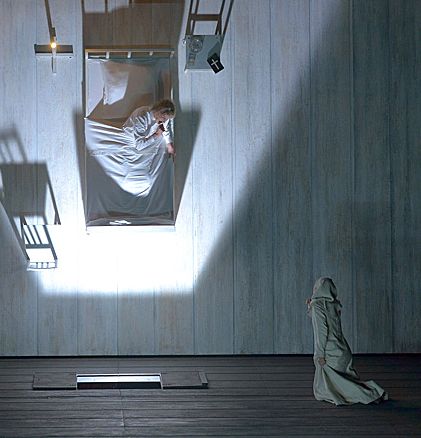
Robert Carsen's Dialogues des Carmelites at the ROH was first seen nearly 20 years ago.  Last in December 2013, Olivier Py created a superb but different  approach at the Théâtre des Champs-Elysées.  Py's style is colourful, and often humorous but it brings out the  beauty in the opera. When Blanche is accepted as a novice, Patricia Pétibon is transfigured, lit with silvery light. Dialogues des Carmelites, because it unfolds as a series of disconnected tableaux, is like the Stations of the Cross. This structure is significant, for Poulenc is connecting the nun's journey to the guillotine to Christ's journey to the cross. He further emphasizes the non-linear progression by writing expressive interludes which are as much part of the narrative as the text. Woodwinds sing, bells toll, and a "window" opens above the stage, the outline of trees, also lit in silver. Religious paintings often showed the Infant Jesus with a tree in the background, which will someday become his cross. When Madame de Croissy lies dying, Rosalind Plowright is shown in a bed hanging from the wall, so we can hear her voice project into the auditorium. It's also an image of Christ on the Cross. The Philharmonia Orchestra, conducted by Jérémie Rhorer, play savage, stabbing dissonances. The dying woman thinks God has forsaken her, her perception as distorted as the perspective of her bed on the wall.

Py's use of delicate, subtle colours emphasizes spiritual purity, Sister Constance (Sandrine Piau, one of the "whitest" voices around) positively glows. At this point, Blanche can't understand the miracle of simplicity. The singing in this production is exceptional. This cast includes the finest French repertoire specialists around : Pétibon, Piau, Véronique Gens (Madam Lidoine), Sophie Koch (Mère Marie de l'Incarnation). [Indeed, the interaction between the singers is electric - the sisters "feel" like sisters, Pétibon and Piau in particular. The finest singing around at the moment, could hardly be bettered].  The male voices are just as good. They are lustrous. Topi Lehtipuu (the Chevalier de La Force) sings forcefully, but with refinement and with lustre, suggesting that Blanche will find similar inner strength when she faces her destiny.

As violence closes in, Poulenc's music takes on richer dignity. Pétibon is seen with her hair shorn, but defiantly ginger, while a chandelier glows with rich, golden light. The nuns are condemned to death. Dark, glowering chords in the music, strange angular lights grow maze-like from the floor of the stage. Brassy trumpets, pounding percussion. Yet the visual image is that of a stylized religious play, such as children might enact. At the moment of their death, the nuns are restored to innocence. "Salve Regina", they sing, lined across the stage. As each is killed, there's a thud and a singer leaves the stage. Can something as gruesome as the guillotine be shown with such beauty?  Yes, for Blanche and her sisters have found a greater truth, which those without their faith cannot comprehend. Blanche is seen, arms spread wide like Christ on the cross. Her face is beatific, as she sways in a circle against a backdrop of stars.


photos : Georges Bernanos