Sunday, 12 October 2014

Why shouldn't footballers like opera ?

A famous Premier League Footballer tweets a photo of the Royal Opera House curtain before a performance. The Daily Mail gets wind of it and writes a story about the footballer attending Philip Glass's The Trial "...based on a novel by Franz Kafka - which is unlikely to be on your average player's list of favourite books."

Why not? Footballers aren't stupid. Besides, most young people take to Kafka because he expresses the kind oif frustration young people feel, before they get sucked into the mindlessness of this world. 

Major praise for West Ham Winger Matt  Jarvis, 28, who is man enough to think for himself and do what he wants whatever smartass journalists expect.  I hope he and his wife enjoyed themselves and that they'll come back.

Major kicks to the Daily Mail for hiring reporters who write off Google instead of from things like actual knowledge.  Jarvis's photo shows the main auditorium at the Royal Opera House, where Manon the ballet was on, not the Linbury Studio Theatre, where Glass's The Trial was being performed by Music Theatre Wales! A great show it was, too. Jarvis might have enjoyed himself at that, too!  Read my review here.

Why shouldn't footballers enjoy opera or ballet or modern art or anything else? Harriet Harman raged when she couldn't see her constituents at the Royal Opera House. Maybe she  doesn't have much respect for them (and probably doesn't know them all by sight).  But opera is only "elitist" in the minds of those who want it to be. The rest of us just get along enjoying ourselves. The real snobbery lies with those who want to use the arts as a weapon to act out their own grievances.  But, as the Daily Mail shows, (read more here) maybe they should start by knowing what they're talking about.

Saturday, 11 October 2014

Philip Glass : The Trial, Music Theatre Wales Linbury ROH

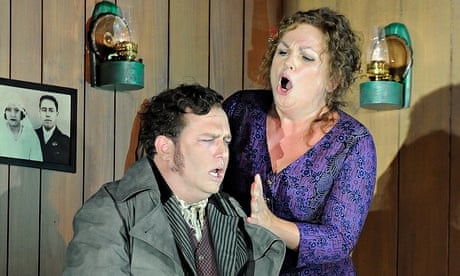
Music Theatre Wales presented the world premiere of Philip Glass The Trial (Kafka) last night at the Linbury, Royal Opera House. Music Theatre Wales started doing Glass in 1989. Their production of Glass's In the Penal Colony in 2010 was such a success that Glass conceived The Trial specially for the company. Auspicious prospects indeed. Music Theatre Wales did Glass proud with an excellent production, sensitively attuned to the nuances of Glass's idiosyncratic idiom.

Kafka's The Trial, has such iconic status that any opera based on it carries huge expectations. The atmosphere of the novel is so unusual that it doesn't lend itself readily to ordinary operatic treatment. Glass's music, however, operates on the surreal dissociation that pervades the spirit of the novel. As we listen to the repeated sequences, our minds become innured to patterns. Glass's music expresses the existential angst of mechanical, impersonal systems. If Glass and his librettist, Christopher Hampton, had used the German title "Der Prozess" , the connection would be even more clear. Josef K (Johnny Herford) wakes up one morning and everything starts to go out of synch.  He knows something's wrong but goes along with things until he becomes part of what he didn't believe in.  It's reasonable that his Uncle (Michael Druiett) should help  but why strange women like Leni (Amanda Forbes) and a painter (Paul Curievici)?  Or oddballs like Block (Michael Bennett)  who any reasonable person wouldn't trust? As we become familiar with the cadences in the music, our minds start to follow almost by auto-pilot, and we're mesmerized, too.  K's problems start on his 30th birthday. A year later, he's dead. Or perhaps he's at last succumbed to the long slow death that is conformity to systems that have no real meaning. Once he slips into habits of non-logic, the process takes control.  Perhaps that's the real Trial Josef K is undergoing.  He hasn't committed a crime, he's just part of the irrational scheme of things.

Glass's music wonderfully captures the mindless numbness of the processes around us. In In the Penal Colony (also based on a story by Kafka), an infernal machine drills words into the flesh of a prisoner. The concise nature of chamber opera intensifies the effect of Glass's music,  creating unbearable tension,  so concentrated that it might explain why some listeners switched off, emotionally. Please read my review of  In the Penal Colony HERE and my review of the audio-only recording HEREThe Trial is more diffuse, involving more characters and covers a longer time span, So the impact is less extreme. The story is more or less familiar to all, which helps make it more accessible. The opera unfolds over ten scenes in two acts, in fairly symmetrical form, which also helps to distance the audience from the human tragedy. In the Penal Colony is a masterpiece, possibly Glass's finest work, but The Trial should prove much more popular.  By Glass's standards, the music is more concrete than usual, with many good "special effects" like  booming trumpet figures illustrating The Uncle, followed by wailing trombone illustrating young K. There are quirky jazzy waltzes and delightful figues on celeste and xylophone. Moderrn miusic without too much fear, but enough intelligence and integrity to satisfy high standards.

Johnny Herford sings Josef K. It can't be easy to create a character disintegrating from a rational man into automaton, but Herford is convincing. His voice has a good balance of rugged manliness and plaintive vulnerability. Even in the throes of his confusion, this K can break off for a quick snog!  Amanda Forbes sings Fräulein Bürstner/Leni, roles which make her switch from prim repression to  voluptuousness.  Forbes's sensual timbre makes one hear the woman behind the compulsive wanton. Leni sleeps with anyone. She's funny,  yet also someone deeply flawed, forced to play a role defined by men. she's not given to reflection, but Forbes shows her fragility by employing a good edgy tension to  her singing. Good performances too from Michael Druiett (Inspector/Uncle), Michael Bennett (Guard/Block), Nicholas Folwell (Guard/ Usher/Clerk/Priest), Rowan Hellier (Frau Grubach/Washerwoman) and Gwion Thomas (Magistrate /Lawyer). Paul Curievici (Painter/Flogger/Student) stands out in small roles: he's one of the better character tenors of his generation.  Michael McCarthy directed, with sets by Simon Banham. Wonderfully idiomatic playing by the Music Theatre Wales Ensemble, conducted by Michael Rafferty.

Philip Glass The Trial is a joint commission between the Royal Opera House, Scottish Opera and Theater Madgeburg.. Music Theatre Wales will perform it again in London until 18th October, and will then take it on tour. (More details here).  Glass's The Trial will also be broadcast on BBC Radio 3 om 25th October (available also online and internationally). Highly recommended !

photos : Clive Barda, courtesy Royal Opera House (details embedded)

Friday, 10 October 2014

Oxford Lieder Festival 2014 Schubert

Tonight, the start of the Oxford Lieder Festival 2014.  I won't be there, since I'm at Philip Glass Kafka, Music Theatre Wales, Linbury) but I'll be there in spirit.  I've been a Friend since the Festival got off the ground more than ten years ago.  Oxford Lieder isn't like ordinary festivals.The emphasis is on the joy of performance. This is close to the spirit of the original Schubertiades, where friends got together to enjoy and experience.  It's not just big starry names, but also up and coming and community.

There's a costumed Liederabend on Tuesday for which I've got a ticket although I'll be at I due Foscari at The Royal Opera House.  Welcome to anyone. I'm honoured to buy tickets and sponsor songs even though I can't go to nearly as much as I would like to. That's what being a true "Friend" is, caring about things and wishing the group well. Other extra tickets too include Saturday's Graham Johnson talk, which I can't make.

There's more on this site about Schubert and the Oxford Lieder Festival than any other site, so please explore. Here is what I wrote about this year's Schubert Project, the most ambitious Schubert Festival ever mounted in this country - all the songs and part songs, plus chamber works and other events connected to Schubert and to Oxford.


Rameau Anacréon danced - Orchestra of the Age of Enlightenment


"Flying the Flag/L'Amour" ,the catchy title of the Orchestra of the Age of Enlightenment's  Rameau programme at the Queen Elizabeth Hall. The title concealed the treasures within, two rarely-heard Rameau pieces, Pigmalion and Anacréon. True to the spirit of Rameau's aesthetic, which lies in dance, the performance was realized by dancers from Les Plaisirs des Nations (choreographer Edith Lalonger). Both pieces are miniatures, far less exuberant than masterpieces like Castor et Pollux but for that very reason, we can appreciate the basis of Rameau's distinctive style. 

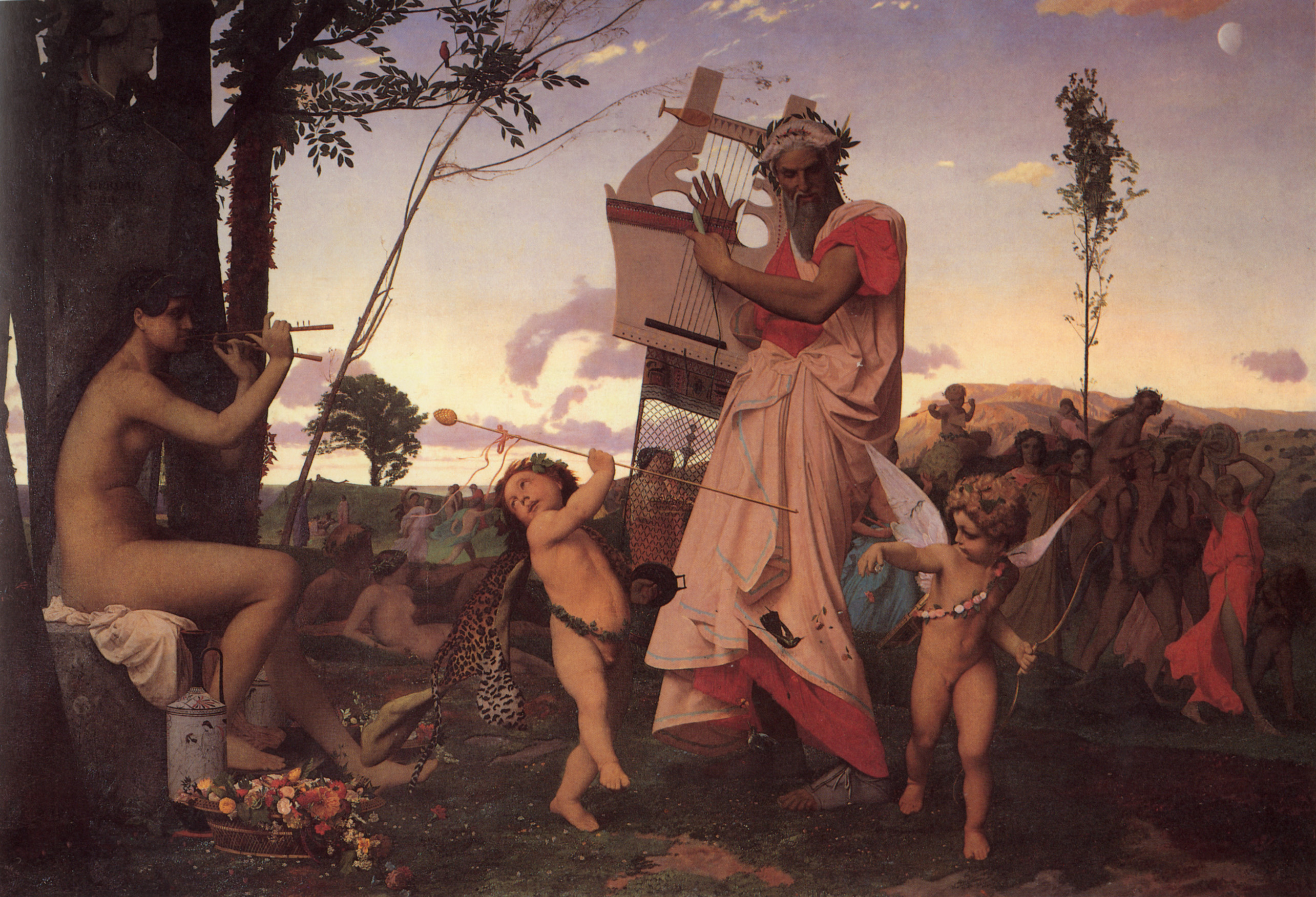
Anacréon begins with a simple flourish : two coiled valveless horns (one possibly a genuine antique) evoke the kind of Arcadia which artists of the classical period delighted in painting. The horns are followed by high woodwinds, intensifying the dream-like atmosphere of ancient Greece seen through 18th century French imagination.  In this landscape, Gods, mortals and animals frolic, in idealized fantasy. Chloé (Anna Dennis) and Batile (Augustin Prunell-Friend) cautiously declare their love for each other.  However, Chloé is about to marry the famous poet Anacréon (Matthew Brook). She quite likes him but he's too amorous.  Rameau's audiences would have cackled, since they had enough classical education to know that Anacréon, though revered, was a drunk and a lecher.  Rameau suggests Anacréon's earthiness with lines that descend in almost ostinato: an old roué drooping because he's in his cups.  "Regnez, Regnez" sings Matthew Brook, like the god Bacchus, the lord of misrule. "I live in the moment" he sings. Instead of the deep reflection one might expect from Wagner, or the florid intensity of Verdi,  Rameau's Anacréon watches the dancers do their routines, and thus satisfied, lets Batile and Chloé find true love. Augustin Prunell-Friend sings Batile's long showpiece, which consists mainly of the lines "Let fly, arrows of love, into our souls" but is so beautifully decorated that it makes perfect sense. (The photo above is a 19th century French painting of Anacréon,with his lute with a hairless Pan and cupids - try staging that now)

The parade of dancers thus operates as plot device, which wouldn't be quite so obvious on audio-only recording. Why are the dancers dressed (vaguely) as Turks or Hindus?  Baroque audiences were fascinated by exotic cultures. If people from strange places could do strange things, then why not have them inject another level of fantasy into the proceedings?  Pan the god appears, half-man, half-goat, complete with little red horns like the devil.  Pan was the god of music, but also of sensuality and dangerous wild spaces. Bacchus appears, too, an old man with a wreath of grapevine.  Gods, men and animals mix in joyous confusion : anything can happen in the creative imagination. In Anacréon, we can see, in germ, the exuberance and creative good humour William Christie found in Les Indes Galantes, Les Paladins and Hippolyte et Aricie  The true, adventurous spirit of the age!

Williams and the OAE aren't quite in that league of brilliance, but they performed  a new edition of Rameau's  1754 version of Anacréon, compiled by Dr Jonathan Williams, who conducted. Their recording of this "new" Anacréon is the first in the market.

In April this year, Williams and the OAE performed Rameau's Zaïs, also danced by members of Les Plaisirs des Nations. Please see my review HERE.  Pigmalion dates from 1748, as did  Zaïs, but the plot's even thinner.  It's a metaphor fpor the power of artistic imagination. This isn't necessarily a disadvantage, since it means we can focus on the structure and on the role of dance. Pigmalion (Daniel Auchincloss) is a sculptor who has fallen in love with a Statue (Katherine Manley). Pigmalion's lover, Céphise (Susanna Hurrell) calls on the gods for help.  Unfortunately, L' Amour (Venus, sung by Anna Dennis) feels sorry for Pigmalion and turns the statue into a woman.  Everyone's happy, except Céphise, who disappears.  Rameau writes a rollicking good chorus singing about the joys of love. Is it ironic that a composer so given to energy and movement would write a piece where the love interest is an inanimate object? Again, the sheer vivacity of the music  makes anything seem possible.  Three dancers depict the Three Graces, artistic creations born like the Statue fully mature and whole..Although in classical art, the Three Graces, and most statues were shown naked, or semi-naked in Grecian drapes,  Nudity might have been authentic but Rameau and his audiences used their imaginations. The Three Graces appear in outfits which would have been contemporary in Rameau's time, and Katherine Manley wears an evening gown.

Most of the action happens not in sung text but in abstract music. Sequence after sequence of dance figures: I lost count after ten. These probably illustrate specific dance forms, some pastoral, some lively, some almost militaristic.  The patterns in which the dancers move reflect the patterns in the music, as if the abstract forms in music are being made visible. For all his exuberant effervescence, Rameau was a superb craftsman. His Traité de l'harmonie réduite à ses principes naturels  was one of the first great treatises on the theory of music. Rameau's mind reflected the clarity and precision so dear to the Enlightenment.

Thursday, 9 October 2014

Listen - Daniele Gatti dirigeert Mahler 9


Listen HERE to a live recording of  the opening concert of the Royal Concertgebouw Orchestra, from August 2013. It's Mahler Symphony no 9, conducted by Daniele Gatti, who was confirmed lasst week as the new Chief Conductor of the Royal Concertgebouw Orchestra, Amsterdam. The news was hardly "news" in the sense of being unexpected, since orchestras tend to appoint conductors whom they know well, and who are good in their core repertoire. Gatti is also high profile , which matters in an ultra-prestige appointment like the Concertgebouw. Gatti is reliable, with enough flair to make an imprint.

The more intriguing story is what may be going on behind the scenes. Earlier this year, Bernard Haitink decided that he'd never again conduct  the RCO, with whom he's been associated so closely for half a century. (Read my article here)  Pointedly, he marked his 60th anniversary as conductor by conducting the RFO, with whom he started as a young man. Haitink's been emeritus for a long time, so it was even more of a shock when Mariss Jansons suddenly announced his departure from the RCO, while continuing as chief of the Bavarian Radio Symphony Orchestra, where he's contracted until 2018. There's some evidence that the RCO is running into financial trouble, but that alone wouldn't deter anyone from an orchestra with the RCO's prestige and reputation  Read more here.

And HERE another Gatti concert, from 2010 - Prokofiev, Brahms and Richard Strauss.

Tuesday, 7 October 2014

God only knows what's wrong with BBC Music

Massive hype about the launch of BBC Music. All BBC "platforms" (whatever that might mean in real English) united to play a 3 minute video  The video doesn't actually say what BBC Music is and where it's heading, but that nothingness might be in itself a cryptic clue.

Maybe the producers are revealing more than the BBC bigwigs realize. This video is spectacular, so extravagant you'd think money was flowing like water from an inexhaustable fountain.  It's as if the BBC is sneering at the very idea of financial accountability at a time when it ought to be taking into account calls for prudence.  It's an insult to all who genuinely care about the BBC and about music. If  the faceless suits behind BBC Music really cared about music, the least they could have done would be to put resources into commissioning an original theme tune, rather than rehashing a Beach Boys hit from 40 years ago.So much for any commitment to Britain and British talent. Lots of celebrities appear, each for a few seconds, no doubt being paid big money. Yet many of them have passed their creative prime. If BBC Music wants to be relevant to wider audiences, why pitch to a relatively irrelevant group of 70's retreads?

Maximum expense for nil content, whatsoever. To find out what BBC Music really means you have to search around. Follow this link to see what BBC Music plans for classical music (I can't comment on pop and other genres).  Yikes ! short clips from past broadcasts, randomly chosen . No artistic input, but rather the demented dumbing down of the "Ten Pieces" mindset. Please see my article "BBC Ten Pieces : Motherhood and Poisoned Apple Pie". It's bad enough to devise a dopey (and arbitrary) playlist. But to base the whole BBC Music aesthetic on this banality is a crime against art.  What's happened to the mission statement to "educate,, inform and entertain" ?  The policy seems to have been dreamed up by middle-aged, middle-class suits who assume that young people are too stupid to like anything that's not loud and brash.  The real danger is that such narrow-minded rigidity is inherently opposed to the  richness that makes the arts worthwhile. Creativity thrives on imaginations, individuality and freedom of expression. The BBC Ten Pieces are like a Stalinist Five Year Plan, created by committees who think the arts are units of consumer  product.

When Tony Hall announced his vision for the BBC I hoped that, with his experience, he might stand up to the anonymous group-think that characterizes the Arts Council England, and its ties to gravy trains like the Cultural Olympiad of 2012. Plenty of money was poured into that scheme, though nearly all the events it claimed credit for would have happened anyway, without any connection to the Olympiad organization. About the only thing it did achieve were the entertainments for the ceremonies around the sporting events. Are the people involved connected.  BBC Music is being launched with the same style: extravagant entertainment but almost no artistic substance. That would be OK if the BBC were just another branch of the Murdoch empire, but it's not.

Tony Hall unveiled his vision for the future in two keynote announcements which I've written about here and here. I worried about the bullet point presentation style but thought it was simply PR bad taste. But I wonder now if the medium was the message, ie that the banality represented banal  conceptual thinking.  Crucial to this non-vision was the creation of a new level of management. In principle, that's not a big deal as long as the people involved are imaginative, but it seems that what we'll actually get might be über-suit apparatchiks who don't actually know the difference between corporate think and real thinking.

The new head of BBC Music is Bob Shennan. He's not a classical music man, which is perfectly fair enough. His ambit is to keep all the different special interest groups in balance. All the more reason why it's worrying that the new head of BBC Radio 3, Alan Davey, has a background in bureaucracy. He's the former head of the Arts Council England and, before that, worked for for the Department for Culture, Media and Sport and Department of Health. The vague, mealy-mouthed ACE Ten year plan was developed under his watch, so it's definitely worth looking critically at that document "Great Art and Culture for Everyone". Harriet Harman's views on the supposed "elitism" of the arts and punitive funding derive therefrom.  To his credit, the present Secretary for Culture, Sajid  Javid,  hasn't said much at all. But Harman might get into power next year. The triumvirate between Harman, the new BBC Regime and ACE would be formidable. The press, unfortunately, is neither analytical nor objective. Charlotte Higgins wanted Alan Rusbridger to head the Royal Opera House, and now wants Tom Service to head the Proms (notwithstanding his time at Huddersfield) and welcomes Davey.

God Only Knows what the future holds. The flashy video alone is an argument for curtailing the licence fee, for it's proof that the BBC places extravagance over substance. This new banalification of the BBC dovetails with wider social and political pressures to diminish the arts, to turn from individualism, creativity and innovation to bland corporate non-thinking.  No amount of spreadsheet clevernesscan ever replace real creative wusdom. And certainly not an expensive pop video mindset.

Monday, 6 October 2014

Rameau Les Paladins Wigmore Hall


Les Paladins brought Rameau Les Paladins and much more to the Wigmore Hall. " ....a Baroque spirit of theatre and imagination. Contrasts of dynamic, register and timbre were exaggerated and celebrated, textures were by turns airy, then plangent, and such vivid shifts engendered a dramatic, playful - and at times, fantastical - mood. Equally at home with the jovial and the sensual, the instrumentalists of Les Paladins - the five female violinists standing to the left, while the male lower strings and woodwind players occupied the right of the stage - entered fully into the spirit of Correas’s endeavour, playing expressively and vivaciously, and giving each musical motif and melody a fresh character."

"Tempi were lively. In the Ouverture from Les Indes galantes an airy buoyancy was enriched by accented chromatic dissonances and tight trills, and the strings’ crystalline runs were matched by the bright vitality of the flutes (Jacque-Antoine Bresch, Lorenzo Brondetta). The dashing semi-quavers of the Ouverture from Les fêtes de l’Hymen et de l’Amour fizzed with energy, while the piercing gleam of the flutes alleviated the brooding solemnity of the slow opening."

Read the full review HERE in Opera Today by Claire Seymour


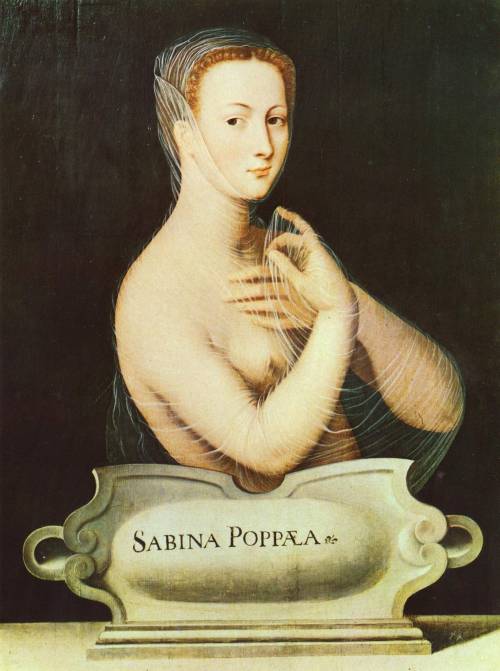
MonteverdiL'incoronazione di Poppea, Barbican

Robert Howarth conducted The Academy of Ancient Music in a performance of Monteverdi L'incoronazione di Poppea at the Barbican Hall.  Claire Seymour writes in Opera Today:

"Set in the reign of Nero, it depicts the irresistible power and tragic pathos of human love, as the passion of Nero and Poppea ruthlessly sweeps aside all hindrances and finds ultimate fulfilment in the Queen’s coronation. In the Prologue which precedes the three Acts, Fortuna, Virtù and Amor dispute which of them has most power. In this richly sensory and sensual performance by the Academy of Ancient Music under the musical direction of Robert Howarth, there was no doubt that Amor is justified in claiming victory."

Please read the Full review HERE in Opera Today

Sunday, 5 October 2014

Jurowski, LPO, Rachmaninov

From Alex Verney-Elliott

"On Friday the 3rd October at the Royal Festival Hall in London, I heard a brooding mooding account of Rachmaninov's The Isle of the Dead  Op. 29 (1909) eloquently played by the London Philharmonic under the sensitive conducing of Vladimir Jurowski. As I bathed in a sea of agitatedly-serene sensations I suddenly longed to exist in a pre-linguistic state in a sensation of sounds devoid of words longing to live without language and never wanting to speak again,  realizing that not only was there nothing to say but that music and art are able to say what is important and interesting whilst language is always lacking. If only we could leave language and communicate through sensations of sounds outside our language.

The composition was inspired by a black-and-white print of the painting 'Isle of the Dead' by the Swiss Symbolist artist Arnold Böcklin who described it as “a dream picture: it must produce such a stillness that one would be awed by a knock on the door." Vladimir Jurowski magically made the stillness stormy, made the stillness shimmer, made the stillness shiver.

Jurowski also gave an intensely incandescent insightation of Rachmaninov's 'Symphonic Dances' Op. 45 (1940) with its mellow alto-saxophone melody melancholically moaned by Martin Robertson. Jurowski knows how to sculpt sounds and sow sensations from the tranquil to the turbulent and from the reposed to the roused and ending the performance with a glowing gong that slowly settled into the storm of the arousing arresting applause. Again the mesmerizingly moving music made me want to become pure sound in itself becoming sensation in itself void and devoid of words that wound the world."
Good news - Jurowski's contract with the LPO extended three more years! 

Saturday, 4 October 2014

ENO Girl of the Golden West Puccini


At the ENO, Puccini's La fanciulla del West becomes The Girl of the Golden West. Hearing this opera in English instead of Italian has its advantages, While we can still hear the exotic, Italianate Madama Butterfly fantasies in the orchestra, in English, we're closer to the original pot-boiler melodrama. Madama Biutterfly is premier cru: The Girl of the Golden West veers closer, at times, to hokum. The new ENO production gets round the implausibility of the plot by engaging with its natural innocence.

Bright lights greet curtain up, startling the audience. More fun to come as the music evolves. In The Girl of the Golden West we're enjoying Arcadia in Wild West costume, the stuff of childhood dreams and simple homilies. The men at the Polka love Minnie for her good nature and rough edges, but they turn savage without much provocation. So much for her teaching the Bible.  Perhaps there's a reason why Ramerrez (not Ramirez) is a Mexican.  As soon as Minnie reappears the would-be killers turn back into lambs. Where will Minnie and Ramerrez go when they leave California? Both are now displaced from a place where they belonged. But let's not bother ourselves with too much detail. Richard Jones's production, with designs by  Miriam Buether,  presents the opera as plain good fun, rather like Minnie herself, not in the least bit sophisticated but with her heart in the right place. As usual, Jones takes his cue from the music. In this opera, Puccini employs special effects, like wind machines and "gunshots" in the percussion, There are many good moments in the music, like 'Ch’ella Mì Creda Libero', Ramerrez's big 'Un bel Di' moment. But in general, this music works well  as pure, uncomplicated fun. Not for nothing I've been calling the opera has been called the first Spaghetti Western for the last 40 years..

Casting Susan Bullock as Minnie is a stroke of inspiration. Bullock is a Wagnerian, so she has the timbre of a Brünnhilde charging into action to protect the wronged. Puccini doesn't give Minnie long heroic passages to develop her personality, since after all, she's plainfolks, who falls for Mr Johnson because he treats her like a lady. So Bullock's innate sense of style does for Minnie what fancy clothes and tight shoes can't do. Bullock's words ring out with desperate heroism. Minnie has seen an alternative to the life she leads. Like Senta, she's prepared to risk all for her man. Bullock's portrayal adds wonders, bringing out humorous levels in this opera that might get missed in too prosaic a reading. The effect would be heightened even more if she sang with her normal English accent, but English audiences, much given to literal fake accents, probably wouldn't understand why. Bullock's natural good nature warms Minnie's personality and creates a convincing character.

Peter Auty sings Ramerrez/Mr Johnson. The fit is good.  Auty's experience adds authority and depth. In the second act, Minnie tries, ineptly, to seduce Mr Johnson, Auty shows how Ramerrez's nobler instincts motivate his actions. Auty's resolve suggests why Minnie is drawn to the stranger, so different from the rabble around her. Again, this isn't obvious in the libretto but a sign of sensitive directoral interpretation. Richard Jones's staging is far more perceptive than meets the eye, but probably too subtle for some.

Craig Colclough  sings Jack Rance. His voice is technically secure, but the portrayal is relatively straightforward, allowing greater definition to Minnie and Mr Johnson/Ramerrez. It was good to hear Graham Clark again, albeit in the fairly small part of the bartender. Clark is a national insititution, and a long-term stalwart of the ENO. His very presence makes a statement.

The cast included Nicholas Masters, Leigh Melrose, Adrian Dwyer, Jonathan McGovern, Richard Roberts, Sam Furness, Alexander Robin Baker, Nicholas Crawley, Jimmy Holliday, Clare Presland, George Humphreys, Trevor Eliot Bowes, and Daniel Mullaney.  Good singing, good chorus: proof that the ENO nurtures talent in a way no micro mini company ever could.  The conductor was Keri-Lynn Wilson, making her ENO debut.

Thursday, 2 October 2014

The Girl of the Golden West

Puccini The Girl of the Golden West at ENO tonight. The world's first Spaghetti Western ?  A tasty teaser, not ?  For my review of the ENO production, please see here.


Wednesday, 1 October 2014

Three People's Principles 三民主義

Today, China celebrates National Day. Although the present government is dominated by the Communist Party, there is a lot more to "national" than political parties. All Chinese, whatever their affiliation, and however vaguely, subscribe to the Three People's Principles  三民主義 , formulated by Sun Yat Sen, founder of the Chinese Republic. From the perspective of the history, we can understand  underlying ideals that might inform the future.

Mínzú 民族主義, the idea of a common national goal, despite China being comprised of over 100 regional identities. It doesn't necessariply mean one nation state but rather an ideal that variations need not lead to diviseness.

Mínquán 民權主義, government by the people, of the people, by the people. Sun Yat Sen devised these ideas when China was ruled by the Manchus, a non-Han people who despised the Han, although they copied them. Furthermore, China was occupied by western colonial powers who seized concessions from China by military force and unequal treaties. Strictly speaking there's no "right wing' in modertn China, even though some sections of the Goumindang were proto fascist. Obviously who decides who the people are is a moot point, but the basic idea is that government should heed the people. It's much more pervasive than the technical size of the electorate and limited franchise. Basically it means that governments have a responsibilty to those who they rule.

Mínshēng 民生主義, government for the welfare of the people.As in all countries, government is effectively for the controlling elites, whatever they might be in each country, but the general principle links to the Confucian ideals of virtue and benevolence.

Sun Yat Sen was a Cantonese, as were many in his circles. Hong Kong protests, as it has been doing regularly year after year since 1997. Before which, such protests didn't happen (1967 was an aberration).

Support!

The five yellow umbrellas form the shape of the Bauhinia, symbol of Hong Kong and part of the Hong Kong flag. The five stars refer to the five stars on the national flag of China. Brilliant image, on many levels.

Tuesday, 30 September 2014

All for one, one for all 危樓春曉


In view of what is happening in Hong Kong, this is a prescient time to revisit one of the great classic icons of Cantonese film, In the Face of Demolition, 危樓春曉. No-one can really understand a place until they understand the moral values which influence the way people think. In 1953, when the film was made, Hong Kong was very much a city in turmoil. Everyone was a refugee, including the native born, who'd been displaced  by the Japanese invasion. Cheerful as the people in the movie might seem, they're operating against a background of hardship and extreme insecurity.Watch the opening credits which show a busy city, panning to a shot of a bombed-out building.

Dressed in a sharp western suit,  Lo Ming, (Cheung Ying 張瑛 ) arrives in a rickshaw. He's moving into a run-down tenement. The decreptitude is a symbol.  The owner of the building is Wong Tai Pan – Big shot Wong (Lo Tun (盧敦) who speaks English to intimidate Ah Fong (Mui Yee  梅綺). Mr Lo doesn't realize it but he's moving into a room currently occupied by a family. whose father is played by Wong  Cho san 黃楚山. They haven't been able to pay the rent for 3 months, and they're being evicted, even though the mother has just given birth and can't walk. The commotion wakes the lady in the next bed space, Pak Ying (Tsi Law Lin 紫羅蓮) who leans over the flimsy partition. In those days, houses didn't have rooms but were divided up by screens or pieces of cloth.  The housekeeper Sam Koo is tough, but she has no choice. The house owner's wife screams at her.

 Enter Leung Wai, (Ng Cho Fan 吳楚帆), a tall and confident taxi driver). He confronts the owner's wife and offers to pay for the family to use the maid's bed space in the corridor (she says she'll sleep in the staircase). Eventually the owner returns and blows up at the housekeeper. "Do you know" he says in bad English, "This is crim-in-nal" and threatens the housekeeper with prison. A small detail,  but one with political ramifications. in a colony where the justice system was badly skewed. Although 99% of the population couldn't speak English, the use of Chinese was forbidden in the courts and officialdom until 1974. So much for the myth that "Chinese people aren't political" which the colonial government used to deny democracy in Hong Kong, with results as we see today.

The cubicle dividers are flimsy, and by accident Lo knocks over Leung's prized possession, a framed calligraphy that reads "All for one, one for all". "It was given to me by my seefoo" says Ng Cho Fan. "It's a motto by which I've lived my life"  Lo is a teacher, way up the social scale even though he's poor, while Leung is an uneducated guy, but positive and moral, which is utterly pertinent to the plot. "I'm a direct kind of guy", he adds, "I do and say what I think". Which includes kissing his wife in public, which must have been pretty racy in 1953. (see main photo above)

One of the other neighbours  (who fantasizes he's a kung fu master) played by Ko Lo Cheun (高魯泉 ) comes into Lo's room to draw. He used to be an artist before falling on hard times. He tells Lo that the house owner used to be a big shot too, but lost everything but the shabby tenement. Ah Fong isn't a maid but the owner's wife's niece, a naive country girl. from a good family, but exploited by her aunt. The beautiful Miss Pak is well bred, but fell on hard times too. She works as a dance hostess, fending off groping customers. "At night I hear her crying", says Yee Suk, "so pitiful" "Such a small building" says Lo, "But so many sad stories."

Lo and Pak have a lot in common: they drink a lot of coffee (unusual for the time) and share the same birthday.  Lo tries to borrow money from his school, but gets fired. Pak can't borrow from her boss either because she won't sleep with customers."You book learning people" says Brother Leung, "always worrying". He stumps up so the party can go on. Everyone joins in for dinner, including the owner Wong and his wife, but Wong keeps complaining and leaves. Leung, ever positive, says "We're all poor together. Even if all we have is white congee and yau ja kuei, we can fill up on that and be just as happy". Miss Pak's friend from the dance hall is there, dressed up like a glamour girl. "Looks aren't anything, I know what it's like when you can't even afford fish balls".  Miss Pak tells the group, "We don't dress up for vanity, we need to present an illusion so we can scrape a living".

Miss Pak's friend introduces Lo to a publisher who says he wants to print the short stories Lo writes now he's unemployed.  Lo is so excited that he dreams they'll be rich and travel "The world will be ours - America, Canada, Italy, France, Czechoslovakia, Greece - and Russia" !" (said in English, while wearing his pyjamas).  What they don't know is that the publisher is a crook. Fung Ying Sheung (馮應湘 ) was a American-Chinese famous for playing sleazy gangsters. All this playing around with the English language! – there's an implicit sub text somewhere. Lo and Pak laugh so much they wake the whole house. But the publisher turns out to be a fraud. Lo blames Pak for making him lose face. She scolds him for being selfish and getting his head turned by money, forgetting his true friends. In a beautiful scene, they make up, over the top of the cubicle divider. He decides to get a job so he can marry her, and she won't have to be a dance hostess.

Building owner Wong has been grooming Ah Fong. One night, his wife gets blind drunk, and he tells Ah Fong to watch her in their room. Instead, he rapes her.. His wife blames the girl for being ungrateful, and forces her to become a concubine. "If only she'd got a job when she left the countryside" observes one of the tenants. "None of this would have happened."

Earlier in the film, Bruce Lee played the son of the father of the family. The boy refused to eat, so his mother could eat instead, since she couldn't breastfeed the new baby as she had no milk. The father vowed he would do anything to help such a virtuous son. Since he can't get work, he sells his blood. Father feeds family, and also the Leungs, who are poor now that Leung lost his job as a driver and had to become an unskilled labourer. "I can't eat" says Bruce Lee, "it's like eating your blood, Dad."  Wong Cho San (the father) is a wonderful actor. As all at the table fall silent with guilt, Wong's expressive face speaks volumes. at last, he pretends to be cheerful. "Eat up everyone!" he says, "I'm behind 2 months in rent but now Lo the Teacher has got a job as rent collector, we'll be OK". Unfortunately, it's not up to Lo. His bosses are ruthless  and put pressure on him. He has to collect all the rents within 3 days because there's a demolition order on the house in 10 days. Building owners scream at the housekeeper, who screams at the tenants, but no-one has any money. The father of the family tries to sell his blood again, but the clinic won't use him again. He helps Leung at the wharf, but he's too weak and collapses. Their workmates clubbed together and raised $60 for medical treatment. Instead, they give it to Lo the rent collector.

On a typhoon night, Leung's wife goes into labour, while he's on night shift.. The women go to help. Ah Fong is so unhappy she tries to hang herself, but is stopped by the Father of the Family. He tells her that life is precious, even when it seems hopeless. He's used up his last ounce of strength and dies. A funeral, a birth and hospital to pay for. Meanwhile the storms outside gets fierce, and rain comes through the roof. Lo takes rent money to his boss, who is sitting in a comfy living room, wearing a smoking suit. "There you are sitting in comfort while houses are falling apart, and lives are in danger" says Lo, "Stuff your job". Huh !" sneers the boss, "I can get anyone, anytime to replace you". Back at the tenement, people are fleeing for their lives as the house collapses. Big shot Wong is killed.

At the hospital, Leung's wife has lost a lot of blood while giving birth. Miss Pak, Ah Fong and Ko Lo Chuen are in the waiting room. Lo turns up with money from his wages,and asks if the tenants will forgive him. It turns out that Mrs Leung has a rare blood type (B negative) and her only match is Lo the teacher. Mrs Leung needs so much blood that the doctor asks why Lo wants to endanger his own health to save hers "We are friends" says Lo. "Friends help each other". Lo still feels guilty because he chased his friends for rent, but they're all happy now he has helped save Mrs Leung's life. "it's thanks to Leung kor, who taught me his motto, Everyone looks after each other".

Sunday, 28 September 2014

Mystery great Wagnerian Závodszky Zoltán

Who was Závodszky Zoltán? A friend sent a link to an hour-long documentary about him, with lots of clips and rare photos, but it's all in Hungarian. Help, please!

From what we've been able to gather, Závodszky (1892-1976) was a famous Hungarian tenor, who specialized in Wagner, singing mainly in Hungarian translation.Watch the documentary because it's fascinating,  even if the language is beyond most of us.  From what I gather Závodszky is being interviewed, and talks about his roles. What a clear, pure Heldentenor he was - if he'd sung more in German, and in German houses, we'd be sure to know him better. How frustrating it is that we can't follow the interview because he sounds like an interesting person with perspectives worth hearing.

Adds my friend: "couldn't find a bio, but he had been a pupil of the great Wagnerian tenor Georg Anthes, who sang at Bayreuth and the MET in the early 20th century. Anthes can be heard in a few Mapleson cylinders and had also been the teacher of Rosette Anday and Maria Nemeth, who, unlike our tenor, made great careers in Vienna. He seems to have been active only in his native Hungary. All his recordings are in Hungarian. I first read about him in "Opera on Record", in which he is mentioned as the best Parsifal Knappertsbusch had heard. No mean feat. It's interesting to notice which conductors are mentioned in the documentary: Weingartner, the also forgotten Sergio Failoni and Knappertsbusch. I was told that both Failoni and our tenor were performing at the Budapest Opera until 1948. So, we have got a singer who had been active in the 30s and perhaps  earlier on and later and had a special affinity with Wagner's music I find him no less moving as a Liedersaenger at a well advanced age. I wish he had recorded any of the Schubert cycles."  He also sends this link, in English.

 In the documentary, there's a clip of him singing from Schubert Die schöne Müllerin. He looks about 70 years old but his voice holds up well.  

Below his Tristan and his Lohengrin.

Saturday, 27 September 2014

Rameau Les Paladins Christie Les Arts Florissants


Ahead of the all-Rameau Les Paladins concert at the Wigmore Hall on Wednesday 1st October, a link to a film on Les Paladins on medici tv based on the 2004 Théâtre du Châtelet de Paris production with Les Arts Florissants conducted by William Christie.

"We're talking about a composer who IS funny.....I've been living with Les Paladins for a number of years now", says William Christie, "and the thing that strikes me is that it's a piece of absolute anarchy, and from a composer who's an old man , 77, 78 years old,, it's as if he's trying essentially to shock. Then, " parody and caricature are important words describing this piece - it's as if he's parodying himself "
 
A black and white engraving of a huntsman comes alive as rows of deer run out from the flat surface. The stage is divided so rows of dancers occupy the front level, while large-scale videos of other dancers leap above them, as if bouncing off clouds. The baroque imagination adapted and re-created by modern technology. Later, dancing bunnies and other images of the exuberant bounty of Nature. The livret is pretty basic. "It's Entführung" says Laurent Nouri who sings Orcan (ie Osmin). Excellently cast - Stéphanie d'Oustrac (Argie), Topi Lehtipuu (Altis), Sandrine Piau, Laurent Naouri (Orcan), René Schirrer (Anselme), François Piolino (Manto), Emiliano Gonzalez Toro (un paladin).. Choreography and staging by José Montalvo. The music is so bright, and the playing so infectiously jolly that the singers bob about quite naturally among the dancers.

Who could sit still grumpily with music like this?  Throughout the opera ballet, words and orchestral passages bounce back and forwards in intricate patterns, captured in lively splitscreen staging.  Gert the full 2 disc DVD here

Sandrine Piau is singing at the Wigmore Hall on Wednesday, with Les Paladins, the consort conducted by Jérôme Correas. They're doing a mixed programme of extracts from different Rameau opera/ballets , including Les Paladins, Castor et Pollux, Les Indes Galantes, Platée asnd Les Surprises d' Amour. Link to Wigmore Hall Box Office HERE. They're selling fast. There's a pre concert talk, too.