Monday, 26 March 2012

Verdi La Forza del Destino - Chelsea Opera Group

For sixty years, the Chelsea Opera Group has adorned London opera life. It doesn't do mass market, but focuses on unusual and obscure repertoire. This audience comes for the music! This fuels Chelsea Opera Group productions with the kind of commitment you get from true devotees who love what they're doing. Founded by David Cairns, they produced  Berlioz Les Troyens and even Benevenuto Cellini in the 1960's, conducted by Colin Davis, closely associated with them since their inception. London would not be what it is without the Chelsea Opera Group ethos and its audiences.

Starting this year's season at London's South Bank, the Chelsea Opera Group presented Giuseppe Verdi's La forza del destino, in the 1862 St Petersburg version rather than the more familiar 1869 Milan version. They have produced La forza del destino before, in 1959, 1966 and 1986. Some patrons have heard them all. Last year, there was an excellent production in Paris, with Violeta Urmana, Marcelo Àlvarez and Kwangchul Youn. The Chelsea Opera budget can't scale such stellar heights but compensates with verve. Gweneth-Ann Jeffers, Peter Auty and Brindley Sherratt gave performances so passionate that they filled the Queen Elizabeth Hall so effectively there was no need for staging. Jeffers and Auty sang these roles at Opera Holland Park in 2010.

In La forza del destino, Jeffers is a force of nature, expressing levels of Leonora's personality hinted at in the score. Leonora is virginal but passionate. She's planning to elope to South America, sacrificng her status for an outsider whose ancestors are descended from the god of the Sun (ie Incas). Leonora's father is a bigot, and her brother equally rigid, but Leonora has greater strength and depth of personality. Jeffers smoulders, caressing the low tessitura, soaring to crescendi and extended high passages. Forceful voice, well applied technique. Jeffers is a born diva, but her powers come from within, fuelled by intelligence and understanding of how music shapes role. Leonora is resourceful - who would chose to be a hermit in a monastery? - but she can't escape Fate. If Fate can destroy someone as strong as Jeffers's Leonora, there's no hope for anyone else. Verdi's "Fate" motif flows throughout the music, sometimes seductive and subtle, but relentless. It surges in the big strings sections, weighted down by celli and basses. But when Jeffers sings Leonora the crucial aria "Pace, Pace", she's accompanied by harps, for she's alone with God. Dramatic sopranos like Gweneth-Ann Jeffers are rare - why don't we hear her more often in this country? She's a resource we should appreciate.

Don Alvaro is a long and taxing part, but without staging, the voice is more exposed and has to carry the drama. Peter Auty was more impressive than he was two years ago. In this performance there's an aria.cut from later editions, which commands, as the notes say, "high tessitura and neurotic tension". Auty threw himself into the spirit, singing with a heroism that captures Don Alvaro's personality. No matter how hard Don Alvaro tries, Fate will destroy him. Dying early is no escape. Pehaps Don Alvaro will suffer more if he has to find redemption. Certainly, Verdi's emphasis on spiritual rigour is blunted if Don Alvaro simply drops dead. The role isn't meant to be easy, and Auty understood the poignancy, rewarded by audience applause. Auty's young, by no means a  bland "English tenor" and has a lot of potential.

The plot pivots around Leonora and Don Alvaro but Verdi expands the idea of Fate in many ways. Don Carlo (Robert Poulton) doesn't think, or even feel much love for his sister. He's programmed like an automaton,  a manifestation of Fate as obsessive compulsive non-empathy. The part's against Poulton, though he sings well. But Don Carlo is killed because he doesn't even question things. Significantly, Verdi writes other characters to extend the concept of Fate. He didn't write Preziosilla (Antonia Sotgiu) simply for colour. She's not "gyspy slut" but represents something much more sinister. She is much more Mefistofele than Carmen, for she goads the soldiers on.  "Rataplan, Rataplan" can be macabre, a Dance of Death, but here it was genteel, the COG Chorus and The Imperial Male Voice Choir singing with enthusiasm, taken in by Fate in the guise of provocateur.

Significantly, Verdi develops the monastic roles. The peasants suffer poverty and war, yet do nothing to change their fate.  Fra Melitone (Donald Maxwell)  has some insight, but rails at the peasants for being poor because they have too many children. (Celibates don't understand). Melitone is also the gatekeeper and rule enforcer, a benign version of Don Carlo. Maxwell's too nice to be nasty, but creates the comic aspects of the part very well. Il Padre Guardiano (Brindley Sherratt) on the other hand is a figure as powerful as Leonora herself, with dispassionate objectivity.

"Charity" he keeps telling Fra Melitone, meaning charitable feelings not free food. This kind of charity is exactly what Don Carlo and his father don't understand. So they become tools of fate and die without having learned anything about life. Sherratt's Guardiano is magnificent, utterly authoritative. Perhaps he realizes that Padre Guardiano is the voice of God, or at least, some superior, all-merciful being who might have to the power to thwart Fate. Notice how Verdi writes the part for the same voice type as the the Marchese di Calatrava (Richard Wiegold). The two men are polar opposites. Sherratt sings with such resonance that you sense the character's emotional and spiritual depth. No wonder Leonora confides in him. Moreover, he breaks rules, letting her into the monastery. In the ending where Don Alvaro doesn't die, Padre Guardiano plays a pivotal role, implying that there are other values than revenge and pig headedness. Everyone dies in the end, but if you live properly, Fate doesn't win. Leonora has learned this, which is why she finds a kind of apotheosis in death. God has shown her mercy.

Minor roles add spark to any opera, but much depends on who is singing them.  I'm certainly looking forward to hearing Paul Curievici (Trabuco) again. He's so involved with the opera that his face expresses what's going on even when he's just listening. Intuitive expressiveness like this is a gift that can't be taught. This is the sign of someone who really acts, from his soul outwards. He's extremely young, so another talent to listen out for. I last heard him in the GSMD Poulenc Dialogues des Carmelites (more HERE)  In La forza del destino, he gets to sing a lot more, and does that well, too.

Robert Newton conducted the Chelsea Opera Orchestra and Deborah Miles-Johnson was chorus master. Three more Chelsea Opera Productions coming up this year - Donizetti Maria Padilla on 27/5, Massenet Don Quichotte on 25.11 conducted by ROH chorus master, Renato Balsadonna. More details on the COG website.
Full review and cast list in Opera Today.
photo of Gweneth-Ann Jeffers, courtesy Gilder & Co, photo of Brindley Sherratt, c. Sussie Ahlburg, Askonas Holt

Boulez on Mahler

An hour with Boulez on his birthday


Hour long documentary in honour of Pierre Boulez. Could be cut a lot by judicious editing but it's Columbia's celebration of Boulez's 85th birthday two years ago today. Wait til Boulez himself speaks - gets straight to the point.

Sunday, 25 March 2012

Sensation but no scandal - Munich Eugene Onegin

Near hysteria in some circles over Munich Opera's Tchaikovsky Eugene Onegin, the notorious "Brokeback Mountain" production. Perhaps we shouldn't be surprised given that some audiences think Dvořák based Rusalka on The Little Mermaid.  But the production isn't scandalous, unless you're disturbed by homosexuality (and alas, many people are). On the contrary, this Eugene Onegin is thought provoking. Which to many is the biggest danger of all.

Kryzysztov Warlikowski and his set designer Malgorzata Szczescinak scare away the easily scandalized with a luridly psychedelic first act. But as Anna Netrebko says "I'm from Krasnodar where everything's so grey. We need bright colours".  Life in this provincial community is drab but the locals cheer themselves up by dressing up and having parties. Like the Larin community, they're in a time warp but too unworldy to know. The 1970's costumes evoke a period where people conformed, even when they thought they were hip. Although we don't see trees and nature, it must be Spring since the locals are enacting a kind of mating ritual. Girls preen like exotic birds, ogling the boys. The text keeps referring to marriage, as the basis of social order. So we don't see cartoon Russian caricatures? Instead, we get to see the people on the estate as human beings.

Tatiana (Ekaterina Scherbachenko) stands out even more as an individual than if she were styled in white dimity. The other women exaggerate their femininity, but Tatiana appears in blouse and trousers. It's not just that she reads and dreams, she's fundamentally not part of the pack. Larina (Heike Grotzinger) is particularly moving because she's not idealized Happy Mum, but a faded former beauty, keeping up pretences. Larina and Tatiana are personalities. Olga (Alisa Kolosova) is blandness in big wig and silly dress. She doesn't get to sing much because she has so little to say for herself. Tchaikovsky disappears her as soon as she doesn't fit the narrative.

This set makes you care about the people. In their cheap, tawdry finery they're trying to make something of their lives. The effemininate MC and the tacky male strippers - is this the best life offers these poor souls? And yet like millions of women they settle for what they can. This Eugene Onegin is about a whole lot more than the sexuality of the two men. The tragedy is far wider.

When Tatiana is alone, the gaudy set disaapears, replaced by atmospheric blueness. This austerity reflects her true character, When she writes the letter, she strips down, just as she's stripping off convention and propriety. Nice girls don't write compromisng letters to strange men, but Tatiana can see no other escape. Her long monolgue is directed with great subtlety. Scherbachenko moves with each nuance in the music, expressing it through her body as well as her voice. This is Regie made by someone who understands music, text and meaning.

Tchaikovsky makes a point of Lensky and Olga having been childhood friends. She's clearly less of a challenge than Tatiana, and we know from Kibbutzers that people raised as siblings often don't marry. Pavol Breslik is an outstanding Lensky. He sings with gravity and colour, so he doesn't feel like a baby-faced ingenue but more like a real man. Interestingly, when Breslik has to throw dopey kisses at Olga, Scherbachenko stand between them her features sharpened with contempt.  Tatiana's smart enough to size Lensky up, but even she gets Onegin wrong. Just as Taiana decides Onegin should be what she thinks he is, Lensky thinks Olga should be what he wants, even after he's dead.

There's a lot of dance in this opera, but Warlikowski understands that it's also in the singing parts. Again and again, pairings and reversals, carefully blocked movements and images. Scherbachenko and Onegin (Simon Keenlyside) waltz as if they're stalking each other. Later the scene between Onegin, Tatiana and Gremin (Ain Anger) is also tautly choreographed to express the tension in their relationships. Anger also plays Saretski, the second during the duel. It's not accidental. Warlikowski doesn't treat Gremin as plot device but makes the character potent, and provocative, in every way. Some Gremins are so geriatric that Onegin only has to wait til he drops dead. This Gremin strokes Tatiana's feet and legs. Thus when Onegin realizes that he's lost Tatiana, the element of sexual rivalry makes the tragedy more intense.

Significantly, Tchaikovsky doesn't write all that much for Onegin to sing, reserving the big arias for Tatiana and Lensky. Onegin is the man onto whom they project themselves. Both are jealous where he's concerned. Onegin's emotionally honest. He doesn't let Tatiana draw him into her plans, but neither does he denounce her publicly (which would have ruined her). Lensky, though, is more difficult to read. He and Onegin have been best friends for years, so how come he gets so upset by Onegin paying attention to Olga? Why is he willing to risk his life, and his friend's life, for a fairly minor misunderstnding? Even brainless Olga thinks he's "strange".  Breslik's Kuda, Kuda is elegaic, as if he's looking forward to death for some reason.

Although the duel scene takes place in an anonymous hotel room, it's lit in surreal pale blue. You feel the frozen emotional wasteland and hear it in the music. Seeing it is largely irrelevant. Rigidity (Saretsky's rules) contrasted with confusion and fear. Onegin and Lensky's final duet is heart rending.What are these two feeling? Breslik paces the room, then removes his shirt and gestures towards his belt. It could be as innocent as Onegin's dancing with Olga. Onegin panics and shoots him dead.  Tchaikovsky's stage directions make it clear that Lensky hasn't a chance and doesn't fire, so the shooting itself is no big deal.

This is when Warlikowski's production becomes truly controversial. Second and Third Acts are bridged seamlessly, so Onegin visualizes dancers in the Overture, which merges into the ballroom scene where he confronts Tatiana and Gremin.  Bare chested dancers, wth leather gilets, jeans and cowboy hats, cavorting on the bed. Not quite Sugar Plum Fairies. Onegin is profoundly distraught, not just by Lensky's death but by what the dancers imply. Perhaps he wasn't so innocent when he danced with Olga. Perhaps he was jealous she was marrying Lensky?  He feels guilt, for many reasons. He holds the gun to his head, and it's gently removed by a chambermaid.  This is good, because she's the same woman who sang Fillipievna (Elena Zilio), who had no time for romantic extremes. Onegin's confused dream sequence leads him to the final confronation, with Tatiana and Gremin.

Onegin and Lensky aren't gay so much as men questioning their identity. Orientation isn't necessarily hard wired from birth, but can be suppressed and change. Warlikowski connects the bargains the women on the Larin estate make so they can survive in the real world to the compromises men made in those days when heterosexuality was enforced. Being gay was treason because it defied the "natural" order, again symbolized by the fruitfulness of the Larin estate. Onegin is an outsider, and doesn't do the marriage game, but he's not against society per se. It's society that doesn't make room for him. It's not invalid to read homosexuality into Eugene Onegin because it's a way of explaining Onegin's isolation. Besides, Tchaikovsky himself was homosexual, and there was no way he would have been able to deal with the topic expliciutly. While it's not good to read too much autiobiography into his setting of Pushkin's story, it's likely that he could see connections. Madam von Meck, for example, wrote letters rather than have flesh and blood relationships, and Tchaikovsky had a fake marriage that didn't fool those who knew where his real interests lay. Pushkin of course died in a duel about women, but Tchaikovsky was creating a new work of art.

For my review of the Kaspar Holten Eugene Onegin at the Royal Operas Housde, pleas see here. 

Saturday, 24 March 2012

Boulez pulls out of Barbican concerts

Bad news! Pierre Boulez is unwell and has pulled out of the two concerts he was scheduled to conduct in May at the Barbican. He has had eye problems for some time, and recently had to pull out of conducting the Cleveland Symphony Orchestra, with whom he has been connected since the 1970's.  He had several operations since 2009. I thought he didn't look well at his October concert in London with Ensemble Intercontemporain, the orchestra he founded, but put it down to the exhaustion any man who will be 87 on Monday might feel after conducting all over Europe. (Read about that HERE). So Peter Eotvos is conducting on 29th April (Scriabin, Szymanowski Violin Concerto no 1)  8 May (Szymanowski 3, Bartok). I'm gutted, because Boulez is exceptional in this repertoire, and his recording of  Szymanowski is ground breaking. Read about that here on this site under the label or search "Szymanowski Boulez". On the other hand, it's much better that Boulez should rest and recuperate. We want him around in 13 years so Elliott Carter (aged 117) can write a centenary tribute.

Friday, 23 March 2012

Fierrabras : Schubert's operas - BBC spirit of Schubert

Schubert wrote nine symphonies, but ten operas, though many are incomplete and known only in fragment. Everyone knows the symphonies, but few the operas, even though the composer wrote so well for voice. The Spirit of Schubert week starts on BBC Radio 3 today and is worthwhile because it covers not only "greatest hits" but relative obscurities.

Read the schedule carefully, because among the naff stuff like celebrity chatter and request shows (shades of the 1950's!) there are some good things. This schedule would have taken ages to organize because it's so varied. (logistical things amateurs couldn't do), But listeners can pick and choose. No-one's compelled to listen to evertthing, though there are probably worse ways to pass your time.

The highlight is Fierrabas on Saturday night, online for a week after). The performance chosen is the classic version conducted by Claudio Abbado, with Karita Mattila, Josef Protschka, Thomas Hampson, Robert Holl and László Polgár singing Boland.That cast shows the regard in which the opera is held, as music. I learned Fierrabras from the Zurich Opera staging (2005) which has Polgar as the King, Jonas Kaufmann as Fierrabras, Michael Volle, Günther Groissböck, Juliane Banse etc. cond. Franz Welser-Möst. The plot is convoluted and involves frequent interactions by Christians and Moors, thwarted lovers who marry past race/religious barriers and have similar names (Roland and Boland, enemies) and voice types (for much the same reason as Mozart uses similar voice types in Don Giovanni).

The Zurich production was staged as if in a toy theatre of the period with a silent actor playing Schubert, pushing the "wooden" characters into life, and working the narrative out on a blackboard. .The groups of male singers are costumed and made up like facsimiles of Schubert which makes the plot even more confusing. Giant piano and pieces of period furniture. But it's very intuitive. The idea is that Schubert, not a theatre man as such, is working in his study, imagining how characters might function, animating them with his music. .As drama, Fierrabras is clunky, so the Zurich production (Klaus Goth) reminds us to focus on the music, some of which is good. Fierrabras is unlikely ever to be standard rep except in concert performance, but it is by no means untypical of other German Singspiele of its time.

Because our assumptions of what opera should be are defined  by Wagner and Verdi, it's often hard to appreciate that they were the exceptions, rather than the norm. Schubert's operas, like Alfonso and Estrella  fit in with German mores of the time, further being eroded by the radical appearance of Rossini. his German style is by no means obscure, so there's no excuse for mixing performance values. Listen to Christine Brewer mangle early Lieder on one of thye BBC shows. Or rather, don't. Schubert was by no means a theatre innocent as he's sometimes portrayed (curse the "little Mushroom" caricature).  At the age of 14 he started going to the opera, and was present for the Vienna premiere of the second version of Beethoven's Fidelio. He also had connections with Salieri and knew Mozart's work. So think Die Zauberflöte, when thinking of Schubert's operas. Schubert isn't in that league, but that's where he's coming from.

So I've used a painting from 1827 of a man who resembles Schubert, not one of the usual pictures. It's by a painter called Gábor Melegh (1801-31), a direct contemporaray of Schubert. It's interesting because it's a "modern" painting (for the period) but the style is vaguely Renaissance and Italianate. "Modern" hat and teacups, 16th century perspective - see the table). It embodies the idea of modern, Germanic Schubert connecting to Italy. Hunt about carefully through this BBC Radio 3 Schubert week as there are some treasures embedded. Sakontala, Die Verschworen, (Moll, Moser) Der Vierjahrigen Posten (Fischer-Dieskau, Schreier) HERE, and hughly recommended, Schubert choral and part songs on the Choir from Sunday, one of the few programmes which the BBC has not dumbed down. Aled Jones knows what he's talking about and is genuinely informative. Support him.

Thursday, 22 March 2012

Sensitive Florian Boesch Die schöne Müllerin Wigmore Hall

Florian Boesch and Malcolm Martineau's Schubert Die schöne Müllerin at the Wigmore Hall was outstanding. Over several decades, I've heard hundreds of performances, but this was exceptionally perceptive. This was a wholly original, perceptive reading, informed by great insight. In Die schöne Müllerin the brook speaks through the piano. A brook flows forth with force. This isn't a pretty little Bachlein, even if the protagonist is fooled. It powers a large commercial millwheel. This master miller employs many staff, and the brook keeps them all in work. The millwheel crushes grain into flour. The brook also controls the miller lad's mind and crushes him with overwhelming force.

From the outset, it was clear that Malcolm Martineau understood why Schubert wrote such pounding, repetitive rhythms into the piano part. They are so shocking tthat most pianists soften them to make them more "musical", but when they're heard with this force, you realize that the brook is a personality. That's certainly how the miller's lad sees it. "Vom Wasser haben wir's gelent, vom Wasser". Right from the start, he's doing what the brook tells him. The energy in the piano part is compulsive rather than merely compelling, so Martineau's approach is psychologically right. The poem, too, reflects this hard-driven quality, with words repeated at the end of sentences, for emphasis. Boesch sings them purposefully, "Das Wandern", ""Das Wasser" and "und wandern" yet again. Piano and voice in harmony, but it's the unison of goosestep march.

Also perceptive was the way Boesch and Martineau revealed the jarring contrasts between each song. The hard-driven march gives way to more seductive rolling patterns, then voice and piano diverge. The miller has spotted the mill. Boesch's voice warms with hope, "War es also gemeint?", but Martineau's dark pedalling tells us no. Am Feierabend is often sung gemütlich, for the miller's lad now feels part of a community.. But the imagery includes the millwheel, still grinding when the workers are at rest. Martineau's attack is ferocious, for the brook is, and will become ever more jealous. Later, the young miller will obey, but for the moment, he's still contemplating love. Significantly, the voice is relatively unaccompanied at the start of Der Neugierige, and Boesch's voice finds lyrical stillness. But the brook attacks again in Ungeduld, with its manic pace. Seldom have these mood swings seemed so bi-polar. In Mein! Boesch sings as if he's won the girl. Martineau's playing reminds us that the brook might think quite something else. Emphatic, brutal last note, no quibbling.

Many years ago, Matthias Goerne's first recording of  Die schöne Müllerin revealed the young miller as emotionally disturbed, living in schizoid fantasy. It's a perfectly valid interpretation, though Goerne was to adopt a more conventional but superlative approach in his recording with Christoph Eschenbach (review here - it's one of the best). Boesch, however, makes the young miller sympathetic. Because it's easier to identify with a miller created with such warmth, the brook's vindictive pursuit seems all the more tragic. Boesch's rich timbre makes him plausibly masculine, so the rivalry between the miller and the huntsman isn't entirely one-sided. No less than six songs in this 20 song cycle deal with the miller, the hunstman and the girl, with music and the colour green and all that signifies. The songs were performed without a break, since they're a last interlude, when the miller still inhabits the real world.

With the minor key Trockne Blumen, the young miller enters the death zone. Boesch sings quietly but it's an unnatural calm. His last cry "Der Mai ist kommen, der Winter is aus!" was a last backwards look at happier times. Martineau makes the last chords resonate into silence. The miller will not live to see Spring. The brook now "speaks" through the text, as well as through the piano. Miller and brook are becoming one again, the miller's soul absorbed by the brook. This is surreal, even by the Gothic norms of Romantic poetry. Boesch makes interesting connections. His hands may clasp involuntarily, but the stillness of his singing suggests quasi-religious sacrifice. Did the poet Wilhelm Müller think of pre-Christian fertility rites, or to primeval myths of female water spirits luring men to their doom? It hardly matters. Boesch's eerie stillness is disconcerting, as if the miller is willingly being hypnotized.

The last song, Das Baches Weigenlied is a lullaby but most certainly not serene or comforting. Rolling rhythms again, but now the piano part falls into gentle repose. The brook is now speaking through the voice part and through the miller. It's not the miller who is now at peace. He's dead. The brook has consumed him and no longer needs to rage. Schubert sets the song lyrically, but it's the culmination of a nightmare, straight out of the aesthetic that gave rise to Erlkönig (and indeed to Mary Shelley's Frankenstein) As I've said many times before, only the shallow hear shallow in Schubert, but it needs to be said if we are to learn from him. This recital shows us what real Lieder singing is about. It's uncompromising psychological truth. Full review to appear in Opera Today.

Roman Statkowski Maria from Wexford

Listen to a broadcast of Roman Statkowski's opera Maria from the Wexford Festival HERE on BBC Radio 3 online for 7 days. Murder, unhappy marriages and intrigue ! But listen to the Overture, from a Polish recording which I haven't been able to track down.
.

Wednesday, 21 March 2012

Eugene Onegin Munich live stream

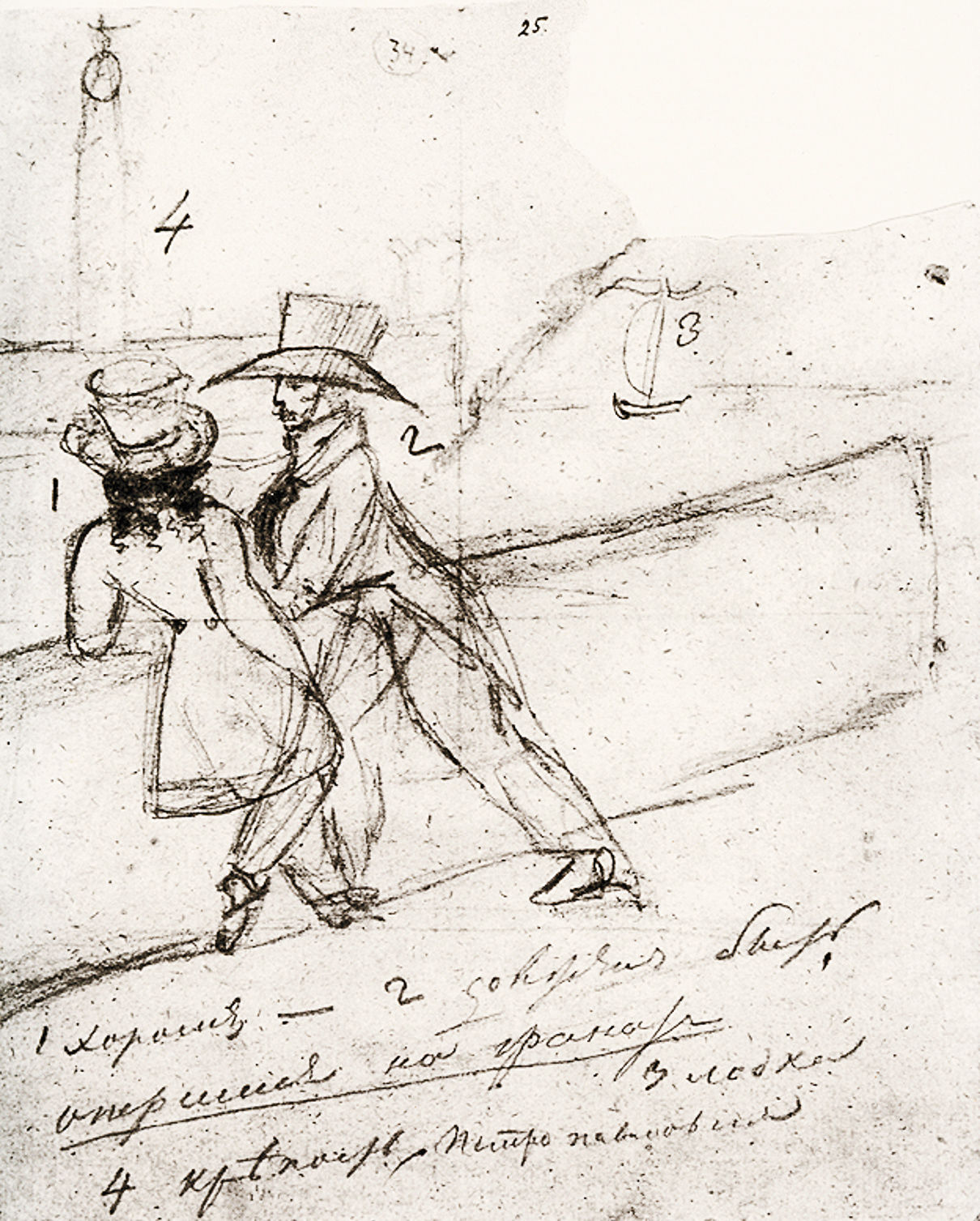
Tchaikovsky Eugene Onegin live stream from Munich, Saturday night 24/3 at 7pm German time (6pm UK)  Watch it free on this link here. See the video trailer HERE and enjoy production photos HERE. The video shows the original cast from 2007 (Michael Volle!). This is the famous and controversial Krzysztof Warlikowski production. "Warlikowskis Interpretation, die den Titelhelden als Gefangenen seiner unterdrückten Homosexualität porträtiert, wird seit der Premiere viel diskutiert, hat sich aber mittlerweile zu einem Publikumsmagneten entwickelt." Is Onegin in the closet? That would explain a great deal. It also puts his feelings for Tatiana into context. He doesn't love her as a woman but as an idea of something vaguely female, which could be as nebulous as Mother Russia. And why does Lensky make such a big deal about a silly non-issue? What's he trying to suppress?  (Shades of Ken Russell Women in Love?) .You can just bet that this will probe a lot deeper into the opera than Deborah Warner's ENO version (Please read my "Applauding the scenery")  So they're not wearing Pushkin costumes?  (the picture is Pushkin's own drawing of himself and Onegin on the banks of the River Neva). (anyone who can decipher Pushkin's handwriting might know what the pair are up to).  Fact is, Tchaikovsky was gay and couldn't very well be open about it then. At the very least this should start people thinking about the composer, the music and why he might have written what he did. This revival stars Simon Keenlyside, Pavol Breslik, Ekaterina Scherbachenko.

Monday, 19 March 2012

Fritz Kreisler plays Kreisler Tambourin chinois 1910


Fritz Kreisler, composer as well as virtuoso. This is Kreisler's op 3 Tambourin chinois, from 1910. In fact the recording was made in 1910 too, so what we have is avant garde new music, new technology and a composer experimenting with an alien musical form. Sounds familiar? Sounds nothing like Chinese music to me, but that doesn't matter at all. Kreisler is enjoying himself writing perfumed exotica. Evidently the piece meant a lot to him. Twenty five years later, he records it again with a different pianist, much sharper. Please see my numerous other posts on composers playing their own music, eg Mahler plays Mahler, Grieg plays Grieg and even Brahms !

Sally Beamish premiere, SCO

On Saturday, Edinburgh saw the UK premiere of Sally Beamish's percussion concerto performed at the Queen's Hall by Colin Currie with the Scottish Chamber Orchestra, who are a co-commissioner of the work. Appropriately for the season of Lent, it was a meditation on the theme of the Seven Deadly Sins, taking the form of a series of 'dances' in different styles. These with their contrasting styles showcase effectively the wide range of percussion instruments deftly and energetically used by the soloist. Some humorous touches feature, such as the use of bottle chimes in 'Gluttony'. A tango used in 'Envy', the second of the seven dance sections, is particularly enjoyable.

These dance sequences are briefly preceded by an opening section featuring flute along with the percussion soloist, the music from this opening returns briefly to be re-stated in a closing section, described as being as if a sleeper awakes from a dream, the dream being the central series of dances. The flute has a demanding part at several points and Fiona Paterson is to be commended for her performance of this. Woodwind is generally emphasised in the scoring, the clarinet also being featured effectively in the passage for 'Pride', subtitled 'Cadenza No 5'. Ms Beamish honoured the audience with a personal appearance and her work received a standing ovation.

The second half of the evening saw an able performance of Beethoven's 7th symphony, a work which conductor Joseph Swensen has made an especial study of. Swensen is a former Principal Conductor of the SCO and it was interesting to compare their sound under his baton with that of his successor, Robin Ticciati. Although Ticciati is taking on new commitments as Music Director at Glyndebourne, he will be remaining Principal Conductor of the SCO until at least 2015. Not only areb there opportunities to hear their very successful collaboration during this year's Edinburgh  International Festival but we are told they will be making several further performances together in the 2012/13 concert seas, details of which will be announced very shortly

SCO's Beethoven performances continue this Thursday (22nd March) with the Fifth (under Ticciati) and on April 21st with the Eighth (under Oliver Knussen, who also conducts his own Two Organa and a new work). Both concerts are to be given in Edinburgh and in Glasgow, on consecutive days.

by Julie Williams
Photo : Ashley Coombes

Sunday, 18 March 2012

Paris Mussorgsky Khovanshchina

Two competing productions of Modest Mussorgsky Khovanshchina. on from 22 January 2013 at Opéra Bastille, the other now on at the Met, which was broadcast Saturday on BBC Radio 3. Rather solid performance (Kiril Petrenko) good enough singing, best being Borodina's Marfa. But look at the Paris version - Mikhail Jurowski,  and an all-Russian cast (Galouzine, Diadkova) and a very interesting set, not that you should really tell by photos  (Richard Hudson, diector Andrei Serban). Gut instincts good.

The clincher is price. Eurostar about £200 return, and only 2 hours from St Pancras. It's practically local. Decent hotels and food, of course and you can bring back fresh bread. I was looking at costs for Edinburgh, for Charpentier and Les Arts Florissants. I'd much rather hear extraordinary performances of unusual music than familiar pieces, however worthily done. (and you can hear the Wagner in Wales). Eleven hours by train for £300, plus hotels etc. No wonder I haven't been back for years. There are people who could live for weeks on that kind of money, which matters to me. Besides, the Paris Mussorgsky may be on French TV and much of Edinburgh will almost certainly be on BBC Radio 3, saving on carbon emissions and conscience. .

Viennese operetta as Chinese opera


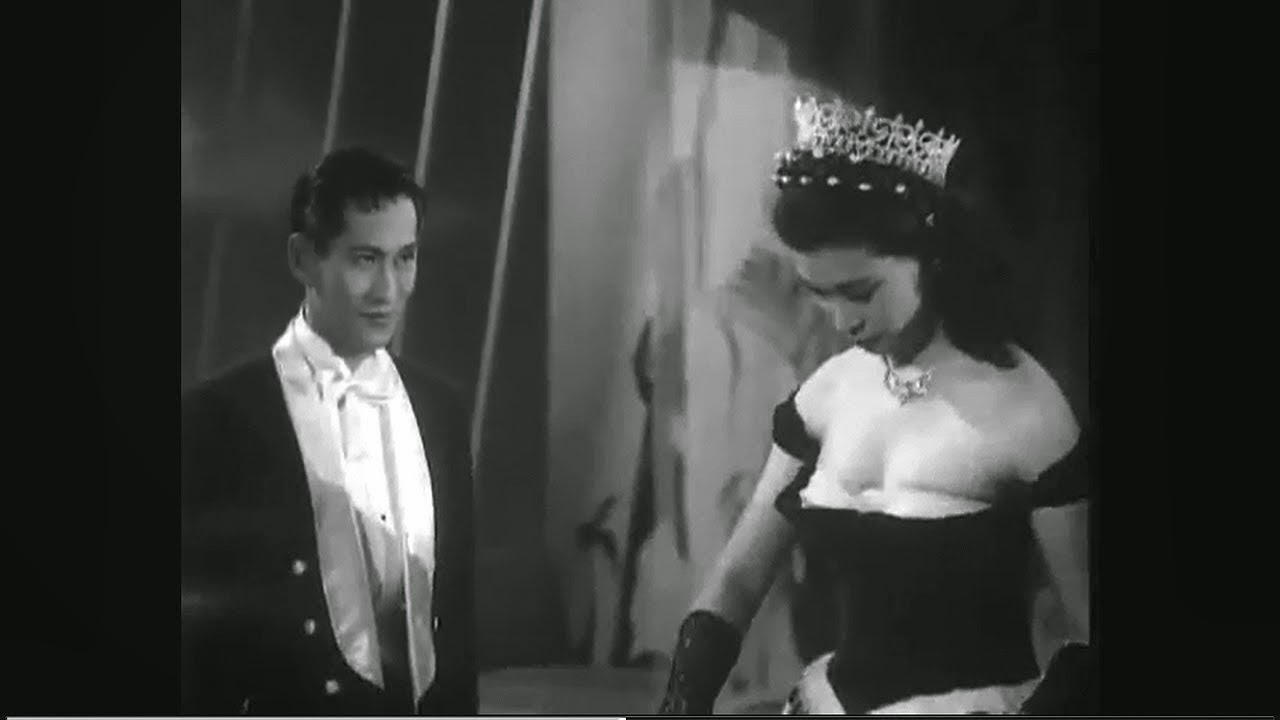
What a scream! A proper Cantonese opera, but also a satire on Viennese operetta. The plot's straight out of 1920/1930's kitsch, milked for all its dotty craziness, but set to musical form that's authentically Cantonese. For most non-Chinese, Chinese opera is hard to penetrate because it involves much understanding of cultural values and customs. Romance of Jade Hall (璇宮艷史)  however, is ideal for western audiences because the plot is a send-up of 1920's and 30's kitch. Ruritanian kingdoms with autocratic aristocrats in crazy costumes, playboy lovers and lots of natty arias. Ukelele solos and badly played gypsy violins! Even a skit based on the tune Oh Susana. Corny enough in Mitteleuropa, hysterically funny with a Chinese cast camping it up for al its worth.

Prince Ali (pronounced Nali) (Cheung Ying 張瑛, famous matinee idol) ventures incognito into other kingdoms where he becomes a hearthrob nightclub singer. Regular fans will squeal at the sight of him with curly wig and lipstick, like a round eye.  Exiled from one kingdom for chasing too many women, he's arrested in another, where the Queen (Law Yim-hing 羅艷卿, another legit Cantonese opera singer) fancies him but can't marry a commoner. Convoluted plot ends well when Ali's true ID is revealed. Best of all, the Prince's sidekick, who wears shiny silk suits and plays the ukelele is Leung Sing Bo (梁醒波) the greatest comedy opera singer and actor of all time. The Queen's comic sidekick is Lolo, Tam Lan-Hing (譚蘭卿) who often paired up with Leung Sing Bo, and is his counterpart in every way. Choruses of palace maidens and princes from fantasy kingdoms.

Otherwise this is true, traditional Cantonese opera (and the movie coyly starts out like that). Rhythmic recitatives, inventive arias, percussion-led interjections. A great introduction to Cantonese opera form. English and Chinese subtitles, but the Cantonese original is best, full of wit and pun. 

Saturday, 17 March 2012

Paris Pelléas et Mélisande -streaming live

From the Opéra de Paris (Bastille) live streaming of the current production of Debussy Pélleas et Mélisande.  Philippe Jordan conducts, divinely,  feel the sparkling waters in those teasing diminuendos, and the heat rising off the earth  as notes langorously surge upwards. Feel claustrophobic in the damp, sinister caves. But like Pélleas, you might be desperately gasping to escape the staging.

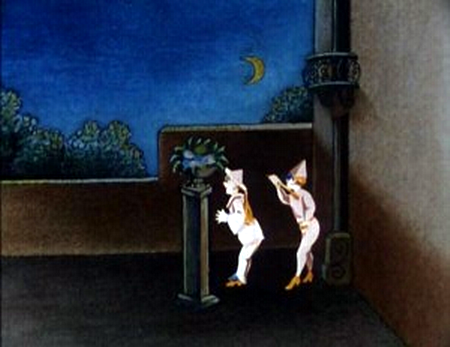
Robert Wilson is the director, so expect neo-classical elegance, a bare stage lit in blue,  black silhouettes suggesting forests and castle. The idea is valid, since Pelléas et Mélisande is a nocturnal fantasy, lit with the strange quirkiness that would inform Pierrot Lunaire. Wilson connects the opera to the psyche from which dream creatures like Pierrot emerge. The picture above comes from the earliest animation of the Pierrot story, made by Émile Reynaud in 1892, using techniques that would be swept away by the advent of film. Watch the streaming on Medici TV HERE and recognize the black and azure.

Maeterlinck's symbolism intuititively revealed the subconscious, years before The Interpretation of Dreams.  Wilson's Personenregie has the singers move in slow, deliberately anti-naturalistic gestures as if they're trapped in a semi-conscious state. But Pelléas et Mélisande works because it's disturbing. The music shifts, unsettling perspectives. The deep well, the high tower, blinding heat, dank odours - all part of the turbulence. The narrative seems imposed upon somethiung infinitely more elusive than mortal minds can grasp. Wilson's frozen stasis doesn't reflect the troubling contrasts in the music, nor really express the hidden, dirty horrors that lie within. We see the dead peasants neatly lying on the ground, but only from the music do we know they starved while trying to escape.

Into this psychological concentration camp, Mélisande appears. What does she represent? Golden rings, golden hair that flows like a waterfall and traps poor Pélleas, eyes like luminous, pure pools. Wilson is right that she's not "innocent" so much as amoral, part of the same nightmare that holds Pélleas and Golaud. The real innocent, Yniold, moves almost like a normal person and wears a bronze doublet. Thus the scene where Golaud upsets Yniold by getting him to betray those he loves is extremely effective. Was Golaud himself once a Yniold? He seems to strike out at the boy, who flinches. The blow is held, suspended mid-air, since it's target isn't the son but the father.

Wilson's stylization reminded me of Herbert Wernicke's Tristan und Isolde where the lovers stood suspended in sterile cubes, while Wagner's passion surged all round them. At the time, I wrote that it was "Tristan und Isolde on Prozac" but psychologically, Wernicke was right. Traumatized people turn in on themselves to escape emotion. It's not that they don't feel, but feeling hurts too much.  So I'm certainly not going to dismiss Wilson's approach, even though it misses so much oif what makes this opera so remarkable. Excellent moments of insight, but three hours of blue, white and black can make you comatose. Maybe that's the point, but it's hard to take without a large cognac. (Another reason for watching the repeat broadcast at home.)

On the other hand, the stylization highlights the music, which is as it should be. There are advantages. Jordan can let the pace unfold, so the shimmering detail in the orchestration can refresh. Debussy is telling us so much in abstract sound that it frees our imagination to create images of our own. The absolute last thing you want in Pelléas et Mélisande is literal hyper-realism. Jordan gets elegance when needed, but doesn't spare the angular brutality when it's hinted at. Golaud's music is specially well defined,  which is important because too often he's treated as stock villain. This opera is Golaud's tragedy, Pelléas and Mélisande the agents that cause his downfall as much as characters in themselves.

Vincent Le Texier is an uncommonly complex Golaud, who commands sympathy. He moves like a statue because that's the staging concept, not his own, but he sings with such resonance that it feels like he's suppressing extreme emotions that will wreck him if he lets them out. The scene where Le Texier's Golaud hits Mélisande growls with deep-felt violence. Again, Wilson shows that the blow doesn't make contact, though Mélisande flinches. Golaud later begs forgiveness, and Le Texier sings as if Golaud were a small boy again connecting to his mother. 

Debussy's writing for Pélleas is transparently beautiful, and  Stéphane Degout sings exqusitely. He's Pelléas as diaphanous ideal, the purity of his timbre luminous. Although the staging is one-dimensional, Degout's singing isn't. He expresses Pelléas's terrors well, the anguish in the voice all the more moving because he's established such refinement in the character. Pelléas may sound like god, but he's trapped like a mortal.  On repeat listening, the depth of Degout's characterization is even more compelling.

Elena Tsallagova sings Mélisande. She looks like a ballerina, and sings with equal grace, but Mélisande is an elusive role, almost impossible to fully interpret. Wilson's non-staging helps Jordan, Le Texier and Degout, but leaves Tsallagova to her own resources, which is is attractive rather than compelling. Anne Sofie von Otter sings Geneviève, and Jérôme Varnier adds personality to the otherwise small part of the Doctor. Franz Josef Selig sounds vigorous and warm as Arkel, which is good - while he lives, there's hope. It's in the plot! Similarly Julie Mathevet's Yniold is vibrant. Her voice is so high that she really sounds like a young boy, but she has the vigour to make Yniold's fears cut. And gosh, does Jordan make the orchestra sound wonderful, in this almost concert performance.

Friday, 16 March 2012

Edinburgh International Festival 2012 - Big on Baroque

As regular readers have seen Scotland has a special place on this site! So a look at the 2012 Edinburgh International Festival. It's not quite as eclectic this year, but equally esoteric, with a strong emphasis on the baroque.

The Big Event, on opening night 10/8, is Frederick Delius  A Mass of Life. It's billed as "one of the grandest choral pieces ever written" (well?) and is so rarely performed that even snotty Sassenachs should head north for it. (though it's almost certain to be broadcast on BBC Radio 3). Note, it's a "mass of life" not "for" life because it's based on Nietzsche not on Christianity per se. Andrew Davis conducts the Royal National Scottish Orchestra. This is Delius's biggest and most dramatic moment - read lots more about him on this site.

Stick around for Janáček The Makropulos Case. It's a new production, from Opera North, but being heard first at Edinburgh, and only later tours ON's usual cities, so this is a big deal, too. It gives Opera North international, high profile coverage. Who knows, we might even get it in London, where the last few ON productions did not get critical acclaim. Ylva Kihlberg sings Emilia Marty, Richard Farnes conducts and Tom Cairns directs. Wagner Tristan und Isolde too, with Ben Heppner and Jennifer Wilson, but this isn't a "first" like the Opera North Janáček but one which will premiere in Cardiff with the Welsh National Opera.

By far the biggest highlight, though, will be Marc-Antoine Charpentier David et Jonathas. William Christie and Les Arts Florissants and a  superb mainly French cast (Quintans, Charbonneau) almost guarantee this will be an artistic triumph. Staged by Andreas Homoki, it's a new production, jointly commissioned with the Aix en Provence Festival, Opéra Comique, Théâtre de Caen and Teatro Real. Tristan und Isolde and The Makropulos Case  may be popular but real opera devotees will red letter Charpentier and Christie 17-20/8.  Certainly, I'd rather top quality something I don't know than ordinary familiar. Les Arts Florissantes are also doing another very special concert on 19/8 with excerpts from French baroque operas - Lully, Rameau, Charpentier but also Grabu and Cambert. Down south, the Royal Opera House is reviving 19th century French opera : prepare by coming to terms with French baroque.

Philippe Herreweghe will bring the Orchestre des Champs-Élysées and Collegium Vocale Ghent to Edinburgh on 20/9 in a programme built around Bruckner's Te Deum. Plenty more for baroque fans. Philippe Pierlot and The Ricercar Consort will gve two concerts of English baroque - Blow, Purcell, Byrd and Tye. Voice people will head for the recital with Blaze, and Mena, also on 20/8 (presumably daytime and evening with Les Arts Flo, which makes a short trip feasible)  David Daniels is doing a  baroque recital on 29/9 and Iestyn Davies on 18/9. Countertenor Paradise! Harry Christophers and The Sixteen are doing Purcell King Arthur on 27/8.

Vladimir Jurowski brings the London Philharmonic Orchestra to Edinburgh on 14/8. Designed around Rachmanininov's The Bells, it includes rarities by Myaskovsky, Schedrin and Denisov. It's a much more adventurous programme than most of what we've heard at the South Bank, so again it's one Londoners could learn from.

The backbone of the Festival will be visting orchestras like Ivan Fischer and the Budapest Festival Orchestra, Franz Welser-Möst and the Cleveland Orchestra (Lutoslawski). No prizes for guessing who'll feature in this year's Proms! Londoners probably won't flock to hear Gergiev and the LSO or Salonen and the Philharmonia because we can hear them all the time. But much more interest in Scottish specialities like the excellent Scottish Chamber Orchestra (Ticciati). Also, Scottish composer Craig Armstrong's opera The Lady from the Sea.

Of even greater interest to Londoners, (alas, we're insular) are the chamber operas. Huw Watkin's In a  Locked Room and Stuart Macrae's Ghost Patrol  form a double bill, to be heard in Edinburgh from 30/8 then at ROH2 in London from 27/9. Also, James Macmillan's Clemency. This was a joint venture between the Royal Opera House (Linbury) where it premiered in May 2011, the Scottish Opera, and the Boston Lyric Opera. Notice the links between the different companies and also with Music Theatre Wales (joint proiducers of the Watkins/Macrae double bill). Anyone who's been paying attention to the content of the new Royal Opera House programme will have picked up on the pattern - co-operation, joint ventures, cross fertilization. This is a good way to go in difficult times. The ROH is miles bigger than all the others, but ivory tower is not nearly as creative as working with lively independents. Incidentally, Peter Maxwell Davies, honorary Scotsman's early opera The Lighthouse is coming to ROH2 in October. That premiered at the Edinburgh Festival in 1980. Entirely coincidentally, it's about events in a lighthouse, but not quite like Armstrong's The Lady from the Sea.

Read more on the Edinburgh International Festival's website. Public bookings start 24/3.

photo copyright  2005 David Monniaux