Friday, 6 March 2015

Ghana Freedom Song


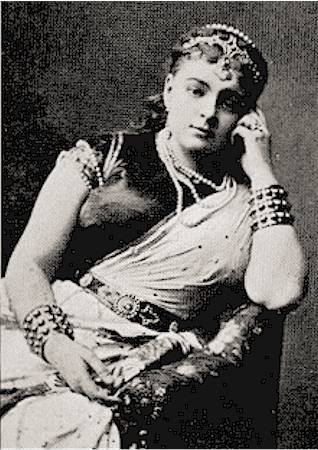
Today is Ghana Independence Day, let's us cheer !  Above the leaders of theIndepence movement. Below the iconic Ghana Freedom Song. Or rather the expurgated version, since the colonial government still managed to suppress the original. Read more about The Secret History of Ghana Freedom Song HERE  Original archive work - you won't find anywhere else !

Garsington Opera 2015 bookings open


The Pavilion at Garsington Opera at Wormsley, lit up magically on a summer night. Once experienced, never forgotten. (photo credit Clive Barda)  Booking starts soon (booking for members and affiliates has already started.

Mozart Così fan tutte (from 5th June)  Shouild be brilliant, as garsington is an ideal Mozart house
Fiordiligi Andreea Soare
Dorabella Kathryn Rudge
Guglielmo Ashley Riches
Ferrando Robin Tritschler
Despina Lesley Garrett
Don Alfonso Neal Davies
Conductor Douglas Boyd
Director John Fulljames

Richard Strauss : Intermezzo (starts 6th June)
Christine Kate Valentine
Robert Storch Mark Stone
Anna Ailish Tynan
Baron Lummer Sam Furness
The Notary Benjamin Bevan
The Notary’s Wife Sarah Redgwick
Stroh Oliver Johnston
A Commercial Counsellor James Cleverton
A Legal Counsellor Gerard Collett
A Singer Barnaby Rea
Resi Anna Sideris
Conductor Jac van Steen
Director Bruno Ravella

 Britten Death in Venice (starts 21 June)

Gustav von Aschenbach Paul Nilon
The Traveller William Dazeley
The Voice of Apollo Tom Verney
Hotel Porter Joshua Owen Mills
English Clerk Henry Manning
Conductor Steuart Bedford
Director Paul Curran

 Shakepeare, with Mendelssohn's music : A Midsummers Nights Dream (starts 16th June)
Royal Shakespeare Company under the creative guidance of Gregory Doran
Conductor Douglas Boyd
RSC Actors


Thursday, 5 March 2015

Free, online, Glyndebourne 2015


Free, and online, on demand internationally - Glyndebourne 2015 productions will be available via the Telegraph from May 24th.  Carmen, L'heure espagnole and l'enfant et les sortilèges, (June 21st for a week), Die Entführung aus dem Serail (from 9th July), The Rape of Lucretia (from 9th August)  The Ravel double bill is brilliant ! I was at the premiere - read more HERE. and an interview with Laurent Pelly.  I was a lot less impressed by The Rape of Lucretia, though., Full details of this year's Glyndebourne Festival HERE. New productions like Poliuto and Saul aren't included but that's fair enough.

On-line streaming like this is, I think, the way forward. In-house seat sales aren't enough. HD broadcasts were brilliant when they first came out, but they aren't the best way to do things. Cinema is old technology, gradually giving way to new forms of delivery, like Netflix.  Cinema chains don't make money out of the arts, so they're not inclined to market well.  In any case, why go to a one-off broadcast in some smelly cinema when you can watch where you want, when you want, in comfort, alone or with friends  Broadcasts are horribly expensive, so if cinema sales don't sell, they are a seriously dangerous gamble. John Berry of the ENO was right not to be keen, but in this present political climate, the ENO is damned if it doesn't reach out even if that reaching out loses money.

Tuesday, 3 March 2015

Not conductor, but Music Director Simon Rattle. LSO


Good news! Sir Simon Rattle will be joining the London Symphony Orchestra, but as Music Director, not Principal Conductor, the position Valéry Gergiev holds at present. Just as the two men are very different, the roles are very different too. The Berlin Philharmonic is a pinnacle against which nothing else quite competes. Rattle doesn't have anything to prove as conductor.  Within reason, anyone good can conduct, but very few have the ability to truly "direct music". Now, he's poised, hopefully, to lead the LSO in new directions. What's good for the LSO is good for London and, by extension, the whole country.

Rattle has charisma, but even more important, he has clout.  As I've been saying, his call for a super concert hall didn't come off the top of his head.  Whatever Rattle does, chances are he'll be doing things with much more vision than the small-box reductionism that dominates arts policy at present. The arts are an international industry and Britain must keep ahead of the game or lose out. Hence the concert hall (already being called the Simon  Rattle Concert Hall). It's not an extravagance, but an investment. All the education in the world means little if performance standards drop. The small-box reductionism of current arts policy is destructively short-sighted.  It's worth noting that the Arts Council cut the Barbican Centre's funding almost as drastcially as it cut the ENO. What we need is vision, which takes into account the worldwide nature of the industry and the impact of new technology. In an increasingly globalized market, it's primitive to think simply in terms of bums on seats. The real audience is worldwide, and much more sophisticated than it gets credit for. The future doesn't rest simply on schoolkids in the UlK, but on the vast untapped resources opened up by technology. "Think globally, act locally"  Please see my numerous posts on arts policy and learning, especially this Analyzed in Context: Rattle's Concert Hall for London.

Monday, 2 March 2015

Back from the Dead : Massenet Le roi de Lahore, Chelsea Opera QEH


In Jules Massenet's Le roi de Lahore,  King Alim returns from the dead, redeemed by love. On Sunday, the Chelsea Opera Group brought the long-dead opera back to life at the Queen Elizabeth Hall, London.  The opera was a smash hit from its premiere in April 1877. Fifty-seven performances followed, in several productions, in France, Italy, London, St Petersburg and Buenos Aires  Then, suddenly, silence until the first shoots of new interest in the early 1960's. The present reincarnation began with a new edition by Marcello Viotti and a ground-breaking production at La Fenice, ten years ago. (Read more HERE).

This enthusiastic performance by the forces of Chelsea Opera showed what made Le roi de Lahore an instant success. It was created as a showpiece for the then new Palais Garnier, built to flaunt the confidence and wealth of the Third Republic, and also its new empire in Africa and Asia. To quote Simon Bainbridge's notes for the Chelsea Opera Group, the premiere was "an occasion of almost unimaginable splendour..... the costumes alone cost 200,000 francs."  It was so spectacular that the stage designs were published, and photographs taken to preserve it for posterity. The picture above shows the Act V scene in Indra's temple. The deity dominates: all else is dwarfed. Perhaps this very grandeur might explain the opera's eclipse. Like a juggernaut it mesmerizes by its sheer audacity. Yet six years later, Délibes's Lakmé premiered at the Opéra  Comique, combining spectacle with even more spectacular music and songs which remain immortal today.

The Grand Overture whips up promise for grand things to come. Massenet's instrumentation calls for  fashionable "new" instruments like three saxophones, and the giant Adolphe Sax contrabassoon, plus an unusually large range of percussion, which includes antique cymbals, Indian drums and a large Indian gong.  This artillery provides great special effects  and must have sounded wildly exotic at the time. Even in  a non-staged performance, this Indian flavouring whips up mental images of a busy temple, packed with worshippers, wild horns and drums beating incessant rhythms. The Battle Scene in the desert is even wilder, with off-stage trumpets (attackers) and on-stage brass (defenders)  Huge ostinato - did French audiences assume Punjabis fought with elephants? The London audience were thrilled, and that's what matters. The three divertissements for dancing  were less atmospherically written, apart from the second, which might have inspired swooping and lilting choreography. Tantalizing hints of flesh under saris, perhaps, to please the balletomane faction.  Since Sitâ is Scindia's niece, the plot even by non-western standards is a little risqué.

Renato Belsadonna is best known as the Chorus Master at the Royal Opera House,  so he was an ideal choice to conduct Le roi de Lahore, where the choruses play a critically important role. The Chelsea Opera chorus and orchestra are good, though nowhere near ROH standards, but Belsadonna's verve  makes them respond with such enthusiasm that they create the right kind of wayward atmosphere, much more in the spirit of this opera than over-refinement, though we could have used more luminosity in the Act III Paradise chorus. This isn't a plot for deep introspection. Besides, crowds in temples, battles and market places wouldn't sound right, drilled to perfection.  We came for the fun of the opera, and Belsadonna gave us adventure, without lapsing into the kind of noise-for-the sake-of-excitement that prevails all too often in concert halls these days.

Wedged between Bizet's Pearl Fishers and Délibes' Lakmé, Le roi de Lahore doesn't compare. The principals aren't really given enough material to display what they can do. Michael Spyres sang Alim with ardent fluency, hitting the high notes with athletic grace. Would that we could have heard more of him,  but this isn't really a numbers opera.  Anush Hovhannisyan sang Sitâ. The awkward extremes in the range pushed her, but she had lovely mezzo-ish tints, suggesting that Sitâ, despite her youth, has an instinct for passion. Hovhannisyan is beautiful.  as befits a girl men would die for. It's no fault of the singers that modern audiences can't forget The Bell Song from Lakmé or The Flower Duet. Justina Gringyte sang Kaled well, a part written with interesting spice.   William Dazeley as Scindia has a lot to sing. If Dazeley's voice was a tad dry, that worked fine for a villain, especially one who preys on girls and kills his King. Scindia and Timour are great characters. As Timour, the High Priest, Jihoon Kim creates a figure of authority with the depth of his timbre, but also colours his singing so that we can feel the depth of Timour's personality. This Timour is a man who cares about people even if it means going against the rules. An excellent portrayal. Kim will make a good Heinrich or Marke, in the not-too-distant future. Robert Lloyd was slotted to sing Indra, but had to cancel. Joshua Bloom saved the day, singing both the Army Chief and Indra, standing high amongst the chorus. Please see my other posts on Massenet, including Hérodias, as well as Manon and Werther.

Le roi de Lahore Massenet

Full review coming up later today, but first a few photos from the premiere at Opéra Garnier in 1877. The original cast : Josephine de Reske as Sitâ, Auguste Boudouresque as Timour, Jean Lassalle as Scindia. From a later production, Giacomo Lauri-Volpi as King Alim
Please see my other posts on Le roi de Lahore and on Massenet Salomé et Herodiade , Le Jongleur de Notre Dame, Thérese and of course Werther and Manon !  (please follow the label below). The Exotic East fascinated European artists, from Goethe to Paul Heyse, from Schumann Das Paradies und die Péri, to films by Lubitsch and others, to  Prem Sanyas (1925) an epic filmed on location  in a Maharaja's palace, with German cinematographers, From Rameau Les Indes Galantes, to Mozart Die Entführung aus dem Serail, to Bizet Pearl Fishers to the novels of Pierre Loti, from The Impressionists' interest in Japanese art, to Tin Tin adventures, from Debussy to Olivier Messiaen,  Madama Butterfly to Gustav Holst, to Karol Szymanowski , to Britten The Prince of Pagodas.  Whole volumes on the impact of Asia on the western imagination and the development of modern art and music. Edward Said's Orientalism showed how western visual arts were shaped by an East of the imagination, an entirely western creation that bore little relation to the realities of Near Eastern life. Colonialism in reverse, which is perhaps why his ideas are still hard for some to take. Anyway, this topic has fascinated me since I was four years old, and saw the mushrooms dance with "Chinese" hats in Walt Disney's Fantasia.  Lots and lots on East-West cultural exchange. stereotypes, music, film etc etc on this site, which won't be found anywhere else.  I was born to love French grand opera and all its orientalist excess ! 


Saturday, 28 February 2015

Frankenstein and Malcolm Arnold


Sir Malcolm Arnold and Hammer Horror : a marriage made in Heaven  Four-Sided Triangle (1953) is a great classic, from the time that Britain had a thriving cinema industry. Three kids, Bill, Robin and Lena, grow up in Highdene, a perfect village, the epitome of Olde England. It's actually Hambleden in South Oxfordshire, still preserved almost intact because it's owned by a billionaire, the cottages rented to rich yuppies. Delight in the glories of the British countryside, for this is part of the story. The two young men are like twins, they've grown up together and even look alike. But Robin's dada is a millionaire, while Bill's was a feckless ne'er do well. Since Bill managed somehow to go to Cambridge with Robin, perhaps we should admire him, as does the village doctor. Very quietly, beneath this rural idyll, beats angst. Bill will never be Robin. Both love Lena, an impossibly blonde beauty who left the village for the US, but escape didn't help. She's come home to kill herself.

Robin and Bill rig up an elaborate laboratory in a shed, as one does. They're transmutating matter so they can duplicate things like gold, watches and rabbits in their own backyard. As one does.  When Lena agrees to marry Robin, Bill feels he has to square the triangle. So he decides to uses the machine to duplicate Lena. Sure enough, the experiment works. Lena now has a perfect replica Helen.  Bill and Helen go off to Dorset where they sit on the beach at Lulworth Cove. But Helen carries Lena's death wish, further complicated because she knows she's an unnatural creation and, like Lena, does not love Bill. When Helen attempts suicide, Bill tries to fix her in the machine, but it explodes into a ball of fire. Only one woman survives, but which? Fortunately class superiorty reigns, even in sci fi land. Lena and Robin live happily ever after, free of usurpers.

This film is way above the standard of later Hammer Studios horror flicks. The script was by Paul Tabori, who wrote books on the occult, which might explain the undercurrent of perversity which flows beneath this rural idyll. Snappy dialogue, well delivered by a good cast who don't ham for Hammer. The director was Terence Fisher who later made Peter Cushing and Christopher Lee into icons of the genre. Four-Sided Triangle is way above that.  The music was composed by Sir Malcolm Arnold. Muir Mathieson conducted the Royal Philharmonic Orchestra.  The bizarre plot gives Arnold a chance to experiment with sound effects he might never have dared to explore in non-film music. Wonderfully discordant sounds, woven into a background which suggest tension and violence beneath a lyrical surface. The music works particularly well for the mad scientist scenes. "I'm a physicist!" shouts Robin, "not a biologist". The duality in the music reminds us that no right-minded physicist or biologist would be doing stuff as crazy as this.

Friday, 27 February 2015

Bryan Hymel pops up in a grocery

Now THIS is how to bring opera to a non-opera-going audience !  Bryan Hymel pops into Central Grocery in the French Quarter in New Orleans,  a deli where he's been going since he was a kid.  Then, suddenly, he bursts into song. The customers don't want to be on camera, but wow: they are a bit edgy because of the TV cameras, but they notice That Voice.  This is the sort of semi-spontaneous, natural and friendly way to get through to people who might not otherwise think opera is for them. Exceptional singing, and delivered with enthusiasm. This is what communication should be! The customers might not rush to the opera house, but they won't forget, and they'll tell their friends. Absolutely counteracts the joyless  counter-productive type of "music education".  This is fun, and no compromise on quality!  BTW a Muffuletta is a kind of sandwich, a cross between an English muffin and ciabatta, filled with lots of meat, olives, pesto etc.

Wednesday, 25 February 2015

Massenet Le roi de Lahore Sunday QEH

The Chelsea Opera Group presents Jules Massenet Le roi de Lahore this Sunday at the Queen Elizabeth Hall.  A pity it will be unstaged, because this is an opera that needs extravagant extreme visuals, in technicolor, and as over the top as possible. But we mustn't be greedy. Le roi de Lahore is a rarity. The only major production in recent years was at La Fenice, in 2005, presenting a new edition of the score by Marcello Viotti. The photo above comes from that production, which is on DVD but NTSC only. There's an informative review here in Opera Today. There's a single recording, with Joan Sutherland, but the recording quality does it no favours. Although Sutherland was only in her 50's when she sang Sitâ, the priestess, don't expect another Lakmé.

While Massenet's  Le roi de Lahore pre-dates Délibes Lakmé by only six years, they occupy different worlds. Worlds that reflect French taste for exotic orientalisme, rather than the reality of India. In Le roi de Lahore, we'll hear "Indian" trumpets blaring and and bits of local colour in the orchestra, but audiences weren't bothered by historical accuracy as long as they had a grand show. In any case, the plot is preposterous. In this pre-Islamic Lahore, the King, Alim, falls in love with Sitâ, the vestal virgin. Sacrilege! Alim is condemened to die in battle. Then things get really interesting. He gets killed. With the intervention of Indra, the Hindu deity, he comes back to life as a beggar. Dead and living sing together., Eventually, the lovers are reunited,  Even Bizet's Les pêcheurs de perles pales in comparison.  Timour, the High Priest, has a great role. 

The Chelsea Opera Group performance weill be conducted by Renato Belsadonna,  better known as the Chorus Master at the Royal Opera House, which will be good, because the choruses are the making of Le roi de Lahore, though there are many good star turns for the soloists. If this opera had been written for Hollywood in the 1930's it would have been choreographed for hordes of singing, dancing extras. With Belsadonna conducting, we'll also have an extremely good cast, some of whom are ROH regulars. Book now -some seats still available.  :

Anush Hovhannisyan soprano, Sita, Priestess of Indra
Michael Spyres tenor, Alim, King of Lahore
William Dazeley baritone, Scindia, Minister to Alim
Jihoon Kim bass, Timour, High Priest of Indra
Justina Gringyte mezzo-soprano, Kaled, the King's servant
Robert Lloyd bass, Indra, an Indian deity

Tuesday, 24 February 2015

Straitjackets and Jonas Kaufmann

 "'Classical music is run like an artistic catastrophe' says Jonas Kaufmann", so screams a headline in the Telegraph. Are they that desperate for clicks? Read the comments beneath the article, which is not nearly as dumb as other things in the press, though, not only in that paper but in others. But it is worth listening to what Jonas Kaufmann actually has to say on Desert Island Discs (link here)  Kaufmann doesn't actually mention straitjackets himself, but politely acknowledges when the presenter puts the idea to him.  It's a good interview, and we learn how JK thrives on coffee, and can fix dishwashers.  Musical choices safe and predictable. He gets into the desert island spirit well. "I hope the island isn't somewhere cold, like off Iceland".

As for the "catastrophe", he's referring to the way bookings are planned years in advance, because, as he rightly says,  he doesn't know how he'll feel so far ahead. On the other hand, every singer more or less knows the repertoire in his Fach, and has an idea when and if he'll be able to achieve things, so it's not as if Kaufmann will suddenly decide he wants to sing Wotan or drop Cavarodossi.  Parts germinate, slowly, long before you start rehearsing, and things change.. In any case, it's quite common for singers to pull out at the last moment. Long ago, Kaufmann fell ill just before a performance, and Munich had to pull in another tenor who just happened to be singing something else in the house at the time, but luckily knew the part. Bryan Hymel!  Imagine going on when the audience is expecting Kaufmann, the hometown hero.

Minor houses can get away with hiring whoever's available short term, but major league houses do not operate in isolation. So long term planning is pretty much mandatory, if you want the best in the business. .Maybe small town audiences aren't too bothered, but big houses need to plan ahead. In any case, planning is just that - planning. In real life, things are a lot more flexible than they might seem.

Sunday, 22 February 2015

Analyzed in context : Rattle's concert hall for London.


Simon Rattle has called for a new concert hall for London. He's right, in principle, because a city as prominent on the international circuit as London deserves  a concert hall commensurate with its status.  There's a good business case for it. If London is to remain competitive with Berlin and Paris, it needs a long-term strategy, with vision.  We're talking of a project like the Philharmonie, possibly £500 million. I suspect that Rattle wasn't simply talking off the top of his head, but might have an idea of what's best for Britain.

There's far too much "Little Britain" thinking around. There is just no way such a concert hall, any concert hall, would be a sweetener to lure Rattle to London. (See my earlier piece here.)  He'll come if he wants, for reasons of his own. (CBSO might need a new chief soon.) The Simon Rattle Concert Hall, as it deserves to be named, must be done properly, and in the much wider context of a vision for London.  Government planning doesn't happen on a whim (except for foul-ups and white elephants).  Instead, go to the source: The Chancellor George Osborne's Long Term Economic Plan for London.

The strategy identifies six key areas for development - economic growth, jobs, investment in transport infrastructure and housing, new powers for the Mayor, and for the arts, to "make London a centre of the world’s creative and commercial life, with new investment in science, finance, technology and culture. This will include a new feasibility study to develop a world class concert hall for London which will be led by the Barbican Centre.

Notice that the project will be led by the Barbican. Nicholas Kenyon helped to turn the Barbican around from being a soulless hulk to a pretty good venue.  In theory, the South Bank should be Britain's spectacular arts flagship on the Thames, but it's been run into the ground under present management and the arts policies of several governments.  Since the Arts Council England has slashed the Barbican's funding almost as severely as the ENO's, one hopes the new centre won't harm existing organizations, such as the unique Wigmore Hall (which has welcomed the proposals).


The most important thing about the Long Term Economic Plan is that it's for London.  There is just no way around the fact that Britain is a highly centralized country. Millions live within the M25, and millions more commute and visit, not only from the UK but from abroad. Manchester, Leeds and Liverpool are important but London is the Jewel in the Crown, like it or not. politicians are at last addressing reality. Get London right, and from thence good things flow, including to the regions.

Current arts policy derives from the Arts Council's "Great Art and Culture for Everyone" (2010-2020), though its roots go back much further. This updates previous plans like "Achieving Great Art for Everyone"  and "Culture Knowledge and Understanding", three grandiose statements within three years, striking in their use of corporate-speak platitudes. In substance, what they propose is placing "education" above the realities of performance and changing the very nature of the arts  in favour of some theoretical one size fits all.  But the arts aren't like that.  It's an arts policy based on the assumption that ordinary people are too stupid to value the arts without being patronized. But the arts can't ever replace good basic educational policy. Nor  can they simply be "taught": people come to the arts in their own time, and in their own way. Please see my article End the Missionary Position in the Arts.  Indeed, many "educational" measures are counter-productive and end up reinforcing the idea in many that the arts are "not for them". Education is a good thing but it should start from a much wider context, instead of diverting arts organizations from their primary purpose, which is the creation of artistic excellence.

This is also an arts policy that penalizes London, and plays on the negative resentment espoused in some quarters by those who'd like to whip up class and regional resentment. But the fact is that Britain is a highly centralized country, and that London is economically pre-eminent, and has been for hundreds of years.  Downgrading London is madness. The arts are an international business,. If London arts prosper, benefits flow to the rest of the country. It's a complete fallacy to equate audience size in live performance with true audience reach. Furthermore, even those who don't participate in classical music enjoy the wider benefits. The arts are a major industry, with numerous spin-offs. Few other countries have the riches that London has, thanks to visionary Victorians. Why sacrifice a unique heritage on which Britain's prestige is built?  Being a leftist, I'm passionately committed to the idea of readdressing inequality, but the arts are not the weapon by which it will be achieved.

So back to Osborne's Long Term Plan for London. Although it doesn't specify anything else about the arts, at least it acknowledges that London is the key to Britain;'s economic credibility and that the arts are an integral part of the economy, not a luxury to be resented.  In an election year, one must never forget the Tooth Fairy, and politicians of all types love Gravy Trains. However, it's at least an advance over the inept naivety behind current arts policy. There is a huge business case for the arts in Britain, and London should be at the helm.


Saturday, 21 February 2015

Bavarian Opera to the South Pole

A new opera, commissioned by the Bayerische Staatsoper, South Pole, for January 2016. They must believe in it, because they're launching it with mega publicity.  You can order the t shirt, I kid you not.Thomas Hampson and Rolando Villazon are booked to sing, with Tara Erraught as the love interest. Director will be Hans Neuenfels, with Kiril Petrenko to conduct. If the Bayerische Staatsoper is investing so much in the opera, maybe it's interesting.

An opera, in English for Bavarian audiences, about Norwegian Amundsen and  British Scott, on their trip to the South Pole in the Antarctic, written by a Czech composer Miroslav Srnka (b 1975)  Check his website here) , "Die Musik der Oper wird mit mehrfachen, sich immer wieder anders ergebenden Überlagerungen operieren. Die beiden Erzählstränge nähern sich immer mehr einander an, treffen sich beinahe am Südpol und entfernen sich wieder voneinander. Für bestimmte Momente wird es „konkrete“ Musik geben: Beide Expeditionen hatten zur Unterhaltung Grammophone mitgenommen, Scotts Erkennungsmelodie ist die „Blumenarie“ aus Carmen (in der Einspielung von Enrico Caruso), Amundsens ist „Solvejgs Lied“ aus Peer Gynt; beide sollen in den Originalaufnahmen auch in der Oper erklingen. Andere signifikante Momente mit besonderer klanglicher Gestaltung sind das allmähliche Einfrieren und das schließliche Sterben der Scott-Missionsteilnehmer."

Read more HERE.

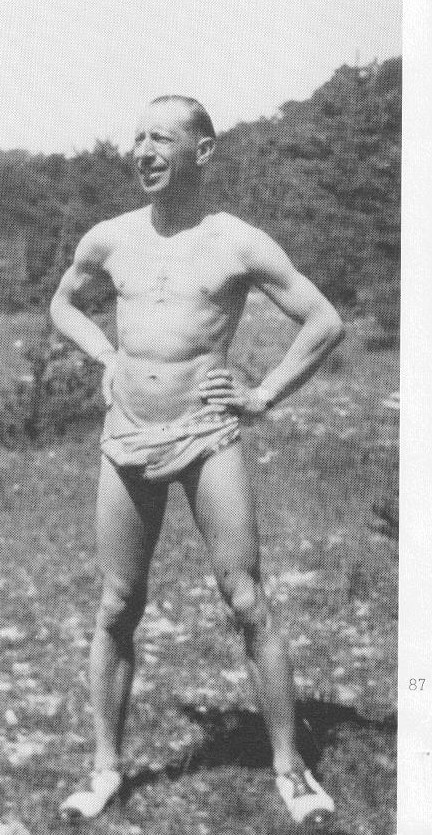
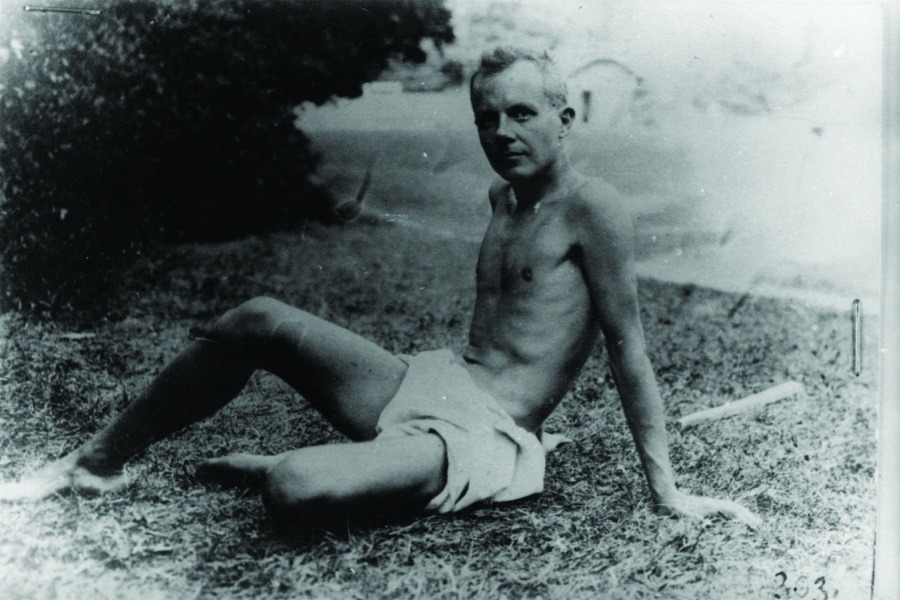
Composers without clothes

Igor Stravinsky and Bela Bartok. Exists one of Benjamin Britten completely starkers, too. Good for them all

Thursday, 19 February 2015

Kung Hei Fat Choy ! Happy Chinese New Year !


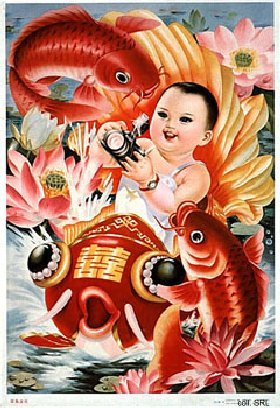
First Day of the Chinese new Year - Kung Hei Fat Choy ! Above, the kind of poster people used to paste onto their walls to bring good fortune in the coming year. The fish represents wealth, abundance, liveliness and flowing energy. So the baby rides a giant carp with the character for happy marriage on its head (happy marriage equals fertility and the continuation of family line).  Its eyes are encrusted with pearls. Lotuses, which rise again after spending the winter buried under mud.  They're beautiful, and edible, too. The kid wears a watch and carries a camera. Also symbols of progress and success. Foreigners might laugh, but for millions of Chinese people, grinding poverty was the norm. . For the poor, posters were a bright symbol of hope. The trauma of the last 100 years in China was horrible, but the west took a lot longer to come out of the Middle Ages (though I'm beginning to wonder)   A friend told me : "Cameras and watches  Now even in the remotest provinces, peasants have smartphones". Thirty years on from Tienanmen Square....."

Wednesday, 18 February 2015

YOU DON'T OWN ME


"YOU DON'T OWN ME - I'm not just one of your little toys. You don't own me, don't try to change me in any way..... I don't tell you what to say, I don't tell you what to do....So please, let me be myself... to live my life the way that I want, to say and do whatever I please" ,  Lesley Gore died this week, aged only 68.  She shot to overnight fame with "It's my Party", a doleful wail about a spoilt brat rasiing hell at her own birthday party. But she was mad because boyfriend had dumped her. In 1963, Nice Girls were supposed to shut up and take abuse, maintaining a pleasant, if plastic persona. If "It's my Party" was unsettling, "You Don't Own Me" was revolutionary stuff. At the time, we didn't quite know how to take such rebellion, expressed so bluntly. Notice how the song tails off, without resolution. It's only the beginning of the story. It's taken some of us 50 years to get the message. Hail to you Lesley Gore! In 1965 women in Iran, for example, and even in Afghanistan, listened to this song and dreamed of a better future. Even in the so called progressive West, women are abused and put down, trapped in a self destructive spiral. It's not a better world. Never forget !