Thursday, 4 May 2017

Edgard Varèse Total Immersion, Barbican

On Saturday at the Barbican, London, there'll be an Edgard Varèse Total Immersion : a major retrospective, augmented by a talk, a film and a reconstruction of Varèse’s Poéme électronique.  This is the third big festival featuring Varèse in recent years, following on from the excellent Total Immersion on Xenakis at the Barbican in 2008  (read more here) and the  Varèse 360˚ weekend, at the South Bank in 2010 (read more here), plus other performances of individual works over the years.  In his lifetime,  Varèse was a cult figure. Now he's practically mainstream.  The time has come, for the "First Wild Man of Music".

The film will be The One All Alone, Frank Scheffer's documentary from 2009, including  interviews with Elliott Carter, Pierre Boulez, John Cage, Morton Feldman,  Riccardo Chailly and Prof Chou Wen-Chung who worked closely with the composer and produced performing versions of incomplete pieces.  The installation of  Poème électronique.is important, too, because it makes concrete, or rather non-concrete, Varèse's ideas on the confluence of all sensory experience.  Written for tape, it was a pioneering moment in the development of electronic music.  Through multiple images, aural, visual and atmospheric, Varèse hoped to create a universe spanning space and time. In 2008, the Barbican recreated Poème électronique.as closely as possible to the original in 1958, at the Philips Pavilion at the Brussels World's Fair, where the performance took place in a structure specially designed for the occasion by Xenakis,who was then best known as an architect.  Sound operating in many dimensions, structurally held together in myriad,intricate patterns.  Poème électronique is unique, and an excellent key to understanding the music of Xenakis's and Boulez. Read more here about Xenaki's designs for realising this piece. 

The evening concert in the Barbican Hall will be conducted by Sakari Oramo, with the BBC SO, the BBC Singers and Alison Bell.  Featured are the "big" works, Arcana, Nocturnal, Étude pour Espace, Déserts, Tuning up  and  Amériques.  The afternoon concert in Milton Court with the Guildhall New Music Ensemble features Un Grand Sommeil Noir, Offrandes, Hyperprism, Octandre , Intégrales , Ionisation, Density 21.5  and Dance for Burgess. Though Varèse is extremely influential, his output isn't huge, so the two concerts, cover nearly all he wrote, except alas, the amazing Equatorial.  The two benchmark recordings are the sets by Pierre Boulez and Riccardo Chailly, quite different yet both authoritative, though I keep returning to Boulez who brings out the quirkiness in the music more.incisively.  

Arcana is the biggest of Varèse's works, and relatively accessible.  It's scored for massive forces-   roughly 120 players altogether,  68 strings, 20 woodwinds, 20 brass and a phalanx of percussionists playing 40 different instruments from timpani to castanets.  Every performance is a feat of logistics, so it doesn't get done as often as it should be.  It's also extremely visual : watching is very much part of the experience.  It's not every day you see rows of trumpets and trombones, some muted, some not playing together, or 8 horns raised heavenwards. Arcana is big, but its bigness springs from its musical function. Arcana proceeds like a gigantic beast, its component parts articulated to move in stately formation, groups of instruments impacting on each other in constantly varying combinations. I've never quite been sure what Varèse  meant by its title, but I've often imagined it as a mythical creature brought to life by arcane spells and incantations.

Even more thrilling, Amériques, featuring klaxon and dramatic percussion effects - a collage of found sound and formal,  which represented a breakthrough in modern music.  Pretty shocking, considering it was first written between 1918 and 1921.  I don't know if Oramo and the BBCSO will be doing Déserts as a multi media event, though I hope so, since when I've experienced it before: the link between visuals and sound can be very rewarding.  The afternoon concert isn't as high profile but the music is superb. I'm particularly fond of Ionization, Octandre, and Intégrales. 


May 4th then and now


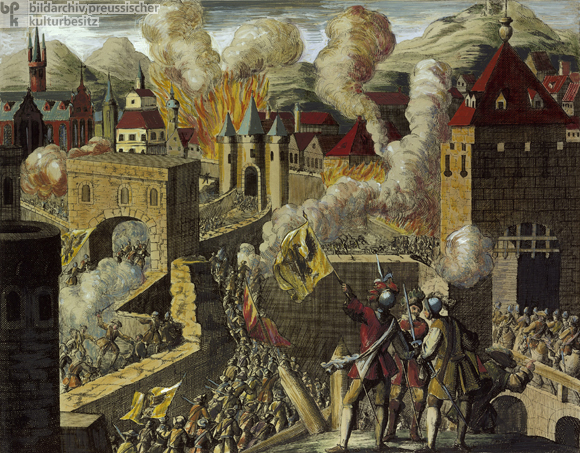
On May 4th 1919, people believed that progress came from education. Now ignorance is a badge of pride. Getting ahead means the suppression of knowledge. No longer it is "what we can learn" but confining the source of knowledge to a limited range of approved opinion.  Now the way to get ahead is false information, disregard for learning.  All over the world, in all societies, and in all fields,  Red Guard tactics triumph.  Burn books ! Smash intellectuals ! Even in so called democracies, the Will of The People gets abused. (the photo above shows students of Peitai (Beijing University)  calling for the modernization of China through the dissemination of education via the arts and literature)


Tuesday, 2 May 2017

Howard Skempton - The Rime of the Ancient Mariner NMC Roderick Williams

Another hit for NMC, specialists in modern British music: Howard Skempton The Rime of the Ancient Mariner with Roderick Williams and the Birmingham Contemporary Music Group, conducted by Martyn Brabbins. This recording breaks new ground, its appeal reaching beyond  new-music circles.

Samuel Taylor  Coleridge's The Rime of the Ancient Mariner intrigues because there's nothing else quite like it in English verse. Though its tone suggests ancient saga, its subject was unequivocally modern, in the sense that it caught the Zeitgeist of the Romantic era's fascination with the "Gothic". The Mariner breaks unspoken  rules and kills the Albatross. He and his shipmates are cursed, dying of thirst though there's "water, water everywhere" around them.  Two centuries later, the Rime still haunts. The Mariner's journey is a descent into the darker unconscious. Like the wedding guest, we "fear thee, ancient Mariner! I fear thy skinny hand!"

Howard Skempton's setting grows from the ballad so symbiotically it seems a "living thing". The vocal part reflects the strange obsessive nature of the text, which draws the listener in as if hypnotized.  The cadences rise upwards and down, at a pace which suggests a hard march. Coleridge began the poem while hiking on the moors.  Roderick Williams is a remarkable narrator, capturing the demented undercurrents in the verse. The lines run like a form of Sprechstimme, not recitation, yet not quite singing. This nightmare does not let a voice take full flight. Williams has a gift for natural, direct communication, without theatrical histrionics. He makes us sympathetic to the Mariner as a mortal man, which makes his fate all the more tragic.

The voice is accompanied at first only by the cello, legato drawn drone-like, as if it were some ancient, primitive instrument, or, indeed, a force of nature, like a sinister wail.  The cello carries the music for a while, until other voices join in in subtle combinations. The double bass quietly murmurs, suggesting sinister depths.  The viola leads the violins, an aptly quirky reverse of "natural order". When the ship is becalmed -- "As idle as a painted ship/Upon a painted ocean" -- the music hovers almost imperceptibly, as if listening out for a breeze. When things change, the piano and other players create a tumult.  When the visionary figures appear, the high violins at last take flight.  Coleridge  writes movement into his lines, which Skempton translates into abstract sound.  We listen, as if spellbound, to the strange, unworldly atmosphere.  Maurice and Sheila Millward, who suggested the setting and commissioned the piece, had insight. Skempton's The Rime of the Ancient Mariner is a remarkable work which needs to become part of the canon of British music.

Like an earworm, this music burrows into your subconciousness.  The cadences in the text haunt the music, reflecting, perhaps, the tides of the ocean, and the pulse of the human body.  You're mesmerized, absorbing the surreal atmosphere so it seems almost natural. Though you're hypnotized, almost against your will, you keep listening, fascinated by the detail and inventiveness concealed within the relentless pulse.  The wedding guest must have felt the same way! It's a tribute to Skempton's skill that his music adds greatly to the effect of the poetry, enhancing its effects without overwhelming its strange personality.


On this disc, Skempton's The Rime of the Ancient Mariner is paired with Only the Sound Remains, taking as a starting point an idea from Edward Thomas's The Mill Water.   The mill is gone, and its sounds have fallen still.  Yet "In calm moonlight, Gloom infinite, The sound comes surging in upon the sense:".  Thus there's no need here for a voice part: the orchestral sounds evoke the sounds that once might have been heard, though the men and machines who made them are now long gone.  John Fallas's booklet notes for NMC explain further. "Skempton's pervasive but pervasively disguised/transformed nine-note scales are the secret code generating everything, from the spare, angular counterpoint into dramatic minor chords or sudden outbreaks of warm, major key consonance". The Rime of the Ancient Mariner in particular is a tour de force, not at all easy to perform, so treasure this recording. It will become a classic.


Monday, 1 May 2017

Manipulating the Reformation - political bias at the BBC?


From St John's Smith Square a very good concert marking the 500th anniversary of the Reformation, with soloists Mary Bevan, Robin Blaze, Nicholas Mulroy and Neal Davies, with the Choir of Clare College, Cambridge, and Clare Baroque, conducted by Graham Ross. Works by Bach and Mendelssohn and Martin Luther himself, but also by non-believers like Brahms and Ralph Vaughan Williams.  Excellent programme and performances.  But far less admirable was the deliberate political bias with which the BBC packaged the concert and indeed, the whole concept of Reformation.  

The Reformation was a revolution in European history, definitely worth commemorating.  But it was not "Martin Luther's Reformation" as if he dreamed it up on whim.  Christianity always was schismatic, but this break succeeded because social conditions were changing.  The development of printing, for example.  Intellectuals like Erasmus and Linacre were changing attitudes.  When Luther posted his 95 theses on the doors of the church at Wittenberg, he was not starting a new religion. The Reformation took off because it was politically expedient, and exploited as leverage by kings and princes. We should mark the Reformation, but we should also see it in the wider context of cultural change, rather than as a calculating power grab. 

So why does the BBC package the Reformation as "a Brexit Moment"? A stupid comparison, demeaning to religion, and to the millions who have died for their faith on all sides.   AN Wilson says that "Protestantism was the first great Eurosceptic thing, the setting up of local power bases against a shared wisdom." which is true to some extent, but disregards the Pax Romana which brought civilization to the tribes of the north. Or perhaps some people don't want to be reminded of the Sack of Rome by "barbarians" and the dark centuries of ignorance that followed ?  "Breaking Free", indeed. 

For centuries after the Reformation, Europe was torn apart by wars, using religion as an excuse.   There was no universal consensus, nor should there have been, since society isn't monolithic, except through  repressive coercion.  Democracy is an ideal which recognizes that no-one has to think the same thing. Otherwise there wouldn't be a need for representation and discourse, or checks and balances against abuses of power. Absolute control is the opposite of democracy. Leaders who fear opposition become dictators.  There is a difference between winning elections and good governance.

The sad fact is that the media can manipulate opinion, thereby destroying the fundamentals of democratic process. An institution as big as the BBC can't help but have some bias, but when bias becomes so pronounced, it no longer reflects the fact that not everyone thinks the same way, nor should have to.  That is why the BBC needs to be more scrupulous, since it should be responsible to the nation as a whole.  British identity draws strength from concepts like fairplay and tolerance, even diversity.  Values that reflect Jesus's teachings : "Love thy neighbour as thyself". These tenets are the fundamentals of democracy.  Will the BBC be able to stand up to political and commercial pressure? For the sake of this nation, I pray.

Sunday, 30 April 2017

Mailied - Goethe, egotist


Wie herrlich leuchtet
Mir die Natur!
Wie glänzt die Sonne!
Wie lacht die Flur!
Es dringen Blüten
Aus jedem Zweig
Und tausend Stimmen
Aus dem Gesträuch
Und Freud' und Wonne
Aus jeder Brust.
O Erd', o Sonne!
O Glück, o Lust!
O Lieb', o Liebe!
So golden schön,
Wie Morgenwolken
Auf jenen Höhn!
Du segnest herrlich
Das frische Feld,
Im Blütendampfe
Die volle Welt.
O Mädchen, Mädchen,
Wie lieb' ich dich!
Wie blickt dein Auge!
Wie liebst du mich!
So liebt die Lerche
Gesang und Luft,
Und Morgenblumen
Den Himmelsduft,
Wie ich dich liebe
Mit warmem Blut,
Die du mir Jugend
Und Freud' und Mut
Zu neuen Liedern
Und Tänzen gibst.
Sei ewig glücklich,
Wie du mich liebst!

Goethe's Mailied, set by Beethoven  (op 52/4).  "How gloriously Nature shines for me ! How the sun shines, how the meadow smiles !  Blossoms burst from every branch and a thousand voices sing from every shrub ! Joy and delight in every breast, O Earth ! O Sun ! O Happniess ! O Hope ! O Life ! O Love !  How beautifully golden seem the morning clouds above the hilltops.  Gloriously blessed are the fertile fields. The whole world is haloed by blossom.  O maiden, maiden, how I love you, how your eyes shine, because you love me . The lark loves song and flight,  the flowers of morning the scents of Heaven. , How I love you. You make my blood warm with the vigour of youth, and happiness and courage. On to new songs and dances I go.  Be forever glad as you love me ! "

And that's the kick. The poem is All About Him. Nature exists to make him feel good (and horny). And may the beloved be lucky as long as she loves him, too.
  

Saturday, 29 April 2017

Queen and composer - Lili'oukalani


Lili'oukalani, (1838-1917) not "forgotten" the last Queen of independent Hawaii, not "forgotten" at all, for she was and remains a symbol of Hawaiian identity, an issue still alive today.  Lili'oukalani was well educated, accomplished and well travelled, who believed in enlightened "Victorian values" of serving her people. "From time immemorial",she wrote "the Hawaiian people have always been lovers of poetry and song"."To compose was as natural for me as to breathe".

Although Hawaii had an elected government and its monarchs were popular, the sugar and pineapple barons from the United States wanted control.  Capitalism prevailed. Hawaii was annexed. Lili'oukalani did not want violence, but was arrested and sentenced to death. She was reprieved but served five years in prison   In prison,she continued to write. "Music", she wrote in her memoirs "remains the source of the greatest consolation".  She never gave in, challenging the annexation through the courts until her death, one hundred years ago.  Though she couldn't defeat colonialism, her defiant spirit lives on in her legacy of music and intelligence.

Lili'oukalani's song Aloha Oe, written in 1873, is so famous that everyone knows it, even if they know nothing else about Hawaii.  With its ukulele accompaniment and swaying rhythms it fits tourist stereotypes though it reflects traditional Hawaiian music.  The song was written in 1878, when her brothers were Kings, and after her marriage.Aloha Oe is so famous that it's ubiquitous, but she wrote a lot more. Her  songs are published and performed in Hawaiian circles.  Yet she shouldn't be seen merely as a niche composer.  Her music shows the influence of 19th century art music,with which she was familiar, for she lived briefly in Europe and clearly had access to scores and the music of her time.  The clip I've added below was made in 1904, so the "western" song aspects are probably affected by the taste of the time,ie."missionary"song.. There is a MUCH better version on YT with Israel Kamakawiwoʻole. Lili'oukalani was a fascinating personality,worth reading about. There's also a good documentary, if you search on YT.

Please also see my take on the 1937 movie The Hurricane, which deals with oppression and first nation freedoms. 


Thursday, 27 April 2017

ENO 2017-2018 season


Once, ENO new season announcements were exciting. If only that could be said of the 2017-2018 season.  Perhaps this was inevitable given the unprecedented funding cuts. The ENO still has the potential to be the creative powerhouse it once was, but not, I suspect,  under the new system.  Whether Cressida Pollock's management genius has turned the company around, or in a different direction, still isn't clear.  It's been a while since the Arts Council England's "special measures" - still largely unspecified  - have been in place, so it would be interesting to know  how far these have been addressed.

Four new productions, the most promising being Verdi Aida, which launches the new season and could well be the hit of the year.  It's directed by Phelim McDermott, on whom we can depend for good theatre.  His Philip Glass Satyagraha, with Improbable,  premiered in 2007, was so inventive that it's being revived yet again in February 2018.  Glass's unusual idiom defies the notion that avant garde doesn't sell. It does when it's done well.  Indeed, Glass operas have contributed greatly to the ENO's creative reputation.  Last year McDermott's  Glass Akhnaten was a  success.   Aida, with its potential,for grand theatrical special effects,  should be well suited to McDermott's style.  The cast will include Latonia Moore, Michelle DeYoung, Morenike Fadayomi, Gwyn Hughes Jones, Brindley Sherratt , Matthew Best and Musa Ngqungwana.  Keri-Lynn Wilson conducts.  ENO loyalists should be out in force to show support for the comapny's traditioins.

The ENO and the Met have understandings.  Nico Muhly's Two Boys premiered at the ENO before moving on, somewhat changed, to the Met. Muhly's new Marnie at the ENO will be conducted by Martyn Brabbins, now the ENO Music Director, a specialist in modern English -anguage opera.  That should ensure a good musical performance, however the opera turns out.   (Keri-Lynn  Wilson, incidentally is Mrs Peter Gelb)

Following on the success of Mike Leigh's The Pirates of Penzance, Gilbert and Sullivan's Iolanthe, directed by Cal McCrystal, whose background is in theatre. Then Daniel Kramer's production of La Traviata with Claudia Boyle.  

Revivals of audience favourites include Jonathan Miller's The Barber of Seville, Richard Jones's Rodelinda, Phelim McDermott's Satyagraha, Robert Carsen's A Midsummer Night's Dream and Fiona Shaw's The Marriage of Figaro which will also be conducted by Martyn Brabbins. 

Wednesday, 26 April 2017

Thomas Adès : The Exterminating Angel ROH London

Thomas Adès The Exterminating Angel at the Royal Opera House, London,  reviewed in depth by Claire Seymour in Opera Today : The most detailed review so far !
The opera’s score is an ingenious re-enactment of the past in the present. But, in this work Adès’s characteristically and remarkably skilful parodic eclecticism does more than remind us that our experience of music is filtered through our memory of past musical experiences - from medieval song to modernism; here, such musical echoes imply own our entrapment. So, in Act II the ‘Fugue of Panic’ layers snatches of Strauss waltzes - and Adès imagines the latter as teasing and taunting, ‘Why don’t you stay a little longer? Don’t worry about what’s going on outside’ - as the artifice of which the waltz is a symbol, and upon which the guests’ sense of propriety is founded, is exposed as illusory. - See more at: http://www.operatoday.com/content/2017/04/the_exterminati.php#sthash.Qv0SpwEh.dpuf

The opera’s score is an ingenious re-enactment of the past in the present. But, in this work Adès’s characteristically and remarkably skilful parodic eclecticism does more than remind us that our experience of music is filtered through our memory of past musical experiences - from medieval song to modernism; here, such musical echoes imply own our entrapment. So, in Act II the ‘Fugue of Panic’ layers snatches of Strauss waltzes - and Adès imagines the latter as teasing and taunting, ‘Why don’t you stay a little longer? Don’t worry about what’s going on outside’ - as the artifice of which the waltz is a symbol, and upon which the guests’ sense of propriety is founded, is exposed as illusory. - See more at: http://www.operatoday.com/content/2017/04/the_exterminati.php#sthash.Qv0SpwEh.dpuf
he opera’s score is an ingenious re-enactment of the past in the present. But, in this work Adès’s characteristically and remarkably skilful parodic eclecticism does more than remind us that our experience of music is filtered through our memory of past musical experiences - from medieval song to modernism; here, such musical echoes imply own our entrapment. So, in Act II the ‘Fugue of Panic’ layers snatches of Strauss waltzes - and Adès imagines the latter as teasing and taunting, ‘Why don’t you stay a little longer? Don’t worry about what’s going on outside’ - as the artifice of which the waltz is a symbol, and upon which the guests’ sense of propriety is founded, is exposed as illusory. - See more at: http://www.operatoday.com/content/2017/04/the_exterminati.php#sthash.Qv0SpwEh.dpuf
The opera’s score is an ingenious re-enactment of the past in the present. But, in this work Adès’s characteristically and remarkably skilful parodic eclecticism does more than remind us that our experience of music is filtered through our memory of past musical experiences - from medieval song to modernism; here, such musical echoes imply own our entrapment. So, in Act II the ‘Fugue of Panic’ layers snatches of Strauss waltzes - and Adès imagines the latter as teasing and taunting, ‘Why don’t you stay a little longer? Don’t worry about what’s going on outside’ - as the artifice of which the waltz is a symbol, and upon which the guests’ sense of propriety is founded, is exposed as illusory. - See more at: http://www.operatoday.com/content/2017/04/the_exterminati.php#sthash.Qv0SpwEh.dpuf

Tuesday, 25 April 2017

Mumbo Jumbo Mantras at the BBC Proms


What's really going on behind the scenes at BBC Radio 3 and at the Proms?  Before cheering the end of TV-themed Proms like DrWho, Cbeebies etc etc, let's look analytically behind the maudlin platitudes. So Alan Davey, head of BBC R3, has finally twigged that "new" audiences aren't necessarily Proms audiences?  What a revelation!  The "theory: that you get people into the Albert Hall and they see what it’s like and that it’s actually quite nice, and they come back for something else.” is mumbo jumbo mantra,  mindlessly repeated to numb dumb minds.

Since people go to the Royal Albert Hall all year round, for all kinds of events, why should they be afraid of the building?  That's supposition without substance.  It's not houses that scare the punters but perceptions based on falsehood, like "elitism" which the nonsense mantra stupidly reinforces.  The success of Proms in the Park should be evidence that people can have a good time with classical music, of a sort, whatever the situation, without downgrading core product?
 
Given that classical music can be accessed in more ways now than ever before, why should physical attendance be a prerequisite? Didn't someone at the BBC realize that they broadcast worldwide and online, or don't they tell each other ?  That is the "new" audience for classical music, potentially greater than ever before. But policymakers are trapped in the Stone Age of "bums on seats".  The government, and Arts Council England, are straitjacketed into geographical, small-scale thinking that bears little relation to reality.  All over Europe, orchestras, opera houses and concert promoters are wise to the fact that technology reaches bigger potential audiences. And audiences who have more choice are more sophisticated, less easily fooled by gimmick marketing. The way ahead is not dumb down but smart-up.  That's why top-quality new concert halls have been opened in centres of excellence like Paris and Berlin: the Philharmonie de Paris, the Pierre Boulez Saal in Berlin,  and La Seine Musicale.  Even Hamburg, a little off  the beaten track, has raised its game with the Elbphilharmonie.  Some may gloat that we don't need a world-class concert hall in the UK. But culture is global industry: being Luddite is Little Britain blindness.

And why pick on the Dr Who and CBeebies Proms, which were so successful they sold out fast, providing income for other things?  Those were fun and surprisingly high quality, like the Science Prom a few years back. Nothing wrong with a populist tag, as long as the music is well chosen and well performed.  And that's where the new announcement shows its flaws.  Does someone, somewhere, like trash as long as it doesn't promote the BBC?

There arre plenty of non-BBC brand gimmicks this season.  A lot of Proms , even those with mainstream classical music, seem aimed at audiences who don't care much about music, and are easily fobbed off by big names and safe repertoire.  John Wilson, light music, film music, are all OK in small doses,  but not elevated to canonic status.  How will the "sensory" Prom work for people with disabilities when the Royal Albert Hall itself is not at all disability-friendly. A significant part of the core audience, many of whom have  who have dedicated a lifetime to the Proms, are now excluded because basic facilities are so inadequate.   Even the website's annoying. They've even killed the composer search section in the Proms archive !

The over-riding philosophy seems to be that whoever is making policy has neither faith in the core product, serious music, nor faith in the ability of audiences to discern the difference between trash and treasure.  This is absolutely not what Sir Henry Wood stood for. But the new Regime blithely uses his name for self-promotion and flogs the anodyne Ten Pieces mentality instead. Ten Pieces was a joke once: now it's too moronic to bear.  It's a symptom of the lemming-like rush towards mindless stupidity.

The real problem lies not with the Proms and the BBC but a whole cultural dumbing down, enshrined in Government policy towards the arts and towards the BBC. I've written about this many times over the years (follow the labels below on arts policy, BBC  policy, music education, etc etc).  The Elephant in the Room ? Political agendas, not economic reality.   The arts are a big part of this country's economic success and international status.  The arts aren't cheap because excellence is always hard to attain. But everyone benefits when a nation has a thriving arts culture.  The BBC and the arts do more for British prestige and foreign policy than goonish sabre rattlers and the cultivation of dubious allies.  Mess up the arts and mess up big time.  Witness the demise of the ENO and the denigration of London as a whole.  So what is really going on?

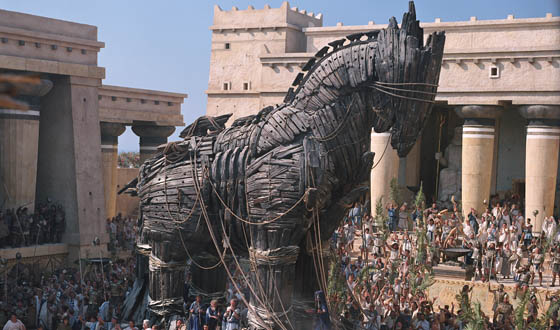
We live in an age of Trojan Horse Policies, everywhere and in many fields. People are manipulated into "taking back control"  while handing over control to vested interests whose concerns have little to do with good governance or even public benefit.  We need to face the fact that many would be delighted to see the BBC scrapped because it competes with private interests. But if private interests are so great, why are they so afraid of competition?  The idea that culture is part of civilization prevails:  the Royal Albert Hall stands as a monument to an enlightened age where policymakers had faith in the ability of ordinary people to progress through knowledge. Unfortunately, market forces operate for the benefit of whoever profits by fair means or foul.  Market forces can be manipulated, against the wider interests of the community.  Some ideals that we cherish, like public health, education, the arts and the environment,  need communal involvement.  When  market forces become mantra,  the minority profit at the expense of the majority. Market forces are a political construct, and not necessarily good for the wider economy. 

Monday, 24 April 2017

Bruckner dances ! Bartók, Debussy - Roth, LSO Barbican


François-Xavier Roth conducted the London Symphony Orchestra at the Barbican in:Debussy, Bartók, and Bruckner. Roth has a flair for designing thought-provoking programmes that stimulate the mind as well as the spirit.  He's also a good communicator whose enthusiasm inspires listeners as well as musicians - no surprise he's now the LSO's Chief Guest Conductor.

All music is "new" in that good music is original. Hence the value of making connections that enhance the unique qualities of each work.  Debussy Prélude à l'après-midi d'un faune was a breakthrough. Though we hear it so often, it's bracing to remember that it was written 123 years ago. It defies categories. Its exoticism stretches tonality, its chromatics at once rich, yet clean and modern. Think of fin de siècle art with its curving forms, against chaste backdrops.  The Prélude lends itself to dance because it is sensuous, yet also lucidly disciplined.  You don't mess with dance or it falls apart. No chance of that with the LSO and Roth.

From the familiar to the much less familiar: Bartók Viola Concerto sz 120 with soloist Antoine Tamestit.  A bit of an orphan work,  revised and completed, perhaps to fit conventional taste. But the point is not whether one likes or dislikes a piece so much as figuring out how it works.  Oddly enough, I kept thinking of Gérard Grisey Les espaces acoustiques. Though the pieces are completely different, they both explore the character of the viola.  Hence the combinations: viola, then flutes and oboes, the viola suddenly strident, communing with trumpets, then horns.  There are elements of dance, Gypsy czardas, Scottish reels and even, possibly jazz.  Perhaps I thought of Grisey because Roth and the LSO prefaced Bartók with Debussy, priming me to think in terms of microtonal colour. "spectralism" to use the buzz word.  By this stage in his life, Bartók wasn't in a position to innovate, but we can get a glimpse of what might have been.

And so to Bruckner Symphony no 4. As so often the title "Romantic" is misleading.  It's not romantic in the sense of Hollywood and not even in the sense of Wagner.  Note the instrumentation, which is relatively limited.  Consider the use of horns and rustic imagery.  Aha! Bruckner's doing Weber Der Freischütz, or even Beethoven's Pastoral, even Smetana, in entirely his own way, of course. Thus the passionate tremelos and the sense of physical movement. Bruckner, dancing!  The relatively restrained forces of the LSO keep the textures vigorous and lively. Very well suited to Roth's energetic style.  

Sunday, 23 April 2017

Shakespeare's Secret Twin REVEALED


Latest in my series of Secret Twins ! Previous matches - Benjamin Britten and Roderick Williams, Meatloaf and Bryn Terfel, Oliver Knussen and Claude Debussy, Harry Potter and Shostakoviuch and several ,more

English Bluebells

English Bluebells by Roger Thomas
In Spring, English woodlands turn sapphire, carpeted by bluebells.  Oddly, though, there aren't many poems which mention them. Perhaps they are too humble ?  I prize them, though, beyond many garden flowers, for they turn up year after year.  There is a poem, by Anne Bronte, but it's a bit twee for tough little b's like bluebells.  But here an extract:

A fine and subtle spirit dwells
In every little flower,
Each one its own sweet feeling breathes
With more or less of power.
There is a silent eloquence
In every wild bluebell
That fills my softened heart with bliss
That words could never tell.

Saturday, 22 April 2017

Formula saves the BBC Proms !


Formula saves the BBC Proms 2017!  This may be the beginning of the end for Sir Henry Wood's dreams of the Proms as serious music. Fortunately The Formula, perfected by much-maligned Roger Wright, is strong enough to withstand the anti-music agendas of the suits and robots who now run the Proms.  Shame on those who rely on formula instead of talent, but in dire straits, autopilot can save things from falling apart.  So, sift through the detritus of gimmick and gameshow to find things worth saving   (Read here what I wrote about The Formula)  In the long term this strategy will bring new audiences sold on strategy, not the quality of the product. Not at all the same thing.

Daniel Barenboim is a Proms perennial, for good reason, so we can rely on his two Elgar Proms (15 and 16 July) especially the Sunday one which features a new work by Sir Harrison Birtwistle, Deep Time, which at 25 minutes should be substantial.  Pascal Dusapin's Outscape on 19/7, 28 minutes, also substantial. Another "regular" Proms opera, Fidelio on 21/7, with a superlative cast headed by Stuart Skelton and Ricarda Merbeth, though Juanjo Mena conducts.  Ilan Volkov conducts Julian Anderson's new Piano Concerto on 26/7 , though the rest of the programme, though good, isn't neccesarily Volkov's forte  On 29/7 Mark Wigglesworth conducts David Sawer's The Greatest Happiness Principle.  On 31/7, Monteverdi Vespers with French baroque specialists Ensemble Pygmalion  

On 1/8, William Christie conducts the OAE in Handel Israel in Egypt and on 2/8, John Eliot Gardiner, the Monteverdi Choir and the English Baroque Soloists do Bach and my beloved Heinrich Schütz.  On 8/8 Gardiner returns with Berlioz The Damnation of Faust, with Michael Spyres. First of this year's four Mahlers is Mahler's Tenth (Cooke) with  Thomas Dausgaard and the BBC Scottish Symphony Orchestra (12/8).  Robin Ticciati, back with the Scottish Chamber Orchestra on 15/8 with an interesting pairing, Thomas Larcher Nocturne-Insomnia with Schumann Symphony no 2.  

Throughout this season, there are odd mismatches between repertoire and performers, good conductors doing routine material, less good conductors doing safe and indestructible. Fortunately, baroque and specialist  music seem immune.  See above and also the Prom featuring Lalo, Délibes and Saint-Saëns with François-Xavier Roth and Les Siècles on 16/8   Perhaps these Proms attract  audiences who care what they're listening to.  Schoenberg's Gurrelieder on 19/8 with Simon Rattle, whose recording many years back remains a classic but may not be known to whoever described the piece in the programme "Gurrelieder is Schoenberg’s Tristan and Isolde, an opulent, late-Romantic giant."  Possibly the same folk who dreamed up the tag "Reformation Day" like Nigel Farage's "Independence Day" Nothing in life is that simplistic  The music's OK, but not the marketing.

Sakari Oramo conducts the BBC SO in Elgar Symphony no 3 (Anthony Payne) on 22/8   Potentially this will be even bigger than the Barenboim Elgar symphonies, since Oramo is particularly good with this symphony, which may not be as high profile but is certainly highly regarded by those who love Elgar.   On 26/8, Jakub Hrůša conducts the BBC SO in an extremely well chosen programme of Suk, Smetana, Martinů, Janáček and Dvorák.   More BBC SO on 31/8 when Semyon Bychkov conducts a Russian programme  Marketing guff seems to make a big deal of national stereotypes, which is short-sighted  These programmes cohere musically, but that's perhaps too much to expect from the new Proms mindset.

On 1/9,  Daniele Gatti conducts the Royal Concertgebouw Orchestra in Bruckner and Wolfgang Rihm.  An odd pairing but one which will come off well since these musicians know what they're doing They are back again on 2/9 with  Haydn "The Bear" and Mahler Fourth  which isn't "sunny" or "song-filled".  It's Mahler,  not a musical.  Gergiev brings the Mariinsky on 3/9 with Prokofiev, Tchaikovsky and Shostakovich Symphony no 5.  Another huge highlight on 7/9 : the Wiener Philharmoniker, with Daniel Harding in Mahler Symphony no 6 - so powerful that nothing else needs to be added to sugar the pill.  For me, and for many others, that will be the real Last Night of the Proms   Party time the next day, with Nina Stemme as star guest.  

Thursday, 20 April 2017

The Ghost of Sir Henry Wood? BBC Proms 2017


The 2017 BBC Proms Season, just announced, is a travesty, far adrift from the founding principles of the Proms, and indeed of the BBC itself.  Once the BBC stood for excellence, with its guiding principles to "educate, entertain and inform", the logic being that the public can tell good quality from bad, and value learning and self-development.  Now we have a Proms season whose priorities are not musical so much as an ad for a BBC that is itself dumbed down beyond recognition.  Will the ghost of Sir Henry Wood rise, like the Commendatore, to smite those who have despoiled his legacy?  

The First Night is only 70 minutes or so, so it won't tax the attention span. True, Igor Levit will play Beethoven, and Edward Gardner will conduct John Adams Harmonium, a big, if limited, blast. so it won't be bad.  But once we could expect more. Daniel Barenboim brings the Staatskapelle Berlin to "launch this year’s cycle of Elgar symphonies". Direct quote from the BBC Proms website. What Elgar symphonic cycle? One on Saturday, the other on Sunday. The Third, realized by Anthony Payne, is probably too outré for the new Proms market.  It's been pushed to the doldrums of late August. Thankfully, Sakari Oramo conducts: he does it well.  

What kind of audience is this year's Proms aimed at?  Read the summary here.  Sure, it's good to have pop, light music etc. but not at the expense of serious music. One of the basic principles of marketing is to believe in what you're trying to sell.  Raise the bar, aim for excellence, and grow the market .Pitch below the lowest possible denominator, and kill whatever audience you already have while lowering standards and decreasing expectations.  If the primary product is music, then sell music,. All the gimmicky sales patter in the world won't make up for non-product.  If people really believe  Scott Walker is a "Godlike genius", good for them, but don't downgrade Beethoven.

Why sacrifice an existing market to try selling to another which might have completely different priorities?  Or perhaps that is the hidden agenda. The Far Right, the commercial sector, and vested interests have everything to gain from dumbing the BBC down. Sir Henry Wood believed that people were able, and willing to learn. Now, we live in an era where any kind of expertise is sneered at. Getting ahead means dismantling the edifices of advancement.  There's a whole lot more at stake than just the Proms and the BBC.

Fortunately, some of the principles of Proms planning remain, since they follow rules so simple anyone can master them.  Add a few big names - Haitink, Christie, Rattle, Salonen, Bychkov, Gardiner - and the punters will pay.  Bring in the BBC orchestras, most of which are good enough to do serious music and do it well enough without scaring the unwary.  Mark non-musical anniversaries like "Reformation Day" a term Martin Luther would have baulked at, then throw in music that has little to do with one of the revolutions in European history.  Hire famous foreign bands like the Royal Concertgebouw Orchestra Amsterdam, whom everyone loves, and a few cheaper ones. Throw in a few blockbusters like Schoenberg  Gurrelieder.(Rattle 19/8) .and  Handel Israel in Egypt on 1/8 (William Christie and the Orchestra of the Age of Enlightenment), Bring along an opera (usually Fidelio which needs little staging) and import a ready-made from Glyndebourne and bingo! The formula works, like a well-oiled machine, running with minimal human intervention.

Thus, for those who actually like music  there are other good things to seek out. Hidden under the banner "Take a musical thrill-ride from the chaos of creation" on 19/7 is Pascal Dusapin's new Outscape. Look out too for Thomas Larcher's Nocturne-Insomnia on 15/8  New British works - David Sawer's The Greatest Happiness Principle on 29/7, and Mark-Anthony Turnage Hibiki on 14/8. Excellent younger conductors like François-Xavier Roth and Les Siècles (16/8), Mirga Gražinytė-Tyla (21/8),  and Jakub Hrůša (26/8 - good programme).  Formula is all very well, and formula has saved the season  Read my picks HERE.  But eventually it will not be enough to rely on mechanical formula. It's all very well to meet political targets but long term, it is music that matters, not flashy marketing.

Wednesday, 19 April 2017

NMC Brian Elias Electra Mourns

At the Wigmore Hall, Brian Elias's Oboe Quintet coincided with the release of a new recording of Elias's work from NMC Records, specialists in modern British music.

The title piece, Electra Mourns, won Elias a British Composer Award. It received its premiere in 2012, with the Britten Sinfonia, conducted by Clark Rundell, with soloists Susan Bickley and Nicholas Daniel  for whom the piece was created. .  Electra mourns is a dramatic scena, with the stylized formality of Greek tragedy. Electra is alone, without hope, in hostile circumstances.   Bickley sings the long, keening lines expressing Electra's desolation. But Orestes is not actually dead. Daniel's cor anglais surrounds the vocal part, mimicking its curving lines. Voice and instrument in duet are heard against a backdrop of strings, punctuated by piano.  Functioning like Greek chorus, the orchestra comments, wordlessly, sharp angular outbursts suggesting alarm. High textures sear, like flailing whips.  Yet the cor anglais continues, unperturbed, its sensuous richness evoking elusive mysteries.   When the strings go still, its chords grow strong and clear. Electra listens.  Bickley's voice intones at the bottom of her range, then soars.    


Electra Mourns is enhanced by Geranos, from 1985, here performed by Psappha, conducted by Nicholas Kok, who first performed it in 2003. Both pieces take their cue from Greek legend but take on different form. Geranos is tightly constructed and taut, evoking the idea of dance as athletic discipline. The slow middle movement refers to a ritual dance of mourning.  The puzzles and mazes of Harrison Birtwistle naturally spring to mind, but Elias's style  is his own.  Sparkling textures (piccolo, strings, metallic percussion) illuminate the third and final movement.  Theseus was said to have danced on escaping the Labyrinth. Geranos ends with lucid, clear tones. A "geranos" is a crane, flying free.  

While  the texts for Meet Me in the Green Glen are by John Clare (1793-1864), Elias's setting is minimal, almost "Grecian".  Roderick Williams and Susan Bickley sing without accompaniment, their plaintive lines evoking timeless plainchant rather than quasi-folk song.  The unadorned beauty of the singing is enhanced by a slight echo effect, as if the recording was made in a silent chamber.  Perhaps the "Green Glen" is a tomb-like time warp. The poems refer to the past, to "Now" and"Hesperus, thy twinkling bray" that "tolls the traveller on his way that Earth shall be forgiven".  A fascinating mix of quiet and disquiet, utterly modern in spirit.  .

The five songs of Meet Me in the Green Glen (2009)  are followed by the five songs of Once I did breathe another's breath  for low voice and piano, premiered by Roderick Williams and Iain Burnside at the Ludlow English Song Weekend in 2012.  The texts are more disparate, and the cycle less coherent.  Ludlow began as a tribute to Gerald Finzi whose  affinity for Tudor and Stuart poetry few can match.  Roderick Williams, nonetheless, is superlative, with such a gift for communication that anything he sings is well worth listening to.   Electra Mourns is the third of NMC's Brian Elias recordings, and a good addition to the catalogue of British music.