Friday, 22 June 2012

Puccini Suor Angelica on TV

Nuns with illegitimate children committing suicide? Suor Angelica, the second opera in Puccini's Il trittico  was broadcast on BBC TV4 tonight, and wl be rebroadcast at 330 am. For me it was by far the most moving of the triptych because it dealt with complex human feelings, not more conventional emotional situations. On stage, you could hear how well Ermonela Jaho characterized the part with her voice. On film you can see the fine detail in her acting as she expresses Suor Angelica's tortured emotions. Jaho speaks of how much she puts into the role, and it shows. Such sincerity and committment! She's truly a star. Anna Larsson as the Princess is excellent too.

A plot like this could invite a maudlin, pseudo-religious setting, but here it's more matter of fact. Suor Angelica, like the Virgin Mary, lives for her son whom she loses. She kills herself to be with the kid in heaven, til she realizes, oops, suicide is mortal sin. That's a sign, I think, of how uncalculating and instinctive she is. Maybe that's why the Virgin Mary shows her grace, becuase Suor Angelica is a good person at heart.

Convent/Christian life is fundamentally unnatural because it demands the suppression of earthly desires, however innocent. To 19th century Catholic Italians, what Puccini is implying was blasphemy. Can the Virgin Mary overturn the laws of God? Assuming that there is a god at all, and that religious life isn't just another scam like the one the Princess is planning. It's a wonder that the Church didn't turn on composer and librettist.  Please read what I wrote about the prima last September (ReNUNciation : Puccini Il trittico) All three operas have been filmed and are now available on DVD. Highly recommended.

Barenboim on Israel's Wagner ban

Daniel Barenboim speaks about Israel's ban on Wagner to Der Spiegel.  About 20 years ago, members of the 1930's orchestra were still around and told how the original "ban" came to be.

Beethoven and Schubert in Schwarzenberg, Austria

From Barbara Miller in Schwarzenberg in the Beregenzerwald :

"I am in Schwarzenberg with a Martin Randall tour that combines a wealth of Schubertiade concerts and recitals with walks in the surrounding Bregenzerwald Alps. The first Lieder recital we heard was Sunday night’s performance by tenor Mark Padmore and pianist Paul Lewis of some Beethoven songs, including An die ferne Geliebte, and Schubert’s Schwanengesang. Our tour lecturer, Richard Wigmore, noted that the entire performance could perhaps be characterized by the title of the Beethoven song cycle, as so many of the Schwanengesang songs talk of separation (either physical or emotional) from the beloved. In that light, it is possible to see the opening songs of Beethoven as setting up the “happy” time of the relationship, as “Mailied” celebrates the awakening of love in springtime, and “Neue Liebe, Neues Leben” shows ambivalence about the inner change this brings to the poet. This was followed by the spiritual musing of “Abendlied unterm gestirntem Himmel”,before the artists launched into An die ferne Geliebte, as a possible hint at the reason for the unexplained separation that is the subject of the song cycle."

"I found these songs less pleasing in Padmore’s voice than, for instance, the Schubert Heine songs that came later in the program. His vocal technique allowed for neither a heroic ring nor a smooth clear tone at the top, so the climaxes of the songs could sound a bit strained. In An die ferne Geliebte, in which Beethoven was exploring a return to simple, folklike melody as he began his final compositional period, much of the musical interest is actually in the piano, and Paul Lewis, who has had an extensive career as a solo pianist (including the complete Beethoven sonatas), gave that part the constant presence that it requires to tie the cycle together and give musical impetus and word painting to the heartfelt, but by no means brilliant, text. Schwanengesang, performed without interruption (other than a break for applause between the Rellstab and Heine songs), formed the second half of the program, and here the two artists (who have recorded the piece to some acclaim) really shone. I should first mention Paul Lewis’s magical handling of the water effects in “Liebesbotschaft” and of the fog in “Die Stadt” (to name only two places where I was willing to break my concentration to make notes). There were some spots in “Aufenthalt” and “Der Atlas” where Padmore’s low notes didn’t quite cut through the piano, but he had powerfully ringing high notes in “Der Atlas” (proof that he doesn’t always need to cover them), as well as a magically transparent tone in “Am Meer”, creating the numb memory that led to a perfect ratcheting up of the drama on the final line."

“Vergiften mit ihren Tränen”, which is taken by scholars to be a metaphor between being poisoned by the girls tears and the onset of venereal disease. I have heard the Heine songs taken in different orders; here the ordering was: “Der Atlas”, “Ihr Bild”, “Das Fischermädchen”, “Die Stadt”, “Am Meer”, and concluding with “Der Doppelgänger”, where again the drama was built beautifully through flawlessly smooth dynamic changes. After a pause, Lewis broke the desolate mood of the previous piece with the gentle opening of “Die Taubenpost”, and Padmore, whose hand gestures through the recital had been stable but showed sign of tension, opened his hands to the audience as he asked us if we also understood “Sehnsucht”, as if coming back to himself following the storm of the Heine Lieder. Paul Lewis maintained a constantly brooding presence throughout the recital and the bows between sections, lightening up a bit during the numerous enthusiastic curtain calls that followed the performance, no doubt providing much gratification to the singers, but failing to tempt them to follow this long, demanding sing with any encores."  


photo : böhringer friedrich

Jonas Kaufmann returns!

Jonas Kaufmann is back in action, starting recitals in July, which means he's OK for Salzburg. He says on his website : "It certainly has something to do with the hustle and bustle of the world we live in that many people nowadays find it alarming when a singer takes a somewhat longer break after an illness. In earlier operatic times forced breaks like these were nothing unusual. People simply took the time they needed for everything, and in particular to allow the healing process to run its full course. The infection I picked up  at the end of April was so tenacious that I simply needed this time get my health completely restored".

True. Singers today are trested like consumer commodities who must deliver standardized product 24/7 or get attacked by nit picking nasties. It's completely unfair to compare singers of the past with singers of the present. Once, singers travelled by boat or train and had long gaps to rest in. Planes and hotels don't make for healthy lifestyles. Nowadays singers are monitored on the internet and social media, every tiny wobble amplified  and repeated by people who probably don't know beans about the subject. It's an altogether more stressful world than even 20 years ago.

Furthermore, recording creates the expectation that everyone should sound exactly "right" - no allowance for individuality and variation. Besides a singer's voice is his or her own body. Anything that affects the body can affect singing. And as anyone who has not been 100% knows, problems can linger if you don't heal completely.

Kaufmann didn't cancel on whim - he's lost 3 to 4 months income, at least. He's being conscientous. If he came back too soon, he could damage his recovery. He's too good to risk that, and shouldn't be under pressure. Good wishes, JK!

Thursday, 21 June 2012

Miah Persson, Swedish Song, Wigmore Hall

At the Wigmore Hall, .there's long been a tradition of Swedish song.  We've heard many of the greats, Anne Sofie von Otter, Barbara Bonney and others. Miah Persson and Roger Vignoles are in this constellation. One of their earliest London concerts was built around their 2003 recording Soul and Landscape (Hyperion). Since then, Miah Persson has become one of the most significant lyric sopranos in this country. The pair have been back many times at the Wigmore Hall, but it was still a pleasure to hear them, particularly in repertoire that is "new" to English audiences.

Persson and Vignoles began their programme with Emil Sjögren's Sechs Lieder aus Julius Wollf's Tannhäuser, (1884). Not Wagner's Tannhäuser but a setting of an epic poem written in 1880. As Geoffrey Norris writes in his knowledgeable programme notes, Wollf  (1834-1910) liked subjects "of a mythical past...described somewhat derogatorily as Butzenzenscheibenpoesie, a Butzenscheibe being an old form of archery target", like those round fake-archaic window panes we see in mock-historic pubs. Although I hadn't read Norris's notes until I started writing this piece, that's exactly how I felt about the songs. Sjögren, (1853-1918) chooses sections that deal with love, and are sweet rather than dramatic. Don't even dream of Wagner. These are songs that evoke late 19th century middle class values. "Ich möchte schweben über Tal und Hügel " let Persson sing very quietly. This Tannhäuser (or Elizabeth) is a gentle soul.

Tchaikovsky songs of the same period brought out Persson's abilities as dramatist. In "Sred' shumnovo bala" (At the Ball, op 38/3 1878), Tchaikovsky paints dance rhythms into the piano part, and pathos into the voice. The ball is cheerful, but the beloved eyes are sad. It's a secretive song, but Persson makes you notice the subtle ciontrasts of mood. "Solovey" (op 60/4 1886) stressed Persson's voice slightly, but in "Cradle Song" (op 16/1 1872) she managed to convey the strange darkness behind this lullaby with images of eagles.

Five songs by Lars-Erik Larsson (1908-1986)  to words by Hjalmar Gullberg followed. Larsson and Gullberg worked together frequently and their cantata "Förklädd gud" (God in disguise) is a staple in Swedish choral singing circles. (It's even on youtube). Larsson worked in broadcasting, so he appreciated music that would have broad popular appeal, even though he studied with Alban Berg and was the first Swedish composer to experiment with serialism. These songs, here transcribed for voice and piano,  have charm, rollicking piano, and contrasting cleanly arching vocal lines. "Skyn, blomman och en lärka"  (The cloud, the flower and the lark) was lit up by Persson's ability to smile into her singing, adding warm tone. In "Kyssande vind" (the kiss of the wind), the piano rolls up a storm. Someone is stealing a kiss, disguised as the wind. The song ends with a flourish, and Persson sings with such happiness that you know the kiss is welcome.

More familar songs by Edvard Grieg, in which Persson excels. "En svane" (op 252 1876) had the right hint of melancholy. Elizabeth Schwarzkopf's recording, in German, is hauntingly beautiful, but the song is even lovelier in Norwegian.  "Mens jeg venter" (On the water, op 60/3 1893-4) was particularly beautiful. Vignoles playing sparkled : you could visualize light shining off the ocean waves. "Bro, bro, brille" goes the refrain, and Perssons makes it joyous. 

The highlight of this recital, for me, anyway, were the songs from Gösta Nystroem (1890-1966). Nystreom is one of the finest Swedish composers, whose "Sånger vid havet" (Songs by the sea), "På reveln" (At the reef) and "Själ och landskap"  (Soul and landscape) are a part of the repertoire of any female Swedish singer. Miah Persson of course does those for soprano: Nystroem inspired her first major recording nearly 10 years ago.  Here she chose two songs from Nystroem's incidental music to "The Tempest" (1946).  Given Nystroem's fascination with oceans, it's hardly surprising that the orchestral parts of this music are wildly turbulent, complete with wordless chorus. The two songs Persson and Vignoles pick reflect the magical side of the story, "Where the Bee sucks" and "Come unto these yellow sands" (in Swedish) are exquisitely lyrical, capturing the strange magic that Shakespeare conjures. The refrain "Hark! Hark! bow-wow" becomes "Hallå, Hallå, Å", whuch gives Nystroem a chance to write exotic ulullation, which Persson sings with clear, bright tones. Later, the refrain "Ding dong bell" becomes ("Bing, bång, farväl") , and Persson's voice rings like a silvery bell.

Perhaps one of the most famous of Gösta Nystroem's works is his "Sinfonia del Mare" (1946-8) a magnificent symphonic poem with a song in its midst, to a poem by Ebba Linqvist. Arising from the wild ocean intensity of the music, the song seems almost supernatural.  "Just as one flees the beloved, not bearing to be consumed", goes the poem, "So I have fled the sea". But just as life without love is in vain, the poet must leave sunny days in the forest, drawn back to "a sigh of the wind from the sea". Persson and Vignoles do an arrangement for piano and voice, so the emphasis is on the second strophe. "I must return, and sit by the sea and know. That is all there is on earth". This is the title of the poem, and its meaning.

A full review will appear soon in OPERA TODAY.

Elly Ameling interview

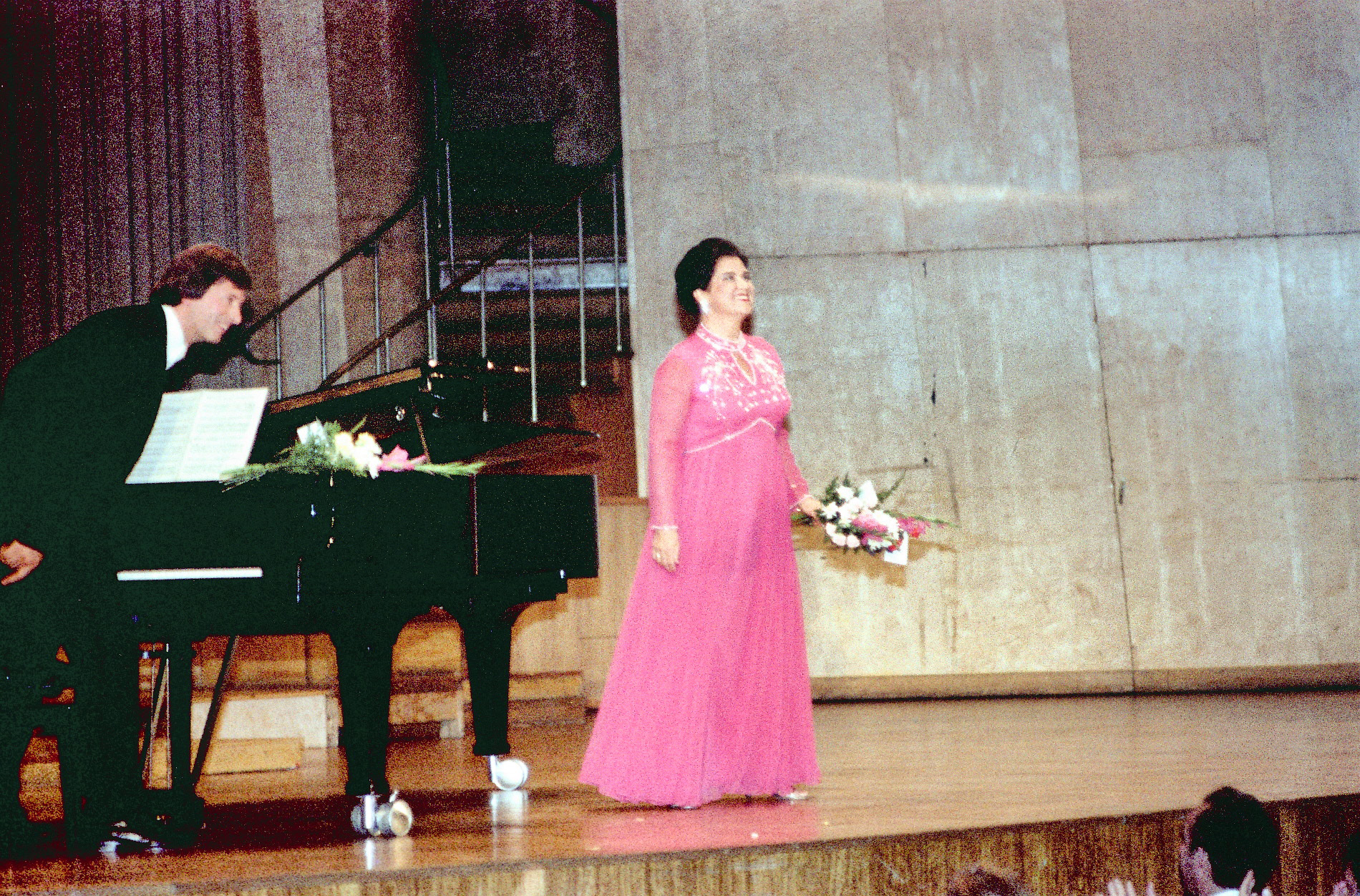
Elly Ameling gives a new interview in Opera News HERE. Notice, she repeats that wonderful phrase she used many years ago in a masterclass "the voice is there to serve the music and not the other way around". She's absolutely right. This should be a mantra imprinted onto the soul of every singer and listener everywhere. It's long been my slogan. We should be listening to the innate music in everything we hear.  Performances are an interpretation warmed by the individual response of the singer or player. Sometimes I think even composers are just channelling something so great that is seems like an unextinguishable force of life, with infinite possibilities. Nowadays, thanks to the media, we're so obssessed by Mega-Egos that we lose sight of what music is really all about. It's not about ego, or celebrity-chasing and the silly power games that go with that mentality. To put it bluntly, "It's the music, stupid!". Elly Ameling graciously puts the music first. Hooray for her, and much gratitude.

Lots about Elly Ameling and art song on this site. HERE a link to the multiple CD sets that are a retrospective of her career.

(the photo shows Elly Ameling and Rudolf Jansen in Gotheberg in 1983. credit : Peter Appelros)

Wednesday, 20 June 2012

Berlioz Les Troyens free Download

Hector Berlioz Les Troyens opens Monday at the Royal Opera House. Listen here for to a download of a live performance in 2006 at Opéra Bastille Paris, from Opera Today.  Synopsis included and a link to the libretto. Deborah Polaski sings Kassandra and Dido, Jon Villars sings Enée, and the coonductror is Sylvain Cambreling. This is interesting because it is different to the 2000 Salzburger Festspiele performance available on DVD. Kwangchul Youn sings Narbal, for example, and Chorèbe is Franck Ferrari. On the strength of this 2006 performance I bought the DVD, to see how Herbert Wernicke directed it. Rather effectively, I thought, with intense "Mediterranean" light.
photo: Bibi Saint-Pol

Tuesday, 19 June 2012

ENO Britten Billy Budd review

The ENO has a hit on its hands with its new production of Benjamin Britten's Billy Budd, now on at the Coliseum, London. Visually it's striking. Like the seamen, we're trapped in the claustrophic hold of the warship, "lost in the infinite sea". David Alden is sharp enough to know that Billy Budd isn't colourful costume drama.

Yet the moral dilemma Captain Vere faces in 1797 isn't black and white. It's so complex that he spends the rest of his life agonizing about what he might have done. Only when he understands what Billy means can he find deliverance. The Indomitable goes into battle stations but is defeated, not by the French but by nature itself and its envoloping mists. Indeed, against the wild forces of nature, the 'Indomitable' isn’t indomitable; it’s vulnerable, and can be destroyed by fate as capriciously as Billy himself is destroyed.What is the mystery at the heart of this deliberately opaque, emotionally reticent drama?

Why does Britten write music that churns and changes like the ocean itself?  Through the orchestra, the ocean takes centre stage, turbulent and intense. Huge crescendos build up like mighty waves, but even more impressive is the undertow of dark, murmuring sound that surges ever forwards. Above this, currents flowed diagonally across the orchestra, first violins flowing to brass and basses and back, just as ships lurch back and forth. You could get seasick if you focussed too hard, but that is the point, for Britten is showing that the “floating world” aboard ship is unsteady, far removed from the certainties of dry land. Just like the enveloping mists, all points of moral reference are hidden. The stark  monochrome of this set (designer Paul Steinberg)  is excellent, but it isn't enough on its own. 


Billy Budd is metaphysical. There are numerous levels of meaning. Captain Vere is stymied because he can't interpret meaning. So it's up to a director to have vision, and to inspire the singers to express the complex nuances so fundamental to this drama. All this cast is experienced, and capable of responding to a much more intense approach. Kim Begley is a superlative character singer.  But he isn't called upon here to bring out the full character of Captain Vere. He's dressed in a white suit, like God, but Britten's written huge contradictions into the part. Vere is as vulnerable as his ship itself. He's a brave man but crippled by uncertainity and guilt. If he was godlike and confident he wouldn't be tortured by self doubt. Begley is luxury casting, but isn't asked to develop the more anguished side of Vere's personality. 

Unlike Captain Vere, Billy Budd seems a straightforward character who doesn't question anything. Yet why is he so compelling that the crew adore him? Why is Vere fixated? Why is Claggart so discomforted by his presence?  This is a frighteningly difficult role because whoever sings it must convey things which Billy cannot say. It needs exceptional acting skill. Benedict Nelson sang Demetrius in the ENO Midsummer Nights Dream (see review here) but a role like that is no preparation for Billy Budd.  Nelson tackles Through the port comes moonshine astray carefully, but doesn't convey the extremely subtle way Britten writes contradiction into the aria. This is Billy's battle, but like Vere, he knows he can't win it when fate is against him. Billy loves life too much to lose it , but he sees goodness in small things, like the piece of hard biscuit Dansker brings him. Perhaps the secret lies in the personality of the singer, which is why Jacques Imbrailo seemed to radiate a truly transcendant goodness when he sang Billy Budd at Glyndebourne. Nothing can prepare a singer for a performance like that, and no-one should be expected to compare.

Matthew Rose sang a solid Claggart. He certainly looks the part, especially with pallid makeup, and has the ability to imbue the part with unhealthy menace. But here he's not called on to express the unclean sexual aspect of the role. Yet if he did, it might distort the production. The whole naval system is corrupt, based on brutality and abuse. Even Vere and Billy are complicit because they're part of it.  I cringe whenever I hear the Novice sing about having been "clever" until he was press ganged, because it shows how the system brutalizes decent people. Nicky Spence managed to make his Novice a strong portrayal, and deserved the applause that greeted him at curtain call. 

Great cameos by Duncan Rock (Donald), Gwynne Howell (Dansker)  and the chorus, here well directed and blocked.  Unfortunately, the long horizontals on stage mean that much of the singing projects into the wings, its impact lost. Britten writes great variety into this music, but the quirkiness is underplayed. When Mr Redburn and Lieutenant Ratcliffe talk about the French, the exchange can be both comic and disturbing, for it shows how stupid those in authority can be. Here, however, the sharpness is muted,  Jonathan Summers and Henry Waddington singing correctly, but without the savage satire Britten's trying to point out.  

The navy is institutionalized, and David Alden emphasizes the conformist monotony of life aboard ship. It's valid, and might have made Vere's questioning all the more distressing had the idea been followed through. Given the genteel politeness of David Alden's concept, it would not have been appropriate for Edward Gardner to have conducted with more lethal passion. This is a good production for anyone new to Britten and to Biilly Budd because Paul Steinberg's set focuses on the essentials. But ultimately, it holds fire and doesn't engage with the darkest aspects of the opera any more than the Indomitable engages with the French.  Billy Budd is a very dark and complex opera. It might be possible to direct a production where the true horror is exposed but it would make audiences as anguished as Captain Vere. That's simply not viable. 

Please see my other pieces on Benjamin Britten, especially The Prince of the Pagodas, currently at the Royal Opera House. 

photos copyright Henrietta Butler, courtesy ENO

Britten Billy Budd ENO background

Bernjamin Britten's Billy Budd at the ENO Coliseum last night. Anyone can have an opinion. The real skill lies in trying to analyse why. FULL REVIEW HERE.  First, though, the building blocks on which I've arrived at my reactions.

What is this opera about?  Billy Budd isn't so much about Billy Budd as about Captain Vere, with whom the opera starts and ends. Captain Vere can't find peace until he can understand what the events of 1797 meant.  His dilemma "is" the central and absolute drama of the entire piece. "My life's broken. It's not his trial, it's mine, mine. It is I whom the Devil awaits". So what kind of man is Captain Vere? .

Billy Budd was written during the McCarthy era with its hysterical witch hunts. It is significant that the libretto makes more of the political paranoia of 1797 than Herman Melville made in the original story, for it is pertinent to the "danger" the ship and its crew are in. It's not the Rights of Man so much as the right of individuals to be what they are in repressive situations.  Britten was emotionally reticent, knowing it could be dangerous to be too open, unsafe to be candid. When Billy's feelings get too much for him, he clams up, too, stammering instead of speaking. Claggart just happens to get in the way when Billy explodes. 

Britten's writing for Vere is the most complex in the whole opera, for he is its true centre. The men  don't call him "Starry Vere" for nothing. He spouts Scylla and Charybdis. He might as well be speaking in code as far as his men are concerned. Even his officers are so limited that they can't speak of the French except in dismissive babble. Sun readers, perhaps? Like Billy, "Starry" Vere's natural habitat is way up above the decks, and the hold where Claggart reigns unchecked. The seamen revere Vere but he's not by any means a god-like figure. He's crippled by the very sensitivity that makes him a civilized man. I keep thinking of Ian Bostridge's Captain Vere, acutely aware and self-questioning. Anyone can rush into battle. A good leader doesn't do vainglory. It takes much more courage not to need to win at all costs. Ian Bostridge's Captain Vere battled with the moral enemies that are at the heart of Britten's opera. More than most anyone else, Bostridge captures the wild inner spirit of Britten's music and brings out its savage beauty.

Billy is a counterpart to Captain Vere, but on a much more instinctive level. 0ne of Britten's innocents, doomed because purity itself is doomed by fate itself, rather than by the actions of others, He's had more than his share of unfairness in life, yet he doesn't dwell on disappointment.  Even when he faces death, he thinks about food.  Thus Dansker's act of kindness nourishes him more than hard biscuit alone would do. Perhaps it's a coping mechanism, so he can avoid difficult emotions, but it works for him.  He's not stupid. Where does Billy's faith in life come from? He's not a Jesus figure, as some have suggested, because he's much too down to earth.  What is the vision he imagines  as he sees "Through the port comes moonshine stray".?  “No more looking down from the heights to the depths !” he sings, “I’ve sighted a sail in the storm…I see where she’s bound for.”  When Jacques Imbrailo sang Billy Budd at Glyndebourne (review here)  he seemed to radiate goodness, so natural and genuine that he seemed to generate a kind of luminous life force. Perhaps Captain Vere finds deliverance when he realizes that he doesn't have to explain or justify anything, but simply have faith in the workings of fate. 

The most electrifying Billy Budd recording is by Daniel Harding, with the London Symphony Orchestra (read more about that here). Here the ocean is a protagonist, every bit as much as the singing roles. Indeed, against the wild forces of nature, the 'Indomitable' isn’t indomitable; it’s vulnerable, and can be destroyed by fate as capriciously as Billy himself is destroyed. Through the orchestra, the ocean takes central stage, turbulent and intense. Huge crescendos build up like mighty waves, but even more impressive is the undertow of dark, murmuring sound that surges ever forwards. Above this, currents flowed diagonally across the orchestra, first violins flowing to brass and basses and back, just as ships lurch back and forth. You could get seasick if you focussed too hard, but that is the point, for Britten is showing that the “floating world” aboard ship is unsteady, far removed from the certainties of dry land. Just like the enveloping mists, all points of moral reference are hidden. “Lost in the infinite sea”, sings Captain Vere, a refrain that recurs repeatedly, in voice and in the orchestra.

Monday, 18 June 2012

Erik Nelson Werner - Siegmund, Opera North

Erik Nelson Werner sings Siegmund in Opera North's Wagner Die Walküre. Tim Ashley in the Guardian said "the evening belongs to Erik Nelson Werner's Siegmund and Alwyn Mellor's Sieglinde – glorious, the pair of them, their erotic rapture, heroism and guilt all entirely credible."  That's quite some achievement since the attention's usually on Brünnhilde and Wotan, and of course the Ride of the Valkyries. No supriose because Erik Nelson Werner is very good indeed.  Listen to the live broadcast on BBC Radio 3 on Wednesday 20th from 4.45pm

Erik Nelson Werner is American but grew up in Germany and is completely fluent in both language and culture - a rarer attribute than most realize. He's also a strong, charismatic personality, with the kind of presence that works well on stage. I first heard him in 1998 when he won the Audience Prize at the Wigmore Hall International Song Competition, where other contestants and their families voted for him, as well as the audience! That was the year that no-one won first prize, for reasons still unknown. But as is often the case, singers with real potential don't fit  narrow criteria. Werner also chose an idiosyncratic programme (Fortner, no less). That's the sort of man he is. Our faith in him has paid off. Over the years, he's steadily built his career in Germany and in  the US. Read more HERE. He used to be a baritone, but is now a tenor, well suited to roles like Siegmund where he can use the resonance at the lower end of the range to create intensity.  I've written about the Schubert Winterreise he devised (mixed with readings from Goethe's Werther) for Long Beach Opera (see here and watch the video clip) Werner is definitely not boring! The clips below are from some time back.

Sunday, 17 June 2012

Oxford Lieder Festival 2012

Details of the 11th Oxford Lieder Festival 2012 are out now, and this year there are some very high profile events! Sandrine Piau and Roger Vignoles open the season on October 12th with a recital of French song. Read about her Wigmore Hall recital earlier this year HERE because it looks as if she's singing a very similar programme, built around Debussy Ariettes oubliés. Piau's voice is light and pure, probably even more suited to a small venue like the Holywell Music Room.

In partnership with Stone Records, the Oxford Lieder Festival has been recording all the songs of Hugo Wolf (read about some recordings in the series so far HERE). Wolf's Spanisches Liederbuch features over 2 days, as there are 44 songs in all. The songs in the first part are a mix of religious and erotic, while the secular songs are like miniature operas, where each song tells a story. Birgid Steinberger, who so impressed at last year's OLF (read more HERE), heads a good team. I love the Spanish Liederbook, and 15 years ago told friends why it's so interesting. Then I saw my "masterclass" repeated in someone's review soon after. Why do people write when they don't know a subject? It's not fair on readers.

Florian Boesch and Malcolm Martineau on 14th October. Anyone who goes to the Oxford Lieder Festival has heard Schubert Die schöne Müllerin dozens of times, but Boesch and Martineau make it feel fresh and original. Read here in Opera Today about them doing it in London in March, one of the great recitals of the year. It is excellent to see Oxford Lieder developing a kind of partnership with the Wigmore Hall. They should be doing more together, I think, because they enhance each other. Sholto Kynoch, Oxford Lieder Festival Director and pianist, started the Festival almost from scratch eleven years ago when he was still a student, and now it's firmly established as a nationally significant event. I'm proud to say I've been a Friend since year 2. Oxford Lieder is especially good at nurturing new talent.  Many OLF discoveries go on to great sucess, but return because the OLF atmosphere is good. Back this year are James Gilchrist and Anna Tilbrook, Sophie Danerman, Lucy Crowe, Katarina Karnéus and Alice Coote. How time flies! These singers show why OLF is good to be part of. The secret of OLF is that it encourages the joy of singing, for its own sake, and from this all else follows.

This year the singers to watch out for include Robert Murray (excellent Steersman in the ENO Flying Dutchman), Susanna Andersson (The Baby in Knussen's Higgelty Piggelty Pop!) and Stuart Jackson  who won second prize in the Wigmore Hall International Song Competition. He's very young indeed, but has a distinctive voice. so much so that I could remember him a whole year after I'd first heard him sing a few songs in a private recital. He's sensitive and intelligent, qualities that are extremely important in art song, and deserves a lot of support.

Robert Murray sings Janáček The Diary of One who Disappeared, one of my all-time favourite cycles, on 18/10. Susanna Andersson sings Schubert with much loved OLF perennial Stephan Loges on 27/10. Stuart Jackson will be singing on OLF's Day of English Song on 20/10, together with Johnny Herford, William Vann, Jonathan McGovern, Lucy Crowe and John Mark Ainsley.

LOTS MORE, plus the famous OLF masterclasses and events. Booking starts tomorrow.  
Photo : Peter Trimming

More dangerous than dynamite !

Why you should not wash clothes in neat gasoline.

Friday, 15 June 2012

Britten's Prince of the Pagodas - essential listening

The Royal Ballet is doing Benjamin Britten's The Prince of the Pagodas at the Royal Opera House. Because it's choreographed by Kenneth MacMillan, it's part of ballet history. But for music lovers, it is absolutely essential. Without The Prince of the Pagodas, we might not have Death in Venice.

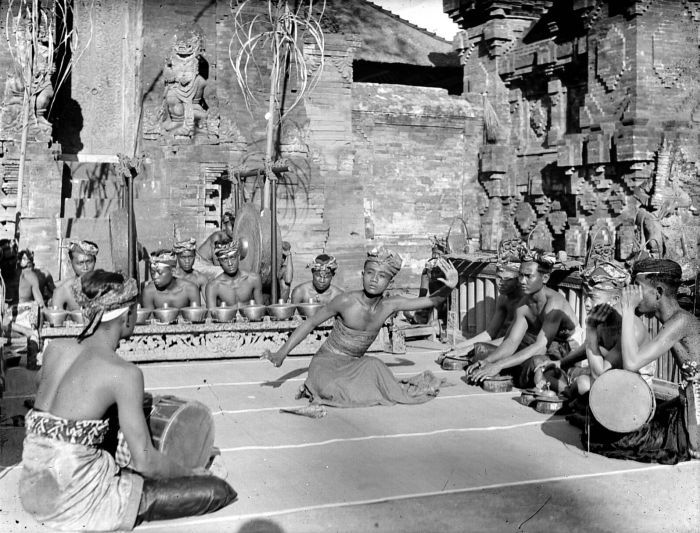
The Prince of the Pagodas is so crucial to Britten's music that that it's surprising that there's been so little analysis in the media. What makes this ballet unique is that Britten is consciously cross-cultural, experimenting with new ideas he would develop later. Nowadays gamelan is practically mainstream, and everyone's heard about Bali, so it's hard to miss what makes the music in this ballet unique. In serious music circles, however, the importance of The Prince of the Pagodas has never been in doubt. Read Mervyn Cooke's Britten and The Far East (Boydell, 1998)  It is so well written that it is a first point of reference for anyone interested in Britten, or indeed modern music and cross-cultural studies.

Benjamin Britten was never insular. Mervyn Cooke describes the influence of non-western music on western music (Debussy, Poulenc, McPhee)  and Britten's visit to Bali, where he was assisted by a Dutch musicologist who specialized in Balinese music. Britten was no casual tourist. He'd learned Balinese music from McPhee (see here for a clip of Britten and McPhee in 1941, playing transciptions) and knew the correct terminology and structures. Cooke's analysis of the impact on Britten's music is so penetrating that I won't summarize. Cooke's book is a central key to Britten studies. You NEED it!

The photo above is Taman Ayun Temple, Bali, coutresy Geoff Clarke. Click to enlarge. It's interesting how landscape affects culture. Throughout Asia, rice fields are carved in terraces, curving round the slopes of mountains. Rice is also grown on flat plains, of course, but even there rice padis are enclosed by low walls to regulate the flow of water. There's still a pattern  in the landscape as the padis are small and follow the shape if the terrain. Terraces and padis are ecologically sound because they make maximum use of rainflow and growing space. (This photo is Japan.) Pagodas and temples reflect this too,as they rise upwards in stages. There is cosmological significance, too complex to go into here, but the point is that physical design comes from organic experience and from the landscape. Think of the way the Great Wall follows the contours of the land. .

Translate this into music: rhythmic series! Much non-western music moves in plateaux that vary imperceptibly, acceleration and decelaration, changes in tempo and pitch regulated communally by the performers when they feel right about it. The whole structural ethos is different to western music. Percussion predominates. Perhaps it's also significant that in many non-western cultures, music is associated with dance. Thai and Balinese dancers for example use angular, rthymic movements that might seem at odds with body shape, but are used sensually and expressively.

As Mervyn Cooke notes, it would be unthinkable to separate music and dance in Balinese culture. We can see why Britten was persuaded to write The Prince of the Pagodas though ballet was not a form that interested him greatly in principle. The Royal Ballet staging (Monica Mason, Grant Coyle, Designs Nicholas Georgiadis) reflects Britten's Bali in the sense that we see pagodas very much like the ones at Taman Ayun - particularly evocative towards the end when they're lit from within, so they seem like glass or ice sculptures. Even the tubular metallic uprights (presumably abstract castle towers) feel right in musical terms. Much of the rest of the ballet seemed very western to my non-western eyes, as if a ballet from the time of Louis XIV or the Tsars were transported to a fantasy setting. That's perfectly apt, though, considering John Cranko's plot is a strange mix of fairy tale and absolute monarchy. As dance, I would have liked more adventuresome movements picking up on the exotic quality of the music, but that's unrealistic. It's  Kenneth Macmillan's ballet not mine! A good critic respects that the author of a work has a point even if it's not the same as the critic's.

Western ballet music is episodic because it has to allow set pieces for dancers to show what they can do best. For dance lovers, that's the whole point.  Some composers do episodic brilliantly, but I suspect that for Britten it didn't come so easily. Read Mervyn Cooke again for more detailed analysis of the work. Britten is not writing incidental music around dance, but experimenting with ideas he's adapted from Balinese music.  This is the USP of The Prince of the Pagodas, it's "unique selling point"  What a pity that more wasn't made of it in the media and marketing. In Act Two,  the long uninterrupted flow allows Britten to write as if he were writing a tone poem. Musically, it's the most stunning part of the whole work. This is where Britten is really "telling the story" as dream  sequence, connecting to the bizarre fantasy that makes a princess fall for a Salamander. (The Freudian symbolism is obvious.) Perhaps that's why there were two intervals which killed the dramatic pace. The first and last acts are almost bookends for the heart of the piece. .

Oliver Knussen conducted Britten's The Prince of the Pagodas in 2006. There's a wonderful recording, energetic, bright, idiomatic and also accessing the darker levels of its meaning, and brought out the Balinese inventiveness very sharply. He'd read Mervyn Cooke. Barry Wordsworth conducted this 2012 revival with a pleasant Romantc feel, perhaps more attuned to MacMillan than to Britten, which is perfectly valid.  Recently, Britten's original 1957 recording has been re-released. It should be interesting as composer recordings usually are, but the genesis of the piece wasn't easy, and Knussen has the benefit of fifty years' extra reflection.

Please explore this site for more on Britten, non-western music and cross-cultural influences. Messiaen is relevant tooi. Please also see HERE for a description of the theatre Britten and Pears gave a recital in when they visted Macau in 1956.

Thursday, 14 June 2012

Benjamin Britten's Balinese Soul

Benjamin Britten's The Prince of the Pagodas at the Royal Opera House (Royal Ballet) demonstrates how different ballet audiences are from music audiences. All the attention on the dancing, almost nothing analytical  about the music. So no wonder The Prince of the Pagodas has a reputation for being awkward. John Cranko's scenarios aren't much odder than many other ballet or opera plots, and Britten writes sequences  that Kenneth MacMillan could choreograph in  a fairly straightforward way. Therein, I think, lies the problem. What Britten was trying to write in The Prince of the Pagodas is his own version of Balinese music theatre, but what everyone else expected was convention.  Although by its nature ballet is episodic, appreciating this music means understanding how it works as a whole and how it connects to the rest of Britten's music.

Perhaps mainstream audiences weren't ready for this in 1957, but non-western music had been known in the west for decades. In 1870, Japanese and Indonesian music caused a sensation in Paris. Just as Debussy and Picasso were inspired by non-western cultures, so, too, Benjamin Britten. Most famous of those working on non-western music was Colin McPhee, who lived in Bali and studied its culture from the perspective of a musicologist and practising composer. Britten met McPhee when he sojourned in New York. Below is a clip from a recording made in 1941, where Britten and McPhee play a transcription of Balinese music, prepared by McPhee from music he'd collected in Indonesia. Later Britten and Pears toured Indonesia and Japan, just as Messiaen was to do a few years later. From The Prince of the Pagodas, to Curlew River and Death in Venice.  Britten internalizes non-western music into his own work.  Hence the significance of The Prince of Pagodas, and why it needs to be heard as well as seen.

Tuesday, 12 June 2012

Oliver Knussen Sendak operas, Aldeburgh

"Higgelty Piggelty Pop! The Dog has eaten the Mop!". Do dogs eat mops? Does anarchy rule? Oliver Knussen's double bill, Where the Wild Things Are and Higgelty Piggelty Pop! at Snape Maltings started the 2012 Aldeburgh Music Festival in exuberant style.

Knussen's operas are based on the books by Maurice Sendak, which presumably Knussen read with his daughter, Sonya. But Sendak's books themselves spring from primeval sources. Nursery stories aren't lullabies. They're sinister. But children are fascinated. Perhaps when they go to sleep they need to be reassured that the dreams they encounter are just "stories" that they'll wake from. Fantasy stimulates creativity. Knussen's operas are for anyone of any age, who values imagination. Operas like these are good for our artistic (and mental) health. Britten wanted Aldeburgh to stimulate creative growth. Whether Knussen completes new work or not, he makes it possible for others to catch the spark.

In Sendak's Where the Wild Things Are a boy called Max is punished for dressing up as a wolf and escapes to a world of monsters.  Sendak's illustrations tell the story even more than the words do, so Netia Jones's staging uses projections straight from the book. The staging's not literal though, and incorporates the reality of theatre. Figures appear in silhouette and in ordinary clothes, but act and sing in character, so the video projections aren't obscured. The orchestra can be seen clearly, so you can close your eyes and absorb the music, which is strikingly inventive. Four double basses and contrabassoon make the Wild Things roar, but Max (the vivacious Claire Booth) stands up to them. They look fierce but are rather cuddly. A bit like Knussen himself.

There were many children at the matinee I attended (ironically on what would have been Sendak's 84th birthday), all of them attentive and well behaved. I asked two lads (8 and 11) how they felt. "I loved it when they appeared behind the screen" said one, while the other was fascinated by the instrumentation. They seem to have got a lot out of the experience. These are the kind of audiences we need, people who enjoy without prejudgement and respond imaginatively. Even when some children shouted, it added to the atmosphere.

 Higgelty Piggelty Pop!  was more subtle.and communicated on many levels. It starts with a Pig-in-Sandwich Boards (Graeme Danby) offering ham sandwiches to those in the audience too young to appreciate the irony. The sandwiches also serve to keep the kids occupied when Jenny the Sealyham Terrier (Lucy Schaufer) sings a long, sophisticated aria, wondering if there's "More to Life". The projection behind shows the cartoon Jenny with a film of Schaufer's mouth singing. Gradually voice and image begin singing different lines: fascinating, and musically astute. Jenny can't get a job in the Mother Goose World Theatre until she gets "experience" whatever that might be. Whatever the Mother Goose World Theatre may be, for that matter. Logic is the enemy of imagination!  Knussen fills the music wiuth loony cross-references, like bits from Tchaikovsky and Mozart, barbershop quartets, brass bands evoking circuses. all woven into his distinctively intricate multi-layers. Like Birtwistle, Knussen loves mind games and multi levels. (Please see my piece on Oliver Knussen's Devious Nature Puzzles - a double meaning I didn't intend!) The effect is manic, the images anarchic, but the music is elegantly crafted, and played with complete conviction by the Britten Sinfonia, conducted by Ryan Wigglesworth.

Jenny's transported by a cat (Christopher Lemmings) in a milk float to nurse a baby with a savage, demented glare. At least on the Sendak illustration. The Baby (Susana Andersson) is an adult with a piercing scream. How can Jenny placate this beast? Sendak's images may be pretend Victorian, but these aren't Victorian values. The Baby's Mother (Claire Booth) tells Jenny to let a Lion (Graeme Broadbent) bring the Baby back to her, and so the story ends happily ever after. Or does it? Three surprise "endings" to whip up excitement. It's perfectly in order to laugh and clap as we emerge from the fantasy of the story to the fantasy of the mock toy theatre proscenium. Has Jenny, and have we, found the Mother Goose World Theatre?

This Knussen double bill will be repeated at the Barbican Hall, London in November, with Netia Jones's multimedia presentation. Don't be put off if you can't go with a child. Go with the Child in Yourself, and benefit even more. Netia Jones's Before Life and After comes to Aldeburgh from 20 to 22nd June and moves to the Cheltenham Music Festival thereafter. This is a show built round Britten's Winter Words, Finzi's A Young Man's Exhortation and Tippett's Boyhood's End. James Gilchrist sings. It's a tour de force. Highly recommended - read about the first  London performance HERE

Oliver Knussen conducted the Scottish Chamber Orchestra the previous evening in a typically intricate puzzle of a programme. Charles Ives's Washington's Birthday, rather appropriate as Aldeburgh's celebrating Knussen's birthday this year.  Diaphanous textures, exqusitely defined by this excellent orchestra. Very similar orchestration (harp and piano  on concerto) to Alexander Goehr's Marching to Carcassonne (2002 rev 2005) with Peter Serkin, with whom Knussen has been closely connected for many years. Serkin understands the Don Quixotic spirit of the piece, where Knights march into battle but go round in circles, never reaching their goal. The harpist is Serkin's Sancho Panza, the harp's pedal held down so the strings play tautly, like a medieval stringed instrument. Goehr's sense of humour, which Knussen has inherited. Surprise non-endings, as in Higgelty Piggelty Pop! Goehr was roundly applauded, and beamed.

Stravinsky's Movements for piano and Orchestra followed, and three movements from Alban Berg's Lyric Suite, superbly played.  We don't hear the SCO nearly often enough in London (though there's a lot about them on this site, as they are favourites).  Then Geoffrey Norris appeared and presented Knussen with a Critics' Circle award for Outstanding Musician.  "But I didn't finish the piece I was planning" said Knussen. It hardly matters. Quality is better than quantity, and there are many ways of being a true musician.

Full, more formal review soon in Opera Today
Production photos: Eamonn McCabe