Saturday, 17 September 2016

Walter Braunfels Lieder Songs

When this concert of Walter Braunfels Songs was first broadcast on Deutschlandradio Kultur in 2011, it broke new ground. Eric Schneider is the pianist, with Marlis Petersen and Konrad Jarnot the singers.  Many thanks to Capriccio for making this available on CD, for this disc fills a significant niche in the discography.  For my review of Braynfels Or chestral Soings on Oehms (highly recommended) with Volle, Vogt and the Weimar Sraarskapelle please see HERE

Marlis Petersen possesses a voice that can handle the high, bright tessitura Braunfels was so fond of, and Konrad Jarnot is both blessed and cursed by the way his voice resembles Dietrich Fischer-Dieskau's. Eric Schneider is an exemplary Lieder pianist. This disc is a must for anyone interested in Braunfels or indeed interested at all in the development of Lieder during the first part of the 20th century.  What lets it down, though, is the lack of context.  While Braunfels is hardly unknown, he is misunderstood.

If Capriccio really wants to bring Braunfels to wider audiences, they need to provide enough background for listeners to appreciate why Braunfels and his songs for voice and piano are worth listening to.  The lack of translations to texts isn't a major issue, since most people interested in Braunfels and in Lieder are reasonably fluent in German. Capriccio is a budget label so we can't really expect much in the way of notes, but generalities, even if well meant, don't amount to much.  Informative notes do make a difference. If recording companies cared about what they do, they'd realize that properly researched notes are part of the marketing process.  The more buyers get from a CD, the more likely they'll buy more. Listeners shouldn't have to do all their own background work, especially in repertoire that needs cultural context. 
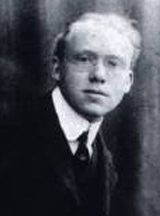
On this disc, there are eight sets of songs, organized by opus numbers, and 41 separate tracks. Quite a lot to take on board. However, they're more or less arranged chronologically, starting with Braunfels's Op 1 Lieder (1901). Braunfels was 19 when he wrote these songs, so don't expect much in the way of genius. But they do shed insight on the literary and artistic impulses that would shape the composer's whole outlook. These texts come from the George-Kreis, the fanatical and secretive sect around Stefan George. George obsessed about the German past, as if it were a sacred mission against the modern world.  Imagine the Grail Community on uppers. Beneath the romance, however, lay extremism.  Although George attracted good minds, like the Stauffenbergs and the teenage Hugo von Hofmannsthal, he also galvanized minds like Heinrich Himmler.  Although George didn't actually align with the Nazis - he died in 1933 - he was antisemitic, which makes one wonder why some of his followers, like Karl Wolfskehl, and Walter Wenghöfer, whose poems are set here, were Jewish. A curious toxic mix, but one that might have taught Braunfels to be wary of narcissism,  totalitarian values and the abuse of medievalist hogwash.  From Braunfels op 1 to Der Traum ein Leben and Heilige Johanna. 

Thus to Braunfels's Fragmente eines Federspiele op 7 (1904), Fragjments from a feather game, meaning a concoction of lightness and charm, like playing with feathers.  Here Braunfels's thing for writing tricky high tessitura, the voice of a Nightingale, which means so much in Die Vögel. Each of these songs describes a bird - bullfinch, swallow, siskin, even a hoopoe - songs of chirpy litheness, effeverscence and spontaneity: the freedom of birds in nature.  If there are antecedents, they might lie in Hugo Wolf, but to me they are characteristic of Braunfel's whimsical humour, and like very little else written in this period.  But like Braunfels's Mozart Variations  and, indeed, the Magic Flute aspects of  Die Vögel, this disc includes a second set of Federspiele, nine songs, including goldfinch, turtledove and lark.  Braunfels's Federspiele are airy, but he's no airhead.

Braunfels's op 4, Sechs Gesänge (1905) are settings of poems by Hölderlin, Hebbel, Hessel and Goethe, finished off with sturdy ballads from Clemens and Brentano's Des Knaben Wunderhorn, all rather more typical art songs  of the period in which they were written and rather well crafted for a composer still in his early 20's.   Much more strikingly original are Braunfels's settings of Shakespeare, Musik zu Shakespeares Komödie Was Ihr wollt op 11 (1908).   A long piano introduction sets the scene for  text, spoken in English ; "If music be the food of love, play on....." This is followed by three Leid des Narren, each song charming, yet also funny, for fools and knaves are not so far apart, as the witty low figures on the piano suggest. 

Two of Goethe's Egmont poems,  Klärchen's songs,  Freudvoll, leidvoll and Die Trommel gerüret follow. Both were set by Beethoven: Braunfels's versions, form 1916, are his own. Braunfels's Nachklänge Beethovenscher Musik op 13 provide thoughtful contrast.  A version of An die Parzen op27/1 follows, but is not a patch on Braunfels's full orchestration on the Oehms Classics disc of Braunfels Orchestral Songs which I reviewed HERE. partly because the textures are finer, but also because Jarnot is no match for Michael Volle  Then, fast forward from 1916 to 1932, and two of Braunfels's last songs of the Weimar period, the Zwei Lieder von Hans Carossa op 44/1 and /2.  Marlis Petersen's soaring timbre brings out the starlight  magic and moonlight in these refined miniatures: birdsongs and feather games, in darkening times. 

Friday, 16 September 2016

Walter Braunfels Orchestral Songs Vol 1

New from Oehms Classics, Walter Braunfels Orchestral Songs Vol 1.  Luxury singers - Valentina Farcas, Klaus Florian Vogt and Michael Volle, with the Staatskapelle Weimar, conducted by Hansjörg Albrecht. The Staatskapelle Weimar dates from 1491, one of the oldest ensembles in the world. (For my review of Braunfels Orchestral Songs Vol 2 please see HERE)

Even before the First World War, during which he served on the front line, Braunfels was preparing what is now his best-known work,  the opera Die Vögel , which helped launch Albrecht Dümling's seminally important series on Decca which pioneered the rediscovery of  Entartete Musik, the "degenerate" music the Nazis hated.  Although his career dimmed, Braunfels wasn't actively suppressed by the regime, even though he was a half-Jewish convert. His three sons all served in the German army.  His music itself would have made him an outsider to the Nazis and their taste for unquestioning sentimentality in art.  Die Vögel is based on Aristophanes. Braunfels's treatment of the play highlights its powerful underlying message. The Birds aren't so much passive objects of beauty but the voices of women  protesting against dominant hierarchies. Braunfels continually returned to these basic concepts throughout his career. In Jeanne d'Arc, Szenen aus dem Leben der heiligen Johanna (more here) and Die Verkündigung (more here), Braunfels used medievalism as a disguise for ideas that were dangerous in a totalitarian regime. Braunfels was a resistance fighter no less, using the Gothic to subvert the Nazi preoccupation with glorifying the past.  In Der Traum ein Leben, Braunfels even depicts a talentless fool following a false Fuhrer. The orchestration is lush but highly ironic. Attempts to rebrand Braunfels as dreamy-eyed romantic inflict on him a kind of posthumous castration.  

This new recording begins with the Vorspiel und Prolog der Nachtigall Op 30/3 1913)  a coloratura display for soprano and orchestra, a sampler for the full opera  Die Vögel which premiered in 1920.  Exquisitely refined playing from the Staatskapelle Weimar, emphasizing the delicacy of the scoring: to remind us that birds are fragile, like the ideas they symbolize in the opera. Valentina Farcas sings the fiendishly difficult part with assurance, not quite as miraculously as Hellen Kwon did for Lothar Zagrosek in 1997, though more idiomatically than some since. Kwon made the part feel almost supernaturally ethereal, like an elemental force of nature, which, arguably, is what the role is all about.  

In Zwei Hölderlin-Gesänge op 27 (1916-18) Michael Volle is a commanding presence, and rightly so, for the poems have a strange unworldly quality "Willkommen dann, o Stille der Schattenwelt!"  the poet wrote, wrote, fixated by death. The second song, Der Tod fürs Vaterland is even more unsettling.  Swirling, almost Wagnerian flourishes in the orchestra lead to stillness, for we are  on a battlefield awaiting the Valkyries.  The legend long pre-dated Wagner.  For Hölderlin "Fremdling und brüderlich ists hier unten"  might have meant noble sacrifice, but to Braunfels, in the last years of the war, words like "O Vaterland,Und zähle nicht die Toten! Dir ist,Liebes! nicht Einer zu viel gefallen"  would not have felt so grand.  Significantly, Hölderlin came from Württemberg, which supplied Napoleon with thousands of troops, most of whom died in Russia in 1812, a detail not lost on Braunfels, who marked on the manuscript that it was written "in the forest camp at Neu-Württemberg  at Christmas 1916". These two songs are neatly complemented by Auf ein Soldatengrab op 26 to a poem by Hermann Hesse, written in 1915 : new poetry, new music and very topical.


"Dich, Nachtigall, verstand ich eine Stunde" sings Klaus Florian Vogt  in Abschied vom Walde op 30/1  which Hoffegut sings in Die Vögel when he leaves the Nightingale in the woods, and returns home a wiser man.  The lustre of Vogt's singing makes one feel that Hoffegut learned more from the birds of the forest than Siegfried ever could.

This selection of orchestral songs has a wonderful unity, underlining the importance of respecting  Braunfels as an intellectual as well as a composer.  They are nicely set into place by Braunfels's Don Juan op 34 (1922-4) variations on the Champagne Aria from Mozart Don Giovanni. Seven variations follow the initial Theme, all of them played briskly, reflecting the humour oif the original. Leporello is perplexed  and the aria is delightfully funny. But there's a darker side, as Donna Elvira discovers. One day, Don Giovanni will pay for this frivolity.  Thus, beneath the post Jugendstil decorative filigree lurks menace. Variation 4 is serene, but  Variation 5 ( Mässig-bewegter) begins with an ominous boom , as if winds were sweeping upwards, from a tomb. Is the Commendatore emerging?  The mood in Variation 6 (Andante) is equivocal, the theme emerging on a solo wind instrument, "clouds" of rumbling strings enveloping it.  In the final Variation (Presto) the old devil is back to his tricks, flying fleetingly, the brass blowing raspberries of defiance, though the ending, is, as we know, defeat .  Braunfels is much more than a study in techiques and adaptation. It's a miniature opera, without words.  

Congratulations to Oehms Classics for this superlative recording of Braunfels's Orchestral Songs, so good that I've already ordered the next in the series. But the same standards of excellence don't apply to the programme notes.  What relevance does Yoko Ono have for Braunfels, happily married as he was? These songs aren't about love. This is something that Oehms should take more seriously. Good notes are important because they can enhance the listening experience: well-informed readers can better appreciate what they're listening to. Please also see my review of Braunfels Lieder Songs on Capriccio here and other pieces on Braunfles and other composers ans artists of the Weimar and what followed.

Thursday, 15 September 2016

Strange Fascination - Hugo Haas

Hugo Haas, brother of the composer Pavel Haas, about both of whom there's a lot on this website if you search.  Please read my piece here: Strange Afterlives: Hugo and Pavel Haas.  In their native Czechoslovakia, Hugo was a megastar, acting and directing in movies like White Plague (more here), a very explicit protest against the Nazis.  Knowing he'd ge targetted, he got out quick. Pavel, with a much lower profile, died in Terezin.  In Hollywood, Hugo had to start all over from scratch, but was too independent minded and too arty to be a success with the big studios.  So he made B movies, but low-budget movies with high standards, like The Other Woman, Hit and Run  and Pickup. The closest he came to commercial success was Strange Fascination (1952|) which was marketed as unadulterated schlock and probably sold because it flattered downmarket stereotypes about Europe. But like most of Haas's postwar work, it deals with the dilemma of exiles uprooted from Europe, trying to find a new life in America. "I feel like a displaced person" says Haas,quietly.

In Strange Fascination, Haas plays Paul Marvan.  "He's considered the finest exponent of Chopin in Europe, you know,"  gasps wealthy society matron Diana, who lionizes celebrity. Her friends snap back, acidly: "Strange that in America, he's completely unknown".  Her kids hate him. "He's  a stranger, you can't talk to him about baseball, or movies" (delicious irony!). Inadvertently he upsets Margo a nightclub singer who goes to his concert the next night hoping to heckle but is moved "by that stuff you play".  Margo's played by Cleo Moore, who starred in most of Haas's late films.  She wiggles her way into his life and they marry,  Rich Diana isn't pleased and drops Paul, whose career doesn't flourish in America.  The pianist who "plays" for him isn't very good. Financial worries:  Paul has to sell his tuxedo and play mixed programmes in variety clubs  He won't let Margo go back to show business.  Diana won't help - she's jealous because Paul loves Margo.  Desperate, Paul tries to cash in on his insurance by throwing his hand into a printing press. The insurance company won't pay out because it wasn't an accident. Paul comes home to find that Margo's left him.  Paul is reduced to knocking out tunes in a shelter for homeless men. "Say, why can't you play something gay, you bum!" Quietly Paul beats out a boogie woogie with his remaining hand.  Strange fascination isn't a particularly good movie compared with Haas's other woirk but it's a story that no doubt was lived by many. who didn't find fame or fortune.

Wednesday, 14 September 2016

English Visionaries : A Vision of Aeroplanes

New from SOMM Records, English Visionaries, choral music by Vaughan Williams, Holst and Howells with Paul Spicer and the Birmingham Conservatoire Chamber Choir.  Why "English Visionaries"?  Composers who weren't religious, writing music which connects to a long-standing British fascination with the more eclectic aspects of belief. One thinks of Blake, the Transcendalists, Milton and John Bunyan, not rigidly orthodox, but spiritual.

"I looked, and behold a whirlwind came out of the north, a great cloud and a fire unfolding itself". Vaughan Williams A Vision of Aeroplanes (1956) sets the scene on the Book of Ezekiel where the Prophet sees a chariot materialize in the sky, propelled by four angelic creatures each with four wings, joined together, operating as a single entity.  Vaughan Williams added the word "aeroplane" himself but it captures the idea of levitation, of perpetual movement, noise, wheels within wheels, wings fanning wind and even lightning and metallic brightness.  Ezekiel thought this was a manifestation of the Divine. To Vaughan Williams and many in the post-war era, the image might be far more ambiguous.  The piece begins with an astonishing blast from the organ (Nicholas Morris), the voices intoning lines that waver up and down the scale, suggesting unearthly motion.  Other lines arch outward in ellipse.  A solo voice emerges from the turbulence (Victoria Adams) and gradually the music subsides, like the idling of an engine.  This new recording is particularly welcome since Spencer made his recording of this piece with the Finzi Singers twenty five years ago.

Vaughan Williams's Mass in G Minor (1922) harks back to an earlier period, not only in terms of the composer's development but also to the influence of Tudor form on modern British music.  The text, in English, is sung with bright focus lighting up the lovely chromatics, also a feature of Holst's The Evening Watch (1924) which adapts the Song of Simeon as an exchange between soloists, representing bodily life, and the choir, representing the soul and eternal life.  Holsts's Sing me the Men (1925) continues a sense of dialogue, but in a much more robust mode, reflecting  the solid Muscular Christianity of the text by Digby Mackworth-Dolben (1848-1867).  Men's voices alternate with women's. Particularly lovely abstract vocalise in the women's parts.

This new recording also includes a new performance of Howell's The House of the Mind (1954).  The low rumble of the organ suggests, not so much an organ in a church, but a more elusive hum: perhaps the inner hum of meditation ?  The text, by Joseph Beaumont (1616-1699),  refers not to grand cathedrals but to a house that is small "girt up a narrow wall, in a clean and sober mind", in which man might make a humble abode with God. Though the house may be cramped, Howells's soaring lines suggest limitless boundaries, soaring upwards, faith that "can mock all hostile power".  An inspired choice which flows beautifully into Vaughan Williams's Lord, Thous has been our refuge (1922) to a text by Isaac Watts (1674-1748) paraphrasing Psalm 90.  Echoes of plainchant and melodies from hymns anchor this piece in conventional Anglican tradition, as does the dialogue between trumpet and organ. On a recording, context makes a difference. As Lord, Thou hast been our Refuge drew to a close, I pondered the Vaughan Williams of the Mass in G minor and of the Vision of Aeroplanes, in his maturity.

Monday, 12 September 2016

Practical and important improvements : BBC Proms 2016 Post Mortem


Now the Royal Albert Hall is quiet, though the cleaners and maintenance people are busy, let's take stock of the BBC Proms 2016 season and look ahead. The Proms are so big that plans are made many years in advance - that's the way the business work.  No doubt the figures will show good sales, which will please politicians and bureaucrats. But success isn't measured solely in terms of statistics.   Short-term targets are all very well, and box-ticking, but what of the longer-term future? Will the Proms honour the musical ideals of Sir Henry Wood or will they become a giant commercial splash promoting anything but serious music? 

First, kaput to the mantra that the Proms have to be all things to everyone. Proms for kids, Proms for minority interests, etc etc are a very good thing indeed.  Even party-time gimmicks have their place - that's why we love the Last Night of the Proms. But any business that loses sight of its USP goes down the tubes.  In the case of the BBC, that's a real danger given the competition from vested outside interests.  A few years ago, many moaned about the Michael Ball Prom. It brought in new audiences, yes, but not the core Proms audience, but audiences who thought that by hearing Ball at the RAH they "knew" about music.  Now, nivellement par le bas become the norm.  Even the Children's Prom, which not long ago was so good that even adults could enjoy it , is now more about being cute than getting kids enthused.  Will these kids grow up thinking that serious music is poison that must be coated in sugar? I know someone who was taken to the Proms at schools and hated the experience so much that she's assumed ever since that music is for middle-class toffs pretending to be Right On.  My friend, and many of her friends, are not fools. They can spot condescension a mile away.  Sir Henry Wood believed that ordinary people were capable of learning.  Now, those who make arts policy seem ashamed of excellence, trapping us in a counter-productive downward spiral.  

It's all very well to chaase new audiences, for that is the current mantra. But face demographics, and face the global market for the arts.  Through technology, the BBC Proms can reach millions all over the world.  In places like Asia - potentially the biggest market of all - people are brought iup to value cultivation. they look to the BBC as a beacon of high standards. Give them too much parochial drivel and lose their attention. 

Anecdotal evidence is that many Proms regulars are cutting down on what they attend. Driving  away the core audience is bad business : killing the goose that laid the golden eggs in the first place.  Although one could cultivate the proms as fun for tourists, the fact is that the British public is ageing. This year, I've witnessed many problems for people with disabilities. I don't know if the Royal Albert Hall,is exempt from normal Health and Safety regulations, but surely there must be ways for the BBC to make things fairer for those who can't leap up stairs and stand in the arena.  One obvious and very simple solution: keep seats with easy access for people with disabilities, so people with special needs can book ahead, knowing that they will be able to use seats that currently have to be booked blind.   One man told me how difficult it is just to come to the RAH, and then be turned away. Better even, he saiud, to spend a bit more than lose so much.  Not everyone who is disabled is in a wheelchair or is registered blind or whatever, but people have a right to come to the Proms and be treated with dignity. If these reserved seats don't sell close to date, then sell them openly. It can't be that difficult.  

Part of being a presenter is the ability to adlib while stages are being changed and so on, and that's a skill!  But it would help if the presenters were briefed and not just off Wikipedia.  Proms interval features vary : one of the best this year - by far - was the shepherd who spoke during the prom that featured Mendelssohn A Midsummer Night's Dream.  Someone with something genuinely interesting to say, not just a motormouth. Also, as a voice person, I can vouch that at least one presenter needs a voice coach.  Take breaths for punctuation, don't let your voice squeak higher and higher , faster and faster, calm down and be natural.  Hysteria might be fine on some forms of radio (like sports), but it pains audiences who listen  to pitch and modulation. 


Sunday, 11 September 2016

Juan Diego Florez saves the Last Night of the Proms 2016


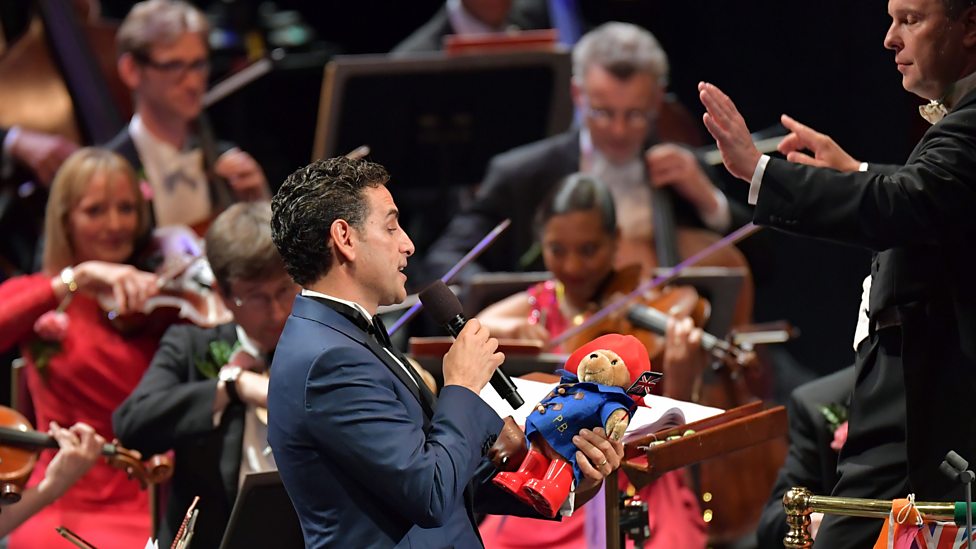
Juan Diego Florez saved the Last Night of the BBC Proms 2016.   First, he reminded us that Paddington Bear was an immigrant, from darkest Peru, who arrived, alone and nameless in Paddington Station.  JDF sang star turns, diplomatically avoiding Don Alvaro from La forza del destino. That opera might unsettle some who side instinctively with the Marquis de Calatrava, who hates foreigners.  Florez sang instead a love song in Spanish, celebrating "dark eyes and cinnamon skin". To Paddington Bear, who certainly has cinnamon skin (or fur). With wry humour, JDF defused what might, potentially have been  a very ugly situation in post-Brexit Britain and the intolerance it represents.  Later, dressed as an Inca King, Florez (a Peruvian) dazzled in shining gold. Again, those who know history know that violence can end even the most spectacular of Empires.  Every LNOP in recent years has featured a comic diva or divo, but Florez made a real statement, in a gentle and subtle way.

Seventy years ago, my mother was at the Last Night of the Proms. It was 1946. She'd arrived, a refugee, a stranger in a new land, having spent the war years in a camp.  For her, the LNOP was an affirmation of the ideals that made Britain great in the first place.  Once, Britain shone like a beacon in the world.  It stood for Hope and Glory, dreams built on progress and expansiveness.

I was dreading this Last Night of the Proms, seeing how those ideals have receded into selfishness and insularity.  Flag waving has been a part of the LNOP for years but more benign than vindictive. We didn't defeat Hitler in order to embrace Goebbels-style mass rallies.  Patriotism and jingoism are not the same thing. Indeed, the flags at LNOP have always included those of other nations. Last year, the tricolor and the Marseillaise in honour of those killed in France. Sixteen years ago, subdued respect for the victims of 9/11.  In any case  the Proms have never been about nationalism.  For Sir Henry Wood and Prince  Albert, a German, before him, the pursuit of knowledge, the arts and sciences  meant human progress. Bildung, to use a foreign term, the cultivation of civilized values.  On Thursday afternoon, I watched members of the Staatskapelle Dresden eating picnics near the Albert Memorial before their Prom. Sir Henry, and Prince Albert, would have beamed.

So no need for waving EU flags at the LNOP. Music is international, a river fed by many different streams.  Cultural insularity is a dead end. Without Bach, Mozart, Beethoven, Wagner and much else we'd be impoverished. In any case, the arts industry in Britain is part of a global economy.  Infinitely more worrying, however, was news that Arron Banks was planning to flood the Royal Albert Hall with Union Flags to counteract the waving of the "illegitimate" EU flag.  Banks bankrolled UKIP and Brexit and is apparently planning a new lobby movement outside of the Parliamentary system.    Nothing new in that: rich people have always used wealth to serve their interests.  But the Union Flag means "union", the idea that England, Scotland, Wales and Northern Ireland are better off muddling together than squabbling.  Without London, the whole country would collapse. The Union Flag is a symbol of co-operation, not coerciveness, not intimidation, not bullying.

So three cheers and hurrahs for the audience at tonight's Last Night of the Proms 2016, who didn't fall for the bait. Fewer flags this year than for ages, few aggressive big flags and blasts of vuvuzelas.  Instead, people paying attention to the music and not trying to grab attention for themselves.  Phew, what a change !  A pity that, despite some good performances (Duncan Rock singing something unworthy)  the music was diluted by BBC commercialism, but unfortunately that's part of a wider dumbing down.  Sakari Oramo in his quiet good natured way, also helped head off any tension. Who could be mad at a nice guy like that? And so this year, when everyone sang Jerusalem and Land of Hope and Glory,  things didn't seem as bad as they might have been.  That, I thought, was what "Being British" is really all about.

 photo credit : Chris Christodoulou

Friday, 9 September 2016

Thielemann Staatskapelle Dresden Prom 72 Reger Strauss Beethoven


The ghosts of history hung palpably above Prom 72 at the Royal Albert Hall, London.  Christian Thielemann and the Staatskapelle Dresden presented a programme that began with Beethoven Violin Concerto in D major with Nikolaj Znaider, and concluded with an even more intriguing pairing:  Max Reger's Variations and Fugue on a theme by Mozart (Op 132, 1914) and Richard Strauss Till Eulenspiegels lustige Streiche Op 28 (1895).  This combination tells us much more about Thielemann and the musical credentials of the Staatskapelle Dresden than yet another predictable rehash of the Mozart/Bruckner  mini series which has so fixated the media this week.  The Staatskapelle Dresden was founded in 1548, a bit earlier than the Berlin Staatskapelle (1570), and the Leipzig Gewandhausorchester (1748) . A very special perspective. 

Yet again, Reger's Mozart Variations are not rare even if the BBC doesn't seem to know. Reger doesn't need to be discovered - British audiences just need to think in wider European terms.  Fritz Busch, who  conducted the Staatskapelle from 1922 to 1933, made the first recordings of Reger's Mozart Variations in 1920, when it was "new music" and again in 1944, 1949 and 1951, though not with Dresden orchestras.  Karl Böhm, who succeeded Busch, recorded the Mozart Variations with the Staatskapelle Dresden in 1938, and later with the Berlin Philharmonic.  More recently, Jörg-Peter Weigle recorded it with the Dresden Philharmonic, not quite as ancient or as illustrious as the Staatskapelle.  Keilberth, too, who recorded Reger in Bamberg,was also a chief of the Staaatskapelle.

Thus Thielemann connects to a long-standing association between Dresden and Reger. But a tradition revived afresh and reinvigorated.  The opening theme in Reger's Mozart Variations derives from Mozart's Piano Sonata No 11, which itself incorporates variations on a basic concept. Thus Thielemann and the Dresdeners presented it with lucid elegance, emphasizing the intricate proliferation of variation upon variation.  Reger writes with the elaboration favoured by very late 19th century composers, but it's a mistake to assume the piece is Hollywood-style treacle. It's based on Mozart, afetr all ! Romanticism was not "romantic"  and in any case Reger was writing in an era informed by the exoticism of Jugendstil.  Thielemann thus demonstrates  how the textures can shine when sharply defined, so the colours glow as if from the music itself, as they should.  Reger may not be as original as Korngold, Schreker and Zemlinsky, but like them, he was heading forwards, not back.  As Thielemann and the Dresdeners played, I thought of Dresden itself, and the Zwinger, an exquisite roccoco gem which seems to epitomize the ideals of civilized balance.

Unfortunately we know how quickly ideals can be destroyed by mindless mass hysteria.  Thielemann has been excoriated for having said "Wir müssen auf die Fragen hören" when Pergida raised its ugly head in Dresden. That was back in early 2015. Now that populist extremism is proliferating all over the world, to confront it we need to learn.  Mob think thrives on non-knowledge, so it's worth checking at source.  Read in Die Zeit what Thielemann actually said, Text HERE. The "Refugees Welcome" movement now gathering pace also had its origins in Dresden.  

The Staatskapelle, in its home at the Semperoper, has also been closely connected with the development of German opera. Richard Wagner started out at what was then the Hofoper. Richard Strauss is even more closely associated with Dresden. Nine Strauss operas premiered here, including Der Rosenkavalier (Vienna only later).  The Alpine Symphony, though premiered in Berlin, was performed there by the Dresden Hofkapelle, to whom it was dedicated.  Including Till Eulenspiegels lustige Streiche  at this Prom proved a point, quietly. Till Eulenspeigel is a cheeky prankster, and the Dresdeners performed it with charm.  Typical Richard Strauss irreverent humour.  For Till is dangerous. He overturns conventional order and gets hanged.  Thielemann and the Dresdeners know Strauss well enough to realize why the clarinet supersedes the horn. The horn is , well, Wunderhornish, representing folk tradition, while the clarinet's exaggerated howls parody the idea of funeral march. We might laugh, but underneath Strauss's merry jokes lurk darker ironies.  A genuinely idiomatic performance, done with a stylishly nonchalant air, true to the soul of Richard Strauss.  

This Prom began with Beethoven's Violin Concerto in D major with Nikolaj Znaider, which the Dresden Staatskapelle is featuring this season. A performance which I enjoyed well enough, and which was received with rapturous applause by the Royal Albert Hall audience.   .   

Photos top and middle, Staatskapelle Dresden; lower, Roger Thomas

Thursday, 8 September 2016

Johan Botha has died, and with him a piece of my heart


Johan Botha died this morning in Vienna, of cancer, aged only 51. And with him dies a big part oif my heart.  Botha will be irreplacable: an extraordinarily gifted singer whose voice could create roles with depth and emotional accuracy. Among his finest roles was Tannhäuser, were he lifted a dull production at the Royal Opera House up into the stratosphere with the glory of his singing. The photo above comes from that time, copyright Clive Barda 2010.  Botha wasn't in the revival this summer, and maybe now we know why.  Tannhäuser  is an anti-hero, a man who has experienced the wildest excesses, yet cannot settle for conventional propriety. He'd rather go back to Venusberg and its dissipation than play the holy knight game.  When Botha sang the part, he expressed the beauty of Tannhäuser's ravaged soul, showing the true heroism in his character.  That's why Elisabeth chose him over Wolfram.  Despite the transformational wonder of Botha's singing, there were some who sneered, thinking Elisabeth chose the wrong guy because he wasn't pretty. But what is the whole point of Tannhäuser ? Evidently Wagner is completely wasted on those who insist that opera should stick to literal realism.  Botha acted with his voice : a pity some don't get it, that opera is about feelings and ideas, not imitation TV.  Goodbye Johan Botha, an artist who sang the truth.

Wednesday, 7 September 2016

Gergiev Ustvolskaya Shostakovich Berlin Musikfest


At the Musikfest Berlin, Valery Gergiev conducted the Münchner Philharmoniker in Galina Ustvolskaya's Symphony no 3 "Jesus Messaih, save us!" with Shostakovich Symphony no 4. A musically astute programme, much wiser that the odd ragbag Gergiev and the Müncheners had to do at thr Proms in July where Ustvolskaya's remarkable piece was buried in crowd-pleasing Strauss and Rachmaninoff.   Ustvolskaya's piece is powerful but forbidding and really  needs to be heard in proper context, not submerged in the ragbag mix the Proms inflicted on Gergiev. In Berlin, he could give Ustvolskya the prominence her music deserves, and present it in proper context. Ustvolskaya (1919-2006) was an outsider, her career so restrained that, in comparison, Shostakovich was almost a matinee idol. But as this symphony shows, isolation intensified her originality.  The power of this work lies in its emotional honesty,  built on the foundations of unshakeable faith.  

Ustvolskaya's Symphony no 3 Jesus Messiah, save us!  is based on the life of an 11th-century monk, Hermann of Reichenau, aka "Hermann the cripple" who was born with so many birth defects that he lived in constant pain and had difficulty speaking. Nonetheless, he became a theologian, an astronomer, a mathematician and wrote a treatise on the science of music. He lived to age 44, ancient by the standards of the time and was canonized in 1863. A paralyzed musician without a voice? What a metaphor for a composer in the Soviet era!  

Not for nothing, Ustvolskaya's Symphony no 3 evolves from a single, unaccompanied voice.  Alexei Petrenko (pictured with Gergiev at the Proms performance) intones the text with uncompromising gravity, as if his voice has materialized from an ancient past.  Thus the austerity of the orchestration, and the utterly uncompromising nature of the work, closer to Orthodox traditions than to medieval Europe.  The instruments operate in tight units: five basses, five trumpets, five oboes, three tubas, three percussion desks, with large timpani and smaller, militaristic drums.  Thus a sense of ritual, a sense of unshakeable austerity, pitting the solo voice against small but strong forces. The piano mediates, sometimes supporting the idea of a wayward individual, yet also employed as percussion, with  long drawn sequences of ostinato, a lone trombone wailing balefully long lines against the piano's firm "footsteps".  "Save us, save us" Petrenko whispers, (in Russian) his eyes raised upwards, as if listening for a sign, as the music quickly dissipates into silence. 

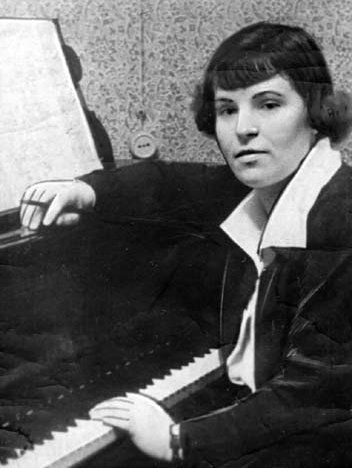
Whether or not Shostakovich compromised with the Stalinist regime, he managed to balance on the edge. Ustvolskaya wasn't sent to Siberia, but seems to have struggled on in a kind of external exile. Shostakoviuch dominates to such an extent that it masks the originality of Ustvolskaya's idiom. She and Shostakovich didn't get on for various reasons. In any case, the integrity in her music comes from very deep sources. Thus she's closer to Stravinsky and the "primitivism" of the Rite of Spring,  and to the brief explosion of modernity which flourished in the early years after the Revolution, and produced works like Alexander Mosolov's The Iron Foundry (1925-6)   Ustvolskaya's music even connects  to the fierce awkwardness of Janáček's Glagolitic Mass, and indeed to Messiaen's ground-breaking masterpieces like Et exspecto resurrectionem mortuorum. Boulez was a great interpreter of Stravinsky, Janáček and Messiaen, so his disdain for Shostakovich needs to be appreciated in context.  Maybe one day, when modern music is better understood, we can see things from a wider perspective.  Follow this link HERE to a discussion of  Ustvolskaya, her place in Soviet music and her relation to Shostakovich.  Also, this excellent documentary, made when Ustvolskya was, at last, being valued for her own sake. She was nearly 90 when the film was made but her mind is sharp. She knows who Reinbert de Leeuw is and what he stands for. 

With Gergiev's championship of Ustvolskaya, perhaps now her time has come.  She was famously sniffy about some Soviet-era performances of her work, and with good reason, from what I've heard,  but Gergiev is sophisticated enough to get it.  Even though Gergiev turned up nearly 20 minutes late, not at all long by his track record, as soon as he reached the stage he snapped into form.  Extremely tightly focussed, a performance informed by the same kind of mental and emotional discipline Ustvolskaya insisted upon. This Berlin performance was so much stronger that the London performance seemed sloppy in comparison. Catch it on The Digital Concert Hall when it's rebroadcast in a few days.  Gergiev is unpredictable. When he's bad, he's very bad but when he's good, he's very good. The skill of a listener is to recognize which is which.  

Gergiev has been conducting Shostakovich forever, hardly surprising, since the composer, who once had to compromise with the Soviets, is now thoroughly mainstream.  So this Shostakovich Symphony no 4 was rewarding, since Gergiev knows it like the back of his hand.  The interest, this time round, was his relationship with the Münchner Philharmoniker,  whose Chief Conductor he's become. The Munich Philharmonc is quite different from the London Symphony Orchestra, which Gergiev headed for ten years.  So far, so good.  I like the sound. Though Gergiev will conduct regularly in Munich, he'll still be based in London, where airline connections are better than in Munich, so he can commute between his various bases in oligarch enclaves all over the world.  


Tuesday, 6 September 2016

Contrasting Figures Julian Anderson Bayan Northcott

Contrasting figures, two very different premieres at the Proms.: Julian Anderson's Incantesimi and Bayan Northcott's   Concerto for Orchestra.  Both composers are big names in British music. Northcott's new work is more ambitious in scale, and impressive as a study of large forces. It seems tailor made for the BBC Symphony Orchestra, reminiscent of standard orchestral fare, big on full-bodied tutti and brass effects, lovely, rippling passages for winds.  A good and worthy piece, though I suspect it needs a more dynamic performance.  Please read the review in 5:4, a very good site on new music, which I wish ran year round rather than just in summer.   "The work comports itself in a conflicted way, on the one hand sounding laboured and stylistically somewhat dated (a sort of ‘post-neo-romanticism’ if you’ll forgive the construction; think Walton with plenty of late 20th century twists), yet with a stream of invention sufficiently cogent to lend it a veneer of freshness. Considering this is Northcott’s first work for orchestra, it displays an impressive combination of complexity and clarity, although many of the ideas could do with a bit less stodge (making it sound as though the conductor is stirring treacle). A little over halfway through it attains a climax that’s made up of many elements; it’s a really nice moment, enhanced by the orchestra’s subsequent enigmatic withdrawal into the middleground. This, and the work’s more pensive episodes, are by far the most immersive; Northcott’s faster music (which dominates overall) feels shallow by comparison, and the abrupt end is an entirely unconvincing cop-out, But notwithstanding these difficulties, plus the fact that it’s not really a concerto for orchestra at all, more a symphonic poem, the piece makes for an interesting enough diversion."

All music is "abstract" in the sense that sounds aren't as explicit as words, and even text can be elusive.  Thomas Larcher's Symphony no 2 "Cenotaph" might have initially been inspired by images of Syrian refugees, but that doesn't at all mean that the music is literal, in any way.  Like Strauss's Alpine Symphony, programmes are like scaffolding, useful as an aid to construction. What really counts is the building itself.  Please read here what I wrote about Larcher and Strauss, and on the programmatic structure.   In any case, music is processed by human minds, so it's not possible to  experience  listening without some human input: what one hears depends on an individual's emotional range, expectations and experience.

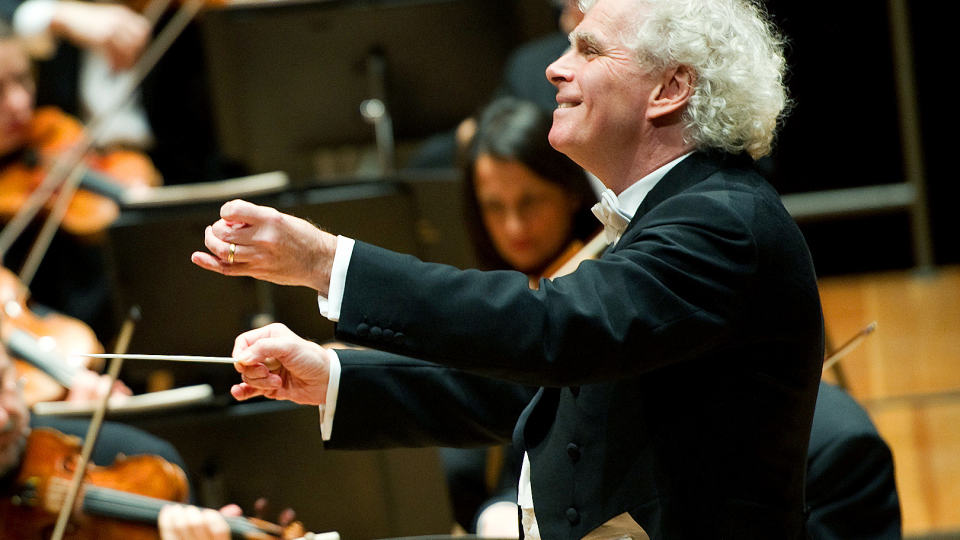
And so to Julian Anderson's Incantesimi.. commissioned for Simon Rattle and the Berliner Philharmoniker.  In theory this piece was inspired by an orrery, a multi-dimensional creation designed to demonstrate the movements and interactions of planets in the universe, each with their different orbits and speeds of  traverse. Science, thus, abstract concepts made visible, helping ordinary people understand the universe. Anderson has always been a remarkably "visual" composer : some people just are. But that doesn't mean that his music is literal.  Anderson describes the five elements in his piece as a Nocturne which has five musical ideas juggled in perpetual motion, interacting but never all at the same time. "Instead of being an outward display of flamboyance, it's an inward display of lyrical qualities and calm meditation, like Giant Chamber Music".

 Thus the growling lower registers from which clean, clear lines emerge. A cor anglais solo, then.  Exquisite, glittering, fragmenting sounds. All held together by a sense of circular movement, shifts in volume and tempi, highlighted by sudden single bell-like chords, then percussion and high winds.  On the re-broadcast, the announcer says the percussive clicks represent a Japanese night watchman signalling all is well. Nuts, I thought. Nightwatchmen exist even outside Japan. If there's extra-musical reference here, consider the Nightwatchman in Die Meistersinger, who signals the restoration of order on chaos, hence the elegant structure of the piece.  Much more than a tone poem, it's a mini symphony in less than 15 minutes, totally to the point.  I hadn't heard Anderson's comments before listening, so I was delighted that I'd guessed the idea without having to be told. Anderson's Incantesimi. is definitely a keeper, proof that good, original new music can appeal without dumbing down or being elitist. Fascinating, imaginative and really quite magical.

Alberich not! Secrets of really creative people

"Schläfst du, Hagen, mein Sohn?" Hagen is asleep, but Toxic Dad invades his mind, controlling him from beyond the grave (assuming Alberich is dead, which is unlikely).  Hagen has no beef with Siegfried but a billion resentments agaist Gunther and Gutrune who have by rights what Hagen has not.  So Toxic Dad worms his way into Hagen's subconscious. "Hasse die Frohen! Mich Lustfreien, Leidbelasteten liebst du so, wie du sollst! ".  Alberich, the ultimate non-creative person who can only cheat and steal.

What are the secrets of genuinely creative people? Just now a friend sent me an image from source I'd like to reproduce but can't. So here's the gist of it, and many thanks to whoever did it in the first place.  Seeing it made me so happy ! And by sharing, maybe I can make others happy, too.

Visualize two poles. Creative People and Non-creative.

C's compliment. Non-c's criticize

C's talk about ideas. Non-c's talk about people
 
C's embrace change. Non-c's fear change

C's learn, continuously. Non-c's know everything, always

C's accept responsibility for their own failures.  Non-c's blame others

C's have a sense of gratitude for their blessings. Non-c's wallow in entitlement. 

Will Hagen be c or non c ?  Will he "Hasse die Frohen!" like Toxic Dad ?  Siegfried's no hero because he can't think past his own needs. For Wagner, the real hero of the Ring is Brünnhilde who returns to the Rhinemaidens what Alberich stole. 


Monday, 5 September 2016

Musikfest Berlin 2016 Wolfgang Rihm Tutuguri


As the BBC Proms at last flicker into life, in Germany the Musikfest Berlin gets under way.. Over 19 days, 27 events featuring 70 works of around 35 composers, performed by 20 orchestras, instrumental and vocal ensembles and soloists. Full programme here, reflecting the concept that audiences are mature enough to handle real music, as Sir Henry Wood believed a hundred years ago, instead of the Potato Fudge the Proms have descended into this year (bar a few outstanding performances). But those of us who can't get to Berlin (largely sold out, in any case), some concerts will be broadcast via the Berliner Philharmoniker Digital Concert Hall (List here) 

Listen live, because the broadcasts may be available for only 24 hours. On Saturday I caught Wolfgang Rihm's  Tutuguri with Daniel Harding and the Symphonieorchester des Bayerischen Rundfunks.  This piece is legend, but not easy to pull off because it requires a huge orchestra, a whole row of percussion desks and elaborate off-stage effects   Rihm's  model for Tutuguri was a piece by  by Antonin Artaud, the actor and theatre theorist whose ideas have great influence on modern theatre, film, dance and music. Artaud believed that communication could exist on multiple levels.  Texts don't have to be spoken, nor even rational.  In Tutuguri, the soloist and invisible choir (on tape)  utter sounds in single syllable bursts of staccato, which don't have meaning in themselves: it's up to the audience to intuit the connections themselves.  If, of course, there "is" any meaning we can deduce. Artaud was fascinated by primal states of experience that cannot be articulated - hence the animalistic grunts and piercing screams. Orchestra and singers all on the same communal level.  Rihm's use of percussion is absolutely deliberate. because percussion reflects the rhythms of the human body, heartbeats, breathing, movement. This performance was exceptionally  muscular and physical, yet mesmerizing just as the rite it (sort of) describes would have been.  Savage as the subject may be, performance needs to be accurate and extremely tightly focussed or the whole point is missed.  This performance was so powerful that it far eclipsed Kent Nagano and the BBC Symphony Orchestra at  the Barbican last year (read my piece here)The narrator,  Graham Forbes Valentine, who bore a disconcerting resemblance to Artaud, was so forceful that he seemed possessed, the tightness of his articulation like an elemental force oif nature. Luckily I was able to watch it through before Digital Concert Hall pulled it.  Explains why I'm too tired to write about Rossini Semiramide at the Proms, which I loved. 

So don't miss the next livestream on Tuesday 6/9 when Valery Gergiev conducts the Munich Philharmonic Orchestra in Shostakovich Symphony no 4 and Galina Ustvolskaya's Symphony no 3  "Jesus Messiah, save us", which I wrote about  in July HERE.  A striking piece I can't wait to hear again. 

Ivan Fischer and the Konzerthausorchester Berlin on 8/9 with Hans Werner Henze I vitalino raddoppiato for violin (Julia Fischer) and chamber orchestra. A beautifully expressive piece which could easily stand up to Bruckner 7, which I heard last week with Haitink and RCOA livestreamed from Amsterdam.

Andris Nelsons conducts the Berliner Philharmoniker on  Saturday 10th in Debussy Prélude à lʼaprès-midi dʼun faune,  Edgard Varèse Arcana and Berlioz Symphonie fantastique. An intelligent programme presented, no doubt, with flair and extremely high musical standards.

More Varèse (Déserts) and Ligeti (Violin Concerto, Pekka Kuuisto) the next day with Jonathan Nott and the Junge Deutsche Philharmonie , followed by Beethoven 3 Eroica. 

Then Dudamel Messiaen Turangalîla-Symphonie.  I heard this a few months back, but it's really for fans of the conductor rather than fans of the music.

Kirill Petrenko conducts the Bayerisches Staatsorchester on 14/9 in Ligeti Lontano, Bartók Violin Concero no 1 (Frank Peter Zimmermann)  and Richard Strauss Sinfonia domestica.  Good combination, should be good.  

Then John Adams conducts an all John Adams concert on 17/9.

Sunday, 4 September 2016

Boulez Bartok Carter Prom 65 Ensemble Intercontemporain


My companion attended some of Boulez's first Proms in 1965 and 1966 (including the UK premiere of Éclat on 2 September 1966), and still keeps the original programme booklets.  So Prom 65: Bartók, Carter and Boulez with Baldur Brönnimann, Ensemble Intercontemporain and the BBC Singers was a special occasion.  An atmospheric Prom, the lights in the Royal Albert Hall dimmed in darkness, spotlighting the music, and the musicians. As things should be! For music is what some of us care about above all else, however media opinion might differ.  Late night Proms have a unique atmosphere, drawing out audiences who care enough about what they listen to that they'd gladly stick around til after midnight and miss the last bus or train home to be there.  Besides, smaller-scale music like this needs to be heard in surroundings more conducive to thoughtful listening than in mass-rally conditions.

Baldur Brönnimann and Ensemble Intercontemporain are, fortunately, regular enough visitors to London that they feel like family.  They all knew Boulez, personally, too, a factor which added extra poignancy, but the high standards of these performances proved that his legacy lives on.

Bartók's Three Village Scenes (1926) at the beginning, for good reason. Modern music isn't an aberration that began with Boulez, as some think these days, evidently unaware of Schoenberg, Debussy, Stravinsky, Ravel and many others.  What all these "modernists" have in common is an affinity for approaches other than that of the late 19th century Austro-German tradition.  Bartók's immersion in Hungarian folk idiom  helped him find his unique voice.  His avant garde expressiveness stemmed from far deeper roots.  In Three Village Scenes, the BBC Singers sang with crisp articulation. I have no idea whether their diction was properly Hungarian or not, and don't care. What mattered was the sharpness of intonation, a  group of individual voices operating as a tight unit.  The orchestra came into focus in the second movement, Ukoliebavka, where a single voice intones a plaintive lullaby.  Here, Bartók's individuality - and modernity - palpably present in the shifting, tonally ambiguous forces swirling round her voice.  In Tanec mladencov, the sound of ancient instruments was invoked in new form.  Vigorous rhythms, jerky angular lines, vibrant energy.  

And so to Boulez Anthèmes 2 with Jeanne-Marie Conquer, the soloist par excellence in this piece which she has made her own, having performed it so many times, conducted by Boulez himself..   Although Boulez founded IRCAM  enabling whole new generations of composers to explore the possibilities of microtonality and more, Anthèmes 2 is one of the relatively few pieces he wrote that incorporates electronic sound.  I heard Boulez and Conquer do this piece live at Aldeburgh in 2010 at The Maltings, Snape, so was particularly keen to hear how the dynamic changed. Unsurprisngly it worked better, since the electronics bounced over the cavernous acoustic of the Royal Albert Hall, the  sound stretching for much greater distances than they ever could in the small, boxlike Maltings. Although the electronic effects are created by technology, the sound is "played" by human beings. The sound desk people are musicians responding to the violin, adapting and adjusting.   

Anthèmes 2 is a dialogue on many different levels.  Boulez said that, as a child, he was fascinated by the call and response of the Catholic Mass, by the use of archaic language and by the sense of ancient times co-existing with the present.  As Conquer played, the sound of her violin projected into the vast expanse of the RAH, enhanced so that it seemed to reach out to the upper galleries, and into the dome, deflecting back to the platform, the sound then taken up and transformed by the electronics. Since each of the six sections are so varied, getting this dynamic flow was quite some achievement. Magical, a haunting experience with profound emotional impact.

More "dialogue", with Elliott Carter's Penthode (1984-5) since Boulez and Carter were extremely close friends, bouncing symbiotically off one another.  Carter constructed Penthode like a mathematical theorem, employing five groups of four instruments, in unusual combinations, like  bassoon, piano, percussion and viola. The cells thus interact with each other to form the "orchestra".  The piece is thus both a deconstruction of the idea of an orchestra yet also a reworking of the fundamental idea of playing in harmony, without the actual  use of harmony.  Brönnimann and Ensemble Intercontemporain make Penthode sound easy, though it's not. Players have to listen acutely to one another, each a soloist in his and her own right. No going with the flow and hiding behind a large group, as can happen in lesser ensembles.  

In his poetry, E E Cummings defied conventional concepts of language: words deconstruct into fragments, and meaning comes from the visual impression of text across the page. Blank areas "speak", an idea that translates well into music.  Thus the very configuration of the forces Boulez employs in Cummings ist der Dichter : a small chorus, but one divided into 16 parts, the BBC Singers making the music flow across the line in the way that Cummings uses single characters of the alphabet sliding over the page.  Lines elide, the orchestral lines stretching in arching swathes  and oscillating flurries.  "Birds here, inventing air", Cummings writes in his bizarre,  inventive way, making you pay attention and observe.  "Pay attention and observe", a mantra which could also apply to Boulez.   Do we hear in this music the movement of birds, as we might in Messiaen ? I don't know, or care, because the experience of being alert and acutely sensitive to nuance is even more fundamental.

Listen to the re-broadcast here. The commentary is vacuous cliché, but the interviews, with members of the ensemble and singers, are enlightening.

Bottom two photos: Roger Thomas

Saturday, 3 September 2016

Mahler Symphony no 7 Rattle Berlin Philharmonic Boulez Prom


Sir Simon Rattle and the Berlin Philharmonic Orchestra in Prom 64 at the Royal Albert Hall.  Mahler Symphony no 7 and Boulez Éclat (1965) a musically judicious pairing that enhances both works. But first the newsworthy bit!  Lines round the block at the Royal Albert Hall, the hottest ticket in town.  . Rattle is a National Treasure, as the Japanese honour people who've changed the world around them.  Rattle transformed the CBSO and galvanized British music as a whole. He championed music we now take for granted as mainstream, but wasn't 35 years ago.  He's an amazing communicator, his enthusiasm motivated by love. As Claudio Abbado said "What  drives me is the love of my job, and the passion for things I find inspiring, when I get a chance to immerse myself , to deepen my knowledge of a score, or a book.......if I can deepen that knowledge, I will always do so...  the starting point is always love".  Very different conductors, but the same basic motivation, one which uncreative minds often do not comprehend.

The equivocal nature of Mahler’s Seventh Symphony makes interpretation elusive.  Clues are embedded in the orchestration, so for listeners, as well as for performers, it's a test of sensitivity and musical nous.  If a "symphony contains the world", why not? This isn't a piece where “received wisdom” has any place.  The tuba calls, then the winds and smaller brass, and the symphony gets underway with the figures inspired by the sound of oars rowing across a lake.  Stillness, yet also a sense of purposeful forward thrust.  Though there are chords which scream turbulence, the mood is "risoluto", resolutely unperturbed.  Here, the finesse of the Berlin Philharmonic paid dividends. It takes skill to hold a coherent line and shape it so well.   When the tuba returned, strings glistening around it, I felt as if the symphony was somehow expressing movement in time, past, present and future seamlessly together. Hence the silvery trumpets calling us forwards.

The famous horn call with which the first Nachtmusik  begins was suitably expansive, but I was fascinated, too, by the way the Berliners can do subtle detail: quiet bowing and plucking, suggesting mystery, images half-heard, half felt as if hidden in darkness.  At night, the subconscious is released and thoughts run free.  Hence the Scherzo, often described as a nightmare parody of a waltz.  Rattle and the Berliners don't need to scream out "spooks". Instead a quiet violin suggesting a quirky loner, but not a madman, since the part is too integrated to represent  selfish ego.

An important insight, since the very structure of this symphony suggests equanimity not psychosis.   The two Nachtmusiks surround the Scherzo, like oars around a boat,  firmly keep it afloat, reaffirming the sense of duality in the symphony throughout.   In the second Nachtmusik, the concept is furthered by the pairing of mandolin and guitar, referring to troubadours serenading  lovers, possibly unseen in the night.  In many ways, this gentle movement is the human heart of the symphony and the clue to the real soul of Mahler, so often missed these days by notions that Mahler should be loud and neurotic.  Rarely have I heard the final passages on clarinet so well defined, oscillating with haunting magic.  Horns and tubas may grab attention, but these tiny, fragile moments are, in this interpretation, the heart of the symphony.  When the Rondo Finale bursts forth after this stillness, the contrast is shocking, but that, too, I think, is evidence of the subtlety of Mahler's mind and of the idea of hidden mystery that makes this symphony so intriguing.  The sudden switch might be Mahler's way of hiding his sensitivity from the world, much in the way people joke about things that hurt, deflecting attention.

Donald Mitchell wrote of the Rondo-Finale that “the violent, unprepared contrast is akin to parting the curtains in a dark room and finding oneself dazzled by brilliant sunlight”.  Perhaps the sudden glare drives away fear, but not, I think, what we've learned from the ambiguities of the night.  The brass are back, timpani and percussion pound and the orchestra erupts in full flow. A delicious flourish, then an adamant cutting off.What to make of this miniature at the end of a long(ish) symphony? Is it a wail of thwarted rage, or is it a last, sardonic laugh, suggesting the triumph of life?  From what we now know of Mahler the man and composer, I'm inclined to go with Rattle's life-affirming confidence.

And back to Boulez Éclat with which the programme began. It uses only 15 instruments, and lasts  eleven minutes.  Not actually so very different from Mahler, who used large ensembles but created music of chamber-like clarity.  Furthermore, Boulez employs guitar and mandolin, just as Mahler did, with piano, celeste, and  vibraphone. For me, the connection between the two pieces lies also in the way they  explore ambiguities and planes of sound, turning suddenly as if the music itself were a living organism.  Éclat shimmers with beautiful lines,bell-like oscillations suggesting purity and freshness,  the lines always alert to transformative change.   It's mysterious, too, exploring its way through sound.  Boulez learned, from Messaien, how to observe quietly, without rushing to impose judgement. In Éclat, we can sense thoughtful observation, as if Boulez were drawing his ideas from watching the movement of birds.  An immensely delicate piece, but with parallels to the contemplative passages in Mahler 7 and its mood of secret mystery.

I first heard Rattle and the Berlin Philharmonic do this programme in the Philharmonie, where the acoustic is better than in the Royal Albert Hall, even if the Proms atmosphere is more electric.   At the Prom, the final movement had maximum impact, so devastating it might have lifted the roof. If the more subtle detail (like the clarinet at the end of Nachtmusik II), was lost,  no-one's going to forget that Finale! A friend sent me a video of the applause, shot from way above the stage. Six thousand people clapping and stomping their feet in unison.  Later, I listened again and caught Rattle's short interview about the connections between  Éclat and Mahler 7th. Very revealing, perceptive, and definitely worth hearing. 

Please also read :
Poetic Thoughts : Mahler Symphony no 8 Chailly, Lucerne Festival
Spiritual Mahler 3 Haitink Proms
Blazingly relevant : Mahler 1 Salonen Proms

Thursday, 1 September 2016

Berge in Flammen : Mountains in flames


Berge in Flammen, Mountains on Fire -  Bergfilm, art film, and war film, conceived and directed By Luis Trenker (1892-1990).  You'd think, from English language media, that 1914-1918 happened only on the western front. Not so! Millions died on the eastern front and in the south, in the Alps. All the more reason for watching Berge in Flammen, set in the Dolomites during the war of attrition that ran almost non stop from 1915 to 1917.  Imagine, trenches in mountains way above the snowline,dug into permafrost, cut off from supply lines.

Largely filmed on location,  the camera crew were themselves  skilled mountaineers - some of these shots would have been technically difficult to carry off.  Yet Berge in Flammen is an astonishingly beautiful film, a symphony of high peaks, snowfields and rockwalls,  shot from dizzying, expressionist angles.  Nature as poetry, dwarfing the silly battles below.  Global warming and safety regulations probably mean that films like this can't be made again. In any case, the South Tyrol depicted here is largely memory, but that, too, is a reason for seeing this film and appreciating its message. Not for nothing is this film bilingual, and those involved in the making thereof, a mix of Germans, Austrians, Frenchmen and Italians. Very much the "can do" camaraderie of the mountains. Some of the camera crew were not only climbers but also actors.

An idyllic beginning. Florian Dimal (Luis Trenker) and Arthur Franchini (Luigi Serventi) help each other up a rockstack.  They're free climbing, using only ropes, no helmets, no fancy modern gear.  But in the valley below, the church bells ring, It's August 1914. Franz Josef, the Emperor, has announced war. Florian and Arthur end up on different sides. Fantastic shots of life in underground caves and trenches tunneled through metres of snow.  Rickety ladders up steep slopes. Constant bombardment and with that, rock falls. Not many "special effects" in this filming. When the men trek through snow up to their hips, they're not acting. Bergfilme audiences knew about mountains and the technical aspects of climbing . 

Machine guns on precipices, hand grenades thrown by men clinging to ledges. Barbed wire and frozen bodies.  A sentry goes snow blind in a storm, frozen to the sandbags he was guarding. At one stage an officer with binoculars watches the action. The man at his shoulder is shot by a sniper. The officer keeps talking, unaware that his companion is dead.  Soldiers scale vertical cliffs, using mechanical drills to place explosives or maximum damage.  It doesn't take much to set off an  avalanches .And avalanches happen all the time. Most Bergfilme include shots of skiers in mass formation, but those here are particularly impressive because the men wear white coats with hoods, moving like apparitions.  The snowfields on glaciers are as spectacular as the cliffs and peaks.

Meanwhile, Florian's village has been occupied by the Italians.  Florian's home is billeted but the soldiers friendly. "Farina!"  says an Italian. "Mehl" says Pia, Florian's wife.  Florian is sent out alone, in secret on reconnaissance.  But he can't stay.  Crawling back up to the summit, during an enemy barrage, he's shot at by his own men, though is saved. The fortress is dynamited :  the whole peak explodes.  Twenty years later, Florian and Arthur (from Rome) ascend the mountains again, over the old battlefield. A vista of the Twin peaks of the Dolomites. They sit happily, together, no need for words.  The soundtrack, incidentally is very good, as modern as the cinematography.  The composer was Giuseppe Becci.