Sunday, 8 April 2018

The Passions of Ralph Vaughan Williams

John Bridcut's film The Passions of Vaughan Williams is now available on DVD, marking the 60th anniversary of the death of Ralph Vaughan Williams.  Understanding a composer as a human being  enriches our appreciation of his music. When this film was first shown on BBC TV it shocked some. So RVW liked women ? There are worse sins and no coercion seems to have  been involved.  When Ursula Vaughan Williams wrote her memoirs, she had to be circumspect.  But she outlived most of their circle and in later years was irrepressibly candid, and we should respect her.  Ten years on from the first broadcast, I think we're mature enough to be able to cope, if we genuinely love the music.

Bridcut's film is authoritative, based as it is on the testimony of those who knew the man and his music, amongst them Michael Kennedy and Richard Hickox, both now passed away.  Anthony Payne, fortunately, is still with us, and hopefully for a long time yet.  There's a beautiful shot in which Kennedy is seen listening to a recording of A Sea Symphony, his face at once alert and contemplative. There are clips of a live performance of the Fantasia on a theme of Thomas Tallis, with the "long, long reverberation time", in the words of Nicola Le Fanu, resonating into the vastness of Gloucester Cathedral , the camera panning on the huge stone pillars.  Archive film of Edwardian London are shown with clips of modern London to the sound of A London Symphony : RVW was an urbanite through and through.  The war years are evoked by photographs of the composer in uniform, and the strains of Symphony no 3, by no means "pastoral". 

If Vaughan Williams cut a Falstaffian figure (in the words of Robert Tear "like a sofa, with the stuffing coming out"), he was also an Ariel.   He needed youth and beauty.  Flos campi, says Michael Kennedy, quoting Ursula, was not "a mystical work but Ralph's most senuous sensual work", inspired in part by a young woman whom the composer encouraged, working himself up into passion but taking things no further.  He also had what might have been a flirtation with Fanny Farrar,  which seems to have ended in disappointment on her part.  Clips from RVW's Fourth Symphony and  Satan's Dance from Job, a Masque for Dancing  make one wonder whether the composer used more   negative things to generate his music. This film also includes  a taped interview, then hitherto unheard, in which Ursula describes the first kiss which led soon after to a full blown affair. Nonetheless, RVW and Adeline were close, to the extent that Ursula was jealous.  How Adeline felt about the situation, we shall never know, since we only have Ursula's point of view, which understandably, she might have sanitized. Adeline's family were less impressed.  But what choice did Adeline have, given her dependence ? Quite possibly she was more hurt than she let on.  Perhaps one day the story can be told giving Adeline more respect, for she, too, was a strong character, and had served the composer loyally. 

After Adeline's funeral, Vaughan Williams went into a rage, destroying her things, then moving back to London.  His final years were happy, creatively and personally.  We hear snatches of the Ninth Symphony and Tired, the most personal of the Four Last Songs.  John Bridcut has made many films, some somewhat uneven, but The Passions of Vaughan Williams  is one of his finest.  Biography is speculation, but it is also a search for truth.  Art itself is a search for truth, greater even than those who create it.  

Thursday, 5 April 2018

Landmark ! Henze The Raft of the Medusa Metzmacher


A landmark production of Hans Werner Henze's Das Floß der Medusa (The Raft of the Medusa) conducted by Ingo Metzmacher in Amsterdam earlier this month, with Dale Duesing (Charon), Bo Skovhus and Lenneke Ruiten, with Cappella Amsterdam, the Nieuw Amsterdams Kinderen Jeugdkoor, and the Netherlands Philharmonic Orchestra, in a powerfully perceptive staging by Romeo Castellucci.  Fifty years after its premiere, you'd expect that one of Henze's keynote works would be received with a bit more comprehension, but the complete lack of understanding exhibited by most of the press prove Henze was right.  In 1968, protesters disrupted the first public performance.  Henze could not stop the mobs, but was excoriated by the press.  Some performers, who should have known better, since the piece wass dedicated to Che Guevara) turned on Henze to save their skins.  Please read Henze's own words HERE)

Why such frenzy ?  Surely everyone knows Théodore Géricault's famous painting  of the raft, where Jean-Claude waves a red piece of cloth ?  Moreover, Géricault was painting when the wreck of the Medusa was still raw political scandal.  The rich had left the poor to die. What Géricault depicted was not lost on audiences at the time. The real horror is that modern audiences refuse to connect, even though we're surrounded by images or war, destruction and refugees drowing at sea.  Even if the press don't know Henze, which is bad enough, surely some might have the humanity to think ?  Traumatized after the debacle of the premiere, Henze wrote Versuch über Schweine a heartfelt scream of agony which  is even more valid now than it was then. 

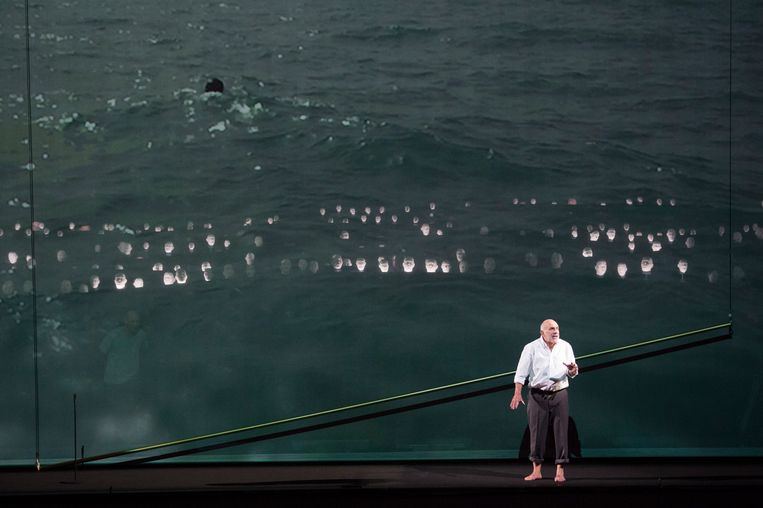
Henze's The Raft of the Medusa was a political oratorio, hence its structure, which draws from Greek tragedy and also from Henze's hero, Benjamin Britten  (think Curlew River and The Rape of Lucretia).  This determines Castellucci's abstract staging . He knows the composer and the music better than his detractors do. This is a drama of ideas, not realism, and certainly not light entertainment.  In the Prologue, the facts, as known, are recited with the dry impartiality of a news reader. The narrator is Charon who, in Greek mythology, ferries the dead across the River Styx into the underworld.  That's why he's seen on a blank stage, holding an oar, or pulling what appears to be a string of light, which later appears in abstract forms at certain points in the production. As Charon, Dale Duesing's spoken German isn't perfect, but that doesn't matter.  He speaks with authority and the wisdom of one who has seen all too much suffering.  His musical instincts bring out the music in the Sprechstimme passages, where his delivery is crisp and incisive.  This is a drama where era and place don't count.  The French ship was wrecked off the coast off Senegal, then a French colony.  Now, millions risk death to escape to the west.  Castellucci is wise not to make  the connectioins too specific.  It's enough that we see a video of an African swimming, endlessly, in a vast ocean.  We can identify with him as Everyman, struggling in an alien and hostile environment.  

Charon describes the stage directions, but we don't need to see them literally.  Hearing disembodied voices call from the darkness is much more effective than clumsy movement on stage.  In any case, we can hear the change of balance as the "dead" grow louder and more dominant, and the "living" fade.  If we pay attention to the music, we can also hear the shift between winds (operated by human breath) to strings, something played with more wood than string.  Henze's gift for writing for mixed voices builds the choral lines with sensitivity : high male voices and even higher female voices swirl against deeper timbres.  We hear individual names, and use our imagination.  Images of the waves, and half-glimpsed faces further serve to focus attention on the drama in the music itself.  

And what music this is !  Haunting textures, swirling and surging, like the ocean, rumbling undercurrents, passages where woodwinds fly brightly, suggesting light, hope, the freedom of seabirds.  Henze himself conducted in 1968. Since the recording is based only on the reherasal, we really can't tell what it might have sounded like if the piece had time to breathe. Henze was too traumatized to return to it, though he made revisions in 1990.  Metzmacher is thus conducting Henze's last words, so to speak, and from the perspective of long experience. Often, a good interpreter has more perspective than a composer. Henze was a good conductor and would have appreciated Metzmacher's perceptive approach.

One of the striking things about The Raft of the Medusa is the way Henze portrays the passage of time.  Nights turn to day, hours drift by, and still the raft floats on a featureless horizon. The white lights in the production form as a horizontal line, suggesting the raft, teetering dangerously up and down on the waves, going nowhere. On the raft, the peoiple are confined, without resources, and gradually die. Individual bodies are seen, falling into the darkness.  Henze breaks the relentless monotony with the music. A woodwind solo fleetingly suggests hope, choral lines stretch, as if reaching into the distance.  The density in the orchestration  serves to evoke the teeming life and variety in the ocean and the world beyond, intensifying the contrast between life and death, and the helplessness of the shipwrecked people. 

Henze concentrates his focus on one character, the mulatto slave Jean-Claude, who in Géricault's painting stands at the apex of the human pyramid on the raft, a subtle but pointed comment on the social pecking order, even in Géricault's time. While others succumb, Jean-Claude holds the red piece of fabric, in  the hope that it will be seen by rescuers.  And then he dies. When Dietrich Fischer-Dieskau sang the part in 1968, the nobility of his delivery brought Christ-like pathos, which is fair enough, given that Jean-Claude sacrifices himself for his fellow man.  But Christ isn't the only one to have done so : ordinary people do extraordinary things more often than we realize. Jean-Claude isn't necessarily Jesus,  so Bo Skovhus's portrayal is probably much closer to Henze and to the secular, political character of the piece.  Skovhus expresses the human side of Jean-Claude, who has probably suffered his whole life through, but doesn't give up, even if it means his last breath. Skovhus's delivery is authoritative without being over-elaborate. On a raft, adrift, being high status doesn't get you anywhere.  Skovhus's Jean-Claude isn't rich or heroic, but he's a good man with honest common sense, which in a venal world confers its own sanctity.  Lenneke Ruiten sang Madame La Mort, who, like the Moon, mentioned in the text and depicted in the music, is elegant but impassive.  Ruiten stands apart from proceedings, as the Moon does, but observes.  Here, she's seen in a sou'wester, as sailors wear, which is fair enough, and fits well with the maritime imagery.   All in all, an exceptional experience, a shining beacon in an ocean of non-understanding, which will advance our appreciation of Henze, as composer and humanitarian thinker.  Listen and watch Henze's The Raft of The Medusa HERE on arte.tv


Tuesday, 3 April 2018

Hubert Parry English Lyrics vol 2 SOMM

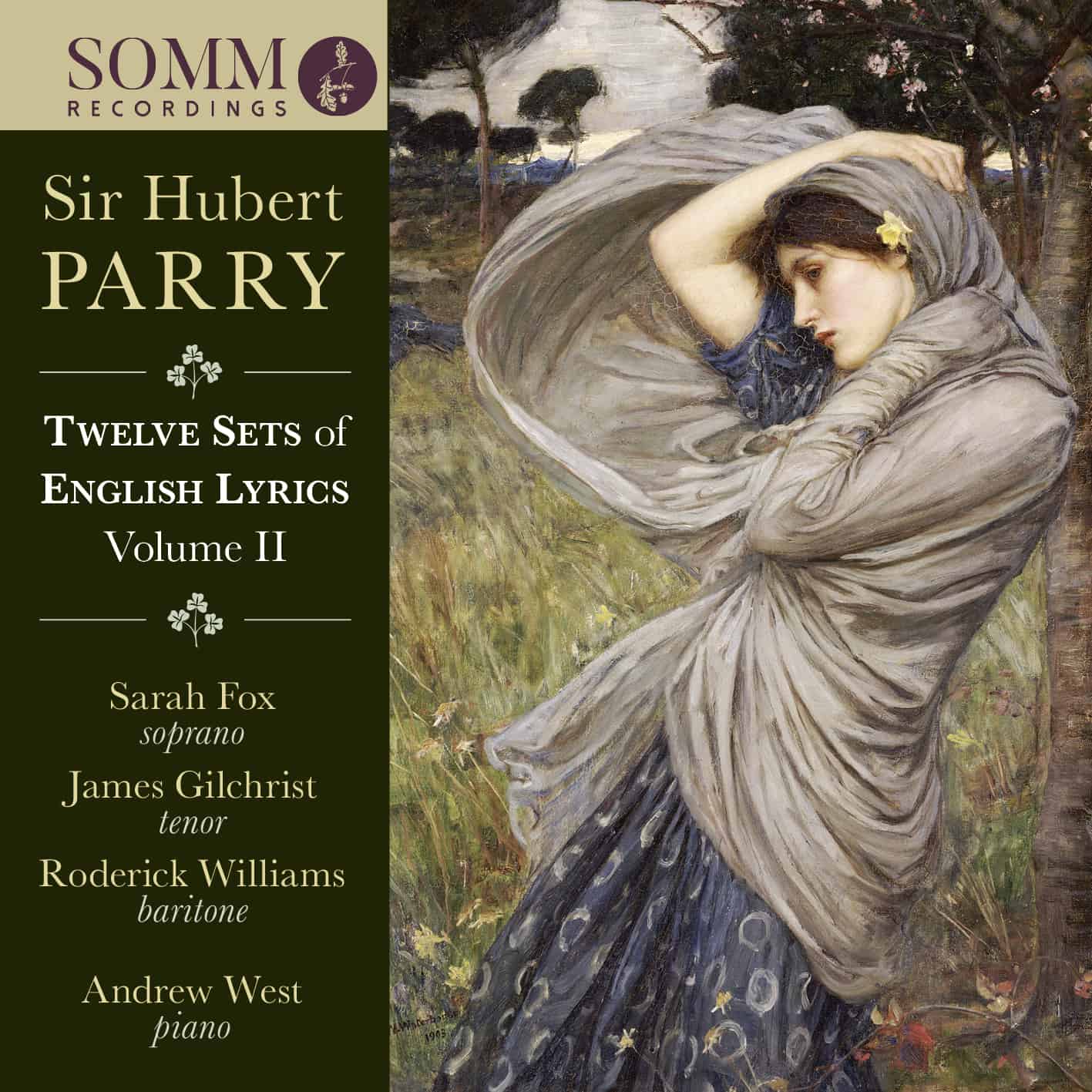
New from SOMM recordings, the second volume from Hubert Parry's English Lyrics.   Between 1874 and 1918, Parry wrote 74 songs in twelve collections, all titled "English Lyrics", two sets of which were published after his death.   As Jeremy Dibble writes,"The generic title of English Lyrics symbolized more than purely the setting of English poetry (but) also an artistic manifesto and advocacy of the English tongue as a force for musical creativity shaped by the language's inherent accent, syntax, scansion, and assonance".   German and French composers were quick to recognize how poetry could develop art song, and even set a great deal of Shakespeare (in translation and adaptation). Parry's interest in English lyrics opened new frontiers for British music.  The prosperity of late Victorian and early Edwardian London  fuelled the growth of audiences with sophisticated tastes, many of whom travelled and were up to date with music in mainland Europe. The splendid art nouveau interior of the Wigmore Hall attests to this golden age.  Until 1914, it was the Bechstein Hall, connected to the Bechstein piano company who supplied pianos - and European music - to audiences beyond the choral society/oratorio market.  

The first SOMM volume of Parry English Lyrics focused on settings of Shakespeare, Herrick, Beaumont and Fletcher, Sidney et al (Please read more here).  In this second volume, the emphasis is on poets of the 19th century, some of whom were "modern", ie contemporaries of Parry himself.  A thoughtful choice, for this reinforces the connection to art song in Europe.  Parry's setting of Percy Bysshe Shelley's O World, O Life, O Time respects the declamatory nature of the poem, well expresssed by Sarah Fox.  There are two settings of Lord Byron When we two were parted and There be none of Beauty's daughters, the latter inspiring a particularly rich piano lovely vocal complemented by a rich piano part, which sets off the crispness in the vocal line, ideal for the distinctive "English tenor" style, highlighting consonants, eliding vowels, sharpening impact.  Not all English tenors are "English tenors" but here we can hear how the style connects to syntax and expressiveness.  In Bright Star!, a setting of John Keats, James Gilchrist rolls his "r's", and breathes into longer phrases like "or else the swoon of death" shaping each word carefully in the line.  Listen to the way he sings "swoon", drawing out the vowel, the sound of which is echoed by the piano, played by Andrew West.  In Dream Pedlary, (If there were dreams to sell) to a poem by Thomas Lovell Beddoes, Gilchrist's voice curls around the words, adding magical frisson.

Harry Plunket Greene who was to become Parry's son-in-law, premiered many of Parry's songs for baritone.  Perhaps Parry created these songs for Plunket Greene's agile voice and down-to-earth delivery.  It's certainly no surprise that Roderick Williams is easily the finest baritone in  English song, since he sings with a natural directness which communicates almost as if singer and listener were in conversation, which is ideal for English song, where the floridness of, say, an Italianate style would not work.  Also, his voice is not pitched too low, but lends itself to flexiblity and brightness, which suits the English syntax.  It's almost impossible to know English song without having heard Williams, whose experience in this field is unequalled.  Compare Williams in two songs: Thomas Ford's And yet I love her till I die, an early 17th century air, and Love is a bable, a quasi-folk song.  In the first Williams is correct and courtly, in the second, his innate warmth adds sincerity to the wry humour in the song.   In Parry's two settings of poems by George Meredith, Marian and Dirge in the Woods, Williams captures the rollicking, open air energy in the songs. In What part of dread Eternity?, to a text which may be Parry's own, Williams's voice darkens forcefully, taking on the solemn tone of the poem. 

This recording includes the whole ninth set of Parry's English Lyrics, (1908) settings of seven songs by Mary Coleridge (1861-1907).  If the poems are fairly slight, Parry's treatment makes the most of what Jeremy Dibble has called their  "lack of ostentation".  The songs are simple but dignified homilies. Sarah Fox sings them with lucid purity, reflecting their almost Brahmsian reserve.  Elsewhere on this recording,  she sings lyrical pieces like Proud Maisie (Walter Scott) and A Welsh Lullaby (John Ceiriog Hughes), a poet popular in 19th century Wales.

Sunday, 1 April 2018

Enlightenment ! Hubert Parry The Soul's Ransom


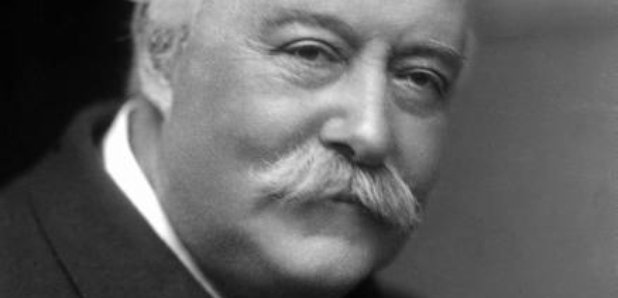
Hubert Parry's The Soul's Ransom (1906) has been called an "experimental masterpiece", one of the first successful English compositions to move away from the 19th century oratorio, foreshadowing the mature works of Parry's pupils, Vaughan Williams, Holst  and Howells.  "It is arguably a link work", wrote Bernard Benoliel, "between The Dream of Gerontius (1900) and The Sea Symphony (1909)".  Parry was a scholar who revered the work of Heinrich Schütz, and also of Johannes Brahms.  In The Soul's Ransom (1906)  he blends together elements of very early German baroque with the (then) fairly modern master, adapting the instrumental and vocal style forms of very early German baroque and  forms that were still relatively modern at the turn of the last century, "welding them into a structure where the effect is that of a terse and highly organic symphonic poem in four sectionsThe orchestra in the linking interludes and postludes functions as a ritornello, whilst the choruses, mostly in four parts, have a knotty quality which gives overall contrapuntal fabric a pre Bachian sense of movement".

"Structurally", writes Jeremy Dibble, "The Soul's Ransom is the most concise of all Parry's ethical choral works in its four-movement design and there is at times a more convincing adaptation of Baroque "style-form".  This is true of the affecting recurrences of the clue-theme symbolizing comfort and compassion...... and even more so in the second movement where the three Beatitudes of the solo soprano....are answered in turn by the contrapuntal ritornello of the chorus."

The full title is The Soul's Ransom -The Psalm of the Poor, or Sinfonia Sacra,  and in Parry's own words a "moral oratorio". Although he was an atheist, Parry's core values were closer to the true spirit of Christianity than to the image of the composer promoted in recent years to serve the state and establishment.  We need to hear Parry the man and composer on his own terms.  The texts are chosen from a range of sources, in the Hebrew and Greek testaments, connecting the Beatitudes with prophetic tradition, much in the way that Blake connected legend and protest in Jerusalem. Parry wrote his own words for the big final chorus, highlighting it with defiant glory, the organ booming.  Dibble doesn't like the finale, calling it "anaemic" but for me, its stoic simplicity is its strength, much in the way that Brahms' German Requien draws power from being uneffusive, like pietist prayer. 


"See now, ye who love the Light, 
Ye shall not in darkness stray. ....
Truth will not die ! 
In every soul of man who lives, 
The Spirit cannot lie!
To each and all the choice it gives
To rate the tempting world aright.....
To ward the ransomed soul to attain
To flawless harmony, divinely pure,
With that which was, and is, and shall be
Forever more endure"

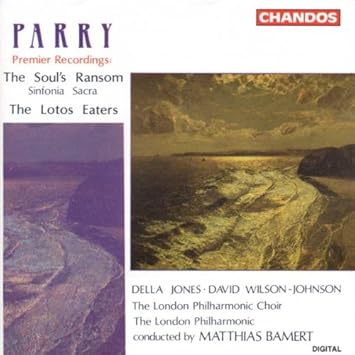
The only recording was conducted by Matthias Bamert, with the London Philharmonic Orchestra, Della Jones and David Wilson-Johnson and the London Philharmonic Choir, in 1991, re-issued more recently by Chandos. The orchestral introduction has majestic sweep, suggesting the tides of  the ocean. "Who can number the sands of the sea, the drops of rain and the days of Eternity" sing the chorus. The shifting textures suggest the vastness of the universe and the "multitudes" on earth. "Hear ye this, O ye people, the inhabitants of the World" sings the bass baritone with great portent. "Man that is in honour, but understandeth not, is like the beasts that perish!"   Parry sets only three of the Beatitudes, but chooses them carefully : Blessed are ye poor, blessed are ye that hunger and Blessed are ye, when men revile you and persecute you.  To further the point, the chorus sings "Man liveth not by bread alone".  Bass and chorus recount the Prophecy of the Bones (Ezekiel 37, 1-14).  "The people who walked in Darkness" sings the soprano, chorus and orchestra thronged behind her, "have seen a great light.". What is that light to which Parry's texts refer, and the prophecy that cannot be fulfilled on this earth ?  In Christian teaching, we think we know the answer, but Parry suggests a more esoteric, more inclusive "Enlightenment".  Close, indeed to Mahler's Symphony no 8, with its recurring images of "Accende lumen sensibus" and the "Veni Creator Spiritus" (the idea of enlightenment as creative force). Both Mahler 8 and Parry's The Soul's Ransom were completed in 1906.  Pure coincidence. Neither composer might have been aware, but both were onto something good.  The words "Soul's Ransom" are Parry's own, suggesting that he might have equated "darkness" with ignorance and suffering, "light" being wisdom and moral courage. 

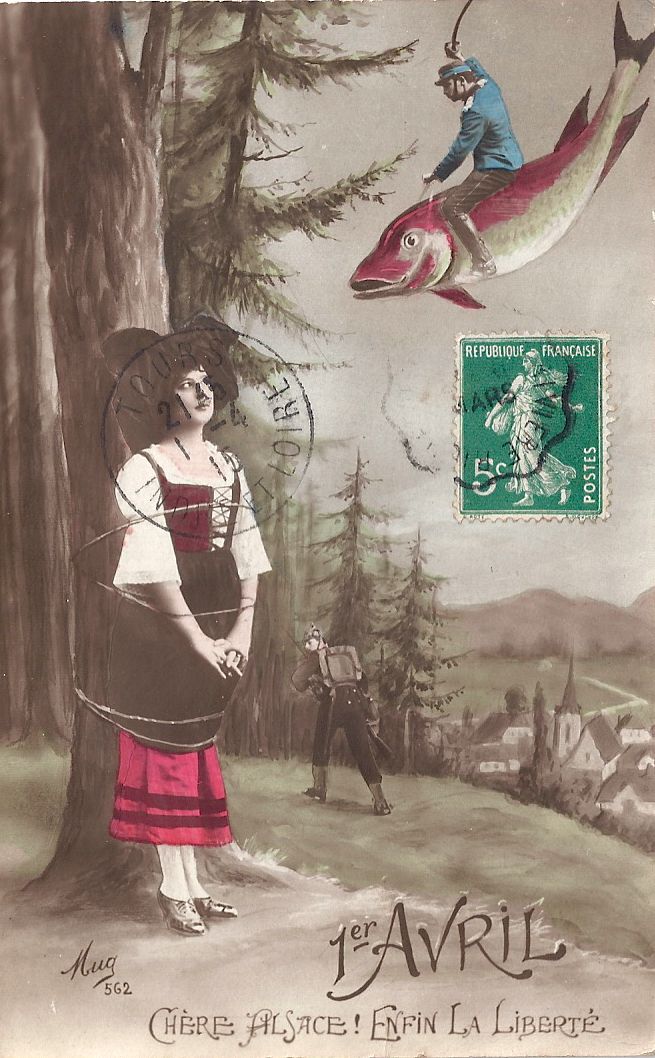
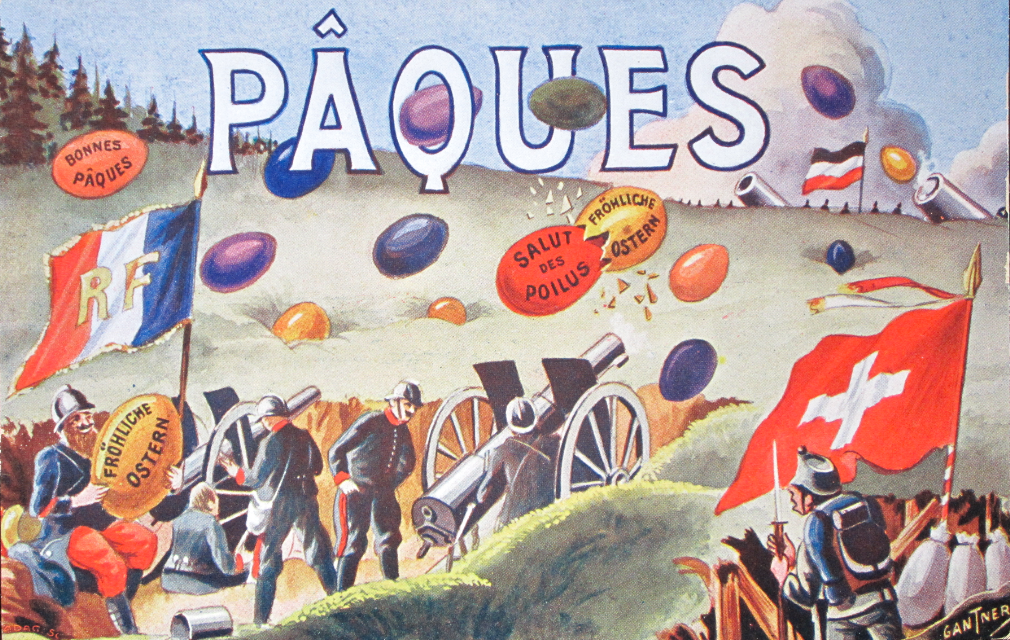
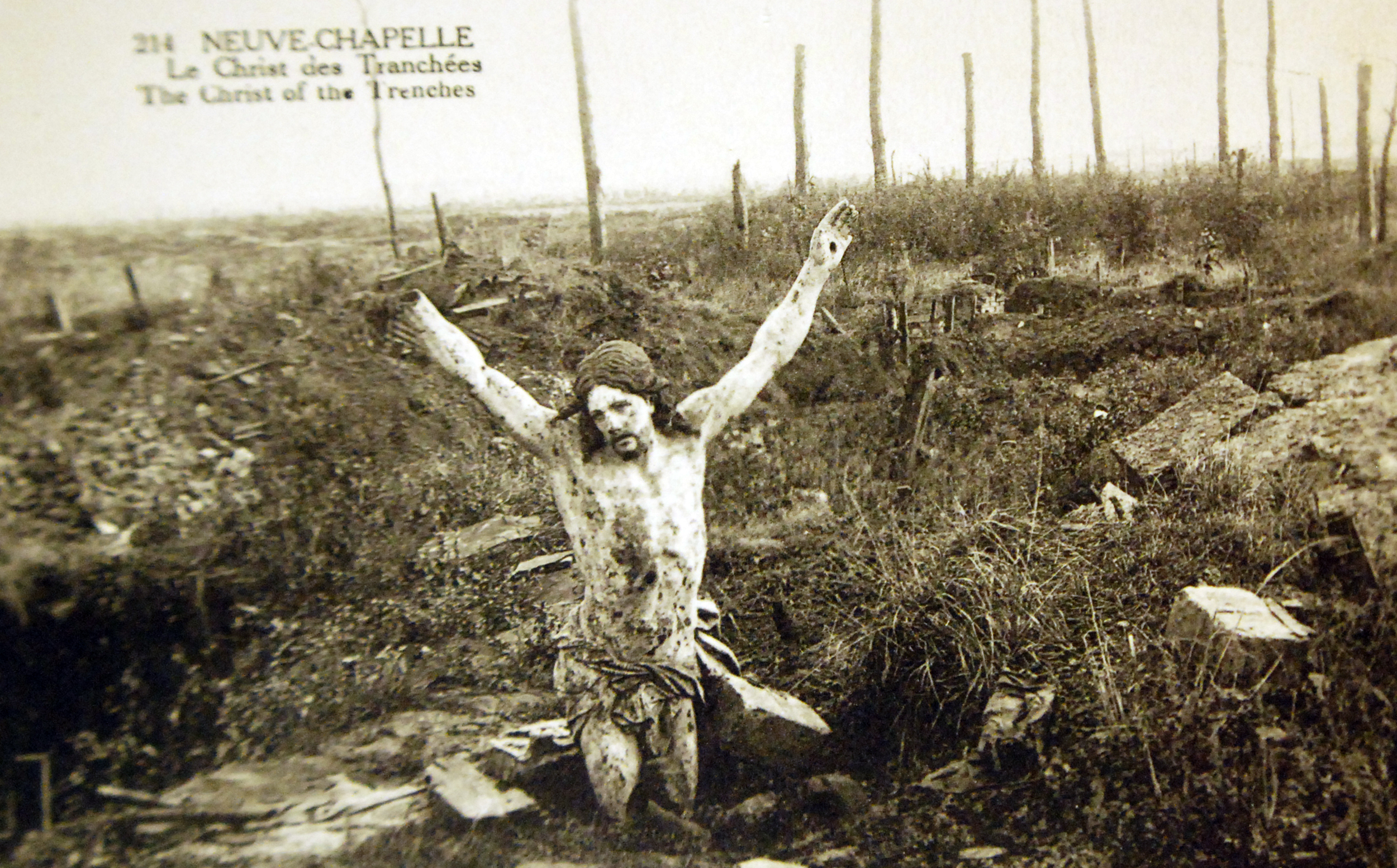
Decode this pic


This year Easter coincides with April Fool.  Who are these babes who've popped out of the Easter Egg, on the battlefront in 1918? Alsace and Lorraine.  And what's the significance of the Fish ?


Christ and chocolate in the Trenches


Saturday, 31 March 2018

Revealed ! The secret of Kundry's Balsam


Revealed at last, the secret of Kundry's Balsam !  Liebig's Fleisch-extract.  Nothing like a dose of meat essence.

Wednesday, 28 March 2018

Patron Saint of Voice Science

Q


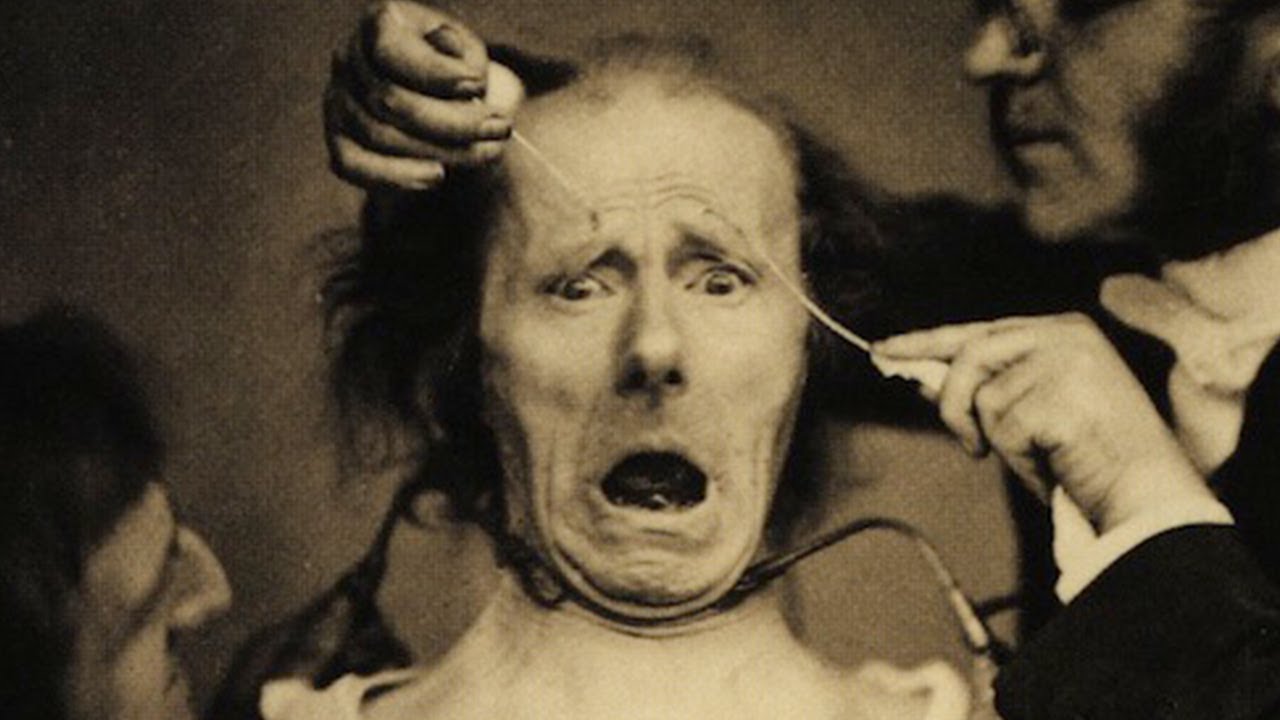
Nearly 40 years ago, in a junk shop in what was then a remote village in South Buckinghamshire, I found a musty old treatise on treating canine distemper with herbal techniques.  The author was a scientist, in the Victorian manner when anyone could set up experiments on their own and develop theories. The author was originally German, with some training in medicine, which is why he used the title "Doctor Professor".  Arriving in Britain at some time in the 1870's or 80's, he settled in a village near where I found the book, running a laboratory of some sort, closely guarded first by his English wife and then by his daughter, who stayed in the house as a recluse into the late 1930's.  Dog medicine was just of one his interests.

The good doctor's main thing was Voice Science, and the techniques of singing.  With his training in anatomy, he constructed an intricate contraption with cadaver parts. Real lungs, real vocal cords, muscles, mouth, lips and tongue,  preserved in some kind of formaldehyde which retained flexibility.  Bellows were used to blow air into the lungs, from the nose down and then out again.  Wires and levers connected the body parts so they moved when electrical stimuli were applied.  The contraption was so accurate that it did "sing", emitting sounds in different ways depending on how much pressure was used on what part of the mechanism, and how much air was being pumped through. The doctor documented the various methods by which he could replicate the mechanics of voice production.  Head voice! Chest voice ! Corpse tongue and mouth muscles ! Was the doctor a pioneering patron saint of bad singing ? Things like artistry, sensitivity and even repertoire can't so easily be regulated.

Tuesday, 27 March 2018

BBC Proms website malfunction


A few weeks to go before the Proms are announced, but high time someone should look at the website.  There's a bug in the system, blocking access to the Proms Performance Archive for Composers. It keeps defaulting to 2017.  (There is a devious way - if you get to "performers" try clicking on "Composers" and wait. Evntuallyit does sometimes go there, but inconvenient).  Please fix !  The philosophy these days seems to favour performance measures by the Proms management, over and above performance as musical experience.  Thus the obsession with first time visitors, and visitors who wouldn't normally go to classical music. That's a political agenda, not an artistic agenda. The BBC's own research shows that first timers don't always get hooked as often as presumed, even if they're polite and say they might. People come to classical music when they're ready, and by many different routes, so the whole philosophy of First Timers Above All Else is fundamentally flawed.  It's sloppy to place all hopes on one doubtful strategy, while sacrificing the core audience, and the Product itself .  It might take ages for common sense to trickle down.  Yes, it's nice to know the (non-existent) dress code, but for many of us, especially regulars, it's important to access the archive. 

Monday, 26 March 2018

Debussy and Beyond - François-Xavier Roth, LSO Barbican

Debussy and Stravinsky, 1910

On the centenary of Debussy's death, "Debussy and Beyond", with the London Symphony Orchestra at the Barbican,, conducted by François-Xavier Roth.  This was the highlight of an unusually well planned series, examining Debussy from different angles.  Anyone can programme mechanical "greatest hits"  programes, but from Roth and the LSO we can expect much more musical nous.  In "The Young Debussy", we heard the influences that shaped him,  In "The Essence of Debussy", we heard well known pieces and the less well known, like the Fantasie for piano and orchestra,. This series has been challenging because it didn't spoonfeed, but presentedthoughtful challenges   for further listening and contemplation.  For "Debussy and Beyond", there could be dozens of possible contenders, since Debussy's influence on modern music is so extensive. Debussy changed the game, no less.  He paved the way for others, whose music is very diffrent from his own, and continues to inspire. This evening's programme focussed on large ensemble, and on major works that would often be the backbone of most concerts. It lasted nearly three hours, but was so rewarding that time passed all too soon.

Homage to Debussy and also homage to Pierre Boulez, one of Debussy's finest interpreters and champions, who was born seven years and one day after Debussy died.  Much has been written about how Boulez's Livre pour cordes morphed, or didn't morph, over 20+ years, so it's not worth repeating, save to say that  it is "mega string quartet" scored for 16 first and 14 second violins, 12 violas, 10 cellos and 8 basses.  The four main groups are multiplied into many parts, creating intricate polyphonic textures. Onto this a panoply of techniques, for further variety. Yet the whole piece lasts under 11 minutes. It's a model of tightly woven concision - nothing extraneous - precision.  Roth conducted the LSO, so it came over as chamber music, albeit on a grand scale, the players interacting with precison and grace.  Not "impressionism", in the "mood painting" sense of the word, but finely detailed complexity, extending Debussy's tonal ambiguity and chromatic adventure.

Though there's ostensibly little direct connection between Debussy and Bartók, both were pillars of twentieth century music, and cannot be ignored. Many others might have been included, but for practical, logistic reasons, this concert focussed on works for very large ensemble.  Bartók's Violin Concerto no 2  BB117 (1937-8) served to balance the other two big pillars of the programme, Stravinsky's Chant du Rossignol and Debussy's La Mer, with Renaud Capuçon as soloist.. Capuçon's long solo passages were played with style, contrasting well with the striking orchestral backdrop.  Since the LSO has a commendable commitment to new music, this was followed by the world premiere of Ewan Campbell's Frail Skies (2017), another work for very large orchestra including piano.  I'd hesitate to call it a tone poem,  though there are images in the music that suggest the forces of Nature.  Though the title suggests the sky, I thought of waves in an ocean, carrying thousands of minute particles carried in their wake.  The piece moves in cyclic fashion beginning and ending with solo cello surrounded by larger, darker forces, traversing other cyclic patterns along the way.  High woodwinds added lightness, somnolent strings and brass added density.  No young composer could compress as much into a short work as Boulez did with Livre pour cordes, but at least new work is being written, and new composers are finding their way.

Debussy and Stravinsky knew each other well. The photo above shows them together during the 1910 Ballets Russe season in Paris in 1910, when The Firebird was performed.  For this programme, François-Xavier Roth included Stravinsky's Chant du rossignol, loosely based on Hans Christian Anderson's tale about a nightingale and a mythical Emperor of China.  Given that Debussy was fascinated with Japanese and Indonesian culture, this was an inspired choice, connecting Debussy's eclectic interests and the craze for "primitive" non- western art, which made  Stravinksy and Diaghilev sensation. French orientalism, which has a long past, was to stimulate numerous artists and composers, from Ravel to Picasso, to Messiaen and beyond.  Recently Roth and Les Siècles gave a concert in Paris, which iuncluded a gamelan orchestra (read more here).  With Chant du rossignol, Roth and the LSO open out a whole horizon to explore.  In purely musical terms, Chant du rossignol  is also apposite because Stravinsky blends exotic colour with lyricism. The nightingale is no Firebird, but its fragility is its strength.  A violin sings for the mechanical nightingale, its elaborate trills deliberately formal.  The flute sings for the real nightingale, singing with freedom and inventivenss. The Emperor, for all his wealth, cannot compete. The music that depicted him was dark and slow - basses and low timbred winds and brass, and tam tam, against which the "nightingale" shone ever more brightly.   Exquisite detail in this performance, even in small figures, like trombone ellipses and the sensation of breeze (harps, strings, brass) at the very end.

François-Xavier Roth has conducted Debussy La mer so many times that it's practically his trademeark. He's even constructed whole programmes around it (please read more here).   This time it felt valedictory.  After that outstanding performance of Chant du rossignol, it was good to pause and reflect on Debussy and his legacy.  La mer never loses its magic but seems to forever reveal new depths.  The ocean covers most of the planet : different in different parts of the world, but always developing.  A metaphor for music ! 


Saturday, 24 March 2018

Claude Debussy plays Debussy


Today, 100 years ago Claude Debussy was still alive....  Tomorrow marks the 100th anniversary of his death. I'll be hearing La Mer with François-Xavier Roth and the LSO at the Barbican, (Please read my review HERE) exploring Debussy's legacy.  Boulez ! Stravinsky ! Ravel ! Messiaen ! and more....   Please see my other posts so far on Roth's Debussy series Young DebussyEssential Debussy  and Eclectic Gamelan Debussy. . Beware music histories which think modern music started only with Schoenberg and his devilish ways. All music is modern in its own time, and Debussy perhaps even more revolutionary in his way than most.  Even after all this time, some still can't get Pelléas et Mélisande. But that's OK. That made it easier to grab good seats at Glyndebourne this season. It will be intriguing to see what master symbolist Stefan Herheim does with it.  Below, Claude Debussy plays Clair de Lune, recorded very early on.  

Friday, 23 March 2018

Glière The Red Poppy and Soviet non-realism

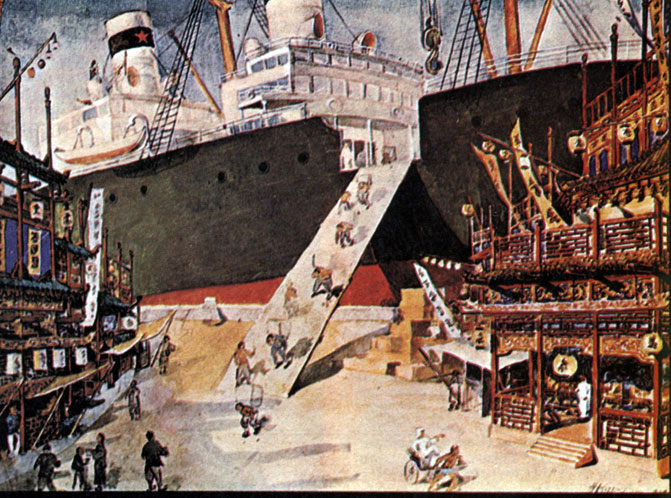
The Harbour Scene in Glière's The Red Poppy
As part of the Voices of Revolution series at the South Bank, Vladimir Ashkenazy conducted the Philharmonia Orchestra in Mosolov's The Iron Foundry,  Prokofiev's Piano Concerto no 3 (Behzod Abduraimov), Glière's Concerto for coloratura soprano and orchestra and the Suite from Glière's The Red Poppy. The Iron Foundry and The Red Poppy were written  around 1927, when the Revolution was safely established, and culture in the Soviet Union was briefly progressive, even avant garde. It represented the hope that a new world order could be achieved through progress and Russian leadership. Later, Stalinism, and "the will of the people" would dictate the conservatism that comes with mass populist values.  The Iron Foundry marks one aspect of Futurism: faith in industrial processes.  It's a blast ! It also connects to other artistic works of the period, not only in Russia, from Fritz Lang's Metropolis (read more here) to Machinist Hopkins (more here). I've written about The Iron Foundry and Soviet Futurism before, (see labels like Futurism and Eisenstein) so I decided to watch the full ballet version of The Red Poppy in a full-colour production from Bratislava in 1954. 

Glière's The Red Poppy is set in China. Nothing unusual about that given western taste for exotic locales.  Significantly, Turandot premiered in 1927, around the same time as The Red Poppy. Since a huge part of Asia was in fact part of the Russian Empire, it was perfectly natural for Russian composers and artists to incorporate "eastern" themes. Hence Borodin's Prince Igor, and much else.   Yet there's more to The Red Poppy.  It's poltical, and connects to a wider context of Soviet expansionism.  The film, Storm over Asia (Vsevolod Pudokin, 1928) depicts a Mongolian herdsman mistreated by the British (generic capitalist) who eventually drives them from his land.  The timing of The Red Poppy is worth noting.  It's no accident either that the title is "red" poppy, since the "white" poppy produces the opium which caused the Opium Wars and the Unequal Treaties.   China was in the throes of modernizing after thousands of years of feudalism, and the young Republic forced to call on help from outside. The Chinese couldn't really rely on western powers who had an interest in keeping China subservient, so they called in the Soviets.  The Chinese Communist Party was minute, founded only in 1921, so it didn't seem a threat. But by 1924, Comintern had such influence that it could organize massive strikes in the main Treaty Ports, threatening the control of western powers.  The leader of the Comintern in China was codenamed Borodin, a name familiar to many Chinese since his music was well known in China.  Hanns Eisler's elder brother was also involved, lower down the scale. The Chinese soon got rid of the Comintern, but eventually the CCP took hold. 

Glière's The Red Poppy depicts the harbour in a Treaty Port (as sen in the photo above, taken from the original production). Coolies, working on a pittance, are unloading goods for foreigners and the rich. In the Bratislava production the cargo is marked "From the USA" and contains guns.  The workers are mistreated, not only by western capitalism but by Chinese collaborators, depicted - alas - like Fu Man Chu stereotypes. Glière incorporates many different musical styles to emphasize the contrast between cultures - foxtrots and jazz for the capitalists,  bizarre pastiche Chinoiserie for the Chinese, and The Internationale for the Soviets and "good" Chines partisans.   The original, being a ballet, contains numerous set pieces for dance, including passages where notes flutter breathlessly, so the dancers do a lot of en pointe, their feet arched as if they had bound feet (another western stereotype of Chinese culture).  In ballet, dance tells the story, so plots don't need much depth.  A Chinese nightclub dancer called Tai-Choa notices how nice the Soviet sailors are (they have a famous dance number).  There are "Malay" dancers too, who have no function but to add another element of exotic soft porn  - "Malays" no real Malay would recognize.  In a protracted dream sequence, induced by smoking dope (as stereotype Chinese were expected to do), Tai-Choa finds herself in a temple with a giant Buddha. Demons dressed like generals in Beijing opera threaten her, but she's saved by good guy warriors in white (!) commanded by a Chinese partisan. The Chinese villian tries to get Tai-Choa to poison the Soviet Captain (whom she loves)  but she won't do it. The temple/courtyard is raided and the Captain and his men enter.  The Chinese villain raises his gun and shoots, but Taï-Choa sees what's happening and takes the shot, and dies.
Russian music was ubiquitous in China long before the Communists came to power. After 1917, hundreds of thousands of "White" Russians flooded into China to escape, swelling the number of western musicians in China,  forming dance bands and orchestras, even supporting Russian language opera houses. Glière's earlier music would have been quite well known, though The Red Poppy with its overtly political character would probably have been banned before 1949.  After the Sino-Soviet split in 1957, it would have been banned again.  But by then, decades of militant entertainment of all persuasions had become part of the Chinese scene, giving rise to a distinctly Chinese form of political ballet, which blends agit prop with the stylization of Chinese opera.

Thursday, 22 March 2018

Anna Clyne, Benjamin Britten Violin Concerto : Oramo BBCSO

Britten and Menuhin, 1955

 Sakari Oramo conducted the BBC SO at the Barbican last night : Anna Clyne and Benjamin Britten   Two British composers, one a distinctive new voice, the other represented by a work which  in recent years has found its true place in the canon.  Heard together with a particularly fresh, vernal Beethoven Symphony no 6, this made a satisfying evening.

This was the UK premiere of Anna Clyne’s This Midnight Hour, first heard in Paris in 2015.  Quality, in Anna Clyne’s case, gets her ahead, not her gender.  She’s so original that the patronizing tag “female composer” is an insult. What is “female” music anyway. This Midnight Hour is ambitious work on a grand scale, though compact and precise.  Rushing figures fly forwards, quite ferociously, leading to a passage of surprising clarity.  Very rich sounds - especially the low strings - suggest dense textures, carefully defined.  From moments of near-silence,  pounding figures push forward, aletrnating with sudden lyrical passages. Winds and brass blow ellipses that seem to probe space.  Two staccato thunderclaps, and the music swirls into fast paced turbulence, whipped by ellipses of high-pitched woodwinds. More combinations of quietness and explosive staccato, then a long passage of almost Romantic lushness, evoking the sounds of Spain. A long-held single note (bass trombone), evolves into nocturnal fanfare.  A sudden crash on timpani, an abrupt end, like an exclamation point.  Later I realized that this is a reference to a poem by Juan Ramón Jiménez which Clyne was responding to.  “La musica; mujer desnuda,corriendo loca por la noche pura!” (The music: a naked woman, running madly in the pure night) . Apparently there are also references to Baudelaire’s Harmonie du soir (“Le violon frémit comme un coeur qu’on afflige,”), but This Midnight Hour was impressive even if I didn’t get that other level. There's no rule, whatsoever that poems have to be set word for word !

Although Britten didn't join the International Brigades in Spain, he believed passionately in their cause and was traumatized by Franco's victory.  Heartsick, Britten feared that Europe would become engulfed in fascism, and needed to get away. His Violin Concerto is a product of that period of intense despair.  Britten and Pears left Britain in April, 1939, when war seemed far away, and returned at some danger during hostilities to help the war effort as non-combatants. Those who have never heard his Violin Concerto may have thought him a coward but do not realize that it takes moral courage to write a deeply uncomforting statement like this.  Perhaps only now can we appreciate its place in the canon of major works by a composer who thought more deeply about society than most.

From a hushed string introduction, the violin (soloist Vilde Frang) rose, against an understated but ominous background of percussion and brass. Despite the lyricism of the violin line, the idea of war lurked, with menace.  Hollow pizzicato suggested agitation.  The second movement has the character of nightmare scherzo, a battery of strings, brass and percussion battling with the violin, which remains detached. Oramo shaped the tumult carefully bringing out the huge, angular blocks of sound, booming bassoons,  spikey details in the strings, rumbling drums, creating contrast with the violin. In the cadenza, Frang's pristine style lit up the dizzying diminuendo : not a defeat so much as "tactical withdrawal".  In the passacaglia, descending notes from the brass moved in careful procession. Now the violin line was haunted by other strings, mumuring as if heard from afar. Eventually an anthem builds up, the brass no longer against the soloist, but leading forwards.  Tense, brittle figures suggested gunfire, but the violin remained uncowed.  A particularly full-throated tutti section,  almost a chorale, violin and orchestra united in common cause.  From the strings, a good suggestion of guitars : the ghosts of the dead in Spain, rising again, led by the violin, marching quietly onward.

A truly "pastoral" Beethoven Symphony no 6, unusually fresh and vernal, which worked well in connection with Britten's Violin Concerto. Perhaps the storm wasn't as overwhelming as usual, but the sense of revitalization Oramo found after it more than compensated.  After the storm, the peasants are revitalized.  Like the fallen in Spain, they will not be defeated. 

Tuesday, 20 March 2018

Jurowski's Journey : Stravinsky The Fairy's Kiss

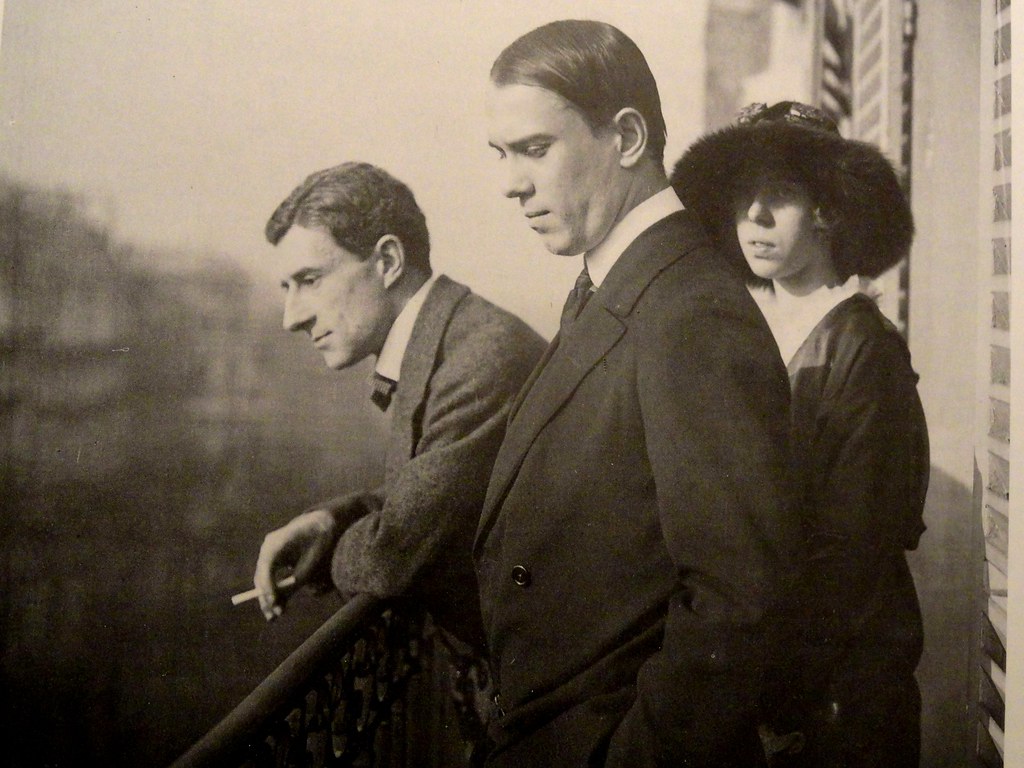
Bronislava and Vaclav Nijinsky with Maurice Ravel, Paris : Photo: Igor Stravinksy

Vladmir Jurowski's Stravinsky Journey with the London Philharmonic Orchestra at the Royal Festival Hall  continued with Stravinsky's The Fairy Kiss, (Le baiser de la fée) framed by Tchaikovsky Piano Concerto no 1 in B flat minor (Daniil Trifonov) and extracts from The Sleeping Beauty.  For me, the big draw was The Fairy's Kiss, fashionably maligned in its time, not least thanks to Diaghilev's disdain for Ida Rubenstein, a lovely celebrity but nowhere near the league of the Ballets Russe, and the fact that it was chreographed by Bronislava Nijinsky, who had followed her brother away from Diaghilev circles.  Jurowski has a thing for the piece, having programmed and recorded the Divertimento in the past, so I was keen to hear what he would bring to it.  Unusually snow bound conditions - for Southern England - might have added vaguely Russian atmosphere, but kept many of us trapped (we had 10 centimters, for the first time in years) but the concert was broadcast on BBC Radio 3. Luckily, weather was fine last night for Ensemble Intercontemporain at the Wigmore Hall  - read more here.

Congratulations to Jurowski and the LPO for having the courage  to pit Stravinsky's Fairy's Kiss against the ever-popular Tchaikovsky Piano concerto no 1. While Trifonov was reliable, this is a piece which needs more than reliability to reveal itself.  Not that most punters care, as long as it sounds familiar, without any special insights.  Part of the Fairy's Kiss "problem" is the plot, or lack thereof, but for Stravinsky himself  the ballet was "an allegory of a man marked out from his fellows, unable to join in their life" : the role of an artist, whose destiny is to fulfil his gift, even if it means  being alone.  In 1928, that ideal was pertinent to Stravinky, living in exile, surrounded by change. In Tchaikovsky, he  saw a quintessential outsider, forced to hide his true identity in a society where being out meant death.  In musical terms, this applied too to Stravinsky, not because he was reverting to Tchaikovsky, but because he didn't want to be constrained by style, or by market forces.  It's perhaps ironic that chreographers - Balanchine, Ashton, Macmillan, Ratmansky - have found more in the music than many listeners.

Rustling strings suggested the snowstorm in which the story begins, but typically Stravinskian winds delineated the narrative, leading onwards, then pausing tenderly.  Perhaps one might imagine a vulnerable infant who might otherwise die.  The pace picked up, winds and brass joining. Lively dotted rhythms, ideal for dancing to, outbursts of bassoon, flute and brass suggested a wild but cheerful procession, the horns adding a "peasant" touch.  The baby grows up happily enough in the village, as the music suggests, but on the eve of his marriage the fairy returns, disguised as a gypsy.  Tchaikovsky, who entered a mariage blanc may or may not have intuited Hans Christian Anderson's dilemmas about sexuality, but for Stravinsky, this turning point seems ms more artistic than literal.  The music abounds with lively figures, ideal for dancing to, offering a choreographer many inentive opportunities. A single violin appears, then a woodwind : two figures, one seductive, once youthful.   Eventually, a hush fell over the music, suggesting mystery.  Perhaps the boy is enchanted, as the Fairy claims him for her own. Not such a bad fate, for an artist. 

Ensemble Intercontemporain Wigmore Hall Birtwistle Carter

At the Wigmore Hall, London, music for wind quintet by Harrison Birtwistle, Elliott Carter, Heinz Holliger, John Cage and Blaise Ubaldini. with members of Ensemble Intercontemporain - Sophie Cherrier (flute), Martin Adámek (clarinet), Jens McManama (horn), Didier Pateau (oboe) and Paul Riveaux (bassoon).  Wind quartets are great for sonorous harmony, but wind quintets  are stranger beasts.  The horn changes things, but that in itself opens out intriguing new possibilities.   Composers with a quirky frame of mind can do very interesting things. I'd come to hear Harrison Birtwistle's Five Distances for Five Instruments (1992)  a piece that needs to be heard live since it plays with space and distance.  The work begins conventionally enough with the flute, singing freely, the bassoon answering.  Will a pattern emerge ?  In the middle stands the horn, breaking up symmetry.  I was delighted that from where I was sitting, I couldn't see the horn, but heard it poking its way into the ensemble.  The other instruments call to each other in different pairings, but the horn interjects, pushing each instrument to operate as an individual.  They call out into the performance space,  as if trying to get away.  Eventually some sort of equilibrium is found: horn and bassoon fall into step together and the others follow and a pattern is restored.  A short but extremely pithy piece, a typical Birtwistle puzzle.

This whole programme seemed to have been devised like a puzzle of interconnecting symmetries and non-symmetries.  Bassoon (Paul Riveaux) and horn (Jens McManama) returned, singly, with Elliott Carter's Retracing for bassoon (2002) and Retracing II for horn (2009).  Hearing both together demonstrated the individual nature of each instrument.  The bassoon lends itself to the virtuoso challenges of a very short piece, the horn needs more time to "breathe".  The oboe (Didier Pateau) starred, too, in Heinz Holliger's Sonata for oboe (1956-7), a joyous early piece, in which Holliger shows his love for the instrument and its capabilities.   Flute (Sophie Cherrier) and clarinet (Martin Adámek) get their moment too, with Elliott Carter's Esprit rude/Esprit doux (1984). Embedded cryptically into it are the letters of Boulez's name. "Two personnages", as Pierre-Laurent Aimard, has described the way the two voices interact in counter to each other, "like in Bach".As Paul Griffiths writes in his programme notes, "This four note set... has the useful property that any interval can be derived from it (reappearing) in its original form to close what might be regarded as a four minute scene between two characters, or between two characters of the one".

To conclude, John Cage's Music for Wind Instruments (1938) and Blaise Ubaldini In the backyard (2017) . The former is a relatively straightforward piece which features first different sub-groups, then brings them together for the finale. Ubaldini's piece picks up on the cheeky good humour of Carter and Birtwistle's aphorisms. the players grunt and stamp their feet, their bodies supplying percussion.   Five instruments with added extras, I guess.